Technical SEO Services London: Foundations For Local Growth
London's digital marketplace is crowded; local businesses need resilient technical foundations to compete. Technical SEO services in London focus on making sites crawlable, indexable, fast, secure, and optimised for mobile. LondonSEO.ai emphasises a locality-first governance framework built around Translation Provenance Identifiers (TPIDs), Activation Kits, and Surface Contracts. Part 1 lays the groundwork for a 15-part series that translates governance into practical steps for London brands seeking sustainable visibility and measurable ROI.
What is technical SEO and how it relates to content SEO in London
Technical SEO is the backbone of any London SEO programme. It targets the website's infrastructure—how it is built, how it loads, and how search engines can access and understand it. Content SEO, by contrast, focuses on what users read and search for, including language, intent, and engagement. In London, where people browse on the move and across devices, both strands must work in harmony. A technically sound site supports content quality by ensuring pages load quickly, render reliably, and present data in a way search engines can process. This synergy increases the chances for ranking and achieving rich results in UK search surfaces.
Core technical areas that matter for London sites
- Site speed and Core Web Vitals: optimise LCP, FID, and CLS to deliver fast, stable experiences for urban users.
- Crawlability and indexability: ensure search engines can access important pages, with clean robots.txt and well-structured sitemaps.
- URL structure and canonicalisation: maintain clean, logical URLs and prevent content cannibalisation across district pages.
- Structured data: deploy LocalBusiness, LocalService, and FAQ schemas linked to hub topics to improve local rich results.
- Mobile-first design: prioritise a responsive layout and accessible navigation for on-the-go London users.
London governance framework: TPIDs, Activation Kits and Surface Contracts
London-based technical SEO requires repeatable governance to scale across districts like Westminster, Canary Wharf, and Hackney. A mature programme uses Translation Provenance Identifiers (TPIDs) to tag hub topics and district assets, Activation Kits to standardise surface-output templates, and Surface Contracts to define diffusion cadence and data schemas across eight surfaces. This Part 1 outlines how these artefacts translate into predictable, auditable improvements in visibility and ROI as you expand in London.
- TPID mapping for districts: tie each district page to hub topics, preserving provenance when content diffuses.
- Surface Activation Kits: ready-to-run per-surface templates for GBP, Local Pack, knowledge panels, etc.
- Diffusion Cadence: define how often content updates and signal activations occur per surface.
- Dashboards and reporting: ensure data lineage from TPIDs to outputs across surfaces for clear ROI.
Getting started with London technical SEO: practical first steps
- Request a baseline technical SEO audit of your London-based site to identify core issues in crawlability, speed, mobile usability, and structured data.
- Map your hub topics to likely district pages using TPIDs and plan initial district activations per surface.
- Review your Google Business Profile and local citations to ensure local signals align with technical foundations.
- Explore LondonSEO.ai’s services page to access governance templates and activation kits that accelerate onboarding.
Technical SEO Services London: Provider Evaluation And Governance (Part 2)
Continuing from Part 1, Part 2 delves into how London-based organisations can choose the right technical SEO partner, recognise governance maturity, and establish a practical pathway to scalable, locality-aware diffusion. The London-centric framework used by LondonSEO.ai centres on Translation Provenance Identifiers (TPIDs), Activation Kits, and Surface Contracts to ensure every district asset diffuses with provenance across eight surfaces while remaining auditable and ROI-driven.
Key capability criteria for evaluating London technical SEO providers
When assessing partners, look for maturity in governance artefacts and a clear plan for diffusion across London districts. A strong provider should demonstrate:
- Governance maturity: a consistent TPID map linking hub topics to district assets, Activation Kits standardising surface outputs, and Surface Contracts detailing cadence and data schemas across eight surfaces. Auditable dashboards should exist to prove provenance and repeatability as you scale across boroughs like Westminster, Camden, and Greenwich.
- Local market fluency: evidence of London district exposure, GBP governance, local intent mapping, and past district case studies demonstrating proximity-led results.
- ROI modelling and transparency: What-If planning, live dashboards, and clearly stated assumptions that tie district activity to business outcomes across surfaces.
- Onboarding and collaboration model: a well-defined onboarding journey with stakeholder alignment, governance cadences, and change-management practices that minimise disruption as you expand.
- Tec hnical breadth and data governance: command of Core Web Vitals, crawlability, indexability, structured data (LocalBusiness, LocalService, FAQ), and robust data lineage that remains TPID-driven as content diffuses.
The London governance framework: TPIDs, Activation Kits and Surface Contracts
London-based engagements succeed when governance is explicit, repeatable, and scalable. A mature provider will map hub topics to district assets using TPIDs, deliver Activation Kits that standardise outputs per surface (Search, Maps, Knowledge Panels, Local Packs, News, YouTube, Voice, Images), and apply Surface Contracts to define cadence and data schemas. This Part 2 highlights how these artefacts translate governance into practical ROI, with traceable diffusion across London's diverse districts.
- TPID mapping for districts: assign a unique TPID to each district asset to preserve provenance as content diffuses.
- Surface Activation Kits: ready-to-run templates per surface to ensure consistent outputs across districts and surfaces.
- Diffusion Cadence: establish how often district content is refreshed and how signals activate across surfaces.
- Dashboards and reporting: dashboards that maintain data lineage from TPIDs to surface outputs, enabling clear ROI visibility.
Baseline technical SEO audit: London-focused expectations
A London-focused baseline audit should examine crawlability and indexability, Core Web Vitals, mobile usability, URL hygiene, canonicalisation, and structured data coverage. It should verify clean robots.txt, comprehensive XML sitemaps, and district-prioritised crawl directives. The audit should also assess GBP alignment, local citations, and the presence of LocalBusiness, LocalService, and FAQ schemas tied to hub TPIDs to support local rich results across London's surfaces.
- Crawl and index health: identify blocked pages, orphaned pages, and index coverage gaps by district.
- Speed and Core Web Vitals: establish a London-specific baseline for LCP, FID, and CLS across devices, with actionable optimisations.
- Structured data health: inventory TPID-linked LocalBusiness and LocalService schemas; ensure accuracy of hours, addresses, and services.
- GBP governance: audit Google Business Profile posts, reviews strategy, and citations for districts.
Practical quick wins for London sites
- Improve Core Web Vitals quickly: optimise above-the-fold content, images, and server response to lift LCP and CLS across key London districts.
- Audit and fix canonical issues: ensure district pages do not cannibalise hub content, preserving TPID provenance.
- Strengthen LocalBusiness and FAQ schemas: link district assets to hub topics for richer local results.
- GBP cadence and reviews: establish a routine for updates, responses, and local signals by district.
- Mobile UX improvements: enhance navigation and form usability for commuters across London.
A practical 12-month diffusion plan for London
- 0–3 months: finalise the London TPID map, publish baseline hub and district landing pages, and establish per-surface Activation Kits. Set up district dashboards and What-If forecasting templates for rapid production.
- 3–6 months: expand district activations, refine district briefs linked to TPIDs, and extend structured data coverage. Begin early governance reviews to ensure diffusion alignment.
- 6–12 months: consolidate GBP visibility, strengthen Local Packs and Maps signals, and optimise What-If ROI models with updated inputs from new districts.
Core Components Of A Technical SEO Strategy For London Websites
London’s competitive digital market demands a structured, governance-led technical SEO approach. Building on the locality-first framework established in Part 1 and Part 2 of the London Technical SEO Services series, this Part 3 outlines the core components that ensure crawlability, speed, mobile usability, and schema accuracy, all aligned behind Translation Provenance Identifiers (TPIDs), Activation Kits, and Surface Contracts. The aim is to turn technical excellence into durable local visibility for London brands, with auditable data trails and scalable diffusion across eight surfaces: Search, Maps, Knowledge Panels, Local Packs, News, YouTube, Voice, and Images.
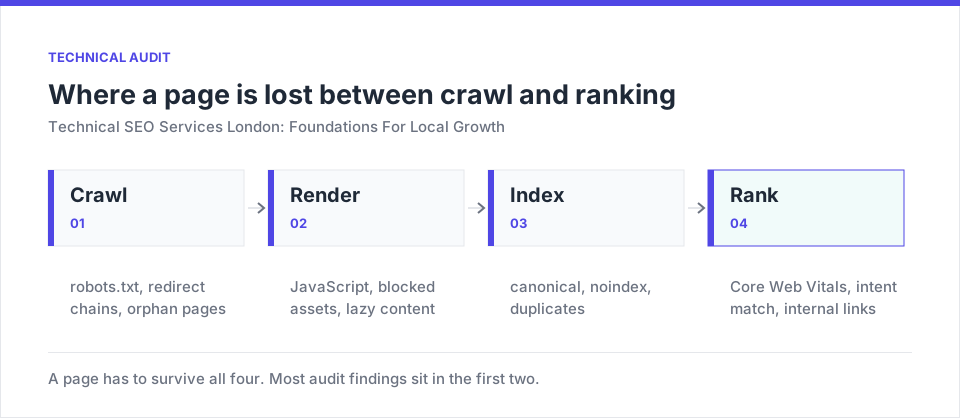
1) Technical health foundations for London websites
A robust technical base enables reliable diffusion of hub topics to district pages. Key areas include Core Web Vitals performance, secure connections, proper crawlability, and solid indexing. For London users, speed and mobile usability are decisive factors affecting engagement and conversions in busy commuting contexts. Implement a clean robots.txt, prioritise a well-structured XML sitemap, and ensure critical pages (hub topics and district assets) load quickly even under peak London traffic patterns.
Governance tailwinds come from TPIDs mapping hub topics to district assets so changes preserve provenance as diffusion occurs. Activation Kits provide per-surface templates that standardise outputs, while Surface Contracts define cadence and data schemas across eight surfaces. This trio creates auditable, repeatable diffusion that scales across London boroughs from Westminster to Wandsworth and beyond.
- Speed and rendering: optimise critical rendering paths, images, and server response times for London devices and networks.
- Crawlability and indexing: establish priority crawl directives and district-focused sitemaps to guide search engines to hub pages and district spokes.
- Canonicalisation and duplication control: ensure clean URL structures to prevent content cannibalisation across district pages.
- Security and privacy: maintain HTTPS and UK-compliant privacy measures to build user trust and search-engine confidence.
2) Structured data strategy and TPID governance
Structured data acts as the translator between London’s local realities and search engines. LocalBusiness, LocalService, FAQ, and event schemas should be TPID-linked to hub topics, so district assets diffuse with provenance. Maintain high-quality data for addresses, hours, services, and GBP-related information. Regular audits prevent schema drift as new districts are onboarded and as Google surfaces evolve in local results, knowledge panels, and maps environments.
Activation Kits per surface ensure consistent schema deployment, while Surface Contracts specify required fields, validation rules, and cadence. This alignment makes diffusion across eight surfaces coherent, traceable, and ROI-friendly for London campaigns.
- TPID-linked schemas: connect LocalBusiness, LocalService, and FAQ blocks to hub TPIDs for provenance.
- Schema validation cadence: schedule quarterly checks to maintain accuracy as districts change or expand.
- Maps and knowledge panels synergy: deploy schema that supports local packs, knowledge panels, and GBP posts with shared TPID context.
3) Surface activation and diffusion cadence
Activation cadence governs how often content updates and signal activations occur per surface. London campaigns benefit from a disciplined, surface-specific rhythm that matches local consumer behaviour and business cycles. Activation Kits should provide ready-to-deploy templates for GBP, Local Pack, knowledge panels, and Maps, while Surface Contracts formalise the data exchange cadence and schema expectations across eight surfaces. The diffusion model should be auditable so stakeholders can see how hub topics travel from central London hubs into Westminster, Camden, and other districts while preserving topical authority.
- Cadence standards: define per-surface publication and update frequencies that align with local events and seasonal demand.
- Diffusion traceability: ensure every asset diffuses with TPID tags and is reflected in dashboards and reports.
- What-If planning integration: simulate diffusion scenarios to inform budgeting and resource allocation.
4) Crawling, indexing and URL hygiene in London
A well-ordered crawl and indexation framework reduces friction for London users who switch between mobile and desktop, commute times, and location-specific searches. Prioritise district landing pages and hub topics through intelligent sitemaps, manage canonical URLs to prevent duplication, and ensure a logical information architecture so search engines can interpret proximity signals accurately. Regularly review robots.txt directives to align with district diffusion plans and activation cadences.
TPID-driven governance ensures content diffusion retains provenance, while Activation Kits provide surface-ready templates to support rapid deployment across the city. The result is a scalable, auditable diffusion model that maintains search-engine clarity as London expands its district footprint.
- XML sitemap prioritisation: elevate district pages and hub content in order of local demand and traffic.
- Canonical hygiene: avoid cross-district duplication by maintaining hub-to-district canonical targets.
- Robots and crawl directives: tailor robots.txt for district diffusion contexts without blocking essential pages.
5) Local signals, GBP integration and proximity
Local signals tied to Google Business Profile (GBP) reinforce proximity and trust. Ensure GBP is optimised with district-appropriate updates, photos, and posts that link back to hub topics via TPIDs. Maintain NAP consistency across directories and use structured data to support knowledge graphs and local knowledge panels. This alignment accelerates diffusion across maps and local search results while keeping governance traceable within your activation framework.
- GBP cadence by district: schedule regular updates and responses to reviews to boost local credibility.
- Citations and NAP hygiene: maintain district-level consistency, tying citations to TPIDs where possible.
- Local visuals: use district-specific imagery with proper alt text linked to TPIDs to strengthen proximity signals.
Speed, Core Web Vitals And Performance Optimisation For London Websites
In a city with a dense, highly mobile audience, performance is a key differentiator. For London-based brands, fast page loads, reliable interactivity, and visual stability are not luxuries but expectations tied to local search visibility, user satisfaction, and conversions. This Part 4 of the London Technical SEO Services series delves into speed strategies, Core Web Vitals management, and practical performance optimisation that aligns with London’s governance framework—Translation Provenance Identifiers (TPIDs), Activation Kits, and Surface Contracts. A fast, robust foundation enables reliable diffusion of hub topics to district assets across eight surfaces while preserving provenance and ROI.
1) Understanding Core Web Vitals in a London context
Core Web Vitals (CWV) quantify the user experience in real-world terms. The three pillars—Largest Contentful Paint (LCP), First Input Delay (FID), and Cumulative Layout Shift (CLS)—serve as the primary performance barometer for London audiences who switch between mobile and desktop during transit and in cafés around Farringdon, Canary Wharf, and South Kensington. London-specific diffusion relies on TPIDs to preserve hub topic provenance as district assets diffuse to spokes across eight surfaces.
- LCP: target under 2.5 seconds for largest above-the-fold content on desktop and mobile, prioritising hero elements and critical images that ladders up to hub topics.
- FID: reduce interaction delay by minimising JavaScript work on the main thread and deferring non-critical tasks.
- CLS: stabilise layout by reserving space for dynamic content and avoiding unexpected shifts in hero areas during navigation.
2) Practical speed optimisations for London pages
Speed improvements must be practical and measurable. The following actions prioritise London pages where local intent and proximity signals have the greatest impact on diffusion across eight surfaces. Activation Kits provide per-surface templates for speed-focused outputs, while TPIDs ensure performance gains remain linked to hub topics and district assets.
- Image optimisation and modern formats: convert unoptimised images to modern formats (WebP/AVIF) and apply responsive sizing to reduce payloads across district pages.
- Critical rendering path optimisation: inline critical CSS, defer non-critical JavaScript, and preconnect to essential origins such as Google Fonts and content delivery networks serving London regions.
- Caching and CDNs: implement edge caching and a London-area CDN to minimise latency for users across boroughs from Westminster to Croydon.
3) Mobile-first performance and UX in London
With the bulk of local queries happening on mobile, a London-specific speed programme must prioritise mobile performance. Avoid intrusive interstitials, optimise font loading, and ensure tap targets are accessible on small screens. A smooth mobile experience supports diffusion to district assets and strengthens the signals that improve Local Packs, Maps, and knowledge panels across the city.
- Mobile font and rendering: preload essential fonts and avoid layout shifts caused by late font loading.
- Interaction readiness: ensure interactive elements respond within 100 milliseconds where possible, particularly on district pages with service lists and booking forms.
- Preload critical assets: preconnect to origins used for maps, GBP, and hub-topic assets serving London boroughs.
4) Measuring impact: CWV improvements and ROI
Measurement should tie CWV improvements to tangible business outcomes. Use per-page CWV dashboards to monitor LCP, FID, and CLS across London districts, then correlate with district-level engagement, inquiries, and bookings. What-If ROI planning should incorporate CWV uplift assumptions to forecast the impact of speed optimisations on diffusion velocity and overall ROI. For authoritative guidance on CWV, consult Google’s Core Web Vitals documentation and Web Vitals guidance: Web Vitals and Core Web Vitals guidelines.
- Per-surface CWV KPIs: track LCP, FID and CLS by surface and district to identify diffusion bottlenecks.
- District conversion correlation: connect CWV uplift to inquiries and bookings to demonstrate ROI.
- What-If planning with CWV: model how faster outputs accelerate diffusion across eight surfaces in London.
5) Implementing a London CWV plan: 90-day action plan
- Audit and baseline: run a London-wide CWV audit, prioritise district pages with the worst LCP and CLS, and establish baseline metrics.
- Prioritise quick wins: fix hero content, optimise above-the-fold loading, and apply image optimisations to high-traffic district pages.
- Deploy Activation Kits for speed outputs: implement per-surface speed templates across eight surfaces to maintain diffusion discipline.
- Publish a CWV governance plan: define cadence for monitoring CWV, What-If ROI, and district diffusion reviews.
- Review and iterate: after 90 days, assess gains, adjust surface cadences, and expand to additional districts with proven improvements.
