Introduction to London SEO: Why Local Optimisation Matters
London is one of Europe\'s most competitive markets for search discovery. Local intent often hinges on the borough you serve, the transport links customers use, and the times they search. A well-structured London SEO programme blends city-wide authority with district-level proximity signals to ensure visibility where customers actually search and shop.
At LondonSEO.ai, we help London businesses balance scalable technical health with local content relevance, aligning everything from site architecture to GBP health and local page depth. In this opening section you\'ll learn the rationale for local optimisation, the two-tier framework used across our engagements, and what measurable outcomes you can expect when you work with London-based SEO specialists.
Why Local Optimisation Matters in London
London shoppers frequently begin their journeys with local intent. They search for something specific in Bermondsey, or near Kings Cross, or close to their office in Canary Wharf. Local results, maps and Local Pack placements drive footfall to stores and online conversions alike. For ecommerce sites, proximity signals are amplified when site architecture mirrors the city\'s geography: district landing pages, borough depth, and consistent NAP across listings. A London-focused programme also considers transport patterns, peak shopping times, and multilingual needs that reflect London\'s diverse communities.
Key benefits of local optimisation include improved Local Pack visibility, accurate Name, Address and Phone data, well-structured category and product pages that support district depth, and content clusters that address common London questions. A governance model keeps central teams aligned with borough teams, enabling scalable localisation without compromising performance or brand consistency.
London SEO Foundations: The Be London and Ru London Framework
Our approach starts with a city-wide spine that establishes Be London as the central authority for the capital. From there, Ru London unfolds into district- and borough-level surfaces, ensuring content and signals are highly aligned with local intent. This two-tier structure supports both scalable governance and local relevance, reducing the risk of signal dilution as the London footprint grows.
Foundational elements include clean site architecture, canonicalised URL hierarchies, robust local business data, and structured data that enhances local search presence. A focus on page speed, mobile UX, and stable hosting underpins reliable performance during peak periods across London. You\'ll also see how a disciplined approach to content clusters, internal linking, and GBP health translates into more visible Local Pack impressions and better Maps engagement.
What to Expect From London SEO Specialists
A London-based SEO partner should deliver a transparent, evidence-based path from technical health to local visibility and business outcomes. Expect a structured discovery, a technical audit tailored to your platform, a proximity strategy mapped to boroughs, and a practical implementation plan. Governance and reporting should translate technical wins into London-specific metrics, so you can see how improvements in Local Pack, Maps, and local pages drive store visits and online conversions.
Deliverables commonly include a technical SEO audit, a borough-by-borough proximity roadmap, optimised on-page and architectural elements, performance improvements, and a governance framework that keeps central and local teams aligned. For credibility, you can review case studies and client testimonials on our site, and you can start a customised assessment by visiting our SEO services or contacting our team.
For authoritative guidance, you can reference Google\'s Local SEO guidance in the official Search Central materials to ensure your approach aligns with best practices.
Starting Your London SEO Journey
To begin, engage a London SEO specialist who can map your technical health to local objectives. Request a transparent scope, an actionable proximity plan, and a governance framework with cadence, dashboards, and defined ownership. A practical first step is to book a discovery with LondonSEO.ai and request a customised road map for your London store.
We emphasise a city-wide spine complemented by borough depth, with Translation Provenance to maintain terminology consistency as you grow. For an overview of our services, visit our SEO services or reach out via the contact page.
Understanding the London Search Landscape
London’s search ecosystem is highly localised and competitive. Local intent is anchored to boroughs, transport routes and even time of day, with mobile usage playing a dominant role in how people discover products and services. Local results, maps and Local Pack placements often determine whether a user clicks, visits a store, or converts online. At LondonSEO.ai we help London businesses map the city’s geography to digital signals, balancing city-wide authority with district-level proximity signals to improve visibility where it matters most.
In this section we unpack how local intent, dense competition, and mobile habits shape London queries, and outline practical steps to structure keyword and content strategies that capture the most valuable surfaces across the capital.
Local intent and the London user journey
Local intent in London frequently combines city-wide queries with district or neighbourhood cues. People search for terms like those anchored to Bermondsey, Kings Cross, or Canary Wharf, or for city-wide needs such as transport links, events, and retail clusters. Local results, Maps integrations and the Local Pack are pivotal for driving footfall to physical stores and boosting online conversions. A London-focused approach should map site architecture to geography: district landing pages, borough-depth content, and consistent NAP data across listings to reinforce proximity signals.
Key outcomes of strong local intent optimisation include higher Local Pack visibility, improved GBP data quality, and well-structured content clusters that address common London questions. A governance model that connects central and borough teams helps maintain brand consistency while enabling scalable localisation.
London SEO foundations: Be London and Ru London framework
A city-wide spine—Be London—establishes the capital’s governing authority and GBP health, while Ru London unfolds into district- and neighbourhood-level surfaces. This two-tier framework supports scalable governance and strong local relevance, avoiding signal dilution as the London footprint grows. Foundational elements include clean site architecture, canonicalised URL hierarchies, robust local business data, and structured data that enhances local search presence. Page speed, mobile UX and stable hosting underpin reliable performance during peak London periods. A disciplined content strategy, clusters, internal linking and GBP health translating into Local Pack impressions and Maps engagements are all part of the London-specific playbook.
From a practical perspective, expect borough-focused content clusters and district depth surfaces to align with city-wide topics. The goal is to create a cohesive experience that mirrors how Londoners search and navigate the city, from a beeline search to a local decision.
Magento-Specific insights for London stores
Although the London market is platform-agnostic at its core, Magento stores benefit from its ability to manage large product catalogs and complex navigations while still supporting proximity signals. A London-focused Magento strategy should couple a city-wide technical spine with borough landing pages, coupled with robust governance across districts. This ensures Local Pack and Maps visibility translate into local visits and conversions, even when the catalog expands across multiple boroughs.
Practical steps for London keyword and content strategies
Begin with geo-targeted keyword research that includes city, district and neighbourhood modifiers. Build content clusters around borough pages, guide content for transport routes and local events, and ensure all pages carry clear local intent signals. Use Translation Provenance for multilingual surfaces and Region Templates to standardise page layouts. Monitor Local Pack share, Maps interactions and GBP health as primary indicators of proximity performance.
A data-driven approach and disciplined governance help London stores scale proximity content while preserving brand voice and performance health. For authoritative guidance, you can reference Google’s Local SEO guidance to ensure alignment with best practices while tailoring the strategy to London’s unique geography and transit patterns.
Next steps for London stores
To translate these insights into a practical plan, engage a London-based SEO partner who can map technical health to borough-level objectives. Explore our London SEO services at our SEO services or start a customised assessment via the contact page.
Magento SEO Specialists London: A Practical Guide to Local Optimisation
London’s ecommerce landscape remains intensely competitive, with shopper intent shifting across boroughs, transport routes and time of day. A Magento store needs a scalable technical spine paired with a localised content strategy to appear where it matters most. London-based Magento SEO specialists deliver a borough-ready playbook: they audit platform health, map local demand, and align technical fixes with London buyer journeys.
At LondonSEO.ai, our network combines deep Magento expertise with hands-on local optimisation to deliver measurable improvements in visibility, traffic and conversions across London’s diverse districts. In this section you’ll learn what genuine Magento expertise looks like in practice, what a practical London-based engagement entails, and how governance and reporting translate technical improvements into tangible business outcomes for your London store.
Local Profiles, GBP Health And Local Citations
Local visibility begins with accurate, consistent business data. This means GBP (Google Business Profile) health, NAP (Name, Address, Phone) hygiene, and validates across district surfaces. In a London context, a disciplined approach ensures: consistent business data across maps and knowledge panels, borough-specific landing pages that reflect real consumer travel and shopping behaviours, and robust local citations that corroborate your proximity signals. A strong GBP health baseline supports Local Pack impressions and reduces friction for users who search for a specific neighbourhood or a nearby store.
Practically, London stores should standardise the local data across all surfaces, deploy district landing pages that mirror the city’s geography, and implement a periodic data-audit cycle. This enables rapid detection of inconsistencies and swift remediation, which in turn strengthens proximity signals for Maps and local search.
For authoritative guidance on Local SEO, refer to Google’s Local SEO guidance and ensure your approach remains aligned with best practices while tailored to London’s unique geography and transit patterns. Google Local SEO guidelines.
Be London And Ru London: The Two-Tier Local Optimisation Framework
Our approach anchors on a city-wide spine (Be London) that establishes authority and GBP health for the capital, followed by district-level surfaces (Ru London) that surface proximity signals in Borough depth pages. This two-tier framework enables scalable governance while preserving local relevance. Clean site architecture, canonicalised URL hierarchies, robust local business data, and structured data underpin reliable performance during peak London periods. Content clusters and a disciplined internal linking strategy translate city-wide expertise into borough-specific visibility.
Critically, content created for borough surfaces should reflect local needs, from transport links and events to area-specific queries. The governance model here helps central teams stay aligned with borough teams, ensuring brand consistency and rapid localisation as new districts come online.
Canonicalisation, URL Structure And Depth Management In Magento
Magento stores often generate many URLs through filters and layered navigation. A disciplined approach is essential to avoid indexation bloat while keeping surface areas discoverable. Implement concise, readable URLs that reflect the geography (city > district > neighbourhood) and apply canonical tags to consolidate variants. Use strategic noindex on depth pages that do not add unique value or duplicate content. A city-first spine should expand into district pages and then to borough depth, keeping depth well within crawl-friendly limits.
Region Templates should standardise page layouts across borough surfaces, while Translation Provenance protects terminology and phrasing across languages used in London’s diverse communities. Regular audits help identify orphaned pages, broken canonical references, or redirects that could disrupt user journeys from discovery to local action.
- Define a city-first spine that branches into district and neighbourhood depth pages.
- Ensure every surface serving local intent has a canonical URL reflecting its geography.
- Avoid duplicate content by consolidating similar surfaces and using noindex where appropriate for faceted navigation.
- Preserve Magento’s layered navigation but optimise it for crawl efficiency and surface depth.
- Apply Region Templates to standardise page templates while accommodating local nuances.
Practical Steps For London Magento Stores
Implementing local optimisation requires a clear, actionable plan. Start with a city-wide spine that supports borough depth while preserving GBP health and Maps presence. Build borough-focused content that answers local questions and reflects transport realities. Maintain Translation Provenance to ensure terminology consistency as you scale across London’s districts. Align internal links to guide users from city hubs to district depths and then to individual product surfaces where relevant.
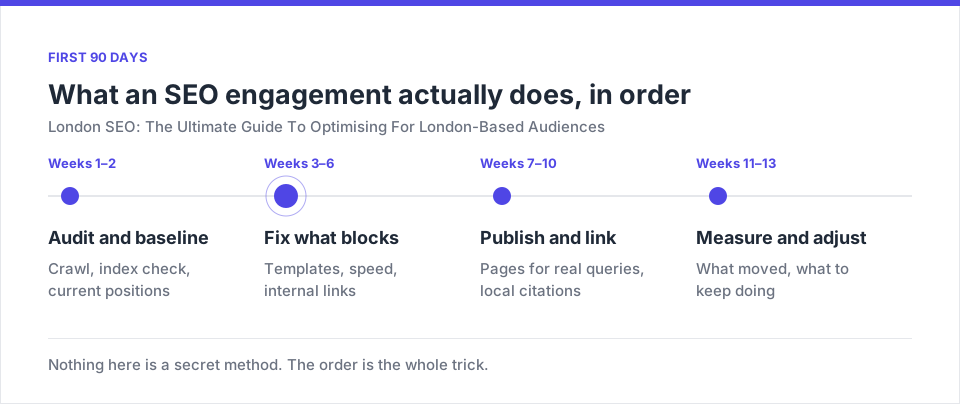
To translate these concepts into practice, deploy a phased 90-day plan that integrates governance, content, and technical health. A practical cadence is: Weeks 1–4: establish governance, map borough custodians, and configure dashboards; Weeks 5–8: publish borough landing pages and begin locality-specific content; Weeks 9–12: scale to additional boroughs and refine ROI reporting. This progression ensures a controlled, measurable rollout that protects surface health while enabling rapid value delivery.
Monitoring, Dashboards And Proximity Governance
Ongoing monitoring is essential to connect technical health with local outcomes. Build dashboards that synthesise GBP Insights, GA4 and Google Search Console, enabling borough-level drill-downs while maintaining a city-wide view. Track Local Pack impressions, Maps interactions, and proximity page engagement alongside local conversions and store visits. Establish alert thresholds for crawl errors, broken signals, or sudden shifts in proximity signals. Governance should define clear ownership for each surface and a cadence of reviews that keep priorities aligned with business goals.
Next Steps: Engaging LondonSEO.ai
Ready to start with a practical proximity roadmap for your London Magento store? Explore our Magento SEO services at LondonSEO.ai or book a discovery via the contact page to get a borough-focused assessment. For authoritative references, consult Google’s local structured data guidance and align your strategy with industry best practices while tailoring to London’s unique geography and transport dynamics.
Magento-Specific Insights For London Stores
Magento stores in London face a distinctive mix of large product catalogs, complex navigation, and highly local shopper journeys. This part of the LondonSEO.ai series concentrates on Magento-specific practices that translate city-wide authority into borough-level proximity. It builds on the Be London and Ru London framework by detailing how to structure surfaces, optimise data quality, and govern extensions so proximity signals stay strong as your London footprint grows.
Why Magento requires locality-aware architecture in London
Magento’s catalog-centric architecture is powerful but can become brittle if not organised with locality in mind. A London-focused programme begins with a city-wide spine that communicates Be London authority and GBP health, then expands into district and borough depth pages (Ru London). This two-tier approach ensures product surfaces remain discoverable while proximity signals are amplified by district-specific content, local data accuracy, and targeted keyword clusters. In practical terms, you’ll want a canonical hierarchy that mirrors London’s geography and a disciplined depth strategy to avoid crawl inefficiencies from endless facet combinations.
Crucially, you should tie district depth to real shopper intent signals—neighbourhood event pages, transport routes, and local promotions—so that local surface relevance translates into store visits and nearby purchases. This means aligning your catalog structure, category pages, and product data with district and borough pages so search engines understand the geography-backed context behind every surface.
Be London and Ru London in Magento: governance and surface strategy
Be London establishes the capital-wide authority, GBP health, and canonical signals. Ru London translates that authority into borough- and district-level visibility, surfacing proximity signals where shoppers actually search. For Magento stores, this means: (1) a city hub with robust product data and GBP health, (2) district landing pages that reflect local travel patterns, and (3) depth pages that handle neighbourhood-specific intents. The governance model should circulate ownership between central teams and borough custodians, ensuring brand consistency while enabling rapid localisation as new districts come online.
Implement Region Templates to standardise page layouts across borough surfaces and Translation Provenance to safeguard terminology as you scale across London’s multilingual landscape. Regularly review canonical rules and cross-surface linking to keep authority flowing from city to district to borough without creating crawl bottlenecks.
Canonicalisation, URL structure and depth management in Magento
Magento’s layered navigation and faceted filters can generate a sizeable surface set if not controlled. A practical approach is to build a city-first spine that branches into district pages and then borough-depth pages, with clean, readable URLs that embed geography (for example, /london/borough-name/product-name). Canonical tags should point to the most authoritative surface for a given query, while noindex can be applied to depth variants that add little unique value. This strategy prevents indexation waste and ensures proximity signals remain strong on surfaces customers actually visit.
In addition, use Region Templates to standardise page templates across borough surfaces so content remains consistent as you scale. Translation Provenance ensures terminology remains aligned across languages and dialects used by London’s diverse communities, preventing drift in product names, descriptors and calls to action across surfaces.
Practical steps for borough-ready product and category surfaces
Begin with geo-targeted keyword research that identifies city, district and neighbourhood modifiers, then map content clusters to borough landing pages. For product pages, ensure the data schema is robust and consistent across district surfaces, with localised attributes such as store pickup availability and next-day delivery options that reflect London’s delivery realities. Maintain Translation Provenance so terminology stays consistent as you publish new borough-depth pages and multilingual variants.
Practical execution should prioritise canonical discipline, structured data alignment (Product, Offer, BreadcrumbList, Review), and strategic internal linking from city hubs to district pages to product surfaces. This approach helps search engines understand proximity context and improves Local Pack and Maps visibility for London stores.
Caching, performance and Magento-specific reliability in London
Performance is a core SEO signal in London, where users expect speed on mobile networks and during peak city activity. Magento sites should prioritise a robust full-page caching strategy, Redis-backed session storage, and CDN-driven asset delivery to minimise latency for borough pages and product surfaces. Align hosting with Magento’s requirements—PHP version compatibility, database tuning, and scalable infrastructure—to sustain optimal Core Web Vitals while supporting large product catalogs and extensive faceted navigation.
Additionally, optimise images, defer non-critical JavaScript, and implement region-aware caching to ensure borough landing pages load quickly even as you scale. These technical health gains directly influence local visibility and the likelihood of users engaging with local collections and store pickup options.
Structured data and proximity signals for borough surfaces
Structured data should reflect the city-to-district-to-borough topology. Deploy Product, Breadcrumb, LocalBusiness, and FAQ schemas where relevant, ensuring price, availability, and reviews stay current. Translation Provenance helps sustain terminology accuracy across languages when expanding to new boroughs. The result is richer search results and stronger Maps presence for local surfaces that London shoppers naturally navigate.
Governance, extensions and risk management in Magento
Third-party modules can enhance or hinder proximity signalling. Implement an extensions governance process: inventory modules, assess their impact on crawl paths and canonical signals, and test changes in staging before production. Maintain a rollback plan if a module update disrupts district or borough surfaces. Centralised extension management helps prevent conflicts with proximity strategy and borough depth pages, safeguarding Local Pack and Maps visibility during upgrades.
Measurement, dashboards and proximity governance
Ongoing monitoring should blend GBP Insights, GA4, and Google Search Console into borough-level drill-down dashboards while preserving a city-wide view. Track Local Pack impressions, Maps interactions, and proximity page engagement alongside local conversions. Establish alert thresholds for crawl errors, missing data, or sudden shifts in surface performance. Regular governance cadences ensure surface ownership remains clear as you scale across Be London and Ru London.
Next steps: engaging LondonSEO.ai for a borough-focused plan
Ready to translate these Magento-specific insights into action for your London store? Explore our Magento SEO services at our Magento SEO services or book a discovery via the contact page to receive a borough-focused assessment. For authoritative guidance on local surfaces, reference Google's Local SEO guidance to ensure your approach remains aligned with best practices while tailored to London’s geography and transit patterns.
London Focused Keyword Research
In London, keyword research must reflect the city’s geographic complexity and the diversity of shopper journeys. This part of the LondonSEO.ai series translates the Be London and Ru London framework into a geo-aware keyword strategy that captures city-wide intent while surfacing district- and borough-level opportunities. By anchoring keywords to both the capital and local neighbourhoods, you create content clusters that map cleanly to the user’s proximity journey—from search to store visit or purchase.
The aim is to identify geo-targeted terms that align with London’s geography, transport patterns, and multilingual communities, then translate those signals into pages and content that strengthen Local Pack and Maps presence. A well-structured keyword programme underpins localisation, content planning, and governance across boroughs for scalable growth.
Geo-Targeted Keyword Framework For London
London-focused keywords are best organised into three layers that mirror Be London and Ru London: city-wide anchors, district-level surfaces, and borough-depth pages. This layered approach helps maintain central authority while enabling precise proximity signals across neighbourhoods.
- City-wide anchors: Keywords that establish London as the context, such as london seo, london seo services, and seo london agency. These terms set the capital-wide authority that supports district signals.
- District and neighbourhood terms: Layered targets that include district names, e.g., london bermondsey seo, canary wharf local seo, kings cross district optimisation. These phrases recognise proximity and travel patterns that local consumers exhibit.
- Surface-level and product-leaning terms: Category and product surface terms that include locality cues, such as london leather bag buy in store london or london courier service near me. These drive local actions like store visits, click-and-collect, or local delivery inquiries.
When prioritising, pair high-volume city keywords with district variants that demonstrate meaningful intent and potential conversion. Use clustering to create content silos that answer common London-specific questions, events, and transit-related considerations. A governance plan ensures central themes stay aligned with borough depth outputs, preventing drift as new areas join the programme.
Intent Signals And Keyword Modelling For London
Understanding user intent is essential for London surfaces. Use a threefold model to classify keywords by intent and proximity relevance:
- Informational intent: Guides, neighbourhood profiles, transport links, local events and area-specific shopping tips. Examples include london events mayfair or transport routes in canary wharf.
- Navigational intent: People searching for a business or venue with a locality cue, such as london seo agency canary whistle or bermondsey store near me.
- Transactional intent: Local purchase or service actions, including london same-day delivery, click and collect in london boroughs, or booking an in-store consultation in a district.
Modeling these intents helps shape content calendars, page templates and internal linking strategies. Align keyword targets with borough content clusters so that the surface a user lands on contains relevant local information and actionable prompts.
Practical Keyword Research Process
- Phase 1 — City spine keywords: Start with London-wide terms that set authority and reflect core services. Validate search volume and competition to build a credible foundation.
- Phase 2 — Borough and district mapping: Create keyword maps that tie city topics to specific boroughs and districts. This yields numerous surface opportunities that align with local intent.
- Phase 3 — Content clustering: Group keywords into content clusters that feed borough landing pages, district guides, and product/category surfaces.
- Phase 4 — Data-driven validation: Use data from Google Trends, Google Search Console, and third-party tools to confirm seasonality, regional interest, and ranking potential by surface.
- Phase 5 — Prioritisation and ROI planning: Rank targets by expected proximity impact, potential conversions, and content feasibility. Map to content calendars and page prototypes.
LondonSEO.ai advocates a controlled, iterative approach, with clear tie-ins to borough depth pages and GBP health. For authoritative guidance on keyword best practices, consider Google’s keyword research guidance and Local SEO recommendations as a reference point, but tailor strategies to London’s geography and transit realities.
From Keyword Research To Content And Local Pages
Translate city-wide and district keywords into borough-facing pages and content clusters. Create borough landing pages that reflect local interests, including transport routes, events, and area-specific FAQs. Use Region Templates to standardise layouts so every borough page mirrors the authority of the Be London spine while delivering locality-specific value. Translation Provenance ensures terminology remains consistent as you scale across London’s multilingual communities.
Integrate keywords into meta data, headings, and on-page copy with natural rhythm. Construct internal links from city hubs to district pages and then to local product or service surfaces, ensuring crawl efficiency and a coherent proximity signal path for search engines.
Next Steps And How To Get Started
To implement a London-focused keyword programme, collaborate with a London-based SEO partner who understands Be London and Ru London. Begin with a city-wide keyword audit, then map findings to borough depth outputs, and finally integrate with content calendars and technical SEO health checks. For a practical, outcomes-driven approach, explore our Magento SEO services at LondonSEO.ai or contact the team to receive a customised borough-focused keyword plan. For reference, consult Google's Local SEO guidelines to align with official recommendations while tailoring to London’s distinctive geography and transit patterns.
Technical SEO Essentials for Local London Sites
Following the strong emphasis on local profiles in Part 5, a solid technical spine is essential to translate proximity signals into tangible outcomes for London's boroughs. This part outlines the core technical foundations that support Be London and Ru London, ensuring fast, crawl-friendly experiences across district and neighbourhood surfaces while remaining scalable as the capital grows.
Core technical pillars for London stores
- Mobile-first design and Core Web Vitals alignment: in London, shoppers rely heavily on mobile devices during commutes, so pages must load rapidly, render swiftly, and stay stable as users traverse borough depth pages.
- Caching, hosting, and infrastructure readiness for Magento stores: implement a multi-layer caching stack with full-page caching, Redis session caching, and a CDN that serves borough-specific content from edge locations near London users.
- Crawlability and URL hygiene: maintain a clean, hierarchical URL structure from city spines to district surfaces with robust canonical rules to prevent content duplication across locality variants.
- Structured data and proximity signals: deploy LocalBusiness, Product, BreadcrumbList and FAQ schemas where relevant, aligning data with borough landing pages to enrich Local Pack and Maps results.
- Governance integration for proximity signals: connect technical health with locality strategy through a clear governance framework that assigns ownership to Be London and Ru London surfaces and ensures data consistency as boroughs expand.
Magento-specific considerations for London stores
Magento's architecture excels with large catalogs but demands careful planning to preserve crawl efficiency as proximity surfaces grow. A London-focused approach starts with a city-wide spine that anchors GBP health and authority, then extends into district and borough depth pages. This two-tier model helps maintain surface discoverability and robust signals on Local Pack and Maps without exhausting crawl budgets.
Key technical levers include a robust full-page caching strategy, Redis-based session handling, and a content delivery network tuned for UK geography. Region Templates standardise borough page layouts, while Translation Provenance protects terminology across London's multilingual communities. Regular infrastructure reviews ensure compatibility with Magento upgrades and evolving search engine capabilities.
Structured data and proximity signals
Structured data should reflect the city-to-district-to-borough topology. Implement JSON-LD for Product, Offer, BreadcrumbList, LocalBusiness and FAQ where relevant, ensuring price, availability and reviews remain up to date. Align local data with borough landing pages to indicate proximity context, which boosts rich results in Local Pack and Maps. Translation Provenance helps maintain terminology across languages as new borough surfaces are added.
Canonicalisation, URL structure and depth management
Magento's layered navigation can generate many URL variants. A disciplined approach uses a city-first spine that branches into district and borough pages with clean, readable URLs. Canonical tags should point to the most authoritative surface for a given query, while strategic noindex is applied to depth variants that offer little unique value. Pagination should be handled with rel="next" and rel="prev" where appropriate to support crawl efficiency.
Region Templates ensure consistent page templates across boroughs, and Translation Provenance preserves terminology as you scale across London's linguistic diversity.
Measuring technical health and proximity outcomes
Technical health translates into proximity performance when you monitor Core Web Vitals, crawl health, and surface engagement by borough. Establish dashboards that blend GBP Insights, GA4, and Google Search Console to track Local Pack presence, Maps interactions, and index coverage alongside borough-level engagement and conversions. External references such as Google's local structured data guidelines can guide best practices while you adapt to London's geography and transit patterns.
Two practical metrics to track include page load speed by borough landing pages and the velocity of local signals (GBP health, maps interactions) that correlate with store visits and local orders.
Implementation steps for a London technical playbook
- Audit the current spine-to-depth topology and validate canonical signals across city, district and borough surfaces.
- Configure a caching and hosting plan that matches Magento workloads and scales with borough expansion.
- Implement structured data that mirrors the Be London to Ru London topology and extends to new boroughs as they activate.
- Standardise region templates and Translation Provenance to maintain consistency during growth.
- Set up borough-level dashboards combining GBP Insights, GA4 and GSC for proactive monitoring.
- Establish a governance cadence with defined ownership, SLAs, and post-migration audits to prevent drift.
Next steps: engaging LondonSEO.ai
To translate these technical essentials into a practical plan for your London store, explore our Magento SEO services at LondonSEO.ai or book a discovery via the contact page to receive a borough-focused technical blueprint. For authoritative context on local search technical practices, reference Google's Local SEO guidelines and structured data resources to align with industry standards while tailoring to London's geography.
Local Link Building And Partnerships In London
London’s proximity-led SEO strategy depends as much on credible local signals as on technical health. Local links and authentically earned partnerships reinforce borough-level relevance, bolster GBP health, and diversify referral pathways that search engines interpret as real-world trust. This part of the LondonSEO.ai series concentrates on practical approaches to securing locally meaningful backlinks, cultivating community collaborations, and governing outreach at scale across London’s diverse districts.
By aligning link-building with the Be London and Ru London framework, you ensure that external signals strengthen the authority of city-wide surfaces while deeply validating district and borough pages. The aim is to create a sustainable ecosystem where partnerships, sponsorships and editorial placements naturally support proximity content and local actions.
Why local links matter for London surfaces
Local backlinks carry more weight when they come from geographically relevant domains. For London stores, a link from a Bermondsey business association, a Westminster trade directory, or a Hackney community hub signals proximity in a way that generic national links cannot. These relationships help establish context for borough landing pages and district guides, reinforcing the narrative that your brand is embedded in the local economy.
Beyond authority metrics, local links contribute to user trust. When a potential customer sees a nearby store featured on a local partner site or reads a neighbourhood-focused case study, it elevates perceived legitimacy and improves click-through probability from search results and referral sources. In practice, the strongest gains come from relevance, recency and continued engagement with local communities.
Strategic approaches to local link acquisition in London
- Forge active local partnerships: Collaborate with nearby businesses, suppliers and service providers to create co-branded content and cross-promotional opportunities that live on borough pages and neighbourhood guides.
- Engage in community sponsorships: Sponsor events, charities, and local organisations that align with your target boroughs, then feature event roundups and sponsor pages that link back to relevant local surfaces.
- Collaborate with regional media: Pitch editorial stories about local initiatives, transportation links, or district innovations that include a contextual link to your borough content or case studies.
- Leverage local directories and professional networks: List on credible trade associations, city chambers and neighbourhood business directories that maintain quality control and editorial standards.
- Create authentic, location-based assets: Publish neighbourhood guides, supplier spotlights and case studies featuring real clients from specific boroughs, with links to landing pages that reflect proximity intent.
- Develop governance for outreach: Establish vetting, outreach templates, and approval workflows to ensure links are earned, relevant and compliant with local guidelines and search-engine best practices.
Anchor text and relevancy in a London context
Anchor text should reflect the proximity narrative. Local partner links should use anchors that describe the borough surface they support (for example, a link on a Bermondsey enterprise page pointing to Bermondsey-specific services). Avoid over-optimised, generic anchors across disparate surfaces; instead, let anchor text mirror user intent and the local surface where the visitor lands. This alignment enhances user experience and strengthens proximity signals for both Local Pack and Maps.
In practice, maintain a clear taxonomy for anchor text across boroughs and ensure that every external link has a meaningful, locality-aware context. Region Templates help standardise how borough pages reference external sources, keeping the proximity narrative cohesive as London expands coverage into new districts.
Measuring local link impact and governance
Link performance should be monitored in parallel with proximity metrics. Track referring domains by borough, referral traffic to borough landing pages, and changes in Local Pack impressions and Maps interactions. Combining GBP Insights with GA4 and Search Console enables a holistic view of how external signals translate into store visits and online conversions. Regular audits help verify the quality of links and ensure they remain relevant to the local surfaces they support.
Establish a governance cadence that assigns clear ownership for each surface, with quarterly reviews to assess link quality, relevance and ROI. Maintain a central log of outreach activity, partner commitments and any editorial placements, enabling transparent reporting to stakeholders across London.
Practical governance and next steps
To operationalise a robust London link-building programme, start with a clear policy that defines acceptable partners, outreach templates and approval workflows. Build a borough-focused outreach calendar that aligns with local events, business anniversaries and transport patterns to maximise relevance. For ongoing guidance and hands-on execution, explore our SEO services at LondonSEO.ai or contact the team to receive a borough-focused outreach plan. Align all activities with Google’s Local SEO guidelines to maintain best practices while sustaining locality relevance across London.
Local Link Building And Partnerships In London
London's proximity-led SEO strategy depends as much on credible local signals as on technical health. Local links and authentically earned partnerships reinforce borough-level relevance, bolster GBP health, and diversify referral pathways that search engines interpret as real-world trust. This part of the LondonSEO.ai series concentrates on practical approaches to securing locally meaningful backlinks, cultivating community collaborations, and governing outreach at scale across London's diverse districts.
Why local links matter for London surfaces
Local backlinks carry more weight when they come from geographically relevant domains. For London stores, a link from a Bermondsey business association, a Westminster trade directory, or a Hackney community hub signals proximity in a way that generic national links cannot. These relationships help establish context for borough landing pages and district guides, reinforcing the proximity narrative that search engines use to rank borough-specific content.
Strategic approaches to local link acquisition in London
- Forge active local partnerships: Collaborate with nearby businesses, suppliers and service providers to create co-branded content that lives on borough pages and neighbourhood guides. Sponsor local events and feature roundups that link back to relevant surfaces. Engage with regional media to secure editorial mentions that reinforce locality signals. List on credible trade associations and city chambers to maintain editorial standards.
- Develop authentic partnerships: Prioritise long-term relationships over one-off links. Create joint case studies, localised guides, or neighbourhood spotlight features that naturally attract links from nearby organisations with real proximity relevance.
- Leverage community content: Publish borough-specific resources, event calendars and sponsor pages that naturally attract local citations from community portals and local press.
- Coordinate anchor text strategy: Use locality-aware anchors that describe the surface being linked to (for example, Bermondsey guide, Canary Wharf hub, Lambeth business directory) to reinforce proximity signals for search engines.
Anchor text, relevance, and proximity signals
Anchor text should describe the locality surface. Use borough-specific anchors that reflect the content the user lands on, such as Bermondsey store or Canary Wharf guide. Maintain a clean separation between internal linking and external link-building, and use Region Templates to standardise how borough pages reference external partners and local events. Avoid generic, over-optimised anchors that fail to convey local intent or misalign with the destination surface.
Digital PR that supports locality depth
Digital PR in London should elevate borough narratives. Create campaigns around local events, collaborations with nearby businesses, or community initiatives that resonate with residents. Ensure landing pages or assets capture local context and provide tangible value for Local Pack and Maps users. PR hits should carry a borough-focused angle and backlinks from credible local outlets or industry publications, reinforcing proximity signals and helping district pages rank more robustly.
Measurement framework for link-building and PR impact
Combine GBP Insights, GA4 and Google Search Console into borough-level dashboards. Track new backlinks from relevant local sources, referral traffic to borough landing pages, and increases in Local Pack impressions and Maps interactions that correlate with store visits or local inquiries. Establish governance with ownership per surface and regular reviews to assess link quality and ROI. This framework ensures external signals translate into tangible proximity performance across London.
Practical metrics include new local backlinks by borough, referral traffic to borough pages, Local Pack share shifts, and Maps engagement alongside proximity-driven conversions. Regular audits help sustain content quality and prevent drift in locality messaging as boroughs expand.
90-day implementation blueprint for link-building and PR
The following phased plan translates activities into a practical rollout that scales locality signals while preserving site health.
- Weeks 1–4: Define borough targets, set outreach goals, establish a glossary for local terminology, and create a borough content calendar tied to local events and transport patterns.
- Weeks 5–8: Initiate local outreach, secure editorial placements, publish borough-focused landing pages and cluster content, and align anchor text with district intent.
- Weeks 9–12: Expand PR initiatives to additional boroughs, optimise internal links to reflect new signals and deliver ROI by surface with concrete recommendations.
Measuring ROI and Reporting for Magento SEO
Measurement and governance are the engines that translate technical health into real-world growth for London Magento stores. This part focuses on establishing a clear, actionable framework that ties proximity work to revenue, with practical steps for coordinating central and borough-level initiatives. By codifying reach, engagement and conversion metrics, you can sustain momentum as your London footprint scales across more districts and surfaces. This section also supports a locality-focused ROI narrative aligned with the Be London and Ru London framework.
ROI Framework For London Magento Stores
Translate proximity activity into business value by measuring how visibility, engagement and conversions relate to store performance across London surfaces. The framework below demonstrates how to connect city-wide authority to borough-level outcomes while maintaining robust governance.
- Align business goals to surfaces: Define target outcomes for Be London (city spine) and Ru London (borough depth) surfaces, ensuring every initiative contributes to revenue, enquiries or footfall.
- Define micro-conversions per surface: Map KPI micro-goals such as GBP health refresh, local page depth visits, and Maps interactions to lead indicators for conversions.
- Standardise data definitions: Create a common data model across GBP Insights, GA4 and GSC so metrics are comparable by surface and borough.
- Dashboards by surface: Build city-wide dashboards plus borough drill-downs to visualise proximity health and business impact.
- Attribution model: Use a practical attribution approach (multi-touch, with a last-click bias for proximity surfaces) to credit proximity activity for conversions.
- Governance and cadence: Establish monthly tactical reviews and quarterly strategic outlooks to maintain alignment and reallocate resources where ROI is strongest.
KPIs By Surface
To avoid misalignment, segment metrics by the two-level London framework: Be London (city spine) and Ru London (borough depth). This separation helps prioritise investment and makes ROI transparent to stakeholders.
- City spine metrics: GBP health score, Local Pack impression share city-wide, Maps presence, site speed and mobile experience consistency.
- Borough depth metrics: Borough landing page sessions, depth-page engagement, local content interactions, and proximity event responses.
- Business outcomes by borough: Local inquiries, store visits (online and offline), click-and-collect, and local-order value.
90-Day Measurement Blueprint
A practical rollout plan binds governance, data integrity and proximity signals into a repeatable cycle. The blueprint below translates the strategy into actionable weeks.
- Weeks 1–4: Establish governance, confirm data feeds from GBP Insights, GA4 and GSC, and set up borough-level dashboards. Define micro-conversions and continuous data validation.
- Weeks 5–8: Publish borough landing pages, align content with proximity intents, and validate KPI reporting across surfaces. Implement initial ROI reporting templates.
- Weeks 9–12: Scale to additional boroughs, optimise dashboards based on early findings, and deliver a ROI narrative with recommendations for further expansion.
Governance And Reporting Cadence
Effective reporting translates data into decisions. Assign surface ownership, establish monthly tactical reviews and quarterly strategy sessions, and maintain a glossary (Translation Provenance) to ensure terminology consistency across London surfaces. Parity dashboards provide a city-wide lens with borough drill-downs so executives can quickly identify where to allocate resources for maximum proximity impact.
Next Steps With LondonSEO.ai
Ready to implement a rigorous ROI and reporting framework for your Magento store in London? Explore our Magento SEO services at LondonSEO.ai or book a discovery via the contact page to receive a borough-focused measurement plan. For authoritative context, consult Google’s guidance on local and structured data to reinforce your proximity signals while tailoring to London’s geography and transport dynamics.
Magento SEO Specialists London: Migration And Upgrades For Growth
Magento migrations and platform upgrades are pivotal moments for London retailers. When executed without proximity-aware SEO governance, they can erode Local Pack visibility, Maps presence and borough-level authority. LondonSEO.ai combines a city-wide Be London spine with borough-focused Ru London surfaces, ensuring migrations preserve proximity signals while unlocking scalable growth. This part outlines a practical migration playbook: planning indexability, mapping redirects, aligning content and data, governing extensions, and validating performance after launch.
By anchoring every decision in Be London and Ru London, you protect GBP health, maintain canonical integrity, and keep borough pages competitive as you upgrade. The guidance here is designed to translate technical changes into tangible outcomes across London’s diverse districts.
1) Revising indexability and local coverage before migrating
- Audit the current topology to map city hub surfaces to district and borough-depth pages, identifying surfaces that must be preserved or consolidated.
- Validate internal linking from the homepage to borough pages to ensure crawlers can discover the Be London spine and Ru London depth, avoiding orphaned surfaces.
- Verify GBP health baseline and local data consistency across all surfaces, ensuring Translation Provenance governs multilingual terms to avoid drift.
- Map canonical rules to prevent duplicate content and establish a city-first spine that fans out to districts and boroughs.
- Establish pre-migration KPIs, including Local Pack impressions and Maps presence, to serve as a baseline for post-migration comparison.
- Define a risk register and rollback plan to rapidly revert if essential issues arise post-migration.
2) Redirect strategy and URL architecture during migrations
- Create a comprehensive redirect map from legacy URLs to new borough- and district-focused surfaces, prioritising pages with the highest local intent.
- Preserve canonical signals by applying canonical tags to the most authoritative surface and implementing 301 redirects for moved pages.
- Avoid redirect chains and test redirects in a staging environment before production rollout.
- Where an exact surface does not exist after the upgrade, apply targeted noindex to duplicate or low-value variants to prevent crawl waste.
- Ensure the URL structure mirrors the Be London to Ru London topology (e.g., /london/borough-name/ or /london/district-name/) to support proximity signals.
3) Content, data structure and semantic alignment post-migration
- Review and update page titles, meta descriptions, and H1s to reflect the new borough-oriented surfaces without losing city-wide authority.
- Update structured data to reflect the Be London to Ru London topology, including Product, BreadcrumbList, LocalBusiness and FAQ schemas where relevant.
- Reconcile Translation Provenance across languages to ensure terminology consistency on all borough pages and district guides.
- Revalidate internal linking from the city hub through district pages to the new borough surfaces to preserve proximity pathways.
- Audit for orphaned content and fix any surface gaps that could impede discovery or create negative user experiences.
4) Extensions governance and risk management
- Inventory all Magento extensions that affect SEO surfaces and assess compatibility with the new version and topology.
- Test changes in a staging environment to identify impacts on crawl paths, canonical signals, and proximity data.
- Maintain a central extensions log and a rollback plan to address unexpected issues post-launch.
- Prioritise extensions that support proximity signals (SEO-friendly URLs, structured data, caching improvements) and regional governance.
- Communicate changes to stakeholders and ensure documentation reflects the new borough-centric surface strategy.
5) Testing, QA and monitoring post-migration
- Validate crawlability and indexation across city, district and borough pages, ensuring correct use of noindex where appropriate.
- Monitor Core Web Vitals and server performance for borough surfaces to maintain fast experiences during peak London activity.
- Check redirects and canonical tags post-migration and fix any broken signals promptly.
- Verify GBP health and Maps presence remains intact, and address any discrepancies quickly.
- Establish a post-migration dashboard that combines GBP Insights, GA4 and Google Search Console with borough-level drill-downs for ongoing visibility and conversions.
6) Next steps and practical rollout
Begin with a controlled, staged migration plan that links governance to borough custodians, with a clear content and data alignment checklist. Publish borough-specific landing pages and cluster content, then interpolate the results into ROI reporting that informs further expansion. For a practical, outcomes-driven approach, explore our Magento SEO services at LondonSEO.ai or contact the team to receive a borough-focused migration blueprint. For authoritative context on local and structured data, reference Google guidelines and adapt them to London’s geography and transport realities.
Conclusion And Practical Rollout Checklist
Across the LondonSEO.ai two-tier framework, Be London establishes capital-wide authority and GBP health, while Ru London translates that authority into borough-focused proximity signals. This final part distills the essential actions, governance practices, and measurement discipline you need to sustain momentum as your London programme scales. The rollout is designed to be repeatable, auditable, and respectful of Translation Provenance so terminology remains coherent as new boroughs join the map.
Executive Rollout Principles
Begin with a fixed governance charter that binds Be London and Ru London into a single cadence. Region templates standardise proximity blocks and page structures, while Translation Provenance protects terminology as the footprint expands. The aim is to deliver measurable Local Pack improvements and borough-level engagement without signal drift, enabling a smooth, scalable path from city-wide authority to district proofs.
- Define the Be London baseline: GBP health, hub topic integrity, and canonical Be London pages. This foundation anchors all localisation decisions.
- Identify priority boroughs for Ru London depth: Focus on districts with highest proximity demand and transport connectivity to maximise early impact.
- Lock region templates for consistency: Apply standardised layouts, signals and internal linking rules to accelerate locality expansion while protecting signal quality.
- Enforce Translation Provenance as a living glossary: Maintain terminology coherence across languages and surfaces as new boroughs activate.
- Cadence governance with auditable dashboards: Monthly reviews, clear ownership, and KPI traceability to keep locality initiatives aligned with business goals.
90-Day Rollout: Building A Cohesive Proximity Plan
Adopt a disciplined 90-day cadence that moves from governance setup to borough activation, ensuring GBP health remains front and centre. The rollout should progress through four key milestones: governance establishment, region template activation, glossary and localisation validation, and borough depth expansion with robust ROI reporting. The objective is to deliver early proximity wins while preserving surface health and terminology alignment for long-term scalability.
- Weeks 1–4: Finalise governance, appoint borough custodians, configure dashboards, and establish borough performance baselines tied to Local Pack and GBP metrics.
- Weeks 5–8: Publish initial borough landing pages, align proximity content with Be London topics, and commence Translation Provenance validation across languages.
- Weeks 9–12: Scale to additional boroughs, optimise internal linking paths, and consolidate ROI reporting to demonstrate proximity-driven outcomes by surface.
Migration To Scaled Operations
With a stable 90-day foundation, scale becomes the next frontier. Maintain a central repository of assets, glossary terms, and region templates, and ensure Translation Provenance accompanies every publication. The objective is to preserve the Be London spine while progressively activating Ru London depth surfaces across more boroughs, supported by parity dashboards that reveal proximity health and business impact in near real-time.
- Phase alignment: Ensure new boroughs slot into the Be London spine and Ru London depth with minimal disruption to existing signals.
- Redirect and URL discipline: Maintain consistent geography-forward URLs and canonical signals to protect authority during expansion.
- Content and data alignment: Update meta data, schema, and internal links to reflect new surfaces and proximity contexts.
- Extensions governance: Screen third-party modules for proximity impact; test changes in staging and maintain a rollback plan.
- Post-migration monitoring: Use borough-level dashboards alongside a city-wide view to detect drift and respond promptly.
Operational Playbook: Governance, SLAs And Reporting
Operational discipline is the backbone of sustainable locality growth. Establish a governance cadence with defined SLAs for technical fixes, content approvals, and data quality checks. Create a living glossary for Translation Provenance, and standardise region templates to ensure consistency across borough surfaces. Parity dashboards should be the default lens for reviews, enabling quick course corrections where proximity signals falter.
- SLAs and ownership: Document ownership for each surface and set response targets for critical issues affecting GBP health and proximity signals.
- Data governance: Maintain a single source of truth for GBP, GA4, and GSC data, with clear data definitions and naming conventions.
- Glossary governance: Update Translation Provenance with every publish to prevent terminology drift across locales.
- Cadence of reviews: Monthly operational reviews and quarterly strategic outlooks to reallocate budget toward the strongest proximity opportunities.
Next Steps: Engaging LondonSEO.ai For A Borough-Focused Plan
To translate these rollout principles into a practical action plan for your London store, explore our Magento SEO services at LondonSEO.ai or book a discovery via the contact page to receive a borough-focused blueprint. For authoritative context on local and structured data, reference Google's Local SEO guidelines and align your strategy with industry best practices while tailoring them to London’s geography and transport realities.
