Introduction to SEO
Search engine optimisation (SEO) remains the most cost-effective way to attract qualified traffic to a website without paid media. At its core, SEO is the practice of improving how a site is understood and rewarded by search engines, so that it appears more prominently for genuinely relevant queries. For UK audiences, SEO is not only about ranking for broad terms; it’s about aligning content with local intent, regulatory considerations, and the way people search in the United Kingdom. This section lays the groundwork for the series and sets out how SEO can power growth for London-based brands and nationwide organisations alike, using londonseo.ai as a partner to translate strategy into action.
SEO is sometimes described as a mix of art and science. It combines technical foundations, user-centric content, and credible signals from other sites to build trust with both search engines and users. The modern framework emphasises four interconnected pillars: technical reliability, content quality and relevance, authoritative signals from other sites, and a clear information architecture that helps search engines understand context. When these elements work together, your pages become more discoverable for the questions your target audience asks, across desktop and mobile devices alike.
For organisations operating in the UK, local and regional nuances matter. Local search evolves quickly, consumer privacy rules shape data accessibility, and the rise of AI-assisted search means your content must deliver clear value and verifiable signals of credibility. The practical upshot is that UK SEO today is less about chasing a single keyword ranking and more about building a visible, trustworthy presence across search surfaces, including traditional results, maps, knowledge panels, and AI-generated answers. London businesses, in particular, can benefit from strategically prioritising local intent, service-area pages, and credible content that demonstrates real expertise in their marketplace.
This article dares to combine practical, UK-focused guidance with a structured framework that scales from small local projects to enterprise initiatives. It is designed to be actionable for teams across marketing, content, and technical roles. Readers can expect concrete steps, real-world examples, and measurable targets that relate to business outcomes rather than vanity metrics alone. If you’re looking for a practical starting point or a partner with UK experience, explore the services London-based SEO teams offer at our services and how a UK-focused SEO strategy can complement your broader marketing plan.
To keep the discussion grounded, this part emphasises the value proposition of SEO for growth. SEO is not a one-off project; it’s a continuous, data-informed discipline that improves with discipline, experimentation, and ongoing validation. For London and broader UK audiences, success hinges on combining robust technical health with content that truly answers user needs and signals trust to search engines. As you read, you’ll see how to connect SEO activities to business KPIs, how to prioritise work based on impact, and how to align the plan with the expectations of UK searchers and regulatory environments.
- Understand SEO fundamentals and why organic search remains essential for growth in the UK market.
- recognise the UK user journey and how local intent shapes content and optimisation strategies.
- Identify how to balance technical health, content quality, and credible signals to improve visibility.
- Set business-driven goals that translate into actionable SEO workstreams and measurable outcomes.
In the following parts of the article, we’ll dive into how search engines work, how to set goals and KPIs, and how to build a practical workflow that starts with audits and ends with ongoing optimisation. For teams seeking a UK-focused blueprint, londonseo.ai serves as a reference point for practical execution—from technical fixes to content strategies and local SEO optimisations. If you want to explore concrete opportunities today, consider reviewing our SEO services or reaching out via the contact page to discuss a plan tailored to your London or UK-based business.
To maximise readability and effectiveness, this guide emphasises evidence-based practices. Where relevant, we reference industry-standard sources that provide in-depth explanations of how search engines interpret signals like user experience, content quality, and structured data. Readers should view SEO as a long-term investment: improvements compound as you publish better content, refine technical health, and expand your footprint across credible domains. You can start with a lightweight site health check and a focused content audit, then scale up to more ambitious pillar-and-cluster initiatives as confidence grows.
This opening part sets the stage for the rest of the series. In Part 2, we examine how search engines crawl, index, and rank pages, and how understanding user intent and SERP features informs prioritisation. Throughout, the UK context remains central: localisation, privacy, and the evolving AI-enabled landscape are constant threads that drive practical decisions. For readers who want to dive deeper into practical ROI, we’ll link to examples, templates, and case studies as the narrative unfolds, ensuring you can apply the ideas directly to your organisation or client work.
How Search Engines Work
Understanding crawling, indexing and ranking helps UK-based organisations design practical SEO strategies that align with London and national search behaviours. Search engines aim to return the most relevant, credible results quickly. They do this through three core stages: crawling (discovery), indexing (organisation), and ranking (selection). While the overarching concepts are universal, local nuances—privacy considerations, language, and SERP surfaces—shape how you prioritise work for UK audiences. London-based teams, including londonseo.ai, translate these fundamentals into actionable plans that fit real-world sites and customer journeys.
Crawling: How content becomes visible
Crawling is the process by which search engines deploy automated programs, commonly referred to as crawlers or bots, to explore the web and discover new pages. Googlebot is the most well-known example, but all major engines operate similar routines. Crawlers prioritise efficiency and breadth, following internal and external links to map the web as thoroughly as possible. A well-structured site with clear navigation and consistent linking helps crawlers reach important pages quickly, while a poorly organised site can leave valuable assets under-explored. For UK sites, mobile depth and site architecture matter because users often navigate on smaller screens and expect quick access to relevant information.
Practical steps to improve crawling include ensuring your robots.txt does not block essential content, providing a clean internal linking structure, and supplying a sitemap that accurately mirrors your site. The aim is to guide crawlers to the right places without bottlenecks or dead ends. If you have product pages, service-area pages, or region-specific content, it’s vital these aren’t obscured behind excessive layering or dynamic content that requires user interaction before the page can be discovered.
- Ensure important content is not blocked by robots.txt or meta robots directives.
- Maintain a clear, logical internal link structure that mirrors user navigation paths.
- Provide an up-to-date XML sitemap that reflects your current page set.
- Avoid gating essential content behind logins or heavy client-side rendering that hampers crawling.
Indexing: Making content searchable
Indexing follows crawling and represents the stage where search engines decide which pages to store in their searchable database. When a page is indexed, its content is analysed for relevance, structure, and the entities it mentions. Factors such as title, headings, alt text, structured data, and semantic relationships all contribute to how well a page is understood. In the UK context, language variants, regional terminology, and local signals can influence interpretation, so content should be explicit about location, services, and audience intent. Clear metadata and well-structured content increase the likelihood that your pages appear in relevant results, including knowledge panels and local packs.
To support indexing, use descriptive title tags, accessible headings, and schema markup where appropriate. Avoid duplicate content and ensure canonical URLs are correctly implemented to prevent indexing conflicts. Regularly audit your pages for outdated information, broken links, and outdated structured data usage to preserve visibility over time.
Ranking: Which results appear first
Ranking is the moment-to-moment calculative process by which search engines decide which pages best satisfy a user’s query. It combines relevance to the user’s intent with a broad set of signals that indicate quality, trust, and authority. Modern ranking models integrate traditional signals—content relevance, semantic depth, and keywords—with technical health indicators such as page speed and mobile usability. In the UK market, local signals like business listings, maps, and region-specific content can have outsized impact for location-based searches. The goal is to deliver results that not only answer the query but also reflect the user’s context and privacy expectations.
Key ranking signals include the following, with emphasis on user intent and experience. A concise, well-structured outline helps search engines match content to intent and supports better user engagement upon arrival:
- Content relevance to the user’s query and intent.
- Quality signals including Experience, Expertise, Authoritativeness and Trustworthiness (E-E-A-T).
- Technical health such as crawlability, mobile-friendliness, and fast load times.
- External signals like high-quality links and credible mentions from authoritative domains.
SERP features and user behaviour
Results pages have evolved beyond simple blue links. Knowledge panels, image carousels, video results, local packs and featured snippets capture attention and can shape user decisions even before a click. Optimising for SERP features requires direct answers, structured data, and content designed to address common user questions. For UK audiences, content that addresses regional queries, regulatory considerations, and local service details is more likely to appear in these enhanced results, improving both visibility and engagement.
Consider starting with content that cleanly answers frequent questions, uses concise formatting, and provides data or examples readers can quote. This approach supports not only traditional rankings but also placement in rich results that drive qualified traffic to your London or UK-focused pages.
Putting these ideas into practice means operating with a simple, repeatable process: crawl, index, rank, and measure impact. London-based teams working with londonseo.ai typically validate opportunities using data from Google Search Console, Google Analytics, and other UK-specific search patterns. Prioritise pages that align with user needs, ensure local relevance, and maintain a clean information architecture to support both traditional results and AI-assisted discovery. If you’re seeking a practical starting point, our SEO services offer a UK-centric blueprint, and our contact page can connect you with specialists who understand the London market and broader UK landscape.
Next, Part 3 translates these concepts into concrete goals and KPIs, showing how to convert theory into measurable outcomes. This practical framework is designed for UK marketing teams and agency partners looking to deliver sustained growth through well-structured, evidence-based SEO.
Defining SEO Goals and KPIs
Setting meaningful SEO goals begins with translating business aspirations into visible, measurable search outcomes. For UK organisations, this means linking SEO performance to revenue, customer acquisition costs, and long-term brand visibility within regulatory and privacy constraints. The aim is to establish a clear line from what the business wants to achieve to the SEO actions that will drive progress. London-based teams at londonseo.ai routinely start with a concise goal tree that aligns marketing, product, and commercial teams around shared targets.
Two practical principles shape this process. First, define outcomes that matter to the business, not vanity metrics. Second, choose indicators that are traceable to specific SEO activities, so success is visible to stakeholders across departments. By tying search visibility to conversions, qualified leads, or incremental revenue, you create a compelling case for ongoing investment and prioritisation.
- Increased organic leads for defined product or service lines.
- Growth in organic revenue and average order value from SEO-enabled pages.
- Improved cost metrics such as cost per acquisition (CAC) from organic channels.
- Enhanced local visibility for locations with physical footprints or service areas.
- Strengthened brand search and trust signals across UK search surfaces.
Once outcomes are defined, translate them into a plan of action. For example, if the goal is to lift qualified leads, you might prioritise pillar content that explains complex solutions, supplement it with client case studies, and optimise product or service pages for commercial intent. If local outcomes are critical, align optimisations with Google Business Profile, local landing pages, and clear service-area content. This alignment ensures every SEO activity contributes to a measurable business result.
SMART Goals For UK Audiences
Applying SMART in a UK context means choosing precise targets with realistic timeframes and reachable outcomes. Here are illustrative examples you can adapt to your organisation:
- Increase organic leads from London and the South East by 25% within six months by optimising high-intent service pages and local landing pages.
- Grow organic revenue from product pages by 15% year over year by improving conversion rate on top performing category pages.
- Improve organic click-through rate by 10 percentage points on core terms through improved title tags and meta descriptions within three months.
- Reduce organic CAC by 8% over the next quarter by aligning content with buyer stages and improving on-page relevance for the funnel.
- Boost local pack visibility for top 5 locations with service-area pages and Google Business Profile optimisation within two months.
To make these targets practical, translate each SMART goal into a small set of workstreams. For example, a revenue-focused goal might drive a cluster approach (pillar pages plus supporting articles) plus targeted optimisations to product and category pages. A local visibility goal will prioritise service-area content, review generation, and maps presence. The cadence should be regular enough to respond to early signals but stable enough to compare performance over time.
KPIs And Metrics
The right KPIs fuse search performance with business outcomes. They can be grouped into five core categories, each with leading and lagging indicators. Emphasise signals that demonstrate progress toward your business goals rather than chasing a single ranking metric.
- Visibility And Traffic: Organic sessions, impressions, and click-through rate (CTR) on priority pages; share of voice in core topics.
- Engagement And Content Quality: Time on page, bounce rate, scroll depth, and pages per session on cornerstone content.
- Conversions And Revenue: SEO-assisted conversions, micro-conversions (newsletter signups, quote requests), and revenue attributed to organic channels.
- Efficiency And ROI: Organic CAC, cost per lead from organic, and return on investment for content and technical fixes.
- Brand And Trust Signals: Brand search volume, direct traffic trends after major content updates, and notable mentions or citations from reputable domains.
For UK organisations, consider additional local and regulatory signals. Track how local business listings, maps interactions, and service-area pages contribute to pipeline. Tie all SEO work to CRM or marketing automation when possible to demonstrate downstream impact and improve attribution reliability.
Further reading: Google's SEO Starter Guide and Moz Beginner's Guide to SEO.
Measurement Cadence And Dashboards
Set a rhythm that matches decision-making cycles in your organisation. A practical approach is to review leading indicators weekly and lagging indicators monthly, with a quarterly business review to align with governance cycles. Use Google Analytics 4 and Google Search Console alongside londonseo.ai dashboards to triangulate data and verify insights. A well-constructed dashboard should reveal both trends and anomalies, enabling timely optimisations without overwhelming stakeholders.
Key reporting considerations include: clarity of attribution assumptions, explicit definitions for each KPI, and regular discussion of what actions follow from the data. When possible, link SEO progress to downstream business metrics like qualified leads, revenue, and CAC to build a compelling narrative for stakeholders and finance teams. If you’d like a UK-centric reporting framework, explore how our team can tailor dashboards that align with your internal reporting cadence via our SEO services or reach out through our contact page.
Case Study: A London Brand
The following example shows how a London-based business framed its SEO goals and tracked progress. The organisation aimed to increase qualified organic leads by 20% in 4 months, with a secondary objective to grow revenue from organic traffic by 12% year-on-year. By building a pillar page around a high-value service, optimising service pages for intent, and strengthening local signals, the site lifted conversions from organic visits by 18% and improved the sustainable revenue contribution from SEO. The team paired this with a local content calendar, structured data hygiene, and a regular content refresh process to maintain relevance. Results were monitored in a monthly KPI package shared with marketing and finance, ensuring accountability and ongoing investment in SEO activities. This mirrors the approach we apply for UK clients at londonseo.ai, where strategy translates into action with practical, measurable outcomes.
Next, Part 4 will translate goals into actual keyword research and topic discovery, showing how to prioritise topics by intent and map them into a scalable content architecture. For organisations seeking a proactive, business-led SEO plan in the UK, londonseo.ai offers practical guidance that integrates with existing marketing tooling. If you’d like to discuss specific targets or a tailored KPI framework, contact us through the contact page or explore our SEO services.
Defining SEO Goals and KPIs
Setting meaningful SEO goals begins with translating business aspirations into visible, measurable search outcomes. For UK organisations, this means linking SEO performance to revenue, customer acquisition costs, and long-term brand visibility within regulatory and privacy constraints. The aim is to establish a clear line from what the business wants to achieve to the SEO actions that will drive progress. London-based teams at londonseo.ai routinely start with a concise goal tree that aligns marketing, product, and commercial teams around shared targets.
Two practical principles shape this process. First, define outcomes that matter to the business, not vanity metrics. Second, choose indicators that are traceable to specific SEO activities, so success is visible to stakeholders across departments. By tying search visibility to conversions, qualified leads, or incremental revenue, you create a compelling case for ongoing investment and prioritisation.
SMART Goals For UK Audiences
Applying SMART in a UK context means choosing precise targets with realistic timeframes and reachable outcomes. Here are illustrative examples you can adapt to your organisation:
- Increase organic leads from London and the South East by 25% within six months by optimising high-intent service pages and local landing pages.
- Grow organic revenue from product pages by 15% year over year by improving conversion rate on top performing category pages.
- Improve organic click-through rate by 10 percentage points on core terms through improved title tags and meta descriptions within three months.
- Reduce organic CAC by 8% over the next quarter by aligning content with buyer stages and improving on-page relevance for the funnel.
- Boost local pack visibility for top 5 locations with service-area pages and Google Business Profile optimisation within two months.
To make these targets practical, translate each SMART goal into a small set of workstreams. For example, a revenue-focused goal might drive a cluster approach (pillar pages plus supporting articles) plus targeted optimisations to product and category pages. A local visibility goal will prioritise service-area content, review generation, and maps presence. The cadence should be regular enough to respond to early signals but stable enough to compare performance over time.
KPIs And Metrics
The right KPIs fuse search performance with business outcomes. They can be grouped into five core categories, each with leading and lagging indicators. Emphasise signals that demonstrate progress toward your business goals rather than chasing a single ranking metric.
- Visibility And Traffic: Organic sessions, impressions, and click-through rate (CTR) on priority pages; share of voice in core topics.
- Engagement And Content Quality: Time on page, bounce rate, scroll depth, and pages per session on cornerstone content.
- Conversions And Revenue: SEO-assisted conversions, micro-conversions (newsletter signups, quote requests), and revenue attributed to organic channels.
- Efficiency And ROI: Organic CAC, cost per lead from organic, and return on investment for content and technical fixes.
- Brand And Trust Signals: Brand search volume, direct traffic trends after major content updates, and notable mentions or citations from reputable domains.
For UK organisations, consider additional local and regulatory signals. Track how local business listings, maps interactions, and service-area pages contribute to pipeline. Tie all SEO work to CRM or marketing automation when possible to demonstrate downstream impact and improve attribution reliability.
Further reading: Google's SEO Starter Guide and Moz Beginner's Guide to SEO.
Measurement Cadence And Dashboards
Set a rhythm that matches decision-making cycles in your organisation. A practical approach is to review leading indicators weekly and lagging indicators monthly, with a quarterly business review to align with governance cycles. Use Google Analytics 4 and Google Search Console alongside londonseo.ai dashboards to triangulate data and verify insights. A well-constructed dashboard should reveal both trends and anomalies, enabling timely optimisations without overwhelming stakeholders.
Key reporting considerations include: clarity of attribution assumptions, explicit definitions for each KPI, and regular discussion of what actions follow from the data. When possible, link SEO progress to downstream business metrics like qualified leads, revenue, and CAC to build a compelling narrative for stakeholders and finance teams. If you’d like a UK-centric reporting framework, explore how our team can tailor dashboards that align with your internal reporting cadence via our SEO services or reach out through our contact page.
Case Study: A London Brand
The following example shows how a London-based business framed its SEO goals and tracked progress. The organisation aimed to increase qualified organic leads by 20% in 4 months, with a secondary objective to grow revenue from organic traffic by 12% year-on-year. By building a pillar page around a high-value service, optimising service pages for intent, and strengthening local signals, the site lifted conversions from organic visits by 18% and improved the sustainable revenue contribution from SEO. The team paired this with a local content calendar, structured data hygiene, and a regular content refresh process to maintain relevance. This mirrors the approach we apply for UK clients at londonseo.ai, where strategy translates into action with practical, measurable outcomes.
Next, Part 5 will translate these goals into actual keyword research and topic discovery, showing how to prioritise topics by intent and map them into a scalable content architecture. For organisations seeking a proactive, business-led SEO plan in the UK, londonseo.ai offers practical guidance that integrates with existing marketing tooling. If you’d like to discuss specific targets or a tailored KPI framework, contact us through the contact page or explore our SEO services.
On-Page SEO Fundamentals
With strategic goals and topic ideas established,On-Page SEO Fundamentals translate intent and structure into tangible signals that search engines can interpret on every page. For UK audiences, getting the on-page mix right means combining concise clarity, precise keyword use, accessible content, and a clean information architecture. London-based teams working with londonseo.ai emphasise that well-constructed on-page elements serve both human readers and AI-assisted discovery, ensuring pages satisfy user needs while remaining technically robust. This section details the essential on-page components you should optimise to improve relevance, trust and usability across desktop and mobile devices.
Title Tags And Meta Descriptions
Title tags are the primary on-page element that communicates page intent to both users and search engines. They should be concise, descriptive, and include the primary keyword where naturally appropriate. In the UK context, aim for titles around 50–60 characters to avoid truncation in search results, while keeping the phrasing compelling enough to encourage clicks. Where relevant, include your brand name, but avoid overstuffing or redundant repetition that dilutes value.
Meta descriptions act as a concise invitation to read the page. Although they aren’t a direct ranking factor, well-written meta descriptions improve click-through rate (CTR) and signal relevance. Target 140–160 characters, summarise the page’s promise, and incorporate a clear call to action when suitable. Use unique descriptions for every page to prevent duplication and confusion across surfaces such as knowledge panels or local packs.
Practical tips include drafting meta descriptions that reflect user intent, using action-oriented language, and avoiding generic phrases. For UK pages, consider local specificity when appropriate, for example mentioning a region or city in the description to reinforce local relevance. For examples and further guidance, refer to Google’s guidelines on page snippets and best practices ( Google's SEO Starter Guide) and reputable SEO references such as Moz’s beginner resources.
Headings And Content Structure
Headings organise content hierarchically and guide both readers and search engines through your page. Use a single H1 that describes the page’s primary topic, then employ H2s and H3s to break subtopics into logical sections. This structure not only improves readability but also helps search engines understand the page's semantic relationships. Avoid stacking multiple H1 tags or using headings purely as styling; each heading should convey meaningful, scannable information about the content that follows.
In practice, align headings with user intent. For example, a service page might use an H2 for the service category, followed by H3 subsections that detail features, benefits, and case studies. These semantic cues support better snippet generation and can improve engagement metrics, which in turn influence rankings over time.
URL Structure And Permalinks
Clean, descriptive URLs help users understand page context and contribute to crawl efficiency. Use hyphenated, lowercase URLs that reflect the page topic without unnecessary parameters or dates. Avoid dynamic or session-based parameters in primary URLs where possible. Canonical URLs should be implemented to prevent duplicate content issues when similar pages exist, such as category pages or service variations. A logical URL hierarchy supports both navigation and indexing, enabling search engines to map your site’s information architecture with clarity.
Local UK pages benefit from location-inclusive slugs, for example, /services/uk-london or /services/london-specific-solution, when aligned with your broader taxonomy. Ensure the URL mirrors the page’s content and is easy to read aloud or share in conversations.
Content Quality And Semantic Relevance
Quality content delivers clear value. Beyond keyword placement, aim for depth, accuracy and contextual relevance. Focus on user intent by answering the questions your audience asks, providing data, examples and actionable guidance. The concept of E-E-A-T (Experience, Expertise, Authoritativeness, Trustworthiness) remains central in UK markets, particularly for information that influences decisions or involves regulated topics. Demonstrating credibility through author bios, citations, case studies and transparent methodology strengthens trust with readers and search engines alike.
To support semantic understanding, integrate related terms and synonyms naturally within the copy. This reflects how people think and talk about topics, enabling search engines to recognise topical authority without resorting to keyword stuffing. Consider supplementing core content with data-driven insights, original visuals, and references to credible sources to increase information value and potential for information gain.
Image Optimisation And Accessibility
Images enrich comprehension but must be optimised for speed and accessibility. Use descriptive, human-friendly file names and alt text that conveys the image content and purpose. Alt text should be concise yet informative, especially for critical visuals that explain a concept or process. Compress images to reduce load times and implement responsive image techniques so visuals render well on both mobile and desktop. Lazy loading can help preserve initial page speed while still delivering visuals as the user scrolls.
Internal Linking And Page Context
Internal links reinforce context and help users discover related content. Use descriptive anchor text that communicates the target page’s topic and purpose. A thoughtful internal-link strategy creates a coherent information architecture, distributes authority across pages, and supports long-tail coverage by guiding readers toward deeper, topic-relevant assets. Maintain a logical linking cadence so every important page receives appropriate signal without creating excessive, low-value link paths.
Schema Markup And Structured Data
On-page optimisation benefits from schema markup that clarifies entities, relationships and content types. JSON-LD is a robust approach for adding structured data without altering page content visually. Implementing schema for articles, FAQs, how-tos, and local business details helps search engines understand the page context and can improve visibility in rich results across UK search surfaces.
Mobile Friendliness And Readability
With mobile-first indexing, a page must render well on small screens. Prioritise legible typography, adequate line lengths, and accessible interactive elements. Short paragraphs, ample whitespace, and scannable bullets support readability and reduce bounce rates, which Google associates with content usefulness. UK audiences often rely on mobile to compare options quickly, so fast load times and readable layouts are essential components of an effective on-page strategy.
Practical On-Page SEO Checklist
- Audit page-level relevance to ensure the primary keyword and intent align with the content piece.
- Craft a precise title tag and a compelling meta description that reflect user intent.
- Structure content with a clear H1, followed by logical H2 and H3 subsections.
- optimise URLs to be descriptive, clean, and hyphenated.
- Optimise images with descriptive file names and alt text; compress files for speed.
- Implement schema markup where appropriate to aid semantic understanding.
- Ensure accessibility considerations are addressed, including readable contrast and keyboard navigation.
- Review internal links to create a coherent content network and distribute authority.
For UK-based teams, these on-page tactics should be executed in a manner that supports broader business objectives. Our UK-focused approach at the londonseo.ai services aligns content, technical health and local signals, helping you build a credible, optimised presence across search surfaces. If you’d like practical help implementing these on-page fundamentals, reach out via our contact page or explore how our team can tailor an on-page optimisation plan to your market.
Next, Part 6 will explore Technical SEO Essentials, including crawlability, indexing, XML sitemaps, canonicalisation and mobile performance, linking back to the practical workflows we use at londonseo.ai to maintain healthy assets over time.
Technical SEO Essentials
Technical SEO forms the backbone of any robust SEO programme. Without healthy crawlability, indexing, and on-site reliability, even the strongest content strategy may struggle to achieve sustainable visibility. For UK audiences, the technical foundation takes on additional importance as mobile usage, privacy considerations, and local signals intersect with how search engines prioritise results. This part translates the core technical concepts into concrete actions that londonseo.ai routinely uses to keep assets healthy and scalable over time.
Crawlability: How search engines discover content
The crawl process relies on bots following links to find content across the web. For a UK site, a well-structured crawl strategy ensures priority pages — such as local service pages, region-specific guides, and high-conversion assets — are discovered efficiently. Crawlability is not a one-time fix; it requires ongoing hygiene to prevent bottlenecks and dead ends that waste crawl budgets.
Key practical steps include ensuring your robots.txt file does not unintentionally block important areas, maintaining a clean internal link structure, and exposing critical assets via an up-to-date sitemap. Avoid heavy client-side rendering for essential pages if it impedes bot access. When content changes, you want search engines to notice quickly so that updates are reflected in results.
- Ensure important content is not blocked by robots.txt directives or meta robots tags.
- Maintain a clear, logical internal linking structure that mirrors user navigation paths.
- Provide an accurate XML sitemap that mirrors your current page set and submit it in Google Search Console.
- Avoid gating essential content behind logins or interactive content that prevents crawling.
Indexing: Making content searchable
Indexing decides which pages are stored in search engines’ databases. For UK sites, explicit signals about locale, language, and service areas improve understanding and relevance. Use descriptive title tags, accessible headings, and structured data where appropriate to help engines interpret content context. Regularly audit for duplicates, outdated information, and broken links that can hinder indexing. When pages are not intended for indexing, use noindex properly and ensure canonical URLs point to the preferred version to avoid confusion across results and knowledge panels.
Practical actions include validating that canonical tags reflect the intended page, ensuring robots meta tags align with strategy, and auditing for accidental duplicate content across regional variations. A well-maintained sitemap contributes to predictable discovery and indexing parity across desktop and mobile surfaces.
Robots.txt, Canonicalisation And Crawl Budget
Robots.txt should guide bots without obstructing essential pages. Canonicalisation prevents duplicate content from diluting signals across pages that share similar content or product variations. For UK sites, regional duplicates or locale-specific versions should have clear canonical relationships to the primary page, not a separate, competing page. Crawl budget optimisation focuses on surfacing high-value content first, ensuring important assets are alive in the index when demand spikes from local campaigns or seasonal events.
- Review robots.txt for any unintentional blocks on critical folders (e.g., /services/, /locations/, /content/).
- Set canonical tags to consolidate signal strength on the preferred URLs and reduce duplication.
- Prioritise internal links to high-value pages to guide crawlers toward conversions and revenue-generating assets.
- Monitor the indexation status in Google Search Console and adjust as needed when new content is added or removed.
For UK teams, align these technical decisions with your broader governance and reporting cadence. If you’d like a hands-on review, londonseo.ai can audit technical health and propose regionally tuned fixes. See our SEO services for guidance or contact us via the contact page.
XML Sitemaps And Data Hygiene
An accurate XML sitemap lists the pages you want indexed and helps search engines understand site structure. For UK sites with local pages and service-area content, consider separate sitemaps for main content and media, and ensure the sitemap reflects current URLs. Keep sitemaps free of blocked or noindex pages, refresh them as you publish new assets, and submit changes through Google Search Console. Regularly validate that all listed URLs return a 200 status and that canonical relationships remain consistent across variations.
In practice, combine sitemap best practices with a recurring crawl audit using industry-standard tools to confirm coverage and identify crawl errors. This keeps indexing aligned with content strategy and prevents stale pages from occupying valuable index space.
Mobile Performance And Core Web Vitals
Core Web Vitals remain a practical proxy for user experience, with emphasis on LCP (loading performance), CLS (visual stability), and INP (responsiveness). In the UK, where mobile search dominates many local queries, fast rendering and stable layouts translate directly into better engagement and rankings. Optimising server response times, minimising render-blocking resources, and implementing efficient caching are proven ways to improve metrics. Image optimisation (proper formats, progressive loading, responsive sizing) and font loading strategies also contribute to improved LCP and CLS scores on mobile devices.
Additional considerations include reducing third-party script impact, enabling HTTP/2 or HTTP/3 where possible, and choosing a reliable hosting setup with near-site performance advantages. Regular monitoring through Google Search Console, PageSpeed Insights, and londonseo.ai dashboards will help you maintain a healthy performance baseline as algorithms and devices evolve.
Security, Privacy And Compliance
Security underpins trust and ranking signals. Enforce HTTPS across all pages, maintain up-to-date TLS certificates, and implement security headers that mitigate common threats. In the UK, privacy regulations influence data collection and user experience; ensure that any tracking or cookies comply with applicable laws and that consent mechanics are clearly presented to users. A transparent privacy stance reinforces trust and, by extension, credible signals to search engines.
Structured Data Hygiene
Structured data helps search engines understand entities and relationships on your pages. Maintain accurate JSON-LD for articles, organisations, local businesses, FAQs and How-To content. Regularly validate your markup with testing tools, and ensure updates reflect the latest content and services. For UK sites, local business details, service-area information, and event data can be particularly impactful for local search visibility and knowledge panels.
Effective data hygiene also entails auditing for inconsistencies between visible content and structured data, and avoiding markup on pages where it would mislead or misrepresent content. When you update pages, synchronise the corresponding structured data to keep search engines aligned with what users see.
Practical Technical SEO Checklist
- Audit crawlability and indexing health using Google Search Console and a crawl tool; fix blocked assets and ensure critical content is reachable.
- Review and optimise the XML sitemap; ensure all priority URLs are included and up-to-date.
- Audit canonical tags to consolidate signals and prevent duplicate content across regional variations.
- optimise mobile performance to improve Core Web Vitals, especially LCP and CLS on key UK pages.
- Strengthen site security with HTTPS, secure headers, and clear privacy compliance to protect user trust and signal quality.
For hands-on support with these checks, you can review our SEO services or reach out through our contact page to discuss a UK-focused technical plan with londonseo.ai.
Next, Part 7 will explore Content Quality, E-E-A-T and Information Gain, explaining how expertise, authoritativeness and trustworthiness translate into ranking resilience and information value for UK audiences.
Content Quality, E-E-A-T and Information Gain
Quality content sits at the heart of enduring SEO success. For UK audiences, content that demonstrates clear expertise, credible authority, and trustworthy presentation tends to perform better across traditional results, knowledge panels and AI-assisted surfaces. The acronym E-E-A-T—Experience, Expertise, Authoritativeness and Trustworthiness—frames how search engines evaluate content quality. London-based teams working with londonseo.ai translate these signals into practical editorial and technical requirements, ensuring content not only ranks but also informs with reliability.
What E-E-A-T Means For SEO In Practice
Experience reflects the author’s first-hand familiarity with the topic and the reviewer’s ability to verify claims. Expertise signals deep understanding; it’s reinforced by clear credentials, methodologies and citations. Authoritativeness arises from recognition by credible sources and peers, while Trustworthiness encompasses transparency, data integrity and user-focused presentation. In the UK market, these signals align with regulatory expectations, consumer privacy norms and a growing emphasis on verifiable information when readers decide whom to trust.
Implementing E-E-A-T begins with editorial discipline: clear author bylines, detailed bios, cited data sources, and explicit methodologies. It continues with content design that prioritises reader needs over mere keyword coverage, and ends with surfaces that prominently display trust cues such as reviews, case studies, and contact information. For SEO teams, this translates into structured content briefs, standardized author templates, and consistent use of evidence-backed statements across pages.
Evidence And Transparency: The Core Of Information Gain
Information gain refers to content that delivers new, verifiable value beyond common knowledge. This is especially valuable in competitive UK topics where audiences seek practical data, unique viewpoints or original analyses. Examples include original research, fresh case studies, regional benchmarks, and transparent methodologies for how conclusions were reached. When content offers these elements, it becomes more than a reference site; it becomes a trusted resource readers want to quote and share.
Useful techniques include publishing datasets with clear methods, presenting step-by-step processes, and including reproducible visuals or templates. If you can provide numbers, charts or real-world examples drawn from your experience, you create anchors others can reference. This not only supports user trust but also increases the likelihood of being cited by other credible sources, behaviour that search engines reward as part of credible signal construction.
How To Demonstrate E-E-A-T On Your Content
Visible author credentials are foundational. Include author bios with affiliations, relevant experience, and contact points. When possible, link to a portfolio or publications that validate expertise. A robust About page and transparent editorial policy reinforce trust for UK readers who expect accountability in professional information.
Ground statements in evidence. Quote sources, cite datasets, and provide links to primary references where appropriate. In the UK context, confirm compliance with privacy norms and disclose data usage where readers’ personal information could be involved. This transparency reduces friction and supports long-term engagement.
Showcase credibility through examples. Case studies, client stories and real-world results help readers assess applicability to their own situation. Use diverse, credible formats—textual narratives, annotated visuals and verifiable data—to broaden understandability and trustworthiness.
Practical Content Formats That Build Credibility
- Long-form guides that explain complex topics with data-backed reasoning and practical steps.
- Original research reports or datasets that readers can scrutinise and reproduce where feasible.
- Case studies and customer stories with real outcomes and references.
- Authoritative roundups or expert quotes that add depth and external validation.
Measurement: How To Track E-E-A-T Signals
Monitoring E-E-A-T signals requires a lightweight, repeatable framework. Track author bios completeness, the presence of transparent methodologies, and the frequency of citations from credible sources. Use qualitative signals like reader feedback and expert quotes, alongside quantitative indicators such as time on page and repeat visits. Local and regulatory credibility can be inferred from consistent local references, accurate service descriptions and visible contact information across pages.
Integrate these checks into your content workflow. Editorial reviews can include a quick E-E-A-T audit, ensuring bios are up to date, sources are properly cited, and data presented is traceable to a verifiable origin. For UK teams, maintain a clear trail from data point to conclusion to support accountability during audits and governance reviews.
Further reading: consult Google’s quality guidelines for evaluating content quality and trust signals, and Moz’s primer on E-E-A-T to reinforce practical application in everyday publishing.
External references: Google’s Quality Guidelines and Moz: E-E-A-T.
Editorial Workflow To Maintain Quality
Adopt a repeatable, team-friendly process that embeds E-E-A-T at every stage. Start with a robust content brief that includes author credentials, data sources, and a clear methodology. During drafting, require citations for any non-obvious claims. After drafting, run a light quality audit to verify tone, readability, accuracy and accessibility. Finally, publish with visible evidence anchors, such as author bylines and data sources, and schedule periodic updates aligned with new findings or regulatory changes.
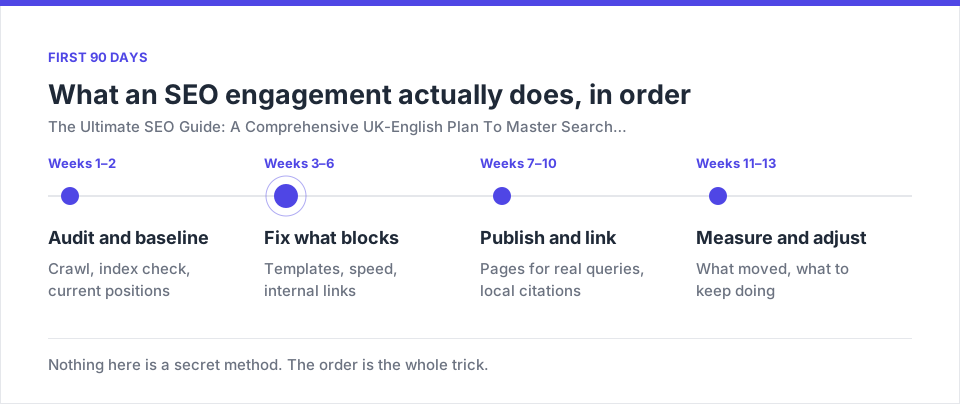
For organisations in the UK, the synergy between high-quality content, credible signals and responsible innovation is especially important. The ongoing Wealth of credible content supports resilience in a landscape that increasingly integrates AI-driven discovery. If you’d like practical help implementing E-E-A-T-centric content strategies at scale, explore how our UK team can support you through the londonseo.ai services or discuss a tailored plan via our contact channel.
Structured Content: Topic Clusters, Pillars and Internal Linking
Structured content, pillar pages and topic clusters form the scalable backbone of modern UK SEO. When designed with local intent in mind, this approach helps London and broader UK audiences navigate complex service landscapes while enabling search engines to recognise breadth and depth of coverage. London-based teams at londonseo.ai translate these concepts into a practical taxonomy, ensuring your content earns enduring visibility across traditional results, knowledge panels and emerging AI-driven surfaces.
What Are Topic Clusters And Pillars?
At the heart of this approach is the pillar page, a comprehensive resource that covers a broad topic in depth. Surrounding it are cluster pages that drill into specific subtopics or questions. Together they form a content ecosystem where the pillar page functions as the hub, and each cluster page reinforces authority on a tightly scoped angle. For UK audiences, the taxonomy should explicitly surface locality, regulations and regional nuances within each topic family. This structure not only improves internal discoverability but also strengthens signals of relevance and credibility to search engines.
Key benefits include reduced keyword cannibalisation, clearer user journeys, and a streamlined editorial process. When a user asks a related question, the cluster pages provide precise, context-rich answers that feed into the broader pillar narrative. London-based teams frequently tailor pillar topics to reflect service offerings, regulatory considerations, and region-specific case studies, ensuring the content remains highly tangible for local buyers.
Designing A UK-Focused Topic Taxonomy
Start with your core business goals and map them to audience needs. Identify 4–6 broad pillar topics that represent the most significant paths to revenue or customer value. Then, for each pillar, develop 4–6 cluster topics that answer specific questions, provide how-to guidance, or offer region-specific insights. In a UK context, incorporate local service lines, regulatory considerations, and examples drawn from London and other major markets to reinforce real-world applicability.
Example of a UK-centric taxonomy for an SEO agency might include a pillar like “UK Local SEO Mastery,” with clusters such as “Google Business Profile optimisations in London,” “Service-area pages for Birmingham businesses,” and “Local knowledge panels in Manchester.” The taxonomy should be evolvable: as consumer behaviour shifts or new SERP features appear, you can readily add or prune clusters without fracturing the overall structure.
Content Architecture And Internal Linking Strategy
Internal linking is the lever that transfers authority from the pillar to its clusters and back, while guiding users through a logical information journey. A well-planned link structure helps search engines understand topic relationships, while enabling readers to progress from high-level overviews to practical details with a single click. Best practice for UK sites includes:
- Anchor text that clearly communicates the target topic, avoiding generic phrases like “read more”.
- Consistent pillar-to-cluster linking patterns, with each cluster linking back to its pillar page and to adjacent clusters where relevant.
- Strategic use of contextual links within the body content to reinforce semantic relationships without creating over-linking waste.
- A clean navigation that surfaces pillar topics within the main menu and enables quick access to regional variants where appropriate.
In practice, a cluster page should include links to its parent pillar, other related clusters, and related service or product pages. For UK audiences, ensure local pages are discoverable from the same content network, and use structured data to reinforce topical signals for local intent and enterprise searches.
Editorial Workflow For Topic Clusters
Adopt a repeatable process that makes cluster creation scalable. Begin with a cluster brief that states intent, audience, likely formats (guides, checklists, case studies), and required data or sources. Then, author content with explicit connections to the pillar and related clusters. Include cross-links, update cycles and a plan for evergreen refreshes. In the UK context, integrate regional data, local references, and regulatory notes to keep the content valuable over time.
Maintain a governance rhythm: quarterly topic planning, monthly content sprints, and bi-weekly editorial reviews to ensure consistency, accuracy and timely updates. If you’d like a UK-focused playbook for scaling topic clusters, our team at londonseo.ai services can tailor a programme that aligns with your content calendar and reporting cadence.
Measuring, Maintaining And Updating Topic Clusters
Delivery excellence requires ongoing health checks. Track pillar page depth, cluster coverage, and the balance between breadth and depth across topics. Regularly audit for keyword cannibalisation, content gaps, and potential overlaps that could dilute topical authority. In the UK, monitor regional signals such as service-area page performance, local pack impressions, and knowledge panel appearances to ensure your content maintains local relevance as algorithms evolve.
Adopt a refresh cadence that matches content maturity. Optimisations might include updating statistics, adding regional case studies, refreshing visuals, and expanding cluster coverage to address emerging user questions. The outcome is a living content ecosystem that preserves ranking resilience while adapting to changing search behaviours and AI-assisted discovery patterns.
For those seeking hands-on guidance, consider engaging with londonseo.ai’s UK-focused content architecture services to design, implement and maintain pillar-and-cluster structures. A well-managed content framework supports not only traditional rankings but also enhanced visibility in knowledge panels, local results and AI-driven responses across the UK search landscape.
Link Building and Brand Mentions
In UK SEO, link building and brand mentions remain essential for building authority and credible visibility. While Google emphasises content quality and user signals, high-quality citations and references from trusted sources continue to influence rankings, referrals, and brand perception. For London-based brands and nationwide organisations, a UK-focused link strategy from londonseo.ai translates outreach into practical results across local and national search surfaces.
Why links remain a signal of authority
Despite evolving search surfaces, links and brand mentions provide signals about trustworthiness and relevance. A well-constructed link profile suggests to search engines that your content is cite-worthy, reference-worthy and connected to reputable sources. In the UK context, authoritative citations from industry publications, trade bodies and regional outlets can significantly bolster how your pages appear in organic results and local packs. London-based teams at londonseo.ai prioritise quality over volume, focusing on relevance to user intent and long-term sustainability of link relationships.
Quality over quantity: building credible links
- Prioritise relevance: seek links from pages that closely relate to your topic and audience, not merely high domain authority. The contextual fit matters as much as the citation strength.
- Evidence-backed value: pursue links when you can offer data, case studies, or insights that recipients can reference in their own content.
- Diversity of sources: combine editorial placements, industry publications, and credible regional outlets to avoid over-reliance on any single domain.
- Natural anchor text and placement: ensure links arise from meaningful content where the anchor text reads naturally within the surrounding narrative.
Strategic approaches for London and the UK
To build an architecture of credible signals, adopt UK-focused tactics that align with local queries, regulations and publisher expectations. The aim is to earn genuine mentions that reflect expertise and service relevance, not merely boost metrics.
- Digital PR with UK outlets: craft data-driven stories and expert commentary tailored to London journalists and regional editors.
- Local content partnerships: co-create resources with regional trade bodies or business associations to gain contextual licences to link and mention.
- Thought leadership and sponsorships: secure speaking slots, sponsor events, and obtain credible citations from industry bodies.
- Data-driven assets: publish original datasets, benchmarks and regional insights that attract backlinks and citations.
- Resource hubs and evergreen assets: build high-value pages that other UK sites reference for practical guidance.
Outreach playbook: tactics that travel well in the UK
Specific, personalised outreach yields better responses and more durable placement. A practical approach includes:
- Identify qualified targets: focus on editors, publishers and organisations with audience overlap and legitimate authority.
- Personalised outreach: reference recent articles, data points or events relevant to the recipient’s audience.
- Offer clear value: provide unique insights, data visualisations or ready-to-publish quotes and case studies.
- Respect guidelines and timelines: follow publisher guidelines, comply with disclosure rules, and track responses without spamming.
- Follow-up thoughtfully: schedule succinct follow-ups that present a new angle or updated data.
For hands-on support, londonseo.ai can align link-building activity with your content calendar and UK media opportunities. See our SEO services and how we tailor campaigns for UK markets.
Brand mentions: earning credible coverage beyond links
Brand mentions matter because they signal recognition and trust, even when no followed link is present. In practice, brand mentions arise from expert quotes, interviews, sponsorships, conference appearances, and commissioned research referenced by others. For UK audiences, ensure mentions carry clear attribution, context and local relevance. londonseo.ai helps coordinate brand signal strategies that blend editorial coverage with content upgrades to maximise coverage across SERPs and knowledge panels.
Measurement, attribution and risk management
Track not only the existence of links and mentions, but also their quality, relevance and impact on audience engagement. Core metrics include the growth of high-quality referring domains, anchor text diversity, and the volume of credible brand mentions across UK surfaces. Monitor attribution to pipeline using CRM and analytics, and manage risk with cleanups and disavow where appropriate. Maintain a quarterly review of link quality, ensure no spam-influenced placements, and align with regulatory guidelines for UK marketing communications.
- Number of referring domains from credible sources and their topical relevance.
- Anchor text diversity and alignment with content themes, avoiding over-optimisation.
- Volume and sentiment of brand mentions across UK outlets and social channels.
- Traffic, engagement and conversions driven by links and brand signals.
- Risk management: monitor for toxic links and maintain an up-to-date disavow process.
For robust measurement, combine londonseo.ai dashboards with Google Analytics 4 and Google Search Console data, ensuring attribution remains transparent and decision-ready for UK teams and finance stakeholders.
Further guidance on external link credibility can be found in Google's quality guidelines and reputable industry references such as Moz's resources on link-building ethics and strategy.
If you would like practical help implementing a UK-focused link-building and brand-mention programme, explore our SEO services or contact us via the contact page to discuss a tailored plan with londonseo.ai.
Local and International SEO
For UK and London-based organisations, local search presence remains a foundational driver of visibility and conversion. At the same time, ambitious brands look to extend reach beyond domestic markets, responsibly tailoring content and signals to regional audiences. The Local and International SEO section builds on the UK-centric foundation of londonseo.ai, outlining practical approaches that optimise nearby traffic while laying a scalable path for international expansion. The aim is clear: preserve local relevance, maintain consistency of brand signals, and adapt the same rigorous editorial and technical standards for new markets.
Local SEO Tactics For the UK Market
Local optimisation starts with a reliable, store- or location-centric framework. Local intent often drives queries that combine service needs with geography, so mapping content to specific towns, cities or service areas is essential. londonseo.ai emphasises four practical levers that UK teams can operationalise quickly:
- Ensure consistency of Name, Address and Phone number (NAP) across your site, Google Business Profile and key directories to prevent conflicting signals.
- optimise Google Business Profile (GBP) with complete information, regular updates, and high-quality photos to improve local pack visibility.
- Develop service-area pages that cover geography you serve, linked to your main offerings and local case studies or testimonials.
- Incorporate schema markup for LocalBusiness, service locations and events to strengthen local intent signals.
- Encourage and manage reviews, responding professionally to reinforce trust and signal local engagement.
These steps complement broader UK content and technical health, ensuring your local pages perform within map results, local packs and knowledge panels while remaining aligned with the brand’s core messaging.
Local Content Strategy And Signals
Beyond foundational optimisations, local content should reflect real-world, region-specific needs. Consider publishing urban guides, neighbourhood insights, and city-centred service comparisons that demonstrate practical relevance to local buyers. Local content benefits from fresh data, regional case studies, and collaborations with local partners or trade bodies. Integrating local events calendars, community perspectives and regional pricing nuances can improve perceived relevance and increase click-through rates from local queries.
Technical readiness is crucial. Local pages must load quickly on mobile devices, render correctly on maps surfaces, and be accessible to users with varying connectivity. As with other parts of the site, maintain clean URL structures, avoid duplicate local versions, and ensure canonical signals point to the preferred local page where appropriate.
Approaches For Expanding Internationally From the UK
UK brands increasingly adopt a thoughtful internationalisation strategy that preserves brand integrity while respecting locale-specific needs. Key considerations include language and currency, regional legal requirements, and the availability of local customer support. A clear plan for market entry helps determine the most scalable domain structure and content localisation approach. London-based teams typically evaluate three classic routes:
- ccTLDs (country-code top-level domains) for each market, maximising local trust and search signals, suitable for larger, longer-term international programmes.
- Subdirectories (example: /uk/, /fr/), offering easier management and shared authority while still enabling region-specific optimisations.
- Subdomains (ea. uk.example.com), which can be useful for separate product lines or distinct brand experiences but may require more intensive SEO governance.
For many UK organisations starting abroad, a pragmatic first step is to implement well-structured subdirectories covering key markets, coupled with hreflang annotations to guide search engines to the correct language and regional version. As you scale, consider expanding to ccTLDs for markets with significant potential or where local trust is paramount. londonseo.ai can help design this architecture and implement the corresponding technical, content and localisation hygiene.
Content Localisation And Quality
localisation is more than translation. It involves culturally appropriate phrasing, regional examples, and compliance with local norms. Human translation paired with regional editors ensures that content reads naturally in the target market and preserves the original intent. Avoid literal translations that misrepresent service benefits or regulatory differences. When you publish content in multiple languages, ensure consistent quality across all market pages and maintain a central style guide to preserve brand voice. See our UK-focused localisation and content services for scalable support managed by londonseo.ai.
In addition, implement hreflang tags to signal language and regional targeting. Keep verticals aligned: product and service pages should reflect market-specific variants (pricing, delivery options, tax considerations) and display in the appropriate currency. This alignment reduces friction for users and improves SERP trust signals in international results.
Technical And Structural Considerations For Global Reach
International SEO demands disciplined technical governance. Use a consistent sitemap structure that clearly lists market versions, maintain canonical relationships to avoid duplicate content, and implement structured data that reflects local business details, events, or products. A market-specific XML sitemap alongside a global sitemap helps search engines crawl and index content efficiently. Monitor crawl budgets across markets to ensure high-priority pages are discoverable during campaigns or seasonal pushes.
Other technical refinements include optimising site speed for each region, hosting considerations that reduce latency, and reliable localisation workflows that keep content fresh across markets. When in doubt, start with a controlled pilot of three to four markets and scale as outcomes validate the approach.
Measuring Local And International SEO Performance
Measurement should reflect both local impact and international momentum. For local SEO in the UK, track GBP engagement signals, local pack impressions, GBP interactions, and reviews sentiment. For international markets, monitor traffic by country, conversions by market, and revenue contribution from each localisation. Use geo-segmented dashboards that integrate data from Google Analytics 4, Google Search Console and londonseo.ai to reveal market-specific trends, seasonality, and the effectiveness of localisation efforts. Attribution should recognise the contribution of local pages to pipeline while differentiating market-level outcomes from global brand impact.
Key metrics to include are: local pack visibility, GBP profile interactions, cross-market organic sessions, market-specific conversions, and overall return on investment by market. A clear framework makes it easier to justify expansion plans to stakeholders and to prioritise future investment in localisation and regional content.
For practical, UK-focused measurement frameworks and dashboards, londonseo.ai can tailor reports that align with your internal governance and revenue targets. See our SEO services for localisation strategy and our contact page to begin a localisation roadmap aligned with your markets.
Measuring, Reporting and Attribution
Building on the UK-focused foundations laid in Part 10, this section concentrates on turning SEO activity into observable business value through meaningful measurement, robust attribution, and clear reporting. For organisations operating in London and across the United Kingdom, the goal is not to chase vanity metrics but to illuminate how organic visibility translates into pipeline, revenue and lasting trust. londonseo.ai supports this approach by providing data-informed dashboards and scalable processes that align marketing, product and finance around shared outcomes.
Key Principles Of Measurement
The first principle is to connect SEO metrics to tangible business goals. Define what success looks like in revenue, qualified leads, or customer lifetime value, and trace every initiative back to those outcomes. The second principle is to balance leading indicators, which enable timely optimisations, with lagging indicators, which validate impact. Third, establish transparent attribution assumptions so stakeholders understand how credit is distributed across touchpoints and channels. Finally, maintain clarity and simplicity in dashboards so decision-makers can act quickly without drowning in data.
- Link SEO performance to business outcomes such as conversions, revenue and CAC, not just traffic numbers.
- Balance leading indicators like impressions, CTR and time-to-value with lagging indicators like revenue and pipeline contribution.
- Document attribution assumptions clearly, including how you treat assist conversions and multi-channel touchpoints.
- Design dashboards that are purpose-built for UK teams, with regional filters, currency calculations and local KPI definitions.
Attribution Models For UK Marketing
Attribution in the UK market must accommodate longer sales cycles, multi-channel discovery and growing AI-assisted touchpoints. A practical approach combines a mix of models to provide both directional insight and actionable signals. A common starting point is a multi-touch attribution framework that assigns value across a handful of key interactions (organic visit, content engagement, quote request, demo booking, etc.). This reduces reliance on last-click alone and better reflects how UK buyers navigate decision journeys across search, social, email and offline touchpoints.
For governance and reporting, document the chosen model, its rationale and any historical limitations. Regularly test alternative models to understand how changes in attribution affect performance readings and investment decisions. Align attribution with CRM to illuminate how organic activity contributes to opportunities and revenue in your pipeline.
Dashboards And Cadence
A practical measurement framework relies on cadence that mirrors decision-making rhythms. For many UK organisations, a weekly pulse captures leading indicators and early anomalies, a monthly review assesses trend direction and quality, and a quarterly business review ties SEO progress to broader planning cycles. When possible, consolidate data from Google Analytics 4, Google Search Console and londonseo.ai into a single, coherent dashboard. This fusion enables fast spotting of anomalies, trend shifts and seasonality across UK markets, and ensures consistent reporting to finance and leadership.
Key dashboard components should include: visibility metrics (impressions, clicks, ranking positions), engagement metrics (time on page, scroll depth, pages per session), conversion metrics (form submissions, quotes, calls), and revenue-affiliated metrics (organic-assisted revenue, CAC from organic, ROI by content stream). Clear definitions and attribution rules reduce confusion and support accountable optimisation cycles.
Practical Framework For London And UK Teams
Translate measurement into a repeatable workflow that teams can own. Start with a lightweight measurement plan that ties each SEO activity to a specific KPI. Then implement a weekly rhythm for data collection, a monthly review for insights, and a quarterly plan for optimisation pivots. In the UK context, ensure dashboards accommodate local currencies, regional audience segments and regulatory considerations that influence consumer behaviour.
A simple, scalable approach is outlined below, with emphasis on clarity and accountability:
- Define a one-page measurement charter that links business goals to SEO outcomes and assigns ownership.
- Set 3–5 primary KPIs per business area (e.g., lead generation, revenue, local visibility) and 2–3 secondary metrics for overflow monitoring.
- Baseline current performance and establish small, high-impact targets for the next quarter.
- Develop a weekly data collection routine using GA4, GSC and londonseo.ai, with automated dashboards where possible.
- Schedule monthly insights reviews and quarterly governance discussions to adjust strategy and allocate resources.
Case Study: A London Brand In Practice
A London-based retailer aligned its SEO goals with business outcomes, establishing quarterly targets for organic leads and revenue growth. By adopting a transparent attribution model, integrating data from GA4, GSC and the londonseo.ai dashboard, the team demonstrated a clear contribution from content plays, local optimisations and technical fixes to the sales funnel. The result was improved forecast accuracy, more efficient budget allocation and stronger cross-team collaboration between marketing, ecommerce and finance. This is the kind of outcome we routinely support for UK clients, helping translate strategy into measurable action through practical dashboards and governance processes.
To deepen your measurement maturity, consider a staged, UK-focused enhancement plan. Start with a lean measurement framework, then expand to more granular attribution and cross-channel integration as data quality improves. If you’d like hands-on support in building bespoke dashboards and attribution models tailored to your London or national operations, explore our SEO services or reach out through the contact page to discuss a tailored measurement roadmap with londonseo.ai.
Maintenance, Refresh and Updating Strategy
SEO is a living discipline. Once a site is optimised, the work seldom ends. The ongoing maintenance, refresh and updating strategy ensures that content remains accurate, relevant and persuasive for UK audiences, while sustaining or expanding visibility across SERPs, knowledge panels and AI-driven surfaces. At londonseo.ai, we emphasise a disciplined content lifecycle that aligns with business priorities, regulatory requirements and evolving search-engine expectations. This section outlines a practical approach for keeping assets fresh, credible and performant over time.
A Practical Maintenance Framework
Effective maintenance rests on a rhythm that combines quick health checks with strategic, planned refreshes. We recommend a three-tier cadence that suits most UK organisations:
- Weekly light health checks to surface critical errors, broken links, and obvious content gaps. These checks prioritise user experience, accessibility, and core performance signals.
- Monthly audits to review content accuracy, alignment with user intent, and local signals such as GBP data, local service-area pages and regional case studies.
- Quarterly refresh cycles for high-impact pillars, priority clusters and service pages, incorporating new data, updated visuals and refreshed CTAs.
Alongside these cadences, maintain an annual strategic review to adjust your taxonomy, pillar structure, and localisation approach in response to market shifts, regulatory changes and new SERP features. A central content calendar, owned by editorial leadership and shared with product, marketing and finance, keeps the plan coherent and auditable.
Key tools for execution include Google Analytics 4, Google Search Console, and londonseo.ai dashboards, combined with your CRM or marketing automation to trace outcomes through to revenue. Regular governance reviews ensure accountability and provide visibility to senior stakeholders.
Content Inventory, Audit And Renewal
Start with a comprehensive content inventory that maps each asset to business goals, user intent, and localisation needs. Classify assets by priority: evergreen pillars, high-potential clusters, product or service pages, and regional content. For each asset, document: current performance, known gaps, update requirements, and owners responsible for renewal.
Practical renewal steps include:
- Assess performance against KPIs and identify pages with stagnating or declining metrics.
- Update data, references and case studies to reflect the latest information and outcomes.
- Add or refine media such as visuals, charts, and diagrams that illustrate key points or new findings.
- Refresh CTAs and conversion triggers to better align with current buyer journeys.
- Document a clear update rationale and publish notes so audiences understand what changed and why.
Incorporate regional specificity for UK audiences. For example, update service-area pages with current coverage, regional pricing nuances where appropriate, and fresh regional case studies that demonstrate practical value in London and beyond. When updating, preserve the integrity of E-E-A-T signals by refreshing author bios, citing sources, and maintaining transparent methodologies.
Updating Pillars, Clusters And Internal Networks
Pillar pages form the hub of the content ecosystem, with clusters reinforcing authority on tightly scoped angles. When you refresh, start from the pillar and evaluate whether its clusters still form a coherent, comprehensive coverage of the topic. If new subtopics emerge or user questions shift, expand the cluster set and re-map internal links to reflect the updated architecture.
Internal linking remains a critical lever for signal distribution. Ensure that updates maintain a logical pathway from cluster pages back to the pillar and to other related clusters. In the UK context, surface local and regulatory nuances within each topic family to strengthen topical authority and local intent signals.
Technical And Operational Considerations For Updates
Content refreshes should be coordinated with technical health to avoid disrupting crawlability or indexing. After updates, re-submit sitemaps if the page set changes, review canonical relationships for redirected or merged assets, and verify structured data remains accurate and aligned with the revised content. If pages are removed or merged, implement 301 redirects to preserve link equity and provide a coherent user journey. Keep a regular audit trail so changes are easily auditable for governance and compliance needs.
Local and regulatory considerations in the UK emphasise accuracy and transparency. Update local business data where needed, ensure GBP details reflect current operations, and maintain privacy-compliant data practices for any user data referenced in content or forms.
Measurement, Reporting And Adaptation After Updates
Measure the impact of refresh activities with a focus on business outcomes, not vanity metrics. Leading indicators include updates completed, changes in crawl frequency, and early shifts in page performance. Lagging indicators capture the downstream effects on organic traffic, conversions, and revenue attributed to refreshed content. Maintain attribution clarity by documenting the update rationale, the changes made, and the observed impact in dashboards shared with marketing, product and finance teams.
Regularly compare updated content against prior versions to quantify gains and identify any unintended consequences, such as cannibalisation or confusion in navigation. A UK-focused approach should also monitor local signals like local pack impressions and GBP interactions to confirm that refreshes preserve or enhance local visibility while supporting enterprise goals.
Maintaining credibility is essential. Continue to publish original data, transparent methodologies and concrete examples that readers can verify. This steady habit of factual updating strengthens trust and helps maintain ranking resilience as search algorithms evolve.
To execute this maintenance discipline at scale, consider engaging with londonseo.ai for a tailored updating programme. We can align updates with your editorial calendar, provide audit templates, and help you implement a robust governance process. If you’d like practical assistance with a UK-focused refresh strategy, explore our SEO services or reach out via the contact page to discuss a renewal roadmap tuned to your London or broader UK operations.
Practical SEO Workflow: From Audit to Ongoing Optimisation
A repeatable, evidence-based workflow is the engine that powers sustained SEO growth for UK markets. This final part translates the concepts from earlier sections into a pragmatic, scalable process that teams can own—from initial audit through to ongoing optimisation and governance. London-based teams working with londonseo.ai routinely combine rigorous data checks with collaborative planning, ensuring every improvement aligns with business goals and local search realities. The workflow outlined here complements existing tools and dashboards, and it is designed to be adaptable to both growing SMEs and larger enterprises operating in the UK.
1. Establish The Baseline And Audit Scope
Begin with a focused site health assessment that captures crawlability, indexing, performance, accessibility and content health. Pull data from Google Search Console, Google Analytics 4, and the londonseo.ai dashboards to establish current visibility, keyword coverage, and user engagement patterns. Define the audit scope around high-potential UK pages, local service areas, and pillar content that anchors topic clusters. Ensure that stakeholders agree on which metrics will drive decision-making and what constitutes a successful uplift in the near term.
A pragmatic baseline includes: crawl status for priority sections (home, product/service pages, service-area pages), index coverage for region-specific content, Core Web Vitals health on key pages, and a qualitative review of content accuracy and authoritativeness signals. This phase also validates data integrity across sources to prevent misinterpretation later in the process.
2. Translate Business Goals Into SEO Outcomes
Map the organisation’s strategic objectives to concrete SEO outcomes that can be monitored weekly and reviewed quarterly. This alignment ensures that improvements to content quality, technical health and local signals translate into tangible business value, such as increased qualified leads, higher conversion rates, and stronger local presence. For UK teams, embed regulatory and privacy considerations into the goal framework to ensure ongoing compliance and trust signals that search engines recognise as credible.
Example outcomes might include rising organic revenue from core product areas, growing local pack visibility for top locations, and improved click-through rates on high-intent service pages. The goal is to produce a clear plan where every action has an accountable owner and a measurable impact on KPIs relevant to UK audiences.
3. Build A Practical Keyword And Topic Foundation
Leverage insights from earlier parts to refresh a target keyword and topic map that reflects UK intent and regional nuances. Start with a compact, endorsed set of pillar topics that align with business priorities, then populate clusters that answer specific questions, provide practical guidance, or illustrate regional considerations. The taxonomy should be designed for easy expansion as markets evolve. London-focused pages, service-area content, and region-specific case studies play a vital role in reinforcing topical authority for UK searches.
Deliverables from this stage include a refreshed topic taxonomy, a mapped content brief for each pillar, and a plan for internal links that tie cluster content back to the pillar and to related service pages. Integrate this with the content calendar and ensure collaboration with editorial, product and regional teams.
4. Produce A Lean, Actionable Content Production Plan
With the taxonomy established, translate topics into concrete content assets. Prioritise clarity and practical value: pillar pages that provide a comprehensive overview, paired with cluster articles that answer precise questions or demonstrate real-world usage. Content briefs should specify objectives, audience intent, required data sources, and the editorial voice. For UK audiences, embed regional references, regulatory notes where relevant, and local validation from subject-matter experts to reinforce E-E-A-T signals.
Coordinate with design and UX to ensure readability, scannability and mobile-friendly presentation. Include content formats such as how-tos, checklists, case studies and benchmarks that readers can reuse. A disciplined approach to updating and refreshing these assets keeps them relevant as search patterns evolve and as AI-assisted discovery grows.
5. Publish With Technical And On-Page Readiness In Mind
Publication is not the end of the line; it begins a new cycle of verification and optimisation. Ensure each page adheres to on-page best practices: precise, intent-aligned title tags and meta descriptions, clean URL structures, logical headings, semantic content, and accessible images. Implement structured data where appropriate to support rich results, local packs and knowledge panels, particularly for UK service-area pages and business profiles. Confirm that internal links reinforce topic structure and help users navigate from pillar to cluster content and related services.
Coordinate with technical teams to guarantee page speed, mobile responsiveness and security. Use a lightweight, scalable approach to publishing, with QA steps that catch common issues before they go live. If you’re deploying large-scale updates, consider staged publishing to monitor impact gradually and protect existing rankings.
6. Monitor, Report And Learn: A Cadence For UK Teams
Establish a regular cadence for monitoring performance, interpreting data, and adapting strategy. Weekly checks on leading indicators (impressions, CTR, early signals of engagement) and monthly reviews of conversions, revenue contributions, and local signals create a clear feedback loop. A quarterly governance session should reassess the taxonomy, content mix, and localisation priorities to ensure continued alignment with business goals and UK search evolution.
Leverage dashboards that combine GA4, GSC and londonseo.ai data to triangulate insights. Remember to document attribution assumptions and ensure transparency for stakeholders across marketing and finance. If you’d like a UK-centred measurement framework, our team can tailor dashboards and reporting cadence to your governance needs through our SEO services and contact page.
7. Sustain Through A Systematic Refresh And Optimisation Cycle
SEO is a living discipline. A robust renewal framework revisits pillars and clusters on a planned schedule, updating data, refreshing visuals and evolving with user expectations and algorithm changes. The cycle should begin with a quick health check, followed by targeted optimisations (small increments), then more substantial upgrades or rewrites when content performance justifies the effort. Maintain author credibility by refreshing bios, sources and methodologies, particularly for content that informs critical decisions in regulated UK sectors.
As part of ongoing governance, document renewal rationales, expected outcomes, and observed results. This practice keeps content assets competitive and aligned with local audience needs while preserving a credible information hierarchy across search surfaces.
8. Final Thoughts: How This Works At LondonSEO.AI
The workflow described here mirrors the disciplined, UK-focused approach London-based teams deploy with londonseo.ai. It connects business outcomes to every SEO action, from audits and keyword discovery to content production, local optimisation and measurement. If you’d like practical help implementing this workflow at scale, explore our SEO services or schedule a discussion through the contact page. For additional reading on foundational practices and authoritative signal building, you might review Google’s SEO Starter Guide and Moz’s Beginner’s Guide to SEO to deepen your understanding of how search engines interpret content and signals in real-world contexts: Google's SEO Starter Guide and Moz Beginner's Guide to SEO.
