What Is SEO And Why It Matters For Your London Business
Search engine optimisation (SEO) is the strategic practice of improving a website’s visibility in organic search results. For modern organisations, SEO isn’t a single tactic but a holistic approach that integrates technical performance, user experience, content quality, and credible authority. When executed well, SEO helps your audience discover your products, services, and expertise exactly when they are looking for them, turning searches into meaningful business outcomes.
At its core, SEO aims to attract high-intent visitors who become customers, advocates or long-term supporters. It involves understanding what people search for, why they search it, and how search engines decide which pages to show. London businesses, in particular, benefit from a localisation lens that captures nearby demand, supports mobile users, and reflects the way people in the capital search for solutions.
A credible SEO programme delivers more than short-term traffic. It builds sustainable visibility, reduces reliance on paid advertising, and supports broader marketing goals. When you appear for relevant queries, you gain trust with potential customers who are actively researching options. The value extends to brand awareness, content propagation, and the ability to scale when markets or product lines change.
For London-based businesses, SEO also intersects with local signals such as Google Business Profile, local reviews, and proximity. The most effective strategies combine technical health, highly relevant content, and trustworthy signals from other websites. This alignment between user intent and site delivery is what enables search engines to reward your pages with higher rankings over time.
The practical implications are clear. A well-optimised site improves user engagement, reduces bounce rates, and increases conversion probability from organic traffic. It also supports you in meeting customer expectations across devices and contexts, from desktop research in the office to mobile queries on the go. If you want a partner that can translate this into a concrete plan, our team at londonseo.ai can tailor a programme to your business. You can also contact us for a customised discovery call.
For readers seeking authoritative guidance, Google’s SEO Starter Guide provides foundational principles directly from the search engine itself. It highlights the importance of clear structure, accessible content, and avoiding deceptive practices. See Google's official guide for reference, and explore how Core Web Vitals influence perceived performance and rankings at web.dev.
In practice, organisations that invest in SEO experience a compounding effect. Early wins often come from fixing technical issues, improving page speed, and aligning content with user intent. Over time, content that answers questions comprehensively can establish topical authority, making your domain a trusted source for both users and search engines.
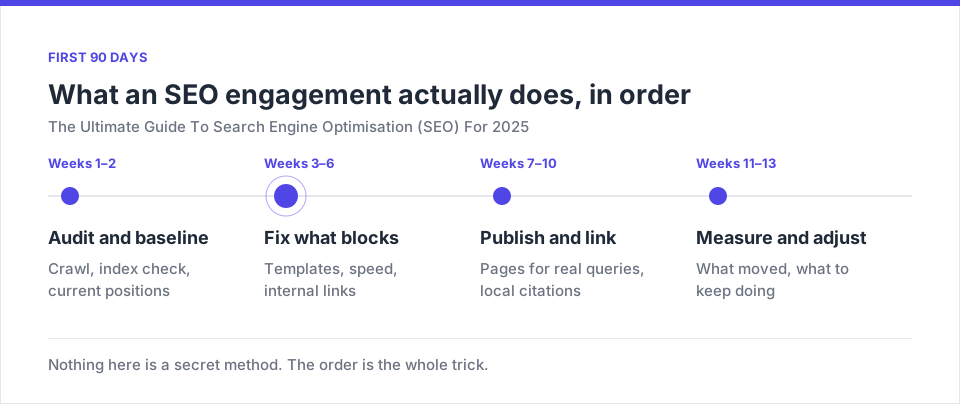
To ensure clarity and accountability, many teams structure SEO work around a clear, repeatable process. This includes discovery and keyword research, on-page optimisation, technical auditing, content development, and performance measurement. The approach emphasises learning from data and iterating based on what the market tells you about search behaviour.
- SEO is not a one-off task; it requires ongoing evaluation and refinement.
- Visible improvements depend on a combination of technical health, content relevance, and credible signals from external sources.
If you are ready to start, consider how your current site aligns with these pillars. A practical first step is to perform a baseline assessment of crawlability, indexability, and critical pages. This helps you prioritise fixes and plan content investments that deliver the best return over the next quarters.
London-specific SEO also benefits from localisation strategies. Beyond ranking for broad terms, you should capture nearby intent, showcase local outcomes, and integrate with maps and essential business information. For organisations with multi-location footprints, a disciplined approach to NAP consistency, local links, and ratings can dramatically improve local visibility.
From a measurement perspective, a robust SEO programme tracks both traffic and quality metrics. You’ll typically monitor impressions, clicks, click-through rate, and user engagement on-page, alongside conversions and revenue attribution. This data informs ongoing prioritisation and helps justify investments to stakeholders.
Ultimately, SEO is about delivering meaningful experiences for users and credible signals to search engines. When your content genuinely solves problems and your site performs well, your visibility tends to grow in a sustainable, repeatable way. If you’d like a pragmatic, evidence-based plan specific to London markets, London SEO AI offers structured, results-focused programmes that align with your business objectives. Explore our SEO services to understand the kinds of engagements we deliver, and reach out through the contact page for a personalised conversation.
In the meantime, a baseline understanding of SEO’s value helps you frame conversations with executives and stakeholders. It’s about clarity, accountability, and the real-world impact of organic search on growth and resilience. This foundation will guide the part 2 discussion, which moves from theory to the mechanics of how search engines operate and how that informs practical optimisation decisions.
How Search Engines Work: Crawling, Indexing And Ranking
Search engines operate through three fundamental processes that transform the vast, interconnected web into a searchable index. Understanding how crawling, indexing and ranking interact helps London businesses prioritise optimisations that improve visibility for the right queries, at the right moment. These mechanics are the backbone of practical SEO, guiding decisions from site architecture to content strategy and technical fixes.
At a high level, crawling is the discovery phase. Search engine crawlers (or spiders) start with a set of known URLs, follow links from those pages, and fetch content to see what exists on the open web. The rhythm of this activity is influenced by crawl budget—the amount of resources a search engine is willing to devote to a given site. For large London sites with lots of product pages or local listings, emphasising crawl efficiency ensures important pages are seen promptly, reducing the risk that critical content remains undiscovered.
Indexing follows, where the data gathered during crawling is organised and stored in an index. The index is not simply a copy of the web; it is a sophisticated data structure that captures content, structure, and signals that help determine how pages should respond to user queries. Clear signals about what a page is about, its authority, and its usefulness are established during indexing, which makes it possible to retrieve relevant results quickly when someone searches for a related question or need in London.
Ranking is the third stage, where search engines decide which pages best satisfy a query and in what order they should appear. Ranking relies on relevance to the user intent, the overall quality and trustworthiness of the content, and a broad set of signals that may include page experience, structured data, and site credibility. For London businesses, ranking decisions are also sensitive to local signals such as proximity, reviews, and business profiles, which help connect local searchers with nearby solutions.
External references from the search engines themselves emphasise crawlability and indexability as prerequisites for successful ranking. You can consult Google's
SEO Starter Guidefor foundational guidance, and web.dev for how Core Web Vitals interact with perceived performance and ranking signals. These resources reinforce the practical pattern that technical health, clear content intent, and trustworthy signals combine to deliver sustainable visibility.
From a practical standpoint, the discovery process is greatly aided by a well-structured site. An accessible architecture, a current XML sitemap, and a readily available robots.txt file help crawlers prioritise the most important pages. Misconfigurations, such as blocking critical content or creating duplicate paths, can significantly hamper indexing and, by extension, rankings. Regular audits of crawlability and index coverage are essential to keep a London site competitive as content and campaigns evolve.
For organisations aiming to act with precision, the next steps involve concrete actions to improve discovery and delivery to search engines. A baseline audit focused on crawlability, indexability and critical pages is a pragmatic starting point, followed by a staged plan to update internal linking, canonical tags, and structured data. You can explore tailored strategies with londonseo.ai services, and contact the team for a personalised discovery call via our contact page.
Crawling: Discovering the web
Crawlers move through the web by following links from known pages to new ones, validating the existence of content and assets such as images, videos and scripts. They use heuristics to prioritise pages that appear to be frequently updated or highly authoritative. A few practical considerations for London sites include ensuring internal links are clean, navigation is logical, and there are no dead ends that can stall discovery.
- Crawl budgets can be influenced by site size, server performance and the frequency of changes. Larger sites with fresh content should be designed to prioritise essential pages and avoid over-indexing low-value pages.
- Robots.txt and meta robots directives control what crawlers can or cannot fetch. Avoid blocking important content and ensure no content is inadvertently hidden from search engines.
- XML sitemaps provide navigational hints to crawlers, highlighting priority pages and update frequency. Keep sitemaps current and mirror a site’s real structure.
- URL hygiene matters. Consistent, crawl-friendly URLs help search engines navigate and index pages efficiently while reducing duplicate content concerns.
London-based sites often benefit from local landing pages and well-mapped category structures. A tidy site map aids not only discovery but also the speed at which new campaigns can be reflected in search results. To support proper crawling, consider aligning site changes with a documented update calendar and notifying search engines about large content migrations via sitemap updates.
For further context on crawlability best practices, Google's starter guide and related documentation are reliable references. See the Google's official guide and the web.dev vitals resource series for practical indicators of healthy pages.
Indexing: Organising the data
Indexing is the process of converting crawled data into a structure the search engine can query quickly. It involves analysing page content, metadata, and signals such as headings, keywords, links, and structured data. An index allows search engines to assemble relevant results with speed, but only if the content has been correctly interpreted and categorised.
Key practices to optimise indexing include ensuring content is accessible, using clear page titles and headings, and avoiding content duplicates. Canonical tags help clarify which version of a page should be indexed when multiple URL paths point to the same content. For local London pages and multi-location businesses, canonical and hreflang annotations can prevent cross-location confusion and ensure the right pages appear in the appropriate markets.
Structured data markup, such as Schema.org types, helps engines understand the page context. This can enhance the appearance of results and improve the likelihood of rich features appearing in search results. The use of structured data must reflect actual content to remain compliant with search engine guidelines and to protect against penalties for misleading markup.
Direct evidence from authoritative sources underscores the importance of indexability once crawling is complete. A page that cannot be indexed will never appear in search results, regardless of how well it is optimised on the page. See the Google starter guide for indexing principles, and explore how structured data and markup influence discovery at Schema.org.
Ranking: Signals that determine placement
Ranking decisions combine relevance with quality signals. Relevance measures how well content answers a user's query, while quality signals assess whether the content is trustworthy, well-structured and useful. The combination of these factors determines which results are shown and in what order. London businesses should consider signals that reflect local intent, such as proximity to the user, local reviews, and the presence of authoritative local information on the page.
Important ranking signals include content relevance to the search intent, credible author expertise and trust signals, and user experience factors that influence how pages perform in practice. Core Web Vitals, mobile usability, secure connections, and accessible content all contribute to the user experience that search engines evaluate when ranking pages. In addition, well-structured data and semantic markup help search engines interpret content and contexts more accurately, increasing the potential for improved visibility.
When content is both helpful and easily accessible, rankings tend to improve over time through a process called topical authority. A London site that consistently answers questions with high quality content and credible signals can become a trusted source for related queries, boosting visibility across the broader topic area and benefiting long-tail search.
For a practical view on how to support ranking, consider these actions: ensure the site loads quickly, is mobile-friendly, uses descriptive headings and metadata, and applies structured data where appropriate. You can also align content with real user questions in your target markets and maintain clean, logical internal links that guide users and search engines through your site.
- Ensure content is relevant to user intent and answers the questions users are likely to have. The better the match, the higher the likelihood of ranking well for the targeted terms.
- Enhance content quality by using clear structure, evidence, and actionable guidance that builds trust with readers and search engines.
- Improve page experience signals including loading speed, interactivity and visual stability, particularly on mobile devices.
- Optimise metadata and headings to accurately reflect page content and assist search engines in understanding the page purpose.
For deeper guidance on ranking factors and best practices, the London SEO AI team can tailor recommendations to your local landscape. Explore our SEO services to see how we build repeatable, data-informed strategies, and use our contact page to arrange a bespoke discovery session.
In the next section, Part 3 of this guide, we shift to keyword research and intent, connecting the discovery and indexing framework with practical opportunities to capture high-value search traffic in London. The objective is to translate how search engines operate into a structured, measurable plan that aligns with business goals and local needs.
Keyword Research And Search Intent
With an understanding of how search engines operate, the next critical step for London-based optimisation is identifying the right keywords and aligning them with actual user intent. This part of the guide translates discovery into a practical plan, ensuring your content meets what people want, when they want it, and in the form they expect to find. The approach used by londonseo.ai blends data-driven research with local context, so you capture demand that matters for your business in the capital.
Keyword research is not about chasing the highest volume terms alone. It’s about pairing volume with intent, so the traffic you attract is also aligned with your goals—whether that is lead generation, sales, or brand awareness. In practice, this means prioritising terms that reflect both user questions and purchase readiness, then building content that directly answers those needs.
To begin, anchor your research in your core offerings and the problems you solve. From there, extend your list by exploring how potential customers describe their challenges in natural language, including regional flavour and local terminology that London audiences use daily.
Understanding user intent
User intent describes the why behind a search. Classifying intent helps you decide the right content format, the level of depth required, and the funnel stage your page should target. The common intent categories are:
- Informational intent: the user wants knowledge or an answer, such as how SEO works or what Core Web Vitals mean for page experience.
- Navigational intent: the user aims to reach a specific site or page, such as the London SEO AI homepage or a particular service page.
- Transactional intent: the user intends to take a concrete action, such as requesting a quote or purchasing a service.
- Local and commercial investigation: the user looks for localised, London-based solutions and comparisons before buying.
recognising these intents early lets you tailor the content structure. For example, informational queries benefit from deep, evidence-backed explanations, while transactional queries require clear CTAs, pricing context, and trust signals. Local intent often requires a combination of service detail and local cues (address, local case studies, proximity, and local reviews).
As a practical exercise, treat each target keyword as a small brief. Note the primary intent, the content type, the expected user journey, and the kinds of questions that typically accompany the search. This discipline reduces guesswork and ensures the content you create delivers measurable value to London users.
Strategies for keyword discovery
Effective discovery starts with your own business perspectives and expands outward using search signals and audience insights. The following methods help you build a robust seed list and surface opportunities you may not have anticipated:
- Brainstorm service- and problem-centred phrases that potential clients would search in London. Include variations for different sectors you serve, such as hospitality, legal, or professional services in the city.
- Analyse search suggestions and related queries in Google’s search results. Autocomplete terms and People Also Ask panels often reveal user questions not captured by basic keyword lists.
- Capture intent-driven long-tails by combining core terms with local modifiers, like city districts, neighbourhoods, or proximity cues (e.g., London, City of London, Canary Wharf).
- Use keyword research tools to expand seeds. Google’s Keyword Planner is a starting point, while Moz’s Keyword Research guide provides practical frameworks for evaluating terms. See Moz’s guide for a structured approach: Keyword Research – Moz.
- Check trends over time with Google Trends to identify seasonal or emerging London-focused needs. This helps you prioritise terms that show growing interest in your market. Visit Google Trends for insights.
When you’re identifying opportunities, create a structured categorisation. Group terms into clusters around a primary topic, then map supporting queries to subtopics. This approach supports topical authority and makes it easier to scale content production without creating keyword cannibalisation.
Prioritisation framework
Not all keywords warrant equal investment. A pragmatic framework balances potential impact with execution effort. A simple yet effective approach is to score terms on two dimensions: impact (traffic potential and conversion relevance) and difficulty (ranking competitiveness and content complexity). You can use a 3-point scale (Low, Medium, High) for each dimension.
- High impact and low difficulty: fast wins that justify immediate content creation or optimisation.
- High impact and high difficulty: ambitious targets that should be staged with a long-term plan and strong content briefs.
- Medium/low impact and varying difficulty: useful for niche audiences or to fill gaps in your content library, but with careful prioritisation.
London-specific terms often carry higher competition due to dense markets. To counter this, combine local signals with long-tail opportunities that reflect distinctive local needs, such as London-based industry terms, district names, or sector-specific phrases like “SEO for law firms in London” or “restaurant SEO in Covent Garden.”
Convert your scoring into a practical plan. Start with a baseline list of 10–20 core keywords and a similar number of long-tail variations. For each target, create a content brief that defines the user intent, outline, and KPI targets (rank position or traffic uplift). This structured approach ensures a measurable path from keyword discovery to published content and performance monitoring.
Creating keyword briefs
A well-crafted keyword brief provides a blueprint for content creators and SEO practitioners. Include the following elements:
- Target keyword and intent classification.
- Recommended page type (landing page, blog post, FAQ, or pillar content).
- Proposed title variations and meta description concepts that match user expectations.
- Content outline with sections, H2s, and potential FAQ blocks anchored to user questions.
- Suggested internal linking strategy to reinforce topical clusters and distribute authority.
- Local optimisation cues (city, neighbourhoods, nearby landmarks) where relevant.
- Measurement plan, including the primary KPI (rank, traffic, or conversions) and a reporting cadence.
For example, a keyword brief for a London-focused service term like “SEO services London” might target a transactional intent with a pillar page supported by in-depth case studies and a local FAQ section, all linked to from the main services page. The content should seamlessly connect with other cluster pages such as “local SEO for London SMEs” and “London SEO audit checklist.”
Local London considerations add another layer of precision. Pair general SEO terms with local qualifiers, district names, and business realities in the capital. A well-structured London-specific keyword map helps ensure your site targets both broad demand and local intent, without diluting your overall strategy.
Measuring success and iteration
Keyword research should feed into a live optimisation loop. Track how target terms move in rankings, as well as how their related pages perform in impressions, clicks, and conversions. Use dashboards that align with your business goals and update content briefs based on performance data. A disciplined review cadence—monthly or quarterly—helps you refine topics, reallocate resources, and seize new opportunities as the London market shifts.
If you’d like a tailored keyword strategy that reflects London’s commercial reality and your specific niche, our team at londonseo.ai can design a plan that starts with robust research and ends with a repeatable execution framework. Learn more about how we structure keyword-driven programmes on our SEO services page, and reach out via our contact page to initiate a discovery session.
Reliable sources underpin practical understanding. Google’s Keyword Planner and Trends offer real-time signals about what London audiences search for and how those terms evolve. For a broader methodological foundation, see Moz’s Keyword Research guide, which emphasises intent mapping and clustering as essential practices.
In the next part, Part 4 of this guide, we translate keyword strategy into on-page optimisation fundamentals. You’ll see how to translate intent and keyword briefs into compelling page structures, high-quality content, and technical alignment that supports both discovery and engagement.
On-page optimisation fundamentals: titles, headings and content quality
Effective on-page optimisation starts with clear, well-structured page elements that communicate relevance to both users and search engines. For London audiences, this means blending time-tested techniques with local context in a scalable way. The following sections translate keyword discovery and intent into concrete page delivery, setting the stage for higher visibility and stronger engagement from organic search.
First impressions in search results are typically shaped by the page title. A robust title tag should reflect the page topic, include the primary keyword near the front, and offer a clear value proposition for readers in London. Where relevant, incorporate a local modifier to capture nearby intent without compromising readability. For example, a page about SEO services might be titled “SEO Services London: Local Optimisation For Your Business.”
- Place the primary keyword near the beginning of the title to signal relevance to both users and search engines.
- Keep titles concise, aiming for around 50–60 characters to ensure full visibility in search results.
- Avoid keyword stuffing; prioritise natural, compelling language that resonates with local readers.
- Incorporate branding where appropriate to reinforce recognisability with London audiences.
- Match the page content precisely to the title to prevent click-through disappointment and reduce bounce.
Next comes meta descriptions, which act as a nudge for clicks while summarising the page’s value. A well-crafted meta description should be informative, reflect user intent, and include a local flavour when appropriate. Aim for about 150–160 characters, a clear call-to-action, and language that aligns with the on-page content.
- Describe the page’s core benefit in plain language for quick scanning.
- Incorporate the primary keyword where natural, without forcing it.
- Invite action with a concise call-to-action (CTA) that matches on-page goals.
- Maintain uniqueness across pages to avoid duplicate snippets in search results.
Headings divide content into logical, scannable sections that guide readers through the page. A sound heading hierarchy helps search engines infer topic structure and related subtopics. Use H1 for the page title (only once per page), then deploy H2s for main sections and H3s for subsections. For London audiences, headings can reflect local questions or district-level concerns without over-optimising.
Practical on-page structure might look like this: H2 sections for the major topics, with H3 subsections that address common user questions, case studies, or how-to steps. A well-organised page not only helps readers but also improves how search engines interpret content relevance and topic coverage.
Content quality: depth, clarity and usefulness
Content quality underpins trust and engagement. London readers respond to pages that answer real questions with concrete, actionable guidance. Quality content demonstrates expertise, offers practical value, and presents information in a transparent, accessible way. The goal is to fulfil user intent with depth while staying concise enough to retain attention across devices.
- Start with a clear intent statement for the page and ensure every paragraph advances that goal.
- Provide evidence, examples or data where appropriate to support claims, especially for local business contexts.
- Break information into digestible chunks using short paragraphs, subheadings and bulleted lists.
- Use visuals, such as charts or diagrams, to illustrate complex ideas without overwhelming the reader.
- Maintain a consistent tone that reinforces your brand and authority in London markets.
Incorporate practical components such as FAQs, checklists, or how-to guides that mirror the questions local customers ask. This approach builds topical authority by providing reliable, evergreen content that remains useful over time. For example, a London-focused service page might include a FAQ block addressing common local considerations, like proximity to clients, city-specific regulations or neighbourhood-level needs.
Internal links are essential to connect related topics and distribute authority across clusters. From a content perspective, think in terms of topic silos: a pillar page backed by related subpages such as “London SEO audit checklist” or “local London SMEs SEO strategy.” This structure helps readers dive deeper and helps search engines understand the breadth of your expertise. See our London-based service patterns at londonseo.ai services for concrete examples, and you can book a discovery call to tailor a plan to your business.
Quality content should be updated and refreshed as markets evolve. Regularly audit pages for outdated statistics, broken internal links, or shifts in user intent. A well-maintained content library supports long-term visibility and reduces the need for constant, ad-hoc optimisation. The collaboration between content creators and SEO practitioners is crucial here: plan content briefs that specify intent, format, and success metrics before production.
On-page signals related to local and mobile SEO
On-page elements also interact with local signals and mobile usability. Local searchers often rely on accurate NAP (Name, Address, Phone) data and local content that reflects nearby contexts. For mobile users, concise meta descriptions and well-structured headings improve scannability and reduce friction across devices. Always test pages on mobile to ensure headers remain legible and key information remains accessible without excessive scrolling.
Structured data can enhance on-page signals by clarifying content for search engines. When used appropriately, markup such as FAQ schema or LocalBusiness details can improve the chance of rich results, especially for London-based queries. Ensure markup accurately reflects the content and complies with guidelines to avoid penalties.
Measurement is essential to validate the impact of on-page changes. Track metrics such as on-page time, bounce rate, and scroll depth, alongside rankings for target keywords and click-through rates from search results. Use this data to refine the structure, headings, and content depth over time. A disciplined approach to on-page optimisation forms the basis for scalable growth in London markets.
As you progress, remember that on-page fundamentals feed into broader strategies. Part 5 of this guide concentrates on Technical optimisation foundations—crawlability, site speed, mobile optimisation and structured data—to show how on-page and technical work together for holistic SEO performance. Learn more about our approach on londonseo.ai services, or contact us through our contact page to begin a diagnostic tailored to your site.
For authoritative grounding, consult Google’s SEO Starter Guide for on-page best practices and the role of content structure, as well as web.dev for how Core Web Vitals relate to page experience. These references reinforce the practical patterns outlined here: clear structure, truthful content, and trustworthy signals are what sustain visibility in competitive London environments.
Technical optimisation foundations: crawlability, site speed, mobile optimisation and structured data
Building on the on-page foundations covered previously, Part 5 shifts focus to the technical health that enables discovery, fast delivery and reliable interpretation by search engines. For London businesses, technical optimisation is not a luxury; it directly influences how quickly pages are found, how reliably they render on mobile, and how well structured data helps engines understand local relevance. A robust technical base reduces friction, accelerates crawling and indexing, and raises the probability that high‑quality content appears for the right queries at the right moments.
The first pillar is crawlability—the ease with which search engine bots can reach, read and interpret your site. Start with a clean robots.txt file that allows access to essential pages while blocking obvious low‑value areas. Regularly review differential access to ensure critical assets, such as product pages or local service pages, remain discoverable. Misconfigurations here can create blind spots that prevent indexing and, therefore, visibility.
Next, ensure a logical site architecture that mirrors user journeys and business priorities. A shallow hierarchy with well‑named folders and consistent internal linking helps crawlers move efficiently from category pages to individual pages. Avoid creating dead ends or orphaned pages that bots must repeatedly discover through time-consuming retries. A well‑structured sitemap supplemented by regular crawl audits improves discovery especially during campaign launches in London markets.
Indexability is the complementary discipline. Ensure pages are not blocked by robots meta directives and that canonical tags consistently point to the preferred URL. When businesses operate multi‑location sites, canonical and hreflang annotations help prevent cross‑location confusion and preserve index quality across London neighbourhoods and service areas.
London‑focused sites should also monitor crawl budget as sites grow. For large inventories of pages, prune or consolidate low‑value paths, use robots directives judiciously, and prioritise pages that drive conversions or demonstrate topical authority. Regular crawl audits reveal issues such as infinite spaces created by duplicate parameters, redirect chains, or broken assets that waste crawl resources.
Site speed and performance: Core Web Vitals in practice
Site speed impacts user experience and, by extension, rankings. Google’s Core Web Vitals identify three critical areas: loading performance (LCP), interactivity (FID/First Input Delay) and visual stability (CLS). Improvements in any of these can yield meaningful gains in engagement and conversions for London audiences who expect fast, reliable experiences on mobile networks that may vary in quality.
- Optimize server response times (Time To First Byte) by selecting a performance-conscious hosting plan and efficient server configuration. A well‑configured server can dramatically reduce LCP for London users browsing from citywide ISPs.
- Leverage modern caching strategies, including browser and server caching, to serve repeat requests faster and reduce network latency for recurring London campaigns.
- Compress and optimise images and video, prioritising above‑the‑fold content and enabling lazy loading where appropriate to keep initial paint times low.
- Minimise render‑blocking resources by deferring JavaScript and CSS that are not required for the initial view. This practice directly supports better LCP metrics and smoother interactivity.
In practice, a clear plan combines performance budgeting with continuous testing. Tools such as Lighthouse, Chrome DevTools and Google PageSpeed Insights provide actionable guidance. Regularly compare performance before and after optimisations to ensure benefits persist across devices and network conditions common in the capital.
Beyond speed, ensure content remains accessible to users with varying connection qualities. Techniques like adaptive images, responsive design and efficient third‑party scripts contribute to a stable, fast experience for London readers who access your site from diverse devices and locations.
Mobile optimisation: design, accessibility and reach
Mobile‑first design is non‑negotiable. The majority of local searches in London occur on mobile devices, often while users are on the move. A mobile‑optimised site should be readable without zooming, with tap areas large enough for accurate interaction and a layout that preserves the logical flow of content from the desktop version.
- Use a responsive layout that reflows content gracefully across screen sizes, keeping critical information prominent and easy to reach.
- Ensure typography is legible with appropriate contrast, spacing and font sizing that adapts to small screens.
- Provide clear, accessible navigation and CTAs that are easy to tap on mobile devices and that align with user intent for London audiences.
- Test performance and usability on real mobile networks to capture the experience of users in busy urban environments.
Structured data again plays a role here. Mark up LocalBusiness details, reviews and other relevant items to help mobile users understand immediacy and credibility when results appear in rich formats on mobile search.
Structured data and semantic markup
Structured data provides a machine‑readable layer that helps search engines interpret content context, relationships and services. For London businesses, localised schemas, FAQ sections and service schemas can improve the chance of rich results, enabling more prominent and contextually relevant listings in local search results.
- Implement JSON‑LD where appropriate, focusing on LocalBusiness, Organization, Service, FAQ and Product types that align with your content.
- Ensure the structured data accurately reflects on‑page content to maintain compliance with search engine guidelines and avoid penalties for misleading markup.
- Validate markup with testing tools such as Google Rich Results Test to catch syntax and semantic errors before deployment.
For practical guidance, consult authoritative references such as Google’s guidelines on structured data and the Schema.org vocabulary. The London SEO AI approach at our SEO services emphasises ensuring markup supports real content and real user needs, not merely chasing features.
In summary, a disciplined technical foundation covers crawlability, speed, mobile usability and structured data. These elements work together to improve how search engines discover, interpret and rank your content, while ensuring London audiences experience fast, reliable pages that answer their questions. The next section, Part 6, will translate these foundations into broader content strategy and topical authority, showing how to scale technical excellence into durable, measurable results. If you’d like a diagnostic tailored to your site’s technical profile, reach out through our contact page or explore the SEO services for a structured, data‑driven programme.
For additional context, Google’s SEO Starter Guide provides practical guidelines on crawlability, indexing and page experience, while web.dev offers in‑depth insights into Core Web Vitals and performance best practices relevant to London markets.
Content Strategy And Topical Authority
With the technical foundations in place, the next pillar of a resilient London SEO programme is content strategy. A well-structured content library does more than attract visits; it demonstrates expertise, answers questions comprehensively, and earns enduring trust. In practice, content strategy translates keyword research and audience insight into a navigable, scalable body of work that search engines recognise as authoritative across related topics. At London SEO AI, we emphasise a systems approach: topic modelling, pillar pages, and disciplined editorial processes that together build topical authority over time.
A robust content architecture begins with clear topic definitions. Think in terms of pillars, clusters, and supporting assets. Pillar pages address the complete question set around a central theme and provide a hub for related subtopics. Cluster pages dive into specific questions, use cases, or verticals, and link back to the pillar page to reinforce topical relationships. This structure mirrors how London audiences search for both broad explanations and localised, practical guidance.
To operationalise this, map your primary services and audience problems to a concise set of pillar topics. For each pillar, outline at least five to eight cluster pages that expand on the theme from different angles. The aim is to create a cohesive semantic network where internal links signal related intent and support authority across the topic area.
A practical framework for London businesses is to pair service-focused pillars with locally nuanced subtopics. For example, a pillar like “SEO for London SMEs” could encompass clusters such as “local keyword strategies in the City,” “case studies from Canary Wharf neighbours,” and “mobile-first optimisation for urban audiences.” These topics should reflect real questions your potential clients ask and the unique constraints of operating in the capital, including proximity, local regulations, and district-level dynamics.
Within each content asset, ensure the depth and quality align with user intent. Informational pages should be rich in evidence, examples, and practical steps. Transactional or commercial pages should transparently present value propositions, pricing context, and credible proof points. Local content benefits from concrete London references—neighbourhoods, landmarks, and proximity markers that improve relevance for nearby searchers.
At the operational level, develop a standard content brief for every piece. A robust brief defines the target keyword and intent, the preferred content format (pillar, guide, FAQ, or case study), a proposed title set, an outline with H2s and H3s, suggested FAQs, internal linking plans, and a clear measurement framework. This discipline reduces guesswork, accelerates production, and ensures consistency across multiple authors and campaigns.
London-focused content often benefits from local data points and practical checklists. Consider integrating city-specific benchmarks, client examples drawn from the capital, and proximity-based calls to action. When you align content with the actual ways London readers search, your content becomes more discoverable and more trustworthy to both users and search engines.
Internal linking is a critical lever for topical authority. From a structural perspective, create a clear silo architecture where pillar pages act as central nodes and cluster pages expand that node. Strategic internal links help distribute authority, improve crawl efficiency, and guide users along meaningful journeys. A well-linked content library also supports evergreen content by allowing updates to flow through the cluster network without creating duplicate pages or cannibalisation.
Editorial governance is essential for scalability. Establish clear roles for topic owners, editors and reviewers, plus a regular cadence for audits, refreshes and performance reviews. In a market as dynamic as London, a quarterly content refresh plan ensures statistics, regulations and service offerings stay relevant. This governance reduces risk and sustains trust with readers over time.
When it comes to formats, diversify beyond blog posts. Use comprehensive guides, checklists, FAQs, case studies and interactive tools where appropriate. Each format should be chosen to best satisfy the target intent and deliver measurable value. For instance, pillar content paired with an FAQ block can capture long-tail questions that traditional pages may miss, while data-driven case studies showcase real-world impact that builds credibility in the London market.
Measurement is a continuous discipline. Track impressions, clicks, dwell time, scroll depth, and engagement on each content asset, alongside downstream outcomes such as lead generation and revenue attribution. A live content calendar combined with performance dashboards enables fast iteration—optimising topics, formats, and update cycles in response to market signals and campaign results. Regularly review content performance at the cluster level to identify gaps, over-served topics, and opportunities for new angles or fresh data points.
To translate these practices into a real programme, explore how we structure content strategy for London markets on our SEO services page, and book a discovery call through our contact page. For practitioners seeking external reference points, Moz’s guide to creating high-quality content and Schema.org’s vocabulary provide useful frameworks for topic modelling, structured content and semantic relevance. See Moz's content quality guidance and Schema.org as starting points. In parallel, align with overarching guidance from the broader industry, such as established content frameworks used by leading marketing teams.
In the next segment, Part 7 of this series, we connect content strategy with site structure, internal linking, and navigational patterns that ensure your topical authority translates into durable visibility. A practical takeaway is to begin by selecting two to three pillar topics, then map five to eight cluster pages for each pillar, establishing a structured blueprint you can scale over the coming quarters. If you’d like a tailored blueprint that reflects London’s commercial realities, our team can craft one for your business during a discovery session.
Site structure, internal linking and navigation
With a solid content strategy in place, the next practical layer for a resilient London SEO programme is how your site is structured and how pages link to each other. A well-planned hierarchy not only helps users navigate naturally but also distributes authority efficiently to the pages that matter most for your business goals. This part translates the topical authority built in Part 6 into a scalable, mirrorable architecture that search engines can understand and reward. In London markets, a clear structure also supports localisation with district-level signals and neighbourhood context that search engines can recognise and trust.
Organising content around a pillar and cluster model provides clarity for users and sustainable signals for search engines. Pillar pages cover the broad topic, acting as hubs that link out to tightly focused clusters. Clusters address specific questions, use cases or localised scenarios and link back to the pillar page to reinforce topical cohesion. This architecture mirrors how London readers typically explore a topic: they start with a broad understanding and then zoom into localised details, such as district-specific needs or industry nuances within the capital.
For example, you might have a pillar titled SEO For London SMEs with clusters around local keyword strategies in the City, case studies from Canary Wharf neighbours, mobile-first optimisation for urban audiences, and London-wide auditing. Each cluster page should resolve a clearly defined question or task and link to the pillar, while the pillar links to each cluster, forming a tight, crawl-friendly semantic network.
Implementing a practical structure for London sites
Begin with two to three core pillar topics that align with your main services and the questions London audiences commonly ask. Map five to eight clusters for each pillar, ensuring each cluster page targets a distinct user need while reinforcing the overarching theme. The aim is to create a coherent information scent, where internal links guide readers through related topics and distribute authority to pages most likely to drive conversions.
When designing your structure, keep these principles in mind:
- Keep navigation intuitive so users can reach the main service areas within a few clicks.
- Ensure every cluster page links back to the pillar page and includes internal links to related clusters to strengthen topical connectivity.
- Avoid deep navigational hierarchies that increase click depth and reduce discoverability.
- Reflect London-specific signals where relevant, such as district pages or industry verticals that matter locally.
Adopt a consistent naming convention and folder structure that mirrors the user journey. For instance, a URL pattern like /seo-for-london-smes/local-keyword-strategies/ communicates both topic and locality, aiding crawling and usability. Regularly review and refine the structure as campaigns expand or markets shift in the capital.
Internal linking strategies: distributing page authority
Internal linking is the primary mechanism by which you steer authority to the most valuable pages and guide users along meaningful journeys. Thoughtful linking signals to search engines which pages are central to your strategy and how topics relate to one another. When executed well, internal links reduce friction, improve crawl efficiency, and support conversions by connecting awareness content to product or service pages.
Key practices for London sites include:
- Anchor text should be descriptive and contextually relevant, guiding both readers and search engines to the target topic without forcing keywords.
- Maintain a balanced link depth so important pages are reachable within 2–3 clicks from the homepage or pillar page.
- Avoid orphan pages by ensuring every page has at least one internal link from a higher-level page.
- Integrate cross-links within topic silos to reinforce relationships between related clusters without creating excessive redundancy.
- Use breadcrumb trails to provide orientation and capture navigational paths that improve UX and indexability.
As you scale, maintain a deliberate link plan that aligns with your content calendar. Regularly audit for broken links, redirect chains, and outdated anchor patterns that can dilute link equity. A disciplined approach to internal linking supports the long-term health of your London-focused content library and makes it easier for new topics to gain visibility.
URL structure, canonicalisation and crawlability
Clean URLs are a practical, daylight-visible signal of your site’s organisation. Use hyphenated, lowercase paths that reflect the content topic, avoid unnecessary parameters, and ensure that canonical tags direct search engines to the preferred page when duplicates exist. For multi-location services, canonical and hreflang annotations help prevent cross-location confusion and preserve index quality across London neighbourhoods.
Publish an up-to-date XML sitemap and ensure it mirrors the site’s real structure. Regularly refresh the sitemap when major content migrations occur or new pillar pages are added. This simple discipline accelerates discovery and reduces latency between content publication and appearance in search results.
Structured data can reinforce structure at scale. Apply schema types to reflect service offerings, articles, FAQs and local business details to improve understanding by search engines and enhance potential feature appearances in local search results. Remember: markup must accurately reflect the actual content and avoid misleading signals.
Navigational design that serves readers and search engines
Navigation should help users discover the breadth of your expertise while making it easy to reach critical conversion points. A well-considered mix of global navigation, local navigation and contextual in-page links creates a dependable path from first touch to final action. London readers often search with local intent; therefore, provide quick access to district pages, local case studies and service lines that reflect city life and business realities.
Practical guidelines include:
- Keep menus uncluttered; use dropdowns sparingly and rely on clear, descriptive labels.
- Offer a persistent, accessible navigation structure that remains usable on mobile devices and across networks common in urban environments.
- Ensure CTAs are prominent and aligned with the user journey from information gathering to contact or quote request.
- Use site-wide search as a safety valve for shoppers who know exactly what they want, especially on larger London sites with many pages.
For organisations with multiple locations, consider geo-specific navigation options that surface relevant location pages without overwhelming the primary navigation. This approach keeps the user experience tight while ensuring local signals remain strong in search results.
Measurement of navigational success should be part of a broader optimisation framework. Track how often users navigate to pillar pages, the number of internal link clicks per session, and the path users take from entry to conversion. A well-structured site not only improves rankings but also enhances engagement and conversion rates across London markets.
If you’d like a custom site-structure plan tailored to your London business, our team at londonseo.ai can design a scalable blueprint. You can explore our approach on the contact page to arrange a discovery session. For authoritative grounding, Google’s guidelines on site structure and internal linking provide useful references and are worth consulting as you implement these patterns.
Link Building And Digital PR
Backlinks remain among the most influential ranking signals for search engines, and for London-based businesses they represent a powerful lever to extend visibility beyond the already established content strategy and site architecture discussed in earlier sections. A well-structured, ethical link-building and digital PR programme amplifies topical authority, broadens reach into credible local and industry sources, and drives high-quality, intent-aligned referrals. This part translates the foundations laid in Parts 1–7 into a repeatable, value-led approach that scales with your London presence and business goals.
In practice, the most effective links come from content that is genuinely useful to readers and naturally earns attention from publications, associations and partners. For London markets, the value often lies in local relevance, sector-specific insights and data that editors can reference to support a story. The emphasis should be on quality, relevance and editorial integrity rather than sheer volume. This aligns with the E-E-A-T principles that search engines reward when evaluating credibility, expertise and trustworthiness.
Framework for ethical link-building
- Audit your current link profile to identify high-value anchors, discount risks from spammy links and locate opportunities for improvement. A clear baseline helps you prioritise outreach and resource allocation.
- Define target domains that align with your pillar topics and local relevance. Prioritise London publications, industry journals, and business networks that readers in your market actually consult.
- Create link-worthy assets that editors want to reference. This may include London-focused case studies, data-driven reports, market briefs and practical checklists that offer independent value.
- Develop a digital PR calendar structured around local news cycles, industry events, and campaigns that tie into your core services in London. A predictable rhythm improves outreach efficiency and results.
- Craft an outreach playbook that emphasises personalised, concise pitches and a clear value proposition for the recipient. Lead with relevance, not volume, and tailor stories to fit each publication’s audience.
- Invest in relationship-building with editors, industry influencers and partner organisations. Opportunities often arise from ongoing dialogue and collaborative content rather than one-off requests.
- Measure and manage risk. Maintain a policy for disavowing harmful links, avoiding purchased links, and documenting outreach activities to satisfy governance and compliance needs.
To operationalise these steps, London-based teams frequently pair link-building with the content strategy outlined in Part 6. A strong pillar page can attract links from cluster pages and credible external sources when those assets contain data, insights or practical guidance editors are willing to reference. If you’d like to explore a tailored, data-informed plan, our team at londonseo.ai can design a scalable programme aligned with your local markets. You can also book a discovery call to discuss opportunities specific to your business.
Ethical link-building centres on relevance, authority and context. It avoids manipulative schemes and instead focuses on establishing a credible narrative. This means prioritising editorially sound pages, ensuring links are contextually tied to the content, and avoiding excessive anchor-text optimisation that could appear unnatural to readers or search engines. The result is a healthier link profile that sustains growth over time and resists algorithmic volatility.
Digital PR tactics for London audiences
Digital PR extends link-building into proactive outreach, with a focus on news-worthy content and strategic storytelling. Useful formats include data-driven studies, expert roundups, regional insights, and sector-specific analyses that editors can tie to current events or ongoing debates within London markets. When developed with local nuance, these assets often attract high-quality placements on reputable sites, while simultaneously broadening brand visibility and audience engagement.
- Local data stories: Publish findings about local consumer behaviour, market trends or regulatory impacts that readers in London can reference in their own reporting.
- Case studies and client spotlights: Demonstrate measurable outcomes in London contexts with transparent methodologies and real-world results.
- Thought leadership and expert commentary: Offer insights from your team on timely topics affecting London businesses, from SME growth to regulatory changes.
- Resource pages and how-tos: Create practical guides that serve as reference points editors frequently cite in their articles.
Outreach should be personalised and value-led. A concise email that links to a compelling asset and explains why it matters to the recipient’s audience has a higher success rate than generic requests. When coordinating with partners, consider co-authored pieces, joint reports or event-driven content that aligns with both brands’ audiences.
London’s media landscape is dense and competitive, but it also offers abundant opportunities for relevance. Local chambers, business networks, trade associations and citywide industry journals frequently publish content that can reference credible data or case studies from your organisation. Building relationships with these outlets over time increases the likelihood of durable placements that endure beyond individual campaigns.
Quality signals and risk management
Not all links carry equal weight. Editors prioritise sources with topical relevance, methodological rigour, and demonstrable expertise. To maintain a healthy, scalable profile, apply a few guardrails: ensure every link is contextually appropriate, verify the host site’s editorial standards, and avoid schemes such as paid links or link exchanges that could trigger penalties. For further guidance, consult Google’s guidelines on link schemes and quality expectations, and ensure your practices align with best-practice principles.
Tools and frameworks from authoritative sources can help you benchmark and improve your linking programme. For instance, Moz’s Link Building Guide emphasises intent-aligned targeting and value-based outreach, while Google’s official documentation outlines acceptable practices and disallows manipulative techniques. See Moz's guide to link building and Google's link schemes guidance for foundational context. Integrating these perspectives into your governance framework supports ethical, durable growth.
Local and sector opportunities in London
The capital hosts a wealth of local opportunities that are uniquely valuable for link-building. Local business directories, district-focused publications, industry associations and professional networks provide credible platforms for data, insights and success stories. Consider exploring partnerships with organisations that share your audience in London: sponsor pages, event coverage, or collaborative research pieces can yield high-quality placements that are difficult to reproduce through generic outreach alone.
Measurement, governance and reporting
Link-building success is as much about process as it is about outcomes. Establish a traceable workflow with defined owners, timelines and quality thresholds. Track both activity (outreach emails sent, responses received) and outcomes (links earned, referring domains, and the engagement from those referrals). Key metrics include the number of earned links, link quality indicators (domain authority, relevance, editorial context), and downstream effects on organic visibility and referral traffic.
Regular reporting should cover progress against targets, test different asset types, and refine outreach based on response rates and editorial feedback. A disciplined cadence helps secure leadership buy-in and ensures resources are aligned with London-market realities.
If you’d like to see how a tailored link-building and digital PR programme fits within your overall London SEO strategy, explore our SEO services and schedule a conversation via our contact page.
In the next section, Part 9 will shift to user experience and Core Web Vitals, showing how technical quality and content experiences interplay with earned authority to support sustainable rankings and conversions. A practical takeaway is to begin mapping your current assets to potential PR-worthy angles and identifying two or three pillar topics that could anchor both content and outreach efforts.
User Experience And Core Web Vitals
Section nine of our London SEO AI guide deepens the focus from links and authority into the hands-on experience users have when they land on your pages. Core Web Vitals, alongside broader page‑experience signals, quantify how quickly a page feels solid, responsive and stable. For London businesses, fast, reliable and predictable experiences translate into higher engagement, better conversion rates and sustainable visibility in a competitive market. This part of the programme links the prior content on content strategy, site structure and technical health to the practical reality of user perception and search engine evaluation.
Core Web Vitals focus on three metrics that reflect the user’s experience during page load and interaction: Largest Contentful Paint (LCP), First Input Delay (FID) and Cumulative Layout Shift (CLS). In plain terms, LCP measures when the main content visible on the screen has loaded; FID captures how quickly a user can interact with the page after clicking or tapping; CLS tracks unexpected shifts that disrupt reading or interacting with the page. Google uses these signals as part of the broader page experience ranking framework, alongside traditional signals such as relevance and trust.
For London audiences, the practical takeaway is straightforward: a fast, stable and responsive page reduces frustration for users on variable mobile networks, busy commutes, or office networks. When page experience is strong, users stay longer, engage more, and complete actions that matter to your business—quotes, inquiries, or local service requests. This is the natural bridge from your content and site structure to real outcomes, and it reinforces the value of a disciplined, evidence-based optimisation process that London businesses can scale with londonseo.ai.
Measuring Core Web Vitals starts with field data (the real-world experience reported by users) and lab data (controlled tests that reveal potential improvements). Tools such as Google PageSpeed Insights, Lighthouse and the Web Vitals report in web.dev provide diagnostics and practical guidance. In addition, Search Console offers a field-data view of how your pages perform for different cohorts of users, including those in London’s diverse urban and suburban environments. The combination of lab and field data gives a balanced picture of both current performance and opportunities for improvement.
Key actions to improve LCP, FID and CLS fall into three buckets: optimisation of the critical rendering path, reduction of main-thread work, and stabilising content during load. The following guidance is anchored in proven practices that London teams can apply across sites of varying size and complexity.
Optimising Largest Contentful Paint (LCP)
LCP focuses on the moment the largest visible element on the screen has finished loading. To improve LCP, identify the elements that contribute most to render time on the initial viewport and prioritise their delivery. Typical fixes include upgrading hosting or enabling server-side caching to reduce Time To First Byte, delivering critical CSS inline for the initial view, and optimising hero images or video thumbnails with modern formats such as WebP or AVIF.
- Serve above-the-fold content quickly by inlining critical CSS and deferring non-critical CSS until after the main render.
- Optimise the hero media by resizing to the exact display size, using modern formats, and enabling lazy loading for off-screen assets.
- Use preloading for critical resources, such as the main hero image and essential JavaScript, to accelerate initial paint times.
In London campaigns, where fast performance is expected by mobile users on variable networks, these steps can yield meaningful improvements in both perceived speed and measurable metrics. Always test changes with a before/after approach to confirm the impact on LCP across key devices and network conditions.
Reducing First Input Delay (FID)
FID gauges how promptly the page becomes interactive after a user action. Reducing JavaScript execution time and handling long tasks on the main thread are the central strategies. Split large scripts, defer non-critical scripts, and use code-splitting to ensure the initial page loads with minimal JavaScript. Minimising third‑party scripts that run on the main thread also helps keep interactivity snappy, which is particularly important for service quotes or form submissions on London pages.
- Defer non‑essential scripts and load essential interactivity early.
- Break up large JavaScript bundles using techniques like dynamic imports and bundle splitting.
- Audit third‑party widgets and widgets that run on every page; remove or lazy load non-critical ones.
For London sites with frequently updated content or complex forms, consider techniques such as web workers for heavy tasks or off‑loading non‑urgent work to ensure a smooth initial interaction path for users.
Minimising Cumulative Layout Shift (CLS)
CLS measures visual stability. Layout shifts occur when content moves around as resources load, causing a user to lose track of what they were doing. To limit CLS, reserve space for dynamic content, specify size attributes for images and videos, and avoid injecting content above existing content during page load. A well‑structured layout with stable ad slots and predictable sections can dramatically reduce unexpected shifts, resulting in a calmer reading and interaction experience for your London audiences.
- Always include width and height attributes on media to reserve space in the layout.
- Avoid inserting new content above existing content without user interaction or a visible loading cue.
- Use stable fonts and avoid late loading fonts that cause shifts during the first paint.
When CLS is managed effectively, the page feels deterministically fast and reliable, which helps sustain engagement and reduces bounce. This is particularly important for pages that present pricing, quotes or booking forms where users expect a smooth, uninterrupted flow from opening to submission.
Measurement should be ongoing. Combine field data from Search Console with lab data from Lighthouse or PageSpeed Insights to track progress and validate improvements across devices. London teams often run monthly sprints focused on core pages and high‑traffic campaign pages to maintain steady gains in UX and rankings.
Practical integration with content, structure and measurement
UX signals should be integrated into your broader SEO workflow rather than treated as a separate optimisation. Content should be designed for fast, clear consumption, with headlines and structure that support quick scanning. Technical optimisations should align with editorial calendars so pages not only load fast but also present up‑to‑date information and credible signals that support E‑E‑A‑T principles.
To put these ideas into motion, start with a baseline audit of your most important pages and map the findings to a simple action plan: fix the top three LCP blockers, reduce main‑thread work on critical paths, and reserve layout space to prevent CLS shocks. You can review our pragmatic approach to Core Web Vitals and UX at londonseo.ai services, or arrange a discovery call via our contact page to tailor a plan for your London site.
For an authoritative frame, consult Google’s guidance on page experience and the Core Web Vitals framework, and keep an eye on new updates that refine how these signals interact with search rankings. See web.dev for an ongoing view of thresholds and practical optimisations, and Google’s Page Experience docs for official context.
In the next portion, Part 10, we shift to Local and Mobile SEO, tying Core Web Vitals to localisation signals, mobile usability, and proximity considerations that shape how nearby users discover and engage with your business.
If you’d like a targeted diagnostic focused on Core Web Vitals and user experience, our London-based experts can review your top landing pages, propose a prioritised fix list, and integrate those improvements with your existing content and link-building strategy. Visit our services or contact us to start a bespoke engagement that aligns with your business goals in London.
Local And Mobile SEO
Local optimisation and mobile search performance are inseparable in the London market. When users search near you, proximity signals, accurate business data and mobile-friendly experiences determine whether your listing is seen, clicked and chosen. This part of the London SEO AI framework translates local intent into repeatable optimisation steps, so your London-based pages reach nearby customers across maps, local results and mobile search, while maintaining a frictionless user experience on smartphones and tablets.
Local signals and proximity
Local signals combine data quality with user-facing cues that help search engines connect nearby searchers with your business. Essential steps include ensuring consistent NAP across your site and third-party listings, optimising a robust Google Business Profile (GBP) presence, and cultivating local reviews that reflect genuine customer experiences. For London brands, proximity is not just distance; it’s the likelihood of connecting with nearby decision-makers during business hours and on routes through busy districts.
- Maintain consistent Name, Address and Phone across all digital touchpoints to strengthen proximity signals and reduce confusion for search engines.
- Claim and optimise GBP, keeping hours, services, and location information up to date, and regularly post local updates relevant to London audiences.
- Encourage authentic reviews and respond to feedback to build trust and show active engagement in local markets.
- Apply LocalBusiness structured data on relevant pages to improve understandability and enhance local results.
- Acquire local mentions from credible London-based sources to diversify signals and grow trustworthiness.
Local landing pages and location clustering
For multi-location London businesses, develop a location-aware content architecture that supports nearby search and district-level specificity. Create central pillar pages that address broad London concerns and cluster pages tailored to districts, boroughs or industry verticals. This approach helps search engines interpret the breadth of your local footprint while enabling visitors to find district-specific relevance quickly.
- Design location landing pages that highlight proximity, hours and services, with embedded maps where appropriate.
- Cluster content by district or neighbourhood to reflect real user journeys within the capital.
- Use consistent internal linking from district pages back to the London pillar to signal topical cohesion.
- Incorporate real customer stories from London customers to provide local context and credibility.
- Ensure canonicalisation aligns district pages with the preferred London-facing path to avoid content duplication issues.
Google Business Profile and local listings
The GBP is a cornerstone of local visibility. Optimise your business profile with accurate categories, service areas (where applicable), high-quality photos, and up-to-date contact details. Publish regular updates tied to local events or campaigns and respond promptly to reviews. GBP insights provide actionable data about how customers find and engage with your listing, informing both local and paid strategies.
- Populate complete data fields, including categories, attributes and services, to increase discoverability.
- Publish posts about local promotions, events or neighbourhood-specific news to sustain engagement with nearby customers.
- Encourage reviews from London clients and respond in a timely, professional manner to strengthen trust signals.
- Link GBP to your site and revenue paths to improve conversion opportunities from local search.
Mobile search optimisation for London users
Mobile behaviour in London often involves quick, intent-driven trips between meetings, transit and office locations. A mobile-first approach should prioritise fast load times, tap-friendly interfaces and concise, action-oriented content. Key tactics include responsive design, optimised click-to-call and directions, streamlined contact forms, and easy-to-use maps integration that aligns with the way urban readers move through the city.
- Ensure the mobile experience mirrors desktop content in value and accessibility, with clear CTAs and intuitive navigation.
- Enable click-to-call and map directions on every local page to shorten the path from discovery to action.
- optimise images and assets for mobile networks common in busy London environments to maintain fast loading.
- Test the mobile experience across multiple devices and operators to capture real-world user conditions in the capital.
Measurement, dashboards and ongoing optimisation
Local and mobile SEO demand targeted measurement. Track local pack impressions, GBP interactions (views, calls, direction requests), click-through rates from local search, and on-site conversions driven by mobile traffic. Combine data from Google Analytics 4, Google Search Console, GBP insights and internal dashboards to understand the full customer journey. Use cohorts by device type and district to identify where optimisations deliver the strongest lift, and adjust content and technical tasks accordingly.
- Monitor local pack visibility and changes in proximity-driven impressions on a quarterly basis.
- Analyse GBP metrics for trends in calls and direction requests to prioritise local optimisations.
- Assess mobile performance metrics such as LCP, FID and CLS for landing pages with high mobile traffic, and tie improvements to conversion outcomes.
- Maintain a local content calendar that ties district updates to measurable KPIs and business objectives.
If you’d like a locally tuned diagnostic and a structured plan that aligns to London market realities, our team at londonseo.ai can craft a two‑phase programme: quick wins to stabilise local signals, followed by district-focused campaigns that scale. Reach out via our contact page to start a discovery session.
In the next part, Part 11 of this guide, we shift to measuring success through KPIs, analytics and reporting that keep your local and mobile strategies accountable and focused on growth. The aim is to convert local visibility into meaningful business outcomes for London markets and to maintain momentum as consumer behaviour evolves.
Measuring success: KPIs, analytics and reporting
Measuring success is the backbone of a sustainable London SEO programme. It ties the visibility earned through content, site structure and technical health to real business outcomes. Following the local and mobile optimisation focus in Part 10, Part 11 translates those gains into a clear, data-informed picture that stakeholders can act on. A solid measurement framework aligns your top-line goals with marketing outcomes and SEO activity, and it supports a disciplined, repeatable cycle of improvement across the capital.
To succeed in London, measurement must capture both breadth and depth: how widely your content is seen and how effectively that visibility converts visitors into inquiries, leads and revenue. Local signals, GBP data and mobile performance add essential context, ensuring your reporting reflects real user behaviour in the city’s diverse neighbourhoods and networks.
A pragmatic KPI framework
A concise set of indicators helps teams prioritise work, demonstrate impact, and justify investments. The following KPI categories provide a practical balance between visibility, engagement and outcomes. They form a narrative that links search presence to commercial value for London markets.
- Impressions, Clicks, and Click-Through Rate (CTR) reveal demand and visibility in search results.
- Ranking trajectory and average position track how pages move over time for target queries.
- On-site engagement metrics such as pages per session, average session duration and bounce rate reflect content quality and user experience.
- Lead generation and revenue outcomes measure the real value created by organic search, including inquiries, quotes and conversions.
- Local signals and GBP performance, including GBP views, calls and direction requests, anchor nearby relevance and proximity benefits.
With these indicators defined, you can design dashboards that tell a story—from reach and engagement to qualified leads and revenue. A London-focused dashboard can segment by district, device and campaign while staying aligned with your overarching business goals. See how we frame dashboards and reporting in practice on our SEO services page and arrange a discovery session via our contact page.
Setting up analytics, data sources and dashboards
Establish a minimal, reliable data stack that supports ongoing optimisation. Core inputs include Google Analytics 4 for traffic and behaviour, Google Search Console for search performance, and Google Business Profile (GBP) insights for local activity. When these streams are connected, you gain a holistic view of how London audiences discover and convert across devices and touchpoints.
- Align KPIs with business goals and define a clear measurement plan that maps to funnel stages.
- Connect GA4, Search Console and GBP data streams to a single dashboard, ensuring consistent date ranges and attribution windows.
- Build a London-focused dashboard that slices data by district, device and campaign to reveal location-specific patterns.
- Define a reporting cadence that matches decision-making rhythms—monthly for executives and weekly or bi-weekly for marketing teams.
- Review data quality regularly, maintain data governance, and iterate dashboards as strategies and markets evolve.
Attribution matters. The reality is that customers often interact with multiple channels before converting. Use data-driven attribution where possible, and document the modelling assumptions behind any last-click or first-click approach. For practical grounding, reference Google’s guidance on GA4 attribution and the broader discussion of page experience signals at web.dev and in Google’s official documentation: Google Analytics attribution help and web.dev vitals.
Note: governance and data integrity underpin credible reporting. You should use reliable data sources, maintain clear ownership, and document any caveats or data-cleaning steps. See how London SEO AI structures measurement architectures on our SEO services page and book a discovery session via our contact page.
A robust reporting cadence keeps teams aligned and stakeholders informed. The executive dashboard focuses on business outcomes and campaign ROI, while operational dashboards surface early signals and tactical optimisations. Embed context alongside the numbers: narrative summaries, highlights, and recommended actions that readers can translate into next steps. Our London-focused approach emphasises clarity, auditable data, and actionable insights across London markets. To explore practical measurement templates, reach out via our contact page.
Internal governance should also cover data privacy and governance considerations, ensuring that reporting respects user consent and applicable regulations. When you streamline data flows and documentation, you increase the reliability of your insights and the speed at which you can act on them. If you’d like a tailored measurement plan, our team can craft a two-phase programme grounded in your site data and London market realities. Explore our SEO services or book a discovery call.
For a broader context, consider authoritative references such as Google’s guidance on page experience and Core Web Vitals, and established SEO measurement frameworks. Resources from Moz and Google support practical, evidence-based practices that help you benchmark and improve over time: Moz's guide to measuring SEO success and Google’s analytics indicators.
In Part 12, we’ll turn to future trends and ethical considerations in SEO, including AI-assisted content, evolving search features and responsible optimisation practices for London markets. If you’re looking to start quickly, a tailored measurement plan can be initiated through a discovery call with our London team.
Future Trends In London SEO: Ethical, AI-Driven Optimisation
Having progressed through Part 11’s clear KPI-driven framework, Part 12 looks ahead to how search will evolve, how AI will influence content creation and optimisation, and the ethical guardrails that keep London SEO trustworthy. The aim is to translate emerging capabilities into practical, responsible strategies that defend long-term visibility while improving user outcomes for London audiences.
Expect continued refinements in AI-assisted tooling, semantic search, and personalised results. AI will support efficiency and scale, but human oversight remains essential to preserve accuracy, authority and relevance. The best programmes blend data-driven automation with disciplined editorial judgment, ensuring content remains useful, accurate and aligned with real user needs in the capital.
London-specific SEO trends will emphasise localisation depth, data integrity and transparent practices. Local signals, district-level content, and trust cues will increasingly determine how pages surface for near-me queries, especially as mobile and voice interactions become more prevalent across the city’s busy landscape. This part outlines concrete actions to harness these shifts without compromising ethics or quality.
AI-assisted content and automation: opportunities and guardrails
Generative AI and machine learning can accelerate idea generation, outline creation, and localisation experiments. For London audiences, the real opportunity lies in producing diverse formats that answer local questions, substantiate claims with credible data, and surface insights that editors and readers trust. The core discipline is to pair AI outputs with human review, ensuring accuracy, compliance and ethical standards are upheld.
- Use AI to draft frameworks, outlines and data-backed briefs, then route content through expert review to verify context and specificity for London markets.
- Embed deliberate checks for accuracy, local data provenance and up-to-date references to reflect current conditions in the capital.
- Preserve author voice and brand tone. AI can support consistency, but human authorship remains essential for credibility and trust.
- Annotate AI-assisted outcomes with disclosures where appropriate, particularly in promotional or informational content that could influence decisions.
Practical governance includes an editorial calendar that schedules periodic reviews of AI-generated material, a triage process for quality control, and clear ownership for each topic area. See how londonseo.ai structures content governance within our services and contact us to discuss a bespoke, ethically aligned workflow for your site.
Voice search, visual search and the evolution of SERPs
Voice and visual search are redefining how London users interact with information. Optimising for natural language, long-tail questions and concise, actionable answers remains crucial. Visual search requires optimised imagery, robust alt text and descriptive metadata so that images contribute to discovery in local contexts. Pillar pages should be complemented by FAQ blocks that reflect everyday London queries, and image assets should be tagged with detailed, truthful context to aid recognition by search engines.
- Structure content around question-led formats that mirror spoken queries common in urban settings, such as “best SEO agency near Canary Wharf” or “local London SEO audit checklist.”
- Enhance images with descriptive alt attributes, captions and file names that convey intent and location cues.
- Leverage structured data for FAQs and LocalBusiness to improve visibility in visual and voice SERPs.
- Test voice interactions on mobile and smart devices to ensure that content responds well to spoken queries in real-world London contexts.
Adopting a dual track—optimising for traditional results while preparing for voice and visual opportunities—can future-proof London campaigns and maintain resilience against evolving search features. Learn more about our approach to multi-format content on our SEO services page and discuss a tailored plan on our contact page.
Ethical considerations, transparency and governance
As SEO tools and AI capabilities expand, clarity about data use, content authorship and the limits of automation becomes essential. Ethical optimisation protects readers, upholds trust and reduces the risk of penalties from search engines. In practice, this means disclosing AI-assisted content when appropriate, maintaining robust sources for data claims, and ensuring that local content respects privacy and consent norms across London’s diverse communities.
- Be transparent about AI involvement in content creation, where it materially affects reader decisions or claims.
- Ground assertions in credible, citable data, particularly for local market information and case studies.
- Protect user data: apply privacy-by-design principles and comply with relevant regulations when collecting or using data in content and metrics.
- Maintain strong editorial standards to preserve accuracy, avoid misrepresentation and ensure content remains helpful and trustworthy.
- Guard against misinformation by validating sources, monitoring for outdated data and updating content as local circumstances change.
These guardrails support sustainable growth in highly competitive London markets and reinforce the trust signals that search engines reward. For ongoing guidance, consult Google’s policy and best practices on content quality, and align with industry-standard governance frameworks used by London SEO AI.
Practical implications for London businesses
Future trends translate into concrete priorities for London brands. Local content must remain accurate, timely and locally relevant. AI-enabled workflows should accelerate quality outputs without compromising truth, authority or user-centricity. Local signals—NAP consistency, GBP integrity, district-level content and mobile first experiences—will continue to shape SERP eligibility and click-through opportunities across maps and local results.
- Invest in AI-enabled content planning supplemented by human editors to preserve accuracy and relevance for London audiences.
- Maintain disciplined content governance, including disclosures for AI involvement and robust sourcing practices.
- Prioritise localised pillar content supported by well-structured clusters that reflect London’s districts, industries and customer journeys.
- Continue to optimise Core Web Vitals and page experience, with a sustained focus on mobile performance in dense urban networks.
To translate these insights into action, consider a two-phase approach: quick wins that stabilise local signals and a longer-term programme that scales pillar-cluster content, localised link-building and ongoing governance. For customised guidance, our team at londonseo.ai can design a future-ready plan aligned with your London footprint. Reach out through our contact page to start a discovery session.
The horizon for London SEO includes AI-enhanced analytics, more nuanced local signals and smarter SERP features. Continuous learning, rigorous testing and transparent practices will be the differentiators that keep good sites visible and trusted as search evolves. If you’d like to explore how these trends apply to your business, a dedicated planning session with our London team will translate these principles into a practical roadmap.
