Local SEO in London — Why It Matters
London presents a uniquely competitive and dynamic local search landscape. With millions of daily searches across diverse boroughs, a mobile-first mindset is essential. Consumers expect fast, accurate information when they search for nearby services, whether they are a resident in Camden, a shopper in Knightsbridge, or a visitor exploring Westminster. For any business seeking growth in the capital, visibility in local search results, Google Maps and the Local Pack is less a luxury and more a necessity. Partnering with a local SEO specialist in London helps ensure your business appears precisely where the audience is looking, at the moment they need guidance, and in a way that translates into real footfall, enquiries and conversions.
What makes London’s local market special
London is a mosaic of neighbourhoods, each with its own character, customer expectations and competitive set. The capital operates on a fast-moving, mobile-dominant search paradigm where a high proportion of near me queries are resolved within maps and district pages. This means a successful London local SEO approach must tie the central hub strategy to strong district surfaces, enabling a smooth diffusion of authority from the CBD outward to suburban and borough-level assets.
Equally important is the need to manage notability signals across GBP, local citations and user reviews. In London, small differences in minutes, venues and local terminology can shift rankings and click-through rates significantly. A London-based local SEO partner brings not only technical proficiency but also a nuanced understanding of borough-by-borough behaviours, event calendars, and consumer flows that are unique to the capital.
What a local SEO company in London does
A London local SEO partner offers a structured set of capabilities designed to diffuse authority from a central hub to district surfaces. Core services typically include Google Business Profile (GBP) optimisation, precise local keyword research, on page and technical SEO with a local emphasis, content that answers local questions, targeted local citations, and strategic link building within London’s local media and business ecosystem. Review management and reputation amplification are woven into the programme to convert visibility into trust and interactions.
These actions are orchestrated to produce measurable outcomes: improved Local Pack presence, higher GBP engagement, better district landing pages, and conversion growth from district-specific queries. For practitioners seeking practical paths, see our London-focused service pages at local SEO services and SEO services, or get in touch via our contact page to discuss district-by-district diffusion plans.
- GBP optimisation: accurate business data, category selections, service listings and regular post activity to maintain relevance in Maps and Local Pack.
- Local keyword targeting: cluster formation around boroughs, neighbourhoods and near me intents that reflect London consumer habits.
- On-page and technical localisation: schema markup for LocalBusiness, events and locations; fast mobile experiences and crawl-friendly architecture.
- Local content strategy: guides to neighbourhoods, events calendars and district-level FAQs that capture real local questions.
- Local citations and outreach: quality directory mentions and media partnerships within London to boost authority and notability.
- Review management: timely responses and sentiment monitoring to sustain trust and engagement.
Why hire a London-based partner
Hiring a London-based local SEO company offers a blend of geographic intelligence and practical execution capability. The right partner understands the nuances of London’s boroughs, landmarks and business cycles, which translates into more precise keyword strategies, culturally aware content and credible local link opportunities. A district-focused diffusion approach helps ensure that seed terms in the central hub seed district pages, GBP optimisations and local citations work in harmony to elevate Local Pack and Maps visibility.
Additionally, a London expert can align your local strategy with GBP governance and district-specific notability requirements, streamlining reporting and ensuring transparency. When evaluating partners, look for clear governance artefacts, including Activation Briefs for Surfaces for activation plans, Locale Notes for terminology, Translation Provenance mappings for auditable diffusion, and PSC parity checks that track signals from hub to edge surfaces.
Getting started with LondonSEO.ai
To translate these principles into action, explore our London-focused SEO services at SEO services and Local SEO services. When you are ready to discuss your London footprint, use our contact form or book a consultation so we can tailor a two to four district pilot that demonstrates diffusion velocity, GBP governance and district-level ROI.
The LondonSEO.ai approach emphasises governance-forward diffusion, with artefacts such as Activation Briefs for Surfaces and Locale Notes to keep terminology and district cues consistent as you scale.
What to expect next in the series
Part 2 will delve into setting district priorities and building a practical district activation plan. You will learn how to map London districts by priority, establish GBP interaction targets, and create district content calendars that align with local demand and seasonal events. The guiding principle remains the same: diffusion from a central hub to London’s district surfaces, with rigorous governance and measurable ROI.
What Does An SEO Specialist Do?
London's local search landscape is highly dispersed across boroughs and districts. An SEO specialist in London combines technical excellence with district fluency to translate CBD authority into meaningful local presence. The role extends beyond technical fixes to governance, diffusion planning and ROI accountability.
Core responsibilities of a London SEO specialist
The London context demands a governance-forward approach. A specialist integrates technical SEO, on-page localisation and a proactive local content strategy to diffuse authority from central hub terms to district surfaces. The practice emphasises not just rankings, but measurable business outcomes such as qualified traffic, enquiries and store visits across boroughs.
- Technical SEO and site health: maintain crawlability, mobile performance, structured data and clean architecture to support diffusion velocity.
- On-page localisation and optimisation: craft hub and district pages with locale-specific terminology, LocalBusiness schema and district FAQs.
- Local keyword research and mapping: build district-focused keyword maps that reflect near-me and near-me intents in London.
- Content strategy and calendars: publish district guides, event-driven content and FAQs that address real local questions.
- Local citations and outreach: secure credible district mentions and citations that reinforce notability signals.
- GBP governance and review management: ensure accurate GBP data, timely posts and constructive review responses to sustain Local Pack momentum.
How a London partner works with you
A London partner operates within a diffusion framework that starts with GBP governance and hub-to-district activation. This ensures notability signals cascade to edge surfaces, while content and URLs reflect London’s district geography. A reputable partner will deliver artefacts such as Activation Briefs for Surfaces, Locale Notes, Translation Provenance mappings and PSC parity checks to maintain auditable diffusion across the capital.
Practical outputs include district keyword maps, activation roadmaps, district landing pages, and dashboards that report district-level performance alongside overall Local Pack and GBP metrics.
Notable London considerations
London requires language that mirrors district terminology and landmarks. A credible London specialist aligns content voice with Locale Notes and ensures street-level accuracy in addresses, hours and service listings. Notability signals are strongest when district pages reflect local calendars, partnerships and community references, amplified through GBP posts and thoughtful local citations.
In practice, this means a steady rhythm of content updates, timely GBP activity and disciplined edge diffusion to maintain momentum in Local Pack rankings across districts.
Getting started with LondonSEO.ai
To translate these capabilities into action, explore our Local SEO services and SEO services. When you are ready to discuss your London footprint, use our contact page to arrange an introductory call and begin with a governance-forward onboarding that includes Activation Briefs for Surfaces and Locale Notes tailored to your districts.
Next steps with LondonSEO.ai
Our London-focused guidance continues in Part 3, where we delve into district prioritisation, activation calendars and the practicalities of governance-driven diffusion in Westminster, Chelsea, Camden and beyond.
What To Expect From A London Local SEO Partner
London’s local search ecosystem is highly dynamic, district-focused and mobile-first. A London-based Local SEO partner should help translate the capital’s central authority into tangible district-level visibility, engagement and conversions. Working with a governance-forward partner means not only fixing technical health and GBP data, but also engineering a diffusion plan that moves authority from a city-wide hub to edge surfaces in Westminster, Chelsea, Hackney and beyond. LondonSEO.ai champions a structured, auditable diffusion approach that aligns central hub terms with district cues, enabling measurable ROI across London’s diverse boroughs.
Governance artefacts that drive diffusion in London
Expect a clearly defined set of artefacts that codify how seed terms diffuse from central hub pages to edge district surfaces. Activation Briefs for Surfaces specify which hub and district pages will be activated and when, ensuring activation is deliberate and auditable. Locale Notes establish a shared glossary of district terminology, landmarks and events to maintain editorial consistency across London’s diverse neighbourhoods.
Translation Provenance mappings document the auditable lineage of seed terms as they diffuse into district content, ensuring traceability from hub to edge surfaces. PSC parity checks align signals across platforms to prevent drift between hub terms and edge surfaces. Together, these artefacts provide a governance backbone that supports scalable diffusion and auditable ROI across the capital.
Engagement models and governance cadence
London campaigns typically blend upfront setup work with ongoing diffusion and governance. Common models include a setup phase to fix technical debt and establish hub-to-district diffusion, followed by a retainer for continuous activation, GBP governance and district content cadence. A hybrid model, where the client maintains core governance while the partner executes edge surfaces, GBP governance and district content sprints, is practical for fast diffusion with robust auditability.
Governance cadences should include regular activation reviews, quarterly artefact refreshes and monthly dashboards that merge GBP Insights with district performance metrics. LondonSEO.ai emphasises a transparent ownership structure and pricing framework so stakeholders can track progress with confidence.
District pilots and activation sequencing
Effective London strategies begin with district prioritisation. Identify two to four high-potential districts based on footfall, competition and local events, then establish district-specific KPIs, GBP interaction targets and surface activation milestones. The diffusion journey should be explicit: seed terms in the hub seed district feed district landing pages, GBP posts and edge surfaces in a controlled, auditable sequence.
Content calendars, district FAQs and local-notable citations should align with district calendars and commuter patterns. This district-centric approach supports Local Pack momentum and builds user trust as Londoners search for nearby services.
Measurement, reporting and ROI in London
ROI in a diffusion model combines diffusion velocity with edge-driven conversions. Build dashboards that fuse GA4, GBP Insights and district-level data, with segmentation by district to reveal both visibility and tangible outcomes such as quotes, bookings and store visits. A two-tier ROI model helps finance and marketing discuss value: a diffusion velocity proxy and an edge-conversion proxy anchored to district activation.
Key metrics include: Local Pack impressions by district, GBP engagement (clicks, directions, calls), district landing page engagement and conversions. Notability signals from district citations and credible backlinks further corroborate authority. Dashboards should present district performance alongside overall Local Pack and GBP metrics, enabling auditable ROI decisions as you scale.
Getting started with LondonSEO.ai
To translate these principles into action, explore our Local SEO services at Local SEO services and our broader SEO services. When you are ready to discuss your London footprint, use our contact page to arrange an introductory call and begin with a governance-forward onboarding that includes Activation Briefs for Surfaces and Locale Notes tailored to your districts. LondonSEO.ai emphasises diffusion-forward governance with artefacts such as Activation Briefs for Surfaces, Locale Notes and Translation Provenance mappings to maintain terminology consistency as you scale across London.
What to expect next in the series
Part 4 will explore district prioritisation in more depth, and outline a practical district activation calendar that aligns with London’s events, transport patterns and local demand. The guiding principle remains the same: diffusion from a central hub to London’s district surfaces, with governance and measurable ROI guiding every step.
Core Local SEO Services For London Businesses
London's local search environment is dynamic and district-focused. A robust local SEO programme for a city like London combines Google Business Profile (GBP) optimisation, precise local keyword targeting, on-page and technical SEO with a local emphasis, content addressing local questions, quality local citations, and proactive review management. For a London-based Local SEO partner such as LondonSEO.ai, delivering this cohesive diffusion from a central hub to district surfaces is essential to convert visibility into footfall, inquiries and conversions. The diffusion approach emphasises governance-forward diffusion, ensuring notability signals diffuse seamlessly from CBD terms to edge district content, producing auditable ROI across London’s diverse boroughs.
GBP Optimisation For London
GBP remains the cornerstone of local visibility in London. A well-maintained GBP profile influences Local Pack presence, Google Maps results, and local search visibility. The London approach blends governance-forward diffusion with practical activation: seed authoritative hub data, then diffuse notability signals to district surfaces. This cadence ensures that notability, relevance and trust co-evolve across the capital's diverse neighbourhoods.
Key artefacts you should expect from a trusted London partner include Activation Briefs for Surfaces, Locale Notes to standardise district terminology, Translation Provenance mappings to track how seed terms diffuse into district content, and PSC parity checks to prevent drift between hub terms and edge surfaces.
- Data accuracy and NAP consistency: ensure the business name, address and phone number are uniform across GBP and all local surfaces.
- Categories and service listings: select the most representative categories and provide thorough service details to improve relevance in Maps and Local Pack.
- GBP posts and events: schedule regular posts aligned with local events and district-level happenings to maintain signal freshness.
- Review management: monitor sentiment, respond promptly and use positive feedback to reinforce trust.
Local Keyword Targeting And District Pages
Local keyword research in London must recognise the city as a tapestry of districts. Start with hub terms (for example London local SEO) and branch into district terms (London Chelsea, London Westminster, London Hackney) and near-me intents that reflect resident and visitor behaviours. Build district landing pages that answer locally specific questions and integrate relevant GBP activity to reinforce notability signals.
Deliverables typically include a district keyword map, Activation Briefs for Surfaces guiding activation across hub and district pages, and Locale Notes to maintain consistent terminology across London’s diverse districts.
- Clustered keyword maps: organise by district and near-me intent, with explicit surface terms for each area.
- District landing pages: optimised pages tailored to each locale, featuring local FAQs, maps, and district-specific calls to action.
- Locale glossary: a shared terminology guide to ensure editorial consistency across districts.
On-Page And Technical Local SEO With Localisation
On-page localisation ensures each district page mirrors the hub’s authority while speaking the language of residents and visitors in that district. Implement LocalBusiness schema, event and service schemas, and structured data for local product listings. Technical optimisations such as mobile-first design, fast page speeds, robust crawlability and proper canonicalisation support diffusion velocity across London’s districts.
Artefacts include Translation Provenance mappings to track seed term diffusion, PSC parity checks to prevent drift between hub and edge surfaces, and Activation Briefs for Surfaces to guide hub-to-district activation.
- Local schema markup: deploy LocalBusiness, product and event schemas on district pages to boost rich results and context.
- Mobile speed and Core Web Vitals: ensure LCP, FID and CLS meet standards across edge pages for a reliable user experience on mobile devices.
- URL structure and crawlability: maintain a clean hub-to-district diffusion architecture with clear navigation and consistent NAP.
- Content alignment: ensure tone and terminology align with Locale Notes for district fidelity.
Local Content Strategy For London Audiences
Content should be rooted in real London experiences: neighbourhood guides, local events calendars, business spotlights and district-specific FAQs. A well-planned editorial calendar integrates district-level topics with evergreen London themes to maintain long-term relevance and attract both residents and visitors.
Deliverables typically include a two-to-four district editorial calendar, district FAQs, and city-wide pillar content that can diffuse to edge district pages.
- Neighbourhood guides: comprehensive overviews of boroughs with maps and recommended services.
- Event calendars: timely content aligned with major London events to capture seasonal search spikes.
- District FAQs: questions residents and visitors ask, with local, actionable answers.
Local Citations, Backlinks And Authority Building
In London, high-quality, London-relevant citations and backlinks contribute to district notability. Focus on authoritative local directories, reputable London media outlets and district partnerships. Ensure NAP consistency and avoid spammy directories that can harm trust and rankings.
Deliverables include a citations plan, targeted media relationships and a district-aware backlink strategy aligned with Activation Briefs for Surfaces.
- Quality local citations: align with guidelines and ensure consistent NAP across key London directories.
- Authoritative backlinks: pursue editorial links from London-based outlets and credible local partners.
- Notability signals: incorporate reviews, local events and well-linked district pages to reinforce authority.
Review Management And Reputation
Reviews influence local decision-making in London. A governance-forward approach should implement a proactive review management process: respond promptly, address concerns, and encourage positive feedback through GBP and district pages where relevant.
Deliverables include a review management workflow, locale-appropriate response templates aligned to Locale Notes and dashboards that show sentiment and response rate per district.
Getting Started With LondonSEO.ai
To translate these core services into action, explore our Local SEO services and our broader SEO services. When you are ready to discuss your London footprint, use our contact page' to arrange an introduction and start with a two-to-four district pilot that demonstrates diffusion velocity, GBP governance and district-level ROI. The LondonSEO.ai approach emphasises diffusion-forward governance with artefacts such as Activation Briefs for Surfaces, Locale Notes and Translation Provenance mappings to maintain terminology consistency as you scale across London.
What to expect next in the series
Part 4 will explore district prioritisation in more depth, and outline a practical district activation calendar that aligns with London’s events, transport patterns and local demand. The guiding principle remains the same: diffusion from a central hub to London’s district surfaces, with governance and measurable ROI guiding every step.
Mastering Google Business Profile and Local Pack in London
London’s local search ecosystem hinges on a healthy Google Business Profile (GBP) and a disciplined diffusion of authority from central hub terms to district surfaces. A governance-forward approach recognises that Local Pack visibility is the outcome of ongoing GBP health, consistent notability signals, and timely activation of district-facing content. LondonSEO.ai guides practitioners through a structured diffusion model that translates CBD authority into district-level presence, engagement and conversions across the capital.
GBP health: the foundation of Local Pack in London
GBP health starts with precise data, complete profile information and active engagement signals. In a city as district-dense as London, hub data must diffuse into district surfaces with fidelity so notability signals align with local cues. A robust GBP profile does not merely exist; it feeds Local Pack visibility by ensuring the right combination of relevance, trust and proximity is present for edge surfaces.
Key artefacts you should expect from a trusted London partner include Activation Briefs for Surfaces, Locale Notes to standardise district terminology, Translation Provenance mappings to track diffusion lineage, and PSC parity checks to prevent drift between central hub signals and edge surfaces. These artefacts enable auditable diffusion from CBD seed terms to district content, supporting scalable ROI across London’s boroughs.
- Data accuracy and NAP consistency: unify business name, address and phone number across GBP and other local surfaces.
- Categories and service listings: select representative categories and provide thorough service details to improve Maps and Local Pack relevance.
- GBP posts and events: schedule regular posts aligned with local events and district activities to refresh signals.
- Review management: monitor sentiment, respond promptly and use feedback to reinforce district messaging.
Notability signals and local citations
Notability in London hinges on district-relevant signals. A central hub can provide authority, but edge surfaces gain traction when notability signals are crafted around each district’s landmarks, events and local partners. A credible London strategy coordinates GBP activity with district citations and edge content so that Local Pack impressions translate into clicks and conversions.
Artefacts such as Translation Provenance mappings, Locale Notes and PSC parity checks ensure editorial terminology stays consistent as signals diffuse. Notability is strongest when district pages reflect live local calendars, partnerships and community references, amplified through timely GBP posts and carefully chosen local citations.
Activation cadence and district diffusion
London campaigns benefit from a staged diffusion approach. Begin with two to four high-potential districts and diffuse hub authority to district surfaces in a controlled sequence. For each district, define active surfaces (hub pages, district pages, GBP posts) and specify data feeds, publication cadences and success metrics to validate progress. A disciplined cadence reduces drift and accelerates Local Pack momentum by ensuring edges remain timely and locally relevant.
Reviews and posts: unlocking GBP engagement
Reviews influence local decisions in London as elsewhere. A proactive review management process, tied to GBP insights, helps cultivate trust and sustain Local Pack momentum. Respond promptly to reviews, address concerns and use positive feedback to reinforce district authority. Local GBP posts should highlight district events, neighbourhood stories and partner collaborations to keep signals fresh across boroughs.
Edge-case considerations include handling negative feedback with a constructive, locale-informed response and ensuring responses reflect terminology from Locale Notes. A well-timed GBP posting cadence supports diffusion and keeps edge surfaces alive with current information.
Content, districts and local pages: supporting GBP and Local Pack
Neighbourhood guides, district-focused FAQs and event-driven content underpin GBP success and Local Pack momentum. District landing pages should be optimised for local intents, featuring embedded maps, district landmarks and clear calls to action aligned with the local user journey. Pair these with GBP posts and timely reviews to maximise notability signals and trust with local audiences.
Artefacts such as Activation Briefs for Surfaces and Locale Notes ensure editorial consistency and terminology accuracy as you scale across London’s boroughs. Translation Provenance mappings provide auditable lineage for seed terms moving from hub to edge surfaces, while PSC parity checks guard against drift in platform signals that could weaken notability.
Getting started with LondonSEO.ai
To translate these principles into action, explore our Local SEO services and our broader SEO services. When you are ready to discuss your London footprint, use our contact page to arrange an introductory call and begin with a governance-forward onboarding that includes Activation Briefs for Surfaces and Locale Notes tailored to your districts. The LondonSEO.ai approach emphasises auditable diffusion with artefacts such as Activation Briefs for Surfaces, Locale Notes and Translation Provenance mappings to maintain terminology consistency as you scale across London.
What to expect next in the series
Part 6 will examine district prioritisation in more depth, and outline a practical district activation calendar that aligns with London’s events, transport patterns and local demand. The guiding principle remains the same: diffusion from a central hub to London’s district surfaces, guided by governance and measurable ROI.
Technical And On-Page Optimisations For Local SEO In London
London’s local search landscape rewards a disciplined approach to localisation that balances district-specific relevance with hub authority. This part concentrates on when to prioritise hyper-local optimisation in London versus UK-wide or international strategies, and how to scale without eroding local relevance. A governance-forward diffusion framework underpins every decision, ensuring that central hub signals diffuse effectively to edge surfaces while preserving district voice, notability signals and user experience.
For London, the practical rule is diffusion velocity: start with the districts that closest mirror your core service proposition, then progressively extend reach while maintaining a clear handover from hub to district pages, GBP governance and local content. This approach aligns with Activation Briefs for Surfaces, Locale Notes, Translation Provenance mappings and PSC parity checks to keep terminology consistent as you scale across the capital.
When hyper-local London beats UK-wide strategies
For most London-based brands, hyper-local optimisation yields faster wins in Local Pack and Maps than broad national campaigns. Edge districts respond to district-specific cues such as landmarks, local events, commuting patterns and district-level partnerships. A two-tier diffusion model—hub signals seeding district pages and GBP posts—typically delivers stronger click-throughs and conversions than city-wide messaging alone.
Dominate two or four high-potential London districts first, then expand. This staged approach reduces risk, improves data quality, and delivers auditable ROI as governance artefacts evolve with market signals. A London partner will articulate the two-to-four district activation plan within Activation Briefs for Surfaces and Locale Notes to keep the rollout coherent across boroughs.
When to scale to UK-wide and international markets
A UK-wide or international expansion makes sense once your London diffusion is stable, measurable and profitable. For UK-wide strategies, maintain district pages as local authority anchors and use hub terms as umbrella topics that diffuse to districts with district-appropriate content. For international outreach, deploy a multilingual, geo-targeted framework with hreflang tags, locale-specific content and local notability signals that reflect each market’s terminology and consumer behaviour.
Critical governance artefacts keep this scaling honest: Translation Provenance mappings document language lineage, PSC parity checks guard against signal drift, and Activation Briefs for Surfaces schedule diffusion milestones so that each new region inherits a mature notability framework without duplicating effort.
Content strategy that supports multi-surface diffusion
Content should mirror London’s district geography while sustaining a strong city-wide backbone. District landing pages must answer location-specific questions, embed maps, reference local landmarks, and integrate district GBP activity to reinforce notability. City-wide pillar content can frame broader topics (e.g., London Local SEO best practices) that then diffuse into district-level posts and FAQs.
Use Activation Briefs for Surfaces to map hub-to-district content activations and Locale Notes to ensure terminology remains consistent across districts. Translation Provenance mappings provide auditable lineage for seed terms as they move into edge content, while PSC parity checks preserve signal alignment across platforms during scale.
Architectural decisions that preserve local relevance at scale
Structure hub-to-district navigation with clean, crawl-friendly URLs that reflect geography. District pages should live under clear, district-specific paths, while hub pages retain core authority. Internal linking should distribute authority without creating bottlenecks, ensuring diffusion velocity remains steady as you add more districts.
On-page localisation must balance hub authority with district voice: LocalBusiness schema on district pages, district FAQs, event schemas for local calendars, and accurate address data across all surfaces. These signals improve notability and increase the likelihood of Local Pack visibility in edge districts.
Measurement, governance and seamless reporting
Track diffusion velocity from CBD seeds to district surfaces and correlate it with Local Pack impressions and district conversions. Dashboards should merge GA4, Google Search Console and GBP Insights, with district segmentation that reveals which boroughs are outperforming and where activation cadence may need adjustment. Notability signals from district citations and credible local backlinks should be part of the dashboard narrative, reinforcing ROI.
LondonSEO.ai emphasises a governance-forward onboarding: Activation Briefs for Surfaces, Locale Notes, Translation Provenance mappings and PSC parity checks are treated as living documents that evolve with district growth. If you are planning a two-to-four district pilot, these artefacts help you demonstrate auditable ROI from day one.
Getting started with LondonSEO.ai
To begin translating these principles into action, explore our Local SEO services and our broader SEO services. When you are ready to discuss your London footprint, use our contact page to arrange an onboarding call and design a two-to-four district diffusion plan that demonstrates diffusion velocity, GBP governance and district-level ROI, supported by Activation Briefs for Surfaces and Locale Notes to maintain consistency across boroughs.
What to expect next in the series
Part 7 will drill into district prioritisation and activation sequencing, detailing practical calendars that align with London’s events and transport patterns to sustain diffusion momentum across boroughs. The guiding principle remains: diffuse authority from a central hub to London’s district surfaces with governance and measurable ROI.
Measuring ROI And District Activation In London
In a diffusion-forward Local SEO programme for London, the real measure of success isn’t simply higher rankings. It’s a coherent narrative that ties hub authority to district surfaces, translating visibility into tangible business outcomes across the city’s boroughs. LondonSEO.ai emphasises auditable ROI, governance cadence and district activation velocity, ensuring every activation step contributes to a clearer picture of value. The approach combines two complementary perspectives: diffusion velocity—the speed with which central hub terms propagate to edge surfaces—and edge conversions—the tangible actions users take on district pages and GBP-enabled pathways.
Core ROI framework for London diffusion
A governance-forward diffusion model yields a two-tier ROI framework designed for London’s district-rich landscape. The first tier, diffusion velocity, measures how quickly seed terms disseminate from central hub pages into district pages, GBP posts and edge surfaces. The second tier, edge conversions, tracks the downstream outcomes generated by that diffusion—quotes, bookings, store visits and service inquiries attributed to edge content and GBP activity. Viewing ROI through this two-tier lens helps executives understand both the speed of diffusion and the quality of resulting interactions.
To implement this model, London teams typically pair artefacts with dashboards that aggregate data from GA4, Google Search Console and GBP Insights. District segmentation is essential so performance can be compared across Westminster, Chelsea, Hackney and beyond, while maintaining a unified governance narrative from hub to edge surfaces. A practical onboarding charter should include Activation Briefs for Surfaces, Locale Notes and Translation Provenance mappings so diffusion signals stay interpretable as you scale.
Activation cadences and district sequencing
Effective London diffusion starts with two to four high-potential districts. The activation sequence should be explicit: hub terms seed district landing pages, GBP posts reinforce district cues, and edge surfaces receive district-specific content. Define district KPIs such as local landing page engagement, GBP interactions (direction requests, call clicks), and district-page conversions. A disciplined cadence minimizes drift and accelerates momentum, while enabling governance reviews at predictable intervals.
Activation briefs should outline the precise surfaces to activate, the data feeds that will track progress, and the success criteria that will signal readiness to extend diffusion to additional districts. Locale Notes ensure terminology and district vocabulary remain consistent as signals diffuse, and Translation Provenance mappings provide auditable lineage from hub terms to edge content.
Dashboards and data integration
Dashboards should merge core data streams into a district-focused ROI narrative. A two-tier view works well: a diffusion-velocity dashboard that monitors hub-to-district activation pace, and an edge ROI dashboard that translates district activity into revenue proxies and conversions. In practice, you’ll want to track Local Pack impressions by district, GBP engagement metrics, district landing page metrics (time on page, scroll depth, form submissions) and edge conversions (quote requests, bookings, consultations).
Notability signals from district citations, local media mentions and credible backlinks should feed into the ROI narrative as qualitative context for edge performance. These dashboards must be actively maintained, with governance cadence that aligns data refreshes with activation milestones. For London teams, it’s also useful to pair district dashboards with GBP Insights to reveal how hub governance translates into local presence over time.
Artefacts that support governance and diffusion
The diffusion model relies on a handful of governance artefacts that keep diffusion auditable and scalable. Activation Briefs for Surfaces specify which hub and district pages will be activated, when, and why. Locale Notes codify district terminology, landmarks and events to maintain editorial fidelity across London’s diverse neighbourhoods. Translation Provenance mappings document the lineage of seed terms as they diffuse into district content, enabling traceability. PSC parity checks ensure signals stay aligned across hub and edge surfaces as you scale.
These artefacts are not decorative; they are the backbone of governance-led diffusion. When you evaluate a potential partner or plan an expansion, request current samples of Activation Briefs for Surfaces, Locale Notes and Translation Provenance mappings to assess their practicality for London’s boroughs and to ensure an auditable diffusion trail.
Two practical examples: district-to-district diffusion in action
Example A considers two core districts, Chelsea and Westminster. Start with hub terms that describe London local SEO services and diffuse to Chelsea with a district landing page that answers Chelsea-specific questions, embeds a local map and references nearby landmarks. GBP posts highlight Chelsea events and services. Edge surfaces consolidate this momentum with district-optimised content and local citations. Track diffusion velocity as the time from the hub seed to Chelsea’s district surface, and measure edge conversions such as appointment requests originating from Chelsea content.
Example B targets Westminster and Hackney in parallel, using the same governance cadence. Compare diffusion velocity between districts to identify signals that accelerate or slow down diffusion, then adjust Activation Briefs for Surfaces and Locale Notes to reflect district-specific cues. The outcomes you want to demonstrate include stronger Local Pack impressions in both districts and higher district-page conversions over a defined activation window.
Getting started with LondonSEO.ai
To operationalise these measuring principles, explore our Local SEO services and our broader SEO services. When you are ready to discuss your London footprint, use our contact page to arrange an onboarding that includes Activation Briefs for Surfaces, Locale Notes and Translation Provenance mappings, all designed to deliver auditable ROI across two to four edge districts. LondonSEO.ai’s governance-forward approach ensures diffusion velocity translates into district-level impact with measurable ROI across London.
What to expect next in the series
Part 8 will explore when to scale beyond London’s districts to UK-wide or international markets, while preserving local relevance. The guiding principle remains: diffusion from a central hub to London’s district surfaces with governance and a focus on measurable ROI, followed by disciplined expansion as ROI solidifies.
Local vs national or international SEO
London is a city of districts, not a single market. Deciding when to prioritise hyper-local optimisation in London versus UK-wide or international strategies requires a governance-forward framework. The aim is to protect the integrity of hub authority while ensuring edge surfaces in other markets can gain credible notability and timely ROI. This part outlines a practical approach to scaling beyond London without eroding the district-level relevance that drives Local Pack visibility and conversions.
When hyper-local London beats broader strategies
For many London brands, the fastest path to meaningful results is a tight, district-aware diffusion that begins in two to four high-potential boroughs. When diffusion velocity is established locally, and ROI from edge districts proves durable, the case for UK-wide expansion strengthens. A London-first strategy reduces risk, ensures data quality and helps you build credible notability signals before duplicating effort in other regions.
Key indicators that you are ready to scale include consistent Local Pack gains by district, healthy GBP engagement across multiple districts, and district landing pages that demonstrate steady conversions. If any of these signals flicker, prioritise stabilisation in London before moving outward.
Criteria for UK-wide expansion
- Stable diffusion across multiple London districts: The hub-to-edge framework should show consistent activation velocity and district momentum for a sustained period.
- Notability signals scaled beyond London: District pages in new regions must demonstrate credible local citations, partnerships and community relevance to build notability.
- Operational readiness: Content production, GBP governance and technical health must be scalable, with governance artefacts ready to propagate to new markets.
Content architecture that supports multi-market diffusion
A scalable diffusion blueprint hinges on replicable templates. Maintain hub pages that anchor the central authority, then spawn district pages in new markets using identical structural patterns, but with locale-specific terminology and landmarks from Locale Notes. Activation Briefs for Surfaces guide which hub terms seed new districts and which GBP posts accompany the diffusion, ensuring auditable diffusion trails across markets.
Translation Provenance mappings become crucial when expanding to international audiences. They document language lineage and guide locale adaptations while preserving seed terms. PSC parity checks prevent drift between hub signals and edge surfaces as you scale, safeguarding consistency across regions.
Measurement and attribution at scale
When expanding beyond London, attribution must articulate how hub authority drives new market involvement and conversions. Implement a two-tier ROI model: a diffusion-velocity indicator to track hub-to-district activation pace, and an edge-conversion indicator that captures district-page engagements, inquiries and sales in new markets. Dashboards should integrate GA4, GBP Insights and district-level data to deliver clear, auditable ROI across regions.
Notability signals in new markets should be supported by high-quality local citations and credible district partnerships. Ensure that district content calendars, GBP activity and edge pages align with local calendars and consumer rhythms to sustain diffusion momentum.
Governance artefacts that underpin scale
Activation Briefs for Surfaces map hub-to-edge diffusion for each new market. Locale Notes provide a shared glossary of district terminology, landmarks and events to ensure editorial fidelity. Translation Provenance mappings trace the lineage of seed terms as they diffuse into district content, enabling auditable diffusion. PSC parity checks safeguard signal alignment as you scale across multiple markets and platforms.
As you prepare for UK-wide or international expansion, demand samples of these artefacts to assess their practicality. A partner who can demonstrate updated Activation Briefs for Surfaces, current Locale Notes and living Translation Provenance mappings is better equipped to maintain consistency and ROI across growth phases.
Getting started with LondonSEO.ai
To begin planning multi-market diffusion with a London specialist, explore our Local SEO services and our broader SEO services. When you are ready to discuss UK-wide expansion, contact us via our contact page and we will tailor a two-to-four market diffusion plan that demonstrates diffusion velocity, GBP governance and district-level ROI, supported by Activation Briefs for Surfaces and Locale Notes to maintain consistency across markets.
What to expect next in the series
Part 9 will explore practical district activation cadences for new markets, including event-driven content strategies and localisation considerations that help London-led diffusion extend confidently into the UK and beyond, without sacrificing local relevance.
Local Keyword Research And Geo-Targeting For London
London’s local search environment is a mosaic of districts, each with distinct behaviours, landmarks and seasonal rhythms. For a LondonSEO.ai client, geo-targeted keyword research isn’t a one-off task; it’s a governance-enabled process that translates central hub authority into district-specific signals. A disciplined, district-aware approach ensures Local Pack visibility, Maps engagement and edge conversions across Westminster, Chelsea, Hackney and beyond. The diffusion framework we favour at LondonSEO.ai relies on auditable artefacts that maintain terminological integrity while guiding seed terms from the CBD out to edge surfaces.
In practice, this means starting with robust hub terms and deliberately diffusing them into district variants, supported by Locale Notes, Translation Provenance mappings and PSC parity checks. The result is a reliable, scalable geometry of phrases that search engines recognise as local relevance and that users perceive as trustworthy and actionable.
Foundations: why London requires geo-targeted keyword research
London operates like a federation of markets. Each borough has unique search demand, local terms, and event calendars that drive near-me queries. Local keyword research must reflect this reality: hub terms (for example, London local SEO) anchor authority, while district variants (London Chelsea, London Westminster, London Hackney) capture location-specific intent. Near-me and venue-driven queries (eg, plumber near me in Chelsea, dentist in Camden) are essential for connecting intent to local outcomes. A diffusion-led framework ensures that the authority of the CBD flows to edge surfaces, preserving notability and user trust as signals diffuse.
Moreover, notability signals are amplified when district pages publish timely, district-relevant content and align with GBP governance. In London, the interplay between GBP health, district citations and district content determines how frequently edge surfaces show in Local Pack and Maps results.
A practical framework for London keyword research
Adopt a two-layer approach: (1) hub-to-district seed term diffusion, and (2) district-specific content that answers local questions. Use Activation Briefs for Surfaces to map which hub terms seed which district pages, and under which cadence. Locale Notes provide a shared glossary of district terminology, landmarks and events to ensure editorial consistency. Translation Provenance mappings document how seed terms move from CBD to edge content, enabling traceability. PSC parity checks keep signals aligned across platforms as you scale.
Begin with a district keyword map that includes core hub terms, two to four district variants per borough, and common near-me phrases. Then extend into districts with explicit surface terms for each area alongside corresponding GBP activity. This structure ensures diffusion remains auditable and ROI-focused as you expand.
- Hub-to-district seed terms: establish central topics that will seed district pages and GBP posts.
- District variants and terminology: craft district names, landmarks and local phrases that users actually search for.
- Near-me and intent clustering: capture queries driven by proximity and local needs.
- District landing page mapping: align district pages with hub terms for a cohesive diffusion path.
- Ongoing maintenance and governance: schedule routine updates to Locale Notes, TPMs and PSC parity checks.
District content alignment and activation planning
District content should answer the real questions locals and visitors ask. Create district landing pages that embed maps, address local services, and showcase district-specific FAQs. Pair district content with GBP activity to reinforce notability and relevance. A two-to-four district pilot — with clearly defined activation milestones for hub pages, district pages and GBP posts — provides a controlled environment to measure diffusion velocity and edge conversions before scaling further.
Artefacts such as Activation Briefs for Surfaces and Locale Notes enable editorial consistency, while Translation Provenance mappings provide auditable lineage for how seed terms diffuse into district content. PSC parity checks guard against drift between CBD signals and edge pages as you extend to new districts.
Geo-targeting strategies across London’s districts
Apply a two-tier geo-targeting strategy: (a) district pages that respond to local intents and (b) a city-wide backbone that sustains hub authority. For each district, tailor meta elements, H1s and on-page copy to reflect district language and landmarks. Use LocalBusiness and FAQ schema for district-level context, boosting notability signals and local relevance. Coordinate district content calendars with GBP post planning so signals stay fresh in the districts where residents search most.
Notability signals derive from district-level citations, local news mentions and community partnerships. A well-governed diffusion plan ensures that district pages inherit hub authority while retaining authentic local voice, which translates into more meaningful Local Pack impressions and higher edge conversions.
Artefacts that support governance and diffusion
London’s diffusion model rests on a handful of governance artefacts that keep implementation auditable as you scale. Activation Briefs for Surfaces specify which hub and district pages will be activated and when. Locale Notes codify district terminology so editors speak a uniform language across boroughs. Translation Provenance mappings document language lineage and trace diffusion paths. PSC parity checks guard against signal drift between hub terms and edge surfaces. These artefacts are the backbone of scalable, accountable diffusion that translates into auditable ROI across London.
Request current samples of Activation Briefs for Surfaces, Locale Notes and Translation Provenance mappings when evaluating partners or planning a London-wide expansion. They provide the operational clarity needed to sustain diffusion velocity while keeping notability signals aligned with district realities.
Getting started with LondonSEO.ai
To translate these principles into action, explore our Local SEO services and our broader SEO services. When you are ready to discuss your London footprint, use our contact page to arrange an introductory call. We will tailor a two-to-four district diffusion plan that demonstrates diffusion velocity, GBP governance and district-level ROI, supported by Activation Briefs for Surfaces and Locale Notes to maintain consistency across boroughs.
LondonSEO.ai emphasises governance-forward diffusion, with artefacts such as Activation Briefs for Surfaces, Locale Notes and Translation Provenance mappings to sustain terminology fidelity as you scale across London.
What to expect next in the series
Part 10 will delve into practical district activation cadences for new markets, including event-driven content strategies and localisation considerations that help London-led diffusion extend confidently into the UK and beyond, without sacrificing local relevance.
Getting Started: Steps To Engage A Local SEO Agency In London
Embarking on a London-based Local SEO programme begins with a governance-forward mindset. LondonSEO.ai champions a diffusion model that moves authority from a central hub to district surfaces in a deliberate, auditable sequence. The onboarding process is designed to establish clear goals, a reliable data baseline, and a two-to-four district pilot that demonstrates diffusion velocity and ROI from day one. This Part 10 translates the governance framework into a practical, action-focused onboarding blueprint you can implement with confidence.
1) Establishing goals, scope and success criteria
Begin by articulating what success looks like in London’s district-rich environment. Define primary KPIs such as Local Pack impressions by district, GBP engagement metrics (clicks, directions, calls), district landing page interactions, and measured notability signals from district citations. Pair these with governance milestones like Activation Briefs for Surfaces, Locale Notes, Translation Provenance mappings, and PSC parity checks. A well-scoped Activation Brief for Surfaces becomes the beacon guiding hub-to-edge diffusion and provides an auditable trail for ROI attribution.
Document targets in a concise onboarding charter that names the two-to-four districts to pilot, the surfaces to activate, and the cadence for governance reviews. The charter should designate owners, data feeds, and decision rights, ensuring every action can be traced back to a defined surface activation and business objective.
2) Collecting baseline data and technical health check
Before diffusion starts, complete a concise baseline. Audit Google Business Profile (GBP) data, notability signals, local citations quality, and the on-site technical health of district pages. Capture baseline Local Pack presence, GBP engagement, landing page metrics, and a snapshot of district readiness (content, maps, and notability opportunities). Align data collection with the diffusion framework so the same metrics feed the Activation Briefs for Surfaces, Locale Notes and Translation Provenance mappings.
Coordinate baseline data with your London partner to ensure a shared data model. Include Core Web Vitals and mobile performance as a situated constraint, since edge surfaces must deliver fast, reliable experiences on the move across London’s districts.
3) Defining district pilots and activation sequencing
Choose two to four high-potential districts based on footfall, local events, competition and alignment with your core service propositions. For each district, define district-specific KPIs and GBP interaction targets, and set surface activation milestones that flow from hub terms to edge content. The diffusion journey should be explicit: hub seed terms → district landing pages → GBP posts → edge surfaces, all within a controlled, auditable sequence.
Prepare a district activation calendar that integrates local event calendars and commuter rhythms. The activation sequencing should be testable: track diffusion velocity between hub and each district surface and adjust Activation Briefs for Surfaces and Locale Notes as signals evolve. This disciplined approach reduces risk and accelerates ROI realization across districts like Westminster, Chelsea, Hackney and others.
4) Artefacts: the governance backbone
The diffusion model rests on tangible artefacts that enable traceability and accountability. Activation Briefs for Surfaces specify exactly which hub and district pages will be activated, when, and why. Locale Notes establish a shared glossary of district terminology, landmarks and events to keep editorial language consistent across London’s diverse neighbourhoods. Translation Provenance mappings document the lineage of seed terms as they diffuse into district content, creating auditable diffusion trails. PSC parity checks guard against signal drift between hub and edge surfaces as you scale.
Request current samples of Activation Briefs for Surfaces, Locale Notes and Translation Provenance mappings when evaluating partners or planning a London-wide diffusion. These artefacts are not decorative; they are the backbone of governance-led diffusion that supports auditable ROI across the capital.
5) Crafting the onboarding timetable and governance cadence
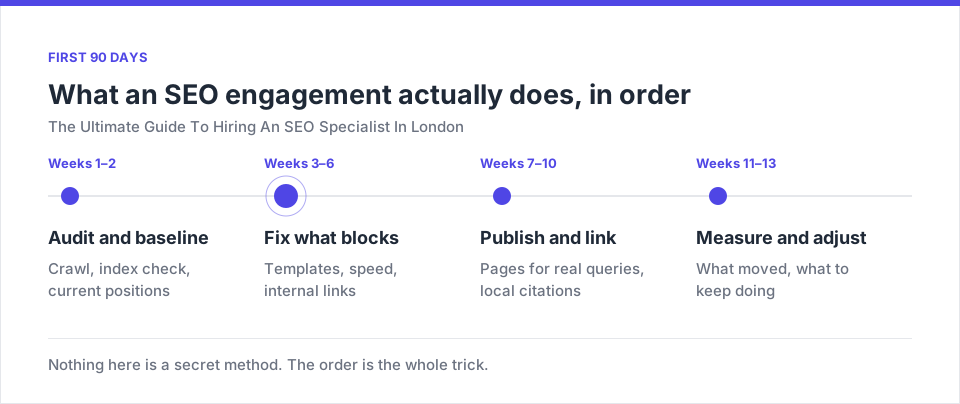
Develop a realistic onboarding timetable that scales with diffusion. A practical approach spans an initial 4–8 week setup window focused on technical fixes, GBP governance, and hub-to-district diffusion, followed by ongoing diffusion with a monthly governance rhythm. Include weekly tactical check-ins for activation progress and quarterly artefact refreshes to reflect market shifts and new district cues.
Embed a transparent pricing and deliverables framework. A typical model includes a setup phase, ongoing diffusion, content and link-building blocks, and a clear reporting cadence. The governance structure should define ownership, dashboard refresh cycles, and how ROI is calculated and communicated to stakeholders. This cadence ensures that London’s districts can scale diffusion while maintaining governance discipline.
6) Getting started with LondonSEO.ai: practical steps
To operationalise onboarding, begin with a review of our Local SEO services to align on core activities, then book a consultation to tailor a two-to-four district diffusion plan. LondonSEO.ai provides artefacts such as Activation Briefs for Surfaces, Locale Notes, Translation Provenance mappings and PSC parity checks to maintain terminology consistency as you scale across London’s boroughs.
Visit our Local SEO services page at Local SEO services and our broader SEO services for a complete toolkit. When you are ready to discuss your London footprint, use our contact page to arrange an onboarding call and design a two-to-four district pilot with auditable ROI and governance. LondonSEO.ai emphasises a governance-forward onboarding that keeps two-to-four edge districts moving from CBD seeds to live district surfaces.
What to expect next in the series
Part 11 will guide you through executing two-to-four district pilots, refining activation cadences, and turning initial diffusion momentum into repeatable ROI across London. We’ll translate pilot learnings into scalable playbooks while preserving governance discipline and terminology fidelity across boroughs.
Measuring ROI And District Activation In London
London’s local SEO diffusion framework defines ROI as the intersection of velocity and value. It tracks how central hub authority diffuses to edge district surfaces and translates into tangible outcomes across the capital’s boroughs. At LondonSEO.ai we treat ROI as auditable, governed through artefacts and governance cadences that maintain language fidelity and signal integrity as you scale.
Core ROI framework for London diffusion
The diffusion model uses two interconnected metrics: diffusion velocity and edge conversions. Diffusion velocity measures how quickly hub terms propagate to district pages and GBP-enabled edge surfaces. Edge conversions track the tangible actions users take on district pages and via GBP paths.
- Diffusion velocity: time-to-activation from hub seed terms to district landing pages and GBP posts.
- Edge conversions: quotes, bookings, inquiries and store visits attributed to edge surfaces.
- Notability signals: district citations, local backlinks and GBP engagement that validate authority in each district.
- Local-Pack and Maps metrics: impression and interaction data by district to show real visibility gains.
- ROI dashboards: integrated views combining diffusion and edge outcomes for auditable ROI.
Artefacts such as Activation Briefs for Surfaces, Locale Notes and Translation Provenance mappings anchor governance. PSC parity checks ensure signals align as hub terms diffuse to edge district content, preventing drift that weakens notability across boroughs.
Dashboards and data integration
Successful diffusion relies on integrated data streams. A two-tier dashboard approach works well: a diffusion-velocity dashboard that monitors the pace of hub-to-district activation, and an edge ROI dashboard that translates district-level activity into revenue proxies. Data sources include GA4 for on-site engagement, GBP Insights for business profile interactions, and district-level metrics for landing page performance.
Notability signals from district citations and credible backlinks feed into the ROI narrative, while activation cadence data helps governance teams keep diffusion on track. Dashboards should be designed for readability by executives, marketers and technical teams alike, with clear district segmentation (e.g., Westminster, Chelsea, Hackney, Camden).
Artefacts that support governance and diffusion
The governance backbone rests on Activation Briefs for Surfaces, Locale Notes and Translation Provenance mappings. PSC parity checks guard against signal drift and help maintain alignment as you scale. These artefacts are living documents updated with market feedback and district evolution, ensuring auditability and repeatable ROI across London.
Two practical examples: district-to-district diffusion in action
Example A targets Chelsea and Westminster. Start with hub terms describing London Local SEO services and diffuse to Chelsea with a district landing page that answers Chelsea-specific questions, embeds a local map and references nearby landmarks. GBP posts highlight Chelsea events and services. Edge surfaces consolidate momentum with district-optimised content and local citations. Track diffusion velocity and edge conversions such as appointment requests arising from Chelsea content.
Example B covers Westminster and Hackney in parallel. Maintain the same governance cadence while comparing diffusion velocity across districts. Use insights to refine Activation Briefs for Surfaces and Locale Notes for local terminology, then scale to additional districts with auditable ROI improvements such as higher Local Pack impressions and district-page conversions.
Getting started with LondonSEO.ai
To operationalise these principles, explore our Local SEO services and our broader SEO services. When you are ready to discuss your London footprint, use our contact page to arrange an introductory call and begin with a governance-forward onboarding that includes Activation Briefs for Surfaces and Locale Notes tailored to your districts. LondonSEO.ai emphasises auditable diffusion with artefacts such as Activation Briefs for Surfaces, Locale Notes and Translation Provenance mappings to maintain terminology consistency as you scale across London.
What to expect next in the series
Part 12 will translate district activation learnings into scalable playbooks, including district prioritisation, content calendars and notability strategies that scale with governance. The objective remains to diffuse authority from the central hub to London’s district surfaces while maintaining auditable ROI.
Hiring A London SEO Specialist: A Practical, Governance‑Led Approach
With London’s district‑dense search landscape, selecting the right SEO partner is a decision that influences visibility, footfall and revenue for years. This final part of the series distills a practical framework for evaluating candidates, structuring onboarding and ensuring the relationship delivers auditable ROI across two to four pilot districts before scaling. The emphasis remains governance‑forward: not just what you do, but how you prove progress, adapt to local signals and sustain diffusion from hub terms to edge surfaces in London’s boroughs.
A clear selection framework for London SEO specialists
Start with a structured scoring rubric that weights governance artefacts, diffusion capability and local fluency. A London specialist should demonstrate mastery across hub‑to‑edge activation, Local Pack momentum and measurable district outcomes, not just technical fixes.
- Proven London district experience: evidence of diffusion success across multiple boroughs and a clear plan for hatch timing and escalation.
- Governance artefacts: Activation Briefs for Surfaces, Locale Notes, Translation Provenance mappings and PSC parity checks that enable auditable diffusion.
- ROI discipline: dashboards that fuse GA4, GBP Insights and district data, with clear attribution from hub terms to edge conversions.
- Content and localisation excellence: district‑specific landing pages, FAQs and event alignment that reflect local terminology and calendars.
- Communication and governance cadence: transparent reporting, onboarding playbooks and a tangible escalation path during activation sprints.
What to ask during vendor conversations
Ask for tangible proof of diffusion velocity in London districts, not only ranking improvements. Inquire about the client onboarding experience, the typical district activation plan, and how the partner handles notability signals through district citations and GBP activity. Request case studies that mirror your service category and local geography, with metrics that tie to lead generation or store visits.
- Activation playbook: can they show a two‑to‑four district pilot plan with explicit milestones?
- District language и Locale Notes: do they maintain a glossary and terminology alignment across districts?
- Diffusion governance: what artefacts will be delivered and how will progress be audited?
- Measurement approach: what dashboards and data sources will be used to report ROI by district?
The onboarding blueprint
Onboarding should establish a predictable diffusion rhythm from hub terms to edge districts. A practical onboarding charter includes Activation Briefs for Surfaces, Locale Notes and Translation Provenance mappings, plus PSC parity checks to prevent drift as you scale. Begin with two to four high‑potential districts, set district KPIs (landing page engagement, GBP interactions, district conversions) and lock in activation cadences for content calendars and GBP posts.
Deliverables in the onboarding phase typically include district keyword maps, activation roadmaps, district landing pages and dashboards that merge GBP signals with district performance. A clear governance cadence—monthly reviews, quarterly artefact refreshes and a defined escalation workflow—helps keep momentum and trust high across stakeholders.
Contracting considerations and engagement models
Choose an engagement model that supports diffusion with control. Common structures include a setup phase to fix technical debt and establish hub‑to‑district diffusion, followed by a retainer for ongoing activation, GBP governance and district content sprints. Consider a hybrid model where the client retains core governance while the partner executes edge surfaces, ensuring transparent accountability.
Key contractual elements should cover scope, SLAs, data ownership, confidentiality, termination rights and knowledge transfer. Require access to governance artefacts as part of the contract, with a stated mechanism for updating Activation Briefs for Surfaces and Locale Notes as districts evolve.
Budgeting and pricing expectations
Pricing in London typically falls into hourly, monthly retainer or project‑based structures. For governance‑led diffusion, a two‑to‑four district pilot is a sensible starting point, with a forecasted retainer that covers GBP governance, activation sprints and monthly reporting. Expect a blended model that includes initial setup fees, district activation milestones and ongoing content and technical optimisation aligned with diffusion velocity.
From a governance perspective, insist on artefacts as part of the engagement: Activation Briefs for Surfaces, Locale Notes, Translation Provenance mappings and PSC parity checks. These artefacts not only support smooth diffusion but also provide auditable ROI as districts mature. External benchmarks from reputable sources such as Google’s guidance on Local Search and recognised SEO authorities can help calibrate expectations, but the core value remains the disciplined diffusion framework your London partner delivers.
Why LondonSEO.ai stands out for London brands
LondonSEO.ai specialises in governance‑forward diffusion tailored to London’s boroughs. The combination of hub‑to‑edge activation, district‑level notability strategies and auditable ROI reporting differentiates a true London specialist from generic SEO players. Expect artefacts that keep diffusion consistent as you scale: Activation Briefs for Surfaces, Locale Notes and Translation Provenance mappings, all designed to maintain terminology fidelity across districts and beyond.
For practical next steps, explore our Local SEO services and our broader SEO services. When you are ready to discuss your London footprint, use our contact page to arrange an onboarding call and design a two‑to‑four district diffusion plan that demonstrates diffusion velocity and district‑level ROI, supported by governance artefacts that sustain momentum as you scale.
Getting started with LondonSEO.ai
Take the next step by booking an introductory call. We will tailor an onboarding plan around Activation Briefs for Surfaces and Locale Notes, and outline a two‑to‑four district pilot that confirms diffusion velocity and ROI. The aim is to establish a reliable governance framework from day one, so your London presence grows with auditable discipline.
What to expect next in the series
With Part 12 complete, you now have a comprehensive framework for evaluating, onboarding and contracting a London SEO specialist who can deliver auditable ROI through district‑aware diffusion. If you want to refresh your approach or unlock further district potential, contact LondonSEO.ai and start with a governance‑led onboarding that aligns with your business objectives and district priorities.
