Introduction: The value of a specialised SEO marketing agency in London
London sits at the heart of global commerce, a mosaic of industries, boroughs, and consumer behaviours. In such a market, a generic SEO approach rarely delivers sustainable results. A London-focused SEO marketing agency recognises local intent, regulatory nuances, and the distinct needs of businesses—from historical trades in the City to fast-moving startups in Shoreditch. Working with a dedicated London partner like londonseo.ai means strategies tailored to where your customers actually are, not where you hope they are. This is about translating broad optimisation into local impact, using data-driven methods that respect the city’s pace and profile.
What makes London-specific SEO different
Local search intensity is unusually high in the capital. Users expect accurate Google Business Profile (GBP) data, rapid mobile experiences, and results that reflect proximity to their location. A London-centric agency learns to map keywords to precise wards, boroughs, and neighbourhoods, aligning landing pages with the questions real people ask in those areas. Beyond rankings, the focus is on relevance, speed, and accessibility across Local, Maps, Discover, and related surfaces that Google leverages in the UK market.
At londonseo.ai, we blend technical SEO with local intelligence, so your site speaks the language of London—literally and culturally. This approach supports a clear path from visibility to qualified traffic, inquiries, and conversions, while maintaining transparent governance and auditable results.
How a specialised London agency advantages your business
Local relevance accelerates performance. A London specialist organisation can deliver:
- Tailored keyword strategies by boroughs and sectors, linked to purpose-built landing pages.
- GBP optimisation, NAP consistency, and structured data tuned for UK local search.
- Integrated cross-channel planning, combining SEO with PPC, content, and digital PR to amplify impact.
Core capabilities you should expect from a London SEO partner
A reputable London-based agency should demonstrate a practical, scalable framework. Areas to prioritise include robust technical audits, local content strategies, GBP governance, and transparent reporting. This Part 1 sets the stage for the practical steps to follow in subsequent sections of the series, each designed to equip you with actionable levers to improve visibility and ROI in London’s competitive landscape.
Getting started with a London-focused SEO plan
If you want a structured, auditable path to visibility in London, begin with a diagnostic that includes GBP health, local keyword intent, and a quick-win prioritisation. We recommend reviewing your current services and identifying gaps in borough-specific coverage. For businesses ready to engage, you can explore the London SEO services available at the services page and arrange a consultation via the contact page. For broader guidance, see foundational resources such as Google’s SEO Starter Guide and adapt its principles to London’s unique market with our governance framework.
In the next parts, we’ll dive into keyword mapping with local intent, on-page optimisations, and the architecture that supports strong local rankings. Each section maintains the same professional tone, with practical, actionable steps you can implement to build a robust London presence.
What to expect from Part 2
Part 2 will unpack local keyword research tailored to London’s diverse boroughs, detailing how to identify intent and translate it into optimised landing pages and blog content that resonates with local audiences.
Core services offered by a London SEO marketing agency
Building on the foundations outlined in Part 1, a London-focused SEO partner translates strategic intent into locally resonant performance. The core services below are the practical toolkit that londonseo.ai deploys to elevate visibility, drive qualified traffic, and convert London audiences across Local, Maps, Discover and beyond. Each service is designed for auditable governance, clear ROI, and seamless integration with cross-channel marketing efforts that London businesses rely on to remain competitive.
1) Comprehensive SEO Audits
Audits form the starting point for all meaningful optimisation. A London audit at londonseo.ai encompasses technical health, content relevance, and local signals. You receive an action-oriented report that prioritises fixes with the highest ROI, from crawl efficiency and indexation health to content gaps in borough-specific intent. The deliverable set includes a technical issue log, a content gap matrix, and a roadmap aligned to your target boroughs and customer journeys. This baseline enables precise tracking of improvements against defined KPIs, such as time-to-index and conversions from Local queries.
2) Technical SEO and Site Health
Technical excellence underpins all ranking potential. Our technical stack covers crawlability, indexability, site speed, mobile experience, and structured data. We focus on Core Web Vitals (LCP, FID, CLS) as leading indicators of user experience, while addressing server configuration, redirects, and canonical issues that tend to derail London sites facing high local competition. A robust site health baseline reduces friction for subsequent on-page optimisations and ensures scalable growth as new boroughs and services come online.
3) On-Page Optimisation and Content Strategy
On-page optimisation is about clarity, relevance, and intent alignment. We map keywords to borough-focused landing pages, service pages, and informative content that answers real user questions. A disciplined approach combines semantic SEO with a structured content calendar, ensuring each page supports a well-defined cluster and interlinking strategy. Localised metadata, optimised headings, and visually engaging media contribute to better click-through rates and dwell time, while maintaining accessibility and mobile usability that London users expect.
4) Local SEO and GBP Optimisation
Local signals are a governor of visibility in London’s competitive landscape. Our GBP governance covers profile completeness, real-time updates, service-area optimisations, and proactive review responses. We coordinate NAP consistency across key directories, manage local citations, and curate geo-titled media to strengthen presence in Local, Maps and Discover surfaces. The aim is reliable proximity-based exposure that translates into phone calls, visits, and inquires from nearby customers.
5) Link Building and Digital PR
Quality backlinks and editorial mentions remain central to authority and ranking stability. Our London-focused outreach prioritises UK outlets, industry publications, and locally trusted partners, with a clear emphasis on relevance and context. We favour white-hat techniques, ensuring placements are earned, natural, and thematically aligned with your borough strategy. The resulting links reinforce topical authority for borough landing pages and service clusters, creating durable signals that inform and support Local and Map results.
6) Data-Driven Reporting and Governance
Transparency is a constant in our London practice. All activities are logged in Explain Logs, with a Translation Provenance trail to safeguard terminology across Local, Maps, Discover and GBP surfaces. A central Provenance Ledger records investments, interventions, and outcomes by borough or campaign cluster, enabling auditable ROI and informed decision-making. Regular dashboards provide visibility into traffic, leads, and revenue impact, ensuring stakeholders understand how SEO contributes to business goals in the capital.
7) Integrated Roadmaps and ROI Monitoring
Rather than a collection of isolated tactics, we deliver integrated roadmaps that align SEO with content, local PR, and paid media where appropriate. Quick-wins are identified to unlock early ROI, followed by deeper content and technical work designed to sustain momentum. Our ROI framework links each action to measurable outcomes, using revenue impact and lead generation as primary success metrics. This approach is especially valuable in London’s fast-moving market where timely, data-backed decisions matter.
8) How to implement: practical next steps
To begin a London-focused engagement, start with a diagnostic that includes GBP health, local keyword intent, and a borough-level gap analysis. You can explore our London SEO services on the services page and book a consultation via the contact page. As you progress, we’ll tailor a borough-first plan using Translation Provenance and Explain Logs to keep every action auditable and chainable to ROI. For foundational best practices, see Google’s SEO Starter Guide and adapt its principles to London with our governance framework.
Local SEO for London: Dominating Google Maps and Hyperlocal Searches
London’s local search landscape is densely populated across dozens of boroughs. For businesses anchored in the capital, appearing in the Local Pack, Google Maps and Discover surfaces requires a London-first approach that marries GBP governance with borough-specific intent. At londonseo.ai we design local strategies that translate city-scale data into hyperlocal impact, turning proximity into qualified traffic and conversions. This part of the series focuses on practical, borough-aware tactics you can implement to win local visibility in London’s competitive environment.
Optimising Google Business Profile for London players
A complete GBP is non-negotiable for London-based businesses. Our programme covers profile completeness, category selection aligned to core services, and service-area updates for London borough outreach. We prioritise real-time updates and proactive review management to keep response times under control and demonstrate responsiveness to local customers. GBP posts, events, and offers are deployed to reflect neighbourhood dynamics, from Westminster to Wandsworth, so prospects see timely information that matches their immediate needs.
We also implement structured data and local signals that support GBP visibility in local surfaces, ensuring consistent NAP across major directories and map listings. This holistic GBP governance is essential to maintain visibility as London’s market shifts with new openings, seasonal events, and evolving consumer flows. At londonseo.ai we pair GBP governance with borough-level content to amplify proximity signals and drive higher engagement.
Maps rankings: how London differs
In London, map rankings are influenced not just by proximity, but by prominence, review velocity, and the diversity of signals across GBP, local citations, and in-market engagement. We track proximity to the user, place quality signals, and the strength of your presence on major local platforms. A robust London map strategy uses local citations across credible sources, ensuring your address, phone number and service areas stay in sync. We also monitor seasonal event calendars (markets, stadiums, cultural happenings) that can shift consumer flows week by week, adjusting wording and offers to stay relevant on Maps surfaces.
Borough-first landing pages: tailoring to neighbourhoods
London’s diversity demands a borough-led infrastructure. We create landing pages by borough, such as Islington, Camden, Chelsea, or Hackney, each tuned to the local questions and needs of residents and businesses. These pages feed the GBP and Map outcomes while enabling granular tracking of performance by area. A well-structured cluster around each borough supports cross-linking, topical authority, and conversions, without sacrificing site cohesion. Each borough page links to service pages and related blog content to strengthen topic authority and support local conversions.
Alongside landing pages, we publish local guides and case studies that resonate with the community and provide fresh angles for content calendars. This borough-centric approach also aids cross-channel orchestration with paid media and digital PR initiatives that reflect London’s geographic realities.
On-page signals that reinforce local map visibility
Local business markup, opening hours, geo-coordinates, and service-area definitions should be precise and consistently implemented across all pages. We align meta signals, headings and structured data with borough-level content to help search engines understand each page’s place in London’s geographic landscape. A correctly configured LocalBusiness schema, combined with an FAQPage for neighbourhood questions, improves the likelihood of rich results in Local and Maps sections. We also validate consistency of NAP across the site and major citations to avoid conflicting signals that could undermine rankings.
Measuring success: ROI, governance and data integrity
Local SEO in London benefits from formal governance. We use Translation Provenance to preserve locale terminology, Explain Logs to justify decisions, and a central Provenance Ledger to track investments, interventions and outcomes by borough. Regular dashboards provide visibility into GBP interactions, map views, and local conversions, enabling you to quantify the revenue impact of hyperlocal optimisation. Beyond traffic, we focus on tangible actions such as calls from GBP, requests for directions, store visits, and enquiries via borough landing pages.
Key metrics include GBP profile interactions, calls and direction requests from the GBP, visits to borough landing pages, and conversions attributed to local searches. Content engagement, local citations, and review response velocity are also tracked to understand how well the local ecosystem is working together. For guidance, Google’s SEO Starter Guide offers universal principles; we adapt its framework to London with our Translation Provenance governance to maintain consistency across surfaces.
Content Strategy and Link-Building for the London Market
In London, content strategy must align with borough-specific intent while supporting the broader SEO objectives across Local, Maps and Discover surfaces. A London-focused approach, as practiced by londonseo.ai, builds authority through borough-centric content hubs, high-quality editorial outreach, and disciplined governance. This part explores practical methods to plan, create, and distribute content that resonates with London audiences and earns durable backlinks from credible UK outlets.
1) Aligning content with local intent
Begin with borough-level mapping to identify where demand concentrates. Develop a hub-and-spoke structure: a central London content hub feeding borough landing pages, service pages, blogs and guides. Tie each borough page to relevant GBP activity, FAQs and case studies to reflect real neighbourhood questions. Align editorial topics with seasonal London dynamics, such as events in Canary Wharf, openings in Shoreditch or shopping patterns around Chelsea, ensuring content answers local queries and guides purchase-ready actions. This borough-focused content strategy elevates relevance and supports MAP and Discover surfaces as Google’s local ecosystem evolves.
2) Borough landing pages and topic clusters
Structure matters. Create dedicated landing pages for key boroughs (for example Islington, Camden, Hackney) that serve as authoritative gateways for related services. Each landing page should link to a cluster of blog posts, FAQs and service pages, with a clear interlinking pattern that signals topical authority to search engines. Use consistent NAP data and GBP signals on these pages to reinforce local proximity. Establish a predictable cadence for updating borough pages to reflect new openings, local events and changes in service areas, keeping content fresh without fragmenting the site’s architecture.
3) Metadata, markup and content signals
optimise titles, meta descriptions and headings with natural local signals. Include borough names in H1 where appropriate, and employ structured data to annotate LocalBusiness, Service and FAQPage content. Use FAQ sections to answer common local queries, such as "What services are available in Islington?" or "How quickly can I see results in Shoreditch?" These signals help search engines understand geographic relevance and user intent, supporting rich results and better click-through rates. For reliable guidance, consult Google’s SEO Starter Guide and tailor its principles to London with a local governance lens.
4) Link-building and Digital PR for London
Link-building in London should prioritise relevance and authority within the UK market. Focus on editorial placements with borough relevance, partnerships with local organisations, and UK-facing media outlets that can provide meaningful referrals and long-term authority. Strategies include:
- Editorial links from London outlets: secure context-rich placements on credible publications that are geographically aligned with your borough strategy.
- Local partnerships and industry bodies: collaborate with chambers of commerce and business associations to gain credible citations and local signals.
- Localised digital PR campaigns: craft data-backed news angles that resonate with London audiences and tie them to borough pages or GBP-focused content.
- Directory and citation consistency: maintain NAP consistency across ironclad UK directories to avoid signal fragmentation.
5) Governance and measurement
Apply the same governance framework used for Local initiatives to content and link-building. Activation Briefs per borough or surface define context and deliverables; Translation Provenance preserves locale terminology across content; Explain Logs justify decisions and a Provenance Ledger tracks investments and outcomes. This ensures auditable ROI and a clear line of sight from content and links to business results. Use dashboards to monitor metrics such as engagement on borough pages, referral traffic from editorial links, and conversions attributed to Local and GBP surfaces. Google’s guidelines provide universal anchors, while your governance ensures London-specific relevance remains intact.
6) A practical 90-day action plan
To implement this approach, use a staged 90-day plan that combines content creation with link-building activity:
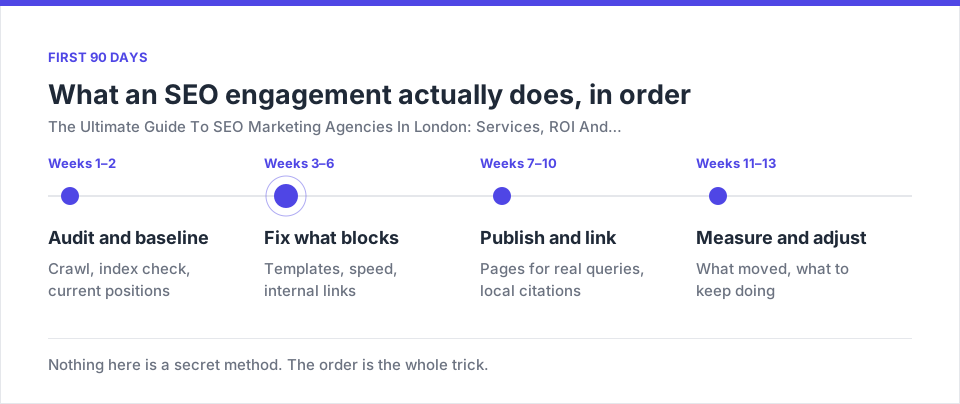
- Weeks 1–2: audit existing borough content, identify gaps, and map topics to borough landing pages. Set up a borough content calendar and begin GBP-aligned content ideas.
- Weeks 3–6: publish cornerstone borough pages and supporting blog posts; initiate outreach to London media with borough relevance; secure 2–3 editorial placements and establish local partnerships.
- Weeks 7–9: broaden borough coverage, deepen topic clusters, and extend interlinking; amplify content via GBP posts and local PR channels.
- Weeks 10–12: measure ROI, refine keyword maps, and prepare a scalable plan to expand to additional boroughs; document learnings in Explain Logs and Ledger for auditability.
Next steps
If you’re ready to embed borough-focused content and robust editorial links into your London SEO strategy, explore the London-focused services at the services page and arrange a consultation via the contact page. For practical guidance on content and local authority, consult Google’s SEO Starter Guide and adapt its principles to London through Translation Provenance and your governance framework.
Content Strategy and Link-Building for the London Market
With London as a dense, diverse and highly competitive digital landscape, content strategy and link-building must be tightly aligned with local intent. A London-first approach means developing borough-centric content hubs that feed into service pages, GBP activity, and maps surfaces while maintaining a coherent brand narrative across Local, Maps, Discover and beyond. At londonseo.ai we design borough-led content clusters that translate city-scale data into actionable, local outcomes, supported by robust governance artifacts such as Activation Briefs by surface, Translation Provenance, Explain Logs and a Provenance Ledger to track ROI at the borough level.
Aligning content with local intent
Content strategies in London start from local intent. We map queries to borough-level needs, creating hub-and-spoke structures where a central London content hub feeds Islington, Camden, Hackney and other borough landing pages, alongside blog posts, FAQs and guides. This structure enables precise tracking of how local content moves prospects from awareness to enquiry, while preserving a seamless user experience across mobile and desktop. The objective is to build topical authority that resonates with neighbourhood questions, seasonal London dynamics, and business-to-consumer interactions that matter in the capital.
Our approach blends semantic SEO with a disciplined content calendar. Each piece serves a defined stage in the customer journey, reinforcing borough relevance while contributing to overall domain authority and Maps visibility. londonseo.ai emphasises governance that makes every content decision auditable and traceable to ROI, ensuring your London presence scales without losing local flavour.
Borough landing pages and topic clusters
A practical borough strategy begins with dedicated landing pages for high-priority areas, each mapped to core services and clusters of cross-linked blog content. For example, landing pages for Islington, Camden, Chelsea or Hackney should feature service descriptions, borough-specific FAQs, and case studies that reflect real local needs. These pages link into a tightly interwoven cluster that includes service pages and informative articles, while GBP activity mirrors the content plan to reinforce proximity signals. A well-structured cluster supports interlinking, topical authority and conversions, without fragmenting the site’s architecture.
To maintain consistency, we employ a standard framework across boroughs: a primary borough page, secondary pages for key services, a content hub with evergreen topics, and timely posts that address seasonal or event-driven demand. This structure ensures that each borough page contributes to Local and Maps performance while remaining easy to manage and scale across London’s ever-evolving consumer landscape.
Metadata, markup and content signals
On-page signals should reflect local intent without sacrificing clarity or user experience. We optimise titles, meta descriptions and headings by incorporating borough names where appropriate, while keeping primary keywords anchored to central themes. LocalBusiness schema, FAQPage markup and service-specific structured data help search engines understand local relevance, proximity and user questions. A borough-focused FAQ section can answer common queries like "What services are available in Islington?" or "How quickly can I see results in Shoreditch?", boosting the chance of rich results in Local, Maps and Discover. Consistency of NAP across the site and major directories remains a non-negotiable to avoid signal fragmentation.
Link-building and Digital PR for London
Backlinks and editorial mentions continue to be foundational for authority and local relevance. In London, our link-building strategy prioritises UK outlets with borough relevance, local business associations, and industry publications that align with the borough content clusters. The aim is to earn editorial placements that are contextual and geographically anchored, strengthening the topical authority of borough landing pages and service hubs. We emphasise white-hat techniques, ensuring placements feel natural and thematically tied to your London strategy.
Key tactics include:
- Editorial links from London outlets: secure context-rich placements on credible publications with borough relevance that tie directly to landing pages or GBP content.
- Local partnerships and industry bodies: collaborate with chambers of commerce and regional business associations to obtain credible citations and signals of local presence.
- Localised digital PR campaigns: craft data-backed news angles that appeal to London audiences and align with borough pages or GBP-driven content.
- Directory/citation consistency: maintain consistent NAP across UK directories to prevent conflicting signals and diluted authority.
Governance, measurement and ROI for content and links
A consistent governance model is essential to demonstrate ROI for content and link-building. Activation Briefs by surface define the expected outcomes and content deliverables; Translation Provenance keeps locale terminology aligned across borough pages and GBP; Explain Logs document the reasoning behind decisions; and a Provenance Ledger records investments and outcomes by borough. Regular dashboards combine engagement metrics, referral traffic from editorial links, and local conversions to reveal the revenue impact of London-focused content and link-building campaigns. As with GBP and Local signals, Google’s Starter Guide provides universal best practices that can be adapted to the London context through our governance framework.
A practical minimum viable plan for London content and links
For a pragmatic, regulator-friendly start, consider a 90-day cadence that focuses on borough content foundations and high-quality local links. Begin with a diagnostic of borough pages and GBP health, map local intent to core services, and set up a borough content calendar. Then, launch a borough-focused outreach program that targets 2–3 editorial placements and a handful of local partnerships, while building a content hub that links to GBP and service pages. Finally, establish dashboards that visualize ROI by borough and surface, and document decisions in Explain Logs and Ledger to support ongoing optimisation and scalability.
Data-driven SEO: Setting goals, KPIs and Measuring ROI for London
London’s search landscape is crowded and fast-moving. A data-driven approach ensures every optimisation decision is anchored to real business outcomes, not just rankings. At londonseo.ai we translate ambitious targets into measurable KPIs across Local, Maps, Discover and GBP surfaces, aligning visibility with qualified traffic, enquiries and revenue. This Part 6 in the series delves into how to set meaningful objectives, track the right metrics, and maintain governance that stakeholders can trust.
From business goals to SEO targets
Begin with a clear line of sight between your commercial goals and SEO activity. For London-based businesses, typical objectives include increasing in-store visits in proximity to GBP interactions, boosting qualified form submissions from borough landing pages, and driving revenue directly attributable to local search. Translate these aims into tangible SEO targets such as improving local visibility for priority boroughs, enhancing landing page conversion rates, and expanding the footprint of high-intent local queries. Establish a governance cadence that ties every action back to ROI, so executives can see how optimisations translate into measurable outcomes.
Key performance indicators by surface
A London-focused SEO programme benefits from a compact, well-defined KPI set that covers the main surfaces and user journeys. The following indicators provide a practical dashboard for ongoing optimisation:
- Organic visibility and traffic for borough landing pages and core service pages.
- Qualified leads and conversions from Local queries, landing pages and GBP interactions.
- GBP engagements, including profile views, calls, direction requests, and GBP post interactions.
- Maps and Discover signals, such as map views, click-throughs from local searches, and proximity-driven actions.
- Cost per lead (CPL) and return on investment (ROI) by borough and surface.
Governance artefacts that underpin ROI
To ensure consistency and auditability, we rely on a small set of governance artefacts that travel with every campaign surface:
- Activation Briefs by surface: define context, objectives and deliverables for Local, Maps, Discover and GBP actions.
- Translation Provenance: preserves locale terminology and ensures consistent language across borough pages and GBP assets.
- Explain Logs: document the rationale behind decisions, providing a traceable narrative from data inputs to outcomes.
- Provenance Ledger: central ledger that records investments, interventions and ROI by borough or surface, enabling auditable comparisons over time.
Measuring success: dashboards and attribution
Measurement rests on a unified data fabric. We combine GA4 insights, Google Search Console visibility, GBP analytics, and cross-surface signals to construct a holistic view of performance. Dashboards are configured to slice results by borough, surface and campaign cluster, offering both high-level ROI summaries and granular, actionable details. Attribution is designed to be robust yet practical, prioritising lead generation, enquiries and revenue as primary outcomes rather than vanity metrics alone. This approach supports steady, regulator-friendly reporting that stakeholders can validate and trust.
A practical example of ROI calculation in London
Consider a borough landing page cluster tied to GBP activity. Over a 90-day window, the page group generates 120 leads, 60 of which convert into qualified inquiries. The average value per lead is £120, with GBP interactions driving 25 additional calls. If the total SEO investment for the borough is £4,500, the ROI can be estimated by revenue from conversions minus costs. In this simplified scenario, revenue from qualified leads and GBP-driven actions might amount to £15,600, yielding an ROI of roughly 246% for the period, before broader cross-channel effects. While real-world models will apply multi-touch attribution and longer time horizons, this example demonstrates how tangible revenue outcomes can be tied back to specific, borough-level SEO activity. All figures are tracked in the Provenance Ledger to maintain an auditable history for future planning.
Putting insights into action
Use the governance artefacts to guide ongoing optimisation. Activation Briefs should be revisited at each milestone to confirm alignment with ROI targets. Translation Provenance keeps localisation coherent as new boroughs and surfaces are added. Explain Logs should be updated with the rationale for major changes, and the Ledger should be refreshed to reflect actual ROI against planned targets. This disciplined approach ensures that London SEO remains transparent, scalable and accountable.
Next steps and how to get started
If you’re ready to embed a data-driven framework into your London SEO, explore the London-focused services at the services page and book a consultation via the contact page. For practical guidance on building measurement systems, reference Google’s guidance alongside our governance templates, such as Activation Briefs, Translation Provenance and Explain Logs, to maintain a clear, auditable path to ROI.
Integrating SEO With Broader Marketing Channels: A London Perspective From londonseo.ai
In the constantly evolving London market, search visibility thrives when SEO works in harmony with PPC, Digital PR, social media, email marketing and branding. A London-based SEO marketing agency like londonseo.ai designs campaigns as an integrated ecosystem, so each channel reinforces the others. This coordinated approach drives not only higher rankings but also stronger engagement, more qualified traffic and measurable ROI across Local, Maps, Discover and GBP surfaces.
How SEO benefits from cross-channel alignment
When SEO, PPC and Digital PR share a common objective—driving revenue from London audiences—each discipline becomes more efficient. SEO gains from PPC keyword insights, allowing smarter bidding strategies and more relevant landing pages. PPC benefits from improved organic rankings, reducing cost per acquisition and providing sustainable long-term traffic. Digital PR amplifies the authority signals that underpin both SEO and local trust, particularly for borough-focused content and GBP optimization. This synergy is especially important in a city as diverse as London, where different boroughs exhibit distinct search behaviours and consumer journeys.
Practical channels and how they interact
Paid search (PPC): use the keyword insights from SEO to refine bids, craft geo-targeted ad copy and build landing pages that mirror the search intent uncovered by SEO audits. Synchronise conversion tracking so the revenue impact of each keyword is visible across both channels. London SEO services and PPC management should share a unified attribution model that reflects multi-touch paths from awareness to purchase.
Digital PR and content marketing: deploy borough-focused stories that support landing pages and GBP activity. Editorial placements and data-driven news angles improve domain authority and provide durable signals that help Map rankings. Align PR calendars with content and landing page releases to maximise relevance and backlink quality.
Social media and email as amplifiers, not afterthoughts
Social channels extend the reach of your SEO content, particularly for local guides, events and community-facing content. Use social to drive traffic to borough landing pages and GBP updates, generating engagement signals that support local relevance. Email newsletters repurpose SEO content into digestible, action-oriented formats, driving visits to service pages and contact forms. The goal is to create consistent messaging across channels without duplicating effort; reuse content assets intelligently and tailor formats to each audience in London.
Measurement and governance across surfaces
Adopt a shared governance spine across surfaces: Activation Briefs by borough or surface define the desired outcomes; Translation Provenance preserves locale terminology across all materials; Explain Logs justify decisions behind content and channel adjustments; and a Provenance Ledger tracks investments and ROI. A unified dashboard should display KPI progress for Local, Maps, Discover and GBP, with drill-downs by borough and by channel. This ensures accountability and clarity for stakeholders across London’s diverse business landscape.
An actionable 90-day playbook for London integrations
- Weeks 1–2: synchronise SEO and PPC goals, map borough priorities, and align landing pages with high-potential local queries. Establish a borough content calendar and GBP improvements in parallel.
- Weeks 3–6: execute cross-channel optimisations: refresh borough pages, publish local content, adjust ad copy to match intent, and begin outreach for editorials tied to the borough strategy.
- Weeks 7–9: expand content clusters around additional boroughs, intensify digital PR, and deepen cross-linking to reinforce topical authority and Map visibility.
- Weeks 10–12: consolidate ROI reporting, refine attribution models, and plan scalable expansion to new boroughs, ensuring governance artefacts are up to date in the Ledger and Explain Logs.
Where to start with London-first integrations
If you’re ready to embed cross-channel SEO in your London strategy, begin from a diagnostic that covers GBP health, borough-level intent, and cross-channel touchpoints. You can explore the London-focused SEO services on the services page and arrange a consultation via the contact page. For practical guidance, reference Google’s SEO Starter Guide and adapt its principles to London with our Translation Provenance governance framework.
Pricing models and budgeting for SEO in London
In London’s dynamic, competitive market, choosing the right pricing model for SEO is as important as the strategy itself. A London-focused SEO marketing agency like londonseo.ai blends transparency, governance and predictable ROI to help businesses plan, scale and measure success. This part of the series examines common pricing structures, budgeting considerations in the capital, and how to select a model that aligns with your growth objectives while keeping governance artefacts—Activation Briefs, Translation Provenance, Explain Logs and a Provenance Ledger—central to every engagement.
Common pricing models you’ll encounter in London
London agencies and freelance specialists typically offer a mix of fixed, flexible and performance-based pricing. Each model has advantages depending on your goals, risk tolerance and the scale of your local strategy.
- Fixed monthly retainer: A predictable, ongoing fee covering a defined set of activities (audits, GBP management, on-page optimisations, content and reporting) with agreed KPIs. This model suits businesses seeking steady growth and total cost transparency, enabling regular governance updates and auditable ROI.
- Time-and-materials with milestones: Billing based on hours or days worked, with explicit milestones (initial audit, implementation, testing, reviews). Flexibility is high, making it suitable for evolving borough strategies or pilot tests in new areas.
- Project-based (fixed scope): A single, well-defined project—such as a borough-focused landing page redesign or a content hub setup—priced upfront. Best for discrete initiatives with clear deliverables and timelines.
- ROI or performance-based: Part of the fee depends on achieving predefined outcomes (leads, conversions, revenue). Requires robust attribution, transparent targets, and careful risk management to avoid misalignment with long-term SEO health.
- Hybrid models: A combination of retainer for ongoing activity plus milestone-based or performance-based elements for specific outcomes. This is common when balancing ongoing Local/GBP work with a sprint of content or technical improvements.
How to estimate a London SEO budget: key considerations
Budgets in London reflect not just the size of the site but the depth of local coverage, GBP governance and the breadth of boroughs targeted. The following factors commonly drive cost and effort:
- Number of borough landing pages and service pages required to achieve local coverage.
- Quality and frequency of content created to support borough clusters and maps surfaces.
- GBP governance needs, including real-time updates, reviews handling and GBP post activity.
- Technical depth: Core Web Vitals, structured data, site architecture, redirects and internationalisation considerations if multilingual content is involved.
- Data governance and reporting: the level of transparency, explain logs, activation briefs and ledger maintenance.
Indicative budgeting bands you might see in London
- Small local business (1–3 boroughs, basic GBP and pages): roughly £700–£2,000 per month. Suitable for foundational Local/GBP activity and essential on-page improvements.
- Mid-size business (multiple boroughs, richer content plan): £2,500–£5,000 per month. Includes enhanced content clusters, more extensive GBP management and stronger cross-channel alignment.
- Growth-focused enterprise (broad borough coverage, robust content and PR): £5,000–£12,000+ per month. Adds strategic content campaigns, digital PR, and advanced analytics governance.
Choosing the right model for your goals
For businesses prioritising predictability and steady ROIs, a fixed retainer with quarterly reviews works well. If you expect rapid shifts in borough strategy, a time-and-materials approach with milestones provides the needed flexibility. If your aim is to demonstrate direct revenue impact from SEO, a carefully defined ROI-based component—with transparent attribution—can align incentives, provided targets are realistic and auditable. A hybrid approach often delivers balance: ongoing Local/GBP work with periodic performance-driven sprints tied to specific goals or borough launches.
Contract governance: what to look for in proposals
When reviewing proposals from London partners, prioritise clarity around deliverables, timing, and ROI. Look for evidence of governance artefacts such as Activation Briefs by surface, Translation Provenance to maintain consistent terminology across boroughs, Explain Logs that justify decisions, and a central Provenance Ledger that tracks investments and outcomes. Ensure the contract includes service level agreements (SLAs), milestones, reporting cadence, data accessibility, and a clear path for scalability as your London campaign expands to additional boroughs or surfaces.
A practical 90-day starter plan within your budget
Use a phased approach to prove ROI and calibrate your budget quickly. Start with a diagnostic, then deploy essential Local/GBP work, followed by targeted content or technical improvements, and finally scale across more boroughs. A typical 90-day plan might include:
- Weeks 1–2: audit GBP health, map borough intent, and set baseline KPIs. Establish Activation Briefs and the Ledger framework.
- Weeks 3–6: implement quick-wins in GBP, optimise 1–2 borough landing pages, and publish cornerstone content that answers local questions.
- Weeks 7–9: expand borough coverage, refine interlinking and metadata, and initiate a borough-focused outreach plan to secure editorial placements.
- Weeks 10–12: measure ROI, adjust targets, and prepare a scalable plan to extend to additional boroughs with updated governance artifacts.
Next steps: getting started with London-focused pricing
To align pricing with your London objectives, begin by evaluating your borough coverage, GBP needs and content ambitions. Review the London-focused SEO services on the services page and book a consultation via the contact page. For practical guidance, reference Google’s SEO Starter Guide and adapt its principles to London through Translation Provenance and your governance framework. The aim is a transparent, scalable plan that links every pound spent to measurable local outcomes.
Choosing the Right SEO Agency in London
In London’s fast-paced, borough-diverse market, the right SEO partner can be the difference between marginal visibility and meaningful, revenue-driving search presence. A London-focused SEO marketing agency like londonseo.ai combines local intelligence with a governance framework that makes every action auditable and scalable. This Part 9 offers a practical, evidence-based guide to selecting a partner, what to demand in proposals, and how to structure a pilot that proves ROI without compromising long-term health.
Core criteria to assess a London SEO agency
Look for a combination of local fluency, measurable governance and cross-channel capability. The following criteria help distinguish a partner that can translate London’s multi-borough dynamics into durable results.
- Deep London and borough-level expertise, with demonstrated results in Local, Maps and GBP surfaces.
- A transparent governance model, including Activation Briefs by surface, Translation Provenance to maintain local terminology, Explain Logs for decision records, and a Provenance Ledger for ROI tracking.
- Structured discovery and auditable roadmaps that connect business goals to SEO actions and cross-channel touchpoints.
- Clear, testable pricing and contract terms, with SLAs and defined milestones tied to ROI outcomes.
What to demand in a proposal
A robust proposal should translate your business aims into an actionable SEO plan, with governance baked in from day one. Priorities include borough coverage, GBP governance, content strategy, technical health, and a measurement framework that ties activity to revenue. Ensure the proposal details the following:
- Scope: number of borough landing pages, content clusters and GBP management activities.
- Roadmap: a realistic timeline with milestones for audit, implementation, testing, and review.
- ROI planning: explicit targets for traffic, qualified leads and revenue by borough or surface.
- Governance artefacts: Activation Briefs by surface, Translation Provenance, Explain Logs and a Ledger for ROI.
- Reporting cadence: monthly dashboards, with access to raw data and interpretation notes.
Questions to ask during the discovery call
Use these prompts to probe the agency’s approach and culture. A thoughtful reply demonstrates alignment with London’s local market dynamics and a mature governance mindset.
- How do you tailor SEO strategies to London's boroughs, and how do you measure proximity-based performance?
- What does your GBP governance process look like on a day‑to‑day basis?
- Can you show a borough-level case study that includes ROI and lifecycle metrics?
- How do you integrate SEO with paid media, digital PR and content to maximise local impact?
- What data sources do you use for attribution, and how do you handle cross-channel attribution in dashboards?
- What is your approach to Core Web Vitals and mobile UX in the context of London’s diverse device usage?
- How do you ensure NAP and GBP data remain consistent across directories and GBP itself?
- What is your literature of experimentation: how often do you run controlled tests, and how are results reported?
Pricing and contract considerations
London-based engagements vary: fixed retainers, time-and-materials with milestones, project-based work, ROI-based components, or hybrids. When evaluating pricing, look beyond the headline rate and examine the governance framework, inclusions, and dashboard accessibility. Ensure terms enable scalability to additional boroughs and that ROI targets are defined with auditable baselines and transparent cost structures. A trustworthy partner presents a clear path from initial diagnostic to scalable, long-term growth, with governance artefacts attached to every milestone.
A practical 90-day pilot blueprint
To validate a London strategy without overcommitting, run a 90-day pilot that combines GBP health, borough content, and local link-building with a tight measurement framework. Suggested phases:
- Weeks 1–2: audit GBP health, map borough intent, and establish Activation Briefs by surface; set baseline ROI metrics.
- Weeks 3–6: deploy quick-wins on 1–2 boroughs, publish cornerstone borough content, and initiate local editorial outreach.
- Weeks 7–9: extend borough coverage, deepen interlinking, and scale GBP activity with updated service-area data.
- Weeks 10–12: consolidate ROI reporting, refine the keyword map, and prepare a scalable plan for additional boroughs.
Next steps
If you’re ready to evaluate London-focused SEO partners, start with the services page to understand available offerings and book a consultation through the contact page. For foundational guidance, reference Google’s SEO Starter Guide and align its principles with a governance framework that includes Translation Provenance and Explain Logs to sustain local relevance across surfaces.
To see a demonstration of our approach in action, browse the borough-focused case studies and reach out to discuss a tailored plan for your business.
What To Expect: Timelines and Project Milestones for London SEO Campaigns
A well-managed London SEO programme, such as the ones orchestrated by londonseo.ai, is not a collection of isolated tactics but a carefully staged journey. Clear timelines, defined milestones and auditable governance artefacts keep every action accountable to business goals. This Part 10 of the series translates strategic intent into a practical project rhythm, outlining typical cadences, checkpoints, and the evidence you should expect at each stage. It also reinforces the value of borough-focused roadmaps, GBP governance and cross-channel alignment as the routine cadence for sustained success in London’s competitive market.
Foundational diagnostics and quick-wins (Weeks 1–2)
The initial phase begins with a comprehensive diagnostic that assesses GBP health, local keyword intent, and borough-level gaps. You receive a prioritised action plan that identifies quick-wins such as GBP profile optimisations, immediate metadata refinements on high-potential borough pages, and fixes for crawl or indexing friction. A governance spine is established at this stage, including Activation Briefs by surface, Translation Provenance for locale terminology, and a ledger setup to track early ROI signals. London businesses typically see tangible improvements in GBP interactions and page quality scores within this window, laying a reliable foundation for subsequent work.
Strategy refinement and borough prioritisation (Weeks 3–6)
During Weeks 3 to 6, the focus shifts to expanding borough coverage with a borough-first landing pages strategy, coupled with cluster content that supports maps and GBP. The plan includes a content calendar aligned to borough events and seasonal demand, plus technical enhancements that improve Core Web Vitals and mobile UX. A central ROI dashboard is populated with baseline metrics drawn from GA4, Google Search Console, GBP analytics and Maps data. Regular governance updates ensure all decisions are transparent and traceable in Explain Logs and the Provenance Ledger.
Implementation sprints: technical and content depth (Weeks 7–9)
In Weeks 7 to 9, execution accelerates. Technical sprints address site architecture, structured data, canonical hygiene and page speed, while content sprints deliver borough-specific landing pages, FAQs, guides and service content. Interlinking structures are reinforced to support topical authority and MAP surfaces. GBP governance continues, with updates to service-area definitions and real-time response processes for reviews. The governance artefacts—Activation Briefs, Translation Provenance, Explain Logs and the Ledger—remain live, updating as new pages and assets come online.
Cross-channel alignment and ROI orchestration (Weeks 10–12)
Weeks 10 to 12 are about measurement discipline and planning for scale. The ROI framework is used to quantify the revenue impact of Local, Maps and GBP actions, while cross-channel activities with paid media, digital PR and content marketing are synchronised to amplify local proximity signals. Dashboards present KPI progress by borough and surface, with drill-downs into GBP interactions, map views, and conversions. This phase also finalises the 90-day review, capturing learnings in Explain Logs and updating the Provenance Ledger for auditability and future planning.
Regular governance cadence and ongoing optimisation
Beyond the initial 90 days, a steady cadence is essential. Monthly reviews assess progress against KPI targets, while quarterly strategy sessions refine borough maps, content calendars and GBP governance. The governance artefacts travel with every campaign surface: Activation Briefs by surface keep objectives contextualised; Translation Provenance preserves locale terminology; Explain Logs document the reasoning behind every adjustment; and the Provenance Ledger tracks ROI across boroughs and surfaces. In practice, this results in a living, auditable framework that scales with London’s changing market dynamics.
What to expect in your London engagement with londonseo.ai
You will receive a transparent project plan with a clear timetable, milestone deliverables, and predictable governance. You’ll observe tangible improvements in GBP interactions, local click-through rates, and borough landing page performance. You’ll also gain confidence from data-driven dashboards and audit trails that show how decisions translate into ROI. For ongoing reference, all actions align with our London-first governance framework, and you can review progress on the dedicated services page or via a tailored consultable roadmap.
To see how this plays out in practice, explore the London-focused services at the services page and book a consultation via the contact page.
Common Myths and Pitfalls in London SEO
In London’s fast-moving, borough-diverse market, certain myths persist about what it takes to win in organic search. This Part 11 in the londonseo.ai series debunks the most common misconceptions and offers pragmatic guardrails grounded in governance, data integrity and ROI. The aim is to steer practitioners away from glittery promises toward durable visibility, qualified traffic and measurable business outcomes across Local, Maps, Discover and GBP surfaces.
As a London-focused SEO marketing agency, londonseo.ai operates with a governance spine—Activation Briefs by surface, Translation Provenance to keep locale terminology consistent, Explain Logs to justify decisions, and a central Provenance Ledger to track investments and outcomes. These artefacts help companies separate hype from reality and ensure every action ties back to revenue in the capital’s complex ecosystem.
Myth 1: You can guarantee top rankings overnight
No credible London-focused SEO partner can guarantee top positions across all boroughs and surfaces. London’s search results are personalised by user context, device, proximity and historical signals. Local competition varies wildly between Westminster, Camden, Islington or Hackney, and rankings shift with seasonal activity, GBP updates and Map signals. Instead of guarantees, focus on a credible roadmap that prioritises high-potential boroughs, robust GBP governance, and technically sound foundations. A steady climb in local visibility, higher click-through rates, and increasing conversions over time provide a more reliable indicator of success.
Practical steps include aligning borough-level landing pages with GBP activity, maintaining consistent NAP data, and building topical authority through content clusters that address real neighbourhood questions. Rely on auditable reporting and governance artefacts to demonstrate progress to stakeholders and to sustain momentum even as the London landscape evolves.
Myth 2: Local SEO is quick and cheap
London’s market demands sustained investment. Quick wins exist, but lasting dominance in Local, Maps and GBP surfaces requires time, discipline and cross-channel coordination. A practical approach starts with a diagnostic, followed by a borough-first plan and a staged ROI-focused rollout. Budgeting should reflect the breadth of boroughs targeted, the depth of GBP governance, and the scale of content and technical work required. Expect a period of learning and adaptation before broad, scalable impact is seen, especially if you’re expanding into multiple boroughs or service clusters.
For transparency, couples this with governance artefacts that document decisions, track ROI, and provide auditable trails as you expand. This ensures your investment remains aligned with real-world outcomes rather than vanity metrics.
Myth 3: You can buy your way to higher rankings with link schemes
London audiences and UK-scale domains value relevance and editorial authority. The temptation to purchase links or run mass directory listings can backfire, risking penalties and erosion of trust. Ethical, white-hat link-building and Digital PR that emphasises local relevance and borough-specific storytelling deliver durable signals. Focus on high-quality editorial placements, credible local partnerships, and content-led outreach that ties into borough pages and GBP-driven assets. The result is a healthier link profile that supports Map rankings, Local search and overall domain authority.
Myth 4: GBP alone drives ROI
Google Business Profile is essential for proximity-based visibility, but GBP alone does not guarantee sustained traffic or conversions. A London-first approach must weave GBP governance with borough landing pages, content hubs and technical SEO that enhance page experience, structured data and local signals. Content that answers local questions, optimised meta data, and robust internal linking all reinforce the relevance of GBP activity. In practice, GBP should be part of an integrated, multi-surface strategy, not a stand-alone lever.
When combined with a well-structured content architecture, local schema, and consistent NAP across directories, GBP activity becomes a strong contributor to qualified inquiries, store visits and revenue—especially when ROI governance ties each action to business outcomes.
Myth 5: A single playbook fits all London boroughs
London’s diversity requires a multi-borough, multi-surface strategy. A one-size-fits-all approach fails to capture the distinct needs of Islington’s tech scene, Chelsea’s luxury sector or Hackney’s creative economy. The prudent path is to implement a borough-first framework that scales through activation templates, translation provenance, and rigorous explain logs. This ensures consistent governance while allowing surface-specific adaptations for Local, Maps, Discover and GBP. It also supports a scalable model where additional boroughs or surfaces can be added with auditable confidence.
To avoid drift, establish a central hub of governance artefacts and ensure each borough page or surface inherits the same baseline signals while enabling local refinements in language, media and offers. This balance maintains brand coherence and local relevance simultaneously.
Future trends: AI, UX and evolving UK SEO
As the London market continues to evolve, SEO is increasingly shaped by artificial intelligence, user experience imperatives, and the shifting signals that search engines prioritise. A London-based SEO marketing agency like londonseo.ai stays ahead by weaving AI-driven efficiency with rigorous governance, ensuring decisions remain auditable and ROI-focused across Local, Maps, Discover and GBP surfaces. This final chapter in the series highlights practical trends, risks, and actions you can adopt to future-proof your London presence.
AI in search: from automation to insight
Artificial intelligence is not a buzzword but a sensible extension of disciplined SEO practice. In London, AI can accelerate data collection, surface insights from local search patterns, and automate repetitive tasks such as metadata generation or initial content briefs, all while preserving high-quality human oversight. Agencies like londonseo.ai use AI as a force multiplier, not a replacement for expert judgement. The key is to couple predictive signals with a robust governance spine—Activation Briefs by surface, Translation Provenance to maintain locale terminology, Explain Logs to justify decisions, and a Provenance Ledger to track ROI.
UX and accessibility as ranking and conversion levers
User experience remains a core differentiator in London’s crowded search landscape. Core Web Vitals (LCP, FID, CLS) are table stakes, but beyond metrics, accessible design, clear navigation, and device-frugal experiences drive engagement, reduce bounce, and improve tagging accuracy for local signals. A London-first approach treats UX as a conversion lever: fast, intuitive pages for borough landing pages, service hubs, and GBP interactions translate into higher dwell time, better engagement with GBP posts, and more actionable inquiries from local users.
E-E-A-T in a British local context
Expertise, Authoritativeness, and Trustworthiness are not generic attributes; in London they hinge on local authority, credible local signals, and transparent governance. Content should demonstrate deep understanding of borough nuances, regulatory compliance, and authentic local voices. GBP governance, robust reviews management, and locally relevant case studies strengthen trust signals. By aligning content and structured data with Translation Provenance, londonseo.ai reinforces locale-specific authority while preserving a consistent brand voice across surfaces.
AI-guided content with safety and ethics
Generative AI can accelerate content ideation and drafting, but it requires guardrails. For London campaigns, use AI to draft first-pass outlines and topic ideas, then have human editors tailor tone, verify facts, and validate borough-specific accuracy. Maintain a transparent audit trail so that any AI-assisted content remains accountable. This approach protects the integrity of your borough pages and ensures content aligns with local realities, seasonal events, and regulatory expectations in the UK.
Governance framework for AI-enabled SEO in London
To sustain credibility while embracing AI, maintain the same governance spine that has underpinned London strategies: Activation Briefs by surface outline objectives and deliverables; Translation Provenance ensures locale terms travel correctly across Local, Maps, Discover and GBP; Explain Logs capture the reasoning behind actions; and the Provenance Ledger documents ROI and investment by borough or surface. This structure enables scalable AI adoption without compromising transparency or performance accountability.
Practical steps to implement AI and UX initiatives
- Audit and baseline: establish GBP health, borough coverage, and Core Web Vitals baselines; document with Activation Briefs and a Ledger snapshot.
- AI-assisted ideation: generate borough-focused content ideas and meta signal drafts; assign human editors to refine for accuracy and local relevance.
- UX optimisation sprint: prioritise borough landing pages and service hubs for speed, accessibility and mobile-first design; implement structured data in line with local signals.
- Governance integration: tag AI-driven actions with Translation Provenance and Explain Logs; update the Ledger to reflect AI-enabled ROI trajectories.
- Measurement discipline: build dashboards that report on local ROI, GBP interactions, map views and conversions, with per-borough granularity.
