Local SEO London: Foundations for Local Visibility
London is a dynamic, highly competitive digital market where local intent drives footfall, footfall converts and long-term authority wins. Local SEO London requires a governance-forward mindset: a structured approach that grows district-specific signals (Local Blocks) while maintaining a robust city-wide spine (Locale A). This Part 1 sets out the essential foundations you need to start building durable visibility across Maps, knowledge panels and organic search in London’s Boroughs.
By focusing on city-wide authority, proximity signals and district relevance, brands in finance, hospitality, legal services and professional sectors can establish reliable surface presence that scales with London’s pace. The aim is to create a spine that remains credible as you activate borough-level depth, ensuring a clean path from near-me results to long-tail authority.
What Local SEO London means in practice
Local SEO London is not only about technical fixes; it is about aligning a city-wide narrative with district-specific needs. The framework centres on two core concepts: Locale A, the Master Spine that captures city-wide authority on core topics, and Locale B, the Local Blocks that translate that authority into district relevance. This separation helps teams plan, publish and measure with clarity, enabling auditable progress as new areas and services come online.
- City-wide topics that reflect London’s broad economic and cultural specialisms.
- District-focused pages that address proximity, events and local services.
- A governance trail that records decisions, rationales and locale context for regulators and stakeholders.
The two-locale framework: Locale A and Locale B
Locale A acts as the city spine: evergreen topics and authority that underpin the main services you offer. Locale B translates that spine into district depth by creating Local Blocks, borough-specific pages and service-area surfaces that respond to near-me searches and local events. The separation informs content strategy, enables precise measurement and supports regulator-ready reporting as London’s surface map evolves.
In practice, this means a publishing schedule that ties city-wide content to district activations, with a clear governance rubric to ensure that every surface retains its role without diluting the spine’s credibility.
Why governance matters for London campaigns
London’s market is fast-moving and highly compliant. A governance-forward partner maintains auditable publishing trails, uses WhatIf baselines before major surface updates, and attaches locale-context notes to every publish. This discipline supports digital maturity, stakeholder confidence and regulator-ready reporting while keeping the day-to-day work efficient and scalable.
Expect dashboards that blend city-wide health with district-depth performance, so executives see both the macro and micro signals in one view. This holistic approach reduces uncertainty and accelerates decision-making during borough launches or service-area expansions.
Early deliverables from a London partner
In the initial phase, expect a concrete plan that links city priorities to surface signals, a technical health baseline and an initial blueprint for district pages and GBP improvements. Governance artefacts establish the decision history and locale-context notes that regulators can replay as the London surface map evolves. The end goal is a durable spine that remains credible while enabling rapid district activation.
- Technical health baseline covering speed, crawlability and indexability for London traffic patterns.
- Master Spine and Local Blocks layout with a clear URL hierarchy and internal-link strategy.
- Initial GBP optimisation plan, including posts and service areas aligned to London districts.
- Auditable publishing templates and a governance dashboard for regulator-ready reporting.
Choosing the right London partner
Select an agency with proven London experience, a transparent governance framework and an approach that scales from city-wide authority to borough-level depth. Look for senior leadership involvement, auditable publishing trails and a collaborative cadence that involves your marketing, product and compliance teams. A strong partner will articulate clear success metrics, governance rituals and a plan to expand across boroughs without compromising spine integrity.
- London experience with district-level growth and multi-district management.
- Transparent pricing, clearly defined scope, and scalable options as you expand in London.
- A governance framework with WhatIf gates, Delta Provenance and regulator-ready reporting.
- Strong collaboration processes with regular reviews and shared dashboards.
- Ethical SEO practices aligned with Google guidelines and privacy compliance.
Next steps: engaging with londonseo.ai
To explore governance-forward, two-locale growth with a London partner, start with a discovery on londonseo.ai. Review our SEO services to understand London-ready offerings and governance tooling, and book a discovery to tailor a district-focused plan that scales from Maps to knowledge panels and organic search across London’s boroughs. For benchmarking and signal standards, consult Core Web Vitals and Google Local SEO Guidelines as anchors for signal quality and regulator-ready reporting.
What Local SEO London Delivers
London demands a governance-forward, two-locale approach to local search. Locale A acts as the city-wide Master Spine, while Locale B translates that authority into district-depth surfaces for each borough or service area. This Part 2 outlines the practical benefits of that model, the exact deliverables you should expect from a London-based agency, and the governance artefacts that support auditable, regulator-ready growth across Google Maps, GBP, knowledge panels and organic search. With londonseo.ai as the reference architecture, brands in finance, hospitality, professional services and consumer sectors can translate city-wide credibility into tangible, borough-level results without compromising the spine’s integrity.
1. Concrete benefits of local SEO in London
London’s search landscape rewards a disciplined, scalable approach that aligns city-wide themes with district-specific needs. The two-locale framework ensures visible authority at the city level while enabling rapid activation of district pages that respond to near-me searches, local events and proximity signals. The practical outcomes fall into four core areas:
- Increased visibility across Maps, local packs and knowledge panels within London’s diverse boroughs.
- Higher quality traffic tailored to borough-level intents and proximity cues.
- Improved user experience on district surfaces, reinforcing trust and boosting engagement.
- Auditable governance and regulator-ready reporting that reduces risk as the surface map expands.
2. What agencies should deliver in practice
From GBP management to district landing pages, a London partner should provide a cohesive surface strategy that binds the Master Spine (Locale A) to Local Blocks (Locale B). Expect deliverables that establish a clean spine-to-block relationship, ensure signal alignment, and enable rapid district activations without eroding city-wide authority. The primary components include:
- GBP health improvements that mirror district pages and service-area definitions, improving proximity signals and click-through rates.
- District keyword maps that connect city-level themes with borough-specific intents and events.
- Consistent NAP data and robust local citations across Local Blocks and the main site.
- Content clusters that address near-me queries, local events and proximity cues while preserving spine credibility.
3. Governance artefacts that matter for regulators
Auditable artefacts underpin regulator-ready growth. Key artefacts include:
- WhatIf baselines that forecast indexing, UX and signal distribution before district publish.
- Delta Provenance logs capturing locale context, authorship and publishing rationales.
- Locale-context notes attached to every surface publish to support journey replay in audits.
- A dashboard that blends Surface A (city-wide) health with Surface B (district depth) performance.
These artefacts ensure regulators can replay the path from discovery to activation as the London surface map evolves. For reference, review Core Web Vitals and Google Local SEO Guidelines as anchors for signal quality and regulator-ready reporting.
4. Collaboration patterns and governance cadence
London campaigns succeed when senior leaders stay involved and cross-functional teams collaborate across marketing, product and compliance. Cadence plays a crucial role in maintaining alignment between Locale A and Locale B surfaces. Typical rituals include:
- Weekly surface-health reviews to surface issues in technical health and district signals.
- Biweekly planning sessions to prioritise Local Blocks and validate WhatIf baselines before publishing decisions.
- Monthly governance deep-dives with executives and compliance teams to confirm progress against borough priorities and to refresh locale-context notes.
Dashboards should be shared and easy to interpret, enabling regulator-ready reporting while keeping internal teams aligned with the publishing calendar and WhatIf governance gates.
5. Next steps to engage with londonseo.ai
To explore governance-forward, two-locale growth in London, start with a discovery on the SEO services on londonseo.ai and consider booking a discovery to tailor a district-focused surface strategy that scales from Maps to knowledge panels and organic search across London’s boroughs. For benchmarking and signal standards, review Core Web Vitals and Google Local SEO Guidelines as anchors for signal quality and regulator-ready reporting.
Local London SEO: winning visibility in Google Maps and city searches
London's two-locale framework—Locale A, the city-wide Master Spine, and Locale B, the Local Blocks that translate authority into district depth—gets a practical uplift through robust, auditable signals. This Part 3 concentrates on the core signals that transform local intent into visible surfaces across Maps, knowledge panels and organic search. With londonseo.ai as the reference architecture, brands across financial services, hospitality, legal, professional services and consumer sectors can tighten proximity signals, strengthen district relevance and sustain spine credibility as the city evolves.
By aligning GBP health, local keyword intent, data hygiene, structured data and CWV performance, London campaigns can achieve durable surface visibility and meaningful engagement across boroughs. This section is designed to be actionable, offering concrete steps, governance artefacts and measurement patterns that you can implement today, then scale as new Local Blocks come online.
1. GBP optimisation for London Maps and knowledge panels
Google Business Profile health forms the bridge between Locale A and Locale B. In practice, claim and verify listings for core locations, keep NAP data consistent, and select precise categories that reflect local services. Synchronise GBP updates with Local Blocks so district pages mirror proximity signals, hours of operation, and service-area definitions. Regular GBP posts highlighting borough events or local offerings reinforce near-me relevance and boost click-through rates from Maps and knowledge panels.
Practical GBP steps you should expect from a London partner include:
- Accurate, borough-aligned NAP data across the main site and Local Blocks.
- Timely updates to hours, service areas and categories to reflect local realities.
- Regular GBP posts tied to district content calendars and borough events.
- Monitoring GBP health alongside district-page signals in auditable dashboards.
Additionally, maintain high-quality photos, complete business attributes and a thoughtful response strategy to reviews. GBP health improves local click-through rates and supports proximity signalling when paired with district content and event calendars. For London-scale governance, ensure GBP dashboards feed directly into the two-locale performance cockpit so executives can compare city-wide health with borough-level momentum. For benchmarking and best-practice anchors, reference Core Web Vitals and Google Local SEO Guidelines as signals of quality and regulator-ready reporting.
2. Local keyword strategy and district relevance
Local keyword research must transcend city-wide terms. Develop district-specific keyword maps that combine city-spine themes with borough-level intents. For example, a spine topic around legal services can branch into Local Blocks for Westminster, Islington or Southwark with borough-centred variants and event-driven pages. This approach sustains a coherent city-wide narrative while enabling rapid activation when proximity or events drive demand.
Key actions typically include:
- Identify core city topics and map them to district briefs that reflect local needs and events.
- Create district landing pages with unique local value, proximity cues and service-area definitions.
- Embed local data points, hours and borough references to strengthen near-me signals.
Content should mirror borough realities: localised case studies, event calendars, neighbourhood guides and proximity-focused FAQs. The objective is to maintain city-wide authority while delivering district-perfect relevance in near-me searches and maps queries. For practical reference, consult London-case studies that illustrate how district pages translate spine topics into tangible borough results.
3. Local citations, NAP consistency and data hygiene
Local citations contribute to trust and proximity signals in Maps. Maintain consistent NAP data across key directories, partner sites and Local Blocks. Audit every district page for address accuracy, phone number consistency, and service-area definitions. Inconsistencies erode user trust and impair ranking signals, especially for near-me and borough-targeted queries.
Governance should enforce:
- Regularly scheduled data-quality checks for NAP across all surfaces.
- A master district backlog that captures changes to local data and ensures synchronised publication.
- Documentation of data sources and updates to support regulator-ready audits.
Beyond NAP, ensure consistent business categories, accurate street addresses and up-to-date service-area definitions. Local citations should be actively cultivated with reputable, geographically relevant sources and maintained through a centralised data governance process that feeds both Local Blocks and the master site. For best-practice references, review local data hygiene guidelines on reputable industry resources and integrate them into your governance artefacts.
4. Content strategy that supports Locale A and Locale B
Content for London must weave spine authority with district specificity. Develop content clusters around city-wide themes, while Local Blocks host district pages that address near-me searches, local events and borough services. A governance-approved topic-to-page mapping and a master publishing calendar ensure district activations reinforce the city narrative without creating signal conflicts or cannibalisation. Include event-driven pages, borough guides and service-area content that respond to local demand and seasonality.
Recommended content practices include:
- Topic briefs that translate to district briefs with locale-context notes attached to each publish.
- District pages that offer unique local value, proximity signals and clear calls to action.
- A publishing cadence that aligns spine updates with district activations and GBP refreshes.
GEO enhancements can accelerate the translation of spine themes into district-depth content while preserving topical integrity. All district content should reference borough-specific data, hours, local services and events so users get the most relevant local experience. For governance context, attach locale-context notes to each publish and maintain a delta provenance log for regulator replay.
5. Governance, WhatIf baselines and regulator-ready reporting
Auditable publishing trails lie at the heart of governance-led growth. WhatIf baselines forecast indexing, UX and signal distribution before district publishes; Delta Provenance logs capture locale context, authorship and publishing rationales to support regulator replay. Dashboards should blend Surface A (city-wide) health with Surface B (district depth) performance, delivering a regulator-friendly narrative for executives and compliance teams. Attach locale-context notes to every publish to enable journey replay if required.
A mature London programme binds WhatIf, provenance and audience signals into a single, auditable workflow that scales as boroughs expand and new surfaces emerge. Use a unified cockpit to monitor spine and block health side-by-side, ensuring governance gates are consistently applied before any publish or activation. For practical benchmarking and reference, review Core Web Vitals and Google Local SEO Guidelines as anchors for signal quality and regulator-ready reporting.
Next steps: engaging with londonseo.ai
To embed GBP excellence, district-level keyword clarity and auditable governance into your London strategy, explore the SEO services on londonseo.ai and book a discovery to tailor a district-focused surface strategy that scales from Maps to knowledge panels and organic search across London’s boroughs. For benchmarking and signal standards, reference Core Web Vitals and Google Local SEO Guidelines as anchors for signal quality and regulator-ready reporting.
Generative Engine Optimisation (GEO): The AI-Integrated SEO Approach
London's two-locale framework—Locale A as the city-wide Master Spine and Locale B as the Local Blocks that translate authority into district depth—receives a structured AI-driven uplift through Generative Engine Optimisation (GEO). This part demonstrates how GEO augments strategy, content planning, technical alignment and governance so agencies can scale two-locale delivery with auditable, regulator-ready workflows. The objective remains to secure durable Maps visibility, robust GBP health and meaningful organic growth while preserving the spine's credibility and district relevance across London’s boroughs.
1. The GEO blueprint for London campaigns
GEO is an accelerator, not a replacement for governance. It starts by anchoring Locale A topics to related Local Blocks, then uses AI-enabled prompts, templates and quality gates to refine content planning, topic clustering and surface activations. WhatIf preflight checks assess crawlability, indexability and UX impact before publishing, ensuring a safe path to district activation. In London, GEO helps surface long-tail district opportunities that align with city-wide themes without compromising spine credibility.
Practically, GEO prompts generate draft page outlines, micro-content and FAQ schemas that editors refine for accuracy, tone and compliance. Delta Provenance preserves locale context, decision rationales and approval timestamps so regulators can replay journeys as the surface map evolves across boroughs.
2. Data-driven prompts and governance gates
GEO relies on structured data inputs. Seed prompts combine spine topic briefs, district priorities and real-world signals such as local events and GBP updates. Each prompt passes through governance gates requiring human validation, locale context notes and alignment with the two-locale publishing calendar. Delta Provenance records locale context, decision rationales and approval timestamps to support regulator-ready audits. The result is transparent AI contributions that can be replayed and trusted across London surfaces.
Key practice: build a prompt library mapped to surface types (spine topics, Local Blocks, micro-content) and use a review checklist that includes intent, accuracy, accessibility and privacy considerations.
3. Content strategy under GEO: clusters, blocks and cadence
GEO energises content strategy by generating topic clusters that fuse spine authority with district-specific signals. For each spine topic, Local Blocks receive tailored content briefs, prompts and rapid-creation templates for landing pages, event-driven pages and service-area content. A governance-aligned GEO workflow synchronises content production with the publishing calendar, ensuring district activations reinforce the city narrative while maintaining clarity and preventing signal conflicts.
Editorial guardrails are essential. Editors verify facts, ensure London-appropriate tone and validate localisation needs such as borough names, hours and proximity cues. The outcome is a scalable content engine that expands district depth without diluting spine authority.
4. Technical alignment: crawlability, indexing and schema
GEO content must sit on a robust technical foundation. The Master Spine anchors city-wide authority, while Local Blocks extend relevance through district-focused pages. A clean URL hierarchy, precise canonical signals and structured data ensure crawlers recognise the two-locale relationship. Implement LocalBusiness, ServiceArea and OpeningHours schemas on district pages, and preserve spine-level schema for evergreen topics. WhatIf baselines and Delta Provenance logs should accompany every publish to document the rationale and expected impact on crawl and indexation.
Maintain coherent internal linking: spine pages link to district blocks where proximity signals matter most, while district pages reference the spine to transfer authority. This cohesion strengthens crawl efficiency and preserves topical semantics across surfaces.
5. Measurement, testing and iterative learning
GEO thrives on disciplined experimentation. Use WhatIf simulations to forecast indexing, UX and signal distribution before district publish, then validate with live data. Run controlled A/B tests on district-landing variants and content blocks to quantify gains in proximity signals, Maps visibility and GBP engagement. Merge district dashboards with city-wide views so borough performance can be compared side-by-side with overall authority trends. Attach locale-context notes to every publish to support regulator replay during audits.
KPIs should cover spine visibility, district-page visits by borough, GBP interactions by district and the contribution of Local Blocks to near-me searches. Governance artefacts should accompany outputs to ensure regulators can reproduce outcomes if required.
6. Ethics, risk and compliance in GEO
Ethical AI use, user privacy and accessibility must underpin GEO. Transparent disclosure of AI-assisted content, avoidance of hallucinations and privacy-conscious measurement are non-negotiable. Build guardrails that prevent misleading claims, ensure accessibility and maintain audit trails that regulators can replay. Document policy on data sources, attribution and third-party inputs to sustain trust in London campaigns.
Publish a GEO governance charter detailing prompts, review processes and escalation paths. This creates confidence among stakeholders and regulators that the two-locale model remains robust as the city evolves.
7. Practical next steps with londonseo.ai
To embed GEO into your London strategy, begin with a discovery on the SEO services on londonseo.ai and consider booking a discovery to tailor a district-focused surface strategy that scales from Maps to knowledge panels and organic search across London’s boroughs. For benchmarking and signal standards, consult Core Web Vitals and Google Local SEO Guidelines as anchors for signal quality and regulator-ready reporting.
As a practical starting point, request regulator-ready artefacts, WhatIf baselines and Delta Provenance templates to validate governance maturity before any district activation. This reduces risk and accelerates value as London surfaces expand.
Building and Managing Local Citations in London
London’s competitive local search landscape rewards meticulous data hygiene and consistent NAP signals across a city-wide spine (Locale A) and district-depth Local Blocks (Locale B). This Part 5 focuses on building, validating and maintaining local citations that reinforce proximity signals, bolster Maps visibility and sustain credible GBP health for every London borough. With londonseo.ai as the guiding reference, businesses can operate a scalable citation program that aligns with governance practices and regulator-ready reporting while expanding surface area in the capital’s diverse markets.
1. Why local citations matter for local seo london
Local citations are simple signals: they confirm that a business exists, where it’s located, and how customers can reach it. In London, where proximity and district relevance drive actions, consistent citations across trusted directories support Maps packs, knowledge panels and organic rankings. A well-managed citation stack reduces misalignment risk, strengthens accuracy in GBP health, and signals reliability to both search engines and local consumers.
Key outcomes from a disciplined citation programme include:
- Improved proximity signals that help your business appear for near-me queries across boroughs.
- Enhanced trust through consistent NAP data on primary directories and within Local Blocks.
- Greater resilience to algorithm shifts by anchoring location data in multiple high-quality sources.
2. Audit and baseline: preparing London’s citation stack
Begin with a full inventory of current citations across the main site and each Local Block. Compare NAP, business name, address, phone number and primary category against the district context. Create a master sheet that maps each citation source to its data fields, update cadence and owner. This baseline is essential for regulator-ready reporting and for producing a clean, auditable trail as you scale across London’s boroughs.
Actions to implement now include:
- Compile a list of core directories used in London markets and note any jurisdictional differences by borough.
- Run a NAP consistency check against the master site and Local Blocks, flagging discrepancies for rapid resolution.
- Identify duplicate listings and determine which should be merged or removed to avoid cannibalisation.
3. Selecting the right directories for London
Prioritise directories with strong local intent, geographic relevance and brand authority. In London, this typically means a mix of global platforms with London-specific reach and well-regarded local aggregators. Ensure each identified source supports structured data, offers a verifiable business listing, and can be updated quickly when GBP or district details change. Use authoritative sources to benchmark credibility and update frequency.
Recommended actions include:
- Establish a core set of high-impact directories for all locations, alongside borough-targeted listings where available.
- Document submission processes, data fields required and update cycles to maintain consistency.
- Develop a governance checklist for new citations tied to borough activations or service-area changes.
4. Cleaning duplicates and removing conflicts
Duplicate listings dilute signal quality and can confuse customers. Systematically identify duplicates within the same source and across sources. For London, this is particularly important in central and busy boroughs where multiple directories may host similar entries. Resolve duplicates by merging to a single authoritative listing, or differentiating as needed to reflect distinct service areas. Maintain an audit trail showing what was merged, when and why.
Practical steps include:
- Use a central authority file to log all changes and maintain a versioned history for regulator-ready review.
- For each duplication, preserve accuracy of the original data fields (NAP, category, hours) and capture the rationale for consolidation.
- After deduplication, recheck GBP alignment and ensure street addresses and borough designations reflect the corrected data.
5. Ongoing monitoring and governance cadence
Local citations require regular attention. Establish a cadence for data hygiene, usually quarterly, with rapid rechecks after any GBP updates, district activations or significant service-area expansions. Integrate citation checks into the two-locale governance calendar and attach locale-context notes to any citation updates. Dashboards should visualise citation health alongside Maps visibility and GBP signals, enabling regulator-ready reporting that spans both Surface A and Surface B.
Metrics to track include:
- Proportion of core directories with up-to-date, consistent NAP data.
- Duplicates identified and resolved, with residual risk levels by borough.
- Correlation between citation health and Maps visibility by district.
For reference on best practices and signal standards, consult Moz Local’s local SEO guidance or BrightLocal’s citations framework, and align updates with Google’s Local SEO guidelines for regulator-ready reporting. See how these references support local seo london initiatives and are integrated into London-based governance at the SEO services on londonseo.ai.
6. Practical playbook for London citation management
Adopt a repeatable London-specific playbook to scale local citations effectively. Steps include:
- Establish a quarterly audit cycle with owners for Locale A and Locale B surfaces.
- Synchronise core directories with Local Blocks to ensure cross-surface consistency.
- Document changes in a central provenance log to provide regulator-ready audit trails.
- Integrate citation health metrics into the governance dashboard used by London teams.
7. Next steps: engaging with londonseo.ai
To embed robust citation management into a London strategy, explore the SEO services on londonseo.ai and book a discovery to tailor a district-focused surface strategy that scales from Maps to knowledge panels and organic search across London’s boroughs. For benchmarking and signal standards, reference Core Web Vitals and Google Local SEO Guidelines as anchors for signal quality and regulator-ready reporting.
A disciplined, governance-forward approach to local citations supports durable local seo london growth while keeping regulator-readiness at the centre of every action. To begin a London-focused engagement, visit the SEO services page or book a discovery with londonseo.ai.
Local Keyword Research for London Audiences
In a two-locale London strategy, Locale A establishes city-wide authority while Locale B translates that authority into district depth. Local keyword research is the bridge between these surfaces: it identifies how people in London search for services, places and events, and maps those intents to borough-level pages and service-area surfaces. This Part 6 translates local search intent into practical keyword maps, audience journeys and measurable actions you can implement with londonseo.ai as the governance backbone.
1. Grasping London’s local intent landscape
Local intent in London isn’t monolithic. Each borough combines economic activity, commuting patterns, and local culture, creating distinct search behaviours. Core city-wide themes (Locale A) must be interpreted through borough contexts (Locale B). Start with a city-level keyword spine such as fintech, hospitality or legal services, then decompose into borough-focused variants like fintech london central, fintech london north, or hospitality islington events. This decomposition preserves a coherent city narrative while enabling precise district activations.
In practice, compile a matrix that pairs broad topics with boroughs, events and nearby landmarks. This helps your team visualise where to surface content and which pages should reflect proximity cues, hours, and local data for near-me searches.
2. Building a district keyword map: Locale A to Local Blocks
Construct a living keyword map that links spine topics to Local Blocks. Example: a city-wide topic like fintech can map to Local Blocks such as /fintech/london-central/ and /fintech/london-north/. Each Local Block should include unique borough modifiers, local events, and proximity cues. This mapping guarantees that when a user searches for a borough-specific variation, the corresponding Local Block surfaces with relevant content and Local SEO signals.
Governance artefacts should capture the mapping logic, update cadence and ownership. Attach locale-context notes to each mapping so regulators can replay the decision path from discovery to activation.
3. Local intent signals and borough-specific queries
Near-me and borough-based searches drive a large share of conversions in London. Examples include queries like "best coffee Islington", "tax lawyer London Westminster" and "London boiler repair near me". Your keyword strategy should capture these intents by aligning Local Blocks with practical content surfaces such as borough guides, event calendars, service-area pages and FAQs that answer local questions.
Rule of thumb: prioritise high-volume, high-relevance queries for each borough, while maintaining a city-wide foundation so the spine topics remain credible when expanded to new districts.
4. Keyword research workflow for two-locale London campaigns
Adopt a repeatable workflow that respects both surfaces. Start with seed keywords derived from core spine topics, then cluster them into district variants by borough. Validate with search volume, intent fit and proximity signals. Use borough-specific data such as event calendars and local business hours to refine relevance. For governance, attach WhatIf baselines and locale-context notes to every cluster before it’s published as a district page or blog post.
Data sources to consider include Google Keyword Planner, Google Trends, and industry tools such as Ahrefs or Semrush. Where possible, triangulate between volume, difficulty and local competitiveness to prioritise opportunities that deliver quick wins without compromising long-term authority.
Reality check: ensure the keyword map remains manageable. Too many boroughs with overly granular variants can dilute signals; focus on high-potential districts first and expand as Local Blocks mature.
5. From keywords to content strategy: district blocks and clusters
Turn keyword maps into actionable content plans. Create district landing pages that address borough-level needs, plus content clusters that answer near-me queries, events and local data. For example, a city-wide topic like legal services becomes district pages such as /legal-services/london-central/ with local case studies, lawyer profiles, hours, events and FAQs tailored to Westminster or Islington. Content should be governed by locale-context notes that preserve the spine's credibility while enabling district-specific relevance.
Editorial governance must ensure consistency across surfaces, with a publishing calendar that aligns spine updates, district activations and GBP health signals. This keeps the local narrative coherent as London grows and boroughs evolve.
6. Governance and measurement: WhatIf, provenance and dashboards
Two-locale London campaigns rely on auditable governance. WhatIf baselines forecast indexing, UX impact and signal distribution before a district publish, while Delta Provenance logs capture locale context and publishing rationales for regulator replay. Dashboards should present Spine A health with Local Block performance in a single view, enabling executives and regulators to see how district depth amplifies city-wide authority.
Key metrics to track include spine visibility by topic, district-page visits by borough, and the contribution of Local Blocks to near-me searches. Attach locale-context notes to all updates so regulators can replay the journey from discovery to activation if needed.
7. Practical next steps with londonseo.ai
To embed robust local keyword research into a London strategy, start with a discovery on the SEO services on londonseo.ai and consider booking a discovery to tailor a district-focused surface strategy that scales from Maps to knowledge panels and organic search across London’s boroughs. For benchmarking and signal standards, review Core Web Vitals and Google Local SEO Guidelines as anchors for signal quality and regulator-ready reporting.
Additionally, coordinate keyword planning with GBP updates, borough event calendars and Local Block launches to maximise proximity signals and local engagement.
Technical SEO And Website Optimisation For London Two-Locale Surfaces
The Master Spine (Locale A) anchors city-wide authority, while Local Blocks (Locale B) extend that power into district-specific pages, reflecting proximity signals and local data. This Part 7 translates the two-locale theory into practical, auditable criteria you can use when evaluating agencies for London campaigns. It explains how to probe on-page elements, technical foundations, and governance practices so your Maps visibility, Google Business Profile health and organic growth remain resilient as London expands its borough surface map.
1. Technical foundations for Locale A and Locale B
The Master Spine (Locale A) anchors city-wide authority through evergreen topics, strong canonical discipline and robust internal linking. Local Blocks (Locale B) extend that authority into district-specific pages, guided by proximity signals, local data and events. A credible provider should deliver a disciplined technical baseline that supports fast rendering, reliable indexing and clean navigation as London’s boroughs expand. Expect clear guidance on URL hierarchies, canonical strategy, and an auditable publishing trail that records locale context with every surface publish.
Key indicators to assess include scale of crawlability, indexability, canonical hygiene, and the degree to which spine topics can cascade authority into Local Blocks without cannibalisation. Ask for WhatIf baselines and Delta Provenance templates to accompany every major surface change, so regulators can replay decisions and surface activations if needed.
2. Master Spine and Local Blocks: mapping for London
A strong London site uses explicit, living mappings that show how Locale A topics feed Local Blocks. For instance, a spine topic such as fintech can map to Local Blocks like /fintech/london-central/ and /fintech/london-north/. This pattern ensures authority transfer is visible to search engines and regulators, while allowing district pages to surface when proximity signals demand it. Maintain a living map that ties spine topics to district blocks, plus a master publishing calendar and a two-locale sitemap that informs crawlers of priority surfaces in each locale.
Additionally, expect a clearly defined ownership model: who maintains the Spine-to-Block map, who approves district activations, and how canonical signals are aligned across surfaces. Governance artefacts should accompany these mappings to support regulator-ready audits.
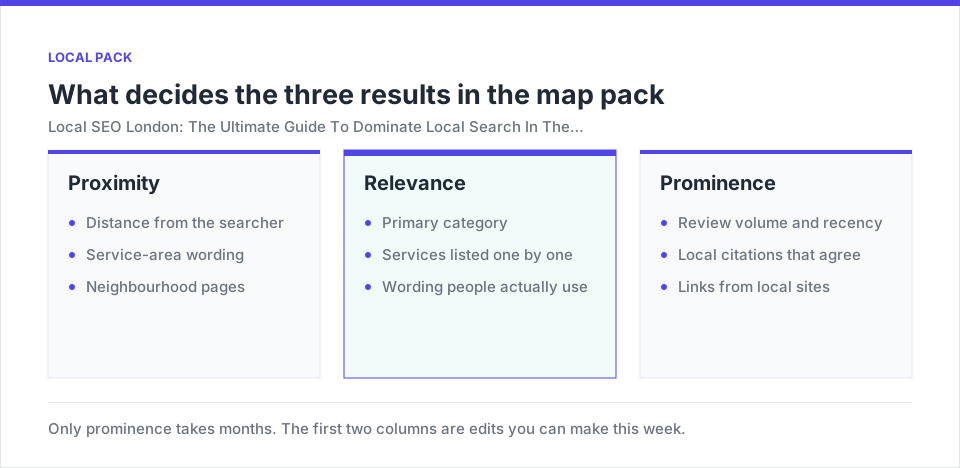
3. URL structure, breadcrumbs and internal linking
Effective two-locale sites employ a coherent URL architecture that makes the relationship between Locale A and Locale B obvious to users and crawlers. Common patterns include /fintech/ as the city-wide spine, with /fintech/london-central/ and /fintech/london-north/ as Local Blocks. Breadcrumbs should mirror this path, for example: Home > Fintech > London Central. Internal links should prioritise spine-to-block connections where proximity signals matter most while maintaining a clear path back to the spine to reinforce topical authority.
Regulators appreciate transparent canonicals. Typically the most authoritative surface holds the canonical signal, unless a Local Block demonstrates stronger district relevance for a given query. The publishing calendar should tie district activations to spine refreshes to preserve auditable lineage.
4. Crawling budgets and sitemaps
Crawl budgets must reflect two-locale delivery. Maintain separate sitemaps for Locale A and Locale B, feeding a central index that informs crawlers which pages matter most in each locale. A targeted robots.txt plan can block staging or low-priority pages, preserving crawl resources for high-value surfaces. Regular crawl audits identify orphaned pages, duplicate content and redirect chains that slow indexing. WhatIf baselines forecast indexing impact before publishing, and Delta Provenance logs capture locale context to support regulator-ready audits.
Coordinate sitemap updates with district activations so regulators can trace lineage across surfaces and time, ensuring a coherent, auditable publishing history.
5. Structured data and local signals
Structured data should accompany the two-locale journey. District pages benefit from LocalBusiness, ServiceArea and OpeningHours schemas to illuminate proximity signals, while spine-level schemas anchor city-wide authority. Ensure consistent NAP data across the main site and Local Blocks, reinforcing reliability in Maps and local search results. Attach FAQs to district pages to boost rich results without compromising the spine’s topical integrity. WhatIf baselines and provenance logs should accompany schema changes to support regulator replay if required.
Maintain a disciplined internal linking strategy that guides users from spine to district pages, and vice versa, to accumulate proximity signals where they matter most. This structure supports crawlers and readers through the two-locale map while preserving topical semantics across surfaces.
6. CWV targets and performance governance
Core Web Vitals remain essential benchmarks for two-locale London campaigns. Prioritise LCP under 2.5 seconds, FID under 100 milliseconds and CLS under 0.1, with emphasis on Local Blocks serving near-me queries. Implement CWV improvements as part of the WhatIf preflight checks, and attach locale-context notes to CWV changes to support regulator-ready audit trails. A fast spine complemented by quick-loading district pages yields stronger Maps visibility and GBP interactions.
Schedule regular CWV audits within the governance calendar, assigning remediation tasks to surface owners and linking to the publishing calendar for traceability.
7. Governance, WhatIf and regulator-ready audits
Auditable publishing trails form the cornerstone of governance-led growth. WhatIf baselines forecast content and UX impact before publishing; Delta Provenance logs capture locale context, authorship and publishing rationales to support regulator replay. Dashboards should present a unified view of Surface A (city-wide) health with Surface B (district depth) performance, delivering a regulator-friendly narrative for executives and compliance teams. Always attach locale-context notes to publishes to enable journey replay if required.
A mature London programme binds WhatIf, provenance and audience signals into a single, auditable workflow that scales as boroughs expand and new surfaces emerge. This discipline protects authority while enabling rapid district activation.
8. Onboarding, Handover And Ongoing Management
Handover ensures in-house teams can maintain and scale the two-locale strategy. Expect comprehensive documentation, governance dashboards and training that enable monthly surface health checks and quarterly governance reviews. Regular updates to the district backlog should accompany new Local Blocks to sustain momentum with regulator-ready provenance from day one.
To explore a London-focused, governance-forward technical SEO setup, browse the SEO services on londonseo.ai and book a discovery to tailor a district-focused surface strategy that scales from Maps to knowledge panels and organic search across London’s boroughs. For benchmarking and signal standards, consult Core Web Vitals at web.dev and the Google Local SEO Guidelines at Google Local SEO Guidelines as anchors for signal quality and regulator-ready reporting.
Content Strategy and Local Relevance in London
Content remains the connective tissue between city-wide authority and district-level relevance. In a two-locale London strategy, Locale A establishes the Master Spine, while Locale B translates that authority into district depth through Local Blocks. This Part 8 outlines practical approaches to develop locally resonant content that sustains spine credibility, maximises proximity signals and drives meaningful engagement across London’s boroughs. The governance-forward framework championed by londonseo.ai ensures every content decision is auditable, with WhatIf baselines and Delta Provenance embedded from discovery through activation.
The two-locale content blueprint for London
Translate city-wide themes into district-level value by organising content into two interconnected surfaces. Use Topic Briefs at Locale A to anchor evergreen narratives, then develop Local Blocks that respond to near-me searches, local events and proximity cues. A living Spine-to-Block map should guide content production, ensuring every borough surface stays aligned with core city topics while delivering local specificity.
- Develop a master content map that links city-wide topics (Locale A) to borough-focused pages (Locale B), with clear ownership and update cadence.
- Attach locale-context notes to every publish so regulators can replay the publishing journey and rationale.
- Synchronise district calendars with GBP updates and local event schedules to maintain proximity relevance.
2. Content clusters and district relevance
Content clusters are the engines that turn city-wide credibility into district-specific usefulness. For each spine topic, create Local Blocks with district briefs that incorporate local data, hours, events and proximity cues. This approach prevents signal cannibalisation by preserving a clear path from city topics to borough pages and service-area surfaces.
Key practices include:
- Topic briefs that evolve into district briefs with locale-context notes attached to every publish.
- District landing pages offering unique local value, actionable calls to action and proximity signals.
- A publishing cadence that synchronises spine updates with district activations and GBP refreshes.
3. Event-driven content and borough guides
London thrives on local events, seasonal promotions and community narratives. Build event calendars and borough-guides as staple Local Blocks that surface around proximity signals and nearby venues. Pair event pages with local business data, accessibility notes and transit information to improve user experience and shareability across maps and knowledge panels.
Content formats to prioritise include:
- Borough guides withNeighbourhood snapshots, local services and hours.
- Event calendars highlighting borough-specific happenings and how they relate to services.
- FAQs that address near-me questions and common local objections or queries.
4. Content templates, templates and governance
Use governance-approved templates to publish district content consistently. Templates should include a district brief, locale-context notes, a WhatIf preflight summary and a delta provenance entry. A master publishing calendar ties spine refreshes to district activations, ensuring an auditable lineage as London’s surface map grows.
Practical template components include:
- Landing page templates for Local Blocks with borough-specific value propositions.
- Event-driven content templates aligned to local calendars and GBP updates.
- FAQ and micro-content schemas tailored for district pages to enhance rich results.
5. GEO, two-locale content and measurement
Generative Engine Optimisation (GEO) can accelerate content ideation by generating district briefs, micro-content and FAQs. However, every GEO output should pass through human oversight, locale-context notes and WhatIf baselines before publishing. The governance cockpit should present Spine A health alongside Local Block performance in a single view, enabling executives to understand how district depth amplifies city-wide authority.
Metrics to watch include district-page visits by borough, proximity-driven GBP interactions, and the incremental lift that Local Blocks contribute to Maps visibility. Attach locale-context notes to content updates to support regulator replay if needed.
6. Next steps: engaging with londonseo.ai
To embed a robust content strategy that binds city-wide themes to district relevance, start with a discovery on the SEO services on londonseo.ai. Consider booking a discovery to tailor a district-focused surface strategy that scales from Maps to knowledge panels and organic search across London’s boroughs. For benchmarking and signal standards, refer to Core Web Vitals and Google Local SEO Guidelines as anchors for signal quality and regulator-ready reporting.
Building Local Authority And Backlinks In London
Local backlinks remain a powerful catalyst for district relevance within London’s two-locale framework. Locale A, the city-wide Master Spine, gains legitimacy when Local Blocks (Locale B) earn credible, locally anchored signals from trusted sources across boroughs. This Part 9 translates practical, auditable backlink strategies into a governance-forward process that strengthens Maps visibility, GBP health and organic rankings for London brands. The approach mirrors londonseo.ai’s architecture: anchor city-wide authority while translating it into district-specific authority through high-quality local connections.
By integrating link-building with the two-locale publishing calendar, London campaigns can leverage partnerships, sponsorships and community media to grow district depth without compromising spine integrity.
1. Why local backlinks matter in London
Local backlinks act as trust and proximity signals that validate district relevance to search engines. For London, where districts vary widely in commerce, culture and demographics, backlinks from respected local institutions reinforce topical authority across borough pages and service-area surfaces. A disciplined approach ensures links originate from contextually meaningful sources, strengthening proximity cues without diluting the city-wide spine.
- High-quality local links improve proximity signals for Local Blocks and near-me queries.
- Backlinks from authorities such as chambers of commerce, councils and established media boost local trust and rankings.
- Anchor text and linking context should reflect borough-specific interests and events.
- Governance artefacts attach locale-context notes to each backlink, enabling regulator replay if needed.
2. Strategy architecture: aligning Locale A with Locale B
Backlinks should emerge from a deliberate plan. Create a master map that pairs city-wide topics (Locale A) with borough-focused pages (Locale B). Each Local Block gains from backlinks that reflect local relevance, such as district guides, event pages and partner directories. WhatIf baselines precede link cultivation to forecast potential UX and crawl impact, ensuring every backlink opportunity aligns with London’s borough priorities and complies with governance standards.
Artefacts to attach include anchor lists, provenance logs detailing who secured each link and why, and locale-context notes that explain the local significance of the source in relation to the borough’s audience.
3. Outreach playbook: local partnerships and content-driven links
Effective local backlink programmes blend relationship-building with valuable content. Focus areas include formal partnerships with local business groups and councils, sponsorships of regional events, contributions to local press, borough-specific case studies and resources, plus locally relevant blog content that earns natural mentions. Each activity should be tracked in a central backlink ledger with ownership, target URL, anchor text and expected impact on Local Blocks.
- Prioritise boroughs with active event calendars and strong media presence.
- Develop collaborative assets that local outlets are eager to cover and link to.
- Aim for high-quality, locally authoritative domains and avoid low-quality aggregators.
- Attach locale-context notes to each outreach activity for regulator replay and governance dashboards.
4. Monitoring, maintenance and risk management
Backlinks require ongoing attention. Monitor anchor text diversity, referring domains, and the relevance of linking sources. Identify and prune toxic links, ensuring actions are logged in Delta Provenance for regulator replay. Maintain a backlink ledger that ties outreach to borough priorities and Local Blocks, preserving an auditable lineage as London’s surface map expands.
- Quarterly backlink health audits across Locale A and Locale B surfaces.
- Automated alerts for sudden drops in quality domains from key local sources.
- Provenance logs recording outreach decisions, response times and approvals.
5. Measured impact and governance reporting
Measure metrics such as referral traffic from local domains, domain authority of linking sources, and the contribution of backlinks to district-page rankings, Maps visibility and GBP health. Use dashboards that merge Spine A health with Local Block backlink performance, enabling executives to see how proximity signals translate into local engagement. Attach locale-context notes to backlink changes to support regulator replay and audits.
As you expand across boroughs, maintain regulator-ready artefacts: WhatIf baselines for new backlink opportunities, Delta Provenance logs for outreach decisions, and locale-context notes explaining the local relevance of each link.
6. Next steps: engaging with londonseo.ai
To embed a governance-forward backlinks programme into your London strategy, explore the SEO services on londonseo.ai and book a discovery to tailor a district-focused surface strategy that scales from Maps to knowledge panels and organic search across London’s boroughs. For benchmarking and signal standards, consult Moz Local and BrightLocal as practical references and align with Google Local SEO Guidelines for regulator-ready reporting.
Reviews, Reputation Management And Local Authority In London
Building and maintaining trust across London’s boroughs is a core part of the two-locale local SEO model. Locale A provides city-wide authority; Locale B translates that authority into district-specific credibility through Local Blocks. This Part 10 focuses on reviews, reputation management and the signals that turn customer feedback into durable local surface strength across Google Maps, GBP health and organic search. With londonseo.ai as the governance backbone, businesses can systematise reputation efforts so they scale without compromising the city-wide spine.
Why reviews matter for local seo london
In London’s dense, proximity-driven market, customer opinions directly influence click-throughs, conversions and repeated engagement. Positive reviews reinforce local authority, improve GBP perception and strengthen proximity signals that help district pages surface for near-me queries. Poor or inconsistent feedback, by contrast, can erode trust, reduce Maps visibility and undermine the spine’s credibility. A governance-forward programme treats reviews as a surface signal to be monitored, nurtured and integrated into district content where relevant.
1. How to gather authentic reviews in London
Solicitation should be timely, transparent and respectful of customer experiences. After service delivery, invite feedback through channels customers trust, such as email follow-ups, SMS prompts or in-person requests. Tie review requests to district-specific surface health where appropriate, so a positive review can reinforce Local Blocks or a recent GBP post. Ensure requests are compliant with platform guidelines and privacy practices. A well-structured approach collects diverse perspectives, reduces bias and informs ongoing improvements across Locale A and Locale B surfaces.
- Trigger review requests after successful service delivery or a clear local engagement, not at the outset of a relationship.
- Offer multiple, easy review pathways (GBP, Google Maps, trusted local directories) while avoiding pressure tactics.
- Provide a succinct, supportive copy variant that aligns with borough context and service area nuances.
2. Responding to reviews effectively
Response quality matters as much as collection quality. Timely, courteous, and personalised replies to both positive and negative feedback demonstrate care for local customers and reinforce district credibility. When handling negative reviews, acknowledge the concern, offer a remedy, and outline steps to prevent recurrence. Document patterns observed in what customers cite, and translate those insights into district-focused improvements or content updates across Local Blocks.
- Acknowledge and apologise where appropriate, avoiding defensiveness.
- Offer a concrete next step (remedial action, direct contact, or scheduling a follow-up) and follow through.
- Use recurring issues to inform FAQ blocks, borough guides and event pages on Local Blocks.
3. Linking reviews to governance artefacts
Reviews should be contextualised within the two-locale governance framework. Attach locale-context notes to review updates, and feed sentiment and volume signals into the regulator-ready dashboards that merge Surface A (city-wide) with Surface B (district-depth) perspectives. Delta Provenance logs can capture review-driven changes to service delivery or borough-focused content, enabling journey replay for audits or regulatory reviews. Use schema markup for reviews on district pages to enhance rich results without overwhelming the spine’s evergreen themes.
4. Practical steps to implement in London
Start with a London-focused review governance plan that integrates WhatIf baselines, locale-context notes and Delta Provenance for every surface publish. Build a review playbook that includes collection targets by borough, standardised response templates, and a process for translating feedback into Local Block content and GBP updates. Regularly audit review signals alongside Maps visibility and GBP health to detect drift, identify improvement opportunities and ensure regulator-ready reporting remains accurate as London expands.
- Audit existing reviews by borough and by surface to establish a baseline sentiment and volume profile.
- Institute a district-specific review response cadence, with escalation paths for high-impact reviews.
- Embed review-derived insights into district pages, FAQ sections and event calendars to improve local relevance.
5. Next steps: engaging with londonseo.ai
To embed a regulated, two-locale approach to reviews and reputation management, explore the SEO services on londonseo.ai and book a discovery to tailor a district-focused surface strategy that scales from Maps to knowledge panels and organic search across London’s boroughs. For benchmarking and signal standards, review Core Web Vitals and Google Local SEO Guidelines as anchors for signal quality and regulator-ready reporting.
Local SEO for Multiple London Locations
London's demand for near-me relevance means businesses with several locations must orchestrate a tightly coordinated local presence. The two-locale framework—Locale A as the city-wide Master Spine and Locale B as the Local Blocks translating authority into district depth—provides a scalable blueprint for multi-site growth. This Part 11 builds on the governance-forward model championed by londonseo.ai, outlining practical steps to manage location pages, signals, and governance artefacts across multiple London premises while preserving spine credibility and district-specific relevance.
Whether you operate a chain of clinics, cafes, solicitors, or trades services, the objective remains the same: surface the right local intent at the right time, in the right borough, without diluting city-wide authority. A disciplined approach to location pages, GBP health, local citations and district content ensures your surface map stays coherent as you expand across London’s diverse boroughs.
1. A scalable framework for London locations
Begin with a master spine that captures city-wide themes relevant to all locations, such as core services, regulatory considerations and brand values. Then design Local Blocks for each borough or location cluster, ensuring every Local Block has a dedicated landing page and a clear purpose linked to near-me searches and proximity cues. A living map demonstrates how Locale A topics feed Locale B pages, which is essential when new locations open or service areas expand.
Practical outcomes from this framework include a clean URL hierarchy, consistent NAP semantics across surfaces, and auditable provenance that regulators can replay when reviewing district activations and surface health. The governance plan should formalise ownership, publishing gates and escalation paths so that district launches are predictable and compliant.
Adopt a publishing calendar where each spine update is synchronised with district activations. This ensures that city-wide authority remains credible while district pages surface in response to local demand and events.
2. Crafting location pages that scale
Each London location warrants a dedicated page that reflects its local context and proximity signals. Location pages should include: a precise address, borough identifiers, hours, service-area definitions where applicable, and a locally tailored value proposition. Use Local Blocks to host borough-specific content, events, or case studies that demonstrate local relevance while linking back to the city-wide spine for authority transfer.
Guidance for scalable location pages includes a consistent template across all pages, unique local data points (hours, transit access, parking, nearby landmarks), and a clear call to action that mirrors the location's primary local objective. WhatIf baselines should preflight major changes to these pages to forecast effect on crawl, UX and local signals before publishing.
- Develop a master location template with borough-specific variants maintained as Local Blocks.
- Ensure each location page publishes on a dedicated URL path that mirrors the spine-to-block relationship, e.g., /fintech-london-central/ or /fintech-london-north/.
- Attach locale-context notes to every publish to aid regulator replay and traceability.
- Synchronise GBP data (NAP, hours, categories) with corresponding district pages.
3. Signals that scale across multiple London locations
Managing signals at scale means aligning GBP health, local keyword intent, data hygiene and structured data across Locale A and Locale B surfaces. For multi-location London campaigns, ensure: identical NAP across all surfaces, borough-accurate hours, complete service-area definitions, and district-specific Categories where appropriate. Each Local Block should reflect proximity cues, event schedules and local data, while the Master Spine preserves evergreen relevance and authoritative voice.
Governance artefacts should accompany every publish, including WhatIf baselines, Delta Provenance logs and locale-context notes. Dashboards must merge Spine A health with district-depth performance so executives can monitor city-wide momentum and borough-specific momentum in one view.
4. Content architecture that supports boroughs and service areas
Content should be organised into clusters around city-wide themes, with Local Blocks offering borough-focused depth. For example, a spine topic like financial advisory can branch into district landing pages in Westminster, Camden, and Canary Wharf, each with local case studies, hours and proximity cues. Ensure a publishing cadence that synchronises spine updates with district activations and GBP refreshes to prevent signal conflicts or cannibalisation.
Editorial guardrails are essential. Attach locale-context notes to each publish and maintain a delta provenance log so regulators can replay the publishing journey. Regularly review cluster performance to identify opportunities for new boroughs or service-area expansions.
5. Governance, measurement and regulator-ready reporting
Auditable governance remains the backbone of scalable London campaigns. WhatIf baselines forecast indexing, UX and signal distribution before publishing district surfaces; Delta Provenance logs capture locale context and publishing rationales for regulator replay. Dashboards should present a unified view of Spine A health and Local Block performance, enabling executives and regulators to see how district depth amplifies city-wide authority across Maps, GBP, and organic search.
Key metrics to track include location-page visits by borough, GBP interactions by district, and the contribution of Local Blocks to near-me searches. Attach locale-context notes to updates so regulators can replay every journey from discovery to activation. Regular reviews should be scheduled to refresh district activation backlogs, update GBP signals, and adjust content calendars as London evolves.
6. Practical next steps with londonseo.ai
To operationalise a multi-location London strategy, start with a discovery on the SEO services on londonseo.ai and book a discovery to tailor a district-focused surface strategy that scales from Maps to knowledge panels and organic search across London’s boroughs. For benchmarking and signal standards, consult Core Web Vitals and Google Local SEO Guidelines as anchors for signal quality and regulator-ready reporting.
In practice, request regulator-ready artefacts, WhatIf baselines and Delta Provenance templates to validate governance maturity before a borough launch. This reduces risk and accelerates value as London surfaces expand.
Measuring Local SEO London: Analytics, Attribution And ROI
The two-locale London framework—Locale A as the city-wide Master Spine and Locale B as the Local Blocks translating authority into district depth—requires a disciplined measurement regime. This Part 12 translates activity into business value, showing how to attribute impact across Maps, Google Business Profile health and organic surfaces. With governance artefacts and WhatIf baselines at the core, London campaigns gain auditable insight into near-me searches, proximity signals and borough-level engagement, enabling credible ROI assessments for executives and regulators alike.
1. Defining measurable goals for London
Begin with outcomes that reflect both surfaces. Establish city-wide KPIs (Locale A) such as overall Maps visibility, GBP health and organic surface strength, then translate them into district KPIs (Locale B) like borough-specific page visits, event-driven engagements and proximity actions. SMART targets enable tracking across time, boroughs and surface types, and ensure governance can replay progress against intended paths.
Practical goal-setting steps include:
- Define a city-wide baseline for Maps impressions, GBP actions and main-service organic visits.
- Set borough-specific targets that tie to proximity signals, hours validity and event calendars.
- Link every goal to a district activation plan and the publishing calendar for traceability.
- Attach WhatIf baselines to major surface changes to forecast crawl, UX and signal impact before publishing.
2. Attribution models for two-locale campaigns
Adopt a mixed attribution approach that respects both Locale A and Locale B. A practical framework credits conversions by combining: a) Last meaningful interaction on Local Blocks for district relevance, b) Key GBP engagements and proximity cues, and c) City-wide surface influence from evergreen spine content. When a user converts via a borough page after a GBP interaction, credit should reflect both local context and the city-wide authority that guided the journey.
Recommended practices include:
- Use a data-driven model where available, supplemented by policy rules that weight Local Blocks higher for borough-targeted queries.
- Track multi-touch paths from search to conversion, capturing the sequence across Maps, GBP posts, and district pages.
- Publish locale-context notes that explain why particular surfaces received credit, ensuring regulator-ready auditable trails.
- Regularly review attribution weights during borough activations and major surface launches to reflect evolving user behaviour.
3. Key metrics to track across Locale A and Locale B
Track a balanced mix of surface health, user engagement and local conversion signals. The following metrics provide a comprehensive view across London surfaces:
- Surface visibility by borough: impressions, average position and CTR for Maps and organic results.
- GBP health signals: completeness, hours accuracy, category alignment and post engagement by district surface.
- District-page engagement: visits, dwell time and bounce rate by borough.
- Proximity actions: clicks for directions, calls, messages and form submissions by Local Block.
- Near-me conversions: lead quality and conversion value by borough and service area.
- Content performance: district-page content interactions, FAQ engagement and event-page clicks.
Align these metrics within a two-locale dashboard so executives can compare city-wide momentum with borough-specific momentum in a single view. Attach locale-context notes to key changes so regulators can replay the decision path if needed.
4. Building auditable dashboards and WhatIf baselines
Dashboards should merge Surface A health with Surface B performance, presenting a regulator-ready narrative that captures both city-wide authority and district depth. WhatIf baselines forecast indexing, UX impact and signal distribution for upcoming district activations. Delta Provenance logs capture locale context, authorship and publishing rationales to support journey replay in audits. Ensure dashboards display lineage from discovery through activation, tying back to the WhatIf gates that govern each publish.
Practical dashboard features include:
- Tiered views showing city-wide vs borough-level performance, with filters by borough and service area.
- Time-series comparison to detect momentum shifts after district activations or GBP updates.
- Auto-generated regulator-ready reports that summarise WhatIf outcomes and provenance.
5. Data governance, privacy and compliance
Measurement must respect privacy, data minimisation and accessibility requirements. Establish data-handling rules for analytics, store WhatIf baselines securely and maintain an auditable trail that regulators can replay. Attach locale-context notes to data changes and ensure that dashboards reflect governance decisions, not merely results. Implement privacy-by-design controls for any user data, and document data sources, retention periods and access rights within the governance artefacts.
Governance artefacts should include who approved what, when, and why, plus the sources used for attribution and the rationale behind surface activations. This framework supports regulator-ready reporting as London continues to expand its borough surface map.
6. Practical steps to implement with londonseo.ai
To embed a robust measurement framework across London surfaces, start with a discovery on the SEO services on londonseo.ai and book a discovery to tailor a district-focused surface strategy that scales from Maps to knowledge panels and organic search across London’s boroughs. For benchmarking and signal standards, review Core Web Vitals and Google Local SEO Guidelines as anchors for signal quality and regulator-ready reporting.
As you implement, ensure WhatIf baselines are evaluated prior to major activations, and that Delta Provenance logs capture locale context and publishing rationale. The two-locale cockpit should always present a unified view of city-wide and borough-level momentum to support governance and ROI discussions.
7. Next steps: engaging with londonseo.ai
To operationalise measurement and attribution at scale, explore the SEO services on londonseo.ai and book a discovery to tailor a two-locale measurement framework that integrates Maps, GBP and organic search across London’s boroughs. For practical references and signal standards, consult Core Web Vitals and Google Local SEO Guidelines as anchors for regulator-ready reporting.
The goal is a governance-forward analytics stack that proves how proximity signals, district depth and city-wide authority convert into tangible value for London brands.
Final Steps for Local SEO London
Having travelled through the two-locale framework—Locale A as the city-wide Master Spine and Locale B as the Local Blocks translating authority into district depth—this final part translates theory into a pragmatic, regulator-ready action plan for London. Built on the governance-forward approach championed by londonseo.ai, these steps are designed to deliver durable visibility across Maps, GBP health and organic search across London’s boroughs, while preserving spine credibility as you scale.
1. Translate two-locale theory into a concrete 90-day plan
Start with a readiness sprint that anchors WhatIf baselines, Delta Provenance templates and locale-context notes to a small, high-potential set of boroughs. These artefacts establish the audit trail and decision history regulators expect, while enabling rapid learning as Local Blocks come online. The aim is a tangible, auditable path from discovery to activation that scales across Maps, GBP and organic search.
Deliverables to expect in this phase include a district activation calendar, a spine-to-block mapping document, and a regulator-ready governance dashboard that displays city-wide health alongside district momentum. This phase also validates data hygiene practices, ensuring NAP consistency and local data accuracy before broader rollout.
2. Activate Local Blocks with borough-driven content surfaces
With the governance artefacts in place, activate Local Blocks for a cohort of boroughs, pairing each surface with a borough-specific page, event calendar, or service-area page. Ensure GBP health signals mirror district activations, so proximity signals stay coherent across Maps and knowledge panels. A disciplined publishing calendar aligns spine refreshes with district activations, preserving topical authority while delivering local relevance.
Key actions include publishing borough-focused landing pages, synchronising GBP posts with district calendars, and updating local data such as hours, service areas and neighbourhood references to maintain proximity accuracy.
3. Build regulator-ready measurement and reporting cadence
Consolidate performance data into a two-locale cockpit that blends Surface A health with Surface B momentum. WhatIf baselines precede major activations, offering a risk-controlled forecast of indexing, UX impact and signal distribution. Delta Provenance logs capture locale context and publishing rationales, enabling regulators to replay the journey from discovery to activation.
KPIs should include city-wide visibility metrics and borough-level engagement, GBP health, Maps proximity signals and the contribution of Local Blocks to near-me searches. Regularly export regulator-ready reports that articulate the governance decisions taken and the data sources used to justify them.
4. Security, privacy and compliance as a governance discipline
Privacy-by-design is non-negotiable as momentum travels across devices and surfaces. WhatIf gates should integrate privacy checks; Delta Provenance must capture consent states and locale metadata; dashboards should visibly present privacy signals alongside performance. Embedding these guardrails from day one builds regulator confidence and supports cross-border scaling as London surfaces evolve.
Practically, establish a governance charter that documents data sources, retention, access controls and how locale-context notes are attached to publishes for replay during audits.
5. A practical, go-to-market action plan for London agencies
With a solid foundation, execute a practical, staged rollout that can be scaled. Steps include: 1) finalise WhatIf baselines and locale-context notes; 2) publish the initial district activations in a controlled release; 3) synchronise GBP health with district content to reinforce proximity signals; 4) consolidate measurement into a single cockpit that executives can read at a glance; 5) run quarterly governance reviews to refresh locale-context notes and update the publishing calendar as borough priorities shift.
Throughout, maintain a single source of truth for the two-locale framework and rely on London-focused governance tooling provided by londonseo.ai. For ongoing improvements and reference materials, consult our SEO services pages and book a discovery to tailor a district-focused surface strategy that scales from Maps to knowledge panels and organic search across London’s boroughs.
6. Next steps: how to start with londonseo.ai
Begin by exploring the SEO services on londonseo.ai to understand governance tooling and two-locale delivery. Consider booking a discovery to tailor a district-focused surface strategy that scales across Maps, GBP and organic search across London’s boroughs. For benchmarking and signal standards, review Core Web Vitals and Google Local SEO Guidelines as anchors for signal quality and regulator-ready reporting.
Taking these steps positions your London campaigns to expand with credibility, accountability and measurable impact as new boroughs come online.
