SEO London Agency: Mastering Local Search in the Capital
London’s search landscape is dense, diverse and highly competitive. A London SEO agency must combine rigorous technical foundations with a sharp understanding of neighbourhood dynamics, commuter habits and micro-market nuances. The capital’s districts—from Shoreditch to Chelsea, and from Canary Wharf to Brixton—each present distinct intent signals, search behaviour and competitive sets. A data-driven partner like londonseo.ai delivers a coherent strategy that aligns technical optimisation, local content and governance of signals to deliver measurable ROI across the city.
Readers will discover how a London-centric approach differs from broader UK strategies, the pivotal role of Google Business Profile (GBP) optimisation, the importance of consistent NAP data, and how district-specific content can capture nearby searches and drive conversions. The guide also introduces the framework you’ll see throughout this series: a hub-and-spoke content architecture, robust data governance, and a disciplined measurement regime designed for scale in a city with hundreds of micro-markets.
For readers exploring partnership options, a practical route is to review our Services to understand core capabilities, or to book a Discovery to tailor the approach to your business and London market.
What makes London unique for Local SEO
London presents a high-stakes mix of demand, competition and consumer behaviour. Local search thrives on proximity, accuracy and timely information. A London-focused strategy must marry GBP health, district-level landing pages, and a scalable taxonomy that reflects the city’s diversity. Mobile-first experiences are essential, given the density of foot traffic and on-the-go queries in central zones and transport hubs.
- Proximity and local intent: district-specific landing pages, actionable CTAs and content aligned to the needs of each neighbourhood.
- GBP and local citations: consistent NAP across GBP, web and local directories to bolster trust and proximity signals.
- Data governance for scale: a practical framework (CORA Trails for change tracking and Translation Provenance for terminology consistency) to enable safe expansion into new districts without diluting brand clarity.
London SEO agencies should be judged on outcomes as much as outputs. At londonseo.ai we emphasise ROI-driven optimisation, transparent reporting, and methodologies that stand up to algorithm changes while keeping the user experience at the forefront. To explore how we translate these principles into client-ready plans, visit our Services page or start a Discovery to tailor a London-specific road map.
In the pages ahead, we delve into how GBP optimisation interacts with local content, citations, and knowledges panels to create a cohesive presence across London. We also discuss how to structure a hub-and-spoke architecture that scales gracefully as you extend your reach into additional boroughs or service areas.
Stay with us throughout this 15-part series as we unpack practical techniques, tooling choices, and governance processes that empower London businesses to convert proximity into sustained growth. Part 2 will examine GBP management in depth, including ownership of listings, optimised categories and the role of local reviews in trust-building.
GBP Management in London: Optimising Google Business Profile for Local Signals
In London, a well-managed Google Business Profile (GBP) is a strategic asset for any local SEO programme. It acts as the gateway to Local Pack visibility, Knowledge Panels and crucial click-throughs from maps and search results. At londonseo.ai we treat GBP as the nerve centre of a multi-location London operation, aligning district pages, citations and reviews to create a coherent, high-trust local presence across the capital. This GBP-centric discipline lays the groundwork for scalable, district-aware SEO that complements technical and content strategies in a unified hub‑and‑spoke framework.
Part 2 of the London Local SEO series dives into practical GBP management. The objective is to establish who owns each listing, how to audit health, how to optimise categories and services, and how to orchestrate reviews and posts so GBP signals reinforce district landing pages and overall proximity signals. The result should be tangible: more relevant searches, more foot traffic and more service inquiries, all while maintaining brand consistency across boroughs.
GBP health is not a one-off task. It requires a repeatable process that integrates with district pages, Local Pack dynamics and the broader local SEO governance model we advocate at londonseo.ai. A well-structured GBP programme supports your hub-and-spoke architecture by ensuring district signals are accurate, timely and aligned with on-site content and service offerings.
GBP health audit: quick wins and where to start
- Ownership and verification: confirm listing ownership, reclaim access if needed, and link GBP to the correct Google account used by your London team.
- Name, Address, Phone (NAP) consistency: ensure identical NAP across GBP, your site and key local directories to avoid proximity and trust fragmentation.
- Profile completeness: fill all fields, craft a district-aware description and highlight core services in each borough.
- Categories and services: select a precise primary category and add relevant secondary categories and district-specific services; avoid generic labels that blur relevance.
- Hours and coverage: publish accurate hours and, where applicable, district service areas or regional operating times to prevent misinterpretations.
Reviews, responses and reputation management
London consumers place significant trust in local feedback. Implement a proactive review collection programme following service delivery or in-store visits, and respond promptly to all reviews. Address negative feedback with empathy and concrete remediation steps, inviting the customer to continue the conversation offline when appropriate. A structured response process protects GBP health and enhances local perception, with a positive ripple effect on Local Pack visibility and organic rankings.
GBP posts, Q&A, and media strategy
Regular GBP Posts announce offers, events and updates. Use the Questions & Answers feature to address district-specific queries and enrich your listings with locally relevant information. Maintain a media bank of high-quality storefront, team and service visuals; include photos and short videos that illustrate the district context and service delivery. Ensure compliance with privacy and consent standards when sharing media, and align media with district landing pages to drive traffic to relevant service pages.
Measurement and ROI
Track GBP impressions, searches, and clicks, but also monitor direct actions such as calls, directions requests and clicks to district landing pages. Correlate GBP-driven engagement with on-site conversions to establish ROI at both borough and city-wide levels. A unified dashboard should merge GBP metrics with organic and paid signals to present a holistic view of local performance. If you want to deepen GBP governance and measurement, explore our Services page or book a Discovery to tailor a London‑specific GBP management plan.
Technical SEO Foundations for London Sites
In London, technical SEO is the backbone that supports every other signal—content, local signals, and user experience. For multi-location brands and agencies like londonseo.ai, a robust technical framework ensures fast, accessible, and crawlable experiences for users across the capital. This section outlines the essential foundations: speed, mobile usability, crawlability and indexing, site architecture, structured data, and governance. Adopting these practices early helps future-proof your London strategy and accelerates sustainable growth in a market characterised by high competition and diverse local intent.
Speed, performance and Core Web Vitals
Core Web Vitals (CWV) are a practical proxy for how users perceive page quality. Prioritise metrics such as Largest Contentful Paint (LCP) under 2.5 seconds, First Input Delay (FID) under 100 milliseconds, and Cumulative Layout Shift (CLS) as low as practicable, ideally under 0.1. London audiences expect near-instant results, especially on mobile devices when commuting or searching while offline in transit. A London-tuned approach combines global best practices with local considerations—traffic patterns near central zones, busy transport hubs, and district-specific service pages all influence load and interaction speeds.
Practical steps include a cascade of optimisations:
- Optimise images with modern formats (WebP/AVIF) and responsive sizing to avoid oversized assets on mobile networks.
- Minimise and defer non-critical CSS and JavaScript; bundle and compress resources, reducing render-blocking assets.
- Enable intelligent caching and implement a content delivery network (CDN) to bring assets closer to London users.
- Prioritise above-the-fold content and use lazy loading for off-screen imagery to improve perceived performance.
- Monitor CWV metrics in a central dashboard and align improvements with district landing pages and GBP signals.
Mobile usability and user experience
London users increasingly interact on mobile while on the move. A mobile-first strategy ensures responsive layouts, legible typography, touch-friendly controls, and fast perceived performance. Prioritise clear navigation, accessible buttons, and OCR-friendly content. Intrusive interstitials and auto-playing media should be minimised, particularly for district pages where users expect quick access to services, hours, and contact options. A seamless mobile experience directly supports conversions, whether a user is booking a service, requesting a quote, or navigating to a GBP listing.
As you scale, coordinate mobile UX with your hub-and-spoke content model. District landing pages should mirror the hub’s information architecture while retaining district-specific CTAs and local context. This alignment reinforces trust and maintains consistent brand voice across London’s diverse neighbourhoods.
Crawlability, indexing and canonical signals
A healthy crawl and index process is crucial for London sites that feature multiple districts, services, and time-based offers. Ensure Google can access essential assets (CSS, JS) when needed, but avoid blocking resources that are critical for rendering. Submit a clean XML sitemap and keep it updated as you add district pages. Use canonical tags to prevent duplicate content across district variants and ensure search engines understand the canonical page structure. For district-wide landing pages, avoid indexing every filter or parameter-enabled URL; instead, consolidate signals to the most relevant district and service pages.
Implement robots.txt sensibly and test crawl paths with Google Search Console’s URL Inspection tool to verify that district pages, service pages, and GBP-linked content are crawlable and indexable. Regularly audit for orphan pages, crawl errors, and internal redirect chains that can impede discovery in a busy London ecosystem.
Site architecture and URL hygiene
London sites benefit from a scalable hub-and-spoke architecture. Create a central hub for general services, blog content, and guides, with district pages acting as spokes that reflect local intent and service variations. Use clean, readable URLs that describe district and topic, for example: /services/seo-london-centre/ or /london/districts/chelsea/seo-services/. Avoid URL parameters that create duplicate content; apply canonical tags where necessary and implement clear internal linking from hub to district pages and to individual service offerings. A predictable hierarchy makes it easier for Google to understand topic relevance and for users to navigate quickly between zones.
Structured data, local signals, and knowledge panels
Structured data is a powerful lever for London-specific local signals. Implement JSON-LD for LocalBusiness, Services, and FAQs to feed rich results and Local Pack entries. Keep data blocks accurate and synchronized with GBP and district landing pages to improveKnowledge Panels and map-based discoverability. When correctly implemented, schema helps search engines understand what you offer, where you operate, and whom you serve, translating into higher-quality impressions and click-throughs from local searches.
Governance, measurement, and data quality
Technical SEO in London benefits from disciplined governance and data integrity. Apply CORA Trails to track changes across districts, pages, and signals, and use Translation Provenance to maintain terminology consistency as you scale. A central data platform should integrate site performance metrics, crawl reports, and structured data validity checks, enabling rapid triage and alignment with business goals. Regular audits, dashboards, and clear ownership minimise drift and ensure the London programme remains spring-loaded for growth.
Consider a quarterly health check that combines Core Web Vitals, crawl budget health, structured data validation, and GBP signal alignment. This keeps your London pages consistent, timely, and primed for new district expansions without sacrificing performance or user experience.
To explore how these technical foundations map to our London SEO services, see our Technical SEO services or book a Discovery to tailor a London-specific technical roadmap for your organisation.
Content Strategy and SEO Copywriting for London
With a London focus, content strategy becomes the bridge between search intent and conversion. A well-structured approach, grounded in a hub-and-spoke model, ensures your core messages scale across the capital’s diverse districts while retaining brand voice and local relevance. At londonseo.ai we emphasise keyword research, thoughtful content clustering, precise on-page optimisation, and conversion‑driven copy that speaks to buyers at every stage of the London journey. The goal is to create an ecosystem where district pages, service offerings and thought leadership work in harmony to attract high-intent users and convert them into enquiries, quotes, or bookings.
Key idea: start with high-value London topics and map them to district‑level pages, ensuring every piece of content has a clear purpose and measurable impact. This section outlines practical steps to build a scalable content stack that aligns with London search behaviour and buyer journeys.
Strategic keyword research for a London audience
Begin with a district-aware keyword plan. Identify core terms such as SEO London agency, SEO services London, and local SEO London, then expand into district modifiers like SEO Chelsea, SEO Shoreditch, or SEO Canary Wharf. Layer intent signals into the map: informational queries (how to optimise Local Pack), navigational queries (GBP management London agencies), and transactional queries (book a discovery, request a proposal). This approach helps you prioritise content that captures nearby searches with clear conversion potential.
- Core topic identification: establish London-centric pillars such as Local SEO, Technical SEO, and Content Strategy, anchored by a London hub page (e.g., /services/seo-london/).
- District intent mapping: attach district modifiers to core keywords to create district-specific targets (e.g., /services/seo-london-chelsea/).
- Search intent clarity: tag each keyword with intent category (informational, navigational, transactional) to guide content format and CTAs.
- Competition and opportunity: assess local competitors and identify gaps where content can demonstrate authority, such as district case studies or FAQs tailored to London businesses.
Content clustering and hub‑and‑spoke architecture
Structure content around a central hub page that defines London-specific strategies, followed by district pages (spokes) that drill into locality, services and context. Each spoke links back to the hub and to relevant service pages, distributing authority while keeping district relevance high. This model supports scalable growth as you expand into new neighbourhoods or service areas, without diluting brand clarity.
Practical layout examples include:
- Pillar page: London Local SEO — an overarching guide to proximity, GBP health, district content and measurement frameworks.
- District spokes: Chelsea Local SEO, Shoreditch Local SEO, Canary Wharf Local SEO, each with district-intent FAQs, available services and case highlights.
- Service pages: Linked from each spoke to dedicated pages like SEO for London offices, Local citations for London businesses, and GBP management in London.
On-page optimisation that supports local intent
On-page elements should reinforce district relevance while upholding a consistent brand voice. Key practices include:
- Page titles and meta descriptions: craft district-specific titles that reveal the district and service, balanced with compelling benefits to improve click-throughs.
- Header structure: use H1 for the page topic, H2s for district sections, and H3s for subtopics such as FAQs, case studies, and service details.
- Content depth and local specificity: deliver concrete, district-relevant details (hours, locations, partner organisations, local benchmarks) without sacrificing readability.
- Internal linking strategy: connect hub pages to district pages and district pages to relevant service and case study content to reinforce topic authority.
- Structured data: implement JSON-LD for LocalBusiness, Services and FAQs to feed rich results and strengthen Local Pack appearance.
Conversion-focused content that guides London buyers
Content must translate interest into action. Focus on concise, results-driven copy on district pages, with clear CTAs such as “Book a Discovery” or “Get a Local SEO Proposal.” Include social proof (local testimonials, case highlights) and tangible offers tailored to London businesses. Create content that anticipates the questions buyers ask in specific districts, and present quotes, timelines and next steps upfront to reduce friction in the conversion path.
- Local proof and credibility: embed district case highlights, client logos (where permitted), and local references to reinforce trust.
- Clear CTAs and forms: place district-specific CTAs above the fold and keep forms lightweight to maximise completions.
- Content formats for variety: utilise district guides, FAQs, service briefs, and short videos to diversify engagement channels.
Governance, translation provenance, and content hygiene
Maintain consistency across all London districts through governance processes. Establish Translation Provenance for terminology consistency across districts, ensuring that terms used in Chelsea resonate with the rest of London without losing local flavour. Adopt CORA Trails to track content changes, decisions, and their impact on performance, enabling scalable replication to new districts with confidence.
Set a content calendar that aligns with business goals, seasonal London events, and demand cycles across neighbourhoods. A structured cadence helps you maintain momentum, publish consistently, and iterate on what works in your market.
Practical content calendar principles
- Publish a district‑focused pillar every quarter, complemented by monthly district updates and FAQs.
- Align blog topics with district needs, featuring practical tips, local events and sector-specific considerations.
- Schedule quarterly content briefs that translate keyword insights into specific page updates and new district landing pages.
If you’re ready to translate these principles into action, explore our Services to see practical frameworks and tooling, or book a Discovery to tailor a London-specific content plan for your business.
Link Building And Digital PR In The Capital
In London, earning editorial authority and propping up local signals requires a disciplined, local-first approach to link building and digital PR. A London SEO agency partner like londonseo.ai must blend ethical outreach, district-aware storytelling, and a scalable governance framework to ensure links are relevant, durable, and aligned with GBP and local landing pages. By integrating a hub-and-spoke content model with purposeful outreach, you can build a robust backlink profile that supports Local Pack visibility, improves domain authority, and translates proximity into measurable enquiries.
Why London-specific links matter is simple: proximity signals and district relevance influence how search engines evaluate local intent. A London-focused PR and link strategy should prioritise reputable UK outlets with strong regional coverage, tie stories to district-level pages, and ensure anchor text reflects the user’s local journey. At londonseo.ai we advocate for links that are earned, contextually relevant, and scalable enough to support expansion across boroughs without sacrificing brand integrity.
Quality signals from London outlets
Good backlinks for a London audience should come from sources that readers recognise as authoritative, locally trusted, and thematically relevant. This means targeting business titles, trade associations, regional media, and sector-specific outlets that frequently publish content about London districts, economic activity, or local benchmarks. A disciplined approach blends:
- Local editorial relevance: pursue outlets that regularly discuss boroughs, neighbourhood profiles, and citywide business developments, ensuring links point to district landing pages or service pages that reflect the same locality signals.
- Topic alignment: create content assets with strong London relevance—district roundups, market insights for Chelsea or Shoreditch, or London-wide guides that can anchor district stories.
- Editorial quality over quantity: a handful of high-authority links typically outperform large volumes of low-quality mentions.
Crafting these links starts with a proactive outreach plan. Identify 20–30 London outlets that regularly publish about local business, tech, real estate, hospitality, or professional services. Develop a narrative calendar that ties London stories to district pages, GBP updates, and new service offerings. This ensures a steady drumbeat of earned media that strengthens proximity signals and demonstrates local authority across the capital.
Ethical and scalable link building
Link-building in a London context must remain ethical, traceable, and scalable. Keep these principles at the core of your programme:
- Quality over volume: prioritise authoritative domains with clear relevance to London districts or industries you serve.
- Contextual anchoring: use anchor text that mirrors user intent and the district’s service narrative without over-optimising for generic terms.
- Transparency and governance: log outreach activities, responses, and link placements in CORA Trails to maintain an auditable trail and ensure future replication.
- Content-driven link earning: publish data-driven reports, local studies, and district case studies that naturally attract editorial coverage.
- Avoiding penalties: steer clear of bought links, link schemes, or manipulative practices that could trigger algorithmic penalties or trust erosion.
Governance is essential to scale. Use Translation Provenance to maintain terminology consistency across district narratives and CORA Trails to capture the rationale behind each link decision. This combination enables you to replicate successful London patterns to new boroughs without sacrificing quality or brand voice. A well-documented process also supports quarterly reviews, budget planning, and cross-team collaboration between GBP managers, content creators, and PR specialists.
Digital PR playbook for the capital
The Digital PR playbook for London should combine data storytelling, local relevance, and media relationships. Focus on three pillars: district relevance, city-wide authority, and sector specificity. Practical tactics include:
- District briefs with local data: share district-specific insights that media outlets can reference, such as footfall trends, local event impact, or neighbourhood business benchmarks.
- Thought leadership and district spotlights: publish thought leadership pieces by London-based experts that can be pitched to business and trade press; tie these to district pages to reinforce locality signals.
- Newsjacking and partnerships: align with London events, industry conferences, and local partnerships to generate timely coverage and high-quality backlinks.
When pitching, personalise outreach for editorial calendars, propose angles that matter to London readers, and provide ready-made assets such as district data visuals, quotes from local experts, and clear links to district pages. A successful approach earns editorial links that are durable, contextually relevant, and positioned to support both GBP health and district conversions.
Measurement is the backbone of any PR and link-building programme. Monitor referral traffic, domain authority, and the extent to which district pages gain prominence in relevant Local Packs. Track anchor text distribution and ensure it mirrors the real-world intent of users in each London district. Tie link activity back to on-site conversions by correlating referral sessions with district landing page engagements and enquiry forms. A combined GBP, organic, and PR dashboard underpins decision-making and ROI assessments for the entire capital.
To translate these practices into action, review our Services page for practical frameworks and tools, or book a Discovery to tailor a London-specific link-building and PR roadmap. The goal is to build a sustainable, district-aware backlink profile that amplifies local signals, reinforces GBP health, and drives tangible opportunities across London’s diverse neighbourhoods.
AI-Powered SEO: Staying Ahead in London's Landscape
In a city as dynamic as London, AI-powered SEO is not a replacement for human expertise but a powerful accelerant. An experienced London SEO agency, like londonseo.ai, uses artificial intelligence to amplify keyword insights, generate fresh content ideas, and surface data patterns at scale. The goal is to augment decision-making with strong, evidence-based signals while preserving the nuanced understanding of local intent, district nuances, and user experience that only seasoned professionals can deliver.
At its core, AI accelerates three critical activities for a London-focused SEO programme: strategic keyword research, data-driven content ideation, and scalable performance analysis. When integrated within a hub-and-spoke architecture, AI helps prioritise district pages, optimise templates, and continuously test messaging across boroughs without sacrificing brand coherence.
Augmenting keyword research with AI
Begin with district-aware seed terms such as SEO London agency and local SEO London, then extend to district modifiers like SEO Chelsea or SEO Shoreditch. AI can quickly map intent signals across informational, navigational, and transactional queries and surface long-tail opportunities that humans might miss in time-pressured planning sessions.
- Seed-to-signal expansion: use AI to generate district-specific keyword clusters from core London topics, ensuring intent variety and geographic relevance.
- Opportunity scoring: rank keywords by potential ROI, combining search volume, local competition, and conversion likelihood from district pages.
- Competitor signal monitoring: continuously track nearby rivals’ keyword movements and identify gaps where your district pages can gain affinity.
Practical takeaway: embed AI-assisted keyword discoveries into a living content plan tied to your hub page (London Local SEO) and district spokes. This ensures every cluster feeds a district page with targeted, optimised signals aligned to user intent and business goals. For deeper guidance on governance and strategy, see our Services page or book a Discovery to tailor an AI-enabled London roadmap.
Content ideation and hub-and-spoke orchestration
AI shines when used to generate topic concepts that feed the hub page and its district spokes. Start with a London-wide pillar like Local SEO in London, then populate district-specific subtopics that address local quirks, events, and service nuances. AI-assisted briefs can outline: audience persona, district context, questions to answer, and suggested content formats (FAQs, service guides, district case studies). Human editors then validate tone, regulatory compliance, and local relevance before publication.
- Content briefs with geo-context: translate district data into content prompts that speak to Chelsea, Shoreditch, Canary Wharf, and other localities.
- Format diversification: mix long-form guides, FAQs, district snapshots, and short video scripts to sustain engagement across channels.
- Language and translation provenance: use Translation Provenance to retain a consistent brand voice while acknowledging linguistic and cultural differences across London’s communities.
Implementation tip: pair AI-generated outlines with a governance protocol that ensures all content aligns with CORA Trails and the brand’s district-specific narratives. This makes it easier to scale content production for new boroughs without compromising quality or voice. If you’d like a practical playbook, our Technical SEO services and content frameworks can be adapted for AI-supported workflows.
AI-assisted data analysis, dashboards and ROI storytelling
Beyond content, AI accelerates data collection and insight synthesis. In a London programme, combine GBP metrics, district page analytics, and Core Web Vitals into a central dashboard. AI can surface correlations between district content changes, local signal quality, and conversions, enabling rapid prioritisation of improvements with the greatest impact on ROI.
- Signal-to-outcome mapping: link district-page signals (NAP, GBP interactions, local citations) to on-site conversions (quote requests, inquiries, bookings).
- Anomaly detection and alerts: use AI to flag deviations in Local Pack presence, traffic, or GBP engagement that require investigation.
- Forecasting and scenario planning: project how changes in district content or GBP health influence future lead volumes and revenue under different budgets.
A London agency that embraces AI also recognises the need for human validation. AI recommendations should be reviewed by experienced SEOs to ensure accuracy, ethical considerations, and alignment with local user expectations. Internal governance should require a human-approved sign-off for high-stakes changes, particularly those affecting GBP listings or district landing pages. This approach preserves trust and ensures AI remains a force multiplier rather than a source of risk.
Ethical use of AI, governance, and disclosure
Responsible AI use requires clear governance: CORA Trails for change history, Translation Provenance for terminology alignment, and explicit disclosure of AI involvement where appropriate. When AI contributes to content or responses, editors should verify sources and add attribution. Transparent disclosures protect citability and maintain trust with readers, particularly in the context of local information that influences business decisions.
- AI involvement transparency: disclose when AI assisted with content or responses and provide sources for factual claims.
- Editorial oversight: maintain a human-in-the-loop review process for all AI-generated material before publication.
- Auditable provenance: capture data sources and rationale behind AI-derived insights so they can be traced and explained publicly if needed.
For London businesses seeking practical guidance, our services offer AI-ready templates and governance frameworks that can be customised to your market. If you’re ready to explore how AI can augment your London SEO programme, book a Discovery and have a strategic discussion about integrating AI responsibly with your existing processes.
In the next part of this guide, we’ll look at how to operationalise AI-enhanced strategies within a live London campaign, including pilot district selection, KPI anchoring, and a phased rollout plan that scales from a single borough to the entire city while maintaining a consistent brand and performance edge.
E-commerce SEO in London
London’s ecommerce ecosystem is fast-moving and highly competitive, with shoppers expecting rapid service, clear product information and local convenience. A London-focused ecommerce SEO strategy from londonseo.ai centres on aligning product and category pages with district-specific behaviours, while maintaining a scalable hub-and-spoke architecture that supports growth across the capital. This part covers practical strategies for product page optimisation, category taxonomy, site search and filtering, and migration considerations tailored to London retailers operating in a multi-borough market.
Site architecture for London ecommerce
A robust architecture starts with a central hub page dedicated to London ecommerce, complemented by district-inspired spokes and product-category pages. The hub communicates the overall value proposition, delivery options, returns policies and guarantees that appeal to London shoppers. District-focused spokes address locality-specific expectations (e.g., fast delivery windows in central zones, pop-up availability in busy shopping districts) without fragmenting the brand. The architecture should support scalable internal linking, consistent navigation, and clear signal flow from hub to spokes to individual product pages. Adopting this structure helps search engines understand topic relevance and improves user journey clarity for shoppers navigating from the wider city into niche product areas.
- Hub page clarity: central London ecommerce overview with links to main product families and district pages.
- District spokes: district-intent content that mirrors hub structure while reflecting local delivery, stock and offers.
- Product and category pages: optimised templates that preserve consistency across districts and allow district-specific tweaks where relevant.
Product page optimisation for local intent
Product pages should be optimised for both global ecommerce performance and London-specific nuances. Focus on unique, benefit-led product titles that include the product name and a London-context modifier when appropriate (for example, “Noise‑cancelling Headphones – London Edition”). Craft detailed, scannable descriptions that address common London buyer questions, including delivery speed, in-city pickup options, returns handling and regional stock availability. Use high‑quality imagery with alt text that reinforces product identity and locality signals. Implement structured data (Product, Offer, Availability, Review) to enhance rich results in Local Packs and product carousels.
Key steps for London retailers include:
- Unique product content: avoid boilerplate descriptions; tailor copy to London customer needs and local services.
- Visuals and multimedia: deliver multiple angles and lifestyle imagery showing local usage, with accessible alt text.
- Schema integration: deploy Product and Offer structured data, including price currency (GBP) and availability by region when possible.
Category pages and taxonomy
London retailers benefit from well-organised category pages that reflect how shoppers search locally. Create logical groupings (e.g., Electronics, Home & Living, Fashion) and layer London-specific landing pages that address district delivery times, popular products per area and in-store collection options where available. A clear taxonomy supports efficient crawling and helps prevent content cannibalisation across district variants. Link district pages back to the hub and to related products to reinforce topical relevance and improve overall crawlability.
- Tiered taxonomy: hub > category > district-specific pages with consistent internal linking.
- District relevance: product pages reference district delivery windows and stock availability when pertinent.
- Internal linking: ensure district pages feed hub with authority while staying tightly connected to product offerings.
Site search, filtering and UX
Efficient site search is critical for ecommerce in London, where shoppers often begin with district or delivery constraints. Implement robust search with autocomplete, synonyms, and spell correction. Filters should be intuitive, fast and stateful across navigations; allow filtering by district delivery options, price range, stock status and rating. Track on-site search analytics to identify gaps in product discovery and to optimise category and product pages accordingly. Prominently showcase local delivery benefits and in-city pickup options to align with local shopping behaviours.
To optimise search experience, pair on-site search data with GBP signals and district landing pages to create a cohesive, locality-aware discovery path across the city. For practical guidance on structural SEO and ecommerce best practices, see our Services page or explore specific product–category frameworks on the product pages of our site.
Migration considerations and SEO continuity
When migrating ecommerce platforms or reorganising product taxonomy, maintain URL parity where possible to protect rankings and avoid sudden traffic drops. Develop a 301‑redirect plan mapping old URLs to the most relevant new pages, preserving product IDs where feasible and ensuring that indexable assets remain discoverable. Keep canonical signals aligned to the primary district or category page to avoid content dilution. Update sitemaps promptly and test crawl paths to verify that search engines can navigate from hub pages to district spokes to product pages without friction.
In practise, plan migration in phases, beginning with high‑value categories and best‑selling products, then expand to broader ranges. Align redirects with ongoing GBP and landing page updates to safeguard local signals and maintain a consistent user experience.
Measurement, ROI and next steps
Track both general ecommerce metrics and locality‑specific indicators. Key metrics include organic revenue by district, product-level revenue, conversion rate, average order value, and organic-assisted conversions. Use a central dashboard that combines rankings, traffic, on-site engagement and revenue by district to reveal where SEO investments deliver the best return. For tailored guidance on implementing an ecommerce SEO framework for London, explore our Services page or request a Discovery to align the approach with your business goals.
Ready to move forward? Start with a free site audit via our services section or book a Discovery to map your London ecommerce SEO roadmap with a dedicated strategist from londonseo.ai.
International And UK-wide SEO Considerations For A London SEO Agency
As a London-based SEO agency, extending the strategy beyond the city’s confines can unlock new growth while reinforcing the core strength of a London hub. A thoughtful UK-wide or international approach preserves local authority, maintains brand consistency, and adapts signals for diverse audiences. At londonseo.ai we emphasise a disciplined, data-backed expansion path: align UK-wide pages with London district expertise, implement robust language and geo-targeting where appropriate, and establish governance that scales without diluting the London advantage.
Understanding when to scale beyond London starts with clear business goals and market signals. A London SEO agency should consider UK-wide reach when: a) your services have applicability across multiple UK regions, b) volume or deal size justifies broader exposure, and c) you’re preparing for international expansion that will later require UK-to-international transitions. The objective is not to abandon London strengths, but to replicate a proven governance model so new districts or countries can inherit the same quality signals and conversion potential.
Strategic decision points for UK-wide and international SEO
- Market opportunity assessment: quantify demand, competition, and procurement cycles across major UK regions (e.g., Manchester, Birmingham, Edinburgh) or target international markets, then prioritise based on ROI potential and operational capacity.
- Signal alignment and governance: extend the hub-and-spoke model to UK regions or countries, ensuring consistent brand voice, NAP-like data governance, and district- or country-specific offers aligned to core services.
- Content architecture: design a scalable taxonomy with a central UK hub (e.g., /services/seo-uk/) and regional spokes (e.g., /uk/ Manchester/ seo-services/), linking back to the hub and to service pages to preserve topical authority.
- Local signals and directories: replicate GBP-like local signal governance for key regions where applicable, including local citations, NAP consistency, and region-specific reviews where possible.
- International readiness: plan for multilingual content, hreflang implementation, and regionally appropriate content gaps that can be addressed through localisation and translation provenance.
A practical UK-wide template could look like this: a central UK hub page that defines the overarching SEO approach for the country, followed by regional hubs (e.g., /uk/london/, /uk/manchester/, /uk/birmingham/) that host district- or city-specific content. Each regional hub should maintain a clear path to service pages and case studies, ensuring internal link equity travels from the UK hub to regional pages and then to individual offerings. When you eventually move to international markets, duplicate the UK pattern with language variants and hreflang mappings that reflect target territories while preserving the London voice and brand standards.
Key internationalisation and localisation practices
International SEO introduces complex signals. Prioritise the following practices to maintain quality and trust across markets:
- Hreflang and regional targeting: implement hreflang tags to signal language and regional variants, reducing content duplication while guiding users to the most relevant pages.
- Multilingual content strategy: distinguish between translation-facing pages and localisation that reflects cultural and market-specific nuances. Use Translation Provenance to track terminology decisions and maintain brand consistency across markets.
- Currency, measurement, and local customs: reflect local business practices in product or service pages where relevant, including currency presentation and locale-specific service details.
- Technical readiness for global scale: ensure site architecture scales easily, with clean URL hierarchies, global/dedicated hosting considerations, and CDN coverage to maintain performance in distant geographies.
Measuring success across UK regions and beyond
Expanded programmes require aligned measurement that ties signals to business outcomes. Build a multi-layer dashboard that aggregates: rankings by district or country, organic traffic, engagement metrics, and revenue contributions per region. Track location-specific conversions (enquiries, consultations, or bookings) and correlate them with regional landing pages and service offerings. A unified ROI model should allocate credit to district-level actions, while maintaining visibility into the central London hub’s influence on regional growth.
For practical scalability, start with a pilot expansion into one or two regional markets that mirror London’s demand profile. Use CORA Trails to log changes and Translation Provenance to ensure consistent terminology as new pages roll out. When ready to scale to further markets or international territories, use the same governance mechanism to replicate success while accommodating local variations. Our services page at Services and our Discovery process at Discovery can help tailor a UK-wide and international roadmap for your organisation.
In the next section, we’ll translate these structural considerations into actionable steps, outlining a phased rollout plan, KPI anchors, and governance milestones designed to keep your London-led strategy coherent as you expand to new markets.
Analytics, Reporting And KPIs That Matter For London SEO
In a London-focused SEO programme, measurement is the compass that guides strategic decisions. At londonseo.ai we define a multi-layer KPI framework that ties Local Pack visibility, Google Business Profile (GBP) engagement, district landing page performance, and on-site conversions into a single, meaningful ROI narrative. This section outlines which metrics matter, how to collect them reliably, and how to translate data into actionable improvements for London businesses.
The five pillars of London-focused measurement
- GBP and Local Pack visibility by district: track impressions, searches, and actions (calls, directions, messages) for each district landing page to gauge proximity signals and local relevance.
- Traffic to district landing pages: measure visitors, session depth, and engagement on district-specific pages to assess content effectiveness and conversion potential.
- On-page engagement and content depth: monitor time on page, scroll depth, and CTA interactions to ensure district content delivers value and moves users toward inquiry or booking.
- GBP interactions and reputation signals: quantify GBP clicks, reviews, and Q&A activity, and correlate with local trust and Local Pack performance.
- Conversion and ROI by district: define and track enquiries, quotes, bookings, and revenue attributed to district pages, GBP activity, and organic signals to demonstrate true business impact.
A practical London approach combines these pillars into a district-level ROI model. By attributing outcomes to district pages, GBP health, and hub-level content, you can see exactly where to invest, whether a Chelsea initiative quietly outperforms a Shoreditch initiative, and how to scale effective ideas across the capital.
Data sources and governance for accuracy
Reliability starts with trusted data streams. Core inputs include Google Analytics 4 for on-site behaviour, Google Search Console for visibility signals, GBP insights for proximity, and your CRM or marketing automation platform for lead outcomes. These data sources must be harmonised with governance artefacts such as CORA Trails (change history) and Translation Provenance (terminology consistency) to ensure traceability and scalable replication across districts.
Designing district-focused dashboards
A well-designed dashboard acts as a single source of truth for London teams. A typical setup combines:
- GBP and Local Pack panel: district-level impressions, clicks, calls, and directions to understand proximity signals.
- District landing page performance: traffic, engagement, and conversion metrics tied to each district page.
- Hub-to-district signal flow: internal link metrics and signal transfer from the London hub page to individual district pages.
- ROI by district and theme: revenue or qualified lead value attributed to district actions, broken down by channel (SEO, GBP, paid) for clarity and accountability.
Cadence of reporting and governance rituals
Regular reporting cycles keep teams aligned and enable rapid course corrections. A recommended rhythm for a London operation is: a weekly performance check-in focused on GBP health and district signals, a monthly executive summary highlighting trends, and a quarterly ROI review that ties activity back to business outcomes. Each report should be actionable, with concrete next steps, owner assignments and time-bound milestones.
Documentation should articulate what was done, why, and what changed as a result. This not only supports transparency with stakeholders but also feeds the CORA Trails and Translation Provenance systems for future scalability across more districts or new service lines.
Translating insights into action
Turn metrics into pragmatic decisions. If a district page underperforms, investigate content depth, local signals, or GBP health, and experiment with targeted updates, new FAQs, and improved local CTAs. If GBP engagements lag behind, consider GBP post cadence, enhanced categories, and district-specific service lines to lift relevance. Use attribution insights to allocate resources efficiently, prioritising the districts with the greatest potential for growth while maintaining consistency across the London hub.
To explore how these analytics practices fit into a broader London strategy, review our Services or book a Discovery to tailor an analytics-driven roadmap for your organisation. This data-informed approach is the backbone of a true seo london agency partnership with londonseo.ai, ensuring you see measurable improvements in visibility, engagement and revenue across the capital.
The SEO Agency Process: From Discovery To Delivery
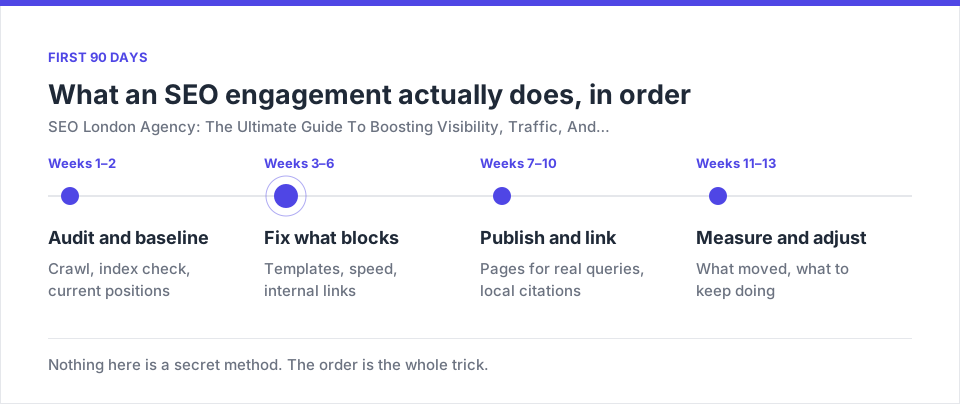
London businesses partnering with a dedicated SEO agency streamline growth by following a clear, repeatable process that ties activity to measurable outcomes. At londonseo.ai we map discovery, audits, strategy, implementation, monitoring and governance into a concise lifecycle designed for multi-location London campaigns. The aim is to deliver early, tangible wins while establishing a scalable framework that preserves brand integrity and local relevance across boroughs.
A successful engagement begins with a structured discovery phase. We collect business goals, customer personas, competitive context and district priorities to define success metrics and the initial scope. This phase results in a tailored Discovery Brief that guides the rest of the programme and provides a transparent contract for both sides. If you want to kick things off quickly, you can explore our Services or schedule a Discovery to start the conversation.
Next comes a rigorous technical and content audit. We assess site health, Core Web Vitals, crawl and indexability, schema validity, GBP alignment, district landing pages, and content depth. The audit establishes a baseline, identifies quick wins, and highlights longer-term investments that deliver scalable value across multiple boroughs. The audit outputs feed the strategic roadmap and governance framework used throughout the project.
With a clear picture of where you stand, we develop a London-specific SEO strategy and a hub-and-spoke architecture that supports growth. The strategy defines core pillars, district targets, content clusters, and a phased implementation plan. We translate insights into a district-by-district roadmap, including prioritised landing pages, GBP optimisations, and content briefs that guide creation and updates. All roadmaps are designed to be lived documents, updated every sprint and visible to stakeholders via our dashboards.
Implementation then follows in disciplined sprints. Quick wins are delivered first to demonstrate momentum, such as GBP category refinements, district landing page optimisations and rapid content updates. Simultaneously, technical fixes, schema enhancements, and internal linking improvements are deployed to fortify the site’s foundation. Regular cross-functional reviews ensure that changes reflect the hub-and-spoke model, preserve brand voice, and reinforce local relevance across London’s districts.
Measurement and governance run in parallel. We establish dashboards that combine GBP signals, district page performance, organic traffic, and on-site conversions to reveal ROI by district and service area. CORA Trails records every change, while Translation Provenance preserves terminology consistency as the programme scales to more boroughs. Ongoing reporting cycles keep stakeholders informed and enable rapid tuning of tactics as the market evolves.
Operational cadence and governance
Operational cadences such as weekly stand-ups, monthly performance reviews and quarterly strategy refreshes help maintain alignment. Transparent pricing, clear scopes of work and well-defined SLAs prevent scope creep and foster long-term collaboration. Our engagement model blends retainers for ongoing optimisation with project-based work for major migrations or platform changes. This structure supports predictable budgeting and steady progress for London campaigns.
To discuss how this agency process could be customised for your business and district mix, visit our Services page or book a Discovery to start the conversation and map a district-aware path to growth.
Pricing Models, Contracts And Transparency
In a London-focused SEO programme, clarity around pricing and governance is a competitive differentiator. A London SEO agency must couple predictable cost structures with rigorous accountability, so clients can plan their budgets while seeing tangible ROI across boroughs. At londonseo.ai we design pricing and contracts that reflect value delivered through a hub-and-spoke architecture, robust data governance (CORA Trails) and terminology consistency (Translation Provenance), ensuring every commitment scales cleanly as your district footprint grows.
Common pricing models for London campaigns
Multiple pricing options coexist in the London market. The most effective model aligns with your goals, project scope and capacity to scale across districts.
- Retainer pricing: a predictable monthly fee covering ongoing strategy, GBP management, content updates, technical fixes and monthly reporting. This model supports multi-location campaigns with a stable baseline, while allowing quarterly strategy refinements aligned to district priorities.
- Project-based pricing: fixed price for time-limited initiatives such as a site-wide migration, a district-page build programme or a major content overhaul. Outcomes are delivered within a defined window, with clear acceptance criteria and closure milestones.
- Hybrid pricing: a base retainer for core activities complemented by milestone or sprint-based charges for significant enhancements, such as large-scale content campaigns or GBP optimisations tied to new districts.
- Value-based or ROI-linked pricing: fees tied to agreed outcomes, for example improvements in Local Pack visibility, qualified leads or revenue attributed to district pages. This approach requires clear, verifiable measurement and agreement on attribution rules from the outset.
What should be included in a London SEO contract
A well-structured contract should minimise ambiguity and set the foundation for successful collaboration across districts. Key inclusions:
- Scope of work: detailed description of services, coverage across boroughs, GBP management, content production, technical SEO and reporting cadence.
- Deliverables and acceptance criteria: explicit outputs, timelines, and criteria for sign-off to prevent scope drift.
- Timeline and milestones: phased delivery plan that maps to district launches and content milestones, with review points.
- Payments and terms: schedule, invoicing cadence, currency (GBP), late payment terms and any required deposits.
- Change control and scope creep policy: how changes are proposed, approved, priced and tracked (with CORA Trails to record rationale).
- Intellectual property and licensing: ownership of outputs, rights to use content, data and dashboards, and any third-party assets.
- Data governance and privacy: adherence to data-provenance practices, CORA Trails and Translation Provenance to maintain consistency across districts.
- SLAs and performance guarantees: response times, issue-resolution targets, and availability of dashboards and reporting.
- Termination and renewal terms: exit conditions, data handover, and transition assistance to avoid disruption to districts.
- Confidentiality and non-solicitation: protections for business information and personnel.
Measuring value: dashboards, reporting and ROI
Transparency rests on dashboards that bind activity to outcomes. Weekly, monthly and quarterly reports should cover: GBP signals, district-page performance, on-site engagement and lead-quality metrics. A central ROI narrative ties districts to overall business impact, with filters for period, district and channel. Sharing access to dashboards with stakeholders builds trust and reduces renegotiation friction later in the engagement.
Pricing governance: preventing scope creep and ensuring transparency
Preventing scope creep requires formal governance, clear change-control protocols and visible artefacts. CORA Trails records why decisions were made and who approved them, while Translation Provenance preserves consistent terminology across districts. Regularly updated roadmaps keep everyone aligned, and quarterly business reviews validate that the programme remains on a path to the agreed ROI. Transparent pricing should extend to:
- Clear definitions of what constitutes additional work beyond the base scope.
- Pre-approved rate cards or fixed pricing for identified activities in the change log.
- Documentation of all add-ons, their impact on timelines and budget.
- A transparent refund or credit policy for unmet milestones or missed SLAs.
Why choose londonseo.ai for pricing and governance
We pair transparent, outcomes-focused pricing with a governance framework designed for multi-location campaigns. Our approach makes it easy to forecast spend, monitor progress and justify investments across districts. We offer a free site audit and Discovery to help you understand how a London-led strategy could unlock more value, with a clear, custom roadmap linked to your business goals. Explore our Services page or book a Discovery to begin a district-aware, cost-conscious engagement.
To take the next step, visit our Services for a practical overview of offerings, or book a Discovery to tailor a London-specific pricing and governance plan for your organisation.
Analytics, Reporting And KPIs That Matter For London SEO
In a London-focused SEO programme, measurement acts as the compass guiding every decision. At londonseo.ai we advocate a multi-layer KPI framework that binds Local Pack visibility, Google Business Profile (GBP) engagement, district landing page performance, and on-site conversions into a clear, ROI-driven narrative. This section outlines which metrics matter, how to collect them reliably, and how to translate data into actionable improvements tailored to the capital’s diverse districts.
We anchor measurement on five pillars that capture both the signal and the business impact of your London strategy. Each pillar provides a distinct lens on how users discover, engage with and convert from your localised pages and GBP presence across boroughs.
The five pillars of London-focused measurement
- GBP and Local Pack visibility by district: track impressions, searches, and actions (calls, directions, messages) for each district landing page to gauge proximity signals and local relevance.
- Traffic to district landing pages: measure visitors, session depth, and engagement on district-specific pages to assess content effectiveness and conversion potential.
- On-page engagement and content depth: monitor time on page, scroll depth, and CTA interactions to ensure district content delivers value and moves users toward inquiry or booking.
- GBP interactions and reputation signals: quantify GBP clicks, reviews and Q&A activity, and correlate with Local Pack performance to understand trust signals in each district.
- ROI by district and theme: define and track enquiries, quotes, bookings, and revenue attributed to district pages and GBP activity, with a transparent attribution model across channels.
These pillars form the backbone of a district-aware ROI model. When combined with a hub-and-spoke architecture, they enable you to see how district-level optimisations contribute to overall brand authority, lead quality and revenue. A central dashboard should weave GBP signals, district page metrics and on-site conversions into a single, coherent story that stakeholders can interrogate with ease. If you want to explore governance and dashboards in more depth, browse our Services or book a Discovery to tailor a London-wide analytics plan.
Data sources and architecture
Reliable data comes from a combination of on-site analytics, GBP insights, and off-site signals. Core inputs include Google Analytics 4 (for on-site behaviour and funnel analysis), Google Search Console (visibility and indexing signals), GBP insights (impressions, actions, and listing health), and CRM or marketing automation data for lead outcomes. These streams should be harmonised with governance artefacts such as CORA Trails (change history) and Translation Provenance (terminology consistency) to ensure traceability and scalable replication as you expand across London districts.
Designing district-focused dashboards
A well-designed dashboard is the single source of truth for multi-borough teams. Structure dashboards to reflect: GBP and Local Pack signals by district, district landing page performance, hub-to-district signal flow, and ROI by district and theme. Include filters for district, period and channel to enable rapid scenario analysis. A practical setup might group panels as follows:
- GBP and Local Pack panel: district impressions, searches, calls, and directions to understand proximity signals.
- District landing page performance: traffic, engagement, and conversions tied to each district page.
- Hub-to-district signal flow: internal linking and signal transfer from the London hub to district pages.
- ROI by district and theme: attributed revenue or qualified leads, broken down by channel (SEO, GBP, paid) to inform budget decisions.
Cadence of reporting and governance rituals
Regular reporting cycles keep teams aligned and enable rapid course corrections. A practical London rhythm includes a weekly performance check focusing on GBP health and district signals, a monthly executive summary highlighting trends and early indicators, and a quarterly ROI review that attributes outcomes to specific district actions. Each report should be actionable with clear next steps, owner assignments and time-bound milestones. Documentation should articulate what was done, why, and what changed as a result, feeding CORA Trails and Translation Provenance for scalable growth across more districts.
To transform insights into impact, maintain a strong link between GBP health, district content updates and on-site conversions. Use attribution techniques that recognise the contribution of district pages to overall lead quality and revenue. For practical templates, our Services pages offer ready-to-deploy dashboards and reporting frameworks, and a Discovery session can tailor a district-specific analytics roadmap for your organisation.
In summary, a disciplined analytics framework anchored by CORA Trails and Translation Provenance enables London businesses to monitor not just visibility, but the quality of traffic and the real-world outcomes of local optimisations. This is the backbone of an SEO London agency collaboration with londonseo.ai, delivering measurable improvements in proximity, engagement and revenue across the capital. For next steps, explore our Technical SEO and Analytics services or book a Discovery to align your data, dashboards and district strategy with your growth goals.
Case Studies And Proven Results (Anonymised)
Case studies offer a practical lens on how a London-focused SEO programme translates strategy into measurable outcomes. At londonseo.ai we present anonymised results to emphasise patterns over brands, so readers can assess transferability to their own district mix, service lines and growth ambitions. This part explains how to read these anonymised examples, the typical performance indicators you should expect, and how to convert those signals into a credible ROI framework for a London business.
Great case studies share a consistent structure: baseline health, interventions tailored to district signals, a defined timeframe, and post-change outcomes. Look for alignment between Local Pack visibility, GBP health, district landing page depth and on-site conversions. The strongest anonymised cases show how improvements in proximity signals correlate with real-world actions such as quotes, inquiries or booked services in London’s districts.
Reading case studies: what to look for
- Baseline context and district mix: clear starting metrics by district, including traffic, GBP interactions and landing-page health, to set a credible reference point.
- Intervention specificity: describe exact changes made (GBP optimisations, district-page updates, structured data enhancements, content briefs) and how these map to district intent.
- Timeframe and seasonality: indicate the period covered and any seasonal factors that could influence results, so readers can adjust expectations accordingly.
- Attribution approach: disclose how credit for outcomes is assigned across signals (GBP, organic, direct, paid) to avoid over-asserting causality.
- District relevance and scalability: show how results varied by district and discuss how successful patterns can be replicated in other boroughs without sacrificing brand voice.
These elements help you interpret anonymised results with realism and plan a comparable rollout for your own London footprint. For further guidance on governance and measurement, consult the Services page or book a Discovery to tailor an anonymised case-study framework to your sector and district strategy.
Key performance indicators you should expect
- GBP impressions and Local Pack share by district: increases signal proximity and local relevance for district landing pages.
- Traffic to district landing pages: more visits, longer sessions, and higher engagement on locally targeted content.
- On-site conversion signals by district: inquiries, quote requests, contact form submissions and bookings associated with district pages.
- GBP interactions and reputation signals: calls, messages, directions, and KPI trends in reviews and Q&A across districts.
- ROI indicators by district and theme: revenue, cost-per-lead, and lead-to-sale conversions traced to district activities and hub initiatives.
When comparing anonymised cases, observe how the mix of signals drives both near-term actions (inquiries) and longer-term equity (rankings, GBP health, and trust). The most credible results tie district improvements to tangible business outcomes and present a transparent attribution framework that readers can adapt.
Translating anonymised results into your ROI model
To gauge your potential return, start with a simple mapping exercise: translate uplift in district-page traffic and GBP interactions into qualified leads, and convert these into forecasted revenue using your typical conversion rate. Then, subtract the costs associated with district-page creation, GBP enhancements and content production to calculate net ROI. A robust model accounts for overhead, platform or tooling costs, and the incremental impact of governance activities on long-term performance.
- Estimate lift by district: apply a conservative uplift from anonymised benchmarks to your own district mix, considering local demand and competition.
- Define conversion value: use your average deal size, project value or service uptakes to convert leads into revenue projections.
- Attribution framework: choose a policy (multi-touch or weighted multi-channel) that reflects how users interact with GBP, organic listings, and district content.
- Cost allocation: allocate costs by district based on content volume, GBP management effort and page maintenance to reflect true marginal costs.
- Scenario planning: model best-, base-, and worst-case outcomes to inform budgeting and risk tolerance for future district rollouts.
Readers can apply these steps to their own campaign by aligning anonymised patterns with district priorities, ensuring governance artefacts (CORA Trails and Translation Provenance) are in place to document decisions and maintain consistency as you scale across London.
If you want a practical, custom ROI framework for your London business, our Services page offers templates and guidance, or book a Discovery to co-create a district-specific ROI model that reflects your market realities and growth targets.
In summary, anonymised case studies are a powerful tool for understanding how a hub-and-spoke London SEO programme translates to district-level gains. By focusing on credible structure, transferable patterns and transparent attribution, you can benchmark your own journey, design a scalable rollout, and present a compelling ROI story to stakeholders. For a personalised walkthrough, visit our Services page or arrange a Discovery to tailor an anonymised-case-study framework to your business needs.
Scaling London SEO Programmes: Governance, Measurement and Rollout
As London markets mature, the path from a single initiative to a city-wide programme hinges on disciplined governance, rigorous measurement, and a phased rollout. This part of the guide connects the dots between previous topics—technical foundations, content strategy, GBP management, link building, AI augmentation, and ecommerce—showing how to operationalise a scalable, district-aware SEO strategy that stays true to the hub‑and‑spoke architecture championed by londonseo.ai. The objective is to convert proximity into consistent enquiries and revenue while maintaining brand integrity across hundreds of micro-markets.
Governance forms the backbone of scale. Establish CORA Trails to capture every change decision, its rationale, and the measurable outcome. Pair this with Translation Provenance to ensure terminology consistency across districts, so Chelsea and Shoreditch read as part of a unified London narrative rather than isolated fragments. Assign clear ownership: a London GBP manager per region, a content lead for hub and spokes, and a data steward responsible for dashboards and signal integrity. This triple-structure reduces drift and accelerates onboarding of new boroughs as you expand.
Defining a London-wide KPI framework
KPI selection should mirror both user journey and business objectives. Core metrics include Local Pack visibility, GBP interactions, district-page traffic, and on-site conversions such as quotes or bookings. Expand to efficiency measures like cost per lead, time-to-conversion, and content-activation rate (the share of district pages that move from view to action within a quarter). Create a single source of truth dashboard that merges GBP metrics, organic search channels, and paid signals so leaders can see how proximity, trust, and relevance translate into revenue across the capital.
Adopt a quarterly review cadence with monthly operational updates. The quarterly review should assess signal health (GBP consistency, Local Pack presence, and district page freshness), conversion outcomes by borough, and ROI. Tie district-level performance back to the hub page and service offerings to maintain a coherent topical authority across London. If you want a tailored KPI blueprint, explore our Technical SEO services or book a Discovery to align metrics with your local ambitions.
Pilot district selection and governance gates
Begin rollout with a small, representative subset of districts where there is measurable demand, reasonable competitive context, and available performance data. Define success criteria upfront: a target improvement in Local Pack visibility, a minimum lift in district-page visits, and a measurable uplift in district enquiries within 90 days. Gatekeepers document learnings, adjust playbooks, and carry forward only proven tactics to broader rollouts. This disciplined approach reduces risk while proving ROI early in the programme.
Rollout roadmap: from pilot to city-wide impact
Structure the expansion into phases with clear gates. Phase 1 concentrates on 2–4 districts, Phase 2 scales to additional boroughs, and Phase 3 achieves city-wide coverage. Each phase should deliver incremental improvements in GBP health, content activation, and conversion rates, while maintaining a tight governance loop to stop and reassess if a district underperforms. Define resource allocations, tool requirements, and cross-team collaboration rituals before initiating each phase to sustain momentum and quality.
Operational plans should include a 90-day sprint cycle per phase, with weekly stand-ups across GBP, content, analytics, and development teams. Prioritise districts with strong demand signals and ready data integration points (GBP ownership established, district pages already drafted, and a trackable conversion path). As you move from district to district, apply the same templates, governance, and measurement logic to maintain consistency and accelerate scale.
Resource planning, budgeting and ROI storytelling
Scale requires a clear view of people, tools and budget. Map roles across the programme: SEO strategists, content editors, GBP managers, data analysts, and technical developers. Itemise tool subscriptions (Crawling, analytics, UI dashboards, and ERP-like dashboards that blend GBP, organic, and paid signals) and tie costs to phase deliverables. Build ROI narratives that translate district progress into tangible business outcomes, such as lead quality improvements, shorter sales cycles, and higher customer lifetime value. A well-structured budget supports scalable experimentation while protecting the core brand integrity of your London presence.
Risk management, compliance and ethical considerations
London campaigns must navigate data privacy, advertising policies, and evolving search engine guidelines. Establish a risk register that includes algorithmic changes, GBP policy updates, data integrity concerns, and regional compliance issues. Mitigations include staged changes, robust QA, documented rollbacks, and transparent stakeholder communication. Maintain openness about AI-assisted decisions where relevant, supported by CORA Trails and Translation Provenance to ensure traceability and accountability across district narratives and signal governance.
Regularly review privacy and data handling practices, ensure consent where required for data collection or user feedback, and keep your disclosures aligned with regulatory expectations and industry best practices. This careful approach preserves trust with London's diverse audiences while enabling a resilient, scalable SEO programme.
To translate these governance, measurement and rollout practices into a concrete action plan, review our SEO services to see the playbooks and templates we use with London clients, or book a Discovery to tailor a district-ready roadmap for your business.
Bringing It All Together: Next Steps With A London SEO Agency
As London markets mature, the path from initial wins to a city‑wide, district‑aware programme relies on disciplined governance, robust measurement, and a phased rollout that mirrors the hub‑and‑spoke framework we advocate at londonseo.ai. This final piece synthesises what a durable, repeatable ORM (Online Reputation Management) framework looks like in practice, and how your organisation can move from strategy to scalable execution while preserving brand integrity across hundreds of micro‑markets within the capital.
The core of this approach is simple: convert every input into a repeatable process that maintains local relevance, data provenance and ethical disclosures. By pairing CORA Trails (change history) with Translation Provenance (terminology consistency), you create a governance spine that scales as you add districts, services and channels. This ensures that Chelsea still speaks with the same brand voice as Shoreditch, while each district remains optimised for its unique audience and local intent.
To operationalise the framework, organisations should adopt a pragmatic, five‑step ORM plan that anchors decisions in data and accountability. The steps below are designed to be implemented in sequence, with governance artefacts updated at each milestone to capture rationale and outcomes.
A practical ORM framework for London districts
- Discovery alignment and goal setting: confirm district priorities, establish shared business outcomes, and define measurable ROI targets that will guide every optimisation across GBP, landing pages and content.
- Governance scaffolding: implement CORA Trails to log changes and Translation Provenance to standardise terminology, ensuring every update is auditable and replicable across boroughs.
- Pilot district rollout: select 2–4 representative districts with solid data inputs, publish district landing pages, optimise GBP, and deploy focused content briefs to validate signals before broader expansion.
- District dashboards and KPI mapping: build a central dashboard that ties GBP signals, district page performance, and on‑site conversions to ROI by district, enabling rapid prioritisation of further investments.
- Scale with phased rollout and governance: extend to additional districts in staged waves, maintaining brand voice and signal integrity through ongoing CORA Trails and Translation Provenance updates.
With this framework in place, the next logical steps are to operationalise a discovery session, align on the district mix and set up a governance cadence that fits your organisation’s structure. If you wish to explore a tailored roadmap, begin by reviewing our Services page to understand the capabilities we can deploy, or book a Discovery to outline a district‑aware plan for your business.
Our recommended cadence supports steady progress without sacrificing quality. Start with a 90‑day pilot focusing on two or three high‑impact districts, followed by a quarterly governance review that reconciles results, updates CORA Trails, and refreshes Translation Provenance to reflect new terminology as you scale. This disciplined rhythm keeps London strategies coherent while unlocking district‑level experimentation where it matters most.
When you’re ready to engage with a London SEO partner, the path is clear: articulate your district priorities, confirm governance expectations, and schedule a Discovery so we can co‑author a district‑aware, ROI‑driven roadmap. Visit our Services page to understand our capability set, or book a Discovery to start shaping a London‑centric strategy that scales with confidence.
In summary, this final instalment reinforces that successful London SEO hinges on a repeatable governance model, a clear KPI framework, and a staged rollout that maintains trust, quality and locality at scale. By adopting CORA Trails for change history and Translation Provenance for terminology consistency, you equip your team to continue learning, iterating and expanding across boroughs without eroding brand voice or user experience. If you’d like expert support to implement this practical ORM framework, reach out via our Services page or schedule a Discovery to tailor a London‑specific, ROI‑driven rollout plan for your organisation.
