Introduction: Why You Need The Best SEO Consultant In London
London’s digital market is both vast and nuanced. A specialist who understands the city’s boroughs, business cultures and consumer behaviours can translate global SEO best practices into local, result-driven strategies. The best SEO consultant in London doesn’t simply fix technical issues; they orchestrate a two-locale approach that balances city-wide authority with district-specific relevance. This Part 1 explains why London demands a governance-forward partner, and what you should expect as you begin your search for an expert who can deliver durable surface visibility across Google Maps, knowledge panels and organic search.
Choosing the right advisor is about more than a strong track record. It’s about alignment with your business goals, clarity on process, and a transparent path from discovery to measurable outcomes. The guide that follows will walk you through functional criteria, governance practices and practical steps to assess an agency’s fit for London’s distinctive landscape. The aim is to equip you with a framework that reduces risk, accelerates value and scales as your presence expands across boroughs.
What makes a London-focused consultant essential
The capital’s ecosystem is characterised by a dense mix of financial services, hospitality, professional services and retail. An expert in London SEO recognises how proximity to major hubs — from Canary Wharf to Westminster — influences search behaviour, and how local events, hours and service areas affect near-me queries. They also appreciate the governance demands that come with operating across multiple boroughs, ensuring that publishing decisions are auditable and regulator-friendly from the outset.
In practice, this means a partner who can bridge two critical surfaces: Locale A, the city-wide Master Spine that captures enduring authority on core topics, and Locale B, the Local Blocks that translate that authority into district depth. The two-locale model keeps content coherent while enabling rapid, district-level activations that respond to near-me intent and local events.
What to expect from the best London consultant
Expect a transparent process with clear milestones, auditable artefacts and practical governance rituals. A strong London partner will present a diagnostic plan, a publishing calendar and a robust measurement framework that aligns city-wide health with borough-level momentum. You should receive a practical roadmap that connects GBP health, local keyword intent, structured data and CWV performance to tangible outcomes in Maps, knowledge panels and organic search.
Why governance matters in a London engagement
London campaigns operate in a fast-moving, highly regulated environment. A governance-forward partner maintains auditable publishing trails, attaches locale-context notes to each surface, and uses WhatIf baselines to forecast potential impacts before publishing. This discipline creates regulator-friendly reporting, while still enabling efficient day-to-day execution across the city’s boroughs.
Look for dashboards that blend city-wide health with district-depth performance, so executives can see macro and micro signals in one view. A mature governance framework reduces uncertainty and speeds up decision-making during borough launches or service-area expansions.
How to start evaluating potential partners
Begin with a concise discovery that clarifies how a consultant plans to apply a two-locale approach to your business. Review their governance artefacts, including WhatIf baselines, Delta Provenance logs and locale-context notes. Request example dashboards that demonstrate how city-wide topics map to district pages and service areas. A credible London partner will tailor these artefacts to your industry, whether finance, hospitality, legal or consumer services, and will present a transparent roadmap with clear success metrics.
Next steps for prospective clients
If you’re ready to compare options, start from londonseo.ai and explore our SEO services to understand London-ready offerings and governance tooling. Consider booking a discovery to tailor a district-focused plan that scales from Maps to knowledge panels and organic search across London’s boroughs. For signal benchmarks, consult Core Web Vitals and Google Local SEO Guidelines as anchors for quality and regulator-ready reporting.
What Local SEO London Delivers
London demands a governance-forward, two-locale approach to local search. Locale A acts as the city-wide Master Spine, while Locale B translates that authority into district-depth surfaces for each borough or service area. This Part 2 outlines the practical benefits of that model, the exact deliverables you should expect from a London-based agency, and the governance artefacts that support auditable, regulator-ready growth across Google Maps, GBP, knowledge panels and organic search. With londonseo.ai as the reference architecture, brands in finance, hospitality, professional services and consumer sectors can translate city-wide credibility into tangible, borough-level results without compromising the spine's integrity.
By aligning GBP health, local keyword intent, data hygiene, structured data and CWV performance, London campaigns can achieve durable surface visibility and meaningful engagement across boroughs. This section is designed to be actionable, offering concrete steps, governance artefacts and measurement patterns that you can implement today, then scale as new Local Blocks come online.
1. Concrete benefits of local SEO in London
London’s search landscape rewards a disciplined, scalable approach that aligns city-wide themes with district-specific needs. The two-locale framework ensures visible authority at the city level while enabling rapid activation of district pages that respond to near-me searches, local events and proximity signals. The practical outcomes fall into four core areas:
- Increased visibility across Maps, local packs and knowledge panels within London’s diverse boroughs.
- Higher quality traffic tailored to borough-level intents and proximity cues.
- Improved user experience on district surfaces, reinforcing trust and boosting engagement.
- Auditable governance and regulator-ready reporting that reduces risk as the surface map expands.
2. What agencies should deliver in practice
From GBP management to district landing pages, a London partner should provide a cohesive surface strategy that binds the Master Spine (Locale A) to Local Blocks (Locale B). Expect deliverables that establish a clean spine-to-block relationship, ensure signal alignment, and enable rapid district activations without eroding city-wide authority. The primary components include:
- GBP health improvements that mirror district pages and service-area definitions, improving proximity signals and click-through rates.
- District keyword maps that connect city-level themes with borough-specific intents and events.
- Consistent NAP data and robust local citations across Local Blocks and the main site.
- Content clusters that address near-me queries, local events and proximity cues while preserving spine credibility.
3. Governance artefacts that matter for regulators
Auditable artefacts underpin regulator-ready growth. Key artefacts include:
- WhatIf baselines that forecast indexing, UX and signal distribution before district publish.
- Delta Provenance logs capturing locale context, authorship and publishing rationales.
- Locale-context notes attached to every surface publish to support journey replay in audits.
- A dashboard that blends Surface A (city-wide) health with Surface B (district depth) performance.
These artefacts ensure regulators can replay the path from discovery to activation as the London surface map evolves. For reference, review Core Web Vitals and Google Local SEO Guidelines as anchors for signal quality and regulator-ready reporting.
4. Collaboration patterns and governance cadence
London campaigns succeed when senior leaders stay involved and cross-functional teams collaborate across marketing, product and compliance. Cadence plays a crucial role in maintaining alignment between Locale A and Locale B surfaces. Typical rituals include:
- Weekly surface-health reviews to surface issues in technical health and district signals.
- Biweekly planning sessions to prioritise Local Blocks and validate WhatIf baselines before publishing decisions.
- Monthly governance deep-dives with executives and compliance teams to confirm progress against borough priorities and to refresh locale-context notes.
Dashboards should be shared and easy to interpret, enabling regulator-ready reporting while keeping internal teams aligned with the publishing calendar and WhatIf governance gates.
5. Next steps to engage with londonseo.ai
To explore governance-forward, two-locale growth in London, start with a discovery on the SEO services on londonseo.ai and consider booking a discovery to tailor a district-focused surface strategy that scales from Maps to knowledge panels and organic search across London’s boroughs. For benchmarking and signal standards, review Core Web Vitals and Google Local SEO Guidelines as anchors for signal quality and regulator-ready reporting.
What Defines The Best SEO Consultant In London
London’s two-locale framework—Locale A as the city-wide Master Spine and Locale B as the Local Blocks translating authority into district depth—requires a particular calibre of consultancy. The best SEO consultant in London combines rigorous governance, deep local intelligence and a disciplined approach to measurement, ensuring sustained visibility across Google Maps, knowledge panels and organic search. This Part 3 drills into the criteria that separate excellent practitioners from the merely capable, and explains how to assess fit for London’s distinct business landscape. With londonseo.ai as the reference architecture, brands across finance, hospitality, professional services and consumer sectors can expect a partner who can translate city-wide credibility into durable borough-level impact.
Beyond a strong track record, the ideal consultant demonstrates transparency, customised, data-driven strategies and a proven process for delivering measurable ROI. The following sections outline the practical signals, artefacts and collaboration patterns that characterise a governance-forward London partner capable of delivering durable surface visibility across Maps, GBP and organic search.
1. GBP optimisation that aligns Locale A and Locale B
The best London consultant treats Google Business Profile (GBP) as the bridge between city-wide authority and district depth. They ensure GBP listings are claimed, verified and optimised with borough-aligned categories, accurate NAP data, and proximity-aware service areas. GBP updates should be scheduled to mirror Local Block activations, so district pages reflect current hours, proximity cues and event relevance. A robust consultant will provide a live GBP health dashboard integrated with the two-locale cockpit, enabling executives to compare city-wide health with borough-specific momentum.
Practical expectations include:
- Accurate, borough-aligned NAP data across the main site and Local Blocks.
- Timely GBP updates to hours, service areas and categories that mirror local realities.
- Regular GBP posts tied to district content calendars and borough events.
- Monitoring GBP health alongside district-page signals in auditable dashboards.
In addition, a top-tier partner will maintain high-quality photos, complete business attributes and a thoughtful response strategy to reviews. GBP health is a lever forMaps visibility and proximity signals when paired with district content and event calendars. For governance, ensure GBP dashboards feed into the two-locale cockpit so executives can assess city-wide health against borough momentum in one view. For reference, consult Core Web Vitals and Google Local SEO Guidelines to anchor signal quality and regulator-ready reporting.
2. Local keyword strategy and district relevance
A London-focused consultant treats local keywords as a living map, connecting Locale A topics to Local Blocks by borough. This means developing district keyword maps that carry city-wide themes into Westminster, Islington, Camden and beyond, with variants that reflect events, hours and services. The best practitioners validate ideas with real-world proximity signals, ensuring content surfaces respond to near-me searches and local intent without diluting the spine’s authority.
Key actions typically include:
- Identify core city topics and map them to district briefs that reflect local needs and events.
- Create district landing pages with unique local value, proximity cues and service-area definitions.
- Embed local data points, hours and borough references to strengthen near-me signals.
Content should mirror borough realities: localised case studies, event calendars and proximity-focused FAQs. The objective is to maintain city-wide authority while delivering district-perfect relevance for near-me queries. For practical reference, review London-focused case studies that illustrate how district pages translate spine topics into tangible borough results, and consult londonseo.ai’s governance tooling for localisation templates.
3. Local citations, NAP consistency and data hygiene
Local citations underpin trust and proximity signals for Maps and GBP health. A leading consultant implements a disciplined data hygiene program across Locale A and Locale B, ensuring consistent NAP data, robust local citations and accurate service-area definitions. The best practitioners embed citation governance into the two-locale framework so borough activations align with district pages and GBP health, and so regulator-ready dashboards reflect a single, auditable data story.
Governance should enforce:
- Regular data-quality checks for NAP across all surfaces.
- A master district backlog capturing changes to local data and synchronised publication schedules.
- Documentation of data sources and updates to support regulator-ready audits.
Beyond NAP, ensure consistent business categories, accurate street addresses and up-to-date service-area definitions. Local citations should be actively cultivated with reputable, geographically relevant sources and maintained through a central data governance process feeding Local Blocks and the master site. For industry references, align with respected local SEO guidelines and integrate them into your governance artefacts.
4. Content strategy that supports Locale A and Locale B
Content must weave spine authority with district specificity. Develop content clusters around city-wide themes while Local Blocks host district pages that address near-me searches, local events and proximity cues. A governance-approved publishing calendar ensures district activations reinforce the city narrative without signal conflicts or cannibalisation. Include event-driven pages, borough guides and service-area content to respond to local demand and seasonality.
Recommended practices include:
- Topic briefs that translate to district briefs with locale-context notes attached to each publish.
- District pages offering unique local value, proximity signals and clear calls to action.
- A publishing cadence that aligns spine updates with district activations and GBP refreshes.
GEO enhancements can accelerate the translation of spine themes into district-depth content while preserving topical integrity. All district content should reference borough data, hours, local services and events so users receive the most relevant local experience. Attach locale-context notes to each publish and maintain a delta provenance log for regulator replay.
5. Governance, WhatIf baselines and regulator-ready reporting
Auditable publishing trails lie at the heart of governance-led growth. WhatIf baselines forecast indexing, UX and signal distribution before a district publish; Delta Provenance logs capture locale context, authorship and publishing rationales to support regulator replay. Dashboards should blend Surface A (city-wide) health with Surface B (district depth) performance, delivering a regulator-friendly narrative for executives and compliance teams. Attach locale-context notes to publishes to enable journey replay if required.
A mature London programme binds WhatIf, provenance and audience signals into a single, auditable workflow that scales as boroughs expand and new surfaces emerge. Use a unified cockpit to monitor spine and block health side-by-side, ensuring governance gates are consistently applied before any publish or activation. For benchmarking and signal standards, review Core Web Vitals and Google Local SEO Guidelines as anchors for signal quality and regulator-ready reporting.
Next steps: engaging with londonseo.ai
To embed a governance-forward, two-locale growth plan for London, explore the SEO services on londonseo.ai and consider booking a discovery to tailor a district-focused surface strategy that scales from Maps to knowledge panels and organic search across London’s boroughs. For benchmarking and signal standards, reference Core Web Vitals and Google Local SEO Guidelines as anchors for signal quality and regulator-ready reporting.
Core Services You Should Expect From A London SEO Expert
London’s competitive landscape demands more than a quick site tune-up. The best SEO consultant in London partners with you to deploy a complete, governance-forward toolkit that translates city-wide authority into district-level results. At londonseo.ai we emphasise a two-locale framework: Locale A – the city-wide Master Spine, and Locale B – Local Blocks that activate district depth across boroughs. This Part 4 outlines the core services you should expect, how they fit into governance, and how to assess practical value for Maps, GBP and organic search.
What London-focused core services look like
A credible London partner delivers a tightly integrated set of services that accommodate the two-locale model while remaining auditable and regulator-friendly. Deliverables should be coherent, measurable and aligned with borough priorities. Below are the eight service pillars you should reliably receive when engaging with londonseo.ai or a like-minded London specialist.
- Technical SEO health and foundation building that unlocks fast rendering, robust indexing and clean navigation across Locale A and Locale B surfaces.
- On-page optimisation and content alignment that preserves the city-wide spine while surfacing district-specific value on Local Blocks.
- Local SEO and Google Business Profile (GBP) management, including careful hours, service areas, categories and proximity signals that feed district pages and GBP health dashboards.
- Content strategy and two-locale architecture, combining evergreen city topics with district briefs and GEO-enabled prompts to accelerate district activations without eroding the spine.
- Link-building and local citations governance, placing high-quality, locally relevant backlinks and maintaining consistent NAP data across Locale A and Locale B.
- Ecommerce and multi-location SEO where relevant, ensuring product pages, category structures and service-area definitions remain coherent across boroughs.
- Analytics, measurement and governance artefacts, including WhatIf baselines, Delta Provenance logs and live dashboards that merge city-wide health with district momentum.
- Accessibility, Core Web Vitals and UX governance, ensuring district pages load fast, are usable on mobile and provide a consistent user experience across surfaces.
- Collaboration, cadence and training that keep stakeholders aligned with a publishing calendar, governance gates and regulator-ready reporting.
These pillars are not standalone tasks; they are interlocked within a governance cockpit that londonseo.ai uses to monitor Spine A (city-wide) health and Local Blocks (district depth) performance in a single, auditable view. When executed well, this integration accelerates near-me searches, improves GBP engagement and sustains long-term authority across London’s boroughs.
1. Technical health and crawlability
Technical SEO remains the backbone of all two-locale campaigns. A London-focused expert will assess crawl budgets, indexability, canonical hygiene and structured data compatibility across Locale A and Locale B. Expect guidance on a clean URL hierarchy, robust internal linking that supports proximity signals, and a process to preflight significant changes with WhatIf baselines before publishing.
In practice, you should receive a technical health dashboard that tracks crawl errors, index coverage, and the impact of district activations on site health. WhatIf baselines should forecast indexing and UX impact for new Local Blocks before any publish.
2. On-page optimisation and content alignment
Content is the conduit through which city-wide themes become district relevance. On-page optimisation should reflect a disciplined spine-to-block flow: title tags, meta descriptions, headers and schema applied consistently across Locale A and Locale B surfaces. District pages must surface unique local value—hours, proximity cues, events and local data—without compromising the overarching narrative of the Master Spine.
Deliverables include an integrated content calendar, district briefs with locale-context notes attached to every publish, and a clear map showing how Local Blocks inherit authority from the spine.
3. Local SEO and GBP management
GBP health and local listings are strategically tied to district surfaces. A London specialist ensures GBP is claimed, categorised correctly, and paired with accurate NAP data and service areas. District activations should reflect in GBP updates, with posts and events aligned to Local Block calendars. London projects benefit from a governance-enabled GBP dashboard embedded into the two-locale cockpit so executives can compare city-wide health with borough momentum side-by-side.
Expect robust photo assets, complete business attributes and a proactive review-response framework that resonates with local audiences and enhances proximity signals across Maps and knowledge panels.
4. Content strategy and GEO integration
GEO amplifies the two-locale strategy by delivering AI-assisted content ideas that are checked by human oversight and locale-context notes. A governance-driven GEO workflow generates district briefs, landing-page outlines and micro-content that are then validated before publishing, ensuring the city narrative remains credible while district depth expands.
Practically, expect prompts and templates that map spine topics to Local Blocks, with WhatIf preflight checks and provenance logs to support regulator replay. Content should reflect borough-specific data, events and hours, enabling proximity relevance without eroding the spine’s authority.
5. Analytics, measurement and regulator-ready artefacts
Analytics in a two-locale London programme must merge Spine A health with Local Block momentum. WhatIf baselines forecast indexing and UX impact; Delta Provenance logs capture locale context and publishing rationales for regulator replay. Dashboards should present city-wide and borough-level signals in a single view, with locale-context notes attached to key updates for audits.
KPIs to expect include spine visibility by topic, district-page visits by borough, GBP interactions by district and the contribution of Local Blocks to near-me searches. Governance artefacts should accompany outputs to support regulator-ready reporting.
6. Training, handover and ongoing management
Part of core services is ensuring your in-house team can sustain the two-locale strategy. Expect comprehensive handover documentation, governance dashboards and training that enable monthly surface-health checks and quarterly governance reviews. Regular updates to the district backlog should accompany new Local Blocks to maintain momentum with regulator-ready provenance from day one.
To begin a London-focused, governance-forward technical SEO setup, browse the SEO services on londonseo.ai and consider booking a discovery to tailor a district-focused surface strategy that scales from Maps to knowledge panels and organic search across London’s boroughs.
Building and Managing Local Citations in London
London’s competitive local search landscape rewards meticulous data hygiene and consistent NAP signals across a city-wide spine (Locale A) and district-depth Local Blocks (Locale B). This Part 5 focuses on building, validating and maintaining local citations that reinforce proximity signals, bolster Maps visibility and sustain credible GBP health for every London borough. With londonseo.ai as the guiding reference, businesses can operate a scalable citation program that aligns with governance practices and regulator-ready reporting while expanding surface area in the capital’s diverse markets.
1. Why local citations matter for local seo london
Local citations are simple signals: they confirm that a business exists, where it’s located, and how customers can reach it. In London, where proximity and district relevance drive actions, consistent citations across trusted directories support Maps packs, knowledge panels and organic rankings. A well-managed citation stack reduces misalignment risk, strengthens accuracy in GBP health, and signals reliability to both search engines and local consumers.
Key outcomes from a disciplined citation programme include:
- Improved proximity signals that help your business appear for near-me queries across boroughs.
- Enhanced trust through consistent NAP data on primary directories and within Local Blocks.
- Greater resilience to algorithm shifts by anchoring location data in multiple high-quality sources.
2. Audit and baseline: preparing London’s citation stack
Begin with a full inventory of current citations across the main site and each Local Block. Compare NAP, business name, address, phone number and primary category against the district context. Create a master sheet that maps each citation source to its data fields, update cadence and owner. This baseline is essential for regulator-ready reporting and for producing a clean, auditable trail as you scale across London’s boroughs.
Actions to implement now include:
- Compile a list of core directories used in London markets and note any jurisdictional differences by borough.
- Run a NAP consistency check against the master site and Local Blocks, flagging discrepancies for rapid resolution.
- Identify duplicate listings and determine which should be merged or removed to avoid cannibalisation.
3. Selecting the right directories for London
Prioritise directories with strong local intent, geographic relevance and brand authority. In London, this typically means a mix of global platforms with London-specific reach and well-regarded local aggregators. Ensure each identified source supports structured data, offers a verifiable business listing, and can be updated quickly when GBP or district details change. Use authoritative sources to benchmark credibility and update frequency.
Recommended actions include:
- Establish a core set of high-impact directories for all locations, alongside borough-targeted listings where available.
- Document submission processes, data fields required and update cycles to maintain consistency.
- Develop a governance checklist for new citations tied to borough activations or service-area changes.
4. Cleaning duplicates and removing conflicts
Duplicate listings dilute signal quality and can confuse customers. Systematically identify duplicates within the same source and across sources. For London, this is particularly important in central and busy boroughs where multiple directories may host similar entries. Resolve duplicates by merging to a single authoritative listing, or differentiating as needed to reflect distinct service areas. Maintain an audit trail showing what was merged, when and why.
Practical steps include:
- Use a central authority file to log all changes and maintain a versioned history for regulator-ready review.
- For each duplication, preserve accuracy of the original data fields (NAP, category, hours) and capture the rationale for consolidation.
- After deduplication, recheck GBP alignment and ensure street addresses and borough designations reflect the corrected data.
5. Ongoing monitoring and governance cadence
Local citations require regular attention. Establish a cadence for data hygiene, usually quarterly, with rapid rechecks after any GBP updates, district activations or significant service-area expansions. Integrate citation checks into the two-locale governance calendar and attach locale-context notes to any citation updates. Dashboards should visualise citation health alongside Maps visibility and GBP signals, enabling regulator-ready reporting that spans both Surface A and Surface B.
Metrics to track include:
- Proportion of core directories with up-to-date, consistent NAP data.
- Duplicates identified and resolved, with residual risk levels by borough.
- Correlation between citation health and Maps visibility by district.
For reference on best practices and signal standards, consult Moz Local’s local SEO guidance or BrightLocal’s citations framework, and align updates with Google’s Local SEO guidelines for regulator-ready reporting. See how these references support local seo london initiatives and are integrated into London-based governance at the SEO services on londonseo.ai.
6. Practical playbook for London citation management
Adopt a repeatable London-specific playbook to scale local citations effectively. Steps include:
- Establish a quarterly audit cycle with owners for Locale A and Locale B surfaces.
- Synchronise core directories with Local Blocks to ensure cross-surface consistency.
- Document changes in a central provenance log to provide regulator-ready audit trails.
- Integrate citation health metrics into the governance dashboard used by London teams.
7. Next steps: engaging with londonseo.ai
To embed robust citation management into a London strategy, explore the SEO services on londonseo.ai and book a discovery to tailor a district-focused surface strategy that scales from Maps to knowledge panels and organic search across London’s boroughs. For benchmarking and signal standards, reference Core Web Vitals and Google Local SEO Guidelines as anchors for signal quality and regulator-ready reporting.
A disciplined, governance-forward approach to local citations supports durable local seo london growth while keeping regulator-readiness at the centre of every action. To begin a London-focused engagement, visit the SEO services page or book a discovery with londonseo.ai.
The Typical Consulting Process: From Audit To Reporting
Following on from the previous parts, this section defines the end-to-end consulting journey for London campaigns built on the two-locale framework. It translates discovery, audit, strategy development, implementation, governance, and ongoing optimisation into an auditable, regulator-ready process. Londonseo.ai serves as the governance backbone, ensuring every surface—Maps, GBP and organic search—moves cohesively from city-wide authority to district-depth activation.
Expect a tightly orchestrated sequence with explicit artefacts,WhatIf baselines and provenance logs that regulators can replay. The aim is to deliver durable, borough-accurate visibility while preserving spine credibility as the surface map expands across London’s boroughs.
1. Discovery and alignment: setting the two-locale direction
Begin with a focused discovery that aligns senior stakeholders around the two-locale objective. The deliverables should include a district activation brief, a spine-to-block mapping document and an initial governance charter. These artefacts establish ownership, publishing gates and the cadence required to synchronise city-wide themes with district-level activations. The discovery should also clarify target boroughs, service areas and nearest events that will drive near-me queries in the initial rollout.
To maintain regulator-ready transparency, attach locale-context notes that explain how discovery inputs translate into district strategies and whatWhatIf baselines will be used to forecast outcomes before any publish.
2. The discovery artefacts you should expect
A credible London partner should present a concise set of artefacts at the end of discovery. Key items include: a) two-locale publishing calendar, b) spine-to-block map with owner assignments, c) WhatIf baselines for upcoming district changes, and d) a delta provenance log to capture locale-context notes and publishing rationales. These artefacts create a regulator-friendly narrative from discovery through activation and serve as the backbone for auditable decision history.
3. Audit and baseline: the technical and content perspectives
The audit phase brings together technical health and content alignment. Expect a formal technical audit covering crawlability, indexing, canonical discipline and structured data compatibility across Locale A and Locale B surfaces. Parallel content audits assess alignment with the city-wide spine while validating district pages for local relevance, hours, events and proximity cues. WhatIf baselines forecast the indexing, UX and signal distribution implications of district activations, providing a risk-controlled view prior to publishing.
Deliverables typically include an auditable dashboard that links spine health with district momentum, plus a dashboard section that demonstrates the anticipated impact of Local Block activations on Maps, GBP and organic search.
- Catalogued crawl issues and indexation gaps; prioritized remediation plan.
- Canonical hygiene and internal linking map ensuring clear spine-to-block transfer of authority.
- WhatIf baselines for upcoming district pages and events to forecast performance and user experience.
4. Strategy development and backlog: building the plan
Develop a two-locale strategy that binds Locale A topics to Local Blocks. The backlog should capture district activations, publishing priorities and GBP health prerequisites. Publish a district activation calendar that synchronises spine updates with district content, GBP posts and event-driven pages. Artefacts to attach include locale-context notes for each activation, a delta provenance log documenting publishing rationale, and a two-locale sitemap that informs crawlers about priority surfaces in each locale.
The governance cadence is essential: weekly surface health reviews, biweekly district-planning sessions and monthly governance deep-dives. These rituals keep stakeholders aligned, regulators satisfied and content moving in a controlled, auditable manner.
- Create district briefs with locale-context notes connected to each publish.
- Synchronise a publishing calendar across Locale A and Locale B surfaces.
- Attach WhatIf baselines to major district activations to forecast impact before publishing.
- Maintain a delta provenance log for every publishing decision and surface change.
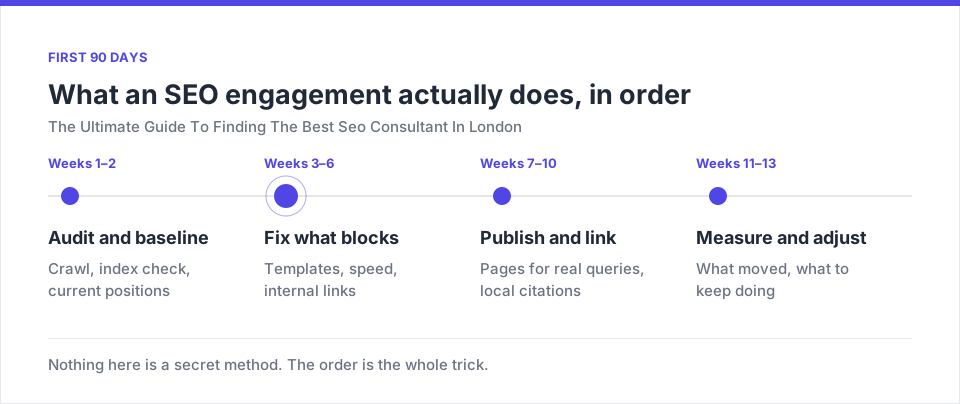
5. Implementation cadence and governance dashboards
Implementation follows a disciplined cadence, where each district activation is routed through governance gates that preflight changes using WhatIf baselines. The two-locale cockpit should integrate Spine A health with Local Block momentum, presenting a regulator-friendly narrative that executives can read at a glance. Dashboards must support cross-referencing the city-wide spine with borough-level signals, ensuring governance gates are consistently applied before any publish or activation.
Practical governance considerations include: a) attaching locale-context notes to all publishes, b) linking the publishing calendar to GBP updates and district activations, and c) maintaining auditable provenance for regulator replay. For reference on signal quality, Core Web Vitals and Google Local SEO Guidelines remain relevant anchors as you implement this two-locale approach in London.
6. Next steps: engaging with londonseo.ai
To operationalise the typical consulting process within London, start with a discovery on the SEO services on londonseo.ai and consider booking a discovery to tailor a district-focused surface strategy that scales from Maps to knowledge panels and organic search across London’s boroughs. For benchmarking and signal standards, reference Core Web Vitals and Google Local SEO Guidelines as anchors for signal quality and regulator-ready reporting.
With a clear discovery, auditable artefacts and a solid governance cadence, you can move from audit to action with confidence and demonstrate measurable ROI as London surfaces mature.
Local SEO And Google Business Profile: Essential In London
In London, the Google Business Profile (GBP) remains a critical bridge between city-wide authority and district-level relevance. Within the two-locale framework—Locale A as the city-wide Master Spine and Locale B as Local Blocks translating authority into district depth—GBP health is both a diagnostic barometer and a tactical activation lever. This Part 7 translates governance-forward principles into practical steps your business can implement to maximise Maps visibility, GBP health and organic growth across London’s boroughs.
Effectively, you want GBP to reflect not just a single location, but a coherent city-to-district narrative. The best London consultants weave GBP management into the broader two-locale playbook, ensuring that proximity signals, opening hours, service areas and local intent reinforce district surfaces without diluting the spine. What follows provides a concrete, auditable approach to GBP optimisation that fits London’s regulatory and competitive reality.
1. GBP setup and foundational hygiene for London locations
The first step is ensuring every London location has a claimed, verified GBP profile with complete, accurate data. This means aligning the Name, Address, Phone number (NAP), primary category and geographic service areas with the corresponding Local Blocks and district pages. In London, proximity and accuracy are essential signals; inconsistent data can erode Maps credibility and weaken the two-locale authority flow.
Practical actions include:
- Claim and verify GBP for each London location, ensuring the profile aligns with the borough’s nomenclature and local identifiers.
- Assign accurate primary and secondary categories that reflect both city-wide services and district nuances.
- Synchronise NAP data across the main site and Local Blocks to preserve data hygiene and proximity signals.
- Define borough-specific service areas where appropriate, linking GBP service areas to corresponding Local Block pages.
- Maintain consistent hours, holiday schedules and contact channels; publish any changes promptly across GBP and district pages.
Choreograph GBP data so district activations and city-wide spine updates stay in lockstep, reducing misalignment risk and supporting regulator-ready dashboards.
2. GBP posts, events and local signals that resonate in London
GBP posts are a lightweight but powerful vehicle to reflect district events, specials and timely local information. Align posts with the Local Blocks’ publishing calendar so a borough event or service-area update dovetails with district landing pages and nearby queries. In London, timely posts about local hours, seasonal services, or transportation considerations can significantly lift proximity signals and user engagement.
Best practices include:
- Schedule GBP posts to coincide with district activations and event calendars.
- Include borough-specific details in posts to strengthen local relevance and proximity cues.
- Utilise questions and answers to address near-me queries and common local uncertainties.
- Incorporate comforting visual assets (photos or short videos) to improve engagement and perception.
All GBP posts should feed back into the two-locale cockpit, delivering regulator-ready visibility and a clear, auditable publishing trail.
3. Local knowledge panels and district context
GBP health contributes to the quality of local knowledge panels, especially as district depth grows. When London surfaces expand, ensuring district pages reference GBP-linked hours, service areas and events helps search engines assemble a coherent local story. Use locale-context notes to describe why a district page reflects a particular GBP update, enabling regulator replay if required.
Actionable steps include:
- Cross-link district pages to GBP posts that reflect local events or services.
- Embed LocalBlock data such as hours, neighbourhood references and transit accessibility on district pages to enhance user experience and proximity signals.
- Monitor knowledge panel signals and adjust district content calendars to sustain relevance as the city’s boroughs evolve.
4. Citations, consistency and concerted data hygiene
GBP health does not exist in isolation. It is reinforced by coherent local data across District Blocks and the main site. A disciplined data hygiene programme ensures that NAP, hours, categories and service areas remain consistent across GBP, Local Blocks and landing pages. Regularly audit and reconcile differences, and create a central provenance log to document changes for regulator-ready audits.
Key practices include:
- Quarterly NAP alignment checks between GBP, Local Blocks and the main site.
- Regular review of hours and service areas, updating district pages when GBP reflects new location details.
- Maintaining a clean set of borough-specific categories to support local intent signals.
- Embedding locale-context notes with every publish to explain the rationale and aid auditing.
When local data is clean and well-governed, GBP health contributes to stronger proximity cues and more reliable local search results across Maps and organic listings.
5. Governance cadence for GBP and Local Blocks
London campaigns thrive on disciplined cadence. Weekly surface-health checks, biweekly district-planning sessions and monthly governance reviews ensure GBP health, district activations and Main Spine updates stay synchronised. Attach locale-context notes to each publish, and maintain a delta provenance log that documents authorship, decisions and the rationale behind each GBP update or district change. Dashboards should present city-wide health alongside district momentum in one view, supporting regulator-ready reporting.
For reference, align with Core Web Vitals and Google Local SEO Guidelines to anchor signal quality and regulatory reporting as London’s boroughs expand.
6. Next steps: engaging with londonseo.ai
To operationalise a GBP-focused, two-locale London strategy, explore the SEO services on londonseo.ai and consider booking a discovery to tailor a district-focused surface strategy that scales from Maps to knowledge panels and organic search across London’s boroughs. For benchmarking and signal standards, consult Core Web Vitals and Google Local SEO Guidelines as anchors for signal quality and regulator-ready reporting.
With GBP health optimised and two-locale governance in place, you can achieve durable local visibility across Maps, knowledge panels and organic search, while maintaining regulatory compliance in London’s dynamic market.
Measuring Success: KPIs And ROI For SEO
In a London market driven by proximity, authority and local relevance, measuring success requires a disciplined, two-locale approach. This part outlines a practical framework to quantify the impact of Locale A (the city-wide Master Spine) and Locale B (the Local Blocks that activate district depth). It explains which KPIs to track, how to attribute value across surfaces, and how to present regulator-ready dashboards that demonstrate real business ROI for Maps, GBP and organic search in London’s boroughs.
The aim is to enable governance-forward reporting that aligns with what executives expect: clarity on progress, accountability for actions, and a credible link between activity and revenue across multiple boroughs and service areas. With londonseo.ai as the reference backbone, the framework supports auditable decision history and scalable growth as new Local Blocks come online.
A two-locale measurement framework for London
Measurement should mirror the governance model: track city-wide health (Spine A) and borough-specific momentum (Local Blocks, Locale B) in parallel, then synthesize them into a single cockpit. The city-wide surface captures long-term authority, evergreen topics and global search visibility, while district surfaces pin real-time proximity signals, event relevance and near-me queries. A well-constructed framework links both surfaces through publishing calendars, WhatIf baselines and locale-context notes so executives can replay outcomes from discovery to activation.
Key elements of the framework include a) a two-locale dashboard, b) WhatIf baselines and delta provenance logs, and c) a clear mapping from spine topics to district pages. This ensures signals remain coherent as London expands across boroughs and service areas.
2. KPIs by locale: what to track
Locale A (City-wide Master Spine) KPIs focus on broad visibility and baseline authority. Expect measures such as Maps impressions, overall search visibility, and GBP health indicators that reflect city-wide signal integrity. Locale B (Local Blocks) KPIs focus on borough-specific engagement, proximity actions and event-driven performance. The best London partners report both surfaces in a unified view, then drill into borough-level detail as needed.
- Maps visibility and local packs impressions by top city topics.
- GBP health indicators aggregated across the city and disaggregated by borough.
- Organic search traffic and ranking momentum for core city topics, mapped to Local Blocks.
- District-page visits, dwell time, and engagement metrics by borough.
- Proximity actions (directions, calls, messages) by Local Block and service-area definitions.
- Event-driven page visits and local content engagement, linked to borough calendars.
3. Attribution and WhatIf baselines
Attribution in a two-locale model blends credit across surfaces. A practical approach: credit conversions to Local Blocks for borough-specific queries, while preserving a share of credit for city-wide topics that guided the journey. WhatIf baselines help forecast indexing, UX outcomes and signal distribution prior to any publish, enabling risk-aware decisions and regulator-ready reporting.
Implement a hybrid model that combines Last Interaction with meaningful local interactions, ensuring the pathway from search to conversion respects the two-locale narrative. Attach locale-context notes to key publishing decisions so regulators can replay the journey from discovery to activation.
4. Dashboards and regulator-ready reporting
The governance cockpit must present a single view that combines city-wide health with borough-level momentum. Dashboards should be intuitive for executives, with filters by borough and service area, and provide exportable regulator-ready reports. WhatIf baselines should be visible alongside actual results, allowing leadership to understand how predicted changes translate into real-world outcomes.
Data governance artefacts (WhatIf baselines, delta provenance logs and locale-context notes) underpin auditability. Integrate signal quality references from Core Web Vitals and Google Local SEO Guidelines to provide external benchmarks for regulator reviews.
5. Economic ROI and measurement you can rely on
ROI in a two-locale London programme is a function of incremental visibility, higher quality traffic and greater proximity-driven conversions. Use multi-touch attribution to credit Local Blocks for borough-level engagements that contribute to near-me searches, while recognising the enduring impact of city-wide topics on brand authority. A practical calculation considers incremental revenue attributable to district activations minus the cost of district content, GBP updates, and governance tooling, divided by those costs.
Illustrative steps to derive ROI include: establishing a city-wide baseline, mapping borough-specific lifts to district activations, integrating GBP interactions with district content calendars, and continuously updating the WhatIf baselines as borough priorities shift. Pair this with a discipline of auditable provenance so regulators can replay how decisions led to outcomes.
6. Next steps: engaging with londonseo.ai
To embed a robust, regulator-ready measurement framework across London surfaces, explore the SEO services on londonseo.ai and consider booking a discovery to tailor a district-focused surface strategy that scales from Maps to knowledge panels and organic search across London’s boroughs. For benchmarking and signal standards, reference Core Web Vitals and Google Local SEO Guidelines as anchors for signal quality and regulator-ready reporting.
With a clear measurement plan, WhatIf baselines and regulator-ready provenance, you can demonstrate tangible ROI while continuing to expand across London’s boroughs.
Budgeting For SEO Projects In London
In London, a governance-forward, two-locale approach drives durable visibility across Maps, GBP and organic search. Budgeting intelligently means more than allocating a monthly retainer; it requires forecasting the cost of two interconnected surfaces—the city-wide Master Spine (Locale A) and district-level Local Blocks (Locale B)—and the governance tooling that ties them together. This Part 9 outlines practical budgeting models, what you should expect to invest in, and how to forecast value in a way regulators and executives can understand. It also demonstrates how londonseo.ai’s framework streams investment into tangible borough-level growth while preserving the spine’s authority.
Underpinning a solid budget is a clear governance corridor: WhatIf baselines, Delta Provenance logs and locale-context notes that enable auditable replay from discovery to activation. With that discipline, London campaigns can scale across boroughs without spiralling costs or compromising signal quality.
1. Pricing models you’ll encounter in London
Three core pricing structures dominate London SEO engagements. Each model can be adapted to the two-locale framework, depending on your objectives, risk tolerance and preferred governance cadence.
- Retainer with defined scope. A predictable monthly investment that covers the master spine and a set of Local Block activations within a capped borough footprint. This model suits ongoing governance, GBP management, content clustering and regular district updates aligned to a publishing calendar. Typical ranges vary by business size and borough spread, but expectations centre on foundational health, continuous improvement and auditable reporting.
- Fixed-price projects. For discrete deliverables such as a full GBP overhaul, a district-page migration, or a one-off two-locale strategy blueprint, a fixed price ensures clarity on outputs, milestones and governance artefacts. This approach pairs well with WhatIf preflight checks and delta provenance logs to establish an auditable trail from discovery to activation.
- Hybrid or performance-based models. A blend of retainer for ongoing governance plus milestone-based or results-driven payments tied to predefined borough outcomes. This can align incentives around proximity signals, district-page engagement and near-me conversions, while preserving regulator-ready reporting through shared dashboards.
2. What influences the cost of a London SEO programme
Several factors push预算 higher or lower in the capital. The breadth of borough coverage, the complexity of GBP management, and the depth of Local Block content all influence price. Projects spanning multiple service areas, with tight governance requirements, demand more extensive data hygiene, advanced dashboards and regular WhatIf scenario planning. Conversely, smaller footprints or phased rollouts can reduce upfront spend while still delivering meaningful district depth over time.
The governance layer adds ongoing value but also cost. Expect investments in: a) WhatIf baselines and regulator-ready provenance, b) locale-context notes and audit trails, and c) dashboard integration that blends Spine A health with Local Block momentum. These artefacts are not optional overhead; they are the mechanism regulators use to replay decisions and validate outcomes.
3. What to include in your budget by surface
Two core surfaces drive spend: Locale A (city-wide spine) and Locale B (district depth). Allocate funds to these areas proportionally based on your borough count, proximity signals you aim to optimise and the volume of district content required. Core budget elements include technical health work, GBP management, content creation and GEO-aligned publishing, link-building within local contexts, and the governance tooling that enables auditable outcomes. Explicitly budget for WhatIf baselines, delta provenance logs and locale-context notes as separate line items to emphasise governance maturity.
In practice you’ll likely see these items appear in your projections: - Technical health, crawlability and structured data across Locale A and Locale B surfaces. - Local keyword research, district landing pages, and event-driven content calendars. - GBP management, hours updates, service-area definitions and proximity signals. - Local link-building and citation governance aligned to borough priorities. - Analytics, dashboards, and regulator-ready reporting artefacts.
4. How to forecast ROI and justify your budget
Forecasting ROI in a two-locale London programme hinges on the correlation between district activations and Maps, GBP and organic performance. Start with a city-wide baseline for spine health and GBP health, then model incremental gains from district depth across boroughs. Use multi-touch attribution to credit Local Blocks for borough-specific conversions while recognising the enduring influence of city-wide topics. Present a regulator-ready ROI narrative that ties investment to proximity-driven engagement, improved local queries and stronger local authority signals.
To keep governance credible, attach locale-context notes to financial projections, so auditors can replay assumptions and decisions. This practice supports transparency when new boroughs come online or when event calendars expand, ensuring your budget adapts without breaking governance gates.
5. Next steps: aligning budget with londonseo.ai services
If you want a practical pathway to a governance-forward budget, start with a discovery on the londonseo.ai SEO services and consider booking a discovery to tailor a two-locale budgeting plan. The two-locale model is designed to scale as London’s boroughs expand, so your financial plan should accommodate future activations, GBP updates and district content growth. For benchmarking and signal standards, reference Core Web Vitals and Google Local SEO Guidelines to anchor regulator-ready reporting.
Working With An SEO Consultant: Collaboration Best Practices In London
London’s two-locale framework—Locale A as the city-wide Master Spine and Locale B translating authority into district depth—requires disciplined collaboration between client teams and a trusted SEO consultant. This part focuses on how to establish effective partnerships that deliver regulator-ready governance, measurable results and durable visibility across Maps, Google Business Profile (GBP) health and organic search. By outlining practical briefing rituals, access protocols, reporting standards and escalation paths, it helps you extract maximum value from londonseo.ai’s governance-forward approach.
Strong collaboration hinges on clarity, transparency and a shared language for governance artefacts such as WhatIf baselines, Delta Provenance logs and locale-context notes. The aim is to create auditable decision histories that regulators can replay, while ensuring every surface activation remains aligned with the city-wide spine and district blocks across London’s boroughs.
Why collaboration quality matters in London
In a market as dense and regulated as London, a consultant cannot operate in a silo. The best partnerships embed governance rituals, shared dashboards and joint ownership of outcomes. The result is a single source of truth that traces every publishing decision back to a district activation, while preserving the master spine’s authority. This is especially important when multiple boroughs or service areas come online, each with unique hours, proximity cues and local events that drive near-me searches.
Look for a partner who can translate high-level objectives into concrete artefacts the organisation can use day-to-day, with a clear handover pathway for internal teams. londonseo.ai exemplifies this approach by providing a ready-made governance cockpit, WhatIf baselines and locale-context notes that integrate seamlessly with Maps, GBP and organic search surfaces.
1. Establishing a practical briefing framework
Begin with a concise briefing package that translates your business goals into the two-locale plan. Include a district-activation brief, a spine-to-block mapping diagram and a governance charter. The briefing should specify borough priorities, service areas and the near-term milestones that will drive district momentum. Attach locale-context notes to each surface publish to justify decisions and facilitate regulator replay.
- Define the boroughs or service areas included in the initial rollout, plus any expansion roadmap.
- Attach WhatIf baselines to major district activations to forecast impact on crawl, UX and signal distribution.
- Publish a district activation calendar that aligns with GBP updates, event calendars and content calendars.
- Link each activation to specific KPIs and a regulator-ready reporting format.
2. Access governance and analytics responsibly
Provide your consultant with appropriate access to analytics platforms, content management systems and GBP where needed. Establish a clear, auditable trail showing who can publish, what changes were made and why. A two-locale dashboard should blend Spine A (city-wide) health with Local Block (borough-level) momentum, enabling executives to monitor risk and opportunity in one view. Ensure access policies protect privacy and comply with regulatory requirements while not slowing momentum.
For external references, maintain alignment with sources such as Core Web Vitals and Google Local SEO Guidelines as anchors for quality and regulator-ready reporting.
3. Cadence and rituals that keep London campaigns aligned
Weekly surface-health reviews surface technical health issues and district signals early. Biweekly planning sessions prioritise Local Block activations and validate WhatIf baselines before publishing. Monthly governance deep-dives bring executives and compliance teams together to review progress, refresh locale-context notes and adjust the publishing calendar. Dashboards should present city-wide health alongside borough momentum so leadership can see macro and micro signals in one place.
These rituals are not optional; they are the mechanism that makes a governance-forward approach scalable as London’s borough map grows. For reference, regulators appreciate if WhatIf baselines and provenance are attached to major changes to support replay in audits.
4. How to manage collaboration artefacts effectively
Keep artefacts centralised and versioned. WhatIf baselines forecast indexing and UX outcomes; Delta Provenance logs capture locale context, authorship and publishing rationales. Locale-context notes should be attached to every publish to support journey replay. Dashboards must merge city-wide health with district momentum, enabling executives to monitor governance gates and publishing calendars in a single view. Integrate external benchmarks like Core Web Vitals and Google Local SEO Guidelines to anchor signal quality and regulator-ready reporting.
A well-governed collaboration also requires clear ownership for each surface and a defined escalation path if issues arise. This helps London teams respond quickly to borough-level changes, GBP updates or district activations without breaking the spine’s authority.
5. Next steps: engaging with londonseo.ai
To embed a robust, governance-forward collaboration in London, begin with a discovery on the SEO services on londonseo.ai and consider booking a discovery to tailor a district-focused surface strategy that scales from Maps to knowledge panels and organic search across London’s boroughs. For benchmarking and signal standards, reference Core Web Vitals and Google Local SEO Guidelines as anchors for signal quality and regulator-ready reporting.
With a well-defined briefing, auditable artefacts and a shared governance cadence, you can collaborate with confidence and demonstrate tangible ROI as London surfaces continue to expand.
Red Flags And Common Hiring Pitfalls In London SEO
Selecting the best seo consultant in london requires more than a polished pitch. In London’s high-stakes market, where proximity signals and regulator-ready reporting shape outcomes across Maps, GBP and organic search, a governance-forward partner is essential. This part identifies the most common warning signs in proposals and engagements, and explains practical approaches to avoid costly missteps. Grounded in the two-locale framework championed by londonseo.ai, it shows how to scrutinise capabilities, artefacts and processes to ensure durable borough-level growth without compromising city-wide authority.
By understanding these pitfalls, you’ll be equipped to evaluate candidates with a disciplined, transparent lens. The goal is a credible path from discovery to activation that can scale across London’s boroughs while maintaining auditable provenance and regulator-ready governance.
1. Unrealistic promises: guaranteed rankings or instant results
Promises of guaranteed top rankings or overnight dominance are red flags in any market, but they are particularly suspect in London where local intent, proximity cues and regulatory considerations add layers of complexity. A credible consultant will acknowledge that SEO is a long-term, multi-surface discipline. They will present a transparent diagnostic, realistic timelines and measurable milestones rather than absolute guarantees. Beware rhetoric that discounts the need for ongoing governance, WhatIf baselines or district activations across boroughs.
Expect instead a staged plan with clearly defined success metrics, rolling quarters and a credible evidence trail showing progress from initial discovery to activation. The two-locale approach relies on city-wide authority supporting district depth, not a magic shortcut to instant rank inflation.
2. Opaque reporting and missing artefacts
A telltale sign of weak partnerships is the absence of governance artefacts. Look for a clearly defined WhatIf baseline, a delta provenance log (documenting locale-context notes and publishing rationales) and dashboards that connect Spine A health with Local Block momentum. If a proposal offers only raw keyword lists or generic traffic numbers without context or auditable traces, treat it as a red flag. In London, regulator-ready reporting depends on transparent artefacts that trace decisions from discovery to activation.
The ideal partner provides a live cockpit that merges city-wide signals with borough-level data, demonstrating how district activations map back to the spine’s authority. A robust artefact suite also includes a district activation calendar, locale-context notes for publishes and a clear publishing governance timeline.
3. Skipping the two-locale model or failing to describe governance
London campaigns benefit from a two-locale framework that binds Locale A (city-wide Master Spine) to Locale B (Local Blocks that activate district depth). A red flag is a proposal that focuses on a single surface or treats spine content as interchangeable with district content. If governance gates are vague, if publishing calendars are absent, or if there’s no plan to attach locale-context notes to every publish, the engagement is unlikely to scale cleanly and regulator-ready reporting becomes difficult.
Ask for concrete mappings between Local Blocks and the spine, a published governance charter, and examples of how WhatIf baselines will be used to forecast outcomes before any publish. The best London partners embed governance into every surface, ensuring a coherent city-wide message while delivering district-specific relevance.
4. Overemphasis on tooling without human oversight
Automated tools are valuable, but a lack of human oversight can lead to inconsistent outputs, misaligned messaging and weak regulatory compliance. A responsible London partner combines advanced tooling with seasoned SEO professionals who understand local market nuances, regulatory expectations and the need for locale-context notes. Be wary of proposals that rely solely on automated audits, or that cannot demonstrate human review of recommendations before publishing.
Assess the balance between automation and expert intervention. Request examples of human-authored locale-context notes and seen examples where WhatIf baselines were adjusted after expert review. A governance-forward approach is only as strong as the combination of technology and human judgement behind it.
5. Pricing red flags: scope creep and unclear inclusions
Unclear scope, vague deliverables or extreme price variations between proposals are common indicators of risk. A solid London partner will provide a transparent pricing model with clearly defined inclusions for Locale A and Locale B surfaces, the governance tooling required, and the cadence of WhatIf baselines, delta provenance logs and locale-context notes. Watch for projects that promise upfront fixes with no ongoing governance, or fees that cover only technical SEO without local strategy or GBP management.
To protect your budget, insist on a detailed scope of work, milestone-based payments tied to tangible outputs, and a variance process for any scope changes. The most credible bids present a realistic cost of governance tooling and ongoing district activations and show how investment scales as new boroughs are added.
6. Cultural and sector fit without city-specific experience
London’s business mix—from financial services to hospitality and professional services—demands sector awareness and local market sensitivity. A consultant who cannot demonstrate sector-relevant examples or who lacks familiarity with London’s regulatory environment can struggle to deliver regulator-ready reporting. Look for evidence of sector-aligned strategies, district-specific case studies (even anonymised) and a clear understanding of London’s proximity signals, hours, events and borough dynamics.
If a candidate relies on generic templates or claims universality across markets, challenge them to adapt to London’s distinctive ecosystem and to provide locale-context notes showing how boroughs differ in customer behaviour and regulatory expectations.
A practical evaluation framework: shortlisting criteria
Use a concise, repeatable framework to compare proposals. The framework should assess governance maturity, two-locale alignment, stored artefacts, measurable ROI, and the ability to scale as boroughs expand. A well-structured shortlist asks for: a) district activation maps, b) WhatIf baselines and delta provenance templates, c) a two-locale publishing calendar, and d) regulator-ready dashboards that merge Spine A health with Local Block momentum. It should also request anonymised case studies that demonstrate measurable outcomes in similar London contexts.
- Evidence of a two-locale strategy with clear spine-to-block mappings.
- Availability of WhatIf baselines, provenance logs and locale-context notes attached to publishes.
- Dashboard examples that combine city-wide health with borough-level momentum.
- Transparent pricing and a detailed scope of work including GBP management and content calendars.
- Sector-relevant experience and regulatory awareness specific to London markets.
Next steps: engaging with londonseo.ai
To ensure you avoid common hiring pitfalls and select a governance-forward partner, start with a discovery on the SEO services on londonseo.ai and consider booking a discovery to tailor a district-focused surface strategy that scales across Maps, knowledge panels and organic search across London’s boroughs. For benchmarking and signal standards, consult Core Web Vitals and Google Local SEO Guidelines as anchors for regulator-ready reporting.
With a rigorous evaluation framework, you can confidently shortlist candidates who demonstrate governance maturity, measurable ROI and a proven ability to translate city-wide authority into district-depth results across London.
Measuring Local SEO London: Analytics, Attribution And ROI
In a two-locale London framework, measuring success means more than ranking a handful of keywords. It requires a disciplined, regulator-ready approach that combines city-wide authority with district-depth activation. This final Part synthesises analytics, attribution and return on investment (ROI) for Maps, Google Business Profile (GBP) health and organic search across London’s boroughs. Built on the governance-forward model championed by londonseo.ai, it shows how to translate activity into meaningful business results while preserving a clear audit trail for executives and regulators.
The goal is to equip you with a practical measurement plan you can implement today and scale as Local Blocks expand, ensuring the best SEO consultant in London continues to deliver durable, borough-level impact across all surfaces.
1. Defining measurable goals for London
Start with a clear, two-locale objective. Locale A represents city-wide health—Maps visibility, GBP health and evergreen organic surface strength. Locale B translates that authority into district-specific momentum—borough-page visits, event-driven engagements and proximity actions. SMART goals enable tracking across time, boroughs and surface types, while WhatIf baselines provide a risk-aware forecast before publishing.
Practical goal-setting steps include:
- Define a city-wide baseline for Maps impressions, GBP interactions and main-service organic visits.
- Set borough-specific targets that reflect proximity signals, hours accuracy and local events.
- Link every goal to a district activation plan and the publishing calendar for traceability.
- Attach WhatIf baselines to major surface changes to forecast crawl, UX and signal impact before publishing.
2. Attribution models for two-locale campaigns
Adopt a hybrid attribution approach that honours both Locale A and Locale B. Credit conversions by combining: a) Last meaningful interaction on Local Blocks for district relevance, b) GBP engagements and proximity cues, and c) city-wide surface influence from evergreen spine content. When a user converts via a borough page after a GBP interaction, credit should reflect both local context and the city-wide authority that guided the journey.
Recommended practices include:
- Use data-driven weights for Local Blocks where borough-targeted queries are dominant.
- Track multi-touch paths from search to conversion, capturing the sequence across Maps, GBP posts and district pages.
- Publish locale-context notes that explain why a surface received credit, ensuring regulator-ready auditable trails.
- Regularly review attribution weights during borough activations and major surface launches to reflect evolving user behaviour.
3. Key metrics to track across Locale A and Locale B
Maintain a balanced suite of indicators that reflect both surfaces. Examples include:
- Surface visibility by borough: Maps impressions, average position and click-through rate for city-wide topics and district pages.
- GBP health signals: completeness, hours accuracy, category alignment and post engagement by district surface.
- District-page engagement: visits, dwell time and bounce rate by borough.
- Proximity actions: directions, calls, messages and form submissions by Local Block.
- Near-me conversions: lead quality and conversion value by borough and service area.
- Content performance: district-page interactions, FAQ engagement and event-page clicks.
Present these metrics in a two-locale dashboard, with filters by borough and service area. Attach locale-context notes to explain anomalies and enable regulator replay if needed.
4. Building auditable dashboards and WhatIf baselines
Dashboards must merge Surface A health with Surface B momentum, presenting a regulator-ready narrative that captures both city-wide authority and district depth. WhatIf baselines forecast indexing, UX impact and signal distribution for upcoming district activations. Delta Provenance logs capture locale context, authorship and publishing rationales to support journey replay in audits. Ensure dashboards display lineage from discovery through activation, tying back to the WhatIf gates that govern each publish.
Practical features include: tiered views, time-series momentum checks, and auto-generated regulator-ready reports that summarise outcomes and provenance.
5. Data governance, privacy and compliance
Measurement must respect privacy, data minimisation and accessibility requirements. WhatIf gates should incorporate privacy checks; Delta Provenance logs must capture consent states; dashboards should expose privacy signals alongside performance. London campaigns that embed privacy by design across Locale A and Locale B gain regulator confidence and smoother cross-border scaling. Document data sources, retention periods and access rights within the governance artefacts to maintain an auditable trail for audits.
Governance artefacts should include ownership, publishing rationales and locale context for every surface publish. This supports regulator-ready reporting as London’s boroughs expand their surface map.
6. Practical steps to implement with londonseo.ai
To embed a robust measurement framework across London surfaces, start with a discovery on the SEO services on londonseo.ai and book a discovery to tailor a district-focused surface strategy that scales from Maps to knowledge panels and organic search across London’s boroughs. For benchmarking and signal standards, review Core Web Vitals and Google Local SEO Guidelines as anchors for signal quality and regulator-ready reporting.
With a clear measurement plan, WhatIf baselines and regulator-ready provenance, you can demonstrate tangible ROI while continuing to expand across London’s boroughs.
7. Next steps: engaging with londonseo.ai
To operationalise a measurement and attribution framework that scales, engage with the SEO services on londonseo.ai and book a discovery to tailor a district-focused surface strategy spanning Maps, knowledge panels and organic search across London’s boroughs. For benchmarking and signal standards, consult Core Web Vitals and Google Local SEO Guidelines as anchors for regulator-ready reporting.
With a governance-forward measurement programme in place, you’ll be positioned to prove ROI, sustain authority and scale across London’s boroughs as momentum grows.
