Local SEO Services London: A Practical Starter Guide
Local SEO is the process of making your business visible to people searching near you, on platforms they trust most, such as Google Maps and local search results. For London, where competition is intense and consumer journeys are frequently mobile, a robust local SEO approach must blend accurate business data, geographically targeted content, and a mobile‑first user experience. At londonseo.ai, we specialise in helping London businesses build durable visibility that translates into footfall, inquiries, and sales. This Part 1 lays the groundwork, outlining the London context, the signals that matter most locally, and the core steps you can start today to firm up your local presence across the capital.
Why Local SEO Is Crucial for London Businesses
London’s market is characterised by dense geography and high consumer intent in nearby locales. People frequently search for services within minutes of where they are, and the city’s urban transit network means that proximity is a competitive advantage. Local SEO helps a business appear in three critical places: maps results, local pack listings, and district or neighbourhood pages that capture specific community needs. For retailers on busy high streets, service providers serving specific boroughs, and B2B firms targeting nearby offices, a London-focused local strategy pays off with higher visibility for near‑me queries, more store visits, and increased qualified inquiries.
London Signals That Drive Local Visibility
Two signals stand out in London’s local search landscape: accuracy of NAP (Name, Address, Phone) and a well‑optimised Google Business Profile (GBP) coupled with strong Maps presence; and the availability of content and landing pages that reflect local realities across London boroughs. In practice, this means ensuring every district page answers local intent, confirms correct contact details, and aligns with GBP activity such as posts, photos, and reviews. A consistent data stream across GBP, local directories, and district landing pages builds trust with users and signals to search engines that your business serves distinct London communities.
- GBP and Maps fidelity: a complete, accurate GBP with timely posts and responsive review management.
- Citations and NAP consistency: uniform business identifiers across directories and Maps integrations.
- District-specific landing pages: optimised pages that target local intent for each borough or neighbourhood.
- Mobile‑first performance: fast loading, clean UX, and accessible data across mobile devices.
How We Approach London Local SEO at londonseo.ai
Our approach is modular and scalable, designed to grow with your London footprints. We start with two core local topics per district and two depth blocks per locality, ensuring focused coverage while enabling expansion into new boroughs. Each district page is reinforced by GBP alignment and supporting content, so users find the right local offer quickly. The framework emphasises governance and measurement from day one, with Provenance Trails capturing the origin of briefs and a central Change Log recording publication dates and affected pages. This structure makes ROI traceable and repeatable across the capital.
Two Core Local Topics per District: Why It Works in London
London’s diversity means different boroughs have distinct needs. A practical two-topic-per-district approach lets you tailor messages, services, and offers to local communities without losing a cohesive city-wide narrative. Each topic is paired with depth blocks—supporting pages that expand the topic across nearby neighbourhoods. The aim is to create a snappy, mobile-friendly user journey from search to conversion, with pages that respond directly to local questions, shopping intents, or service requests. This structure also supports efficient governance, enabling simple replication as you scale across London.
Getting Started: A Simple Four-Step Plan
- Define local objectives for London: set borough-specific visibility and ROI targets with clear timeframes.
- Audit current signals and assets: GBP presence, NAP consistency, district landing pages, and technical health.
- Prioritise districts and topics: select two districts to begin, each with two local topics and depth blocks.
- Set up governance and dashboards: implement Provenance Trails and a Centralised Change Log; establish a simple ROI dashboard per district.
Local SEO Fundamentals: Core Components for London
Local search in London is characterised by dense geography, high consumer intent, and rapid mobile journeys. London businesses must align data accuracy, district-specific content, and a mobile‑first experience to perform in GBP, Maps, and local search results. At londonseo.ai, we distill Local SEO into a practical framework: five core components—Google Business Profile (GBP) and Maps fidelity, local citations and NAP consistency, on-page optimisation, technical SEO, and a purposeful content strategy—each reinforcing the others. This Part 2 drills into these fundamentals, outlining actionable steps you can implement today to secure better visibility across the capital.
Google Business Profile (GBP) and Google Maps fidelity
GBP is the cornerstone of local visibility in London. A complete, verified profile signals relevance for near‑me queries and helps you appear in the Local Pack and Maps results. Prioritise accuracy, activity, and engagement to build trust with users before they even click through to your site.
- Claim and verify GBP promptly: ensure ownership, especially if the business operates across multiple London locations.
- NAP consistency across all touchpoints: Name, Address, and Phone should match everywhere, reducing confusion for customers and search engines.
- Accurate categories and services: select the most relevant primary category and add secondary categories that reflect your London presence.
- Regular posts, photos, and updates: keep GBP fresh with timely offers, events, and seasonal messages relevant to London communities.
- Active review management and Q&A: respond professionally to reviews and curate questions to guide user decisions.
Local citations and NAP consistency
Citations extend your local footprint beyond your website. The London market benefits from consistent NAP across trusted directories, local chambers, and UK-wide listings. Uniform references help search engines verify your existence in specific communities and improve proximity signals.
- Audit existing citations: identify gaps, duplicates, and inconsistencies across London directories.
- Secure authoritative local citations: prioritise city‑level and neighbourhood resources with real London audiences.
- Synchronise NAP across GBP and landing pages: ensure district pages reflect the same business identifiers as GBP.
- Monitor drift and update regularly: schedule quarterly reviews to keep citations fresh as you expand across London.
On-page optimisation and technical SEO essentials
Two practical axes support discovery in London: district‑level landing pages and a clean technical foundation that enables fast, crawlable experiences on mobile and desktop alike. The goal is to help search engines understand where you operate and why your offerings matter to nearby customers.
- District landing pages with local signals: create dedicated pages for key London boroughs and communities, embedding maps and local terms naturally.
- Local schema and structured data: implement LocalBusiness, Organization, and FAQPage schemas to surface rich results in local searches.
- Mobile-first performance: optimise Core Web Vitals, images, and loading speeds to support London’s mobile audience.
- Contextual content alignment: ensure page copy uses local geography, services, and neighbourhood nuances to resonate with readers.
Purposeful content strategy for London audiences
London’s diversity warrants a content approach that reflects the city’s local realities. Two thematic pillars per locale provide a practical basis for scalable editorial, with depth blocks that extend coverage into nearby neighbourhoods. The aim is to deliver quick, mobile‑friendly journeys from search to action, while building authority across boroughs.
- Two topic pillars per district: focus blocks that address high‑intent local needs (e.g., neighbourhood services, local guides, or district‑specific offers).
- Depth blocks for locality expansion: create supporting pages that deepen coverage around each topic and link to hub topics at city level.
- Hub topics integration: ensure district topics feed into broader city-wide themes to reinforce brand relevance.
Governance, ROI metrics and regulator readiness
A strong governance model underpins sustainable local SEO in London. Establish a lightweight Provenance Trails system to capture the origin and approval of each local brief, and maintain a Centralised Change Log recording publication dates and affected pages. Tie these artefacts to a clear ROI framework—tracking district visibility, qualified traffic to district landing pages, GBP interactions, and conversions attributable to local searches. This rigour ensures every action is auditable and scalable as you expand across London communities.
- Provenance Trails for briefs: document the decision journey from concept to publish.
- Centralised Change Log: log changes, publication dates and affected district surfaces for easy review.
- ROI dashboards by district: simple metrics that show visibility, traffic quality and local conversions.
- Regular governance reviews: quarterly audits to validate alignment with city growth plans and regulatory expectations.
Google Business Profile Optimisation for London
Google Business Profile (GBP) optimisation sits at the heart of a London local SEO strategy. In a city where consumers search on the move, within tight proximities, GBP becomes a reliable gateway to performance: maps visibility, call actions, directions, and trusted local signals all contribute to the likelihood of a user choosing your business. At londonseo.ai, we emphasise a London-first GBP programme that scales with your footprint across boroughs, ensuring every district has a precise, verifiable presence that aligns with your broader Local SEO objectives.
Claiming And Verifying GBP For London Locations
Begin with a clear inventory of your London locations and decide whether to maintain separate GBP listings per site or utilise a multi-location approach with service-area visibility. For multi-location businesses, separate GBP profiles per site can improve local relevance, particularly for district-specific searches such as Bank or Canary Wharf, while consolidating service areas keeps messaging coherent. The verification step is pivotal: claim ownership, claim duplicates, and confirm ownership through postcard, phone, or email verification as required by Google’s process. A well-structured start prevents hours spent on cleaning up duplicates later and creates a stable foundation for subsequent optimisations.
- Inventory by district: compile a map of all London locations and service areas to decide on per-location GBP vs. district landing pages.
- Profile completeness: fill every field, choose the most relevant primary category, add secondary categories, and craft concise service descriptions tailored to each area.
- Verification workflow: plan verification steps for each location, prioritising high-traffic districts first to accelerate activation.
- Data hygiene: align GBP data with your website NAP and district landing pages to reduce inconsistency across signals.
GBP Optimisation: Elements That Drive Local Relevance
A complete GBP optimisation touches several interdependent signals. Start with accurate business data, including Name, Address, and Phone (NAP) that match the information on your website and district pages. Carefully select primary categories, add accurate service areas, and utilise attributes that reflect your London operations. Regularly update photos and videos that showcase your premises, staffed locations, and services; publish timely posts featuring promotions or district-specific events; and curate a responsive Q&A section to address common local questions proactively.
- Data accuracy and consistency: ensure NAP alignment across GBP, Maps, and landing pages for each district.
- Categories and services: choose a precise primary category and add secondary ones that reflect your London footprint.
- Posts, photos and updates: maintain a steady cadence of GBP posts with district-relevant offers and events.
- Reviews management: respond professionally to reviews and use responses to reinforce trust and proximity signals.
Citations And NAP Consistency Across London
Beyond GBP, local citations amplify proximity signals. In London’s competitive environment, maintain uniform NAP across top directories, local chambers, and borough-specific resources. A rigorous citation audit identifies duplicates, incorrect details, or missing locations and prioritises authoritative, locally relevant sources. Synchronise NAP on district landing pages with GBP to ensure a consistent user journey from search to conversion.
- Citation audit: map existing citations by district and identify gaps or conflicts.
- Authoritative placements: prioritise city-wide and borough-focused platforms that signal relevance to London users.
- NAP harmonisation: align GBP, district landings and Maps profiles to avoid data drift.
- Ongoing monitoring: schedule quarterly checks to refresh outdated listings and capture new district activations.
Posts, Photos And Q&A: A London Cadence
Establish a regular cadence for GBP posts aligned to district activity. Seasonal promotions, local events, or district-specific service updates should be reflected in posts and the knowledge base. Photos capture your premises, staff, and in-store experiences to build trust. A proactive Q&A section can pre-empt common questions about hours, services, and parking, reducing friction at the moment of decision. Encourage reviews after visits and respond promptly to sustain a positive local sentiment that Google users recognise as trustworthy.
- Post cadence: two to four posts per district per month, focusing on timely, local appeals.
- Photo strategy: upload high-quality images that reflect each district’s character and your London presence.
- Q&A governance: populate commonly asked questions with clear, helpful answers and updates as services evolve.
- Review response playbook: standardised, courteous responses that reinforce proximity and customer care.
Governance, ROI, And Dashboards For London Local SEO
A robust governance framework ensures that GBP activity is measurable and linked to business outcomes. Implement Provenance Trails to capture the origin of each district brief, and a Centralised Change Log to record publication dates and district-specific surfaces affected. Build district-level dashboards that track GBP interactions (calls, directions, routes), Maps impressions, district landing page visits, and conversions attributed to local searches. Tie these signals to a shared ROI model so that every action can be audited, explained, and scaled responsibly as your London footprint grows.
- Provenance Trails: document the brief genesis, approvals, and publication decisions for each district piece.
- Centralised Change Log: log dates, pages changed, and GBP connections to landing pages by district.
- ROI dashboards: simple, district-specific KPIs that reveal visibility, engagement, and conversions.
- Regulatory replay readiness: maintain a lightweight but complete audit trail to support regulator reviews if needed.
Google Maps And Local Pack Visibility In London
In London, prominence in Google Maps and the Local Pack can be the difference between being found by nearby customers and remaining unseen in a crowded market. Building on the Google Business Profile (GBP) optimisation covered in the previous section, this part delves into how Maps visibility operates in the capital, the signals that influence Local Pack rankings, and practical tactics to translate proximity and relevance into deliberate store visits, calls, and conversions across boroughs.
Key signals that influence London Local Pack rankings
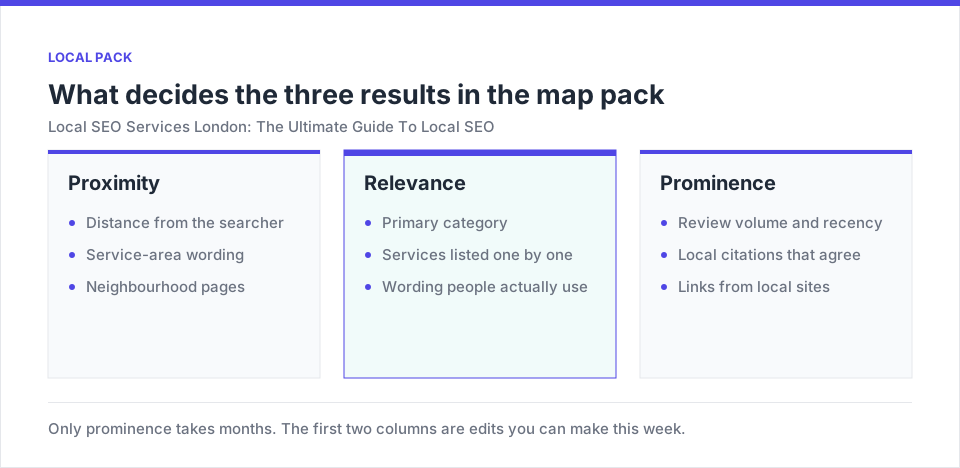
Local Pack rankings in London hinge on a blend of proximity to the searcher, completeness and relevance of GBP data, and the level of user engagement signals. Proximity matters because urban density and commuting patterns mean that nearby businesses have a higher likelihood of appearing in the pack for geo-targeted queries. GBP completeness, with accurate NAP, hours, categories and services, creates a solid foundation for Maps to surface your listing when locals search for nearby services. Local relevance grows when your district landing pages explicitly address the neighbourhood’s unique needs, such as district-specific services, pricing nuances, or local partnerships. Finally, user signals like clicks, directions requests, calls, and review sentiment influence perceived usefulness and can tip the balance in a competitive area.
- Proximity emphasis: ensure your primary districts align with where customers are most likely to search, and reflect realistic service areas on GBP and landing pages.
- GBP completeness and activity: maintain robust profiles with updated hours, categories, services, posts, and visuals to signal ongoing relevance.
- District-level relevance: create district landing pages that mirror local intents and link to GBP actions, maps embeds, and local offers.
- User engagement signals: optimise for clicks-to-directions, calls, and route requests by making the path from search to action as frictionless as possible.
Optimising GBP for Local Pack synergy with Maps
A London-first GBP programme should scale across multiple boroughs, ensuring that each district has a precise, verifiable presence aligned with its district landing page. Prioritise per-district GBP verification where appropriate, and maintain NAP consistency across Maps, GBP, and landing pages. Use district-specific categories and add secondary services that reflect the local offering. Regular GBP activity—posting updates, uploading fresh photos, and managing reviews—helps maintain an active signal that search engines interpret as local relevance. The relationship between GBP activity and Maps visibility becomes particularly pronounced in high-traffic zones such as Westminster, Camden, and the City of London, where users frequently search for services within walking distance or a short transit ride from their location.
- District-level GBP configuration: establish clear per-district profiles, with pertinent hours and services tailored to each area.
- NAP alignment: synchronise Name, Address, and Phone across GBP, district landing pages, and Maps listings to minimise confusion for users and search engines.
- Categories and attributes: select accurate primary categories and add context-specific attributes that reflect London’s diverse neighbourhoods.
- Posts, photos and Q&A: maintain a steady cadence of district posts and visuals, and curate a helpful Q&A section addressing local questions.
District landing pages: building a London-local content framework
District landing pages act as the bridge between Maps results and the on-site experience. Each London borough or neighbourhood should have a dedicated landing page that answers local queries with concise, mobile-friendly copy, embedded maps, and clear calls to action. The pages should signal local intent through geography in copy, services tailored to the district, and easy-to-use navigation to related depth blocks and hub topics. This structure enables search engines to understand where you operate in the city and how you serve each community, while giving users a seamless path from search to conversion.
- Two district topics per borough: focus two locally relevant topics per district to anchor depth blocks and related content.
- Depth blocks for locality expansion: create supporting pages that explore adjacent neighbourhoods and related services, linking back to the district hub.
- Hub topic integration: ensure district content feeds city-wide themes to reinforce overall brand authority.
On-page and technical signals that support Local Pack visibility
Beyond GBP, on-page and technical optimisations play a pivotal role in how Maps understands and ranks a business for local queries. Implement LocalBusiness schema with precise geo coordinates, hours, and services. Add FAQPage schema to answer common local questions and improve eligibility for rich results. Ensure mobile-first performance with fast loading times, optimised images, and clean, accessible design. Local content should reflect the geography and nuances of London life, from transport links to district-specific abbreviations or venues, enabling a more intuitive user journey from search to action.
- Structured data: LocalBusiness and FAQPage schemas help search engines interpret your local entity and address user questions in context.
- Geo signals: accurate latitude and longitude, plus district tagging on content and maps embeds.
- Mobile performance: Core Web Vitals optimised for the mobile London audience, with fast LCP and low CLS.
- Local content relevance: copy that mirrors district terminology and local references to improve semantic alignment with user intent.
Content strategy to support Maps and Local Pack in London
A disciplined content approach ensures Maps visibility translates into local engagement. Two core local topics per district paired with depth blocks per locality create a scalable framework for editorial output. Each district topic should address practical questions, highlight local services and partners, and link to district landing pages and GBP posts. Depth blocks expand coverage to nearby communities, maintaining consistency with city-wide hub topics. This approach not only improves search relevance but also enhances the user journey by offering targeted, district-specific insights that resonate with residents and visitors alike.
- Two topics per district: define two high-intent local topics per borough to anchor content efforts.
- Depth blocks per locality: develop supporting pages to broaden coverage without diluting focus.
- Hub topics integration: connect district content to city-wide themes to reinforce brand authority and cross-linking.
Governance, ROI and measurement
A robust governance model ensures that Maps and Local Pack activity is traceable and tied to ROI. Implement Provenance Trails to capture the origin and approvals of each local brief, and use a Centralised Change Log to record publication dates and affected district surfaces. Set district-level KPIs that capture Maps impressions, GBP interactions (calls, directions), district landing page visits, and local conversions. Build dashboards that segment data by district and by surface, with alerts for KPI deviations so teams can respond quickly and efficiently.
- Provenance Trails: document the brief journey from concept to publish for each district piece.
- Centralised Change Log: track publication dates and impacted pages and surfaces for auditability.
- ROI dashboards by district: simple metrics that connect visibility to footfall and conversions.
- Regular governance reviews: quarterly checks ensure alignment with London growth goals and regulatory expectations.
Local Keyword Research And Location-Specific Content For London
In London, the foundation of a scalable local SEO program is rigorous keyword research that reflects the city’s borough-level diversity and near-me searches. This part focuses on translating geo-targeted insight into district-focused pages and depth blocks that support two core topics per district. By aligning keyword discovery with district intent, londonseo.ai enables a structured content plan that feeds GBP activity, Maps visibility, and conversion-driven landing pages across the capital.
Two-pronged district keyword framework
Begin with a district inventory, listing all London boroughs that represent your service footprint. For each district, define two high-potential topics that resonate with local needs, demographics, and seasonality. These topics become the anchors for depth blocks, supporting pages that expand local coverage without diluting the city-wide narrative. The approach ensures that each district has a precise relevance signal while enabling scalable growth across the capital.
How to identify geo-targeted keywords
Use a combination of district-level research, local intent signals, and competitive benchmarking. Start with seed terms that describe services in each district, then expand to long-tail variants that capture local queries and near-me intent. Consider categorising keywords by intent type: informational, navigational, and transactional. Local intent often pairs with resident or visitor needs, such as district-specific services, parking, or event locations, which can drive footfall and in-store conversions.
- District seed terms: compile service-and-area phrases per borough (e.g., Chelsea local services, Shoreditch office cleaning).
- Intent classification: tag keywords as informational, navigational, or transactional to shape content formats.
- Volume and difficulty check: assess search volume, competition, and potential ROI for prioritisation.
- Local modifiers: incorporate neighbourhoods, landmarks, transit routes and community references to improve semantic relevance.
- Competitor gap analysis: identify terms rivals rank for that you can target with district-appropriate content.
From keywords to district landing pages
Each district landing page should answer the local intent implied by its keywords. Start with a concise, mobile-friendly overview of the district’s relevance, followed by two clearly defined topics and associated depth blocks. Include embedded maps, local testimonials, and district-specific calls to action. The content should mirror GBP signals: accurate NAP, local hours, and district-tailored services to reinforce proximity and trust.
- District overviews: a compact snapshot of the district’s characteristics and needs.
- Topic blocks: two topic pillars per district with supporting depth pages.
- Depth blocks: locality-rich content that expands coverage to nearby neighbourhoods and related services.
Content planning cadence and governance
Plan content production around a quarterly cadence, ensuring two topics per district and two depth blocks per locality are consistently developed. Establish a lightweight governance trail to capture the origin of each brief, approvals, and publication dates. Pair content planning with KPI tracking to connect district visibility to on-site actions, GBP engagement, and eventual conversions.
- Editorial briefs: define topic, district, depth-block scope, and surface targets (Maps, GBP, landing pages).
- Publication timeline: set milestone dates and assign owners for each district’s two topics and depth blocks.
- Provenance Trails: document brief origins, decisions, and changes for regulator replay readiness.
Connecting keyword research to ROI
Translate district-level keyword insights into tangible ROI through a closed loop: keyword discovery informs content, GBP, and landing pages; content engagement boosts Maps and GBP signals; user interactions and conversions feed back into your ROI model. Use an attribution approach that credits local touchpoints across GBP interactions, landing-page visits, and in-store or online conversions. External benchmarks from authoritative sources such as Google’s Local Search guidelines and Moz Local can help calibrate expectations and validate your approach.
- ROI attribution: track visits, calls, directions, and conversions attributable to district queries.
- Surface alignment: ensure Maps, GBP, and district landing pages reinforce the same local signals for consistency and trust.
- Benchmarking: compare against industry standards and local search benchmarks to gauge progress.
Local Citations And Link Building For London Local SEO
Local citations and high‑quality backlinks are the connective tissue that binds London’s diverse districts to your brand. In a market defined by proximity, proximity signals and trusted local references are crucial for footfall, store visits, and service inquiries. At londonseo.ai, we emphasise a London‑focused approach: cleanse NAP data across core London directories, acquire authoritative local citations, and secure contextually relevant backlinks from reputable city sources. This Part 6 extends the practical framework from keyword research and district content, translating local credibility into visible search presence across Maps, GBP, and district landing pages.
Why London‑specific citations matter
London’s local ecosystem is dense and competitive. Citations published in city‑level resources and district portals help search engines validate your presence within particular communities. When NAP data is consistent and conjoined with GBP and district landing pages, you reduce confusion for users and strengthen proximity signals for Google’s local ranking factors. A disciplined approach ensures that each London district you serve is represented with accurate references, creating a coherent city‑wide narrative that search engines recognise as authoritative.
- Consistency first: ensure Name, Address and Phone line up across GBP, district pages and major London directories.
- Authority matters: prioritise citations from London‑specific sources and sector directories with real local audiences.
- District alignment: reflect local terms, venues, and neighbourhoods in your district citations to reinforce relevance.
- Monitoring cadence: schedule quarterly audits to catch drift and duplicates before they erode trust.
Auditing your local citations in London
Start with a district‑by‑district census of all citations. Map each reference to the corresponding district landing page and to GBP entries. Flag duplicates, outdated contact details, and non‑relevant listings. The audit should capture the primary sources you trust in London, such as city business directories, borough portals, and chambers of commerce, then prioritise updates based on traffic potential and authority. A robust audit underpins future growth and makes scaling to new districts smoother.
- Inventory by district: list all citations per London district and identify gaps.
- Validate NAP alignment: confirm that each citation matches the business name, address and phone used on GBP and landing pages.
- Assess authority and relevance: weigh directory authority and locality relevance when prioritising updates.
- Plan remediation steps: create a timeline to fix data drift and chase high‑value citations first.
Building high‑quality local citations in London
Quality trumps quantity for local citations. Seek sources with credible London audiences, relevant industry alignment, and active editorial guidelines. Beyond essential directories, consider London‑centric chambers, borough information portals, and community resources. Pair citations with district landing pages that reflect local terms, service nuances, and tangible offers. A disciplined mix of city‑level and district‑level citations reinforces proximity and improves local trust scores in search systems.
- Prioritise authoritative sources: achieve listings on trusted London platforms and district portals.
- Ensure NAP harmony: synchronise business identifiers across GBP, district pages and citations.
- Contextuality is key: align citations with the specific district’s services and landmarks.
- Ongoing maintenance: schedule quarterly checks to refresh hours, offerings, and descriptions.
Strategic link building for London audiences
Local links should come from credible London sources that reflect the city’s ecosystem. Practical tactics include partnerships with London chambers and business associations, guest posts on reputable local outlets, and sponsorships of city events that provide editorial backlinks. Seek content collaborations that yield resource pages, guides to local services, or neighbourhood roundups, all of which offer natural linking opportunities. When pursuing backlinks, balance anchor text to reflect district relevance while maintaining a natural link profile that search engines favour.
- Chamber and association collaborations: obtain mentions and contextual backlinks from credible London bodies.
- Local media and blogs: contribute useful, district‑focused content that earns editorial links.
- Resource pages and guides: create district‑specific resources that others want to reference.
- Sponsorships and events: leverage sponsorships to gain high‑quality, locality‑directed coverage.
Measuring impact and governance for London links
Track citation counts, domain authority, and referral traffic alongside GBP interactions and district page visits. A governance layer—Provenance Trails capturing the brief origin and approvals, plus a Centralised Change Log documenting publication dates and affected surfaces—ensures you can audit and replicate successful campaigns. Tie these signals to a lightweight ROI model: assess how citation and backlink activity correlates with district visibility, Maps impressions, and local conversions.
- KPI set by district: citations gained, referral traffic, and impact on district page metrics.
- Link quality indicators: domain authority, relevance to London markets, and anchor text balance.
- ROI linkage: map backlinks to local actions, such as store visits or service inquiries.
- Regulator replay readiness: maintain provenance and changelog for transparency and future reviews.
Local Migrations And Redesign For London Local SEO
Moving a London local SEO programme to a new site architecture or refreshing district-focused content requires careful governance, precise data handling, and a plan that preserves two core topics per district alongside depth blocks for locality expansion. This Part 7 translates a migration and redesign playbook into a London context, ensuring two-topic per district coverage remains intact through every URL change, Maps alignment, and GBP continuity. At londonseo.ai we emphasise a structured approach that minimises volatility in rankings, protects NAP consistency, and maintains a clear line of sight to ROI as you scale across the capital.
Strategic framework for London migrations
London migrations demand a framework that treats each district as a discrete content ecosystem while preserving the city-wide narrative. The framework begins with a full data hygiene audit: GBP locations, district landing pages, and NAP consistency across Maps and directories. It then moves to re-architecting pages so that every district retains its two core topics and depth blocks, even when URLs, sitemaps, or templates shift. Establish a governance scaffold that records the origin of briefs, publication dates, and affected surfaces, enabling regulator replay and ROI traceability from day one.
- Data hygiene first: audit GBP, NAP, and local listings per district to prevent post-migration drift.
- District content integrity: preserve two topics per district with depth blocks that extend locality coverage.
- URL and sitemap strategy: plan canonical structures and 301 redirects that minimise loss of rankings.
- Governance and provenance: implement Provenance Trails and a Centralised Change Log for every brief and page change.
Four-phase rollout for London migrations
- Phase 1 — Inventory and district scoping: compile all London GBP locations, confirm district boundaries, and map two topics per district with initial depth blocks.
- Phase 2 — Content re-architecture: create or adjust district landing pages, embed maps, align GBP categories, and prepare district-specific posts and visuals.
- Phase 3 — Redirects and technical health: implement 301 redirects, update robots and sitemaps, and fix crawl issues to preserve indexation momentum.
- Phase 4 — QA, staging and live validation: test in staging, validate KPI gates, and launch with a monitoring plan that captures Maps, GBP and landing-page performance.
Maintaining two topics per district during migration
Two-topic-per-district remains the anchor during migration. Each district should retain its primary and secondary topic signals while the depth blocks adapt to the new structure. Ensure that district landing pages, GBP actions, and content surfaces remain synchronised so that users experience a seamless transition from search to local action. Establish a pre-publish checklist to confirm topic integrity, local relevance, and alignment with the city-wide hub topics that maintain brand coherence.
- Topic continuity: verify both topics per district are preserved in the new architecture.
- Depth blocks mapping: ensure depth blocks extend locality coverage without fragmenting district authority.
- GBP alignment during migration: preserve GBP data integrity and post-redirect signals to keep local maps presence stable.
Governance, ROI tracking and dashboards for migrations
A disciplined governance layer protects translation of two-topic-per-district signals through a redesign. Implement Provenance Trails for briefs, and a Centralised Change Log to document publication dates and affected surfaces. Build district-level dashboards that monitor GBP interactions, Maps impressions, district landing page visits, and local conversions. Tie these signals to a lightweight ROI model so stakeholders can see how migration efforts translate into footfall, inquiries and sales across London districts.
- Provenance Trails: capture the brief origin, approvals and publication decisions for each district brief.
- Centralised Change Log: record publication dates and impacted district surfaces for auditability.
- ROI dashboards: segment KPIs by district to reveal ROI at a glance.
- Regulator replay readiness: maintain a complete audit trail to simplify future reviews.
Next steps and practical prompts
If you’re moving from a legacy structure or refreshing your London district strategy, initiate with a districts-wide inventory, confirm two topics per district, and align depth blocks to support locality expansion. Request a migration blueprint that includes two topics per district and two depth blocks per locality, with a clear ROI plan and governance artefacts. For immediate guidance, visit Services or book a Discovery Call to tailor the London migration plan to your business needs.
GBP Audits And Ongoing Optimisation For London Local SEO
A disciplined approach to Google Business Profile (GBP) audits and continuous optimisation is the backbone of durable local visibility in London. As the city evolves, so do consumer behaviours, competition, and GBP features. This Part 8 focuses on establishing a repeatable GBP audit framework, implementing ongoing improvements, and tying activity back to measurable ROI for Local SEO Services London through londonseo.ai. The aim is to keep GBP data accurate, engaging, and aligned with district landing pages and Maps signals so that nearby customers find and choose you with confidence.
Why GBP audits matter for London businesses
London’s local search landscape rewards accuracy, promptness, and engagement. A regularly audited GBP reduces data drift, strengthens proximity signals, and sustains Maps prominence in a city where near-me queries drive footfall and inquiries. Audit discipline also safeguards against duplicate listings and inconsistent NAP, which can confuse customers and undermine trust. In practice, GBP audits translate into clearer distances, more precise service descriptions, and better alignment with district landing pages that reflect local intent.
- Data integrity: keep Name, Address, and Phone consistent across GBP, Maps, and landing pages.
- Completeness and accuracy: verify hours, categories, services, and attributes for each London location.
- Engagement readiness: ensure posts, photos, and Q&A are current and district-relevant.
- Review governance: maintain a process for timely responses and knowledge base improvements from customer questions.
- Maps alignment: verify that district pages link correctly to GBP actions like directions and calls.
Audit framework for London GBP
Adopt a structured, repeatable framework that you can run on a quarterly basis or as district footprints change. The framework below is designed to scale with your London expansion while keeping a tight grip on quality and ROI:
- Inventory London GBP locations: create a master list of districts and sites, noting which require per-location GBP profiles versus district landing pages.
- Assess profile completeness: check all GBP fields, categories, services, attributes, and photos for every location.
- NAP and data hygiene: validate Name, Address, and Phone consistency everywhere, including district pages and Maps.
- Media and engagement: audit posts, photos, offers, and updates; ensure cadence matches local campaigns and events.
- Reviews and Q&A governance: establish response templates and a queue for timely engagement with local customers.
Ongoing optimisation playbook
Beyond audits, a practical playbook keeps GBP performance ascending. The core idea is to couple GBP signals with district landing pages and Maps data so that proximity and relevance reinforce each other. The following playbook emphasises discipline, experimentation, and measurable outcomes for London-based businesses.
- Regular GBP health checks: monitor data consistency, post activity, and review responses to drive trust and engagement.
- District-level experiments: run small tests on categories, services, and posts to see what resonates in each borough.
- Content synergy: ensure GBP updates align with district landing pages and hub topics, creating a coherent local journey.
- Review and reputation management: maintain a proactive approach to reviews, addressing negative feedback quickly while highlighting positive experiences.
Measuring GBP impact and ROI in London
Translate GBP actions into tangible business outcomes through a simple ROI framework. Track how GBP interactions (calls, directions, clicks) convert into district landing page visits, store footfall, or service inquiries. Use district dashboards to visualise how GBP activity correlates with Maps impressions, local traffic, and conversions. A consistent ROI narrative helps stakeholders understand the value of ongoing GBP optimisation and the strategic role of district content in supporting local searches.
To strengthen credibility, tie metrics to specific districts and topics, showing how two topics per district and depth blocks feed GBP performance, Maps visibility, and the on-site conversion path. Use these signals to justify further investment in GBP maintenance and district-focused content in your UK London footprint.
Governance, provenance, and regulator readiness
Two artefacts underpin a trustworthy GBP programme in London. Provenance Trails capture the origin, rationale, and approvals for every brief or GBP update, ensuring you can reconstruct decision pathways if needed. A Centralised Change Log records publication dates and the impacted district surfaces, aiding cross-team visibility and regulator replay. These artefacts integrate with your ROI framework, making it straightforward to demonstrate the connection between GBP activity and local outcomes across maps, landing pages, and district content.
- Provenance Trails: document briefs, approvals, and publication decisions for auditable traceability.
- Centralised Change Log: maintain a simple, central record of changes and affected surfaces by district.
- ROI linkage: align GBP actions to district ROI metrics to show value over time.
Local SEO Services London: ROI-Driven Local Presence
With the foundational work covered in prior sections, Part 9 concentrates on turning London’s local signals into measurable outcomes. The aim is to translate GBP and Maps activity, district-focused content, and two-topic per district governance into a robust, ROI-driven framework you can scale across the capital. London businesses must not only be visible locally but also demonstrate, with clarity, how visibility converts into footfall, inquiries, and revenue.
ROI-Driven Local SEO Governance in London
A disciplined governance model aligns two core topics per district with district-specific depth blocks, while tracking performance through a central ROI lens. Provenance Trails capture the origin of briefs and the rationale for publishing two local topics per district, and a Centralised Change Log records publication dates and affected surfaces. This governance scaffold supports transparent audits, easy handovers, and scalable expansion across boroughs while maintaining data integrity for every signal in GBP, Maps and landing pages.
- Objective establishment by district: set ROI targets for visibility, traffic quality and local conversions per district.
- Signal to outcome mapping: link GBP updates, Maps impressions, and district landing page visits to tangible actions such as store visits or form submissions.
- Dashboards per district surface: a focused view that combines GBP interactions, Maps engagement and on-site conversions.
- Governance cadence: quarterly governance reviews to assess ROI trajectory and resource allocations for London districts.
District-Level KPI Framework: What To Measure
Two topics per district anchor local relevance, but a comprehensive KPI set ensures you capture all levers of local performance. Focus on signals that directly influence near-me searches and footfall, while maintaining data hygiene across GBP and district pages. Key KPIs include:
- GBP interactions: calls, direction requests, and photo views per district.
- Maps impressions and click-throughs: proximity-weighted visibility across boroughs.
- District landing page visits: visits, time on page, and scroll depth by district.
- Local conversions: form submissions, bookings, or purchases attributed to local searches.
- Citation health and NAP consistency: accuracy across district directories and GBP alignment.
- Customer sentiment: review volume and sentiment trends by district.
Setting Up Dashboards And Reporting
Dashboards should be designed to deliver actionable insights for each district, while offering a city-wide view for executive stakeholders. Build sources that feed dashboards from Google Business Profile insights, Maps data, landing page analytics, and your CRM. Adopt a two-tier cadence: a weekly, lightweight operational snapshot for immediate action, and a monthly, detailed ROI report that correlates district visibility with on-site conversions and offline outcomes. Include a simple ROI index per district to convey progress at a glance.
- Data sources: GBP insights, Maps metrics, landing page analytics, CRM conversions.
- District dashboards: per-district views plus a consolidated London overview.
- Cadence: weekly quick win report; monthly ROI deep dive; quarterly governance review.
- Alerting: automated alerts for KPI deviations to trigger proactive adjustments.
Attribution Across GBP, Maps, And District Pages
Adopt a simple, defensible attribution model that acknowledges multiple touchpoints. Attribute a portion of conversions to GBP interactions (calls and directions) and Maps impressions, with remainder allocated to district landing page visits and on-site actions. This multi-touch approach recognises that local searches often involve several micro-interactions before a conversion is completed. Tie attribution to the ROI dashboards so stakeholders can clearly see how district signals contribute to revenue or qualified leads across London.
- Multi-touch allocation: distribute credit across GBP, Maps, and district pages according to observable engagement paths.
- Signal integration: ensure data is consistently mapped from GBP posts to district landing page conversions.
- Regulator-ready traceability: Provenance Trails and Change Log entries document the reasoning and publication history behind each district action.
Actionable next steps for Part 9 include defining district ROI targets, setting up district dashboards, and establishing KPI cadences. For immediate guidance, explore our Services or book a Discovery Call to tailor the London strategy to your business needs. The two-topic per district model remains the backbone, with depth blocks expanding locality coverage as you scale across the capital.
Local Reputation Management For London Local SEO: Reviews, Trust, And Conversion
In London’s densely competitive local landscape, reputation signals sit at the heart of effective local SEO. Reviews, star ratings, and timely responses shape trust, click-through, and conversion just as strongly as proximity and visibility. For local SEO services in London, a structured reputation management framework helps ensure that every district surface—GBP, Maps, and district landing pages—conveys credibility and real-world value. This Part 10 builds a practical, London‑focused playbook for collecting, monitoring, and acting on customer feedback to drive tangible ROI across boroughs.
Why reputation signals matter for London local searches
The sheer density of London’s markets means near-identity signals—reviews, respond-by times, and the perceived quality of service—play a pivotal role in deciding which business a local search user chooses. A robust review program reinforces GBP and Maps signals by demonstrating ongoing customer satisfaction, which search engines interpret as trust and relevance. Two pivotal dynamics shape London outcomes: first, mobile-driven local intent that values quick, credible feedback; second, district-level differentiation where residents and commuters expect a tailored, community-aware experience. A London-focused reputation strategy therefore must connect reviews to GBP updates, district landing pages, and Maps interactions in a cohesive narrative.
Two actionable strands help you start powering reputation in London today:
- Proactive review collection: time requests to customers after service, provide easy review pathways, and reinforce that feedback shapes local service improvements.
- Review-driven content integration: quote authentic customer experiences on district pages, GBP posts, and local case studies to amplify trust signals across surfaces.
Auditing reviews across London districts
Begin with a district-by-district review audit. Compile all GBP reviews, Maps-related comments, and social mentions tied to each district. Assess sentiment trends, identify recurring questions, and flag fake or suspicious feedback for verification. A granular audit reveals district-specific pain points and opportunities, enabling you to tailor responses and content that address the community’s actual needs. The audit should capture four core dimensions for every district surface: volume, sentiment, response quality, and the degree to which feedback informs district landing pages and GBP posts.
- Review inventory by district: map all feedback sources to each London district surface.
- Sentiment trend tracking: monitor positive, neutral, and negative sentiment by district over time.
- Response quality audit: assess how well responses address concerns and demonstrate empathy.
- Content alignment: identify opportunities to convert feedback into district-page updates, FAQs, or case studies.
A practical reputation management playbook for London
Adopt a repeatable, district-aware process that scales with growth. The core moves are simple, but disciplined execution is what drives results across boroughs. Start with a lightweight governance layer and then operationalise review collection, response management, and content repurposing. This approach keeps your two-topic-per-district framework intact while turning feedback into asset-rich content that supports Maps and GBP signals.
- Review collection cadence: target a steady stream of verified reviews per district, aligning with seasonal campaigns and local events.
- Response playbooks: develop district-specific response templates that reflect local tone and regulatory considerations.
- UGC capture and usage: anonymise sensitive details, then showcase authentic testimonials on district landing pages and GBP posts.
- Reputation-driven content: weave reviews into two-topic district content, including case studies and FAQs that mirror real customer concerns.
Negative reviews: handling with empathy and impact
Negative feedback is inevitable, but it can be an opportunity to reinforce trust when handled well. Prompt, empathetic responses that acknowledge the issue, outline steps to remedy, and invite continuation of the conversation outside public channels demonstrate accountability. In London, where local customers place high value on responsiveness, a timely, customised reply can turn a dissatisfied visitor into a loyal advocate. A best practice is to combine a public, professional response with a private follow-up to resolve the concern.
- Response protocol: acknowledge, apologise, explain, and offer a solution or escalation path.
- Private follow-up: invite the reviewer to continue the conversation offline to resolve the issue.
- Escalation criteria: define when to escalate to a district manager or operations lead.
Measurement, dashboards and ROI implications
Link reputation activities to measurable business outcomes. Build district dashboards that blend GBP insights (reviews, responses, and engagement), Maps impressions, district landing page traffic, and local conversions. Track metrics such as review velocity, average sentiment, response time, and the impact of review-led content on click-through and in-store visits. An ROI-centric view should show how reputation improvements translate into increased footfall, inquiries, and revenue across London districts, reinforcing the value of ongoing investment in reputation management as part of your local SEO strategy.
- KPIs by district: review volume, sentiment, response rate, and conversions tied to local surfaces.
- Content signal linkage: quantify how reviews inform district pages, GBP posts, and Maps interactions.
- ROI attribution by district: assign partial credit to reputation actions based on proximity to conversions.
- Governance discipline: maintain Provenance Trails and a Centralised Change Log for regulator replay and auditability.
London-friendly actions you can take now
Three practical steps to start realising ROI from reputation in London: (1) implement a district-wide review request cadence aligned to service cycles; (2) seed district landing pages with authentic quotes and mini-case studies drawn from real interactions; (3) set up a lightweight dashboard that monitors review metrics, GBP engagement, and district-page conversions. Pair these steps with our structured Local SEO Services London framework to ensure the reputation improvements reinforce Maps visibility, GBP authority, and overall ROI.
For a guided start, explore our Services page or book a Discovery Call with londonseo.ai to tailor a district-focused reputation plan that integrates with your two-topic per district model.
References: Google’s guidance on customer reviews and profiles can help calibrate best practices for GBP and Maps engagement ( Google Support: Responding to reviews). For broader insights on leveraging reviews for trust and conversions, see HubSpot’s observations on reviews and social proof ( HubSpot: Why customer reviews matter). Moz’s local ranking factors offer a technical lens on how reputation signals interplay with local signals ( Moz: Local Search Ranking Factors).
Internal actions include linking review-driven content to district landing pages, GBP and Maps surfaces, and ensuring ongoing governance is visible in your ROI dashboards. Start by booking a Discovery Call to map your district-level reputation objectives to real-world outcomes.
Local SEO For Multi-Location London Businesses
Growing a London operation across multiple districts requires a carefully designed local SEO framework. This Part 11 focuses on architectures that support two core topics per district, paired with depth blocks for locality expansion, while preserving data integrity, Maps and GBP signals, and a clear path to ROI. Building on the governance and measurement foundations laid in previous sections, this instalment offers practical patterns for managing per-location assets, district pages, and cross-location optimisation within the capital.
Choosing the right architecture for London locations
London presents a mosaic of neighbourhoods and boroughs. The most scalable approach combines per-location GBP profiles for high-traffic sites with district landing pages that reflect local intents and services. A central city hub ties district content to overarching brand themes, enabling cross-linking, consistent taxonomy, and a clear journey from discovery to conversion. In practice, you can adopt a hybrid model:
- Per-location GBP where needed: create separate GBP profiles for flagship or highly trafficked sites to maximise near-me visibility and precise district targeting.
- District landing pages as the local spine: build dedicated pages for each district with two core topics and depth blocks that cover nearby neighbourhoods.
- City hub content: maintain city-wide pages that connect district topics and reinforce brand authority across London.
This structure supports efficient governance, simplifies expansion into new districts, and preserves the two-topic per district discipline without creating conflicting signals across GBP, Maps and landing pages.
Synchronising GBP, district pages and canonical structure
Signal alignment across GBP and district pages reduces user confusion and strengthens proximity signals. When you migrate or reorganise content, keep the following principles in focus:
- NAV and URL strategy: retain predictable URL patterns for districts and hubs, using 301 redirects where necessary to avoid traffic loss while preserving rankings.
- NAP consistency: Name, Address and Phone should be uniform across GBP, district pages, and cited listings to reinforce trust signals.
- Content mapping: map each district topic to its depth blocks and ensure hub pages link back to the district surfaces.
- Schema alignment: use LocalBusiness, Organization and FAQPage schemas on district pages to surface local intent in rich results.
Two-topic per district: practical application
Two clear topics per district provide focus for editorial, landing pages, and depth blocks. Each topic should address practical local needs, with district-specific offers, partner mentions, or events. Depth blocks extend coverage to nearby neighbourhoods, maintaining a city-wide thread that strengthens brand authority. This modular approach makes it easier to scale to new districts while preserving coherence across London.
- Topic selection by district: identify two high-potential local topics driven by district demographics and seasonal patterns.
- Depth blocks strategy: create companion pages that explore adjacent neighbourhoods and related services, linking back to district hubs.
- Interlinking discipline: maintain strong internal linking between district pages, depth blocks, and hub content to strengthen topical authority.
Data governance and ROI-centric measurement
A robust governance framework ensures that multi-location efforts remain auditable and optimisable. Extend Provenance Trails to capture the origin of each district brief and the rationale for publishing two topics per district. Maintain a Centralised Change Log detailing publication dates and affected district surfaces. Tie these artefacts to district ROI dashboards that merge GBP insights, Maps impressions, district page visits, and local conversions. This setup makes it straightforward to justify further investment as your London footprint grows.
- Provenance Trails: document brief origins, approvals, and publication decisions for each district surface.
- Centralised Change Log: track dates, changes, and impacted pages by district.
- ROI dashboards by district: combine GBP interactions, Maps engagement, and on-site conversions to illuminate value.
- Regular governance reviews: quarterly checks ensure alignment with London expansion plans and regulatory expectations.
Migration and expansion considerations
When upgrading architecture to support multiple locations, keep the two-topic-per-district rule intact. For each district, ensure the topics and depth blocks remain discoverable and natively linked to GBP and Maps surfaces. Plan a staged rollout: audit, architect, validate, and launch, with a monitoring plan to catch any KPI drift quickly. Maintain data hygiene throughout, especially NAP and category mappings, to prevent legacy signals from undermining new district pages.
- Stage-by-stage rollout: begin with the busiest districts and expand to others in controlled waves.
- Post-launch monitoring: track Maps impressions, GBP interactions, and district page metrics to confirm the transition maintains or improves ROI.
- Continual optimisation: iterate two topics per district and depth blocks based on performance data and changing local needs.
Choosing A Local SEO Partner In London
Selecting a London-based local SEO partner is a decision that directly shapes your near-term visibility and long-term ROI. The right agency will not only improve rankings but also sustain a data-driven, governance-led programme that scales with your London footprint. At londonseo.ai, we champion a London-first methodology that pairs two core local topics per district with depth blocks for locality expansion, all under a transparent ROI framework. This Part 12 offers a practical decision framework, what to demand from a partner, and how to measure value as you commit to a shared path of growth across the capital.
Why choose a London-focused partner for Local SEO
London demands a nuanced approach to local search. Proximity signals, borough-specific intents, and a mobile-first user journey converge to elevate the importance of an agency that understands the city’s unique geography and consumer behaviour. A suitable partner must demonstrate: a proven capability to map district-level signals into district landing pages, robust governance to track progress, and a track record of translating local visibility into footfall and qualified leads. In practice, this means prioritising an integrated framework where GBP, Maps, district content, and landing pages align around two local topics per district and two depth blocks per locality, enabling scalable growth across London’s diverse communities.
What to look for in a London local SEO partner
- Local market mastery: evidence of successful campaigns across multiple London districts, with district landing pages and GBP activity that map to real local intents.
- Two-topic per district discipline: a clear, repeatable framework that anchors content strategy in two local topics per district supported by depth blocks for locality expansion.
- Governance and ROI discipline: Provenance Trails and a Centralised Change Log that document briefs, approvals, publication dates and affected surfaces to enable regulator replay and ROI accountability.
- Transparent reporting: regular dashboards showing GBP interactions, Maps visibility, district page metrics and local conversions, with easy-to-understand ROI metrics.
- Sustainable pricing models: flexibility to start with a fixed-scope project, a retention plan, or ROI-based agreements that tie payments to measurable outcomes.
A practical evaluation framework for London partners
Adopt a rigorous, repeatable framework that helps you compare proposals on equal footing. Begin with a clear specification of deliverables: per district two core topics, depth blocks per locality, district landing pages, and GBP alignment. Require artefacts that enable auditability: Provenance Trails to capture the origin of each brief and a Centralised Change Log detailing publication dates and affected district surfaces. Demand dashboards that merge GBP insights, Maps impressions, landing-page visits, and local conversions. Finally, ensure the proposed approach includes a plan for ongoing governance reviews, ROI attribution, and quarterly performance recalibration.
Pricing models and contracts to expect
- Project-based with fixed scope: useful for piloting the two-topic per district approach in a subset of London districts, with defined milestones and a clear acceptance plan.
- Retainer-based engagement: ongoing management of GBP, Maps, district content and depth blocks, with monthly reporting and governance updates.
- ROI-based or performance-linked: payments tied to predefined outcomes, such as district-level conversions, qualified traffic, or incremental store visits, backed by an agreed attribution model.
- Hybrid arrangements: combination of fixed milestones, ongoing retainers, and targeted ROI components to cover initial pilots and subsequent scale.
When negotiating, insist on clear SLAs, publication cadences, data hygiene standards (NAP, GBP, and district URLs), and a straightforward ROI model. The goal is to avoid ambiguity between GBP activity, Maps signals, and on-site conversions, ensuring every action translates into measurable impact across London districts.
How londonseo.ai differentiates: a pragmatic London framework
londonseo.ai embeds a London-first mindset into a modular, scalable framework. Our approach anchors two core local topics per district and depth blocks per locality, reinforced by strong governance and measurable ROI. We emphasise district-specific landing pages, district GBP alignment, and Maps integration so users experience a coherent local journey from search to action. Our governance model uses Provenance Trails to capture the origin of briefs and a Centralised Change Log to document publication dates and affected surfaces. This structure supports regulator replay, auditability, and a transparent pathway to ROI as you expand across London. To explore how this translates into real-world outcomes, book a Discovery Call or explore our Services page for a tailor-made plan.
Next steps: initiating your partnership with London SEO experts
- Define district priorities: identify two districts to start, each with two local topics and depth blocks for locality expansion.
- Request a district-focused proposal: ask agencies for a plan that shows district landing pages, GBP alignment, and a ROI blueprint with dashboards.
- Assess governance artefacts: require Provenance Trails and a Centralised Change Log to ensure traceability and regulator readiness.
- Ask for starter dashboards and a pilot timeline: obtain a sample dashboard that tracks GBP interactions, Maps visibility, and district conversions, plus a timeline for a first live milestone.
To start conversations with London SEO experts who emphasise ROI and governance, book a Discovery Call with londonseo.ai or visit our Services page to understand how a district-focused strategy could work for you in London.
