What is SEO copywriting and why it matters in London
SEO copywriting in London blends precise keyword strategy with compelling, human-friendly storytelling. It’s not enough to jam keywords into sentences; the goal is to craft content that resonates with London's diverse audiences, navigates the city’s competitive search landscape, and guides readers toward meaningful actions. At londonseo.ai, we combine data-driven keyword research with authentic, value-led copy to boost visibility, authority and conversions for businesses operating in the capital. This opening section lays the groundwork for understanding how London’s unique market characteristics shape copy that ranks, engages and converts. London is a city of contrasts: global organisations and small local firms share the same search ecosystem, yet the intent, tone and information needs can vary wildly from borough to borough. A successful London copy approach recognises those nuances, harmonises them with your brand voice, and deploys content across eight key surfaces to create a cohesive, scalable presence. In this part of the series we’ll map the essentials: how local intent in London influences keyword selection, how to frame copy for different districts, and the practical steps to start building a copy framework that supports ROI across the city.
The London search landscape and local intent
London’s search behaviour is characterised by rapid device-switching, a wide range of languages, and highly localised needs. Users in Westminster might search for “legal services in central London” while residents in Lewisham seek “local tradespeople near me.” This geographic spread requires copy that is both globally credible and locally relevant. Local intent in London is amplified by knowledge panels, map packs, and business profile listings, all of which influence click-through and conversions. The aim is to create content that satisfies intent on the first visit — whether people are researching a service, evaluating options, or looking to take action immediately.
Key London signals to integrate into your copy approach include: proximity cues (borough and neighbourhood relevance), time-sensitive local events (markets, conferences, cultural happenings), and authority signals (local case studies and community references). By aligning copy with these cues, you help search engines understand your relevance to specific London communities, which in turn improves visibility for both broad and geo-targeted terms.
Keyword strategy tailored to London’s districts
A robust London keyword strategy starts with a city-wide seed and then expands into district-specific and neighbourhood terms. Include generic London terms (for example, SEO copywriting London, London SEO services), as well as district-focused variants (for example, SEO copywriter in Chelsea, SEO content London Bridge). Long-tail phrases that reflect local questions or problems—such as “best SEO writer for law firms in London” or “content marketing for Manchester-born London audiences” when relevant—can capture niche intent and reduce competition. It’s essential to attach every keyword to a practical content artefact, whether a service page, a blog post, or a thought-leadership piece, and to map each term to a surface in the eight-surface framework LondonSEO.ai champions. For credible, user-centred results, consult established sources on best practices (for example, Google’s SEO Starter Guide) to ensure your approach aligns with manufacturer guidance while maintaining a distinctly London voice. See sources here: Google SEO Starter Guide.
Mapping copy to the eight surfaces in London
London businesses benefit from a structured approach that distributes content across eight surfaces: Local Listings, Maps, Knowledge Panels, Discover, YouTube, Images, Voice, and storefront data. Activation Maps guide which copy and content block should exist on each surface, ensuring consistency and relevance. Edge-context notes capture local cues—neighbourhood events, landmarks, or seasonal opportunities—that enrich the copy with authenticity. District dashboards then visualise performance by borough, letting teams see which districts and surfaces deliver the strongest ROI and where to invest next.
Beginning with a discovery of your target boroughs and customer profiles in London, you can build a practical Activation Maps blueprint that translates keywords into actionable pages, video ideas, image libraries, and structured data opportunities. For London agencies and brands, this approach creates a scalable pathway from research to execution, with governance that keeps content aligned to business goals across the city’s varied communities.
On-page optimisation and editorial quality for London audiences
On-page optimisation for London must balance keyword intent with readability and accessibility. Craft clear page titles and meta descriptions that seamlessly include local terms while emphasising user benefit. Use H1, H2 and H3 tags that reflect district relevance without overstuffing. Develop service pages and location pages that describe how your offering helps customers in specific London contexts, such as legal services in the City, creative agencies in Shoreditch, or property services in Kensington. The copy should invite action—whether that’s a call, a form submission, or a booking—without being pushy. In parallel, implement structured data to support local search features, including LocalBusiness and Service schema where appropriate.
To reinforce trust and authority, integrate authentic client stories and practical use cases from London customers. Pair copy with user-friendly visuals and, when possible, short video assets that explain your service and its London-specific value. This multi-format approach supports the eight-surface diffusion while remaining faithful to your brand voice. For guidance on authoritative content, consider established best-practice resources and industry-focused thought leadership pieces as part of your editorial calendar.
A practical starter plan for London businesses
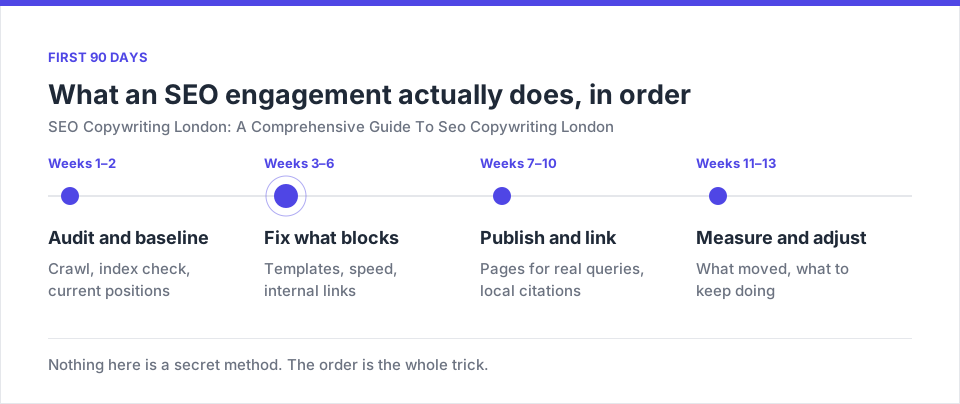
To begin your London SEO copywriting project, follow a four-step approach: (1) Discovery and audience localities—identify the boroughs that matter most and the customer journeys that lead to conversion; (2) Briefing and keyword mapping—develop content briefs that tie keywords to district-focused pages and blog topics; (3) Writing, editing and on-page optimisation—craft copy that is reader-friendly, optimised for search and aligned to your brand voice; (4) Monitoring and iteration—set up dashboards to track performance across London surfaces and districts, adjusting copy and strategy based on data. londonseo.ai offers a bespoke discovery to tailor this framework to your business, with a clear plan to hit ROI milestones in the capital. Explore our SEO copywriting services and book a complimentary consultation to start your London journey.
Understanding the London Search Landscape and Local Intent
London is a dynamic, multi-market environment where global brands and local businesses share the same search ecosystem. For SEO copywriting London, the objective is to blend rigorous keyword strategy with human-friendly storytelling that resonates with the capital’s diverse audiences. At londonseo.ai we combine data-driven keyword research with authentic, value-led copy to boost visibility, authority and conversions for organisations operating in London. This part of the series explores how London’s geography, demographics and local behaviours shape copy strategy, from borough-specific intent to practical ROI measurement.
The London search landscape and local intent
London’s search behaviour is characterised by rapid device switching, a spectrum of languages and highly local needs. A user in the City of London may search for "legal services in central London" whereas a resident in Waltham Forest could seek "local tradespeople near me". This geographic spread requires copy that is both globally credible and locally relevant. Local intent in London is amplified by map packs, knowledge panels and business profiles, all of which influence click-through and conversion. The aim is to satisfy intent on the first visit, whether readers are researching a service, evaluating options, or ready to take action immediately.
Key London signals to integrate into your copy approach include proximity cues (borough and neighbourhood relevance), time-sensitive local events (markets, conferences, cultural happenings), and authority signals (case studies and community references). By aligning copy with these cues, you help search engines understand your relevance to specific London communities, which in turn improves visibility for both broad and geo-targeted terms.
Keyword strategy tailored to London’s districts
A robust London keyword strategy starts with a city-wide seed and then expands into district-specific terms. Include generic London terms (for example, SEO copywriting London, London SEO services), as well as district-focused variants (for example, SEO copywriter in Chelsea, SEO content London Bridge). Long-tail phrases that reflect local questions or problems—such as best SEO writer for law firms in London or content marketing for Tower Hamlets audiences—can capture niche intent and reduce competition. Attach every keyword to a practical content artefact, whether a service page, a blog post, or a thought-leadership piece, and map each term to a surface in the eight-surface framework that londonseo.ai champions.
For credible, user-centred results, consult established sources on best practices to ensure your approach aligns with manufacturer guidance while maintaining a distinctly London voice. See sources here: Google’s SEO Starter Guide, Moz Keyword Research, and Google Trends.
Mapping copy to the eight surfaces in London
London businesses benefit from a structured approach that distributes content across eight surfaces: Local Listings, Maps, Knowledge Panels, Discover, YouTube, Images, Voice, and Storefront data. Activation Maps guide which copy and content blocks should exist on each surface, ensuring consistency and relevance. Edge-context notes capture local cues—neighbourhood events, landmarks, or seasonal opportunities—that enrich the copy with authenticity. District dashboards visualise performance by borough and surface, letting teams see which areas and surfaces deliver the strongest ROI and where to invest next.
Starting with discovery of target boroughs and customer profiles in London, you can build a practical Activation Maps blueprint that translates keywords into actionable pages, video ideas, image libraries and structured data opportunities. For London agencies and brands, this approach creates a scalable pathway from research to execution, with governance that keeps content aligned to business goals across the capital’s varied communities.
On-page optimisation and editorial quality for London audiences
On-page optimisation for London must balance keyword intent with readability, accessibility and brand voice. Craft clear page titles and meta descriptions that integrate local terms while emphasising user benefit. Use H1, H2 and H3 tags that reflect district relevance without overstuffing. Develop service pages and location pages that describe how your offering helps customers in specific London contexts, such as legal services in the City, creative agencies in Shoreditch, or property services in Canary Wharf. Copy should invite action—whether a call, a form submission or a booking—without being pushy. In parallel, implement structured data to support local search features, including LocalBusiness and Service schema where appropriate.
To reinforce trust and authority, integrate authentic client stories and practical use cases from London customers. Pair copy with user-friendly visuals and, where possible, short video assets that explain your service and its London-specific value. This multi-format approach supports the eight-surface diffusion while remaining faithful to your brand voice. For guidance on authoritative content, consider established best-practice resources and industry-focused thought leadership pieces as part of your editorial calendar.
A practical starter plan for London businesses
To begin a London SEO copywriting project, follow a four-step approach: (1) Discovery and audience localities—identify the boroughs that matter most and the customer journeys that lead to conversion; (2) Briefing and keyword mapping—develop content briefs that tie keywords to district-focused pages and blog topics; (3) Writing, editing and on-page optimisation—craft copy that is reader-friendly, optimised for search and aligned to your brand voice; (4) Monitoring and iteration—set up dashboards to track performance across London surfaces and districts, adjusting copy and strategy based on data. londonseo.ai offers a bespoke discovery to tailor this framework to your business, with a clear plan to hit ROI milestones in the capital. Explore our London SEO copywriting services and book a complimentary consultation to start your London journey.
Essential elements of London-focused SEO copywriting
London-focused SEO copywriting brings together disciplined keyword research, intent-aligned storytelling, and editorial quality that reflects the city’s diverse audiences. At londonseo.ai we recognise that a London-centric approach isn’t about generic optimisation; it’s about delivering content that serves real local needs, respects local contexts, and guides readers toward tangible actions. This part of the series identifies the non-negotiable elements that underpin effective copy in the capital, from research methods and editorial standards to on-page signals and structured data. The aim is to provide a practical, repeatable framework that teams can adopt to improve visibility, authority and conversions across London’s competitive search landscape. London’s audience is multi-layered, with distinct preferences across boroughs, industries and demographics. Copy that speaks with authenticity about central districts like the City or Westminster, while remaining relevant for outer boroughs such as Croydon or Hackney, performs better in both ranking and engagement. By tying every word to a user benefit and a measurable outcome, we create content that search engines can trust and readers want to read.
Keyword research and local intent in London
Effective London copy starts with a city-wide keyword seed and then expands into district- and neighbourhood-specific terms. In practice, this means combining broad London terms such as SEO copywriting London or London SEO services with geo-targeted variants like SEO copywriter in Shoreditch, SEO content London Bridge, or digital marketing for Canary Wharf businesses. Long-tail questions commonly asked by Londoners—such as “which SEO agency works with small businesses in Brixton?” or “best content strategy for property agencies in Kensington?”—capture local intent that is often underserved by generic prompts. Each keyword should be assigned to a practical content artefact and mapped to one of the eight surfaces LondonSEO.ai champions (Local Listings, Maps, Knowledge Panels, Discover, YouTube, Images, Voice, storefront data). This ensures that every term has a concrete channel to influence visibility and engagement. For credibility, anchor keyword research to industry-standard references and Google’s own guidance. See Google’s SEO Starter Guide for foundational principles and alignment with best practices: Google SEO Starter Guide.
Editorial quality and readability for London audiences
Editorial quality in London must prioritise clarity, accessibility and a tone that mirrors city-life realities. Write concise, benefit-led headlines and meta descriptions that weave local relevance without forcing keywords. Use a logical information hierarchy with clear H1, H2 and H3 tags that reflect district relevance while keeping the content scan-friendly for busy readers on desktop and mobile alike. In practice, draft service pages and location pages that demonstrate how your offering solves problems common to London businesses—whether it’s legal services near Holborn, creative production in Shoreditch, or property management in Notting Hill. Every page should invite action, whether that’s a phone call, a form submission, or a booking. Readability is closely tied to user experience. favour short sentences, active voice and plain language that eschews jargon. Where technical terms are necessary, provide simple explanations or glossaries. To reinforce trust, include authentic client examples from London customers and tie them to concrete outcomes. A well-structured editorial calendar that alternates between evergreen content and timely London topics keeps your content useful and timely throughout the year.
On-page optimisation and local signals
On-page optimisation for a London audience blends keyword intent with a strong user experience. Craft page titles and meta descriptions that incorporate local terms while emphasising reader benefits. Use clean, descriptive headings that guide readers through the content and make it easy for search engines to understand page purpose. For London pages, create district-specific service pages and location pages that address real, local needs—such as business SEO copywriting London for agencies in Canary Wharf or SEO content for hospitality in Covent Garden for venues near tourist hotspots. Implement schema markup—LocalBusiness, Service, and Organization where appropriate—to help search engines contextualise your offering and surface rich snippets in local results.
Balanced internal linking strengthens the site’s architecture. Link from the homepage to district pages, then to service pages and informative blog posts that address common London queries. This not only improves crawl efficiency but also guides users along a logical journey toward conversion. For ongoing governance, maintain a content calendar that aligns with seasonal London events (trade shows, cultural festivals, tourism peaks) to ensure relevance and timeliness across surfaces.
Structured data and activation across the eight surfaces
Structured data is the connective tissue that helps Google interpret local intent. Use JSON-LD to mark LocalBusiness, Organization and Service details, including address, opening hours and services offered. Ensure consistency of NAP data across GBP, Maps, and your site to reduce confusion and improve accuracy in knowledge panels and maps results. Activation Maps translate keyword sets into concrete content blocks for each surface. For London, this often means aligning knowledge panels with district landing pages, Maps entries with local services, and YouTube or Discover content with district-specific storytelling. Regularly validate structured data with official testing tools to protect visibility as algorithms evolve.
Content formats that resonate with London audiences
London demands a versatile content mix that supports discovery and conversion across surfaces. Prioritise a blend of service pages, district landing pages, blogs, thought leadership and practical case studies. Each format should be tailored to the needs of a London reader—urban professionals seeking efficiency, small businesses seeking clear value, or residents looking for local solutions. Pair textual content with visuals, examples, and simple data visualisations to illustrate results and reinforce credibility. For example, a district landing page can host a concise case study, a quick FAQ, and a CTA to book a consultation through our London SEO copywriting services.
Measuring success and ROI for London copy
Define success metrics that reflect London’s customer journeys and business goals. Track visibility and engagement by district, surface, and content type. Key indicators include organic impression share, click-through rate on district pages, form submissions, phone calls, and assisted conversions attributed to local content. Use Activation Maps dashboards to visualise performance across eight surfaces and to identify which boroughs deliver the strongest ROI. A quarterly review cycle helps teams adjust keyword targets, refresh content, and reallocate resources to high-potential districts, ensuring your London strategy remains competitive as markets evolve.
The SEO copywriting process used by London professionals
Following the London-focused framework established in the earlier parts, this section unpacks the practical workflow that regional teams at londonseo.ai deploy to deliver energised, ROI-focused copy for the capital. The objective is clear: translate rigorous keyword research into human-friendly content that travels smoothly across the eight diffusion surfaces, while preserving brand voice and local authenticity. The process blends discovery, briefing, writing discipline, on-page optimisation, and governance, all guided by Activation Maps, edge-context notes and district dashboards. When executed well, this workflow turns local intent into measurable business outcomes for London-based clients across professional services, hospitality, real estate and retail.
1) Discovery and audit for London copywriting
The discovery phase sets the foundation by marrying business goals with local audience needs. For London, this means identifying target boroughs, districts, and customer journeys that most influence ROI. A practical discovery kit includes: stakeholder interviews to understand brand voice and local priorities; an audit of existing content, pages and local listings; competitive benchmarking focused on district-level performance; and a keyword spot-check that ties terms to district-specific intents. The audit also evaluates how well current content supports the eight diffusion surfaces, ensuring there is a clear path from search to conversion on Local Listings, Maps, Knowledge Panels, Discover, YouTube, Images, Voice and storefront data. For credible reference, align findings with Google’s guidance on creating reliable, user-centred content: Google SEO Starter Guide. The London-specific outcome is a living discovery brief that maps boroughs to customer profiles, identifies content gaps, and prioritises quick wins and mid-term bets. This blueprint becomes the operating plan for Activation Maps and the district dashboards that track progress across surfaces.
2) Brief writing and keyword mapping to surfaces
With the discovery insights in hand, craft content briefs that tie keywords to concrete content artefacts and surfaces. London SEO copywriting thrives when briefs specify the district focus, target user intent, and the activation surface most likely to deliver intent-to-action. Every keyword should anchor to a practical artefact—service pages, district landing pages, blog posts, or thought leadership pieces—and map to at least one surface within the Activation Maps framework. This ensures how a term translates into discoverability is explicit from the outset. For reliability, reference established guidance on keyword research from Moz and Google Trends, and apply the eight-surface model as a governance anchor. A concise example: a term like “SEO copywriting London” might map to a district landing page for central London and a toolkit blog post about district-specific content strategies, with activation across Local Listings, Maps and Discover as primary surfaces. This mapping creates a predictable workflow that every writer can follow while staying aligned with the brand’s London voice.
3) Writing and editorial discipline
The writing stage in London requires a balance between clarity, editorial polish and local flavour. Writers should follow a style guide that respects UK English norms, keeps sentences concise, and uses district cues to anchor relevance without sacrificing readability. Each piece should deliver a clear value proposition and a compelling call to action, whether it’s a consultation booking, a form submission or a phone call. The editor’s role is to ensure consistency across surfaces, verify factual accuracy (local references, event dates, neighbourhood names) and maintain brand voice across district pages and blog content. Editorial calendars should weave evergreen content with timely London topics, ensuring a fresh but stable stream of material that sustains momentum across eight diffusion surfaces. To reinforce authority, integrate authentic client stories, local case studies and practical examples drawn from London customers. Pair copy with visuals, quick data visuals or short videos that illustrate London-specific value. This multi-format approach aligns with Activation Maps while remaining faithful to the brand’s tone and purpose. When in doubt about tone for a district, lean on a short panel of London experts for quick sign-offs to keep the copy accurate and credible.
4) On-page optimisation and structured data alignment
On-page elements should reflect local intent and surface-focused optimisation. Page titles and meta descriptions must be district-aware yet human-centred, communicating tangible benefits to readers in London. Use well-structured headings (H1, H2, H3) that convey district relevance while ensuring scannability. Service pages and district landing pages should articulate how the offering solves local problems, with CTAs that match user journeys. Implement LocalBusiness and Service schema where appropriate, keeping data consistent with GBP/Maps entries to support rich results and knowledge panels. Internal linking plays a critical role in London copy: link from the homepage to district pages, then to service pages and thought leadership that address local needs. Maintain governance by aligning each artefact with Activation Maps and edge-context notes so that district cues (neighbourhood events, landmarks) enrich the text without sacrificing clarity or speed. A simple rule of thumb: every significant phrase tied to a district should appear in at least one surface where it adds value to the user’s journey.
5) Editing, governance and sign-offs
Governance ensures that production scales without diluting quality. Establish a lightweight, repeatable approval cycle that includes content owner sign-off, editor review and a final compliance check for brand alignment and local accuracy. Store all artefacts (discovery briefs, briefs, drafts, final copies) in a central repository so anyone in London can reproduce, audit or update a piece in the future. This governance spine, built around Activation Maps, edge-context notes and district dashboards, makes it easier to maintain consistency across surfaces while adapting to evolving London dynamics.
6) Roadmap, ROSI and ROI for London copywriting
A practical London roadmap centres on a quarterly cycle: update district dashboards with fresh data, refresh briefs to capture new district cues, and reallocate resources based on ROSI results. The district dashboards should provide a clear view of ROI by district and surface, showing which combinations of keywords, content formats and diffusion surfaces deliver the strongest outcomes. ROSI (Return On Surface Investment) translates diffusion activity into tangible business value, enabling leadership to see how content, on-page optimisation and activation work together to drive leads, calls and conversions in London. Use data from Google Analytics 4, Google Search Console and GBP insights to feed the ROSI model and adjust the plan for the next quarter. For immediate action, consider a complimentary Discovery with londonseo.ai to tailor Activation Maps to your boroughs, with a concrete 90-day plan to start realising ROI in the capital. You can learn more about our SEO copywriting services on the main site: SEO copywriting services.
Content formats that win for London audiences
London’s SEO copywriting success hinges on a deliberate, multi-format content approach that travels smoothly across the eight diffusion surfaces LondonSEO.ai champions. A London-focused content mix should combine service-forward copy, district-specific pages, educational blogs, and compelling multimedia to meet diverse local intents. By aligning every format with Activation Maps and edge-context notes, teams can create a cohesive narrative that supports visibility, authority and tangible actions for London businesses. This part of the series drills into the practical formats that consistently deliver results in the capital.
In practice, the content toolkit for London must support discovery, proximity and trust. It should facilitate local conversions whether a user is researching a service, comparing providers in a district, or ready to book a consultation. The objective is to make each word earn its keep by moving readers closer to an action while signalling relevance to specific London communities—whether in Chelsea, Shoreditch, Notting Hill or the City of London.
Service pages and district landing pages
District and service pages are the backbone of local visibility. Each district page should clearly articulate how the service solves local problems and reference nearby landmarks or neighbourhood cues to reinforce proximity. URLs should be clean and descriptive, for example: / london/chelsea/seo-copywriting for Chelsea-focused terms. Content should include a concise value proposition, a short proof of results (local case study or client reference), and a prominent CTA such as booking a discovery or arranging a consultation.
Editorial guidance recommends pairing district pages with a set of complementary blogs or resources that answer common locality questions. Internal linking should create a logical path from the homepage to district pages, then to specific services and thought leadership. This approach improves crawl efficiency, reinforces topical authority and accelerates conversions. Learn more about our London copywriting framework on our services page: SEO copywriting services.
Blogs and thought leadership
Blogs build topical authority and sustain long-tail discovery in busy London markets. Schedule a cadence that pairs evergreen guidance with timely, district-relevant insights. Each post should anchor to a district or service page and include practical, actionable takeaways. Thought leadership pieces can showcase London-specific market intelligence, industry trends, or regulatory updates that affect local buyers. Pair blog content with visuals, data snapshots and pull-quotes that summarise key points for quick consumption.
To maximise impact, format blogs to drive readers toward conversion paths: a lead magnet, a consultation booking, or a referral to a district landing page. Use internal links to surface-level pages and relevant videos or infographics to broaden engagement. See how we structure London-focused blogs within our activation framework on the main site: SEO copywriting services and our thought leadership calendar.
Video, YouTube and visual storytelling
Video content is a powerful accelerator for London audiences who prefer quick, engaging explanations and urban storytelling. Short explainer videos, district walkthroughs and client testimonials can be mapped to YouTube and Discover surfaces, then linked to district landing pages or service pages. Thumbnails should reflect London visuals and cues (landmarks, street scenes, transport hubs) to improve click-through. Transcripts and captions boost accessibility and indexability, while schema-backed videoObject markup increases the chance of Rich Results on relevant London queries.
When planning video, keep a tight alignment with Activation Maps: define the target district, the service topic, and the preferred diffusion surface before production. This ensures a consistent message across text and video and makes ROI easier to attribute. For inspiration, explore our London content pathways and video ideas via SEO copywriting services.
Reviews, case studies and social proof
Local credibility in London grows from authentic client stories and measurable outcomes. Highlight district-focused case studies, publish succinct testimonials from London clients, and encourage reviews on GBP and relevant local directories. Rich social proof reinforces trust and helps search engines recognise local relevance, supporting Knowledge Panels and Maps results. Integrate these assets into district pages and service pages where appropriate, and surface them in blog posts or resource guides to illustrate real-world impact.
Editorial governance and content calendar
To sustain a high-performing content engine in London, maintain a disciplined editorial calendar that coordinates across formats, districts and surfaces. Each piece should advance a clear action path, be informed by Activation Maps, and include edge-context notes to capture timely London cues (events, seasonal opportunities, borough developments). District dashboards provide visibility into performance by district and surface, enabling agile reallocations of resources based on ROI signals.
Begin with a lightweight starter plan that maps two district journeys to two content formats each quarter, then scale as data proves ROI. For a hands-on kick-off, schedule a Discovery with LondonSEO.ai and receive a tailored content blueprint for your target districts, linked to our SEO copywriting services.
Local SEO Tactics for London: Location Pages, Maps and Reviews
London-based businesses seeking to maximise visibility for seo copywriting london must balance district nuance with scalable local signals. This section of londonseo.ai's guide delves into practical tactics for location pages, Maps presence, and customer reviews, showing how these elements interact with the platform-wide eight-surface model. The aim is to turn local intent into measurable engagement, turning proximity into leads while preserving a consistent brand voice across the capital. Think of location pages as the foundation, Maps as the local entry gate, and reviews as social proof that converts interest into action.
Location pages that work across London
Location pages should be more than address blocks. In London, they must connect district relevance with service specificity, while reflecting the city’s diversity. Start with a core London page that frames your national or metropolitan capabilities, then create district landing pages for the boroughs or neighbourhood clusters that matter most to your audience (for example, Chelsea, Shoreditch, Notting Hill, Canary Wharf). Each page should clearly state how your services meet local needs, include a concise value proposition, and present a visible CTA, such as booking a discovery call or scheduling a consultation. To scale efficiently, map each district page to a curated set of blog topics, FAQs, and case studies that demonstrate real local outcomes. This disciplined mapping is central to Activation Maps, the governance spine londonseo.ai uses to maintain consistency across surfaces. Practical tip: couple every district page with local social proof and a small, district-specific reference, such as a client success in a nearby business district or a neighbourhood-based case study. This builds trust and improves relevance signals for local search without resorting to generic, one-size-fits-all copy.
Optimising Google Business Profile, Maps and local data
Managed expertly, Google Business Profile (GBP) and Maps are the portals through which many London customers discover, compare and contact local services. Ensure each district page links to its corresponding GBP listing, with consistent NAP (Name, Address, Phone) data and a dedicated service snippet that mirrors on-site copy. Regularly update hours, services, and posts to keep content fresh and relevant, especially around local events, seasonal shifts and borough-level initiatives. Rich media—photos of your London offices, team, and local work—bolsters engagement and provides additional signals to search engines about proximity and credibility. For search engines, this consistency across on-site and GBP signals reinforces the perception of a trustworthy, local authority. While GBP remains central, expand visibility through Maps-related content blocks: annotated maps on district pages, guidance on getting directions, and embedded local imagery. These enhancements improve map pack performance and increase click-through to your site or GBP profile. Always test content blocks with activated data points in the eight-surface framework to ensure we’re driving actions on the most effective surfaces.
Reviews and social proof that resonate in London
In London’s vibrant, competitive market, reviews are not just nice-to-haves; they are powerful validators of local trust. Build a proactive review programme that encourages satisfied clients to share experiences on GBP, Google, and relevant local directories. Focus on district-level social proof: reflective, concise narratives that reference local context, such as the client’s proximity to a landmark or a borough-specific challenge that was solved. Publish short, authentic testimonials on district pages and provide a direct CTA to leave a review after a successful engagement. Pair reviews with practical case studies from London clients to demonstrate tangible outcomes and reinforce credibility across the eight surfaces.
Structured data and local signals for London
Structured data is the connective tissue that helps search engines interpret local intent. Implement LocalBusiness, Organization, and Service schema where appropriate, ensuring consistency with GBP data and on-site content. Use the eight-surface activation to determine where to surface each schema type—for example, LocalBusiness and Service for district pages, and Organization for overarching London capabilities. Ensure that NAP data, opening hours, and service lists remain in harmony across site, GBP and Maps. Regularly validate with Google's structured data testing tools to prevent errors that could erode local visibility. Across London, this structured approach translates into richer knowledge panels, more informative map results and greater confidence from local searchers.
Governance and activation: eight surfaces in action
Activation Maps guide which content blocks to surface on each plane: Local Listings, Maps, Knowledge Panels, Discover, YouTube, Images, Voice and storefront data. edge-context notes capture local cues—borough events, landmarks, traffic patterns—that enrich copy with authenticity. District dashboards provide visibility by district and surface, enabling rapid allocation of resources to high-potential areas. This governance model ensures London content remains coherent, timely and ROI-driven, while maintaining the distinct voice of each district.
A practical starter plan for London businesses
To launch a London-focused initiative, follow a four-step plan that translates insights into action:
- Discovery and district prioritisation: identify the most strategic boroughs and the customer journeys that lead to action.
- Briefs and keyword mapping: attach each keyword to a district landing page, service page or blog topic and align with Activation Maps.
- Writing, editing and on-page optimisation: craft concise, benefit-led copy that reflects London realities and integrates local signals without keyword stuffing.
- Monitoring and iteration: set up district dashboards and ROSI-based ROI tracking, adjusting content and investments as data evolves.
Our London SEO copywriting framework supports this plan with a practical, scalable blueprint that aligns every surface with district realities and business goals. Learn more about our SEO copywriting services and book a complimentary consultation to start your London journey.
Integrating London-focused SEO copywriting with broader SEO and content strategy
London-focused SEO copywriting thrives when it sits at the centre of a cohesive, multi-disciplinary strategy. At londonseo.ai, we don’t treat copy as a one-off deliverable; it is a critical input that powers technical SEO, content marketing, digital PR and strategic link-building. The eight-surface diffusion framework we champion provides a common language for writers, SEOs, PRs and developers to align around district-level intent, user experience and tangible business outcomes. This section outlines practical approaches to integrate your copy with broader SEO and content initiatives so your London campaigns scale with clarity and accountability.
Bringing copy into technical SEO discipline
High-quality London copy must inform and be informed by technical signals. Start with precise meta titles and descriptions that include local terms while presenting a clear value proposition for readers. Ensure structured data is consistently implemented across district pages and service pages, including LocalBusiness, Service and Organization schemas where relevant. This alignment helps search engines understand the proximity, services offered and brand authority that London audiences expect on searches like SEO copywriting London or London SEO services.
A practical tactic is to co-create a living keyword-to-asset map that links every core term to a specific asset on a surface in the Activation Maps framework. For example, a district-level keyword could map to a district landing page (Location Page) and a supporting explainer video on YouTube, with schema and internal links reinforcing the on-page experience. Regular audits should verify that NAP data matches across GBP, Maps and on-site content to prevent confusion and protect local rankings.
Synchronising content marketing with copy strategy
Copy is the catalyst that fuels content marketing. In London, district-oriented content should be planned within an editorial calendar that threads evergreen authority with timely local topics. Blogs, guides, case studies and thought leadership must link back to district pages and service offerings, while also serving as baby steps toward conversions via clear CTAs. Think of eight-surface activation as a cross-channel content engine: a blog post can become a LinkedIn article, a video script, and a landing-page resource—all while maintaining a cohesive London voice.
Editorial governance is essential. A content calendar aligned to boroughs, seasons and events enables your team to publish timely, locally relevant material without compromising quality. Use Activation Maps to map each content asset to primary and secondary surfaces, ensuring a consistent user journey from discovery to conversion across Local Listings, Maps, Knowledge Panels, Discover, YouTube, Images, Voice and storefront data.
Digital PR and local link-building for London
Effective London campaigns combine persuasive copy with strategic public relations. Localised press releases, event announcements and partner collaborations generate high-quality mentions and valuable citations that strengthen authority signals in knowledge panels and maps results. Integrate PR assets with Activation Maps so every press mention, interview or guest article feeds district pages and service pages with contextually rich backlinks. Quality wins over volume: a handful of relevant, locality-focused links from credible London outlets will outperform numerous generic links.
Link-building that respects local relevance
Anchor strategies for London should reflect genuine local relevance. Prioritise links from district business associations, local chambers of commerce, community publications and partner organisations. Each link should connect to a district landing page or a service page with meaningful content that readers and search engines can validate. Document outreach activities in Activation Maps so results are traceable and optimised over time, not random and opportunistic. Pair outreach with on-page optimisation and content formats that substantiate the link’s value, such as case studies, district guides or data-driven resources.
Editorial governance and activation alignment
The governance spine—Activation Maps, edge-context notes and district dashboards—keeps cross-functional teams aligned. Activation Maps specify which content blocks should surface on each plane, while edge-context notes capture timely London cues such as borough events or transport changes that enrich copy. District dashboards provide a clear, at-a-glance view of performance by district and surface, enabling rapid prioritisation and reallocation of resources as markets evolve. This structure ensures the London content engine remains coherent, timely and ROI-driven across eight surfaces.
A practical starter plan for London teams
- Synchronise your discovery with Activation Maps to identify two high-priority boroughs and two core services.
- Create briefs that map keywords to district landing pages and blog topics, aligning with Activation Maps and ensuring surface coverage.
- Develop copy that is reader-friendly, optimised for search and faithful to your London brand voice, then augment with structured data and visuals where appropriate.
- Establish an iterative review cycle with a district dashboard for monitoring ROIs, ROSI and content performance to inform next-quarter investments.
Further reading and practical references
For foundational guidance on how to structure copy within a broader SEO framework, consult Google’s guidance on SEO and the principles behind content that serves user needs, such as the Google SEO Starter Guide. See Google’s SEO Starter Guide. For keyword research best practices and market insights, Moz and Google Trends remain valuable references as you translate local intent into district-ready content.
Discover how Activation Maps and district dashboards are implemented in practice by exploring our London-focused service pages and case studies at SEO copywriting services.
Measuring Success: KPIs for SEO Copywriting in London
With a London-focused framework in place, tracking progress across the eight diffusion surfaces becomes central to proving value. This part explains the KPI taxonomy, data sources and reporting cadence that keep London campaigns accountable to ROI while preserving the city’s authentic voice. Drawing on Activation Maps, edge-context notes and district dashboards, teams turn insights into iterative improvements and measurable outcomes for clients across central and outer boroughs.
Core KPI categories for London SEO copywriting
To capture the full impact of seo copywriting London, structure KPIs into four primary domains: visibility, engagement, conversions and local signals. Each domain should be tracked by district where possible to reveal proximity effects and district-level opportunities. Use ROSI (Return On Surface Investment) as an anchor metric to translate surface activity into business value across the eight surfaces.
- Visibility KPIs include organic impressions, click-through rate and average ranking position for target terms by district and surface. They reveal how well content surfaces are discoverable in London across Local Listings, Maps, Discover and Knowledge Panels.
- Engagement KPIs cover on-site metrics like average session duration, pages per session, bounce rate and scroll depth, complemented by video engagement on YouTube and social media interactions that feed Discover and image surfaces.
- Conversion KPIs track lead quality and actions such as form submissions, phone calls, bookings, or product inquiries, broken down by district and surface to identify which routes move readers toward action.
- Local signals KPIs monitor GBP interactions, map clicks, directions requests and proximity signals on district pages, ensuring consistency of NAP and proximity signals across GBP, Maps and on-site content.
Data sources and governance for London KPIs
Rely on authoritative data foundations: Google Analytics 4 for user journeys and events, Google Search Console for query-level performance, and GBP/Maps Insights for local signals. Supplement with Google Trends for local demand shifts and Moz or Ahrefs for competitive context. Map these data streams to Activation Maps to ensure every KPI has a corresponding surface and asset. Establish a governance protocol that keeps data definitions consistent, documents calculation methods and ensures that dashboards reflect district realities.
For practical reference, see Google’s guidance on measuring search visibility and performance: Google SEO Starter Guide.
ROSI in practice: translating surface activity to business value
ROSI frames the relationship between diffusion activities and outcomes. For example, a district landing page that ranks for SEO copywriting London might drive increased inquiries via a CTA to book a discovery. When combined with GBP interactions and Map directions, the same effort contributes to brand proximity and potential conversions. A simple ROSI calculation: incremental revenue from new qualified leads minus content production, optimisation, and activation costs, divided by the surface investment. This approach helps London teams prioritise districts such as the City, Shoreditch, and Notting Hill where demand is highest and competitive intensity is acute.
Reporting cadence and governance for London
Adopt a three-tier reporting cadence: a weekly health check for diffusion health, a monthly KPI dashboard review and a quarterly ROSI ROI assessment. The weekly view highlights any surface with slippage or district with rising engagement; the monthly report aggregates data into district-level insights and identifies surface performances. The quarterly ROSI review translates the data into strategic decisions about budget allocation, content refreshes or re-prioritisation of districts. Maintain a living glossary of metrics and a versioned artefact repository so teams can reproduce dashboards and audits for new joiners or external reviews.
Think of district dashboards as the nerve centre; Activation Maps guide the assets feeding each surface, while edge-context notes capture local cues (borough events, transport changes, seasonal opportunities) to keep content timely and genuine. For London clients, this governance model supports scalable growth while maintaining brand integrity across central and outer London.
Practical steps to start measuring success in London
- Audit your current GBP, Maps and on-site district pages to establish a baseline for district health and surface coverage.
- Define two priority districts and two core services as initial journeys; map keywords to district landing pages and blog topics using the Activation Maps framework.
- Set up GA4 and Search Console dashboards, ensuring data definitions align with activation surfaces and ROSI calculations.
- Publish a quarterly ROSI report for leadership with a clear ROI narrative and actionable recommendations for optimisation.
- Schedule a Discovery with londonseo.ai to tailor your KPI suite to local realities and establish a district-level 90-day plan to drive measurable ROI.
Choosing a London-based SEO copywriting partner
Selecting the right partner for SEO copywriting London is a strategic decision that shapes how your brand sounds in the capital and how your content travels across the eight diffusion surfaces that LondonSEO.ai champions. A qualified partner doesn’t just write well; they translate local intent into measurable outcomes, align with Activation Maps, and operate with a governance framework that keeps your brand voice consistent from Whitehall to Watford (and beyond, if you scale). This part of the series helps you evaluate capabilities, ask the right questions, and select a partner who can drive authentic, district-aware growth for your London business.
What to look for in a London-based SEO copywriting partner
- London market fluency and district know-how, with demonstrated ability to tailor copy to central and outer boroughs. This includes understanding local queries, landmarks and business pressures unique to the capital.
- Clear alignment with Activation Maps and the eight-surface diffusion framework, ensuring consistent messaging and governance across Local Listings, Maps, Knowledge Panels, Discover, YouTube, Images, Voice and storefront data.
- Transparent ROI measurement, including ROSI modelling and district dashboards that reveal performance by borough and surface.
- A collaborative, integrated process that can work with your in-house teams, with structured milestones, regular updates and accessible project artefacts.
- A proven London track record, supported by case studies, client references and quantified outcomes from similar markets.
- Commitment to EEAT, UK editorial standards and accessibility considerations, ensuring content is trustworthy, inclusive and reader-friendly.
Questions to ask during discovery
- How does your approach capture London borough-level intent and translate it into district-specific content assets?
- Can you provide a concrete mapping of keywords to the eight diffusion surfaces and show how Activation Maps governs this process?
- What metrics do you use to measure ROSI, and how will you report ROI by district and surface?
- What is your content governance model, including review cycles, sign-offs and version control for artefacts?
- What deliverables will you provide, and what is the typical timeline from discovery to first publishable assets?
- How do you coordinate with in-house teams, external agencies and our brand guidelines to maintain a consistent London voice?
- What are your pricing models, and how do you accommodate scale as we expand into additional boroughs?
Deliverables and governance
- Activation Maps blueprint showing district pages, service pages and blog topics mapped to eight surfaces.
- Edge-context notes that capture local cues, events and neighbourhood specifics to enrich copy authenticity.
- District dashboards with KPI visibility by borough and surface, plus ROSI vs ROI summaries.
- Content calendars, briefs and a central artefact repository to enable onboarding and audits.
- Structured data plans (LocalBusiness, Service, Organization) aligned with Google’s guidance and GBP/Maps data.
Pricing and engagement models
- Retainer-based collaborations for ongoing London copy, with quarterly ROSI reviews and strategy recalibration.
- Project-based engagements for district launches, content refreshes or campaign pilots, with clear milestones and defined success criteria.
- Discovery-and-briefing sprints to establish Activation Maps and a 90-day plan before widespread content production begins.
- Hybrid models that combine strategic consulting, copy production and governance oversight to scale efficiently as you expand through London.
A practical starting action for London businesses
- Schedule a discovery with londonseo.ai to align your district priorities with Activation Maps and the eight-surface diffusion plan.
- Prepare a brand voice brief and a list of target boroughs, services and audience segments to inform briefs.
- Request a sample Activation Maps draft that translates two core keywords into district landing pages, a service page and a blog topic, ready for review.
- Agree on a initial ROSI baseline and a 90-day roadmap covering content, on-page optimisation, local signals and governance across eight surfaces.
For reference, you can explore our SEO copywriting services on the main site: SEO copywriting services.
A practical starter plan for London businesses
Starting a London-focused SEO copywriting project requires a practical, district-aware blueprint that translates discovery into action. This four-step starter plan aligns with londonseo.ai's Activation Maps and governance framework, enabling you to move from research to ROI with confidence. The plan is deliberately lean, designed to be implemented by in-house teams or with our London-based specialists. The goal is to establish a repeatable process that delivers measurable benefits across eight surfaces and across key London districts.
1) Discovery and district prioritisation
Identify the boroughs that matter most for your business and map customer journeys that lead to conversions. Run a discovery workshop to align brand voice with local needs, audit existing content, Listings and GBP signals, and establish baseline metrics. Output a district-prioritisation matrix that ranks boroughs by potential ROI, competition, proximity to your target audiences and seasonality of demand. This phase creates the foundation for Activation Maps by establishing which districts and surfaces should be initial pilot areas. A practical scoring approach considers proximity to your core markets, audience size in each district, typical transaction value, and the strength of local competition.
2) Briefing and keyword mapping
Develop concise content briefs that tie core keywords to district landing pages, service pages and timely blog topics. Map each term to the eight-surface diffusion framework, ensuring there is a clear path from discovery to action on Local Listings, Maps, Knowledge Panels, Discover, YouTube, Images, Voice and storefront data. Include a district focus section, user intent description, suggested content formats and a CTA plan. Ground the briefs in real London questions and local problems to drive relevance and engagement. Every brief should specify which district it serves, the expected action, and how the surface activations will be measured for ROI by district.
3) Writing, editing and on-page optimisation
Translate briefs into reader-friendly copy that balances local relevance with search intent. Use UK English, concise headlines, accessible language, and district cues that reinforce proximity. Create district landing pages and service content with a clear value proposition and compelling CTAs. Implement structured data as appropriate, and maintain consistent internal linking to service pages and district content. Pair text with visuals and short videos where possible to support the eight surfaces and improve engagement. Maintain a consistent tonal direction across districts, ensuring inclusive language, readability (short paragraphs, clear typography) and accessible design that aligns with WCAG principles.
4) Monitoring and iteration
Set up district dashboards and ROSI-based ROI tracking to monitor performance by district and surface. Establish a quarterly review cycle to refresh briefs, reallocate resources, and adjust content strategies based on data. Use GA4, Search Console and GBP Insights to feed the ROSI model and track conversions and engagement across the eight surfaces. The aim is to move from initial wins to sustainable ROI across London districts. The monitoring process should also capture qualitative signals, such as local sentiment and district-specific engagement trends, to augment quantitative metrics.
Next steps: if you want expert help to implement this starter plan, book a complimentary Discovery with londonseo.ai. We’ll tailor Activation Maps to your districts and provide a concrete 90-day plan to start realising ROI in the capital. Explore our SEO copywriting services at our London copywriting services and book a consultation today.
Advanced London SEO Copywriting: Future-Proofing Your Content in the Capital
As London’s search landscape continues to evolve, advanced copy strategies become a competitive differentiator. This part of the series builds on the eight-surface diffusion framework, emphasising future-proof tactics that balance human-centric writing with scalable, data-informed execution. At londonseo.ai, we blend voice-friendly QA, accessibility, AI-assisted workflows, and disciplined governance to ensure content remains relevant, trustworthy and high-performing across the capital’s diverse districts—from Mayfair to Hackney and everywhere in between. The goal is to translate local opportunity into durable ROI, while preserving the distinctive, authentic London voice that resonates with readers and search engines alike.
Voice search and natural language: London’s conversation with search
London users increasingly speak to search engines in natural language, asking district-specific questions such as "best SEO copywriter in Shoreditch for small businesses" or "Chelsea SEO services nearby". Optimising for voice requires a shift from keyword stuffing to intent-rich, conversation-friendly copy. Practical steps include developing robust FAQ sections, structuring content around common, district-level questions, and implementing FAQPage schema to surface in voice-enabled results. Local intent must be embedded in the copy as proximity signals, with district pages referencing nearby landmarks, transport nodes and business clusters to bolster relevance.
Actionable approach:
- Audit your district pages for question-based queries and map them to explicit answers in FAQs.
- Add concise, verb-led CTAs that mirror how locals initiate actions in real life, such as booking a discovery or calling a nearby office.
- Implement question-driven headings (H2s) and keep paragraphs succinct to support quick comprehension by voice assistants.
- Use LocalBusiness and Service schema with precise hours and services to improve proximity signals for district searches.
For reference on foundational SEO practices, see Google’s SEO Starter Guide: Google SEO Starter Guide.
Balancing AI with human expertise: a pragmatic workflow
Artificial intelligence can accelerate initial drafting and keyword discovery, but London campaigns benefit from human curation that understands local nuance, tone, and regulatory expectations. Our recommended workflow combines AI-assisted drafting with rigorous editorial oversight, anchored to Activation Maps and edge-context notes.
- Discovery and topic modelling using district signals to identify core themes and questions.
- AI-assisted drafting to generate bulk outlines, FAQs, and service-page skeletons in UK English with local terminology preserved.
- Editorial refinement to enforce brand voice, factual accuracy, and district-specific flavour. This step includes fact-checking local references and updating event dates as needed.
- Surface activation: map each asset to Local Listings, Maps, Knowledge Panels, Discover, YouTube, Images, Voice and storefront data, ensuring consistency across surfaces.
- Quality assurance and governance: maintain a central artefact repository, enable version control, and conduct quarterly audits to safeguard accuracy and alignment with ROI targets.
To explore how Activation Maps can guide AI-assisted content in London, review our SEO copywriting services and book a complimentary Discovery: SEO copywriting services.
Accessibility and inclusive language for London’s diverse audiences
London’s readership spans languages, abilities and cultural backgrounds. Content that is accessible not only improves user experience but also broadens reach and compliance. Practical guidance includes using plain language, descriptive headings, meaningful alt text, and semantic HTML that supports screen readers. When content serves multilingual London communities, implement language tagging and offer translated alternatives where appropriate, ensuring consistency of brand voice across languages. Accessibility should be baked into the Activation Maps workflow, with district pages and service pages tested for readability and navigability across devices and assistive technologies.
Key actions you can implement now:
- Audit accessibility across district landing pages and key service pages, prioritising high-traffic boroughs first.
- Adopt a consistent voice that respects inclusivity, avoiding jargon and ensuring approachable explanations of services.
- Use high-contrast visuals, scalable typography and keyboard-friendly navigation, with ARIA attributes where needed.
- Incorporate multilingual options thoughtfully, beginning with the language needs common among your London audience and expanding as warranted by data.
Experimentation and ROI: a culture of testing in London
London’s competitive markets reward fast, evidence-based learning. Embedding A/B testing and controlled experiments into the content lifecycle helps validate hypotheses about what motivates local readers. Examples include testing two different CTAs on district landing pages, experimenting with paragraph length and sentence complexity, or comparing video-first versus text-first explanations for a district service. Measure impact through ROSI and district dashboards to see which combinations yield higher engagement, more qualified leads, and stronger proximity signals.
Practical experimentation steps:
- Define a clear hypothesis for a district-focused asset (e.g., a longer FAQ page increases dwell time in Shoreditch by 15%).
- Set up controlled variants and track performance across the eight surfaces for the same district.
- Collect data over a minimum 4–6 week period and evaluate against ROSI targets.
- Implement winning variants and iterate with fresh tests on subsequent districts.
Five practical steps to future-proof London content in 90 days
- Audit voice and accessibility readiness across top-performing district pages and local service pages.
- Develop a voice-first, FAQ-rich content plan for two district priorities, mapped to Activation Maps.
- Integrate AI-assisted drafting with a human editorial layer to maintain London authenticity and accuracy.
- Enhance structured data and schema for LocalBusiness, Service and Organization to improve proximity signals and knowledge panels.
- Launch a cadence of district dashboards and ROSI reporting to measure ROI and guide iterative improvements.
For a practical kick-off, book a Discovery with londonseo.ai and let us tailor Activation Maps to your districts, with a 90-day ROI plan aligned to local business goals. Explore our SEO copywriting services to begin your London expansion: SEO copywriting services.
Governance, artefacts and ongoing optimisation
Future-proofing hinges on robust governance. Activation Maps, edge-context notes and district dashboards must remain live, versioned and accessible to stakeholders across teams. Regular audits ensure alignment with UK editorial standards, accessibility guidelines, and real-world local changes in London. The artefact repository should store discovery briefs, briefs, drafts and final copies, enabling rapid handovers and scalable growth across districts.
Ready to take the next step in London?
If you’re aiming to elevate your London content with a future-proof, district-aware approach, we invite you to a complimentary Discovery at londonseo.ai. We’ll map two priority districts, outline Activation Maps for eight surfaces and draft a 90-day plan to realise ROI in the capital. To learn more about our services, visit SEO copywriting services and book your consultation today.
The Complete Guide to SEO Copywriting in London
Having traversed the eight-surface framework, district-aware keyword strategies and the practical workflows that empower London clients to compete in crowded spaces, this final part consolidates the implementation blueprint. It translates the theoretical model into a scalable operating plan that London businesses can deploy with confidence. At londonseo.ai, we emphasise discipline, governance and measurable ROI, ensuring every word serves reader intent and contributes to business outcomes across the capital.
Sustaining momentum across London boroughs
Scale without dilution starts with a living content engine that remains tightly aligned to district needs and business goals. Activation Maps should feed a rolling content calendar that interleaves evergreen topics with timely London topics anchored to borough events, industry cycles and regulatory updates. The goal is a predictable cadence where each content artefact contributes to multiple surfaces, while keeping the brand voice consistent and credible across the capital.
To maintain this cadence, establish a quarterly planning rhythm that reviews district dashboards, ROIs by surface and progress against ROSI targets. Use these insights to reallocate resources, refresh underperforming content and capitalise on new opportunities in high-potential districts. London audiences respond to local relevance, authority signals and a clear path from discovery to action. Align your editorial calendar with these drivers and you’ll accelerate ranking momentum while sustaining user trust.
90-day rollout plan for London teams
A practical 90-day plan anchors your London SEO copywriting within a tangible timeframe, balancing speed with quality. The plan below translates Activation Maps into concrete actions, with milestones that are easy to monitor and adjust.
- Consolidate discovery findings into a district-focused brief library that maps boroughs to target services, reader intents and activation surfaces.
- Publish a district landing page template for the top five boroughs and pair each with two supporting blogs that answer local questions and demonstrate outcomes.
- Deploy LocalBusiness, Service and Organisation schema on district pages and service pages, validating data with Google’s testing tools.
- Launch a lightweight video and image plan that supports YouTube and Images surfaces, with captions and transcripts to boost accessibility and indexability.
- Establish a governance checklist for editors and writers to maintain brand voice and factual accuracy across districts.
- Set up Activation Maps dashboards to monitor performance by district and surface, informing resource shifts in subsequent quarters.
For a hands-on, customised blueprint, consider an initial Discovery with londonseo.ai to tailor Activation Maps to your boroughs and services. Explore our SEO copywriting services to begin implementing this plan.
Governance, quality assurance and sign-offs
Governance ensures scale without compromising quality. The governance spine combines lightweight editorial checks with district-appropriate sign-offs, backed by Activation Maps and edge-context notes that capture evolving London cues. Implement a central repository for all artefacts, including discovery briefs, briefs, drafts and final copies, to support auditability and future updates. A clear sign-off hierarchy—content owner, editor, compliance—and timely approvals keeps production efficient and aligned with brand standards.
Quality assurance should prioritise factual accuracy, local relevance and accessibility. Use UK English norms, verify borough spellings and landmarks, and ensure contrast and readability standards are met. Pair text with visuals and short videos that reinforce local value, while preserving fast page load times for mobile users on busy London networks. Regularly refresh authority signals with fresh client stories and district references to maintain trust across surfaces.
Measuring ROI and learning across surfaces
ROI in a London context is best understood through ROSI—Return On Surface Investment. Track impressions, clicks, engagement metrics and conversions by district and surface, then attribute outcomes to the most influential content formats. Use activation dashboards to surface trends and compute the incremental value of district-focused content against baseline performance. Key metrics include organic visibility per district, click-through rate on district pages, lead quality, form submissions, phone calls, and influenced conversions across eight surfaces. Regular review cycles translate data into actionable optimisations, such as refreshing a district page with new case studies or re-allocating budget to high-ROI surfaces in a given borough.
To strengthen confidence in ROI claims, triangulate data from Google Analytics 4, Google Search Console and GBP insights. Annual targets should be complemented by quarterly milestones, enabling agile adjustments as London markets shift. For further guidance, request a tailored ROSI model during a complimentary Discovery with londonseo.ai and align the plan with our SEO copywriting services.
Resourcing, team structure and tooling
Effective London-focused copywriting requires a composable team and the right tools. Consider a core editorial lead, district content coordinators, and a small pool of specialist writers for high-signal districts. Leverage a content calendar that positions districts in rotation with service pages, blogs and thought leadership. Tools for keyword research, content briefs, collaboration, and content governance should be standardised to reduce friction and maintain consistency across the eight surfaces. Centralised governance supports scale while allowing district autonomy where it matters most to readers in London.
Technology choices should prioritise data accuracy (structured data), accessibility tooling and analytics integration. A robust process paired with Activation Maps keeps content aligned with business outcomes, ensuring that every new piece has a clear role in the capital’s search ecosystem.
Common pitfalls and how to avoid them
- Over-stuffing keywords with the risk of harming readability. Maintain natural language and user-centric benefits while including local terms strategically.
- Fragmented district strategies that fail to connect to conversion paths. Tie every district page to a definitive service or outcome with a visible CTA.
- Inconsistent NAP data across site and GBP. Regularly audit local data to ensure alignment across surfaces.
- Underestimating the value of visual and video assets. Include short explainers and case studies that reinforce district credibility.
- Neglecting governance in favour of speed. Implement sign-offs and a central repository to sustain quality as you scale.
Next steps with LondonSEO.ai
Ready to move from plan to performance? Start with a personalised Discovery to tailor Activation Maps to your boroughs, services and audience. We’ll deliver a concrete 90-day plan, district dashboards, and a governance framework designed for the capital. Explore our SEO copywriting services to initiate the program and book a complimentary consultation to discuss your London-focused strategy. SEO copywriting services can be customised to your industry, whether professional services, hospitality, real estate or retail.
