What Is A London SEO Consultancy And Why It Matters
London sits at the heart of Europe’s digital economy, where countless brands compete for visibility in a dense, fast-moving market. A London SEO consultancy helps organisations cut through the noise by aligning technical excellence with local intent, commercial goals, and cross-channel collaboration. At londonseo.ai, we specialise in translating a city-wide advantage into measurable outcomes—from higher organic traffic to sustainable conversions. This opening section sets the stage for understanding how a London-focused consultancy can uniquely accelerate growth in a metropolitan, highly regulated, and multilingual environment.
What defines a London SEO consultancy?
A London SEO consultancy is a dedicated team of specialists who combine strategic thinking with hands-on execution. Core capabilities typically include technical SEO, on-page optimisation, content strategy, backlink development, local SEO, and performance analytics. What sets a London-focused firm apart is its emphasis on our capital’s unique dynamics: high business density, diverse consumer segments, and a regulatory backdrop that influences how digital campaigns are designed and measured.
Working with londonseo.ai means access to a multidisciplinary unit that can scale quickly, adapt to industry-specific needs (finance, legal, hospitality, tech, public sector, creative industries), and collaborate seamlessly with marketing, IT, and product teams. Our approach is anchored in a governance framework that clarifies ownership, change history, and transparent reporting—elements that matter when plans must align with board expectations and regulatory standards.
Why London requires a specialist approach
London’s consumer base spans global businesses and local enterprises. People search in English with distinct regional nuances, and many queries involve transient trends. A London-based consultancy understands those nuances—from the prominence of GBP (Google Business Profile) and Local Pack in dense urban areas to the way financial services organisations demand rigorous governance and compliance in reporting. The city’s breadth also means cross-border considerations, including multi-language pages, international SEO for brands with UK-specific pages, and calibration of content to align with UK consumer behaviour.
To illustrate, Google’s own guidance emphasises high-quality content, clear user signals, and reliable technical foundations. A London SEO partner translates those principles into an operating model tailored to the capital’s pace and expectations. Learn more about industry-standard practices in reputable sources, such as Google’s Starter Guide and industry analyses, to understand how robust SEO foundations support sustained visibility.
In-house teams, freelancers, or a dedicated agency?
In-house teams offer tight alignment with product, sales, and brand teams but may struggle with scale, breadth of technical expertise, and the time required to stay ahead of algorithmic changes. Freelancers provide specialised capabilities, yet their capacity can be uneven and continuity may be reliant on project-based engagements. A London SEO consultancy, such as londonseo.ai, consolidates the benefits of strategy, execution, and governance within a single, accountable partner. This reduces handoffs, accelerates learning, and delivers a repeatable framework that can adapt to evolving market conditions and governance demands.
With a dedicated agency, you gain access to a full suite of tools, analytics capabilities, and cross-domain experience across sectors. The outcome is not merely more optimised pages, but a coherent system where Local Pack, GBP health, hub topics, and cross-linking work in concert to lift overall visibility and drive sustainable ROI.
What to expect from a London SEO consultancy
Initial engagements typically begin with a discovery that aligns business goals with SEO realities. Expect a clear scoping process, including an audit, stakeholder interviews, and a high-level plan that maps to quarterly milestones. A reputable London partner will provide governance artefacts—change logs, ownership maps, dashboards—that demonstrate how activity translates into metrics and business value. The goal is to establish a transparent, data-driven operating rhythm that stakeholders can trust, whether decisions are made in boardrooms or on the trading floor.
Practical focus areas include technical health, local strategy, hub topic development, and analytics architecture. A well-structured programme integrates Google Analytics 4, Google Search Console, GBP insights, and a customised reporting suite that ties uplift in Local Pack impressions and organic rankings to lead generation and revenue. For teams seeking to understand how these components interlock, our services page outlines the comprehensive London offering: London SEO services.
Next steps and how Part 2 unfolds
Part 2 of this series delves into audit and discovery techniques tailored to London brands. It explains how to diagnose technical gaps, assess content gaps against city-specific intent, and establish a localisation framework that respects UK and mayoral regulations. If you’re ready to explore a bespoke plan, you can start by visiting our SEO services page or by booking a scoping call with our London team to align on the scope, timings, and expected outcomes for your business in the capital.
As you move forward, remember that London SEO is a marathon, not a sprint. The distinctive advantage lies in a disciplined approach to governance, measurement, and cross-functional collaboration that keeps your brand robust as the city’s search landscape evolves.
Audit And Discovery For London Brands
Following the foundation laid in Part 1, Part 2 focuses on discovery and audit, the two pillars that unlock scalable, regulator-ready SEO progress for London brands. In the capital, discovery must capture district dynamics, governance requirements, cross‑functional collaboration, and the interplay between Local Pack signals and hub topics. At londonseo.ai we translate these realities into a practical, auditable discovery blueprint that informs every subsequent optimisation, from technical fixes to content roadmaps.
Structured discovery for London brands
Discovery for London brands begins with aligning business objectives to the city’s search landscape and regulatory context. A robust discovery framework addresses governance readiness, cross‑team collaboration, district‑level opportunities, and the relationship between Local Pack signals and hub topics. The output is a scoping brief that informs every step of the SEO programme, from technical fixes to content roadmaps. At londonseo.ai we deliver a discovery package that includes a high‑level strategy, audit plan, stakeholder interviews, and a model for tracking progress against KPI milestones.
Key inputs typically include executive goals, existing analytics, GBP health snapshots, and knowledge of regulatory constraints affecting reporting and governance. The discovery process is ongoing, not a one‑off exercise; it creates a living framework that adapts as new districts come online or city policies shift.
Technical health audit
A London‑centric technical health audit concentrates on crawlability, indexing, site architecture, mobile performance, and Core Web Vitals. The aim is to ensure Google can crawl and understand content while users experience fast, accessible pages. Practical steps include identifying blocked resources, resolving canonical and duplicate content issues, optimising mobile rendering paths, and implementing structured data for LocalBusiness and district pages. Integrating with Google Analytics 4 and Google Search Console provides a reliable baseline for ongoing monitoring and iterative improvements.
We also review UK‑specific considerations where relevant, such as hreflang signals for multi‑region brands and Local Pack eligibility signals. A transparent governance trail—change logs and ownership maps—ensures every fix and improvement is documented for audits and leadership reviews.
Content and local intent audit
Content audits for London should map user intent to district realities and city‑wide ambitions. This entails identifying gaps between local demand and existing content, and developing hub topics that connect district pages to central themes. The process includes keyword experimentation with local modifiers (boroughs, landmarks, neighbourhoods), topic modelling to surface semantically related terms, and an editorial plan that aligns with compliance and accessibility requirements.
Hub topics act as anchors for scalable, semantically coherent growth. A disciplined content calendar, strategic internal linking, and GBP‑driven content ideas form the governance artefacts we deploy at londonseo.ai to sustain consistent ROI across the capital.
Governance and dashboards
A disciplined London programme requires a governance spine that links discovery work to measurable outcomes. Core artefacts include change logs, ownership maps, district briefs, hub topic briefs, editorial calendars, and dashboards that merge Local Pack visibility, GBP health, and district page engagement with hub topic performance. This governance framework supports auditability, cross‑team accountability, and scalable reporting that resonates with senior stakeholders and regulators.
The dashboards should provide a single view of KPI progress, including Local Pack impressions by district, GBP interactions, district page visits, and conversions across hub themes. Regular governance reviews help translate insights into actionable prioritisation and budget planning.
How to start an engagement with londonseo.ai
To initiate a London‑focused discovery and audit, begin by visiting our SEO services page to understand the scope of our offerings, followed by a scoping call to tailor the approach to your business. We align governance artefacts with your timelines and budget, ensuring you receive a regulator‑ready, auditable setup that scales as your brand grows in the capital. For a practical start, explore London SEO services or book a scoping call with our London team.
Core Services Offered By London SEO Consultancies
Building on the discovery work covered in Part 2, Part 3 outlines the essential services that a London-based SEO consultancy delivers to turn insights into sustainable growth. A structured, governance-led approach ensures that technical discipline, content relevance, and local signals align with business objectives, regulatory expectations, and a competitive metropolitan market. At londonseo.ai, our integrated service suite is designed to scale with your organisation while maintaining clear accountability and measurable outcomes in the capital’s dynamic search landscape.
The following overview provides a practical map for how a London SEO consultancy translates strategy into execution, from foundational technical health to high-velocity content programmes and rigorous performance reporting. Where appropriate, you’ll find references to governance artefacts and dashboards that help leadership monitor progress and justify investment.
Core services in brief
- Technical SEO foundations: establish crawlability, indexing, site architecture, mobile performance, Core Web Vitals, and structured data to enable reliable visibility in a London context.
- On-site and on-page optimisation: optimise page-level elements, internal linking, and UX-aligned metadata to mirror user intent and district signals.
- Content strategy and hub topics: design topic ecosystems that connect district-level demand with central brand themes, enabling scalable, semantically coherent growth.
- Local SEO and Google Business Profile (GBP) management: optimise GBP health, Local Pack eligibility, and district-specific signals to capture local demand across London boroughs.
- Link building and Digital PR in London: secure high-quality, locally relevant backlinks and coverage through responsible outreach and editorial collaborations.
- Analytics, dashboards and ROI: implement regulator-ready analytics, customised dashboards, and KPI-driven reporting that tie SEO activity to revenue and strategic milestones.
Technical SEO foundations for London sites
London’s digital ecosystems demand robust technical health to support rapid scale across sectors such as finance, professional services, hospitality, and public institutions. A London SEO consultancy starts with a comprehensive technical health audit focused on crawlability, indexing, and site architecture that accommodates large, multi-section sites. Priority areas include diagnosing blocked resources, resolving canonical and duplicate content issues, and optimising mobile render paths for high user density environments. Structured data for LocalBusiness, services, events, and district pages accelerates understanding by search engines and helps unlock rich results in Local Pack and knowledge panels.
Governance artefacts accompany the process: change logs, ownership maps, and district briefs that document what was changed, why, and who approved it. This clarity supports audits and executive reviews, ensuring that technical improvements remain aligned with business priorities and regulatory expectations.
On-site and on-page optimisation
On-site optimisation translates the discovery work into pages that speak directly to user intent and district-level signals. This includes crafting precise title tags, meta descriptions, header structures, and internal linking that guides visitors through district pages toward core hub topics. A disciplined approach ensures content is accessible, compliant, and optimised for conversions while maintaining semantic alignment with central themes.
In London, it’s common to tailor metadata to reflect borough-level queries, landmarks, and local services. We also emphasise accessibility and performance best practices, ensuring pages load quickly on mobile networks that are prevalent across commuter corridors and dense urban areas. All changes are tracked in governance artefacts to maintain a transparent history for stakeholders and regulators.
Content strategy and hub topic development
Content strategy in a metropolitan market hinges on hub topic development that links district pages to central brand themes. The aim is to surface semantically related terms and to create a scalable editorial calendar that responds to city-wide trends while addressing district-specific needs. Hub topics act as anchors for sustainable growth, with internal linking guiding users from local service pages to broader topic clusters and back to conversion-focused touchpoints.
A well-governed content programme integrates with GBP insights, analytics, and a district-aware editorial plan. It also accounts for local regulations and accessibility standards, ensuring that content remains compliant while still being compelling for London audiences. This coordination reduces content fragmentation and strengthens overall topical authority for the brand in the capital.
Local SEO and Google Business Profile management
Local signals are a critical lever for London brands that operate across multiple boroughs. GBP health, accurate business information, timely updates, and engaging posts drive Local Pack visibility, footfall from map results, and local engagement. A London-focused approach ensures that NAP consistency is maintained across directories, GBP categories are precisely chosen, and business hours reflect district realities and regulatory constraints.
Hub topics tie GBP activity to broader district narratives, enabling search engines to interpret the business as a legitimate, locally authoritative presence. Governance artefacts track GBP changes, responses to reviews, and any policy updates that affect reporting. This disciplined framework supports robust audit trails and regulator-ready reporting while delivering tangible local performance gains.
Link building and Digital PR in the London market
Link building remains a strategic pillar, but the emphasis now is on relevance, authority, and local context. In London, the focus is on acquiring links from high-quality, locally relevant sources such as business publications, industry associations, and regional media that align with hub topics. A responsible Digital PR programme creates content assets (studies, data visualisations, local insights) that naturally attract attention and citations from London's knowledge ecosystem.
All outreach and link decisions are documented in governance records, including target domains, outreach tone, and the rationale for each link. This transparency helps justify investments to senior leadership and supports regulatory scrutiny. Regular dashboards provide visibility into Local Pack gains, GBP health, and the contribution of backlink acquisition to traffic and conversions.
Analytics, dashboards and ROI
The final layer of the core service set is measurement. We design dashboards that consolidate Local Pack performance, GBP health, and district-page engagement with hub topics into a single view. KPIs typically include organic traffic lift, keyword visibility, Local Pack impressions by borough, GBP interactions, and conversion metrics aligned with revenue goals. The aim is regulator-ready reporting that clearly demonstrates how SEO activity translates into business value.
For organisations in London, this requires careful attribution modelling to reflect multi-channel impact and seasonal shifts in demand. By adopting a consistent governance framework, we maintain a transparent audit trail that supports leadership decision-making and future investment in growth campaigns.
End-to-end collaboration and next steps
A successful London SEO programme requires coordinated governance between marketing, IT, product, and procurement teams. The partnership with londonseo.ai provides a multidisciplinary unit that can scale quickly, ensuring that technical health, content quality, local signals, and governance continue to advance in lockstep with changing algorithms and city policies. To explore a tailored plan, visit our SEO services page or book a scoping call with our London team to align on scope, timing, and expected outcomes for your business in the capital.
Local SEO Strategies For London Businesses
London’s Local Pack real estate is fiercely contested, and visibility in this metropolitan arena depends on disciplined, city-specific local optimisation. This part of the London SEO consultancy narrative focuses on practical, scalable strategies that help London brands rank in map results, capture borough-specific intent, and connect local signals with broader brand authority. Built around londonseo.ai’s governance-forward methodology, these strategies translate district-level opportunity into city-wide performance through clear ownership, auditable processes, and measurable outcomes.
Targeting London Boroughs And Local Pack
Local SEO success in London starts with precise borough targeting. Identify high-potential districts based on customer density, competition, and service relevance. Create district landing pages that reflect authentic local needs, landmarks, and services while aligning with central topic hubs. This district-to-hub approach ensures that Local Pack signals, GBP health, and district-page engagement reinforce each other rather than compete for attention.
Put simply: map the district-level intent to hub themes so users discover relevant local services quickly and then perceive the brand as the capital-wide authority it aspires to be. For guidance, explore our London SEO services page to understand how district briefs translate into scalable city-wide ROI.
GBP Health And Local Signals
Google Business Profile health is a frontline asset for London businesses with multi-location presence. Maintain granular GBP data accuracy, selecting borough-appropriate categories, updating hours to reflect local patterns (e.g., commuter peaks, events), and publishing posts that reflect borough-specific offers. Synchronise GBP with Local Pack signals by keeping NAP consistency, accurate service lists, and responsive review management. Governance artefacts track GBP changes, responses to reviews, and policy shifts that affect reporting. Regular monitoring translates GBP activity into tangible Local Pack visibility and in-store or online conversions.
In practice, pair GBP health with district-content ideas that validate the London footprint. Hub topics should be enhanced by GBP insights to show search engines a cohesive, locally authoritative brand presence.
Hub Topics And District Pages
Hub topics act as semantic anchors that connect district pages to central brand themes. In London, typical hubs span sectors like dining and hospitality, professional services, real estate, tourism, and culture. District pages feed these hubs with geo-specific context, translating local demand into material that search engines recognise as topical authority. A well-governed linking strategy ensures district pages point to hub content and vice versa, producing a coherent signal that boosts both Local Pack and long-tail visibility.
Internal linking is the engine of this framework. When done correctly, district pages borrow authority from hub content, and hub topic pages gain diversification through district signals. This integrated architecture supports a resilient SEO programme in London’s dynamic market environment.
Technical And Content Practices For London
London sites benefit from technically sound foundations that scale across districts. Key practices include structured data for LocalBusiness and district pages, optimised mobile performance for dense urban contexts, and clean URL architectures that reflect borough hierarchies. Implement robust schema.markup to enable rich results in Local Pack, Knowledge Panels, and event cards tied to London boroughs. Content should reflect local intent with borough-specific terms, landmarks, and services while staying aligned with hub themes.
Coordinate with governance artefacts: change logs document the rationale for technical fixes, ownership maps assign accountability, and dashboards provide KPI-linked visibility. This ensures technical improvements are traceable, auditable, and aligned with business goals.
Governance And Reporting For London Campaigns
A London programme thrives when governance artefacts bind discovery work to measurable outcomes. District briefs and hub topic briefs outline the city-wide content structure, while an editorial calendar coordinates timely London-wide content that still respects local context. Change logs and ownership maps ensure every improvement has an accountable owner, a rationale, and a traceable impact. Dashboards merge Local Pack impressions, GBP health, and district-page engagement with hub-topic performance to present a single view of progress for leadership and regulators.
Regular governance reviews translate insights into prioritised workstreams and budget decisions. The result is a scalable, regulator-ready framework that maintains London’s local flavour while expanding brand authority city-wide.
Next Steps: Start With London Services
To operationalise these strategies, begin by exploring the London offering on our site and scheduling a scoping call with the London team. A regulator-ready plan can quickly emerge from a discovery session, a district-to-hub mapping exercise, and an auditable KPI framework. Visit our SEO services page or book a scoping call to tailor the approach to your boroughs, visitors, and conversion goals in the capital.
Analytics, dashboards and ROI for London SEO projects
With the governance spine established in earlier parts, the focus now shifts to turning data into decisive action. A London-focused analytics framework links Local Pack visibility, GBP health, and hub-topic performance to real business outcomes, delivering regulator-ready reporting that stands up to scrutiny while guiding scalable growth across the capital. At londonseo.ai we emphasise auditable artefacts, clear ownership, and dashboards that illuminate how optimised pages, district signals, and central themes drive revenue and market authority.
Structured dashboards for London campaigns
A robust programme integrates data from Google Analytics 4, Google Search Console, and GBP Insights to produce a single operational view. Practically, we build dashboards that blend Local Pack impressions by district, GBP interactions, district-page engagement, and hub-topic performance. This holistic view makes it possible to track how improvements at the local level propagate to city-wide visibility and conversion uplift. Governance artefacts ensure every data source, metric, and adjustment has an owner and a documented rationale, supporting audits and leadership reviews.
Key data sources include GA4 event streams for conversion modelling, GSC for indexing and search health, GBP metrics for local behaviour, and our own district briefs to contextualise performance. A typical London setup also incorporates Looker Studio (formerly Data Studio) to create custom, regulator-ready boards that stakeholders can trust for quarterly reviews. See our SEO services for a complete technology stack and governance approach.
Artefacts that sustain auditability
Artefacts anchor the analytics programme in accountability and traceability. At London SEO projects, the core artefacts include a change log, ownership maps, district briefs, hub-topic briefs, and an editorial calendar. Each artefact captures the rationale for changes, the individuals responsible, and the KPI impact, creating a traceable lineage from insight to action. Dashboards then visualise this lineage, aligning everyday tasks with strategic milestones and regulatory expectations.
- Change logs: document every optimisation decision with date, rationale, and sign-off.
- Ownership maps: assign accountable individuals for hub themes, district pages, and GBP health.
- District briefs: provide district-level context that informs content and technical priorities.
- Hub topic briefs: define city-wide themes and how district signals reinforce them.
- Editorial calendars: plan 12 months of content aligned to hubs and districts, with governance checkpoints.
ROI modelling and multi-channel attribution
ROI is earned by counting both direct conversions and the incremental value that Local Pack, hub topics, and GBP activity contribute to the customer journey. We employ attribution modelling to understand how different touchpoints interact across devices and boroughs. A practical approach combines multi-touch attribution and time-decay or position-based models within Looker Studio dashboards, enabling leadership to see how district optimisations compound into city-wide growth. External benchmarks from Google analytics and reputable digital marketing sources reinforce the legitimacy of this framework, while governance artefacts keep the process auditable.
For reference, see how Google’s analytics documentation describes attribution models and their role in multi-channel measurement. This helps ensure our London programmes stay aligned with industry standards while remaining tailored to the capital’s unique market dynamics.
To explore the full ROI framework in practice, consider visiting our SEO services page and requesting a scoping call with our London team.
Governance, compliance and regulator-ready reporting
A London programme requires a reporting rhythm that is not only insightful but also recognisable by governance bodies and regulators. Dashboards should merge Local Pack data, GBP health, and district engagement with hub-topic performance into a single, auditable narrative. Change logs and ownership maps anchor every data point in accountability, while district briefs and hub-topic briefs ensure that insights translate into city-wide strategy with local relevance. This foundation supports continuous improvement without sacrificing compliance or traceability.
Operationally, quarterly governance reviews validate prioritisation, budget alignment, and the ongoing scalability of the London programme. For organisations seeking to start or optimise this framework, our SEO services provide a regulator-ready blueprint tailored to the capital.
From data to action: a practical 90-day rollout
Phase 1 focuses on governance setup: establish change logs, ownership maps, and dashboards; define district-to-hub mappings and initial district briefs. Phase 2 concentrates on stabilising data collection, integrating GBP health and Local Pack metrics, and validating dashboards with stakeholder reviews. Phase 3 scales the framework to additional districts and hub topics, refining attribution models and reporting cadence. Phase 4 finalises the handover with in-house training and a repeatable playbook that can be deployed across London boroughs with minimal friction.
If you want a practical starting point, begin with a scoping call to tailor the ROI framework to your portfolio. Visit our contact page to arrange a discussion with our London team, or explore London SEO services for a regulator-ready implementation that scales across the city.
Content And Link-Building In The London Market
Building on the rigorous analytics framework outlined in Part 5, this section delves into how content and link-building operate as a cohesive engine for London brands. A London-focused approach relies on city-wide hub topics, district signals, and regulator-ready governance to translate local intent into durable authority, higher quality traffic, and measurable ROI. At londonseo.ai, we emphasise disciplined content ecosystems that harmonise with GBP health, Local Pack dynamics, and cross-functional collaboration across marketing, product, and IT teams.
Hub topics and district signals in London
Hub topics act as semantic anchors that connect district pages to central brand themes, enabling scalable growth and a coherent signal to search engines. In London, practical hubs span finance and professional services, hospitality and tourism, real estate, technology, and public sector services. District pages reflect borough-specific needs, landmarks, and local offerings, while maintaining tight alignment with overarching hub topics. This district-to-hub mapping ensures Local Pack, Knowledge Panels, and long-tail visibility reinforce one another rather than compete for attention.
A governance spine from Part 5 is essential here. Change logs, ownership maps, and district briefs document what was changed, why, and who approved it, so every SEO decision can be audited and defended in regulatory or board discussions. Hub-topic briefs outline how local signals feed city-wide topics, guiding content creation, internal linking, and GBP activity in a single, auditable framework.
Content strategy tailored for London audiences
Content in the capital must address multi-faceted local intent while sustaining a city-wide authority. Start with a structured content architecture that maps district pages to hub topics, ensuring every piece of content advances a district goal while contributing to a central theme. This involves keyword planning that blends local modifiers (boroughs, landmarks, districts) with broader industry terms, plus topic modelling that uncovers semantically related terms to expand coverage without diluting focus.
A practical content calendar is the cornerstone of momentum. We recommend grouping content into quarterly cycles that address priority districts, evolving city-events, and evergreen hub content. Accessibility and readability remain non-negotiable, with mobile performance baked into every piece to serve London’s commuter audiences. Governance artefacts accompany each content item: author, review dates, and a rationale for updates, ensuring every publish is accountable and auditable.
- District-to-hub mapping: connect local pages to central themes for semantic cohesion.
- Geo-targeted content: use boroughs and landmarks to tailor relevance without fragmenting the overall narrative.
- Editorial governance: assign ownership, schedule reviews, and maintain change logs.
- UX and accessibility: ensure fast-loading, readable content on mobile networks common to London commuters.
- GBP-aligned content: create GBP-friendly content ideas tied to hub themes to reinforce Local Pack signals.
Link-building tactics for London’s ecosystem
London link-building prioritises quality, locality, and relevance over sheer volume. Target sources should include high-authority London publications, trade associations, university and public-sector portals, local business journals, and credible industry bodies that intersect with hub topics. Outreach focuses on editorial collaboration, data-driven assets (surveys, local studies, infographics), and London-centric case studies that are inherently linkable because they provide unique value to the knowledge graph of the city.
Governance artefacts track outreach targets, response rates, and the rationale behind each link decision. This transparency supports leadership reviews and regulator-ready reporting while maintaining ethical, scalable practices. In addition, internal linking from district pages to hub content amplifies relevance, making earned links more impactful by anchoring authority to the city-wide content ecosystem.
- Source relevance: prioritise London-focused publications and industry sites with a clear tie to hub topics.
- Editorial collaborations: co-authored pieces, studies, and features that attract natural backlinks.
- Local digital PR: leverage city events and reports to generate local citations and coverage.
- Link governance: document target domains, outreach steps, and outcomes in change logs.
- Anchor text discipline: maintain natural distribution aligned with hub topics and district pages.
Integrating content, links, and governance for London campaigns
The synergy between content and links grows strongest when accompanied by a governance backbone. Dashboards that blend Local Pack impressions, GBP health, district engagement, and hub-topic performance provide a single lens for prioritisation. Change logs and ownership maps ensure every asset — whether a district page, hub article, or outreach activity — has a clear owner, timeline, and measurable impact. This integration supports regulator-ready reporting and makes it easier to scale the programme across London’s diverse boroughs while preserving local nuance.
To start applying these principles, consider how your content calendar, district briefs, and hub topic briefs align with your GBP strategy and Local Pack objectives. For a practical, regulator-ready framework tailored to London, explore the London offering on our site and book a scoping call to tailor the approach to your portfolio: London SEO services or book a scoping call.
Next steps: starting with London services
If you’re seeking a regulator-ready, results-driven path for content and link-building in London, the framework outlined here is designed to scale. Begin with a discovery session to map district signals to hub topics, followed by a district-to-hub content plan and an auditable link-building programme. Visit our SEO services page or book a scoping call to tailor the approach to your brand’s London footprint and growth goals.
Analytics, reporting and ROI for London SEO projects
With the governance spine established in earlier parts, this section translates data into decisive action for London brands. A tightly designed analytics framework links Local Pack visibility, Google Business Profile (GBP) health, and hub-topic performance to tangible business outcomes. At londonseo.ai we emphasise auditable artefacts, clear ownership, and dashboards that demonstrate how optimised pages, district signals and central themes drive revenue and market authority. The objective is regulator-ready reporting that scales alongside London’s complexity and pace.
Structured dashboards for London campaigns
A robust analytics setup blends data from Google Analytics 4, Google Search Console, GBP Insights, and internal district briefs. The resulting dashboards provide a single view of how Local Pack visibility, district-page engagement, and hub-topic performance interact to drive conversions. Governance artefacts bind each metric to an owner, a data-change timestamp, and a clear rationale, ensuring leadership and regulators can trace improvements from insight to impact. When required, Looker Studio can be employed to deliver regulator-ready boards that summarise multi-district activity.
Key data sources include organic traffic by borough, Local Pack impressions, GBP interactions, and conversions aligned with revenue goals. Because London’s market involves cross-borough journeys, attribution models must reflect multi-channel paths across the capital. For further context on attribution approaches, see Marketing attribution on Wikipedia.
Artefacts that sustain auditability
To maintain accountability in a London programme, a core set of governance artefacts is essential. Change logs capture every optimisation decision with date and rationale. Ownership maps allocate lead colleagues to hub themes, district pages, and GBP health. District briefs offer local context that informs content and technical priorities, while hub topic briefs define city-wide themes and their district connections. An editorial calendar coordinates content releases across boroughs, ensuring timely alignment with events and regulatory updates. Dashboards integrate these artefacts into a coherent narrative for leadership and regulator reviews.
- Change logs: document every optimisation decision with date, rationale, and sign-off.
- Ownership maps: assign accountable individuals for hub themes, district pages, and GBP health.
- District briefs: provide district-level context that informs content and technical priorities.
- Hub topic briefs: define city-wide themes and how district signals reinforce them.
- Editorial calendars: plan 12 months of content aligned to hubs and districts, with governance checkpoints.
ROI modelling and multi-channel attribution
ROI is earned through both direct conversions and the incremental value that Local Pack presence, hub-topic engagement and GBP activity add to the customer journey. We apply attribution modelling to understand how different touchpoints interact across devices and boroughs. A practical approach combines multi-touch attribution, time-decay, and position-based models to reveal the true lift from SEO investment. For broader context on attribution models, see Marketing attribution on Wikipedia.
In London, special attention should be given to how GBP health and Local Pack interactions translate into district-page engagement and eventual conversions. The ROI framework maps each KPI to business outcomes such as revenue, qualified leads, and customer lifetime value. The governance spine ensures every data point remains auditable and defendable in reviews with regulators and senior leadership.
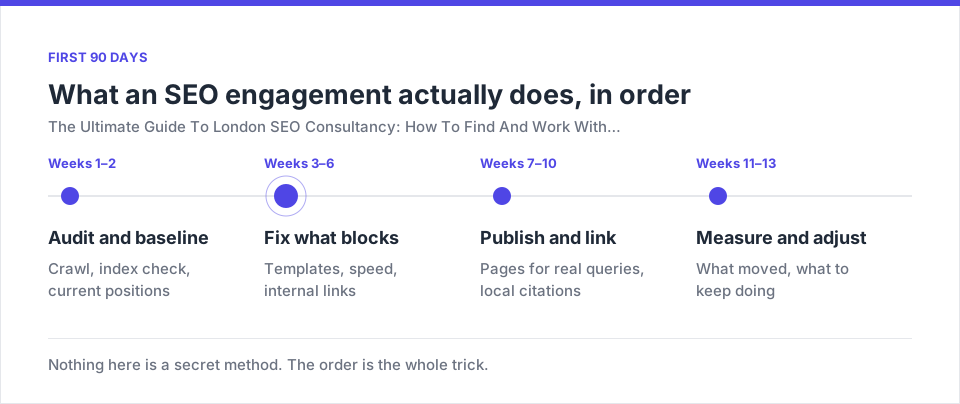
From data to action: a practical 90-day rollout
- Phase 1 – Governance setup: establish change logs, ownership maps, and district/hub briefs. Define initial dashboards and assign responsibilities for the first district cluster.
- Phase 2 – Data integration: connect GA4, GSC, GBP Insights, and internal data to a unified board. Validate data accuracy and begin baseline reporting with London-specific KPIs.
- Phase 3 – Scale and refine: extend dashboards to additional boroughs and hub topics, calibrate attribution models, and incorporate regulatory considerations into reporting cadence.
- Phase 4 – Capacity building: train internal teams, document playbooks, and hand over a repeatable framework to scale across London campaigns.
To initiate a tailored rollout, book a scoping call with our London team. Visit the SEO services page or book a scoping call to discuss your boroughs, visitors, and growth objectives in the capital.
Governance, compliance and regulator-ready reporting
A London programme thrives on reporting that is both insightful and easily auditable by governance bodies. Dashboards should merge Local Pack data, GBP health, district engagement, and hub-topic performance into a coherent narrative. Change logs and ownership maps anchor every data point, while district briefs and hub-topic briefs ensure insights translate into city-wide strategy with local context. This framework supports quarterly reviews and regulatory scrutiny without sacrificing speed or clarity.
Regular governance sessions translate insights into prioritised workstreams and budget decisions. If you are starting or refining a London programme, our SEO services offer a regulator-ready blueprint tailored for the capital. To engage directly, book a scoping call and discuss your boroughs and growth targets.
Project Timelines And What To Expect For London SEO Campaigns
Effective London SEO programmes unfold through well-defined stages that balance governance, speed, and quality. A London-focused consultancy like londonseo.ai integrates discovery, strategy, technical work, content development and ongoing optimisation within a regulator-ready framework. The aim is to deliver predictable milestones, auditable changes, and measurable ROI as campaigns scale across the capital’s boroughs and sectors. This part maps typical timelines, what stakeholders should expect at each phase, and how governance artefacts keep activities aligned with business goals and regulatory expectations.
Phase 1 — Discovery And Audit (2–4 weeks)
Discovery kicks off with a structured scoping workshop to translate business goals into SEO objectives. A comprehensive discovery package includes stakeholder interviews, a high-level strategy outline, and a governance plan that specifies ownership, change history, and reporting cadence. The audit focuses on technical health, content gaps against London district intents, Local Pack health, and GBP signalling readiness. Outputs are governance artefacts: change logs, ownership maps, district briefs, and hub-topic briefs that frame the remainder of the programme.
Key deliverables at this stage include an auditable discovery brief, a phased project plan, and regulator-ready dashboards that set baseline metrics for Local Pack impressions, GBP interactions, and district-page engagement. If you want to align quickly, explore our London SEO services and consider booking a scoping call to tailor the timeline to your portfolio.
Phase 2 — Strategy And Planning (2–3 weeks)
Strategy translates discovery insights into a concrete plan. Expect district-to-hub mapping, a content calendar aligned to city-wide themes, and a Local Pack and GBP health optimisation blueprint. This phase also refines KPIs, sets governance milestones, and defines reporting cadences that regulators and executives can follow with confidence. The governance spine remains the backbone, ensuring every decision has a traceable rationale and an accountable owner.
Practical outcome includes a 12-month road map detailing quarterly milestones, content thrusts, district briefs, and hub-topic briefs. For teams seeking practical initiation, a scoping call helps tailor the plan to your exact London footprint and compliance needs.
Phase 3 — Technical Optimisation And On-Page Work (4–8 weeks)
With a clear strategy, the next window concentrates on technical health and on-page optimisation. Activities include resolving crawl issues, optimising site architecture for scale, implementing enhanced mobile performance, and deploying structured data for LocalBusiness plus district pages. A key outcome is a stable, crawl-friendly foundation that supports rapid iteration on content and local signals. Governance artefacts capture every change: who approved it, why it was necessary, and the KPI impact.
London campaigns benefit from explicit attention to GBP-linked pages and Local Pack eligibility signals, ensuring the city-wide framework remains coherent as new districts come online. See our SEO services for deeper guidance on technical foundations and governance alignment.
Phase 4 — Content And Local Signals Execution (6–12 weeks)
Content development follows the hub-district architecture, building semantically coherent pages that address district intents while reinforcing central themes. Editorial calendars are executed with accessibility and UX in mind, and internal linking is designed to pass authority from hub pages to district pages and back. GBP-driven content ideas are integrated to boost Local Pack visibility, while governance artefacts document ownership, review dates, and publish rationale.
Local SEO work includes district landing pages, maps optimisations, and cross-district content that supports city-wide authority. Regular governance reviews translate insights into prioritised workstreams and budget adjustments, ensuring the programme remains regulator-ready as market dynamics shift.
Phase 5 — Measurement, Optimisation And Scaling (ongoing)
The final, ongoing phase is to measure, iterate and scale. Regulator-ready dashboards consolidate Local Pack impressions, GBP health, and district-page engagement with hub-topic performance. Attribution modelling links SEO activity to revenue and leads, while change logs and ownership maps maintain a transparent audit trail. Regular governance reviews inform budget allocation and priority setting for new districts and hub topics, ensuring sustained growth with local relevance.
For those seeking a practical starting point, visit our SEO services page or book a scoping call to tailor the 90-day rollout to your London's portfolio and regulatory context.
Choosing The Right London SEO Consultancy
Selecting a London-based SEO partner is a decision that shapes your visibility in one of the globe’s most competitive markets. The right consultancy blends technical rigour, local market fluency, governance discipline, and collaborative processes that align with your in-house teams. This part of the series outlines a practical decision framework for London brands, emphasising evidence, transparency, and a shared path to sustainable ROI with a partner that truly understands the capital’s unique search landscape.
Key criteria for a London-focused SEO consultancy
When evaluating potential partners, look for capabilities that specifically reflect London’s multi-district reality, Local Pack dynamics, GBP health, and governance expectations. A strong contender will demonstrate a track record of delivering city-wide strategies that scale and adapt across boroughs while maintaining local relevance.
- London-specific track record: Proven success with brands operating across multiple boroughs, industries common to the capital (finance, hospitality, real estate, professional services), and experience navigating regulatory requirements that influence reporting and auditing.
- Governance and transparency: A clear framework of change logs, ownership maps, dashboards, and district/hub briefs, with regular, regulator-ready reporting that stakeholders can trust.
- Cross-functional capability: Evidence of collaboration across marketing, IT, product, and procurement, ensuring SEO is integrated into broader business initiatives.
- localisation and hub-to-district linkage: A mature approach to mapping district signals to hub topics, internal linking strategies, and GBP-driven content ideas that amplify Local Pack and knowledge panel outcomes.
- Measurement discipline: Robust analytics architecture (GA4, GSC, GBP Insights) paired with auditable artefacts and dashboards that demonstrate causal paths from SEO activity to business results.
- Communication rhythm and cultural fit: Regular cadence, accessible reporting, and a collaborative mindset that fits your organisational culture and working style.
How to assess proposals and capabilities
A well-structured proposal should move beyond generic promises and show a lived, London-focused blueprint. Request a scoping brief that aligns with your business goals and city-specific realities. Look for demonstrated methodologies in discovery, technical optimisation, content strategy, hub topic development, and local signals. Proposals should include a governance plan, KPI mapping, and a practical timeline that can be monitored through regulator-ready dashboards.
- Sample dashboards and artefacts: ask for a mock or real example of how Local Pack, GBP health, and hub-topic performance will be tracked.
- Relevant case studies: seek evidence from similar London brands or multi-district campaigns to gauge applicability and scale.
- Governance documentation: request a repository or template set showing change logs, ownership maps, and district/hub briefs.
- Team structure and availability: confirm who will own strategy, technical work, content, and client communication, plus capacity to scale when needed.
- Pricing and engagement model clarity: compare retainers, project-based work, or hybrid arrangements with clear deliverables.
Red flags to watch for
Be wary of overly generic promises, unrealistic timelines, or a reliance on shortcuts that cannot be validated through governance artefacts. Common warning signs include inconsistent communication, lack of transparency about tools or data sources, and proposals that fail to show alignment with Local Pack, hub topics, and GBP health as an integrated system.
- No regulator-ready reporting: insufficient emphasis on change logs, dashboards, and audit trails.
- Fragmented delivery: handoffs between siloed teams that create knowledge gaps and slow decision-making.
- Unsubstantiated ROI claims: metrics without a clear attribution model or causal path.
A practical scoring framework you can use
To objectively compare contenders, apply a simple scoring rubric that you can customise. Allocate weights to London-specific capabilities, governance maturity, and demonstrated ROI. A pragmatic approach is to score each criterion on a 1–5 scale and then compute a total to help prioritise discussions with top performers.
- London relevance (20%): track record in multi-district campaigns and familiarity with Local Pack dynamics.
- Governance maturity (25%): existence of change logs, ownership maps, and regulator-ready dashboards.
- Cross-functional capability (15%): evidence of collaboration across marketing, IT, and product teams.
- Content and hub strategy (15%): quality of hub topic development and district linkage.
- Analytics proficiency (15%): robust analytics stack and ability to deliver auditable ROI attribution.
- Communication and culture (10%): responsiveness, clarity, and collaborative fit.
Why choose londonseo.ai for London campaigns
londonseo.ai offers a governance-forward, district-aware approach rooted in London’s distinctive market dynamics. We align local signals with city-wide authority through hub topics, GBP health, and Local Pack optimisation, backed by auditable dashboards and change logs. Our engagement models are transparent and scalable, designed to adapt as your portfolio grows across boroughs and sectors. If you want to explore a regulator-ready framework, start with our SEO services page and arrange a scoping call to tailor a plan to your needs: London SEO services or book a scoping call to discuss your goals in the capital.
Next steps: initiating a fit-for-purpose engagement
To move from evaluation to action, prepare a brief that outlines your business goals, geographic footprint, and timelines. Then reach out for a scoping discussion so we can translate your objectives into a regulator-ready plan with clear milestones, governance artefacts, and a transparent budget. Our team will walk you through the likely phases, from discovery and governance setup to strategy, implementation, and ongoing optimisation, ensuring you have a reliable path to ROI in London.
Discover how a proven London partner can help you scale responsibly in a fast-moving environment. Visit SEO services or book a scoping call today.
Engagement Models And Pricing For London SEO Consultancies
In London, the choice of engagement model is not merely a payment arrangement; it defines governance rhythm, risk, and the speed at which value is delivered across boroughs and sectors. At londonseo.ai we align pricing with clear deliverables, regulator-ready reporting, and adaptable governance artefacts so that your investment scales with confidence. This section outlines common models, realistic pricing benchmarks for the capital, and practical guidance for selecting a structure that maintains strategic momentum while meeting regulatory demands.
Common engagement models for London SEO projects
Retainer agreements provide ongoing strategic guidance, technical execution, content development, and governance updates on a fixed monthly basis. This model suits teams seeking continuity, rapid response to algorithm changes, and predictable budgeting within the capital’s dynamic market.
Project-based engagements offer a defined scope with discrete milestones, ideal for audits, site migrations, or the initial build-out of a hub-topic architecture. Payments align with deliverables and project milestones, giving you visibility into progress before commitments extend into the long term.
Performance-based arrangements tie fees to measurable outcomes such as local visibility gains, Local Pack impressions, or specific revenue-related conversions. While attractive for prioritising ROI, these models require robust attribution, clear definitions of success, and transparent governance to avoid misaligned incentives.
Hybrid models blend elements of the above to balance stability with milestone-driven ambition. For London brands, a common approach pairs a base retainer for ongoing governance with performance incentives tied to quarterly targets. This structure sustains momentum while ensuring a regulator-ready audit trail for every tranche of activity.
Pricing benchmarks in the London market
London pricing reflects the city’s high operating costs, diverse regulatory expectations, and the breadth of services required to sustain multi-district visibility. While figures vary by sector and scope, practical ranges help you compare proposals with realism and clarity.
- SME-level retainers: typically £3,000–£8,000 per month for a foundational governance spine, technical health, local strategy, and regular reporting. This band generally covers smaller portfolios or first-wave London district deployments.
- Mid-market retainers: £8,000–£20,000 per month, incorporating advanced hub-topic development, GBP health management, local signal optimisation, and more frequent governance reviews across multiple boroughs.
- Enterprise-scale retainers: £20,000+ per month, addressing large-scale, multi-portfolio campaigns, high-velocity content production, sophisticated analytics, and regulator-ready dashboards with frequent board-level reporting.
Project-based scopes can range from £15,000 to £150,000+, depending on the complexity, number of districts, implementation requirements, and the level of integration with GBP and Local Pack ecosystems. Performance-based fees, when used, are typically structured as a percentage of uplift in agreed KPI targets and are most effective when combined with a solid governance framework to ensure measurement integrity.
When to choose which model in London
If you require rapid initiation and consistent governance, a retainer with clearly defined dashboards and change logs provides the most predictable path to ROI. For time-limited initiatives such as complex site migrations or initial hub-topic deployment, a project-based contract accelerates delivery with clear sign-off points. If your organisation demands alignment to specific outcomes—such as Local Pack dominance in key boroughs or GBP health improvements—a hybrid or performance-based approach can align incentives, provided you have rigorous attribution and governance in place. In every case, we align the structure with regulator-ready artefacts to simplify audits and stakeholder communications.
Governance foundations that support pricing decisions
A robust governance spine reduces price uncertainty and accelerates decision-making. Each engagement model should be supported by:
- Change logs: a dated record of decisions, approvals, and outcomes that justify every activity.
- Ownership maps: clear assignment of responsibility for hub topics, district pages, GBP health, and Local Pack signals.
- Dashboards: regulator-ready views that tie activity to KPIs, enabling transparent progress reviews.
- District and hub briefs: documented context that explains prioritisation decisions and content strategy.
Choosing the right model for your business
Start by outlining your business goals, borough footprint, and regulatory expectations. Gather baseline data: current Local Pack visibility, GBP health, district-page engagement, and hub-topic coverage. Request scoping briefs that include a comparison of engagement models, with clear deliverables, timelines, and governance artefacts. Use these briefs to benchmark proposals against a regulator-friendly framework and to ensure the plan scales across your London portfolio.
At londonseo.ai, we offer a structured scoping process that integrates governance artefacts from day one. You can explore our SEO services to understand how we tailor engagements to multi-district campaigns, and book a scoping call to align on scope, cadence, and budget for your capital-wide initiatives.
Choosing The Right London SEO Consultancy
Picking a London-based SEO partner is a strategic decision that shapes how your brand appears across the capital’s diverse districts, industries, and surfaces. Following the practical checklist in Part 10, this part provides a rigorous, evidence-based framework to compare agencies, assess governance maturity, and align with your organisation’s operating rhythms. The goal is a regulator-ready, auditable partnership that delivers consistent, city-wide authority while maintaining strong local relevance. At londonseo.ai we emphasise governance-forward practices, district-aware strategising, and transparent collaboration as the baseline for a successful engagement in London’s complex market.
Key criteria for a London-focused SEO consultancy
- London-specific track record: Proven experience delivering multi-district campaigns across diverse sectors (finance, professional services, hospitality, real estate) with demonstrated Local Pack and GBP health improvements.
- Governance and transparency: A mature framework that includes change logs, ownership maps, dashboards, and regulator-ready reporting that stakeholders can rely on for audits and board reviews.
- Cross-functional capability: Evidence of seamless collaboration with marketing, IT, product, and procurement, ensuring SEO initiatives are embedded in broader business programmes.
- Hub-to-district linkage and Local Pack mastery: A clear methodology that connects city-wide hubs to district pages, maintaining semantic coherence and boosting local search visibility.
- Measurement discipline and data governance: Robust analytics architecture (GA4, GSC, GBP Insights) with auditable artefacts and clear attribution paths that justify ROI.
- Strategic культурa and operating cadence: A collaborative, proactive working style with regular governance reviews, ensuring predictability and alignment with regulatory expectations.
Shortlisting and evaluation process
Use a formal RFP and scoping brief to compel candidates to reveal their governance frameworks, sample dashboards, and how they translate district signals into city-wide authority. Ask for demonstrable case studies that reference Local Pack gains, GBP health improvements, and measurable ROI across multiple boroughs. Require a regulator-ready reporting motif, including a change log and ownership maps that accompany every deliverable.
Request a sample 12-month roadmap that indicates quarterly milestones, governance checkpoints, and a plan for onboarding internal stakeholders. Prioritise agencies that provide a transparent staffing model, a clear handover plan, and explicit SLAs for response times, governance updates, and escalations. A London partner should be able to articulate how they scale governance artefacts when adding new districts or hubs.
Governance artefacts you should demand
Demand a comprehensive set of artefacts from any London-focused consultancy to ensure auditability and accountability. These include:
- Change logs: dated records of decisions, approvals, and outcomes that justify every optimisation.
- Ownership maps: clear assignment of responsibility for hub topics, district pages, and GBP health.
- District briefs: district-specific context informing local strategies and priorities.
- Hub topic briefs: city-wide themes that bind local signals into a coherent, scalable framework.
- Editorial calendars: a 12-month plan with governance checkpoints to maintain momentum and compliance.
- Dashboards: regulator-ready views that fuse Local Pack visibility, GBP health, district engagement, and hub performance.
How to compare proposals: a practical scoring framework
Adopt a consistent scoring rubric to benchmark contenders. Assign weights to London-specific capabilities, governance maturity, and demonstrated ROI. A simple, customisable scoring model helps you quantify intangible factors such as cultural fit and cross-functional collaboration.
- London relevance (20%): track record with multi-district campaigns and familiarity with Local Pack dynamics.
- Governance maturity (25%): existence of change logs, ownership maps, dashboards, and regulator-ready reporting.
- Cross-functional capability (15%): evidence of collaboration across marketing, IT, and product teams.
- Hub-to-district strategy (15%): quality of hub topic development and district linkage.
- Analytics and ROI (15%): robust analytics stack and demonstrated attribution clarity.
- Communication and culture (10%): responsiveness and collaborative fit.
Why londonseo.ai stands out for London campaigns
londonseo.ai integrates governance-forward processes with district-aware strategies, pairing Local Pack and GBP health with hub-topic development. Our approach centres on transparent governance artefacts, auditable dashboards, and a scalable framework that adapts as London’s market evolves. We articulate a clear handover plan, robust onboarding, and a pragmatic roadmap for multi-district expansion. If you’re ready to evaluate a partner that treats governance and local context as competitive advantages, explore our SEO services and book a scoping call to discuss your portfolio in the capital.
Next steps: initiating a London engagement
Prepare a brief that outlines your goals, borough footprint, and regulatory expectations. Use the scoring framework to shortlist two to four agencies, request regulator-ready artefacts, and schedule scoping conversations. A well-structured scoping call should produce a regulator-ready plan with a governance spine, KPI mapping, and a practical timeline that aligns with your internal rhythms. For a practical starting point, visit our SEO services page or book a scoping call to tailor the approach to your London portfolio.
Final Tips For Getting The Most From SEO Training In London
As the London-focused training journey reaches its final stage, the emphasis shifts from theory to actionable, regulator-ready practice. The governance-forward framework you’ve already explored provides a durable backbone, but the real value comes from translating that framework into daily, repeatable actions that deliver measurable ROI across boroughs, surfaces, and surfaces in the capital. This final instalment distills practical tips, workflows, and decision-principles you can apply immediately to your London campaigns.
1) Translate training into a district-to-hub implementation plan
Begin with a practical mapping exercise: identify 4–6 high-potential boroughs, align them to 2–3 city-wide hub topics, and guarantee each district page supports a hub narrative. This creates a scalable content architecture that search engines recognise as coherent and authoritative. Attach a lightweight governance artefact to each district, linking owners, publish dates, and KPI expectations to hub topics.
2) Establish regulator-ready dashboards from day one
Dashboards should seamlessly blend Local Pack impressions, GBP health, district-page engagement, and hub-topic performance. Create a standard board that leadership can read at a glance, and attach change logs for every data source or metric adjustment. This ensures your team can defend decisions during audits and board reviews while maintaining momentum across campaigns.
3) Build lightweight, repeatable editorial calendars
Adopt a quarterly editorial rhythm that ties district briefs to hub topic briefs. Each cycle should include a clear owner, a publish window, accessibility checks, and a local intent test. The goal is to deliver consistent, high-quality content that reinforces topical authority without creating content sprawl. GBP-driven content ideas should be slotted into the calendar to keep Local Pack momentum aligned with hub growth.
4) Prioritise governance hygiene over abundance of changes
In a London context, a disciplined governance approach beats rapid-fire tweaks. Use change logs to capture the rationale for every optimisation, including the expected KPI impact and the date of sign-off. This habit protects against scope creep, supports regulator-ready reporting, and helps your team stay focused on high-leverage moves that move the needle across Local Pack, GBP health, and hub performance.
5) Institutionalise cross-functional collaboration
Successful London programmes rely on tight collaboration between marketing, IT, product, and procurement. Establish a regular governance cadence: monthly reviews for metrics, quarterly strategy sessions, and ad-hoc cross-team workshops when London-specific events or policy changes occur. This cadence ensures that SEO remains integrated with broader business initiatives and regulatory expectations.
6) Create a scalable training handover for in-house teams
Prepare a concise playbook that captures the governance spine, district-to-hub mapping, and the step-by-step process for ongoing optimisation. Include templates for change logs, ownership maps, district briefs, hub-topic briefs, and editorial calendars. A well-documented handover enables your team to sustain momentum after the training cohort graduates, with minimal disruption to performance.
7) Plan for measurement discipline and attribution clarity
Define attribution models that reflect London’s multi-channel journeys, including Local Pack exposure, GBP interactions, and district-page engagement. Use time-decay or position-based models where appropriate and ensure your dashboards can demonstrate a credible path from SEO activity to conversions and revenue. Regularly revisit your KPI definitions to accommodate market shifts or regulatory updates.
8) Move from training to ongoing optimisation with a 90-day rollout
Adopt a practical 90-day rollout as a repeatable pattern for new districts or hub topics. Phase 1 focuses on governance setup and initial dashboards; Phase 2 expands data integration and validates KPI baselines; Phase 3 scales to additional districts and hub themes; Phase 4 formalises knowledge transfer and handover to internal teams. This staged approach mirrors the structure you’ve learned throughout the course and delivers predictable, regulator-ready progress.
9) How to engage London experts for sustained momentum
When you’re ready to extend training outcomes into a full-scale programme, consider a regulator-ready partner with London-specific experience. A governance-forward consultancy can help translate your 90-day rollout into a multi-district expansion plan, maintaining hub-to-district coherence while elevating Local Pack and GBP health across new boroughs. For a practical next step, explore our SEO services or book a scoping call with our London team to tailor the approach to your portfolio.
