Technical SEO London: Foundations For Local Visibility
London presents a unique mix of global brands, booming micro-markets, and a highly diverse search landscape. Technical SEO forms the bedrock that enables visibility in this dynamic environment, ensuring that your London-based site is crawlable, indexable and fast for both residents and visitors. This Part 1 establishes the core concepts, explains why a London‑specific technical foundation matters, and outlines the governance framework that londonseo.ai applies to deliver measurable, scalable results for local businesses.
While content and links drive relevance, the technical health of your site determines how effectively search engines can discover and understand that content. In a city where competition spans dozens of boroughs and niche sectors, a local technical strategy is essential. The approach we outline integrates technical excellence with district-focused signals and a governance architecture designed for scale across London’s distinctive districts.
Why London requires a strong technical foundation
London businesses compete not just for national visibility but for proximity and relevance within the capital’s vast ecosystem. A technically solid site loads quickly, delivers a seamless mobile experience, and uses structured data to clarify business offerings for both users and search engines. Local signals, especially Google Business Profile (GBP) and Maps integrations, rely on consistent data and well-structured pages to achieve prominence in Local Packs and Maps results. By aligning technical health with local signals, you create a dependable framework that search engines recognise as trustworthy and useful for London audiences.
Key benefit: reliable crawlability and fast performance translate into better indexing, higher visibility in Local Search features, and improved user satisfaction among London users who expect rapid, mobile-optimised access to services, routes and contact points.
Three pillars of London local visibility
A concise framework helps organise efforts across districts and services. The three pillars are:
- Technical health and speed: fast, mobile-friendly pages, robust hosting, and clean code that supports reliable crawling and indexing.
- GBP and Maps presence: consistent NAP data, clear service areas per district, and proactive review management to reinforce Local Pack positions.
- District content hubs: district landing pages with FAQs, route information, opening hours and district-specific content that drives conversions.
Governance and artefacts for London
To maintain quality at scale, londonseo.ai employs a governance ecosystem with per-district deliverables and transparent progress tracking. The core artefacts are:
- Activation Briefs per district and hub, detailing concrete deliverables and KPI targets.
- Translation Provenance ensuring consistent terminology and tone across hubs, landing pages and GBP.
- Explain Logs documenting the technical and content decisions behind changes.
- Ledger of ROI logging investments and results by district to guide prioritisation and budgeting.
Getting started with your London strategy
Practical first steps to set up a London-focused technical SEO program include establishing district priorities, auditing GBP and Maps signals, and laying the groundwork for district landing pages that support the local user journey. The following steps are introduced to build a solid foundation that aligns with London’s diverse audiences and districts.
Step 1. Conduct a diagnostic per district, analysing GBP status, NAP consistency and district coverage, then map relevant keywords to local services. Step 2. Perform a technical and content audit, focusing on page speed, mobile usability, and the structural alignment of district landing pages with local search intent. Step 3. Create district keyword clusters, drawing in district-specific topics and user questions to inform landing pages and FAQs. Step 4. Architect district hubs that cohesively connect service pages, FAQs and routing information while supporting intuitive internal linking.
For foundational guidance, consult Google’s SEO Starter Guide and tailor its recommendations to London’s realities through our governance model comprising Translation Provenance and Explain Logs. Ready to begin? Explore our London services or arrange a consult via the contact page to receive a district-specific, practical plan for London. This approach ensures proximity, reliability and measurable ROI across the capital.
Why Technical SEO Matters for London Businesses
London’s search landscape is among the most competitive in the world, shaped by a dense mix of global brands, local service providers, and a highly diverse audience spread across dozens of boroughs. A solid technical SEO foundation is the invisible engine that powers visibility, reliability and conversions in this environment. This Part 2 builds on the foundations established in Part 1, explaining why technical health matters specifically for London-based sites and how londonseo.ai’s governance model—Activation Briefs, Translation Provenance, Explain Logs and a Ledger of ROI—enables scalable, measurable results across the capital.
While content and links drive relevance, search engines rely on a sound technical core to crawl, understand and rank your pages. In a city where users demand fast, mobile-friendly experiences and precise local information, a London-focused technical approach integrates district-level signals with a governance framework designed for scale across London’s distinctive boroughs and districts.
Three pillars of London local visibility
Organising effort around three core pillars keeps London strategies coherent as you expand into more districts: Technical health and speed, GBP and Maps presence, and District content hubs. Technical health ensures crawlability and fast rendering; GBP and Maps deliver reliable local signals that maps to Local Pack and Maps results; district content hubs create governable, district-specific user journeys that nurture conversions in a bustling capital.
Governance for scale in London
To manage the complexity of London’s market, londonseo.ai applies a governance framework that aligns per-district deliverables with KPI targets. The artefacts— Activation Briefs per district, Translation Provenance, Explain Logs and the Ledger of ROI—offer transparent accountability, traceable decision-making and disciplined budgeting as you extend to new boroughs, districts and services.
Practical steps to begin your London strategy
- Diagnostic per borough: audit GBP status, Maps signals and NAP consistency; map district-level keywords to local services and borough-specific opportunities.
- Technical and content audit: assess page speed, mobile usability, and the structural alignment of district landing pages with local intent and borough realities.
- District keyword clusters: develop district-focused topic clusters that feed landing pages, FAQs and service pages with local relevance.
- District hubs architecture: design hub pages that connect service pages, routing information and FAQs with intuitive internal linking and district navigation.
For foundational guidance, consult Google’s SEO Starter Guide and tailor its recommendations to London through londonseo.ai’s governance framework. Ready to begin? Explore our London services or arrange a consult via the contact page to receive a district-specific, actionable plan that delivers proximity, reliability and measurable ROI across the capital. This approach ensures that London audiences experience fast, accurate results, and local business objectives are met with clarity.
Crawlability and Indexation in London: Getting Your Pages Discovered
London’s search landscape is vast and intricate, with thousands of district pages, GBP listings, local service areas and event-driven content all competing for attention. The technical foundation must ensure search engines can crawl, understand and index your London-specific assets efficiently. This Part 3 builds on the governance framework introduced earlier—Activation Briefs, Translation Provenance, Explain Logs and a Ledger of ROI—and translates it into practical crawlability and indexing tactics tailored for London’s distinctive districts. The aim is to establish a repeatable, auditable process so every district hub, landing page and local signal is crawled and indexed consistently, delivering reliable local visibility and user journeys across the capital.
London’s crawlability foundations
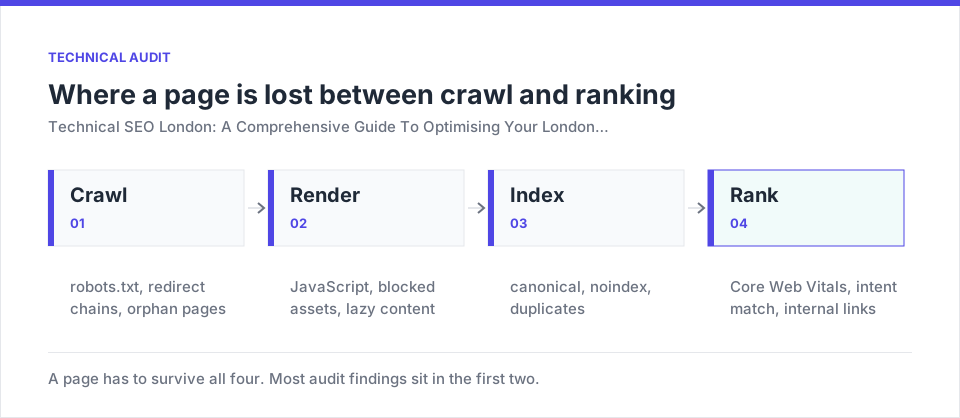
At the core, crawlability is about making it straightforward for Google and other engines to discover pages that matter to London audiences. Start with a clean robots.txt that permits crawling of district hubs and service landing pages while blocking confidential or redundant assets. Pair this with a well-structured XML sitemap that groups pages by district and service line, improving visibility for local intents such as opening hours, routes and appointment booking. A robust sitemap should reflect content updates in near real time and signal districts where new services or hubs are live. In London, where district signals matter for Local Pack and Maps, timely sitemap updates become a measurable lever for local visibility.
Canonical tags should be used thoughtfully in a multi-district environment to address potential duplication across district landing pages and service pages. When two pages offer similar local perspectives (for example, a generic per-district landing page and a district hub for a specific service), canonicalising to the most authoritative district page helps search engines understand the intended primary destination. This reduces crawl waste and concentrates ranking signals where they matter most for London users.
Robots.txt, crawl budgets and district prioritisation
Large, district-heavy sites can exhaust crawl budgets if not managed prudently. Apply per-district prioritisation by listing priority landing pages first in robots.txt directives and by ensuring these pages are discoverable via internal linking from the district hub. Regularly review crawl statistics in Google Search Console to identify pages that are crawled infrequently or not at all, and adjust internal links, sitemaps and server configurations accordingly. In London, where the speed of updates matters for GBP changes and Maps signals, maintaining a lean crawl budget accelerates the propagation of district-level updates to search engines.
Indexation: telling Google what matters
Indexation is the companion to crawlability. Ensure that crucial pages—district landing pages, district hubs, GBP-linked pages and FAQs—are indexable. Use noindex only for pages that are intentionally excluded from search results (for example, paid-landing lists or internal test pages). Consistency in URL structure across districts (for example, londonseo.ai/districten/centum, londonseo.ai/districten/kingsparlour) reinforces semantic signals and helps Google build coherent district-level SERP entries. Regularly audit index coverage with Google Search Console to confirm that high-priority London assets are indexed as intended, and resolve any indexing issues promptly.
Common indexing pitfalls and fixes in London deployments
- Duplicate district content: avoid near-duplicate content across district landing pages by unique district storytelling, FAQs and route information that addresses district-specific user questions.
- Incorrect canonical links: ensure canonical references point to the most authoritative district hub or landing page, not to generic pages that dilute local signals.
- Blocked resources affecting indexing: verify that JavaScript-rendered content and essential assets aren’t blocked by robots.txt or server restrictions.
- Inconsistent NAP signals per district: maintain uniform business data across GBP, city landing pages and district pages to avoid confusion for search engines and users.
- Outdated district pages: stale information such as hours or routes can harm click-throughs; implement a cadence to refresh district content in alignment with local events and GBP updates.
Governance artefacts: turning crawlability into measurable leverage
To scale London-wide crawlability with confidence, we continue to apply the governance artefacts introduced earlier. Activation Briefs per district define which pages must be crawlable and indexed, setting KPI targets for discovery speed and indexing coverage. Translation Provenance maintains consistent terminology across hubs and district pages so that Google’s semantic understanding remains stable as the district network grows. Explain Logs capture the rationale for every crawl or indexation adjustment, creating an auditable trail suitable for governance reviews. The Ledger of ROI ties crawling and indexing improvements to observable outcomes—organic traffic, Local Pack visibility, and district-level conversions—supporting budgeting decisions during district expansion.
Practical next steps for London crawlability
- Diagnose per district: map GBP status, Maps signals and district-specific indexing issues; align keyword targets with local intents and ensure pages are discoverable.
- Audit crawlability and indexation: review robots.txt, sitemaps and canonical strategies; check for indexability of district hubs and FAQs.
- Refine district keyword maps: craft district-focused topic clusters that feed the landing pages and FAQs to improve semantic reach.
- Establish hub architecture: design district hubs that connect service pages, routing information and FAQs with intuitive internal linking and district navigation.
To begin translating these steps into action, explore our London technical SEO services or arrange a consultation via the contact page. We’ll tailor a district-by-district crawlability plan that accelerates discovery, improves indexation speed, and sharpens Local Pack performance across London. For foundational guidance, Google’s SEO Starter Guide remains a solid reference, which we adapt through our governance framework to fit London’s localities and districts.
Site Architecture, URL Structure and Navigation
A robust London-focused technical SEO programme begins with a scalable, district-aware site architecture. The path from a district hub to service landing pages, routes and GBP-linked signals must be clean, crawlable and navigable for both residents and search engines. This Part 4 extends the London governance model introduced earlier—Activation Briefs, Translation Provenance, Explain Logs and a Ledger of ROI—into the design of your site structure, ensuring district-level visibility translates into consistent user journeys and measurable outcomes across the capital.
Why site architecture matters for London audiences
London’s search landscape demands a navigable, district-led information architecture that mirrors how users think about geography and services. A well-planned hierarchy supports rapid discovery, enhances crawl efficiency, and ensures district signals propagate to Local Pack, Maps and GBP. When architecture aligns with Local intent, Google can better associate district hubs with relevant service pages, FAQs and routing information, which in turn boosts local visibility and user trust.
Key outcomes include faster indexing of new district hubs, reduced crawl waste from duplicative pages, and clearer semantic signals that connect district identity with the services offered. This foundation also simplifies governance: Activation Briefs can specify page ownership and delivery timelines, Translation Provenance ensures terminology stays consistent across districts, and Explain Logs document architectural decisions for future audits.
District hubs and URL patterns for London
Adopt a predictable, scalable URL taxonomy that preserves district context while enabling service-specific pages to scale. A practical approach is to structure districts as a primary layer, with services nested beneath. Example patterns include:
- District hub: https://londonseo.ai/districts/central/
- Service landing page in a district: https://londonseo.ai/districts/central/services/roof-repairs/
- Individual service detail within a district: https://londonseo.ai/districts/central/services/roof-repairs/faq/
- Global district with routing information: https://londonseo.ai/districts/central/routes/
Canonical tags should point to the most authoritative district hub or main service landing page to avoid internal competition and signal the primary destination for search engines. Internally, ensure every landing page remains reachable within a shallow click depth to support fast discovery, particularly on mobile devices used throughout London.
Internal linking and navigation for local journeys
Internal linking is the bike chain that pulls district audiences through the site. Key practices include:
- Hub-to-service linking: district hubs link logically to service pages, FAQs and routing information, while service pages back-link to hub and related district pages.
- Breadcrumb navigation: implement a clear BreadcrumbList so users and engines understand the district-to-service journey and can easily backtrack to the district hub.
- Internal link depth balance: keep important pages within 3 clicks from the district hub to reduce crawl depth and improve user experience.
- Structured data alignment: apply LocalBusiness, Service and FAQPage schema per district page to reinforce context and improve rich results.
- Disallow only truly confidential assets: use robots.txt judiciously to prevent crawling of non-essential assets while ensuring district hubs and GBP-linked pages remain accessible.
Schema, breadcrumbs and local signals
To maximise discoverability and semantic clarity, implement a cohesive set of structured data on district hubs and service pages. Use BreadcrumbList to reflect the site’s hierarchy, LocalBusiness for district-based listings, and Service and FAQPage schemas where relevant. Local signals, such as opening hours, service areas and routes, reinforce proximity signals that local users expect, and search engines rely on for accurate local SERP features.
Governance artefacts for site architecture decisions
Architecture decisions should be auditable and scalable. The governance framework supports this through:
- Activation Briefs per district and hub detailing the required pages and KPI targets for crawlability and indexability.
- Translation Provenance ensuring consistent terminology and tone across hubs, landing pages and GBP texts as the district network grows.
- Explain Logs documenting architectural choices, site changes and the rationale behind URL and navigation decisions.
- Ledger of ROI tracking the impact of architectural changes on organic performance, Local Pack visibility and district-level conversions.
Getting started: practical steps for London
- Audit current district structure: map districts to core services and identify opportunities for hub creation or restructuring.
- Define district hub architecture: establish a consistent hub-per-district blueprint that links to all relevant services and routing information.
- Implement URL patterns and canonical strategy: set district-first patterns and ensure consistency across all surfaces.
- Deploy navigation enhancements: breadcrumbs, global navigation and sitemaps aligned to the district taxonomy.
- Measure and iterate: use Explain Logs and the Ledger of ROI to track impact and inform ongoing adjustments.
For foundational guidance, align these steps with Google’s SEO Starter Guide and tailor them to London’s realities through our governance framework. Ready to start? Explore our London services or arrange a consult via the contact page to receive a district-focused, actionable plan for site architecture that supports fast discovery, robust indexing and strong Local Pack performance.
Speed, Performance and Mobile Optimisation in London: Fast, Local Experiences
London’s pace is relentless, and so are the expectations of local search users. Technical SEO foundations deliver the speed and mobile reliability that translate into tangible outcomes for London-based brands. This Part 5 continues the London governance framework introduced earlier, focusing on Core Web Vitals, mobile usability, and performance optimisations that matter for district-level visibility. By combining practical speed tactics with Activation Briefs, Translation Provenance, Explain Logs and a Ledger of ROI, you can systematically improve user experience while proving ROI across London’s diverse districts.
Performance isn’t a vanity metric; it’s a direct driver of crawl efficiency, user satisfaction and Local Pack performance. In a market like London, where local intent can vary from City of London financial services to outer-borough trades, delivering consistently fast, mobile-friendly experiences is essential for sustaining Local SEO momentum.
Core Web Vitals: what to optimise for London audiences
Core Web Vitals remain a practical metric set for ranking and user experience: Largest Contentful Paint (LCP), Cumulative Layout Shift (CLS) and Cumulative Interaction (INP) or the traditional First Input Delay (FID) in older tooling. In London’s mixed-device environment, aim for LCP within 2.5 seconds or better on mobile and desktop, CLS under 0.25 to preserve visual stability on district landing pages, and a responsive interaction latency that keeps users engaged as they navigate GBP, Maps and district hubs. Regular measurement using Google Search Console, PageSpeed Insights and Lighthouse provides actionable targets for each district, service area and landing page, enabling district owners to prioritise fixes that move the needle fastest.
Our governance approach ensures that every performance improvement is auditable. Activation Briefs prioritise pages with the highest local impact, Translation Provenance keeps terminology aligned as districts scale, Explain Logs capture the reasoning behind speed optimisations, and the Ledger of ROI ties performance gains back to local conversions and revenue across London.
Technical strategies tailored for London’s districts
Speed and mobile performance begin with the hosting strategy, content delivery and asset optimisation. Consider hosting in or near London to minimise latency for most visitors, implement a modern CDN with edge rules that serve district hubs quickly, and adopt HTTP/3 where possible to reduce round-trips for mobile users. Compress and serve images in next-gen formats (for example, WebP or AVIF), prioritise lazy loading for below-the-fold media, and defer non-critical JavaScript to ensure the first meaningful paint occurs rapidly on both UK and international visitors. In a city with dense signals, keeping the render path lean helps search engines discover and index district hubs and GBP-linked pages sooner, reinforcing local relevance and proximity signals across Local Pack results.
London-specific considerations include tight budgeting for page speed improvements across many district pages, a need for consistent caching policies to support GBP data refreshes, and a governance mechanism to track performance across dozens of district assets. Translation Provenance ensures terminology remains consistent as you roll out speed initiatives district-by-district, while Explain Logs record the exact changes that led to faster rendering and improved user experience.
Speed optimisation tactics that work in London
- Optimize above-the-fold content first: ensure critical HTML renders quickly and defer non-critical assets until after the initial render.
- Compress and serve images efficiently: adopt WebP/AVIF, implement responsive images, and set appropriate width/height attributes to avoid layout shifts.
- Minify and defer JavaScript: reduce render-blocking resources, split code into critical and non-critical chunks, and use async/defer loading where appropriate.
- Leverage browser caching and CDN edge caching: configure cache-control headers and edge rules to serve district pages rapidly without repeated fetches from origin.
- Prioritise mobile UX: tap targets, viewport settings, readable font sizes and a streamlined navigation that minimises friction on small screens.
Mobile optimisation as a default discipline
Mobile-first is no longer a choice for London brands; it’s the baseline. Design for small screens first, ensure fast touch interactions and readable typography, and progressively enhance with richer features for larger devices. A robust mobile UX also includes efficient routing to district landing pages, clear contact options, and lightweight maps integrations that load without compromising performance. The governance framework supports mobile-specific targets per district, with Explain Logs documenting mobile UX decisions and the Ledger of ROI tracking mobile-driven conversions and engagement metrics.
Measuring speed: dashboards, KPIs and governance
With London’s district network expanding, you need a unified measurement spine that ties Core Web Vitals to district-led outcomes. KPI examples include district-level LCP, CLS and INP improvements, average time to first interaction on GBP-linked pages, and mobile interaction latency during peak hours in key districts. Dashboards should cross-link GBP signals, Maps engagement, landing page performance and conversion events (phone calls, form submissions, bookings). Explain Logs capture the rationale behind each optimisation, and the Ledger of ROI translates speed gains into revenue and growth metrics across London’s boroughs.
Note: Part 5 sharpens the focus on speed, Core Web Vitals and mobile optimisation as the engine for local visibility in London, setting the stage for Part 6 on schema, structured data and district-level measurement.
Security, Hosting and Server Considerations for Technical SEO London
In London, where search demand is pronounced and users expect rapid, secure access from every device, site security and hosting infrastructure are not afterthoughts. They are foundational signals that influence crawl efficiency, user trust, and ultimately Local SEO performance. This Part 6 builds on the established governance framework—Activation Briefs, Translation Provenance, Explain Logs and a Ledger of ROI—applying them to security, hosting and server decisions that sustain high-velocity London campaigns while protecting data and preserving authority across districts.
Beyond compliance, a robust security and hosting strategy reduces page variability, mitigates downtime risk and preserves the integrity of GBP, Maps and district landing pages. When London-centric districts load securely and quickly, Google recognises reliability and proximity, which strengthens Local Pack and Maps visibility alongside organic rankings. The guidance here translates governance artefacts into operational guardrails for secure delivery at scale across the capital.
Security foundations for London sites
Core security practices must be baked into the build and maintained as traffic scales across districts. Key foundations include strong transport security, modern TLS configurations, strict header policies and vigilant access controls. A London-specific stance also considers regulatory expectations and GBP data integrity as local signals that underpin trust with users and search engines alike.
- Force HTTPS everywhere: ensure all pages redirect to secure URLs and configure HSTS (preferably preloaded) to prevent protocol downgrade. This reinforces trust for visitors arriving via GBP, Maps or local landing pages.
- Upgrade to TLS 1.3 where possible: modern TLS reduces handshake latency and improves security margins, benefiting load times for London users on mobile networks.
- Security headers and content policy: implement a robust Content Security Policy (CSP), X-Content-Type-Options, X-Frame-Options and referrer policy to minimise exposure to cross-site risks without breaking legitimate content delivery.
- Cookie security and privacy controls: set Secure, HttpOnly and SameSite attributes for cookies, with explicit consent where required by GDPR and local regulations.
- Regular vulnerability scanning and patching: schedule routine scans, apply critical security patches promptly, and maintain an up-to-date inventory of assets.
Hosting and infrastructure in London
Hosting in or near London reduces latency for local users, improves time-to-first-byte and enhances the consistency of GBP and Maps signals. A London-centric strategy typically combines UK-based hosting with a global content delivery network (CDN) to accelerate asset delivery to residents and visitors across the capital and neighbouring regions.
- Data locality and redundancy: choose hosting with multiple UK data centres or a London presence, plus automatic failover to avoid single points of failure.
- Edge caching and CDN rules: configure edge caching for district hubs and service pages to serve near-immediate responses from the edge while keeping origin content protected.
- Uptime and disaster recovery: define clear RPO (recovery point objective) and RTO (recovery time objective) targets aligned with local business hours and GBP update cadence.
- Performance-oriented hosting: ensure server environments support HTTP/3, fast TLS handshakes and efficient database connections to sustain rapid user journeys through district pages.
Server configurations and delivery
Server-side choices directly affect crawl efficiency, render speed and user experience. A London-focused setup emphasises lean server responses, modern protocols and careful resource management to support rapid delivery of Local, Maps and GBP-enabled content.
- HTTP/3 and TLS optimisations: deploy HTTP/3 where feasible to reduce latency; prefer TLS 1.3 and ensure secure ciphers without compromising compatibility.
- Minimise server exposure: remove unnecessary server headers and information that could aid adversaries; implement rate limiting to protect against abuse while maintaining accessibility for crawlers.
- Caching discipline: set sensible cache-control headers, leverage CDN edge caching for district hubs, service pages and FAQs, and use validation strategies that refresh GBP-linked assets promptly.
- Resource prioritisation for London devices: optimise above-the-fold content, defer non-critical JavaScript and enable modern image formats (WebP/AVIF) to keep render times tight on mobile networks.
Crawlability, indexing and security alignment
Security and hosting decisions influence crawlability and indexing. For example, blocked resources due to CSP or misconfigured cross-origin policies can hinder Google’s ability to render critical district content. Ensure robots.txt remains accessible, and that dynamic content loads do not trigger security prompts that block indexing. A coordinated approach links security headers with crawl budgets and page availability so that London assets are reliably discovered and indexed.
- Regular audits of security headers: verify CSP, COOP/COEP, and other headers do not unintentionally block essential assets used by search engines.
- SSL certificate monitoring: track expiry dates and renewals to avoid certificate gaps that interrupt crawling or GBP updates.
- Caching and prerendering: consider prerendering for district hubs where JavaScript rendering could delay content delivery to crawlers while keeping the user experience fast.
Governance artefacts for secure delivery at scale in London
Our governance artefacts translate security and hosting decisions into auditable, scalable processes. Activation Briefs define security deliverables and owner responsibilities for each district, Translation Provenance ensures consistent terminology in security statements across hubs and GBP, Explain Logs capture the rationale behind configuration changes and incident responses, and the Ledger of ROI records how hosting and security investments influence local performance and conversions.
Getting started: a practical 90-day plan for London
- Audit current security posture: run a comprehensive security assessment, verify TLS certificates and HSTS status, and measure page load impact from current hosting.
- Move to London-friendly hosting and CDN: implement a London-facing data path and edge caching policy that reduces latency for district hubs and GBP-linked pages.
- Strengthen headers and CSP: deploy a well-scoped CSP, secure headers, and validate that GBP and Maps assets load without policy violations.
- Performance alignment with security: fine-tune render paths, image formats and resource loading to keep Core Web Vitals in healthy ranges while maintaining robust protections.
- Governance integration: codify Activation Briefs, Translation Provenance, Explain Logs and Ledger of ROI for security and hosting, tying improvements to district-level ROI.
For foundational guidance, reference Google’s SEO Starter Guide and adapt it within our governance framework to London’s district reality. If you’d like a hand to implement this securely and efficiently, explore our London technical SEO services or book a consult via the contact page to receive a district-focused, actionable security and hosting plan that underpins Local visibility and ROI across the capital.
Structured Data and Schema for Rich Results in London
Structured data and schema markup are the deliberate signals that help search engines understand the nuanced, district-driven reality of London. This Part 7 in the London-focused technical SEO series builds on the governance framework established earlier—Activation Briefs, Translation Provenance, Explain Logs and a Ledger of ROI—by detailing how to implement schema across district hubs, service pages and local signals. The goal is to increase visibility in rich results, clarify local intent and improve click-through rates for London users navigating GBP, Maps and Local Pack features.
Why London needs precise schema strategies
In a capital as dense and diverse as London, generic markup is rarely enough. Local districts vary in service mix, hours, routes and community needs. Schema helps engines extract context such as district name, service categories, and proximity cues, enabling richer search results and better alignment with user intent. Our governance approach ensures every schema decision is documented (Explain Logs), standardised (Translation Provenance) and measurable (Ledger of ROI), so district expansions remain auditable and scalable.
Key schema types for London district pages
Leverage a pragmatic mix of structured data types that map to local realities. The core types used in London strategies typically include:
- LocalBusiness for district-level listings, including address, contact points, service areas and opening hours.
- Service for individual offers within each district (e.g., roofing, plumbing, legal services) that sit under a district hub.
- FAQPage to address district-specific questions about routes, availability, or appointment processes.
- BreadcrumbList to reflect the district hierarchy and support navigational clarity for users and engines.
- Organization or Brand to anchor the site’s authority and ensure consistent publisher signals across GBP, Maps and district pages.
How to apply schema on London pages
Adopt a district-first approach: create a district hub page and nest district services beneath it. On each page, include these signals in a cohesive, non-intrusive way. Use LocalBusiness to capture local presence, Service to articulate district offerings, and FAQPage to pre-empt common resident questions. BreadcrumbList should trace the journey from the global London hub to the district hub, then to individual services. The Governance artefacts guide who owns each schema surface, how it’s validated, and how updates flow into the Ledger of ROI.
A practical example of schema integration
Imagine a district hub for Westminster with LocalBusiness details, a Service page for electrical installations, an FAQ covering booking routes and hours, and a Breadcrumb trail that starts at London > Westminster > Electrical Services. While the exact JSON-LD code belongs in the page head, the governance framework ensures every markup decision is traceable via Explain Logs and aligned terminology across all districts through Translation Provenance. This consistency helps Google connect district identity with nearby services and enhances the likelihood of rich results in Local Pack and Knowledge Panels.
Implementation steps for London districts
- Audit district pages for markup opportunities: identify district hubs, service pages, FAQs and routing information that would benefit from LocalBusiness, Service and FAQPage schemas.
- Define a per-district markup plan in Activation Briefs: assign owners, delivery windows and validation checks for each district’s schema deployment.
- Standardise terminology with Translation Provenance: ensure district terms, service names and local phrases are consistent across all pages and GBP content.
- Implement schema in a centralised, scalable way: apply JSON-LD to all district hubs and nested pages, keeping a single source of truth for all district data.
- Validate and monitor: use Google Rich Results Test and Search Console Enhancement reports to confirm correct rendering and detect any errors early.
Measuring impact and governance
Structured data improvements contribute to increased visibility and richer SERP features, which in turn often lift click-through rates and local engagement. Track these signals with the Ledger of ROI by correlating schema deployments with local traffic, GBP interactions, and conversions from district pages. Use Explain Logs to document the rationale for each change and Translation Provenance to ensure consistency as districts scale. In London, the combination of precise schema and district governance helps deliver more reliable proximity signals and a better user journey from Google search to service booking.
Getting started now
To begin implementing London-focused schema, explore our London technical SEO services or arrange a consult via the contact page. We’ll tailor a district-by-district schema plan that aligns with GBP, Maps and Local Pack strategies, while ensuring governance artefacts capture decision-making and ROI outcomes. For established reference points, consult Google’s official guidance on structured data to complement our London governance framework.
Local Signals And GBP Optimisation For London Districts
In London, proximity and accuracy matter more than ever. Local signals such as Google Business Profile (GBP) listings, Maps presence and district-specific landing pages form the connective tissue between discovery and conversion. This Part 8 expands the governance framework introduced in prior sections—Activation Briefs, Translation Provenance, Explain Logs and the Ledger of ROI—and translates it into disciplined, scalable management of local signals across London’s diverse districts. The aim is to create a repeatable workflow that keeps GBP data pristine, Maps signals timely, and district hubs tightly aligned with user intent and service delivery realities in the capital.
Technical health, when coupled with robust local signals, drives Local Pack prominence, reduces friction for residents and visitors, and accelerates the path from search to action. This section shows how to operationalise GBP and Maps at scale, while maintaining consistency across districts through our governance artefacts and dashboards that prove ROI per district.
Key components of London local signals
Effective London local signal management rests on three interlocking pillars: GBP data quality, district-specific Maps signals, and district hub alignment. GBP data quality encompasses accurate NAP (Name, Address, Phone), category selections that reflect local services, and timely updates to attributes such as hours and service areas. Maps signals rely on correct routing data, location accuracy, and the presence of district landing pages that mirror GBP offerings. District hub alignment ensures that GBP content, Maps data and landing page narratives reinforce each other, creating a coherent local footprint across all touchpoints.
Within our governance model, Activation Briefs specify district owners and targets for GBP optimization, Translation Provenance guarantees terminology consistency, Explain Logs justify data updates, and the Ledger of ROI tracks how signal improvements translate into district-level outcomes. This enables scalable expansion into new boroughs while preserving data integrity and user trust.
Practical GBP optimisations per London district
Start with per-district GBP health checks: verify listing status, ensure NAP consistency with district landing pages, and confirm service-area definitions align with the district’s actual coverage. Populate GBP with up-to-date posts highlighting local promotions, events or district-specific FAQs that point to the corresponding landing pages. Encourage and respond to reviews to maintain fresh user-generated signals and social proof that influence local ranking and consumer confidence.
Next, map GBP attributes to the district hub and service pages. Open hours, routes and contact points should be consistently reflected across GBP, landing pages and Maps integrations. Maintain clean, scheme-consistent naming for services so that searches for a district’s specific offering surface the right combination of GBP and web content.
Maps signal cadence and district updates
Create a cadence for Maps data refreshes that mirrors GBP changes. District hubs should publish routing information, service areas and district-specific FAQs, ensuring Maps results reflect the same reality encountered by users who click through from GBP or organic results. This alignment reduces confusion, increases click-through and supports faster conversions as users transition from map results to district landing pages.
Our governance artefacts track changes across GBP and Maps: Explain Logs capture the rationale for each update, Translation Provenance keeps terminology uniform, and the Ledger of ROI records the impact on district-level engagement and revenue. Regular reviews help prevent drift between GBP data and on-site content as the London market evolves.
District content hubs as conversion accelerants
District hubs act as credible entry points that connect GBP signals with service pages, FAQs and local routing information. A well-structured hub per district ensures that users can quickly discover services, verify hours and contact details, and navigate to the right service pages without friction. Internal linking from hub pages to district-specific service pages reinforces relevance signals and improves crawl efficiency by creating predictable pathways for search engines to understand local intent.
In practice, activation briefs define hub ownership, required page templates, and KPI targets for local visibility and conversion. Translation Provenance standardises terminology across hubs and GBP content, while Explain Logs preserve a documented rationale for hub updates and their impact on Local Pack performance. The Ledger of ROI ties these signals to district-level outcomes, supporting budgeting and prioritisation decisions for London expansion.
Measurement and governance for local signals
Track district-level KPIs that directly reflect signal health and conversion potential. Examples include GBP engagement metrics, Maps-driven footfall proxies, district landing page traffic, and local conversion events such as calls, bookings or form submissions. Dashboards should blend GBP signal quality with on-site performance to reveal how improvements in local signals translate into tangible ROI per district. Explain Logs ensure every signal change is auditable, while Translation Provenance maintains a consistent linguistic and semantic approach across all districts. The Ledger of ROI connects signal activity to revenue, enabling data-driven budgeting across London’s boroughs.
Getting started with London district signals
- Audit GBP health per district: verify NAP, category accuracy and service-area definitions, then align with district landing pages.
- Synchronise Maps data and pages: ensure routing, hours and routes are current and reflected across GBP and landing pages.
- Document decisions: use Explain Logs to capture the rationale behind GBP and Maps updates and update Translation Provenance for consistency.
- Track ROI: maintain a Ledger of ROI by district that ties signal improvements to leads, bookings and revenue.
Comprehensive Technical SEO Audits: Process and Tools
In a London market characterised by dense competition, diverse districts and high user expectations, a rigorous technical SEO audit is the compass that keeps your local strategy pointed in the right direction. This Part 9 extends the London-focused governance model—Activation Briefs, Translation Provenance, Explain Logs and a Ledger of ROI—into a practical, repeatable audit framework. The aim is to identify actionable fixes, prioritise based on district impact, and provide transparent, auditable evidence that accelerates decision-making and budget allocation for technical SEO in London.
Audits are not a one-off exercise. They form the spine of continuous improvement, enabling your district hubs, GBP signals, Maps integrations and service pages to stay fast, accessible and correctly indexed as London evolves. This section outlines the audit scope, the step-by-step workflow from discovery to remediation, a practical checklist, the recommended toolbox, and governance artefacts that translate findings into measurable ROI for London audiences.
Audit scope for London districts
An effective London audit covers both site-wide health and district-specific signals. Key focus areas include:
- Crawlability and indexation health: ensure district hubs, service pages and GBP-linked assets are crawlable and indexable with coherent canonical strategies.
- Core Web Vitals and performance: assess LCP, CLS and INP/FID and prioritise district pages with high local intent for speed improvements.
- Structured data and schema alignment: verify LocalBusiness, Service and FAQPage markup maps consistently to district content and GBP signals.
- Data consistency across signals: NAP, hours, routing data and service areas should be uniform between GBP, Maps, and district pages.
- Content governance coherence: ensure activation templates and translations stay aligned as districts scale.
Audit workflow: from discovery to remediation
Adopt a structured, auditable workflow that mirrors the governance artefacts used in London. The workflow comprises discovery, diagnostic prioritisation, actionable fixes, validation testing and governance handoff. Each stage produces artefacts that feed the Ledger of ROI and inform Activation Briefs for subsequent districts or surface groups.
- Discovery: collate crawl data, index coverage, page performance metrics and GBP/Maps signal status. Identify districts with the highest potential ROI for speed and indexing improvements.
- Diagnostics: perform technical checks on robots.txt, XML sitemaps, canonical tags, hreflang accuracy, redirects, and URL structure. Map findings to district-level opportunities.
- Prioritisation: rank issues by impact on Local Pack visibility, district conversions and user experience, then assign owners via Activation Briefs.
- Remediation: implement fixes across district hubs, landing pages and GBP-linked assets, with a focus on speed, accessibility and correct indexing.
- Validation: re-run audits, verify improvements in Core Web Vitals and indexing coverage, and document decisions in Explain Logs.
Audit checklist: practical district-focused items
Use the following checklist to drive consistent, district-aware audits across London:
- Crawlability: confirm each district hub and service page is crawlable; validate robots.txt allowances and internal linking depth.
- Indexing: audit index coverage for district hubs, FAQs and GBP-integrated pages; fix noindex blocks on important assets.
- Page speed and rendering: benchmark LCP, CLS and INP across districts; prioritise high-traffic districts for speed fixes.
- Schema and structured data: ensure LocalBusiness, Service and FAQPage schemas are implemented per district and feed GBP/Maps signals.
- URL structure and canonical strategy: maintain district-first URLs with consistent canonical targeting to avoid duplication.
- Internal linking architecture: verify hub-to-service navigation and ensure critical pages are within 3 clicks of district hubs.
- NAP and GBP consistency: synchronise district addresses, phone numbers and service areas across GBP and on-site pages.
- Security and accessibility: ensure HTTPS everywhere, accessible design, and resilient hosting to prevent indexing or rendering issues.
- Content governance: audit Activation Briefs and Translation Provenance for terminological consistency and timely district updates.
Tools: what to run and how to interpret results
Leverage a blend of industry-standard tools to build a complete audit trail and actionable outputs for London. Commonly used tools include:
- Screaming Frog SEO Spider: crawl districts, identify broken links, canonical issues and orphaned pages.
- Google Search Console: assess indexing status, coverage issues, and performance signals by district.
- Google Lighthouse / Core Web Vitals tooling: quantify LCP, CLS and INP, with actionable optimisations.
- PageSpeed Insights or GTmetrix: depth on load times and opportunities for optimization across devices.
- Schema testing and validation: verify JSON-LD accuracy and conformance with Google’s guidelines.
Governance artefacts: turning findings into ROI
The audit outputs feed the governance framework. Activation Briefs capture the district owners, deliverables and KPI targets; Translation Provenance preserves language consistency across districts; Explain Logs justify every change and rationale; the Ledger of ROI records how improvements impact district-level traffic, GBP engagement and conversions. By codifying the audit results in these artefacts, you create a scalable, regulator-ready path to repeatable success across all London districts.
What to deliver after a London technical audit
Expect a district-focused action plan with concrete fixes, a prioritised implementation schedule, and a dashboard-ready ROI model. Outputs typically include a district-by-district issue list, updated URL and canonical schemas, a refreshed district hub architecture, and a refreshed Looker/Looker Studio style dashboard tying technical health to Local Pack performance and conversions. If you’d like a hands-on audit aligned to London realities, explore our London technical SEO audits or book a consult via the contact page to begin with a district-ready protocol that scales across the capital.
Implementation Roadmap: From Onboarding to Scale
Building a scalable London-focused technical SEO programme requires a disciplined rollout that translates governance artefacts into practical, repeatable actions. This part outlines a clear onboarding process, a strategy development framework tailored to London districts, and a structured cadence for continuous optimisation. By aligning district ownership, KPI targets and sprint rhythms, londonseo.ai enables rapid, auditable progress from initial district onboarding to full-scale district expansion.
Onboarding and governance alignment
Onboarding begins with securing buy-in from district owners and aligning expectations around Activation Briefs, Translation Provenance, Explain Logs and the Ledger of ROI. Each district receives a tailored Activation Brief that specifies deliverables, owners, milestones and KPI targets for crawlability, indexing, GBP and Maps alignment, and district hub performance. Translation Provenance ensures consistent terminology across hubs, landing pages and GBP content, while Explain Logs document the rationale behind every governance decision. The Ledger of ROI then ties onboarding outcomes to measurable district-level results, creating a transparent baseline for year one investments.
Key outcome: a unified governance framework that travels with you as districts scale, reducing risk and improving visibility into ROI as you extend to new boroughs and services.
Strategy development for London districts
Translate governance into an actionable district strategy. Begin with a district-centric sitemap and hub architecture that groups services by local relevance, routes and GBP signals. Create district-specific keyword maps and topic clusters that feed district landing pages, FAQs and routing content. Establish a quarterly strategy review that validates district priorities against reality on the ground, market movements and GBP updates. This approach ensures that every district has a coherent path from discovery to conversion, while preserving a scalable framework for content and technical optimisations.
Strategic focus areas include district hub templates, service page alignment, and a clear plan for local events or GBP updates that could drive short-term traffic but require long-term stability in content and schema signals.
Niche analysis, keyword clustering and district prioritisation
Perform a rigorous niche analysis to identify high-potential districts, services and user intents. Develop per-district keyword clusters that pair with district hubs and service pages, enabling precise targeting while avoiding cannibalisation. Use a data-driven prioritisation framework that weighs current search demand, local competition, GBP prominence and potential ROI. This creates a practical rollout sequence, guiding where to invest first and how to scale to adjacent districts with confidence.
In London, prioritisation should consider district density, travel patterns, and the mix of consumer needs—from central business districts to outer boroughs—so that the roadmap reflects real-world user journeys and revenue opportunities.
Link strategy: internal linking and cross-district signals
Internal linking is the engine that moves users and signals through the district network. Develop a hub-to-service linking structure that preserves district context while enabling smooth navigation to relevant pages. Ensure breadcrumbs clearly reflect district hierarchies and that service pages feed back into their district hubs. Align anchor text with district terminology to reinforce semantic relationships and improve crawl efficiency. Keep a healthy balance between depth and reach so that important pages remain reachable within three clicks from the district hub.
In addition to internal linking, coordinate external and GBP-related signals by ensuring district landing pages reflect GBP offerings, routes and hours, creating a coherent signal set that search engines can trust for Local Pack and Maps rankings.
Monthly technical optimisation sprints
Adopt a fixed sprint cadence—for example, a four-week cycle—designed to deliver tangible improvements in crawlability, indexing, speed and local signals. Each sprint should begin with a brief, then a backlog grooming session where district owners submit issues and opportunities. A sprint planning meeting assigns owners, sets priority, and defines success criteria aligned with ROI objectives. At the end of each sprint, publish a compact review showing what was fixed, the impact on Core Web Vitals and district-level KPIs, and the linkages to Explain Logs and Ledger of ROI. This routine builds momentum while maintaining governance discipline across London districts.
Deliverables from the sprint include updated district hub templates, new or revised district service pages, refreshed schema where needed, and validated GBP/Maps alignments. The Ledger of ROI is updated to reflect the sprint’s financial and performance impact, enabling data-driven budget decisions for the next cycle.
Governance and artefacts to sustain scale
Maintain the same governance backbone as you scale: Activation Briefs per district, Translation Provenance to maintain linguistic consistency, Explain Logs for auditable decision trails, and the Ledger of ROI to measure district-level outcomes. This trio supports disciplined expansion, enabling efficient onboarding of new districts and service lines while preserving quality and local relevance across London.
Getting started today
To begin implementing this roadmap in your London operation, explore our London technical SEO services or book a consultation via the contact page. We tailor onboarding, district strategy and sprint governance to your organisation, ensuring rapid progress with transparent ROI, district-by-district accountability and scalable success across the capital.
Common Technical Issues And Fixes For London Technical SEO
In Part 11 of the London technical SEO series, we tighten the practical, field-tested approaches that keep district hubs fast, crawlable and authoritative. The focus here is on identifying the most frequent technical frictions that occur as London sites scale across multiple districts, and translating fixes into governance-ready steps. Activation Briefs, Translation Provenance, Explain Logs and a Ledger of ROI remain the backbone for auditable, scalable improvements as district networks grow in complexity and reach.
Technical issues aren’t merely bugs; they are signals about governance gaps, content strategy gaps and infrastructure fragility. By addressing them with disciplined workflows, you protect crawl efficiency, preserve local relevance and sustain Local Pack momentum across London’s diverse boroughs.
1) Duplicate content across district hubs
When district hubs or service landing pages reuse large blocks of identical copy, search engines may treat them as near duplicates. This cannibalises crawl efficiency and muddies local relevance signals for GBP, Maps and Local Pack. The issue often arises from templated templates that aren’t sufficiently tailored to district nuance or from reusing boilerplate descriptions without district-specific anecdotes, FAQs or route information.
Fix strategy:
- Audit all district landing pages with a focus on unique value propositions per district and per service. Use a duplicate content tool to surface near-duplicates, especially across adjacent districts.
- Replace generic sections with district-specific content, including FAQs, local routes, hours, and examples relevant to the borough. Maintain a central district hub template but personalise key blocks to reflect local realities.
- If duplication is unavoidable for certain pages, apply canonical tags to the most authoritative district hub or landing page and use noindex for auxiliary pages that offer little unique value.
- Document changes in Explain Logs and update Translation Provenance to ensure terminology stays district-accurate as content evolves.
Measurement cue: monitor index coverage and rankings for district pages after updates, and track Local Pack visibility shifts per district after content differentiation.
2) Broken links, 404s and orphaned pages
Broken links and 404s frustrate users and hinder crawl efficiency. In London’s multi-district architecture, a missing link in one district hub can cascade into navigation dead ends across the hub network. Orphaned pages may accumulate when pages are deprecated without proper redirects, eroding the signal flow from district hubs to service pages and GBP-linked assets.
Fix strategy:
- Perform a full crawl and map all broken links to their current or final destinations. Prioritise district hubs and GBP-linked pages where disruption could impact local intent signals.
- Implement 301 redirects to the most relevant, live district page or service page. If a page is permanently removed, redirect to a thematically closest page rather than a generic homepage.
- Audit internal linking to ensure that hub pages maintain healthy link paths to key district services and that GBP-related pages are not isolated from on-site content flows.
- Update Explain Logs with the rationale for redirects and link restructures; refresh Translation Provenance to reflect any new district terminology used in redirects.
Measurement cue: track crawl errors in Google Search Console and observe improvements in index coverage for district pages after redirects are implemented.
3) Redirect chains and redirect loops
Long redirect chains waste crawl budgets, slow page rendering and can cause search engines to drop into loops. In London’s scale-driven model, chains often emerge from moving pages between district hubs or evolving service structures without updating canonical and redirect maps.
Fix strategy:
- Audit the redirect map for district hubs, service pages and GBP-linked assets to identify chains longer than three hops and any circular redirects.
- Consolidate redirects so every district hub or service page points directly to a final, canonical destination. Avoid chaining beyond a single 301 if possible.
- Test redirects for mobile and desktop experiences, ensuring the final destination renders correctly and preserves schema, structured data and GBP associations.
- Record the rationale in Explain Logs and ensure translations reflect redirected destinations in Translation Provenance.
Measurement cue: monitor crawl efficiency metrics and the time-to-render for affected district pages after simplifying redirects.
4) Canonical misalignment in multi-district pages
In multi-district environments, incorrect canonical references can either dilute signals or cause dilution across districts. A generic canonical to a district hub can undermine page-level specificity, while canonicalising the wrong variant can confuse search engines around the intended primary destination for a local query.
Fix strategy:
- Audit canonical tags on district hubs, service landing pages and district-specific FAQs. Ensure canonical targets reflect the most authoritative, district-relevant page.
- Prefer district-first canonical strategies that point to the district hub or the most comprehensive district landing page, with service pages linking back to hubs to reinforce hierarchy.
- If variants exist for seasonal events or campaigns, consider a umbrella canonical to the district hub while treating individual variants as separate indexed pages with proper noindex or structured signals where appropriate.
- Log changes in Explain Logs and harmonise terminology in Translation Provenance to prevent drift across districts.
Measurement cue: review index coverage, canonical consistency reports in Google Search Console and track any fluctuations in district-level rankings after canonical remediation.
5) hreflang, geo-targeting and language-framing issues
Even within a single country, geo-targeting and language signals can drift. For London, the priority is ensuring that pages intended for UK residents are not misinterpreted as global content and that GBP, Maps and district pages reinforce local proximity signals. This is particularly important if multilingual content exists or if district pages mirror multiple user journeys across languages or UK regions.
Fix strategy:
- Audit hreflang tags and geo-targeting settings to ensure correct language-region mappings. If only English is used, keep hreflang simple and avoid cross-region confusion.
- Align hreflang signals with district content strategy, so UK residents see district pages aligned with their locale while preserving GBP and Maps consistency.
- Keep translations in Translation Provenance synchronised with district content changes to avoid semantic drift across regions.
Measurement cue: monitor international search impressions and the geographic distribution of traffic to confirm geo-targeting accuracy.
6) JavaScript rendering and crawlability issues
Heavy JavaScript can delay rendering of district hubs and GBP-linked assets, especially on mobile networks. If scripts block the initial render, search engines may fail to index critical content in a timely manner, reducing Local Pack relevance and user satisfaction.
Fix strategy:
- Audit the render path for each district hub and service page. Prioritise critical content in the initial HTML, and defer non-critical JavaScript.
- Use server-side rendering or dynamic rendering where appropriate for JavaScript-heavy pages that carry essential local signals.
- Implement lazy loading for off-screen assets and optimise image formats to preserve speed on mobile devices in London’s dense urban contexts.
- Document render decisions in Explain Logs and ensure Translation Provenance reflects any changes to content loaded via JavaScript.
Measurement cue: track LCP, CLS and INP for district pages before and after render optimisations, with a focus on mobile performance in key districts.
7) NAP inconsistency and GBP alignment
Name, Address, Phone consistency is vital to Local Pack credibility. In London, NAP drift across district hubs, landing pages and GBP profiles can undermine trust and confuse search engines about proximity.
Fix strategy:
- Audit NAP data across GBP, maps listings and on-site district pages. Align addresses and phone numbers to a single canonical set per district.
- Automate data feeds where possible to reduce human error, and schedule regular cross-checks for openings hours and service areas per district.
- Document changes in Explain Logs and standardise terminology in Translation Provenance to keep district data uniform as signals scale.
Measurement cue: monitor GBP and on-site NAP consistency metrics and track any dips in Local Pack positioning that coincide with NAP changes.
Measuring Success: ROI, Dashboards And Governance For London Technical SEO
Measuring success in London requires connecting technical health to Local Pack prominence, GBP engagement and district-level conversions. This Part 12 extends the governance framework—Activation Briefs, Translation Provenance, Explain Logs and the Ledger of ROI—to a formal measurement regime that is auditable, scalable and aligned with district priorities. By tying technical enhancements to tangible outcomes, London businesses can justify investments, prioritise work by district impact, and communicate progress with confidence to stakeholders.
Defining London-specific success metrics
A practical measurement spine tracks both site-wide health and district-specific outcomes. The core metrics include a balance of technical health, signal quality and business impact. The following per-district metrics are recommended:
- District Core Web Vitals improvements with target thresholds, tracked monthly to ensure mobile-first performance remains strong in each borough.
- Organic visibility and traffic growth by district, including impressions, clicks and click-through rate (CTR) for district landing pages and hub content.
- Local Pack and Maps visibility by district, including ranking positions and dominant keyword themes driving prominence.
- Google Business Profile engagement metrics per district, such as views, actions (calls, directions, website visits) and review sentiment trends.
- On-site conversions sourced from district pages and GBP-linked paths, including form submissions, bookings, and calls attributed to district signals.
- Ledger of ROI per district, presenting incremental revenue, lead value and cost efficiency attributable to technical and signal improvements.
Dashboards and reporting cadence
Deliver a combined, district-aware dashboard suite that presents both signal health and actual business outcomes. Core components include a London-wide KPI spine and district overlays that allow quick drilling into individual boroughs. A typical cadence might be:
- Weekly signal health snapshots (Core Web Vitals, crawl issues, index coverage) to spot emerging risks before they impact the user journey.
- Monthly district performance reviews focused on GBP engagement, Maps signal health, landing page traffic and local conversions.
- Quarterly ROI reporting that consolidates organic visibility gains, Local Pack positions and revenue impact by district, tied to Activation Briefs and Explain Logs.
Practical dashboards should blend data from Google Search Console, Google Analytics 4, GBP Insights, and bespoke Lid-based dashboards that connect to the Ledger of ROI. For reference, see how governance artefacts translate speed and signal improvements into district-level results, reinforcing accountability and prioritisation across London.
Governance artefacts in measurement: turning data into decisions
The governance framework remains central to turning measurements into action. Activation Briefs specify district owners, targets and delivery windows for measurement improvements. Translation Provenance ensures terminology and district language stay consistent as the data landscape expands. Explain Logs document the rationale behind every measurement change, data source, and dashboard adjustment. The Ledger of ROI ties measurement outcomes to district-level business results, enabling transparent budgeting and prioritised investments as London grows.
Data sources and integration: what feeds the London measurement stack
Construct a reliable measurement architecture by integrating diverse data streams. Key sources include:
- Google Search Console for index coverage, impressions and clicks by district.
- Google Analytics 4 for on-site engagement, funnels and conversions by district.
- GBP insights and Maps engagement data to tie offline proximity to online behaviour.
- Core Web Vitals tooling (Lighthouse, PageSpeed Insights) for district-level speed health.
- Internal dashboards and data warehouses that map district efforts to Ledger of ROI figures.
External references, such as Google’s guidance on SEO starter practices, can anchor the framework. For district teams needing a practical reference, the governance artefacts ensure that data sources, definitions and calculations remain consistent as districts scale.
Practical 90-day measurement plan for London
- Baseline and district mapping: establish the district-by-district KPI targets, align data sources, and confirm activation owners.
- Dashboard bootstrap: implement core London dashboards with district overlays and ensure data refresh schedules align with business rhythms.
- Quick wins and fast follow-ups: prioritise changes with immediate impacts on Local Pack and GBP engagement, tracked in Explain Logs.
- ROI alignment: populate Ledger of ROI with initial results, set quarterly expectations, and plan reallocation of resources where ROI is strongest.
Ready to embed a robust measurement framework into your London technical SEO program? Explore our London technical SEO services or book a consultation via the contact page to tailor district-focused dashboards, governance artefacts and ROI reporting that demonstrate real progress across the capital. For practical reference on how to structure measurement, consider complementary guidance like the Google SEO Starter Guide, adapted to London’s district reality through Activation Briefs and Explain Logs.
Measuring Success: KPIs, Reporting and Dashboards for London Technical SEO
In a market as dense and dynamic as London, translating technical health into visible, measurable outcomes is essential. This Part 13 builds on the governance framework established in earlier parts—Activation Briefs, Translation Provenance, Explain Logs and the Ledger of ROI—and translates it into a practical, district‑focused measurement and reporting blueprint. The aim is to move from raw data to actionable insights that justify investments, guide prioritisation and demonstrate ROI to stakeholders across the capital.
By tying Core Web Vitals, Local signals, GBP and Maps activity, and district hub performance to a unified reporting cadence, London businesses can capitalise on localisation without losing sight of scalability. Governance artefacts remain the spine of this approach, ensuring consistency, traceability and accountability as district networks grow.
Why KPIs matter for London districts
London’s districts vary in audience, competition and service mix. A district‑level KPI framework ensures that effort is allocated where it matters most, balancing speed, visibility and conversion potential. Clear metrics reduce ambiguity in prioritisation, enabling governance to steer investment toward district hubs and GBP/Maps implementations that lift Local Pack positions and drive meaningful engagement.
Aligned KPIs empower district owners to forecast impact, justify budgets and communicate progress with clarity. When KPIs reflect both technical health and business outcomes, teams stay focused on delivering practical improvements that translate into local conversions, bookings or inquiries.
The measurement spine: core KPI domains
- Technical health and speed: Core Web Vitals (LCP, CLS, INP/FID) broken down by district landing pages, with targets aligned to mobile and desktop experiences.
- Crawlability and indexation health: index coverage per district hub, service page and FAQPage; crawl errors and redirect health tracked by district.
- Local signals and GBP alignment: GBP data quality, Maps signals, NAP consistency and service-area accuracy per district.
- Content and semantic relevance: district hub and service page relevance, FAQ effectiveness and schema completeness per district.
- User engagement and conversions: on-site engagement metrics, form submissions, calls, bookings, route requests and other district‑level conversions.
- ROI and budget efficiency: Ledger of ROI updates linking signal improvements to district revenue, lead value and cost per acquisition.
Data sources and integration
To create a reliable measurement stack, integrate data from multiple sources. This creates a cohesive view of performance across districts and surfaces. Essential sources include Google Search Console for index and query data, Google Analytics 4 for on-site interactions and conversions, GBP Insights for engagement signals, Maps data for routing and proximity, and Core Web Vitals tooling for speed health. Internal dashboards consolidate these signals with the Ledger of ROI to produce district‑level insights that drive decision making.
Translation Provenance and Explain Logs link data to governance decisions, ensuring that metric definitions, data sources and calculation methods remain consistent as districts expand.
Dashboard design: architecture and roles
A robust London dashboard framework presents a central, city‑wide spine with per‑district overlays. Role‑based access ensures district owners can view and adjust their KPIs while maintaining governance integrity. Dashboards should support both high‑level executive views and granular, district‑level deep dives, with the ability to drill into district hubs, service pages and GBP signals.
Key design considerations include: a single source of truth, real‑time data refresh where feasible, clear visualisations for Core Web Vitals and local signals, and straightforward export options for governance reviews and budgeting discussions.
Sample KPI sets per district
Below are pragmatic KPI groupings you can adapt. Each district can use these as a baseline, then tailor targets to local context and business goals.
- Technical health: LCP target 2.5s or better on mobile, CLS under 0.25, INP improved by a measured percentage over baseline.
- Indexing and crawlability: district index coverage above 95%, crawl errors reduced to near zero, canonical strategy validated per district.
- GBP and Maps signals: NAP consistency across GBP and on‑site pages, routing accuracy, hours and service areas aligned with district pages.
- Engagement and local conversions: district landing page sessions, GBP interactions (views, calls, directions), form submissions, bookings, route requests.
- ROI and budget discipline: incremental revenue attributed to district signal improvements, ROI per district, cost per acquisition trends.
Reporting cadence and governance workflow
Establish a predictable reporting cadence that aligns with district priorities and business planning cycles. A typical rhythm could be:
- Weekly health snapshot: focus on Core Web Vitals, crawl errors, and GBP/Maps signal changes, enabling rapid risk detection.
- Monthly district reviews: present district dashboards, highlight top performings and underperforming pages, and discuss activation progress against Activation Briefs.
- Quarterly ROI reports: connect signal improvements to revenue, conversions and cost efficiency; inform budgeting and resource allocation across districts.
Explain Logs provide the narrative behind each decision, while the Ledger of ROI aggregates outcomes to support regulator‑grade reporting and stakeholder communications across London.
Governance artefacts in measurement practice
Activation Briefs define district owners, targets and timelines for measurement improvements. Translation Provenance preserves terminology and district language as signals scale. Explain Logs capture the rationale behind metric decisions, data definitions and dashboard changes. The Ledger of ROI ties measurement outcomes to district‑level business results, providing a stable framework for budgeting and prioritisation as London grows.
Getting started now
To begin implementing a London‑centric measurement and reporting framework, explore our London technical SEO services or book a consult via the contact page. We will tailor district‑level KPIs, dashboards and governance artefacts to your organisation, ensuring fast insight into Local Pack performance, GBP engagement and district ROI across the capital.
Measuring Success And Scaling London Technical SEO: ROI, Governance And Next Steps
Having established a robust London-focused technical SEO foundation, the final stage is to translate activity into measurable outcomes, scale across districts, and mature governance to sustain momentum. This Part 14 synthesises ROI storytelling, district scalability, and an actionable playbook that organisations can adopt to optimise Local Pack performance, Google Business Profile signals and ongoing site health across London’s diverse boroughs.
Quantifying ROI Across London Districts
ROI in a district-centric London program isn’t a single number; it’s a composite of visibility, engagement and conversion metrics tied to local objectives. Key performance indicators include Local Pack impression share by district, GBP profile clicks, routed traffic to district hubs, and service-page conversions such as bookings, inquiries and phone calls. Track trendlines in organic traffic to district landing pages, monitor changes in average position for district-targeted terms, and correlate improvements in Core Web Vitals with increases in local engagement. The Ledger of ROI becomes a living dashboard that ties technical work to business outcomes across each district, enabling prioritisation and budgeting aligned with real-world impact.
To operationalise, establish a district-specific KPI set within Activation Briefs and translate those into quarterly targets. Use Explain Logs to capture the rationale for optimisations and link every improvement to a measurable district ROI outcome. Periodic reviews should identify which districts are delivering compounding growth and which require renewed focus. London’s data-rich environment rewards disciplined measurement that informs pacing, investment and governance decisions.
A Maturity Model for London Technical SEO
To manage scale with clarity, apply a district-aware maturity framework. This model recognises three tiers: Foundation, Growth and Scale. Foundations focus on data integrity, district hubs, and core signals (GBP, Maps, NAP consistency). Growth expands district coverage, enhances internal linking and content hubs, and improves local intent alignment. Scale extends to multi-district campaigns, advanced schema, proactive monitoring and automated governance artefacts. Use Activation Briefs to define per-district milestones, Translation Provenance to preserve consistency, Explain Logs for traceability, and the Ledger of ROI to quantify progress. This approach keeps the London network coherent as it grows, reducing fragmentation and maintaining trust with search engines and users alike.
- Foundation: accurate district data, stable hubs, robust crawlability and basic Local signals.
- Growth: richer district content, improved keyword alignment, and stronger GBP connectivity.
- Scale: automated governance, nationwide district expansion, and advanced performance dashboards.
Case Study: A Hypothetical London Retailer
Consider a mid-sized retailer with multiple London outlets. After implementing the Part 14 framework, the retailer established district hubs, aligned service pages with district intents, and automated KPI reporting. Within six months, they saw a measurable rise in Local Pack impression share in key districts, a 22% increase in GBP clicks, and a 15% uplift in district landing-page conversions. Core Web Vitals improvements reduced mobile LCP by 1.1 seconds, contributing to better user experience and lower bounce rates. The Ledger of ROI linked these technical gains to revenue growth across the capital, validating continued investment in district expansion and governance practices.
While this is a synthetic example, it mirrors the outcomes London-based clients achieve when governance artefacts are actively used to prioritise optimisations, maintain data integrity and drive district-specific conversions. It demonstrates how technical excellence translates into tangible business value in a dense, competitive market.
Governance and Documentation for Sustained Performance
Continued success rests on disciplined governance. Activation Briefs assign page ownership and cadence; Translation Provenance safeguards terminology consistency; Explain Logs provide auditable rationales for every crawl, indexation and performance adjustment; and the Ledger of ROI records outcomes against district investments. This documentation creates accountability, supports cross-team collaboration, and enables rapid onboarding for new districts. The governance model is designed to be lightweight enough for scalable adoption yet rigorous enough to produce dependable, auditable results.
Operational Playbook: 90-Day Plan And 12-Month Roadmap
- 90-Day Initiation: consolidate district priorities, complete a district-level KPI baseline, and establish the district hub template and canonical structure. Ensure GBP listings reflect current services and areas of operation.
- Quarterly Optimisation Cycles: implement improvements guided by Explain Logs and ROI, prioritising changes with the highest district impact and fastest measurable lift.
- 12-Month Scale Plan: extend hub architecture to new districts, strengthen schema coverage, and automate governance artefacts for repeatable, auditable delivery.
- Governance Maturity: move from manual processes to a scalable governance model with dashboards, automated reporting and district-level ownership maps.
To translate the playbook into action, consult our London technical SEO services for a district-by-district rollout, or arrange a consult via the contact page to receive a practical, district-focused plan that aligns with your local objectives. The guidance remains anchored in Google’s best practices, adapted through our Activation Briefs, Translation Provenance and Explain Logs to fit London’s unique landscape.
As you scale, maintain a steady rhythm of measurement updates, governance reviews and ROI reporting. This ensures London’s district network remains responsive to market changes, GBP updates and evolving user expectations while staying consistent with brand and service standards.
