City Of London SEO Expert: What A London Specialist Delivers
The City of London represents a unique convergence of finance, law, professional services and global commerce. For brands that rely on high-value, B2B traffic and precise local visibility, a dedicated City of London SEO expert is more than a keyword technician; they are a strategic partner who translates city-specific intent into measurable business outcomes. LondonSEO.ai takes a localisation-first approach, combining rigorous technical foundations with district-aware content strategies to ensure you appear where it matters most—in the heart of the Square Mile and beyond.
What a City Of London SEO Expert Does
A City of London SEO expert specialises in aligning a brand’s digital footprint with the specific search behaviour of professionals, enterprises and decision-makers operating in London. Their remit spans from granular local optimisation to high-level technical strategy, ensuring that the business can be discovered by the right people at the right moment.
Key responsibilities include building a resilient localSEO framework, improving visibility in Maps and Local Pack, optimising for mobile-heavy, on-the-move behaviours, and delivering a sustainable content strategy that resonates with financial services, legal and corporate audiences. The aim is to convert online visibility into meetings, consultations and revenue, all while maintaining the compliance and authority expected in London’s competitive landscape.
Core Focus Areas For The Square Mile
London’s central business district features a dense mix of firms, each with distinct regional footprints and client expectations. A tailored City of London SEO plan addresses these realities by focusing on:
- Local presence management across Maps and GBP Health to reflect accurate office locations, services and hours for each site.
- Technical SEO and site architecture that supports rapid access to critical pages while staying compliant with industry norms.
- Content strategy engineered around professional services topics, regulatory updates and city-specific guidance that demonstrates authority.
- District-level hub pages that connect services, case studies and FAQs to the most relevant London boroughs or zones.
- Structured data, citations and reputation signals that strengthen trust and increase visibility in Local Pack results.
Why Localised Expertise Matters in London
The Square Mile operates at the intersection of global brands and local decision-makers. A City of London SEO expert understands how searchers in this ecosystem phrase queries, evaluate providers and move toward conversion. The result is a highly customised strategy that prioritises high-intent searches such as proximity-based queries, sector-specific services, and timely regulatory or industry updates. This approach reduces wasted traffic and improves the quality of visits, calls and inquiries that translate into real business outcomes.
In practice, that means tighter alignment between technical health, on-page signals and a robust content calendar. It also means a proactive stance on reputation management, review response, and compliance with financial and legal advertising norms—elements that establish trust with sophisticated buyers and enterprise clients.
Getting Started With LondonSEO.ai
Initiating a City of London SEO programme begins with a precise discovery and audit. The aim is to identify the current visibility gaps, district-specific opportunities and quick wins that align with your business goals. LondonSEO.ai guides you through a structured onboarding process designed to deliver early momentum, followed by a scalable plan that grows with your London footprint.
Practical next steps include a technical audit, keyword research tailored to London business personas, and a GBP Health review for each location. We also establish a governance cadence, so stakeholders know who owns what, when updates occur and how success is measured. For brands seeking a tested partner, our services are designed to integrate with your existing marketing stack and deliver transparent reporting.
To explore how we can tailor a London-focused strategy for your sector, review our portfolio of services or book a consultation with LondonSEO.ai. We frequently reference Google’s Local SEO guidelines and the Local Business Structured Data documentation to ensure practices stay current and compliant.
Part 1 of 15: What To Expect From This Series
This is the first instalment in a 15-part exploration of how a City of London SEO expert builds sustainable visibility for professional services firms and organisations operating in the capital. Over the next parts, we’ll dive into advanced local strategies, technical health metrics, content strategies for elite audiences, link-building approaches suitable for London institutions, and real-world dashboards that demonstrate ROI. Expect practical frameworks, checklists and industry examples drawn from London’s unique market dynamics.
If you want to see how these principles translate into results for your business, visit our services page or schedule a discovery call with LondonSEO.ai. We’ll tailor the discussion to your sector, location within Greater London, and growth objectives.
City Of London SEO Expert: Understanding The London Search Landscape
The City of London sits at the centre of global finance, law and professional services, creating a distinctive search environment where intent, competition and geography collide. A City Of London SEO expert must translate this unique ecosystem into a coherent, measurable plan that connects high-value professional audiences with your offerings. LondonSEO.ai continues to advocate a localisation-first approach, combining precise technical health with district-aware content to ensure visibility where it matters most — in the Square Mile and across Greater London.
London’s distinctive search dynamics
London’s search landscape is characterised by a high density of professional and enterprise buyers, regulated industries, and a complex mix of office locations. Queries often blend local intent with sector specificity, for example “solicitors near me in City of London”, “banking compliance consultants in London” or “law firms in the Square Mile”. The challenge is not just ranking, but ranking in proximity to the exact decision-maker. A City Of London SEO expert aligns technical health with district-focused content, ensuring your pages serve the right audience at the right moment.
The Local Pack, Maps and GBP Health in London
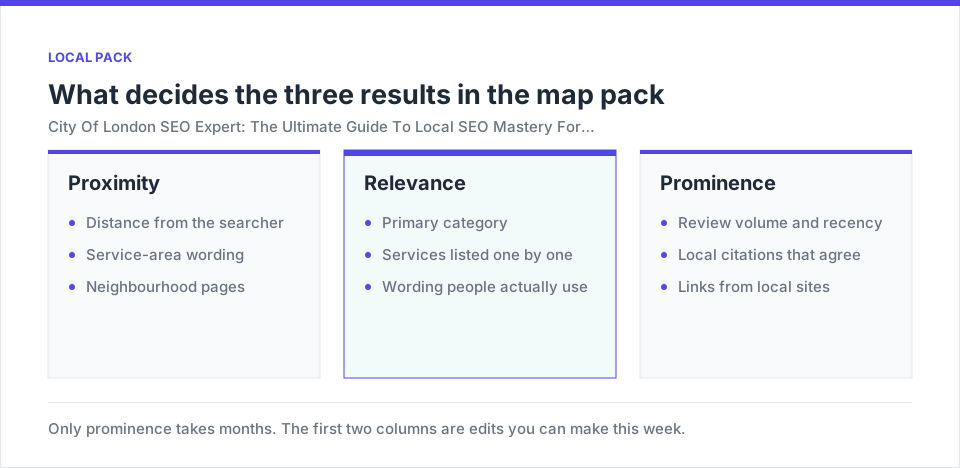
Google Maps and the Local Pack remain powerful channels for city-centre professionals. A well-maintained Google Business Profile (GBP Health) per location, plus consistent NAP data across directories, improves not only local visibility but the trust signals that influence click-through and conversion. In London, district hubs can link GBP Health data to district landing pages, enabling users to move seamlessly from discovery to contact. Practically, this means: maintaining up-to-date hours and services for each office, ensuring uniform NAP across listings, and leveraging LocalBusiness structured data to enrich results in Maps.
District-focused content strategy for the Square Mile
A district-focused strategy recognises that buyers in the City of London anticipate content that speaks to their sector, regulatory environment and organisational scale. Core components include district hub pages (central pages that connect services, case studies and FAQs to district landing pages), sector-specific content calendars, and precise keyword clusters mapped to the district structure. By combining authoritative content with district signals, you reduce wasted traffic and improve conversions from high-intent searches.
Getting started with a London-focused programme
Initiating a City Of London SEO programme begins with an audit that benchmarks technical health, local signals and district opportunities. A practical onboarding plan by LondonSEO.ai includes: technical audit; district keyword research focused on professional services audiences; GBP health review per location; and a governance cadence that ensures stakeholders understand ownership, cadence and reporting. The goal is early momentum that scales as your London footprint expands.
What to expect in the next steps
In the following parts of this series, we’ll dive deeper into local technical health metrics, district hub architecture, GBP Health governance, and content strategies tailored for professional services audiences. We’ll present practical frameworks, district-specific checklists and London-centric case studies to demonstrate how to translate visibility into meetings, consultations and revenue. If you’re ready to explore how these principles translate into real results for your business, you can start by reviewing our portfolio of services or book a consultation with LondonSEO.ai. We’ll tailor the approach to your sector, location within Greater London, and growth objectives. For ongoing guidance, we reference Google’s Local SEO guidelines and Local Business Structured Data to stay current and compliant.
Core Services Offered By A City Of London SEO Expert
The City of London represents a distinctive nexus of global finance, professional services and enterprise decision‑making. A dedicated City Of London SEO expert does more than optimise keywords; they architect a localisation‑first SEO programme that translates dense district dynamics into measurable business outcomes. At LondonSEO.ai, we specialise in a district‑aware, governance‑ready approach that aligns technical excellence with content and authority tailored to the Square Mile and its surrounds. Below, we outline the core services a London expert typically delivers and how each supports high‑intent, B2B visibility in London’s competitive landscape.
1) Local SEO for the City Of London
Local SEO in the City of London is about proximity to the right buyers at the exact moment they search. A London expert ensures robust Google Business Profile (GBP) health per location, consistent NAP across directories and district hub pages that map services, case studies and FAQs to target zones such as the Square Mile, Canary Wharf or surrounding financial districts. The strategy prioritises high‑intent, near‑me and district‑specific queries that enterprise clients typically use when seeking lawyers, consultants, fintech partners or financial services providers anchored in London. The result is more qualified traffic, more meetings and better lead quality from local sources.
Key practices include GBP optimisation per location, district landing pages with local signals, and rich snippets driven by structured data. We connect GBP Health to district hubs so Maps results reinforce the same user journey from discovery to contact. London SEO success also relies on precise keyword clustering that reflects professional services workflows, regulatory updates and city‑specific business processes.
2) Technical SEO Foundations for City Of London Sites
London clients demand fast, reliable experiences across devices, with scalable architecture capable of supporting multiple district pages and service landings without sacrificing performance. A City Of London SEO expert prioritises a clean site structure, crawlable navigation, and robust indexing strategies that preserve authority when new district pages are added. Core elements include a well‑planned hub page architecture, clear canonical rules to prevent content duplication across districts, and structured data schemas (LocalBusiness, FAQ, Service) that enrich Local Pack results and Maps entries.
Performance is non‑negotiable in London’s financial districts where high mobile usage meets complex user journeys. We emphasise Core Web Vitals, server pacing, image optimisation and efficient JavaScript loading to maintain fast LCP, stable CLS and low FID across all district landings. Regular technical audits identify issues early and keep London pages aligned with Google’s evolving local ranking signals.
3) Content Strategy For London Audiences
Content in London must speak directly to professional audiences, regulatory contexts and city‑specific decision‑makers. A London‑focused content strategy maps district hubs to sector‑specific topics, regulatory updates and city guidance that demonstrate authority. This includes district‑level pillar pages linked to detailed service landings, thought leadership, regulatory briefings and case studies that resonate with financial services, law, consulting and corporate services buyers in London.
A disciplined editorial calendar ensures steady momentum and brand consistency while allowing district adaptations for new zones. FAQs, guides and neighbourhood primers enrich user value and support featured snippets, helping your brand appear for both district queries and broader London topics.
4) Link Building And Digital PR In London
In London, authority signals are amplified by high‑quality backlinks from reputable, London‑based publishers, legal and financial outlets, and industry associations. A London expert designs outreach campaigns targeting district‑relevant media, professional services portals and niche industry sites that serve London businesses. The goal is to earn links and coverage that bolster regional relevance, reinforce brand credibility and improve Local Pack visibility. Digital PR campaigns should be tailored to London’s business press, with storytelling that highlights local impact, client narratives and county‑level compliance where applicable.
Link building in a London context should prioritise relevance, editorial integrity and sustainable growth. Rather than chasing volume, the emphasis is on relationships with publishers and institutions that can provide durable signal strength for Maps and Local Pack rankings while supporting district content hubs.
5) Analytics, ROI And Continuous Optimisation
The final pillar is a governance‑driven measurement framework that translates visibility into business outcomes. A London expert implements dashboards that merge technical health (Core Web Vitals, crawl stats, indexation) with district‑level business metrics (lead generation, meetings secured, revenue attributable to local campaigns). Regular reporting reveals which districts deliver the strongest ROI and where content, GBP Health or hub architecture require reinforcement. This disciplined approach supports scalable growth as London footprints expand and new districts need to be onboarded with consistent quality.
LondonSEO.ai anchors reporting in practical ROI by district, with transparent input data, clear targets and quarterly reviews that guide investment decisions. We reference Google’s local SEO guidelines and Local Business Structured Data to remain compliant and aligned with industry standards as the city evolves.
- Local SEO for the City Of London with GBP Health and district hubs.
- Technical SEO foundations that support scalable, district‑level pages.
- Content strategy tailored to London professional audiences.
- Strategic link building and digital PR within the London ecosystem.
- ROI‑driven analytics and governance for sustainable growth.
To explore how LondonSEO.ai can tailor these core services to your sector and district, visit our portfolio of services or book a consultation. We align our localisation with Google’s local guidelines and Local Business Structured Data to ensure your London presence remains compliant and high‑performing.
Core Services Offered By A City Of London SEO Expert
The City of London represents a distinctive nexus of finance, professional services and enterprise decision-making. A dedicated City Of London SEO expert does more than optimise keywords; they architect a localisation-first programme that translates district dynamics into measurable business outcomes. At LondonSEO.ai, we specialise in a district-aware approach that combines technical excellence with content authority to ensure visibility where it matters most — in the Square Mile and across Greater London.
1) Local SEO For The City Of London
Local SEO in the City Of London centres on proximity to the right buyers at the exact moment they search. A London expert ensures robust Google Business Profile (GBP) health per location, consistent NAP data across directories, and district hub pages that map services, case studies and FAQs to target zones such as the Square Mile, Canary Wharf, Bank and surrounding professional districts. The aim is to drive meetings, consultations and revenue, while aligning with regulatory expectations and the heightened scrutiny typical of London’s professional market.
Key practices include district landing pages enriched with local signals, map-centric optimisations, and a disciplined keyword map that reflects London-based decision-makers’ workflows. GBP Health per location connects Maps results to a coherent user journey from discovery to contact, reducing drop-offs and improving the quality of inquiries from enterprise clients and professional services buyers.
2) Technical SEO Foundations For City Of London Sites
London businesses demand fast, reliable experiences across devices, with scalable architecture capable of supporting multiple district pages and service landings without compromising performance. A City Of London SEO expert prioritises a clean site structure, crawlable navigation, and robust indexing strategies that preserve authority when new district pages are added. Core elements include a hub-page architecture, clear canonical rules to prevent content duplication across districts, and LocalBusiness schema (plus FAQ markup) that enrich Local Pack results and Maps entries.
Performance is indispensable in London’s finance-driven environment. Emphasis on Core Web Vitals, efficient JavaScript loading, image optimisation and server response times ensures LCP remains below 2.5 seconds, CLS is stable and FID is minimal across district landings. Regular technical audits identify issues early and keep London pages aligned with evolving local ranking signals.
3) Content Strategy For London Audiences
Content for London must speak directly to professional audiences, regulatory contexts and city-specific decision-makers. A London-focused content strategy maps district hubs to sector-specific topics, regulatory updates and city guidance that demonstrate authority. This includes district-level pillar pages linked to detailed service landings, thought leadership, policy briefs and case studies that resonate with legal, financial services, consulting and corporate buyers in London.
A rigorous editorial calendar ensures steady momentum and brand consistency while allowing district adaptations for new zones. FAQs, guides and neighbourhood primers enrich user value and support featured snippets, helping your brand appear for both district queries and wider London topics.
4) Link Building And Digital PR In London
In London, authority signals are amplified by high-quality backlinks from reputable, London-based publishers, legal and financial outlets, and industry bodies. A London expert designs outreach campaigns targeting district-relevant media, professional services portals and niche industry sites that serve London businesses. The goal is to earn links and coverage that bolster regional relevance, reinforce brand credibility and improve Local Pack visibility. Digital PR campaigns should be tailored to London’s business press, with storytelling that highlights local impact, client narratives and district-level compliance where applicable.
Link building in a London context should prioritise relevance, editorial integrity and sustainable growth. Rather than chasing volume, the emphasis is on relationships with publishers and institutions that provide durable signal strength for Maps and Local Pack rankings while supporting district content hubs.
5) Analytics, ROI And Continuous Optimisation
The governance-driven measurement framework translates visibility into business outcomes. A London expert implements dashboards that merge technical health (Core Web Vitals, crawl stats, indexation) with district-level business metrics (lead generation, meetings secured, revenue attributable to local campaigns). Regular reporting reveals which districts deliver the strongest ROI and where content, GBP Health or hub architecture require reinforcement. This disciplined approach supports scalable growth as London footprints expand and new districts are onboarded with consistent quality.
LondonSEO.ai anchors reporting in practical ROI by district, with transparent input data, clear targets and quarterly reviews that guide investment decisions. We reference Google's Local SEO guidelines and Local Business Structured Data to stay current and compliant.
- Local SEO for the City Of London with GBP Health and district hubs.
- Technical SEO foundations that support scalable, district-level pages.
- Content strategy tailored to London professional audiences.
- Strategic link building and digital PR within the London ecosystem.
- ROI-driven analytics and governance for sustainable growth.
To explore how LondonSEO.ai can tailor these core services to your sector and district, visit our portfolio of services or book a consultation. We align our localisation with Google's local guidelines and Local Business Structured Data to ensure your London presence remains compliant and high-performing.
City Of London SEO Expert: Local Vs National And International SEO For London Businesses
The London market presents a unique blend of district-level nuance and global ambition. For firms headquartered in or serving the City of London, choosing between local, national and international SEO requires a disciplined assessment of audience, intent and scale. A City of London SEO expert at LondonSEO.ai understands how proximity, district signals and cross-border reach interact to produce measurable outcomes. This section outlines when to prioritise local signals, when a broader London or national footprint makes sense, and how to plan international visibility without diluting local performance.
When local SEO is essential in London
Local SEO is the engine that drives immediate, location-based impact. In the Square Mile and surrounding districts, decision-makers often search for services within a handful of miles or even within walking distance. Local queries such as "solicitors near me in City of London" or "banking advisory London office" reflect high intent and readiness to engage. A City of London SEO expert prioritises district landing pages, GBP Health alignment per office, and district-level content that answers the exact questions buyers ask in their locale.
Key priorities include robust district hub pages, precise NAP replication across directories, and structured data that enriches Maps results. Local content calendars are tailored to city-specific events, regulatory updates, and sector signals that matter to professional services buyers. The objective is to shorten the path from discovery to contact, turning proximity into meetings and engagements.
- Develop district landing pages that reflect the Square Mile's service mix and client profiles.
- Maintain GBP Health per location to ensure Maps rankings reflect accurate hours, services and offerings.
- Link district hubs to targeted service pages and case studies that demonstrate local impact.
When to expand beyond local to national or regional London reach
A broader footprint becomes sensible when the core local opportunity saturates, or when clients provide services that span multiple London zones. National or regional pages help you capture enquiries from organisations with broader mandates, while still preserving local relevance through district categorisation. A City of London SEO expert can design a tiered architecture in which district hubs feed into city-wide landing pages, which in turn feed into provincial or national pages that reflect your broader service lines without overwhelming any single surface with too much depth too soon.
Strategic considerations include: localisation for additional zones (e.g., Canary Wharf, Bank, Holborn) to preserve proximity signals; scalable content clusters that map to London-wide topics (regulatory updates, industry insights) and a clear content governance plan to avoid cannibalisation. When implemented well, you gain the ability to answer large-scale buyer questions while maintaining local trust signals.
- Use city-wide pillars that unify district hubs under a shared taxonomy and terminology.
- Maintain localisation on pages by including district names in headings, meta data and structured data where appropriate.
- Establish a content calendar that alternates between district depth and London-wide topics to sustain relevance at every scale.
International considerations for a London-focused strategy
For London firms with cross-border client interests, international SEO can extend visibility to target markets while keeping a London-centric backbone. A practical approach is to deploy language and regional variants where demand exists, paired with hreflang signals to prevent confusion between locales. In practice, this means a London expert collaborates with multilingual content teams, implements region-specific landing pages, and uses country-coded domains or subdirectories with clear navigation from London hubs to international surfaces. The goal remains: preserve the authority and trust established in London while enabling global reach where it adds tangible value.
Crucial governance points include translation provenance, consistent local data (NAP and GBP Health) across markets, and a unified reporting framework that ties international activity back to core local ROI. Where appropriate, integrate external references such as Google’s guidelines on international SEO and structured data for Local Business to stay aligned with best practices.
- Map international demand to London-led content clusters without eroding local presence.
- Use clear currency, terminology and service descriptions for each target market.
- Coordinate translations with CMS workflows and ensure consistent data across Maps and local directories.
A practical roadmap for London businesses
To implement a coherent mix of local, national and international SEO, consider a staged approach that preserves quality and avoids scope creep. Start with a robust local framework in the City of London, then layer in district hubs and city-wide content pillars. As demand grows, extend reach with regional London pages and judicious international variants where there is measurable interest. Governance should track ROI by district and surface, with dashboards that reveal which signals drive enquiries and conversions.
For guidance on practical steps, explore our portfolio of services or book a consultation with LondonSEO.ai. We emphasise a localisation-first mindset, complemented by Google’s local guidelines and structured data standards to keep your London presence compliant and competitive.
Key takeaways for the City of London context
Local signals remain the most direct route to high-intent engagement in London’s professional landscape. Yet a disciplined, multi-surface strategy that combines district-level depth with city-wide and international awareness can unlock broader business opportunities. The essential components are clear governance, district hubs, GBP Health integrity and robust data structuring. By aligning these elements with Google’s Local SEO guidelines, you lay a resilient foundation that scales with your growth ambitions in the capital and beyond.
If you’re ready to explore how a City of London SEO expert can tailor a mixed local-national-international strategy to your sector, visit our portfolio of services or book a consultation with LondonSEO.ai. We’ll map your district footprint to tangible business outcomes in the Square Mile and across Greater London.
City Of London SEO Expert: Content Strategy For London Audiences
Following the insights in Part 5 on analytics and ROI, this section translates data-driven signals into a district-focused content strategy that resonates with London’s professional audience. The City of London demands content that demonstrates sector authority, aligns with regulatory expectations and guides high-value buyers from awareness to engagement. LondonSEO.ai champions a localisation-first approach: district hubs, topic clusters and a disciplined editorial calendar that connect fast-moving decision-makers with your services across the Square Mile and Greater London.
District-focused content architecture
A robust content framework begins with district hubs. Each hub page aggregates core services, district-specific guides and FAQs, linking to targeted landings that address the precise needs of buyers in that zone. This spine supports a scalable expansion as new districts come online, while preserving a clear pathway for Google to understand proximity signals and user intent.
- Hub pages per district centralise services, guides and FAQs, reinforcing proximity signals and enabling precise internal linking to service landings.
- Clusters of district content connect services, regulatory updates and case studies to the district hub, creating relevant topical authority for local buyers.
- District landing pages and service pages are interlinked to deliver a coherent journey from discovery to enquiry or booking.
Content formats that resonate with London professionals
London buyers expect authority, practicality and timely insights. A balanced content mix that works well includes thought leadership and district-focused guides that illuminate regulatory or market developments, alongside real-world case studies from London firms. This combination demonstrates capability and proximity without sacrificing depth.
- Thought leadership and regulatory commentary tailored to London’s financial services, legal and corporate sectors.
- District guides and district-specific case studies that highlight local impact, client stories and practical outcomes for local buyers.
Editorial governance and cadence
An effective content programme in London requires a clear governance model and a predictable publishing rhythm. Establish a quarterly editorial calendar that aligns district themes with sector priorities, regulatory updates and client milestones. Regular reviews ensure content stays relevant to evolving market conditions and Google’s evolving local ranking signals.
- Cadence and ownership: assign district editors and ensure a quarterly content plan that feeds hub pages and service landings.
- Quality controls and performance checks: define approval steps, SEO checks and measurement milestones to maintain consistency and authority across all district surfaces.
Measuring success and linking content to ROI
Content performance in London should be viewed through both engagement metrics and business outcomes. Track visibility in Local Pack and Maps, traffic to district landings, time on page and scroll depth, as well as downstream actions such as enquiries, consultations and services bookings. Tie these signals back to district ROI by comparing content engagement with lead generation and revenue attributable to local campaigns. A well-governed content programme delivers actionable insights, enabling rapid optimisation and scale across districts.
Effective reporting combines qualitative feedback from local stakeholders with quantitative dashboards, drawing on Google’s Local SEO guidelines and Local Business Structured Data to ensure ongoing compliance and relevance. For practical next steps, review our portfolio of services or book a consultation with LondonSEO.ai.
Putting it into practice: a practical district workflow
Step 1: Define the district scope and assemble the hub pages that will anchor the content strategy for that area. Step 2: Map district topics to corresponding service landings and create a content calendar aligned to local priorities. Step 3: Develop district-focused content assets (guides, FAQs, case studies) and publish them on hub pages with clear internal linking. Step 4: Implement structured data (LocalBusiness, FAQ, and relevant service schemas) to enrich Local Pack results. Step 5: Monitor performance, adjust terms, and scale successful district templates to additional neighbourhoods.
To align this district-focused content strategy with your business goals, explore how LondonSEO.ai can tailor district hubs, content calendars and structured data to your sector. See our portfolio of services for examples, or book a consultation to discuss district-specific opportunities and ROI targets.
City Of London SEO Expert: The Consultancy Process From Discovery To Delivery
The City of London presents a distinctive concentration of finance, law and professional services, where precision in localisation and governance translates into tangible business outcomes. This part of the series outlines an end-to-end consultancy process used by LondonSEO.ai to move from discovery to delivery. The aim is to establish alignment, deliver measurable early wins, and set up a scalable framework that supports ongoing growth across the Square Mile and surrounding districts.
By treating local proximity as a governance-enabled programme, we ensure that every action feeds a clear set of district-level KPIs, without sacrificing the quality and authority demanded by enterprise buyers. The approach combines rigorous technical health, district-aware content planning, and a disciplined measurement regime that captures return on investment at scale.
1) Discovery And Alignment
Discovery commences with a structured briefing session that directly ties business objectives to local search outcomes. We engage senior stakeholders to define success metrics by district, service line and buyer journey. The deliverables include a formal discovery brief, a district-specific goals map and a phased project plan that aligns with the city’s planning and compliance realities. This ensures everyone shares a single, auditable baseline from which to measure progress.
Key activities during discovery include stakeholder interviews, competitor benchmarking within the City of London and adjacent zones, and an assessment of what high-value districts require in terms of GBP Health, Maps visibility and district landing depth. The outcome is a practical, business-driven contract that sets expectations for timelines, interdependencies and governance cadence.
2) Baseline Audits And Opportunity Assessment
Baseline audits blend technical rigour with local-market insight. A comprehensive technical SEO audit assesses crawlability, site architecture, indexability and Core Web Vitals, with a view to how district-level pages will be added without compromising performance. A GBP Health review is conducted for each location to verify NAP consistency, service descriptions and availability signals in Maps. District-level keyword research identifies the exact queries that convey high intent in the Square Mile and nearby business districts.
From this work, we identify fast, impact-driven optimisations (quick wins) and longer-term structural needs. The findings feed the initial district roadmap, ensuring that early enhancements in GBP Health and local landing pages translate into improved local visibility and higher quality inquiries. This phase also surfaces governance requirements and reporting formats that teams will rely on moving forward.
3) Custom Strategy Development
With a clear baseline, a district-aware strategy is authored. The strategy defines a taxonomy that mirrors London’s districts (the Square Mile, Bank, Canary Wharf, Holborn, etc.), a spine of hub pages, and a content calendar aligned to sector needs and regulatory developments. The plan emphasises proximity signals and authoritative content that resonates with professional services buyers, while ensuring compatibility with Google’s Local SEO guidelines and the client’s existing marketing stack.
Core components include district hub pages that centralise services, case studies and FAQs, connected to service landings and regionally relevant content clusters. We also design a governance-driven publication cadence and a framework for testing content in district contexts to optimise for rich results, Maps visibility and user engagement.
4) Onboarding, Governance And Tooling
Onboarding formalises roles, responsibilities and data access. We establish a governance cadence, align data feeds with analytics dashboards, and implement a shared reporting framework. A transparent process for approvals, change requests and milestone sign-offs reduces friction between internal teams and external partners. We also assess translation provenance, CMS workflows and data hygiene across Maps and directory listings to ensure that localisation remains accurate and scalable.
Tools and workflows are configured to support cross-district collaboration, with predefined templates for hub pages, landings and structured data. This provides a consistent operating rhythm so that new districts can be added with minimal disruption to ongoing activity.
5) Implementation And Activation
Implementation translates strategy into action. We deploy hub pages and district landings in phased sprints, ensuring each landing is optimised for local intent, enriched with structured data, and supported by GBP Health updates. Collaboration with UX, content, and development teams is essential to maintain a smooth rollout. Quality assurance and user testing accompany every deployment to verify performance, accuracy and the user journey from discovery to contact.
As district pages go live, we maintain close coordination with clients to address any site migrations, URL restructuring or canonical changes. The aim is to preserve authority and minimise disruption while expanding district coverage and service depth.
6) Monitoring, Optimisation And Reporting
Post-activation, ongoing monitoring integrates technical health (Core Web Vitals, crawl stats, indexation) with district-level business outcomes (lead generation, meetings, revenue attributed to local campaigns). Regular reporting includes dashboards that show ROI by district, as well as actionable recommendations to refine hubs, landings and GBP Health. The cadence typically features weekly operational updates and monthly performance reviews to keep the programme aligned with market changes and client priorities.
We emphasise a clear link between activity and outcomes, using district ROI as the primary lens for prioritising future investments. All reporting adheres to industry best practices and Google’s Local SEO guidelines to ensure compliance and long-term stability in Local Pack and Maps visibility.
7) Collaboration Model And Next Steps
The collaboration model treats LondonSEO.ai as an extension of your marketing team, committed to transparency, accountability and shared success. We document every milestone, provide access to dashboards, and offer regular strategy reviews. This partnership-centred approach empowers stakeholders to participate in decision-making, while safeguarding the continuity and quality of the city-wide proximity programme.
If you are ready to discuss a district-focused proximity programme for the City of London, explore our portfolio of services or book a consultation with LondonSEO.ai. We anchor our methodology in Google’s Local SEO guidelines and Local Business Structured Data to ensure ongoing compliance and high-impact results across the Square Mile and Greater London.
For practical next steps, visit our portfolio of services or book a consultation to tailor a plan to your sector and district.
City Of London SEO Expert: Local Vs National And International SEO For London Businesses
In the City of London, search visibility is driven by proximity, sector-specific intent and the ability to navigate complex enterprise buying journeys. A City of London SEO expert must help brands decide how to balance tight, location-focused optimisation with broader London-wide or even international reach. At LondonSEO.ai, we advocate a localisation-first mindset that respects the unique district dynamics of the Square Mile while providing scalable pathways to growth beyond it.
When local SEO is essential in London
Local SEO remains the most reliable driver of immediate, district-specific engagement. For law firms, banks, compliance consultants and other professional services operating in the City, queries often include explicit location cues such as nearby office clusters or district names. A London expert ensures robust GBP Health per site, consistent NAP across directories, and district landing pages that connect services, client success stories and FAQs to the exact zone (for example the Square Mile, Canary Wharf, Bank and Holborn). The objective is to shorten the path from discovery to enquiry by aligning the user’s local intent with precise, district-tailored content and offerings.
Core actions include district hub pages with local signals, map-centric optimisations, and a tightly defined keyword map reflecting London buyers’ proximity-driven workflows. GBP Health integration with district hubs reinforces Maps rankings and provides a coherent journey from discovery through to contact, reducing friction and boosting conversion quality for enterprise leads.
When to scale to city-wide or London-wide reach
A broader London footprint becomes sensible when the City’s local opportunities mature or when clients require cross-district coordination for larger engagements. City-wide pillars can unify district hubs under a common taxonomy, enabling efficient internal linking and consistent branding while preserving the valuable proximity signals that matter in competition for high-value enterprise prospects.
A well-structured approach keeps district depth intact while enabling scalable content clusters around London-wide topics, regulatory updates, and sector-focused thought leadership. This is not about diluting local relevance; it’s about orchestrating a layered surface where district depth feeds into a cohesive London narrative, which then informs national or international content where appropriate.
When national or international reach adds value
National or international SEO becomes valuable when London-based services target organisations with multi-city footprints or cross-border needs. For professional services, global firms, or firms with clients across the UK or Europe, a tiered structure can capture wider demand without eroding local credibility. The recommended pattern is a tiered architecture where district hubs feed into city-wide landing pages, which in turn connect to regional or country-specific pages. This preserves proximity signals where they matter most, while enabling scalable growth into broader markets as demand warrants.
To avoid signal dilution, implement clear localisation rules: keep the city as the central spine, narrate district-specific flavour where relevant, and use hreflang and geo-targeting signals judiciously for international pages. For practical guidance, refer to Google’s recommendations on Local Business structured data and international SEO signals when expanding beyond local markets.
Key governance considerations include translation provenance, consistent NAP across markets, and a unified dashboard that ties district activity to broader ROI. A disciplined approach ensures you can justify expansion with measurable outcomes rather than conjecture.
For a structured reference, see Google’s Local Business Structured Data guidelines and their international SEO resources as you plan cross-border visibility more confidently.
Measuring success across local, London-wide and international surfaces
A robust measurement framework translates visibility into tangible business outcomes. Track district-level metrics (local leads, meetings, conversions) alongside London-wide performance (area-wide demand, cross-district referrals) and international signals (if applicable). Dashboards should merge technical health (Core Web Vitals, crawl stats, indexation) with business metrics (lead generation, revenue attributable to local and regional campaigns) to reveal which surface delivers the strongest ROI at any given time.
Regular review cycles help reallocate budget from areas with marginal impact to those with higher potential, ensuring your City of London presence scales in a controlled, compliant manner. We commonly reference Google’s Local SEO guidelines and Local Business Structured Data to keep practices aligned with official best practices as the market evolves.
Practical steps to decide your geographic scope
Audit current district coverage, Maps visibility and GBP Health per location to establish a baseline for local proximity signals.
Analyse client distribution and service breadth to assess the potential ROI of London-wide versus national or international reach.
Design a tiered site architecture: district hubs feeding city-wide pages, with clear criteria for when to add regional or international variants.
Implement a governance framework that includes translation provenance, canonical rules to prevent duplication, and a shared dashboard for cross-surface ROI.
Scale in a controlled manner: pilot expansion in one or two London zones, then extend to additional districts or markets as data supports the strategy.
Ready to tailor a local-to-global SEO strategy for your London business? Visit our portfolio of services or book a consultation with LondonSEO.ai. We integrate Local SEO best practices with district-aware content and authoritative data signals to ensure you capitalise on proximity while pursuing scalable growth.
For authoritative guidance, consult Google’s Local SEO resources and Local Business Structured Data to keep your London footprint compliant and high-performing as you consider broader opportunities.
City Of London SEO Expert: Technical Foundations For District Growth
The City of London demands more than generic SEO; it requires a technically sound, district-aware backbone that supports rapid, high-precision local visibility. In Part 9 of our series, we drill into the technical foundations that enable London-focused proximity campaigns to scale across multiple districts while preserving performance, reliability and compliant governance. LondonSEO.ai champions a localisation-first mindset, where architecture, speed and structured data underpin every district landing, service page and GBP Health update.
The architectural spine: district hubs, landings and service pages
A robust London SEO programme rests on a scalable hub-and-spoke model. Each district hub page acts as a central node that aggregates core services, local case studies and FAQs, linking out to district-specific landings and service pages. This structure preserves authority as new districts come online and enables precise internal linking that reinforces proximity signals to search engines. For enterprises with offices across the Square Mile and neighbouring zones, the spine should reflect a consistent taxonomy: City centre districts feeding Canary Wharf, Bank, Holborn and other professional clusters, while maintaining a clear path from discovery to enquiry.
Best practices include a shallow top-level navigation, explicit district naming in URL paths, and breadcrumb trails that consistently move from City of London to district to service. Hub pages should feature district-specific signals, such as local testimonials, regulatory considerations and area-focused FAQs, which then cascade into service landings. This approach ensures Google understands both proximity and relevance, improving Local Pack and Maps performance while supporting a superior user journey.
Technical foundations: site architecture, crawlability and indexing
For a City of London programme, architecture must sustain dozens of district pages without compromising crawl efficiency or PageRank flow. A clean architecture includes clearly defined hub pages, district landing pages, and service landings, with a strategic use of canonical tags to avoid content duplication across districts. Use hierarchical, human-readable URLs that reflect geography and service area, for example: /city-of-london/district/landings and /city-of-london/district/services. Consistent navigation and sitemap strategy are essential to ensure search engines prioritise the most relevant district content when users near the Square Mile search intent.
Regular crawl budget management is essential as London scales. Implement a well-structured robots.txt that prevents indexing of low-value pages, while encouraging search engines to prioritise district hubs and high-impact landings. A properly configured sitemap, optionally segmented by district, accelerates discovery of new pages and helps maintain index coverage even as the architecture grows.
Core Web Vitals and performance targets for high‑value audiences
London’s professional buyers expect fast, reliable experiences across mobile and desktop. Set ambitious yet realistic targets: LCP under 2.5 seconds, CLS below 0.1–0.25, and FID minimised through interactive readiness. Achieving these benchmarks across district landings requires a combination of server-side optimisation, efficient JavaScript handling and image management. Techniques include server-side rendering for critical content, code-splitting to reduce JavaScript payloads, and lazy loading of non-critical assets. When district pages load swiftly and consistently, user engagement improves, and search engines recognise the pages as high-quality, proximity-relevant surfaces worthy of Local Pack placement.
Performance tuning should be an ongoing discipline. Regularly audit Core Web Vitals, track per-district performance and prioritise optimisations where mobile usage is highest or where landing pages exhibit higher engagement needs. The result is a more stable, scalable London presence that remains performant as your district footprint expands.
Structured data and local signals to reinforce proximity
Structured data acts as the bridge between on-page content and search engine understanding. For City of London pages, implement LocalBusiness or Organization schemas at the district level, coupled with Service and FAQ schemas on hub pages and landings. FAQ markup increases the chance of appearing in rich results for district queries, while LocalBusiness enhances Maps and Local Pack relevance when users search for district-specific professional services. Ensure consistency of NAP (name, address, phone) across all local listings and GBP Health per location to reinforce trust signals with search engines and potential clients.
Keep data fresh: update hours, services and district-specific offerings as office footprints or regulatory guidance changes. Pair structured data with schema‑friendly content that answers common district questions and showcases local case studies to reinforce authority and proximity in the eyes of Google.
Indexing, crawl budget and canonicalisation in a multi-district site
As you add more district pages, maintain a disciplined approach to indexing. Use a single canonical per hub and per district landing where appropriate, preventing duplication across neighbouring districts. Deploy district-specific sitemaps to help search engines discover new pages quickly, while excluding non-essential pages from indexing. Implement hreflang signals if you operate multiple languages or markets, but apply them judiciously to avoid cross-location confusion. Regularly audit internal linking to ensure authority flows from the City hub to districts and out to service landings, maintaining a coherent path for both users and search engines.
Migration safety is critical when reorganising content. Plan migrations as staged projects with 301 redirections mapped to preserve link equity, and maintain a clear rollback path in case a new structure underperforms. Document migration maps, test on staging environments, and monitor rankings and traffic during the transition to detect any anomalies early.
Migration safety: phased activation and governance
Phase the activation of new district pages to manage risk and maintain performance. Begin with high-priority districts that already demonstrate strong local demand, then expand to additional zones as data confirms positive impact. Establish a governance cadence that includes a brief for stakeholders, a change-log, and a post-migration performance review. This disciplined approach ensures that district growth remains aligned with business objectives, and that the local search presence stays compliant with Google’s local SEO guidelines.
For practical reference, LondonSEO.ai integrates these practices with GBP Health governance and a district-focused content calendar to deliver measurable improvements in Local Pack visibility and landing-page engagement over time.
Governance, dashboards and ongoing health checks
Maintain a central dashboard that aggregates technical health metrics (Core Web Vitals, crawl stats, indexation), with district-level business outcomes (lead generation, meetings booked, revenue attributed to local campaigns). Regular reviews by a governance forum ensure alignment across marketing, IT and regional teams, guiding prioritisation and budget allocation. This governance framework makes it feasible to scale the London proximity programme without losing control of quality or consistency of brand signals.
To see how these foundations translate into tangible results, explore LondonSEO.ai’s portfolio of services or book a consultation to tailor the approach to your district footprint and growth objectives. We reference Google’s Local SEO guidelines and Local Business Structured Data to ensure you stay compliant while elevating local visibility.
City Of London SEO Expert: Local vs National and International SEO for London Businesses
London’s central business environment demands a careful balance between proximity-led visibility and the reach required by larger, multi-district engagements. A City of London SEO expert helps you start with a local, district-focused spine and then evaluate when to scale to city-wide, national or international surfaces. This part of the guide outlines clear decision points, governance practices and practical architecture choices to ensure your investment remains proportionate to demand while preserving quality signals in Maps, Local Pack and beyond.
Local signals as the foundation for London brands
Local SEO remains the most direct route to high-intent engagements from professionals and enterprise buyers headquartered in or visiting the Square Mile. District hubs consolidate services, case studies and FAQs for each key zone such as the City core, Canary Wharf, Bank and Holborn. GBP Health per location, coupled with consistent NAP across directories, creates a coherent user journey from discovery to contact. In practice, this means district landing pages that reflect the specific needs of local buyers, supported by structured data that enhances Local Pack visibility.
A disciplined local programme supports rapid, measurable wins: higher quality traffic, more meetings, and improved conversion quality from proximity-based queries. It also lays the groundwork for scalable growth when the business footprint expands beyond a single district into broader London areas.
When to keep it local versus expanding the surface area
A clear testing framework helps determine whether to stay local or to scale. Key indicators favouring local focus include repeatable demand from a concentrated geography, high engagement with district-specific services, and a stable competitive density that rewards proximity signals. If your client base shows clustered activity within the City, Bank, Canary Wharf or Holborn, maintain a district-focused architecture with robust GBP Health and district hubs as the core spine.
Indicators pointing to expansion include strong, repeatable inquiries that originate from multiple London districts, a product or service that inherently serves a wider market, or notable demand from organisations with multi-district requirements. In such cases, layer in London-wide content pillars that unify the district hubs and create a scalable path to broader reach, while preserving proximity signals where they matter most.
- Establish a district hub for each target area and connect it to district-specific service landings.
- Create city-wide pillars that address London-wide topics, ensuring they link coherently to district hubs.
- Maintain GBP Health consistency across districts when expanding to new zones.
- Use structured data to support proximity signals while enabling broader topic authority.
- Implement governance that monitors ROI per district and guides when to scale to wider surfaces.
International considerations without diluting local strength
For London firms with clients abroad or international ambitions, an intentional multi-surface strategy is essential. The best practice is a tiered architecture where district hubs feed into city-wide pages, which in turn connect to regional or international variants. Maintain a strong UK-local backbone, with hreflang and geo-targeting applied only where there is clear cross-border demand. This approach preserves the authority and trust earned in London while enabling efficient expansion into markets with demonstrable interest.
Governance must harmonise local data (NAP and GBP Health) across markets, ensure translation provenance for international pages, and provide a single, auditable ROI framework that ties cross-border activity back to core local outcomes. Google’s Local SEO guidelines and Local Business Structured Data remain the reference points to stay compliant and aligned with search engine expectations.
- Identify international markets with tangible London-based demand and map them to a lightweight international layer that respects local signals.
- Use city-centred architecture as the spine, adding regional or country variants only when the data supports meaningful ROI.
- Coordinate translations and site structure to avoid cross-market confusion while preserving local relevance.
A practical decision framework for London-based organisations
To decide your geographic scope, run a structured assessment across five dimensions: demand concentration, service breadth, client lifecycle, competitive intensity and operational capacity. Use district-level ROI as the primary lens for local investments and treat city-wide or international expansions as strategic bets that require clear governance, staged rollouts and a defined stop-light system for investment reallocation.
Pragmatic steps to implement this framework include establishing district hubs, validating GBP Health per location, building London-wide content pillars, and designing a cross-surface dashboard that links technical health with business outcomes. All actions should be guided by Google’s local guidelines and Local Business Structured Data to maintain consistency and compliance.
Next steps and how to start with LondonSEO.ai
If you’re considering a balanced approach for your London business, begin with a district-by-district discovery to map current GBP Health, local signals and district demand. Then, sketch a phased plan that starts with robust local hubs and district landings, before layering in London-wide content pillars and international variants where justified by ROI. For a concrete path forward, review our portfolio of services or book a consultation with LondonSEO.ai. We align localisation with Google’s local guidelines and Local Business Structured Data to ensure your London presence is compliant, efficient and primed for scalable growth.
Explore our portfolio of services or book a consultation to tailor the strategy to your sector and district within Greater London.
City Of London SEO Expert: District KPIs, Governance And ROI Tracking
As the City of London SEO series progresses, part 11 shifts focus from strategy to measurement and governance. A district-aware programme produces impact only when visibility translates into qualified inquiries, meetings and revenue. LondonSEO.ai champions a governance-first approach that links district-level activity to tangible business outcomes, enabling transparent accountability and scalable growth across the Square Mile and its key financial clusters. This instalment outlines a practical framework for defining district KPIs, establishing cadence, and connecting data streams to a coherent ROI story.
Defining district-level KPIs for the Square Mile
District-focused metrics should capture both visibility and real business impact. Start with a clear taxonomy that ties district signals to buyer journeys and service lines. The following KPI classes provide a practical lens for London-focused campaigns:
- Local visibility and GBP Health per district. Monitor GBP Health signals for each office location, NAP consistency across directories, and Maps presence to ensure proximity signals stay current and trustworthy.
- District hub engagement. Track landing page views, scroll depth, time on page and internal interaction within district hubs to measure content utility and journey progression.
- Service landings to conversions. Measure conversions from district landings to service landings, including form submissions, consultations booked or calls initiated, attributed to specific districts.
- Local lead quality and meetings. Count qualified inquiries, scheduled meetings and consultation bookings that originate from district-level activity, with notes on client seniority or deal size where possible.
- ROI and pipeline impact per district. Attribute revenue or pipeline value to local campaigns, subtract local spend, and report ROI at the district level to guide allocation and expansion decisions.
Governance cadence and district responsibilities
A disciplined governance cadence ensures the proximity programme remains focused and accountable. A practical model includes weekly operational updates, monthly district reviews, and quarterly executive briefings. This structure keeps teams aligned, ensures timely optimisations, and provides a clear audit trail for ROI calculations. London-based stakeholders should own district health, while a central governance team coordinates cross-district dependencies and standardises reporting formats.
- Weekly cross-functional stand-ups. Short, outcome-driven check-ins that surface blockers, blockers, and immediate actions across marketing, IT and sales for each district.
- Monthly district KPI reviews. Deep dives into district dashboards, comparing progress against targets and identifying uplift opportunities in GBP Health, hub depth and service landings.
- Quarterly strategy workshop. A collaborative session to refresh district priorities, reallocate resources and validate ROI assumptions against evolving market conditions in London.
- Change governance and approvals. A formal process to scope, approve and track changes to district hubs, landings and structured data, minimising disruption to live pages.
- Stakeholder communications. Regular summaries for senior leadership and district managers, highlighting wins, risks and next steps.
Dashboards and data architecture for district-level ROI
Effective ROI tracking requires a cohesive data model that combines technical health with business outcomes. Key data streams include GBP Health data, Google Analytics 4 (GA4) for user journeys, Google Search Console for keyword and click trends, and Maps insights for Local Pack visibility. A district-oriented data model should aggregate these inputs into a single dashboard per district, with a unified ROI formula that attributes conversions to local activity while recognising cross-district influence. Ensure consistent data mappings across landings, hub pages, and service pages to preserve signal integrity.
In practice, you’ll benefit from: a district-level data warehouse, a standard set of dashboards, and a governance layer that defines data provenance, update cadences and access controls. The aim is to provide decision-makers with a transparent, apples-to-apples view of which districts drive the strongest ROI and where optimisations should be prioritised.
Activating districts: a practical district rollout
Translate the governance framework into action with a staged district rollout. Start with a core set of high-potential zones (for example, the City core, Canary Wharf, Bank and Holborn), establishing district hubs, GBP Health per location, and a baseline of district landings. Then expand to adjacent districts, feeding them from the central hub and ensuring consistent data practices across all surfaces. This phased approach minimises risk, secures early wins, and creates a scalable blueprint for adding new districts as ROI proves sustainable.
Key activation steps include: synchronising GBP Health with district hub pages, implementing LocalBusiness and FAQ structured data, and validating ROI through district dashboards before scaling further. LondonSEO.ai emphasises governance-led expansion to keep quality high and signal integrity intact as the portfolio grows.
Turning data into action: translating insights into outcomes
Data is only useful when it informs decisions. Use district ROI dashboards to reallocate budgets toward high-ROI districts, prioritise content and hub enhancements where engagement is strongest, and adjust GBP Health focus to reflect shifting district profiles. The goal is a living, learning system: a district spine that scales with London’s evolving district dynamics while keeping proximity signals precise and trustworthy.
How LondonSEO.ai supports your district strategy
LondonSEO.ai provides a localisation-first framework that combines robust technical health with district-aware content and authority signals. If you’re ready to implement a district-driven proximity programme in the City of London, explore our portfolio of services or book a consultation to tailor a district ROI blueprint to your sector and locales. We reference Google’s Local SEO guidelines and Local Business Structured Data to ensure your approach remains compliant and future-proof across London’s dynamic market.
Link Building And Digital PR In A London Context
In the heart of London, authority signals have a disproportionate impact on local visibility. A City Of London SEO expert understands that high-quality, London-centred backlinks and well-executed digital PR are not optional add-ons—they are foundational to Local Pack prominence, Maps reliability and sustainable enterprise growth. At LondonSEO.ai, we approach link building and digital PR with a localisation-first mindset: prioritising district relevance, sector credibility and editorial integrity to deliver durable signals that search engines recognise and users trust.
Why London deserves a district-aware link strategy
London’s competitive landscape is characterised by a dense network of legal, financial and professional services outlets, regional trade bodies, and influential industry publications. A generic link-building approach rarely delivers measurable value in this environment. Instead, a London-focused strategy connects district hubs—City core, Canary Wharf, Bank, Holborn, and surrounding zones—to authoritative outlets that publishers and buyers in those areas actually recognise. This alignment reinforces proximity signals, improves local trust, and enhances the likelihood of appearing in Local Pack results for high-intent queries such as solicitor firms near the Square Mile or financial consultants in Canary Wharf.
Key principles include relevance over volume, editorial legitimacy over opportunistic placements, and governance that prevents signal dilution as districts expand. Our practice translates these principles into scalable workflows that fit within Google’s Local SEO guidelines and Local Business Structured Data best practices, while remaining adaptable to London’s evolving media ecology.
Core London-centric link-building tactics
- District-relevant publisher outreach: identify and cultivate relationships with publications that serve specific zones (e.g., City core business press, Canary Wharf industry portals, Holborn professional networks) to secure contextually valuable links.
- Editorially aligned content assets: create data-backed reports, district guides, regulatory briefings and case studies that naturally attract coverage and earned links from London outlets.
- Thought-leadership placements: secure op-eds, bylined articles and interview features with recognised London institutions, reinforcing topical authority and proximity signals.
- Strategic partnerships and sponsorships: engage with London-based associations, events and chambers to gain citations and event-driven exposure that compounds over time.
- Measurement and governance: track link quality, topical relevance, referral traffic and downstream conversions, tying backlinks to district ROI and Maps performance.
Digital PR playbooks tailored for the Square Mile
Digital PR in London benefits from a disciplined playbook that blends data storytelling with city-specific context. We prioritise narratives that demonstrate local impact—client success within London districts, regulatory or market shifts affecting the Square Mile, and tangible outcomes for professional services teams. Campaigns are designed to earn coverage in London media, niche industry sites and regional business forums, amplifying domain authority while reinforcing district pages and hub content.
Practical examples include: publishing quarterly London-wide regulatory briefings that link to district-specific service pages; distributing press releases to Business Journals and trade titles within target zones; and curating data-driven reports that journalists can repurpose as authoritative sources for local stories. All campaigns are crafted to earn editorial backlinks rather than bought links, ensuring durability and compliance with Google guidelines.
Governance, metrics and ROI for London link-building
A governance framework ensures that every link-building activity serves district objectives and preserves brand integrity. We combine a district ROI lens with a cross-district health dashboard that includes: backlink velocity, editorials secured per district, referral traffic, and conversions attributed to local campaigns. This multi-surface measurement reveals which districts yield the strongest editorial signal, where to scale content assets, and which publisher relationships deliver sustainable value.
KPIs to track include the number of London-based referrals, anchor-text diversification relevant to district terminology, and the long-term impact on Local Pack rankings. Regular governance reviews adjust outreach priorities, content assets and publisher lists to ensure continued alignment with London market realities and Google’s evolving local ranking signals.
Putting it into practice: a practical London activation plan
Step 1: Audit existing London links and GBP Health signals per location to establish a baseline of authority across districts. Step 2: Map district outlets and define a consensus set of target publications and associations for each zone. Step 3: Create a library of district-relevant assets—district reports, regulatory briefings and case studies—to support outreach. Step 4: Execute outreach in sprints, prioritising high-ROI outlets and ensuring each link aligns with district pages. Step 5: Integrate acquired links with hub pages and service landings, maintaining a disciplined canonical and interlinking strategy that protects ranking signals. Step 6: Monitor results with district dashboards, adjusting outreach targets, content assets and publisher relationships in response to performance data and market changes. Step 7: Scale to additional districts in a controlled manner, applying established governance and ROI reporting to justify expansion.
For clients ready to act, explore our portfolio of services at our services page or book a consultation with LondonSEO.ai. We anchor link-building and digital PR in Google’s Local SEO guidelines and Local Business Structured Data, ensuring your London presence remains compliant and consistently high-performing.
City Of London SEO Expert: Practical Starter Checklist
Kicking off a district-focused SEO programme in the City of London benefits from a concise, action-oriented starter checklist. This guide translates strategy into immediate steps you can execute while maintaining district specificity, governance, and measurable momentum. LondonSEO.ai anchors this process in a localisation-first mindset, ensuring early wins align with longer-term growth across the Square Mile and its surrounding business districts.
1) Define district scope and establish a baseline
Identify the initial district footprint you will prioritise, such as the Square Mile, Bank, Canary Wharf and Holborn, then document a baseline for GBP Health, NAP consistency and district landing depth. This baseline should cover each active office location, its hours, services and primary buyer journeys. The goal is a repeatable starting point from which to measure early movement and ROI, while preserving proximity signals that matter to London buyers.
In practice, map current district pages and GBP Health scores, then align these with a clear set of district landing pages and hub pages. Use this alignment to drive the first 90 days of content and technical improvements, and reference Google’s Local SEO guidelines to stay compliant as the footprint scales.
2) Establish governance and onboarding
Assign district owners and appoint a central programme lead to coordinate cross-district workstreams. Define a weekly stand-up cadence, monthly reviews and a quarterly governance workshop to keep priorities aligned with business outcomes. Document ownership for GBP Health, hub creation, landings, and content production, ensuring a transparent audit trail for ROI calculations and decision-making.
Build a lightweight onboarding package that includes a district blueprint, a starter content calendar, and a shared dashboard template. This enables teams to hit the ground running while preserving quality and consistency as the London footprint grows.
3) Target quick wins and local signals
Prioritise quick-wins that improve local visibility and user experience. Practical tasks include GBP Health per location refinements, confirming NAP consistency across directories, and updating district landing pages with accurate hours, services and district-specific FAQs. Implementing these improvements early reduces friction in the user journey and accelerates local engagement with professional services buyers.
Complement quick wins with minor content updates that address district nuances, regulatory updates and sector-relevant guidance. These actions build credibility quickly while providing a foundation for more ambitious district content in the following weeks.
4) Design district hub pages and the spine
Establish a scalable hub-page architecture that serves as the spine for district depth. Each district hub should centralise services, case studies, FAQs and links to district landings, enabling strong internal navigation and a clear proximity signal to search engines. Use district names in the URL structure and maintain a consistent breadcrumb trail to reinforce location signals for both users and Google.
Connect hub pages to service landings with purposeful internal linking and ensure schema markup (LocalBusiness, FAQ, Service) is implemented where applicable. A disciplined hub architecture supports rapid onboarding of new districts and reduces the risk of content duplication across the London surface.
5) Create a district keyword map and content clusters
Develop a district-focused keyword map that captures high-intent, proximity-driven queries (for example, near me, in the Square Mile, district-specific service terms). Map clusters to district hubs and individual landings to ensure each page serves a distinct, relevant intent. This structure reduces cannibalisation, accelerates indexation and improves the likelihood of appearing in Local Pack for targeted queries.
Build topic clusters around district priorities, regulatory updates and sector insights that can be deployed across landing pages, blog content and FAQs. Regularly refresh clusters to reflect evolving market conditions and Google’s evolving local ranking signals.
6) Stabilise technical foundations and data flows
Ensure the technical spine supports district expansion without compromising performance. Focus on a clean site architecture with clear canonical rules to prevent cross-district duplication, a district-oriented sitemap strategy, and precise hreflang handling if you operate multilingual pages. Prioritise Core Web Vitals targets to maintain fast, reliable experiences across devices for district landings and hub pages.
Incorporate LocalBusiness and FAQ structured data to enrich Local Pack results and Maps entries. Regular audits should verify data consistency (NAP, hours, services) across all local listings and GBP Health for each location.
7) Establish editorial cadence and a starter content calendar
Set a realistic publishing rhythm that balances district depth with city-wide relevance. Start with quarterly pillar pages that interpret London-wide themes, then publish monthly district guides, case studies and regulatory updates. Create an actionable content calendar that connects with the district hub architecture, ensuring a coherent flow from discovery to enquiry across all surfaces.
Include FAQs and practical guides designed to earn rich results in Local Pack while supporting district-specific conversions. This cadence should integrate with Google’s Local SEO guidelines to remain compliant as you scale.
8) Measure progress, ROI and governance maturity
Define a governance-driven measurement framework that combines technical health metrics (Core Web Vitals, crawl stats, indexation) with district-level business outcomes (lead generation, meetings, revenue attributable to local campaigns). Use district dashboards to compare ROI by district, identify which hubs and landings drive the strongest results, and determine where to optimise next. Quarterly reviews should align investment with observed outcomes and evolving market conditions in London.
LondonSEO.ai references Google’s local SEO guidelines and Local Business Structured Data to ensure ongoing compliance while improving the quality and consistency of local signals across the Square Mile and surrounding zones.
9) Next steps: engaging LondonSEO.ai
If you’re ready to translate this starter checklist into a live district proximity programme, explore our portfolio of services or book a consultation with LondonSEO.ai. We’ll tailor the approach to your district footprint, sector and growth objectives, ensuring a governance-friendly, ROI-driven path from discovery to activation.
For practical guidance and references, review Google’s Local SEO resources and Local Business Structured Data to stay aligned with industry standards as your City of London presence scales.
City Of London SEO Expert: Practical Starter Checklist
The City of London presents a distinctive convergence of finance, law, and professional services, where proximity and authority are inseparable from opportunity. A practical starter checklist helps you translate district signals into immediately actionable steps that set a strong foundation for a district-aware SEO programme. At LondonSEO.ai, our localisation-first approach begins with governance, accurate local data, and a tight spine of district hubs that map to the Square Mile’s key zones, including the City core, Bank, Canary Wharf and Holborn. This checklist is designed to get you from discovery to activation with clarity and pace, while ensuring scalability as your London footprint grows.
1) Define district scope and establish a baseline
Start with your core London districts: City core (the Square Mile), Bank, Canary Wharf and Holborn, then document the current state of GBP Health per location, NAP consistency across directories, and the depth of district landing pages. Establish a baseline for organic visibility, traffic quality and conversion rates by district. This baseline becomes the yardstick against which early wins and long-term ROI are measured, ensuring every action ties back to business outcomes for London-based buyers.
Practical steps include listing active office locations, capturing each district’s primary services, hours, and representative client journeys. Align these with your broader marketing goals and ensure alignment with Google’s Local SEO guidelines to stay compliant as you scale.
2) Establish governance and onboarding
Assign district owners and appoint a central programme lead to coordinate cross-district workstreams. Define a weekly stand‑up cadence, monthly reviews and a quarterly governance workshop to keep priorities aligned with business outcomes. Document ownership for GBP Health, hub creation, landings, and content production, ensuring a transparent audit trail for ROI calculations. Build a lightweight onboarding package that includes a district blueprint, starter content calendar, and a shared dashboard template so teams can hit the ground running while preserving quality as your footprint grows.
Governance should also cover translation provenance, CMS workflows and data hygiene across Maps and directory listings. This safeguards localisation accuracy and scalability when new districts come online. For ongoing guidance, refer to our portfolio of services and book a consultation with LondonSEO.ai to tailor governance to your sector and district priorities.
3) Build the district hub spine
Create district hubs as the central nodes that aggregate services, case studies and FAQs for each zone. The hub should link to district landings and service pages, forming a clear path from discovery to enquiry. Use district names in URLs and breadcrumbs to enhance locality signals. A well-structured spine simplifies internal linking, supports scalable growth, and helps search engines understand proximity and relevance across the Colondon’s districts.
Ensure hub pages contain local testimonials, sector-focused guidance and regulatory context where relevant. This foundation supports rapid onboarding of new districts without diluting brand authority.
4) Create a district keyword map and initial content clusters
Develop a district-focused keyword map that captures high-intent, proximity-driven queries such as "solicitors near me City of London" or "banking compliance consultants London". Map clusters to district hubs and landings to ensure each page serves a distinct, relevant intent. This approach reduces cannibalisation, accelerates indexation, and improves Local Pack performance for targeted queries.
Form the backbone of your content calendar by linking district topics to sector needs, regulatory updates and city guidance that demonstrate authority. Begin with a quarterly slate of pillar pages and monthly district landings that reinforce proximity signals while enabling rapid iteration.
5) Establish a starter content calendar
Publish a pragmatic editorial rhythm that balances district depth with London-wide relevance. Start with quarterly district hub updates that interpret London-wide themes, followed by monthly district guides, regulatory briefs and case studies. Each piece should tie back to a specific district landing page and related service, ensuring strong internal linking and a coherent user journey from discovery to conversion.
Incorporate FAQs and practical guides that are primed for rich results in Local Pack. Align every content asset with Google’s local guidelines to maintain compliance as you scale across districts.
6) Implement essential structured data and GBP health for each location
Per location, maintain GBP Health signals with accurate hours, services and offerings. Use LocalBusiness and Service schemas on hub and landing pages, and apply FAQ schema to district pages to enhance rich results. Consistent NAP across directories reinforces trust signals and improves Maps visibility. This data foundation supports stronger proximity signals and higher-quality click-through from local search results.
Keep structured data up to date with office changes, regulatory updates and new service offerings. For reference, align with Google’s Local SEO guidelines and Local Business Structured Data documentation.
7) Set up district dashboards and ROI modelling
Create dashboards that merge technical health (Core Web Vitals, crawl stats, indexation) with district-level business metrics (lead volume, meetings booked, revenue attributable to local campaigns). Define a district ROI formula and schedule regular reviews to determine where to reinvest and which districts warrant prioritised expansion. A transparent ROI framework helps stakeholders see the value of proximity investments and justify ongoing funding.
LondonSEO.ai anchors ROI in district performance, with quarterly reviews and clear targets. We reference Google’s local guidance to ensure your data and reporting stay compliant and actionable across the Square Mile and Greater London.
8) Plan a phased activation and risk management
Roll out district hubs and landings in staged sprints. Begin with high-potential zones and then extend to adjacent districts as data confirms positive impact. Maintain a robust risk management framework that includes URL redirection plans, canonical rules to prevent content duplication, and a staged migration plan if you need to restructure district surfaces. A phased approach reduces disruption and preserves authority while expanding your London footprint.
Document migration maps, test changes on staging environments, and monitor rankings and traffic during the transition to detect anomalies early. Governance should ensure translation provenance and CMS workflows keep pace with expansion.
9) Governance, review cadence and stakeholder alignment
Establish a governance cadence that includes weekly operational updates, monthly district reviews, and quarterly workshops with stakeholders. Publish regular summaries that highlight wins, risks and next steps. Maintain an auditable trail of decisions, ownership, and changes to district hubs, landings and structured data. This governance discipline ensures the proximity programme remains focused, scalable and compliant with evolving local ranking signals.
For ongoing guidance, refer to our portfolio of services or book a consultation with LondonSEO.ai to tailor the starter checklist to your sector and district priorities. We align our approach with Google’s Local SEO guidelines and Local Business Structured Data to stay current and compliant.
City Of London SEO Expert: Final Steps To Achieving Local Visibility
The City of London SEO journey is not a one-off project but a carefully engineered programme that scales with your district footprint, client needs and market dynamics. This final instalment synthesises the practical, governance-driven approach that underpins sustainable visibility for professional services firms in the Square Mile and across Greater London. By combining district-aware technical foundations, a robust content spine, disciplined GBP Health governance and ROI-focused analytics, you can achieve reliable, high-quality leads and meetings from a competitive local market. LondonSEO.ai remains committed to a localisation-first mindset, ensuring every action reinforces proximity signals without compromising scalability or compliance.
Key takeaways from the City Of London SEO journey
Local signals continue to be the most direct route to high-intent engagement in London’s professional landscape. Yet a disciplined, multi-surface approach—where district depth feeds city-wide relevance and, when justified, international scope—delivers exponential growth potential. The essential elements are governance, a spine of district hubs, GBP Health integrity, and a meticulously structured data layer that ties online visibility to real business outcomes. By aligning these elements with Google’s Local SEO guidelines and Local Business Structured Data, you create a resilient framework that remains compliant while expanding your reach.
For City of London brands, success hinges on disciplined execution and measurable ROI. That means tying every activity to district-level dashboards, defining clear ownership, and maintaining a cadence of reviews that prompts timely optimisations. In practice, this translates into better lead quality, more booked consultations, and a predictable path from discovery to engagement—even as you broaden your London footprint or, where appropriate, extend beyond local boundaries.
A practical, phased closure: how to finalise your London proximity programme
Begin with a district spine that reflects your core zones (for example, the Square Mile, Canary Wharf, Bank and Holborn) and build out district hubs that aggregate services, case studies and FAQs. Connect these hubs to service landings with strategic internal links to ensure a coherent journey from discovery to enquiry. Maintain LocalBusiness and FAQ structured data on district pages to maximise Local Pack presence and rich results. Simultaneously govern GBP Health per location to ensure Maps listings remain accurate and persuasive, reinforcing user trust at the moment of decision.
Next, implement district-focused content clusters that address sector-specific themes, regulatory updates and city guidance, while ensuring an editorial calendar supports steady momentum. A disciplined content cadence creates a reliable flow of qualified traffic and demonstrates authority to sophisticated buyers in legal, financial services and corporate sectors.
Measuring success: ROI and continuous improvement
ROI should be the heartbeat of your London proximity programme. Build dashboards that merge technical health metrics (Core Web Vitals, crawl stats, indexation) with district-level business outcomes (lead generation, scheduled meetings, revenue attributed to local campaigns). Regular, actionable reporting helps identify which districts deliver the strongest ROI and where to invest next. A governance-forward approach ensures you can justify expansions, adjust district priorities and sustain high performance as market conditions shift.
LondonSEO.ai anchors dashboards in practical ROI by district, with quarterly reviews that guide investment decisions. We reference Google’s Local SEO guidelines and Local Business Structured Data to keep practices compliant and aligned with evolving ranking signals in the City and beyond.
Putting the strategy into action: a final activation plan
Step 1: Finalise the district footprint and ensure GBP Health per location reflects current office, services and hours. Step 2: Lock the district hub spine with clear URL paths, breadcrumbs and canonical rules that prevent cross-district duplication. Step 3: Attach district landings to service pages with a tight internal linking scheme that reinforces proximity signals. Step 4: Implement robust structured data across hub pages and landings, including LocalBusiness, Service and FAQ schemas. Step 5: Launch a district content cadence that aligns with sector priorities and regulatory developments in London, publishing consistently to support rich results and featured snippets. Step 6: Establish ROI dashboards and governance rituals to measure district ROI, adjust investments, and plan scalable expansion. Step 7: If demand warrants, extend the architecture to London-wide pillars and select international variants, ensuring localisation fidelity and compliance are maintained.
For a practical start, explore our portfolio of services or book a consultation with LondonSEO.ai. We will tailor a district ROI blueprint to your sector and districts, aligning localisation with Google’s local guidelines and Local Business Structured Data to ensure your London presence remains compliant and high-performing.
To begin, review our portfolio of services or book a consultation to map your district footprint to tangible business outcomes in the Square Mile and across Greater London.
Next steps for deciding your geographic scope
Audit district coverage, GBP Health per location and district landing depth to establish a reliable local baseline.
Analyse client distribution, service breadth and ROI potential to determine whether to expand beyond London districts to city-wide or international surfaces.
Design a tiered site architecture: district hubs feeding into London-wide pillars, with criteria for adding regional or international variants.
Institute governance that covers translation provenance, canonical rules, and a shared ROI dashboard to maintain signal integrity across surfaces.
Roll out in a controlled manner: pilot expansion in one or two districts, then extend to additional zones as data supports a scalable ROI story.
If you’re ready to translate this final blueprint into action, visit our portfolio of services or book a consultation with LondonSEO.ai. We’ll tailor a district ROI plan that aligns with your sector, district footprint and growth ambitions, while staying compliant with Google’s Local SEO guidelines and Local Business Structured Data.
