London Local SEO Landscape: Foundations For Local Momentum In London
London’s B2B brands operate in a market that is simultaneously dense, diverse, and tightly regulated. Local search momentum here depends on a governance-forward framework that translates district nuance into auditable outcomes across four surfaces: Web Pages, Knowledge Experiences, Maps-like Signals, and Local Packs. This Part 1 introduces the district-first approach, explains why governance matters from Day One, and outlines the path to repeatable momentum that aligns with buyer journeys, procurement cycles, and regulator expectations. londonseo.ai/services serves as a practical resource hub for district footprints, artefacts, and regulator-ready reporting that scale from a handful of boroughs to city-wide impact.
The London Advantage: District-Aware Momentum
London is not a single market; it is a constellation of districts—from the City and Canary Wharf to Shoreditch, Chelsea, and Greenwich. A London-focused local SEO programme recognises these micro-markets and builds a district footprint that feeds four surfaces in a coherent, auditable flow. The objective is to attract qualified local journeys—discovery, enquiry, and conversion—rather than chasing rankings that offer unclear business value. Partnering with londonseo.ai/services provides district-based benchmarks, governance artefacts, and dashboards that translate activity into regulator-friendly momentum. The four-surface model keeps momentum explainable to stakeholders while delivering tangible outcomes such as visits to premises, calls, and bookings.
Four-Surface Momentum In A London Context
Momentum materialises when four surfaces align under a single governance spine. Each surface serves a distinct purpose, yet they interlock to move users from discovery to action across devices and districts.
- Web Pages: District landing pages and service descriptors optimised for local intent and conversion. Each page speaks to district-specific needs with crisp calls to action.
- Knowledge Experiences: FAQs, how-tos, and neighbourhood guides that establish topical authority and answer London-specific questions.
- Maps-Like Signals: Proximity-enabled signals derived from district content and location data that influence local discovery.
- Local Packs: Near-me results that convey trust at the point of local intent and proximity.
When these surfaces operate in harmony, discovery becomes engagement, and engagement becomes conversion. A governance spine ensures every asset carries provenance and a clear audit trail for stakeholders and regulators.
Why A London-Based SEO Specialist Makes A Difference
London’s markets are a mosaic of industries, buyer behaviours, and regulatory expectations. A district-fluent specialist understands the language local communities use, the timing of district events, and transport-led patterns that shape search behaviour. This insight translates into editorial and technical decisions that improve proximity signals, relevance, and conversion paths across four surfaces. With londonseo.ai/services as a collaborator, brands gain immediate access to district footprints, governance cadences, and regulator-ready reporting that scale from a few boroughs to city-wide reach without sacrificing auditability.
Governance And Transparency: Building Trust In A Regulated Market
A London campaign should be anchored by a governance spine that travels with major assets. Expect artefacts such as TL notes (local rationale), LF depth (neighbourhood texture), and CDS trails (signal lineage) to accompany work across four surfaces. WhatIf Momentum gates act as preflight checks to ensure local relevance and cross-surface balance before publishing. Regular dashboards provide district-level visibility and regulator-friendly summaries that document momentum, decisions, and outcomes. To explore governance resources, visit the londonseo.ai/services hub and connect via londonseo.ai/contact to tailor a district-first approach.
What To Expect In The Early Stages
- Clear Strategic Direction: A district-focused plan that aligns four surfaces and provides auditable momentum across London districts.
- Local Market Intelligence: District-level insights, competitive benchmarking, and customer journey maps tailored to London sectors.
- Transparent Governance: Regular reporting with artefacts that document decisions and signal provenance.
- Ethical, Sustainable Practices: White-hat SEO prioritising long-term authority over risky shortcuts.
Take Action: Start Your District-First Programme
To begin building four-surface momentum in London, engage with a dedicated SEO specialist in London and explore how londonseo.ai/services can be configured for your sector. You can also request a preliminary audit through the contact page to discuss district footprints, governance cadence, and CLTF alignment. For external references that support governance maturity, consult Google's SEO Starter Guide and Moz's What Is SEO? as practical anchors.
What An SEO Specialist Does In London: Roles, Skills And Four-Surface Momentum
In a city as densely contested as London, an SEO specialist must operate with a governance‑driven, district‑aware mindset. Building on the four-surface momentum framework introduced for district awareness, the specialist orchestrates activity across Web Pages, Knowledge Experiences, Maps‑like Signals, and Local Packs. This Part outlines the core responsibilities, practical skills required, and how a London‑focused SEO specialist in london integrates editorial craft with technical rigour to deliver auditable momentum from Day One.
Integrating with londonseo.ai/services ensures district footprints, governance artefacts, and regulator‑ready reporting accompany every decision. The aim is to translate local opportunity into measurable outcomes that are accountable to stakeholders and compliant with UK guidelines for transparency and ethics.
1) Core Responsibilities Of A London SEO Specialist
The role spans strategy, implementation, governance, and measurement. Each responsibility contributes to durable momentum across four surfaces while maintaining a clear audit trail for regulators and stakeholders.
- Keyword Research And Strategy: Develop district‑focused keyword maps that reflect London vernacular, transport patterns, and local buying intent. Prioritise terms by surface: transactional terms for Web Pages, informational terms for Knowledge Experiences, and proximity‑oriented terms for Maps‑like Signals and Local Packs.
- Technical SEO And Crawlability: Build a crawl-friendly site architecture that mirrors district footprints, with robust indexing controls, sitemaps, and structured data that clarify proximity and service areas.
- On-Page Optimisation And Local Relevance: Implement district‑specific titles, meta descriptions, H1s, and internal links that reinforce local intent and conversion pathways while preserving governance provenance.
- Content Strategy And Editorial Localisation: Create a district‑led editorial calendar with FAQs, how‑tos, and neighbourhood guides aligned to real London needs, events, and transport realities.
- Off-Page And Local Authority Signals: Manage local citations, partnerships, and digital PR to build proximity and topical authority within the capital.
- Governance, Measurement And Reporting: Attach artefacts such as TL notes, LF depth, and CDS trails to major assets; use WhatIf Momentum gates to ensure local relevance before publishing; maintain dashboards that present district momentum across four surfaces for regulator‑friendly reviews.
- Cross-Functional Collaboration: Work closely with content teams, UX, developers, GBP specialists, and agency partners to ensure surface activations are coherent and auditable.
2) Keyword Research And Surface Mapping In The London Context
Keyword research in London must reflect district speech and local intent. Start with a Canonical Local Topic Footprint (CLTF) that translates district clusters into four-surface activations. For each district, capture intent themes across informational, navigational, transactional, and local‑discovery queries. Your CLTF should guide district landing pages, knowledge assets, GBP signals, and Local Pack interactions. Artefacts such as TL notes (local rationale), LF depth (neighbourhood texture), and CDS trails (signal lineage) accompany keyword decisions, ensuring every term has a provenance trail that can be audited by regulators.
Practical steps include district-specific keyword audits, SERP analysis for borough‑level queries, and a living keyword map that evolves with district events and regulatory considerations. Artefacts attached to keyword decisions—TL notes, LF depth, and CDS trails—provide an auditable trail from seed terms to assets across four surfaces, supporting editorial and PPC testing while aligning with governance cadences.
Practical outcome: a clear district keyword map that serves both SEO and PPC testing, allowing editors to prioritise content that reinforces momentum across all surfaces.
3) Technical Health And Crawlability In A Multi-District London Site
A robust London campaign begins with technical excellence. Implement a scalable site architecture that supports a district‑first approach while staying auditable. Focus on crawlability, indexation discipline, and performance across devices, especially for commuter traffic in busy areas such as the City, Canary Wharf, and Westminster.
Key elements include a clear URL hierarchy, canonical management across district hubs, robust robots.txt and XML sitemaps, and structured data that communicates LocalBusiness or Service context with explicit Area Served attributes. Regular technical audits should monitor Core Web Vitals, mobile performance, accessibility, and server health to assure fast, reliable user experiences that underpin four-surface momentum. Governance artefacts travel with technical assets to preserve provenance. WhatIf Momentum gates can serve as preflight checks before publishing updates that touch routing, schema, or important local content.
4) On-Page Optimisation And Local Relevance
On-page elements must mirror London’s district language and user expectations. Local keyword maps, district-aware H1s, and regionally aware meta descriptions help search engines understand relevance while guiding users along local conversion paths. Ensure NAP consistency across district pages and GBP profiles to reinforce proximity signals. Structured data remains critical: LocalBusiness or Service schemas with explicit Area Served attributes and district-specific FAQs. Implement event and venue schemas to enrich Knowledge Experiences and Near-Me signals that appear in Local Packs. Artefacts attached to pages provide audit trails for governance reviews, enabling regulator-friendly reporting that documents decisions and signal provenance across districts.
5) Content Strategy And Editorial Localisation
London content must blend district fluency with evergreen authority. Build a district‑led editorial calendar that prioritises FAQs, how-tos, and neighbourhood guides aligned to real local needs, events, transport patterns, and regulatory considerations. Each topic should map to a surface activation plan, ensuring district pages anchor editorial discovery while Knowledge Experiences deepen topical authority. Attach governance artefacts to content decisions—TL notes for local rationale, LF depth for neighbourhood texture, and CDS trails for signal lineage—to preserve an auditable trail as the London footprint expands.
- Editorial Cadence: Schedule district-centric topics with owners and deadlines to minimise content cannibalisation.
- Neighbourhood Narratives: Develop district stories that reflect local terminology and decision-making patterns.
- Cross-Surface Synergy: Link district landing pages to Knowledge Experiences, GBP posts, and Local Pack triggers to create a cohesive ecosystem.
6) Governance, WhatIf Momentum Gates, And Reporting
A district-focused London programme thrives on a governance spine that travels with major assets. Attach artefacts such as TL notes, LF depth, and CDS trails to Web Pages, Knowledge Experiences, GBP signals, and Local Pack assets. WhatIf Momentum gates provide preflight checks to safeguard local relevance and cross-surface balance before publishing. Regular dashboards deliver per-district momentum insights and regulator-friendly summaries that document momentum, decisions, and outcomes. The London hub offers governance templates and onboarding resources to accelerate maturity.
7) Deliverables, Next Steps, And How To Start
To translate these steps into actionable momentum, engage with a dedicated SEO specialist in London and explore how londonseo.ai/services can be configured for your sector. You can also request a preliminary district audit through the contact page to discuss district footprints, governance cadence, and CLTF alignment. For external references that support governance maturity, consult Google's SEO Starter Guide and Moz's What Is SEO? as practical anchors.
The London hub offers governance templates and onboarding resources to accelerate maturity. Start onboarding via londonseo.ai/services and connect through londonseo.ai/contact to tailor a district-first governance programme.
Local SEO In London: Ranking For City-Based Searches
London’s local search ecosystem is intensely district-aware and highly regulated, which makes a governance-led, district-fluent approach essential. This Part 3 focuses on Google Business Profile (GBP) and local listings as the foundational signals that translate local nuance into city-wide visibility. By coupling accurate NAP, compelling visuals, timely review management, and regulator-friendly reporting, a London-focused GBP programme can kickstart four-surface momentum from Day One. The guidance here aligns with the Canonical Local Topic Footprint (CLTF) and the governance spine that travels with major assets, ensuring that every action is auditable and provable to stakeholders and regulators. For practical templates, dashboards, and district playbooks, explore londonseo.ai/services and connect via londonseo.ai/contact to tailor a district-first GBP playbook.
1) Google Business Profile Optimisation For London Boroughs
A London GBP profile should be treated as a district-level asset that feeds four-surface momentum. Begin with precise NAP—name, address, and phone number—consistent across district landing pages, GBP listings, and local directories. Use explicit Area Served attributes to reflect service coverage by borough, radius, or district cluster, and ensure hours, holidays, and contact details mirror real-world operations. GBP categories must accurately describe core offerings and align with district intent signals; avoid overcategorisation that dilutes proximity cues.
GBP posts should be scheduled around district events, openings, and promotions to maintain current proximity signals. Regularly publish updates tied to district-specific pages and Knowledge Experiences, so the GBP ecosystem reinforces on-site relevance. Include a robust photo suite: exterior, interior, team, service scenes, and local landmarks to improve engagement rates from local queries. A well-optimised GBP profile acts as a bridge from discovery to on-site conversion, reinforcing four-surface momentum and proximity signals that influence Local Pack visibility.
Governance considerations: attach artefacts to GBP activities—TL notes for local rationale, LF depth for neighbourhood texture, and CDS trails for signal lineage. WhatIf Momentum gates should be used before any GBP change that could affect Local Pack balance or district relevance. For practical GBP governance resources, visit the londonhub and the services hub on londonseo.ai such-like guides and dashboards.
2) Local Citations And NAP Consistency Across London
Beyond GBP, local citations play a critical role in proximity and authority within a dense market like London. Prioritise high-quality, district-relevant directories and partner sites that reflect London’s varied boroughs—from the City to Greenwich and across transport corridors. Ensure NAP consistency across all district pages and GBP profiles to reinforce proximity signals and avoid fragmented rankings caused by inconsistent business details. Regular audits should identify duplicates, outdated addresses, or misaligned phones, and correct them promptly.
Attach governance artefacts to each directory decision so regulators can trace the lineage from seed district terms to live listings. Use TL notes for local rationale, LF depth to capture neighbourhood texture, and CDS trails to map signal lineage. Governance cadences should include monthly citation health checks and quarterly cross-district reviews to monitor proximity signals as the London footprint expands.
For reliable reference points, consult Google’s guidance on local listings and GBP integration, and use the londonhub templates to standardise citations and reporting.
3) Reviews, Reputation Management, And Response Strategy
Reviews shape trust, click-through rates, and Local Pack performance. Implement a district-level reviews protocol that prioritises timely responses, consistent tone, and transparent resolution tracking. Proactively monitor sentiment around transport experiences, store openings, and district-specific services. A disciplined approach to review management feeds four-surface momentum by strengthening GBP signals and user trust at discovery and conversion points.
Integrate review insights into governance dashboards so stakeholders can observe trends, response outcomes, and potential content optimisations. Each district should maintain published, regulator-friendly narratives that explain how feedback informed content updates, knowledge assets, and GBP activity. In London, transparency about response quality and service improvements supports trust and long-term authority.
4) Content Localisation Linked To GBP And Local Pages
GBP and local listings are most effective when they are synchronised with district landing pages and Knowledge Experiences. Ensure district pages feature local terminology, transport-focused guidance, and district-specific FAQs that mirror GBP topics. Cross-link GBP posts to corresponding district landing pages and knowledge assets to create a cohesive, district-informed journey from discovery to enquiry to conversion. Attach governance artefacts to content decisions so that every asset carries provenance and regulator-friendly traces.
To streamline governance, maintain a central library in the London hub where TL notes, LF depth, and CDS trails accompany all major outputs. WhatIf Momentum gates can be applied to publishing flows to ensure district relevance and cross-surface balance before content goes live. For practical templates and governance resources, visit londonseo.ai/services and connect through londonseo.ai/contact to tailor a district-first GBP programme.
Take Action: Start Your GBP-Driven London Local Listings Programme
To translate GBP foundations into city-wide momentum, engage with a dedicated SEO specialist in London and explore how londonseo.ai/services can be configured for your sector. A preliminary GBP health check and district audit can be requested via the contact page. For external, regulator-friendly references that support governance maturity, consult Google’s GBP Help and Moz’s What Is SEO? as practical anchors.
Generative Engine Optimisation (GEO) And AI In London Search
Generative Engine Optimisation (GEO) adds a scalable, governance-forward dimension to the four-surface momentum approach used by London B2B brands. In practice, GEO surfaces district vernacular, transport realities, and service nuances through AI-assisted ideation and production, while editors attach provenance artefacts to every asset. This Part 4 translates GEO into a London-specific governance framework that preserves regulator-friendly provenance from Day One and accelerates momentum across Web Pages, Knowledge Experiences, Maps-like Signals, and Local Packs.
Partnering with londonseo.ai/services unlocks district-aware prompts, artefact libraries, and auditable dashboards that support GEO-enabled initiatives as districts scale from pocket boroughs to metropolitan reach.
What Generative Engine Optimisation Means In London
GEO is not a replacement for human editors; it is a structured augmentation that surfaces district-relevant language, transport context, and service terminology at scale. The governance spine travels with major assets, ensuring outputs come with provenance, WhatIf Momentum gates, and regulator-ready reporting. This combination enables rapid topic expansion for district hubs, scalable Knowledge Experiences, and fast hypothesis testing across Web Pages, Knowledge Experiences, Maps-like Signals, and Local Packs.
In London, GEO accelerates idea generation for district pages, supports knowledge assets such as FAQs and neighbourhood guides, and enables rapid multi-surface testing while preserving trust and compliance. Artefacts attach to every AI contribution—TL notes for local rationale, LF depth for neighbourhood texture, and CDS trails for signal lineage—to keep publishing transparent and auditable.
AI Surfaces Across The Four Surfaces
GEO outputs feed four surfaces in a tightly governed loop, each with a distinct purpose but benefiting from AI-driven enrichment. The four-surface activations are:
- Web Pages: District landing pages and service descriptors optimised for local intent and conversion, with CLTF-aligned governance that preserves provenance.
- Knowledge Experiences: FAQs, how-tos, and neighbourhood guides generated with district cues, validated by editors, and linked to district hubs to deepen topical authority.
- Maps-Like Signals: Proximity-enabled signals amplified by AI-enhanced district content and location data to improve local discovery across devices.
- Local Packs: Near-me results strengthened by accurate GBP data, district pages, and Knowledge Experiences that align with local intent and mobility patterns.
All GEO outputs travel with governance artefacts that maintain provenance, including TL notes for local rationale, LF depth for neighbourhood texture, and CDS trails for signal lineage. WhatIf Momentum gates act as preflight checks to safeguard local relevance and surface balance before publication. For practical governance resources, consult the London hub and the services hub.
Governance, Risk And Ethical Considerations
Introducing AI into local SEO carries risk around accuracy, attribution, and trust. A London GEO programme must implement robust prompt governance, rigorous output validation, and publish-with-certainty controls. Attach governance artefacts to major outputs, including TL notes for local rationale, LF depth for neighbourhood texture, and CDS trails to map signal lineage across seed terms to assets activated across surfaces. WhatIf Momentum gates provide preflight checks to safeguard local relevance and cross-surface balance before publishing.
Ethical considerations must be embedded: disclose AI contributions where appropriate, preserve authorial attribution, and maintain regulator-friendly reporting that demonstrates transparency and accountability. Regular audits and governance documentation support UK standards for transparency and oversight. Practical references include Google’s guidance and industry best practices on governance maturity.
Practical Workflow For GEO In A London Campaign
- Step 1: Define District-Focused Prompts: Create prompts that reflect London district vernacular, transport realities, and local service expectations. Tie prompts to the Canonical Local Topic Footprint (CLTF) to ensure outputs travel with provenance.
- Step 2: Validate Outputs: Editorial review, factual checks, and compliance screening precede publishing. Attach artefacts—TL notes for local rationale, LF depth for neighbourhood texture, and CDS trails for signal lineage.
- Step 3: Publish With Gates: Use WhatIf Momentum gates to control release timing and maintain cross-surface balance before updates go live.
- Step 4: Monitor And Iterate: Track performance by district and surface, feed insights back into governance dashboards, and adjust prompts or outputs to improve accuracy and impact.
For practical templates and governance resources, the London SEO services hub offers artefact templates and dashboards to support GEO-enabled campaigns. Start onboarding via londonseo.ai/services and connect through the London contact page to tailor a district-first GEO programme.
Measuring GEO Impact And ROI
Momentum across four surfaces should be measured with regulator-friendly dashboards that combine district granularity with city-wide visibility. Track topic velocity, term coverage accuracy, uplift in Local Pack impressions, GBP interactions, and conversions attributed to AI-informed pages and knowledge experiences. Use auditable narratives to demonstrate accountability and momentum across London’s districts. Attribution should capture cross-surface interactions and align with CLTF topics and governance artefacts attached to major assets.
Key indicators include engagement on district landing pages, proximity signals from Maps-like Panels, and conversions attributed to GEO-led content. Regular board-ready reports should communicate momentum by district and surface, with regulator-friendly summaries that explain decisions and outcomes. For templates and governance resources, visit the London hub and start onboarding via the services page.
Core SEO Fundamentals For London Businesses
London's local search landscape demands disciplined technical health, local relevance, and auditable governance. This Part 5 builds on the GEO-focused foundation laid in Part 4 and translates it into practical engineering and editorial actions to secure four-surface momentum across Web Pages, Knowledge Experiences, Maps-like Signals, and Local Packs within a regulator-friendly framework. The London hub at londonseo.ai provides governance artefacts and district footprints that support auditable progress as markets evolve.
1) Technical Health And Crawlability
The bedrock of any London SEO programme is a technically sound website. Start with a crawl-friendly architecture that mirrors district footprints while maintaining a scalable city-wide structure. Use a clear URL hierarchy that supports both central London pages and district-level hubs, with consistent canonicalisation to avoid duplicate content across boroughs.
Key optimisations include robust robots.txt directives, an up-to-date XML sitemap, and crawl-budget awareness for multi-district sites. Regular audits of server performance, mobile rendering, and accessibility help satisfy Core Web Vitals benchmarks common in UK commuter traffic. A healthy site accelerates discovery on Web Pages and supports seamless GBP interactions on Maps-like signals.
- Crawlability And Indexing: Ensure district hubs are crawlable and properly indexed, with sitemaps reflecting district hierarchies.
- Core Web Vitals: Prioritise LCP, CLS, and FID improvements, especially for district landing pages accessed by mobile users.
- Structured Data Foundation: Implement LocalBusiness or Service schemas with district attributes to clarify proximity and service areas.
2) On-Page Optimisation With Local Relevance
On-page elements must mirror London's district language and user expectations. Local keyword maps, district-aware H1s, and regionally aware meta descriptions help search engines understand relevance while guiding users along local conversion paths. Ensure NAP consistency across district pages and GBP profiles to reinforce proximity signals. Structured data remains critical: LocalBusiness or Service schemas with explicit Area Served attributes and district-specific FAQs. Implement event and venue schemas to enrich Knowledge Experiences and Near-Me signals that appear in Local Packs. Artefacts attached to pages provide audit trails for governance reviews, enabling regulator-friendly reporting that documents decisions and signal provenance across districts.
3) Content Strategy And Editorial Localisation
London content must blend district fluency with evergreen authority. Build a district-led editorial calendar that prioritises FAQs, how-tos, and neighbourhood guides aligned to real local needs, events, transport patterns, and regulatory considerations. Each topic should map to a surface activation plan, ensuring district pages anchor editorial discovery while Knowledge Experiences deepen topical authority. Attach governance artefacts to content decisions—TL notes for local rationale, LF depth for neighbourhood texture, and CDS trails for signal lineage—to preserve an auditable trail as the London footprint expands.
- Editorial Cadence: Schedule district-centric topics with owners and deadlines to minimise content cannibalisation.
- Neighbourhood Narratives: Develop district stories that reflect local terminology and decision-making patterns.
- Cross-Surface Synergy: Link district landing pages to Knowledge Experiences, GBP posts, and Local Pack triggers to create a cohesive ecosystem.
4) Link-Building And Local Authority Signals
London’s local-link landscape rewards quality, relevance, and proximity. Prioritise local citations from credible UK directories, industry bodies, and district-specific partners. Seek backlinks that reflect real-world context—neighbourhood guides, venues, and community resources—that reinforce proximity signals and topical authority. Maintain regulator-friendly documentation to demonstrate provenance and governance over time.
- Citation Quality: Target district-relevant directories and reputable local sources.
- Consistency: Ensure uniform NAP details across district pages and GBP assets to strengthen proximity.
- Local Partnerships: Leverage community organisations for context-rich backlinks and trusted references.
5) Governance, Measurement And Reporting
The governance spine introduced earlier remains the backbone of momentum. Attach artefacts such as TL notes (local rationale), LF depth (neighbourhood texture), and CDS trails (signal lineage) to major assets. WhatIf Momentum gates provide preflight checks to safeguard local relevance and cross-surface balance before publishing. Regular dashboards deliver per-district momentum insights and regulator-friendly summaries that document momentum, decisions, and outcomes. The London hub offers governance templates and onboarding resources to accelerate maturity.
6) Knowledge Experiences And Local Signals
Knowledge Experiences such as FAQs, how-tos, and neighbourhood encyclopaedias reinforce topical authority for London districts. Ensure these assets reflect district realities and explicitly address transport patterns, local services, and neighbourhood characteristics. Tie knowledge assets back to district landing pages and GBP signals so users encounter a consistent, district-informed journey from discovery to enquiry to conversion.
- Editorial Cadence: Align publishing with district events and transport patterns to maintain freshness in Local Packs and Knowledge Experiences.
- Cross-Surface Linking: Create robust cross-links from district pages to knowledge assets and GBP updates to sustain momentum across four surfaces.
- Governance Attachments: Every knowledge asset carries TL notes, LF depth, and CDS trails for auditability.
7) Governance, WhatIf Momentum Gates, And Reporting
A district-focused London programme thrives on a governance spine that travels with major assets. Attach artefacts such as TL notes (local rationale), LF depth (neighbourhood texture), and CDS trails (signal lineage) to Web Pages, Knowledge Experiences, GBP signals, and Local Pack assets. WhatIf Momentum gates provide preflight checks to safeguard local relevance and cross-surface balance before publishing. Regular dashboards deliver per-district momentum insights and regulator-friendly summaries that document momentum, decisions, and outcomes. The London hub offers governance templates and onboarding resources to accelerate maturity.
8) Deliverables, Next Steps, And How To Start
To translate these steps into actionable momentum, engage with a dedicated SEO specialist in London and explore how londonseo.ai/services can be configured for your sector. You can also request a preliminary district audit through the contact page to discuss district footprints, governance cadence, and CLTF alignment. For external references that support governance maturity, consult Google's SEO Starter Guide and Moz's What Is SEO as practical anchors: Google's SEO Starter Guide and Moz: What Is SEO?.
The London hub offers governance templates and onboarding resources to accelerate maturity. Start onboarding via londonseo.ai/services and connect through londonseo.ai/contact to tailor a district-first governance programme.
Local Citations, Directories, And NAP Consistency
In London, local citations are more than directory listings; they are validated touchpoints that reinforce proximity, trust, and regulator-ready provenance across four-surface momentum. This Part 6 explains how a district-aware strategy uses consistent NAP data, high-quality directories, and ongoing hygiene to stabilise Local Pack visibility, GBP credibility, and on-site relevance. The Canonical Local Topic Footprint (CLTF) travels with major assets, ensuring every citation decision carries auditable provenance aligned with four-surface momentum. For practical governance templates and dashboards, explore londonseo.ai/services and connect via londonseo.ai/contact to tailor a district-first citations programme.
1) The Importance Of Local Citations In London
Local citations function as credibility signals that validate a business’s presence within specific London districts. In a market where regulatory scrutiny and district nuance intersect, quality matters far more than sheer volume. London-focused citations from well-regarded local directories, industry bodies, venues, and community resources deliver tangible proximity benefits and improve Local Pack eligibility. When citations accurately reflect district realities and service areas, search engines interpret relevance with greater confidence, accelerating movement from discovery to enquiry and, ultimately, conversion. A robust citation framework provides regulators with a transparent, auditable trail linking seed terms to live listings and district assets.
To align with governance expectations, attach artefacts to citation decisions. TL notes capture local rationale, LF depth records neighbourhood texture, and CDS trails map signal lineage. Regular district health checks and dashboards summarise citation performance, proximity health, and any fixes made across boroughs. For practical governance resources that support district maturity, consult the londonseo.ai/services hub and initiate a district-friendly audit via londonseo.ai/contact.
2) Building Quality Citations Across London Boroughs
Approach citations strategically by district clusters rather than chasing volume. Target authoritative, London-relevant directories, local trade bodies, and venue listings that map to boroughs and transport corridors. For each citation decision, attach governance artefacts—TL notes for local rationale, LF depth for neighbourhood texture, and CDS trails to map signal lineage—so audits can trace the reasoning from seed terms to live listings. Regular audits identify duplicates, outdated addresses, or mismatched phone numbers, and corrections should be applied promptly. Align new citations with district landing pages and GBP signals to sustain a cohesive proximity narrative and meaningful cross-surface momentum. For reliable benchmarks and guidance, reference Google’s local listings guidance and utilise the londonhub templates to standardise citations and reporting.
Deliverables accompany each district citation decision, ensuring regulator-friendly provenance and a clear linkage back to the CLTF spine. To keep momentum scalable, maintain a central library of governance artefacts in the londonseo.ai/services hub and coordinate through londonseo.ai/contact.
3) NAP Consistency: The Foundation Of Proximity Signals
Consistency in Name, Address, and Phone (NAP) across district pages, GBP listings, and external directories is the bedrock of proximity signals in London. Small inconsistencies can weaken Local Pack placement and erode user trust. Establish a single source of truth for NAP and enforce uniformity across all assets. Where possible, deploy structured data that encodes NAP alongside explicit Area Served attributes and service types, strengthening semantic signals search engines use to determine proximity and relevance. Attach governance artefacts to NAP changes so regulators can understand the rationale and provenance behind updates, and maintain a clear audit trail across districts.
Regulators respond positively to transparent NAP governance. Regularly review district NAP maps, GBP associations, and cross-district directories to identify drift or duplicates and correct them before publication. For practical reference, consult Google’s local listings guidance and leverage the londonhub templates to harmonise NAP management and reporting.
4) Managing Duplicates, Deltas, And Citations Health: Audit Cadence
Maintain a regular citation health cadence, ideally monthly, with quarterly district reviews. Use dashboards to flag duplicates, outdated addresses, or inconsistent phone numbers. When issues appear, consolidate listings and realign them with the CLTF spine to preserve momentum and cross-surface coherence. Each adjustment should be accompanied by artefacts—TL notes for local rationale, LF depth for neighbourhood texture, and CDS trails to document signal lineage—so regulators can validate the reasoning behind changes. This disciplined approach reduces risk and sustains momentum across the four surfaces as district footprints grow.
Google’s guidance on local listings and GBP integration, plus the londonhub governance templates, provide practical references to maintain auditability and consistency as districts expand. Regular health checks help identify gaps before they become momentum blockers, ensuring the district-led approach stays robust and regulator-friendly.
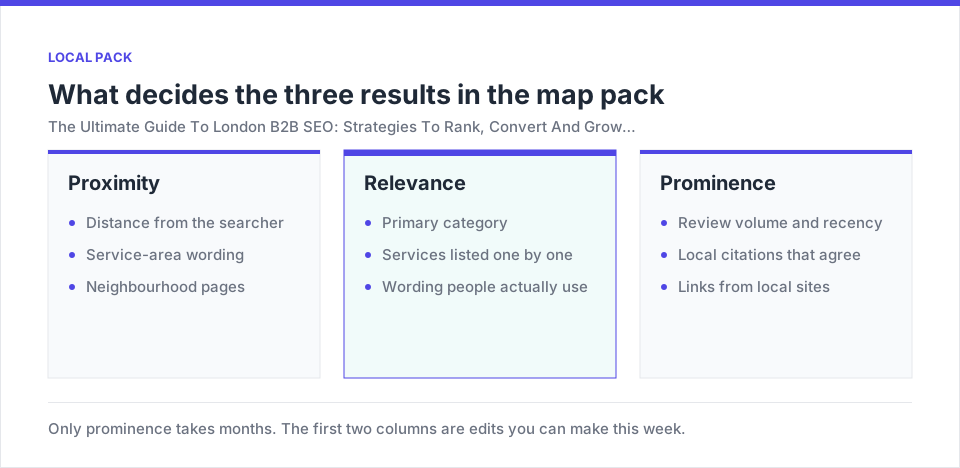
5) Integrating Citations With Four-Surface Momentum
Citations must travel across all four surfaces. On Web Pages, they anchor local relevance and service-area messaging. In Knowledge Experiences, they reinforce topical authority with district references. Maps-like Signals gain precision from accurate, district-aligned listings, and Local Packs benefit from GBP-backed proximity signals corroborated by robust citations. The governance spine travels with every asset, and WhatIf Momentum gates act as preflight checks to safeguard locality relevance and surface balance before publication. For practical governance resources, use the London SEO services hub and connect via the London contact page to tailor a district-first citation programme.
When planning outreach, prioritise district-relevant partnerships and events that yield legitimate, context-rich backlinks. Attach artefacts to every citation update so regulator reviews can trace provenance from seed terms to live listings and four-surface activations. This integrated approach ensures momentum remains auditable as the London footprint grows.
Link Building And Digital PR In The London B2B Ecosystem
In a district-aware London B2B SEO programme, link-building and digital PR sit at the intersection of authority and proximity. They must be woven into the governance spine that governs four-surface momentum—Web Pages, Knowledge Experiences, Maps-like Signals, and Local Packs—so every backlink and mention travels with provenance, audit trails, and regulator-friendly reporting. This Part translates the governance framework into practical, district-informed outreach playbooks that attract high-quality, London-relevant links while maintaining ethical standards and measurable momentum across districts.
1) The Governance Spine For Link Building
The governance spine for link-building ensures every outreach activity, partnership, and digital PR initiative is traceable to a district footprint and four-surface objective. Attach artefacts to major assets that travel with links and PR mentions: TL notes (local rationale), LF depth (neighbourhood texture), and CDS trails (signal lineage). This makes external signals auditable for regulators and credible to stakeholders. WhatIf Momentum gates apply not only to on-site content but also to external partnerships, ensuring they align with four-surface momentum before outreach proceeds.
Key governance actions include maintaining a central artefact library within the London hub, documenting outreach rationale, and linking every external signal back to the Canonical Local Topic Footprint (CLTF). Regular audits and dashboards demonstrate how each link or PR activity contributes to district momentum and city-wide authority without sacrificing transparency.
- Artefact Attachment: Pair each outreach asset with TL notes, LF depth, and CDS trails to preserve provenance.
- Gate-Driven Outreach: Use WhatIf Momentum gates to approve external partnerships only when local relevance and cross-surface balance are verified.
- District-Driven Targets: Align outreach targets with borough-level needs, transport corridors, and industry clusters to maximise proximity signals.
- Auditability: Keep dashboards that show decisions, outreach outcomes, and link-path provenance for regulator-friendly reviews.
2) WhatIf Momentum Gates: The Preflight For Outreach
WhatIf Momentum Gates act as publishing guardrails for external signals as they do for on-site content. Gate criteria include local relevance, cross-surface balance, governance completeness, and regulatory alignment. Each gate requires artefacts attached to the asset so regulators can audit the decision path from seed terms to live links and mentions. In practice, you gate outreach initiatives such as press releases, guest posts, and sponsorships just as you gate major web updates.
Practically, before outreach proceeds to publish or placement, teams confirm district alignment, evaluate the synergy with district landing pages and Knowledge Experiences, and ensure any claims are backstopped by data. If a proposed PR opportunity fails a gate, editors iterate, attach missing artefacts, and re-run the gate. This disciplined cadence reduces risk and accelerates time-to-market for district initiatives while preserving auditability.
Implementation tips include embedding gate criteria into the outreach workflow, documenting preflight outcomes in governance dashboards, and embedding artefacts with every external signal so momentum is verifiable to stakeholders and regulators.
3) London-Focused Outreach And Digital PR Strategy
Link-building and digital PR in London hinge on a strategy that respects district realities while driving authority city-wide. Start with a district-first target map that identifies high-value publications, industry bodies, venues, and local authorities across boroughs. Align outreach with CLTF topics so every external signal reinforces four-surface momentum—from district landing pages to Knowledge Experiences and GBP signals. A district-friendly PR plan should combine high-quality editorial assets with credible data visuals, case studies, and partner-led content that resonates with London buyers in procurement cycles.
Practical steps include: building a borough-aligned target list, developing anchor assets (case studies, whitepapers, ROI reports) that attract relevant backlinks, and coordinating with content and UX teams to ensure landing pages and Knowledge Experiences reflect the outreach narrative. Attach governance artefacts to every outreach activity so regulators can trace the rationale from target discovery to live placements. For practical templates and dashboards, consult the London hub and the services hub on londonseo.ai, then start outreach through the contact channel to tailor a district-first PR programme.
- Target Identification: Segment targets by borough, sector, and transportation corridors to maximise proximity signals.
- Asset Alignment: Create PR-ready assets that directly support district pages and GBP updates, improving cross-surface relevance.
- Relationship Building: Invest in long-term relationships with editors, event organisers, and industry voices who publish authoritative London content.
- Regulatory Awareness: Maintain regulator-friendly disclosures about AI contributions, authorship, and sourcing for transparency.
4) Content Alignment And Digital PR Assets
Digital PR benefits from tight alignment between content strategy and external signal generation. Develop cornerstone content—whitepapers, thought leadership pieces, and data-driven case studies—that anchors outreach and attracts high-quality, London-relevant backlinks. Each asset should be designed to resonate with district realities (transport patterns, regulatory considerations, local industry narratives) while supporting four-surface momentum through on-page pages, Knowledge Experiences, GBP mentions, and local packs.
Anchor asset development to district narratives: build a suite of content assets that can be distributed to publications, industry sites, and local authorities. Attach governance artefacts to every asset so that TL notes (local rationale), LF depth (neighbourhood texture), and CDS trails (signal lineage) accompany the asset through every publication and backlink acquisition. WhatIf Momentum gates should be used to validate local relevance and cross-surface balance before outreach goes live.
- Pillar Content: Create data-rich guides and reports that district editors reference as credible sources.
- Case Studies: Develop London-centric case studies with measurable ROI for procurement and enterprise buyers.
- Thought Leadership: Publish opinion pieces from district-expert voices to strengthen topical authority.
- Visual Assets: Data visualisations and infographics that travel well to external publications.
5) Measuring Link-Building And Digital PR Impact Across Four Surfaces
Measurement must capture both quality and proximity. Track referring domains, domain authority shifts, referral traffic, and conversions attributed to PR placements and editorial backlinks. Use regulator-friendly narratives that demonstrate how external signals align with CLTF topics and governance artefacts for traceability. Monitor how backlinks influence Local Pack visibility, GBP interactions, and on-site engagement on district landing pages and Knowledge Experiences. This multi-surface view ensures that link-building and digital PR drive practical business outcomes, not just inputs.
Practical KPIs include: the number of new referring domains by district, improvements in proximity signals across boroughs, lift in Local Pack impressions, and conversions attributed to PR-driven traffic. Regular board-ready reports should distil momentum by district and surface, with clear explanations of decisions and outcomes. The London hub provides dashboards and templates to standardise measurement and reporting across four surfaces.
Deliverables, Next Steps, And How To Start
To translate these practices into action, engage with a dedicated SEO specialist in London and explore how londonseo.ai/services can be configured for your sector. Start with a district-focused outreach audit via the contact page to map targets, assets, and governance artefacts. For external, regulator-friendly references that support governance maturity, consult Google’s Link schemes guidelines and Moz’s Link building: What is link building? as practical anchors.
Starting points include finalising a district-specific outreach calendar, assembling asset libraries in the London hub, and establishing governance cadences for monthly or quarterly reviews. Engage via londonseo.ai/services and connect through londonseo.ai/contact to tailor a district-first link-building and PR programme.
The London SEO Process: Discovery To Reporting
In London, local SEO momentum hinges on a disciplined, governance-forward process that travels with major assets across Web Pages, Knowledge Experiences, Maps-like Signals, and Local Packs. This Part 8 details a practical, district-aware workflow from discovery through regulator-ready reporting, anchored by the Canonical Local Topic Footprint (CLTF) and WhatIf Momentum gates. The aim is to translate insights into auditable momentum that scales across districts while maintaining transparent provenance for stakeholders and regulators. For practical templates, dashboards, and artefacts, explore londonseo.ai/services and connect via londonseo.ai/contact to tailor a district-first approach.
1) Discovery And Baseline: Establishing The London Footprint
The discovery phase begins with stakeholder interviews, site health audits, and performance baselining to surface district-level opportunities while preserving city-wide coherence. A district footprint map captures boroughs, neighbourhood clusters, and venues that signal high local relevance. This footprint anchors the Canonical Local Topic Footprint (CLTF) and binds momentum across four surfaces from Day One.
Deliverables include a district cluster list, baseline keyword themes, and a governance artefact plan that attaches TL notes (local rationale), LF depth (neighbourhood texture), and CDS trails (signal lineage) to major assets. This governance spine travels with assets, enabling regulator-friendly reporting as momentum evolves across four surfaces.
2) District Footprints And Canonical Local Topic Footprint (CLTF)
Translate the footprint into a CLTF that maps district clusters to four-surface activations. For each district, define intent themes across informational, navigational, transactional, and local-discovery queries. The CLTF becomes the spine for district landing pages, knowledge assets, and GBP signals, ensuring every asset has provenance and a clear audit trail. This district-led approach keeps regulatory and governance expectations front and centre as you scale.
Practically, this means a master district map, a district keyword map, and a surface-activation plan that guides content creation, structured data, and proximity signals. Governance artefacts travel with the assets to support auditable momentum across all four surfaces.
3) Keyword Research And Surface Mapping
In London, keyword research must reflect district vernacular and local intent. Build district-focused keyword maps that align with Web Pages, Knowledge Experiences, Maps-like Signals, and Local Packs. Use district clusters to prioritise pages and assets, ensuring each term has a tangible local pathway. Proximity terms, venue names, transport patterns, and district events should drive content ideas and Knowledge Experiences that deepen topical authority.
Artefacts accompany keyword decisions — TL notes for local rationale, LF depth for neighbourhood texture, and CDS trails mapping signal lineage. This creates a transparent, auditable path from seed terms to assets across four surfaces.
4) Strategy Formulation And Governance
With discovery and CLTF in place, formulate a London-wide strategy that preserves local flavour while delivering city-wide momentum. The strategy combines four-surface activations with a governance spine: TL notes for local rationale, LF depth for neighbourhood texture, and CDS trails for signal lineage. WhatIf Momentum gates sit at publishing checkpoints to verify local relevance and cross-surface balance before content goes live. This governance layer ensures every asset is auditable and aligned with regulatory expectations.
Key governance practices include regular stakeholder reviews, district dashboards, and a transparent narrative that ties surface performance back to district objectives. The London hub hosts onboarding templates and governance artefacts to accelerate maturity.
5) Onboarding And Artefacts: Setting The Registration For Momentum
Onboarding synchronises internal teams with the governance spine and surface activation plan. Establish a concise 90-day onboarding cadence that attaches artefacts to major assets from Day One. TL notes, LF depth, and CDS trails should accompany Web Pages, Knowledge Experiences, GBP signals, and Local Pack assets. WhatIf Momentum gates integrate into publishing workflows, acting as preflight checks that surface local relevance and cross-surface balance before publication.
The onboarding process should create regulator-friendly reporting channels, including per-district dashboards and a master London view. The London hub provides governance templates and onboarding resources to accelerate maturity and sustain momentum as districts scale.
6) WhatIf Momentum Gates And Publishing Cadence
WhatIf Momentum gates serve as publishing guardrails for external signals as they do for on-site content. Gate criteria include local relevance, cross-surface balance, governance completeness, and regulatory alignment. Each gate requires artefacts attached to the asset so regulators can audit the decision path from seed terms to live links and mentions. In practice, before outreach proceeds to publish or placement, teams confirm district alignment, evaluate the synergy with district landing pages and Knowledge Experiences, and ensure any claims are backstopped by data. If a proposed PR opportunity fails a gate, editors iterate, attach missing artefacts, and re-run the gate. This disciplined cadence reduces risk and accelerates time-to-market for district initiatives while preserving auditability.
Implementation tips include embedding gate criteria into the outreach workflow, documenting preflight outcomes in governance dashboards, and embedding artefacts with every external signal so momentum is verifiable to stakeholders and regulators.
7) Dashboards, Reporting, And Regulator Readiness
A London programme thrives on dashboards that fuse district granularity with a city-wide view. Per-district momentum should be visible across four surfaces, with regulator-friendly summaries that document momentum, decisions, and outcomes. Artefacts travel with assets to preserve provenance and enable audits. The London hub offers templates and onboarding resources to accelerate maturity and maintain governance discipline across districts.
Regulator-ready reporting translates momentum into clear narratives for executives. Use dashboards that present district insights alongside a master London view, ensuring every action remains auditable and compliant with UK standards for transparency. Practical templates and artefact libraries are available in the London hub to standardise reporting across districts.
8) Take Action: Start Measuring Success In London Local SEO
To embed these measurement practices, visit the London hub to access CLTF-aligned dashboards, artefact libraries, and WhatIf Momentum frameworks. Start onboarding by contacting the London contact page and explore service definitions at londonseo.ai/services for governance-powered momentum. For external foundations, consult Google's SEO Starter Guide and Moz's What Is SEO? as practical anchors.
The London hub offers governance templates, artefact libraries, and dashboards to accelerate maturity. Begin onboarding via londonseo.ai/services and connect through londonseo.ai/contact to tailor a district-first governance programme.
Answer Engine Optimisation And The Rise Of GEO In London
Answer Engine Optimisation (AEO) is redefining how London brands win visibility by prioritising direct, concise responses in search results. When paired with Generative Engine Optimisation (GEO), which uses AI-enabled ideation and editorial governance to surface district-relevant language, AEO becomes a practical pathway to capture voice, snippet, and knowledge panel opportunities across London’s four-surface momentum: Web Pages, Knowledge Experiences, Maps-like Signals, and Local Packs. This Part 9 translates AEO and GEO into a governance-forward framework that a SEO specialist in London can deploy within the londonseo.ai services ecosystem, ensuring regulator-friendly provenance and auditable momentum from Day One.
Understanding AEO In A London Context
In London, search intent is often local and task-driven. AEO focuses on structuring content so search engines can extract precise answers to user questions, whether via featured snippets, People Also Ask panels, or voice-assistant transcriptions. To succeed, you must align content with a Canonical Local Topic Footprint (CLTF) that maps district topics to four-surface activations. This alignment ensures that AI-assisted outputs travel with provenance artefacts and remain auditable for regulators. The governance spine should accompany every asset with TL notes (local rationale), LF depth (neighbourhood texture), and CDS trails (signal lineage), so what the audience sees reflects district realities and four-surface momentum remains coherent.
Practical outcome: concise, accurate answers that reinforce proximity signals and drive traffic deeper into district pages, Knowledge Experiences, or GBP interactions when appropriate.
2) GEO: AI-Augmented Content With Editorial Guardrails
GEO uses AI to surface district vernacular, transport realities, and local service nuances at scale, while editors validate and attach governance artefacts. The process preserves transparency and accountability, ensuring outputs carry provenance and remain regulator-friendly. WhatIf Momentum gates act as publishing preflight checks, confirming local relevance and cross-surface balance before content goes live across Web Pages, Knowledge Experiences, Maps-like Signals, and Local Packs.
When combined with CLTF, GEO enables rapid topic expansion for district hubs, knowledge bases such as FAQs and neighbourhood guides, and proximity-driven content for Local Packs. Artefacts accompany every output, creating an auditable trail that supports governance reviews and regulator-friendly reporting.
3) Practical Workflow: From Prompt To Publish
Step 1: Define district prompts that reflect London vernacular, transport contexts, and service expectations. Tie prompts to CLTF topics to ensure outputs map to four-surface activations. Step 2: Validate outputs through editors, fact-checks, and compliance checks, attaching TL notes for local rationale, LF depth for neighbourhood texture, and CDS trails for signal lineage. Step 3: Publish with WhatIf Momentum gates, ensuring local relevance and surface balance. Step 4: Monitor performance across surfaces and iterate prompts based on real-world feedback and regulator requirements. This disciplined workflow keeps AI contributions transparent and aligned with district priorities while enabling rapid experimentation across four surfaces.
4) Surface-Specific AEO Applications In London
Web Pages – District landing pages and service descriptors crafted to reflect local language, transport patterns, and conversions; ensure CLTF linkage and clear calls to action. Knowledge Experiences – FAQs and how-tos grounded in district contexts; these assets deepen topical authority and support near-me and local-discovery queries. Maps-like Signals – Proximity-enabled signals amplified by district content and location data. Local Packs – GBP-backed near-me results that benefit from district alignment and Knowledge Experiences. All outputs should travel with governance artefacts to preserve provenance and enable regulator-ready reporting.
In a London setting, these activations help move users from discovery to conversion in a district-aware, city-wide framework, while maintaining auditable trails for accountability.
5) Measuring AEO And GEO Impact
Measure success with regulator-friendly dashboards that show district-level momentum across four surfaces and city-wide performance. Key metrics include:
- Impressions and click-through rate for snippet and knowledge-panel placements.
- Click-through rate from Local Packs and GBP interactions into district landing pages.
- Engagement and dwell time on Knowledge Experiences, including FAQs and how-tos that feed authority signals.
- Conversions attributed to AI-informed content across four surfaces.
Dashboards should present per-district momentum alongside an aggregated London view, with regulator-friendly reporting that explains decisions and outcomes. For practical anchors, consult Google’s SEO Starter Guide and Moz's What Is SEO?.
Next Steps: Getting Started With AEO And GEO In London
To embed governance and WhatIf Momentum Gates in your London campaigns, begin with a district footprint and a CLTF-aligned activation plan. Engage with a dedicated SEO specialist in London and explore how londonseo.ai/services can be configured for your district footprint. You can request a preliminary district audit through the contact page to discuss district footprints, governance cadence, and CLTF alignment. For external references that support governance maturity, consult Google's SEO Starter Guide and Moz: What Is SEO?.
The London hub offers governance templates, artefact libraries, and dashboards to accelerate maturity. Start onboarding via londonseo.ai/services and connect through londonseo.ai/contact to tailor a district-first governance programme.
What To Expect: Timeline, Costs, And Accountability For A London-Focused Campaign
In a London market defined by density, speed, and regulatory awareness, a clear timeline, transparent budgeting, and rigorous accountability are essential. This Part 10 focuses on how four-surface momentum translates into real-world progress: Web Pages, Knowledge Experiences, Maps-like Signals, and Local Packs. It explains practical onboarding cadences, typical cost bands for city-wide campaigns, and the governance discipline that ensures regulator-ready reporting from Day One. With londonseo.ai as the governance spine, you’ll see how CLTF-driven activation, artefacts, and WhatIf Momentum gates keep momentum auditable across districts and surfaces. For practical templates, dashboards, and artefacts, explore londonseo.ai/services and connect via londonseo.ai/contact to tailor a district-first approach.
1) Timeline And Milestones: Four-Surface Momentum In Practice
Delivery in a London context hinges on a tightly scheduled onboarding and activation plan. The following four-cycle framing provides a practical roadmap that organisations can adopt from Day One, with artefacts travelling with every major asset to preserve provenance.
- Cycle 1 (Weeks 1–4): Finalise the Canonical Local Topic Footprint (CLTF) spine for core London districts, attach governance artefacts (TL notes for local rationale, LF depth for neighbourhood texture, CDS trails for signal lineage), and establish per-district dashboards. This stage focuses on aligning four surfaces with regulator-ready reporting structures and setting a credible baseline.
- Cycle 2 (Weeks 5–8): Publish starter district hubs, populate Knowledge Experiences, and optimise GBP signals. Strengthen cross-surface interlinking (Web Pages → Knowledge Experiences → GBP → Local Pack) to ensure proximity and context are reinforced at every touchpoint. WhatIf Momentum gates begin to function as preflight checks before live publishing.
- Cycle 3 (Weeks 9–12): Extend coverage to additional districts, deepen structured data schemas (Area Served, LocalBusiness, event/venue schemas), and enrich Knowledge Experiences with transport- and district-specific content. Validate momentum with dashboards and regulator-friendly summaries, refining prompts and governance artefacts as needed.
- Cycle 4 (Weeks 13–26): Scale to broader boroughs and suburbs, stabilise four-surface momentum activations, and institutionalise quarterly governance reviews. Integrate ROI narratives at district level into city-wide dashboards to support investment decisions and long-term planning.
Throughout these cycles, WhatIf Momentum gates remain a constant guardrail, ensuring local relevance and surface balance before any publish. Dashboards deliver per-district momentum alongside an overarching London view, making performance transparent to executives, regulators, and stakeholders. For practical onboarding resources and governance templates, explore the London hub and connect via londonseo.ai/contact to tailor a district-first cadence.
2) Budgeting London Campaigns: Starter, Growth, And Enterprise
London campaigns require budget bands that reflect district density, surface depth, and regulatory reporting needs. The following tiers provide practical anchors, with all figures indicative and subject to district mix, required governance artefacts, and CLTF scope.
- Starter Suburb Plans: £2,000–£4,000 per month. Includes CLTF spine setup, GBP hygiene for local clusters, baseline district dashboards with suburb filters, and regulator-ready artefacts.
- Growth Suburb Plans: £4,000–£10,000 per month. Adds expanded district landing pages, richer Knowledge Experiences, refined GBP signals, and cross-surface interlinking to strengthen proximity and authority across multiple districts.
- Enterprise Suburb Campaigns: £12,000–£25,000+ per month. Delivers full four-surface activations at scale, advanced governance artefacts, and analytics capable of per-suburb ROI narratives and regulator-friendly reporting.
Project-based work, such as spine finalisation or GBP hygiene overhauls, is typically priced separately. The guiding principle remains predictability: budgets scale with district ambition and the depth of four-surface activations required to achieve local goals. For governance templates, dashboards, and district playbooks, explore the London hub in londonseo.ai/services and begin onboarding via londonseo.ai/contact.
3) The 90-Day Onboarding Cadence: A Practical Schedule
Adopt a compact, regulator-friendly onboarding cadence that embeds governance artefacts from Day One and uses WhatIf Momentum gates to safeguard local relevance and cross-surface balance. A three-cycle plan is practical for most London campaigns and provides tangible milestones for stakeholders.
- Cycle 1 (Weeks 1–4): Finalise the CLTF spine for core London districts, attach governance artefacts (TL notes for local rationale, LF depth for neighbourhood texture, CDS trails), and establish per-district dashboards with regulator-ready reporting. Prioritise districts with the highest density to demonstrate momentum early.
- Cycle 2 (Weeks 5–8): Publish starter district hubs, populate Knowledge Experiences, refine GBP signals, and strengthen cross-surface linkages to protect provenance across four surfaces. Begin early KPI measurement against baselines.
- Cycle 3 (Weeks 9–12): Extend to additional districts, deepen schemas and knowledge assets, and embed WhatIf Momentum gates into publishing workflows for scalable momentum. Review ROI signals and reallocate budgets toward higher-potential districts.
WhatIf Momentum gates act as publishing preflight checks to verify local relevance and cross-surface balance before going live. Governance dashboards should provide per-district momentum alongside a master London view. For practical onboarding resources, explore the London hub and dashboards at londonseo.ai/services and connect via londonseo.ai/contact.
4) Measuring ROI And Accountability: Regulator-Friendly Dashboards
Momentum across four surfaces must be measured with dashboards that combine district granularity with city-wide visibility. Track topic velocity, surface coverage accuracy, uplift in Local Pack impressions, GBP interactions, and conversions attributed to AI-informed content. Attach artefacts to major assets to preserve provenance and enable regulator-ready audits. Regular reviews at board level should translate momentum into actionable insights, with per-district narratives explaining decisions and outcomes.
- Surface-Level Metrics: Engagement on district landing pages, Knowledge Experiences interactions, Maps-like proximity signals, and Local Pack impressions.
- Cross-Surface Attribution: Uplift analysis that connects Web Pages, Knowledge Experiences, GBP, and Local Pack activity to conversions.
- Governance Narratives: TL notes, LF depth, and CDS trails attached to assets to demonstrate provenance and enable regulator reviews.
For governance maturity, consult the London hub templates and dashboards. If you need a tailored onboarding path, start a conversation via londonseo.ai/contact and explore service definitions at londonseo.ai/services.
5) Choosing The Engagement Model: In-House, Agency, Or Hybrid
London businesses often balance brand control, speed to market, and governance maturity by choosing among in-house, agency, or hybrid arrangements. In London’s district-dense environment, a partner can rapidly close capability gaps, deliver governance-ready artefacts, and accelerate momentum across four surfaces. An in-house team offers brand consistency and regulatory intimacy, while a hybrid approach blends internal discipline with external acceleration to achieve scale quickly with governance control.
- Capability Depth: Do teams include editors, SEO strategists, UX writers, technical optimisers, and knowledge-asset producers capable of operating across all surfaces?
- Governance Maturity: Are artefacts documenting decisions, signal provenance, and regulator-friendly reporting in place?
- Speed To Market: Can district pages and knowledge assets be published quickly with cross-surface coherence?
- Cost And Predictability: Are pricing, SLAs, and dashboards transparent and scalable?
A practical path often combines core in-house work for district landing pages and evergreen Knowledge Experiences with agency accelerators for peak campaigns and rapid district expansion. This hybrid approach supports auditable momentum from Day One and maintains governance discipline as districts grow.
Next Steps: Getting Started Now
If you’re ready to implement a district-first budgeting framework, regulator-friendly ROI storytelling, and a decisive 90-day onboarding plan, begin with the CLTF-driven activation for London districts. Reach out to a dedicated SEO specialist in London and explore how londonseo.ai/services can be configured for your sector. You can also request a preliminary district audit through the contact page. For external governance anchors, consult Google’s SEO Starter Guide and Moz's What Is SEO? as practical anchors.
The London hub offers governance templates, artefact libraries, and dashboards to accelerate maturity. Start onboarding via londonseo.ai/services and connect through londonseo.ai/contact to tailor a district-first governance programme.
Budgeting, Resourcing, And Timeline For A London-Focused Campaign
London campaigns demand a disciplined, regulator-friendly approach to budgeting and governance. This Part translates the four-surface momentum framework into a practical financial and timing blueprint that ties spend to measurable momentum across Web Pages, Knowledge Experiences, Maps-like Signals, and Local Packs. The aim is to enable auditable decision-making from Day One while providing a scalable path as districts widen and surfaces mature. The London hub at londonseo.ai/services offers governance artefacts and CLTF-aligned templates to support regulator-friendly governance from Day One.
Budgeting Framework For London Campaigns
Adopt a tiered budgeting model that scales with district breadth and surface depth, always anchored to the Canonical Local Topic Footprint (CLTF). Translation provenance TL notes justify locale relevance, LF depth adds neighbourhood texture, and CDS trails document signal lineage from seed terms to four-surface activations. The four-surface budget model supports auditable growth as London neighbourhoods evolve from CBD cores to coastal and western suburbs.
- Starter Suburb Plans: £2,000–£5,000 per month. Includes CLTF spine setup, GBP hygiene for local clusters, district dashboards with suburb filters, and regulator-ready artefacts.
- Growth Suburb Plans: £5,000–£12,000 per month. Adds expanded district landing pages, richer Knowledge Experiences, refined GBP signals, and cross-surface interlinking to strengthen proximity and authority across multiple districts.
- Enterprise Suburb Campaigns: £12,000–£25,000+ per month. Delivers full four-surface activation at scale, advanced governance artefacts, and analytics capable of per-suburb ROI narratives and regulator-friendly reporting.
Project-based work, such as spine finalisation or GBP hygiene overhauls, is typically priced separately. The guiding principle remains predictability: budgets scale with district ambition and the depth of four-surface activations required to achieve local goals. For governance templates and district playbooks, explore the London hub at londonseo.ai/services and begin onboarding via londonseo.ai/contact.
Three-Cycle 90-Day Onboarding Plan
Adopt a compact, regulator-friendly onboarding cadence that embeds governance artefacts from Day One and uses WhatIf Momentum gates to safeguard local relevance and cross-surface balance. A practical 90-day plan typically unfolds in three cycles, each with explicit milestones and artefact attachments to maintain auditability across four surfaces.
- Cycle 1 (Weeks 1–4): Finalise the CLTF spine for core London districts, attach governance artefacts (TL notes for local rationale, LF depth for neighbourhood texture, CDS trails), and establish per-district dashboards with regulator-ready reporting. Prioritise districts with the highest density to demonstrate momentum early.
- Cycle 2 (Weeks 5–8): Publish starter district hubs, populate Knowledge Experiences, refine GBP signals, and strengthen cross-surface linkages to protect provenance across four surfaces. Begin early KPI measurement against baselines.
- Cycle 3 (Weeks 9–12): Extend to additional districts, deepen schemas and knowledge assets, and embed WhatIf Momentum gates into publishing workflows for scalable momentum. Review ROI signals and reallocate budgets toward higher-potential districts.
WhatIf Momentum gates act as publishing preflight checks to verify local relevance and cross-surface balance before going live. Governance dashboards should provide per-district momentum alongside a master London view. For practical onboarding resources, explore the London hub and dashboards at londonseo.ai/services and connect via londonseo.ai/contact.
Publishing Cadence, WhatToPublish, And Momentum Validation
Publishing cadence should be aligned with district priorities and governance artefacts. WhatIf Momentum gates act as publishing guardrails to ensure local relevance and cross-surface balance before content goes live. After publishing, maintain a 30–60 day validation window to compare actual performance with projections across all four surfaces. If a district underperforms, reallocate budgets toward CLTF topics with stronger momentum and adjust the content calendar accordingly. Attach artefacts — TL notes for local rationale, LF depth for neighbourhood texture, and CDS trails for signal lineage — to major assets to preserve regulator-ready provenance.
Dashboards should present per-district momentum alongside a city-wide synthesis, enabling executives to see how district investments translate into four-surface outcomes. WhatIf gates and governance artefacts travel with assets to support auditable momentum from discovery to conversion.
Dashboards, Regulator-Ready Reporting, And Cadence
The governance spine should be visible in dashboards that fuse district granularity with a London-wide overview. Per-district panels track engagement on Web Pages, Knowledge Experiences, Maps-like Signals, and Local Packs, while a master London view supports strategic oversight. Attach governance artefacts to major assets so reviewers can trace provenance from seed terms to live outputs. Regular governance reviews and dashboard refreshes help maintain consistency as the London footprint grows. The London hub offers templates and onboarding resources to accelerate maturity and maintain governance discipline across districts.
Next Steps And How To Start
If you’re ready to implement a district-first budgeting framework, regulator-friendly ROI storytelling, and a decisive 90-day onboarding plan, begin with the CLTF-driven activation for London districts. Reach out to a dedicated SEO specialist in London and explore how londonseo.ai/services can be configured for your sector. You can also request a preliminary district audit through the contact page. For external governance anchors, consult Google’s SEO Starter Guide and Moz’s What Is SEO? as practical anchors.
The London hub offers governance templates, artefact libraries, and dashboards to accelerate maturity. Start onboarding via londonseo.ai/services and connect through londonseo.ai/contact to tailor a district-first governance programme.
Future-Proofing With AI And Ethical SEO Copywriting In London
London’s local SEO maturity hinges on disciplined measurement, transparent governance, and regulator-ready reporting. This Part 12 translates the four-surface momentum framework into a practical, auditable standard for dashboards, KPIs, and timelines. By integrating AI-assisted outputs with human validation, you can demonstrate tangible momentum across Web Pages, Knowledge Experiences, Maps-like Signals, and Local Packs while preserving provenance attached to every asset. The London hub at the London SEO services hub provides governance artefacts and CLTF-aligned templates to support regulator-friendly governance from Day One.
1) Define Key Performance Indicators For Four Surfaces
Local momentum in London should be measurable on four fronts, each contributing to an auditable narrative for stakeholders and regulators. Establish district-level KPIs that tie directly to four-surface activations and governance artefacts.
- Web Pages KPI: Unique district-page sessions, conversion rate on district landing pages, and assisted conversions attributed to district content. Attach CLTF-aligned TL notes and LF depth to page-level metrics to preserve provenance.
- Knowledge Experiences KPI: Engagement depth (FAQs opened, how-tos read), time on page, and completion rates for district guides. Link metrics to TL notes and CDS trails to document knowledge authority growth.
- Maps-Like Signals KPI: Proximity impressions, click-throughs to directions, and requests for routes or store details. Tie signals to Area Served data and ensure governance artefacts accompany proximity improvements.
- Local Packs KPI: GBP impressions, actions (call clicks, directions), and conversions stemming from Near-Me results. Attach WhatIf Momentum gate outcomes to Local Pack changes for regulator-ready explanations.
With these four surfaces, momentum becomes an auditable chain from discovery to conversion. Dashboards present per-district momentum alongside a London-wide synthesis to support executives and regulators.
2) Dashboard Design And Cadence
Design dashboards that combine granular district insights with a cohesive London-wide view. Each dashboard should surface four panels corresponding to the four surfaces, with filters by borough, transport corridor, and service area. Governance artefacts—TL notes, LF depth, and CDS trails—should be attached to major assets and visible in dashboards to demonstrate provenance during regulator reviews. WhatIf Momentum gates feed the publishing workflow, ensuring every update passes a local relevance and cross-surface balance check before publication.
Recommended cadences: monthly momentum snapshots by district, quarterly cross-surface attribution analyses, and annual governance audits. Regular reviews ensure dashboards stay aligned with CLTF topics and district priorities and remain regulator-friendly as the London footprint expands.
3) WhatIf Momentum Gates In Practice
WhatIf Momentum gates are publishing safeguards, not blockers. Gate criteria should be explicit, repeatable, and shared across teams, covering four core conditions: local relevance, cross-surface balance, governance completeness, and regulatory alignment. Attaching artefacts to each asset creates an auditable path from seed terms to live outputs. If a gate fails, editors iterate, attach required artefacts, and re-run the gate. This approach reduces risk and accelerates time-to-market for district initiatives while maintaining regulator-ready provenance.
Practical application includes encoding gate criteria into publishing workflows, documenting preflight outcomes in governance dashboards, and ensuring artefacts are always carried forward with assets as momentum evolves.
4) Knowledge Assets And Local Signals Governance
Knowledge Experiences, such as FAQs and neighbourhood guides, should be generated with district cues and tied to four-surface activations. Attach TL notes for local rationale, LF depth for neighbourhood texture, and CDS trails for signal lineage to every asset. Link knowledge assets to district landing pages and GBP signals to sustain a district-informed journey from discovery to conversion. WhatIf gates should verify that new knowledge assets harmonise with existing four-surface momentum before publishing.
- Editorial Cadence: Align publishing with district events and transport patterns to maintain freshness in Local Packs and Knowledge Experiences.
- Cross-Surface Linking: Build robust cross-links from district pages to knowledge assets and GBP updates to sustain four-surface momentum.
- Governance Attachments: Every knowledge asset carries TL notes, LF depth, and CDS trails for auditability.
5) A 90-Day And 180-Day Roadmap For London Campaigns
A practical, regulator-friendly roadmap keeps momentum visible and scalable. The 90-day plan focuses on CLTF finalisation, artefact attachment, and starter district dashboards; the 180-day plan expands to additional districts, richer Knowledge Experiences, and deeper GBP signals, all under WhatIf governance gates. Track momentum monthly and adjust budgets and content calendars in line with ROI narratives derived from dashboard insights.
- Cycle 1 (Weeks 1–4): Finalise the CLTF spine for core London districts, attach governance artefacts, and establish per-district dashboards with regulator-ready reporting. Prioritise districts with the highest density to demonstrate momentum early.
- Cycle 2 (Weeks 5–12): Publish starter district hubs, populate Knowledge Experiences, refine GBP signals, and strengthen cross-surface linkages. Begin early KPI measurement against baselines.
- Cycle 3 (Weeks 13–26): Extend to additional districts, deepen schemas and knowledge assets, and embed WhatIf Momentum gates into publishing workflows for scalable momentum. Review ROI signals and reallocate budgets toward higher-potential districts.
WhatIf Momentum gates act as publishing preflight checks to verify local relevance and cross-surface balance before going live. Governance dashboards should provide per-district momentum alongside a master London view. For practical onboarding resources, explore the London hub and dashboards and connect via the London contact page to tailor a district-first cadence.
6) Regulator-Ready Reporting And Governance Cadence
Prepare regulator-friendly narratives by weaving district momentum into city-wide dashboards. Per-district momentum should be visible alongside a master London view. Attach artefacts to major assets to preserve provenance for audits. Regular governance reviews with stakeholders and regulators help maintain alignment as districts evolve. The London hub provides templates and dashboards to accelerate maturity, ensuring all outputs carry provable provenance from CLTF topics.
Take Action: Start Measuring Success In London Local SEO
To embed these measurement practices, visit the London SEO services hub to access CLTF-aligned dashboards, artefact libraries, and WhatIf Momentum frameworks. Start onboarding by contacting the London contact page and explore service definitions at londonseo.ai/services for governance-powered momentum. For external foundations, consult Google's SEO Starter Guide and Moz's What Is SEO? as practical anchors.
Next Steps And How To Start
If you’re ready to implement a district-first governance framework, regulator-friendly ROI storytelling, and a deliberate onboarding cadence, begin with CLTF-aligned activation for London districts. Reach out to a dedicated SEO specialist in London and explore how londonseo.ai/services can be configured for your sector. You can also request a preliminary district audit through the contact page. For external governance anchors, consult Google’s SEO Starter Guide and Moz's What Is SEO?.
The London hub offers governance templates, artefact libraries, and dashboards to accelerate maturity. Start onboarding via londonseo.ai/services and connect through londonseo.ai/contact to tailor a district-first governance programme.
