What is London-based SEO?
London’s digital marketplace is a dense, fast-moving arena where visibility can determine a business’s success. A SEO company based in London offers the leadership, sophistication, and proximity-focused know-how required to win in UK search and beyond. For clients of londonseo.ai, partnering with a London-based expert means accessing senior-level strategy, rapid onboarding, and a governance framework designed for city-scale campaigns that deliver measurable growth.
In practical terms, choosing a London-based SEO partner means prioritising proximity signals, GBP health, and district-level content that mirrors how readers search in the capital. The right partner will deliver an integrated programme that merges technical excellence with local relevance, producing higher Local Pack visibility and improved conversions across London's boroughs.
The London Advantage For SEO Partners
Being based in London confers unique benefits that directly impact results. A local seo company based in London benefits from close collaboration, near-market insights, and faster feedback loops with UK teams, developers, and content creators. It also carries an appreciation of the city’s boroughs, transport corridors, and consumer rhythms that drive district-level intent. The combination of senior strategic thinking and on-the-ground knowledge translates into geo-targeted keyword strategies, district pages, and proximity signals that matter for Local Pack and organic results.
Crucially, a London presence commonly enables better governance cadence, clearer communication, and faster cycles of learnings from real-world user behaviour in the capital. The end result is not just higher rankings, but an elevated, credible user journey from discovery to conversion.
Key Offerings You Can Expect From A London SEO Partner
In the context of a SEO company based in London, the offerings are designed to move readers from discovery to enquiry, with a district-first focus. A typical engagement combines technical excellence with local relevance and clear governance. Our London Local SEO Services illustrate how senior freelancers can be mobilised quickly within a city-wide strategy. You can explore the services here or book a discovery with our London experts to tailor a plan around your borough footprint.
Expect a London-based partner to deliver across five core areas:
- Technical audits, crawl-sitemap health checks, and site optimisations that support district pages.
- Geo-targeted on-page improvements and district content strategies aligned to local intent.
- GBP (Google Business Profile) optimisation and Local Pack activation guidance.
- Local backlink strategies and district-focused content marketing to build proximity authority.
- Analytics setup, KPI definition, and transparent monthly reporting on district performance.
When To Consider Hiring A London SEO Partner
A London-based seo company is often the right fit when you need rapid onboarding, a district-aware skillset, and a partner who can adapt quickly to shifting city markets without the overhead of a larger agency. Ideal scenarios include launching Local Pack strategies across multiple boroughs, building a cohesive hub-and-LocalPDP network, or delivering geo-focused content campaigns for a handful of districts. If your priorities include fast cycle times, transparent governance, and close collaboration with internal teams, a London-based expert can provide velocity that is hard to match with a traditional agency.
Before engaging, articulate the desired outcomes, the districts to prioritise, and how you will measure ROI. A concise discovery with our London experts can clarify scope, timelines, and governance cadences for rapid activation. If you’d like to start, book a discovery or review our London Local SEO Services as a practical reference point. For foundational guidance, refer to the Google SEO Starter Guide to align your approach with industry best practices.
What To Look For In A London SEO Partner
To maximise outcomes, seek signals of a strong fit tailored to London’s distinctive market:
- Proven results in London or comparable UK markets with district-level impact.
- Transparent processes, clearly defined deliverables, and a predictable governance cadence.
- Experience collaborating with in-house teams, developers, and content creators.
- Deep knowledge of GBP, Local Pack dynamics, and geo-targeted content strategies.
Partnering with a SEO company based in London is a strategic choice about pace, flexibility, and location-based insight. When you’re ready to start, you can explore the London Local SEO Services or book a discovery with our London experts to tailor a plan around your borough footprint. For practical guidance, you may also consult the Google SEO Starter Guide to align with best practices while focusing on local optimisation in London.
Understanding the London Search Landscape
londonseo.ai continues the journey from Part 1 by exploring how London’s unique market dynamics shape search visibility. The capital’s mix of dense competition, diverse districts, and time-sensitive reader journeys creates a distinctive SEO environment. This Part 2 delves into local intent patterns, maps visibility, and district-focused behaviours that underpin effective locality-led strategies for a SEO company London UK client base. By grounding our approach in London’s real-world reader journeys, we translate proximity signals into practical tactics that boost Local Pack momentum and organic visibility across the city.
Local intent and reader journeys in London
In London, search intent is highly contextualised by geography. Readers commonly combine service queries with district names, landmarks, or transit routes. A plumber near Shoreditch, a dentist near Covent Garden, or an electrician around Clapham illustrates how readers expect highly localised results. Successful London campaigns map these district-level intents into hub content and LocalPDPs, ensuring readers can move from discovery to enquiry with minimal friction.
To capitalise on this, build district keyword maps that reflect both generic demand and location-specific queries. Pair these with content designed to answer neighbourhood questions, such as proximity to transit hubs or local customer stories, so readers feel understood and.
Local packs, maps and GBP health in London
Google Business Profile (GBP) health remains a decisive factor for Local Pack visibility in London. Fresh posts, accurate NAP data, current hours, and complete service listings contribute to higher map presence and increased click-throughs from local searchers. London-based SEO programmes should prioritise GBP cadence alongside hub-to-LocalPDP interlinking so that readers encounter a coherent proximity narrative as they navigate from discovery to action.
When districts have strong GBP signals, Local Pack impressions rise, particularly for neighbourhoods with high footfall or dense business ecosystems. The goal is not just more visibility but more relevant traffic that converts in the local economy.
District content and hub interconnectivity
Think of the London locality network as a lattice: a central hub page anchors authority on city-wide topics, while district LocalPDPs surface district-specific details. Effective interlinking from hub to LocalPDPs, and between neighbouring districts, signals proximity to search engines and helps readers traverse from broad city guides to local actions. District briefs should be visually skimmable, with clear CTAs that reflect local availability and proximity advantages.
Templates that pair hub topics with district extensions enable fast production while preserving topical depth. This approach also supports governance by keeping content consistent across districts and aligned with GBP cadence.
Data hygiene and governance in a London framework
London campaigns demand high data hygiene to maintain credibility across districts. Key governance practices include regular GBP data checks, a district-specific content calendar, and a central dashboard that aggregates GBP metrics, LocalPDP engagement, and hub performance. Clear ownership for GBP health, LocalPDP production, and analytics helps keep teams aligned, even as the locality network expands into new boroughs.
Establish simple, repeatable processes so internal teams can respond quickly to proximity signals. Lightweight governance with clear milestones, dashboards, and transparent reporting drives momentum without creating bureaucracy.
Putting it all together: London’s proximity-driven framework
A successful London SEO programme blends district intelligence with governance and measurable outcomes. Local intent, GBP health, and hub-to-district interlinking work in harmony to build proximity authority across boroughs. The londonseo.ai approach emphasises locality-first planning, rapid activation, and transparent reporting so internal teams can see how district signals translate into enquiries and bookings.
For practical next steps, start with a discovery aligned to your target districts, then map GBP cadence, LocalPDP production, and hub content into a unified KPI framework. You can explore our London Local SEO Services to understand governance in action, or book a discovery with our London experts to tailor a district-focused plan for your footprint. For foundational guidance, refer to the Google SEO Starter Guide to align with best practices while focusing on local optimisation in London.
Local SEO Foundations for London Businesses
London's local search environment rewards a practical, district-aware approach delivered by seasoned professionals. An SEO freelancer in London concentrates on the core services that move readers from discovery to enquiry, while tailoring tactics to the city's diverse boroughs, transport corridors, and consumer rhythms. This Part 3 outlines the essential service pillars freelancers typically offer within a locality-first framework and demonstrates how londonseo.ai can mobilise senior freelancers quickly through our structured London Local SEO Services.
Audits And Baseline Assessments
Effective London SEO begins with a precise diagnosis. A freelancer conducts a rigorous, London-centric baseline to illuminate current signals, gaps, and opportunities across the city’s districts. The audit framework should be scalable, ensuring alignment with GBP activity, LocalPDP readiness, and hub content connections.
- Technical audits assess crawlability, indexing, site architecture, and Core Web Vitals implications for district pages.
- Content and keyword mapping checks verify coverage, intent alignment, and gaps in district-focused topics.
- GBP health and Local Pack readiness baselines are evaluated across key boroughs to prioritise initial proximity signals.
On-Page And Technical SEO Deliverables
Freelancers in London implement a practical on-page and technical playbook designed for rapid impact and long-term resilience. Expect geo-aware metadata, clear URL structures, optimised headers, and scalable schema to support LocalPDPs and hub pages. The objective is a coherent city-wide content lattice where district pages amplify proximity signals without diluting authority.
Key deliverables typically include refined title tags and meta descriptions with district relevance, an optimised internal linking strategy that mirrors reader journeys from hub to LocalPDPs, and a robust canonical and hreflang strategy where appropriate. Additionally, performance improvements target Core Web Vitals to sustain fast experiences for readers on mobile during urban commutes.
- Geo-targeted metadata and district-facing headers that reflect reader intent.
- Structured data and schema optimisations for LocalBusiness and LocalBusinessService to boost rich results.
- Internal linking rooted in hub-to-LocalPDP pathways that reinforce proximity signals.
- Technical health fixes such as crawlability, indexing, and Core Web Vitals improvements.
- Consistency of NAP data and district page coherence across the locality network.
Off-Page And Local SEO With GBP Management
Off-page signals and GBP activity are central to proximity in London. Freelancers coordinate local citations and ensure GBP profiles stay accurate, complete, and refreshed with district-specific content. They also guide local link-building efforts that prioritise locally authoritative sources, reinforcing the locality network and supporting LocalPack visibility.
In practice, expect guidance on district hub integration, GBP post cadences, and alignment of local content with external signals. This approach helps readers locate services near them and reinforces trust through consistent NAP data, reviews, and district-specific signals that energise local discovery.
- GBP cadence and Local Pack activation guidance across priority districts.
- Local backlink strategies and district-focused content marketing to build proximity authority.
- GBP post cadences and timely responses to reviews to sustain map visibility.
Analytics, Reporting And Governance
Measured progress is the backbone of credible London campaigns. Freelancers set up dashboards and governance cadences that translate proximity signals into actionable insights. The emphasis is on proximity signals translating into enquiries and bookings, with governance that keeps internal teams aligned and informed. Look for practical templates and starter dashboards that combine GA4, Google Search Console, GBP insights, and district-level conversions to tell a single, trustworthy story about local growth across London.
- District-level traffic, Local Pack impressions, and GBP interactions by borough.
- LocalPDP engagement and district conversions tied to reader journeys from discovery.
- City-wide dashboards with district drill-downs for rapid decision-making.
- Governance cadences: weekly quick checks, monthly reviews, and quarterly ROI discussions.
Partnering with a SEO company based in London is a strategic choice about pace, flexibility, and location-based insight. When you’re ready to start, you can explore the London Local SEO Services or book a discovery with our London experts to tailor a plan around your borough footprint. For practical guidance, you may also consult the Google SEO Starter Guide to align with industry best practices while focusing on local optimisation in London.
The Rise Of Generative Engine Optimisation (GEO) In London
London’s search landscape is evolving rapidly as AI-enabled querying shifts how readers discover services. Generative Engine Optimisation (GEO) blends traditional SEO with AI-generated insights to create district-aware experiences that stay credible, non-manipulative, and highly relevant to readers across the capital. At londonseo.ai, GEO is not a buzzword; it’s a practical framework designed for multi-district campaigns that must scale without sacrificing governance or proximity signals. By tying GEO to our locality-first governance, we translate the AI-era shift into tangible proximity gains, stronger GBP health, and measurable conversions for a London-based client base.
In practice, GEO means demanding templates, data-backed prompts, and disciplined editorial oversight that ensure AI-assisted outputs reflect real neighbourhood needs. Readers in Bloomsbury, Brixton, or Battersea expect content that speaks to their local context—landmarks, transit routes, community stories—while remaining consistent with a city-wide authority. GEO gives you that balance: fast ideation and rapid production, governed by clear district priorities and auditable results.
What GEO Means For London: A Practical Primer
GEO integrates AI-driven topic modelling with proven SEO signals to deliver responsive district experiences. It focuses on proximity, relevance, and trust, while enabling rapid content iteration in response to district demand. GEO is especially potent for Local Pack dynamics and organic rankings because outputs are anchored to real reader journeys and local intent. The aim is to produce district pages that feel human, well-researched, and contextually accurate, even when aided by AI tools.
Key implications for a London-based SEO programme include: district-specific templates that respect local nuance; governance that supports fast experimentation without compromising quality; and measurement frameworks that attribute value to proximity signals across boroughs. This is how londonseo.ai translates GEO into practical, scalable outcomes for readers and revenue alike.
GEO Architecture: District Networks, Hub Content And GBP Alignment
A robust GEO programme rests on three interconnected layers. The hub page establishes city-wide authority and provides a stable platform for district extensions. LocalPDPs surface district-specific details, linking back to the hub to reinforce proximity signals. Google Business Profile (GBP) activity remains a critical proximity signal, with timely posts and reviews feeding Local Pack momentum. In practice, this architecture lets AI-assisted outputs be filtered through a local lens, keeping content actionable and geo-relevant.
- Develop a central London hub page that captures city-wide topics and introduces district-level intents.
- Create LocalPDPs for priority districts, each connected to the hub and to neighbouring districts to support reader journeys that cross district boundaries.
- Maintain GBP cadence with district updates, ensuring NAP consistency and timely responses to reviews.
- Apply GEO-enabled templates that prompt district writers with local landmarks, transit routes, and community stories to ground outputs.
Step-By-Step GEO Implementation In London
- Define district objectives and success metrics for proximity signals, GBP engagement, LocalPDP depth, and district conversions.
- Map reader journeys from discovery to enquiry across key boroughs, identifying prompts and topics that will drive local engagement.
- Develop GEO templates for hub content and LocalPDPs that embed district context, landmarks, and transit elements to ground AI outputs.
- Integrate GBP cadence with GEO outputs so Local Pack visibility aligns with district content and hub themes.
- Establish lightweight governance, Looker Studio dashboards, and a clear cycle for updating prompts, templates, and district priorities.
Content, AI, And Local Authority: Balancing Quality With Speed
GEO accelerates content ideation and production, but quality and local relevance must never be sacrificed. The GEO framework relies on district briefs, writer prompts, and templates that enforce geography from the outset. Writers are equipped with district prompts that reflect notable landmarks, transit hubs, and authentic local narratives, ensuring outputs stay grounded in reader needs. londonseo.ai’s governance framework keeps outputs aligned with GBP health, hub-to-LocalPDP interlinking, and the locality network as a whole.
Practically, GEO informs the content mix: hub guides for city-wide context, LocalPDPs for district depth, FAQs for quick local answers, and micro-stories featuring local customers. The AI layer supports ideation and iteration, while editorial oversight preserves accuracy, tone, and editorial integrity. For practical templates and governance exemplars, explore our London Local SEO Services and consider a discovery with our London experts to tailor GEO-enabled district briefs to your footprint. For foundational guidance, consult the Google SEO Starter Guide to stay aligned with industry best practices.
Measuring GEO Outcomes: KPIs, Dashboards And Beyond
A GEO strategy thrives on transparent measurement. Key performance indicators include Local Pack lift by district, GBP post engagement, LocalPDP depth, hub-to-LocalPDP internal click-through rate, and district-level conversions. Looker Studio dashboards should deliver a city-wide view with district drill-downs, combining GA4, Google Search Console, GBP insights, and LocalPDP metrics to show how proximity signals translate into enquiries and bookings across London.
Governance remains lightweight: weekly quick checks for blockers, monthly performance reviews to reassess district priorities, and quarterly ROI discussions to recalibrate resource allocation as districts mature. This GEO framework is designed to scale with new districts and service lines while preserving content quality and governance discipline.
Content Strategy, Digital PR and Link Building in the London Market
In London, content strategy must blend district relevance with scalable governance. A london seo specialist coordinates high-quality content that supports conversions while feeding GBP health and Local Pack momentum. This Part 5 focuses on practical content architectures, district briefs, and cross-channel alignment to maximise proximity signals across the capital. londonseo.ai regularly demonstrates how senior freelancers can be mobilised quickly within our locality-first framework to deliver fast, local results across multiple boroughs.
Step 1: Discovery And Scoping
A focused discovery translates business goals into geography and reader journeys. Clarify which districts to prioritise, the services offered in each area, and the content formats most likely to capture local intent. Governance, reporting cadence, and decision rights are defined early to enable rapid activation across London’s districts. The output is a district-focused plan that maps GBP health, LocalPDP coverage, and hub content connectivity.
- Identify target districts and map reader journeys from discovery to enquiry, ensuring content topics align with local demand and landmarks.
- Agree a lightweight governance cadence, including weekly check-ins and monthly reviews, to maintain velocity without slowing momentum.
- Define a KPI framework that links content depth, digital PR impact, and link building activity to district-level outcomes and conversions.
Step 2: Baseline Audit And Data Snapshot
Post-discovery, the freelancer conducts a city-wide baseline with district granularity. This includes content coverage assessment, LocalPDP presence, GBP status, and the health of any existing district pages. The baseline informs ROI modelling and helps prioritise the first wave of LocalPDPs and district-focused content.
- Content gap analysis identifying high-potential districts where reader intent is underserved or misaligned with current coverage.
- Assessment of LocalPDP readiness and hub content connectivity to ensure a coherent locality network.
- GBP and Local Pack baselines across key boroughs to prioritise proximity signals that matter in London.
- Competitor benchmarking to calibrate district priorities and content depth against local incumbents.
Step 3: Strategy Development And Prioritisation
With a clear discovery and baseline, the freelancer outlines a district-prioritisation plan. The strategy specifies which LocalPDPs to build, how hub content will interlink with district assets, and where geo-targeted optimisations should be applied first. The aim is to create a city-wide content lattice where proximity signals are amplified by well-connected LocalPDPs and GBP activity across districts. Prioritisation should balance districts with strong local demand, proximity potential, and realistic delivery windows that fit budget and governance cadence.
Ownership should be clearly defined for hub content, LocalPDPs, and GBP activity to streamline decision-making and execution. A practical onboarding plan should include a district action map that ties GBP activity with local content, maps, and CTAs, along with district-specific content briefs and a published timeline so stakeholders can track progress against predictable milestones.
Step 4: Shortlist Freelancers And Run A Practical Discovery
Select a handful of London-based SEO freelancers who demonstrate district experience, GBP mastery, and collaborative governance. Request concise case studies aligned with your district footprint and seek references from similar London clients. Arrange structured discovery calls or paid pilots in one or two districts to validate fit before broader scale. A robust discovery should cover district priorities, delivery cadence, and a simple ROI forecast linked to proximity signals.
Whenever possible, ask for dashboards or samples of governance and dashboards used in prior projects. A credible freelancer will provide transparent pricing, milestone deliverables, and a governance plan that keeps internal teams informed without creating bureaucratic drag. To begin discussions, you can book a discovery with our London experts and review the London Local SEO Services for practical scope guidance.
Step 5: Onboarding Plan, Governance, And The 90-Day Starter Schedule
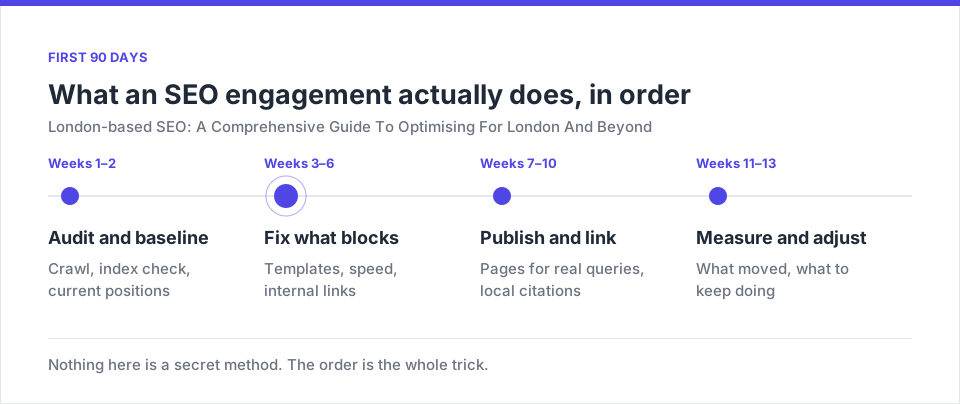
Turn discovery findings into a concrete, short-term onboarding plan that drives early proximity gains. Use a three-phase 90-day schedule: Phase 1 concentrates on GBP health, hub readiness, and LocalPDP activation for 2-3 priority districts; Phase 2 expands LocalPDP depth, aligns GBP posts with evolving content networks, and introduces geo-aware content briefs; Phase 3 deploys dashboards, governance cadences, and a scalable path for new districts and service lines. Each phase should have clear owners, milestones, and a simple ROI forecast tied to district-level outcomes.
- GBP health checks for all London locations, ensuring hours, services, and map placements are correct.
- Publish 2-3 LocalPDPs for priority districts connected to the city hub and refresh central hub content to reflect activity.
- Create geo-aware content briefs that embed maps, landmarks, and authentic local testimonials to reinforce proximity signals.
- Set up lightweight dashboards to monitor GBP activity, LocalPDP visits, and Local Pack impressions by district.
- Schedule monthly governance reviews to adjust district priorities based on proximity signals and ROI.
Link Building And Digital PR In The Capital
London-based SEO is as much about credibility and locality as it is about technical prowess. This Part 6 expands the locality-first narrative by detailing how pricing, contracts, and governance shape successful link-building and digital PR programmes in the capital. For London clients, working with senior freelancers through londonseo.ai means accessing district-aware strategies that align with GBP health, Local Pack momentum, and hub-to-district interlinking. The aim is to convert proximity signals into durable authority and measurable conversions across boroughs, while keeping governance lightweight and decisions rapid.
GBP-driven pricing: what it signals about value
Pricing for London-based SEO freelancers is increasingly tied to the maturity of GBP health, the breadth and depth of the LocalPDP network, and the density of district coverage. A robust GBP cadence—regular posts, accurate NAP, up-to-date services, and timely responses to reviews—contributes directly to Local Pack visibility and reader trust. When a freelancer prices work with these proximity signals in mind, it reflects more than link quantity; it represents disciplined governance across district pages, hub content, and LocalPDPs. Clients gain clarity on how each pound invested accelerates proximity signals into local enquiries and, ultimately, bookings.
Transparent pricing frameworks enable finance teams to forecast ROI with confidence. Look for proposals that tie cost items to GBP health maintenance, LocalPDP production, district interlinking, and the governance cadence that keeps the locality network coherent as it expands. If you’re evaluating options, request a breakdown that maps every line item to district impact and a cadence for reporting. For practical governance and scope reference, review our London Local SEO Services and book a discovery with our London experts to tailor pricing to your footprint.
Core pricing models you’re likely to encounter in London
Most London freelancers offer a blend of pricing formats designed to align swift activation with scalable district activity. A typical, district-aware package blends GBP health maintenance with LocalPDP production and governance that keeps internal teams aligned. The principal models you’ll encounter are:
- Monthly Retainer: An ongoing programme covering GBP maintenance, a central hub page, 1–3 LocalPDPs for priority districts, essential on-page alignment, and monthly reporting. This structure suits multi-district campaigns where predictable cadence and governance are valuable.
- Project-Based Pricing: Time-bound engagements aimed at delivering a major milestone such as LocalPDP launches in new districts or a significant link-building sprint tied to a district-focused campaign. It works well when you have a defined end-state and a plan to reassess post-delivery.
- Hybrid / Performance-Linked: A blended approach that combines a base retainer with a contingent performance component tied to defined proximity outcomes (Local Pack lift, district enquiries, or conversions). It rewards velocity and precision but requires clear attribution and governance to track contribution accurately.
Tying price to district reach and service depth
A practical London pricing discussion should translate geography and complexity into concrete cost reality. Central London hubs paired with a handful of LocalPDPs command different budgeting dynamics compared with a larger network spanning multiple boroughs. When evaluating proposals, insist on a district-by-district breakdown that shows GBP health activity, LocalPDP production, and district-linking work. This granularity helps you forecast ROI more accurately and understand where budget is being invested for proximity signals rather than merely for content volume.
In addition to district coverage, consider the breadth of services bundled into each line item: GBP health, hub content development, LocalPDP depth, local backlinks, and analytics governance. A transparent model makes it easier to adjust resources in response to proximity signals, market shifts, or shifts in reader behaviour across London’s districts. If you’re unsure how to structure this, our London Local SEO Services provide governance templates and practical scoping guidance you can adapt to your footprint.
Typical packaging tiers for London clients
To meet varied business needs, three common tiers help organisations scale with governance and clarity. The examples below reflect typical market realities in London, subject to district scope and service depth:
- Starter Foundation (£500–£1,500 per month): Core GBP health, a city hub page, 1–3 LocalPDPs for high-potential districts, essential on-page alignment, and monthly reporting. Suitable for small businesses testing locality-led optimisation.
- Growth Network (£1,500–£3,500 per month): Expanded LocalPDP depth (3–8 districts), regular GBP activity, district content briefs, enhanced local citations, and a more granular ROI dashboard. Targets mid-sized firms expanding proximity visibility.
- Scale Pro (£4,000–£12,000+ per month): Full locality network with 10+ LocalPDPs, advanced digital PR, sophisticated backlink strategy, dedicated account management, and high-frequency governance reviews. Aimed at established brands with multi-district service lines.
What’s included in each package
Packages in London typically bundle a localisation framework with governance. While exact contents vary, the following elements are commonly included across tiers:
- GBP health and Local Pack readiness aligned with hub and district pages.
- Geo-targeted on-page optimisation, including district-specific metadata and headers.
- Technical SEO foundations, site architecture, and structured data for district assets.
- Content planning and LocalPDP production to reflect reader intent in target districts.
- Backlink building and local digital PR designed to earn durable, locality-relevant authority.
- Analytics, reporting, and governance with dashboards reconciling GA4, GSC, GBP, and conversions by district.
Payment terms, contract lengths and governance
Contracts in London typically run on a 3–12 month horizon, with the majority falling into a 6–12 month window to realise proximity gains. Retainers are normally billed monthly, with quarterly reviews to reassess priorities, budget, and district focus. SLAs should cover response times, deliverable timelines, and escalation paths for blockers. Ensure the proposal is itemised by district and service line so you understand exactly what you’re paying for and when outcomes are expected.
Governance should remain lightweight to avoid slowing decision-making. A single point of contact, regular but concise reporting, and dashboards that present plain-language progress are strong indicators of a healthy London engagement. For practical governance templates, review the London Local SEO Services and book a discovery with our London experts to tailor the plan to your footprint. For foundational guidance on measurement, consult the Google SEO Starter Guide.
Content Strategy for a London Audience
London’s Boroughs form a dense, ever-evolving tapestry of search demand. A district-aware london based seo programme must translate city-wide authority into tangible local results. At londonseo.ai, our approach to content strategy centres on locality-first planning, rapid production, and governance that keeps readers moving from discovery to enquiry across multiple districts. This Part 7 translates the GEO-informed and district-led framework into practical content architectures that feed GBP health, Local Pack momentum, and hub-to-LocalPDP interlinking.
Readers in Bloomsbury, Brixton, or Forest Gate search with district nuances. The content strategy we outline is designed to surface those nuances, while preserving a cohesive, city-wide authority that search engines recognise as proximity-driven. The outcome is a scalable content network that improves Local Pack visibility and drives meaningful, measurable conversions for London-based clients.
District-focused content architecture
Build a lattice that connects a central city hub with district LocalPDPs. Start with robust hub content that signals city-wide authority on London-relevant topics. Then branch into LocalPDPs that address neighbourhood needs, landmarks, and services. The architecture should allow readers to move naturally from discovery to district enquiry, guided by clear interlinking and contextual metadata that search engines interpret as proximity signals. A well-structured hub-and-district network delivers both breadth and depth, ensuring every district adds incremental value to the overall proximity narrative.
Key moves include creating a city hub page that introduces major themes (transport, business districts, local culture) and developing LocalPDPs for priority districts with clearly defined intents. Interlinking from hub to LocalPDPs, and between adjacent districts, strengthens the perceived proximity of services to readers while helping GBP integration across the network.
LocalPDP briefs and district topics
District briefs should be grounded in geography. Each LocalPDP translates district intent into tangible content that demonstrates proximity and credibility. Prepare 4–6 district-specific topics aligned with reader questions about landmarks, transit routes, local businesses, and service gaps. Ensure each LocalPDP links back to hub content and to neighbouring districts to reinforce a cohesive proximity network across London.
Examples include: What services are available near a given transit hub? Where can residents access specialist local providers? How does a neighbourhood compare on price, speed, or quality? These prompts help writers generate content that reads as locally informed and genuinely helpful.
Content formats and production velocity
Utilise a diversified content mix that supports reader intent across districts and city-wide themes. Hub guides establish authority on overarching topics, LocalPDPs deliver district depth, FAQs address quick local questions, and micro-stories highlight local customers and case studies. Templates should be reusable, district-aware, and integrated with a governance calendar that aligns GBP cadence with LocalPDP launches. A rapid production cadence is essential in London’s fast-moving markets, so templates and prompts must be actionable, with clear editorial guardrails to maintain quality and consistency.
Content formats to prioritise include:
- City-wide hub guides that set the tone for proximity and authority.
- District LocalPDPs with rich local data, visuals, and maps.
- FAQs tailored to district-specific questions and immediate reader intents.
- Micro-stories and local case studies that humanise the proximity narrative.
Writer briefs and editorial governance
Writer briefs must embed geography at the source. Each LocalPDP should receive a district-focused briefing that cites nearby landmarks, transit routes, and authentic local scenarios. Provide writers with a reusable district brief structure that includes reader intent prompts, suggested titles, meta descriptions, and district-specific visual cues. Ensure hub content and LocalPDPs interlink to reinforce proximity signals and reader journeys.
Editorial governance should be lightweight but deliberate. Establish a district owner for content, a central content calendar, and a simple review process that keeps output aligned with GBP cadence and LocalPDP interlinking. The goal is to maintain quality and timeliness without creating bottlenecks that slow activation across multiple districts.
Governance, measurement and cross-channel alignment
Content strategy does not operate in isolation. It must be aligned with digital PR, backlink campaigns, and GBP health to reinforce proximity. A disciplined content calendar should synchronise hub content, LocalPDP launches, and GBP cadence with external signals such as press coverage and district-focused partnerships. A lightweight governance spine keeps teams nimble while ensuring consistency across districts. Look for practical templates for writer briefs, LocalPDP briefs, and a district content calendar that your internal teams can adopt quickly.
Measurement should capture district-level reader journeys as well as city-wide impact. Track LocalPDP engagement, Local Pack impressions, GBP interactions, and conversions tied to district activity. Looker Studio dashboards or your preferred BI tool should deliver a city view with district drill-downs so managers can see which boroughs deliver the strongest proximity signals and ROI. For practical examples of governance and dashboards, explore our London Local SEO Services and book a discovery to tailor templates to your footprint.
With london based seo at the core, London audiences expect content that speaks to place, pace, and local nuance. The strategy outlined here equips your team to produce district-informed content at speed, while maintaining editorial integrity and alignment with GBP health, hub interlinking, and district-level conversions. If you’re ready to translate these principles into a live programme, you can review the London Local SEO Services or book a discovery with our London experts to tailor district briefs to your footprint. For foundational guidance, consult the Google SEO Starter Guide to align with industry best practices while emphasising locality in London.
Content Strategy, Digital PR and Link Building in the London Market
Building on the GEO-informed, district-aware framework introduced earlier, Part 8 translates content strategy into practical structures that scale across London’s boroughs. The aim is to deploy topic clusters that reflect local industries, events, and community needs while maintaining a city-wide authority. At londonseo.ai, we fuse district briefs, hub content, LocalPDP depth, and disciplined governance to ensure every piece of content contributes to proximity signals, GBP health, and tangible conversions across London’s dynamic market.
District-focused content architecture
Think of London’s content network as a lattice: a central city hub page anchors authority on wide topics, while LocalPDPs surface district-specific needs. Each LocalPDP should address a defined reader intention (neighbourhood services, landmarks, or transit access) and link back to the hub to reinforce proximity. Inter-district links also help search engines understand spatial relationships, supporting nearby readers as they move from discovery to enquiry across boroughs.
Key actions include: building a robust city hub that introduces major themes (transport corridors, business districts, cultural hotspots); developing 4–6 LocalPDPs for priority districts with clearly defined intents; and ensuring every LocalPDP connects to adjacent districts to create a continuous proximity pathway.
Templates should standardise headings, meta elements, and visual assets so editors can publish district content fast without sacrificing depth. This approach preserves authority while enabling scalable district expansion under GBP cadence and Local Pack considerations.
Content formats and production velocity
London readers respond to a mix of city-wide guidance and district-level detail. Prioritise formats that answer common local questions: hub guides for broad city topics, LocalPDPs for district depth, FAQs for quick operations questions, and data-driven reports that showcase local performance. A rapid production cadence is essential in London’s fast-moving markets, so establish reusable templates and prompts that embed local context from the outset.
Suggested content formats include: city hub guides, district LocalPDPs with maps and transit references, district FAQs, and micro-stories featuring local customers. Each format should be optimised for both reader intent and search engines, with internal links guiding readers along the proximity journey from discovery to enquiry.
Writer briefs and editorial governance
Writer briefs must embed geography from the outset. For each LocalPDP, provide a district-focused briefing that references nearby landmarks, transit routes, and authentic local scenarios. Use a reusable district brief framework that includes reader intent prompts, suggested titles, meta descriptions, and district-specific visual cues. Ensure hub content and LocalPDPs interlink to reinforce proximity signals and reader journeys.
Governance should remain lightweight yet decisive. Assign a district owner, publish a simple content calendar, and implement a straightforward review process that maintains GBP cadence and interdistrict connectivity. Templates for LocalPDP briefs, hub content outlines, and cross-district linking guidelines help maintain consistency as the network grows.
Editorial calendars and multi-district cadence
A disciplined editorial calendar keeps London’s proximity narrative coherent across districts. Synchronise LocalPDP launches with GBP posts, hub updates, and district-wide content briefs so readers encounter a seamless proximity story from discovery to action. A district calendar should specify publishing windows, responsible editors, and alignment with GBP cadence to ensure timely, credible local signals.
Practical governance artefacts include a district content calendar, LocalPDP briefs, and a GBP post cadence playbook. Use dashboards to monitor district publication velocity, GBP health, LocalPDP engagement, and interlinking strength to ensure a well-balanced network.
Digital PR and link building aligned with content
Content strategy and digital PR must move as a single proximity narrative. Plan PR calendars that reinforce locality themes around neighbourhood landmarks, transport routes, and community events. Target locally relevant outlets, city portals, and district blogs that editors value for proximity and authority. Each PR placement should reinforce the district narrative and link back to LocalPDPs or hub content, creating a tangible path from discovery to local conversion.
Coordinate PR topics with district briefs so editors have ready-made assets (data visuals, local reports, transit insights) to reference. A lightweight governance spine ensures PR activity complements GBP cadence and does not disrupt editorial integrity. Use Looker Studio dashboards to correlate PR placements with LocalPDP engagement and proximity signals.
Link building in London: relevance over volume
Local, district-relevant links are more valuable than sheer link volume. Focus on editorial opportunities with neighbourhood outlets, borough portals, and community organisations that readers recognise as trustworthy. Tie backlinks to district content that provides measurable value, such as LocalPDP case studies, transit-focused data, or neighbourhood reports. Anchor text should reflect reader intent without over-optimisation, and every link should be contextually integrated into the proximity journey.
Governance practices include pre-approval for outreach, relevance checks, and an auditable record of placements. Look for partners who can demonstrate long-term adherence to guidelines and a transparent attribution model that credits proximity-driven results across GBP health, LocalPDPs and hub content.
Measurement, dashboards and governance
Transparent measurement ties together content, PR, and GBP health. Build dashboards that combine Local Pack impressions, LocalPDP engagement, GBP interactions, and district conversions. A city-wide view with district drill-downs helps leadership see which boroughs contribute most to proximity outcomes and ROI, and where to invest next. Look for governance templates that translate data into actionable decisions, such as which districts deserve accelerated content production or enhanced GBP cadence.
For practical templates and governance exemplars, explore our London Local SEO Services or book a discovery with our London experts to tailor district briefs and dashboards to your footprint. For foundational guidance on measurement, consult the Google SEO Starter Guide to align with industry best practices while applying locality nuance to your strategy.
Link Building And Digital PR In The Capital
London-based SEO campaigns rely as much on credible proximity signals as on technical excellence. This Part 9 deepens the locality-first narrative by detailing how ethical, district-focused link building and digital PR contribute to Local Pack momentum, hub-to-LocalPDP interlinking, and overall proximity authority. Built with governance and measurable outcomes in mind, the londonseo.ai approach ensures backlinks and editorial placements reinforce readers’ local journeys while remaining compliant and scalable for district expansion across the capital.
Quality Local Backlinks: Principles That Drive Proximity
High-quality local backlinks arise from relevance, authority, and context. In practice, this means links from neighbourhood-relevant publishers, borough portals, and community resources that readers recognise as trustworthy. District-focused content, such as LocalPDP case studies or transit-linked data reports, acts as an irresistible attractor for editors seeking locality-driven sources.
Prioritise editorial merit over volume. Seek links that naturally fit the district narrative, not just generic link-seeding. Anchor text should reflect reader intent without over-optimising, and each link should reinforce a clear proximity pathway from discovery to enquiry. The governance framework at londonseo.ai helps ensure these links support GBP health, hub interlinking, and LocalPDP engagement across multiple boroughs.
Strategic tactics include cultivating relationships with local business associations, borough portals, and community publications. Pair these with data-backed assets such as district performance dashboards or community reports to give editors a compelling reason to reference your content.
Editorial Links And Digital PR Calendars
Editorial links flourish when they’re part of a disciplined cadence. London campaigns should deploy a Digital PR calendar tightly aligned with LocalPDP launches, GBP cadence, and hub content updates. A well-structured calendar assigns district topics to city-wide themes, locks in editor-friendly assets (data visuals, local reports, transit insights), and times outreach to coincide with real-world events in the capital. This alignment ensures placements feel natural within readers’ local contexts rather than forced as standalone boosts.
In the UK market, editorial links that land from local outlets, borough portals, and community sites tend to deliver the strongest proximity signals. A district-focused press narrative can cascade into multiple LocalPDPs and hub pages, creating a coherent proximity story that search engines recognise as locally authoritative. To operationalise, prepare ready-to-customise outreach templates, a district PR calendar, and a library of local data assets editors can reference when drafting stories. GBP cadence and Local Pack readiness are easier to sustain when PR and content calendars move in lockstep.
Avoiding Penalties: Ethical Link Building And Compliance
Ethical practices protect GBP health and long-term growth. Establish clear outreach guidelines, prioritise district relevance, avoid manipulative schemes, and maintain transparent records of outreach activity and placements. Pre-approval workflows for outreach, relevance checks, and explicit distinctions between sponsored content and editorial links help sustain trust with readers and search engines alike. London-based practitioners should preserve an auditable trail of backlinks, ensure anchor text remains natural, and avoid mass submissions to questionable directories.
Partner with a London-based specialist who can demonstrate long-term adherence to Google’s guidelines while delivering district-scale results. This reduces risk and sustains proximity signals as you expand LocalPDPs into new districts. For governance reference, review the London Local SEO Services and discuss a tailored, compliant outreach plan during a discovery with our London experts. For foundational guidance, consult the Google SEO Starter Guide to stay aligned with best practices.
Measuring Backlink Impact Across Districts
Backlinks should be evaluated in the context of proximity, not just domain authority. Track district-level referring domains, anchor text diversity, and the alignment of links with district topics. Correlate backlink activity with LocalPDP engagement, Local Pack impressions, and GBP health to understand how editorial links move readers toward enquiries and bookings. Use city-wide dashboards with district drill-downs to observe which boroughs yield the strongest proximity signals and where more content or PR support is required. Regular governance reviews ensure the backlink programme stays aligned with GBP cadence and district priorities.
For practical templates and dashboards, London-based teams typically rely on Looker Studio or similar BI tools that fuse GBP health, LocalPDP depth, hub performance, and backlink metrics into a single proximity narrative. This enables leadership to identify which districts contribute most to proximity outcomes and where to invest next.
Templates, Governance And Onboarding For UK Link Campaigns
Operational templates speed up scale across districts. Use a district backlink brief, a district-targeted outreach template, and a PR calendar aligned to GBP cadence. Create starter Looker Studio dashboards that fuse GBP, LocalPDP engagement, hub performance, and backlink metrics into a single proximity narrative. Maintain lightweight governance so internal teams stay nimble while external activities remain auditable and growth-focused.
For practical onboarding, assign a district owner for each borough, provide writers with district link briefs, and schedule quarterly ROI reviews to determine where to invest next. If you’d like ready-to-use templates and governance exemplars, explore our London Local SEO Services and arrange a discovery with our London experts to tailor a district-wide backlink programme for your footprint. For foundational reading on best practices, consult the Google SEO Starter Guide to ensure local optimisations align with industry standards while focusing on proximity signals in London.
Onboarding Templates And District Content Starter Briefs For London SEO
Following the focused guidance on link-building and digital PR in Part 9, Part 10 translates those insights into practical onboarding templates and district content starter briefs tailored for a london based seo programme. The aim is to equip London-based freelancers and internal teams with repeatable, governance-friendly artefacts that accelerate activation across multiple boroughs while preserving GBP health, hub interlinking, and LocalPDP depth. All templates are designed with londonseo.ai governance in mind, ensuring fast-start capability without sacrificing quality or compliance.
Starter Templates For District Briefs
Two foundational templates form the backbone of rapid district activation. They are designed to be lightweight, auditable, and easily populated by writers, strategists, and GBP managers in London. Each template emphasises locality, governance, and measurable proximity outcomes while remaining flexible enough to apply to new boroughs as the network grows.
- District Brief Template: A compact briefing that translates district intent into tangible content topics, reader prompts, and district-specific CTAs. It specifies nearby landmarks, transit routes, and local stories to ground outputs in real places across London boroughs.
- LocalPDP Brief Template: A district-focused page brief with fields for intent, primary keywords, map integrations, visual assets, FAQs, and interlinking to hub content. This template anchors LocalPDP production within the citywide proximity network and ties into GBP cadence.
LocalPDP And District Brief Templates: A Practical Example
LocalPDP Brief Template (sample brixton):
: Brixton services, Brixton local providers, Brixton near me : Brixton traffic, Brixton map, Brixton families : Brixton Village, Brixton Market, Brixton Underground : Hub intro, Brixton LocalPDP sections, district FAQs, map embed, testimonials
The District Brief Template mirrors the LocalPDP Brief but is tailored to a specific district’s day-to-day questions, such as local availability, accessibility, and proximity advantages. Both templates share governance cadences so internal teams and freelancers align on outputs, timelines, and KPIs.
Hub Content And Interlinking Templates
To sustain a coherent proximity network, templates for hub content are essential. The hub content templates set the city-wide context and provide a stable backbone for district extensions. Interlinking guidelines ensure readers move naturally from discovery to district enquiry, reinforcing proximity signals that search engines interpret as location relevance.
- Hub content template: City-wide authority; umbrella topics; calls to action driving LocalPDP uptake.
- District link map: Clear interlinks from hub pages to LocalPDPs and to adjacent districts, reinforcing geographic proximity.
Governance Cadence And Dashboards
Templates for governance reduce friction while maintaining accountability. A lightweight cadence combines weekly district status updates, monthly governance reviews, and quarterly ROI assessments. Looker Studio or your preferred BI tool should be populated with starter dashboards that merge GBP health, LocalPDP depth, hub performance, and district conversions into a single proximity narrative.
- District ownership: assign a district owner for hub content, LocalPDPs, and GBP activity.
- Dashboard templates: city view with district drill-downs; shareable, plain-language insights for senior stakeholders.
90-Day Starter Schedule And Practical Milestones
- Phase 1: GBP health checks, hub readiness, and activation of LocalPDPs in 2–3 priority districts; establish the district action map and governance cadence.
- Phase 2: Expand LocalPDP depth, align GBP posts with district briefs, and implement geo-aware content briefs across new districts.
- Phase 3: Roll out dashboards, conduct governance reviews, and plan the next wave of district introductions to maintain momentum.
Practical Steps To Implementation
1) Start with a discovery that confirms target districts, GBP cadence, and district priorities. 2) Populate two to four LocalPDP briefs using the LocalPDP Brief Template. 3) Populate hub content with city-wide context and interlinking, ensuring readers can move to district pages smoothly. 4) Establish Looker Studio dashboards that fuse GBP health, LocalPDP engagement, and district conversions. 5) Schedule weekly quick checks to unblock blockers and adjust district priorities as proximity signals evolve.
Operational Excellence For London-Based SEO Campaigns
Having established the strategic and GEO-driven foundations in recent sections, Part 11 shifts focus to the practicalities of turning plans into repeatable, scalable results across London. This part emphasises onboarding, lightweight governance, and transparent dashboards that keep proximity signals moving from discovery to conversion. For London-based clients, a disciplined operational framework is as essential as technical mastery and district insight. The londonseo.ai approach integrates onboarding velocity with GBP health and Local Pack momentum to deliver measurable growth across multiple boroughs.
Onboarding And Alignment
Quick, aligned onboarding is the first pillar of success for a London campaign. Start by capturing district priorities, target services, and the reader journeys you intend to influence. Assign a district owner and a single point of governance to streamline decisions and reduce friction when inputs come from multiple internal teams. Establish a concise discovery output that maps GBP health, LocalPDP coverage, and hub connectivity to the district roadmap.
- Identify priority districts and define the immediate proximity signals you will prioritise for GBP and Local Pack.
- Appoint a district owner and a governance lead to ensure accountability and rapid decision-making.
- Agree a lightweight discovery deliverable that translates strategy into district-specific actions, timelines, and expected outcomes.
- Set a practical onboarding cadence that aligns content producers, developers, and marketing stakeholders with GBP and LocalPDP goals.
To begin the onboarding journey, explore London Local SEO Services for a ready-to-activate governance framework and district-ready playbooks. If you prefer, you can book a discovery with our London experts to tailor the setup to your footprint. For foundational guidance on how to align local strategy with universal best practices, consult the Google SEO Starter Guide.
Governance Cadence And Decision Rights
Governance in a London context is intentionally lightweight yet decisive. Establish a rhythm that supports rapid experimentation while preserving quality and accountability. A typical cadence includes a weekly 30-minute check-in to surface blockers, a monthly review to recalibrate priorities, and a quarterly ROI discussion to validate resource allocation against district outcomes.
- Define a RACI framework for hub content, LocalPDP production, and GBP activity to clarify ownership across districts.
- Publish a short, transparent dashboard update at each governance touchpoint to keep stakeholders informed.
- Agree escalation paths for blockers that could impact delivery deadlines or GBP cadence.
For practical governance templates and dashboards that support district-level reporting, refer to our London Local SEO Services and consider a discovery with our London experts to tailor governance cadences to your footprint.
Dashboards, Data And Transparent Reporting
Transparent reporting is the backbone of trust when operating across London’s districts. Build dashboards that combine GBP health, Local Pack impressions, LocalPDP engagement, and district-level conversions. A city-wide view with drill-downs by borough helps managers understand which proximity signals are driving enquiries and bookings. Looker Studio or your preferred BI tool should aggregate data from GA4, Google Search Console, GBP insights, and LocalPDP metrics into a coherent narrative.
- Track GBP cadence metrics: posts, updates, NAP accuracy and response to reviews by district.
- Monitor LocalPDP depth, hub-to-district interlinking, and district-to-district transitions in reader journeys.
- Present district ROI through enquiries and conversions linked to proximity signals.
Consistency matters. Keep dashboards lightweight, with plain-language summaries and actionable next steps. For practical starter templates and governance artefacts, explore the London Local SEO Services or book a discovery with our London experts.
Starter Templates And Quick Wins
Operational excellence relies on repeatable templates that keep quality high and cycles fast. Develop a district brief template, a LocalPDP brief, and a central hub content outline that can be used across districts with minimal tweaks. Pair these with a simple GBP cadence playbook to ensure timely updates and consistent cross-linking. A lightweight governance calendar keeps teams aligned while expanding the district network.
Typical starter templates include:
- District Brief Template: reader intent prompts, district-specific prompts, suggested titles, meta descriptions, landmarks, and transit references.
- LocalPDP Brief: district goals, nearby attractions, services, maps, and inter-district link strategies.
- GBP Cadence Plan: posting schedule, response guidelines, and review cadence by district.
To translate templates into reality for your footprint, review our London Local SEO Services and arrange a discovery with our London experts to tailor the briefs to your districts. For foundational guidance, consult the Google SEO Starter Guide.
A Practical London Scenario
Imagine Islington as a priority district. The onboarding plan triggers a hub-anchored LocalPDP that highlights nearby theatres, transport routes, and local services. GBP posts are scheduled weekly with district-specific updates, and a LocalPDP depth of 4–5 pages is targeted within the first 90 days. A dashboard tracks Local Pack impressions, GBP interactions, and district conversions, with a clear path from discovery to enquiry for readers moving through High Street and surrounding neighbourhoods.
The outcome is a tangible proximity lift across Islington, reinforced by cross-district links to adjacent boroughs and city-wide content that reinforces Islington’s locality within the broader London narrative. For ongoing guidance, you can review the London Local SEO Services or book a discovery with our London experts to tailor this scenario to your footprint. And as always, reference the Google SEO Starter Guide for foundational practices.
Website Migration and London SEO Risk Management
Moving a London-based website to a new platform, structure or domain is a high-stakes operation for SEO. In this Part 12, we translate the strategic, locality-driven framework developed by londonseo.ai into a pragmatic migration playbook. The objective is to preserve GBP health, maintain Local Pack momentum, and protect district-level reader journeys throughout the transition. A well-governed migration minimises ranking volatility and accelerates post-launch recovery, enabling readers to discover and convert with confidence. For a practical starting point, explore our London Local SEO Services or book a discovery with our London experts to tailor a migration plan around your borough footprint.
Step 1 – Pre-migration risk assessment And Stakeholder Alignment
The first phase concentrates on a London-specific risk assessment, ensuring business objectives, reader journeys, and proximity signals are preserved. Build a migration risk register that identifies critical URLs, key district pages, and GBP dependencies. Map current rankings and traffic to the proposed URL structure so you can anticipate which changes pose the greatest risk to Local Pack visibility and district engagement.
Engage stakeholders across product, development, content, and GBP management to establish governance, decision rights, and a clear communication cadence. Define success metrics such as preservation of Local Pack impressions, district-level conversions, and post-migration GBP health scores. The output should include a detailed migration brief aligned to your London footprint and district priorities.
Step 2 – Inventory And Mapping Of Current And Target URLs
Compile a comprehensive inventory of all URLs, assets, and GBP integrations. Classify pages by importance to Local Pack and district content: hub pages, LocalPDPs, and district resources deserve special attention. Create a mapping document that connects every existing URL to its target counterpart, including any necessary restructuring, renaming, or consolidation. For London campaigns, ensure mapping accounts for district-specific intents, landmarks, and transit references that readers expect when navigating within boroughs.
During this phase, evaluate canonicals, hreflang considerations where applicable, and the impact on structured data. Establish a robust plan for updating sitemaps and robots.txt to reflect the new architecture while preserving indexation of high-value pages.
Step 3 – Redirect Strategy And URL Governance
A disciplined redirect strategy is essential. Create a 1:1 or 1:many 301 plan from old URLs to their new districts-aligned counterparts, with careful handling of hub-to-LocalPDP pathways. Maintain a redirect map that prioritises district pages with strong GBP signals or high Local Pack impressions. Update canonical tags where necessary to prevent duplicate content issues and preserve authority across the locality network.
Coordinate redirects with sitemap updates, internal linking changes, and content adjustments to reinforce proximity signals. Document the governance for redirects, including ownership, review cycles, and contingencies for unexpected traffic shifts. After launch, monitor for 404s, redirect chains, and any unexpected ranking dips in London districts.
Step 4 – Staging, QA And Technical Validation
Deploy the migration in a controlled staging environment. Run exhaustive QA checks focused on crawlability, indexing, Core Web Vitals, and mobile experience for district pages. Validate internal links, hub-LocalPDP interconnections, and GBP integrations. Use synthetic user paths to ensure readers can smoothly move from discovery to district-level actions after the migration.
Simulate traffic across London districts to detect performance regressions, latency spikes, or navigational friction. Ensure analytics tracking remains intact, with GA4 events, goal conversions, and GBP insights wired to your city-scale dashboards. Establish a rollback plan for critical failures, including back-ups of content and configuration before flipping to the live environment.
Step 5 – Launch, Monitoring And Post-launch Optimisation
Live launch requires a precise, low-friction transition with immediate visibility into proximity signals. Monitor GBP health, Local Pack impressions, LocalPDP depth, and hub-to-district interlinking to confirm a stable proximity narrative post-migration. Compare post-launch performance against the pre-migration baseline to quantify impact and identify areas for refinement.
Implement a 90-day post-launch monitoring plan that prioritises district pages with historical rankings, GBP health segments, and pages driving high Local Pack visibility. Use Looker Studio or your preferred BI tool to present a city view with district drill-downs, ensuring leadership can assess ROI, reader journeys and conversions in a way that is comprehensible to non-technical stakeholders.
Throughout the process, maintain governance discipline and keep internal teams aligned with GBP cadence, LocalPDP production, and hub interlinking. If you are ready to translate these migration practices into action, you can review our London Local SEO Services or book a discovery with our London experts to tailor the go-live plan to your footprint. For foundational guidance, consult the Google SEO Starter Guide to align with industry best practices while managing local optimisation in London.
Integrating SEO With Other Digital Channels For Maximum Impact In London
SEO in a London context thrives when it operates as part of a cohesive, multi-channel growth strategy. The proximity-driven, locality-first framework championed by londonseo.ai comes to life when search optimisation coordinates with PPC, CRO, digital PR, content marketing and social media. This Part 13 demonstrates practical ways to knit SEO into the fabric of other channels, preserving governance, enhancing GBP health, and accelerating Local Pack momentum across London’s borough network.
Coordinated Cross-Channel Planning
In London, SEO does not stand alone. A truly effective programme aligns organic visibility with paid search, conversion rate optimisation, content marketing, email, and social campaigns. A shared governance model ensures that keyword strategies, content themes, and district priorities are harmonised across channels. The result is a seamless reader journey from discovery to enquiry, reinforced by consistent signals that search engines recognise as proximity-based credibility.
Key approaches include:
- Joint keyword research and intent mapping that informs both SEO and PPC campaigns for each priority district.
- A unified content calendar that supports hub topics, LocalPDP launches, GBP cadence, and paid promotions in lockstep.
- Cross-channel dashboards with district drill-downs to reveal how SEO, GBP, and paid media contribute to proximity signals and conversions.
- Consistent brand and messaging across channels so readers experience a cohesive proximity narrative from first touch to conversion.
Measurement And Attribution: Connecting SEO With The Rest
Accurate attribution is essential when multiple channels influence a reader’s path. Build a measurement framework that combines Google Analytics 4, Google Search Console, GBP insights, LocalPDP engagement, and hub performance. Looker Studio dashboards should present a city-wide view with district drill-downs, showing how proximity signals translate into enquiries and conversions across London.
Adopt attribution models that recognise multi-touch interactions, while keeping governance transparent. For example, credit Local Pack impressions and GBP interactions to district proximity signals, but also acknowledge the incremental impact of a well-timed PPC push or CRO optimisation on landing pages.
- Local Pack lift by district aligned with GBP post cadence and LocalPDP depth.
- Cross-channel path analyses illustrating where users start in organic or paid channels and convert via district pages.
- Attribution windows that reflect the typical buyer journey in London’s districts (e.g., 7–30 days for local services, longer for high-consideration purchases).
- Dashboard templates that translate complex data into plain-language insights for stakeholders.
Operational Tactics For London Agencies
Coordinating across SEO, PPC, CRO, and PR in London demands lightweight, effective governance. Establish a cross-functional cadence that keeps internal teams aligned and responsive to proximity signals. Practical templates should cover cross-channel district briefs, LocalPDP briefs, and a shared content calendar that respects GBP cadence while enabling rapid district rollouts.
- Joint editorial and media calendars with clearly defined KPI ownership across channels.
- Shared production workflows to maintain quality and speed while scaling to additional districts.
- Cross-channel dashboards and weekly blockers triage to prevent bottlenecks in activation.
Practical Implementation: A 90-Day Plan
Translate cross-channel theory into a tangible rollout. Phase 1 should stabilise GBP health, activate 1–2 LocalPDPs, and align the hub content with a district-focused message. Phase 2 scales LocalPDP depth, coordinates GBP posts with district briefs, and ensures content supports paid media objectives. Phase 3 broadens district coverage, enhances interlinking, and refines the measurement framework to sustain momentum across the network.
- Define district priorities and cross-channel goals for proximity signals and conversions.
- Synchronise GBP cadence with LocalPDP production and PPC campaigns.
- Publish 2 LocalPDPs in Phase 1 with hub interlinks and robust internal linking.
- Establish a cross-channel governance cadence and dashboards that track GBP, LocalPDP, and PPC impact by district.
