London Local SEO: Foundations and Strategy for the Capital
London presents a uniquely competitive local search landscape characterised by dense boroughs, a constant flow of tourists, and a wide mix of services from high street retail to professional firms. A London‑specific local SEO approach focuses on proximity, relevance and availability across the city’s 32 boroughs, plus the surrounding commuter belt. The aim is not merely to rank, but to convert foot traffic, phone inquiries and online leads into tangible business outcomes. At londonseo.ai, we structure local visibility around a scalable framework that translates district characteristics into measurable momentum across four activation surfaces.
A practical London strategy begins with a clear governance model and a set of repeatable artefacts that tie every decision to a local objective. This Part 1 lays the groundwork: defining what local SEO means for London, outlining the four activation surfaces, and introducing the governance mindset that keeps initiatives auditable and scalable as the city evolves. We will also outline how this approach translates into actions you can start today with our services at londonseo.ai services and the support of our expert team.
Why a London‑focused Local SEO matters
London’s search behaviour is highly local yet globally consumerised. People search for services near them, for out-of-town experiences, and for business interactions within specific neighbourhoods such as Westminster, Islington, Camden, or Hackney. The best London campaigns recognise that intent varies by borough, day of week and even time of day. This means optimising for geographies, service types and micro‑moments to capture users wherever they begin their journey.
Given the scale of London, a robust London Local SEO plan combines accurate business data, district‑level content, and map‑centric signals to appear in local packs, maps results and knowledge panels. It also requires disciplined governance to maintain data integrity across multiple boroughs and evolving business offerings. Our framework at londonseo.ai is designed to support that discipline from the start, and to scale as you expand into new neighbourhoods and services within the capital.
The four activation surfaces for London
To maximise local visibility and conversions, we organise the user journey around four activation surfaces. Each surface has its own user logic and success metrics, but they must work in concert to deliver a seamless London experience:
- Local Landing Pages: district or service pages optimised for local intent, with clear calls to action and district‑specific value propositions.
- Knowledge Experiences: guides, FAQs and neighbourhood content that establish topical authority and guide users from information to action.
- Map Signals: proximity cues, GBP optimisations and map listings that influence near‑me decisions and improve proximity visibility.
- Local Listings and Local Packs: near‑me results that reinforce trust and increase proximity conversions at the critical moment of decision.
When these surfaces are aligned, the user journey flows from discovery to action with clear traceability for audits and executive reporting. londonseo.ai offers practical templates, playbooks and governance examples to accelerate your LondonLocal SEO maturity and keep stakeholders accountable.
Canon Local Topic Footprint for London
The Canon Local Topic Footprint (CLTF) provides a practical blueprint that ties borough‑level insights to the four activation surfaces. The aim is not to crowd the city with pages, but to create coherent districts that connect seed terms to final assets with clear routes through Web Local Pages, Knowledge Experiences, Map Signals and Local Listings. A London CLTF should be designed to support governance, auditable decisions, and scalable growth as new boroughs or services are added.
Key governance artefacts include TL notes (local rationale), local texture depth (LF depth) describing the neighbourhood characteristics, and CDS trails (signal lineage) that map seed terms to final assets. WhatIf Momentum gates act as pre‑publication quality controls to maintain balance across surfaces even when service mixes or demographics shift. Dashboards should be filterable by borough and by activation surface to support executive readouts and regulatory reporting.
What London businesses are looking for from an agency
London firms expect a practical, outcome‑driven approach that understands the city’s diversity, mobility, tourism and business districts. A capable partner will present a London‑tailored CLTF with four activation surfaces, accompanied by transparent governance and artefacts that support every delivery. A well‑stocked library of artefacts and dashboards helps continuity across teams and provides a defensible record for clients and local authorities.
When evaluating proposals, request practical playbooks and local case studies with tangible metrics. londonseo.ai provides CLTF templates and district‑specific examples that help compare offers on the basis of governance clarity and potential momentum across London’s boroughs.
Next steps to start today
- Request an initial audit and a CLTF plan by borough: contact londonseo.ai via the contact page to obtain a diagnostic that links CLTF to your districts of interest and all four activation surfaces.
- Define priority boroughs and surfaces: identify central, inner and outer London zones, and plan activation of Local Pages, Knowledge Experiences, Map Signals and Local Packs.
- Request mandatory artefacts for every delivery: TL notes, LF depth and CDS trails, complemented by WhatIf Momentum gates for pre‑publication checks.
- Set up regulatory and business dashboards: request templates that connect momentum to district and surface KPIs to facilitate audits for clients and local regulators.
To accelerate, explore the London services pages at our London SEO services or reach out via the contact page to schedule a results‑driven consultation tailored to your London footprint.
Why Local SEO Matters for London Businesses
London presents a uniquely competitive local search landscape. With 32 boroughs, a constant influx of visitors, and a continually evolving mix of high-street retail, professional services and hospitality, visibility in local search is more than a nice-to-have — it is a growth imperative. A London-focused local SEO approach prioritises proximity, relevance and availability across the capital, ensuring your business appears in local packs, maps results and knowledge panels where customers are searching near you. At londonseo.ai we frame local visibility around four activation surfaces and a governance model designed to be auditable as London shifts — from Westminster to Wandsworth, Chelsea to Croydon, and every corner in between.
A practical London strategy starts with a clear governance mindset and a set of repeatable artefacts that tie every decision to a local objective. This Part 2 builds on Part 1 by translating London-specific district dynamics into momentum across four activation surfaces, while keeping decisions transparent for stakeholders. You can start today with our guidance and the support of the londonseo.ai team via London SEO services or the contact page.
The London Local SEO advantage
London's search behaviour blends local intent with cosmopolitan reach. People search for services near them, but they also explore neighbourhoods and districts as part of a broader journey. The best London campaigns recognise that intent varies by borough, day of week, and even time of day. This means optimising for geographies, services and micro-moments across districts such as Westminster, Islington, Camden, Hackney, and Greenwich. A robust London Local SEO plan ties together accurate business data, district-specific content and map-centric signals to appear in local packs, maps results and knowledge panels. It also requires disciplined governance to maintain data integrity across dozens of districts while adapting to evolving business offerings. londonseo.ai provides a scalable framework that supports that discipline from the first day and grows with your London footprint.
Four activation surfaces for London
To maximise local visibility and conversions, organise the user journey around four activation surfaces. Each surface has its own user logic and performance metrics, but they must operate in concert to deliver a seamless London experience:
- Local Landing Pages: district or service pages optimised for local intent, with clear calls-to-action and district-specific value propositions.
- Knowledge Experiences: guides, FAQs and neighbourhood content that establish topical authority and guide users from information to action.
- Map Signals: proximity cues, GBP optimisations and map listings that influence near-me decisions and improve proximity visibility.
- Local Listings and Local Packs: near-me results that reinforce trust and increase conversions at the critical moment of decision.
When these surfaces align, the user journey flows from discovery to action with traceable audits and executive reporting. londonseo.ai provides practical templates, playbooks and governance artefacts to accelerate London Local SEO maturity and ensure accountability across stakeholders.
Canon Local Topic Footprint for London
The Canon Local Topic Footprint (CLTF) ties borough-level insights to the four activation surfaces. The aim is not to flood London with pages, but to create coherent districts that connect seed terms to final assets via Web Local Pages, Knowledge Experiences, Map Signals and Local Listings. A London CLTF should support governance, auditable decisions, and scalable growth as new boroughs or services are added.
Key artefacts include TL notes (local rationale), local texture depth (LF depth) describing district characteristics, and CDS trails (signal lineage) mapping seed terms to final assets. WhatIf Momentum gates act as pre-publication quality controls to maintain balance across surfaces even as service mixes or demographics shift. Dashboards should be filterable by borough and by activation surface to support executive readouts and regulatory reporting for London as a whole and for individual districts.
What London businesses expect from an agency
London firms seek a practical, outcome-driven approach that understands the city’s diversity, mobility, tourism and business districts. A capable partner will present a London-specific CLTF with four activation surfaces, accompanied by transparent governance and artefacts that support every delivery. A well-stocked library of artefacts and dashboards ensures continuity across teams and provides a defensible record for clients and local authorities. When evaluating proposals, request practical playbooks and district case studies with tangible metrics. londonseo.ai provides CLTF templates and district-specific examples that help compare offers on governance clarity and potential momentum across London’s boroughs.
Next steps to start today in London
- Request an initial audit and a CLTF plan by borough: contact londonseo.ai via the contact page to obtain a diagnostic that links CLTF to your districts of interest and all four activation surfaces.
- Define priority boroughs and surfaces: identify central, inner and outer London zones and plan activation of Local Pages, Knowledge Experiences, Map Signals and Local Packs.
- Request artefacts for every delivery: TL notes, LF depth and CDS trails, complemented by WhatIf Momentum gates for pre-publication checks.
- Set up regulatory and business dashboards: request templates that connect momentum to district and surface KPIs to facilitate audits for clients and local regulators.
To accelerate, explore the London services pages at our London SEO services or reach out via the contact page to schedule a results-driven consultation tailored to your London footprint.
Key Local SEO Elements for London
London’s local search ecosystem is uniquely dense, spanning 32 boroughs and a constant flow of residents, workers and visitors. A London-focused local SEO approach centres on four activation surfaces: Local Landing Pages, Knowledge Experiences, Map Signals and Local Listings. At londonseo.ai we translate these surfaces into a practical framework tied to governance artefacts, so every decision links to district momentum and measurable business outcomes. This Part 3 unpacks the four foundational elements—Google Business Profile optimisation, local citations and NAP consistency, on-page and technical SEO, and review management—with London-specific best practices and actionable steps you can start today. To tailor the framework to your footprint, explore londonseo.ai services and book a discovery call through our London SEO services.
1) Google Business Profile Optimisation for a London Audience
GBP is the gateway to proximity visibility in London. Each borough often behaves like a micro-market with its own service mix and peak times. Ensure your GBP contains accurate business data, which should be consistently reflected across all district-specific landing pages and map signals. Categories must reflect core services in the capital, while attributes highlight London-specific nuances (eg, accessibility, payment methods, or weekend hours). Regular posts about local events, promotions and neighbourhood initiatives keep the profile dynamic and relevant to “near me” and district queries.
Key London considerations include linking GBP updates to local landing pages and Knowledge Experiences, so users arriving from GBP land in contextually rich assets that mirror the district’s unique value proposition. In multi-borough operations, maintain district-level GBP variants to reduce confusion and improve proximity indexing. If you need guidance on GBP governance and best practices, our team can tailor a district-focused plan aligned with the four activation surfaces.
2) Local Citations and NAP Consistency in London
Consistency of Name, Address and Phone (NAP) data across London’s digital directories is foundational. Create a clean core of citations in authoritative local directories, London business directories, and relevant borough-level listings. Audit regularly for duplicates, outdated information and incorrect categories, especially when a business serves multiple districts. When possible, align citations with district landing pages so each citation reinforces the local entity and its service areas, boosting authority signals and map prominence.
Best practice is to treat citations as dynamic assets: update them as you add or retire district services, and monitor for changes that could impact proximity and trust signals. Our governance templates for London help you document decisions, track updates and ensure auditable momentum across districts and surfaces.
- Audit and standardise NAP: ensure identical NAP across core London directories and GBP.
- Acquire high-quality London citations: target district directories and borough-lev el platforms with authority in Westminster, Islington, Camden, Hackney and surrounding areas.
- Link citations to assets: connect citations to district landing pages or Knowledge Experiences to reinforce topical and geographical relevance.
3) On-Page and Technical SEO for London
The London content architecture should be district-centric, with silos that map district pages to four activation surfaces. Landing pages per borough or service area should reflect local intents and include clear navigational paths to Knowledge Experiences and Map Signals. Maintain a cohesive URL strategy such as /london/{borough}/{service}, and implement canonicalisation to avoid cross-borough duplication. Every district page should link logically to district Knowledge Experiences and to map-enabled assets, ensuring a seamless user journey from discovery to action.
Structured data is essential for local intent in London. Prioritise LocalBusiness markup per district, BreadcrumbList to express site hierarchy, FAQPage for common neighbourhood questions, and HowTo where applicable to service-based content. Use JSON-LD to enable rich results, while TL notes, LF depth and CDS trails document local reasoning and signal lineage for auditable governance.
4) Review Management and Reputation in London
Reviews profoundly influence local decisions in busy London corridors. Develop a proactive review strategy: request reviews after service delivery, respond promptly to both positive and critical feedback, and monitor sentiment to identify recurring concerns. A structured response protocol helps build trust and demonstrates active listening to local communities. Integrate review signals into GBP and district landing pages to reinforce social proof and credibility, while ensuring transparency with clients and regulators about how feedback is being acted upon.
Establish dashboards that track review volume, sentiment, response time, and rating trends by borough. This makes momentum visible to stakeholders and supports governance across four activation surfaces.
Next steps and integration with London services
- Request an initial GBP and citations audit: contact londonseo.ai via the contact page to receive a diagnostic that links GBP, citations and four surfaces into a district plan.
- Define borough priorities and surfaces: identify central, inner and outer London zones and plan activation of Local Pages, Knowledge Experiences, Map Signals and Local Packs.
- Implement governance artefacts: TL notes, LF depth and CDS trails; adopt WhatIf Momentum gates to pre-validate changes across districts.
- Set up dashboards and reporting templates: ensure momentum is trackable by borough and surface for clients and regulators.
To accelerate, explore our London services at London SEO services or reach out via the contact page to schedule a results-driven consultation tailored to your London footprint.
Google Maps and Local Pack: Ranking Signals in London
London's local search landscape is heavily influenced by Google Maps and the Local Pack, where proximity, relevance and trust intersect to drive foot traffic, phone inquiries and online leads. For London-focused practitioners, understanding the exact signals that move a business into the Local Pack is essential. At londonseo.ai we frame Maps and Local Pack momentum within the Canon Local Topic Footprint (CLTF) and the four activation surfaces so every effort maps to district-level outcomes. This Part 4 builds on Part 1–3 by translating Map-based ranking signals into practical actions you can implement today to win visibility across London’s boroughs.
The aim is not merely to appear in Maps, but to appear with intent-aligned assets across Local Pages, Knowledge Experiences, Map Signals and Local Listings. London’s city-wide density means micro-moments — such as a nearby plumber, a café with late hours, or a family-friendly activity in a specific borough — shape the relevance of Local Pack ranking. By synchronising GBP governance, district pages, and proximity signals, your business can gain momentum in the capital’s diverse districts while maintaining auditable governance for clients and regulators. Learn more about our four-surface framework at our London SEO services and start with a discovery call via the contact page.
How Local Pack ranking works in London
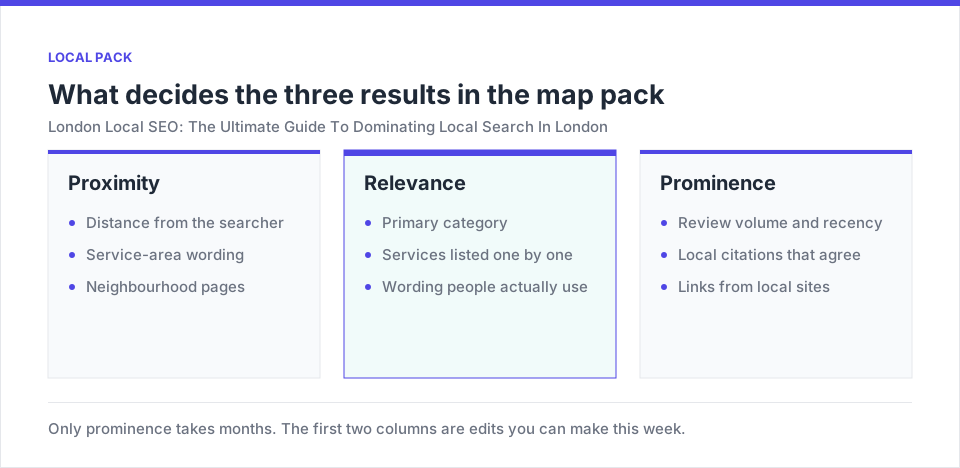
The Local Pack in London is shaped by a blend of proximity, relevance, prominence and map signals. Proximity remains powerful in a city where travel times and access routes vary by district and transport patterns. Relevance is driven by how well a business’s GBP categories, services and district landing pages match user queries. Prominence combines popularity signals like reviews, click-through rates and historical engagement. Map Signals include GBP updates, photos, posts, Q&A activity and consistent business data across maps and directories. Together, these factors determine which three London businesses appear in the Local Pack when a local intent query is triggered.
londonseo.ai emphasises governance artefacts to keep this complexity auditable: TL notes (local rationale), LF depth (neighbourhood texture) and CDS trails (signal lineage) help engineers and account teams explain why a district asset is prioritised over another. WhatIf Momentum gates provide pre-publication checks to maintain balance across Local Pages, Knowledge Experiences, Map Signals and Local Listings as you adjust district offerings or services in the capital.
District-level optimisation actions for London
To win Local Pack prominence across London, implement district-focused optimisations that tie GBP governance to the CLTF four-surface model. Begin with verified GBP entries for core districts, then create district landing pages that mirror the GBP promises with district-specific value propositions. Synchronise with Knowledge Experiences to guide users from information to action and ensure Map Signals reflect real proximity cues. Local Listings and citations should reinforce the district entity and its services, while reviews and Q&A activity amplify social proof and trust in high-traffic boroughs such as Westminster, Islington, Camden and Hackney.
Best practice is to maintain district variants of GBP where needed, connect GBP posts to relevant landing pages, and use structured data to surface rich results in local search. Governance artefacts should document district rationales, signal lineage and momentum gates, so teams can audit and defend decisions with regulators and clients. For implementation, see how our London services orchestrate these four surfaces in concert at London SEO services and schedule a call through the contact page.
Technical setup to boost Local Pack visibility
Ensure GBP is fully optimised per district, with accurate categories, attributes and service descriptions that reflect the capital's diversity. Link district GBP updates to corresponding Local Pages so users land in contextually rich assets. Implement structured data (LocalBusiness, BreadcrumbList, FAQPage) to express district hierarchies and service relationships, while JSON-LD enhances rich results in local search. Maintain consistent NAP across London directories and tie citations to district assets to improve proximity and authority signals. Governance artefacts capture the thought process behind district choices, enabling auditable accountability for all four surfaces.
Measure and iterate: what to monitor in London
Key metrics include Local Pack impressions and clicks, GBP profile interactions, district landing page traffic, and conversion events driven by local queries. Monitor review volume and sentiment by district, GBP engagement, and map-based interactions such as photo views and posts. Dashboards should enable filtering by district and surface so stakeholders can see momentum across Local Pages, Knowledge Experiences, Map Signals and Local Listings. Refer to our governance playbooks and dashboards for London as a baseline and customise them to your boroughs via our London SEO services.
Next steps: start winning in London
- Audit GBP and Map Signals by district: contact londonseo.ai via the contact page to receive a diagnostic that links GBP, district pages and Map Signals to the four surfaces.
- Define priority boroughs and assets: identify Westminster, Islington, Camden, Hackney and surrounding areas; plan activation of Local Pages, Knowledge Experiences, Map Signals and Local Listings.
- Develop governance artefacts for each district: TL notes, LF depth and CDS trails to document local reasoning and signal lineage, plus WhatIf Momentum gates to pre-validate changes.
- Set up integrated dashboards and reporting: ensure momentum is trackable by district and surface, with regular executive readouts for clients and local regulators.
To accelerate, explore our London services pages at London SEO services or reach out via the contact page to book a results-driven consultation tailored to your London footprint.
Local Keyword Research and Geo-Targeting in London
London’s local search landscape is highly granular. To capture proximity-driven intent, you must translate district-level nuance into precise keyword strategy that feeds every activation surface of the CLTF framework. At londonseo.ai we treat boroughs, postcodes and micro-neighbourhoods as distinct audiences, each with its own service mix, peak times and on‑the‑ground realities. This Part 5 focuses on turning London’s geography into actionable keyword intent, with practical steps you can implement today to improve Local Pages, Knowledge Experiences, Map Signals and Local Listings.
Throughout, the approach remains governed by four activation surfaces and a transparent governance artefact set (TL notes, LF depth, CDS trails, and WhatIf Momentum gates) so momentum is auditable as your London footprint grows. If you want a hands-on partner to operationalise these strategies, explore our London services at londonseo.ai services.
1) London Keyword Landscape: boroughs, postcodes and intent
Begin with a geospatial taxonomy that mirrors London’s governance structure. Treat each borough as a mini-market with its own service profile, competition, and consumer behaviour. Build seed term clusters around core services per district (for example, Westminster for legal or hospitality clusters, Islington for professional services and dining, Camden for student and cultural lifestyles, Hackney for creative and home services). Pair these with postcodes and neighbourhoods to capture micro-moments such as near‑me queries and district-specific needs.
Segment keyword intent into four broad buckets: discovery (informational content about districts), consideration (service comparisons within districts), action (booking, consultation, or purchase within a borough), and local authority signals (timeliness and proximity cues tied to local business assets). This taxonomy helps you assign keywords to the four activation surfaces and trace momentum across district assets.
Practical starter clusters for London might include: borough + service, neighbourhood + event, postal code + amenity, and district + “open now”. When used in Local Pages, Knowledge Experiences and Map Signals, these seed terms become seed assets that can be evolved into district-leading content.
2) Geo-targeting strategy: boroughs, wards, postcodes and micro-areas
London geographies vary in scale from large districts like Westminster to micro-areas within a borough. Develop a geo-targeting plan that layers breadth and depth: primary districts (e.g., Westminster, Islington, Camden, Hackney), secondary areas (outer London boroughs such as Croydon, Bromley), and micro-areas within busy corridors. Use a district-first approach for Local Pages, anchored to district-level Knowledge Experiences and Map Signals, while maintaining a scalable backbone for expanding into adjoining neighbourhoods.
Assign postcodes to each district where feasible. This enables precise proximity signals and supports postcode-level content strategies that address daypart differences, such as lunch-time searches in business districts or evening leisure queries in nightlife hubs. Map each geo-target to a corresponding asset in CLTF: seed terms map to Web Local Pages, Knowledge Experiences, Map Signals and Local Listings, enabling auditable momentum as you scale.
To operationalise geo-targeting, implement a district taxonomy in your CMS and tagging system. This guarantees consistent keyword intent signals flow into the right district pages and map assets, while also supporting robust reporting by borough and surface.
3) Seed terms to district assets: practical mapping
Transform seed terms into final assets through a structured mapping exercise. For each district, create a map that shows how seed terms feed into local landing pages, Knowledge Experiences, Map Signals and Local Listings. For Westminster, seed terms could include “plumber Westminster”, “restaurant near Westminster Abbey”, and “evening classes Westminster”, which then route to district landing pages and related Knowledge Experiences (neighbourhood guides, FAQs) and Map Signals (nearby directions, opening hours).
Islington might prioritise terms like “lawyer Islington”, “fitness studio Islington N1”, or “bike repair Islington”, driving asset creation that mirrors the borough’s professional and lifestyle mix. London-wide terms such as “local services London” can be cross-mapped where appropriate, but the actionable momentum sits in district-aligned assets. Each seed term should have a clear route through Web Local Pages, Knowledge Experiences, Map Signals and Local Listings, with a documented reasoning trail (TL notes) and signal lineage (CDS trails) to support governance and audits.
The CLTF framework reinforces discipline here: seed terms become the seeds of momentum, not a random swarm of pages. By linking seed terms to district assets, you can measure progress and justify decisions to clients and regulators with transparent governance artefacts.
4) Data sources, tooling and governance
Use a mix of internal insights and external benchmarks to inform keyword priority. Google Keyword Planner provides search volume and localisation options; Google Trends reveals seasonal and regional interest shifts. Tools such as Moz Local and Ahrefs help estimate local competition and show opportunity gaps in London districts. For schema and structured data, reference LocalBusiness, FAQPage and BreadcrumbList markups to support rich results for district pages. All keyword decisions should be captured in TL notes and linked to the CLTF, LF depth and CDS trails so momentum remains auditable across boroughs.
Useful references for governance and data structure include: LocalBusiness and FAQPage schema (schema.org), official Google Local Guides documentation, and authoritative local SEO guidance from Moz and Search Engine Land. You can start your toolkit with links from these sources and then tailor them to your district strategy on londonseo.ai.
- Keyword research tools: Google Keyword Planner, Ahrefs, SEMrush, Moz.
- Geography sources: borough maps, postcode grids and district dashboards in your CMS.
- Structured data references: LocalBusiness, FAQPage, BreadcrumbList, HowTo as applicable.
5) Implementation plan: how to start today
- Define district priorities and seed clusters: identify central, inner and outer London zones and align seed clusters to Local Pages, Knowledge Experiences, Map Signals and Local Listings.
- Create district landing pages and content maps: build landing pages per borough with service-focused content, FAQs and local guides, linked to Knowledge Experiences and map signals.
- Set up governance artefacts for momentum: TL notes, LF depth and CDS trails for every district asset and seed term, plus WhatIf Momentum gates to validate changes before publication.
- Establish dashboards and reporting templates: configure district- and surface-filterable dashboards to track momentum, with KPIs for traffic, engagement and conversions by borough.
To accelerate, reach out to londonseo.ai for district-specific CLTF templates and playbooks. You can also explore our London services pages to initiate a discovery call and tailor the four-surface strategy to your estate across the capital.
Local Landing Pages and Service-Area Pages for London
London's local search environment is exceptionally granular, with dozens of boroughs and countless micro-neighbourhoods. A London-focused Local SEO strategy requires district- and service-area pages that reflect the city's real-world footfall and travel patterns. At londonseo.ai, we align these pages with our four activation surfaces—Local Pages, Knowledge Experiences, Map Signals and Local Listings—under a transparent governance model built around the Canon Local Topic Footprint (CLTF). This Part 6 provides practical guidance for designing, implementing and maintaining London district pages that translate district intensity into momentum across the four surfaces, while staying auditable for clients and regulators.
In practice, this means creating a scalable page architecture that serves highly local intent, from Westminster to Wandsworth, Camden to Croydon, and every corner in between. The steps below offer a concrete path to start today with our LondonSEO.ai services and governance playbooks.
Why district landing pages matter for London
In London, proximity signals are amplified by high population density and constant movement. District landing pages enable nearby users to land in context, with district-specific value propositions, hours and service mixes that match local demand. These pages also support map-centric signals by providing structured data aligned to the district’s real-world assets, helping your business appear in Local Packs and Knowledge Panels when locals search for services near them. Our governance framework ensures every London page is auditable, scalable and aligned to four surfaces, so teams can report momentum by borough with clarity.
To maintain momentum across the capital, we recommend district pages that mirror GBP entries, district-level Knowledge Experiences, and map signals. The London-specific CLTF helps you avoid overlap and ensures every asset has a clear route to conversion, whether that be a booking, a phone call or a store visit. Learn how this translates into practical actions in our London services pages and start with a district-focused discovery call.
Structure and URL strategy for London landing pages
Adopt a consistent URL taxonomy that communicates geography and service scope. For example, a district-first schema could be /london/{borough}/ or /london/{borough}/{service}. If you operate multiple services within a borough, consider subfolders like /london/{borough}/plumbing, /london/{borough}/electrician, ensuring clear hierarchies inside the silos. Each district page should link to its corresponding Knowledge Experiences and Map Signals, and cross-link to relevant Local Listings to reinforce topical authority and proximity signals. Canonicalisation should prevent cross-district duplication while preserving district-specific context. Governance artefacts such as TL notes and CDS trails should capture decisions behind URL structure and asset mapping, enabling auditable momentum across London’s districts.
Link the district landing pages to GBP entries carefully. District GBP variants can be used when appropriate to reflect district-level hours, services and attributes, but ensure each GBP variation points to its corresponding landing page to maximise user relevance and proximity indexing.
Seed terms to district assets: practical mapping
For Westminster, seed terms might include plumber Westminster, restaurant near Westminster Abbey, and evening classes Westminster, routed to /london Westminster/plumbing, /london Westminster/food, and /london Westminster/education. Islington could prioritise lawyer Islington, fitness studio Islington N1, and bicycle repair Islington, connecting to district landing pages and Knowledge Experiences that cover neighbourhood guides, FAQs and local service spotlights. Hackney could focus on creative services and home improvements, linking to district pages that emphasise local venues and experiences.
Each seed term must have a documented route through Web Local Pages, Knowledge Experiences, Map Signals and Local Listings, with TL notes describing local rationale and CDS trails mapping seed terms to final assets. The CLTF structure ensures momentum is trackable and auditable as you scale across London’s districts.
GBP governance for London districts
Google Business Profile governance should reflect London’s diversity. Create district GBP variants where needed to capture unique district services, hours or attributes, then ensure each GBP entry links to its corresponding district landing page. Regular GBP posts and responses to Q&A should mirror the content on the district page and Knowledge Experiences, so users land in a cohesive, context-rich experience. Map Signals should echo proximity cues from GBP, with consistent NAP data across London directories to reinforce trust and proximity signals. TL notes and CDS trails help teams explain district-specific decisions and momentum, making governance auditable and scalable as you expand into new boroughs.
Build and maintain momentum across the four surfaces
To convert local visibility into action, ensure four-surface alignment: Local Landing Pages deliver district-specific intent; Knowledge Experiences guide users from information to action; Map Signals provide proximity-driven cues; Local Listings and GBP reinforce trust and proximity. WhatIf Momentum gates serve as pre-publication checks to balance momentum across surfaces when service mixes or borough demographics shift. Dashboards should be filterable by borough and surface, enabling executives to see momentum at a glance and regulators to review governance activity. London-specific templates and playbooks from londonseo.ai help you establish this discipline from day one and scale as your London footprint grows.
Next steps to start today in London
- Request a district audit and CLTF plan by borough: contact londonseo.ai via the contact page to receive a diagnostic that links CLTF to your boroughs and all four surfaces.
- Define priority boroughs and surfaces: identify central, inner and outer London zones and plan activation of Local Pages, Knowledge Experiences, Map Signals and Local Listings.
- Require artefacts for every delivery: TL notes, LF depth and CDS trails, complemented by WhatIf Momentum gates for pre-publication checks.
- Set up regulatory and business dashboards: request templates that connect momentum to district and surface KPIs to facilitate audits for clients and local regulators.
To accelerate, explore our London services at London SEO services or reach out via the contact page to schedule a results-driven consultation tailored to your London footprint. You can also consult our district playbooks to tailor CLTF for Westminster, Islington, Camden and other boroughs.
Local Citations and Link Building in London
Local citations and high‑quality link signals remain cornerstones of London Local SEO strategy. In a city with 32 boroughs, a dense business mix and a vibrant local media landscape, consistent NAP data and district‑relevant backlinks directly influence proximity ranking, map visibility and trust signals. At londonseo.ai we frame citations and link building within the four activation surfaces, ensuring every asset — Local Pages, Knowledge Experiences, Map Signals and Local Listings — benefits from accurate, district‑anchored authority. This Part 7 equips you with practical, actionable steps to audit, optimise and scale citations and local links across the capital.
Key governance artefacts from our CLTF framework support auditable momentum as you grow your London footprint. If you need hands‑on support, explore our London SEO services and governance playbooks through the londonseo.ai services pages or contact us for a district‑focused discovery call.
The critical role of citations in London Local SEO
Citations underpin how search engines recognise the legitimacy and reach of a local business. In London, where district level nuance matters—from Westminster to Wandsworth—the same business may require district‑specific citations to reflect service areas, operating hours and local partnerships. Consistent NAP data across GBP, directories and borough portals signals reliability to maps and knowledge panels, boosting proximity visibility and user trust.
Across the capital, citations should be treated as dynamic assets. They must be created, maintained and retired in step with district offerings, hours and service lines. Our governance templates guide how to document decisions, update cadence and ownership so momentum remains auditable for clients and regulators alike.
How to audit and standardise London citations
- Compile a master citation list by borough: collect core directories, district portals, and industry‑specific listings that carry authority in Westminster, Islington, Camden, Hackney and surrounding areas.
- Check NAP consistency across outlets: ensure exact name, address and phone number formatting, including postcodes and spellings, across GBP and local directories.
- Identify and remove duplicates: consolidate duplicates, merge duplicate listings and de‑duplicate across chains or franchises to avoid confusion.
- Link citations to district assets: tie each citation to its corresponding Local Page or Knowledge Experience to reinforce topical relevance and proximity signals.
- Document governance decisions: capture TL notes and signal lineage (CDS trails) so changes are auditable and explainable to clients and authorities.
Strategic targets for London citations
Prioritise high‑authority London directories with borough relevance, such as local chambers of commerce, council directories and reputable business portals. In practice, aim for consistent NAP, category accuracy and district descriptors that mirror your Local Pages. External resources from Moz Local and BrightLocal offer benchmarks and methodologies for citation health, which you can adapt within your CLTF governance to sustain momentum across districts.
Internal links to our London services page ensure clients see how these governance steps tie into a complete local SEO solution at londonseo.ai.
For reference on best practices, consider industry‑standard sources such as Moz Local (https://moz.com/products/local) and BrightLocal (https://www.brightlocal.com/), and align learnings with your district playbooks on londonseo.ai.
Link building in London: practical, district‑driven approaches
London offers a breadth of local link opportunities that align with district content and GBP signals. Prioritise backlinks from borough‑level authorities, local press, community blogs and industry‑specific directories. Focus on relevance over volume: a handful of high‑quality, geographically related links can outperform broad, non‑local links. Anchor text should reflect district relevance and service context, avoiding over‑optimisation while preserving natural keyword signals.
Develop a tiered outreach plan: primary targets include local chambers, business associations and regional media; secondary targets cover niche neighbourhood blogs, event listings and community newsletters. Track progress in CLTF dashboards with what and where momentum is being earned, so you can defend budget decisions to clients and regulators.
Connecting citations, links and four activation surfaces
All citation and link decisions should feed the CLTF framework. Citations reinforce Local Pages with district authority; backlinks bolster map and knowledge signals by validating topical relevance and local trust. Tie every link to a district asset—whether a Local Page, Knowledge Experience or Map Signal page—to preserve navigational coherence and measurable momentum across boroughs.
Governance artefacts (TL notes, LF depth and CDS trails) should document the district rationale for each citation or link and provide traceable footnotes for audits. WhatIf Momentum gates help ensure that adding a new district backlink or citation does not destabilise momentum across the four surfaces.
Next steps to begin today
- Audit GBP citations by district: generate a district‑level diagnostic and identify gaps in core London directories.
- Audit and standardise NAP across the capital: align with the district landing pages and GBP variants to reinforce proximity signals.
- Launch district‑driven link campaigns: prioritise local authority, chamber and local press placements tied to district assets.
- Establish governance dashboards: configure momentum dashboards with filters by borough and surface to monitor momentum and regulator visibility.
To accelerate, request CLTF‑driven citation templates from londonseo.ai and book a district discovery call via the contact page or explore London SEO services for integrated, district‑level momentum planning.
Google Maps and Local Pack: Ranking Signals in London
London’s Local Pack remains a pivotal gateway for foot traffic, calls and nearby conversions. The Local Pack ranking algorithm weighs a mix of proximity, relevance, prominence and map signals, but in a city as dense and multi-centred as London, district-level nuance matters as much as city-wide signals. This Part 8 extends the CLTF framework introduced in Part 1 through Part 7, translating Maps and Local Pack momentum into district-specific actions that align Local Pages, Knowledge Experiences, Map Signals and Local Listings for measurable momentum across London’s boroughs.
1) Local Pack ranking signals in the London context
The Local Pack in London is increasingly influenced by four core signals that interact with district assets. Proximity remains powerful in a city where travel times vary by transport mode and route, but its impact is amplified when paired with district-aligned assets. Relevance grows when district landing pages, Knowledge Experiences and Map Signals reflect the exact services locals expect in each borough. Prominence is earned by high-quality engagement, reviews and historical momentum within a district. Map Signals include GBP activity, consistent NAP data across maps and directories, and timely updates that reflect London’s changing business landscape.
To operate at scale, London practitioners must connect these signals to four activation surfaces in a auditable loop: district Local Pages, district Knowledge Experiences, Map Signals tied to the district, and Local Listings that reinforce the district’s identity. londonseo.ai provides governance artefacts such as TL notes, LF depth and CDS trails to explain decisions and support regulatory reporting as you expand into more boroughs.
2) Proximity and micro-moments in London boroughs
City-scale proximity masks a myriad of micro-moments. A district like Westminster may require faster response times and late-evening service information, while Hackney might benefit from content emphasising creative and community-oriented services. Optimisation should reflect borough shopping patterns, transport access, and time-sensitive local events. District landing pages should mirror GBP data and Map Signals so a user who lands from Maps directly encounters district-appropriate assets.
Practical steps include maintaining district-specific opening hours, service descriptors and seasonal event updates on GBP, and ensuring landing pages display the same promises users see in the Local Pack. Governance artefacts capture the local rationale for district timing and asset alignment, enabling auditable momentum across four surfaces.
3) Relevance signals: aligning GBP, districts and assets
Relevance emerges when GBP categories and attributes mirror the district’s core services and when district landing pages clearly articulate local value propositions. Ensure district GBP variants exist where needed to reflect different hours, services or attributes, and link each GBP entry to its corresponding district landing page. The four-surface model thrives when Knowledge Experiences reinforce district content and Map Signals reflect real proximity and traffic patterns.
Actions to implement now:
- Audit district GBP categories and attributes: align with district landing pages and map signals.
- Sync GBP posts with district assets: publish local updates that mirror district knowledge content.
- Mirror district intents in Knowledge Experiences: ensure guides, FAQs and neighbourhood content connect to the district landing pages.
4) Prominence signals: reviews, engagement and local authority cues
Prominence in London correlates with review velocity, engagement metrics, and evidence of local authority or community recognition. Prioritise proactive review collection tied to specific borough interactions and respond promptly to maintain positive sentiment. Integrate review and Q&A signals into GBP and district assets to reinforce social proof. dashboards by borough help demonstrate momentum to clients and regulators, and enable rapid course corrections if sentiment shifts.
Governance artefacts should document why, when and where you generated momentum, supporting auditable reports across four surfaces.
5) Map signals and data hygiene for London
Data hygiene is critical in a city with multiple official and community directories. Maintain consistent NAP data across GBP, map listings and local directories. Regularly audit for duplicates or mismatches that create confusion for maps indexing. Use structured data for LocalBusiness, BreadcrumbList and FAQPage to reinforce district relationships and service hierarchies.
WhatIf Momentum gates help ensure that updates to district assets do not disrupt balance across surfaces. Dashboards should be filterable by borough and activation surface to provide clear, auditable momentum readings for executives and regulators.
Next steps to operationalise London Local Pack momentum
- Review and refine district GBP governance: confirm district GBP variants where necessary and ensure each GBP points to its district landing page.
- Align four surfaces for London? ensure district landing pages, Knowledge Experiences, Map Signals and Local Listings reflect local intent and proximity signals.
- Implement WhatIf Momentum gates for district changes: pre-validate publishing decisions to maintain balance across surfaces.
- Set up borough-filtered dashboards: configure momentum dashboards with district and surface selectors for executive and regulator reporting.
To accelerate, explore our London services at our London SEO services or contact us via the contact page to schedule a district-focused momentum workshop tailored to your London footprint.
Content Strategy for London Local SEO
London’s local search ecosystem rewards content that is richly local, systematically mapped to district realities and aligned to the four activation surfaces: Local Landing Pages, Knowledge Experiences, Map Signals and Local Listings. For londonseo.ai, the aim is to translate city-wide momentum into district-level authority through a disciplined content strategy that is auditable, scalable and adaptable to London’s ongoing shifts. This Part 9 focuses on practical content strategies, templates and governance artefacts that turn neighbourhood nuance into measurable momentum across the capital.
Structured content aligned to activation surfaces
Local Landing Pages should present district-specific value propositions, service mixes and CTAs that reflect real-world footfall and hours. Knowledge Experiences can host neighbourhood guides, FAQs and experiential content that educate users and steer them toward actions. Map Signals content includes district-oriented updates, event calendars and proximity data that reinforce near-me results. Local Listings content supports trust with consistent district context across GBP, map listings and local directories. Each asset must connect back to the Canon Local Topic Footprint (CLTF) so decisions are traceable and scalable.
In London, governance artefacts such as TL notes (local rationale), LF depth (neighbourhood texture) and CDS trails (signal lineage) should be attached to every content asset. WhatIf Momentum gates stay engaged for pre-publication checks to maintain balance across surfaces as borough dynamics evolve.
Seed terms to content assets: practical mapping
Translate seed terms into district assets that genuinely reflect local demand. Westminster might map terms such as plumber Westminster, restaurant near Westminster Abbey and evening classes Westminster to district landing pages like /london/westminster/plumbing, /london/westminster/food, and /london/westminster/education, with Knowledge Experiences covering neighbourhood guides and FAQs. Islington could prioritise lawyer Islington, fitness studio Islington N1, and bicycle repair Islington, feeding district landing pages and map signals that mirror Islington’s professional and lifestyle mix. Hackney content might emphasise creative services and local events, connected to district Knowledge Experiences that showcase venues and community resources.
Each seed term must have a documented route through Web Local Pages, Knowledge Experiences, Map Signals and Local Listings, with TL notes and CDS trails capturing the local rationale and signal lineage. This disciplined mapping ensures momentum is measurable and auditable as London grows.
Editorial calendars and district-level cadence
Adopt a predictable cadence that sustains momentum across four surfaces. A practical model: rotate monthly emphasis across districts and content types, ensuring every borough receives regular attention. Example cadences include: month one focusing on Westminster and Belgravia with Local Landing Pages and Knowledge Experiences; month two on Islington and Camden with event calendars and neighbourhood guides; month three prioritising Hackney and Shoreditch with creative and business service spotlights; month four cycling back to central hubs while expanding map signals and local listings. The aim is to create district-led content streams that feed GBP, map signals and knowledge experiences in a cohesive narrative.
Governance artefacts should capture why certain districts lead content initiatives, how seed terms map to assets, and when momentum gates are triggered. Dashboards should filter by district and activation surface to provide executives with clear momentum visuals.
Content formats that perform in London
Neighbourhood guides, FAQs, event calendars, service spotlights, and district case studies are particularly effective in the capital. In Knowledge Experiences, expand content formats to include how-to tutorials for district services, glossary terms for local terminology, and interactive maps that highlight points of interest. For Local Landing Pages, blend service pages with district narratives, user-generated content prompts, and proximity-based callouts. For Map Signals, publish timely updates on hours, promotions and local events to encourage engagement from nearby users. Local Listings benefit from content that reinforces district identity, such as partnerships with local authorities, venues and community groups.
Measurement and governance of content momentum
Key metrics should cover reach, engagement and conversion by district and surface. Track page views and dwell time on Local Landing Pages, engagement metrics on Knowledge Experiences, proximity-driven interactions on Map Signals, and the impact of content on GBP clicks and local conversions. Governance dashboards should present momentum by district, with filters for surface and content type. TL notes and CDS trails should be updated as content assets evolve, preserving a transparent record of decisions for audits and regulators.
External references can strengthen credibility. For example, consult Google’s structured data guidance for LocalBusiness and FAQPage to ensure your content is eligible for rich results (https://developers.google.com/search/docs/appearance/structured-data/local-business) and Moz Local’s benchmarks for citation health (https://moz.com/products/local).
Next steps to start today in London
- Define district content priorities and assets: identify Westminster, Islington, Camden, Hackney and other zones; map seed terms to Local Landing Pages, Knowledge Experiences, Map Signals and Local Listings.
- Develop district content templates: create reusable templates for landing pages, guides, FAQs and event calendars that align with CLTF and WhatIf Momentum gates.
- Integrate governance artefacts: TL notes, LF depth and CDS trails for each asset; apply Momentum gates to validate before publication.
- Set up momentum dashboards by district and surface: ensure stakeholders can monitor progress and regulators can review governance activity.
To accelerate, explore our London SEO services on our London SEO services or book a consultation via the contact page to tailor a district-focused content plan that feeds the four surfaces and drives tangible momentum across London.
Technical and On-Page Optimisation for London Local SEO
With London as the epicentre of diverse districts, a technically sound foundation is essential to translate momentum from the four activation surfaces into real business outcomes. This Part 10 within the London Local SEO series explains practical, district-aware technical and on-page strategies that keep pages fast, crawlable and structured for local intent. Built on the Canon Local Topic Footprint (CLTF) and governed by WhatIf Momentum gates, the approach ensures London-wide consistency while allowing for district-level nuance. You can explore our London services at London SEO services for templates, governance artefacts and district-focused playbooks.
1) Structured site architecture for London districts
organise the site into clear district silos that reflect London’s governance and service geography. A practical URL approach mirrors district and service, for example: /london/{borough}/{service}/ or /london/{borough}/. Each district page should be a gateway to related Knowledge Experiences, Map Signals and Local Listings, creating a cohesive path from discovery to conversion. Maintain a consistent internal linking strategy so users and search engines traverse from Local Pages to Knowledge Experiences and Map Signals without dead ends. Canonicalisation should prevent cross-district content duplication while preserving district context. TL notes and CDS trails should document why a district-first structure was chosen and how seed terms map to assets within the CLTF.
Practical steps you can implement now include auditing the current URL map for district pages, setting up district hubs in the CMS, and aligning internal links so every district asset ties back to its district landing page. A disciplined approach to site-wide navigation supports faster indexing of new districts and ensures consistency across four activation surfaces.
2) Speed, Core Web Vitals and mobile UX in London
London users access content across a densely populated city with variable network conditions and a premium on fast, mobile-friendly experiences. Prioritise Core Web Vitals, optimise above-the-fold rendering, and ensure responsive typography. Compress and size images for district pages, enable lazy loading where appropriate, and optimise font loading to minimise render-blocking resources. Accelerated mobile pages (AMP) are not mandatory, but a strong mobile-first approach is essential given the near-me and local intent patterns across boroughs.
Implement a scalable performance regime that monitors page speed and provides actionable guidance for district pages. Regularly review server response times, caching strategies, and third-party script impact, especially on pages with district-specific assets, events or knowledge content. These improvements directly support better user experiences, which in turn influence engagement and local rankings.
3) Structured data and schema for London local SEO
Structured data remains a critical facilitator of Local Pack prominence. Apply LocalBusiness markup for each district asset, BreadcrumbList to express site hierarchy, and FAQPage for neighbourhood questions. Rich results improve visibility in Maps and knowledge panels, helping residents and visitors quickly trust district assets. Use JSON-LD to implement the schema in a way that is maintainable and auditable under the CLTF governance model. TL notes should describe why particular district assets use specific schema types and how signal lineage is tracked through CDS trails.
For formal guidance on LocalBusiness and related schemas, refer to Google’s structured data guidelines. This knowledge supports your district pages and Knowledge Experiences while ensuring you stay aligned with the latest search engine requirements.
Anchor text and links should remain natural and district-focused. For example: our London SEO services provide district-specific templates for implementing structured data across Local Pages, Knowledge Experiences, Map Signals and Local Listings.
4) On-page optimisations and content alignment
On-page signals should align with district intent and the four surfaces. Each district landing page should feature a clear H1 that reflects the primary service and district, followed by H2s that segment services, followed by informative content and district-specific CTAs. Ensure meta titles and meta descriptions include local identifiers without keyword stuffing. Use internal links to Knowledge Experiences and Map Signals where appropriate to guide users through the four surfaces. Align anchor text with seed terms that map to district assets, maintaining a natural, user-centric narrative.
Content should reflect the district’s texture (as captured in LF depth) and tie into TL notes that document local rationale for content decisions. This collaboration between on-page elements and governance artefacts supports auditable momentum as you scale across London’s boroughs.
5) Crawlability, indexing and sitemaps for multi-district London sites
Keep a crawlable architecture by submitting district-focused sitemaps that reflect the district silos and the four surfaces. Use a district-level sitemap strategy so search engines can discover new district pages quickly and with clear context. Ensure robots.txt permits access to essential district assets while excluding any low-value duplicative pages. Regularly review crawl errors, index coverage, and URL health within Google Search Console to maintain clarity across districts and surfaces. The CLTF artefacts—TL notes, LF depth and CDS trails—should be consulted whenever changes to the sitemap or URL structure are proposed, ensuring decisions are auditable and defensible.
Maintaining a disciplined approach to indexing helps protect momentum when you expand into new boroughs and services. Link district pages to GBP entries and map signals so users land in coherent, context-rich experiences that reflect local intent and proximity.
6) Governance, measurement and next steps
Adopt a governance cadence that pairs what you measure with what you publish. Use WhatIf Momentum gates to validate changes before publication, ensuring balance across Local Pages, Knowledge Experiences, Map Signals and Local Listings. Maintain dashboards that can filter by district and surface, so stakeholders can monitor momentum and regulatory visibility. TL notes and CDS trails should be updated with every major change to district assets, providing a transparent audit trail for clients and regulators.
Next steps for London technical optimisation: request a district-focused technical audit via the contact page, review district URL structures, and implement a district-friendly sitemap and structured data plan. If you want a ready-to-use starter kit, our London services pages offer CLTF-aligned templates and playbooks to accelerate adoption across the capital.
Integrating PPC And Paid Media With London Local SEO: Creating Synergy Across Districts
In a city as complex and dynamic as London, the value of local search marketing comes from orchestrating organic and paid channels. When integrated thoughtfully, Google Ads, paid social and other digital media amplify the momentum generated by London Local SEO across four activation surfaces: Local Landing Pages, Knowledge Experiences, Map Signals and Local Listings. At londonseo.ai, we frame this integration through the Canon Local Topic Footprint (CLTF) and a disciplined governance model so every PPC decision supports district momentum without eroding the integrity of the four-surface framework. This Part 11 translates cross‑channel best practices into a practical playbook you can apply today in the capital.
The objective is clear: transform proximity and intent into measurable conversions by aligning PPC activity with district-specific assets, events and demographics. By tying WhatIf Momentum gates, TL notes, LF depth and CDS trails to paid campaigns, you create auditable traceability from seed terms to final assets, ensuring compliance and demonstrable value for clients and local authorities.
1) Shared objectives and governance for London districts
Successful integration starts with a shared objective framework across SEO and PPC. Establish district-level goals that feed four surfaces and align on KPIs such as qualified traffic, lead form submissions, store visits, and phone inquiries. Adopt a unified dashboard approach so stakeholders can see both organic and paid momentum by borough, surface and service area. TL notes, LF depth and CDS trails should be used to justify district-level decisions and to map seed terms to final assets across Local Pages, Knowledge Experiences, Map Signals and Local Listings.
For London, governance also means clear ownership: a district SEO lead, a PPC campaign owner and a cross-functional coordination lead who ensures booking, call tracking and event reporting stay consistent across surfaces. This governance posture underpins auditable momentum as your London footprint grows and you expand into neighbouring boroughs.
2) The PPC playbook aligned with the four surfaces
Translate seed terms into district assets and campaigns that reinforce proximity signals and district value propositions. The four-surface model provides a natural mapping for paid media:
- Local Landing Pages for Paid Traffic: use district-specific landing pages with service-focused copy, local CTAs and precise tracking to capture near-me intent. Link paid ads to these assets to ensure messaging consistency from click to conversion.
- Knowledge Experiences as Landing Extensions: drive paid traffic to neighbourhood guides, FAQs and district resources that educate and nurture potential customers toward action, while embedding conversion opportunities within the content experience.
- Map Signals and GBP Synergy: coordinate geo-targeted PPC with GBP updates, ensuring ads reflect current hours, services and promotions; use map extensions where available to amplify proximity signals.
- Local Listings and Brand Trust: align paid campaigns with local listings to reinforce trust and proximity, particularly in high-traffic districts such as Westminster, Islington, Camden and Hackney.
In London, this alignment enables more efficient bidding, improved ad quality scores thanks to district relevance, and better post-click experiences that mirror the four activation surfaces. London-specific playbooks from londonseo.ai provide templates and district case studies to support implementation.
3) A scalable workflow for cross-channel momentum
Adopt a cadence that mirrors the four-surface model and keeps teams aligned. The London workflow balances speed with governance, ensuring every PPC change is pre-validated against WhatIf Momentum gates and linked to the CLTF artefacts. A practical 6-step flow can be used across districts:
- Define district priorities and surface ownership: select central, inner and outer zones and assign district pages, Knowledge Experiences, Map Signals and Local Listings ownership.
- Map seed terms to assets across surfaces: create a district term-to-asset map that shows how terms feed Local Pages, Knowledge Experiences, Map Signals and Local Listings.
- Launch district-specific campaigns: build ads that reflect district nuances, events and service mixes, with geo-targeting tuned to borough-level posts and maps results.
- Integrate tracking and attribution: implement hybrid attribution models to capture discovery, interaction and conversion in a way that reflects both SEO and PPC contributions.
- Enforce governance gates: apply WhatIf Momentum gates before publishing changes that affect multiple surfaces or districts.
- Report momentum and adjust: review dashboards by district and surface, and iteratively refine bids, budgets and creative to improve proximity conversions.
Following this workflow helps London marketers move fast while retaining a strong chain of accountability and a clear narrative for regulators and clients.
4) Artefacts and governance for cross-channel momentum
Artefacts anchor every decision in the CLTF framework. TL notes capture the local rationale behind district campaigns; LF depth describes neighbourhood texture to justify content and landing page choices; CDS trails document signal lineage from seed terms to assets. These artefacts enable auditable momentum and support regulatory reporting. WhatIf Momentum gates provide a formal review step before promotions or structural changes across Local Pages, Knowledge Experiences, Map Signals and Local Listings.
Dashboards should allow filtering by borough and surface, so leadership can monitor the cross-channel impact of SEO and PPC in real time and carry that momentum across the capital.
5) Measuring success: integrated metrics for London
Measure both channel-specific and combined outcomes. PPC metrics include click-through rate (CTR), cost per click (CPC), cost per lead, and ROAS by district. SEO metrics cover Local Pack impressions, GBP interactions, district landing page traffic, and conversions arising from the four surfaces. The KPI set also includes cross-channel indicators such as assisted conversions, time-to-conversion and post-click engagement on Knowledge Experiences. Integrate these metrics into unified dashboards so stakeholders can evaluate momentum at district and surface levels, alongside regulatory reporting requirements.
With CLTF governance, every KPI has an auditable trail: TL notes explain district decisions, LF depth supports the texture of each district, and CDS trails map seed terms to assets and momentum outcomes. This structure keeps performance transparent and scalable as London grows and districts evolve.
Next steps: start integrating PPC and London Local SEO
- Request a cross-channel diagnostic for your London districts: contact londonseo.ai via the contact page to obtain a diagnostic that links CLTF to four surfaces and PPC momentum across boroughs.
- Define priority districts and surface ownership: identify Westminster, Islington, Camden, Hackney and surrounding areas; plan the parallel activation of Local Pages, Knowledge Experiences, Map Signals and Local Listings with PPC alignment.
- Request artefacts for every delivery: TL notes, LF depth and CDS trails; apply WhatIf Momentum gates to pre-validate changes across surfaces.
- Set up integrated dashboards and reporting: ensure momentum is trackable by district and surface, with regular executive reader dashboards for clients and regulators.
To accelerate, explore our London services at London SEO services or reach out via the contact page to schedule a cross-channel momentum workshop tailored to your London footprint.
Measurement, Reporting and Continuous Optimisation for London Local SEO
With the Canon Local Topic Footprint (CLTF) and the four activation surfaces firmly established, the next phase focuses on measurement discipline, transparent reporting and continuous improvement. This Part 12 translates momentum across Local Pages, Knowledge Experiences, Map Signals and Local Listings into auditable dashboards, actionable insights and iterative optimisations that sustain growth across London’s diverse districts. At londonseo.ai we emphasise governance artefacts—TL notes, LF depth and CDS trails—and WhatIf Momentum gates to ensure every change is trackable and defensible to clients and regulators.
Effective measurement in London means looking not just at overall traffic, but at district-level momentum, surface performance and the quality of user journeys from discovery to conversion. This section outlines a practical framework you can implement today, with templates and playbooks available through our London services at London SEO services.
Measurement framework for the four activation surfaces
Local Landing Pages capture proximity and district-specific intent. Knowledge Experiences convert information seekers into action-ready prospects. Map Signals reflect real-world proximity and engagement, while Local Listings reinforce trust and proximity in GBP and directories. A robust measurement approach tracks momentum across all surfaces with consistent attribution to district assets and seed terms.
Key metrics by surface include:
- Local Landing Pages: page views by district, dwell time, form submissions and CTA click-through rate.
- Knowledge Experiences: guide views, FAQ interactions, time on knowledge pages and scroll depth.
- Map Signals: GBP interactions, map listing views, route requests and proximity clicks.
- Local Listings: GBP impressions, reviews, Q&A activity and proximity-driven clicks.
These surface-focused metrics feed a district momentum score, enabling fast decisions about content refreshes, new district assets and governance adjustments. London-specific dashboards will visualise momentum by borough and by surface, supporting clear executive reporting.
Data architecture and dashboard design
Adopt a unified data model where every district asset on Local Pages, Knowledge Experiences, Map Signals and Local Listings ties back to CLTF. Dashboards should offer filters by borough, surface and service area to reproduce momentum narratives for both clients and regulators. Use verified data sources such as GBP insights, Google Search Console performance, and domain- and district-level analytics. We typically couple Looker Studio or Google Data Studio with GA4 to deliver live, shareable dashboards that capture momentum across the capital.
Governance artefacts should be attached to each asset: TL notes justify district decisions; LF depth documents district texture; CDS trails map seed terms to final assets. WhatIf Momentum gates act as pre-publish checks to prevent imbalanced shifts across surfaces when district offerings change.
Key performance indicators by borough
Beyond surface KPIs, track district-wide momentum indicators that reflect real business impact. Consider dashboards that display:
- Qualified local leads and store visits by district.
- GBP engagement metrics: calls, direction requests, photo views, and Q&A activity per district.
- Indexing health by district: crawl errors, index coverage, and canonical compliance across four surfaces.
- Conversion velocity: time-to-action from discovery to contact or booking, broken down by borough.
These metrics illuminate where momentum is strongest and where governance adjustments are required to maintain balance across the four surfaces as London evolves.
WhatIf Momentum gates in practice
WhatIf Momentum gates provide a pre-publication safety net to maintain equilibrium across Local Pages, Knowledge Experiences, Map Signals and Local Listings. Typical gates include thresholds for district content balance, surface visibility ratios and GBP consistency checks. If a proposed change risks creating overexposure in one surface or district, the gate prompts a pause and a targeted review.
Operational steps include: defining gate criteria at the district level, validating seed-term shifts, testing new assets in staging, and reviewing momentum dashboards before publication. This disciplined approach preserves momentum while enabling agile experimentation within London’s dynamic market.
Reporting cadence and governance cadence
Establish a regular reporting cadence that aligns with client expectations and regulatory requirements. A practical rhythm is a monthly momentum report plus a quarterly governance review. Monthly reports focus on surface momentum by borough, while quarterly reviews align to strategic priorities, pipeline motion and broader city trends. Dashboards should be shared with stakeholders and updated artefacts installed in CLTF repositories to maintain auditability.
Governance documentation should cover decisions, signal lineage and performance justifications. TL notes summarise local rationale; LF depth describes neighbourhood texture; CDS trails explain how seed terms map to district assets. London-specific governance templates are available through our London SEO services to keep you aligned with the CLTF framework.
Next steps to embed measurement and continuous optimisation in London
- Audit and map district momentum: assess current momentum by borough and surface, and map seed terms to assets via CLTF artefacts.
- Launch district dashboards: configure borough-filtered dashboards that expose momentum by Local Pages, Knowledge Experiences, Map Signals and Local Listings.
- Define governance cadence: establish a recurring cycle for updates to TL notes, LF depth and CDS trails as districts evolve.
- Engage clients with transparent reporting: provide monthly summaries and quarterly governance reviews that clearly tie activity to business outcomes.
To accelerate, request CLTF-aligned measurement templates from London SEO services and book a discovery call via the contact page to tailor dashboards and governance to your London footprint.
