Part 1 Of 13: Introduction To Multilingual SEO In London
London is a global hub where brands must navigate a tapestry of languages, cultures, and digital behaviours. A multilingual SEO agency in London doesn’t just translate content; it architecturally designs a site and a search strategy that speaks to diverse audiences while preserving a cohesive, citywide brand identity. At londonseo.ai we specialise in turning linguistic diversity into measurable digital growth, aligning technical excellence with culturally tuned content to win visibility in multiple language markets from the heart of the capital.
Multilingual SEO is about more than keywords. It requires deliberate decisions about language targeting, regional intent, content localisation, and technical foundations that keep pages indexable across language variants. A London-focused approach recognises that search behaviour shifts by neighbourhood and language, from Polish and Portuguese communities in Barking to Mandarin and Arabic speakers in central districts. The aim is to deliver content that feels native to each group while maintaining a single, well-governed brand narrative.
Why a multilingual SEO agency London matters
- Localised intent meets global ambition. London brands often pursue international growth while serving diverse local audiences. A specialised agency tailors keyword strategies and content to each language market, ensuring relevance and compliance with UK regulations.
- Regulatory clarity and data governance. The UK’s privacy framework shapes how we collect, use, and attribute data across surfaces. A London agency brings governance cadences that align with GDPR expectations and local market nuances.
- Cross-surface coordination. Local Pages, Google Business Profile (GBP), Maps overlays, Locale Hubs and Knowledge Graph edges must move in concert. A central diffusion spine helps teams stay aligned as content travels between surfaces and languages.
- Talent and proximity. London’s multilingual talent pool enables high-quality localisation and native linguistic insight, allowing rapid iteration and authentic engagement with target audiences.
In practice, a London-based multilingual SEO programme combines linguistic excellence with rigorous measurement. At londonseo.ai we emphasise a governance-led diffusion framework that ties language variants to tangible business outcomes, such as increased local conversions, higher engagement on GBP, and improved regional visibility across targeted markets.
What does this mean for your organisation? It means designing a strategy that accommodates multiple languages without fragmenting the brand. It means choosing a site structure and a content plan that respect local nuances, while providing a scalable pathway to international markets. It means embracing data-driven decision making, continuous optimisation, and clear governance so stakeholders can trust every diffusion decision across Local Pages, GBP, Maps and Locale Hubs.
The London market dynamics you should know
London’s market is characterised by a high degree of linguistic diversity, dynamic mobility, and a strong appetite for high-quality, locally relevant content. Consumers search in their own language and expect tailored experiences, even when they are in the same physical location. For brands, the challenge is to harmonise localisation with a consistent brand voice, while meeting performance metrics that matter to leadership and stakeholders. The strategies we apply at londonseo.ai address:
- Local keyword research across languages, aligned with London consumer intent.
- Technical SEO foundations that support multilingual indexing and fast, accessible experiences.
- Ethical link building and local digital PR to build authority in target markets.
- Measurement cadences that translate surface activity into revenue outcomes.
We invite you to explore how our approach can align with your business objectives. See our SEO services for a comprehensive view of our multilingual capabilities, and reach out via the Contact page to schedule a discovery call with a London specialist.
The path to success begins with clarity. We audit your current presence, map language variants to target neighbourhoods, and craft a diffusion plan that moves from Local Pages to GBP, Maps, Locale Hubs and beyond. This ensures your content not only ranks, but resonates with real people in real places across London and beyond.
If you are ready to elevate your London footprints, the next steps are straightforward. Review our SEO services to understand how we support multilingual growth, and arrange a consultation through the Contact page so a London-based expert can tailor a plan to your specific markets. We combine detailed keyword research, localisation, technical excellence, and governance to deliver sustained, country-and-language aware performance. For additional context and best practices, consider standards from authorities such as Google’s SEO Starter Guide and industry benchmarks from Moz Local.
Part 2 Of 13: Understanding Multilingual SEO Vs International SEO
London brands operate in a city where language choice and regional intent intersect with global ambitions. The distinction between multilingual SEO and international SEO is more than academic; it shapes how you structure your site, how you signal language and geography to search engines, and how you measure success across Local Pages, GBP, Maps and Locale Hubs. At londonseo.ai we apply a governance-led diffusion approach that recognises language variants, regional targeting and cross-border opportunities as a single, cohesive system. This part explains the practical difference, with London-specific suggestions for when to prioritise language depth versus regional breadth.
Multilingual SEO is about tailoring content for multiple language audiences, often within the same country or city. It emphasises translation quality, localisation nuances, and language-specific keyword intent. International SEO, by contrast, focuses on optimising for multiple countries or regions, where language may be shared but user expectations, regulatory requirements, and competition differ. The two approaches are complementary in London: you might prioritise multilingual depth for a multilingual city audience, while simultaneously maintaining international signals for audiences in the UK’s diaspora markets or Europe. The key is to plan both with a shared governance framework so that language variants and regional targets reinforce one another rather than compete for attention.
Core differences at a glance
- Target focus: Multilingual SEO concentrates on language variants and localisation within a shared geographic area; International SEO targets distinct regions or countries, which may require separate domain or path architectures and regulatory considerations.
- Content strategy: In multilingual SEO, localisation goes beyond translation to capture local idioms, cultural references, and local search intent. International SEO uses region-specific content strategies to address market-specific needs and regulatory contexts.
- URL and signal architecture: Multilingual setups often use language subdirectories or hreflang signals to map languages to content. International setups may use country-code top-level domains (ccTLDs) or separate subdirectories per region, with robust hreflang grids that reflect both language and locale.
- Measurement focus: Multilingual campaigns measure language-level engagement, local relevance, and translation quality. International programmes track cross-border performance, regional ROI, and the diffusion of signals across surfaces in multiple geographies.
In London, a practical approach is to align localisation efforts with a diffusion spine that keeps language variants, GBP, Maps and Locale Hubs in a single governance framework. This enables you to optimise for local language intent while maintaining readiness for cross-border expansion, should markets beyond the UK be a long-term priority. For reference, you can consult Google’s and industry best practices through sources such as Google's SEO Starter Guide and Moz Local as part of your governance rationale.
When deciding between multilingual versus international strategies in London, consider the following work plan:
- Define primary languages and regions Identify languages spoken by London communities (for example, Polish, Portuguese, Mandarin, Arabic) and determine whether the initial focus is language localisation or regional market entry.
- Choose a resilient site structure Decide whether to use language subdirectories (e.g., /en-gb/, /pl/), ccTLDs (e.g., .uk, .de if extending beyond the UK), or a hybrid model. Ensure the choice supports scalable diffusion across Local Pages, GBP and Maps.
- Implement robust hreflang Create a comprehensive hreflang strategy that pairs each language page with the correct locale and English UK as a baseline where appropriate. Maintain a clean sitemap with all language variants listed as alternates.
- Localised content workflows Establish localisation processes that prioritise cultural relevance over literal translation, ensuring pages speak naturally to local readers while preserving brand voice.
- Governance and measurement Build KPIs that reflect both language performance and cross-border impact, using a diffusion dashboard to monitor Local Pages, GBP interactions, Maps engagements and Locale Hub activity in concert.
Practical London examples illustrate how to balance global brand consistency with local resonance. A typical setup might include a default English UK page, plus language variants for key communities via a /pl/ or /zh/ path. Each language variant should carry a consistent topic identity and be accessible via GBP and Maps context so users can travel from search results to action with a single click. For guidance and best practices, see our SEO services and reach out via the Contact page to speak with a London specialist about tailoring a multilingual/international mix for your growth agenda.
Content localisation is more than translating words; it involves adapting tone, cultural references, and calls to action. A multilingual London strategy should deliver language-appropriate pages that still reflect a cohesive brand narrative. In contrast, international SEO may require region-specific product offerings, pricing, and promotions to match local market conditions while keeping a central Topic Identity. The diffusion spine supports both objectives by ensuring translations, localisation signals, and regional signals travel together, minimising drift across Local Pages, GBP, Maps and Locale Hubs.
To implement effectively in London, validate your approach with the diffusion governance framework from Part 1. Use ActivationTemplates for per-surface publishing rules, TranslationKeys parity to keep language anchors aligned, and the Provenance Ledger to record asset movements and diffusion decisions. This ensures a scalable, auditable path from multilingual content to regionally optimised performance. Interested in applying these principles? Visit SEO services for a detailed methodology, or book a discovery call with a London expert to tailor a plan for your audience in the capital and beyond.
Part 3 Of 13: Why Choose A London-Based Multilingual SEO Agency
In London, the convergence of global business, regulated markets, and a multilingual consumer base creates a distinctive demand for SEO that speaks local languages without sacrificing a coherent, city-wide brand narrative. A London-based multilingual SEO agency brings more than translation; it delivers a governance-driven approach that harmonises technical excellence, linguistic nuance, and strategic stewardship across Local Pages, Google Business Profile (GBP), Maps, Locale Hubs and Knowledge Graph Edges. At londonseo.ai we specialise in turning linguistic diversity into measurable growth, with a team and processes calibrated to the capital’s unique market dynamics.
Why does a London-based agency matter? Because the city is a melting pot of languages, cultures and high expectations for user experience. Local search patterns are influenced by neighbourhoods, transit routes, and community preferences, all of which shape how people discover services in their own language. A London agency can translate this complexity into a scalable framework that protects brand integrity while accelerating performance across diverse language markets.
Local market knowledge and governance discipline
- Proximity to diverse language communities. London hosts thriving Polish, Portuguese, Bengali, Chinese, Arabic, and many other language groups, each with distinct search behaviours. A London agency leverages native speakers and region-specific insights to craft localisation strategies that feel native while remaining consistent with global brand guidelines.
- Regulatory clarity and data governance. The UK’s data privacy landscape, GDPR, and evolving consumer protection standards demand a governance cadence that standardises data collection, attribution, and measurement across surfaces. A London-based practice embeds these cadences in every diffusion, ensuring compliance and auditable trails for leadership and regulators alike.
- Cross-surface coordination. Local Pages, GBP, Maps overlays and Locale Hubs must operate in unison. A central diffusion spine ensures language variants, local signals, and knowledge graph connections move together, reducing drift and improving user journeys from search results to action.
- Access to multilingual talent and collaboration leverage. London’s talent pool includes linguists with deep cultural and domain expertise, enabling rapid localisation, quality content, and authentic audience engagement across markets.
This governance-driven approach translates into measurable business outcomes. Our client programmes prioritise Local Pages and GBP optimisations that cascade into Maps engagements, improved local trust signals, and stronger regional authority—all tracked within a single, auditable framework. For leadership visibility, we align on KPIs that connect surface activity to revenue and ROI across UK and international markets.
From a practical standpoint, choosing a London agency means selecting a partner with a visible, scalable way to manage localisation alongside global consistency. It also means adopting a diffusion governance mindset that keeps language variants and regional signals aligned through ActivationTemplates, TranslationKeys parity and a central Provenance Ledger. The result is a diffusion framework that enables rapid growth in London’s immediate vicinity and in international markets where language and locality intersect.
London market dynamics you should plan for
London’s digital environment is characterised by high consumer expectations, fast-changing regulations, and a premium placed on high-quality, locally relevant content. Users expect native-sounding content, local relevance, and fast, accessible experiences—especially on mobile. For brands, the objective is to cultivate a coherent global narrative that adapts to language-specific nuances and local intent without losing the brand's essential identity. Our methodology in London focuses on several core capabilities:
- Local keyword research across languages, aligned with London consumer intent and cross-border considerations.
- Technical foundations built for multilingual indexing, fast experiences, and accessibility across language variants.
- Ethical link building and local digital PR to build authoritative presence in target language markets.
- Governance-led measurement cadences that translate on-surface activity into real revenue outcomes.
These capabilities underpin a diffusion spine that maps Local Pages to GBP, Maps and Locale Hubs, while preserving a unified Topic Identity across languages. The governance layer ensures a controlled, auditable diffusion path so teams can operate with confidence and speed, essential for London’s dynamic business environment. For practical references, consider Google’s guidelines and industry benchmarks from Moz Local as part of your governance toolkit.
Evidence-based ROI and governance in practice
ROI in multilingual SEO requires more than traffic. It requires a structured approach that ties global content strategies to local actions and revenue outcomes. In London, this means a diffusion programme that captures the full journey—from a local search impression to a GBP interaction, through Maps-driven directions, to a local landing page, and finally to a conversion event in the CRM. Our framework ties these signals together through a single governance model, so leadership can see not just what happened, but why it happened and how future investments will scale the same outcomes.
To stay aligned with best practices, London clients often reference independent standards and benchmarks from credible sources such as Google’s SEO Starter Guide and Moz Local. These references validate our governance approach and provide a grounded baseline for performance evaluation across Local Pages, GBP and Maps surfaces in the capital and beyond.
If you are ready to elevate your London footprint, the next steps are straightforward. Review our SEO services to understand how we support multilingual growth, and arrange a consultation through the Contact page so a London-based specialist can tailor a plan to your markets. Our governance-led diffusion approach integrates detailed keyword research, localisation, technical excellence, and clear governance to deliver sustained performance across Local Pages, GBP, Maps and Locale Hubs. For deeper context and practical guidance, consult Google’s SEO Starter Guide and Moz Local as part of your decision framework.
To initiate a discussion, visit our SEO services page for a comprehensive view of multilingual capabilities, or book a discovery call with a London specialist to tailor a diffusion-driven plan for your audience in the capital and beyond.
Part 4 Of 13: Language And Location Targeting: hreflang And Beyond
In London, a city of many languages and diverse neighbourhoods, signalling language and geography to search engines is a foundational step. hreflang tags remain essential for clarifying language and locale variants, but a robust multilingual strategy goes further. At londonseo.ai we integrate hreflang with a governance-driven diffusion spine that ties Local Pages, Google Business Profile (GBP), Maps overlays and Locale Hubs into a single, auditable system. This section unpacks practical approaches for London brands to signal language and location effectively while maintaining brand cohesion across markets.
What hreflang does is signal to search engines which language and region a page targets. Correct implementation helps prevent duplicate content issues and improves user experience by directing users to the most appropriate variant. However, hreflang alone cannot guarantee perfect indexing or ranking results if other signals are misaligned. This is why a London-focused approach couples hreflang with site structure choices, localisation quality, and per-surface governance that ensures language variants mirror the same topical anchors across Local Pages, GBP and Maps.
Choosing the right architecture: ccTLDs, subdirectories or subdomains
The decision on how to structure multilingual/multi-regional content depends on business goals, resources, and long-term plans. The three primary architectures are:
- Country-code Top-Level Domains (ccTLDs): (.uk, .fr, .de) signal strong local relevance and trust, which can aid regional rankings but require substantial ongoing maintenance and separate hosting, translation, and analytics setups. This approach is well-suited for a London brand planning deep, multi-country expansion beyond the UK with clear jurisdictional boundaries.
- Subdirectories (example.com / en-gb / pl): Centralises authority and often reduces maintenance overhead while still allowing precise language/locale targeting through hreflang. This is practical for London-based organisations focused on rapid diffusion across multiple languages within a single domain, including English (UK) and key community languages.
- Subdomains (en-gb.example.com, pl.example.com): A middle ground that can isolate regional content while keeping a shared SEO workflow. Subdomains require careful hreflang mapping and consistent cross-domain signals to avoid indexation drift.
For many London brands, a hybrid approach often makes sense: use a primary domain with language subdirectories for the most common London languages (for example, /en-gb/, /pl/, /zh/), while reserving ccTLDs for broader regional play if there is a strategic case to enter other countries with dedicated brand experiences. The diffusion spine supports whichever structure you choose by ensuring language variants travel together with the same anchors, so Local Pages, GBP and Maps stay in lockstep.
Beyond the core hreflang signals, localisation signals such as local currency, date formats, address conventions, and culturally attuned content play a pivotal role. Equally important is ensuring a consistent Topic Identity across languages so that users recognise the brand even when the content speaks in their native tongue. Your diffusion governance must map local content to appropriate language anchors and confirm that each surface remains aligned with the broader brand narrative.
Implementing effective multilingual signals involves more than just language tags. A practical plan includes:
- Comprehensive hreflang grids: Build a complete language-by-locale map that covers all key London audiences (e.g., en-gb, pl, zh, ar) and future markets as you expand. Validate 200 OK status for every alternate URL and ensure each page in the grid has a corresponding alternate.
- Canonical and alternate-signal harmony: Avoid conflicts between canonical tags and hreflang. Self-referential canonicals should not suppress essential alternates; instead, harmonise them to support cross-language visibility.
- Indexing control and sitemaps: Include all language variants in XML sitemaps with proper hreflang annotations. Use a sitemap index when necessary to keep crawl budgets optimised across languages and regions.
- Localised content workflows: Establish localisation pipelines that prioritise cultural relevance, regional terminology, and local user intent while preserving the brand voice and key topic anchors.
- Governance and measurement: Tie language variants to a diffusion dashboard that tracks Local Pages, GBP interactions, Maps engagements and Locale Hub activity within a single governance framework.
As part of governance, reference authoritative practice and benchmarks from sources such as Google's SEO Starter Guide and Moz Local to validate your hreflang implementations and localisation efforts. See these references for practical, standards-based guidance that can be adapted to a London context.
Local signals extend beyond language tags. Currency localisation, date formats, address styling, and culturally relevant imagery help search engines understand the local relevance of pages. Pair these signals with robust schema and LocalBusiness or Organization structured data to strengthen local intent signals. The diffusion spine ensures that these localisation cues are preserved as content diffuses across Local Pages, GBP, Maps and Locale Hubs, keeping topic anchors consistent across languages and regions.
To put this into practice in London, start with a hreflang audit of your current site, map your target languages and locales, and decide on a site structure that aligns with your growth objectives. Then implement ActivationTemplates for per-surface publishing rules and ensure TranslationKeys parity across all language variants. Finally, centralise asset provenance with a Provenance Ledger to maintain auditability as your diffusion footprint expands in the capital and beyond. For a guided, London-centric approach, explore our SEO services on the SEO services page and book a discovery call with a London specialist on the Contact page.
Part 5 Of 13: Multilingual Keyword Research That Drives Revenue
In London, effective multilingual keyword research is the engine that powers a diffusion-driven SEO programme. It informs localisation priorities, shapes content architecture, and links on-page optimisation to real business outcomes. At londonseo.ai we treat language as a strategic channel, not a translation afterthought. The aim is to identify language-specific search intents that align with local behaviours, then translate those insights into tangible growth across Local Pages, GBP, Maps and Locale Hubs.
The core idea is to map demand across languages to topical themes that reflect London’s diverse customer base. This means going beyond direct translations of English terms and exploring culturally nuanced concepts, transliteration variants, and local phrases used by each language group. When we talk about multilingual keyword research in the capital, we’re talking about a coordinated discovery process that recognises how Polish, Bengali, Chinese, Arabic, Portuguese, Turkish, and other language communities seek services differently—often influenced by neighbourhoods, community calendars, and local economic activity. This alignment is critical to ensuring that your Local Pages, GBP and Maps signals reinforce each other rather than compete for attention.
1) Language-specific discovery and intent mapping
The starting point is language-by-language discovery sessions that reveal the unique search intents for each audience. For example, transactional queries in Polish for a London service might cluster around proximity to home, while Mandarin speakers may search for bilingual support or local referrals. Identifying these intent signals helps you prioritise topics that genuinely drive engagement and conversions. A disciplined approach also helps uncover seasonal and neighbourhood-specific fluctuations, enabling timely content activation that mirrors real-world demand.
- Define target language groups and priority zones. Select languages represented in London communities (for example, Polish, Bengali, Mandarin, Arabic, Portuguese) and determine where demand is strongest within the city’s boroughs.
- Capture local intent variations. Distinguish between informational, navigational and transactional intents within each language to ensure content topics address the right needs at the right stage of the funnel.
- Quantify demand with localised volumes. Use tools to estimate search volumes in each language, recognising that volume may be distributed unevenly across city pockets rather than evenly across the metro area.
2) Keyword taxonomy that mirrors multilingual user journeys
Group keywords by topic clusters rather than language alone. A diffusion-friendly taxonomy links language variants back to central topic anchors, so the same business entity can appear in search results under multiple language entry points without losing brand coherence. This taxonomy should capture both generic and locale-specific terms, supporting content plans for Local Pages and the per-surface assets that feed GBP and Maps.
3) Localised keyword research workflow
A practical workflow combines three pillars: language-aware keyword research, per-surface activation rules, and governance for consistency. First, generate seed lists in each language that reflect real user expressions in the target communities. Next, surface those terms into language-appropriate topic briefs for Local Pages, with translations that preserve intent, not just wording. Finally, verify that every language variant maps to the correct geographical signals and is connected to GBP and Maps for a cohesive diffusion journey.
- Seed keyword generation. Begin with native keywords capturing core services, neighbourhoods, and commonly used product or service phrases in each language.
- Local intent enrichment. Enrich seeds with local modifiers (borough names, street landmarks, community references) to capture proximity and relevance.
- Diffusion-ready mapping. Prepare keyword sets in a way that they can be deployed alongside ActivationTemplates and TranslationKeys parity so diffusion across Local Pages, GBP, Maps and Locale Hubs stays aligned.
4) Competitive landscape and localisation opportunities
London’s multilingual markets present both challenges and opportunities. For high-competition languages like Polish or Mandarin, localisation depth and cultural resonance can deliver a competitive edge beyond keyword volume alone. Analyse how local competitors address language-specific queries, identify gaps in content coverage, and prioritise language variants where you can win a meaningful share of voice. This is where Moz Local, Google’s guidance, and global benchmarks inform a governance framework that keeps localisation quality high while diffusion remains auditable.
5) Content planning and translation parity
Translate and localise content with intent-aware precision. Beyond literal translation, ensure that the language variant’s tone, directions, and calls to action feel natural to the target community. Maintain TranslationKeys parity so that language variants anchor to the same topics and semantic signals as they diffuse through Local Pages, GBP, and Maps. This preserves topic identity and supports cross-surface performance.
- Topic-to-language mapping. Assign language-specific landing pages to core topics and associate them with language-appropriate meta data and headings.
- Per-language on-page elements. optimise titles, meta descriptions, headings (H1–H3) and alt text for images using locale-tailored keywords while preserving overarching brand voice.
- Structured data alignment. Use LocalBusiness, Organization, and FAQ schema to reflect language-specific nuances and local context.
6) Measurement, governance and continuous improvement
Translate keyword-driven insights into practical diffusion actions. Define KPIs that reflect language-specific performance (impressions, clicks, CTR by language), and tie those metrics to Local Pages and GBP interactions. Use a central governance framework to ensure ActivationTemplates, TranslationKeys parity, and Provenance Ledger preserve consistency as you scale across languages and London districts. External benchmarks from Google’s guidelines,Moz Local and BrightLocal Local SEO ranking factors provide a credible baseline for ongoing assessment.
7) Practical steps to get started in London
- Conduct a baseline language audit. Map which languages currently exist on your site, where Local Pages and GBP are active, and identify priority language groups for diffusion.
- Build a language-specific keyword plan. Generate seed lists per language, validate volumes and intent, and create a diffusion-ready taxonomy that aligns with your Topic Identity.
- Set up per-surface activation rules. Implement ActivationTemplates to govern publishing across Local Pages, GBP and Maps, ensuring translations are parity-aligned and asset provenance is tracked.
- Launch a 90-day diffusion pilot. Start with a small subset of languages and boroughs to test the governance framework, then scale to additional languages and areas.
Ready to turn multilingual keyword research into revenue growth for London? Explore our SEO services to learn how we translate these principles into practical, scalable programmes, and arrange a discovery call from our London experts to tailor a diffusion-driven plan for your audience in the capital. See SEO services for a comprehensive view of multilingual capabilities, and book a discovery call with a London specialist.
Part 6 Of 13: Content Localisation Versus Translation
In London, content localisation is about more than translating words; it’s about translating intent, culture, and user experience into every language variant while preserving the city-wide brand narrative. At londonseo.ai we treat localisation as a strategic capability that ensures Local Pages, GBP, Maps and Locale Hubs diffuse with equal authority and relevance across communities speaking Polish, Portuguese, Mandarin, Arabic and other languages across the capital.
Localization versus translation is a practical distinction. Translation renders words accurately; localisation optimises for local meaning, cultural nuance, and actionability. For London brands, localisation means crafting language that mirrors regional idioms, local references, and UK consumer expectations, while maintaining a consistent Topic Identity across Local Pages, GBP and Maps. Translation is a necessary input, but it must be shaped by expert localisation to sustain engagement and conversions.
Key localisation signals go beyond language choice. They include currency and date formats, street addresses, contact conventions, and culturally appropriate imagery. Localisation should align with structured data and local business schemas to reinforce local intent signals. This is why activation governance must ensure TranslationKeys parity so that every language variant anchors to the same topical identity when content diffuses across Local Pages, GBP, Maps and Locale Hubs.
Practical governance steps for London brands include:
- Establish translation and localisation workflows. Set up per-language localisation briefs that translate intent, not just words, and attach them to ActivationTemplates so publishing across surfaces remains diffusion-coherent.
- Maintain TranslationKeys parity. Ensure every language variant shares identical topical anchors, subtopics and meta-structures so diffusion preserves Topic Identity across Local Pages, GBP and Maps.
- Encode local signals in structured data. Apply LocalBusiness or Organization schemas with locale-aware properties (address formats, currencies, contact details) to strengthen local relevance and indexing.
For organisations ready to implement localisation at scale, a diffusion governance approach offers a robust pathway. The diffusion spine connects Local Pages, GBP, Maps and Locale Hubs, ensuring language-specific content diffuses without breaking the brand’s central topics. External reference points such as Google’s SEO Starter Guide and Moz Local provide credible benchmarks for investment in localisation quality and governance. See: Google’s SEO Starter Guide and Moz Local.
To start, perform a baseline localisation audit, map target languages and locales, and define per-surface publishing rules that keep translations aligned with the Topic Identity. Pair this with a translation parity plan and a Provenance Ledger to maintain auditable trails as content diffuses through Local Pages, GBP and Maps across London. For a practical, London-centric approach, explore our SEO services and book a discovery call with a London specialist via the SEO services page or the Contact page.
Quality assurance remains essential. Implement language QA checks, glossary governance, and a translation memory to preserve consistency across updates. Maintain a style guide that codifies tone of voice for each language and region, ensuring every surface—Local Pages, GBP, Maps and Locale Hubs—speaks with a coherent yet locally engaged cadence. Ongoing review should reference credible benchmarks from Google and Moz, and align with the diffusion framework so that localisation delivers measurable business impact rather than just linguistic accuracy.
For teams ready to advance, a practical starting point is a 90-day localisation pilot that tests per-surface publishing rules, TranslationKeys parity and Provenance Ledger integrity. If you’d like to explore a London-centric, governance-led diffusion plan that scales localisation across multiple languages and districts, visit our SEO services page or book a discovery call via the Contact page to tailor a plan to your audience in the capital and beyond.
Part 7 Of 13: Technical Foundations For Global Sites
For a London-based multilingual SEO programme, the technical backbone is more than a convenience; it underpins the diffusion governance that links Local Pages, Google Business Profile (GBP), Maps overlays, Locale Hubs, and Knowledge Graph Edges. At londonseo.ai we treat site architecture, signalling, and performance as strategic levers that must travel in lockstep with language variants and regional signals. A robust technical foundation enables language-specific content to surface accurately, while preserving a cohesive, city-wide brand narrative across all surfaces.
The choice of architecture determines how cleanly diffusion can scale across languages and regions. In London, many brands start with a central domain and extend via language subdirectories or country code top-level domains (ccTLDs) as they expand. The diffusion spine benefits from a governance framework that keeps language variants aligned with core topics, even as per-surface signals evolve. Each architecture has trade-offs in maintenance, authority transfer, and localisation fidelity. Our guidance at londonseo.ai favours a resilient model that supports rapid diffusion while preserving topic anchors and brand consistency.
Choosing the right architecture for London markets
London brands often pursue a balance between central control and local relevance. The three primary architectures are:
- ccTLDs (e.g., .uk, .fr, .de): Strong local signals and user trust, but higher maintenance, separate hosting, and analytics. Ideal for a long-term cross-border strategy where regional autonomy is essential.
- Subdirectories (example.com/en-gb/, /pl/): Centralises domain authority while enabling language and locale targeting via hreflang. Practical for rapid diffusion within the UK and nearby language communities while keeping processes integrated.
- Subdomains (en-gb.example.com, pl.example.com): Isolates regional content but requires meticulous signal harmonisation across domains to avoid indexing drift.
In many London scenarios, a hybrid approach works best: language subdirectories on a single domain for the most common London languages (for example, /en-gb/, /pl/, /zh/), supplemented by ccTLDs only where there are clear, scalable regional ambitions beyond the UK. The diffusion spine and ActivationTemplates are designed to manage cross-surface publishing and maintain TranslationKeys parity across languages, regardless of architecture.
Signal architecture: hreflang, canonical and per-surface consistency
Hreflang tags remain the backbone for signalling language and locale to search engines. They must be complemented by careful canonical strategy to prevent conflicts and ensure each language-market variant remains discoverable. In our governance approach, hreflang grids are created in tandem with the diffusion spine so Local Pages, GBP and Maps carry aligned anchors. The Canonical tag should stabilise a page within its language-variant ecosystem without suppressing legitimate alternates when the surface diffuses.
Beyond hreflang, per-surface activation rules (ActivationTemplates) and per-language metadata parity (TranslationKeys parity) ensure that when a page diffuses from Local Pages to GBP or Maps, the underlying topical anchors and semantic signals stay synchronised. In practice, this means validating 200 OK status for all alternates, maintaining a clean sitemap, and ensuring search engines can traverse surface relationships without ambiguity.
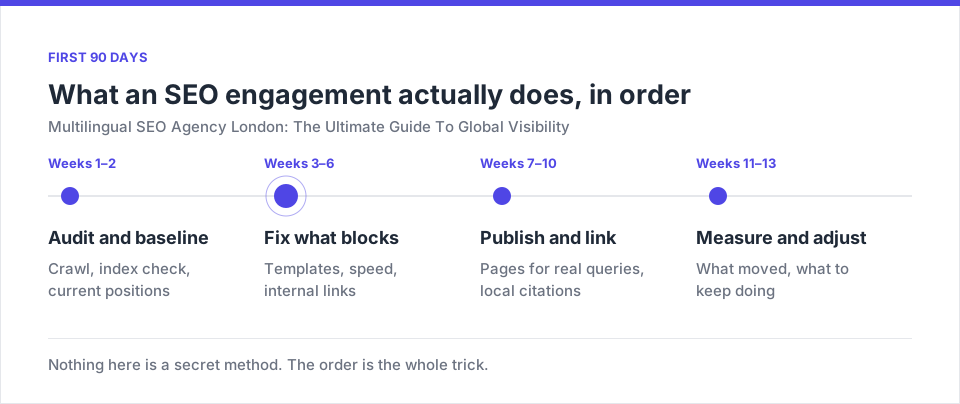
Indexing controls, sitemaps and crawl efficiency
Manage indexing with a deliberate mix of robots.txt directives, noindex controls where appropriate, and well-structured XML sitemaps that reflect language variants and their locales. An indexed, multi-layered sitemap index helps crawl budgets stay efficient as content diffuses across Local Pages, GBP, and Maps. Ensure each language variant appears in the sitemap with accurate hreflang annotations so search engines understand the intended audience for every page.
ActivationTemplates should be mirrored in publishing rules for each surface, while LicensingStamp provenance and the Provenance Ledger record the movement and rights status of assets as they diffuse. This creates a reusable, auditable blueprint for scalable international growth from London outward. For governance validation, refer to Google’s guidance and industry benchmarks such as Google’s SEO Starter Guide and Moz Local.
Performance, Core Web Vitals, and mobile readiness
Global site performance cannot be an afterthought. Core Web Vitals, mobile-first delivery, and efficient asset loading are essential for a London audience that expects rapid, reliable experiences. Implement lean rendering, modern image formats, effective caching, and server optimisations that maintain per-language performance budgets. A diffusion-conscious approach ensures that optimisations on one surface do not degrade experiences on another, preserving a unified Topic Identity across Local Pages, GBP, Maps and Locale Hubs.
Finally, maintain privacy and compliance as a core technical discipline. Data processing, attribution and cross-surface analytics must align with GDPR expectations and UK data governance. The Provenance Ledger and TranslationKeys parity play pivotal roles in keeping rights, data usage, and diffusion movements auditable and accountable for senior stakeholders and regulators alike.
To operationalise these foundations in London, start with a technical baseline aligned to your diffusion spine, then extend with per-surface ActivationTemplates and a central Provenance Ledger. For practical guidance and turnkey governance artefacts, explore our SEO services on the SEO services page and book a discovery call with a London specialist via the Contact page.
Part 8 Of 13: On-page Optimisation For Each Language
In a London market that thrives on linguistic diversity, on-page optimisation must treat language variants as first-class citizens of your diffusion strategy. At londonseo.ai we emphasise language-aware metadata, language-specific headings, careful URL and slug planning, image alt text that speaks to local readers, and structured data that reinforces local intent. When these elements travel together with ActivationTemplates, TranslationKeys parity, and the Provenance Ledger, you create a cohesive signal that resonates with real users across Local Pages, GBP, Maps and Locale Hubs while maintaining a single, governable Topic Identity.
The essence of on-page optimisation for multilingual London audiences is not merely translating words; it is engineering language-specific pages that mirror user intent, cultural nuance, and local search behaviours. Translation quality matters, but so do metadata structures, heading hierarchies, and per-language schema that help search engines interpret the page in the correct linguistic and geographical context. Our governance approach ensures TranslationKeys parity so that every language version anchors to the same Topic Identity as content diffuses across surfaces.
Defining language-specific on-page elements
Metadata, headings, and structured data must be created with locale nuance in mind. For English (UK) pages, titles and descriptions should reflect local search intent and regulatory clarity, while languages such as Polish, Bengali, Mandarin or Arabic require culturally resonant phrasing and local terminology. Per-language meta titles should incorporate target locale signals (for example, city district references, local service terms) without compromising global brand coherence. ActivationTemplates guide per-surface publishing so Local Pages, GBP and Maps deploy consistently across languages.
- Locale-aware meta titles and descriptions that embed language-specific intent cues.
- H1–H3 headings aligned to topic anchors, not just translated literals.
- Per-language canonical and alternate signals harmonised with hreflang to prevent cross-language indexing drift.
2) URL structure and language targeting
Choose a structure that serves diffusion goals and maintenance realities in London. Language subdirectories (example.com/en-gb/ pl/ zh/) keep authority consolidated while enabling clean hreflang grids. Country-code top-level domains (ccTLDs) offer strong local signals but increase maintenance. A pragmatic London strategy often uses language subdirectories on a single domain for the major communities, while reserving ccTLDs for broader regional expansion where there is a clear business case. The diffusion spine ensures language variants travel with the same topical anchors, preserving a unified brand narrative as content diffuses across Local Pages, GBP and Maps.
- Choose a resilient architecture. Start with language subdirectories for en-gb, pl, zh, ar, and add new variants as diffusion grows.
- Maintain consistent slugs and taxonomy. Use topic-based slugs that stay stable across language versions to protect internal linking and user journeys.
- Signal language and locale in sitemaps. Include all language variants with correct hreflang annotations to aid crawlers and users.
3) Image alt text and media localisation
Alt text provides accessibility and additional indexation signals. Write language-appropriate alt text that describes the image in the reader’s language, while preserving the page’s topical anchors. Local imagery should reflect recognisable London contexts when appropriate and avoid literal translation alone. Alt text should be concise, descriptive, and naturally integrated with the page’s primary topic.
4) Structured data and local signals per language
Language-specific schema boosts local relevance. Apply LocalBusiness or Organization schema with locale-aware properties (address, currency, hours) where appropriate. Use FAQ and article schema to reinforce topical anchors across languages. Ensure per-language content maps to the same organisational identity and key service themes so diffusion remains coherent across Local Pages, GBP, and Maps.
5) Governance, measurement and continuous improvement
Put governance at the centre of on-page optimisation. Maintain ActivationTemplates for per-surface publishing, TranslationKeys parity for language anchors, and a Provenance Ledger that logs asset movements and page updates. Use a diffusion dashboard to monitor language-specific metrics (impressions, clicks, CTR by language) alongside cross-surface signals from Local Pages, GBP and Maps. Reference Google’s guidelines for structured data and best practices from Moz Local to validate your approach as it scales in London.
To translate these principles into practice at scale, explore our SEO services on the SEO services page and book a discovery call with a London specialist via the Contact page. The diffusion governance you implement here will knit together Local Pages, GBP, Maps and Locale Hubs, ensuring each language variant reinforces the same Topic Identity while driving measurable local performance.
Part 9 Of 13: Localised Content Strategy At Scale
In London, scaling localisation is not simply about churning out translated pages; it is about deploying regionally resonant content that travels through Local Pages, Google Business Profile (GBP), Maps overlays, Locale Hubs and Knowledge Graph Edges without losing the core Topic Identity. At londonseo.ai we treat localised content as a governance-enabled asset that can diffuse across surfaces with fidelity, ensuring language nuance, local intent, and brand consistency align to deliver measurable growth for London audiences and beyond.
Your localisation strategy starts with a clear inventory of assets and a policy-led approach to refreshing content at scale. Local pages, GBP posts, Maps entries, Locale Hub records and KG Edges must all share a common thread of language-aware intent while allowing for locale-specific nuance. ActivationTemplates provide per-surface publishing rules, and TranslationKeys parity ensures every language variant remains anchored to the same topics as content diffuses across surfaces.
Scaling localisation workflows across surfaces
- Content inventory and prioritisation. Catalogue all Local Pages, GBP posts, Maps overlays, Locale Hub entries and KG Edges by language and locale, then prioritise areas with the strongest local demand and proximity signals in London.
- Localisation briefs and activation rules. Create language-specific briefs that capture tone, terminology, and local references, and attach them to per-surface ActivationTemplates so publishing follows a governance-forward diffusion path.
- Language parity and topic anchors. Maintain TranslationKeys parity so every language variant anchors to the same core topics, subtopics and meta-structures as it diffuses across Local Pages, GBP and Maps.
- Content calendar and workflow automation. Establish a diffusion calendar that aligns language updates with GBP posts, Maps changes and Locale Hub activations to prevent drift and ensure synchronised activation across surfaces.
- Legacy content refresh. Systematically audit and upgrade older pages to reflect current local intent, regulatory updates, and regional terminology while preserving brand voice.
- Quality assurance and governance. Implement cross-surface QA checks, translation memory and glossary governance to keep language variants accurate and consistent over time.
As you scale, extend localisation with methodical content redevelopment. When a Local Page is refreshed, mirror the updates on GBP posts and Maps overlays so users encounter a coherent, locale-aware experience at every touchpoint. This approach reinforces cross-surface continuity while enabling rapid experimentation with language, tone and local terminology that reflect London’s diverse neighbourhoods.
On-page elements must evolve in tandem with localisation strategy. Per-language meta titles, descriptions, headings (H1–H3) and image alt text should be crafted to reflect local search intent, culture and regulations. ActivationTemplates ensure that per-surface publishing rules remain aligned, while TranslationKeys parity keeps topic anchors intact as pages diffuse across Local Pages, GBP and Maps.
Structured data plays a pivotal role in reinforcing local relevance. Per-language LocalBusiness or Organization schemas, locale-aware currencies and hours, and FAQ schemas should be deployed to mirror regional expectations. When combined with local imagery and contextual brand cues, these signals help search engines interpret content correctly and improve visibility in local search results and rich results across London markets.
To operationalise this at scale, London brands should adopt a modular, governance-first mindset. Use ActivationTemplates to standardise per-surface publishing rules, ensure TranslationKeys parity across all languages, and maintain a central Provenance Ledger to log asset movements and diffusion decisions. Leverage diffusion dashboards to monitor language-specific performance (impressions, clicks, engagement by language) and cross-surface interactions (GBP, Maps, Locale Hubs) alongside revenue and ROI metrics. For practical reference, consult Google's guidance on structured data and industry benchmarks from Moz Local and BrightLocal Local SEO ranking factors to validate localisation quality and governance as you expand within and beyond London.
If you are ready to scale localisation with confidence, explore our SEO services to see how we translate these principles into a repeatable, audit-friendly programme. Book a discovery call with a London specialist via the SEO services page, or contact through the Contact page to tailor a localisation strategy to your London footprint and growth ambitions.
Part 10 Of 13: Link Building And Digital PR Across Markets
In London’s multilingual landscape, earned media and authoritativeness travel as far as technical excellence and local relevance. A governance-led diffusion spine ensures that every link, citation, and digital PR placement reinforces the same Topic Identity across Local Pages, Google Business Profile (GBP), Maps overlays, Locale Hubs and Knowledge Graph Edges. At londonseo.ai we treat link building and digital PR as cross-surface assets that must diffuse with integrity, language-aware nuance, and auditable provenance. This section lays out practical approaches to acquiring credible, локally resonant links and PR coverage that lift visibility in multiple languages while preserving brand coherence across London’s diverse markets.
Why focus on link building and digital PR in a London, multilingual context? Because local authority signals remain among the strongest local ranking factors. High-quality, language-appropriate backlinks from reputable London and regional outlets bolster Trust, improve local visibility, and complement on-page and technical optimisations. A diffusion-driven strategy ensures these signals travel in step with Local Pages and GBP, fortifying topical relevance and broadening reach across language communities—from Polish and Portuguese speakers to Mandarin and Arabic communities across the capital.
Principles for London-friendly, multilingual link building
- Quality over quantity. Prioritise links from credible, locally pertinent domains in the target language markets. A handful of high-authority, relevant links outperform mass acquisitions from unrelated sites when diffusion must stay coherent across surfaces.
- Contextual, language-aligned outreach. Craft outreach pitches in the target language or with high-quality native localisation. Content partnerships should speak to local readers and align with local search intent rather than simply translated promotions.
- Diffusion-coherent anchor strategies. Ensure link anchors reflect topic anchors that travel with the diffusion spine. TranslationKeys parity guarantees that language variants tie back to the same core topics as they propagate across Local Pages, GBP and Maps.
- Local citations with governance. Build a disciplined cadence of local citations and regional PR placements that are tracked in the Provenance Ledger, preserving asset provenance and rights across surfaces.
In practice, London campaigns should blend traditional local PR with modern, data-informed link strategies. We assess local outlets by relevance to the target language communities, proximity to the client’s category, and the outlet’s authority within the UK’s GDPR-conscious ecosystem. Our diffusion governance model ensures that every new backlink aligns with the brand’s Topic Identity and remains auditable for leadership and regulators alike.
Strategies for multilingual digital PR in London
Digital PR in a multilingual city must combine language-aware storytelling with surface-aware diffusion. Our approach blends three pillars: native-language content that earns coverage, per-surface activation rules that preserve diffusion integrity, and a central governance backbone that records assets, rights and relationships.
- Localized storytelling. Develop story angles that resonate with language communities—cultural events, community initiatives, and region-specific business impact—then translate or localise for each language audience without losing the story’s core value.
- Outreach with translation parity. Engage journalists and outlets in their language, ensuring accompanying assets—press releases, media kits and visuals—mirror the same topics and anchors across languages.
- Content assets for diffusion. Create long-form thought leadership pieces, case studies and data-backed visuals that can be republished across multiple languages, enhancing cross-surface diffusion and backlink potential.
- Localized PR calendars. Align PR campaigns with local events, holidays and market milestones to maximise relevance and linkability across language communities.
Measurement and governance of link building across surfaces
A robust measurement framework connects link-building activity to diffusion outcomes and revenue signals. We map backlinks to diffusion kernels, examining how links from local outlets influence Local Page authority, GBP engagement, Maps visibility, and Locale Hub signals. The Diffusion Health Index (DHI) remains the guiding metric, augmented by surface-specific KPIs such as referral traffic by language, on-page engagement from language variants, and conversions stemming from Maps-derived interactions.
- Attribution across surfaces. Assign credit to links based on their contribution to surface journeys, using a hybrid model that accounts for proximity signals in London’s boroughs and language-specific user paths.
- Quality controls within the Provenance Ledger. Record each outreach asset, link placement, and asset movement so governance can demonstrate compliance, licensing provenance and diffusion lineage.
- Cross-language impact analysis. Track how backlinks in one language market influence rankings and traffic in other language variants to ensure coherence across diffusion paths.
External benchmarks can validate our approach. Refer to Google’s guidance on structured data and best practices from Moz Local to gauge local authority signals and link quality, while BrightLocal’s Local SEO factors provide additional discipline for local link health and citation accuracy.
Getting started: a practical London playbook
Begin with a clean, governance-driven foundation that integrates Local Pages, GBP, Maps and Locale Hubs. Then scale outreach in language-aligned cohorts to ensure language parity and diffusion alignment. The following steps offer a pragmatic path forward:
- Audit existing backlinks and citations. Identify gaps in language markets, assess the quality of current links, and map outreach opportunities to diffusion surfaces.
- Define per-language PR targets. Establish language-specific publication goals, anchor topics, and target outlets that align with local reader expectations and regulatory compliance.
- Create per-surface activation briefs. Use ActivationTemplates to govern how PR assets diffuse onto Local Pages, GBP and Maps, ensuring licensing provenance accompanies each diffusion render.
- Launch a 90-day diffusion PR pilot. Run a focused programme in a couple of languages and boroughs to validate processes, artefacts, and governance artefacts before broader rollout.
For a London-focused diffusion programme, link building and digital PR are not isolated activities. They are integral to a unified diffusion strategy that magnifies language-specific signals without fragmenting brand identity. To explore practical artefacts and governance templates that support cross-language PR in London, visit our SEO services page or book a discovery call with a London specialist. The diffusion governance framework and ethical link-building practices we discuss here align with Google’s Starter Guide and Moz Local benchmarks, providing credible guardrails for growth across Local Pages, GBP, Maps and Locale Hubs.
Part 11 Of 13: Market Entry And Expansion Planning
Expanding a multilingual SEO programme beyond London requires a disciplined approach that blends market insight with a diffusion-led governance framework. For brands managed by a London-based multilingual SEO agency, market entry planning is not a one-off launch; it’s a staged, auditable progression that aligns Local Pages, Google Business Profile (GBP), Maps overlays, Locale Hubs and Knowledge Graph Edges with a single Topic Identity. At londonseo.ai we guide clients through a practical, ROI-focused expansion playbook that scales language varieties and regional reach without diluting brand coherence.
The objective is to prioritise markets where language demand, regulatory clarity, and commercial potential intersect favourably with your product or service. A London-led diffusion spine keeps governance consistent as you diffuse signals across new Local Pages, GBP contexts, Maps placements and Locale Hub records in tandem with the existing London footprint.
1) Market prioritisation: where to start and why
Begin with a structured prioritisation framework that weighs language demand, proximity to the UK, and potential ROI. Consider languages spoken by significant London communities as a proxy for diffusion potential in other markets with similar demographics. Build a matrix that scores languages against markets on three axes: demand signals, competitive density, and regulatory or data-privacy considerations. A London-based diffusion approach treats these signals as a probabilistic forecast, guiding where to deploy ActivationTemplates and TranslationKeys parity first, then extending to GBP and Maps as diffusion proves itself.
- Language demand and proximity. Prioritise languages with strong local usage and logical diffusion paths into other European or Commonwealth markets.
- Regulatory readiness. Screen for GDPR alignment, consumer rights considerations, and data governance readiness to ensure scalable expansion without compliance frictions.
- Commercial potential. Estimate near-term revenue impact through localised search demand, conversion potential, and price localisation feasibility.
Once priorities emerge, transition to a phased expansion plan. Start with high-potential language-market pairs that map cleanly to London’s language ecosystems and then extend diffusion to adjacent markets as governance data accrues. This staged approach reduces risk while maintaining a clear lineage of asset provenance across surfaces.
2) Competitive landscape and regulatory scanning
Market entry should be informed by a thorough understanding of local competitors and regulatory constraints. In parallel with language-specific keyword discovery and content localisation, perform a regional audit of rival strategies, including how competitors structure their Local Pages, GBP activity, and Maps ranking signals. In London practice, this means evaluating how similar multilingual players manage hreflang mappings, local content depth, and cross-surface link-building within the diffusion framework. Align findings with Google’s guidance and industry benchmarks from Moz Local to ensure your governance remains credible and auditable as you scale.
3) Localisation readiness and product-market fit for new markets
Expansion requires validating that your product or service resonates in new language communities. Start with localisation briefs that translate intent rather than words, ensuring topics align with your central Topic Identity. Assess pricing strategies, payment methods, and regional customer expectations to support a coherent market entry. The diffusion spine ensures these per-market signals travel together with Local Pages, GBP, and Maps, so as you diffuse into a new geography, you preserve brand voice and topical anchors across surfaces.
4) Governance and diffusion planning for expansion
The core of successful expansion lies in a governance framework that coordinates multi-surface publishing rules, language parity, and asset provenance. ActivationTemplates should prescribe per-surface publishing rules for Local Pages, GBP and Maps, while TranslationKeys parity ensures language variants retain identical topical anchors as they diffuse. The Provenance Ledger captures asset movements, licensing status and diffusion decisions, creating an auditable trail for leadership and regulators alike.
5) Operational planning: timelines, budgets, and teams
Market entry requires clear resourcing and a realistic timeline. Define the sequence of activations by language and geography, estimate translation and localisation budgets, and align recruitment or vendor partnerships to support the diffusion spine. Maintain a central programme plan that links Local Pages, GBP, Maps and Locale Hubs to the new markets, so the diffusion remains cohesive and audit-ready as you scale.
- Resource plan: in-house capabilities vs. external partners, with language coverage mapped to diffusion trajectories.
- Budgeting: allocate funds for localisation, content activation, link-building and PR in staged phases aligned to ROI milestones.
6) Pricing localisation and currency considerations
Pricing strategies should reflect local purchasing power, competition, and regulatory constraints. Build regional pricing guidelines that stay aligned with the central Topic Identity while accommodating locale-specific expectations. Where appropriate, implement currency adaptation, local tax considerations, and price messaging that remains consistent with your brand voice across diffusion surfaces.
6) Measuring success and governance cadence
Define a compact yet comprehensive KPI set that captures market-entry outcomes: language-specific impression share, GBP interactions, Maps engagement, local landing page performance, and revenue impact. Use a diffusion dashboard that aggregates data across Local Pages, GBP, Maps, Locale Hubs and KG Edges, so leadership can review activation outcomes, ROI, and risk indicators in one view. Benchmark against Google’s best practices and industry standards from Moz Local to maintain credibility and comparability as you roll out across markets.
To operationalise these principles in London, explore ActivationTemplates on our SEO services page and book a discovery call with a London specialist to tailor a market-entry plan to your growth agenda. The diffusion governance framework you adopt will enable scalable expansion while preserving Topic Identity across Local Pages, GBP, Maps and Locale Hubs.
For practical references and governance artefacts, consider integrating Google’s guidance on structured data and Moz Local benchmarks as part of your foundational playbook. Internal links to our services and contact pages offer a direct route to access-ready templates and consultancy slots: SEO services and Contact.
Part 12 Of 13: Measurement, Dashboards And Return On Investment For London Multilingual SEO
With market-entry planning established in Part 11, the measurement layer becomes the steadying force that translates language-driven diffusion into tangible business outcomes. A governance-led diffusion spine requires dashboards and KPI frameworks that connect Local Pages, Google Business Profile (GBP), Maps overlays, Locale Hubs and Knowledge Graph Edges to revenue, while preserving the London-wide Topic Identity. At londonseo.ai we design measurement that is both rigorous and practical for the capital’s multilingual markets.
Central to this approach is the Diffusion Health Index (DHI), a composite signal that blends on-surface engagement with governance fidelity. The DHI evaluates four, interconnected pillars: engagement quality across language variants, fidelity of topical anchors as content diffuses, proximity signals that drive local actions, and governance integrity including asset provenance. This lens keeps diffusion decisions auditable and business-led, crucial for leadership visibility in regulated environments like the UK market.
Key measurement pillars for London multilingual campaigns
- Language-specific engagement metrics. Track impressions, clicks, click-through rate (CTR), and dwell time by language to surface which communities respond to your content and where translation depth must improve.
- Surface-level conversion signals. Monitor GBP interactions, form submissions from Local Pages, and Maps-driven actions (directions, calls, visits) to gauge how diffusion translates into intent and activity.
- Proximity and locality effects. Analyse Maps-derived proximity signals (directions requests, route starts) to confirm that diffusion anchors align with real-world urban geography in London.
- Revenue and ROI attribution. Link language-specific engagement and surface interactions to revenue outcomes, using a cross-surface attribution model that recognises the journey from search to conversion across Local Pages, GBP and Maps.
- Cross-surface governance indicators. Use the Provenance Ledger to audit asset movements, licensing provenance and diffusion decisions, ensuring compliance and traceability for senior stakeholders.
Data sources form the backbone of these insights. Google Analytics 4 (GA4) and Google Search Console provide on-site and query-level data, while GBP and Maps Insights capture location-based interactions. Locale Hub activity and Knowledge Graph edges enrich semantic context, helping you understand how language variants contribute to authority and discoverability. All data should feed into a single governance framework so activation decisions are auditable and repeatable, not ad hoc.
Building a London diffusion dashboard architecture
A practical diffusion dashboard aggregates data into a coherent, decision-ready view. Core components include a surface-agnostic KPI layer, language-specific dashboards, and a cross-surface diffusion cockpit. ActivationTemplates and TranslationKeys parity feed the dashboards with per-surface publishing rules and language anchors, while the Provenance Ledger records asset movements and diffusion outcomes. This architecture supports quarterly reviews, executive briefings, and rapid iteration on localisation strategies.
ROI modelling for multilingual London campaigns
Calculating ROI in a diffusion-led programme goes beyond traffic volumes. The model should map language-level activity to incremental revenue, considering both direct conversions and assisted conversions across surfaces. A robust approach allocates credit to Local Pages, GBP interactions and Maps touches based on geography-aware paths, while keeping language anchors aligned with core Topic Identity. The result is a clear line from localisation investments to real-world outcomes in London’s diverse communities.
To ensure the figures remain credible for executives, complement internal dashboards with external benchmarks. Google's SEO Starter Guide and Moz Local provide credible baselines for measurement design and localisation quality. See: Google’s SEO Starter Guide and Moz Local.
Implementation steps for London teams
- Define a compact KPI suite per language. Include impressions, clicks, CTR, engagement metrics, and cross-surface conversions. Align these with revenue KPIs in your CRM to establish ROI traceability.
- Set up diffusion dashboards. Build a Diffusion Health Dashboard that aggregates Local Pages, GBP, Maps, Locale Hubs and KG Edges, with per-language filters for clarity.
- Integrate governance artefacts. Ensure ActivationTemplates, TranslationKeys parity and a central Provenance Ledger are wired into reporting so diffusion movements are auditable.
- Run governance reviews quarterly. Reassess language performance, surface interactions, and ROI against updated market conditions in London and adjacent markets.
As Part 11 set the market-entry blueprint and Part 13 will explore advanced attribution, experiments and optimisation across UK cities (including London), Part 12 crystallises how measurement, dashboards and ROI come together to sustain growth. If you’re ready to translate these principles into repeatable, auditable programmes, explore our SEO services for London-specific governance artefacts, and book a discovery call with a London expert to tailor a diffusion-driven measurement plan for your footprint in the capital and beyond.
Part 13 Of 13: Collaboration With A London Technical SEO Agency
Working with a London-based technical SEO agency is a true collaboration, not a one-off delivery. The governance-led diffusion spine we advocate at londonseo.ai thrives on clear roles, transparent processes, and continuous alignment between client teams and specialists. This part outlines a practical collaboration model that sustains language-driven growth across Local Pages, GBP, Maps, Locale Hubs and Knowledge Graph Edges, while preserving a cohesive Topic Identity city-wide.
Key to success is an initial discovery and alignment phase. We begin with stakeholder workshops to translate business goals into diffusion outcomes. The workshop confirms the primary audiences, language priorities, and geographic anchors that will drive Local Pages and diffusion activities across surfaces. A clearly stated success framework anchors governance decisions to tangible outcomes such as GBP engagement, Maps directions, and local conversions.
2) Audit and baseline assessment
Our team conducts a comprehensive audit of technical infrastructure, content localisation quality, and surface-level signals. We map language variants to Local Pages, GBP, Maps and Locale Hubs, then establish a baseline diffusion score that measures anchor fidelity, activation velocity, and asset provenance. This baseline becomes the reference point for all subsequent governance decisions and optimisations.
3) Strategy and roadmap design
We translate insights into a diffusion roadmap that outlines per-surface publishing rules, language anchors, and local signals. ActivationTemplates govern publishing cadence for Local Pages, GBP posts, and Maps overlays, while TranslationKeys parity ensures language variants retain identical topical anchors as content diffuses. The roadmap also defines licensing provenance and how assets traverse the diffusion spine, enabling auditable growth across London and beyond.
4) Roles, governance cadences and access
We establish a practical governance model with explicit roles for client stakeholders, London specialists, and cross-surface editors. Regular governance cadences—weekly touchpoints, fortnightly reviews, and quarterly strategy sessions—keep diffusion decisions aligned with business goals. Access controls ensure data privacy and GDPR compliance while enabling timely collaboration on Local Pages, GBP and Maps assets.
5) Delivery artefacts and templates
We provide reusable artefacts: ActivationTemplates for per-surface publishing rules, TranslationKeys parity templates, and a Provenance Ledger template to track asset provenance and diffusion decisions. These artefacts are designed for easy handover and knowledge transfer, enabling your team to sustain governance after the engagement ends.
6) Knowledge transfer, training and enablement
We deliver structured training sessions, documentation, and operate a knowledge-transfer plan that ensures your team can maintain diffusion governance without ongoing external support. Training covers hreflang maintenance, per-surface publishing rules, asset provenance, and how to interpret diffusion dashboards for strategic decision-making.
7) Measurement, reporting and optimisation cadence
Reporting is a shared responsibility. We configure a Diffusion Health Dashboard that presents language-specific engagement, surface interactions, and ROI in a single view. Regular reviews assess progress against KPIs and guide optimisation across Local Pages, GBP, Maps and Locale Hubs. External benchmarks such as Google’s SEO Starter Guide and Moz Local remain reference points for governance validation.
8) How this collaboration supports your London growth plan
The collaboration model ensures that localisation depth and city-wide reach grow in parallel. By sustaining TranslationKeys parity, licensing provenance and a unified Topic Identity, you avoid drift as diffusion expands. If you are ready to implement a governance-driven, six-surface diffusion programme with London-scale ambition, explore our SEO services for practical artefacts, or book a discovery call with a London expert to tailor a fusion of Local Pages, GBP, Maps and Locale Hub activities to your markets.
Learn more about how we work with clients at londonseo.ai and contact us via the Contact page to begin a collaboration that combines governance rigour with localisation expertise. For practical governance artefacts and reference benchmarks, consult Google’s guidance and Moz Local as part of your planning framework.
