Central London SEO: Foundations for Local Visibility
Central London is a highly competitive digital landscape where location-aware visibility can translate into tangible business outcomes. This opening section establishes the strategic backbone for a London-first SEO programme, emphasising district-level prioritisation, intent-driven content, and technically sound foundations. By aligning UX, content, and local signals, businesses in Westminster, City of London, Mayfair, Covent Garden, Soho, and surrounding enclaves can capture high-intent searches from locals, workers and visitors. LondonSEO.ai leverages best-practice frameworks to help you appear where your audience searches, whether that is through maps, local packs or organic results.
Understanding the Central London search landscape
Central London combines iconic districts with a dense mix of residents, commuters and tourists. Search behaviour here is highly local and predominantly mobile, with heavy reliance on Google Maps, GBP signals and proximity-based queries. Consumers frequently perform near-me searches such as "plumber near me in Westminster" or "cafes in Covent Garden" and expect quick, actionable information. Any successful Central London SEO strategy must therefore prioritise accuracy of business data, strong local intent content, and fast, accessible experiences across devices. In practice, this means a clear district architecture, consistent NAP (Name, Address, Phone), and structured data that communicates LocalBusiness entities to search engines. For readers of londonseo.ai, this translates into a repeatable model you can apply city-wide, adapting to each district’s nuances while preserving a coherent London-wide presence.
Why local optimisation matters in Central London
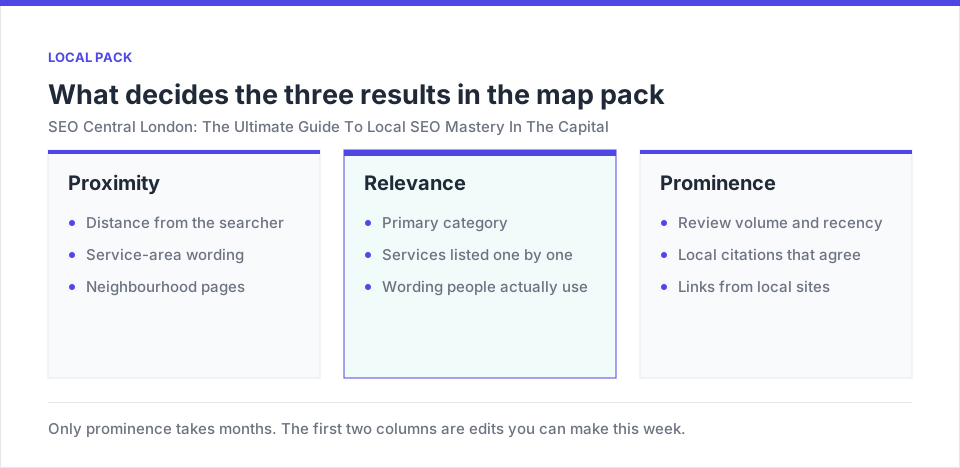
The value of local SEO in a global city lies in connecting immediate needs with nearby solutions. Local packs and GBP prominence can determine who gets the call, the click or the reservation. A robust Central London strategy covers GBP optimisation, consistent citations, reviews management, and district-focused landing pages—each tuned to district-specific intents such as information, navigation or transactional actions. At londonseo.ai we emphasise a disciplined approach: data accuracy, thoughtful content specificity, and a clear path from discovery to conversion. This is not about generic city pages; it is about meaningful, district-tailored experiences that establish trust and drive outcomes.
Objectives and key metrics for a Central London local SEO campaign
Before acting, define what success looks like in a London context and how to measure it. Typical objectives include increasing visibility for local keywords, driving qualified organic traffic to district landing pages, boosting GBP interactions, and improving on-site conversions. The following metrics offer a practical starting point:
- Local keyword visibility and map pack presence across key Central London districts.
- Organic traffic to district landing pages, segmented by device and district.
- Google Business Profile interactions: clicks, directions and calls.
- Conversions on district-specific landing pages (form submissions, bookings, quotes).
- UX and performance signals (Core Web Vitals, bounce rate, time on page) as leading indicators of engagement and conversion potential.
Establish a staged KPI plan (e.g., 30, 60, 90 days) to demonstrate incremental value. This framework should be scaled across districts as ROI becomes tangible, with governance designed to support repeatable, scalable execution city-wide.
Architectural foundations for a local SEO-centric site in Central London
A robust architecture is essential to support district-level optimisation while maintaining a cohesive London-wide presence. Start with a London hub page that anchors general topics about Central London, linked to landing pages by district (e.g., Westminster, City of London, Bloomsbury, Mayfair) and a pillar page that aggregates the city-wide themes. District landing pages should address distinct local intents and link to thematic content and service pages, ensuring a logical trail for both users and search engines. Implement LocalBusiness, FAQPage and Event structured data where relevant to enrich results in SERPs and Maps, and use breadcrumbs to reinforce location context. At londonseo.ai we emphasise a scalable, modular approach so you can replicate success from one district to another without starting from scratch.
On-page signals tailored to local intent
Local intent requires precise keyword targeting, optimised meta data, clear header structure and well-formed schema. Each district page should include location-specific keywords, FAQs addressing local questions, and on-page elements that guide users toward conversion actions. A consistent internal linking strategy from the hub to district pages and back to the pillar page reinforces topical authority and improves crawl efficiency. For readers of londonseo.ai, this is the practical blueprint that translates London-specific search behaviour into measurable performance.
Understanding the Central London Search Landscape
Central London presents a dense, highly competitive SEO environment where local signals matter as much as scale. The way people search here combines proximity, mobility, and intent, whether locals, workers commuting through transport hubs, or visitors planning a day in the capital. Local SEO efforts should mirror this heterogeneity by segmenting by district (Westminster, City of London, Covent Garden, Mayfair, Soho, Bloomsbury, Holborn, Fitzrovia) while maintaining a cohesive London-wide strategy. LondonSEO.ai champions a district-first framework that aligns with Google’s local ranking signals, maps visibility, and rich result opportunities.
Geography and consumer behaviour in Central London
Search behaviour in the capital is highly device-driven, with a strong preference for immediacy. People search for near-me queries such as "bakery near Westminster" or "taxi services in City of London" and expect fast, actionable results. Tourism injects seasonal spikes; office clusters influence workday search patterns, while residents look for daily services with rapid contact options. A robust Central London SEO plan must reflect these rhythms with district-focused landing pages, clear NAP, and accurate business data across maps and knowledge panels.
District architecture that supports local intent
Adopt a London hub model that anchors district-level pages. Each district page should target high-intent queries while feeding into a London pillar page that organises city-wide topics. For Westminster and Mayfair, content may emphasise premium services, while Covent Garden and Soho can prioritise experiential or venue-focussed content. Structured data such as LocalBusiness and FAQPage should reflect district realities, enabling richer results in SERP and Maps. The aim is a scalable, repeatable template you can apply across districts with minimal friction.
On-page signals for local intent in London
Each district page should integrate district-specific keywords, location-based FAQs, and clear calls to action. A consistent internal link strategy, connecting the hub to district pages and back to the pillar page, reinforces topical authority and crawl efficiency. Use schema types such as LocalBusiness, FAQPage and Event where relevant to enrich results. In LondonSEO.ai we apply a modular approach so the same district blueprint can be replicated city-wide, with careful adaptation to each locale’s nuances.
Key metrics to track for Central London SEO
Define a practical set of KPIs to govern progress. Typical metrics include:
- Local keyword visibility and map pack presence by district.
- Organic traffic to district landing pages, broken down by device.
- Google Business Profile interactions: clicks, directions and calls.
- Conversions on district pages (form submissions, bookings, quote requests).
Establish staged KPI checkpoints (e.g., 30, 60, 90 days) to demonstrate early value and inform strategic adjustments. Use Guardian Dashboards for real-time monitoring and Provenance Trails to document decision rationale for scalable rollouts.
How to start implementing in London
To turn these insights into action, begin by aligning with your team on a district pilot. Create Activation Briefs for Westminster, City of London, and Covent Garden, then establish landing pages and a pillar page strategy that connects the district clusters to broader London topics. Ensure data accuracy across NAP and Maps, implement LocalBusiness and FAQPage structured data, and set up a dashboard to monitor KPI by district. For a practical, repeatable approach across the city, consult LondonSEO.ai's services page and contact us to discuss a tailored plan.
Visit our services page at services or contact to start a conversation. To deepen your knowledge of local SEO fundamentals, review Google’s guidelines for LocalBusiness structured data and GBP help resources: LocalBusiness Structured Data and Google Business Profile help.
Foundations of Local SEO for Central London Businesses
In Central London, consistent NAP data and accurate local information lay the groundwork for visible search results. Local users rely on Maps, knowledge panels and directory listings to find trusted suppliers in Westminster, the City of London, Covent Garden and surrounding neighbourhoods. A robust local SEO foundation blends district-level accuracy with a cohesive London-wide framework. At LondonSEO.ai we employ a district-first approach: a central London hub page connects to district landing pages and a city-wide pillar page, enabling search engines to recognise both the immediacy of local signals and the authority of a unified brand.
NAP Consistency and Local Listings
Maintain uniform Name, Address and Phone across Google Business Profile, major directories and your website. Small inconsistencies in punctuation, abbreviations or suite numbers can fragment signals, reducing trust and map rankings. Start with a master data sheet for each district and implement automated checks that flag discrepancies. Wherever possible, align addresses with well-known central points (for example near Covent Garden or Holborn) to support proximity signals without confusing potential customers. LondonSEO.ai recommends a single source of truth for NAP that feeds both site schema and GBP data.
As you scale across zones, preserve district-specific address formats that reflect local expectations while keeping canonical data consistent. This discipline improves click-through from local listings, strengthens proximity signals and enhances voice-search performance. If you’d like expert help to build and maintain this framework, explore our services page or reach out to discuss a tailored plan.
Reviews, Reputation Management and GBP Signals
Reviews influence not only trust but also engagement and conversion in a crowded Central London market. Establish a proactive review workflow: request feedback after service delivery, respond promptly and resolve issues offline when appropriate. Regular GBP activity signals engagement and can improve local pack visibility. Develop a structured response strategy that expresses appreciation, references district specifics and indicates actions taken to resolve problems.
In busy districts, a diverse footprint of reviews across areas such as Westminster, the City, and Soho reinforces local relevance. Incorporate meaningful responses into district landing pages to enrich content and reinforce authority.
Structured Data and Local Rich Results
On-site structured data helps search engines interpret local intent and district scope. Implement LocalBusiness markup with address, contact details, hours and categories to aid indexing and enhance appearance in knowledge panels and maps. Add FAQPage markup to district landing pages to address common central London questions, such as opening times, service areas and booking processes. If there are events or promotions tied to a district, consider Event markup to boost visibility in local results. For authoritative guidance, consult Google resources on LocalBusiness structured data and GBP help.
LocalBusiness Structured Data: LocalBusiness Structured Data. Google Business Profile help: Google Business Profile help.
Measurement, Governance and ROI
A practical KPI framework for Central London should monitor district visibility in organic results and maps, GBP interactions (clicks, directions, calls) and conversions on district landing pages. Core Web Vitals remain critical as UX performance correlates with engagement and conversion potential. Establish guardianship through Guardian Dashboards for real-time monitoring and Provenance Trails to document the data sources and rationale behind decisions. This governance supports scalable wins as you extend local activity across more districts in London.
Next Steps for Central London SEO
To translate these foundations into measurable outcomes, start with a district pilot covering Westminster, the City of London and Covent Garden. Create district landing pages linked to a London hub and a city-wide pillar page, implement LocalBusiness and FAQPage markup, and establish a district-level KPI dashboard. Regular reviews will inform optimisation, budget allocation and expansion to additional districts with clear ROI. For a tailored plan, visit our services page or contact us to initiate a customised Central London programme.
Ready to dive deeper? Visit our services page at services or contact to start a conversation. For ongoing guidance on local SEO, consult the Google resources linked above and apply the LocalBusiness and GBP practices to your London strategy.
On-Page Local Optimisation for Central London
Optimising the on-page signals for Central London requires district-sensitive content that still binds to a cohesive London-wide narrative. Each district—Westminster, City of London, Covent Garden, Mayfair, Soho, Bloomsbury and surrounding locales—demands tailored pages that address local intent while reinforcing the authority of the city as a whole. The right combination of keyword targeting, metadata, header structure, schema, and a user-friendly experience creates a trackable path from discovery to conversion. LondonSEO.ai champions a modular, repeatable approach that scales from one district to multiple locales without diluting quality.
Keyword Targeting For Local Intent
Map district-level intents to dedicated landing pages so users encounter highly relevant results as they search near Westminster, Covent Garden or the City of London. Local phrases such as "plumber Westminster" or "cafes Covent Garden" should sit on district pages, while broader terms align with the city hub. This alignment helps search engines understand where to rank each page and how it contributes to the overall London topic authority.
- Conduct district-level keyword mapping, aligning search intents with corresponding landing pages for Westminster, City of London, Covent Garden, Mayfair, Soho and surrounding areas.
- Craft unique, locally saturated title tags and meta descriptions for each district page that reflect user intent and proximity signals.
- Structure headers so district pages feature a clear H1 including the district name, followed by relevant H2 and H3 subtopics.
- Enhance pages with LocalBusiness, FAQPage and Event structured data where appropriate to signal local context to search engines.
- Implement a disciplined internal linking model from the London hub to district landing pages and back to the city pillar page to bolster topical authority.
Meta Data and Header Architecture
Metadata should be crafted with singular focus on clarity and relevance for local searchers. Each district page benefits from a concise meta description that communicates district specificity and a compelling call to action. H1s must be unique to each page and include the district name, while H2s and H3s organise content by services, neighbourhood landmarks or user intents such as information, navigation, or transactional actions. Canonical tags should protect against duplicate content across district pages with the same core London themes.
Schema and Local Signals
Structured data communicates district-level relevance to search engines and enhances appearances in Knowledge Panels and Maps. Apply LocalBusiness markup with address, hours and contact details for each district location. Use FAQPage to address district-specific questions, such as opening times, delivery areas or booking processes. If there are district events or promotions, include Event markup to improve local visibility. For authoritative guidance, see LocalBusiness Structured Data and Google Business Profile help resources.
LocalBusiness Structured Data: LocalBusiness Structured Data. Google Business Profile help: Google Business Profile help.
District Landing Pages and Internal Linking
Implement a hub-and-spoke model where a Central London hub page links to landing pages for Westminster, City of London, Covent Garden, Mayfair and Soho. Each district page should feed into a city-wide pillar page that aggregates London topics and reinforces topical authority. A robust internal linking structure helps users and search engines traverse from the district level to the broader London context, maximising crawl efficiency and user discovery. This approach also supports consistent NAP dissemination and uniform signals across Maps and Knowledge Panels.
UX Considerations and Local Page Performance
Local pages should be fast, mobile-friendly and easy to navigate. Prioritise readable typography, clear CTAs, and accessible contact options, including click-to-call on mobile. District pages require concise, actionable content that answers local questions quickly and guides visitors toward conversion actions such as bookings, quotes or directions. A strong on-page foundation also includes optimised images, lazy loading where appropriate and compression techniques to maintain Core Web Vitals. The result is a smoother user journey from search results to action, increasing dwell time and reducing bounce rates for local queries.
Structured Data and Local Rich Results for Central London
Structured data acts as a translator between your local pages and search engines, helping Google understand the district-level value you offer in Central London. For a London-first SEO programme, implementing LocalBusiness, FAQPage and Event markup across district landing pages boosts appearance in knowledge panels, maps and rich results. This next stage builds on the foundations laid for Central London and translates district intent into machine-readable signals that search engines can reliably interpret, ultimately improving click-through and conversions for seo central london campaigns.
Key Local Schema Types for Central London
To maximise local visibility, implement a targeted set of schema types on district pages that reflect real user needs and district realities. Core types to prioritise include LocalBusiness, FAQPage, and Event. Together they help search engines present practical, district-relevant information directly in search results and Maps, reducing friction in the discovery-to-action journey. londonseo.ai advocates a modular approach: apply these schemas where they add value, then scale the pattern to other districts while preserving overall London-wide authority.
- LocalBusiness markup for each district location, including address, phone, hours of operation and categories.
- FAQPage markup addressing common local questions such as opening times, service areas and booking processes.
- Event markup for district promotions, workshops or local open days to increase local visibility.
- BreadcrumbList and organisation-level schema to reinforce hierarchy from district pages to the London pillar page.
Implementing these formats helps your Central London content be discovered by locals and visitors alike, providing rich snippets that improve visibility and trust. For guidance, consult Google’s official documentation on LocalBusiness structured data and the Google Business Profile help resources referenced in earlier sections.
Practical implementation steps for London SEO teams
Begin with district-level templates that mirror the hub-to-district-to-pillar structure already established for Central London. Ensure each district page has:
- District-specific LocalBusiness markup including precise street address, contact details, hours, and geo coordinates.
- FAQPage content crafted around typical local questions, integrated into the page's schema.
- Event markup for any district events or promotions to capture timely local intent.
- Breadcrumbs and property hierarchy that clearly connect district pages to the Central London hub and the city pillar page.
Keep data consistent across NAP on the site, GBP and directory listings to reinforce proximity signals and reduce user confusion. For actionable steps, explore our services page at services or contact to discuss a customised plan for seo central london. For authoritative guidance, refer to Google resources linked in prior sections: LocalBusiness Structured Data and Google Business Profile help.
Technical considerations: ensuring crawlability and speed
Structured data should not impede site performance. Validate your structured data with Google's Rich Results Test and ensure schema is placed on the actual page content rather than in extraneous scripts. Use clean, district-specific URLs (for example, /central-london/westminster/ or /central-london/covent-garden/) and maintain consistent canonical references to avoid duplicate content across districts. In LondonSEO.ai we emphasise a repeatable pattern so you can replicate success district by district while maintaining a cohesive London-wide voice.
Operational tips for data governance and measurement
Integrate structured data deployment into your ongoing governance model. Track schema coverage by district, monitor for any schema errors in Search Console, and tie performance improvements to your KPI framework. Guardian Dashboards can visualise schema health alongside traditional KPIs, while Provenance Trails document the origin of data and decisions to support audit-ready practices. This disciplined approach makes it easier to scale structured data across new districts in London, maintaining quality and consistency throughout.
Off-Page Local Authority and Link Building
In Central London, off-page signals are a critical lever for local visibility and trust. While on-site architecture and technical performance establish the framework, external validation from high-quality, locally relevant links and mentions accelerates rankings in Maps and organic results. A London-focused, ethical approach to link building prioritises relevance, authority and proximity, ensuring that every backlink reinforces the city-wide brand while anchoring signals to Westminster, City of London, Covent Garden, Mayfair, Soho and surrounding districts. LondonSEO.ai codifies this into a repeatable programme that scales from district to district without compromising quality.
Local partnerships and sponsorships as credibility builders
Strategic partnerships with London-based business groups, chambers of commerce and industry associations provide authentic, earned media opportunities and high-relevance backlinks. Start with Westminster, City of London and Covent Garden anchors, then extend to Bloomsbury, Mayfair and Soho through sponsor pages, event listings and partner directories. When planning partnerships, aim for content collaboration, co-hosted events or reports that yield authoritative references and citations from trusted local sources. Ethical, relationship-driven outreach typically yields higher quality referrals than mass link-building campaigns and aligns with Google’s emphasis on natural, value-based links.
Digital PR and data-driven storytelling for London audiences
London’s diverse districts offer rich storytelling angles for Digital PR. Ground campaigns in local data, events and neighbourhood context to craft angles that journalists can publish with minimal edit. Examples include district-level surveys, economic trends in the West End, or cultural events in Soho, all supported by visual data (charts, heat maps) that can be embedded in local articles. Distribute these stories through targeted outreach to local outlets, business journals, arts and lifestyle press, and regionally focused industry sites. Pair press placements with dedicated landing pages that mirror the coverage to reinforce topical authority and user intent.
District-specific link opportunities and content symmetry
Adopt a district-first outreach plan that aligns with a London-wide pillar. For each district page (e.g., Westminster, City of London, Covent Garden, Mayfair, Soho), identify local outlets, blogs, and organisations likely to reference your services. Target opportunities include: local business directories, neighbourhood magazines, university or campus publications, and venue guides for events and venues. Ensure that every link is contextually relevant to the district page it supports, with anchor text that reflects local intent and avoids over-optimisation. This symmetry between district pages and the London pillar helps search engines understand the nuanced interplay between local specificity and city-wide authority.
Outreach and governance: a scalable process
Frame off-page activity within Activation Briefs for each district, mirroring the hub-and-spoke architecture used for Central London. A Guardian Dashboard tracks outreach progress, link quality, and referral traffic by district, while Provenance Trails document the rationale behind outreach decisions and content choices. This governance enables consistent reporting, fosters accountability, and supports scalable expansion to additional London boroughs as ROI becomes evident.
Measurement: what to track and why
Key metrics focus on the quality and relevance of links, not just quantity. Track referring domains, domain authority, topical relevance to Central London and each district, and referral traffic that converts on district landing pages. Monitor the relationship between link signals and on-site outcomes, such as organic traffic to district pages, GBP interactions, and conversion events. Tie link performance to ROI through CRM attribution and multi-touch models, using Guardian Dashboards to visualise progress and Provenance Trails to justify decisions and optimisations.
Local Content Strategy and Localised Pages
In Central London, a disciplined local content strategy is the engine that turns district-specific queries into meaningful, measurable engagement. A London-first approach uses a hub-and-district architecture, where a central London hub page anchors city-wide themes, district landing pages address district-level intents, and a pyramidal pillar page organises topics across the capital. This structure enables search engines to understand both the immediacy of local signals and the authority of a unified brand, while giving users clear, localised solutions. At LondonSEO.ai we advocate a repeatable template: district-led content clusters feeding up to a London pillar, with data-driven governance that scales from Westminster and Mayfair to Covent Garden, Soho, Bloomsbury and beyond.
District content architecture and topic clusters
Begin with a district-focused content map that aligns user intent with district realities. Prioritise districts by demand and profitability, while keeping a coherent city-wide narrative. Typical districts for Central London planning include Westminster, City of London, Covent Garden, Mayfair, Soho, Bloomsbury, Holborn and Fitzrovia. For each district, establish content clusters built around core intents: informational guides (local services, landmarks, venues), navigational aids (directions, maps, transport access), and transactional actions (booking, consultations, quotes). This triad mirrors how locals and visitors search in a dense, mobile-driven environment and ensures pages serve practical needs while reinforcing topical authority for London as a whole.
- Districts: Westminster, City of London, Covent Garden, Mayfair, Soho, Bloomsbury, Holborn, Fitzrovia.
- Content clusters: Local services and experts, district guides, venues and events, and practical how-to content (opening hours, contact options, booking flows).
- Content cadence: Fresh, district-aligned posts complemented by evergreen service pages to maintain steady visibility across the year.
District landing pages: templates and best practices
Each district landing page should present a clear value proposition, accurate NAP-equivalent details for that locale, and a direct path to district-specific actions. Use district H1s that include the district name, followed by H2s that segment into services, FAQs, and nearby landmarks. Local facts, event calendars and proximity-based directions should be easy to find and optimised for mobile. Include high-quality images that reflect the district’s character and ensure accessibility standards are met. A consistent internal linking pattern from hub to district pages and back to the city pillar page reinforces topical authority and crawl efficiency. This is the practical blueprint that translates London-specific search behaviour into tangible results for seo central london.
Editorial calendar and governance for local content
Implement a governance rhythm that blends strategic planning with tactical execution. Create a quarterly editorial calendar that assigns district ownership, content formats and publication cadences. For each district, schedule a mix of evergreen service pages and timely content (local events, seasonal guides, venue openings) to capture near-term and long-tail searches. Build a content workflow that includes topic ideation, author assignment, review stages and publish timelines. A lightweight governance model paired with robust data capture enables you to measure which district clusters deliver the best ROI and adjust allocations accordingly. The London-first framework supports a scalable cadence that can be replicated across districts with minimal friction.
Integrating structure data and GBP signals with local content
Content strategy should be complemented by structured data that communicates local intent to search engines. Apply LocalBusiness markup to district pages where appropriate, along with FAQPage to address district-specific questions (opening times, delivery areas, booking processes) and Event markup for local happenings that drive footfall or reservations. The synergy between content and structured data helps your local results appear as rich, actionable snippets in SERPs and Maps, enhancing both visibility and user trust. For guidance, consult Google's LocalBusiness structured data resources: LocalBusiness Structured Data and the Google Business Profile help pages: Google Business Profile help.
Content quality, accessibility and UX alignment
Local content should be highly practical, written in a clear, trustworthy tone and optimised for mobile devices. Ensure text remains legible with accessible colour contrast, scalable font sizes and alternative text for imagery. Each district page should offer straightforward navigation to the most relevant actions, whether it is a service page, directions, or a form submission. A fast, accessible experience increases dwell time, reduces bounce rates and supports higher conversions on local queries. The aim is a London-wide content ecosystem that remains authentic to each district while delivering a coherent user experience across the capital.
Take the next step with LondonSEO.ai
If you’d like a tailored, district-focused content activation plan that mirrors this structure, start a conversation with us. Visit our services page at services or contact to discuss a district-by-district rollout. For practical guidance on implementation, review Google’s guidance on LocalBusiness structured data and GBP resources linked above to ensure your content adheres to current best practices and maximises local visibility in seo central london.
Local Landing Pages and Borough Targeting in Central London
To capitalise on local intent in Central London, a disciplined approach to district-specific landing pages and a scalable internal linking framework is essential. A hub-and-spoke architecture helps Search Engines understand both the city-wide authority and the local relevance of Westminster, City of London, Covent Garden, Mayfair, Soho and surrounding boroughs. LondonSEO.ai champions a repeatable model: a Central London hub page anchors the topic, district landing pages address discrete local needs, and a London pillar page aggregates overarching city themes. This structure not only improves crawl efficiency but also enhances user journeys from discovery to conversion across devices and contexts.
The hub–district–pillar framework
Begin with a London hub page that outlines core local services, market realities and common questions across the capital. From there, create district landing pages for Westminster, City of London, Covent Garden, Mayfair and Soho, each tuned to its own local intent (information, navigation, transactional actions). These district pages should funnel into a central London pillar page that organises city-wide topics such as transport access, premium services, cultural venues and event-driven searches. The internal linking ritual should feel natural to users while signalling topical depth to search engines.
District prioritisation and content mapping
Prioritise districts by near-term business value and volume of local queries. Westminster and the City of London often generate high-intent searches around professional services, dining and offices, while Covent Garden, Mayfair and Soho capture demand for experiences and venues. For each district, map content clusters to the three local intents: informational content (district guides, service explanations), navigational content (directions, transport access, maps), and transactional content (booking forms, quotes, consultations). The objective is to deliver district pages that feel instantly useful, with clear pathways back to the city-wide hub and pillar content.
Internal linking: best practices for a scalable London SEO program
Adopt a disciplined internal linking model that reinforces topical authority while supporting user navigation. Key principles include:
- Anchor district pages to the London hub with location-specific but consistent anchors such as Westminster services or Covent Garden experiences.
- Link from the hub to each district page, and from district pages back to the city pillar page to maintain a clear information hierarchy.
- Use breadcrumb trails to reinforce location context and aid crawlability, ensuring search engines understand the path from the hub to individual districts and to the pillar content.
On-page signals that accompany local landing pages
Local landing pages should preserve strong on-page signals: district-specific title tags and meta descriptions, H1s that include the district name, and well-structured H2s and H3s that partition information by services, landmarks or user intents. A robust internal linking pattern ensures equitable distribution of link equity to district pages while reinforcing the London topic authority at the hub and pillar levels. In practice, this means ensuring the district pages feed into the London pillar while maintaining a cohesive voice across the capital. For LondonSEO.ai clients, this scalability pattern enables rapid replication across new districts with minimal friction.
Structured data and local signals for district pages
District pages benefit from LocalBusiness markup that references the specific locale, hours and contact details. FAQPage schema can answer district-local questions such as opening times or venue availability, and Event markup can highlight district events and promotions. This semantic layer improves appearance in Knowledge Panels and local packs, while supporting stronger intent signals for district queries. For practical guidance on implementing LocalBusiness structured data, consult Google’s official resources: LocalBusiness Structured Data and Google Business Profile help.
LocalBusiness Structured Data: LocalBusiness Structured Data. Google Business Profile help: Google Business Profile help.
Operational steps to implement across Central London
To translate this architecture into practice, follow a phased plan. Start with Westminster and the City of London as a pilot, developing landing pages that reflect district intent and linking them to a central London hub and pillar page. Implement LocalBusiness and FAQPage structured data, and schedule a dashboard to monitor district KPIs and interlink performance. Use the same template to expand to Covent Garden, Mayfair and Soho, then apply the pattern to other districts in the capital. This modular approach enables scalable growth with consistent quality across the entire Central London footprint.
Local Keyword Research and Geo-Targeting in Central London
In Central London, the value of precise local keyword research cannot be overstated. The district-led search landscape demands content that speaks to Westminster, the City of London, Covent Garden, Mayfair, Soho and surrounding neighbourhoods, while still tying back to a cohesive London-wide authority. A disciplined approach combines granular district keyword discovery with a scalable geo-targeting framework, ensuring each landing page addresses district-specific intent and proximity signals. At LondonSEO.ai we translate district demand into a practical content activation plan, anchored by a robust keyword map and a clear geo-targeting architecture that guides UX, content and technical SEO decisions.
Foundation: district-focused keyword discovery
The starting point is a district-centric keyword discovery process that recognises local intent across three core categories: informational queries (guides, reviews, how-tos), navigational queries (maps, directions, transport access), and transactional actions (bookings, quotes, consultations). By segmenting searches by district, you can surface content that directly aligns with user needs in each area while maintaining a London-wide content spine. This approach helps search engines interpret district relevance and strengthens proximity signals across Maps and organic results.
For example, Westminster residents may search for "cafés near Westminster Abbey" while visitors search for "tours Covent Garden". A London-first plan coordinates these district signals with a central hub page, ensuring a smooth path from discovery to conversion. LondonSEO.ai advocates a repeatable workflow: district keyword research feeds district content clusters, which then inform the London pillar pages and hub content.
Geo-targeting and district-specific architecture
Geo-targeting is more than simply throwing a district name into a URL. It’s about architecting a district-aware site that communicates local relevance to users and search engines. Implement a hub-and-spoke structure: a London hub page anchors city-wide topics; district landing pages address district-specific intents; and a city-wide pillar page organises themes that cut across multiple districts. Each district page should feature district-centric headings, FAQs, local services and API-friendly data to support rich results. This approach ensures crawl efficiency, strengthens topical relevance and improves user experience for locals and visitors alike.
In practice, create URLs that reflect geography and intention, for example: /central-london/westminster/services/ or /central-london/covent-garden/dining/. Maintain consistent NAP signals and ensure each district landing page links back to the London hub and pillar pages, creating a coherent information architecture that scales across the capital.
Keyword mapping, clustering and content planning
Develop district-specific keyword maps that feed into three content clusters per district: informational (how-tos, guides, reviews), navigational (directions, maps, transport access), and transactional (booking forms, quotes, consultations). Each district page should be built around primary keywords plus logical long-tails that reflect local nuances. Use a central London pillar page to tie these clusters together under common themes such as transport access, premium services, venues and neighbourhood guides. Regularly review keyword performance by district to refine content scope and to identify untapped queries that could yield quick wins.
- Map 1–2 high-potential district keywords per district (e.g., "plumber Westminster" or "tours Covent Garden").
- Identify complementary long-tail terms that reflect district landmarks and daily needs (e.g., nearby transport hubs, open hours for local services).
- Assign district content owners and schedule quarterly updates to keep pages fresh and relevant.
- Align meta titles and descriptions with district intent while preserving city-wide consistency.
- Design a scalable internal linking plan from the hub to district pages and to the London pillar page to reinforce topical authority.
These steps create a measurable path from keyword discovery to content activation, with district-level signals strengthening overall London visibility.
Measuring success: KPIs for local keyword strategy
Track district-specific keyword rankings, map pack visibility, and organic traffic to district landing pages. Include metrics for GBP interactions (clicks, calls, directions) and conversion actions on district pages (form submissions, quotes, bookings). A healthy KPI mix also monitors user engagement metrics on district content, such as time on page and bounce rate, to gauge content relevance. Use Guardian Dashboards to visualise district performance in real time and Provenance Trails to document data sources and decision rationales behind keyword optimisations. This governance foundation makes it easier to scale successful patterns across additional Central London districts.
- Local keyword visibility and map pack presence by district.
- Organic traffic to district landing pages, broken down by device and district.
- GBP interactions: clicks, directions and calls by district.
- Conversions on district landing pages (forms, bookings, quotes).
- UX signals and Core Web Vitals as leading indicators of engagement and conversion potential.
How this integrates with LondonSEO.ai services
Begin with a district pilot to validate the district keyword map and geo-targeting approach. Use Activation Briefs to formalise district objectives, landing page templates, and content plans. Link district pages to the London hub and pillar content, implement LocalBusiness and FAQPage markup where relevant, and establish district KPIs in Guardian Dashboards. For a tailored, scalable plan, explore our services page or contact us to discuss a district-by-district rollout across Central London.
Learn more about our holistic approach to local SEO by visiting the services page at services or getting in touch via contact. For authoritative guidance on LocalBusiness structured data and GBP resources, consult Google resources: LocalBusiness Structured Data and Google Business Profile help.
Compliance, Trust and Best Practices for Central London SEO
In Central London, compliance and trust are foundational to sustainable visibility. Local searchers in Westminster, the City of London, Covent Garden and nearby neighbourhoods expect accurate, privacy-conscious experiences. Professional Google and GBP signals reward transparent, user-first practices, and regulators increasingly scrutinise data handling and accessibility. A London-focused SEO programme anchored in ethical standards reduces risk, strengthens brand trust and supports durable rankings across Maps and organic results. This part of the LondonSEO.ai framework emphasises governance that blends data integrity, user protection and district-level relevance into a cohesive city-wide strategy.
Ethical SEO practices and user-centricity
Trust begins with authentic, high-quality content and transparent actions. Adhering to white-hat techniques, avoiding manipulative links or cloaked content, and prioritising user value over quick wins is essential in a market as scrutinised as Central London. A user-centric approach means delivering district-specific information with clarity, while maintaining a consistent London-wide voice. This balance supports both local intent and overall brand authority, aligning with Google’s emphasis on E-E-A-T principles and credible, helpful content for seo central london campaigns.
Accessibility, inclusivity and usability
Accessibility isn’t merely a compliance checkbox; it enhances experience, reach and conversion. District landing pages should meet WCAG 2.1 standards, feature alt text for images, and provide keyboard-friendly navigation. Clear typographic contrast, legible font sizes and semantic HTML improve accessibility and indirectly boost SEO by reducing friction for visitors who rely on assistive technologies. A London-first approach integrates accessibility into every district page, reinforcing trust with diverse audiences and improving engagement metrics that signals to search engines that your site is reliably usable.
Data privacy, consent and local data handling
GDPR and PECR compliance is non-negotiable for local sites handling customer information. Implement explicit consent for data collection, provide granular cookie controls, and maintain clear privacy notices that explain how data from residents and visitors is used. Maintain a data processing register (DPR) for suppliers and plugins, and ensure rights of access, correction and deletion are accessible. In practice, minimise data collection to what is necessary for conversions or meaningful interactions with district services, while maintaining robust analytics to inform optimisation. LondonSEO.ai champions transparent data practices as a trust signal that supports sustainable rankings in a crowded market.
Structured data, Local signals and compliance
Structured data remains a practical way to communicate district relevance to search engines. LocalBusiness markup should reflect the exact district location, hours and contact details. FAQPage markup on district landing pages answers common local questions, improving rich results without compromising data accuracy. Event markup can highlight local promotions and community happenings, driving footfall when applicable. Always validate structured data with official tooling and ensure it remains consistent with the visible content on the page to align with Google’s guidelines for LocalBusiness and GBP usage.
LocalBusiness Structured Data: LocalBusiness Structured Data. Google Business Profile help: Google Business Profile help.
Reputation management and local signals
Reviews and responses contribute to perceived trust and can influence local click-through and conversions. Implement a proactive review workflow: request feedback after service delivery, respond promptly, and reference district specifics in responses where appropriate. A diversified review footprint across Westminster, the City, Covent Garden and adjacent districts reinforces local relevance. Incorporate constructive responses into district landing pages to enrich content and demonstrate ongoing engagement with the community.
Governance, measurement and ROI alignment
Transparency in governance supports scalable success. Leverage Activation Briefs to define district deliverables, Guardian Dashboards to monitor KPI in real time, and Provenance Trails to document data sources and decision rationales. This trio enables clear accountability, repeatable execution and auditable ROI as you extend activity from a handful of Central London districts to a broader city-wide programme. Regular review cycles ensure that compliance stays in lockstep with performance objectives, shaping a responsible path to growth.
Practical steps for immediate compliance
- Audit NAP consistency across district pages, GBP listings and key directories to prevent local signal fragmentation.
- Define a district-focused privacy and consent approach, with clear data usage explanations on district pages and in GBP messaging.
- Publish accessible district landing pages with WCAG-aligned design, ALT text, and keyboard-friendly navigation.
- Implement LocalBusiness, FAQPage and Event structured data where relevant and verify accuracy with Google's testing tools.
- Establish a guardian governance rhythm: Activation Briefs, Guardian Dashboards and Provenance Trails to document decisions and ROI.
Next steps with LondonSEO.ai
For a district-by-district, governance-aligned plan that integrates compliance, trust and best practices into your Central London strategy, visit our services page at services or contact to start a tailored discussion. To deepen your understanding of local data handling and structured data, consult Google resources linked earlier in this article and apply LocalBusiness and GBP practices within a London-first framework.
Additional insights
Maintaining high standards across all districts supports sustainable growth. By adhering to ethical SEO, prioritising accessibility, and integrating robust data governance, you create a resilient local ecosystem that performs well in Maps and organic search alike. This approach aligns with LondonSEO.ai’s philosophy: a district-first, London-wide strategy built on trust, clarity and measurable outcomes.
Measurement, Reporting and ROI for Central London SEO
In a dense, competitive market like Central London, measuring success goes beyond keyword rankings. A district-focused, London-wide SEO programme requires a rigorous approach to metrics, attribution and reporting that ties local signals to tangible business outcomes. This part of the LondonSEO.ai framework explains how to design a practical measurement discipline, harmonise data sources, and demonstrate ROI across Westminster, City of London, Covent Garden, Mayfair, Soho and surrounding districts.
Key KPIs for Central London districts
Define a concise set of district-level and city-wide KPIs that align with commercial goals and end-user value. The framework below reflects how locals, workers and visitors interact with local services in a high-midelity environment:
- Local keyword visibility and map pack presence by district.
- Organic traffic to district landing pages, broken down by device and district.
- Google Business Profile (GBP) interactions: clicks, directions and calls.
- Conversions on district landing pages: form submissions, quotes, bookings.
- On-site engagement signals: time on page, pages per session, bounce rate and Core Web Vitals.
- ROl proxies: CRM-attributed revenue, qualified leads and cost per acquisition by district.
Set staged targets for 30, 60 and 90 days to evidence early momentum and inform refinements. This approach supports scalable ROI as you expand district coverage across London with consistent governance and quality controls.
Data ecosystems: what to measure and where to capture it
Accurate measurement relies on clean data from several sources working in concert. Core inputs include Google Analytics 4 (GA4) for traffic and engagement, Google Search Console (GSC) for crawl indexation and query signals, Google Business Profile (GBP) for local engagement, and your Customer Relationship Management (CRM) system for offline conversions and revenue. Synchronise these streams to produce a unified view of local performance and funnel progression from discovery to conversion.
Governance: Guardian Dashboards and Provenance Trails
To maintain accountability and enable scalable growth, implement two governance artefacts alongside Activation Briefs. Guardian Dashboards monitor key district KPIs in real time, with filters by district and surface (Hub, Landing Pages, Pillar). Provenance Trails document the data sources, decisions and rationales behind optimisations, ensuring auditability and reproducibility as you extend activity to new districts.
Attribution and ROI modelling for local outcomes
Adopt a multi-touch attribution model that recognises the sequence of interactions across district landing pages, GBP visits, map interactions and revenue events in the CRM. This approach helps quantify the impact of local content, GBP enhancements and district-specific UX improvements on lead generation and conversions. Where possible, assign incremental value to GBP interactions and footfall in physical locations, enriching attribution with qualitative signals from digital PR and local content engagement.
Reporting cadence and stakeholder communication
Establish a regular rhythm for reporting that matches decision-making cycles. A practical cadence is: weekly operational checks for urgent optimisations, monthly performance reviews for ongoing strategy and budget alignment, and a quarterly business review that assesses ROI, district ROI matrices and expansion opportunities. Reports should emphasise actionable insights, not just vanity metrics, and be accessible to marketing, sales and senior management.
Practical targets by district: a worked example
Imagine Westminster as a pilot district. Target: increase local keyword visibility by 25% in 60 days, drive 15% more organic traffic to Westminster landing pages, and improve GBP interactions by 20%. Link these metrics to district conversions (forms, quote requests) and to a modest uplift in in-store or booked services. Extend the same framework to City of London and Covent Garden, then replicate the pattern to other districts with adjustments for local demand, competition and seasonality. The governance artefacts (Activation Briefs, Guardian Dashboards and Provenance Trails) ensure each district follows a consistent, scalable pattern while preserving local flavour and relevance.
Next steps with LondonSEO.ai
To translate measurement and ROI into a concrete plan, book a conversation about a district-focused activation programme. Visit our services page at services or contact to discuss a tailored measurement framework for Central London. For authoritative guidance on local structured data and GBP signals that complement this framework, consult Google’s LocalBusiness resources: LocalBusiness Structured Data and Google Business Profile help.
Activation Playbook for Central London Local SEO
Translating measurement and governance into scalable action requires a practical activation playbook. This part details how a district-by-district rollout can evolve into a city-wide programme for seo central london, anchored by activation briefs, disciplined content production, and governance mechanisms that LondonSEO.ai champions. The aim is to convert insights into repeatable, accountable steps that drive real business outcomes across Westminster, the City of London, Covent Garden, Mayfair, Soho and surrounding districts.
District Activation Briefs and Hub Alignment
Launch with concise Activation Briefs for a core set of districts. Each brief defines objectives, district-specific landing page templates, asset requirements and performance targets. The briefs are designed to feed into the London hub page and the city-wide pillar content, preserving a cohesive narrative while delivering district-level relevance. The activation approach ensures that Westminster, City of London, Covent Garden, Mayfair and Soho each contribute unique signals to the broader London SEO ecosystem.
- Define district objectives and measurable success criteria that align with local intent and business goals.
- Outline district landing page templates, including service focus, FAQs and calls to action tailored to local needs.
- Link district briefs to the Central London hub and the city pillar page to reinforce a scalable, interconnected structure.
Governance: Guardian Dashboards and Provenance Trails
Governance is the backbone of a scalable London-wide programme. Guardian Dashboards provide real-time visibility into district performance, map pack presence and ROI, while Provenance Trails document the data sources, decisions and rationale behind optimisations. This dual reference framework supports auditable growth, allowing LondonSEO.ai teams to reproduce successful district patterns across additional locales with confidence.
Content Production and Editorial Workflow
Turn activation briefs into a streamlined production pipeline. Establish district content owners, standard templates for landing pages, and a publication cadence that balances evergreen services with timely district events. A typical workflow includes topic ideation, draft creation, internal review, client approval (where necessary) and scheduled publishing. Synchronise district content with the London hub and pillar pages so readers experience a seamless transition from local specifics to city-wide context. This modular approach enables rapid replication across districts while maintaining consistent quality across seo central london initiatives.
Measurement, Attribution and ROI Depth
A disciplined measurement framework connects district activity to tangible outcomes. Employ multi-touch attribution models to understand how district pages, GBP interactions and content clusters contribute to conversions. Define district-specific ROI metrics, such as qualified organic leads, booked consultations, and revenue influenced by local search visibility. Implement standardized tagging, street-level analytics and event tracking to enable clean data, and consolidate reporting within Guardian Dashboards for an at-a-glance view of progress by district and across the capital. This approach translates local signals into accountable business impact for seo central london campaigns.
- Establish primary ROI metrics per district (lead quality, bookings, conversions).
- Adopt multi-touch attribution to capture the contribution of district content, GBP interactions and on-page actions.
- Standardise event tracking and UTM schemas to ensure consistency across campaigns.
- Set a regular reporting cadence (weekly snapshots, monthly deep-dives, quarterly ROI reviews).
Risk Management, Compliance and Scale
As you scale from a handful of districts to broader coverage, maintain rigorous privacy, accessibility and data governance practices. Adhere to GDPR and consent standards, ensure WCAG-compliant district pages, and continue to prioritise ethical, user-focused SEO. A scalable activation playbook includes guardrails for link-building, content quality, and data handling to protect trust and long-term visibility across Central London.
Sustaining Momentum in Central London SEO: Maintenance, Audits and Ongoing Optimisation
As Central London SEO matures, the work shifts from a breakthrough launch to a disciplined programme of maintenance, measurement and continuous improvement. This final part of the playbook outlines practical approaches to audits, governance, district expansion, ROI maturity and sustainable scalability. By embedding rigorous processes, LondonSEO.ai helps you protect gains, adapt to algorithm changes and unlock long-term value for Westminster, the City of London, Covent Garden, Mayfair, Soho and surrounding districts.
Regular site audits and technical hygiene
Maintenance begins with a disciplined audit cadence. Schedule quarterly technical audits to verify Core Web Vitals, mobile performance, server response times and accessibility, complemented by monthly content sanity checks to ensure pages remain aligned with district intents. Track crawlability, indexation gaps and any new 404s that could disrupt user journeys from local search results to conversions. A structured crawl report should highlight priority fixes, ownership, and timelines, ensuring rapid remediation without derailing ongoing optimisation efforts.
Automated data quality checks are essential in a city-scale programme. Implement data integrity rules for NAP consistency across website pages and GBP, and establish alerts for any sudden changes in map pack visibility or local listing statuses. By maintaining clean, accurate data signals, you safeguard local trust and search-engine confidence as districts expand or budgets shift.
Content freshness and editorial cadence
Local audiences respond to timely, district-relevant content. Maintain a disciplined editorial calendar that renders evergreen district guides alongside timely pieces about local events, venues and neighbourhood developments. Regularly audit older pages to refresh facts, update hours and realign with current service offerings. A robust cadence should balance quick wins (updating NAP, FAQs, and service details) with longer-term content bets (district narratives, seasonal guides and data-driven studies). This approach preserves relevance while strengthening the London-wide topical authority that underpins success in seo central london.
Content governance also requires clear ownership and approval workflows. Pair district editors with a central editorial team to ensure voice consistency, accuracy and accessibility, while preserving local flavour. Here at londonseo.ai we champion modular templates that can be replicated across districts without compromising quality.
Governance for long-term success
Two governance pillars keep a London-wide programme coherent as it scales: Guardian Dashboards and Provenance Trails. Guardian Dashboards provide real-time visibility into district and surface performance, enabling swift optimisation decisions. Provenance Trails document data sources, methodologies and rationale behind actions, creating an auditable trail that supports accountability and continuous learning. Coupled with Activation Briefs that define district objectives and SLA-backed deliverables, this governance trio ensures repeatable, quality-led growth across the Central London footprint.
Regular governance reviews should align with ROI milestones and budget cycles, ensuring that every district maintains proportionate investment, while new districts can be added with confidence. For additional confidence, integrate governance outputs into executive reports that demonstrate district ROI, not just surface-level metrics.
Scaling across districts: a pragmatic expansion plan
London is a constellation of districts rather than a single market. After validating a successful pilot in core zones such as Westminster, the City of London and Covent Garden, deploy a repeatable district activation framework to additional areas like Mayfair, Soho and Bloomsbury. Each new district should reuse the hub-to-district-to-pillar pattern, with district-specific landing pages, localised content clusters and district-guided FAQs. A scalable approach reduces time-to-value and preserves quality by leveraging templated schemas, internal link structures and standardised data governance. Align expansion with resource planning, ensuring that each new district benefits from the same level of rigor as the initial pilots.
As you grow, emphasise the consistency of NAP, GBP signals and structured data. Maintain a central library of district templates and meta-data conventions so every new addition can be integrated quickly while remaining compliant with Google’s guidelines for LocalBusiness and GBP signals. LondonSEO.ai supports this expansion with a central playbook, validated by real-world results and adaptable to shifting market conditions.
Measurement maturity: advancing from ROI to Institutional Knowledge
Move beyond immediate ROI metrics to harvest institutional knowledge that informs long-term strategy. Build a maturity ladder that starts with district-level KPI dashboards, evolving to cross-district insights, predictive signals and scenario planning. Incorporate CRM-attribution to connect local search activity with offline conversions, and use multi-touch attribution to quantify the contribution of district landing pages, GBP interactions and content clusters. This maturity supports strategic decisions about budget allocation, district prioritisation and long-range expansion while keeping the focus on sustainable growth in seo central london.
Risk management, privacy and ethics
As you scale, maintain strict adherence to data privacy, accessibility and ethical SEO practices. Ensure compliance with GDPR and PECR, provide clear privacy notices, and implement granular consent controls. Maintain WCAG-aligned district pages and accessible navigation to ensure an inclusive user experience. Avoid manipulative link-building or any tactic that could undermine trust or contravene search-engine guidelines. A trustworthy, transparent approach strengthens brand equity and future-proofs rankings in Maps and organic results.
Ethical SEO is not a constraint but a competitive advantage in a complex market like Central London. It protects against volatility, preserves user trust and sustains performance across fluctuations in search algorithms and consumer behaviour.
Budgeting for ongoing local SEO growth
Frame a sustainable budget that scales with district activity. Allocate resources for district onboarding, content production, link building, technical maintenance and governance tooling. Use a staged approach: start with a solid baseline in core districts, then widen as ROI is demonstrated. Consider a rolling forecast that accounts for seasonal fluctuations in district demand, as well as investment in GBP updates, local events and timely content to maintain competitive visibility in seo central london.
Engaging with LondonSEO.ai: next steps
For a disciplined maintenance and expansion plan tailored to Central London, begin with a governance review and a district activation plan. Visit our services page at services or contact to initiate a district-by-district optimisation programme. To stay aligned with current best practices, consult Google's LocalBusiness resources on LocalBusiness Structured Data and Google Business Profile help.
Our commitment is to deliver repeatable, auditable improvements that scale across London with accountability and measurable ROI. If you are ready to sustain momentum and extend your local impact, start a conversation with us today.
