Part 1 Of 12: Introduction To SEO East London
East London represents one of London's most dynamic and diverse digital markets. From Shoreditch and Hackney Wick to Canary Wharf and Stratford, local search behaviours are influenced by rapid footfall, high-density housing, and a multilingual population that expects quick, locally relevant answers. Local search, or SEO for East London, is not merely about technical fixes; it is about aligning digital signals with real-world activity across a tightly interlinked geography. This primer sets out the language, framework, and practical steps that empower businesses in East London to attract nearby customers efficiently and measurably.
What makes East London particularly distinctive for localisation is the mix of cultures, languages, and industries. A barber in Bethnal Green, a startup in Shoreditch, and a warehouse operator in Newham all compete for visibility, yet their audiences search with different intents. Local SEO in this region must capture proximity, relevance, and accessibility—signals that help potential customers find and choose a local provider in seconds, not minutes.
In this guide from londonseo.ai, we outline a structured approach to East London SEO centred on a governance-led diffusion spine. The spine codifies how signals travel across multiple surfaces, preserving a single, unified East London Topic Identity as localisation diffuses city-wide. The core surfaces we address are Local Pages, Google Business Profile (GBP), Maps overlays, Locale Hubs, Knowledge Graph Edges, Catalog entries, and Edge Experiences. This Part 1 introduces the concepts and the practical mindset you’ll apply throughout the series.
Key ideas you will see repeatedly in subsequent parts include:
- Anchor geographies. Define eight to twelve geography anchors (boroughs or micro-areas) that reflect customer density and service opportunity across East London.
- Per-surface activation briefs. Create targeted briefs for Local Pages, GBP, Maps overlays, Locale Hubs, KG Edges, Catalog entries, and Edge Experiences to ensure consistent, audit-friendly publishing rules.
- Translation parity and governance. Maintain language and geography consistency so readers in different languages encounter the same anchors and outcomes.
As you embark on this East London SEO journey, you will also rely on best-practice benchmarks from reputable sources. Google’s structured data guidelines offer guardrails for on-page and per-surface schema, while Moz Local and BrightLocal Local SEO ranking factors provide benchmarking hooks to measure surface health and diffusion progress. These external references anchor your strategy in validated industry standards as you grow across districts such as Hackney, Tower Hamlets, and Newham.
Our recommended starting point is to articulate the business outcomes you aim to influence with local visibility. For many East London firms, that means improving footfall, increasing inquiries by geography, and translating those signals into measurable revenue. The diffused, governance-led approach we advocate ensures every surface contributes to the same overarching East London Topic Identity, reducing drift as you expand into additional neighbourhoods and services.
In the following parts of this series, we will translate these principles into practical onboarding steps, keyword strategies, content localisation, GBP hygiene, technical foundations, and cross-surface measurement. You will find ready-to-use artefacts, governance templates, and diffusion dashboards within the London SEO Services hub on londonseo.ai/services. If you’d like tailored guidance, book a discovery call via the London contact page to map anchor geographies, diffusion depth, and governance cadence to your local footprint.
For credibility and practical grounding, we refer to Google Structured Data guidelines, Moz Local, and BrightLocal Local SEO ranking factors as guardrails to calibrate diffusion health as East London grows. The journey begins with a clear understanding of your geography, a governance-enabled diffusion spine, and a commitment to language parity so every surface speaks with one city-wide voice.
Part 2 Of 12: Understanding The East London Market And Its Search Landscape
East London stands out as one of London’s most dynamic and diverse digital ecosystems. Its mix of boroughs—from Tower Hamlets and Hackney to Newham and Waltham Forest—creates a unique blend of commercial needs, languages, and consumer behaviours. Local search in this region is driven by proximity, opportunity density, and the ability to respond quickly with relevant information. This Part 2 focuses on mapping the East London market, identifying key geography anchors, industries, and consumer patterns that influence how people search, click, and convert online. The aim is to establish a geography-informed foundation that can be extended across Local Pages, Google Business Profile (GBP), Maps overlays, Locale Hubs, Knowledge Graph Edges, Catalog entries, and Edge Experiences, all aligned to a single East London Topic Identity as diffusion scales.
The East London market is characterised by high-density housing, rapid-footfall streets, and a multilingual populace that expects fast, locally pertinent answers. A practical local SEO approach for this region begins with eight to twelve geography anchors that reflect customer concentration and service opportunities across the area. Anchors help surfaces understand their audiences and prioritise diffusion activity, ensuring Local Pages, GBP, Maps overlays, Locale Hubs, KG Edges, Catalog entries, and Edge Experiences all move in step toward a coherent, city-wide Topic Identity.
- City Centre and Canary Wharf. These core districts generate significant footfall, business demand, and bilingual search patterns that shape city-wide visibility.
- Shoreditch and Hoxton. A hub for creative and tech-adjacent services with distinctive local intents and events calendars.
- Hackney Wick and Dalston. Dense neighbourhoods with strong community signals and unique service opportunities.
- Stratford and Newham.» A high-traffic area for retail, transport connectivity, and service-scale needs.
- Canning Town and Royal Docks (Newham). Proximity-fluent queries tied to logistics, housing, and local amenities.
- Leyton and Leytonstone (Waltham Forest). Growing district with family services, community venues, and events.
- Ilford (Redbridge). A sizeable hub for local commerce and cross-border commuter search patterns.
- Barking and Dagenham. Expanding service areas with a mix of residential and commercial search activity.
Understanding these anchors allows you to tailor diffusion briefs that connect Local Pages, GBP profiles, Maps attributes, Locale Hubs, KG Edges, Catalog entries, and Edge Experiences. Translation parity remains a key principle, ensuring readers in Bethnal Green or Becontree encounter the same anchors and outcomes in their language, which preserves a single East London Topic Identity as signals diffuse city-wide.
Beyond geography, the East London market is defined by its demographic tapestry and consumer behaviour. The region attracts a diverse mix of languages, cultures, and employment sectors—from finance and professional services in Canary Wharf to hospitality, retail, and logistics across the outer boroughs. Local search patterns mirror this diversity: queries often blend proximity terms with district qualifiers, such as near me, in [borough], or [district] services. To convert online visibility into real-world actions, East London businesses must map intents to geography and surface-specific outcomes, building a diffusion spine that travels consistently from Local Pages to Maps overlays and beyond.
Industry mix matters. The East London economy blends creative industries in Hackney and Shoreditch with logistics and housing-led opportunities in Newham and Barking & Dagenham. This mix shapes search intents—from “local creative agency near me” to “warehouse services Stratford” or “delivery slots in Dagenham.” The diffusion spine should incorporate district-specific signals, ensuring per-surface content, structured data, and user journeys align with each geography’s realities. ActivationTemplates guide publishing rules, while TranslationKeys parity keeps language variants aligned with anchors across Local Pages, GBP, Maps overlays, and Locale Hubs.
Interpreting the East London landscape for practical diffusion
Effective East London SEO leverages a governance-led diffusion spine, enabling clean, auditable growth as new geographies and services are added. Practical steps include identifying geography anchors, creating per-geography diffusion briefs, and establishing a cadence for publishing across surfaces. External guardrails from Google Structured Data guidelines, Moz Local, and BrightLocal Local SEO ranking factors provide credible benchmarks to calibrate diffusion health as the East London footprint expands.
For teams starting today, the recommended next moves are: define anchor geographies with eight to twelve districts; publish diffusion briefs linking Local Pages, GBP, Maps overlays, Locale Hubs, KG Edges, Catalog entries, and Edge Experiences; establish a translation governance protocol to maintain language parity; and set up governance dashboards that track diffusion health and surface-level performance. All artefacts and activation briefs are available through the London SEO Services hub on londonseo.ai/services, and for tailored guidance you can book a discovery call via the London contact page.
In sum, Part 2 translates the East London market into a practical, geography-aware framework. By identifying core anchors, appreciating district-specific search behaviours, and applying governance-led diffusion, East London businesses can build a scalable, auditable path to local visibility that supports the six-surface diffusion spine and maintains a single city-wide Topic Identity.
Part 3 Of 12: Local SEO Foundations For East London
East London presents a vibrant, high-velocity digital market where local visibility must be as dynamic as the communities it serves. From Hackney and Shoreditch to Canary Wharf and Stratford, proximity signals, language diversity, and service breadth shape how residents search and decide. Local SEO foundations for this region go beyond technical fixes; they require a governance-led diffusion spine that harmonises Local Pages, Google Business Profile (GBP), Maps overlays, Locale Hubs, Knowledge Graph Edges, Catalog entries, and Edge Experiences. This part translates that spine into a practical blueprint for eight to twelve geography anchors across East London, ensuring language parity, auditable provenance, and consistent topic identity as signals diffuse city-wide. Activation artefacts and governance templates are available via the London hub on London SEO Services, and tailored guidance can be requested through the London contact page.
The three foundational pillars below ensure a cohesive East London Topic Identity travels cleanly from Local Pages and GBP to Maps overlays, Locale Hubs, KG Edges, Catalog entries, and Edge Experiences. Each pillar employs ActivationTemplates, LocalizationManifest depth, TranslationKeys parity, LicensingStamp provenance, and a central Provenance Ledger to keep diffusion auditable as geography expands across districts like Hackney, Tower Hamlets, and Newham.
1) Technical SEO foundations for geography-aligned diffusion
Technical discipline starts with a geography-aware architecture that mirrors East London’s anchor geographies. Build dedicated diffusion hubs per geography that feed Local Pages, Maps overlays, Locale Hubs, KG Edges, Catalog entries, and Edge Experiences from a stable, geography-rich entry point. Implement a cross-surface canonical strategy to prevent topic drift as content diffuses across surfaces, ensuring every surface references the same geography anchors.
Per-surface structured data should reflect East London geography as a cohesive network of entities. Regular audits of crawlability, index coverage, page speed, and mobile usability are essential. Cross-surface schema—LocalBusiness, Service, and Product types—must articulate geography, services, and proximity signals so search engines recognise the local entity graph as a single, legible ecosystem.
- Geography-aligned crawlable hierarchy. Create geography-specific hubs that feed Local Pages, Maps overlays, Locale Hubs, KG Edges, Catalog entries, and Edge Experiences with stable, readable URLs reflecting anchors in East London.
- Cross-surface canonical relationships. Link related pages to geography anchors to prevent topic drift and cross-surface cannibalisation.
- Per-surface structured data. Deploy LocalBusiness, Service, and Product schemas that articulate the geography and services for all six surfaces.
- Language parity across surfaces. Ensure TranslationKeys parity travels with diffusion renders so multilingual readers encounter identical geography anchors.
2) Local presence and GBP hygiene
GBP remains the digital storefront that seeds diffusion across Local Pages and Maps overlays. Maintain NAP consistency across Local Pages and GBP, with district-aware hours, service areas, and accurate location listings that reflect East London operations. Regular GBP posts tied to district offerings, along with up-to-date imagery and service descriptors, reinforce proximity signals city-wide. Translation parity travels with diffusion renders so readers in Bethnal Green or Becontree see the same geography anchors in their language, supporting a unified East London Topic Identity.
ActivationTemplates codify how GBP data translates to Local Pages and Maps overlays, ensuring consistent anchors across surfaces. Governance dashboards provide regulator-ready insights into diffusion health, while Google Structured Data guidelines supply guardrails for schema quality across Local Pages, GBP, and Maps. For practical enablement, access activation briefs from the London hub and align with TranslationKeys parity so multilingual readers encounter identical geography anchors across surfaces.
3) Content strategy and localisation for East London
Content should translate local intent into actionable outcomes by developing district-focused topic families that originate on Local Pages and diffuse into Locale Hubs, Maps overlays, KG Edges, Catalog entries, and Edge Experiences. A disciplined content calendar tied to city events, neighbourhood life, and service opportunities keeps content timely and locally relevant. Translation parity travels with diffusion renders, ensuring multilingual readers encounter the same geographic anchors across surfaces. District briefs should guide per-surface content initiatives, with a clear map from geography to Local Page, Map, Hub, and KG Edge to preserve a single East London Topic Identity even as diffusion expands.
District-focused calendars, local knowledge graph signals, and translation governance play central roles. Include district FAQs, service pages tailored to Hackney, Tower Hamlets, and Newham, and district-specific case studies that reflect East London’s diverse communities and business needs. A content taxonomy aligned to geography supports six-surface diffusion while maintaining language parity across translations.
- District-focused content calendars. Plan FAQs, service descriptions, and visuals tied to East London districts such as Hackney, Stratford, and Bethnal Green.
- Local knowledge graph signals. Link Local Pages to nearby venues and landmarks to strengthen city-wide relevance and inter-surface connectivity.
- Translation governance. Ensure TranslationKeys parity travels with diffusion renders so multilingual readers encounter identical anchors across surfaces.
Activation artefacts and governance templates are available via the London hub. If you’d like tailored guidance, book a discovery call via the London contact page to tailor anchor geographies and diffusion cadence to your footprint. External references such as Google Structured Data guidelines, Moz Local, and BrightLocal Local SEO ranking factors provide guardrails as you scale across East London’s districts.
In summary, Part 3 establishes the practical, governance-driven foundations for East London’s local visibility. By formalising geography-aligned technical SEO, GBP hygiene, and district-focused content localisation within a six-surface diffusion framework, you enable auditable growth with TranslationKeys parity and a central Provenance Ledger at its core. To access ready-to-use artefacts and per-surface briefs, visit the London hub and book a discovery call to tailor diffusion depth and governance cadence to your East London footprint: London SEO Services hub and London contact page.
Part 4 Of 12: Geotargeted Keyword Research For East London
Geotargeted keyword research is the engine that underpins local visibility across East London. Building on the geography-led diffusion framework established in Parts 1–3, this section translates geographic anchors into actionable search phrases that reflect local intent, language, and service demand. The objective is to identify eight to twelve geography anchors that capture customer density across East London and to generate seed keyword clusters that map cleanly to Local Pages, Google Business Profile (GBP), Maps overlays, Locale Hubs, Knowledge Graph Edges, Catalog entries, and Edge Experiences. By doing so, you create a stable, auditable foundation for diffusion that preserves a single East London Topic Identity as signals travel across surfaces.
Eight to twelve geography anchors form the spine of your East London keyword strategy. These anchors reflect customer density, service opportunity, and linguistic diversity across districts such as Hackney, Tower Hamlets, Newham, Waltham Forest, and surrounding micro-areas. Each anchor provides a focus for seed keywords and per-surface publishing rules, ensuring that Local Pages, GBP, Maps overlays, Locale Hubs, KG Edges, Catalog entries, and Edge Experiences align to a common city-wide Topic Identity as diffusion extends across boroughs and neighbourhoods.
- Hackney. Keywords around Hackney include hackney local SEO, Hackney marketing agency, Hackney small business SEO near me, and Hackney digital marketing services.
- Shoreditch. Seed terms such as Shoreditch SEO agency, Shoreditch digital marketing near me, Shoreditch marketing services, and Shoreditch small business optimisation.
- Dalston. Dalston SEO consultant, Dalston local SEO, Dalston small business marketing near me, and Dalston district services.
- Bethnal Green. Bethnal Green SEO company, Bethnal Green local search, Bethnal Green business optimisation near me, and Bethnal Green district marketing.
- Canary Wharf. Canary Wharf SEO agency, Canary Wharf B2B marketing, Canary Wharf local search, and Stratford-like proximity signals for financial hubs.
- Stratford. Stratford SEO services, Stratford local listings, Stratford near me optimisation, and Stratford district marketing.
- Newham (including Stratford area). Newham SEO near me, Newham local search strategy, Stratford service area SEO, and Newham district optimisation.
- Leytonstone / Leyton. Leytonstone local SEO, Leyton marketing agency near me, Leyton district search terms, and Leyton services optimisation.
Each geography anchor is a container for keyword families that describe user intent across surfaces. The aim is to produce a cohesive keyword taxonomy that mirrors real-world behaviour and language patterns in East London, while maintaining TranslationKeys parity so multilingual readers encounter identical anchors and outcomes across Local Pages, GBP, Maps overlays, Locale Hubs, KG Edges, Catalog entries, and Edge Experiences.
2) Seed keyword clusters by geography and intent
For each anchor geography, develop seed keyword groups that cover core services, proximity qualifiers, and district-specific questions. This ensures you capture both transactional intent (service bookings, consultations) and informational intent (guides, FAQs, local knowledge). The diffusion spine benefits from surface-to-surface consistency: Local Pages should reflect the same geography anchors as GBP and Maps overlays, with Locale Hubs linking to district-specific guides and KG Edges grounding business entries in local entities.
- Hackney seed clusters. local SEO Hackney, Hackney SEO agency near me, Hackney marketing services, Hackney small business SEO in Hackney.
- Shoreditch seed clusters. Shoreditch SEO expert near me, Shoreditch digital marketing, marketing services in Shoreditch, local SEO Shoreditch.
- Dalston seed clusters. Dalston SEO consultant near me, Dalston local search, Dalston business marketing, Dalston district services.
- Bethnal Green seed clusters. Bethnal Green local SEO, Bethnal Green business listings, Bethnal Green digital marketing near me, Bethnal Green area services.
- Canary Wharf seed clusters. Canary Wharf B2B SEO, Canary Wharf enterprise marketing, Canary Wharf local search, Wharf district optimization.
- Stratford seed clusters. Stratford SEO agency near me, Stratford local listings, Stratford services optimisation, Stratford community guides.
- Newham seed clusters. Newham local SEO agency, Newham service area SEO, Stratford area SEO, Newham business listings.
- Leytonstone seed clusters. Leyton local SEO, Leytonstone marketing agency, Leyton district guides, Leyton services near me.
Seed keywords should align with practical user journeys. Pair each geography with intent-driven clusters that can be distributed across Local Pages, GBP posts, Maps attributes, Locale Hubs, KG Edges, Catalog entries, and Edge Experiences. Translation parity remains a constant, so language variants stay anchored to the same geography across surfaces.
3) Mapping intent to surfaces
Translate geography-aligned intents into surface-specific content. Local Pages should host geography anchors and service-oriented pages; GBP should reflect district-focused offerings and hours; Maps overlays should surface proximity keywords and directions; Locale Hubs can host district guides and FAQs; KG Edges link the geography to local entities; Catalog entries capture service categories by geography; Edge Experiences present district-specific experiences and promotions. This alignment preserves a single East London Topic Identity as signals diffuse city-wide.
4) Research workflow to diffusion briefs. Start with data collection from keyword tools and site search analytics, filter by East London, then create per- geography diffusion briefs that specify per-surface keyword priorities, translation requirements, and publishing rules. Attach a quick-win plan for immediate GBP and Local Page optimisations, followed by longer-term district content strategies that support Locale Hubs and KG Edges.
4) Practical steps and governance considerations
Adopt a governance-first mindset from day one. Use ActivationTemplates to codify per-surface keyword publishing rules, TranslationKeys parity to synchronise multilingual anchors, and a central Provenance Ledger to trace asset provenance and translations. Regularly audit crawlability, indexation, and page speed, and maintain a local benchmark against reputable sources such as Google Structured Data guidelines, Moz Local, and BrightLocal Local SEO ranking factors. These guardrails ensure your geotargeted keyword programme remains credible as East London grows.
To access ready-to-use artefacts and per-surface briefs, visit the London hub on London SEO Services hub and book a discovery call via the London contact page to tailor anchors, diffusion depth, and governance cadence to your local footprint.
Part 5 Of 12: Technical SEO Essentials For East London Websites
In East London, a robust technical foundation is the backbone of effective diffusion across Local Pages, Google Business Profile (GBP), Maps overlays, Locale Hubs, Knowledge Graph Edges, Catalog entries, and Edge Experiences. This Part 5 translates the governance-led diffusion spine into concrete, scalable technical practices that protect the city-wide East London Topic Identity as anchors expand. By prioritising crawlability, indexability, mobile performance, and precise structured data, you ensure every surface speaks the same geography and intent with clarity. Access activation briefs, governance templates, and dashboards through the London hub on London SEO Services hub and arrange tailored guidance via the London contact page.
Technical readiness begins with a geography-aware architecture that mirrors East London’s eight to twelve anchors. Each geography should have a diffusion hub that feeds Local Pages, GBP, Maps overlays, Locale Hubs, KG Edges, Catalog entries, and Edge Experiences from a stable, geography-rich entry point. A cross-surface canonical strategy prevents topic drift as content diffuses, while per-surface structured data ensures engines recognise the local entity network as a single, coherent ecosystem.
1) Geography-aligned site architecture and canonical discipline
Develop a diffusion spine where each geography anchor has a dedicated hub. Ensure that Local Pages, Maps overlays, and GBP are consistently tied to the same anchor geography so users and search engines experience unified signals. Implement a cross-surface canonical framework so Local Pages remain the authoritative source for their geography, with Maps overlays and Locale Hubs referencing that authority where appropriate. Translation parity travels with diffusion renders, so multilingual readers encounter identical geography anchors across all surfaces.
- Geography-specific diffusion hubs. Create stable entry points for each anchor geography that feed all six surfaces from a central, geography-rich framework.
- Cross-surface canonical relationships. Establish canonical links that resist drift as content diffuses to GBP, Maps, and Locale Hubs.
- Per-surface structured data. Deploy LocalBusiness, Service, and Product schemas that reflect geography and services, connected to KG Edges and Edge Experiences.
2) Crawlability, indexation and accessibility
Healthy crawlability starts with robots.txt rules aligned to geography anchors and a clean URL structure that mirrors anchor geography. Maintain a tight index coverage plan so new Local Pages and Maps entries are discoverable quickly, while avoiding index bloat from duplicate geography-based assets. Regularly audit crawl paths, blocking lists, and rendering for mobile devices to preserve user experience parity across translations.
ActivationTemplates should codify per-surface publication rules, while TranslationKeys parity ensures multilingual renders maintain anchor fidelity. A central Provenance Ledger records publication dates, translations, and licensing terms so governance remains auditable as East London expands.
3) Structured data strategy for local surfaces
Structured data acts as the connective tissue between surfaces. Implement and maintain LocalBusiness, Organization, FAQ, and relevant service schemas that reflect geography and proximity signals. Ensure per-surface data aligns with the diffusion spine, so Knowledge Graph Edges accurately reflect relationships between geography anchors and local entities. Translation parity travels with diffusion renders, keeping multilingual readers aligned with the same anchors and outcomes.
Regularly validate structured data against Google’s guidelines and benchmark with Moz Local and BrightLocal Local SEO ranking factors to protect surface health as the East London footprint grows.
4) Translation parity and language signals
East London serves a multilingual tapestry. Plan TranslationKeys parity so every geography anchor is presented consistently in each language. Per-surface translations should map to the same geography anchors, and multilingual metadata should be attached to Local Pages, GBP and Maps overlays to signal language and geography to search engines. This parity preserves a single East London Topic Identity as diffusion expands city-wide.
5) Security, HTTPS and data integrity
Security and data integrity underpin trust in local search experiences. Enforce HTTPS across all surfaces and implement modern TLS configurations (TLS 1.2+ with HSTS where appropriate). Maintain consistent data governance to protect NAP data, service-area definitions, and location metadata as they diffuse across Local Pages, Maps overlays, Locale Hubs, and KG Edges. A robust data governance framework—bolstered by ActivationTemplates and the Provenance Ledger—ensures regulator-ready reporting and auditability.
6) Performance and Core Web Vitals
Performance is a local signal in itself. Prioritise mobile-first design, optimise images, and streamline critical rendering paths on Local Pages and per- geography diffusion hubs. Regularly monitor Core Web Vitals across devices, ensuring page load times and interactivity meet contemporary thresholds. Fast performance supports a better user experience for diverse East London audiences and strengthens proximity signals across diffusion surfaces.
To keep the diffusion spine coherent, tie performance improvements to the Six-Surface Diffusion framework and the anchor geographies eight to twelve. Translation parity applies to performance signals too, so readers across languages perceive identical experiences when navigating Local Pages, GBP, Maps overlays, Locale Hubs, KG Edges, Catalog entries, and Edge Experiences.
For practical enablement, access ActivationTemplates and governance artefacts via the London hub and book a discovery call through the London contact page to tailor geography anchors and diffusion cadence. External guardrails from Google Structured Data guidelines, Moz Local, and BrightLocal Local SEO ranking factors provide credible benchmarks as East London expands: Google Structured Data guidelines, Moz Local, and BrightLocal Local SEO ranking factors.
In summary, Part 5 translates technical SEO into a practical, geography-aware framework for East London. By building geography-aligned architecture, ensuring crawlability and indexability, implementing robust structured data, enforcing translation parity, strengthening security, and optimising performance, East London businesses can sustain a high-quality diffusion spine across Local Pages, GBP, Maps overlays, Locale Hubs, KG Edges, Catalog entries, and Edge Experiences. Access ready-to-use artefacts in the London hub and arrange a discovery call to tailor diffusion depth and governance cadence for your geography: London SEO Services hub and London contact page.
Part 6 Of 12: On-page Optimisation And Content Strategy For East London
Having established a robust technical diffusion spine in Part 5, the practical next step is to translate that foundation into structured on-page optimisation and a district-aware content strategy for East London. This Part 6 focuses on aligning metadata, headings, internal pathways, and locally relevant content with eight to twelve geography anchors across Hackney, Tower Hamlets, Newham, and neighbouring micro-areas. The goal remains a single East London Topic Identity that travels coherently from Local Pages and Google Business Profile (GBP) to Maps overlays, Locale Hubs, Knowledge Graph Edges, Catalog entries, and Edge Experiences, while supporting TranslationKeys parity across languages.
On-page optimisation in East London starts with geography-aware seed keywords that reflect local intent and service breadth. For each anchor geography, identify core services, district qualifiers, and common questions that residents and visitors ask. This seed framework feeds Local Pages and Maps overlays, while ensuring per-surface content maintains alignment with the diffusion spine and six-surface diffusion framework. Translation parity travels with diffusion renders so multilingual readers encounter the same geography anchors across Local Pages, Maps overlays, and KG Edges, preserving a unified East London Topic Identity.
1) Build geography-aligned metadata foundations
Meta titles and descriptions should explicitly reference anchor geographies. For example, Local Pages for Hackney or Tower Hamlets should feature titles like Hackney local services | East London SEO, or Tower Hamlets community-focused SEO strategies. Meta descriptions should articulate proximity, district relevance, and a clear call to action that aligns with diffusion briefs published for each geography. This approach helps search engines understand the city-wide structure while delivering precise, district-relevant previews to users across surfaces.
Headers should mirror this geography-driven logic. Use H2s to denote district-level topics and H3s for service categories within each district. Internal links from Local Pages to Maps overlays, GBP posts, Locale Hubs, and KG Edges should be purposefully placed to guide readers along the diffusion path without creating echo chambers or drift in topic identity.
2) Content localisation and district briefs
Content should translate local intent into actionable information, not merely be translated. For eight to twelve anchors, develop district briefs that capture FAQs, service descriptions, event calendars, and guides unique to each area. A practical approach is to publish corridor or district guides on Local Pages, while Maps overlays surface proximity-oriented directions and district-specific promotions. Translation parity ensures language variants align with anchors so readers in Bethnal Green or Becontree encounter identical anchor geographies and outcomes across surfaces.
- District FAQs and service pages. Curate questions like What is the best local marketing agency in Hackney? or Where can I access rapid local services in Canary Wharf? and publish them against corresponding district anchors.
- Event calendars and local business guides. Tie events to Locale Hubs and KG Edges to reinforce relevance for residents and visitors alike.
- Case studies and district spotlights. Highlight local success stories that illustrate outcomes tied to geography anchors, ensuring TranslationKeys parity across languages.
3) Per-surface content mapping and activation briefs
ActivationTemplates should codify how geography anchors appear across Local Pages, GBP, Maps overlays, Locale Hubs, KG Edges, Catalog entries, and Edge Experiences. Create per-surface activation briefs that specify geography-specific topics, depth, and metadata. Translation parity travels with diffusion renders, so multilingual content retains anchor fidelity across surfaces. A central diffusion brief repository keeps publishing rules auditable and scalable as new geographies are added.
The practical outcome is content that is not only local in language but also locally actionable. For example, a Hackney Local Page could feature a district service catalog and a GBP post about an upcoming street festival, with Maps overlays guiding users to the event location. KG Edges then connect the Hackney anchor to nearby venues, reinforcing the city-wide Topic Identity as diffusion expands.
4) Internal linking, navigation, and user experience
Internal linking should encourage cross-surface exploration while preserving a single East London Topic Identity. Link Local Pages to relevant GBP posts, Maps overlays to district guides, and Locale Hubs to KG Edges that reflect anchor relationships. A well-structured, geography-aware sitemap helps crawlers understand the diffusion topology, while TranslationKeys parity ensures language-aware navigation remains consistent across surfaces.
Image optimisation and accessibility are also critical. Include descriptive alt text that references anchor geographies and local landmarks to strengthen proximity signals and improve inclusivity for all users.
Finally, maintain governance artefacts such as ActivationTemplates and a central Provenance Ledger to record publishing dates, translations, and licensing terms. This ensures diffusion activities remain auditable and regulator-ready as East London expands its anchor set over time. For ready-to-use artefacts and per-surface briefs you can reuse today, visit the London SEO Services hub and book a discovery call to tailor the diffusion cadence to your geography: London SEO Services hub and the London contact page.
Part 7 Of 12: On-page Local Optimisation For East London Pages
With the six-surface diffusion spine established across Local Pages, GBP, Maps overlays, Locale Hubs, Knowledge Graph Edges, Catalog entries, and Edge Experiences, the next practical step is to translate geography-aware theory into precise on-page optimisations for East London pages. This Part 7 focuses on metadata, semantic structure, internal navigation, and district-level content discipline that keeps every surface aligned to a single East London Topic Identity as signals diffuse across boroughs such as Hackney, Tower Hamlets, and Newham. ActivationTemplates, TranslationKeys parity, and a central Provenance Ledger continue to anchor governance, ensuring publishing rules travel cleanly from Local Pages to every surface. 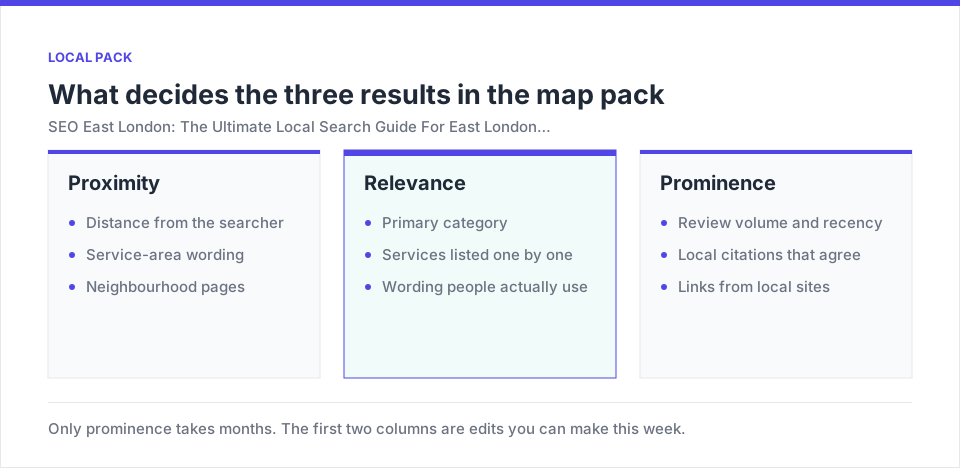
Start from geography-aligned metadata. Every Local Page should feature a title tag and meta description that name the anchor geography and signal intent clearly. For example, a Hackney-focused page might use a meta title like Hackney Local Services | East London SEO, while a Tower Hamlets page could read Tower Hamlets Local SEO Strategies. Keep titles under 60 characters and meta descriptions under 160, weaving the eight-to-twelve anchor geographies into a city-wide narrative without duplicating similar strings across surfaces.
Headers should mirror geography-driven logic. Use H2s to introduce district-level topics (Hackney, Bethnal Green, Canary Wharf) and H3s for service categories within each district. Maintain a consistent naming pattern so translations map to identical anchors, preserving TranslationKeys parity as diffusion extends city-wide.
1) Meta titles, descriptions, and canonical discipline
Meta titles should explicitly reference the geography anchor and the overarching East London Topic Identity. Pair this with unique meta descriptions that describe the specific offering for the district, including a concise call to action. Apply a cross-surface canonical strategy to ensure Local Pages remain the authoritative source for their geography, while Maps overlays and Locale Hubs reference those pages where appropriate. Translation parity travels with diffusion renders, so readers in Bethnal Green or Becontree see the same anchors in their language.
Best practices include keeping primary keywords near the beginning of titles, using district names in the first 60 characters, and avoiding keyword stuffing. Use structured data to reinforce local relevance, linking LocalBusiness or Service schemas to the geography anchor.
2) On-page structure and content blocks by district
Organise content into district-focused blocks that travel coherently across surfaces. Each district block should start with a clear H2 heading, followed by service descriptions, FAQs, and use-case examples that reflect local needs. Ensure per-surface content – Local Pages, GBP, Maps overlays, Locale Hubs, KG Edges, Catalog entries, and Edge Experiences – harmonises around the anchor geography while allowing surface-specific nuances. Translation parity remains central so multilingual readers encounter the same anchors and outcomes.
District blocks should include pragmatic elements such as local event calendars, neighbourhood highlights, and region-specific service packages. This approach enhances perceived relevance and supports proximity signals across diffusion paths.
3) Internal linking strategy and navigation hygiene
Internal links should guide readers along the diffusion path without creating content silos. Link Local Pages to relevant Maps overlays, GBP posts, and Locale Hubs that share the same geography anchor. Use breadcrumb trails and a geography-aware sitemap to help crawlers understand the diffusion topology. Translation parity must travel with these navigational cues so users across languages traverse identical geography anchors and outcomes.
When linking images and media, ensure alt text references anchor geographies and nearby landmarks to strengthen proximity signals and improve accessibility for all users.
4) Visual assets, accessibility, and localisation signals
Images should reinforce district relevance. Use descriptive file names and alt attributes that reference geography anchors and local landmarks (for example, Hackney market street scene or Canary Wharf business district). Where possible, publish locale-specific visuals on Local Pages and reflect them across Maps overlays and Locale Hubs to strengthen consistency. Accessibility considerations, including descriptive alt text and coherent contrast, support an inclusive user experience across East London’s diverse audiences.
5) District-focused content cadence and activation briefs
ActivationTemplates should codify per-district publishing rules, including which districts receive fresh content first, translation requirements, and per-surface publishing depth. Translation parity travels with diffusion renders, ensuring multilingual readers encounter identical geography anchors across Local Pages, GBP, Maps overlays, Locale Hubs, KG Edges, Catalog entries, and Edge Experiences. A district content cadence aligned with events and local opportunities accelerates diffusion and maintains a unified East London Topic Identity as signals diffuse city-wide.
For practical enablement, access activation briefs and governance artefacts via the London hub on London SEO Services hub, and book a discovery call through the London contact page to tailor anchor geographies and diffusion cadence to your footprint. External references such as Google Structured Data guidelines, Moz Local, and BrightLocal Local SEO ranking factors provide guardrails to calibrate on-page health as East London grows.
In summary, Part 7 translates theory into actionable on-page practises for East London. By aligning metadata, structuring content by geography, maintaining disciplined internal linking, and enforcing translation parity, you ensure Local Pages, GBP, Maps overlays, Locale Hubs, KG Edges, Catalog entries, and Edge Experiences all contribute to a single city-wide Topic Identity. Access ready-to-use artefacts in the London hub and book a discovery call to align your anchor geographies and publishing cadence with your local footprint: London SEO Services hub and London contact page.
Part 8 Of 12: Structured Data And Local Schema For East London SEO
Structured data acts as the language that search engines use to interpret East London’s local entities, locations, and intents across Local Pages, Google Business Profile (GBP), Maps overlays, Locale Hubs, Knowledge Graph Edges, Catalog entries, and Edge Experiences. A governance-led diffusion spine ensures per-surface schema remains aligned to a single East London Topic Identity as geography anchors expand. This part translates theory into concrete, repeatable schema practices that strengthen proximity signals and enhance rich results across districts such as Hackney, Tower Hamlets, Newham, and beyond.
Choose a core set of schema types that map cleanly to your diffusion spine. For Local Pages, LocalBusiness or Service schemas should carry geography, contact details, opening hours, and service offerings. GBP integrations benefit from the same entity context, improving consistency between what users see on Maps and what you publish on the page itself. Within Locale Hubs and Knowledge Graph Edges, use Organization and LocalBusiness to establish enduring relationships between geography anchors and nearby venues, events, and service providers.
1) Core schema types by surface
- Local Pages Use LocalBusiness or Service schemas with explicit geography via address, geo coordinates, and areaServed. Include openingHours and contact details to reinforce proximity signals.
- GBP and Maps overlays Reflect the same LocalBusiness or Service entities in structured data blocks embedded on landing pages to support rich results and consistent KG Edges.
- Locale Hubs Enrich hub pages with Organization or LocalBusiness alongside Event and FAQPage markup to connect districts with local activity.
- Knowledge Graph Edges Establish connections between anchors (city, district, venue) and the local entities they relate to, enabling clearer semantic paths for users and crawlers.
- Catalog entries Represent service categories and offerings with Product or Service schemas, incorporating geography where relevant.
- Edge Experiences Use CreativeWork or Event schemas to describe district-focused experiences, promotions, or partnerships that users can engage with locally.
Translation parity is essential. Ensure the same geography anchors and entity relationships appear in all language variants, so readers in Bethnal Green or Becontree encounter identical anchors and outcomes across Local Pages, GBP, and Maps overlays. This consistency underpins a true East London Topic Identity as signals diffuse across surfaces.
2) Practical implementation steps
- Define per-surface entity templates. Create standard schemas for Local Pages, GBP, Maps overlays, Locale Hubs, KG Edges, Catalog entries, and Edge Experiences that mirror each geography anchor.
- Annotate geography with precise properties. Use address, geo, geoPlace, and areaServed to capture proximity and service reach for each surface.
- Link surfaces through consistent markup. Ensure LocalBusiness or Service markup on Local Pages is mirrored in GBP-like contexts and reflected in Maps overlays and Locale Hubs.
- Validate with authoritative tools. Regularly test markup using Google’s Rich Results Test or Schema Markup Validator to confirm correctness and discoverability.
3) Validation, governance, and обновления. Maintain a central governance artefact set that tracks which schemas are deployed where, translation status, and update cycles. A Diffusion Ledger records asset provenance, translations, and licensing terms, ensuring regulator-ready reporting as East London expands its anchor network.
3) Validation, governance and ongoing maintenance
Leverage Google’s official guidelines on structured data to calibrate quality and eligibility for rich results across all surfaces. Supplement with Moz Local and BrightLocal Local SEO ranking factors to benchmark schema health and diffusion health as anchors scale through Step-by-step activation briefs.
4) Activation artefacts and governance cadence
ActivationTemplates govern how structured data travels with content across Local Pages, GBP, Maps overlays, Locale Hubs, KG Edges, Catalog entries, and Edge Experiences. Translation parity travels with diffusion renders so multilingual readers encounter identical anchors across languages. Use a central Provenance Ledger to log schema deployments, translations, and licensing terms, ensuring auditable traceability for governance reviews.
For practical enablement, access activation briefs and governance artefacts via the London hub on London SEO Services hub, and arrange a discovery call on the London contact page to tailor per-surface schema rules to your eight-to-twelve anchor geographies. External references such as Google Structured Data guidelines, Moz Local, and BrightLocal Local SEO ranking factors provide guardrails as East London grows: Google Structured Data guidelines, Moz Local, and BrightLocal Local SEO ranking factors.
In summary, Part 8 offers a practical, governance-focused approach to structured data for East London. By selecting the right per-surface schema types, enforcing translation parity, and maintaining a central provenance ledger, you empower Local Pages, GBP, Maps overlays, Locale Hubs, KG Edges, Catalog entries, and Edge Experiences to work in concert. Access ready-to-use artefacts through the London hub and book a discovery call to tailor your geography anchors and schema cadence for your local footprint: London SEO Services hub and London contact page.
Part 9 Of 12: Local Link Building And Community Outreach For East London SEO
In East London, local link building plays a pivotal role in strengthening proximity signals and reinforcing a consistent, city-wide Topic Identity. As diffusion travels from Local Pages and GBP through Maps overlays to Locale Hubs and Knowledge Graph Edges, credible local links act as trusted endorsements that nearby audiences recognise. This part focuses on practical, geography-aware outreach strategies designed to yield durable, high-quality backlinks and local citations that support SEO east London objectives on londonseo.ai.
Local link building for seo east london hinges on authentic relationships and community relevance. The approach should align with the eight to twelve geography anchors established in earlier parts, ensuring every new link reinforces the same East London Topic Identity across Local Pages, GBP, Maps overlays, Locale Hubs, KG Edges, Catalog entries, and Edge Experiences. Translation parity remains essential so multilingual readers encounter identical anchors and outcomes as diffusion expands city-wide.
Below are practical, repeatable strategies designed to scale responsibly within East London’s diverse districts—from Hackney and Shoreditch to Canary Wharf and Newham.
- Map geography-focused outreach targets. Build a tiered list of anchor partners by geography: local business associations, chamber groups, neighbourhood councils, and community media that publish district-specific content and are receptive to collaboration. Prioritise domains with relevant local relevance and strong domain authority to maximise link value.
- Foster genuine partnerships with local businesses. Create mutual value through co-authored guides, district resource pages, and case studies that showcase reciprocal benefits. Ensure both sides’ Local Pages and Maps overlays reflect the collaboration so citations reinforce shared anchors across surfaces.
- Engage with community events and sponsorships. Sponsor or co-host events, exhibitions, or workshops in target districts. Secure event pages and post-event roundups that feature links back to Local Pages or Locale Hubs, strengthening district-level proximity signals.
- Leverage local media and PR opportunities. Pitch story ideas about East London industry clusters, community impact, or local success stories. Local publications often provide authoritative links, helping diffusion health while enhancing topical relevance for seo east london campaigns.
- Develop district-specific resource pages. Publish high-quality resources for Hackney, Canary Wharf, Stratford, and others that attract natural links from nearby organisations, schools, venues, and services. Ensure these pages are clearly connected to your geography anchors and translation is parity-enabled for multilingual audiences.
- Utilise local citations with governance. Build and maintain consistent NAP data across local directories, business listings, and maps-related platforms. Implement a recurring audit to fix inconsistencies, preserve citation quality, and harmonise with the diffusion spine.
- Encourage user-generated content and reviews within districts. Actively solicit authentic feedback from customers in each target district and publish companion case studies or success stories that reference the locality. When permissible, embed user-generated content on Local Pages and Locale Hubs to attract contextual links.
- Monitor link quality and risk. Regularly review acquired links for relevance, authority, and potential penalties. Maintain a disavow process for low-quality domains and ensure the diffusion ledger records link provenance and licensing terms.
- Infer link opportunities from district partnerships. Analyse collaboration outcomes to identify further opportunities for cross-linking, joint content, or mutual promotions that reinforce each anchor geography’s signals.
- Integrate link-building with diffusion dashboards. Track new local backlinks, referring domains by geography, and the impact on Local Pages and GBP interactions. Link metrics should feed into your Diffusion Health Index and governance cadence so leadership can see tangible progress.
To operationalise these strategies, build activation briefs that describe per-surface link publishing rules, the translation parity required for district content, and the provenance details for each backlink. Central governance artefacts, including ActivationTemplates and a Provenance Ledger, ensure every link and citation travels with the diffusion spine in a way that is auditable and scalable for future districts within East London. You can access ready-to-use artefacts via the London SEO Services hub and request tailored guidance through the London contact page.
Case study framing for practical impact
Consider Hackney’s local entrepreneur network. A collaboration with a Hackney-based business association to publish a joint district guide can earn multiple high-quality links from member sites, local news outlets, and community portals. This content can diffuse through Local Pages and Locale Hubs, reinforcing the Hackney anchor and increasing proximity signals city-wide. Ratifying the content with TranslationKeys parity ensures readers in Hackney Wick and Dalston see the same anchors in their language, maintaining a consistent East London Topic Identity.
Measurement, governance and ongoing optimisation
Track the impact of local link-building efforts through a simple, auditable framework. Key metrics include the number and quality of local backlinks, the geographic diversity of referring domains, and the alignment of links with anchor geographies. Tie changes in Local Page visits, GBP engagement, and Maps-derived directions back to new citations to demonstrate diffusion health and ROI. Translation parity must travel with diffusion renders so language variants reflect identical anchors and outcomes across surfaces.
Governance cadences should include monthly link health reviews and quarterly strategy calibrations. The Provenance Ledger records each backlink acquisition, partner, licensing terms, and translation status, ensuring regulator-ready reporting as East London expands. External references for credibility can include Google’s structured data guidelines and reputable Local SEO benchmarks from Moz Local and BrightLocal.
If you’d like to accelerate local link-building with a governance-led diffusion approach, visit the London SEO Services hub for activation artefacts and per-surface briefs, or book a discovery call via the London contact page to tailor anchor geographies, diffusion depth, and governance cadence to your local footprint: London SEO Services hub and the London contact page.
In summary, Local Link Building and Community Outreach for seo east london combines authentic partnerships, district-focused content, and careful governance to amplify local signals across the diffusion spine. By aligning outreach to geography anchors and maintaining TranslationKeys parity, you ensure six-surface diffusion remains coherent and credible as you scale across East London’s districts.
Part 10 Of 12: Google Business Profile Optimisation For East London SEO
Within East London’s rapid, footfall-driven markets, Google Business Profile (GBP) is a critical activation surface that amplifies six-surface diffusion health—from Local Pages and GBP to Maps overlays, Locale Hubs, Knowledge Graph Edges, Catalog entries, and Edge Experiences. This Part 10 concentrates on practical GBP optimisation tailored to eight to twelve geography anchors across Hackney, Tower Hamlets, Newham, and adjacent districts, ensuring language parity and a single East London Topic Identity as signals diffuse city-wide. ActivationTemplates, TranslationKeys parity, LicensingStamp provenance, and a central Provenance Ledger underpin governance and auditable progress from day one.
Key GBP optimisations start with a disciplined baseline: accurate NAP (Name, Address, Phone), consistent hours, and district-specific service areas that reflect where you truly operate. Ensure every anchor geography—Hackney, Bethnal Green, Canary Wharf, Stratford, and surrounding micro-areas—has a fully claimed GBP with up-to-date categories that describe your core offerings. GBP categories should be precise and progressively refined so search engines can connect your business to relevant local intents, such as proximity to a district hub, specific services, or event-driven queries.
GBP foundations for East London diffusion
Beyond basic listing accuracy, per-district optimisation involves aligning primary and secondary GBP categories with eight to twelve anchors and their surface publishing briefs. Link these anchors to Local Pages and Maps overlays so proximity signals travel consistently across surfaces. Translation parity must travel with diffusion renders, ensuring readers in Shoreditch or Newham encounter identical anchors and outcomes in their language.
Service offerings on GBP should mirror local competencies and district relevance. Use the Services tab to enumerate district-specific services, enabling users to discover what you provide within each anchor geography. For East London, consider structuring services to reflect district opportunties (e.g., marketing services for Hackney’s creative sector, or facility management services in Stratford). This alignment ensures GBP feeds Local Pages and Maps overlays with coherent proximity signals and a unified topical narrative.
2) Posts, offers and event-driven updates
GBP posts are a fast, visible way to surface time-bound local relevance. Publish district-focused posts announcing promotions, new services, or community events that matter to Hackney, Canary Wharf, or Newham residents. Tie these posts to diffusion briefs so the language and geography across Local Pages, Maps overlays, Locale Hubs, and KG Edges remain synchronised. Translation parity ensures multilingual readers encounter the same anchors and outcomes across surfaces.
Event-based posts, in particular, provide a strong signal to nearby customers about immediate availability and community involvement. Pair GBP posts with district calendars on Local Pages and Maps overlays to guide directions and engagement. Regular updates also support fresh content signals, which search algorithms reward alongside a robust diffusion spine.
3) Visuals, photos and virtual tours
Photos and portfolio visuals on GBP are digital storefronts that influence click-throughs and in-person visits. Upload high-quality images for each anchor geography, including storefronts, local staff, and district-relevant imagery such as event spaces or neighbourhood landmarks. Use consistent naming and geotagging to reinforce the anchor geography and ensure TranslationKeys parity travels with diffusion renders across all surfaces.
In addition to imagery, consider 360-degree views or short video clips where appropriate. Visuals should reflect local characteristics while remaining cohesive with the broader East London Topic Identity. A well-curated media set improves user engagement on GBP, supports Maps overlays, and enhances Locale Hubs with authentic, district-relevant content.
4) Q&A, reviews and reputation management
The Q&A section is a living knowledge base that directly answers local audience questions. Proactively populate commonly asked questions for each geography anchor and keep translations aligned through TranslationKeys parity. Monitor and respond to customer questions promptly, ensuring responses reflect district realities and service nuances.
Reviews are social proof that a district truly resonates. Encourage local customers to share their experiences, particularly for high-opportunity anchors. When responding to reviews, reference the same anchor geography and avoid generic replies that could blur topic identity. A well-managed review strategy reinforces proximity signals and builds trust across Local Pages and GBP interactions.
Governance plays a crucial role here. ActivationTemplates should codify per-surface posting rules for GBP, ensuring that Q&A, posts, and review responses travel with the diffusion spine. The Provenance Ledger records translation status and asset provenance for every GBP interaction, supporting regulator-ready reporting as East London expands. Consistent language and geography anchors across languages are essential so readers in Bethnal Green or Becontree experience the same anchors and outcomes.
Per-surface alignment and governance
GBP signals do not operate in isolation. They feed Local Pages, Maps overlays, Locale Hubs, KG Edges, Catalog entries, and Edge Experiences. Maintain canonical consistency so GBP entries remain authoritative for their geography, with Maps overlays and Locale Hubs referencing those GBP anchors where appropriate. Translation parity travels with diffusion renders, keeping multilingual readers aligned with the same anchor geographies across surfaces.
For practical enablement, access ActivationTemplates and governance artefacts via the London hub on London SEO Services hub, and book a discovery call through the London contact page to tailor GBP categories, posts cadence, and review programmes to your eight-to-twelve anchor geographies. External references such as Google Structured Data guidelines, Moz Local, and BrightLocal Local SEO ranking factors provide guardrails to calibrate GBP health as East London grows: Google Structured Data guidelines, Moz Local, and BrightLocal Local SEO ranking factors.
In summary, Google Business Profile optimisation for East London combines precise geography-aware categorisation, timely posts, district-focused visuals, proactive Q&A, and a disciplined review strategy. By enforcing TranslationKeys parity and leveraging ActivationTemplates within a governance framework, GBP becomes a reliable accelerator of diffusion across Local Pages, Maps overlays, Locale Hubs, KG Edges, Catalog entries, and Edge Experiences. To start implementing these GBP practices now, visit the London SEO Services hub for ready-to-use activation briefs and book a discovery call to tailor GBP settings to your geography: London SEO Services hub and London contact page.
Part 11 Of 12: Integrating SEO With Local Paid Media (East London)
In East London’s fast-moving local markets, integrating SEO with local paid media accelerates diffusion across Local Pages, GBP, Maps overlays, Locale Hubs, Knowledge Graph Edges, Catalog entries, and Edge Experiences. This Part 11 provides a practical framework for aligning organic and paid activation while preserving a single city-wide East London Topic Identity across eight to twelve anchor geographies such as Hackney, Tower Hamlets, Newham, and surrounding micro-areas. ActivationTemplates, TranslationKeys parity and a central Provenance Ledger anchor governance as you scale.
Unified messaging and keyword alignment across surfaces form the backbone of successful integrated campaigns. Ensure paid and organic efforts target the same geography anchors and intents, so a user seeing an SEO-optimised district page also encounters congruent PPC messaging when they search adjacent terms.
- Anchor geography alignment. Define eight to twelve geography anchors and ensure ad copy, landing pages, Local Pages, and GBP reflect the same anchors with language parity across translations.
- Harmonised keyword strategy. Build a shared seed keyword set for each geography that covers core services and proximity queries, then distribute these terms across organic and paid campaigns to avoid cannibalisation.
- Cross-surface messaging consistency. Maintain uniform calls to action and value propositions from Local Pages through to PPC landing pages and GBP posts to reinforce the East London Topic Identity.
Landing page strategy for paid campaigns
District-specific landing pages should mirror the anchor geographies that PPC and SEO target. These pages must present a tight, district-focused offer, consistent with Local Pages and GBP attributes, and offer clear navigation into Maps overlays and Locale Hubs for deeper user journeys. Translation parity should apply so language variants retain identical anchors and outcomes across all surfaces.
- District-specific landing pages. Create dedicated pages for Hackney, Bethnal Green, Canary Wharf, Stratford, and other anchors with relevant services and local social proof.
- Per-surface alignment. Ensure Maps overlays and GBP posts reference the same district pages and anchor geography to sustain diffusion health.
- Conversion pathways. Include district event calendars, contact options, and location-based CTAs that route users to the proper Local Page or GBP action.
Geo-targeting, bids, and extensions
Local paid media requires precise geo-targeting and extensions that reinforce organic signals. Utilise geo-modified bidding, location extensions, call extensions per district, and sitelink assets that point to the corresponding Local Pages and district landing pages. Tag campaigns with UTM parameters aligned to anchor geographies so data across Google Ads and your analytics platform stay coherent with the diffusion spine.
- Geo-target by anchor geography. Define eight to twelve districts with explicit radius or polygon targets around commercial hubs and transit nodes.
- Location and call extensions. Attach district-level address details and phone numbers that match NAP on Local Pages and GBP.
- Tracking and attribution. Use consistent UTM tagging and goals in GA4 to connect paid clicks with on-page engagement and GBP interactions.
Measurement, attribution and dashboards
Adopt a diffusion-aware attribution approach that recognises the contribution of both SEO and local paid media to conversions. Use a hybrid model that blends data-driven attribution with a geography-first time-decay perspective to credit surfaces in proportion to their influence on inquiries and store visits. Build dashboards that merge Local Pages metrics, GBP interactions, Maps directions, and landing-page conversions to present a single, interpretable view of diffusion health.
Key outcomes include increases in district-level inquiries, telephone calls, and footfall driven by proximity signals. Ensure TranslationKeys parity travels with diffusion renders so multilingual readers encounter identical anchors and outcomes across surfaces. For practical enablement, access ActivationTemplates and governance artefacts via the London hub and book a discovery call via the London contact page to tailor geo-targeting, landing-page depth, and reporting cadence to your eight-to-twelve anchors.
In addition to internal alignment, reference external guidelines for local advertising and structured data validation. See Google's local advertising guidelines and best practices for local campaigns to strengthen your approach within the diffusion spine. For artefacts and tailored guidance, visit the London SEO Services hub and book a discovery call to align on anchor geographies and governance cadence: London SEO Services hub and London contact page.
Part 12 Of 12: Measurement, Analytics And ROI For East London SEO
With the diffusion spine in place across Local Pages, Google Business Profile (GBP), Maps overlays, Locale Hubs, Knowledge Graph Edges, Catalog entries, and Edge Experiences, measuring success becomes a disciplined, auditable practice. This final section translates diffusion activity into tangible outcomes for East London businesses, providing a practical framework to monitor, attribute, optimise, and demonstrate ROI across eight to twelve geography anchors that define the city’s local search opportunities.
Begin with a three-layer metrics framework that mirrors the diffusion spine: surface engagement, outcomes, and process health. Each layer captures unique signals and together they deliver a complete picture of ROI across East London’s anchor geographies.
1) Three-layer metrics framework
- Surface engagement metrics include Local Pages impressions, GBP interactions, Maps views, and direction requests, which indicate proximity signals and initial interest.
- Outcome signals track inquiries, bookings, phone calls, and footfall that translate interest into action and revenue opportunities.
- Process health metrics monitor data integrity, translation parity, and asset provenance to ensure diffusion remains auditable and scalable.
Next, establish a single source of truth for diffusion health. This means a unified data model that blends Local Pages, GBP, Maps overlays, Locale Hubs, Knowledge Graph Edges, Catalog entries, and Edge Experiences into a coherent picture. ActivationTemplates and a central Provenance Ledger support auditable publishing, translations, and licensing terms across surfaces.
2) A single source of truth and diffusion dashboards
Governance artefacts underpin reliable measurement. Dashboards should integrate surface metrics with diffusion health indices so leadership can see progress by geography and surface. External references, including Google Structured Data guidelines, Moz Local, and BrightLocal Local SEO ranking factors, help benchmark health and diffusion maturity as the East London footprint expands.
To ensure consistency, maintain TranslationKeys parity across languages so that eight-to-twelve anchor geographies publish identical anchors and outcomes on Local Pages, GBP, Maps overlays, and Locale Hubs.
3) Cross-surface attribution for East London diffusion
Adopt a cross-surface attribution model that recognises the role of each surface in driving conversions. Use a hybrid approach that blends data-driven attribution with geography-informed time decay, mapping credits to geo anchors such as Hackney, Canary Wharf, Stratford and Newham. The Provenance Ledger logs attribution decisions and asset provenance for regulator-ready reporting.
4) Linking metrics to ROI and business outcomes
Define ROI as the net profit attributable to local visibility relative to the SEO investment. Tie diffusion metrics to revenue outcomes by tracking inquiries and store visits that originate from Local Pages and Maps dashboards, then map these actions to conversions in your CRM. Use a simple formula: ROI = (Revenue from local outcomes – Cost of diffusion) / Cost of diffusion. Translation parity across languages ensures identical anchors and outcomes across surfaces for multilingual audiences.
5) Cadence of measurement and governance
Establish a regular cadence: monthly diffusion health reviews, biweekly data integrity checks, and quarterly strategy calibrations. The Provenance Ledger records asset status, translations, and licensing terms so governance remains auditable as East London expands. Governance dashboards should present a clear, interpretable view of progress by geography across Local Pages, GBP, Maps overlays, Locale Hubs, Knowledge Graph Edges, Catalog entries, and Edge Experiences.
Practical enablement steps include publishing a concise ROI digest on the London hub, linking to per-surface dashboards, and booking a discovery call to tailor measurement cadences and diffusion depth to eight-to-twelve anchor geographies. External references for credibility include Google Structured Data guidelines, Moz Local, and BrightLocal Local SEO ranking factors. See the London SEO Services hub for artefacts and sample dashboards, and contact the London team to align your diffusion cadence with governance requirements. For added guidance, visit the internal services hub once to access activation artefacts and onboarding materials: London SEO Services hub.
Finally, remember the core objective: translate local visibility into measurable outcomes with clarity, accountability, and scalability across East London’s districts. To start applying the measurement framework, explore ready-to-use artefacts and tailored guidance on the London SEO Services hub and arrange a discovery call to align on anchor geographies and ROI targets. This final part cements a governance-led approach that keeps the East London Topic Identity intact as diffusion scales city-wide.
