SEO Optimisation London: Local Foundations For Competitive Visibility
London’s search landscape is intensely competitive, driven by a dense mix of neighbourhoods, industries, and consumer behaviours. For businesses relying on local visibility, traditional SEO alone rarely yields sustained advantage; instead, a governance-forward, hub-diffusion approach helps translate city-wide authority into district-level relevance. This Part 1 outlines why SEO optimisation in London matters, what makes the capital unique, and how a London-focused strategy from londonseo.ai can build durable local visibility that scales across boroughs. We’ll set the groundwork for a practical, governance-driven diffusion framework that aligns GBP activity, Maps proximity signals, and district-depth content to capture near-me demand in central London and its outer suburbs.
The London Local Search Landscape
London is a mosaic of high-street hubs, business districts, and residential enclaves. Users search with clear local intent, often including venue names, postcodes, and district identifiers. The value of organic visibility in this market hinges on (a) robust GBP health and consistency of NAP (name, address, phone), (b) accurate Maps knowledge panels and proximity cues, and (c) content that speaks to district-level needs while supporting city-wide authority. In practice, teams must manage a layered signal set: global brand presence, hub-focused topics, district-specific proofs, and edge activations that surface near-me results. This Part 1 introduces the core concepts that will be refined across Parts 2–15 as we build a scalable, governance-forward London strategy.
Key London SEO Signals You Can Count On
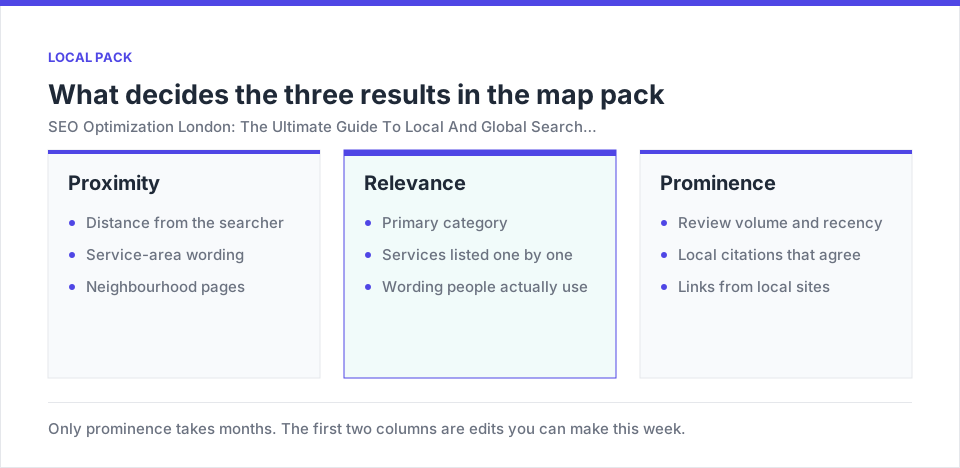
To win local searches in London, focus on five essential signals that harmonise GBP health, local citations, content relevance, and user experience. First, keep NAP data consistent across your site and every directory listing; minor mismatches undermine trust and ranking potential. Second, optimise Google Business Profile with complete information, timely posts, events, and high-quality images to reinforce proximity signals. Third, deploy hub-themed content that captures city-wide relevance (for example, Local Leadership London and Local Services London) and links this content to district-depth pages. Fourth, establish credible district proofs—customer testimonials with local context, partnerships with London organisations, and verifiable data—that support EEAT signals. Fifth, implement on-page templates that scale across districts while preserving a cohesive governance framework.
Why London Demands a Hub-Diffusion Approach
The hub-diffusion model treats central topics as governance anchors, then diffuses authority through district-depth content that mirrors local queries and user journeys. In London, this means pairing Local Leadership and Local Services themes with district pages that address specific borough needs, such as Westminster’s business services or Hackney’s community events. The diffusion framework supports Google’s emphasis on user intent, proximity signals, and high-quality, verifiable information. Practically, we combine GBP and Maps signals with district-proof content to create a chain of relevance from brand-level authority to local, contextually rich pages. This approach reduces the risk of thin, generic content while boosting near-me and local conversions.
Three Core Pillars Of London SEO
Effective London SEO rests on three interconnected pillars: technical excellence, local and city-wide content, and a robust authority/PR framework. Each pillar supports and reinforces the others, creating a resilient performance foundation for London campaigns. The forthcoming sections in Part 2 and beyond will translate these pillars into actionable playbooks, governance artefacts, and measurement dashboards that reflect the London market’s realities.
- Technical Foundation: Crawlability, mobile usability, fast loading, structured data, and robust site architecture that supports hub-diffusion with clear, district-linked paths.
- Local and City-wide Content: On-page templates and content blocks that weave hub topics with district insights, local events, and partner proofs to strengthen locality signals.
- Authority And Digital PR: White-hat link-building, publisher collaborations, and credible proofs that build topical authority within London’s competitive landscape.
Getting Started In London: A Practical Audit And Quick Wins
Before implementing the diffusion spine, perform a rapid discovery audit focused on GBP health, Maps proximity, and NAP consistency. Build a central NAP master sheet for London and map each district to a hub topic with 4–6 corresponding district-depth pages. Establish a governance skeleton that captures what-you-see, what-you-know, and what-you-licence. Draft an initial What-If plan to sequence activations and a Provenance Envelopes register for key proofs. These foundations will inform Part 2’s deeper dive into GBP optimisation, Maps strategies, and district content architecture. To explore our London-focused playbooks and services, visit our London SEO pages and contact us for a tailored plan.
Internal note: for detailed service descriptions and the governance-ready framework, go to SEO Services London and Contact.
SEO Optimisation London: The London Search Landscape And User Intent
London's search landscape is exceptionally dynamic, shaped by a vast mix of boroughs, industries, and seasonal behaviours. For local brands, aligning hub-diffusion governance with district-specific signals unlocks durable visibility and steady growth across central and peripheral areas. This Part 2 continues from Part 1 by translating the governance-forward diffusion spine into practical London-specific playbooks, integrating GBP health, Maps proximity cues, and district-depth content to surface near-me demand in busy corridors and quiet neighbourhoods alike.
London’s Local Search Landscape
London presents a mosaic of business districts, venues, and home-based services. User intent often blends transactional and informational needs with clear local modifiers. The strength of organic visibility lies in GBP health, consistency of NAP data, accurate Maps knowledge panels, and content frameworks that connect city-wide authority with district-level specificity. In practice, teams must manage a layered signal set: city-brand authority, hub topics, district proofs, and edge activations that surface near-me results.
Signals You Can Depend On In London
To compete in London search, focus on five core signals that harmonise GBP health, local citations, content relevance, and user experience. First, ensure NAP data is consistent across your site and every directory listing; minor mismatches erode trust and rankings. Second, optimise Google Business Profile with complete information, posts, events, and high-quality imagery to reinforce proximity signals. Third, develop hub-themed content that captures city-wide relevance and links this content to district-depth pages. Fourth, establish credible district proofs—local testimonials, partnerships with London organisations, and verifiable data—that reinforce EEAT signals. Fifth, implement on-page templates that scale across districts while preserving a governance framework.
The Hub-Diffusion Advantage For London
The diffusion model treats central topics as governance anchors, then diffuses authority through district-depth content that reflects local queries and journeys. In London, pairing Local Leadership and Local Services themes with district pages such as Westminster Business Services or Hackney Community Events creates a chain of relevance from brand-level authority to local, context-rich pages. This diffusion framework aligns with Google's emphasis on user intent, proximity, and credible information, reducing the risk of thin content while boosting near-me and local conversions.
Getting Started In London: Audit And Quick Wins
Before rolling out the diffusion spine, conduct a rapid discovery audit focused on GBP health, Maps proximity, and NAP consistency. Create a London NAP master sheet and map each district to a hub topic with 4–6 district-depth pages. Establish a governance skeleton that captures what-you-see, what-you-know, and what-you-license. Draft an initial What-If plan to sequence activations and a Provenance Envelopes register for key proofs. These foundations will inform Part 3’s deeper dive into GBP optimisation, Maps strategies, and district content architecture.
- Audit London GBP health: review completeness, response quality, and updates across central and peripheral districts.
- NAP consistency across London directories: align names, addresses, and phone numbers city-wide.
- Hub topic selection: choose 2–3 London-centric hub topics and plan 4–6 district-depth pages per district.
- What-If planning and governance: map activation sequencing and record governance decisions with Explain Logs and Provenance Envelopes.
- Edge activation readiness: pre-plan Maps prompts and local events calendars to surface near-me queries.
To explore governance-forward London SEO playbooks and services, visit our London SEO pages and contact us for a tailored plan. See Google’s quality guidelines for alignment: Quality Guidelines.
Internal links: SEO Services London and Contact.
SEO Optimisation London: Core SEO Pillars For London
Building a robust London SEO programme hinges on three interconnected pillars: technical excellence, content architecture that scales from city-wide hub topics to district-depth pages, and a disciplined authority framework that blends digital PR with credible local proofs. This Part 3 extends the governance-forward diffusion narrative introduced in Part 2, translating core SEO fundamentals into London-specific playbooks. By aligning technical health, content scaffolding, and authority initiatives with London’s unique geography and consumer behaviour, brands can achieve durable visibility, improved user experience, and measurable ROI across central districts and outer boroughs. For deeper service details and tailored strategies, visit our SEO Services London page and Contact us for a bespoke plan.
Technical Foundation: the bedrock of London SEO
The technical pillar ensures search engines can crawl, interpret, and index London-specific content efficiently, while delivering a fast, secure, mobile-friendly experience for users moving between central hubs like the City and periphery wards such as Greenwich or Bromley.
Key elements to implement and maintain include:
- Crawlability And Indexation: optimise robots meta directives, ensure logical crawl paths from hub pages to district-depth content, and avoid cross-district canonical conflicts that dilute authority across London’s many districts.
- Mobile-First And Core Web Vitals: prioritise fast LCP, low CLS, and responsive interactivity (FID) across a wide range of devices used by London consumers in transit and on the move.
- Site Architecture And Internal Linking: design a hub-district navigation that supports diffusion, with clear, district-linked ranks from hub topics to district-depth pages and back to city-wide resources.
- Structured Data And Local Schemas: implement LocalBusiness, Organization, and PostalAddress schemas, plus OpeningHours, to convey locality signals clearly to Google and Maps.
- Sitemaps, Redirects And Canonicalisation: maintain clean sitemaps, avoid redirect chains, and apply canonical tags strategically to prevent content cannibalisation between districts and hub topics.
Content architecture: hub topics and district-depth pages for London
London’s search demand often sprouts from city-wide questions that then branches into district-specific needs. A well-structured content model anchors hub topics at the city level and diffuses authority down to district-depth pages that reflect local realities, such as Westminster business services or Hackney community events. The diffusion spine relies on content templates that scale across districts while preserving governance coherence.
Practical guidelines for content construction in London include:
- Hub Topic Selection: choose 2–3 London-centric hub topics (for example, Local Leadership London, Local Services London) that act as governance anchors for district content.
- District-Depth Page Strategy: create 4–6 in-depth district pages per district, each linked to a hub topic and enriched with local proofs and data.
- On-Page Templates: apply consistent title structures, H1–H2–H3 hierarchies, and schema integrations that connect hub topics to district content in a machine-readable way.
- Local Proofs And Data: embed local testimonials, partner references, and verifiable data to strengthen EEAT signals for each district page.
Authority And Digital PR: building trust in London’s competitive landscape
Authority is earned through credible, local-facing signals that demonstrate expertise and trustworthiness. For London, this means a strategic mix of white-hat link-building, publisher collaborations, and timely local proofs that anchor district signals to hub authority. A robust digital PR programme should prioritise London-relevant narratives—community partnerships, local events, and industry-leading insights—that attract quality links and overt local validation.
Three practical approaches anchor this pillar:
- Local Outreach And Publisher Collaborations: cultivate relationships with London-based outlets, business associations, and professional groups to secure editorial mentions that corroborate locality signals.
- Proofs That Reinforce EEAT: integrate verifiable data, customer testimonials with local context, and partner logos into district-depth pages to boost perceived authority.
- Citations And Brand Mentions: maintain consistent NAP across London directories, and build citations that are contextually relevant to the hub topics and districts they support.
Governance And Measurement: aligning pillars with governance for London
A governance-driven diffusion spine coordinates technical health, district content production, and authority activities. What-If gating, Explain Logs, and Provenance Envelopes underpin publication decisions, ensuring content and proofs are auditable and licensed appropriately. For London deployments, consider RegExports and UK regulatory considerations as part of governance readiness, particularly for content that references local datasets or community partnerships.
Key metrics to monitor include GBP health, Maps proximity signals, district engagement, and hub-to-district content performance. A unified dashboard—integrating GA4, GBP insights, and CRM attribution—offers a clear view of how technical health, content depth, and authority activities translate into user actions and revenue. For governance templates and playbooks tailored to London, explore our London SEO services and governance-led approaches on londonseo.ai.
SEO Optimisation London: Local SEO Essentials For London Businesses
London’s local search landscape demands a governance-driven approach that marries GBP health, proximity signals, and district-specific content. By grounding local initiatives in hub topics that reflect city-wide authority, and diffusing that authority to district-depth pages, London brands can capture near-me demand across central and outer boroughs. This Part 4 focuses on practical, London-centred essentials: GBP optimisation, local citations, reviews, local schema, and the on-page templates that tie everything together into a cohesive diffusion spine. For detailed service descriptions and tailored planning, explore SEO Services London and Contact.
Google Business Profile Optimisation In London
A complete Google Business Profile (GBP) is the anchor for proximity visibility in London. Ensure every central district and outer borough listing presents consistent NAP data, a verified category aligned with local services, and regularly updated imagery that reflects current London realities. Full GBP optimisation also includes native posts, service highlights, and events that surface in near-me searches from the City to Stratford. Prioritise a disciplined cadence of updates to keep proximity signals fresh and trusted in Maps and Google Search.
Local Citations And NAP Consistency Across London
Consistent NAP data across London directories underpins trust and ranking stability. Start with a central NAP master sheet for London and audit key directories used by London consumers, ensuring names, addresses and phone numbers match the site. Build and verify citations in borough-relevant contexts (for instance, Westminster business listings, Hackney community directories, and Bromley local associations). The goal is to reinforce locality signals without creating conflicting records that could confuse search engines or users.
Reviews, Reputation Management And Local Proofs
Londoners rely on trusted local cues. Curate a steady stream of local-proof content: authentic customer testimonials with district context, partnerships with London organisations, and verifiable data points that can be echoed across hub topics. Respond promptly to reviews, both positive and negative, to demonstrate EEAT and a human, service-minded approach. Where possible, tie reviews to district-depth pages to reinforce locality signals and improve user trust along the path from search to service booking.
Local Schema, Knowledge Panels And Structured Data
Structured data helps search engines interpret local intent and geography. Implement LocalBusiness, Organization, and PostalAddress schemas, plus OpeningHours, to convey London locality signals clearly. Pair district-depth pages with on-page schema so knowledge panels and Maps knowledge graphs reflect the correct district and hub context. This structured layer supports consistency across central hubs like Local Leadership London and Local Services London, while enabling district-specific discoveries in surrounding boroughs.
On-Page Template Alignment With Hub-Diffusion In London
London campaigns benefit from a scalable on-page framework that links hub topics to district-depth pages. Start with two London-centric hub topics (for example, Local Leadership London and Local Services London) and map 4–6 district-depth pages per borough. Each district page should include a set of 4–6 content blocks addressing local questions (opening hours, contact routes, local partners, nearby landmarks) and be backed by credible proofs. Maintain a consistent navigation that enables users to move smoothly from hub to district and back, while search engines understand the hierarchy through clear H1, H2, and H3 usage and appropriate internal links.
Service details and governance-ready playbooks can be found on our London page, with practical templates for content calendars, proofs, and edge activations. See also Quality Guidelines from Google to ensure alignment with EEAT principles: Quality Guidelines.
SEO Optimisation London: Technical SEO For UK Websites
Building on the hub-diffusion framework established for London, Part 5 turns the spotlight to Technical SEO across UK websites with a London focus. A solid technical foundation ensures the governance-driven diffusion spine can surface hub topics to district-depth pages without friction. In practice, London campaigns benefit from a meticulous approach to crawlability, Core Web Vitals, structured data, and canonical management that keeps district signals coherent as content scales from central hubs to outer boroughs.
Technical Foundations For London Campaigns
Key elements to implement and maintain across London sites include crawlability, indexation health, mobile usability, secure connections, and a coherent hub-to-district architecture. The aim is to prevent cross-district cannibalisation while enabling search engines to interpret locality signals clearly. A well-constructed technical spine supports GBP health, Maps proximity cues, and district-depth content, all fed into governance dashboards that leadership can trust for decision-making.
- Crawlability And Indexation: ensure clear crawl paths from hub pages to district-depth pages, audit for orphaned pages, and resolve any cross-district canonical conflicts that may dilute authority.
- Mobile-First And Core Web Vitals: optimise LCP, CLS, and FID across a wide range of London devices, prioritising fast experiences for commuters and shoppers on the move.
- Site Architecture And Internal Linking: design a hub–district navigation that enables diffusion with district-linked routes, while keeping city-wide resources discoverable.
- Structured Data And Local Schemas: implement LocalBusiness, Organization, and PostalAddress schemas, plus OpeningHours, to convey locality signals to Google and Maps clearly.
- Sitemaps, Redirects And Canonicalisation: maintain clean sitemaps, manage redirects carefully, and apply canonical tags to prevent content cannibalisation between hub topics and district-depth pages.
The Hub-Diffusion Taxonomy And London Technical Signals
In London, technical health acts as the quiet enabler of diffusion. Hub topics such as Local Leadership London and Local Services London must thread through district-depth pages with clean, machine-readable signals. A robust internal linking pattern guides crawlers along a logical path from hub to districts and back to city-wide resources, ensuring that proximity and locality cues are preserved as content expands beyond central London into outer boroughs.
Governance, Audits And Measurement For Technical SEO
Governance should be baked into every technical decision. Establish a standing What-If forecast for technical changes, maintain Explain Logs that record the rationale for updates, and use Provenance Envelopes to track data sources and licensing for any district proofs deployed on pages. A RegExports-ready framework helps when London campaigns scale into multi-region or cross-border contexts while maintaining compliance with data handling and privacy requirements.
- What-If Gates (Technical): pre-approve changes to hub and district templates before deployment to avoid unintended diffusion health regressions.
- Explain Logs: document the reasons behind every technical adjustment and the data sources consulted.
- Provenance Envelopes: capture licensing and origin of content and proofs used on district pages.
- RegExports Readiness: prepare for regulatory reviews or external audits by keeping a clear diffusion audit trail.
Practical Implementation: A London-Centred Checklist
Begin with a London-specific technical baseline: audit crawlability, review indexation coverage, verify mobile performance, and validate structured data fidelity on hub and district pages. Map two hub topics to four or six district-depth pages per borough, ensuring each district page has a connected path to hub content and local proofs. Establish a governance calendar that aligns What-If gating, Explain Logs, and Provenance Envelopes with release schedules, then implement a QA process that validates page speed and schema accuracy before publishing. For governance templates and practical playbooks tailored to London, explore our SEO Services London pages and contact us for a bespoke plan.
Internal links: SEO Services London and Contact. For more on reference standards, consult Google’s Quality Guidelines: Quality Guidelines.
Technical SEO In Action: London Examples And Edge Cases
London sites often run multi-regional campaigns within the UK. Apply en-GB language signals where relevant and ensure regional pages do not compete with global assets. Use structured data to highlight district addresses, opening hours, and service areas. Guard against dynamic rendering traps on JavaScript-heavy pages by validating that critical content remains accessible to search engines. As you scale, keep a tight feedback loop between technical health dashboards and business outcomes such as district engagement and conversion metrics. For more on governance-led technical SEO, visit our London services pages and speak with our team to tailor a plan to your London portfolio.
SEO Optimisation London: Content Strategy For London Audiences
Building a London-focused content strategy requires a governance-forward approach that translates city-wide authority into district-specific impact. By aligning hub topics with district-depth pages, brands can capture near-me demand across central zones and outer boroughs while preserving EEAT signals. This Part 6 extends the hub-diffusion framework from technical foundations into practical content playbooks tailored for London audiences, incorporating Local Leadership London and Local Services London as governance anchors and linking back to our London SEO services for a customised plan.
Why London Content Strategy Needs A Hub-Diffusion Approach
London’s diverse geography and dense competitive landscape mean generic, city-wide content struggles to convert. A hub-diffusion spine ensures central topics set the governance direction, while district-depth content responds to local intent, events, partners, and proofs. The result is a cohesive framework where authority flows from Local Leadership London and Local Services London to district pages that address Westminster, Hackney, Greenwich, and beyond. This structure supports proximity signals, reliable knowledge graphs, and durable engagement across boroughs.
Keyword Research For Local Intent
Effective London keyword research starts with identifying city-wide hubs and then mapping district-level queries that users in each borough actually type. Focus on intent-rich phrases, district modifiers, and venue names that reflect local behaviour. Build a keyword taxonomy that links hub topics to district-depth pages, ensuring each district page targets a unique, verifiable set of terms. Integrate questions, local events, and service nuances to capture informational and transactional queries alike. The outcome should be a scalable set of district-specific keywords that still supports city-wide authority.
- Define London-centric hub topics: Local Leadership London and Local Services London as governance anchors.
- Map district modifiers: postcodes, borough names, and well-known local landmarks.
- Incorporate query types: how, where, best, near me, and time-bound intents tied to Local Events or services.
- Assess search intent signals: transactional, navigational, informational cues across districts.
- Validate with data: align keyword lists with GBP health, Maps proximity, and district-proof signals.
Content Planning And Template Architecture
Translate the keyword taxonomy into a scalable content architecture. Start with two primary hub topics that act as governance anchors, then allocate 4–6 district-depth pages per borough or district group. Use consistent on-page templates that expose hub-to-district relationships, with clear navigational paths and machine-readable signals. Templates should include: H1 reflecting the district page, H2s aligned to district-content blocks, LocalBusiness/PostalAddress schema where relevant, and proof blocks that anchor locality signals to hub authority. This structure supports efficient updates as London’s local landscape evolves.
- Hub topic templates: 2–3 core London-focused hubs with city-wide relevance.
- District-depth templates: 4–6 pages per district that answer local questions and present proofs.
- On-page consistency: uniform title patterns, schema integrations, and internal links from hub to district and back.
- Local proofs integration: testimonials, partnerships, data points that bolster EEAT on each district page.
District-Depth Page Content And Local Proofs
District-depth pages should deliver specific, locally verifiable information. Integrate local proofs such as partner logos, community event calendars, and data snapshots that exemplify local expertise. Link proofs to hub topics to maintain a coherent diffusion spine. Every district page should provide concrete value: opening hours for local venues, nearby landmarks, and ways to engage with community partners. Prove authority through locally grounded narratives rather than generic statements.
On-Page Templates And Structured Data For London
Use standardised on-page blocks that capture district-specific information while preserving hub connectivity. Implement LocalBusiness, Organization, and PostalAddress schemas on district-depth pages, and tie Open Hours to local realities. Ensure images, videos, and infographics carry district-relevant alt text and captions that reinforce locality signals. A well-structured data layer improves knowledge panels, Maps panels, and overall discoverability in London’s crowded search results.
For governance, maintain Explain Logs and Provenance Envelopes for every district proof and asset, with licensing documented to support regulator-friendly reporting. See our SEO Services London page for templates and governance-ready playbooks, and consult Google’s quality guidelines for alignment: Quality Guidelines.
Measurement And Governance For Content
Track hub authority growth, district engagement, and proximity signals through a unified dashboard. Integrate GBP insights, Maps data, and district-page metrics to quantify diffusion health. A governance framework should capture What-If forecasts, Explain Logs, and Provenance Envelopes so every content decision is auditable and aligned with regulatory expectations. Use regular reviews to refine hub topics and adjust district-depth content based on real user signals in London.
Getting Started: Quick Wins And A Practical Audit
- Audit London GBP health and Maps proximity: verify hub-to-district alignment and data cleanliness.
- Publish two London-centric hub topics: Local Leadership London and Local Services London with 4–6 district-depth pages each.
- Draft district-proof sets: partner references, local data, and event histories to anchor locality signals.
- Set governance cadences: What-If gating, Explain Logs, and Provenance Envelopes for every publish.
Internal links: SEO Services London and Contact. For guidelines, review Google’s Quality Guidelines: Quality Guidelines.
SEO Optimisation London: Link Building And Digital PR With A London Focus
Link building and Digital PR are not about chasing volume but about building a network of local signals that reinforce Local Leadership London and Local Services London. In London's crowded search ecosystem, credible, locally relevant backlinks paired with high-quality visibility in neighbourhood media drive both proximity and authority. This Part 7 extends the governance-forward diffusion spine introduced in Part 6, translating link acquisition into district-level impact while maintaining EEAT standards and auditability. Internal links to our SEO Services London and Contact pages provide readers with clear next steps.
Understanding London’s Link Landscape
In London, links from within the capital carry more relevance for proximity due to shared local context. The diffusion spine means hub topics at city level should attract district-depth proofs from credible London sources: local business associations, neighbourhood media, universities, and credible partners. Avoid low-quality directories and generic link farms; prioritise relevance, trust, and editorial integrity. A well-governed London programme aligns link value with hub-to-district content connections, ensuring that every backlink strengthens both city-wide authority and district-level credibility.
Digital PR Strategies For London Campaigns
Develop London-centric narratives that tie to hub topics such as Local Leadership London and Local Services London. Focus on relationships with local outlets, chambers of commerce, university press offices, and community organisations. A six-part blueprint helps ensure impact while preserving governance discipline:
- Story bank rooted in locality: data-driven insights about London districts, events, and partner initiatives that naturally attract editorial interest.
- Publisher outreach plan: targeted, personalised pitches to London outlets that serve specific boroughs or regions within the capital.
- Local data assets: publicly shareable datasets, maps, and infographics that district pages can reference and earn coverage from.
- Partner-led campaigns: collaborations with local organisations and business groups to create co-authored pieces and case studies.
- Thought leadership within London sectors: expert columns or white papers on city-wide themes that still tie back to district-level relevance.
- Event-driven content: timely press around London events, conferences, and community activities that surface in Local Leadership and Local Services contexts.
Link Building Playbook For Hub To District
Turn hub topics into a scalable link-building programme by pairing them with district-depth assets. Start with two London-centric hubs and aim for 4–6 district pages per borough, each supported by credible proofs. Practical steps include:
- Identify London-authority sources: local media, business associations, neighbourhood councils, and educational institutions.
- Create linkable assets for districts: data-backed local reports, event calendars, and partner showcases that naturally attract coverage.
- Structured outreach templates: personalised pitches that reference district context and hub topics, avoiding generic requests.
- Anchor text governance: maintain a coherent anchor text strategy that mirrors hub-to-district relationships without over-optimising.
- Editorial collaboration plan: develop ongoing opportunities for editorial mentions rather than one-off links.
- Measurement and governance integration: tie every link to Explain Logs and Provenance Envelopes to document sources and licensing.
Measurement, Compliance And Governance
Effectively scaled link-building relies on robust measurement and governance. Track London-focused metrics such as the number of referring domains from London sources, domain authority lift, anchor-text relevance, and district-page engagement. Combine these with proximity signals from GBP health and Maps interactions to quantify how links contribute to near-me demand. Governance artefacts—What-If forecasting, Explain Logs, and Provenance Envelopes—provide auditable trails for every outreach activity, while RegExports readiness supports regulatory scrutiny if required. Dashboards should unify GA4, GBP insights, and CRM attribution to illustrate how link-building translates into tangible business outcomes.
- What-If gating: validate activation sequencing before publishing hub or district content.
- Explain Logs: document the rationale for every link and the data sources used.
- Provenance Envelopes: capture licensing and origin of proof assets used on district pages.
- RegExports readiness: prepare for regulatory reviews when necessary.
Getting Started: Practical London Action Plan
To initiate a London-focused link-building programme, begin with a 6–8 week action plan anchored to Local Leadership London and Local Services London. Build a shortlist of 15–25 high-value London outlets and partner sites, then produce 2–4 district-specific assets per borough and execute an outreach cadence with personalised proposals. Ensure every outreach activity is logged in Explain Logs and that proofs used on district pages are licensed and trackable via Provenance Envelopes. For detailed templates and governance-ready playbooks, consult our SEO Services London page and contact us for a bespoke plan. Google’s Quality Guidelines should underpin every step to safeguard EEAT in editorial communities across the capital.
Internal links: SEO Services London and Contact.
SEO Optimisation London: Two-District Pilot In Budapest
Expanding the governance-forward diffusion spine beyond London offers a pragmatic way to validate the framework in different urban contexts. This Part 8 translates the London hub-to-district model into a two-district pilot in Budapest, illustrating how Local Leadership and Local Services themes can drive locality signals, edge activations, and auditable proof across contrasting borough profiles. While the target market remains London-based, the Budapest pilot demonstrates transferable governance artefacts, decision-making rituals, and measurement disciplines that London agencies can adopt to accelerate time-to-value in the capital’s diverse districts. The following plan outlines objectives, district selection, proofs, edge activations, and governance mechanisms that underpin a rigorous, scalable diffusion exercise that LondonSEO.ai can adapt for UK campaigns.
Two-District Pilot: Objectives And Choices
The pilot selects Ferencváros (IX) and Újbuda (XI) to capture both density-driven and residential demand patterns within Budapest. The aim is to publish 4–6 district-depth pages per district, each anchored to 2–3 hub topics and supported by credible proofs that validate locality signals. Hub topics mirror the governance anchors used in London: Local Leadership Budapest and Local Services Budapest, designed to diffuse authority from the central hub to district pages with clear, traceable connections. Edge activations—Maps prompts, local guides, and event calendars—are embedded to surface near-me demand and validate proximity signals in real-world contexts. The pilot will be governed by What-If gates, Explain Logs, and Provenance Envelopes to ensure decisions are auditable and licensing is explicit. A scaling plan will detail how to extend the diffusion spine to additional Budapest districts and, by analogy, to London neighbourhoods as the model proves itself.
Customer-facing outcomes focus on improved district engagement, more accurate Maps proximity cues, and strengthened local proofs that bolster EEAT signals for each district page. For London teams, the Budapest experience offers a blueprint for cross-city learning, enabling governance artefacts to travel with the diffusion spine while accommodating local market nuances.
Phase 0 – Discovery And Baseline Budapesten
Phase 0 establishes the baseline for GBP health, Maps proximity, and district-proof readiness. Begin with a central diffusion KPI sheet that maps hub topics to district-depth pages and proofs. Define two districts with explicit geographic boundaries and establish the governance skeleton that records What-If scenarios, decision rationales, and licensing for proofs. Create a district-proof inventory including local partner references, data snapshots, and testimonials that will become the backbone of EEAT signals on the district pages. The baseline also includes a lightweight ROI hypothesis to gauge the early uplift from Lagos-like proximity signals, translated into Budapest context for immediate learnings applicable to London campaigns.
- Audit of GBP health and Maps proximity: assess completeness, update cadence, and district-specific signal quality.
- NAP and directory consistency: verify that business names, addresses, and phone numbers align across Budapest listings and on-site data.
- Hub-to-district mapping: define 2 hub topics and assign 4–6 district-depth pages per district to form the diffusion spine.
- Edge activation readiness: prepare Maps prompts and local event calendars to surface proximity signals at launch.
Phase 1 – Geography And Governance Setup Budapesten
Phase 1 translates insights into a tangible diffusion map. Allocate the IX and XI districts to hub topics such as Local Leadership Budapest and Local Services Budapest, and configure What-If gates to sequence district publications. Establish Explain Logs to capture the rationale behind every technical and content decision, and Provenance Envelopes to document licensing and provenance of proofs used on district pages. The governance artefacts set the stage for auditable diffusion as the program scales from two districts to additional areas in Budapest and, by extension, to London contexts with comparable market dynamics.
Key governance actions include setting district custodians, aligning content calendars with local events, and agreeing on evaluation milestones that feed into the London diffusion dashboard. Internal coordination with londonseo.ai teams ensures taxonomy compatibility, so the Budapest pilot can function as a practical extension of the London hub-diffusion spine.
Phase 2 – Pilot Activation
Phase 2 sees the actual content activation. Publish the district-depth pages for IX and XI, attach district proofs to each page (local partner logos, event histories, and data visualisations), and deploy edge activations that surface in Maps results and local searches. Track the initial diffusion health through GBP metrics, Maps interactions, and district-page engagement. The activation sequence should align with What-If forecasts, ensuring the most impactful combinations of hub topics, district pages, and proofs appear early in the diffusion journey. Document outcomes in Explain Logs and update Provenance Envelopes to reflect new proofs and licensing details.
Phase 3 – Pilot Evaluation And Scaling
EvaluateKPIs against the pre-defined baselines. If diffusion health and ROI metrics meet or exceed forecasts, extend the hub-to-district approach to additional Budapest districts using the same governance templates. Update What-If gates to reflect new territories, refresh proofs to preserve locality credibility, and scale edge activations accordingly. The Budapest pilot’s outcomes should inform a London-ready scaling plan, enabling rapid roll-out across London boroughs with disciplined governance and auditable ROI trajectories.
To explore how this Budapest-to-London diffusion mindset can shape your UK campaigns, visit our SEO Services London pages or Contact us for a bespoke diffusion plan. You can also review Google’s Quality Guidelines to maintain EEAT standards as you scale: Quality Guidelines.
SEO Optimisation London: Practical Diffusion Timeline For London Campaigns
Part 9 translates the governance-forward hub-diffusion framework into a London-focused, practical diffusion timeline. Building on the two-district pilot concept introduced earlier, this section outlines a pragmatic 8–12 week rollout that maps two London boroughs—Westminster and Hackney—as pilot districts. It details the activation sequence, governance artefacts, and measurable milestones necessary to surface near-me demand while preserving EEAT and auditable decision trails. The guidance keeps the focus squarely on London, with explicit references to how the diffusion spine ties hub topics to district-depth content, edge activations, and local proofs across the capital.
Phase 0 – Discovery And Baseline
Phase 0 establishes the baseline conditions for GBP health, Maps proximity signals, and district-proof readiness. Start with a central diffusion KPI sheet that links two London hub topics to four to six district-depth pages per district. Define governance artefacts that capture What-If forecasts, Explain Logs for rationale, and Provenance Envelopes for licensing and provenance of proofs. Create a diffusion dashboard that aggregates hub authority, district engagement, and edge-activation readiness to monitor early signals and alignment with ROI expectations. The objective is to set a transparent starting point that supports scalable growth across central and outer London districts.
- Audit London GBP health and Maps proximity: review completeness, response quality, and update cadence across Westminster and Hackney.
- NAP consistency across London directories: align business name, address, and phone number across key London listings.
- Hub topic selection: formalise two London-centric hub topics (for example, Local Leadership London and Local Services London) as governance anchors.
- District-depth page planning: allocate 4–6 district-depth pages per district that answer local questions and include proofs.
- Edge activation readiness: pre-plan Maps prompts, event calendars, and local guides to surface near-me queries at launch.
- Governance and measurement setup: establish Explain Logs and Provenance Envelopes for every district asset and licensing record for proofs.
Phase 1 – Geography And Governance Setup
Phase 1 translates insights into a tangible diffusion map for London. Assign Westminster and Hackney to two hub topics that will govern district content. Configure What-If gates to sequence district publications and define Explain Logs to capture the rationale behind decisions. Establish Provenance Envelopes to document the licensing and provenance of proofs used on district pages. The governance framework should also designate district custodians and align content calendars with local events to keep the diffusion journey timely and relevant. This phase creates the foundation for scalable, auditable growth that can extend to additional London districts as the framework matures.
Phase 2 – Pilot Activation
Phase 2 brings the diffusion spine to life. Publish the district-depth pages for Westminster and Hackney, attach credible proofs to each page (local testimonials, partner references, district data), and deploy edge activations that surface in GBP and Maps results. Monitor diffusion health using GBP metrics and district-page engagement, and execute the activation sequence in line with What-If forecasts. Maintain Explain Logs to record the decision rationales and update Provenance Envelopes as proofs evolve. This phase validates locality signals and provides the early data needed to refine the plan before broader rollout.
Phase 3 – Pilot Evaluation And Scaling
Evaluate key performance against the pre-defined baselines. If diffusion health and ROI meet targets, extend the hub-to-district model to additional London districts using the same governance templates. Update What-If gates to reflect new territories, refresh district proofs, and scale edge activations accordingly. The London pilot’s outcomes should feed a scalable expansion plan that translates seamlessly to more boroughs while maintaining governance discipline and auditable ROI trajectories. This phase is the bridge between a successful two-district test and city-wide diffusion across London.
Phase 4 – City-Wide Diffusion
Phase 4 marks the transition from a London two-district pilot to city-wide diffusion. Maintain a strong emphasis on proofs and edge activations to sustain locality relevance across Westminster, Hackney, and additional boroughs. The diffusion dashboard should consolidate hub authority, district engagement, GBP readiness, and edge-health, enabling leadership to prioritise expansions and allocate resources efficiently. Regulatory readiness remains a consideration; ensure licensing and provenance records are kept up-to-date to support any required external scrutiny.
To explore governance-forward London diffusion playbooks and services, visit our SEO Services London page and Contact us for a bespoke diffusion plan. For global best practices, reference Google’s Quality Guidelines: Quality Guidelines.
SEO Optimisation London: Migration And Site Changes For London Campaigns
Phase 10 continues the governance-forward diffusion journey by addressing practical migrations and strategic site changes within a London context. When platforms, CMSs, or content architectures evolve, migrating without disrupting hub-diffusion signals risks losing near-me visibility, GBP health, and district credibility. This part translates Part 9’s diffusion timeline into actionable migration playbooks that keep hub topics stable while safely migrating district-depth content, proofs, and edge activations across London’s boroughs. It also emphasises auditable governance artefacts, ensuring your migration plan remains transparent, compliant, and ROI-driven from the first day of change.
Migration Readiness For London Campaigns
Begin with a formal readiness assessment that maps current hub-topic authority to district-depth pages and proofs. Validate that the planned changes maintain the diffusion spine’s integrity, ensuring internal navigation remains coherent from hub to district and back. Establish a central migration KPI sheet that tracks GBP health, Maps proximity, and district engagement pre- and post-migration. Create a pre-migration What-If forecast to anticipate potential diffusion health risks, enabling timely mitigations before any publish. A governance-ready plan should also define rollback criteria and licensing considerations for any proofs migrated or created during the process.
Internal references: for detailed governance artefacts and templates, see our SEO Services London and Contact pages on SEO Services London and Contact.
Mapping Hub Topics To District-Depth Pages
Migration should not break the diffusion spine. Start by mapping each hub topic to the corresponding district-depth pages, ensuring 4–6 pages per district remain connected to the hub through consistent navigation, breadcrumbs, and internal linking. During the mapping, review local proofs, partner references, and data assets to ensure they remain current and license-compliant after the move. To minimise risk, maintain parallel staging environments where district-depth pages and proofs are migrated incrementally, verifying GBP health and Maps proximity signals at each step.
London-specific example: keep Local Leadership London linked to Westminster and Hackney district pages, with district proofs updated to reflect current local partners and events. The governance artefacts should capture every change and its justification, ensuring auditable diffusion continuity.
Redirect Strategy And URL Architecture
A robust migration plan requires careful redirects to preserve link equity and user experience. Develop a district-level URL mapping that keeps hub topic slugs stable where possible, while introducing district-depth URLs that mirror the governance model. Implement 301 redirects from legacy district URLs to the new, hub-linked paths, and create canonical references to prevent content cannibalisation. Update sitemaps promptly and submit them to search engines after the migration window. Maintain consistency in structured data, ensuring LocalBusiness, Organization, and PostalAddress schemas reflect the updated geography and district context.
Critical steps include documenting the Redirect plan in Explain Logs, tagging each redirect with the precise source and destination, and validating that no important content becomes orphaned during the transition. Cross-check GBP health and Maps proximity after redirects to confirm proximity signals remain accurate in London markets.
Content Migration And On-Page Updates
Content migration should prioritise preserving semantic intent, hub-to-district relationships, and the locality proofs that underpin EEAT. Move content in blocks linked to hub topics, preserving title structures (H1 for district pages, H2 for content blocks, H3 for subpoints) and maintaining district-specific proofs within each page. Update on-page elements such as meta titles, descriptions, and schema markup to reflect the new organisation while retaining discoverability. For London, ensure that district pages continue to reference Local Leadership London or Local Services London as governance anchors, tying the content to city-wide authority while addressing district-specific questions and local events.
Edge activations and local proofs should be reattached to the migrated pages, with licensing and provenance clearly documented in Explain Logs and Provenance Envelopes. This ensures post-migration audits can verify the sources and permissions for all proofs used on district pages.
Staging, Testing And Rollout
Roll out changes in stages to protect user experience and diffusion health. Use a staged rollout plan that deploys changes to a subset of districts first, monitors GBP health, Maps proximity, and user engagement, then gradually expands to additional districts. Create a pre-publish QA checklist covering redirects, canonical tags, structured data integrity, image assets, and accessibility. Validate that all proofs remain visible and correctly attributed in the new structure and that edge activations trigger appropriately in Maps and local search results. Maintain governance logs detailing every test result, adjustment, and the final decision to publish.
Measurement After Migration
Post-migration measurement should quantify the impact on proximity visibility, district engagement, and conversion metrics. Integrate GBP insights, Maps interactions, and district-depth content performance into a single diffusion dashboard alongside core web metrics (Core Web Vitals, page speed, mobile usability). Use What-If gates to forecast impact of the migration on ROI and continuously update Explain Logs and Provenance Envelopes with new data sources and proofs. Regular governance reviews ensure the migration remains auditable, compliant, and aligned with London objectives.
For governance-ready templates and London-specific playbooks, consult our SEO Services London pages, and connect with us via Contact.
SEO Optimisation London: Competitive Analysis And Staying Ahead In London
With London's search landscape continually evolving, staying ahead requires more than just robust hub-diffusion content. It demands systematic competitive intelligence aligned to the governance-driven diffusion spine that underpin LondonSEO.ai's approach. This Part 11 distils practical methods for auditing local competitors, tracking algorithm shifts, and refining our London strategy so clients maintain leadership across central districts and outer boroughs alike.
Understanding London's Competitive Terrain
London presents a dense mix of direct competitors (local service providers), multi-location brands, and highly optimised local directories. The pace of change is shaped by seasonal demand, city events, and the flux of commuter behaviour. A London-focused competitive analysis must capture: (a) proximity-enabled signals from GBP and Maps, (b) district-level content depth versus city-wide authority, and (c) the quality and relevance of local proofs. By anchoring this analysis in our hub-diffusion framework, we can identify gaps where district-depth pages, proofs, or edge activations can outperform rivals in near-me searches.
Competitive Analysis Framework For London
Adopt a four-step framework that mirrors the diffusion spine while concentrating on London dynamics:
- Map the competitive set by hub and district: identify who dominates city-wide hubs (Local Leadership London, Local Services London) and which district-depth pages competitors prioritise (e.g., Westminster, Hackney, Kensington).
- Assess SERP features and proximity signals: track local packs, knowledge panels, maps results, reviews presence, and Q&A snippets across boroughs and seasons.
- Benchmark content and proofs: compare the quality and depth of district proofs, including local data, partner references, and testimonials, against London peers to surface content gaps.
- Evaluate backlinks and local citations: measure reference quality from London sources, avoiding low-value directories and ensuring relevance to hub topics and districts.
Integrating Competitive Intelligence Into Governance
Competitive insights must feed governance artefacts. Add competitor benchmarks to your What-If forecasts, and reflect shifts in authority and proximity signals within Explain Logs. If a rival gains prominence in a key district, trigger an edge-activation test or a district-proof refresh, ensuring licensing and provenance records stay up-to-date. A London-focused diffusion dashboard should juxtapose hub authority, district engagement, and competitor activity, enabling rapid decision-making weighted by ROI potential.
Practical Tactics To Stay Ahead In London
- Strengthen GBP health and proximity dominance: ensure complete, consistent NAP, up-to-date knowledge panels, and vivid imagery across all central and outer district listings to outpace competitors in near-me results.
- Prioritise district-depth content uniquely: publish 4–6 district pages per borough with district proofs that rivals cannot easily replicate, reinforcing EEAT in local contexts.
- Partner and publish locally: develop publisher collaborations and local data assets that yield credible backlinks from London outlets and community organisations.
- Leverage edge activations: deploy maps prompts, event calendars, and local guides that surface in local searches, tying them to proofs on district pages.
- Maintain technical parity: ensure Core Web Vitals and mobile experiences are equal to or better than competitors, with clean structures and structured data that support diffusion.
Measurement, Reporting And ROI
Embed competitor benchmarks into a unified reporting framework. Use a Competitive Position Index (CPI) that aggregates hub authority, district engagement, proximity signals, and edge activation health. Compare monthly CPI progress with ROI metrics drawn from GBP insights, Maps interactions, and CRM attribution. Regular governance reviews ensure that competitive intelligence translates into actionable optimisations within London campaigns. For governance templates and practical playbooks, visit our SEO Services London page and contact us for a bespoke plan.
Quick Wins For Immediate Impact
- Audit GBP health across boroughs: fix incomplete profiles, update posts, and refresh imagery to improve local proximity signals.
- Refresh district proofs where needed: replace outdated testimonials or partner references with current, London-specific proofs.
- Audit and align NAP across directories: consolidate listings to reduce confusion and improve trust signals.
- Update hub-to-district navigation: ensure clean, discoverable paths from hub topics to district pages and back, supporting diffusion health.
SEO Optimisation London: Measurement, Optimisation And Scaling
Part 12 deepens the governance-forward diffusion framework by translating core pillars into concrete measurement, continuous optimisation, and scalable execution for London. Building on the hub-diffusion architecture and district-depth content established in earlier parts, this section explains how to define London-specific success metrics, construct robust data infrastructure, and enact governance artefacts that support rapid, verifiable improvements across central and outer boroughs.
Defining London-Specific KPIs
To manage a London-centric programme effectively, establish a compact set of KPI categories that reflect governance goals, user intent, and local authority signals. The following indicators provide a practical backbone for monthly reviews and quarterly strategy recalibration.
- GBP Health Vitality Index: Tracks completeness and freshness of Google Business Profile data, consistency of NAP across London directories, and profile engagement signals.
- NAP Consistency Score: Measures uniformity of Name, Address, and Phone across city-wide listings, reducing confusion for proximity signals.
- District-Depth Page Engagement: Monitors time on page, scroll depth, and pages per session for each district-depth page aligned to hub topics.
- Maps Proximity And Visibility: Assesses proximity-based ranking movements in local packs and knowledge panels for key London districts.
- Conversion From District Pages: Quantifies form submissions, calls, and appointment bookings attributable to district-depth content.
- Content Velocity And Refresh Rate: Tracks how often hub and district pages are updated, ensuring timely relevance to seasonal London demand.
Dashboards And Data Infrastructure
A well-designed data stack supports the diffusion spine by turning governance decisions into observable outcomes. Implement a layered dashboard approach that surfaces city-wide, hub, and district-level signals in a coherent, auditable layout.
- Central KPI Cockpit: A London-wide dashboard aggregates GBP health, overall traffic quality, and city-wide conversion trends to spot macro shifts.
- Hub Topic Dashboards: Track performance for each hub topic (for example, Local Leadership London and Local Services London) across all associated districts.
- District-Depth Dashboards: Provide granular insights for every district-depth page, including engagement metrics and user intent signals.
- Provenance And Explain Logs: Ensure every metric is traceable to its activation, data source, and governance decision for auditability.
- What-If Planning Views: Simulate changes to content, citations, or Maps prompts and observe potential outcomes before publication.
Governance Artefacts For Scaling
Governance artefacts capture the rationale, decisions, and evidence behind every activation. They reduce risk, improve reproducibility, and accelerate scaling from central topics to district-depth pages across London.
- What-If Plans: Pre-define activation sequences for hub-to-district content releases and Maps prompts to mitigate risk of thin content or misaligned signals.
- Explain Logs: Document the reasoning behind each publication change, including expected behavioural outcomes and measured impacts.
- Provenance Envelopes: Create auditable envelopes that attach proofs, sources, and dates to each page update or new district page.
- Activation Calendars: Schedule district deployments around London events, seasons, and local business cycles to maximise relevance.
- Content Template Libraries: Maintain reusable templates for hub topics and district-depth pages to ensure governance consistency across districts.
- Edge Activation Readiness: Prepare Maps prompts and local event calendars to surface near-me queries during peak times.
Practical Optimisation Rituals
Operational cadence ensures London strategies stay relevant amid changing consumer behaviour and market dynamics. Establish rituals that blend rigorous data review with agile content updates and governance recalibration.
- Weekly Health Check: Review GBP health signals, recent content changes, and proximity movements to identify quick wins or red flags.
- Monthly Content Optimisation Rituals: Update district-depth pages with fresh proofs, local data, and revised on-page templates aligned to current search intent.
- Quarterly Governance Review: Reassess hub topic relevance, district coverage, and activation sequencing in light of London’s evolving landscape.
- A/B Testing And Local Experiments: Run controlled experiments on district page layouts, CTAs, and schema implementations to validate impact on EEAT signals and conversions.
- Provenance Checks And Compliance: Verify that every change is traceable to its governance artefact and compliant with quality guidelines.
To explore bespoke London SEO playbooks and governance-ready services, visit our London SEO pages and request a tailored plan. If you prefer direct guidance, you can Contact us to begin a structured diagnostic. For alignment with accepted industry standards, refer to Google's quality guidelines: Quality Guidelines.
Internal references: SEO Services London.
Two-District Pilot In Dublin
The diffusion spine framework, honed on London stakeholders through londonseo.ai, is being tested in Dublin to validate cross-city transferability. This Part 13 outlines a practical two-district pilot in Dublin City Centre and Ballsbridge, designed to surface near-me demand, validate hub-to-district content diffusion, and build auditable governance artefacts that can scale into London and other UK markets. The Dublin pilot serves as a controlled environment to refine What-If gating, Explain Logs, and Provenance Envelopes before broader rollout within the UK capital’s diverse boroughs.
For context, every move is anchored to Local Leadership Dublin and Local Services Dublin as governance anchors, with the intention of translating these learnings into the London diffusion spine. If you want to see how the Dublin approach maps to our London-centric strategy, explore our SEO Services London page or contact us for a tailored plan. Google’s quality guidelines remain our north star for EEAT during these transitions: Quality Guidelines.
Phase 0 – Discovery And Baseline
Phase 0 defines the baseline for GBP health, Maps proximity, and district-proof readiness in Dublin. Start with a central diffusion KPI sheet linking the two Dublin hub topics to four to six district-intent pages per district, and establish a governance scaffold that records What-If forecasts, Explain Logs, and Provenance Envelopes. Create a diffusion dashboard that aggregates hub authority, district engagement, and edge-activation readiness so leadership can track early signals and ROI potential.
- GBP health audit: assess completeness, response quality, and update cadence across Dublin districts to ensure proximity signals stay tight.
- NAP consistency across Dublin directories: verify uniform names, addresses and phone numbers, reducing confusion in local results.
- Hub topic alignment: formalise 2 Dublin-centric hub topics (Local Leadership Dublin, Local Services Dublin) as governance anchors.
- District-depth planning: allocate 4–6 district-depth pages per district to address local queries and proofs.
- Edge activation readiness: pre-plan Maps prompts and local events calendars to surface near-me queries at launch.
- Governance setup: implement What-If gates, Explain Logs, and Provenance Envelopes for every asset and proof.
Phase 1 – Geography And Governance Setup
Phase 1 translates insights into a tangible diffusion map for Dublin. Assign Dublin City Centre and Ballsbridge to two hub topics that will govern district content, and configure What-If gates to sequence district publications. Establish Explain Logs to capture the rationale behind each decision, and Provenance Envelopes to document licensing and provenance of proofs used on district pages. The governance framework should also designate district custodians, align content calendars with local events (e.g., city festivals, business association meetings), and ensure taxonomy compatibility so the Dublin pilot can travel with the London diffusion spine.
- Hub topic mapping: link two Dublin hubs to four–six district-depth pages per district.
- Edge activation planning: identify Maps prompts, local guides, and event calendars that tie to proofs.
- Governance gates: define approval steps for district-content publications and new proofs.
Phase 2 – Pilot Activation
Phase 2 brings the diffusion spine to life. Publish the district-depth pages for Dublin City Centre and Ballsbridge, attach credible proofs to each page (local testimonials, partner references, district data), and deploy edge activations that surface in GBP and Maps results. Monitor diffusion health using GBP metrics and district-page engagement, and execute the activation sequence in line with What-If forecasts. Maintain Explain Logs to document decision rationales and update Provenance Envelopes as proofs evolve. This phase validates locality signals and provides early data to refine the plan before broader rollout into other Irish and UK markets.
- Publish district-depth pages: ensure pages answer local questions and surface proofs.
- Attach proofs to pages: testimonials and data points tied to each district.
- Edge activations: surface via Maps prompts and event calendars to surface near-me queries.
Phase 3 – Pilot Evaluation And Scaling
Phase 3 evaluates diffusion health against baselines. If diffusion health and ROI meet targets, extend the hub-to-district model to additional Dublin districts using the same governance templates. Update What-If gates to reflect new territories, refresh proofs to preserve locality credibility, and scale edge activations accordingly. The Dublin pilot's outcomes should inform a London-ready scaling plan, enabling rapid roll-out across London boroughs with disciplined governance and auditable ROI trajectories.
- ROI checks: compare projected versus actual district engagement and conversions.
- Governance refinement: adjust Explain Logs and Provenance Envelopes to reflect new proofs.
- Edge activation scaling: replicate successful maps prompts and event calendars to new districts.
Phase 4 envisages city-wide diffusion, translating Dublin learnings into the London diffusion spine and other markets. The governance artefacts, dashboards, and content templates created during the Dublin pilot provide a scalable blueprint for London boroughs such as Westminster, Hackney, and beyond. To explore governance-forward Dublin-to-London diffusion playbooks and services, see our SEO Services London page or Contact us for a bespoke diffusion plan. For guidance on alignment with recognition standards, review Google's Quality Guidelines.
SEO Optimisation London: Getting Started With A Practical Audit And Quick Wins
Following the governance-forward diffusion framework established in LondonSEO.ai, Part 14 focuses on practical beginnings: a structured London SEO audit and a set of quick wins that deliver measurable improvements quickly. The aim is to align GBP health, Maps proximity, and district-depth signals with a tight governance skeleton, enabling you to surface near-me demand across central and outer boroughs. This starting point creates a reliable baseline for Part 15 and beyond, where deeper experiments and scale-ups unfold. For tailored guidance, explore our SEO Services London and Contact pages on londonseo.ai.
Visual Assets That Support Local Authority Signals
Images and media are more than decoration; they are active proofs that reinforce locality, trust, and conversion potential. Start with a central visual strategy tied to hub topics like Local Leadership London and Local Services London, then deploy district-specific visuals that reflect Islington, Camden, Hackney, and surrounding areas. Ensure each image carries alt text in clear UK phrasing that references district relevance, for example: "Islington residential street with modern kitchen" or "Hackney community market event". A disciplined media plan enhances EEAT by showing real places, people, and local partnerships in action.
- Image taxonomy alignment: map visuals to hub topics and district proofs to strengthen diffusion signals.
- Alt text standards: use district names and local activity descriptors to improve accessibility and discoverability.
- Crop and load strategy: optimise for mobile first so imagery loads quickly on transit routes and high-street corridors.
- Proof integration in visuals: include captions that reference local testimonials, events, or partnerships.
GBP Health, Local Listings, And Visual Consistency
A consistently healthy GBP alongside district-specific visuals creates a dependable proximity signal, especially in crowded London corridors. Ensure every central district and outer borough listing remains complete, current, and optimised with local imagery that reflects real places and people. Regularly publish GBP posts about local events and partnerships, and pair these with imagery blocks on district-depth pages to reinforce locality signals. Governance artefacts should document licensing for media used on GBP and district pages, ensuring auditable provenance for every asset.
Internal guidance: for detailed service descriptions and governance-ready playbooks, visit SEO Services London and Contact.
Edge Activations And Local Proofs In Visual Form
Edge activations—Maps prompts, local guides, and events calendars—gain credibility when linked to district proofs. Use visuals to showcase testimonials from local partners, data visualisations of neighbourhood activity, and event highlights that tie back to Local Leadership London and Local Services London. The combined effect is a richer knowledge graph and a more persuasive user journey from search to service booking. All proofs should be licensed and tracked via governance artefacts to maintain auditability.
- District-proof visuals: pair testimonials and data visuals with district pages for stronger EEAT signals.
- Event-driven imagery: embed calendars or recap galleries that surface in Maps results and near-me queries.
- Licensing and provenance: attach Explain Logs to media decisions and maintain Provenance Envelopes for proofs used on pages.
Practical Steps For London Amazon SEO Consultant London
This section translates media strategy into practical steps that fit the diffusion spine and London’s district realities, including a pragmatic focus on Enhanced Content and imagery for local product experiences where applicable. Start with a media inventory and a district relevance map, then advance through GBP integration, visual-led proofs, and governance documentation. The goal is to deliver auditable, localised content that supports near-me demand while remaining compliant with Google’s guidelines and licensing requirements.
- Step 0 – Media inventory and district relevance: catalogue images, videos, and infographics with district-specific captions and alt text.
- Step 1 – GBP integration with visuals: align GBP posts with media assets that reflect local proofs and hub topics to strengthen proximity signals.
- Step 2 – Enhanced Content alignment: weave district proofs into A+ modules and ensure hub topic authority remains central to the diffusion spine.
- Step 3 – Governance and licensing: attach Explain Logs and Provenance Envelopes to all media decisions and ensure licensing is documented for RegExports if required.
- Step 4 – Measurement: feed media performance into the diffusion dashboards to quantify impact on district engagement and conversions.
For practical templates and governance-ready playbooks tailored to London, visit SEO Services London and consult Google's Quality Guidelines.
Measuring And Governance For Immediate Impact
With visuals and proofs in place, establish a lightweight governance rhythm. Use What-If forecasts to stress-test activation sequences, Explain Logs to capture rationale, and Provenance Envelopes to document asset provenance and licensing. Regularly review GBP health, Maps proximity signals, and district-page engagement to confirm that media investments are translating into tangible engagement and conversions. A concise London dashboard that merges hub authority, district metrics, and media performance will guide rapid decisions and future scaling.
Internal links: SEO Services London and Contact.
Common Pitfalls And Myths To Avoid In London SEO Campaigns
London campaigns built on a governance-forward diffusion spine can deliver durable local visibility when executed with discipline. This final part identifies frequent pitfalls and enduring myths that dilute impact, erode trust, or trigger regulator concerns. By recognising these patterns, teams can safeguard EEAT, maintain auditable diffusion journeys, and sustain ROI as diffusion expands across London's boroughs. The guidance aligns with the diffusion framework from LondonSEO.ai: hub topics, district-depth content backed by credible proofs, edge activations, and a governance stack built from What-If gates, Explain Logs, Provenance Envelopes, and RegExports.
Overpromising With Little Or No Data
The temptation to promise dramatic, rapid results can undermine credibility. In London, where diffusion takes time to mature across multiple districts, stakeholders should insist on data-backed projections. What-If forecasts, provenance logs, and dashboards should anchor ROI narratives from day one, so expectations reflect actual capability and market conditions. Agencies that provide a staged trajectory—pilot results, followed by controlled expansion—tend to sustain momentum and regulator trust much more effectively than those offering sweeping, speculative timelines.
Myth: Instant Results Are Possible Across All Boroughs
In reality, diffusion builds authority gradually. City-wide hub topics establish a diffusion spine, but district-depth pages require proofs and edge activations to prove locality. Rushing to scale without first validating proofs in two or more districts can lead to inconsistent quality, weaker EEAT signals, and poor user experience. A disciplined approach—pilot, measure, adjust, expand—delivers more sustainable, regulator-friendly outcomes and predictable ROI across London’s complex market.
Copying Competitors Without Local Relevance
While competitive benchmarking is essential, simply mirroring a competitor’s content without localised proofs and district-specific context fractures trust. Each district page should be anchored by credible proofs—timestamped testimonials from London-based partners, area-specific datasets, or local partnerships—and edge activations that reflect district realities. The diffusion spine must translate city-wide authority into tangible, local relevance rather than a facsimile of someone else’s success.
Myth: Scale Without Governance Is Efficient
Governance is not a bottleneck; it is a safeguard. What-If gates, Explain Logs, Provenance Envelopes, and RegExports ensure every activation is auditable and regulator-friendly. As diffusion expands from two districts to city-wide coverage, governance keeps the diffusion spine aligned with hub topics and district intents, reducing risk of content drift, licensing issues, or data provenance gaps. A disciplined governance cadence supports faster scaling because stakeholders trust the process and outcomes are traceable.
Ignoring GBP Health Or Local Signals
Local SEO success hinges on GBP health, proximity signals, and district-specific proofs. Neglecting Google Business Profile health or Maps-based signals weakens district reach and undermines near-me demand. A London agency should continuously monitor GBP completeness, response times, and proximity signals, ensuring district pages reflect local intents with credible proofs. The diffusion spine should tie GBP health to district-depth pages so that visibility in Maps remains timely and trustworthy across boroughs like Westminster, Camden, and Southwark.
Backlinks: Quantity Over Quality Is A Pitfall
London link-building campaigns benefit from quality, locally relevant links that reinforce hub topics and district intents. Focusing on relevance, authoritativeness, and proximity signals yields better EEAT and more durable rankings than chasing high-volume links from distant sources. Edge activations paired with credible proofs—such as local partnerships and editorial collaborations—create a stronger signal to search engines about locality and expertise than indiscriminate link volume.
Practical Checklist To Avoid Pitfalls
- Define a two-district pilot before expansion: Establish governance artefacts and a diffusion dashboard upfront to inform ROI and scale decisions.
- Anchor activations to district proofs: Ensure every district page has timestamped testimonials, local datasets, or partnerships linked to hub topics.
- Use What-If gates for activation sequencing: Validate diffusion scenarios before publishing hub or district content.
- Maintain provenance and licensing discipline: Attach Explain Logs and Provenance Envelopes to evidence used on district pages.
- Link GBP health to district content: Ensure GBP profiles are complete and reflect local intents, boosting proximity signals in Maps.
- Synchronise content calendars with governance: Align local and city-wide campaigns to prevent timing gaps or conflicts.
- Measure with a Diffusion Health Index (DHI): Combine hub authority, district engagement, GBP readiness, and edge health to monitor progress and justify scaling decisions.
- Demand transparent pricing and clear SLAs: Ensure contracts specify artefact ownership, data access, and governance cadences to avoid misalignment.
How London SEO Agencies Should Respond To These Realities
For a London-based SEO marketing company, the path to durable success lies in strict governance, disciplined diffusion, and a relentless focus on locality. Partnering with LondonSEO.ai means adopting a diffusion spine that ties city-wide authority to district-level proofs and edge activations, underpinned by robust data provenance. When engaging agencies, look for transparency about What-If forecasting, Explain Logs, Provenance Envelopes, and RegExports, and insist on dashboards that clearly map hub topics to district outcomes. This approach reduces risk, accelerates insight, and sustains ROI over the long term. For practical London-first playbooks and services, visit London Local SEO Services on LondonSEO.ai and reference Google's Quality Guidelines.
Internal references: SEO Services London and Contact.
