SEO Services North London: Localised, Proven Strategies For Local Business Growth
North London represents a diverse, densely populated market where proximity to customers matters as much as the quality of your offering. Businesses based in Islington, Camden, Highgate, Wood Green, Hackney, and surrounding boroughs compete not just for generic search visibility, but for local trust, relevance, and conversion-ready traffic. A disciplined approach to SEO services in North London combines technical excellence, locality-aware content, and auditable governance to translate search visibility into measurable outcomes. This Part 1 sets the scene for a multi-part journey that organisations can replicate, scale, and defend with transparent reporting. For an actionable view of our North London capabilities, explore the dedicated services page: SEO Services North London on londonseo.ai.
Why Local SEO Is Essential In North London
Local search is inherently mission-focused. When a user in North London searches for a service, they expect nearby results, clear proof of quality, and a seamless path to action. The North London market is characterised by a high density of competing small businesses, diverse consumer needs, and busy commercial districts. Local SEO strategies that prioritise Google Business Profile (GBP) health, accurate NAP data, and district-specific proofs can dramatically improve maps visibility, local pack rankings, and click-through rates. In practice, this means aligning GBP with district content, ensuring consistent citations across relevant directories, and delivering evidence that your business can serve customers in a given neighbourhood or borough.
To stay regulator-ready and credible, every optimisation should be anchored to solid proofs, auditable data provenance, and governance-friendly reporting. See Google’s quality guidelines for local search as a reference point: Google's quality guidelines.
The North London Diffusion Mindset: Hub Topics And District Depth
Adopt a diffusion framework that starts with a compact set of city-wide hub topics and fans out into district-focused pages. Typical hubs could include Local Leadership, Community Engagement, and Local Economic Activity. Each hub should diffuse into 4–6 district-intent pages per borough, each supported by credible proofs such as local testimonials, partnerships with community groups, or event histories. Edge activations—maps prompts, local guides, and events calendars—must be tightly integrated with proofs to generate near-me demand. Governance artefacts (What-If forecasting, Explain Logs for data provenance, Provenance Envelopes for licensing disclosures, and RegExports to package diffusion journeys) ensure an auditable path from planning to deployment and regulator-ready reporting.
Representative North London districts for initial diffusion could include Islington, Camden Town, Wood Green, and Highgate, with the structure designed to scale rapidly as early results inform broader rollout across the capital.
Core Capabilities Of A North London SEO Expert
A North London specialist blends technical SEO, content strategy, local optimisation, and governance. Core capabilities include:
- Technical and onsite SEO: scalable site architecture, crawl optimisation, index management, and performance enhancements for district pages.
- Content strategy and keyword research: localisation that harmonises city-wide themes with district-specific intents to capture near-me demand.
- Local SEO and GBP optimisation: robust GBP health, proximity signals, and district-focused content that strengthens Maps visibility.
- Data-driven measurement: auditable dashboards, attribution modelling, and transparent reporting that tie activity to revenue and leads.
- Governance and compliance: What-If forecasting, Explain Logs, Provenance Envelopes, and RegExports to ensure auditable diffusion journeys from planning to deployment.
When these capabilities are applied cohesively, North London businesses can expect clearer attribution of local activity to outcomes, and a governance framework that remains transparent for leadership and regulators alike.
What North London Businesses Should Expect In Terms Of Outcomes
Engaging a North London-focused expert should yield tangible improvements: higher quality local traffic, stronger GBP signals, improved district-level visibility, and more measured leads or enquiries. Expect transparent dashboards that show KPI progress, a clear link between hub topic planning and district-depth content, and demonstrable progress against near-me demand in target neighbourhoods. Governance and auditable reporting remain central to reassure leadership and any regulatory stakeholders as the diffusion spine scales.
Next Steps For North London Teams
- Step 0 – Discovery And Baseline: articulate business goals, define target North London boroughs, and establish baseline metrics for GBP health, local citations, and district proofs. Set governance artefacts early.
- Step 1 – Geography And Governance: map hub topics to district intents, implement governance artefacts, and plan edge activations per district with a shared diffusion dashboard.
To discuss onboarding or request a formal proposal, please Contact Us. For reference on quality and user-focused guidelines, consult Google's quality guidelines and our North London SEO Services page for how we apply these principles in practice.
SEO Services North London: Audits, Strategy, Implementation, And Reporting
North London businesses seeking durable search visibility require a clearly defined lifecycle for SEO. From initial audits to strategic roadmaps, through practical implementation and rigorous reporting, a governance-minded approach ensures every action is auditable and aligned with Boulevard-to-borough intent. londonseo.ai delivers a structured framework for SEO services North London, designed to translate local authority and district-specific proofs into measurable outcomes. This Part 2 extends Part 1 by detailing the core components of audits, strategy, implementation, and reporting within the North London diffusion spine.
Audits: Establishing Baselines And Quick Wins
Audits form the critical starting point for any North London SEO programme. They illuminate current performance, governance gaps, and opportunities to unlock near-me demand across Islington, Camden, and surrounding boroughs. A well-structured audit combines technical, content, local, and data-quality perspectives to create a practical, auditable baseline that informs every subsequent action.
- Technical health and crawlability: Identify site structure barriers, indexation issues, and performance bottlenecks that hinder district-depth pages from ranking efficiently.
- Local data integrity: Validate NAP consistency, GBP health, and district-specific proofs that strengthen proximity signals and Maps visibility.
- Content and keyword landscape: Assess city-wide themes and district-intent gaps, establishing a map that ties hub topics to district pages and edge activations.
Strategic Planning For North London: The Diffusion Map
With baselines in place, the strategy defines how hub topics diffuse into district-depth content. Start with a compact set of North London hubs—Local Leadership, Community Engagement, and Local Economic Activity—and plan 4–6 district-intent pages per chosen borough. Each district page should carry credible proofs (customer testimonials from local clients, partnerships with community groups, or event histories) and a coherent internal linking pathway back to the hubs. Edge activations (Maps prompts, local guides, and events calendars) must be tightly coupled with proofs to convert local interest into near-me demand. Governance artefacts ensure decisions are auditable, and the diffusion journey remains regulator-friendly as the spine scales across North London.
Implementation: From Plan To Practice
Implementation translates strategy into action. It requires coordinated execution across technical SEO, on-page optimisation, local signals, and governance workflows. Begin with district-aligned page production, ensuring URL structures are geo-conscious and that canonical strategies prevent content cannibalisation between hub topics and district-depth pages. Integrate proofs and edge activations directly on district pages to demonstrate locality and trust. Maintain rigorous internal linking so that every district-depth page reinforces the diffusion spine back to the hub topics, while supporting edge activations that drive near-me demand.
Practical sequencing includes publishing a pilot set of district-depth pages, followed by rapid iterations based on governance dashboards. Align content calendars with edge activations to uphold momentum and ensure that proofs, testimonials, and data sources are refreshed to reflect current local conditions in North London.
Reporting: Dashboards, Audits, And Accountability
Reporting must demonstrate how audits and strategy translate into tangible outcomes. Implement auditable dashboards that connect hub authority, district engagement, GBP readiness, and edge-activation health with lead indicators and revenue outcomes. Use governance artefacts such as What-If forecasting to anticipate diffusion shifts, Explain Logs to capture data provenance and decision rationales, and Provenance Envelopes to attach licensing and origin disclosures to district proofs. RegExports can be used in regulated or highly scrutinised campaigns to package diffusion journeys for regulator reviews, ensuring governance remains transparent and enforceable.
In practice, reporting should present a clear narrative: how hub topics inform district content, how proofs support locality signals, and how edge activations translate into inquiries, bookings, or sales within North London. Regular reviews keep leadership informed and help regulators recognise the integrity of the diffusion process.
Next Steps For North London Teams
- Step 0 – Discovery And Baseline: articulate business goals, identify target North London boroughs, and establish baseline metrics for GBP health, local citations, and proofs. Set governance artefacts early to ensure an auditable trail from the outset.
- Step 1 – Geography And Governance: map hub topics to district intents, implement What-If forecasting, Explain Logs, and Provenance Envelopes, and establish a shared diffusion dashboard to monitor progress from city-wide authority to district pages.
To discuss onboarding or request a formal proposal, please Contact Us. For reference on governance and local-first practices, consult our SEO Services North London page on londonseo.ai and align with Google’s quality guidelines: Google's quality guidelines.
Local SEO For North London: Targeting Nearby Customers
North London presents a dynamic mix of high-footfall districts and residential neighbourhoods where proximity and local credibility drive conversions as much as offer quality. From Islington and Camden to Hackney, Highgate, and Wood Green, SEO services north london must prioritise district-specific proofs, Maps visibility, and a transparent governance framework. Building on the diffusion spine introduced on londonseo.ai, this Part 3 translates local intent into district-ready pages, credible proofs, and edge activations that turn search visibility into tangible inquiries and sales.
Google Business Profile Health And Local Presence
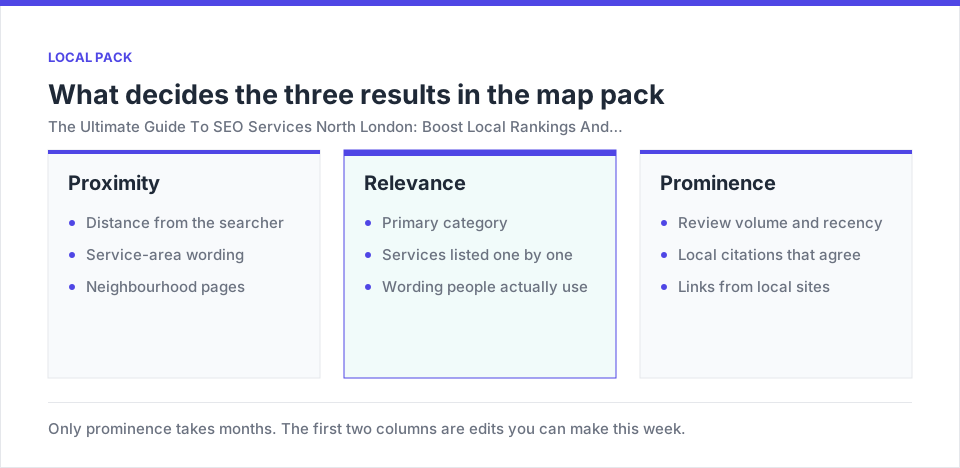
A robust GBP profile anchors local discovery. Ensure every North London GBP listing is 100% complete, featuring accurate primary categories that reflect core services, precise business hours, and a steady cadence of posts tied to district activity. Populate high-quality images and a concise, district-focused description, while maintaining consistent NAP data across directories and Maps. Pair district proofs—customer feedback, community partnerships, venue affiliations—with GBP to strengthen proximity signals and Maps rankings. Regularly review GBP insights to identify shifts in search queries and respond to reviews promptly, reinforcing trust and EEAT signals. See Google’s quality guidelines for local search as a regulator-ready baseline: Google's quality guidelines.
Local Citations And NAP Consistency Across North London
Maintain a tight, consistent footprint across North London directories and local maps ecosystems. Focus on accuracy and relevance over sheer volume, ensuring that the Name, Address, and Phone details align across Islington, Camden, Hackney, and surrounding areas. Pair citations with district proofs on corresponding district pages to demonstrate tangible local credibility. Monitor for data drift and correct inconsistencies promptly to protect proximity signals and rankings. For best-practice reference on local citations, consult Moz Local SEO guidance: Moz Local SEO.
Reviews, Reputation, And User-Generated Signals
Reviews are a direct trust signal for users and search algorithms. Cultivate authentic, district-relevant feedback from customers in Islington, Camden, and surrounding districts, and respond professionally to build a credible reputation. Highlight recent testimonials on district-depth pages to reinforce locality proofs. A structured review-management process improves EEAT and can positively influence local rankings by emphasising proximity, responsiveness, and reliability. Integrate review highlights into GBP and district pages to maintain a coherent trust narrative across North London.
Mobile Usability, Core Web Vitals, And Page Experience
North London users frequently search on mobile while navigating busy districts. Prioritise responsive design, legible typography, and intuitive navigation. Core Web Vitals emphasise a fast, stable experience on district-depth pages: aim for LCP under 2.5 seconds, FID under 100 milliseconds, and CLS under 0.1. Implement performance budgets, optimise images, and minimise render-blocking resources to sustain speed on variable urban networks. Regular performance audits and real-user monitoring help identify regressions quickly and keep the user journey smooth from search to action.
Structured Data And Local Schema For North London
Structured data enhances locality signals and supports the diffusion spine. Implement JSON-LD schemas for LocalBusiness and Organization on hub pages, extending to district pages with LocalBusiness, Event, or FAQ schemas where relevant. Ensure consistency across districts to assist Maps knowledge panels and rich results. Governance records should track schema changes to provide leadership and regulators with an auditable trail. Attach district proofs and event data to schema-enabled pages to reinforce proximity, expertise, and trust. Reference Google’s quality guidelines for best-practice alignment: Google's quality guidelines.
Content Alignment With North London Intent
Start with a compact North London hub topic spine (Local Leadership, Community Engagement, Local Economic Activity) and map 4–6 district-intent pages per district. Each district page should host credible proofs—such as customer testimonials from North London clients, district datasets, partnerships with local organisations, or event histories—and maintain a clear internal linking path to hub topics and edge activations (Maps prompts, local guides, events calendars). This structure supports EEAT and helps search engines recognise a locality-led diffusion strategy across North London.
Measurement, Dashboards, And Governance For Local SEO
Adopt a governance-forward measurement framework that combines hub authority, district engagement, GBP readiness, and edge-activation health. Use What-If forecasting to stress-test activation sequencing, Explain Logs to capture data provenance, and Provenance Envelopes to attach licensing and origin disclosures to proofs used on district pages. RegExports may be necessary for regulator reviews in more complex campaigns. A North London Diffusion Health Index (NLDHI) can provide a single, auditable view of progress across districts and hubs, supporting leadership oversight and regulator readiness. Integrate data from GA4, Google Search Console, GBP insights, and CRM attribution to demonstrate ROI in terms of inquiries, bookings, or revenue within North London.
Next Steps For North London Teams
- Step 0 – Discovery And Baseline: articulate business goals, identify target North London districts, and establish baseline metrics for GBP health, local citations, and proofs. Define governance artefacts early.
- Step 1 – Geography And Governance: map hub topics to district intents, implement What-If forecasting gates, Explain Logs, and Provenance Envelopes, and set up a shared diffusion dashboard to monitor progress from city-wide authority to district pages.
- Step 2 – Pilot And Scale: run a two-district pilot focusing on a high-density district and a representative suburban district, publish hub topics and district-depth pages with proofs, and expand as diffusion health signals prove ROI.
To discuss onboarding or request a formal proposal, please Contact Us. For governance resources and North London-first playbooks, visit SEO Services North London on londonseo.ai and review Google's quality guidelines to ensure responsible practice.
On-Page Optimisation Essentials For North London Local SEO
Continuing the North London diffusion narrative, this Part 4 focuses on implementable on-page disciplines that translate city-wide hub authority into district-specific relevance. By aligning meta data, headers, content structure, internal linking, and structured data with a governance framework, businesses in Islington, Camden, Hackney, Highgate, Wood Green and neighbouring areas can achieve more actionable visibility. londonseo.ai’s approach integrates proximity signals with auditable processes, so every page change supports Near-Me demand and regulator-friendly reporting. For reference on standards, see Google’s quality guidelines: Google's quality guidelines.
Crawlability And Site Architecture In North London
Design a clean, scalable architecture that mirrors the diffusion spine: city-wide hub topics act as the authority layer, with district-depth pages branching beneath each hub. Use geo-conscious URLs that clearly signal locality, for example, /local-leadership/north-london/islington/ or /local-economic-activity/north-london Camden/, ensuring readability and logical progression for search engines and users alike. Implement a canonical policy that prevents overlap between hub topic pages and district-depth pages, reducing risk of content cannibalisation as the North London diffusion scales. A robust internal linking path is essential: hub pages link to district-depth content, while district pages reinforce hub topics and connect to edge activations like Maps prompts or city guides. Governance artefacts should document decisions and data provenance for every architectural choice, supporting regulator-ready reporting.
Site Speed And Core Web Vitals For North London
Site speed is a local credibility signal. Target Core Web Vitals benchmarks that reflect North London users’ expectations: Largest Contentful Paint (LCP) under 2.5 seconds, First Input Delay (FID) under 100 milliseconds, and Cumulative Layout Shift (CLS) under 0.1. Build performance budgets at the hub level and extend them to district-depth pages to prevent growth from compromising speed. Prioritise image optimisation, modern formats (such as WebP where feasible), and responsive sizing to ensure rapid rendering on mobile networks common in busy districts. Reduce JavaScript blocking, optimise critical CSS, and enable effective caching strategies so district pages remain fast as the diffusion spine expands across boroughs.
- Adopt responsive images and size-aware rendering to cut load times on mobile devices in Islington and Camden.
- Minimise render-blocking resources and use inline critical CSS for above-the-fold content.
- Apply performance budgets and monitor with real-user metrics to spot regressions quickly.
Structured Data And Local Schema For North London
Structured data elevates locality signals and enhances the diffusion spine. Implement JSON-LD for LocalBusiness and Organization on hub pages, and extend to district pages with appropriate schemas such as LocalBusiness, Event, and FAQ where relevant. Align district calendars, services, and testimonials with schema markup to support Maps knowledge panels and rich results. Governance records should track schema changes to provide an auditable history for leadership and regulators. Attach proofs and local event data to district pages to reinforce proximity, expertise, and trust in Islington, Camden, and surrounding areas, while ensuring consistency across districts.
Mobile Usability And Page Experience In North London
North London residents often access content on the move between transport hubs and high-street hotspots. Prioritise a responsive design, legible typography, and intuitive navigation with crisp tap targets. Page experience should align with Core Web Vitals, maintaining quick image loading, stable layouts, and smooth interactivity even on fluctuating urban networks. Regularly audit across devices used in districts from Holloway to Wembley and adjust elements that hinder usability. A smooth mobile journey directly supports near-me demand and conversion potential on district pages.
Measurement, Dashboards, And Governance For Technical SEO
Technical improvements must sit within a governance-forward measurement framework. Create a North London Diffusion Health Dashboard that aggregates hub authority, district engagement, GBP readiness, and edge-activation health. Use What-If forecasting to stress-test activation sequencing before publishing hub or district content, and Explain Logs to capture data provenance and decision rationales. Provenance Envelopes should attach licensing and origin disclosures to proofs used on district pages, with RegExports available for regulator reviews when required. A practical North London Diffusion Health Index (NLDHI) can provide a single, auditable view of progress, while enabling drill-downs by district and hub topic. Integrate data from GA4, Google Search Console, GBP insights, and CRM attribution to demonstrate ROI in terms of inquiries, bookings, or revenue within North London.
- What-If forecasting: Forecast diffusion outcomes before major activations to de-risk the plan.
- Explain Logs: Capture data provenance and decision rationales for auditability.
- Provenance Envelopes: Attach licensing and origin disclosures to proofs used on district pages.
- RegExports: Package diffusion journeys for regulator reviews where required.
Next Steps For North London Teams
- Step 0 – Discovery And Baseline: articulate business goals, identify target North London boroughs, and establish baseline metrics for GBP health, local citations, and proofs. Set governance artefacts early to ensure auditable trails from the outset.
- Step 1 – Geography And Governance: map hub topics to district intents, implement What-If forecasting gates, Explain Logs, and Provenance Envelopes, and establish a shared diffusion dashboard to monitor progress from city-wide authority to district pages.
To discuss onboarding or request a formal proposal, please Contact Us. For governance resources and North London-first playbooks, visit SEO Services North London on londonseo.ai and review Google's quality guidelines to ensure responsible practice.
Technical SEO And Site Performance For North London Local SEO
With local competition intensifying across Islington, Camden, Highgate, and surrounding areas, a robust technical foundation is essential for SEO services north london. This Part 5 keeps building on the diffusion spine established previously, shifting focus from on-page content to the underlying infrastructure, speed, security, and data signals that enable district-depth pages to rank consistently. By aligning technical best practices with governance-friendly reporting, London-based businesses can translate improved site performance into tangible outcomes for local enquiries and revenue.
Technical SEO Foundations For North London
A disciplined diffusion spine relies on a clean, scalable site architecture that mirrors hub topics and district depth. Start with geo-conscious URLs that reflect the diffusion path, for example, /local-leadership/north-london/islington/ or /local-economic-activity/north-london Camden/. Ensure canonicalisation prevents content cannibalisation as pages scale across districts, and implement precise robots.txt rules to guide crawlers while safeguarding important district-depth content. Regularly refresh sitemaps to include new district pages and edge activations, ensuring search engines discover and prioritise authority-relevant signals.
- Geo-conscious URL design: Structure URLs to signal locality, hierarchy, and intent, enabling both users and crawlers to navigate the diffusion spine with clarity.
- Canonical and duplicate management: Prevent cross-page cannibalisation between hub topics and district-depth pages with disciplined canonical strategies.
- Crawl directives and indexation: Use robots.txt and meta robots tags to control what gets indexed while keeping critical district content accessible.
- Sitemap hygiene: Maintain up-to-date sitemap entries for every hub topic, district page, and edge activation to accelerate discovery.
Crawlability, Indexation, And Site Architecture
A well-governed diffusion spine depends on a tightly engineered internal linking structure. District-depth pages should clearly link to hub topics and to related edge activations, while hub pages reinforce the authority of the district content they host. Maintain a logical navigation that search engines can follow, and keep technical debt in check with regular audits. Governance artefacts should record the rationale for architectural choices, data sources, and any indexation decisions to support regulator-friendly reporting.
- Internal links from hub topics to district-depth pages should be prominent and consistent across the site.
- Avoid thin or duplicate content by ensuring each district page has unique proofs and purpose.
- Implement robust redirects for any content moves to preserve link equity and user experience.
Site Speed And Core Web Vitals For Local Audiences
Speed is a local credibility signal. Target Core Web Vitals benchmarks that reflect North London users’ expectations: Largest Contentful Paint (LCP) under 2.5 seconds, First Input Delay (FID) under 100 milliseconds, and Cumulative Layout Shift (CLS) under 0.1. Build performance budgets at the hub level and extend them to district-depth pages to prevent diffusion growth from compromising speed. Practical steps include image optimisation (using modern formats), deferring non-critical JavaScript, thoughtful font loading, and efficient caching. Regular real-user monitoring helps identify regressions quickly and keeps the user journey from search to action smoothly intact across busy North London networks.
- Optimise above-the-fold content to improve initial render times on mobile devices in Islington and Camden.
- Minimise render-blocking resources and prioritise critical CSS and lazy-loading for images.
- Establish performance budgets and monitor with real-user metrics to act on issues before they impact rankings.
Structured Data And Local Schema For North London
Structured data enhances locality signals and supports the diffusion spine. Implement JSON-LD schemas for LocalBusiness and Organization on hub pages, extending to district pages with LocalBusiness, Event, or FAQ schemas where relevant. Ensure consistency of schema across districts to assist Maps knowledge panels and rich results. Governance records should track schema changes to provide leadership and regulators with an auditable history. Attach proofs and district events to schema-enabled pages to reinforce proximity, expertise, and trust across North London’s diverse districts.
Measurement, Dashboards, And Governance For Technical SEO
Adopt a governance-forward measurement framework that ties technical improvements to hub authority, district engagement, and edge-activation health. Use What-If forecasting to stress-test activation sequencing before publishing hub or district content, Explain Logs to capture data provenance and decision rationales, and Provenance Envelopes to attach licensing and origin disclosures to proofs used on district pages. RegExports can be deployed for regulator reviews when diffusion journeys require packaging for scrutiny. A North London Diffusion Health Index (NLDHI) can provide a single, auditable view of progress across districts and hubs, enabling leadership oversight and regulator readiness.
- What-If forecasting: Validate diffusion outcomes before major activations to mitigate risk.
- Explain Logs: Capture data provenance and rationale for every technical decision.
- Provenance Envelopes: Attach licensing and origin disclosures to district proofs used on pages.
- RegExports: Package diffusion journeys for regulator reviews when required.
Next Steps For North London Teams
- Step 0 – Discovery And Baseline: articulate business goals, define target North London districts, and establish baseline metrics for hub authority, district engagement, GBP readiness, and edge activation health. Document governance artefacts early.
- Step 1 – Architecture And Governance: map hub topics to district intents, implement What-If forecasting gates, Explain Logs, and Provenance Envelopes, and set up a shared diffusion dashboard to monitor progress from city-wide authority to district pages.
- Step 2 – Pilot And Scale: run a two-district pilot with district-depth content, proofs, and edge activations; evaluate diffusion health and ROI before broader rollout across North London.
To discuss onboarding or request a formal proposal, please Contact Us. For governance resources and North London-first playbooks, visit SEO Services North London on londonseo.ai and review Google's quality guidelines to ensure responsible practice.
Local Link Building And Digital PR For North London SEO Services
Credible, locally rooted authority signals are particularly potent for North London businesses. Ethical link-building and community-focused Digital PR amplify proximity signals, reinforce district proofs, and support the diffusion spine that powers sustainable visibility for Islington, Camden, Hackney, Haringey, and surrounding areas. Building on the governance-forward framework already established on londonseo.ai, this Part 6 translates local engagement into auditable, regulator-friendly link and PR activity that translates into near-me demand and measurable ROI.
Hub Topic Definition: Building The Authority Scaffold
Select a compact, North London–centric set of city-wide hub topics that anchor governance and diffuse into district content. Typical hubs might include Local Leadership, Community Engagement, and Local Economic Activity. Each hub should diffuse into 4–6 district-intent pages per district, supported by proofs such as customer testimonials from North London clients, partnerships with local organisations, or local event histories. Edge activations—Maps prompts, local guides, and events calendars—must be tightly integrated with proofs to generate near-me demand. Governance artefacts, including What-If forecasting, Explain Logs, Provenance Envelopes, and RegExports, create an auditable trail from planning to deployment, ensuring clarity for executives and regulators. For North London governance resources, reference our services page and Google’s quality guidelines for alignment: SEO Services North London and Google's quality guidelines.
Hub Topics To District Depth: A Practical Diffusion Plan
Translate each city-wide hub into district-focused content, creating a diffusion map that moves from North London authority to local proofs. Begin with two representative districts, such as Islington and Camden, then extend to surrounding boroughs as ROI validates diffusion. Each district page should host 4–6 district-intent pages linked to 2–3 hub topics, supported by proofs like local testimonials, district datasets, partnerships with community groups, or event histories. Edge activations (Maps prompts for local services, city guides, and events calendars) should be tightly coupled with proofs to prompt near-me demand. Governance artefacts provide an auditable trail from planning to deployment, enabling regulator reviews and leadership scrutiny.
Content Briefs, District Proofs, And Internal Linking
Each district page should begin with a concise content brief aligned to a district-intent cluster, followed by 1–2 credible proofs and a clear internal linking path back to hub topics and forward to edge activations. Proofs can include timestamped testimonials from North London clients, district datasets, or local partnerships. Internal links must reinforce the diffusion spine: hub topics link to district-depth pages, which link to edge activations like Maps prompts and local guides. This structure strengthens locality signals, EEAT, and user journeys from awareness to action while remaining auditable for governance teams.
Governance Artefacts And Auditable Diffusion
Governance artefacts are the backbone of reliable North London diffusion. What-If forecasting should test activation sequencing before publishing hub or district content. Explain Logs capture data provenance and decision rationales, creating traceability across teams and time. Provenance Envelopes attach licensing and origin disclosures to proofs used on district pages, preserving credibility. RegExports may be necessary for regulator reviews where diffusion journeys require packaging for scrutiny. A North London Diffusion Health Index (NLDHI) can be built to aggregate hub authority, district engagement, GBP readiness, and edge-activation health, providing leadership with a single, auditable view of progress across districts and hubs. Dashboards should integrate GA4, Google Search Console, GBP insights, and CRM attribution to demonstrate ROI in terms of inquiries, bookings, or revenue within North London.
Edge Activations And Local Proofs
Edge activations anchor district content in real-world locality. Examples include Maps prompts highlighting nearby services, local city guides, and events calendars aligned with district events. Pair these with district proofs such as client testimonials from Islington or Camden, partnerships with local organisations, or archived event histories. This integration sustains proximity signals and converts awareness into near-me demand while keeping governance transparent and auditable.
Measurement, Dashboards, And Reporting For Local Link Building
Adopt a governance-forward measurement framework that ties hub authority, district engagement, GBP readiness, and edge-activation health to link-building outcomes. Use What-If forecasting to stress-test activation sequencing before publishing hub or district content, Explain Logs to capture data provenance, and Provenance Envelopes to attach licensing and origin disclosures to proofs used on district pages. RegExports may be necessary for regulator reviews in complex campaigns. A North London Diffusion Health Index (NLDHI) can provide a single, auditable view of progress across districts and hubs, enabling leadership oversight and regulator readiness. Integrate data from GA4, Google Search Console, GBP insights, and CRM attribution to demonstrate ROI in terms of inquiries, bookings, or revenue within North London.
- What-If forecasting: Stress-test diffusion outcomes before major activations to mitigate risk.
- Explain Logs: Capture data provenance and rationale for every outreach decision.
- Provenance Envelopes: Attach licensing and origin disclosures to proofs used on district pages.
- RegExports: Package diffusion journeys for regulator reviews when required.
Next Steps For North London Teams
- Step 0 – Discovery And Baseline: articulate business goals, identify target North London districts, and establish baseline metrics for GBP health, local citations, and proofs. Set governance artefacts early to ensure auditable trails from the outset.
- Step 1 – Geography And Governance: map hub topics to district intents, implement What-If forecasting gates, Explain Logs, and Provenance Envelopes, and establish a shared diffusion dashboard to monitor progress from city-wide authority to district pages.
- Step 2 – Pilot And Scale: run a two-district pilot focusing on a central district and a representative suburban district, publish hub topics and district-depth pages with proofs, and expand as diffusion health signals prove ROI.
To discuss onboarding or request a formal proposal, please Contact Us. For governance resources and North London-first playbooks, visit SEO Services North London on londonseo.ai and review Google's quality guidelines to ensure responsible practice.
Google Business Profile And Local Listings Management In North London
In North London, Google Business Profile (GBP) health and accurate local listings form the bedrock of credible local search visibility. Building on the diffusion spine framework championed by londonseo.ai, this Part 7 focuses on practical GBP optimisation, consistent local listings, and auditable governance that translates proximity signals into near‑me demand and measurable business results across Islington, Camden, Hackney, Highgate, Wood Green and neighbouring areas.
The North London GBP Health Checklist
A robust GBP is more than a listing; it is a live, local gateway. Start with a complete GBP profile that mirrors your district footprints, then synchronise it with district pages and edge activations to reinforce locality signals across Maps and organic search.
- Complete profile: Ensure all essential fields are filled, including primary category, photostream, services, and a district-focused description.
- Accurate NAP: Name, Address, and Phone should be consistent across all local directories and Maps listings in North London.
- Proximity proofs on GBP posts: Regular posts tied to Islington, Camden, or Hackney events, partnerships, or community activities that corroborate locality.
- Photos and videos: High‑quality images of premises, staff, and neighbourhood highlights to strengthen trust signals.
- Hours and seasonal updates: Reflect local opening patterns and special hours for district events or markets.
Local Listings Consistency Across North London
Consistency across North London directories and Maps platforms is crucial. Align NAP data, business names, and service descriptors across Islington, Camden, Hackney and surrounding areas. Where possible, tie district proofs to corresponding district pages to reinforce proximity signals and make it easier for users to verify credibility from the local context. Regular data audits help prevent drift, which can erode Maps visibility and user trust. For best-practice guidance on local citations, consult established resources such as Moz Local SEO guidance.
Reviews, Reputation, And User-Generated Signals
Reviews are a direct trust signal for local audiences and search algorithms. Implement a disciplined review collection and response process across North London districts. Encourage recent, district-specific feedback from customers in Islington, Camden, Hackney and nearby areas, and showcase a rotating selection of quotes on district pages and GBP posts. Respond promptly to reviews to demonstrate attentiveness and reliability, which strengthens EEAT and can influence local rankings by reinforcing proximity, responsiveness, and credibility.
Edge Activations And Local Proofs On District Pages
Edge activations such as Maps prompts for local services, curated city guides, and events calendars should be tightly coupled with proofs on district pages. Pair proofs such as client testimonials from North London clients, partnerships with community groups, or archived local events with GBP posts to accelerate engagement and near‑me demand. Maintain a consistent internal linking strategy that ties district content back to hub topics and forwards to edge activations, reinforcing the diffusion spine while keeping governance transparent and auditable.
Structured Data And Local Schema For North London
Enhance GBP and district credibility with structured data. Implement JSON-LD schemas for LocalBusiness and Organization on GBP and district pages, extending to district-specific schemas such as LocalBusiness, Event, and FAQ where relevant. Ensure consistent schema across districts to support Maps knowledge panels and rich results. Governance records should track schema changes to provide leadership and regulators with an auditable history. Attach proofs and local event data to schema-enabled pages to reinforce proximity, expertise, and trust in North London's diverse districts.
Measurement, Dashboards, And Governance For GBP
Adopt a governance-forward measurement framework that ties GBP health and local listings to district engagement and edge activations. Create a North London GBP Health Index that aggregates profile completeness, proximity signals, and user interactions. Use What-If forecasting to stress-test GBP adjustments before publishing changes, Explain Logs to capture data provenance and decision rationales, and Provenance Envelopes to attach licensing and origin disclosures to proofs used on district pages. RegExports may be necessary for regulator reviews in complex campaigns. Dashboards should integrate GBP insights with GA4, Google Search Console, and CRM attribution to demonstrate ROI in terms of inquiries, bookings, or revenue within North London.
- What-If forecasting: Anticipate how GBP updates will impact Maps visibility and local clicks before publishing.
- Explain Logs: Capture data provenance and the rationale behind GBP changes for auditability.
- Provenance Envelopes: Attach licensing and origin disclosures to proofs used on district pages.
- RegExports: Package diffusion journeys for regulator reviews when required.
Next Steps For North London Teams
- Step 0 – Discovery And Baseline: articulate business goals, identify target North London boroughs, and establish baseline GBP health metrics alongside proofs. Set governance artefacts early to ensure auditable trails from day one.
- Step 1 – Geography And Governance: map district intents to hub topics, implement What-If forecasting gates, Explain Logs, and Provenance Envelopes, and establish a shared GBP and district-diffusion dashboard.
- Step 2 – Pilot And Scale: run a two-district GBP pilot with linked district pages, proofs, and edge activations; evaluate diffusion health and ROI before broader rollout across North London.
To discuss onboarding or request a formal proposal, please Contact Us. For governance resources and North London-first playbooks, explore SEO Services North London on londonseo.ai and review Google's quality guidelines to ensure responsible practice.
Content Strategy For North London Audiences
Expanding local visibility in North London hinges on a disciplined content strategy that mirrors the diffusion spine introduced on londonseo.ai. The aim is to translate city-wide authority into district-level relevance through purpose-built pages, credible proofs, and timely edge activations. This Part 8 develops a practical blueprint for content that speaks to Islington, Camden, Hackney, Highgate, Wood Green and surrounding areas while remaining auditable, regulator-friendly, and ROI-driven.
Hub Topics And District Diffusion: A Practical Model
Begin with a compact set of city-wide hub topics that form the backbone of governance and diffusion. Typical hubs for North London include Local Leadership, Community Engagement, and Local Economic Activity. Each hub should diffuse into 4–6 district-intent pages per district, each supported by credible proofs such as local testimonials, partnerships with community groups, or district event histories. Edge activations—maps prompts, local guides, and events calendars—must align with proofs to convert interest into near-me demand. Governance artefacts (What-If forecasting, Explain Logs for data provenance, Provenance Envelopes for licensing disclosures, and RegExports to package diffusion journeys) ensure an auditable path from planning to deployment and regulator-ready reporting.
This structure keeps content organised, scalable, and tightly coupled to local realities, enabling leadership to see how city-wide themes translate into district-level impact.
Content Pillars: Location Pages, Services, And Local News
Three core content pillars align with North London user intent and the diffusion spine:
- Location pages: Detailed district guides for Islington, Camden, Hackney, and nearby areas, each tying back to hub topics with proofs and edge activations.
- Service pages: District-aware service descriptions that map to hub topics, illustrating how offerings meet local needs in different neighbourhoods.
- Local news and events: Evergreen and timely content about community events, partnerships, and district improvements that generate proof-rich signals for EEAT.
Content calendars should balance evergreen district content with timely city events, ensuring cornerstones stay current and authoritative across districts.
District Proofs And Edge Activations
District pages gain credibility when they showcase live proofs. Leverage timestamped testimonials from local clients, partnerships with community groups, district datasets, and historical event records. Edge activations such as Maps prompts for local services, curated city guides, and events calendars should be embedded on district pages and linked to hub topics to drive near-me demand. This approach creates a tangible, locality-driven narrative that search engines recognise as genuine expertise.
Governance And Editorial Cadence
Adopt a governance-forward editorial cadence so content decisions are auditable. Use What-If forecasting to test the impact of new topics or district pages before publishing, Explain Logs to document data provenance behind every content choice, and Provenance Envelopes to attach licensing and source disclosures to proofs used within pages. RegExports should be considered for campaigns with regulatory or formal reporting requirements. A North London Editorial Health Index can help track the balance between hub authority, district engagement, and edge activation health across districts.
Editorial calendar: A Two-District Example
Islington and Camden offer a practical starting pairing. For each district, publish 4–6 district-intent pages anchored to 2–3 hub topics, each page featuring proofs such as client testimonials or local data. Pair district pages with edge activations like Maps prompts and city guides to foster near-me demand. Monitor diffusion health on a shared governance dashboard, enabling rapid iteration and ROI-focused planning as results come in.
For reference on quality and user-focused guidelines, consult Google’s quality guidelines and explore the SEO Services North London page on londonseo.ai to see how these principles translate into deliverables.
E-commerce SEO Considerations In North London
In North London, ecommerce success hinges on aligning product and category pages with the diffusion spine established for local authority and district proofs. Building on the hub-topic framework from our preceding parts, this section translates local intent into commerce-ready optimisations. The aim is to turn proximity signals and district credibility into tangible online revenue, while keeping governance, transparency, and regulator-readiness central to every decision. For a practical, end-to-end approach, explore the broader SEO Services North London offering on londonseo.ai: SEO Services North London.
Product Page Optimisation For North London
Product pages are where local intent becomes action. Start with geo-aware product titles that include district qualifiers (for example, a product offered in Islington or Camden) to capture near-me searches. Meta descriptions should emphasise local delivery options or in-store pickup where relevant, creating a compelling reason to click from local search results. Ensure product images highlight local context, such as store-fronts or neighbourhood landmarks, to reinforce locality signals. All product pages should follow a consistent schema, content, and proof framework that mirrors the diffusion spine’s emphasis on hub topics and district proofs.
- Structured product data: implement JSON-LD Product markup with price, currency, availability, SKU, and geo-relevant offers to improve rich results.
- Local proof integration: embed credible proofs (customer testimonials from North London clients, partnerships with local organisations, or district event references) on product pages where appropriate.
- Neighbourhood delivery and pickup: clearly state delivery areas, estimated times, and pickup options to convert searchers into buyers faster.
Category Pages And Local Diffusion
Category pages act as diffusion hubs for district-focused products. Create district-aware category landing pages that group items by neighbourhood relevance (e.g., Islington home decor, Camden electronics). Each category page should link to 4–6 district-intent pages and carry proofs that demonstrate local relevance, such as district testimonials, partner listings, or event-related content. Maintain clear internal linking to hub topics to reinforce the diffusion spine, and include edge activations like local guides or event calendars that drive near-me demand from North London users.
- Geo-tagged collections: curate product groups with district emphasis to capture nearby shoppers.
- Schema for collections: apply CollectionPage and Product schema where relevant, connecting to district pages.
- Site search optimisation: ensure filters and navigation reflect local intents without creating dead ends for users.
Reviews, Ratings And Local Proofs On Ecommerce Pages
User-generated content remains a powerful signal for local shoppers. Display authentic reviews and ratings on product and district pages, emphasising North London customer satisfaction. Encourage district-specific feedback and showcase a rotating selection of quotes on product pages. Integrate aggregated ratings into Product schema to improve trust and click-through rates from local search results.
Structured Data And Local Schema For Ecommerce
Structured data boosts local visibility by clarifying product details and district relevance for search engines. Implement JSON-LD Product markup on individual product pages, including name, image, price, priceCurrency, availability, and url. Extend with LocalBusiness or Organization schemas on district pages where appropriate, and use Offer schemas for local delivery options. Where events or in-store activations relate to products, consider Event or FAQ schemas to capture additional rich results. Track changes through governance artefacts to preserve an auditable history for leadership and regulators.
Measurement, ROI, And Local Ecommerce Metrics
Monitor how local diffusion translates into ecommerce outcomes. Key metrics should include organic revenue, transactions, conversion rate by district, average order value (AOV), and revenue per visitor. Use governance dashboards to tie hub authority, district depth engagement, and edge activations to ecommerce results. Integrate data from GA4, Google Search Console, GBP insights, and CRM attribution to attribute sales to diffusion activities. Regularly report on ROI for leadership and regulatory stakeholders, adjusting the diffusion plan based on real-world performance in North London districts.
Implementation Checklist And Next Steps
- Step 0 – Discovery And Baseline: define target North London districts, identify essential products and categories for diffusion, and establish baseline ecommerce metrics. Set governance artefacts early to ensure auditable trails.
- Step 1 – Geography And Content Mapping: map product and category pages to district intents, align hub topics with district proofs, and plan edge activations like local guides and events calendars.
- Step 2 – Pilot And Scale: launch a two-district pilot with district-depth product pages and proofs, evaluate diffusion health, and scale as ROI materialises. Establish a shared diffusion dashboard for ongoing governance.
To discuss onboarding or request a formal proposal, please Contact Us. For governance resources and North London-first playbooks, visit SEO Services North London on londonseo.ai and review Google's quality guidelines to ensure responsible practice.
Measuring Success In North London: Key Metrics And Reporting
Building on the diffusion Spine and the district-focused proofs established across Islington, Camden, Hackney, and surrounding areas, this Part 10 translates activity into auditable outcomes. A governance-forward measurement framework ties hub-topic authority, district-depth engagement, GBP readiness, and edge activations to near-me demand and revenue. The North London lens emphasises local clarity, regulator-readiness, and a dashboard-led narrative that keeps leadership informed and accountable on a quarterly cadence. For fuller context on our local SEO services, explore SEO Services North London on londonseo.ai.
The North London Diffusion Health Index (NLDHI)
Introduce a concise composite metric that aggregates four governance pillars into a single, auditable score: hub-topic authority, district-depth engagement, GBP readiness and proximity signals, plus edge-activation health. A practical formulation for North London campaigns could be: NLDHI = 0.50 x Hub Authority Coverage + 0.25 x District Engagement + 0.15 x GBP Readiness + 0.10 x Edge Activation Health. The index provides a shareable, leadership-friendly snapshot while permitting drill-downs to diagnose which district or hub topic needs attention. Use the NLDHI to compare diffusion health across boroughs and to prioritise diffusion investments as the spine scales.
Core North London Metrics That Matter
Analytics should revolve around five practical KPIs, each aligned to the diffusion spine and auditable governance.
- Hub Topic Authority Coverage: The breadth and depth of North London-wide hub topics across district pages, indicating city-level credibility and strategic coherence.
- District Depth Content Engagement: User interactions with district-depth pages, proofs, and internal links that reveal proximity and relevance signals.
- GBP Readiness And Proximity Signals: Health of Google Business Profile and nearby search signals tied to district intents, including profile completeness, responses, and GBP posts.
- Edge Activation Health: Engagement metrics from Maps prompts, local guides, and events calendars that translate awareness into near-me demand.
- ROI And Conversion Attribution: Multi-channel attribution linking diffusion activities to inquiries, bookings, and revenue, integrated with CRM data.
Together these metrics create a coherent narrative: hub authority anchors city-wide influence, district depth proves locality, GBP health substantiates proximity, edge activations convert intent, and ROI frames the business impact. Dashboards should present both high-level trends and district-level drill-downs to support quick decisions and regulator-ready reporting.
Data Sources And Architectural Principles
Reliable measurement rests on a unified data model that maps every diffusion activation to a district page and hub topic. Core data sources include:
- Google Analytics 4 (user journeys, events, and conversions).
- Google Search Console (visibility, clicks, impressions by district).
- Google Business Profile insights (local health, proximity signals, and engagement).
- CRM attribution (lead-to-sale lifecycle and offline conversions where applicable).
- Internal governance dashboards that fuse hub, district, and edge-activation metrics.
Adopt a single data model that enables cohort analyses by district and hub topic, while preserving data provenance for regulator-ready reporting. What-If forecasting, Explain Logs, and Provenance Envelopes should be tightly integrated so every measurement decision is auditable and transparent to leadership.
Dashboards, What-If Forecasting, And Governance For North London
Dashboards should serve both strategic and regulatory needs. A North London Diffusion Health Dashboard could feature four panes: hub topic authority, district engagement, GBP readiness, and edge-activation health. What-If forecasting gates test activation sequencing prior to publishing new district pages or hub updates, helping leadership pre-empt risk. Explain Logs capture data provenance and decision rationales for every change, while Provenance Envelopes attach licensing and origin disclosures to proofs used on pages. RegExports remain an option for packaging diffusion journeys for regulator reviews when required. The dashboards must enable leadership to verify that every diffusion action has a traceable, auditable rationale from plan to deployment.
Reporting Cadence And Stakeholder Alignment
Establish a predictable reporting rhythm that keeps executives informed and regulators comfortable. A practical cadence includes:
- Weekly tactical updates: real-time diffusion health metrics and edge-activation performance to spot quick wins or bottlenecks.
- Monthly governance reviews: evaluation of What-If forecasts, Explain Logs, and Provenance Envelopes to ensure decisions remain auditable and aligned with the diffusion plan.
- Quarterly ROI reviews: consolidation of KPI progress into a clear business case tying hub authority and district engagement to inquiries, bookings, and revenue in North London.
Dashboards should be readable for senior stakeholders while offering drill-downs for governance teams and regulators. For governance resources and North London-first playbooks, refer to SEO Services North London on londonseo.ai and review Google's quality guidelines to stay aligned with best practice. To discuss onboarding, Contact Us.
Next Steps For North London Teams
- Step 0 – Renewal And Baseline Review: revalidate business goals, confirm target North London districts, and refresh baseline metrics for GBP health, local citations, proofs, and edge activations. Update governance artefacts accordingly.
- Step 1 – Governance Cadence: reaffirm hub-to-district ownership, update the diffusion dashboard, and schedule What-If gates before major activations in new districts.
- Step 2 – Data Quality And Access: ensure governance artefacts (Explain Logs, Provenance Envelopes) are accessible to leadership and regulators, with clear data lineage and licensing disclosures.
To discuss onboarding or request a formal proposal, please Contact Us. For governance templates and North London-first playbooks, explore SEO Services North London on londonseo.ai and consult Google’s quality guidelines to ensure responsible practice.
Future-Proofing SEO Services North London: Sustaining Growth, Compliance, And Local Leadership
North London’s market continues to evolve, with districts like Islington, Camden, Hackney, Highgate, and Wood Green presenting a mosaic of consumer needs and competitive intensity. This final part cements the long-term playbook: a governance-forward, data-driven approach that sustains diffusion, continually improves local authority signals, and scales responsibly as new boroughs come online. The aim is to convert sustained visibility into enduring near-me demand, measurable ROI, and trusted local leadership for clients working with londonseo.ai.
Sustaining Momentum Across The North London Diffusion Spine
A mature North London SEO programme relies on an operating rhythm that blends strategy with execution, governance with transparency, and experimentation with accountability. Beyond initial diffusion, the spine requires regular health checks to ensure district-depth pages stay relevant, proofs stay credible, and edge activations align with current local conditions. This means periodically revisiting hub topics, refreshing district proofs (customer testimonials, partnerships, event histories), and validating the internal linking architecture as new pages are added. The governance layer remains the binding force, documenting decisions, data provenance, and licensing disclosures so leadership and regulators can audit progress with confidence.
Practical governance artefacts include What-If forecasting scenarios, Explain Logs that capture decision rationales, Provenance Envelopes for licensing disclosures, and RegExports where required for regulator-ready reviews. The North London Diffusion Health Index (NLDHI) can be a consolidated scorecard that aggregates hub authority, district engagement, GBP readiness, and edge-activation health, enabling quick executive reviews and long-term trend analysis.
Governance Cadence For Ongoing Improvement
Adopt a predictable cadence that spans quarterly planning, monthly dashboards, and weekly content scheduling. A suggested cycle includes: quarterly strategy reviews to reassess hub-to-district mappings and ROI expectations; monthly dashboards showing KPI drift, GBP health, and district engagement; and weekly editorial planning that aligns content creation with edge activations and proofs. Each cycle should conclude with a formal regrets-and-lessons document and a refreshed diffusion roadmap. This disciplined rhythm protects against scope creep, reinforces EEAT, and provides regulators with a clear, auditable narrative of growth and risk management.
- Quarterly Strategy Review: Revalidate hub topics, district targets, and diffusion ROI against latest market signals.
- Monthly Dashboards: Track GBP readiness, local citations quality, district proofs, and edge-activation health for each district.
- Weekly Editorial Planning: Align content calendars with edge activations and seasonal local events to sustain near-me demand.
- What-If Forecasting: Run forward-looking scenarios to stress-test diffusion sequencing before major content pushes.
Measurement And Knowledge Transfer
Long-term success hinges on turning data into actionable knowledge. Create cross-functional dashboards that meld analytics from GA4, Google Search Console, GBP insights, and CRM attribution. Document learnings in a living knowledge base that team members can audit, update, and reuse when migrating to new districts or launching edge activations. Regular debriefs should translate data into tangible decisions, such as where to expand diffusion, which proofs need refresh, and how to adjust edge activations in response to changing local conditions. This approach preserves continuity, fosters team capability, and strengthens the company’s authority in the North London region.
Case Study Snapshot: A North London Local Business
Consider a mid-sized bakery in Islington that embraced the diffusion spine by pairing hub topics (Local Leadership and Local Economic Activity) with district-depth content for neighboring districts. Within nine months, the bakery expanded district-proof content, integrated customer testimonials from local clients, and deployed edge activations such as city guides and event calendars tied to community markets. The result was a 38% increase in local inquiries, a 22% higher Maps visibility score, and a measurable lift in revenue from near-me demand. The governance framework ensured every step—from What-If forecasts to Explain Logs—was auditable and regulator-friendly. This illustrates how disciplined diffusion can translate local visibility into real business outcomes across multiple districts.
Regulatory Considerations And Risk Management
Ethical data handling, privacy, and transparent attribution are essential for sustained growth. Maintain clear data provenance and licensing disclosures for proofs used on district pages. Respect user privacy in all tracking and measurement activities, aligning with UK data protection regulations and GDPR principles. Regularly review data collection practices, ensure consent where required, and document data-retention policies within governance artefacts. This diligence protects trust with local communities and supports regulator readiness as diffusion scales across North London.
Roadmap For The Upcoming Year
- Step 0 – Baseline Revalidation: Confirm current hub-topic-to-district mappings and update district proofs with fresh local data.
- Step 1 – Expand Diffusion: Roll out 4–6 new district-intent pages in two additional boroughs, anchored by credible proofs and edge activations.
- Step 2 – Governance Maturity: Tighten What-If forecasting gates and extend Explain Logs and Provenance Envelopes to cover new districts.
- Step 3 – Measurement Excellence: Integrate CRM attribution more deeply and publish quarterly NLDHI briefs for leadership.
Next Steps For North London Teams
- Step 0 – Discovery And Baseline: Reconfirm business goals, identify target North London districts, and establish baseline metrics for GBP health, local citations, and proofs. Create governance artefacts to support auditable trails from the outset.
- Step 1 – Geography And Governance: Map hub topics to district intents, implement What-If forecasting gates, Explain Logs, and Provenance Envelopes, and set up a shared diffusion dashboard to monitor progress from city-wide authority to district pages.
- Step 2 – Pilot And Scale: Run a two-district pilot with district-depth content, proofs, and edge activations; evaluate diffusion health and ROI before broader rollout across North London.
To discuss onboarding or request a formal proposal, please Contact Us. For governance resources and North London-first playbooks, visit SEO Services North London on londonseo.ai and review Google's quality guidelines to ensure responsible practice.
