Shopify SEO London: A Practical Guide for London Shopify Stores
London’s e-commerce landscape is intensely competitive, with consumers expecting fast, relevant results at their fingertips. For Shopify store owners, strong search visibility isn’t optional; it’s the difference between being found by Londoners and tourists or being left behind. Effective Shopify SEO for London blends site structure, fast performance, and local signals to connect intent with action. At londonseo.ai we specialise in turning local demand into measurements of success, translating visibility into calls, enquiries and sales across the capital. This guide sets out a practical framework to prioritise actions that move the needle in a busy, mobile-first city.
Why Shopify SEO matters for London businesses
Shopify powers a substantial portion of London e-commerce, from high-street brands to nimble indie shops. In London, search intent is highly local and volatile: customers search by boroughs, neighbourhoods and even street-level terms when they’re ready to buy. A well-optimised Shopify store surfaces in local packs, Maps results and organic search, maximising discovery among London’s diverse audiences. An optimised Shopify site also supports mobile shoppers, who account for a growing share of London transactions. By aligning product pages, collections and content with local queries, London brands can shorten the path from discovery to purchase.
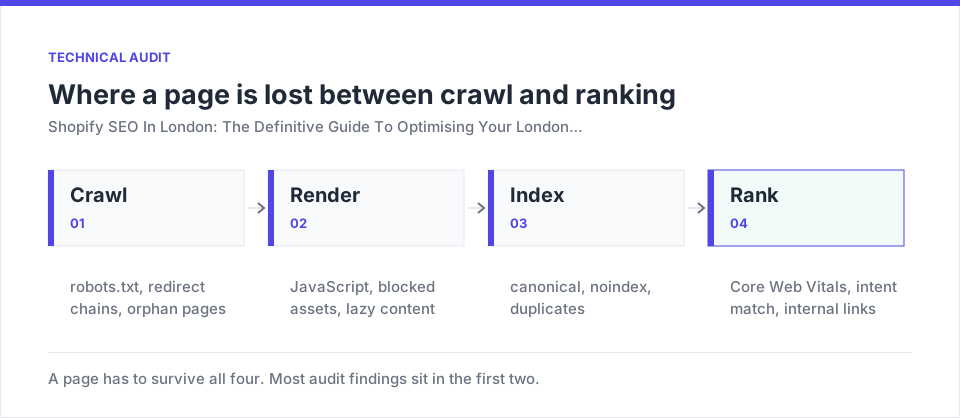
Key considerations include how Shopify’s architecture affects crawlability and indexing, the management of canonical pages to avoid duplicate content, and the need to structure data so rich results appear for London-specific queries. Local signals, such as GBP (Google Business Profile) integrations and local citations, amplify visibility when combined with optimised product and collection pages. This approach yields not only higher rankings but more relevant traffic with a higher propensity to convert.
Shopify architecture and its impact on SEO
Shopify organizes content primarily around products, collections, pages and blogs. This structure offers clear SEO advantages when used deliberately: descriptive product titles and meta descriptions, keyword-rich collection names, and well-structured category hierarchies help search engines understand the site’s offerings. However, Shopify also creates potential pitfalls, such as duplicate content from filtered or parameter-driven URLs and the challenge of optimising indexable pages without over-indexing thin or duplicate variants. A thoughtful approach includes:
- Applying unique, compelling titles and meta descriptions to products and collections to capture London-specific intent.
- Using canonical tags to consolidate duplicate content arising from filters, sorts or tag-based collections.
- Submitting a clean sitemap (Shopify provides sitemap.xml) and ensuring product, collection, and page URLs are clean and descriptive.
- Implementing structured data for products, FAQs and organisation to enhance rich results in search and Maps.
- Optimising images with descriptive alt text and appropriate file sizes to protect page speed on mobile devices.
With London audiences in mind, brand-new product pages should be crafted to respond to local intent (e.g., “London kitchenware delivery,” “Islington gift box,” or borough-specific promotions). Align the store’s navigation so users can reach maps- and store-locator content without friction. For best-practice guidance, see authoritative sources on general SEO foundations from Google and reputable SEO guides, and keep an eye on Shopify’s own optimisation resources to stay aligned with platform updates.
Internal linking is vital for passing authority from high-traffic pages to product pages and district-focused landing pages, enabling Google to discover and rank London-centric content more effectively.
Getting started: six practical steps for London stores
- Audit the current SEO health of your Shopify store: identify crawl errors, index coverage issues, and any London-specific gaps in product, collection, and content pages.
- Define London-focused keyword targets: research terms by boroughs and neighbourhoods, plus transactional terms that indicate purchase intent in London (e.g., “buy in London”, “delivery London borough”).
- Optimise product and collection pages: craft unique titles and meta descriptions for London audiences, ensure clean URL structures, and utilise semantic headings to guide both users and search engines.
- Strengthen technical foundations for Shopify: ensure a clean robots.txt, leverage a sitemap.xml, apply canonical tags where needed, and enable structured data for products and FAQs.
- Enhance speed and mobile experience: optimise images, limit third-party scripts, and select a fast, responsive Shopify theme that aligns with Core Web Vitals targets for mobile users in London.
- Establish a local signals plan: optimise your GBP profile, build local citations, and pair product content with district-level landing pages to capture local intent and improve conversions.
Speed, performance and mobile optimisation
London shoppers tend to expect quick pages that load on mobile devices. Core Web Vitals, including page load speed, interactivity and visual stability, should be central to Shopify optimisations. Practical steps include selecting a fast theme (preferably a Lightning/Super-fast 2.0 variant), compressing and lazy-loading images, and minimising CSS and JavaScript where possible. Additionally, reduce third-party apps that slow down the storefront, and ensure critical content loads early so users in London can access key information quickly. A fast, reliable site helps improve user satisfaction and signals quality to search engines, supporting higher rankings over time.
Beyond technical improvements, consider staged content delivery: critical product information, pricing, and CTAs should be immediately visible, with secondary details loaded progressively. For reference on SEO fundamentals and best practices, consult Google’s starter guides and industry guidelines, and stay aligned with Shopify’s optimisation resources.
Local signals and London-centric content strategy
Local signals reinforce rankings when combined with strong product data. Create district- or borough-focused landing pages that present a curated selection of products and services tailored to local needs. Pair this with GBP optimisations, timely content about London events and seasons, and clear CTAs that drive in-store visits, calls or online orders. A well-structured content strategy helps you own a set of local queries and provides a path for content marketing to support SEO goals.
To support this approach, reference authoritative guides on local SEO and general optimisation. For example, Google’s SEO Starter Guide and Moz Local SEO Guide provide foundational practices that align with the local signals London stores rely on. Access to these resources helps ensure that your London strategy remains current and effective.
Remember to keep your internal navigation logical for users and search engines. Link from hub pages into district pages, and from district pages back to product categories and GBP content to maintain a cohesive information architecture that scales across London.
Next steps and resources
Ready to put these ideas into action? Explore our Shopify SEO services to tailor a London-specific plan, or book a consultation through our contact page to discuss your store’s goals. For foundational guidance, review: Google SEO Starter Guide and Moz Local SEO Guide. These resources complement the practical, London-focused strategies we outline at londonseo.ai.
Shopify SEO Fundamentals for London Stores
London-based Shopify stores operate in one of the world's most competitive ecommerce environments. Getting the basics right—architecture, speed, and local relevance—is the bridge between visibility and conversion. In this part, we focus on the essential fundamentals you should implement from day one to form a strong foundation for a London-specific SEO programme. At londonseo.ai we emphasise practical, measurable actions that connect local intent with purchase, whether buyers are in Islington, Hackney, Covent Garden or Canary Wharf.
Shopify architecture and its impact on SEO in London
Shopify organises content around products, collections, pages and blogs. This clarity is powerful when you title products with London-focused intent (for example, "London delivery: coffee mugs") and structure collections to reflect local themes (neighbourhoods, markets, or boroughs). However, filters and parameter-driven URLs can generate duplicate content if not managed carefully. A deliberate strategy includes:
- Unique titles and meta descriptions for products and collections that capture London-specific intent, improving click-through from local searches.
- Canonical tags to consolidate duplicates created by filters, sorts, or tag-based collections, ensuring Google indexes the most valuable pages.
- A clean sitemap and descriptive, readable URLs that describe the page content without unnecessary parameters.
- Structured data for products, FAQs and organisation to help rich results appear for London queries and Maps results.
- Image optimisation with descriptive alt text to support mobile users and accessibility, crucial for London’s high mobile usage.
When you tailor this architecture to London’s diverse audience, you can surface district-focused landing pages that align with local demand. Linking hub pages to district pages and back to product categories helps distribute authority where buyers search most often, such as specific boroughs or neighbourhoods. See Google’s guidance on general SEO foundations to stay aligned with platform updates.
Shopify themes and performance considerations for London shoppers
Londoners expect fast, dependable shopping experiences on mobile devices. Theme choice and app usage directly influence Core Web Vitals. Practical steps include:
- Choose a fast, responsive theme tuned for performance, ideally one that supports modern lazy loading and efficient asset handling.
- Minimise third‑party apps that slow page rendering; evaluate each app for impact on speed and user experience.
- Compress images and implement lazy loading to improve LCP (Largest Contentful Paint) and CLS (Cumulative Layout Shift).
- Audit JavaScript and CSS, removing unused code and consolidating files to reduce render-blocking resources.
- Optimise for mobile, ensuring key information and CTAs load quickly, as mobile shopping is prevalent across London’s demographics.
Beyond the technical, structure content so that the most important London-specific information loads first. This helps both users and search engines understand your local relevance quickly. For an authoritative grounding, consult Google’s SEO Starter Guide and reputable industry resources as you codify your approach.
Local keyword targets and content mapping for London
Develop a city‑level keyword strategy anchored to London’s distinctive geography. Start with borough clusters (for example, Islington, Camden, Greenwich, Hackney, South Bank) and map transactional terms that signal intent in London (eg, "buy in London","delivery London borough"). Create landing pages by district that aggregate relevant products or collections and pair them with district-level content that answers local questions.
Key steps include:
- Keyword discovery by district, prioritising terms with local intent and seasonal London signals (events, markets, seasonal promotions).
- Content mapping that assigns each keyword cluster to a dedicated landing page, a district page, and relevant GBP content where applicable.
- Local content that reflects London life and shopping patterns, with clear calls to action tailored to each district’s audience.
Basic optimisations to implement from the outset
From day one, apply practical optimisations that set up long-term success in London’s marketplace:
- Product and collection titles: craft unique, London-relevant titles and meta descriptions that reflect local intent and borough terminology.
- Clean URL structures: use descriptive, keyword-rich URLs that include district references where sensible (eg, /collections/london-islington).
- Header structure: use semantic H1 for page purpose, with H2–H6 sections to guide both users and search engines through the content.
- Structured data: implement Product schema for products, LocalBusiness or Organization schema for the store, and FAQ schema for district FAQs to improve rich results.
- Image optimisation: descriptive file names and alt text that reflect London-centric terms; keep file sizes small to support mobile speed.
- Internal linking: establish a logical path from district hubs to product pages and GBP content to pass authority effectively across London-focused pages.
These practices, when applied consistently, create a solid technical baseline that supports more ambitious, district-focused optimisations later. For ongoing guidance, reference Google’s starter resources and industry best practices as you implement.
Next steps and resources
To advance, review our Shopify SEO services and book a consultation via our contact page to tailor a London-focused plan. Foundational references include Google SEO Starter Guide and Moz Local SEO Guide for the principles of local search and authority. For platform-specific insights, see Shopify's guidance on SEO.
Internal references and continuing guidance
Explore our London-focused resources and case studies on Shopify SEO services, and reach out via our contact page to discuss your store’s goals. For more global SEO context, consult Google and Moz resources linked above to stay aligned with evolving best practices in local search.
Shopify SEO London: Local Keyword Research And London Localisation
In London’s fast-moving ecommerce landscape, local keyword research is the compass that guides a Shopify store from mere visibility to meaningful traffic. For London-based businesses, search queries are highly localised, frequently borough- or neighbourhood-specific, and often coupled with immediacy signals like delivery times or click-to-call actions. This part expands on how to build a London-focused keyword framework that aligns with user intent, supports district-level landing pages, and integrates seamlessly with a broader Shopify SEO strategy available through londonseo.ai.
A well-structured approach starts with mapping how London shoppers search by geography, then translating those insights into landing pages, product content and navigational signals that help Google and users connect intent with action. The framework emphasises practical steps, validated data sources, and a governance model that keeps seed terms stable while allowing locale-aware refinements as London markets evolve.
Key concepts: local intent and borough-level targeting
Local intent for London combines transactional signals (buy, deliver, book) with informational questions that reference specific places (boroughs, markets, streets). The objective is to create a scalable set of district pages and hub content that collectively cover the geographic breadth of London while preserving a clear brand voice. Such an approach makes it easier for search engines to understand where a store competes most effectively and which queries a district can own in the local search ecosystem.
In practice, this means pairing borough-specific landing pages with district-level FAQs, service pages and product content that address local needs. By aligning seed terms with the actual geography of London, you improve relevance for queries like “delivery in Islington” or “coffee mugs Hackney,” which typically convert at higher rates than generic city-wide terms. The combination of district pages, strong product data and local signals helps you win not just rankings, but Local Pack visibility and Maps presence that drive footfall and online orders.
How to structure London keyword clusters
Start with broad city-wide terms that reflect London’s common buying intents, then segment by boroughs and districts to capture locality. Examples include: “London delivery,” “Islington gifts,” “Camden cafe near me,” and “Borough-specific promotions in London.” Each cluster should feed a district landing page or a service page that aligns with user expectations. Consider the following approach:
- Identify core London seed terms that reflect both transactional and informational intent.
- Create district clusters by major boroughs (e.g., Islington, Camden, Hackney, Westminster) and prominent neighbourhoods (e.g., Brixton, Soho, Greenwich).
- Add geo-modifiers and local modifiers to reflect user behaviour (delivery London, near me London, London boroughs).
- Incorporate seasonal and event-driven terms tied to London life (London Fashion Week, Christmas markets, summer fairs) to capture timely demand.
- Validate with search volumes from trusted tools and prioritise high-ROI terms for immediate action.
From keywords to content: mapping for London stores
Translate each cluster into a district landing page or a service page with a clear hierarchy. For example, a landing page for Islington could feature delivery options, a curated local product assortment, district FAQs and a prominent call-to-action to view GBP information or initiate a local order. A separate page for “London delivery” can sit as a hub, linking to district pages and highlighting delivery coverage, lead capture forms, and store-finder utilities. This structure helps search engines understand the geography of your offerings and supports the user journey from discovery to purchase.
Internal linking is essential here: hub pages should naturally feed district pages, while district pages link to product collections and related services. This creates a robust information architecture that distributes authority effectively and signals local relevance to Google, increasing the likelihood of ranking for London-specific terms and appearing in Maps results.
Practical steps for a London localisation plan
To operationalise this approach, follow a concise sequence that mirrors the flow from seed to surface activation. The process prioritises accuracy, speed to market and scale, while maintaining brand consistency across surfaces.
- Audit existing London-focused content and identify gaps by district, ensuring pages are crawlable and properly indexed.
- Define a London seed language and assign a dedicated owner to maintain consistency across GBP, Maps and the shop’s pages.
- Develop district landing pages with geo-targeted content, maps, FAQs and strong local CTAs.
- Establish a district-content calendar that aligns with London events and seasonal demand.
- Set up a governance framework using DoBel Translation Provenance and AGO Bindings to protect seed terms across languages and districts.
Measuring success and governance for London keyword strategy
Track district-level metrics that reveal the impact of local keyword work on traffic, engagement and conversions. Key indicators include the volume and quality of traffic to district pages, click-through rates from local search results, and the conversion rate of visitors who reach district content or GBP entries. Use dashboards that consolidate data from GBP Insights, Maps interactions, and the Shopify store to provide a city-wide picture with district-level granularity. Regular governance reviews ensure seed terms remain stable while locale refinements evolve with London’s market dynamics. For foundational guidance on SEO best practices, refer to Google’s SEO Starter Guide and Moz Local SEO Guide.
Ready to turn local searches into store visits? Explore our Shopify SEO services to tailor a London-focused keyword and content plan, or book a consultation through our contact page to discuss your store goals. For broader reference, see Google SEO Starter Guide and Moz Local SEO Guide.
Shopify SEO London: Site Structure, Navigation And URL Strategy
In London’s fast-moving ecommerce landscape, a well‑planned site structure is the backbone of visible, operable Shopify stores. A clean hierarchy helps search engines understand what you sell, where to deliver it, and how to guide shoppers from discovery to checkout. This part focuses on practical decisions forLondon-based stores, aligning Shopify architecture with local intent and Core Web Vitals targets. At londonseo.ai we specialise in turning local demand into measurable outcomes, translating a robust structure into better crawlability, indexability and conversion funnels for London customers.
Establishing a scalable framework now makes it easier to surface district‑level content, optimise for borough queries, and keep navigation intuitive as you grow. The aim is to create an experience where Maps, GBP and the storefront work in harmony to support quick decisions for London shoppers, whether they’re browsing from Islington or Shoreditch.
Shopify architecture basics for London stores
Shopify’s content is organised around products, collections, pages and blogs. This clarity is advantageous when you tailor product titles, collection names and category hierarchies to London‑specific queries. However, London stores must actively manage potential duplicates created by filters, sorts, and parameterised URLs. A deliberate setup includes:
- Unique, London‑relevant titles and meta descriptions for products and collections to capture local intent.
- Canonical tags to consolidate duplicates caused by filters or sorts, ensuring Google indexes the most valuable variants.
- A clean sitemap (Shopify’s built‑in sitemap) with readable, descriptive URLs that reflect page content.
- Structured data for products, FAQs and an organisation schema to improve rich results and Maps presence.
- Optimised images with descriptive alt text and balanced file sizes to protect mobile speed.
For a London audience, create district landing pages that respond to local intent (for example, “London delivery: kitchenware Islington” or “Soho gift box delivery”). Structure your navigation so users can reach Maps and store-locator content without friction. Internal linking from hub pages to district pages and back to product categories helps distribute authority where buyers search most often.
Defining a London content map with district focus
Having a clear district map enables you to surface domain authority where it matters most. Hub pages—such as a central London hub—should link down to district pages (Islington, Camden, Hackney, Westminster) that host localised content, maps and district-specific FAQs. District pages then tie into product collections and service pages, creating a coherent information architecture that search engines can interpret and rank for local queries.
Remember that a well‑defined hub‑and‑spoke model supports scalable growth. It also makes it easier to test local variants and measure which districts drive more engagement and conversions. When you align district content with GBP and Maps signals, the user journey becomes more direct and conversion‑driven.
Managing duplicate content and filters
London stores frequently use filters (price, colour, size) and sorts that can generate multiple URLs for the same product set. A robust strategy uses canonical tags to point to the most representative page, and carefully manages parameter handling to prevent crawl budget waste. Practical steps include:
- Apply canonical tags on filtered and sorted variant pages to consolidate to the primary product or collection page.
- Use robots.txt rules and Shopify’s built‑in settings to limit indexation for non‑essential filter pages.
- Maintain clean, descriptive URLs that reflect the page content and London geography rather than arbitrary parameters.
- Leverage structured data for products and FAQs to reinforce relevance for local queries.
Internal links should be used to guide users from district hubs to relevant product pages, while avoiding over‑indexing thin or duplicate variants. For broad guidance on SEO foundations, Google’s official starter resources and Moz’s local guides remain valuable references. As you implement, ensure your London strategy remains aligned with Shopify’s own optimisation guidance.
To explore concrete, London‑specific services, consider our Shopify SEO services page or book a consultation via the contact page to tailor an action plan for your store.
External reference: Google SEO Starter Guide and Moz Local SEO Guide.
URL strategy for London: district pages and clean slugs
A well‑constructed URL strategy signals relevance to both users and search engines. For London, use district and borough terms in a logical, hierarchical manner. Practical recommendations include:
- Origin hub: /collections/london/ (central hub for city-wide content).
- District pages: /collections/london-islington/ or /collections/islington-deli/ to reflect district relevance and product categorisation.
- Service and location pages: /pages/london-delivery or /pages/islington-gift-delivery for transactional clarity.
- Keep navigation shallow: ideally, no more than three clicks to reach product pages from the hub.
- Avoid over‑parameterised filters in the URL; aim for readable, descriptive slugs that capture intent.
As you design slugs, keep consistency with your seed terms and ensure district references align with GBP and district landing pages. This coherence improves click‑through from local search results and supports Maps optimisation.
Internal linking blueprint for London districts
Internal linking should reinforce a siloed, district‑centric structure. A sensible blueprint includes:
- Hub page linking to all district landing pages, product collections and GBP content.
- District pages linking to relevant collections, services and district FAQs, with local anchor text (for example, "Islington delivery" or "Soho gifts near me").
- Product pages linking back to district hubs where appropriate, to distribute authority and signal local relevance.
- Maintain a consistent anchor text strategy that includes district names and services to strengthen geo‑signal strength.
Regular audits ensure NAP consistency, no dead ends in navigation, and that GBP, Maps and the site reinforce the same local language. For practical guidance on governance and district mapping, consult our Shopify SEO resources or book a consult via the contact page.
Next steps and resources
To act on these recommendations, review our Shopify SEO services and arrange a consultation to tailor a London‑centric site structure and URL strategy for your store. For foundational practices, revisit Google’s SEO Starter Guide and Moz Local SEO Guide to reinforce your London approach. If you’d like tailored district templates and governance artefacts, we can provide a district‑level plan aligned with GBP, Maps and the London hub.
Internal links: Shopify SEO services | contact page.
Shopify SEO London: Speed, Performance And Mobile Optimisation
In London’s fast-paced online market, speed isn’t a luxury—it’s a competitive necessity. Local shoppers expect near-instant access to information, fast product loading, and seamless mobile experiences. For Shopify stores serving London’s diverse communities, performance directly influences rankings, user engagement, and conversion rates. At londonseo.ai we translate speed and mobile excellence into measurable outcomes, ensuring that Core Web Vitals, responsive design and efficient on-page signals work together to capture local demand across the capital.
Core Web Vitals and mobile performance in London
Google’s core metrics—Largest Contentful Paint (LCP), First Input Delay (FID) or Total Blocking Time (TBT), and Cumulative Layout Shift (CLS)—are gauntlets every London Shopify store must pass. A strong London-focused SEO plan treats these metrics as business KPIs, not technical niceties. Target LCP under 2.5 seconds on mobile, CLS below 0.1–0.25 and stable interactivity within 100–200 milliseconds. Achieving these benchmarks requires coordinated actions across images, scripts and server responsiveness, all aligned with local user expectations and device usage patterns in London’s boroughs.
Context matters: central areas like Westminster or Covent Garden see heavier mobile traffic and higher bounce risk during peak hours. A London-specific strategy recognises that page speed, visual stability and perceived performance are not just technical metrics—they influence how quickly a user trusts your product and proceeds to checkout. Our approach at londonseo.ai blends performance engineering with district-focused content to keep pages fast, relevant and conversion-ready for London customers.
Practical speed optimisations for Shopify stores
- Choose a fast, modern theme: prioritise lightweight, responsive themes with built-in performance features and efficient asset handling.
- Optimise images for mobile: compress, resize and serve next-gen formats (WebP where possible); implement lazy loading for non-critical images.
- Minimise render-blocking resources: defer non-essential CSS and JavaScript, consolidate files, and remove unused code to accelerate first paint.
- Audit third-party apps: remove or replace apps that significantly impact speed; only keep those that deliver tangible value to London shoppers.
- Leverage caching and CDNs: ensure content is delivered from a CDN with edge locations near London to shorten latency.
- optimise fonts and delivery: limit font variations, use font-display: swap, and preload critical fonts to improve render times.
Speed improvements are not a one-off fix; they are an ongoing discipline that interacts with content strategy. When pages load quickly, users experience less friction, search engines perceive higher quality, and local signals—especially in mobile searches—are reinforced. For structured guidance, consult Google’s official guidance and Shopify's own performance best practices as you implement changes for London audiences.
Mobile user experience for London shoppers
London users prioritise clarity, easy navigation and accessible CTAs. Post-click experiences should be frictionless: prominent contact options, clear delivery information, and straightforward checkout flows. Implement touch-friendly navigation, optimise click targets for small screens, and ensure maps and store-locator features work intuitively on mobile devices. District landing pages should place local relevance at the forefront, with fast access to district-specific products, services and GBP content so shoppers can act immediately.
Another lever is progressive enhancement: deliver essential content first, then load richer elements as devices and network conditions permit. This approach reduces perceived latency and aligns with London’s mobile-first expectations, where users often switch between wifi and cellular networks in busy urban environments.
Structured data and local signals supporting speed
Structure data reinforces how search engines interpret speed, local intent and district relevance. Implement product and local business schemas, as well as FAQ schemas for district pages. Rich results can improve click-through rates and reinforce local authority when combined with fast-loading pages. In London, pairing schema with district content helps your store appear in Local Pack and Maps results, amplifying visibility for borough-specific queries while speed and UX keep visitors engaged.
Balance is key: structured data should assist discovery without adding excessive payload. Regularly audit schema for accuracy and consistency with the seed language used across GBP, Maps and the site.
Measurement and governance for speed
Speed and mobile experience require a disciplined measurement and governance framework. Track core indicators such as mobile LCP, CLS and Time To Interactive (TTI) in addition to engagement metrics like time-to-content and scroll depth on district pages. Build dashboards that combine Google Analytics 4 data, PageSpeed Insights scores, and Shopify performance metrics, with district granularity so you can compare how changes in one borough affect user behaviour city-wide.
Governance should assign a surface owner for speed, with regular sprints to test optimisations on district pages and GBP-linked content. Document changes using DoBel Translation Provenance and AGO Bindings to preserve seed terms while enabling locale-specific refinements. This regime ensures speed improvements translate into tangible business results, such as higher conversion rates from Maps, improved bounce rates on district pages and increased online orders from targeted London audiences.
For further grounding, consult Google’s SEO Starter Guide and Moz Local SEO Guide as you align speed initiatives with local search best practices.
Next steps and resources
Ready to translate speed and mobile excellence into measurable London results? Explore our Shopify SEO services at Shopify SEO services and book a consultation through our contact page to tailor a district-focused performance plan. For foundational guidance, review: Google SEO Starter Guide and Moz Local SEO Guide. These references complement London-focused strategies you’ll implement with londonseo.ai.
Shopify SEO London: On-Page Optimisation Essentials for London Stores
In London’s fast-moving ecommerce landscape, on-page optimisation is the foundation that turns visibility into meaningful engagement. For Shopify stores serving the capital, well-structured titles, descriptions and content not only attract clicks but also align with local intent, mobile behaviour and district-specific expectations. This section focuses on practical, action-oriented on-page practices that underpin a robust London SEO programme, helping you translate local searches into store visits and conversions. At londonseo.ai we emphasise evidence-based, repeatable methods that teams can implement and measure with confidence.
Core on-page elements every London Shopify store should optimise
Every page on a Shopify store serves a purpose, from product detail to district landing pages. Begin with a disciplined approach to on-page signals that search engines and users value in London’s competitive market.
- Page titles: Craft unique, London-relevant titles that reflect district intent (for example, “London Islington Delivery: Coffee Mugs”). Keep to a concise length and include your brand where appropriate.
- Meta descriptions: Write compelling, action-oriented descriptions that highlight local benefits, delivery options and a clear value proposition for London shoppers.
- Header structure: Use a logical hierarchy with a single H1 per page, followed by H2s and H3s to organise content around local themes and user intent.
- Clean URL structures: Ensure slugs are readable and district-informed (eg, /collections/london-islington/), avoiding excessive parameters or duplicate content.
- On-page content quality: Deliver helpful, locally relevant content that addresses borough-specific questions, shopping patterns and delivery nuances in London.
- Image optimisation: Use descriptive file names and alt text that incorporate local terms (boroughs, neighbourhoods) without keyword stuffing; compress images for mobile speed.
- Structured data: Implement Product, LocalBusiness and FAQ schemas where relevant to boost rich results and Maps presence for London queries.
- Canonicalisation and duplicate content: Use canonical tags where necessary to consolidate variants created by filters or sorts, preserving crawl efficiency.
- Internal linking: Build logical connections from hub pages to district landing pages to product pages, using district-qualified anchor text to spread authority where it matters most in London.
When London-specific pages are optimised with clear, consistent terminology and local signals, Google better understands locality and intent, improving both visibility and user experience for residents and visitors alike.
District landing pages: optimising for local intent
London stores should treat district pages as conversion-focused hubs. Each district page should include a concise description of local offerings, a map snippet or store locator, a curated product or service portfolio relevant to that area, FAQs tailored to local questions, and a prominent CTA to view GBP information or place a local order.
Use district-specific keywords naturally within headings and body text to reinforce relevance without sacrificing readability. For example, a page for Hackney could reference “Hackney delivery options” and “Hackney gift ideas” in a way that aligns with user expectations and brand tone.
Keep navigation intuitive so shoppers can move from the district hub to product categories, and from there back to the district page if needed. This hub-and-spoke model supports scalable growth across London while maintaining a cohesive user journey.
Schema, rich results and local signals
Structured data should be applied where it adds value and does not create overhead. Product schema helps ranking for individual items, while FAQ and LocalBusiness schemas aid visibility in local search and Maps. For district pages, consider FAQs that address transport, parking, or delivery windows specific to that borough. Rich results can improve click-through rates and strengthen perceived relevance among London shoppers who require quick local answers.
Ensure that schema is accurate and aligned with the on-page content; misaligned data can reduce trust and performance. Regularly audit your structured data as part of a quarterly SEO health check and adjust as London-specific terms evolve.
Practical steps to implement on-page optimisation in London
- Audit existing pages for title and meta gaps: identify pages that lack district relevance or have duplicate meta data and prioritise London-focused fixes.
- Rewrite titles and descriptions with local intent: create district-aware variations that communicate delivery options, local availability and a clear CTA.
- H1-H6 governance: establish a consistent heading strategy across the site to help users and search engines understand content structure quickly.
- Clean URLs and canonical strategy: implement readable, district-informed slugs and canonical tags to avoid duplication from filters and sorts.
- Rich metadata for local relevance: apply LocalBusiness, FAQ and Product schema where appropriate, and ensure alignment with on-page text.
- Image optimisation: rename image files to include district terms, use descriptive alt text, and compress assets for mobile.
- Internal links by district: create a robust internal linking map from hub pages to district pages and from district pages to relevant products and GBP content.
These steps establish a tidy, scalable on-page framework that supports both current London queries and future district expansions. For practical references, consult Google’s SEO Starter Guide and Moz Local SEO Guide as solid foundational resources.
Next steps and resources
Ready to translate on-page optimisation into tangible London results? Explore our Shopify SEO services to tailor an on-page plan for London, or book a consultation via our contact page to discuss your store goals. For foundational guidance, review: Google SEO Starter Guide and Moz Local SEO Guide to reinforce best practices in local search. These resources complement the practical mechanics we’ve outlined for London stores at londonseo.ai.
Shopify SEO London: Product Page Optimisation And Schema
Product pages are the decisive touchpoint for London shoppers. On a busy Shopify store, a well-optimised product page translates local intent into momentum, turning interest into actions such as calls, basket adds and purchases. This section focuses on practical product page optimisation and the role of structured data in boosting visibility for London audiences. At londonseo.ai we align product content with district-level needs, delivering local relevance alongside conversion-focused detail.
What makes a London product page effective
Unique, London-focused titles and meta descriptions are the first conversion signal. Reflect local intent by weaving in district references where sensible, for example “London Islington delivery: ceramic mugs”, to improve click-through from local searches. Distinctive product descriptions should highlight delivery options, local availability and any rapid fulfilment promises that resonate with central and outer London customers.
In addition, ensure the on-page copy answers the exact questions a London shopper might ask about a product, such as reliability of delivery windows in peak hours, return policies for city deliveries, and whether stock is held in a nearby fulfilment centre for faster dispatch. The page should also present a clear, compelling value proposition that differentiates the product in a crowded London market.
High-quality product imagery with accessible alt text helps London buyers understand scale and usage, and supports mobile shoppers who form a large part of the city’s ecommerce traffic. Allocate image real estate to show usage in context (kitchen, desk, or street-side) and maintain fast loading with optimised formats.
Structured data on product details, price, availability, and reviews reinforces rich results in search and Maps, while cross-linking to district landing pages can help search engines associate products with local intent. A London-centric approach to content also benefits from aligning product pages with GBP (Google Business Profile) content where local relevance is strong, creating a cohesive journey from search results to store interaction.
Product data, variants and canonicalisation
Shopify stores often create multiple variant pages for colour, size or bundle options. It’s essential to prevent duplicate content issues by using canonical tags appropriately. Point variant pages to the primary product page as the canonical URL unless a variant itself represents a unique, high-value offer; in that case, ensure the variant page has meaningful content and a canonical to the parent if appropriate.
Carefully manage inventory signals and price display. Use clean, price-accurate information on each variant and keep stock status up to date to preserve trust with London shoppers who rely on immediacy. If you offer click-and-collect or local delivery windows, reflect these in both the on-page content and the structured data where possible.
Internal linking from district hubs and category pages to the product page should be obvious and frictionless, accelerating the path from discovery to purchase while reinforcing local relevance through contextual anchor text.
Structured data, rich results and local signals
Product schema should include name, image, description, sku, url, brand, price, priceCurrency, availability and validUntil to support rich results. Use Offer markup to present price, currency and delivery terms, with priceValidUntil reflecting the next update cycle to keep data fresh. If the product has user reviews, include an AggregateRating block with ratingValue and reviewCount to bolster credibility for London shoppers who rely on social proof.
For district pages, pair product data with LocalBusiness or Organization schema on the storefront to strengthen local intent cues. Localised FAQs about delivery windows, return policies and store pickup can be represented with FAQPage schema, improving visibility for district-specific queries and enhancing click-through from Maps and local search results.
Reviews, ratings and social proof on product pages
In London’s competitive market, including credible reviews on product pages strengthens trust and conversion potential. If available, display an average rating and a sample of recent reviews, while enabling users to submit their own feedback. Inline with schema, ensure that Review and AggregateRating data are accurate and reflect the actual customer sentiment. When you host reviews within Shopify, consider how the data structure impacts crawlability and ensure that review content is accessible to search engines without compromising page performance.
7 practical steps to optimise product pages for London
- Audit current product pages for local relevance: identify where district-specific terms and delivery statements are missing and prioritise fixes.
- Craft London-relevant titles and descriptions: include district cues and a clear value proposition for London shoppers.
- Describe delivery and stock clearly: specify delivery windows, zones covered, and stock availability for central and outer London.
- Implement robust product data: ensure name, image, description, sku and price data are accurate and consistent across variants.
- Apply canonicalisation for variants: avoid duplicate content by using canonical tags where appropriate and linking variants when they add distinct value.
- Use structured data strategically: add Product, Offer, Availability, AggregateRating and FAQPage where relevant to improve rich results and local visibility.
- Incorporate social proof and content: embed reviews and user-generated content to build credibility and drive engagement.
Next steps and resources
Ready to elevate London product pages? Explore our Shopify SEO services at Shopify SEO services to tailor a London-focused product page optimisation plan, or book a consultation via our contact page to discuss your store goals. For foundational guidance on local search and structured data, consult Google’s SEO Starter Guide and Moz’s Local SEO Guide. Shopify’s official guidance on optimisation for SEO also provides platform-specific best practices you can align with London-focused work.
Shopify SEO London: Collection Pages, Category Strategy And Content
In London’s crowded ecommerce landscape, collection pages act as powerful SEO assets as well as navigational anchors for buyers. For Shopify stores serving the capital, a well-structured approach to collections links district-level demand with product taxonomies, helping Google understand locality while guiding users toward conversions. At londonseo.ai we’ve consistently observed that district-aware collections correlate with higher engagement, improved rankings, and stronger local intent signals in Maps and organic results. This part focuses on translating that insight into a scalable collection and content framework that performs for London shoppers.
A robust collection strategy starts with understanding how London buyers search by geography, then organising collections to reflect those patterns. The result is a clean information architecture where hub collections surface the city’s breadth and district collections capture local nuance, enabling efficient cross-linking and a clear buyer journey from discovery to purchase.
Designing a London-friendly collection architecture
Adopt a hub-and-spoke model for Collections. Create a central London hub collection that feeds district collections (for example: London Islington, London Hackney, London Chelsea) and curated sub-collections that group products by theme (gifts, delivery-friendly kitchenware, borough-inspired selections). This structure makes it easier for search engines to understand locality and for shoppers to discover relevant products without leaving the site’s ecosystem.
Key architectural choices include:
- Hub collections that represent broad London intent, linking to district collections to capture local nuance.
- District collections that reflect boroughs or notable neighbourhoods, each with tailored product assortments and district-specific content blocks.
- Product-driven sub-collections and tag-based collections that surface when users explore related themes within a district.
- Regular internal linking from hub to district pages, and from district pages back to product categories to distribute authority and reinforce locality signals.
London-focused naming and descriptive titles help both users and search engines understand intent quickly. For practical guidance, align with Google’s general SEO principles and London-specific signals, while keeping Shopify’s own optimisation resources in view for platform-specific updates.
Handling filters, pagination and canonicalisation
Filters and sorts on Shopify collections can generate a proliferation of URLs. To preserve crawl efficiency and avoid content dilution, implement a disciplined canonical strategy and sensible pagination practices. Practical steps include:
- Canonicalise filtered and sorted collection variants to the base collection URL, reducing duplicate signals while preserving user intent through navigational breadcrumbs and internal links.
- Follow Google’s pagination guidelines by implementing rel="prev" and rel="next" where appropriate, and avoid indexation of low-value filtered pages when possible.
- Ensure the sitemap.xml includes canonical collection pages and district collections, so search engines can discover the most valuable surface quickly.
Additionally, it’s sensible to reserve indexation for pages with rich content and local context (district pages, editorial blocks on collections) while keeping thin, purely filter-based pages out of the index. This approach helps Google prioritise the most valuable assets for London queries and supports more effective Maps results.
Content on collection pages: editorial elements that earn clicks
Collection pages should mix product lists with editorial content that anchors local relevance. Consider including:
- A brief, district-focused intro that situates the collection within London’s neighbourhoods and seasonal demand.
- District FAQs addressing delivery windows, stock availability in central London or specific boroughs, and pickup options where relevant.
- Editorial blocks that showcase timely London topics, partnerships with local suppliers, or curated, season-specific product assortments.
- Cross-links to district landing pages and GBP content to reinforce the locality signal across surfaces.
When editorial content is genuinely local, it improves dwell time and strengthens the semantic signal to search engines that the collection serves a specific London audience. This is particularly effective when paired with schema markup and breadcrumb navigation that emphasise location context.
Schema, breadcrumbs and internal linking patterns for London collections
Schema helps search engines interpret collections within a local context. Where relevant, use:
- CollectionPage and BreadcrumbList to expose the location hierarchy and where the collection sits in the site structure.
- ItemList markup for the products within a collection to aid rich results and better visual presentation in search.
- LocalBusiness or Organisation markup on the storefront to reinforce authority and local presence in London.
- FAQPage markup for district-specific questions to enhance visibility in local search and Maps results.
Keep schema accurate and aligned with on-page content; misalignment can reduce trust and performance. Regular audits of structured data should accompany quarterly SEO health checks, especially as you scale across more London districts.
URL strategy and naming conventions for London collections
Clear, district-aware slugs improve both click-through and ranking signals. Examples include:
- Hub: /collections/london/
- District collections: /collections/london-islington/ or /collections/london-islington-gifts/
- Service or content pages: /pages/london-delivery/ or /pages/islington-gift-delivery/
- Keep navigation shallow; aim for three clicks from hub to product pages.
- Avoid excessive parameters in URLs; use readable, district-informed slugs that describe content.
Consistency between seed terms, district pages and GBP content is essential to maintain coherent local signals. This alignment improves click-through from local search results and strengthens Maps visibility for borough-specific queries.
Measurement, governance and next steps
To make collection-based SEO effective in London, couple your architecture with a governance model. Track district-level metrics such as traffic to district collections, CTR from search results, and conversions originating from district pages. Build dashboards that combine Google Analytics 4 data, Shopify performance metrics and GBP engagement to provide a city-wide view with district-level granularity. A formal governance process ensures seed terms remain stable while locale refinements evolve with London’s market dynamics. Refer to authoritative sources for foundational practices, including Google’s SEO Starter Guide and Moz Local SEO Guide, to stay aligned with evolving local search best practices.
If you’d like tailored, London-focused guidance, explore our Shopify SEO services or book a consultation via our contact page to discuss district-level collection strategies, content plans and measurement frameworks. Internal links: Shopify SEO services | contact page.
Shopify SEO London: On-Page Optimisation Essentials for London Stores
In London’s fast-moving ecommerce landscape, on-page optimisation forms the bridge between visibility and meaningful engagement. For Shopify stores serving the capital, well-structured titles, concise meta descriptions, and content that mirrors local intent are not optional – they’re the signals that turn search impressions into store visits and conversions. At londonseo.ai we emphasise practical, measurable on-page actions that align with local user behaviour, district nuances and Core Web Vitals targets to support moves in London’s competitive market.
Core on-page elements every London Shopify store should optimise
Each page on a Shopify store has a purpose, from product detail to district landing pages. Focus on on-page signals that London shoppers rely on, ensuring they are clear, actionable and locally relevant.
- Page titles: craft unique, London-relevant titles that reflect district intent (for example, "London Islington Delivery: Coffee Mugs"). Keep titles concise and include brand where appropriate.
- Meta descriptions: write compelling, action-oriented descriptions that emphasise local delivery options and a clear value proposition for London shoppers.
- Header structure: use a logical hierarchy with a single H1 per page, followed by H2s and H3s to organise content around local themes and user intent.
- Clean URL structures: use readable, district-informed slugs (eg, /collections/london-islington/) and avoid over-parameterised paths that create duplicate content.
- On-page content quality: deliver locally relevant copy that answers borough-specific questions, shopping patterns and delivery nuances in London.
- Image optimisation: descriptive alt text that includes local terms, and compression to protect mobile speed without compromising quality.
- Structured data: implement Product, LocalBusiness and FAQ schemas to boost rich results and Maps presence for London queries.
- Canonicalisation and duplicate content: apply canonical tags where necessary to consolidate similar pages and prevent crawl waste from filters or sorts.
- Internal linking: build a logical path from hub pages to district pages and onto product pages, using district-aware anchor text to propagate authority where it matters most in London.
When London-specific pages are optimised with consistent terminology and local signals, Google better understands locality and intent, improving both visibility and the user experience for residents and visitors alike.
District landing pages: optimising for local intent
District landing pages should be treated as conversion hubs. Each page presents a concise description of local offerings, a local map or store finder, a curated product or service portfolio pertinent to that area, FAQs tailored to local questions, and a prominent CTA to view GBP information or place a local order. Use district keywords naturally in headings and copy to reinforce relevance without compromising readability.
Internal navigation should guide users from the district hub to product categories and GBP content, while keeping a clear route back to district content if needed. This hub-and-spoke model supports scalable growth across London while maintaining a coherent user journey that mirrors how locals search and shop.
Schema, rich results and local signals
Structured data should be applied where it adds tangible value. Incorporate Product schema for individual items, LocalBusiness or Organisation markup for the store, and FAQ schema on district pages to improve visibility in local search and Maps. For district pages, include FAQs that address delivery windows, parking or local events to boost relevance and click-through in local results.
Ensure the schema is accurate and mirrors the on-page content. Regular audits of structured data are advisable as London’s district signals evolve, ensuring that local intent remains aligned with user expectations and search engine interpretation.
Reviews, ratings and social proof on product pages
In a crowded London market, credible reviews and visible social proof boost trust and conversion. Display an average rating with representative recent reviews and make it easy for customers to submit their own feedback. Ensure Review and AggregateRating data are accurate and reflect genuine user experience, and consider how reviews contribute to local relevance when paired with district pages and GBP content.
Pair reviews with district-relevant content on the page to reinforce local context and provide a more compelling local shopping narrative.
7 practical steps to optimise product pages for London
- Audit current product pages for local relevance: identify where district terms and delivery statements are missing and prioritise fixes.
- Craft London-relevant titles and descriptions: include district cues and a clear value proposition for London shoppers.
- Describe delivery and stock clearly: specify delivery windows, zones covered, and stock availability for central and outer London.
- Implement robust product data: ensure name, image, description, SKU and price data are accurate across variants.
- Apply canonicalisation for variants: use canonical tags to consolidate variants where appropriate, linking to the most representative page.
- Use structured data strategically: add Product, Offer, Availability, AggregateRating and FAQPage where relevant to improve rich results and local visibility.
- Incorporate social proof and user-generated content: display credible reviews and run light-weight UGC tests to improve engagement.
Next steps and resources
Ready to elevate your London on-page optimisation? Explore our Shopify SEO services to tailor an on-page plan for London, or book a consultation via our contact page to discuss your store goals. For foundational guidance, consult Google SEO Starter Guide and Moz Local SEO Guide to reinforce best practices for local search. These references complement the practical, London-focused strategies outlined at londonseo.ai.
Shopify SEO London: Ongoing Optimisation, Measurement And Governance
London’s ecommerce landscape rewards sustained optimisation. Having established district-focused landing pages, strong product data and local signals, the work shifts from setup to disciplined, ongoing improvement. This part of the guide explains how to implement a robust governance cadence, precise measurement, and repeatable processes that keep your Shopify store’s local visibility growing without sacrificing brand integrity. The aim is to turn data into decisive action, with clear ownership and regulator-friendly traceability across Maps, GBP and the storefront.
Governance artefacts that protect surface parity
Three core artefacts underpin a scalable London strategy: DoBel Translation Provenance, Anchor Glossary Oracle Bindings (AGO Bindings), and Per‑Surface Rendering Contracts (PSRCs). These elements ensure that seed terms and locale decisions remain consistent as you extend coverage across boroughs and surfaces.
- DoBel Translation Provenance: records the rationale, localisation choices and approval history behind every language adaptation, enabling auditable trails.
- AGO Bindings: lock seed terms and entity references so translations and surface text stay aligned with the brand’s core semantics.
- PSRCs (Per‑Surface Rendering Contracts): codify exactly how titles, metadata, media and prompts render on each surface (Search results, Maps, GBP listings, video captions, voice interfaces).
- Governance workflow: define owners, change-control steps, and publish gates to ensure every surface activation is accountable and auditable.
- Consent and privacy governance: incorporate regional data-use rules and user consent states into every surface interaction where required.
- Seed term registry: maintain a central glossary of local terms that feeds all district and hub pages to prevent drift.
Measurement architecture for London districts
Combine data from Google Analytics 4, Google Search Console, GBP Insights and Maps interactions to create district-level dashboards. Look for correlations between district page engagement, GBP actions (calls, directions, messages) and on-site conversions. Use Looker Studio or Data Studio to visualise trends by borough and to surface actionable insights for content and UX decisions.
- District-level KPIs: traffic to district landings, CTR from local search results, GBP activity, and conversion rate from district pages.
- Surface parity metrics: monitor the alignment of page titles, meta descriptions, and structured data across hub, district and product pages.
- Data hygiene checks: weekly audits of NAP consistency, schema integrity and currency of delivery information.
Cadence for governance and accountability
Implement a practical cadence that balances speed with diligence. A suggested rhythm ensures momentum without governance bottlenecks:
- Weekly surface health sprints: fix crawl issues, refresh district content blocks, and validate that PSRCs remain aligned with seed terms.
- Monthly ROI reviews by district: compare traffic, engagement, and revenue contributions from each district against targets, and reallocate resources where needed.
- Quarterly seed-term audits: review the central glossary, assess drift risks, and update bindings where required to reflect market evolution while preserving core semantics.
- Regulator-friendly reporting: maintain an auditable publish log that ties actions back to DoBel provenance and AGO Bindings for traceability.
Operational playbook: roles and responsibilities
Clear ownership accelerates decision-making and reduces drift. Typical roles include:
- Surface Owner: accountable for district pages, GBP content and Maps signals within a borough.
- DoBel Steward: oversees provenance, language consistency and approvals for all locale adaptations.
- AGO Custodian: maintains seed terms and ensures translations stay bound to the approved glossary.
- Content and UX Lead: drives district content, FAQs and editorial blocks that reflect local demand.
- Data & Analytics Lead: manages dashboards, data quality, and quarterly ROI reporting.
Next steps and practical resources
Put governance and measurement into action. Start by auditing your GBP and Maps signals district by district, then publish district landing pages with clear CTAs. Set up city‑wide dashboards that roll up district data, and ensure everyone on the team understands the governance artefacts and their role in maintaining surface parity. For detailed guidance, explore our Shopify SEO services and book a consultation through our contact page to tailor a London-wide measurement and governance framework for your store.
Further reading and references include Google’s SEO Starter Guide and Moz Local SEO Guide to reinforce local best practices, alongside our own practical templates on Shopify SEO services and contact page.
Shopify SEO London: On-Page Optimisation Essentials for London Stores
On-page optimisation sits at the heart of any London-focused Shopify SEO programme. It translates local intent into actionable page experiences, ensuring titles, meta descriptions, headers and content speak directly to shoppers in Islington, Hackney, Chelsea and beyond. This section distills practical, provable techniques that align with the broader londonseo.ai methodology: local relevance, fast loading pages, and a clear path from search results to conversion. Keeping these fundamentals exact lays the groundwork for district-level optimisations and scalable growth across the capital.
Core on-page elements every London Shopify store should optimise
Every page on a Shopify store serves a purpose, from product detail to district landing pages. Focus on on-page signals that London shoppers rely on, ensuring they are clear, actionable and locally relevant.
- Page titles: craft unique, London-relevant titles that reflect district intent (for example, "London Islington Delivery: Coffee Mugs"). Keep titles concise, ideally under 60 characters, and feature your brand where appropriate.
- Meta descriptions: write compelling, action-oriented copies that emphasise local delivery options and a clear value proposition for London shoppers.
- Header structure: use a logical hierarchy with a single H1 per page, followed by H2s and H3s to organise content around local themes and user intent.
- Clean URL structures: ensure slugs are readable and district-informed (eg, /collections/london-islington/), avoiding over-parameterised paths that create duplication.
- On-page content quality: deliver locally relevant copy that answers borough-specific questions, shopping patterns and delivery nuances in London.
- Image optimisation: descriptive alt text that includes local terms, and compression to protect mobile speed without compromising quality.
- Structured data: implement Product, LocalBusiness and FAQ schemas to boost rich results and Maps presence for London queries.
- Canonicalisation and duplicate content: apply canonical tags where necessary to consolidate variants created by filters or sorts and preserve crawl efficiency.
- Internal linking: build a logical path from hub pages to district pages and onto product pages, using district-aware anchor text to propagate authority where it matters most in London.
When London-specific pages are optimised with consistent terminology and local signals, Google better understands locality and intent, improving both visibility and the user experience for residents and visitors alike.
District landing pages: optimising for local intent
District pages should act as conversion hubs that blend local context with product relevance. Each district page should include a concise description of local offerings, a map or store finder, a curated product or service portfolio pertinent to that area, FAQs tailored to local questions, and a prominent call-to-action to view GBP information or place a local order. Use district keywords naturally in headings and body text to reinforce relevance without compromising readability.
Internal navigation should guide users from the district hub to product categories and GBP content, while keeping a clear route back to district content if needed. This hub-and-spoke model supports scalable growth across London while preserving a coherent buyer journey that mirrors how locals search and shop.
Schema, rich results and local signals
Structured data should be applied where it adds tangible value. Incorporate Product schema for individual items, LocalBusiness or Organisation markup for the store, and FAQ schema on district pages to improve visibility in local search and Maps. District pages can benefit from FAQs addressing delivery windows, parking or local events to boost relevance and click-through in local results.
Ensure the schema is accurate and mirrors the on-page content. Regular audits of structured data are wise as London’s district signals evolve, ensuring that local intent remains aligned with user expectations and search engine interpretation.
7 practical steps to optimise product pages for London
- Audit current product pages for local relevance: identify where district terms and delivery statements are missing and prioritise fixes.
- Craft London-relevant titles and descriptions: include district cues and a clear value proposition for London shoppers.
- Describe delivery and stock clearly: specify delivery windows, zones covered, and stock availability for central and outer London.
- Implement robust product data: ensure name, image, description, SKU and price data are accurate across variants.
- Apply canonicalisation for variants: use canonical tags to consolidate variants where appropriate, linking to the most representative page.
- Use structured data strategically: add Product, Offer, Availability, AggregateRating and FAQPage where relevant to improve rich results and local visibility.
- Incorporate social proof and user-generated content: display credible reviews and run lightweight UGC tests to improve engagement.
Next steps and resources
Ready to elevate London on-page optimisation? Explore our Shopify SEO services to tailor an on-page plan for London, or book a consultation via our contact page to discuss your store goals. For foundational guidance, consult: Google SEO Starter Guide and Moz Local SEO Guide to reinforce best practices for local search. These resources complement the practical mechanics outlined for London stores at londonseo.ai.
Shopify SEO London: Six-Step Workflow And Automation For Content Production
In London’s competitive ecommerce landscape, a repeatable, governance-driven workflow for content production is essential to sustain competitive visibility. This final part of the guide outlines a six-step framework that translates seed ideas into regulator-ready surface activations across Maps, Search, GBP, video captions and voice prompts. Grounded in the DoBel artifacts used by londonseo.ai, the approach preserves seed integrity while enabling scalable localisation across boroughs and districts. Implementing this workflow helps London stores move from ad-hoc optimisations to a predictable, ROI-focused content cadence.
Step 1: Seed Concept Definition And Ownership
Every activation begins with a clearly defined seed concept. The seed must be language-neutral, surface-agnostic, and owned by a discrete stakeholder who is accountable for its cross-surface integrity. The seed includes a concise rationale, the intended user outcome, and the core terminology that must remain stable across locales through AGO Bindings. This stability enables editors, localisation specialists and developers to collaborate without semantic drift as new boroughs and districts are added.
Implementation guidance for Step 1 includes:
- Document ownership and outcomes: assign a product owner and articulate the expected user journey linked to the seed.
- Capture provenance rationale: attach Translation Provenance notes that justify locale adjustments and regional expectations.
- Lock core terms: establish AGO Bindings to protect seed semantics as phrasing evolves across surfaces.
- Define surface-specific goals: outline how the seed concept will render on Search, Maps, GBP, video captions and voice prompts.
Step 2: Locale Inventory And Dialect Mapping
London’s linguistic and cultural diversity requires a robust locale inventory. This means building dialect libraries and district-specific terminology that reflect authentic user speech while preserving seed identity. The inventory should cover major boroughs (e.g., Islington, Hackney, Westminster) and notable neighbourhoods, ensuring that seed terms render correctly in GBP and Maps alongside district landing pages.
Key activities for Step 2 include:
- Build regional dictionaries: catalogue terms, phrases, and accessibility adaptations for London’s districts.
- Link to governance artefacts: attach translations and locale notes to seed concepts via Translation Provenance and AGO Bindings.
- Validate with stakeholders: run regional reviews to confirm cultural resonance and regulatory alignment.
Step 3: AGO Bindings For Term Stability
AGO Bindings lock core terms and entities across languages, ensuring seed identity travels intact even as surface phrasing adapts for London’s boroughs. This creates a reliable linguistic nucleus editors can depend on when translating, localising and expanding content surfaces.
Core practices include:
- Catalog core terms: list brand terms, product names and common actions that must remain recognisable.
- Apply bindings across locales: ensure every language variant references the same seed terms.
- Document drift thresholds: define acceptable terminology drift with rollback options if regional language shifts are required.
Step 4: PSRCs For Per‑Surface Rendering
Per‑Surface Rendering Contracts (PSRCs) codify how metadata, titles, descriptions, media and prompts render on each surface. PSRCs guarantee surface parity by detailing exactly how a seed concept appears on Search results, Maps cards, GBP entries, video captions and voice prompts. This precision supports regulator‑friendly audit trails and reduces drift as content scales within London’s diverse markets.
Practical PSRC elements include:
- Rendering rules for titles and headers across surfaces.
- Metadata and structured data guidelines aligned to the Knowledge Graph.
- Media and caption guidelines that preserve seed identity in regional contexts.
Step 5: Gatekeeping And Publish
Publish gates are checkpoints that ensure seed alignment, locale integrity and surface parity before assets go live. Each gate verifies seed adherence, Translation Provenance justification, AGO Bindings stability and PSRC conformance. A regulator-friendly publish record is created as part of the governance cockpit, linking owner, rationale and the exact surface rendering at publish time.
Gate activities include:
- Pre-publish validation: automated checks confirm PSRCs and bindings are applied consistently.
- Consent and privacy checks: ensure consent states and privacy constraints are honoured for signals.
- Rollback preparedness: have a clear rollback plan if any surface diverges post-publish.
Step 6: Continuous Auditability And Regulator‑Ready Reporting
Auditable trails and regulator‑ready dashboards close the loop. Every publish action should be traceable to a seed concept, its Translation Provenance notes, AGO Bindings and PSRCs. Governance should provide owners, rationales and data sources, enabling regulators to replay decisions with full visibility. Ongoing monitoring should flag parity drift, consent shifts and dialect accuracy, with dashboards summarising seed health and surface parity across London surfaces.
In practice, audits become an integrated discipline rather than a separate exercise. Pair this with external references such as Google’s structured data guidelines and accessibility standards to strengthen compliance. For practical governance templates, explore our Shopify SEO services and book a consultation via our contact page.
Next steps and resources
To operationalise this six‑step workflow, start by appointing a surface owner for each borough, then publish a seed‑driven district hub with maps and GBP elements. Set up regulator‑ready dashboards that merge GBP Insights, Maps interactions and on‑site analytics to deliver a city‑wide view with district granularity. For further guidance, review Google’s SEO Starter Guide and Moz Local SEO Guide, and connect with londonseo.ai to tailor a district‑level automation plan for Shopify stores in London.
Internal links: Shopify SEO services | Contact us.
