What Constitutes A Top SEO Agency In London
London’s business landscape is fiercely competitive, with a dense mix of local SMEs, mid-market firms, and global brands. A true top-tier SEO agency in London demonstrates durable, measurable momentum across four crucial surfaces: high-performing Web Pages, compelling Knowledge Experiences, credible Google Maps-like signals, and strong Local Pack presence. This Part 1 of our 12-part series sets the benchmark for what “top” means in the city, focusing on results, local market insight, transparent governance, ethical practices, and an active, collaborative client relationship. All guidance aligns with the four-surface momentum framework highlighted throughout londonseo.ai.
The London market rewards partners who can translate city-wide dynamics into district-level relevance, whether you’re targeting a bustling retail corridor in the West End or a fast-growing tech hub in Shoreditch. A top agency should show not only technical proficiency but also a clear governance model with auditable reporting, stakeholder communication, and an ethos of continual optimisation.
Core criteria: what sets London apart
Results that matter in London are defined by real business impact. This means sustained increases in organic visibility for target terms, higher quality traffic from district-focused queries, and improved conversions on local landing pages. A top London agency should offer clear dashboards that map momentum across four surfaces, with transparent attribution showing how content, technical health, and local signals work together to drive inquiries, bookings, and revenue.
Local market knowledge is non-negotiable. London’s search behaviour varies by neighbourhoods, industries, and consumer rituals. A leading agency demonstrates sector familiarity (for example, ecommerce, professional services, hospitality) and shows how city-level patterns translate into district plans. A credible partner also understands UK regulatory expectations around data and privacy, ensuring reporting and outreach comply with best practices.
The four-surface momentum framework in London context
To ensure balance and resilience, we structure activity around four surfaces:
- Web Pages: District landing pages and service descriptors optimised for local intent and conversions.
- Knowledge Experiences: FAQs, how-tos, and local guides that build topical authority for London audiences.
- Maps-Like Signals: Proximity-driven signals and optimised Google Business Profile assets that influence local discovery.
- Local Packs: The local results bundle that captures trust signals for near-me searches.
London campaigns benefit from disciplined surface balance, ensuring discovery leads to meaningful action across multiple surfaces and devices. A top agency makes these surfaces work together, not in isolation, and maintains governance artefacts to support audits and stakeholder reviews.
What a premier London agency delivers
- Clear strategic direction: A defined road map for short-, mid-, and long-term momentum across the four surfaces.
- Local market intelligence: District-level insights, competitive benchmarking, and customer journey mapping tailored to London sectors.
- Transparent governance: Regular, regulator-friendly reporting with artefacts that document decisions and signal provenance.
- Ethical, sustainable practices: White-hat, sustainable SEO that builds authority without risky shortcuts.
- Collaborative partnerships: A proven model for working with clients, keeping communication open and decisions well explained.
Onboarding and ongoing engagement in London
Early onboarding should establish a district-focused footprint and a governance routine. Expect a discovery phase that identifies district priorities, content opportunities, and technical health checks. The onboarding plan should include quick wins such as GBP alignment with district pages, NAP consistency across directories, and refreshed suburb landing pages. A credible London partner will provide onboarding templates and clear routes to begin, typically via the London services hub and the contact page.
Foundational references from Google's SEO Starter Guide and Moz: What Is SEO? remain valuable as you tailor a London-specific onboarding and governance approach.
Takeaways from Part 1
- A practical London-ready definition of a top SEO agency, anchored to four-surface momentum and governance.
- What to look for in proposals: results, local knowledge, transparency, and collaboration.
- A clear path to engage with londonseo.ai via the London services hub and contact page.
Understanding The London SEO Landscape
London's digital market is a vast, fragmented environment where user intent shifts by borough, industry, and device. A top SEO agency in London doesn't just chase rankings; it translates local dynamics into four-surface momentum across Web Pages, Knowledge Experiences, Maps-like Signals, and Local Packs. This Part 2 builds on Part 1's benchmark, detailing how to interpret London's unique signals, structure governance for transparency, and onboard district-focused teams to sustain momentum in the city. All guidance aligns with the four-surface momentum framework championed by londonseo.ai.
Key London Market Dynamics
London's search landscape is fiercely competitive, with local intent varying widely across the City of London, Westminster, Canary Wharf, Shoreditch and beyond. The top London agencies win not merely by chasing rankings but by harmonising a city-wide framework with district-specific execution. This means content that speaks to local needs, technically robust pages that perform on variable connectivity, and data that clearly shows how district signals translate into inquiries and bookings. As part of the londonseo.ai ecosystem, our approach anchors momentum in governance, transparency, and measurable outcomes.
The Four-Surface Momentum In The London Context
To deliver durable visibility in London, you must balance four surfaces that collectively guide discovery to action:
- Web Pages: Local landing pages and service descriptors optimised for district-level intent and conversion.
- Knowledge Experiences: FAQs, how-tos, and local guides that establish topical authority for London audiences.
- Maps-Like Signals: Proximity-driven signals and optimised business profile assets that influence local discovery.
- Local Packs: The near-me results bundle that captures trust signals for local searches.
London campaigns benefit from disciplined surface balance, ensuring discovery leads to meaningful action across desktops, tablets, and mobile devices. The governance artefacts and WhatIf Momentum gates described in Part 1 remain central to auditable, regulator-friendly performance in the capital.
Onboarding London Teams: A District-First Approach
Onboarding should establish a district footprint and a governance rhythm from Day One. Start with a discovery phase to identify district priorities, content opportunities, and technical health. The onboarding plan should include quick wins such as aligning GBP assets with district pages, ensuring NAP consistency across core directories, and refreshing suburb landing pages with local terminology. Use the londonseo.ai hub as a central resource for templates and governance artefacts, and begin collaboration through the London services hub and the contact page.
What A Premier London Agency Delivers
- Clear strategic direction: A city-wide roadmap that aligns the four surfaces with district priorities.
- Local market intelligence: District-level insights, competitive benchmarking, and customer journey mapping tailored to London sectors.
- Transparent governance: Regular, regulator-friendly reporting with artefacts that document decisions and signal provenance.
- Ethical, sustainable practices: White-hat, sustainable SEO that builds authority without risky shortcuts.
- Collaborative partnerships: A proven model for working with clients, keeping communication open and decisions well explained.
Onboarding Governance And What To Expect
London campaigns thrive when onboarding includes a district footprint, governance artefacts, and a staged delivery plan. Expect a district-first Canonical Local Topic Footprint (CLTF) that links district landing pages, Knowledge Experiences, GBP governance, and local signals. Attach TL notes, LF depth, and CDS trails to major assets, creating an auditable trail as momentum expands through City Centre, Westminster, Shoreditch, and other districts.
Takeaways From This Part
- A practical understanding of London’s four-surface momentum and how it translates to district-level work.
- Guidance on onboarding London teams with governance artefacts and regulator-friendly reporting.
- A blueprint for starting a London-focused programme via the londonseo.ai hub and contact page.
Ready to begin? Visit the London hub at the London services hub and start a district-focused programme via the contact page. For foundational guidance, consult Google's SEO Starter Guide and Moz: What Is SEO?.
Core Services Offered By A London SEO Expert
In the market for top-tier visibility, a London SEO expert delivers a tightly coordinated set of services designed to create durable momentum across the four surfaces: Web Pages, Knowledge Experiences, Maps-like Signals, and Local Packs. The aim is not only to rise in rankings but to convert discovery into action for London-specific audiences. This Part 3 unpacks the essential services, explains how each fits into the four-surface framework, and shows how a city-first agency can combine governance, transparency, and practical execution. For ongoing guidance, London businesses can explore the resources and service hub at londonseo.ai/services and initiate collaboration via the contact page.
1) Strategic Roadmapping And CLTF Governance
A top London SEO agency begins with a Canonical Local Topic Footprint (CLTF) that maps district priorities to four-surface momentum. Strategy sessions align business goals with district-level buyer journeys, ensuring every surface has a purpose: Web Pages for conversions, Knowledge Experiences for authority, Maps-like Signals for proximity, and Local Packs for near-me visibility. A credible partner documents decisions and signal provenance through TL notes, LF depth, and CDS trails, creating auditable governance from Day One. This governance spine should be visible to stakeholders via regular reports and dashboards hosted in the londonseo.ai hub.
- CLTF Alignment: Connect district priorities to surface activations and measurable outcomes.
- Roadmap Cadence: Establish quarterly milestones with regulator-friendly reporting.
- Governance Artefacts: Attach TL notes, LF depth, and CDS trails to major assets for auditability.
2) Technical SEO Foundations And Health
Technical SEO forms the backbone of performance for every London client. The focus is on clean crawl pipelines, fast page experiences, robust security, and structured data that communicates proximity and district coverage. Core activities include site architecture reviews, crawl budget optimisation, canonical hygiene, and comprehensive schema implementation. A disciplined technical framework ensures that four-surface momentum remains resilient under changing search ecosystems, including AI-enhanced results and evolving ranking signals. Governance artefacts accompany technical changes to preserve audit trails for regulators and internal stakeholders.
- Architectural Health: Audit internal linking, page depth, and crawl efficiency by district.
- Schema Maturity: Implement LocalBusiness/Service schemas with Area Served to reflect London districts.
- Security And Privacy: Align data collection and reporting with UK privacy standards.
3) On-Page Optimisation With Local Flair
On-page optimisation translates local intent into concrete page-level signals. For London audiences, this means district-specific title tags, meta descriptions, headings, and content blocks that embed local context without duplicating across districts. Each district page should carry a unique H1 that combines the district with the core service, followed by H2 sections that structure benefits, case studies, and concrete CTAs. Optimised images with district-relevant alt text and accessible content support both user experience and search visibility.
- District Titles: Examples include "London City Centre Local SEO Services" or "Shoreditch Local Marketing London".
- Unique CTAs: Local, district-aware calls to action that reduce friction to conversion.
- Structured Data: Tag content with LocalBusiness, BreadcrumbList, and district-specific FAQ schemas.
4) Knowledge Experiences And Content Strategy
Knowledge Experiences anchor topical authority and help capture local intent. London-focused assets include district FAQs, how-tos, and neighbourhood guides that address transport, events, and district-specific services. A disciplined content calendar aligns Knowledge Experiences with district landing pages and GBP signals to create a cohesive, four-surface journey. Regularly refresh content to reflect city events and regulatory updates, and ensure cross-surface links reinforce the momentum framework.
- FAQs By District: Parking, transport, and local regulations tailored to each district.
- How-Tos And Local Guides: Step-by-step tasks that residents and visitors perform locally.
- Cross-Surface Linking: Interlink district pages with Knowledge Experiences and GBP updates to maintain momentum.
5) Local SEO And Google Business Profile Optimisation
Local presence is central to London’s near-me queries. Optimise Google Business Profile assets for district clusters, ensure NAP consistency across main directories, and reflect the correct Area Served for City Centre, Westminster, Canary Wharf, Shoreditch, and other hubs. Regular GBP updates, review management best practices, and proximity-focused content reinforce local discovery and trust. Pair GBP with district landing pages to create a seamless journey from search results to action.
- NAP Consistency: Audit and harmonise names, addresses, and phone numbers by district.
- GBP Linking: Connect GBP assets to corresponding district pages to reinforce proximity.
- Reviews And Social Proof: Proactive review responses and local testimonials boost trust signals.
6) Ecommerce SEO, Analytics, And CRO Integration
For London e-commerce or retailers, optimise product and category pages with district-level relevance, rich product data, and conversion-focused content. Analytics and CRO threads should be embedded across four surfaces: monitor how district pages perform, test local CTAs, and use experiments to improve dwell time and conversion rates. Align analytics with governance practices to ensure auditable reporting and regulator-friendly dashboards that reflect district momentum.
- Product Page Optimisation: District-specific variations where relevant.
- Analytics And CRO: Experimentation plans and test outcomes by district.
- Cross-Surface Alignment: Link product content with knowledge assets and GBP signals to support proximity and conversions.
AI and Generative Engine Optimisation (GEO) in London
Generative engines are transforming how users discover brands in London, from casual browsing on mobile to high-intent district queries. GEO, or Generative Engine Optimisation, blends the predictive power of AI with established SEO disciplines to surface content across organic results, paid channels, and AI-curated answer spaces. For a top SEO agency in London, GEO isn’t a separate tactic; it augments the four-surface momentum—Web Pages, Knowledge Experiences, Maps-like Signals, and Local Packs—so that generative outputs reinforce local relevance and measurable action. This Part 4 builds on the four-surface framework introduced by londonseo.ai and translates GEO concepts into practical governance, content design, and measurement for the city’s diverse districts.
Defining GEO in a London context
GEO recognises that AI-powered engines increasingly participate in the search journey. In London, Geo-aware prompts and district-centric content blocks can be configured to trigger helpful responses from AI systems while remaining grounded in verifiable signals that humans trust. The aim is to align what the AI suggests with what London users seek in City Centre, Westminster, Canary Wharf, Shoreditch, and outer boroughs. The four-surface momentum remains the backbone; GEO serves as the intelligent layer that accelerates relevance, quality signals, and timely conversions across surfaces.
Key GEO practices for London campaigns
- AI-assisted content scaffolding: Use prompts to draft district-specific FAQs, how-tos, and guides, then humanise and fact-check for local nuance and regulatory compliance. This preserves expertise, authoritativeness, and trust (E-E-A-T) while accelerating initial asset creation.
- Prompt-aware Knowledge Experiences: Design Knowledge Experiences that anticipate AI-driven answers, ensuring that the content is both useful to users and optimised for AI summarisation without compromising page quality.
- Structured data and locality signals: Extend LocalBusiness/Service schemas with Area Served by district, plus FAQPage schemas tailored to each London borough or neighbourhood cluster to improve AI-understanding and proximity signals.
- GEO-driven content governance: Attach TL notes (local rationale), LF depth (neighbourhood texture), and CDS trails (signal lineage) to GEO assets so audits capture the GEO decision process and its impact on momentum.
- Cross-surface activation mapping: Ensure GEO outputs reinforce on-page content, GBP proximity signals, and local-pack visibility rather than existing in a silo.
GEO governance in practice
In London, governance artefacts provide auditable evidence of GEO decisions. TL notes explain why a district page uses a GEO prompt, LF depth captures the local texture that informs content tone, and CDS trails trace how a seed term leads to surface activations across the four surfaces. WhatIf Momentum gates serve as preflight checks before GEO-enabled assets go live, ensuring that AI-generated outputs align with local intent and do not disrupt established momentum across surfaces.
- WhatIf Momentum Gates: Pre-publish checks for local relevance, surface balance, and artefact presence.
- Signal Provenance: Attach TL notes, LF depth, and CDS trails to GEO assets for auditability.
- Dashboards By District: Visualise GEO impact alongside Web Pages, Knowledge Experiences, GBP, and Local Packs to maintain four-surface momentum.
Implementing GEO within the four-surface momentum
1) Web Pages: Embed district-appropriate prompts into page templates, ensuring AI-generated updates stay aligned with district narratives and conversion goals. 2) Knowledge Experiences: Create AI-friendly FAQs and how-tos that reflect London’s district realities, then validate accuracy with human editors. 3) Maps-like Signals: Use GEO-enhanced snippets in GBP, proximity cues in district clusters, and location-aware prompts to improve nearby discovery. 4) Local Packs: Synchronise local signals with GEO-driven content changes to protect proximity relevance when users search near me. Governance artefacts accompany each change to guarantee transparency and traceability.
- Content Templates: District-specific GEO prompts embedded into CMS templates.
- Human-in-the-loop QA: Edit AI-generated content to ensure local tone and accuracy.
- Proximity Optimisation: Align GBP messaging with GEO outputs to support near-by discovery.
Measurement, reporting, and transparency for GEO momentum
GEO adds a new dimension to measurement. Track AI-influenced impressions, prompts that drive content updates, and district-level conversions across the four surfaces. Use regulator-friendly dashboards that show how GEO assets contribute to inquiries, bookings, and revenue, while maintaining signal provenance through TL notes, LF depth, and CDS trails. Regular audits ensure that GEO activities remain ethical, privacy-conscious, and aligned with London’s local expectations. External references—such as Google’s SEO Starter Guide and authoritative SEO texts—remain useful anchors as GEO evolves in the city’s search ecosystems.
On onboarding, owners should expect a GEO playbook within the londonseo.ai hub, plus clear routes to the London services hub and the contact page for collaboration. For practical GEO governance, reference the WhatIf Momentum gates and district dashboards described earlier, ensuring that every AI-generated asset is auditable and contributes to sustained momentum across Web Pages, Knowledge Experiences, Maps-like Signals, and Local Packs.
Local SEO And Google Business Profile Optimisation In London
London's near-me searches anchor on Local SEO and Google Business Profile assets. A top seo agency in london integrates GBP signals with the four-surface momentum framework to ensure that district-level discovery translates into meaningful actions across Web Pages, Knowledge Experiences, Maps-like Signals, and Local Packs. This Part 5 focuses on practical GBP optimisation and district-aligned local SEO techniques that maintain governance-friendly reporting and auditable momentum through londonseo.ai's partnership model.
GBP Optimisation Focus Areas
- Complete GBP listing: Ensure the profile is fully filled with accurate name, address, phone, hours, categories, and a compelling business description that combines local relevance with core services.
- Area Served And Proximity Signals: Define district clusters across London (City Centre, Westminster, Canary Wharf, Shoreditch, etc.) and surface them in GBP attributes and posts to improve near-me discovery.
- Local Citations And NAP Consistency: Audit primary directories and ensure Name, Address, and Phone Number match across the web, with consistent business data enriched for London regions.
- Reviews Management And Social Proof: Proactively solicit, monitor, and respond to reviews from local customers; showcase testimonials in GBP posts and responses to strengthen trust signals.
- Posts, Q&A, And Visual Content: Use GBP posts, Answers, and a rich library of photos to reflect district offerings; add 360-degree tours or interior photography when relevant to London locations.
District Landing Page Alignment With GBP
GBP signals work best when integrated with district landing pages. Create dedicated pages for City Centre, Westminster, Canary Wharf, Shoreditch, and other London hubs, each aligned with GBP assets, local service descriptions, and district-specific FAQs. Use consistent NAP, internal links, and schema markup to reinforce the local cluster. When a user sees a London district in GBP and lands on a page tailored to that district, the path from discovery to action becomes shorter and more credible.
Governance, Measurement, And What To Track
Maintain regulator-friendly dashboards that capture GBP performance alongside the four-surface momentum. Track impressions, clicks, and calls from GBP, visits to district landing pages, and ultimately conversions or bookings. Attach governance artefacts to GBP changes to preserve audit trails: TL notes explain the local rationale, LF depth records district texture, and CDS trails map signal lineage from GBP activity to on-site outcomes. Regular reviews ensure data quality, privacy compliance, and alignment with London’s market expectations.
- Key Metrics: GBP views, searches, calls, direction requests, and website visits by district.
- Surface Attribution: Link GBP activity to Web Pages, Knowledge Experiences, and Local Packs to demonstrate momentum.
- Auditability: Attach artefacts to major GBP updates for regulator-friendly reporting.
Onboarding London Teams: GBP And District Integration
During onboarding, establish a district-first GBP playbook. Map GBP assets to district landing pages, set up an audit-ready process for updates, and guide teams on regulatory requirements around data and privacy. Use the londonseo.ai hub for templates, governance artefacts, and reference dashboards; initiate collaboration through the London services hub and the contact page.
Takeaways From This Part
- GBP is a critical anchor for London near-me searches when integrated with district landing pages and four-surface momentum.
- District-aligned GBP assets improve proximity signals, conversions, and trust across City Centre, Westminster, Canary Wharf, and beyond.
- Governance artefacts, WhatIf Momentum gates, and regulator-friendly dashboards ensure auditable, sustainable momentum.
Ready to start applying these London GBP strategies? Visit the London hub at the London services hub and begin a district-focused programme via the contact page. For foundational guidance, consult Google's SEO Starter Guide and Moz: What Is SEO?.
The Agency Process: From Discovery To Delivery
In London, a top seo agency in london demonstrates its value not merely through tactics, but through a rigorously defined process that moves from discovery to delivery with auditable momentum across four surfaces: Web Pages, Knowledge Experiences, Maps-like Signals, and Local Packs. This Part 6 translates the four-surface framework into a practical, London-focused workflow. It emphasises a district-aware Canonical Local Topic Footprint (CLTF), governance artefacts, and regulator-friendly reporting, all managed within the londonseo.ai ecosystem. Onboarding starts via the London services hub, with clear routes to engage through the contact page.
1) Discovery And Baseline Audit
The discovery phase establishes the district footprint and strategic priorities that will guide four-surface momentum. In London, this means identifying City Centre, Westminster, Shoreditch, Canary Wharf, and other zones relevant to your business, then mapping those districts to the CLTF spine. Early governance artefacts are created to document decisions and signal provenance, including TL notes (local rationale for decisions), LF depth (neighbourhood texture), and CDS trails (signal lineage). Activities include stakeholder interviews, competitive benchmarking, and a thorough audit of existing Web Pages, Knowledge Experiences, GBP assets, and local listings.
Deliverables from this phase include a district-aligned CLTF, an initial momentum dashboard, and a published discovery report that ties business goals to surface activations with auditable traceability. This foundation ensures subsequent work remains focused on district needs and compliant with governance standards. For ongoing onboarding resources, refer to the London services hub and the contact page.
2) Comprehensive Audits: Technical, Content, And Local Signals
Audits form the backbone of informed decision-making. In London campaigns, conduct three integrated audits that feed the CLTF:
- Technical Audit: Assess site architecture, crawl efficiency, page speed, mobile usability, structured data, and security. Prioritise fixes that unlock faster, more reliable surface performance across all districts.
- Content Audit: Evaluate district pages, knowledge assets, and GBP-driven content for relevance, depth, and local specificity. Identify gaps where district-level FAQs, how-tos, and guides are underrepresented.
- Local Signals Audit: Audit GBP assets, local citations, NAP consistency, and area-served signals to ensure proximity accuracy and district coherence.
All audit outputs should feed a governance artefact pack that staff can audit during regulator reviews. Office-ready dashboards summarise findings by district and surface, enabling rapid prioritisation and transparent reporting. For practical references, consult Google’s SEO Starter Guide and Moz’s What Is SEO, referenced in the London hub and onboarding guides.
3) Strategy Development And Roadmapping
With discovery and audits in place, craft a London-specific strategy that aligns all four surfaces to district priorities. The strategy should articulate tangible milestones for short, mid, and long horizons, including quick wins that demonstrate momentum while setting up longer-term district activations. The CLTF spine remains central, linking district landing pages, Knowledge Experiences, GBP governance, and local signals into a cohesive roadmap. Governance artefacts accompany every strategic decision, ensuring traceability and regulator-friendly reporting from Day One.
Key elements include:
- District Ownership: Assign surface owners per district to prevent cannibalisation and ensure clear accountability.
- Cross-Surface Cadence: Establish a cadence that ties content production, technical health, GBP updates, and local pack improvements into a single momentum narrative.
- Governance Artefacts: Attach TL notes, LF depth, and CDS trails to strategic decisions to preserve audit trails for regulators and internal governance.
4) Execution: On-Page And Technical Implementation
Execution translates the strategy into tangible assets. In London, focus on district-level on-page optimisation, technical fixes, and coordinated cross-surface activation. This includes district page templates with unique H1s that couple the district with core services, schema markup for LocalBusiness and Area Served, and robust internal linking that reinforces the four-surface journey. Technical work should be prioritised by impact on Core Web Vitals, crawl efficiency, and mobile experience, while governance artefacts document every change for auditability.
- District Page Templates: Localised titles, meta descriptions, headings, and conversion-focused CTAs per district.
- Schema Maturity: LocalBusiness or Service schema with Area Served by district; FAQPage schemas aligned to CLTF topics.
- Cross-Surface Linking: Interlink district pages with Knowledge Experiences and GBP updates to strengthen momentum across surfaces.
5) Governance, Measurement, And What To Track
Governance underpins sustainable four-surface momentum. Track district-level performance across four surfaces with regulator-friendly dashboards. Attach artefacts to major assets to demonstrate signal provenance, and use WhatIf Momentum gates as preflight checks before publishing updates or new assets. Dashboards should offer per-district views and a master view that aggregates momentum across all surfaces. Regular governance reviews verify data quality, privacy compliance, and alignment with London market expectations.
- Artefact Suite: TL notes, LF depth, and CDS trails accompany significant changes.
- WhatIf Momentum Gates: Preflight criteria ensure local relevance and surface balance before going live.
- Reporting Cadence: Weekly standups, monthly momentum reviews, and quarterly regulator-facing audits.
6) Quick Wins To Kickstart Momentum
- Publish district-specific FAQs and how-tos that address immediate local needs and channel traffic toward district landing pages.
- Align GBP assets with corresponding district pages to strengthen proximity signals and local credibility.
- Publish starter Knowledge Experiences hub for City Centre and Westminster to accelerate topical authority with district nuance.
Measurement, Reporting And Transparency In London SEO Momentum
Precise measurement and transparent reporting are the backbone of a sustainable top SEO programme in London. This Part 7 translates the four-surface momentum framework into a practical governance-and-midelity approach, emphasising auditable artefacts, regulator-friendly dashboards, and disciplined cadences that keep four-surface momentum visible across Web Pages, Knowledge Experiences, Maps-like Signals, and Local Packs. The aim is to make every district move count, with clear attribution to district priorities and surface activations through the londonseo.ai governance spine.
Key London Metrics For Four-Surface Momentum
To manage momentum across four surfaces, track metrics that reveal both signal quality and business impact. Organise metrics by surface and by district to understand how city-wide activity translates into district-level outcomes.
- Web Pages: Local landing page visibility by district, organic sessions, on-page conversions, and time-to-conversion on district pages.
- Knowledge Experiences: Engagement depth for FAQs, how-tos, and neighbourhood guides; dwell time and scroll depth by district; completion rates for district-focused assets.
- Maps-Like Signals: GBP proximity interactions, profile views, direction requests, phone calls, and map interactions, segmented by district clusters.
- Local Packs: Near-me impressions, clicks, calls, and visits; proximity signals strengthened by district-page alignment and GBP activity.
For governance, attach artefacts to each metric set that explain the local rationale, texture, and signal lineage. Use these artefacts to bolster regulator-facing reports and internal decision-making.
Dashboards, Cadence, And What To Report
Dashboards should present both per-district and city-wide views, with filters for major London clusters (City Centre, Westminster, Shoreditch, Canary Wharf, etc.). A master momentum view aggregates four-surface signals, while district views provide granular context. Reports must be regulator-friendly, with clear signal provenance attached to each asset—TL notes (local rationale), LF depth (neighbourhood texture), and CDS trails (signal lineage).
- Per-District Dashboards: Momentum by surface for each district, with trend lines and target benchmarks.
- Master Momentum Dashboard: An aggregated view showing overall four-surface momentum across the city and the pace of district rollouts.
- artefact attachments: Every major asset carries TL notes, LF depth, and CDS trails to preserve audit trails.
Reporting cadence should combine weekly tactical updates with monthly momentum reviews and quarterly regulator-facing audits. This cadence keeps leadership informed and supports rapid reallocation when signals change.
WhatIf Momentum Gates: Safeguarding Local Relevance
WhatIf Momentum gates act as preflight checks before publishing content or changing data pipelines. Gate criteria assess local relevance, district coverage, cross-surface connectivity, and artefact completeness. If a gate fails, content or technical changes are revised, additional evidence added, or publication deferred. This prevents misalignment that could disrupt four-surface momentum and helps regulators see deliberate, consented decision-making in action.
- Gate Criteria: Local relevance, district coverage, surface balance, artefact presence.
- Gate Outcomes: Approve, revise, or defer publication.
- Artefact Attachment: TL notes, LF depth, and CDS trails accompany gate decisions.
Onboarding Cadence And Governance For London Teams
Onboarding should establish a district-first governance spine from Day One. Attach the Canonical Local Topic Footprint (CLTF) to district landing pages, Knowledge Experiences, GBP governance, and local signals. Provide templates for TL notes, LF depth, and CDS trails to ensure a consistent audit trail as momentum scales across City Centre, Westminster, Shoreditch, and other districts. Use the londonseo.ai hub as the central repository for governance artefacts and dashboards, and begin collaboration via the London services hub and the contact page.
Takeaways From This Part
- A practical framework for measuring London four-surface momentum with governance-forward artefacts.
- Clear guidance on dashboards, district reporting, and WhatIf Momentum gates to safeguard local relevance.
- A scalable onboarding approach via the London hub that keeps momentum auditable as districts evolve.
Ready to implement these London-specific measurement and governance practices? Visit the London hub at the London services hub to access templates and regulator-ready dashboards, and start onboarding via the contact page. For foundational guidance, consult Google's SEO Starter Guide and Moz: What Is SEO?.
Pricing Models And Engagement Terms For London SEO Momentum
In London, pricing and engagement terms should reflect the four-surface momentum framework that underpins four-surface activation across Web Pages, Knowledge Experiences, Maps-like Signals, and Local Packs. This Part 8 outlines practical pricing models commonly employed by top-tier London agencies, how governance artefacts shape engagements, and the essential terms that keep partnerships predictable, transparent, and regulatory-compliant. All guidance aligns with londonseo.ai’s governance-forward approach and the district-centric onboarding practices described in earlier Parts of the series.
Pricing Models Common In London
Three primary engagement models are widely adopted by leading London SEO partners. Each is designed to balance predictability with the flexibility required for district-wide momentum and governance oversight.
- Monthly Retainer: A fixed monthly fee that covers a defined scope of work across surfaces, with quarterly prioritisation sessions and regular governance artefacts attached to assets. This model is ideal for ongoing momentum in City Centre, Westminster, and other high-traffic districts where forecasting and pace matter.
- Project-Based Engagement: Delivery of a discrete set of assets or initiatives (for example, a district-page rebuild, GBP overhaul, or a knowledge-experiences sprint) with a fixed price and a defined delivery window. Suitable for launches, major migrations, or district-wide audits where outcomes are clearly scoped.
- Hybrid / ROI-Linked Model: A blended approach combining a smaller monthly retainers for governance and ongoing improvements with milestone-based payments tied to measurable outcomes (for example, uplift in district-page conversions or Local Pack visibility). This model rewards demonstrable momentum while maintaining governance provenance through artefact attachments.
Regardless of model, all London engagements should embed a canonical governance spine, including Canonical Local Topic Footprint (CLTF) alignment, WhatIf Momentum gates, and district-specific dashboards. These artefacts provide auditable traceability for regulators and internal stakeholders and enable precise budget-to-outcome dialogues.
Onboarding And Engagement Cadence
Onboarding in London should establish district-first governance from Day One. Expect a staged approach:
- Discovery And CLTF Setup: Define district priorities, surface ownership, and the governance artefacts that will accompany every asset.
- Baseline Dashboards: Create per-district dashboards that track four-surface momentum and provide regulator-friendly visibility.
- WhatIf Momentum Gates: Preflight checks before publishing district assets to safeguard local relevance and surface balance.
- Incremental Delivery: Roll out district pages, Knowledge Experiences, and GBP updates in controlled waves to preserve momentum and reduce risk.
Onboarding resources and templates are hosted in the London services hub, with ongoing collaboration channel access via the contact page.
Service Level Agreements And Deliverables
A robust SLA clarifies expectations, quality, and response times across four surfaces. Key deliverables should include:
- Governance Artefacts: Attach TL notes, LF depth, and CDS trails to major assets to maintain audit trails for regulators.
- Dashboards And Reporting Cadence: Regular per-district momentum reviews (weekly tactical updates, monthly momentum dashboards, quarterly governance audits).
- WhatIf Momentum Gates: Preflight checks before publishing updates to ensure local relevance and cross-surface balance.
- Change Management: A formal process for scope changes, budget realignments, and asset retirement or replacement.
All SLAs should reference the CLTF spine and be accessible via the londonseo.ai governance hub, ensuring governance-friendly, regulator-ready reporting across districts.
Contract Terms And Exit Clauses
Transparent contract terms protect both sides as London campaigns scale. Typical considerations include:
- Term Length And Renewal: Clearly defined initial terms with optional auto-renewal clauses and review points aligned to governance cadences.
- Scope Flexibility: Mechanisms to adjust surface ownership, district coverage, and service scope without punitive penalties, subject to governance artefacts.
- Price Adjustments: Frequency and basis for price changes (e.g., annual uplift tied to CPI or agreed benchmarks) with advanced notice.
- Termination Rights: Transparent exit terms, transition support, and data handover to preserve momentum post-contract.
- Data Governance And Compliance: Alignment with UK privacy and data handling standards; clear data ownership and access rights during and after engagement.
All terms should be documented alongside the CLTF and governance artefacts, enabling easy audits and regulator-facing reviews. Internal governance templates available through the London hub provide starter language and compliant structures.
Practical Guidance For Selecting A Model
Choose a model that fits your risk tolerance, growth plans, and governance requirements. For new London campaigns, a hybrid ROIs-based approach often delivers the best balance of predictability and motivation, while a monthly retainer provides stability for ongoing momentum. For larger district rollouts or migrations, project-based elements can accelerate delivery with clear governance attachments. Regardless of model, insist on auditable artefacts, a shared dashboard view, and regular reviews to ensure your investment translates into tangible district-level outcomes.
To begin discussions, explore the London services hub for templates, dashboards, and starter engagements, and contact the team to tailor a district-first programme. For ongoing guidance, reference Google's SEO Starter Guide and Moz: What Is SEO? as foundational anchors for governance-aligned pricing and engagement strategies.
What Success Looks Like: Case Studies And Evidence
In London’s four-surface momentum framework, success is demonstrated through tangible outcomes across Web Pages, Knowledge Experiences, Maps-like Signals, and Local Packs. This Part 9 presents practical case studies drawn from London campaigns, showing how Canonical Local Topic Footprints (CLTF) and governance artefacts translate strategy into measurable momentum. Each example highlights district focus, governance discipline, and the way four surfaces reinforce one another to deliver real business results. All examples are anonymised and designed to provide replicable insight for top SEO agencies in London working with londonseo.ai.
Case Study A: City Centre Law Firm – Local Visibility And Conversion Uplift
A mid-sized London law firm faced fragmented local visibility and limited district conversions. The engagement began with a CLTF spine that mapped City Centre district pages to core services, supported by district-focused Knowledge Experiences and GBP signals. What followed was a disciplined governance routine, with TL notes explaining district rationale, LF depth capturing City Centre texture, and CDS trails documenting signal lineage from seed terms to surface activations. Within eight to twelve months, the firm recorded meaningful momentum across all surfaces.
- Web Pages: District landing pages improved conversion-driven metrics, with a 42% increase in organic visits to City Centre service pages.
- Knowledge Experiences: Local FAQs and how-tos strengthened topical authority, contributing to higher dwell time and lower bounce on district pages.
- Maps-Like Signals: GBP proximity signals and direction requests rose, improving near-me visibility for City Centre searches.
- Local Packs: Near-me results for district terms climbed, enhancing trust and reducing friction to conversion.
Outcome: A demonstrable return on investment through increased consultations booked via district pages, with governance artefacts enabling regulator-ready reporting and a clear audit trail of decisions and outcomes.
Case Study B: West End Retailer – Local Pack Dominance And In-Store Engagement
A West End retailer sought to stabilise local demand and footfall while maintaining a strong online-to-offline conversion path. The project implemented district landing pages for West End, aligned GBP assets, and a Knowledge Experiences hub focused on local events and transport tips. The governance spine remained central, with artefacts attached to major updates to preserve signal provenance. Over a 9–12 month period, the retailer saw meaningful shifts in proximity-based discovery and in-store engagement.
- Web Pages: District pages showed improved on-page relevance and higher click-through to store-specific CTAs.
- Knowledge Experiences: Local event calendars and neighbourhood guides boosted engagement depth and perceived authority.
- Maps-Like Signals: GBP proximity signals led to more direction requests and calls from district users.
- Local Packs: Local Pack visibility grew, driving more frequent visits to the district landing pages and subsequent store visits.
Outcome: A quantifiable uplift in footfall and online-to-offline conversions, supported by auditable dashboards and governance artefacts that satisfy regulatory and stakeholder scrutiny.
Case Study C: Canary Wharf Tech Firm – Enterprise ROI From Local Content And Structured Data
A B2B tech firm operating across Canary Wharf and surrounding districts adopted a district-first approach built on the CLTF spine. The programme integrated district-focused Knowledge Experiences, Local Packs, and GBP signals into a cohesive four-surface momentum workflow. Governance artefacts accompanied changes, enabling regular audits and transparent progress reporting. The result was a sustained uplift in organic revenue attributable to local content and improved alignment with district buyer journeys.
- Web Pages: District pages supported higher conversion rates on product and service pages, contributing to a substantial uplift in organic revenue.
- Knowledge Experiences: Detailed district guides and FAQs improved lead quality and engagement depth among Canary Wharf buyers.
- Maps-Like Signals: Proximity signals and GBP interactions increased, expanding near-me discovery for district-specific services.
- Local Packs: GBP signals strengthened local trust and accelerated discovery-to-demo cycles.
Outcome: A measurable ROI uplift through a combination of higher-quality inquiries, improved conversions, and stronger district momentum across four surfaces.
Translating Case Studies To Your London Programme
These London-focused case studies demonstrate how disciplined onboarding, CLTF governance, and four-surface momentum deliver measurable results. For organisations aiming to replicate success, focus on district-specific CLTF definitions, attach governance artefacts to major assets, and maintain regulator-friendly dashboards that can be shared with stakeholders and auditors. Leverage the London services hub for templates, dashboards, and governance artefacts, and initiate collaboration through the contact page.
- Metric Alignment: Tie momentum to district-level inquiries, bookings, and revenue across four surfaces.
- Artefact Discipline: Maintain TL notes, LF depth, and CDS trails with every asset update.
- Governance Cadence: Regular standups, monthly momentum reviews, and quarterly regulator-facing audits ensure ongoing transparency.
Key Takeaways From This Part
- London case studies illustrate how four-surface momentum translates strategy into measurable outcomes across City Centre, West End, Canary Wharf, and surrounding districts.
- Governance artefacts and WhatIf Momentum gates provide auditable provenance, enabling regulator-friendly reporting.
- Replicable patterns include district-specific CLTFs, GBP alignment with district pages, and cross-surface interlinking that reinforces locality signals.
Ready to benchmark your London programme against these case studies? Visit the London hub at the London services hub to access practical templates, dashboards, and governance artefacts, and start a district-focused programme via the contact page. For foundational guidance, consult Google's SEO Starter Guide and Moz: What Is SEO?.
Boutique vs Full-Service: Choosing The Right Size And Culture For A London SEO Partner
London’s SEO market rewards the right cultural fit as much as the right tactics. This Part 10 examines how boutique and full-service agencies differ in structure, communication, and pace, and how those differences translate into four-surface momentum across Web Pages, Knowledge Experiences, Maps-like Signals, and Local Packs. It explains what governance artefacts to expect, how to align partnership style with district ambitions, and how to select a partner that sustains momentum within the London framework powered by londonseo.ai.
What boutique really means in the London context
In practice, a boutique London agency tends to prioritise deep client relationships, rapid decision cycles, and specialist expertise in niche sectors. Boutique teams frequently operate with flatter hierarchies, enabling faster onboarding, more direct access to senior strategists, and a tighter feedback loop. For four-surface momentum, this can yield quick wins on Web Pages and Knowledge Experiences, plus nimble adjustments to GBP signals and Local Packs as district signals shift. Governance artefacts are still essential; boutique partners should provide clear TL notes, LF depth insights, and CDS trails to demonstrate the rationale behind every action.
- Speed And Proximity: Faster decision-making and closer collaboration can accelerate district-level momentum.
- Specialist Focus: Deep expertise in a sliver of London sectors can deliver precise local relevance.
- Lower Overhead, Higher Flexibility: More adaptable scoping, but with potentially smaller resource pools for large-scale rollouts.
What full-service means for London campaigns
A full-service London agency typically combines strategy, content, technical SEO, analytics, design, and often paid media under one roof. The advantage is a cohesive, end-to-end programme with integrated governance, standardised reporting, and scalable resource pools. For four-surface momentum, a well-coordinated team can map district priorities to a single CLTF spine, synchronise WhatIf Momentum gates across surfaces, and deliver month-by-month momentum with regulator-ready dashboards. The trade-off can be slower initial decisions or broader internal alignment requirements, which is why governance clarity from Day One matters as much as the capabilities themselves.
- Integrated Capability: Seamless alignment across Web Pages, Knowledge Experiences, GBP signals, and Local Packs.
- Scalability: Large teams can handle multi-district campaigns and rigorous governance demands more easily.
- Consistency Of Execution: Standardised processes reduce fragmentation when expanding to new districts.
Balancing strength with speed: choosing the right model for your London growth
Choosing between boutique or full-service hinges on district strategy, budget predictability, and the desire for governance transparency. If your plan concentrates on a few high-priority districts with a need for rapid experimentation and frequent stakeholder updates, a boutique partner can deliver substantial momentum with hands-on collaboration. If your ambition spans many districts with complex cross-surface requirements and strict regulatory reporting, a full-service partner offers the governance backbone, shared dashboards, and scalable delivery you need. In either case, insist on a CLTF spine, attach TL notes, LF depth, and CDS trails to major assets, and require WhatIf Momentum gates before publishing changes that affect four surfaces.
- District Focus: Limit scope to the districts that matter most and scale deliberately.
- Governance Density: Ensure artefacts accompany every asset and major change.
- Reporting Cadence: Align with regulator-friendly dashboards and regular reviews.
What to evaluate in proposals
When assessing agencies, look beyond tactics to how they organise, govern, and communicate. Seek clarity on: team composition and continuity, district-related experience, and the mechanism for governance artefacts. Require a formal CLTF, a defined cadence for WhatIf Momentum gates, and per-district dashboards that map momentum across four surfaces. Ensure the agency can demonstrate tangible district-level outcomes with auditable reporting and a transparent budgeting approach connected to four-surface momentum.
- Team Stability: Consistent access to senior strategists for district contexts.
- District Experience: Prior work in City Centre, Westminster, Canary Wharf, Shoreditch, or comparable clusters.
- Governance Evidence: Attach TL notes, LF depth, and CDS trails to the majority of assets.
How to proceed with a London partner
Start with a discovery and CLTF alignment session via the London services hub at londonseo.ai/services, then set up an onboarding plan that creates per-district dashboards and governance artefacts from Day One. For ongoing collaboration, use the London contact page at londonseo.ai/contact. Foundational references such as Google’s SEO Starter Guide and Moz’s What Is SEO remain valuable as you compare boutique and full-service approaches in the capital.
Questions To Ask When Briefing A London SEO Agency
Selecting a partner in a crowded market means asking disciplined, governance-forward questions that reveal how a London SEO agency will drive four-surface momentum across Web Pages, Knowledge Experiences, Maps-like Signals, and Local Packs. This Part 11 provides a practical briefing checklist tailored to the capital, emphasising Canonical Local Topic Footprint (CLTF) alignment, auditable governance artefacts, and regulator-friendly reporting. Use it to separate the best from the rest and to ensure your programme scales with city-wide ambition while protecting locality relevance. For ongoing guidance, explore the London services hub on londonseo.ai and connect via the contact page to initiate discussions.
1) Define Objectives And Expected Outcomes
Ask a potential partner to articulate how their approach will translate business goals into tangible momentum across the four surfaces. Look for explicit links between district priorities, surface activations, and measurable outcomes such as organic visibility, qualified traffic, and conversion lift in targeted London districts (City Centre, Westminster, Shoreditch, Canary Wharf, and others).
- Objective Clarity: What are the primary business outcomes for each district, and how will they be measured?
- Timeframes: What are realistic milestones for short-, mid-, and long-term momentum, with regulator-friendly reporting cadences?
- Success Translation: How will surface activations convert discovery into inquiries, bookings, or revenue?
2) Demand CLTF Alignment And Governance Artefacts
Ensure the agency proposes a Canonical Local Topic Footprint (CLTF) that connects district landing pages, Knowledge Experiences, GBP signals, and local packs. Request artefacts that will travel with assets, such as TL notes (local rationale), LF depth (neighbourhood texture), and CDS trails (signal lineage). The aim is auditable provenance from Day One, not afterthought documentation.
- CLTF Coverage: Which districts are in scope, and how does the CLTF spine map to four surfaces?
- Artefact Attachment: What governance artefacts will accompany major assets, and where will they be stored?
- Audit Readiness: How will the agency demonstrate signal provenance in regulator-friendly reports?
3) London District Experience And Case Studies
Request evidence of London-specific execution, including district-focused case studies or client references. Ask for examples that demonstrate improvements in local packs, GBP proximity signals, district landing page performance, and Knowledge Experiences that reflect city-wide and district-specific intent. Prioritise agencies with demonstrable familiarity across City Centre, Westminster, Canary Wharf, and Shoreditch, and with a proven governance cadence that supports regulator-ready reporting.
- District Expertise: Which London districts has the agency delivered successes in, and what were the outcomes?
- Cross-Surface Impact: How did changes on one surface influence momentum on others?
4) Technical Capabilities And On-Page Localisation
Probe the depth of technical SEO, schema maturity, localisation strategies, and page-level optimisations. Ask for district-specific on-page templates, H1 strategies, and schema implementations (LocalBusiness, Service, Area Served, FAQPage) that reflect London geography and buyer journeys. Ensure the agency can deliver scalability without sacrificing district nuance or governance rigour.
- Technical Foundations: What are the core site health priorities across London districts?
- On-Page Localisation: How will district pages be uniquely structured and optimised?
5) Data Governance, Privacy, And Compliance
London campaigns must comply with UK privacy standards and data governance norms. Ask for governance processes that safeguard data privacy, consent where required, and regulator-ready reporting. The agency should describe how data is collected, stored, and used to protect both users and clients while preserving auditable signal lineage across four surfaces.
- Privacy Compliance: What data practices will be followed and how will consent be managed?
- Data Ownership: Who owns the data and what are the terms for data access during and after engagement?
6) Measurement And Reporting Cadence
Clarify the exact dashboards, cadence, and report formats. Insist on per-district views and a master London view showing momentum across all surfaces. Look for regulator-friendly reporting that includes artefacts attached to key decisions. The agency should describe how WhatIf Momentum gates feed into the publishing process and how momentum is tracked post-implementation.
- Dashboards: What tools are used, and how will you access per-district vs city-wide data?
- WhatIf Gates: How are gating criteria defined and applied to publishing decisions?
- Artefact Continuity: Where will TL notes, LF depth, and CDS trails be stored and updated?
7) Engagement Model, Pricing, And SLAs
Request transparent pricing models and SLAs that tie to CLTF alignment and governance artefacts. Whether a monthly retainer, project-based, or hybrid ROIs-based structure, ensure the pricing approach scales with district footprint and surface depth. Require clear commitments on deliverables, governance artefact attachments, and regular governance reviews.
- Pricing Transparency: What exactly is included in each tier, and how are changes communicated?
- Deliverables Cadence: When and how will dashboards, artefacts, and WhatIf checks be produced and shared?
8) Onboarding Cadence And Collaboration Rhythm
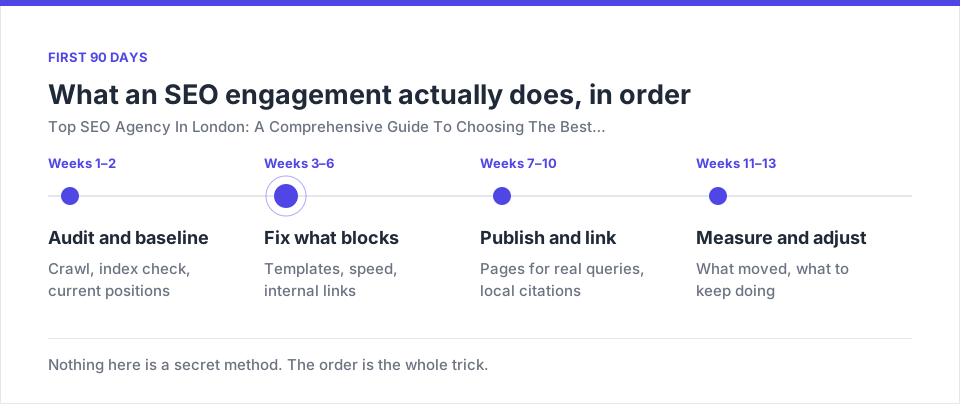
Outline the expected onboarding journey, including discovery, CLTF setup, baseline dashboards, and the first 90 days of momentum. Ask how collaboration channels will be managed, what governance artefacts accompany each milestone, and how feedback loops are integrated into the iteration cycles.
- 90-Day Plan: What milestones are set for the first quarter and how will success be demonstrated?
- Communication Rhythm: What is the cadence for standups, reviews, and regulator-facing updates?
9) Practical References And Next Steps
As you move to shortlist, use the London hub to compare governance artefacts, dashboards, and district-focused templates. Validate alignment with CLTF, WhatIf momentum gates, and regulator-friendly reporting. For foundational guidance, consult Google's SEO Starter Guide and Moz: What Is SEO?, which remain useful anchors during London implementations. You can start a district-focused programme via the London services hub and initiate collaboration through the contact page.
Preparing Your Site For Top Rankings In London
London's search landscape rewards sites that are technically robust, locally relevant, and governed by transparent, auditable processes. This final Part 12 focuses on preparing your site to sustain four-surface momentum across Web Pages, Knowledge Experiences, Maps-like Signals, and Local Packs. By aligning technical readiness with district-focused content and governance artefacts, you create a scalable foundation that supports durable growth for the capital’s diverse audiences. All guidance integrates with the four-surface framework championed by londonseo.ai and anchors activity in clear, regulator-friendly reporting and iterative, data-driven improvement.
1) Technical Health Foundations
The bedrock of top rankings is fast, reliable, and accessible. Start with core Web Vitals, mobile friendliness, and secure delivery to support every London district. Regular audits should cover crawlability, indexability, and healthy site architecture that scales as you add suburb pages and district assets.
- Performance And Core Web Vitals: Prioritise CLS, LCP, and FID improvements, with district pages treated as individual performance units.
- Crawlability and Indexing: Ensure clean robots.txt, up-to-date sitemap, and sensible canonical hygiene to prevent duplicate content across districts.
- Structured Data Maturity: Implement LocalBusiness or Service schemas with Area Served by district, plus FAQPage schemas for district FAQs.
- Security And Privacy: Maintain HTTPS, monitor third-party scripts, and align data collection with UK privacy norms for reporting dashboards.
2) Localisation And District Alignment
District-focused localisation should be baked into page structure from Day One. Each district landing page should feature a unique H1 that pairs the district with core services, supplemented by district-specific FAQs, local case studies, and conversion-focused CTAs. Ensure NAP consistency across core directories and surface area served signals that reflect London geography and buyer journeys.
- District Page Architecture: Individual pages for City Centre, Westminster, Canary Wharf, Shoreditch, and other hubs, each with dedicated content blocks and internal links to Knowledge Experiences.
- Area Served And Proximity Signals: Surface district clusters in schema and GBP-like signals to reinforce local intent.
- Internal Linking Strategy: Cross-link district pages with relevant Knowledge Experiences to create a cohesive city-wide network.
3) Content Readiness For London Audiences
Knowledge Experiences, FAQs, how-tos, and neighbourhood guides should reflect London-specific needs, transport patterns, events, and regulations. Build a district content calendar that aligns with landing pages and GBP signals, ensuring each asset supports four-surface momentum. Regular refresh cycles keep content accurate and relevant to city events and policy updates.
- District FAQs And How-Tos: Create district-tailored assets addressing transport, parking, local services, and district regulations.
- Cross-Surface Content Linking: Link district pages to Knowledge Experiences and GBP assets to reinforce proximity and topical authority.
- Schema-Enriched Content: Use FAQPage, BreadcrumbList, and LocalBusiness schemas to help AI and search engines understand local structure.
4) Governance And What To Attach
Governance artefacts are not overhead; they are essential for auditable momentum. Attach TL notes to explain local rationale, LF depth to capture neighbourhood texture, and CDS trails to map signal lineage from seed terms to surface activations. WhatIf Momentum gates should be part of every publishing decision to ensure local relevance and cross-surface balance before content goes live. Dashboards should present per-district momentum alongside a city-wide view, with regulator-friendly reporting as a built-in discipline.
- TL Notes: Document the local rationale for content and technical decisions.
- LF Depth: Capture neighbourhood texture and district nuance in asset metadata.
- CDS Trails: Map signal lineage from seed terms to four-surface activations.
- WhatIf Gates: Preflight checks that protect relevance and balance before publishing.
5) Onboarding And Implementation Cadence
Onboarding should establish a district-first governance spine from Day One. Begin with a CLTF (Canonical Local Topic Footprint) that links district landing pages, Knowledge Experiences, GBP signals, and local proxies. Provide templates for TL notes, LF depth, and CDS trails so teams can consistently attach governance artefacts to major assets. Use the London hub as the central repository for onboarding resources, dashboards, and governance artefacts, and start collaboration via the London services hub.
- 90-Day Onboarding Plan: Establish district footprints, set up dashboards with district filters, and attach artefacts to key assets.
- Early Quick Wins: Align GBP assets with district pages and publish starter Knowledge Experiences for City Centre and Westminster.
- Regular Governance Cadence: Weekly standups, monthly momentum reviews, and quarterly regulator-facing audits.
Takeaways And Next Steps
- Technical readiness underpins four-surface momentum; address performance, crawlability, and structured data upfront.
- Localisation and district alignment create the foundation for sustainable rankings in London’s diverse markets.
- Governance artefacts, WhatIf Momentum gates, and regulator-friendly dashboards ensure auditable momentum as districts scale.
- Begin onboarding via the London services hub and initiate collaboration through the contact page to tailor a district-first programme.
For foundational guidance, consult Google's SEO Starter Guide and Moz: What Is SEO?. Internal references and governance artefacts are hosted in the London hub at londonseo.ai/services and ongoing collaboration can be started via londonseo.ai/contact.
