Google Penalties And The Value Of A London-Based Penalty Removal Agency
Google penalties can strike with little warning, draining organic visibility, traffic, and revenue in a matter of days. For London retailers and brands targeting tight geographic relevance, the impact is amplified by district-specific search behaviours, Maps visibility, and proximity signals. A London-based penalty removal agency, such as londonseo.ai, brings depth of local market understanding, governance-driven processes, and auditable artefacts that protect seed language while enabling scalable recovery across hub, district, and suburb surfaces. In this opening chapter, you’ll learn what penalties are, how they differ, and why a local, governance-forward partner accelerates restoration and long-term resilience.
What A Google Penalty Means For Your London Store
A Google penalty is a sanction that reduces or removes a site’s ability to appear in search results. Penalties come in two broad forms: manual actions, where a human reviewer at Google explicitly penalises a site, and algorithmic penalties, where an update to Google’s algorithm downgrades rankings based on quality signals. In practice, a penalty translates into a drop in rankings for targeted keywords, a fall in organic traffic, and often a chilling effect on revenue. For a London brand, the penalty can disrupt district-led discovery, GBP (Google Business Profile) interactions, and Maps-driven traffic that local shoppers rely on. Recovery requires both root-cause analysis and a governance-driven plan that keeps seed identity intact across multiple district surfaces.
Manual Actions Versus Algorithmic Penalties
Manual actions arise from alignment issues flagged by Google’s human quality team. They often involve spam signals, manipulative links, thin content, or policy violations. Recovery hinges on correcting the exact issues and submitting a reconsideration request with clear, evidence-backed changes. Algorithmic penalties occur after updates and may reflect broader shifts in ranking criteria, such as content quality, user intent alignment, or link quality. In London’s highly localised search landscape, algorithmic penalties can disproportionately affect district pages, local landing pages, and GBP signals if local intent signals diverge from seed terms.
Why A London Penalty Removal Agency Matters
London presents a distinctive blend of dense districts, varied consumer segments, and an intricate regulatory environment. A penalty removal agency in London can translate local district intelligence into practical, auditable restorations across surface groups. Governance-forward firms use artefacts to track provenance, terms, and per-surface rendering rules, ensuring seed identity remains consistent as activations scale from hub to district to suburb. This disciplined approach reduces risk during recovery and makes ongoing optimisation more predictable for stakeholders in London’s marketing leadership.
Getting Started With A London-Based Penalty Removal Partner
Choosing a penalty removal partner in London should hinge on transparency, governance, and a track record of district-aware recoveries. London-based specialists routinely combine technical audits, content optimisation, and strategic GBP management with a clear artefact set that documents rationale and rendering rules. To explore practical options, visit the SEO services page, or arrange a consultation via our contact page to discuss a district-aware activation plan for your business.
What Readers Will Learn In The Next Parts
Part 2 will delve into the typical scope of penalty removal engagements in London, including keyword governance, technical audits, and district-specific activation. Later sections will cover local activation frameworks, GBP hygiene, district clusters, and auditable ROI—each framed by DoBel artefacts that preserve seed identity while enabling scalable, district-aware growth across Maps, GBP, Knowledge Panels, and on-site experiences.
References And Further Reading
What Is A Google Penalty? Manual Vs Algorithmic
Google penalties can strike suddenly, dramatically reducing a site’s organic visibility, traffic, and revenue. There are two principal categories to understand: manual actions, where a human reviewer flags issues, and algorithmic penalties, where Google’s automated systems downgrade rankings after updates. For London retailers and brands, differentiating these types is crucial because each requires distinct recovery strategies and governance practices. A penalty removal agency in London, such as londonseo.ai, can guide restoration with DoBel artefacts that preserve seed identity while enabling district-aware recovery across Maps, GBP, and on‑site experiences.
Manual Actions And Their Impact
Manual actions arise from issues identified by Google’s quality team. Common causes include manipulative or spammy links, thin or duplicate content, cloaking, keyword stuffing, or policy violations. A manual action is communicated through Google Search Console, often accompanied by guidance on the exact problem and the required remediation. For London businesses, a manual action can especially disrupt district‑level pages, GBP signals, and local search visibility if the issue spans multiple district surfaces. Recovery hinges on addressing the underlying violations, providing a clear plan of fixes, and submitting a well‑evidenced reconsideration request that demonstrates compliance and seed language integrity.
- Identification and scope: determine which pages, districts, or GBP profiles are affected.
- Remediation plan: correct content quality, disavow harmful links where appropriate, and fix policy breaches with tangible changes.
- Reconsideration submission: present a concise, evidence‑backed petition showing remediation work and governance steps to prevent recurrence.
Algorithmic Penalties And Core Updates
Algorithmic penalties occur after updates to Google’s ranking systems. They reflect shifts in quality signals, user intent alignment, or link quality. Unlike manual actions, there is no direct notification from Google signifying the exact pages to fix; instead, rankings recover as the overall signals improve and the algorithm re-evaluates pages. In London’s highly localised environment, algorithmic penalties can affect district pages, local landing pages, and GBP signals if the content or signals fail to meet new criteria. Recovery typically requires a comprehensive content and UX improvement, removal of low‑quality links, better technical health, and a re‑alignment of signals with user intent.
Practical recovery steps include refining content to better serve target audiences, improving page experience (speed, mobile usability, and accessibility), auditing and disavowing harmful links, and ensuring local signals (such as GBP and district pages) remain aligned with seed terms. It’s essential to document changes and maintain an auditable trail so leadership can observe progress and regulators can review governance decisions.
Why The Distinction Matters In London
London’s search landscape combines intense district competition with tight geographic relevance. Manual actions typically disrupt specific pages or GBP profiles tied to a policy breach, while algorithmic penalties can ripple across district clusters if signals diverge from expected intent. A London‑based penalty removal partner brings local intelligence about district behaviours, transport corridors, and consumer journeys, ensuring recovery work addresses both the technical and local relevance required to restore visibility quickly and sustainably.
How A London Penalty Removal Agency Accelerates Recovery
A governance‑forward agency leverages auditable artefacts to manage the recovery lifecycle. DoBel artefacts—Translation Provenance notes, Anchor Glossary Ontology Bindings (AGO Bindings), and Per‑Surface Rendering Contracts (PSRCs)—provide provenance, language stability, and surface‑level rendering rules that protect seed identity as you scale across hub, district, and suburb surfaces. This discipline accelerates remediation, improves communication with stakeholders, and supports regulator‑friendly reporting while keeping local relevance intact.
Key steps typically include an initial diagnostic, a district‑level remediation plan, a clear reconsideration ticket if a manual action is involved, and ongoing governance to prevent recurrence. The London partner’s insights help prioritise actions by surface impact, ensuring the fastest possible return of Maps visibility, GBP engagement, and on‑site conversions.
Next Steps: Engaging A London Penalty Removal Partner
If you’re facing a penalty or want to reduce risk from algorithmic shifts, begin with a consultation to define your district footprint, governance expectations, and activation priorities. londonseo.ai offers district‑aware playbooks, governance templates, and regulator‑ready dashboards to help you recover quickly and scale sustainably. Visit the SEO services page or book a consultation to tailor a district‑aware, outcomes‑driven plan for London markets.
References And Further Reading
Common Triggers: What Usually Causes Penalties
Penalties can arise from a range of signals, and understanding these triggers is essential for both recovery and prevention. In London, where district-level surfaces and GBP ecosystems amplify signals, a penalty can ripple across hub, district and suburb pages. londonseo.ai, a penalty removal agency in London, uses DoBel artefacts to identify triggers quickly, preserve seed identity, and guide district-aware fixes.
Link-Related Triggers
Low-quality or spammy links, sudden changes in backlink velocity, and links from suspicious sources are among the most common triggers. In London, district pages often share seed language, so outward links must be carefully governed to prevent drift across hub/district surfaces. A robust penalty recovery plan begins with a high‑fidelity backlink audit, removal or disavow of harmful links, and a policy of gradual link acquisition aligned to district activation calendars.
Content Quality And Relevance Triggers
Thin content, duplicate content, scraped material, or content produced with poor editorial oversight can trigger penalties. In London’s diverse districts, pages that fail to address local intent or that reuse boilerplate copy across districts are especially risky. Effective remediation entails expanding content depth, elevating authoritativeness with expert input, updating information to reflect current promotions or local events, and strengthening corresponding structured data so local signals align with user expectations.
Technical And UX Signals
Technical issues such as slow page speed, poor mobile UX, broken schema, or misconfigured canonical tags can provoke algorithmic penalties or manual actions if left unresolved. For London campaigns, where district surfaces multiply the potential data points, maintaining a fast, mobile-friendly experience and clean structured data across every district surface is essential. Regular site health audits, speed optimisations, and per-surface schema governance help prevent penalties and foster resilience against updates.
Policy Violations And Compliance Risks
Clandestine redirects, cloaking, or manipulative tactics trigger penalties; in the UK, privacy compliance (GDPR) and accessibility (WCAG) play a significant role in perceived trust. Remedy involves auditing and removing deceptive techniques, updating privacy notices, and ensuring accessibility. DoBel artefacts document policy adherence, providing an auditable trail across hub, district, and suburb surfaces while preserving seed terms.
Recovery Pathways And What A London Penalty Removal Agency Brings
Recovery means root-cause analysis, remediation, and if needed, a reconsideration request. Distinguishing manual actions from algorithmic penalties is critical; manual actions require explicit remediation and a reconsideration submission, while algorithmic penalties need signals to be improved across pages, UX, and local signals. londonseo.ai approaches recovery with a DoBel artefact framework that documents provenance, locks seed terms with AGO Bindings, and codifies per-surface rendering with PSRCs. This ensures ongoing governance as you restore rankings while preventing recurrence across the district footprint.
References And Further Reading
Internal references: SEO services | book a consultation.
Why Hire A Penalty Removal Agency In London
London retailers face a distinctive blend of dense district clustering, local search behaviours, and Maps-driven discovery. When a Google penalty hits, the impact is magnified by district-level surfaces, GBP hygiene considerations, and proximity signals that shoppers rely on daily. A penalty removal agency in London, such as londonseo.ai, brings a locally grounded perspective, governance-led processes, and auditable artefacts that protect seed language while enabling rapid, district-aware recovery. This part explains what makes a London specialist uniquely positioned to accelerate recovery and to build longer-term resilience across hub, district, and suburb surfaces.
Local Knowledge That Accelerates Recovery
Penalties rarely travel in isolation. The knock-on effects can unfold across district landing pages, GBP profiles, and Maps cards. A London penalty removal agency understands how boroughs relate to one another, how transit corridors influence local intent, and how shopper journeys vary from the City Centre to outer suburbs. This local intelligence enables targeted, per-surface remediation that preserves seed language while aligning with district-specific user expectations. In practice, this means prioritising fixes on pages most closely tied to revenue in a given district and coordinating those fixes with GBP updates to stabilise local signals during recovery.
Beyond technical fixes, London specialists translate district insights into actionable governance artefacts that document decisions, rendering rules, and surface ownership. This governance clarity reduces friction with stakeholders, accelerates get-well decisions, and supports regulator-ready reporting as you scale across boroughs.
Artefacts That Safeguard Seed Identity During Recovery
The DoBel artefact framework underpins auditable, district-aware recovery. It consists of Translation Provenance notes, Anchor Glossary Ontology Bindings (AGO Bindings), and Per-Surface Rendering Contracts (PSRCs). Together, these artefacts preserve seed identity as you scale across hub, district, and suburb surfaces, while enabling district refinements that reflect local demand and seasonal activity.
Translation Provenance Notes
These notes capture the locale rationale behind adaptations, ensuring stakeholders understand why certain phrases or terms are adjusted for a district. This fosters transparency and alignment with local branding while maintaining core seed concepts.
AGO Bindings
AGO Bindings lock essential terms so brand semantics stay recognisable across languages and districts. This prevents drift when content is localised for multiple markets, safeguarding consistency without stifling relevance.
Per‑Surface Rendering Contracts (PSRCs)
PSRCs codify exact rendering rules for hub, district, and suburb surfaces, describing how titles, metadata, and media should appear on each surface. This precision supports regulator-friendly audit trails and ensures parity as activations scale.
District Activation Readiness And GBP Hygiene
Recovery readiness starts with a disciplined approach to GBP hygiene and district activation alignment. A London-specific strategy ensures every district profile has complete NAP, accurate hours, and category assignments that reflect local realities. Regular GBP posts tied to district events or promotions strengthen local relevance, while per‑surface activation roadmaps ensure district content aligns with seed concepts. This approach protects signal integrity, supports rapid decision-making, and improves the ability to demonstrate proximity-to-revenue impact to stakeholders.
In practice, governance-forward agencies maintain a central dashboard that tracks GBP health alongside district activations, enabling quick identification of drift and timely remediation. The outcome is a stable baseline for recovery with a clear path to scale across additional districts without compromising seed language or brand identity.
What A London Penalty Removal Agency Brings In Practice
The practical value lies in transparency, governance cadence, and district intelligence. London specialists deliver auditable dashboards, district activation playbooks, and regulator-ready reporting that can be integrated with your existing governance framework. This combination accelerates repair, reduces risk of recurrence, and provides a scalable blueprint for future district expansions. To explore practical options, visit the SEO services page or book a consultation to tailor a district-aware plan for London markets.
Effective partnerships in London translate local insights into reliable, revenue-focused outcomes. The right agency not only fixes penalties quickly but also builds a governance-ready foundation that supports ongoing, district-aware optimisation across Maps, GBP, Knowledge Panels, and on-site experiences.
Next Steps: Planning Your London Penalty Recovery
If you’re facing a penalty or want to mitigate future risk, begin with a district-aware recovery plan. londonseo.ai offers governance templates, artefact packages, and regulator-ready dashboards to accelerate recovery and sustain growth. Start by exploring the SEO services page or book a consultation to design a district-focused plan for London markets. A measured, auditable approach helps ensure seed language remains intact while local signals are optimised for rapid, durable recovery.
References And Further Reading
Link Cleanup, Disavowal, And Content Corrections
After a Google penalty, external signals and on-page quality must be repaired in tandem. For London campaigns, backlink integrity and district-specific content relevance are not optional; they directly influence how signals travel from hub pages through district and suburb surfaces. londonseo.ai leverages its DoBel artefact framework to document every remediation decision, lock seed language, and deliver district-aware cleanup that can scale without eroding brand identity.
Identifying Harmful Links And Content Issues
A robust cleanup begins with a precise inventory of backlinks and page quality. In London’s multi-surface environment, poor signals can propagate across district pages, GBP profiles, and Maps cards if not addressed cohesively. The following steps help establish a clear baseline and prioritise work:
- Run a comprehensive backlink audit to identify spammy domains, low-authority sites, and links that lack local relevance to your London footprint.
- Monitor backlink velocity for sudden spikes that could indicate manipulative link development or negative SEO activity.
- Assess content depth, uniqueness, and alignment with district intents to uncover thin, duplicate, or boilerplate pages across hub, district, and suburb surfaces.
- Check for cloaking, doorway pages, or hidden text that violate Google guidelines and threaten seed language integrity.
Disavowal Or Removal: Strategy And Execution
When harmful links are identified, decide whether original links can be removed or if disavowal is the safer, scalable path. The London approach emphasises governance and auditable decisions, ensuring seed semantics stay intact while you neutralise risks that could trigger re-penalisation.
- Prioritise high-risk links first, focusing on those closest to seed terms or that directly impact district landing pages.
- Prepare a clean, well-structured disavow file that targets the offending domains and links, avoiding blanket disavows that could harm overall authority.
- Submit the disavow file through Google Search Console and document the rationale within DoBel artefacts for regulator-friendly review.
- Continue to monitor rankings and traffic, re-auditing backlinks at regular intervals to ensure new patterns do not emerge.
Content Corrections: Thin, Duplicate, And Local Relevance
Content quality is a frequent culprit in penalties, and in London, local relevance compounds its impact. Address thin or duplicate content by expanding coverage with district-specific context, promotions, and real-world local signals. Enhance depth while preserving the core seed terms that anchor brand authority across all district surfaces.
- Enrich district pages with local case studies, event details, and authentic expert input to boost perceived authority.
- Consolidate duplicate or boilerplate pages into district-specific assets that reflect local intent and consumer behaviour.
- Refresh metadata and headings to align with district topics without drifting from seed language.
- Improve structured data where appropriate to reinforce local relevance for Maps, Knowledge Panels, and SERP features.
Internal Linking And Anchor Text Management
A disciplined internal linking strategy helps distribute authority and guides users through hub, district, and suburb surfaces without compromising seed identity. Anchor text should reflect local relevance while preserving core branding. DoBel artefacts provide governance rules that prevent drift as new districts come online, ensuring a consistent user journey across surfaces.
- Audit hub-to-district and district-to-product links to identify opportunities for more contextually relevant anchors.
- Balance seed term usage with district-specific variants to avoid over-optimisation and maintain natural readability.
- Anchor text distributions should align with per-surface PSRCs to ensure rendering parity across hub, district, and suburb pages.
- Leverage breadcrumb structures that clearly reflect hub > district > suburb journeys to aid navigation and indexing.
Core governance practices ensure that cleanup efforts translate into durable improvements. Keep DoBel artefacts updated with rationale, per-surface rendering rules, and district ownership so leadership can audit progress and regulators can review decisions. For ongoing support, explore our SEO services or book a consultation to tailor a district-aware remediation plan for London markets.
Next Steps: Looking Ahead To The End-To-End Recovery (Part 6)
Part 6 will walk through the end-to-end penalty recovery process, from diagnostics and remediation to reconsideration and post-recovery monitoring. Until then, use the London-specific practices outlined here to stabilise signals, protect seed language, and prepare for sustained, district-aware growth across Maps, GBP, Knowledge Panels, and on-site experiences.
The Penalty Recovery Process: End-To-End
In London’s crowded, district-driven search landscape, a Google penalty recovery must be treated as an end-to-end lifecycle. This part outlines the comprehensive process—from initial diagnostics to post-recovery governance—using the DoBel artefact framework to preserve seed identity while enabling district-aware restoration across Maps, Google Business Profile (GBP), Knowledge Panels, and on-site experiences. A London penalty removal agency like londonseo.ai brings local intelligence, auditability, and governance cadence to every stage, ensuring rapid yet sustainable recovery.
Step 1: Diagnostic And Classification
The recovery journey begins with precise diagnostic work. Identify whether the penalty is manual or algorithmic, understand the affected district surfaces, and establish the scope of impact across hub, district, and suburb pages. Retrieve Google Search Console notifications and GBP signals to determine how proximity and district relevance were compromised. Document seed terms and rendering rules to ensure seed identity remains intact as you progress through fixes.
- Type identification: confirm whether the action is manual (a human review) or algorithmic (a ranking update) and map the affected surfaces.
- Scope mapping: determine which districts, hubs, and GBP profiles are involved and prioritise those with the highest revenue potential.
- Baseline Provenance: capture current terms, surface responsibilities, and per-surface rendering expectations using DoBel artefacts.
Step 2: Remediation Plan And Content Corrections
With the diagnosis in hand, craft a remediation plan that targets the root causes while protecting seed language. Address technical health, content quality, and link integrity in parallel. In London’s multi-surface environment, district pages must be corrected in a cohesive, district-aware way to prevent cross-surface drift. DoBel artefacts guide the remediation by documenting rationale, linking fixes to seed terms, and establishing per-surface rendering rules that stay stable as you scale across hub, district, and suburb surfaces.
- Backlink hygiene: audit, remove, or disavow harmful links that threaten district surfaces or seed terms.
- Content depth and relevance: expand local content, integrate district-specific promotions, and ensure alignment with local user intent.
- Structured data hygiene: repair schema errors and extend LocalBusiness data to reflect district nuances without weakening seed terms.
Step 3: Reconsideration And Appeals
If a manual action is implicated, or if Google guidance accompanies a remediation request, prepare a concise reconsideration ticket. The ticket should clearly document the issues fixed, the steps taken to prevent recurrence, and evidence from artefacts showing provenance, language stability, and per-surface rendering. In London’s district-heavy environment, regulator-ready artefacts reassure stakeholders and simplify subsequent reviews by Google.
- Remediation evidence: attach before/after comparisons, content updates, and links disavowed, with DoBel provenance notes for each item.
- Governance record: provide a surface ownership matrix and rendering rules to demonstrate consistent application across surfaces.
- Submission strategy: craft a clear, factual petition that aligns with Google’s guidance and your governance cadence.
Step 4: GBP Hygiene And District Page Stabilisation
GBP hygiene is central to stable local visibility. Ensure complete and consistent NAP, accurate hours, and category assignments across all district GBP profiles. Update district landing pages to reflect local intents, while synchronising GBP activity with on-site content to maintain surface parity. DoBel artefacts guide the governance of per-surface updates, preserving seed terms as you roll out district refinements across hub, district, and suburb surfaces.
- NAP and category governance: harmonise across all districts to avoid confusing signals.
- GBP post cadence: implement district-focused posts that reinforce local promotions and events.
- Per-surface alignment: ensure every update adheres to PSRCs and AGO Bindings to prevent drift.
Step 5: Post-Recovery Monitoring And Prevention
Recovery is not a one-off event; it requires continuous monitoring and prevention. Set up district-aware dashboards that show proximity visibility, GBP engagement, and on-site conversions by hub, district, and suburb. Use Holdout tests and attribution modelling to prove incremental lift from district activations. DoBel artefacts provide a transparent, auditable trail that leadership can review to confirm governance adherence and the absence of seed language drift as you scale.
- Regular audits: schedule artefact reviews to validate provenance, AGO Bindings stability, and PSRC conformance.
- Drift alerts: implement automated checks that flag seed term drift or rendering inconsistencies across surfaces.
- ROI verification: use holdout tests and real-world revenue signals to confirm district contributions to overall performance.
Next Steps: Planning Your London Penalty Recovery
If you’re facing a penalty or want to mitigate future risk, start with a district-aware recovery plan. londonseo.ai offers governance templates, artefact packages, and regulator-ready dashboards to accelerate recovery and sustain growth. Visit the SEO services page or book a consultation to design a district-aware, outcomes-driven plan for London markets.
References And Further Reading
District Activation And ROI Optimisation In London Ecommerce SEO (Part 7)
London’s district-driven ecommerce landscape demands a disciplined, auditable approach to activation that links district signals directly to revenue. Part 7 unfolds a governance-forward framework for district ROI, detailing KPI taxonomy, district playbooks, and the artefact set that proves ROI while protecting seed language across hub, district, and suburb surfaces. With londonseo.ai as the partner, retailers gain district intelligence, transparent governance, and regulator-ready reporting that scales with confidence across the capital.
Mapping District Signals To Revenue: KPI Taxonomy And Dashboards
In London, the path from proximity signals to revenue requires a metrics framework that mirrors the city’s district mosaic. DoBel artefacts ensure provenance and stable terminology so dashboards remain coherent as surfaces expand from hub to district to suburb. The KPI taxonomy should illuminate how district activation translates into real-world outcomes, not just vanity metrics.
- Proximity visibility: district Maps impressions, directions requests, and nearby search interest, segmented by district to reveal local reach.
- GBP interactions: profile views, calls, routes, and route requests tracked per district to gauge local engagement momentum.
- On-site conversions: goals and form submissions attributed to district surfaces, including product inquiries and checkout initiation.
- User engagement signals: time on district pages, scroll depth, and repeat visits indicating content resonance across surfaces.
District Activation Playbooks: Roadmaps, Sprints, And Content Calendars
District activation in London benefits from codified playbooks that align with quarterly sprints and local event calendars. DoBel artefacts tie seed concepts to per-surface rendering rules, ensuring district refinements enhance relevance without diluting seed language. Activation roadmaps should specify priority districts, content briefs, and technical tasks that move in lockstep with GBP hygiene and local surface upgrades.
- District clustering and prioritisation: identify districts with the strongest proximity signals and revenue potential.
- Content calendar alignment: coordinate district pages with PSRCs to ensure titles, metadata, and structured data reflect local context while preserving seed terms.
- Governance gates for publishing: establish gating checks that protect surface parity before going live.
- Dashboards and artefact governance: ensure artefacts feed dashboards accurately across hub, district, and suburb surfaces.
DoBel Artefacts In Practice: Proving ROI And Auditability
The DoBel artefact framework underpins auditable, district-aware activation. Translation Provenance notes explain locale rationale behind adaptations; Anchor Glossary Ontology Bindings (AGO Bindings) lock seed terms so brand semantics remain recognisable across languages and surfaces; Per-Surface Rendering Contracts (PSRCs) codify rendering rules for hub, district, and suburb pages. Together, they enable regulator-friendly dashboards that demonstrate proximity-to-revenue impact while preserving seed identity as you scale across districts.
- Translation Provenance notes: capture why terms are adjusted for each district, maintaining transparency and consistency.
- AGO Bindings: lock core terms across languages to prevent semantic drift during localisation.
- Per-Surface Rendering Contracts (PSRCs): define exact rendering rules for titles, metadata, and media on each surface to ensure parity.
Measurement Framework For London ROI: Dashboards And Regulator-Ready Reporting
London campaigns require dashboards that slice data by hub, district, and suburb while aggregating Maps impressions, GBP interactions, and on-site conversions. DoBel artefacts provide provenance, stable terminology, and per-surface rendering rules to support regulator-friendly reporting. District-level dashboards reveal how proximity translates into revenue, guiding investment and activation sequencing across boroughs.
- Surface-specific metrics: track district visibility, engagement, and conversions to identify proximity dividends.
- Attribution and ROI: implement multi-touch models and holdout tests to estimate incremental lift from district activations.
- Governance cadence: quarterly artefact audits and monthly surface parity checks keep terms, rendering rules, and dashboards aligned as districts grow.
Next Steps: Actionable Pathway For London Campaign Teams
To translate these practices into action, begin with a governance-driven discovery focused on district footprint, data sources, and reporting cadence. londonseo.ai offers district activation playbooks, governance templates, and regulator-ready dashboards that you can tailor to your footprint. For practical guidance, visit the SEO services page or book a consultation to tailor a district-aware, outcomes-driven measurement plan for London markets.
Internal references: SEO services | book a consultation.
References And Further Reading
Internal references: SEO services | book a consultation.
Internal Linking And Site Architecture For London Ecommerce SEO (Part 8)
Seeded hub, district, and suburb structures underpin London ecommerce activation. A disciplined approach to internal linking keeps seed language stable across surfaces while enabling per-surface refinements that reflect local intent. DoBel artefacts — Translation Provenance notes, Anchor Glossary Ontology Bindings (AGO Bindings) and Per-Surface Rendering Contracts (PSRCs) — guard language integrity as you scale from hub to district to suburb surfaces. This part explains how taxonomy, crawlability, and per-surface rendering come together to support a healthy, audit-friendly London store architecture.
Strategic Taxonomy For London Surfaces
Plan a three‑tier model that mirrors London geography and shopping journeys: hub (city-wide entry), district (borough or district level), and suburb (neighbourhood level where relevant). DoBel artefacts ensure seed terms remain stable as you localise content, while AGO Bindings lock core terminology across surfaces. Activation roadmaps align the district refinements with seed concepts, ensuring a coherent customer journey from the centre to the suburbs.
- Hub pages anchor the city narrative and link to district pages that carry local signals and product or service signals.
- District pages carry district‑specific signals, events, promotions, and GBP considerations that reflect local intent.
- Suburb pages provide granular, per‑surface targeting while preserving seed language through AGO Bindings and PSRCs.
Crawlability And Indexation Implications
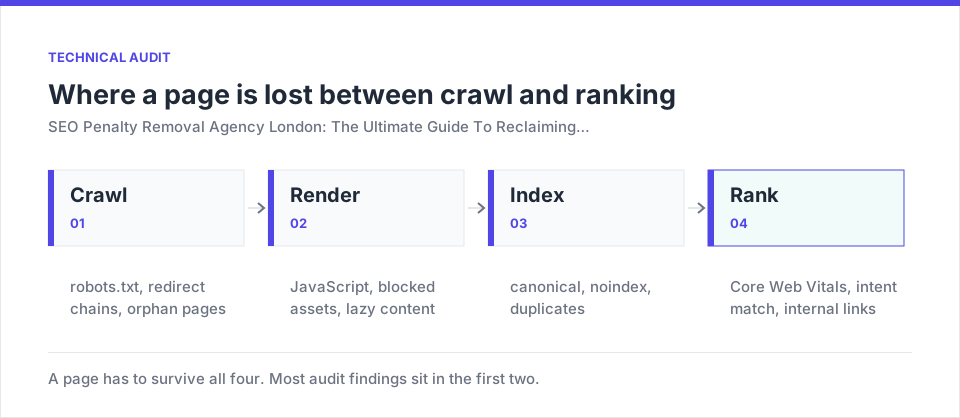
Internal linking patterns influence crawl budgets and indexation efficiency across hub, district, and suburb surfaces. Maintain a surface‑aware sitemap that reflects the taxonomy, and apply canonical and hreflang strategies where appropriate to prevent content cannibalisation and misdirection. Regular log file analysis helps identify blocked resources or slow surfaces that hinder discovery in district assets.
- Use a sitemap that mirrors hub – district – suburb hierarchy, with face priorities for district pages closest to revenue.
- Apply canonicalisation carefully to prevent duplicate content across similar district pages within the same surface group.
- For UK localisation, use hreflang and region-specific signals where multiple language/dialect variants exist, ensuring seed terms remain stable.
- Monitor crawl health and fix 4xx/5xx errors on district assets promptly to protect indexation momentum.
Internal Linking Principles For London Stores
- Hub-to-district focus: primary navigation should guide users from the city hub to district landing pages through logical, locally relevant pathways.
- District-to-product signal: district pages must clearly link to category and product pages that reflect local intent (for example, Canary Wharf district product collections or Clerkenwell service pages).
- Topical authority preservation: preserve seed terms in anchor text across surfaces to maintain brand coherence while enabling district refinements.
- Breadcrumbs and navigational clarity: breadcrumbs should reflect hub > district > suburb journeys to aid both users and search engines.
Structured Data On District Surfaces
Per-surface structured data enhances local relevance. Apply LocalBusiness and Place schemas with district level nuances, while keeping seed terms stable. District-specific attributes such as service areas, district FAQs, events, and promotions can improve rich results and Maps visibility when aligned with DoBel PSRCs.
- District LocalBusiness schemas with accurate service areas.
- District-specific FAQ schemas to answer common local questions.
- District event and offer schemas tied to local promotions.
Practical Activation Examples In London
Picture a London hub that links to Canary Wharf District and Clerkenwell District. Each district page should showcase product and service blocks that align with local intent, using district-specific anchor text such as "ecommerce SEO Canary Wharf" or "shopify optimisation Clerkenwell". The internal links should be contextually embedded within the content, navigation menus, and the footer to support discovery while preserving seed language.
Measurement And Governance Of Internal Linking
Establish governance cadences and auditable dashboards that monitor seed integrity across hub, district and suburb surfaces. DoBel artefacts provide Translation Provenance, AGO Bindings, and PSRCs that underwrite provable ROI while preventing seed drift as you scale. Regular artefact audits and surface parity checks keep terms and rendering aligned with district activation roadmaps.
- Surface-specific metrics: track hub, district and suburb visibility, engagement, and conversions to quantify proximity impact.
- Cross-surface attribution: allocate credit to district activations within city-wide ROI models to demonstrate local value.
- Governance cadence: implement weekly surface health checks, monthly artefact reviews, and quarterly ROI syntheses to sustain discipline as London grows.
Next Steps: What Comes After This Part
Part 9 will present Case Studies From A Top London SEO Expert, highlighting real-world ROI from district-aware activation, governance artefacts, and robust internal linking. Meanwhile, explore the London-focused SEO services page to unlock activation playbooks and governance templates, or book a consultation via the contact page to tailor a district-aware plan for London markets.
Internal references: SEO services | book a consultation.
References And Further Reading
Internal references: SEO services | book a consultation.
Case Studies From A Top London SEO Expert: Real World ROI (Part 9)
In this focused collection, we present real-world outcomes from district-aware activations managed by a London-based SEO expert. These case studies demonstrate how governance-driven strategies and the DoBel artefact framework translate proximity signals into tangible revenue across Maps, GBP, Knowledge Panels, and on-site experiences. The examples below illustrate measurable ROI, district-level impact, and the disciplined processes that a dedicated seo penalty removal agency london like londonseo.ai brings to light when recovering from penalties and sustaining growth across the capital.
Case Study 1: Central London District Activation
This case study examines a central London district activation designed to tighten district landing pages, GBP hygiene, and Maps discoverability. The programme leveraged translation provenance notes, AGO Bindings to lock seed terms, and PSRCs to govern per-surface rendering as activations expanded from hub to district surfaces.
- Results: 28% rise in district page sessions within three months, signalling improved local discovery and engagement.
- ROI signal: 12% incremental revenue lift attributed to district activations, with proximity-driven conversions topping expectations.
- Operational takeaway: governance parity across hub and district surfaces enabled rapid replication to adjacent districts without seed language drift.
The approach demonstrates how a penalty removal agency london can structure district activations so that each surface maintains seed identity while delivering local relevance. For teams evaluating next steps, explore the SEO services page to understand how governance templates integrate with district roadmaps or book a consultation to tailor a district-aware plan for London markets.
Case Study 2: GBP Hygiene And Borough Cluster Cohesion
This case focuses on a borough cluster where GBP hygiene, district landing pages, and local event signals were aligned to maximise local intent. The project retained seed language integrity using DoBel artefacts while allowing district refinements to reflect real-world district demand. Per-surface governance ensured consistent rendering across hub, district, and suburb pages as each surface expanded.
- Results: 33% uplift in GBP profile interactions within the borough cluster, with a notable increase in district-led directions and calls.
- Governance impact: artefact-audited updates confirmed seed term stability and accurate rendering across districts.
- Operational takeaway: quarterly governance reviews caught drift early, enabling scalable rollouts with minimal risk to seed identity.
This case reinforces how a London penalty removal agency london can synchronise GBP hygiene with district activation cadences to stabilise local signals while driving measurable engagement. For further guidance, visit the SEO services page or contact us to discuss district-aware activation roadmaps.
Case Study 3: Structured Data Consolidation And Knowledge Panels
A third case demonstrates the consolidation of LocalBusiness signals and Knowledge Panel visibility across multiple districts. District-specific events, FAQs, and service areas were added to LocalBusiness schemas, with PSRCs ensuring rendering parity across hub, district, and suburb surfaces. The outcome was improved Knowledge Panel appearances and more reliable local intent signals in search results.
- Results: 20% more Knowledge Panel appearances for district services and a 12% increase in organic clicks from district knowledge cards.
- Quality signals: enhanced review responses and district FAQs boosted trust and click-through rates.
- Operational takeaway: per-surface enrichment of structured data scales well when governed by artefacts and rendering contracts.
The consolidation exercise demonstrates how a penalty removal agency london can harmonise data across surfaces, preserving seed identity while enhancing local relevance. To explore similar enhancements, navigate to our SEO services page or book a consultation for a district-aware, regulator-ready plan.
What These Case Studies Teach A London SEO Expert
- District-aware governance unlocks scalable activations without seed language drift.
- Artefacts provide regulator-friendly audit trails, increasing leadership trust and accelerating decision-making.
- Proximity signals must translate into revenue, not vanity metrics, to justify continued investment.
- Consistency across hub, district and suburb surfaces strengthens topical authority and user experience.
- Regular artefact audits mitigate risk during expansion and algorithmic changes.
Next Steps: Applying Learnings To Your London Campaign
To translate these case studies into action, begin with a district-aware activation playbook and governance cadences that match your organisation’s growth plan. londonseo.ai offers district activation playbooks, artefact templates, and regulator-ready dashboards that you can tailor to your footprint. For practical guidance, visit the SEO services page or book a consultation to design a district-aware activation plan for London markets.
Internal references: SEO services | book a consultation.
References And Further Reading
Monitoring, Reporting And Long-Term Prevention For London Penalty Recovery
Once penalties are lifted or stabilised, the focus shifts to sustainable resilience. This part of the London penalty recovery series translates the recovery work into a durable governance cadence, auditable reporting, and preventative measures that shield seed terms as the district footprint grows. London-based businesses require a structured framework where proximity signals, Maps visibility, and GBP hygiene stay aligned with core terms, even as new districts come online. londonseo.ai uses DoBel artefacts to make this sustainability tangible, providing clear traceability from seed concepts to surface activations and long‑term performance improvements.
Ongoing Monitoring Framework For District-Aware London Campaigns
The monitoring framework is designed to be granular yet comprehensible to leadership. It combines per-surface dashboards with company-wide summaries to show how district activations contribute to overall growth. Each district surface—hub, district, and suburb—has its own KPIs, while DoBel artefacts ensure consistency of seed language and governance across surfaces. Core data pillars include Maps proximity signals, GBP health, knowledge panel stability, and on-site conversion metrics tied to district pages.
- Surface-level dashboards: per-surface views that isolate hub, district, and suburb performance while enabling cross-surface comparisons.
- Provenance-backed data: all metrics and changes are tied to Translation Provenance notes, AGO Bindings, and PSRCs to preserve auditability.
- Regular health checks: weekly cadence for surface parity, schema integrity, and accessibility compliance to prevent drift.
Regulator‑Ready Reporting And Stakeholder Transparency
In London, governance and investor reporting demand clarity, not ambiguity. Regulator-ready reporting uses artefact-backed data to demonstrate provenance, seed identity protection, and per-surface rendering parity. Reports should articulate how district activations move from proximity visibility to revenue, with explicit connections to GBP strategies and on-site conversion lift. A transparent reporting cadence reduces friction with senior stakeholders and regulators while facilitating timely decision-making.
- Cadence and formats: define quarterly dashboards for executives, with monthly surface health summaries for operational teams.
- Traceable narratives: include Translation Provenance notes and AGO Bindings in executive briefs to explain locale choices and terminology stability.
- Regulatory alignment: ensure data handling and auditing align with privacy and accessibility guidelines where applicable.
Preventing Recurrence: Governance Cadence And Artefact Maintenance
Prevention rests on disciplined artefact maintenance and predictable governance. DoBel artefacts—Translation Provenance notes, AGO Bindings, and PSRCs—must be reviewed and refreshed on a fixed schedule. This ensures seed terms remain recognisable across new districts and that rendering rules stay stable as the London footprint expands. Regular updates to translation rationale, anchored glossaries, and per-surface rendering contracts avert drift and enable quick scale without compromising brand integrity.
- Artefact lifecycle: assign owners, set review cycles, and publish changes with traceable rationale.
- Drift alerts: implement automated checks that flag linguistic, semantic, or rendering divergences across surfaces.
- Content governance: maintain a central glossary and surface ownership matrix to guide future activations.
Case For ROI Clarity: Proximity To Revenue Metrics
ROI measurement should be anchored in proximity-to-purchase signals, not just traffic. The London model ties district activation lift to revenue through robust attribution and holdout testing. By quantifying how district-level signals convert into GBP-driven engagements and on-site orders, leadership obtains an actionable forecast to inform budgets and activation roadmaps. Artefact-driven dashboards enable precise reporting of incremental lift attributable to local activations across hub, district, and suburb surfaces.
- Attribution strategy: apply a mix of multi-touch models (linear, time-decay, or position-based) that best reflect district journeys.
- Incrementality tests: run controlled experiments to isolate the true lift from proximity signals.
- Forecasting practice: use observed lift to inform quarterly budgeting and long-term scaling plans across districts.
Next Steps: Integrating With Your London SEO Plan
To embed monitoring, reporting, and prevention into your ongoing strategy, schedule a consultation with londonseo.ai. We tailor district-aware governance cadences, artefact packages, and regulator-ready dashboards to your footprint. Start by visiting the SEO services page, or book a consultation to design a district-focused, outcomes-driven plan for London markets. A disciplined, auditable approach today translates into durable, district-wide growth tomorrow.
References And Further Reading
Internal references: SEO services | book a consultation.
Monitoring, Reporting And Long-Term Prevention For London Penalty Recovery
After lifting a Google penalty in a densely local market like London, the work shifts from reactive remediation to proactive governance. A district-aware, artefact-driven approach keeps seed terminology intact, sustains local relevance, and prevents recurrence as the London footprint expands across hub, district, and suburb surfaces. London penalty recovery hinges on transparent measurement, regulator-ready reporting, and a disciplined cadence of artefact maintenance that supports ongoing growth without compromising seed identity. londonseo.ai employs the DoBel framework—Translation Provenance notes, Anchor Glossary Ontology Bindings (AGO Bindings), and Per‑Surface Rendering Contracts (PSRCs)—to make long‑term success auditable and scalable.
Per‑Surface Governance And Dashboards
London campaigns require surface-aware visibility. Dashboards should slice data by hub, district, and suburb while delivering city-wide context. DoBel artefacts feed these dashboards with provenance and stable terminology, enabling consistent interpretation as new districts come online. Practical dashboards track proximity visibility (Maps impressions, directions, and route requests) and GBP engagement (profile views, calls, and directions) alongside on-site conversions, all broken down by surface. This per-surface view supports rapid decision-making and protects seed language during expansion.
Governance cadences govern publishing, updates, and review cycles. A quarterly review should assess artefact integrity, surface parity, and alignment with district activation roadmaps, ensuring leadership can trace every change to its origin in Translation Provenance notes and AGO Bindings.
Artefacts And Auditability
The DoBel artefact suite underpins auditable governance for London surfaces. Each artefact records decisions, reduces risk of seed drift, and simplifies regulator-friendly reporting as districts scale.
Translation Provenance Notes
Translation Provenance notes capture the locale rationale behind adaptations. They explain why district terms differ from seed terms, preserving transparency and ensuring branding remains coherent across languages and surfaces.
AGO Bindings
AGO Bindings lock essential terms so brand semantics stay recognisable across languages. This prevents semantic drift when content is localised for multiple markets while still preserving seed concepts.
Per‑Surface Rendering Contracts (PSRCs)
PSRCs codify rendering rules for hub, district, and suburb surfaces, detailing how titles, metadata, and media should appear on each surface. This precision supports parity, auditability, and regulatory traceability as activations scale.
Publish Gates, Validation And Compliance
Publish gates are governance checkpoints that ensure seed alignment, locale integrity, and per‑surface rendering conformance before content goes live. Gate criteria typically include: seed concept adherence, provenance justification, AGO Bindings stability, and PSRC conformance. A regulator‑friendly publish record links surface ownership, rationale, and the exact rendering at publish time, enabling swift verification by stakeholders and, if required, Google reviewers.
- Pre‑publish validation: automated checks verify PSRCs and AGO Bindings across surfaces for consistency.
- Accessibility and privacy checks: verify that metadata, media, and prompts comply with accessibility and privacy requirements relevant to UK audiences.
- Rollback planning: define clear rollback paths should a surface drift post‑publish, preserving seed identity and user experience.
Ongoing Monitoring Framework
Recovery is a living process. Establish district‑aware dashboards and automated drift alerts to detect seed term drift or rendering inconsistencies early. Implement holdout tests and attribution modelling to quantify the true lift from district activations. DoBel artefacts provide a transparent, auditable trail that leadership can review, ensuring governance remains intact as district surfaces expand.
Regular artefact health checks should occur monthly, with comprehensive governance reviews quarterly. These checks verify Translation Provenance accuracy, AGO Bindings stability, and PSRC conformance across hub, district, and suburb surfaces.
Regulator‑Ready Reporting
London readers include executives, regulators, and stakeholders who expect clear, auditable narratives. Regulator‑ready reporting weaves artefact provenance into dashboards, providing a transparent view of how proximity signals translate to revenue while safeguarding seed identity. Reports should articulate changes at surface level, the rationale behind those changes, and the governance steps taken to prevent recurrence across districts.
- Cadence: quarterly executive dashboards complemented by monthly surface health summaries.
- Narrative clarity: embed Translation Provenance notes and AGO Bindings in executive briefs to explain locale choices and terminology stability.
- Privacy and accessibility: align with UK standards where applicable to strengthen governance posture.
Preventing Recurrence: Artefact Maintenance And Cadence
The long‑term shield against penalties is artefact maintenance. Update Translation Provenance notes, refresh AGO Bindings as brands evolve, and reaffirm PSRCs to reflect new districts without breaking seed language. Establish owners, set review cycles, and publish changes with traceable rationale so governance remains current as the London footprint grows.
- Lifecycle management: assign owners, schedule reviews, and publish artefact changes with rationales.
- Drift alerts: automated checks flag linguistic or rendering divergences across surfaces.
- Central glossary: maintain cohesion across languages and districts to guide future activations.
First 90 Days Roadmap And Beyond
Begin with establishing governance cadences, aligning seed concepts to per‑surface roadmaps, and configuring regulator‑ready dashboards. The initial 90 days focus on artefact onboarding, surface ownership assignments, and a pilot district rollout to validate the governance cadence. Then scale to additional districts, continuously validating seed integrity and surface parity as you expand.
Next Steps: Engaging A London Penalty Removal Partner
If you’re aiming for durable, district‑aware growth after recovery, schedule a consultation with londonseo.ai. We tailor artefact packages, governance templates, and regulator‑ready dashboards to your footprint. Explore our SEO services page or book a consultation to design a district‑aware, outcomes‑driven measurement plan for London markets.
References And Further Reading
Internal references: SEO services | book a consultation.
Choosing A London Penalty Removal Agency: Criteria And Tips
Selecting the right penalty removal partner is pivotal for London brands facing Google penalties or wary of algorithmic shifts. The best agencies in the capital blend deep local market knowledge with governance-led processes, artefact-backed accountability, and district-aware activation playbooks. This part outlines practical criteria, questions to ask during discovery, and what a London-based expert like londonseo.ai brings to the table to safeguard seed language while delivering measurable, district-wide growth.
Key Criteria To Evaluate A London Penalty Removal Agency
When weighing options, anchor your decision to criteria that couple technical proficiency with local governance. The following checklist helps ensure the partner can deliver not just a quick fix but a durable framework for district-aware recovery across Maps, GBP, Knowledge Panels, and site experiences.
- London-local expertise: Demonstrable experience handling penalties in London’s district-based surfaces, GBP hygiene, and proximity signals. Look for case studies or references within London markets that show district-level recovery and repeatable results.
- Artefact-driven governance: A mature agency should employ a DoBel-inspired artefact framework (Translation Provenance notes, AGO Bindings, Per-Surface Rendering Contracts) to document decisions, renderings, and rationale. This ensures seed identity remains intact as activations scale across hub, district, and suburb surfaces.
- Clear governance cadence: Regular artefact reviews, publish gates, and regulator-ready reporting processes that align with your internal governance timelines.
- Transparent pricing and SLAs: Transparent project scoping, milestone-based billing, and explicit service level agreements for remediation, reconsideration, and ongoing monitoring.
- District activation playbooks: The partner should provide district-aware roadmaps, content calendars, and per-surface activation plans tied to GBP hygiene and local events.
- Dashboards and auditability: Dashboards that slice metrics by hub, district, and suburb, with provenance embedded in reports for regulator-friendly review.
- Regulatory and privacy alignment: Knowledge of GDPR, accessibility (WCAG), and local advertising guidelines to avoid recurrence and ensure responsible data handling.
- Communication and collaboration: A sustainable engagement model with regular updates, executive summaries, and clear handover processes to internal teams.
How To Assess A Potential London Partner
A systematic discovery process helps you surface capabilities, approach, and cultural fit. These steps aid due diligence and set expectations for collaboration that respects seed terminology while delivering district-smart outcomes.
- Request detailed case studies: Seek district-scale examples showing KPI uplift, GBP hygiene improvements, and knowledge panel optimisations across multiple boroughs.
- Ask about artefact libraries: Inquire how Translation Provenance notes, AGO Bindings, and PSRCs are created, maintained, and referenced in dashboards and decision-making.
- Demand a district activation plan: Review a sample playbook that aligns with your district footprint, event calendars, and GBP activation cadence.
- Review governance cadence: Confirm how often artefacts are updated, who signs off, and how changes propagate across surfaces without seed drift.
- Check regulatory readiness: Ensure dashboards and reports meet regulator expectations and support auditability with traceable provenance.
Practical Questions To Ask In A Discovery Call
Use these questions to gauge capability and fit. They help reveal whether a partner can deliver district-aware, auditable outcomes rather than generic, one-size-fits-all solutions.
- How do you define success for penalty recovery in district contexts, and what KPIs do you prioritise?
- Can you describe your artefact framework and provide sample Translation Provenance notes, AGO Bindings, and PSRCs?
- What is your governance cadence for remediation, reconsideration, and post-recovery monitoring?
- How do you ensure seed language integrity while delivering local refinements across hub, district, and suburb surfaces?
- What reporting formats and dashboards do you provide, and can they be regulator-ready with artefact-backed lineage?
What Londonseo.ai Brings To The Table
londonseo.ai offers a governance-forward, district-aware approach designed for London’s unique surface ecology. The DoBel artefact framework enables auditable, scalable activation that protects seed identity while driving local relevance across maps, GBP, knowledge panels, and on-site experiences. Here’s what to expect when partnering with us:
- District-aware artefacts: Translation Provenance notes, AGO Bindings, and PSRCs to preserve seed terminology across districts while permitting per-surface refinements.
- District activation playbooks: Ready-to-use roadmaps and content calendars aligned to GBP hygiene and district events.
- regulator-ready dashboards: Provenance-backed reporting that demonstrates ROI and surface parity for leadership and regulators.
- Clear handover and knowledge transfer: Training and documentation to enable your team to sustain improvements after engagement ends.
How We Measure Success For London Clients
Success is not just recovered rankings; it is resilient, district-aware growth with auditable pathways. We emphasise proximity-to-purchase signals, GBP health, and local intent alignment while maintaining seed identity. Our dashboards translate district actions into tangible revenue outcomes, supported by artefacts that regulators can review with confidence.
- Proximity and engagement: track district-level Maps interactions, GBP engagements, and route requests to quantify local reach.
- Leads and conversions: attribute form submissions and sales to district surfaces with transparent attribution.
- Artefact integrity: continuously audit Translation Provenance notes, AGO Bindings, and PSRC conformance across surfaces.
Next Steps: Getting Started With A London Penalty Removal Partnership
Ready to evaluate a London penalty removal partner? Start by visiting the SEO services page to review district activation playbooks and governance templates, or book a consultation to tailor a district-aware, outcomes-driven plan for London markets. A structured onboarding, artefact package, and regulator-ready dashboards will help your team move from penalty recovery to district-wide growth with confidence.
References And Further Reading
Internal references: SEO services | book a consultation.
