Freelance SEO Specialist In London: A Practical Guide
London’s digital market is dynamic, crowded, and highly localised. A freelance SEO specialist in London brings nimble expertise, a finger on the pulse of neighbourhood behaviours, and the ability to scale activities quickly without the overhead of larger agencies. LondonSEO.ai sits at the intersection of deep technical proficiency and locality fluency, offering governance-forward services that translate city-wide authority into district-level impact. This Part 1 outlines the role, why London businesses hire freelancers, and what you should expect when engaging a London-based expert who can align outcomes with real business goals.
Why London Businesses Hire Freelance SEO Specialists
London is a city of micro-markets. A hand-picked freelance SEO professional in the capital can tailor strategies to the unique needs of Notting Hill businesses, the legal cluster around Holborn, or the hospitality focus of Covent Garden. Freelancers offer speed, flexibility, and a personalised service level that aligns with fast-changing business goals. They can move quickly from discovery to execution, test hypotheses in targeted London sub-markets, and pivot based on real-time performance data. For many organisations, a London-based freelancer provides cost efficiency without compromising on strategic depth, governance, or accountability. This Part emphasises how a London freelancer collaborates within a broader ecosystem – with londonseo.ai providing scalable playbooks, dashboards, and regulator-ready reporting to safeguard transparency and ROI.
When vendors in London assess potential partnerships, leaders look for a blend of local fluency, ethical practices, and a clear path to measurable outcomes. The starting point is a clear understanding of goals: more qualified traffic to London pages, increased enquiries from boroughs like Camden and Greenwich, or improved Maps visibility in high-street clusters. A credible London freelancer aligns activities with business outcomes, while maintaining an auditable record of decisions and data sources that executives and regulators can review.
For practical governance resources and London-first playbooks, explore London SEO Services on LondonSEO.ai and reference Google’s quality guidelines as the baseline for responsible optimisation Google's quality guidelines.
Core Capabilities Of A London Freelance SEO Specialist
A London-based freelancer typically brings a balanced mix of technical SEO, on-page optimisation, content strategy, and local SEO execution. The role extends beyond chasing keywords to building a diffusion spine that connects city-wide authority with district-specific relevance. Core capabilities include:
- Technical and onsite SEO: site structure, crawl optimisation, index management, and performance enhancements that support scalable growth across London pages.
- Content strategy and keyword research: localisation strategies that harmonise hub topics (London-wide themes) with district-depth content (borough-specific intents) to capture near-me demand.
- Local SEO and GBP optimisation: London-specific GBP health, proximity signals, and district-proof content that strengthens Maps visibility.
- Data-driven measurement: robust dashboards, attribution modelling, and transparent reporting that ties activity to revenue and lead generation.
- Governance and compliance: What-If forecasting, Explain Logs, Provenance Envelopes, and RegExports to ensure auditable diffusion journeys from planning to execution.
By combining these capabilities, a London freelancer can deliver measurable improvements in visibility, traffic quality, and conversion rates for businesses of all sizes, from small shops to multi- borough brands. LondonSEO.ai supports these efforts with governance-friendly processes and a toolkit designed for rapid, compliant execution.
How A London Freelancer Typically Works With LondonSEO.ai
Collaboration begins with alignment on business goals and a clear plan for diffusion. A freelance London consultant will typically engage through a staged process: discovery, strategy design, implementation, and governance, with regular feedback loops and auditable reporting. LondonSEO.ai provides a framework that complements freelancer execution: a diffusion spine built on hub topics that generate authority, district-depth content that substantiates locality, and edge activations that convert intent into action. The governance layer ensures What-If gates, Explain Logs, Provenance Envelopes, and RegExports are standard artefacts, enabling leadership to monitor progress and regulators to review diffusion journeys where required.
Practically, a typical engagement might include:
- Comprehensive site audit and priority mapping for London pages.
- Keyword research that blends city-wide themes with borough-level intents.
- Content calendar that diffuses hub topics into district-depth pages.
- GBP optimisation and local citation strategy tailored to London districts.
- Regular governance reviews and auditable reporting cadences.
What London Businesses Should Expect In Terms Of Outcomes
For London organisations, the benefits of hiring a freelance SEO specialist include improved local visibility, higher quality traffic from specific boroughs, stronger Maps presence, and the ability to demonstrate ROI with auditable data. The focus is on outcomes, not vanity metrics. A credible London partner will present transparent dashboards, track progress against KPIs, and provide a clear narrative of how diffusion activities contribute to inquiries, bookings, or sales in the capital. This Part emphasises governance as a cornerstone of credibility, ensuring every activation from hub topic selection to district-depth content and edge prompts is traceable and regulators can review if necessary.
In addition, a London freelancer should be adept at cross-channel attribution, aligning SEO results with PPC, social, and offline initiatives to present a holistic view of marketing impact. For practical governance templates and London-first playbooks, visit London SEO Services on LondonSEO.ai and consult Google's quality guidelines for responsible practice.
Next Steps: How To Engage A London-Based Freelance SEO Expert
If you’re ready to explore working with a London-based freelancer, start with a concise discovery call to articulate your business goals, target boroughs, and desired outcomes. Ask for a two-borough diffusion plan to validate the approach and review governance artefacts (What-If gates, Explain Logs, Provenance Envelopes, RegExports) that will accompany major activations. Request a transparent proposal that includes timelines, deliverables, and a clear pricing model—preferably with flexible engagement options that allow for a phased ramp-up from a two-borough pilot to a city-wide diffusion as results confirm value. For onboarding questions and to discuss a district-focused diffusion plan, reach out via Contact Us or review our London SEO Services for a detailed overview of capabilities and governance standards.
Understanding The London SEO Landscape
London’s digital market is dense, fast-moving, and incredibly locality-aware. A freelance SEO specialist in London brings bespoke expertise that blends city-wide authority with borough-level relevance. LondonSEO.ai sits at the intersection of rigorous technical SEO and deep knowledge of local behaviours, offering governance-forward services that translate metropolitan visibility into district-level impact. This Part 2 builds on Part 1 by unpacking how London-specific dynamics shape strategy, diffusion, and measurable outcomes for businesses of every size across the capital.
London Market Dynamics And SEO Implications
London is a collection of micro-markets. Each borough presents distinct search behaviours, competition, and consumer priorities. A London-based freelancer can tailor the diffusion spine to fit Notting Hill’s boutique retail ethos, Holborn’s professional services footprint, or Camden’s nightlife and culture cluster. The advantage of a London freelance approach lies in velocity: rapid discovery, hypothesis testing in targeted sub-markets, and immediate course correction based on real-time data. When paired with LondonSEO.ai’s governance framework—hub topics that establish authority, district-depth content that substantiates locality, and edge activations that convert intent into action—businesses gain a scalable path from city-wide reach to district-specific outcomes. For practical governance resources and London-first playbooks, explore London SEO Services on LondonSEO.ai and refer to Google's quality guidelines as the baseline for responsible optimisation Google's quality guidelines.
Hub Topics, District Depth, And Edge Activations In London
A practical London program builds hub topics that establish authority city-wide and then diffuses into district-depth content that reflects local needs. Think hub topics such as Local Leadership, Community Engagement, and Market Growth, each diffusing into district intents like Trafalgar and Westminster for governance depth, or Kensington and Notting Hill for lifestyle depth. District pages must carry credible proofs—local testimonials, datasets, partnerships—that reinforce proximity signals and EEAT requirements. Edge activations, including Maps prompts, local guides, and event calendars, should be anchored to these proofs to drive near-me demand. Governance artefacts (What-If gates, Explain Logs, Provenance Envelopes, RegExports) create an transparent audit trail from planning to deployment.
- Near-me relevance: Prioritise districts with immediate local intent and strong proximity signals across London’s boroughs.
- Proof density: Attach timestamped proofs to each district page to reinforce trust and locality signals.
- Edge activation discipline: Tie Maps prompts and events directly to district content with documented proofs.
Two-Borough Pilot: A Practical London Start
Begin diffusion with two adjacent London boroughs to validate depth content and edge activations in a controlled, measurable way. A sensible pairing is Notting Hill and Shoreditch, combining a residential, boutique environment with a dynamic, urban-tech hub. For each borough, publish 4–6 local intents linked to 2–3 hub topics, attach proofs (timestamped testimonials, local datasets, partnerships), and create geo-targeted calls-to-action that reflect hub-topic relevance. Establish governance artefacts for the pilot and set up a monthly diffusion health dashboard to monitor performance by borough and topic. This pilot demonstrates diffusion mechanics in a real-world setting and informs scalable rollout across London’s districts.
- District mapping: Align 4–6 intents per borough to 2–3 hub topics.
- Proof strategy: Attach timestamped testimonials and local datasets per borough.
- Edge activation linkage: Connect Maps prompts, local guides, and events to borough pages with hub-topic context.
Measurement, Governance Cadence, And What To Expect Next
A mature London diffusion expects auditable governance from day one. What-If gates forecast diffusion outcomes; Explain Logs capture data origins and decisions; Provenance Envelopes attach licensing and origin disclosures to proofs used on district pages; RegExports package diffusion journeys for regulator reviews where applicable. Maintain a monthly diffusion health dashboard that aggregates hub authority, borough engagement, GBP readiness, and edge activation performance by district, with quarterly governance reviews to re-calibrate the spine as London markets evolve. Integrate data from Google Analytics 4, Google Search Console, GBP insights, and CRM attribution to create a clear ROI narrative tied to local search activities.
- What-If gates: Forecast diffusion outcomes before publishing hub or borough content.
- Explain Logs: Capture data provenance and decisions for traceability.
- Provenance Envelopes: Attach licensing and origin disclosures to proofs used on district pages.
- RegExports: Package diffusion journeys for regulator reviews where required.
Next Steps For London Teams
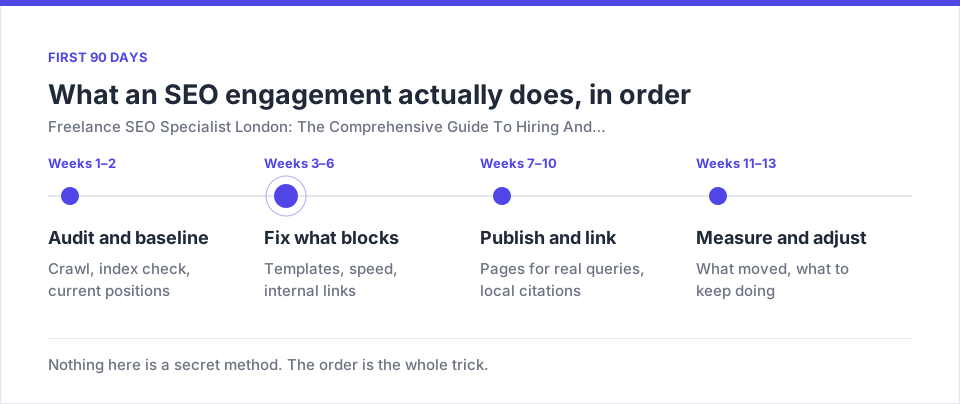
- Month 0–1: Define two priority boroughs, map the diffusion spine, and establish governance artefacts (What-If gates, Explain Logs, Provenance Envelopes) with a shared dashboard and baseline metrics.
- Month 1–2: Publish initial hub topics and borough-depth content, deploy first edge activations, and begin GBP health monitoring.
- Month 2–3: Evaluate pilot results, refine proofs, and plan expansion to additional boroughs with governance in place; extend hub topics and edge assets to sustain diffusion momentum.
For governance resources and London-first playbooks, visit London Local SEO Services on LondonSEO.ai and reference Google's quality guidelines to ensure responsible practice. If you would like tailored onboarding, reach out via Contact Us.
Why Hire A Freelance SEO Specialist In London
London’s digital market remains fast-moving, highly localised, and populated with micro-communities that demand thoughtful, district-focused optimisation. A freelance SEO specialist based in London brings immediate access to practitioner expertise, a keen sense of borough-specific intent, and a nimble approach to scaling activities without the overhead of a traditional agency. LondonSEO.ai complements this with governance-forward playbooks, auditable data trails, and district-first dashboards that translate city-wide authority into tangible ROI for London businesses.
Core Advantages Of Hiring A London-Based Freelance SEO Specialist
- Deep local fluency: A London freelancer understands neighbourhood behaviours, commuter patterns, and district-specific consumer priorities, enabling more precise diffusion from city-wide topics to borough-focused content.
- Speed and agility: Freelancers can move quickly from discovery to execution, testing hypotheses in high-potential sub-markets and iterating based on live results.
- Cost efficiency and scalability: Flexible engagement models avoid agency overhead while permitting rapid ramp-ups for campaigns targeting Notting Hill, Hackney, or Covent Garden without long-term commitments.
- Personalised service and accountability: Direct access to an expert who owns the results, with transparent, auditable decision-making and governance records.
- Governance-ready outcomes: A London partner aligns with regulator-friendly practices, leveraging artefacts such as What-If gates, Explain Logs, Provenance Envelopes, and RegExports to ensure traceability across all activations.
How A London Freelancer Typically Works With LondonSEO.ai
Engagements start with a tight alignment on business goals and a diffusion plan that respects local geography. A typical London freelancer will collaborate through a staged process: discovery, strategy design, implementation, and ongoing governance with regular, auditable reporting. LondonSEO.ai provides the diffusion spine—hub topics that establish authority, district-depth pages that substantiate locality, and edge activations that convert intent into action. The governance layer uses What-If gates, Explain Logs, Provenance Envelopes, and RegExports as standard artefacts, enabling executives to monitor progress and regulators to review diffusion journeys if necessary.
Practically, a London engagement might include the following steps:
- Comprehensive site audit and priority mapping for London pages and boroughs.
- Keyword research that blends city-wide themes with district-level intents.
- A content calendar that diffuses hub topics into district-depth pages.
- Local GBP (Google Business Profile) health optimisation and proximity signals tailored to London districts.
- Regular governance reviews and auditable reporting cadences.
What London Businesses Should Expect In Terms Of Outcomes
Working with a London-based freelance SEO specialist typically yields improved local visibility, higher-quality traffic from targeted boroughs, and stronger Maps presence. The focus remains on measurable outcomes rather than vanity metrics. Expect transparent dashboards, clear KPI progress, and a narrative that ties diffusion activities—from hub topic selection to district-depth content and edge prompts—to tangible business effects such as increased inquiries, bookings, or conversions in the capital. Governance and auditable reporting are treated as core capabilities, not add-ons, ensuring leadership and regulators have a clear view of diffusion journeys as markets evolve.
Next Steps: How To Engage A London-Based Freelance SEO Expert
- Step 0 – Discovery and baseline: Initiate a concise discovery call to articulate goals, target boroughs, and desired outcomes. Gather baseline metrics across GBP health, local citations, and district proofs.
- Step 1 – Geography and governance: Define two priority London boroughs for an initial diffusion, map hub topics to district intents, and establish governance artefacts (What-If gates, Explain Logs, Provenance Envelopes, RegExports) with a shared dashboard.
- Step 2 – Proposal and clarity: Request a proposal that outlines hub-topic mapping, district-depth content plans, edge activations, and governance deliverables, plus a clear pricing model with phased engagement options.
- Step 3 – Two-borough pilot: Launch a practical two-borough diffusion (for example Notting Hill and Shoreditch) with 4–6 local intents per borough linked to 2–3 hub topics, each supported by proofs and geo-targeted CTAs.
- Step 4 – Governance and measurement: Implement the Diffusion Health Index (DHI) and monthly dashboards, plus quarterly governance reviews to refine the spine as London markets shift.
For governance resources and London-first playbooks, visit London Local SEO Services on LondonSEO.ai and reference Google's quality guidelines to ensure responsible practice. If you’d like tailored onboarding, contact Contact Us.
Core Services Typically Offered By A London Freelance SEO Specialist
In London’s crowded digital landscape, a freelance SEO specialist delivers a focused suite of services designed to translate city-wide authority into district-specific results. This Part 4 clarifies the core offerings a London-based expert typically provides, and explains how these services align with the governance-forward diffusion framework that LondonSEO.ai champions. The aim is to deliver measurable improvements in local visibility, traffic quality, and conversions while maintaining transparent, auditable processes fit for leadership and regulators.
Audits, Baseline, And Discovery
Every London project starts with a thorough diagnostic that establishes a credible baseline. A typical audit scope includes technical health, on-page optimisation, content alignment, local presence, and competitor benchmarking within the capital’s boroughs. The goal is to identify diffusion gaps where city-wide hub topics can be effectively diffused into district-depth content, supported by tangible proofs that reinforce EEAT signals.
- Technical and onsite health: crawl, index, site speed, mobile usability, and architecture checks to ensure scalability across London pages.
- Content and on-page alignment: evaluate metadata, headings, internal linking, and content gaps against district intents and city-wide hub topics.
- Local presence health: GBP completeness, Maps visibility, proximity signals, and NAP consistency across district directories.
- Competitive landscape: benchmarking against local peers in target boroughs to identify diffusion opportunities.
On-Page Optimisation And Content Strategy
London-focused content requires a deliberate diffusion spine: city-wide hub topics feed district-depth content that addresses local intents. The content strategy should harmonise London-wide authority with borough-specific relevance, ensuring each district page carries credible proofs such as local case studies, testimonials, partnerships, and freshly sourced data. A well-planned content calendar translates hub topics into actionable district-depth pages, with internal links guiding users along the diffusion path from broad London themes to Notting Hill, Holborn, Camden, and surrounding districts.
- Hub topic to district mapping: define 3–4 city-wide pillars that organically diffuse into 4–6 district intents per borough.
- District proofs and credibility: attach timestamped testimonials, local datasets, or partnerships to each district page to strengthen EEAT signals.
- Internal linking strategy: create purposeful links from hub pages to district-depth pages and from district pages to edge activations such as Maps prompts and local guides.
Technical SEO And Site Architecture
A scalable diffusion spine relies on a clean, crawl-friendly site structure. This includes a logical URL hierarchy, robust XML sitemaps, precise robots.txt directives, and a clear canonical strategy to prevent content cannibalisation across multiple borough pages. Optimise for core web vitals, implement lazy loading where appropriate, and ensure image assets are optimised for speed without compromising user experience. A well-ordered architecture supports reliable diffusion as you expand from two or three boroughs to city-wide coverage.
- URL design and taxonomy: create a logical, human-readable taxonomy that mirrors hub-to-district diffusion.
- Sitemaps and crawling priorities: maintain an up-to-date sitemap and ensure critical district pages receive crawl focus.
- Canonical handling: use canonical tags to resolve content variants across districts and avoid duplication issues.
Local SEO, GBP And Maps Optimisation
Local visibility is central to London performance. A robust GBP strategy covers profile completeness, category alignment with core services, consistent NAP data, photos, and timely responses to reviews. Proximity signals should be strengthened by district-focused content, edge activations, and strategic partnerships that demonstrate locality and trust. Ensure district pages align with hub topics and leverage GBP updates to reinforce Maps rankings and knowledge panels. Governance artefacts should tie GBP changes to district depth content and hub topics for auditable traceability.
- GBP optimisation: keep profiles complete, accurate, and regularly refreshed with district-relevant posts.
- Proximity signals and citations: cultivate high-quality, district-focused citations that reinforce locality relevance.
- Maps activations: deploy Maps prompts, local guides, and events anchored to district proofs to generate near-me demand.
Data, Dashboards, And Reporting
Governance-driven reporting is indispensable forLondon campaigns. Establish a Diffusion Health Index (DHI) that combines hub authority, district engagement, GBP readiness, and edge activation health into a single, interpretable score. Implement a monthly dashboard detailing performance by borough and hub topic, with quarterly governance reviews to recalibrate the diffusion spine as markets shift. Integrate data from GA4, Google Search Console, GBP insights, and CRM attribution to deliver an auditable ROI narrative that demonstrates local impact and justifies continued investment.
- What-If gates: forecast diffusion outcomes before publishing hub or suburb content.
- Explain Logs: capture data provenance and decision trails for auditability.
- Provenance Envelopes: attach licensing and origin disclosures to proofs used on district pages.
- RegExports: package diffusion journeys for regulator reviews where applicable.
Working With LondonSEO.ai
LondonSEO.ai provides governance-forward playbooks, standard artefacts, and district-focused methodologies that help you realise a credible diffusion spine from the outset. If you’re seeking two-borough pilots with auditable dashboards and scalable activation plans, review our London Local SEO Services pages and consult Google’s quality guidelines to ensure responsible practice. For tailored onboarding, contact us via Contact Us.
Local SEO Strategies For London-Based Businesses
London’s search landscape is intensely localised, with neighbourhoods behaving like distinct micro-markets. A robust London-based local SEO strategy combines city-wide authority with district-level relevance, anchored by a governance-forward diffusion spine. LondonSEO.ai supports this approach by providing hub topics, district-depth content, and edge activations that translate metropolitan visibility into tangible business outcomes. This Part 5 outlines practical, London-specific strategies to optimise for Google Maps, local packs, and district queries while ensuring auditable governance from planning through execution.
Foundations Of Local SEO In London
Local visibility in London hinges on three interlocking signals: Google Business Profile (GBP) health, proximity signals, and district-credible content. A well-executed London plan ensures GBP profiles are complete, up-to-date, and enriched with district-relevant updates. Proximity signals are strengthened by district-depth pages that reflect near-me demand and are underpinned by proofs such as testimonials, partnerships, or local data releases. Governance artefacts—What-If gates, Explain Logs, Provenance Envelopes, and RegExports—create a transparent audit trail for leadership and regulators, enabling decisions to be reviewed and replicated across boroughs.
For practical governance resources and London-first playbooks, visit London Local SEO Services on LondonSEO.ai and reference Google's quality guidelines as the baseline for responsible optimisation Google's quality guidelines.
Hub Topics And District Depth In London
A diffusion spine in London starts with a concise set of hub topics that establish authority city-wide and then diffuses into district-depth content tailored to boroughs such as Camden, Kensington, Notting Hill, and Shoreditch. Hub topics should be selected for their potential to scaffold multiple district pages, while district-depth pages require locally credible proofs to meet EEAT standards. This approach enables scalable diffusion from central London topics to district-specific pages that answer local intents, from local services and events to neighbourhood recommendations.
- Hub topic selection: Choose 3–4 city-wide pillars that map cleanly to London’s boroughs and service lines.
- District-depth content: For each borough, publish 4–6 local intents that align with hub topics and pair them with credible proofs.
- Edge activations: Attach Maps prompts, local guides, and event calendars to district pages, anchored by district proofs.
Edge Activations That Convert Local Intent
Edge activations translate district content into near-me demand. In London, practical edge activations include Maps prompts linked to district pages, local business guides, and event calendars that reflect borough activity. Each activation should be underpinned by proofs—customer testimonials, district datasets, or partnerships—that reinforce locality credibility and EEAT signals. Governance artefacts should accompany major activations, ensuring an auditable trail for leadership and regulatory reviews when needed.
- Maps prompts and district routing: Guide users from district pages to tailored depth content or nearby services.
- Local guides and partnerships: Publish district-specific resources featuring credible local sources and collaborators.
- Event calendars tied to proofs: Synchronise events with district pages so activations are measurable and attributable.
Local Citations, NAP Consistency, And Proximity Signals
Consistency of Name, Address, and Phone across GBP, your website, and local directories is essential to sustained Maps visibility. Create a central NAP master and automate cross-surface updates to prevent discrepancies. Develop district-focused citations for key boroughs, ensuring each citation carries a credible proof that reinforces locality signals. Regularly audit citations for accuracy and ensure that changes propagate to GBP and district pages to preserve proximity credibility.
Measurement, Dashboards, And ROI In London
Adopt a governance-oriented measurement framework that captures hub authority, district engagement, GBP readiness, and edge activation health. Build a Diffusion Health Index (DHI) as a composite score to guide prioritisation, with a monthly London dashboard showing performance by borough and hub topic. Integrate data from GA4, Google Search Console, GBP insights, and CRM attribution to create an auditable ROI narrative that connects local search activities to inquiries, bookings, and revenue. What-If gates forecast diffusion outcomes; Explain Logs provide provenance; Provenance Envelopes attach licensing and origin disclosures; RegExports package diffusion journeys for regulator reviews where applicable.
- Hub and district metrics: Track authority growth and depth engagement by borough.
- GBP readiness and proximity: Monitor GBP completeness and proximity signals per district.
- Edge activation metrics: Measure engagement with Maps prompts, local guides, and events by district.
- ROI modelling: Apply scenario analyses to estimate six- to twelve-month impact across London districts.
Next Steps For London Teams
- Month 0–1: Define two priority boroughs, map the diffusion spine, and establish governance artefacts with a shared dashboard.
- Month 1–2: Publish initial hub topics and borough-depth content, deploy first edge activations, and begin GBP health monitoring.
- Month 2–3: Evaluate pilot results, refine proofs, and plan expansion to additional boroughs with governance in place; extend hub topics and edge assets to sustain diffusion momentum.
For governance resources and London-first playbooks, visit London Local SEO Services on LondonSEO.ai and reference Google's quality guidelines to ensure responsible practice. If you would like tailored onboarding, Contact Us.
Technical SEO And Website Performance For London Local SEO Services
In a London market where micro-communities shape search intent, technical SEO is the backbone that enables a diffusion spine to scale from city-wide authority to district-depth optimisations. This part translates the governance-forward diffusion framework into actionable, high-velocity technical actions that underpin sustainable visibility for freelance SEO specialists in London working with LondonSEO.ai. By pairing robust site performance with precise diffusion planning, you can deliver reliable near-me demand and auditable results across Notting Hill, Holborn, Camden, and beyond.
Hub Topic Definition: Building The Authority Scaffold
Begin with a compact set of city-wide hub topics that anchor governance and diffusion direction. In practice, choose 3–4 pillars that map cleanly to London’s boroughs and service lines, ensuring each hub topic supports diffusion into multiple district-depth pages. Architect the hub topics so that technical scaffolding—canonical rules, structured data schemas, and clean URL hierarchies—remains consistent as depth pages emerge. London-based practitioners should assign clear ownership for each hub topic to preserve consistency across districts such as Chelsea, Shoreditch, and Wembley, while maintaining auditable provenance for every content change.
For governance templates and London-first playbooks, explore London Local SEO Services on LondonSEO.ai and reference Google's quality guidelines as a credible baseline Google's quality guidelines.
Site Architecture And Crawlability
A diffusion spine relies on a crawl-friendly architecture that mirrors the hub-to-district diffusion. Implement a logical, human-readable URL taxonomy, structured data that ties hub topics to district pages, and precise canonical policies to prevent content cannibalisation. Maintain comprehensive XML sitemaps, a robots.txt that prioritises hub and priority district pages, and an internal linking framework that guides users and search engines along the diffusion path. Regular crawl budget assessments, prioritized indexing for district-depth content, and consistent navigation across London pages help sustain index health as pages proliferate.
- URL design and taxonomy: create a hierarchy that reflects hub-to-suburb diffusion with locale-conscious paths.
- Canonical handling: resolve content variants across districts to preserve authority.
- Crawl budget governance: allocate crawl priorities to hub and high-potential district pages to ensure timely indexing.
Core Web Vitals And Performance Optimisation
Performance is non-negotiable for credible diffusion. Establish performance budgets per page, optimise largest contentful paint (LCP) under 2.5 seconds, reduce first input delay (FID) below 100 milliseconds, and maintain cumulative layout shift (CLS) under 0.1. Practical steps include server-side optimisations, image compression with modern formats (webp), proactive code-splitting, and strategic lazy-loading that does not compromise user experience. Regular Lighthouse audits and real-user monitoring (RUM) should be integrated into the governance cadence to detect regressions early and prioritise fixes that improve dwell time and conversions in highly trafficked London districts.
- Performance budgets: cap page weight to protect diffusion velocity as depth content expands.
- Image and asset optimisation: serve next-gen formats and implement responsive images per district page.
- Mobile-first optimisation: prioritise mobile performance due to high mobile usage in London corridors.
Structured Data And Local Schema For London
Structured data amplifies local signals and supports hub-to-district diffusion. Apply JSON-LD for LocalBusiness and Organization on hub pages, then extend schemas to district pages where relevant. Use Event, FAQ, and LocalBusiness schemas to reflect district calendars, local services, and proximity signals. Consistency of schema across hub and suburb pages improves Maps visibility and knowledge panels, while governance artefacts ensure every schema change is auditable and properly documented.
- Hub-to-district schemas: attach LocalBusiness/Organization schemas to hub topics and district pages with explicit relationships.
- Event and FAQ schemas: enhance district relevance with locally anchored events and commonly asked questions.
- Schema governance: schedule regular validation and maintain an audit trail for schema changes.
Image Optimisation And Accessibility
Images should be optimised for speed and accessibility. Provide descriptive alt text that mirrors suburb intent and hub topics, ensure responsive images, and include captions that reinforce diffusion context. Accessibility compliance also aligns with broader UX gains, contributing to improved engagement and a broader audience in London’s diverse districts. Leverage image sitemaps and ensure lazy loading does not cause layout shifts that undermine CLS metrics. Visuals must reinforce hub-to-suburb messaging rather than functioning as standalone assets.
- Alt text and captions: describe the image in the context of hub topics and district depth.
- Responsive imagery: serve appropriate sizes for devices common among London audiences.
Data, Dashboards, And Reporting
Adopt a governance-forward measurement framework that combines hub authority, district engagement, GBP readiness, and edge activation health into a Diffusion Health Index (DHI). Implement a monthly dashboard that reports performance by borough and hub topic, with quarterly governance reviews to recalibrate the spine as London markets evolve. Integrate GA4, Google Search Console, GBP insights, and CRM attribution to produce an auditable ROI narrative that demonstrates local impact and justifies ongoing investment. What-If gates forecast diffusion outcomes; Explain Logs capture data provenance; Provenance Envelopes attach licensing and origin disclosures; RegExports package diffusion journeys for regulator reviews where applicable.
- Hub and district metrics: track authority growth and depth engagement per borough.
- GBP readiness and proximity: monitor profile health and proximity signals across London districts.
- Edge activation metrics: measure engagement with Maps prompts, local guides, and events tied to district content.
Next Steps: London Teams
- Step 0 – Discovery and baseline: confirm geography, hub topics, and district-depth potential; establish a diffusion dashboard and governance artefacts.
- Step 1 – Geography and governance: define priority boroughs for an initial diffusion, map hub topics to district intents, and implement What-If gates, Explain Logs, Provenance Envelopes, and RegExports.
- Step 2 – Pilot and measurement: launch two-borough depth content with proofs and edge activations; monitor with the Diffusion Health Index and a shared London dashboard.
For governance resources and London-first playbooks, visit London Local SEO Services on LondonSEO.ai and reference Google's quality guidelines to ensure responsible practice. If you would like tailored onboarding, Contact Us.
Content Strategy And Keyword Research For London: Measuring Success
London’s search landscape is intensely localised, with boroughs behaving like distinct micro-markets. A governance-forward content strategy blends city-wide authority with district-level relevance, underpinned by a diffusion spine where hub topics feed suburb-depth pages and edge activations translate intent into action. This part outlines a practical, London-focused framework for keyword research and content planning that aligns with the auditable, governance-first approach championed by LondonSEO.ai.
The London Keyword Research Framework
Effective London keyword research starts with city-wide hub topics that establish baseline authority and then diffuses into district-level intents. A practical framework includes the following steps:
- Seed topic discovery: Identify core service areas tied to the London narrative, such as "London SEO services" and "local SEO London".
- District-intent mapping: For key boroughs (Notting Hill, Holborn, Camden, Chelsea), define intent clusters like local visibility, Maps prominence, and neighbourhood-specific services.
- Modifier expansion: Add refinements reflecting user needs (pricing, onboarding, case studies, industry-specific solutions).
- Competitor context: Benchmark top local players and identify gaps your content can fill in London’s suburbs.
- Content briefs: Produce briefs that pair district intents with hub topics and include proofs that bolster credibility.
- Content calendar: Build a cadence that supports diffusion and aligns hub topics with suburb-depth releases and edge activations.
Clustering Local Intent And Building The London Diffusion Map
Transform keyword lists into a diffusion map that links three layers: city-wide hubs, district intents, and edge activations. For London, typical hubs include Local Authority, Customer Experience, and Market Growth, each diffusing into district-depth pages for Kensington, Notting Hill, Camden, and Shoreditch. Each suburb page should host 4-6 local intents, tied to 2-3 hub topics, and supported by proofs such as client testimonials, local datasets, and partnerships. Edge activations such as Maps prompts, local guides, and event calendars must connect back to proofs on the suburb pages to sustain EEAT signals and near-me demand.
- Near-me relevance: Prioritise districts with immediate local intent and strong proximity signals across London boroughs.
- Proof density: Attach timestamped proofs to each district page to reinforce proximity and trust.
- Edge activation discipline: Tie Maps prompts and events directly to district content with documented proofs.
Content Formats, On-Page Optimisation, And Local Signals
London content should embrace formats that serve informational, navigational, and transactional intents. Prioritise how-to guides, local guides, case studies, and FAQs anchored to hub topics and district intents. On-page optimisation should weave hub topics with district intents in title tags, meta descriptions, headings, and anchor text. Implement structured data (LocalBusiness, Organization, Event) on hub and suburb pages to reinforce local relevance and improve eligibility for rich results. Ensure internal links reflect hub-to-district diffusion, guiding users along the path from broad London topics to Notting Hill, Holborn, Camden depth pages.
- Content formats: How-to guides, city guides, district deep-dives, case studies, and FAQs.
- On-page signals: Optimised title tags, meta descriptions, H1s, image alt text, and schema markup aligned to district intents.
- Structured data: LocalBusiness, Organization, Event, and FAQ schemas linked to hub topics and district pages.
Content Calendar And Diffusion Cadence
A disciplined calendar keeps diffusion steady. Plan a 12-week sprint that seeds 3-5 suburb-depth pages per key suburb, each linked to 2-3 hub topics, with proofs attached. Schedule regular updates for proofs and edge activations, and maintain governance artefacts for major activations. The calendar should allocate time for GBP health checks, local citations, and review cycles to ensure content remains accurate and impactful across London districts.
- Weeks 1-3: Publish hub topic landing pages and initial suburb-depth content with proofs.
- Weeks 4-8: Expand suburb-depth pages, add updated proofs, and deploy Maps prompts linked to new content.
- Weeks 9-12: Launch edge activations (local guides, events) and calibrate internal linking to sustain diffusion momentum.
Measuring Success: KPIs, Dashboards, And ROI In London Campaigns
A governance-oriented measurement framework translates diffusion activities into business value. Define a London Diffusion Health Index (London DHI) that blends hub authority, district engagement, GBP readiness, and edge activation health into a single score for governance reviews. A practical formulation could be:
London DHI = 0.45 × Hub Authority + 0.30 × District Engagement + 0.15 × GBP Readiness + 0.10 × Edge Activation Health
Track a monthly dashboard with KPIs across hub breadth, suburb-depth content, proofs density, GBP health, proximity signals, edge interactions, and local conversions. Use GA4 for user journeys, GSC for visibility, GBP insights for local signals, and CRM attribution for ROI modelling. Build scenario analyses (base, optimistic, conservative) to understand how diffusion investments translate into inquiries and revenue over time. For governance resources, visit London Local SEO Services and align with Google's quality guidelines to ensure responsible practice. If you would like tailored onboarding, contact Contact Us.
Engagement Models And Pricing For A London Freelance SEO Specialist
With the diffusion spine established across hub topics, district depth, and edge activations, choosing the right pricing model becomes a strategic decision about flexibility, accountability, and ROI. This Part 8 focuses on practical engagement models that work well for London businesses, emphasising governance-friendly practices and clear pathways to measurable local outcomes. LondonSEO.ai supports transparent proposals that tie pricing to governance artefacts, dashboards, and auditable results from day one.
Common Pricing Models In London
Three core approaches dominate freelance SEO engagements in London. Each has its merits depending on goals, urgency, and governance requirements. Internal teams often combine models to balance speed, scope, and ongoing optimisation.
- Hourly rate: Ideal for exploratory work, advisory sessions, and late-stage optimisations where scope evolves. Rates in London typically reflect local market conditions and expert seniority. This model offers maximum flexibility but can complicate scope control, so pair it with a detailed time-logging and governance dashboard to maintain accountability and transparency.
- Project-based pricing: Suitable for clearly defined deliverables such as a two-borough pilot, an initial hub-to-district diffusion plan, or a complete site-wide audit with a fixed set of pages. Milestones and acceptance criteria are essential, alongside artefacts like What-If gates and Explain Logs to preserve governance integrity even when the scope tightens or shifts.
- Retainer (monthly ongoing): The most common setup for London campaigns, offering predictable cash flow and sustained diffusion activity. A well-constructed retainer includes governance cadences, monthly dashboards, ongoing hub-topic diffusion, district-depth content, edge activations, GBP health monitoring, and regular governance reviews. Retainers typically scale with scope and borough coverage, allowing phased expansion from two boroughs to city-wide diffusion while maintaining auditable reporting.
What To Include In A London Proposal
A robust proposal should translate pricing into clear deliverables, governance artefacts, and measurable outcomes. Expect clarity around: scope boundaries, milestones, dashboard access, data ownership, and escalation paths. Proposals should explicitly cover What-If forecasting, Explain Logs for provenance, Provenance Envelopes for licensing disclosures, and RegExports for regulator-friendly reporting, ensuring every activation can be audited and replicated across boroughs.
- Defined scope for hub topics, district-depth pages, and edge activations.
- KPIs, dashboards, and a cadence for governance reviews.
- Delivery milestones linked to two-borough pilots and planned expansion.
- Clear pricing by model with optional governance add-ons.
Aligning Pricing With Governance And Outcomes
In London, pricing should reflect both the complexity of diffusion and the value of auditable outcomes. Consider embedding governance costs into the retainer or as a separate governance add-on within project-based engagements. For example, include What-If gates, Explain Logs, Provenance Envelopes, and RegExports as standard artefacts rather than optional extras. This alignment helps leadership and regulators understand how investment translates into district-level visibility, near-me demand, and measurable ROI across Notting Hill, Holborn, Camden, and surrounding districts.
Pricing Considerations For Different London Scenarios
Think about your market size, borough mix, and time-to-value when selecting a model. If you anticipate recurring optimisation across multiple districts, a retainer with milestone-driven reviews often delivers the strongest governance and ROI clarity. For shorter programmes or initial audits, a fixed-price project may be preferred, followed by a retainer as diffusion expands. When costs must remain tightly controlled, hourly engagement with a transparent time-tracking and reporting framework can be appropriate, provided there is a clear plan for moving to a more stable model as results accrue.
Practical Negotiation Tips
- Ask for a two-borough pilot as a condition for expanding a retainer; it creates a tangible test bed with auditable dashboards.
- Request a transparent out-of-scope policy and a process for scope adjustments, ensuring governance remains intact when the diffusion spine grows.
- Ensure access to dashboards and raw data exports so your team can monitor progress and regulator-ready reporting.
- Document ownership of hub topics, district-depth pages, proofs, and edge activations to maintain accountability across the programme.
Next Steps: How To Engage A London-Based SEO Specialist
If you’re ready to explore pricing options, start with a discovery call to articulate goals, target boroughs, and the desired diffusion outcomes. Request a two-borough pilot proposal that includes hub-topic mapping, district-depth content plans, proofs, edge activations, and governance artefacts. Seek a transparent pricing table, a detailed scope document, and a governance cadence that aligns with your internal reporting cycles. For governance resources and London-first playbooks, visit London Local SEO Services on LondonSEO.ai and reference Google's quality guidelines to ensure responsible practice. To discuss onboarding, contact Contact Us.
Answer Engine Optimisation (AEO) And Future Trends For London SEO
London’s search landscape is evolving beyond traditional keyword targeting. Answer Engine Optimisation (AEO) focuses on content that satisfies conversational queries, voice search, and the emerging search-generation experiences. For freelance SEO specialists in London, AEO represents a natural extension of the diffusion spine: hub topics establish authority, district-depth content answers local intent, and edge activations capture near-me demand in real time. LondonSEO.ai integrates AEO into governance-forward playbooks, ensuring every enhancement to content, schema, and structure is auditable and scalable across boroughs from Notting Hill to Holborn and beyond.
What Is AEO And Why It Matters In London
AEO is about content that answers user questions in the way search engines expect, including answer boxes, knowledge panels, and voice-enabled results. In London, where micro-markets shape local intent, AEO helps a freelance SEO specialist connect city-wide authority with district-specific needs. By crafting content that directly answers common borough questions, you increase the chances of being featured in answer boxes and voice results, while maintaining EEAT signals through credible proofs, data-backed content, and transparent provenance. This approach aligns with LondonSEO.ai governance, where What-If forecasting, Explain Logs, Provenance Envelopes, and RegExports provide an auditable trail from concept to cameo in an answer result. For authoritative guidance, consult Google’s quality guidelines and adapt them to a London context Google's quality guidelines.
AEO Tactics Within The London Diffusion Spine
Three practical tactics help London-based freelancers translate AEO into tangible local results. First, map hub topics to likely answer-box opportunities within each borough, ensuring district-depth pages address common near-me questions with precise, citable proofs. Second, implement FAQ and Q&A schemas on hub and district pages to increase eligibility for rich results and to feed voice-search prompts. Third, design edge activations—Maps prompts for local services, rapid FAQs after events, and knowledge panels linked to district content—that materially impact near-me demand while remaining fully auditable. LondonSEO.ai supports these activations with governance artefacts that preserve traceability from planning to deployment.
- Hub-to-answer mapping: identify city-wide pillars that naturally spawn district FAQs and near-me intents.
- Structured data for answers: deploy FAQPage and QAPage schemas on hub and district pages to boost visibility in answer boxes.
- Edge activation planning: align Maps prompts, local guides, and events with district proofs to drive near-me conversions.
AEO And Structured Data Best Practices
Adopt a structured-data framework that supports London diffusion. Attach LocalBusiness and Organization schemas to hub topics and district pages, with explicit relationships to hub topics. Use Event, FAQ, and Question schemas for district-focused calendars and commonly asked questions. Maintain a governance cadence that validates schema changes, preserves provenance trails, and ensures consistency across boroughs. The objective is to elevate authority, improve Maps visibility, and strengthen EEAT signals for both local and city-wide queries.
- Hub-to-district schemas: connect LocalBusiness/Organization markup to hub topics and district pages with explicit relationships.
- Event and FAQ schemas: enhance district relevance with locally anchored events and commonly asked questions.
- Schema governance: schedule regular validation and maintain an audit trail for schema changes.
Measurement, Dashboards, And ROI For AEO
Link AEO efforts to business outcomes through a governance-driven dashboard. Introduce an AEO Health Index that blends hub authority, district depth, and edge activation health. Consider a London AEO dashboard that tracks: number of answer-box appearances, average position in featured snippets, voice-query visibility, and the influence on near-me conversions. Combine GA4, GSC, GBP insights, and CRM attribution to produce an auditable ROI narrative. What-If gates forecast diffusion outcomes; Explain Logs capture data provenance; Provenance Envelopes attach licensing and origin disclosures to proofs; RegExports package diffusion journeys for regulator reviews where applicable.
- Answer-box appearances: monitor featured snippets and position changes by borough and hub topic.
- Voice-search visibility: track voice prompts and responses linked to district content.
- Proximity-driven conversions: attribute edge activations to local intent and measure near-me demand.
Next Steps: Implementing AEO Across London
Embed AEO within your diffusion spine by starting with a two-borough pilot that targets borough-specific answer-box opportunities, tests FAQ schemas, and deploys edge activations tied to district proofs. Use governance artefacts to document every step and ensure regulator-ready reporting. Expand to additional boroughs as confidence grows, while maintaining a single, auditable dashboard that aggregates hub authority, district depth, and edge health. For governance resources and London-first playbooks, visit London Local SEO Services on LondonSEO.ai and reference Google's quality guidelines to maintain responsible practice.
Onboarding Preparation For A London Freelance SEO Engagement
Effective onboarding sets the foundation for a governance-minded diffusion spine in London. When a freelance SEO specialist joins LondonSEO.ai, the first phase focuses on alignment, access, and artefact readiness so that hub topics can smoothly diffuse into district-depth content with auditable traceability. This Part 10 concentrates on the practical inputs, governance constructs, and collaboration cadences needed to launch a two-borough diffusion pilot in the capital, ensuring that every action is measurable, compliant, and scalable for future expansion.
Step 0: Define Business Objectives And Baseline Success Metrics
Begin with concise business objectives that tie to local outcomes. Examples include uplift in borough-specific GBP health, increased qualified inquiries from target districts, or improved Maps visibility for key London clusters. Establish a Diffusion Health Index (DHI) framework early, so the planning, content diffusion, and edge activations have a common yardstick. Align these objectives with governance artefacts to ensure every decision is auditable and regulator-friendly from day one.
Step 1: Gather Essential Access And Permissions
Coordinate with the client to secure access across critical platforms and assets. Required access typically includes Google Analytics 4 (or Universal), Google Search Console, Google Business Profile (GBP), and the content management system (CMS) for editing and publishing. Ensure data governance permissions are in place so dashboards can pull live data while maintaining privacy controls. Establish who has read access versus who can publish or approve asset changes, with a clear escalation path for security concerns.
Step 2: Compile An Asset And Content Inventory
Provide a current inventory of content assets, including hub topic pages, district-depth pages, proven district proofs (testimonials, data releases, partnerships), and edge activations (Maps prompts, local guides, event calendars). Include brand guidelines, tone of voice, localised imagery, and any district-specific legal or regulatory notes that could affect content production. An up-to-date inventory supports rapid content diffusion planning and ensures consistency across boroughs such as Notting Hill, Holborn, Camden, and the surrounding districts.
Step 3: Establish Governance Artefacts And Reporting Cadence
Governance artefacts are non-negotiable for London diffusions. Implement What-If gates to forecast diffusion scenarios before publishing hub or suburb content; Explain Logs to capture data provenance and decision trails; Provenance Envelopes to attach licensing and origin disclosures to proofs used on district pages; and RegExports to package diffusion journeys for regulator reviews where applicable. Define a monthly diffusion health dashboard that aggregates hub authority, district depth, GBP readiness, and edge activation health, with quarterly governance reviews to recalibrate the spine as London markets evolve.
Step 4: Identify Stakeholders And Role Clarity
List the core roles required for a successful London diffusion: a governance sponsor (senior marketing or commercial lead), a hub-topic owner, a district-depth editor, a data analyst, a content strategist, and IT/Dev liaison. Assign explicit responsibilities for hub topics, district-depth pages, proofs, edge activations, and data pipelines. Schedule a kick-off with stakeholders from marketing, product, sales, and operations to establish shared goals, reporting expectations, and escalation procedures.
Step 5: Plan The Two-Borough Pilot With Governance In Mind
Choose two London boroughs that offer complementary near-me demand and content opportunities—e.g., Notting Hill for lifestyle depth and Holborn for professional services depth. For each borough, map 4–6 local intents to 2–3 hub topics, attach proofs (timestamped testimonials, local datasets, partnerships), and create geo-targeted CTAs aligned to hub-topic relevance. Establish the governance artefacts for the pilot and set a diffusion health dashboard to monitor performance by borough and topic. This pilot demonstrates diffusion mechanics in a controlled, measurable context and informs scalable rollout.
Step 6: Define Timelines, Deliverables, And Milestones
Publish a concrete timeline that covers discovery, strategy design, content production, governance setup, and initial activation. Include milestones for hub-topic publication, district-depth content, first edge activations, and the first governance review. Ensure the plan ties to the Diffusion Health Index and includes access to governance dashboards for leadership and regulators. Keep timelines realistic and aligned with London’s market rhythms and borough-specific cycles.
Choosing The Right West London SEO Partner
With the diffusion spine established across hub topics, district depth, and edge activations, selecting the right partner becomes a strategic decision about governance, transparency, and scalable ROI for West London businesses. This Part 11 offers a practical, West London–focused guide to evaluating agencies or freelancers who can sustain auditable diffusion across Notting Hill, Kensington, Chelsea, Fulham, Hammersmith, and surrounding districts. It aligns with the governance-forward framework championed by LondonSEO.ai, ensuring every activation from hub topics to district proofs remains traceable and regulator-ready as markets evolve in the capital.
Key Evaluation Criteria For A West London Partner
- Local fluency and district intelligence: Demonstrable knowledge of Notting Hill, Kensington, Chelsea, Fulham, and surrounding areas, with evidence of successful, district-tailored campaigns across West London.
- Governance maturity and transparency: A mature framework that includes What-If forecasts, Explain Logs for provenance, Provenance Envelopes for disclosures, and RegExports for regulator-ready reporting.
- Diffusion track record: Case studies or references showing hub-to-suburb diffusion, edge activations, and auditable growth within West London or comparable markets.
- Measurement discipline and ROI modelling: A clear approach to attribution, dashboards, and multi-surface ROI that ties hub topics to suburb outcomes and edge experiences.
- Onboarding and change management: A practical, staged plan with two-suburb pilots, governance milestones, ownership, and knowledge transfer to internal teams.
- Pricing clarity and contract terms: Transparent pricing, flexible engagement options, and realistic SLAs that align with governance deliverables.
Diffusion Readiness And Local Affinity
Assess how a partner plans to diffuse authority from city-wide hubs into district-depth pages that reflect West London’s unique character. Look for clear mapping of 3–4 hub topics to 4–6 local intents per suburb, each supported by credible proofs such as timestamped testimonials, local datasets, or partnerships. Confirm edge activations (Maps prompts, local guides, event calendars) are tied to proofs and that governance artefacts are attached to major activations for traceability.
- Near-me relevance: Prioritise districts with immediate local intent and strong proximity signals across West London boroughs.
- Proof density: Attach timestamped proofs to each district page to reinforce locality credibility.
- Edge activation discipline: Tie Maps prompts and events directly to district content with documented proofs.
Governance And Tooling Expectations
A partner should integrate seamlessly with your diffusion spine, providing auditable artefacts for every major activation. Expect What-If gates to pre-validate diffusion outcomes; Explain Logs to capture data origins and decisions; Provenance Envelopes to attach licensing and origin disclosures to proofs; and RegExports to package diffusion journeys for regulator reviews where applicable. The candidate must demonstrate how these artefacts scale as you move from Notting Hill to additional West London districts, ensuring ongoing regulatory alignment and stakeholder confidence.
- What-If gates: Pre-validate diffusion outcomes before publishing hub or suburb content.
- Explain Logs: Capture data provenance and decision trails for auditability.
- Provenance Envelopes: Attach licensing and origin disclosures to proofs used on district pages.
- RegExports: Package diffusion journeys for regulator reviews where required.
Case Studies And References You Should Request
Ask for West London successes or closely analogous markets. Require client testimonials, a portfolio of district-depth pages with supported proofs, and access to dashboards that track hub authority, suburb-depth engagement, GBP readiness, and edge-activation metrics. Use these references to assess consistency, governance transparency, and the ability to deliver measurable ROI over time.
- Hub-to-district diffusion examples: Demonstrable diffusion from central London topics into Notting Hill, Kensington, and Chelsea pages with district proofs.
- Edge activation outcomes: Evidence of Maps prompts, local guides, and events driving near-me demand linked to district pages.
- Governance transparency: Dashboards and quarterly governance reviews that senior leadership can audit.
Commercial Terms And Engagement Models
West London campaigns benefit from flexible engagement options that value governance and measurable outcomes. Look for retainers, fixed-scope projects with clear milestones, and hybrid models that support initial two-suburb pilots and expansion to additional districts. Ensure artefacts such as What-If gates, Explain Logs, Provenance Envelopes, and RegExports are included as standard deliverables across major activations, enabling consistent governance and regulator-friendly reporting as diffusion scales.
- Retainer with governance add-ons: Predictable monthly support plus artefacts for major activations.
- Project-based with phased expansion: Clear milestones, acceptance criteria, and artefact delivery for each phase.
- Hybrid arrangements: Combine ongoing governance with a milestone-driven pilot targeting two West London boroughs, then scale with auditability baked in.
Onboarding And Next Steps
- Step 0 – Discovery and baseline: Confirm two priority West London boroughs, diffusion spine, and governance artefacts; establish a shared dashboard for governance reviews.
- Step 1 – Hub-to-suburb mapping: Define hub topics and district intents with proofs to anchor EEAT signals.
- Step 2 – Two-suburb pilot: Launch depth content with 4–6 local intents per borough and attach proofs; deploy first edge activations.
- Step 3 – Governance cadence: Implement What-If gates, Explain Logs, Provenance Envelopes, RegExports; schedule monthly diffusion health reviews.
For governance resources and West London-first playbooks, visit London Local SEO Services on LondonSEO.ai and reference Google's quality guidelines to ensure responsible practice. To start onboarding, contact Contact Us.
Getting Started With London Freelance SEO: Onboarding, Collaboration, And Timelines
Embarking on a London-focused SEO programme requires a disciplined onboarding plan that translates city-wide authority into district-level relevance. This Part 12 outlines a practical, governance-forward blueprint for two-borough diffusion, clear collaboration expectations, and realistic timelines that align with the pace of London’s markets. Grounded in the diffusion spine concept championed by LondonSEO.ai, the plan emphasises auditable processes, What-If forecasting, provenance trails, and a monthly diffusion health dashboard to keep initiatives on track from day one.
Step 0: Discovery, Baseline, And Quick Signals Audit
Begin with a concise discovery phase to confirm baseline health across GBP, NAP parity, and district-depth potential. Conduct a lightweight diffusion signals audit focused on proximity signals, district proofs, and edge activation opportunities that can be audited from the outset. Create a two-borough diffusion map with Notting Hill and Shoreditch as seed districts to test governance artefacts, data flows, and edge activations. The objective is to establish a credible foundation for near-term wins while ensuring every action is captured for governance reviews. For governance templates and London-first playbooks, consult the London Local SEO Services page and align with Google’s quality guidelines to maintain credibility.
Step 1: Define Geography, Roles, And Collaboration Cadence
Agree on two adjacent London suburbs with strong near-me demand and complementary service footprints. Notting Hill and Shoreditch offer a balanced mix of residential depth and urban-business activity. Define a diffusion spine that links three city-wide hub topics to four-to-six district intents per suburb, and attach credible proofs such as timestamped testimonials, local datasets, and partnerships to each district page. Establish governance artefacts to support What-If gates, Explain Logs, Provenance Envelopes, and RegExports for regulator-ready reporting where applicable. Assign explicit owners for hub topics, district depth pages, proofs, edge activations, and data pipelines. Schedule weekly check-ins for tactical alignment and a monthly governance review with leadership to monitor diffusion health and ROI.
- Hub-topic ownership: Assign a single owner per hub topic to maintain consistency across districts.
- District intent mapping: Define 4–6 intents per suburb aligned to 2–3 hub topics.
- Governance artefacts: Prepare What-If gates, Explain Logs, Provenance Envelopes, and RegExports from day one.
Step 2: Engage A London-Based SEO Consultant
Select a consultant with proven locality fluency and governance maturity. Request a two-suburb diffusion plan, hub-topic mapping, and a regulator-ready reporting framework. The proposal should include What-If forecasting, Explain Logs for provenance, Provenance Envelopes for licensing disclosures, and RegExports where applicable. Ensure the consultant can deliver a governance-ready dashboard that aggregates hub authority, suburb engagement, GBP readiness, and edge activation health. For guidance, review the London Local SEO Services page and consult Google’s quality guidelines to align with credible practice. If you would like tailored onboarding, contact London Local SEO Services.
Step 3: Design The Two-Suburb Pilot And Hub-To-Suburb Diffusion
Draft a practical two-suburb pilot to test depth content and edge activations in a controlled setting. For Notting Hill and Shoreditch, map 4–6 local intents per suburb aligned to 2–3 hub topics, and attach proofs such as dated testimonials, district data, and established partnerships. Deploy edge activations including Maps prompts, local guides, and event calendars that link to the corresponding suburb pages, ensuring governance artefacts document the journey from planning to execution. This pilot validates diffusion mechanics and informs broader rollout across London with auditable trails for every activation.
- District mapping: Align 4–6 intents per suburb to 2–3 hub topics.
- Proof strategy: Attach timestamped testimonials and local datasets per suburb.
- Edge activations: Connect Maps prompts, local guides, and events to suburb pages with hub-topic context.
Step 4: Governance Cadence And Activation Audit Trails
From day one, embed governance artefacts to ensure diffusion journeys are auditable. What-If gates forecast diffusion outcomes before publishing hub or suburb content; Explain Logs capture data origins and decisions; Provenance Envelopes attach licensing and origin disclosures to proofs; RegExports package diffusion journeys for regulator reviews where applicable. Establish a monthly diffusion health dashboard that aggregates hub authority, suburb engagement, GBP readiness, and edge activation performance by district, with quarterly governance reviews to recalibrate the spine as London markets evolve. This cadence keeps diffusion disciplined and regulator-ready as you scale beyond the initial two districts.
Step 5: Measurement Framework, Dashboards, And KPIs
Define a Diffusion Health Index (DHI) that blends hub authority, suburb engagement, GBP readiness, and edge activation health into a single, interpretable score. A practical formulation could be: DHI = 0.45 x Hub Authority + 0.30 x Suburb Engagement + 0.15 x GBP Readiness + 0.10 x Edge Activation Health. Track a monthly dashboard with KPIs across hub topic breadth, suburb-depth content, proofs density, GBP health, proximity signals, edge interactions, and local conversions. Use GA4 for user journeys, GSC for visibility, GBP insights for local signals, and CRM attribution for ROI modelling. Build scenario analyses (base, optimistic, conservative) to understand diffusion investments in London over time. For governance resources, visit the London Local SEO Services page and align with Google’s quality guidelines to ensure responsible practice. If you would like tailored onboarding, contact London Local SEO Services.
Timeline, Deliverables, And Milestones
- Month 0–1: Confirm geography, set up governance artefacts, and publish the diffusion map for two suburbs.
- Month 1–2: Publish hub topics and suburb-depth content for the two districts; deploy first edge activations; begin GBP-health monitoring.
- Month 2–3: Evaluate pilot outcomes, refine proofs, and plan expansion to additional districts with governance in place.
Deliverables include the diffusion spine plan, hub-to-suburb mapping, attached proofs for each district page, governance artefacts, and the monthly diffusion health dashboard. For ongoing governance resources, visit the London Local SEO Services page and align with Google’s quality guidelines for credible practice. To start onboarding, contact London Local SEO Services.
