SEO Penalty Removal In London: A Practical Guide From LondonSEO.ai
London-based brands operate in one of Europe’s most competitive search environments. A Google penalty can dramatically shrink visibility, reduce qualified traffic, and erode revenue just as competition intensifies around core services in the capital. This Part 1 begins the journey to recovery by clarifying what penalties are, how they arise, and why London-specific dynamics can amplify their impact. The aim is to give you a clear, regulator-friendly pathway from detection to recovery that aligns with the standards we uphold at LondonSEO.ai.
What Exactly Is A Google Penalty?
A Google penalty is a punitive action taken by Google against a website for behaviours or signals that violate its Webmaster Guidelines. Penalties can be manual, issued by a human reviewer in Google Search Console, or algorithmic, triggered automatically by updates to Google’s ranking systems. In London’s dense market, even small ranking shifts can have outsized effects due to high local intent and proximity signals. A penalty might manifest as a sudden drop in rankings for target terms, a drop in organic traffic, or removal from index for specific pages or keywords.
Manual Actions Versus Algorithmic Penalties
Manual actions are actions taken by Google through human review. They typically arise from blatant violations such as unnatural links, deceptive cloaking, or mass-produced content designed to manipulate rankings. Algorithmic penalties come from Google’s core updates, which reassess how signals like content quality, links, and user experience are interpreted. In practice, many London sites experience a combination of signals after an update or as a result of evolving site practices. Understanding the distinction helps prioritise remediation and communicate the plan clearly to stakeholders.
Why London Businesses Are Particularly Exposed
London’s search ecosystem is both intensely local and globally aspirational. Local competition in central zones such as the City, Westminster, and the West End collides with nationwide campaigns targeting adjacent boroughs. Penalties can be triggered by a mix of issues: thin or duplicate content, spammy or low-quality links, keyword stuffing, cloaking, or technical misconfigurations. Moreover, a penalty’s impact can be magnified when GBP, Maps, and district-level pages lose alignment with the city hub, creating a fragile surface spine that’s harder to scale. This is precisely why a London-focused penalty removal strategy must combine forensics, governance, and district-aware recovery planning.
What This Part Will Cover
This opening part outlines a structured approach to penalties in London and introduces the core concepts we’ll expand in Parts 2 through 15. You’ll learn how to identify penalties, distinguish manual actions from algorithmic hits, and understand their immediate and longer-term consequences for visibility and revenue. We’ll also set out how a London-based penalty removal partner, such as LondonSEO.ai, organises discovery, remediation, and governance in a transparent, budget-conscious way. The content here sets expectations for the rest of the series: practical checklists, governance templates, and district-focused strategies designed to work in London’s diverse economic landscape.
- Penalty fundamentals for London sites: What counts as a penalty and how it typically surfaces in UK SERPs.
- Manual vs algorithmic insights: How to prioritise fixes based on the type of penalty.
- Impact assessment for London businesses: How penalties affect Local Pack, Maps, and organic visibility in the capital.
- Regulatory-minded recovery planning: How we document fixes, communicate with stakeholders, and prepare for future updates.
- What comes next in Part 2: A practical map of London’s local search landscape, audience intents, and district opportunities that inform recovery actions.
How To Use This Guide On London SEO Penalties
Start by acknowledging the surface areas that penalties can affect: the Google Business Profile (GBP), Maps proximity, and district pages that sit beneath a city hub. Use our framework to prioritise fixes that stabilise visibility quickly while laying the groundwork for long-term recovery. Expect practical steps, timelines, and regulator-friendly reporting templates in subsequent parts. For more immediate guidance, explore our London SEO services or arrange a scoping call via the contact page.
SEO Penalty Removal In London: A Practical Guide From LondonSEO.ai
London-based brands operate in one of Europe’s most competitive search environments. A Google penalty can dramatically reduce visibility, disrupt qualified traffic, and erode revenue just as competition intensifies around core services in the capital. This Part 2 builds on the opening foundations by detailing precisely what a penalty is, how penalties are applied, and what a London-based recovery blueprint looks like when engaging a dedicated penalty removal company London trusts. The aim is to give you a clear, regulator-friendly pathway from detection to recovery that aligns with the standards we uphold at LondonSEO.ai.
Understanding Google Penalties: What They Are And How They Work
A Google penalty is a punitive action against a website for behaviours or signals that violate Google’s Webmaster Guidelines. Penalties fall into two broad categories: manual actions, issued by a human reviewer via Google Search Console, and algorithmic penalties, triggered by updates to Google’s ranking systems. In London, where local intent and proximity matter, penalties can produce rapid, pronounced drops in rankings for target terms, a sudden decline in organic traffic, or even removal from indexing for specific pages or keywords.
Manual actions often arise from practices such as unnatural links, deceptive cloaking, or mass-produced content designed to manipulate rankings. Algorithmic penalties emerge after core updates that reassess signals like content quality, user experience, and link integrity. For London-based sites, the combination of dense local competition and high-stakes business terms means remediation must be precise and well-documented, with a governance trail that stakeholders can trust.
Why London Businesses Are Particularly Exposed
London’s market blends hyper-local signals with a global aspirational footprint. City-centre brands compete across GBP (Google Business Profile), Local Pack, and Maps proximity, with district surfaces feeding into the central hub. Penalties can be triggered by mixed signals—thin or duplicate content, questionable link practices, keyword stuffing, cloaking, or technical misconfigurations—that undermine the perceived quality of local pages. The consequence is a fragile surface spine where small, local optimisations must remain coordinated with city-wide authority to avoid cascading ranking losses across districts such as the City of London, Westminster, or Canary Wharf.
Identifying A Penalty In London Context
Early detection hinges on a set of tell-tale signs. A noticeable drop in rankings for target terms, a sharp decline in organic traffic, and sudden changes in GBP or Local Pack visibility can indicate a penalty. Google Search Console alerts, indexing anomalies, and a surge of alert messages are practical indicators. In London, penalties often manifest as misalignment between hub content and district pages, causing users to encounter inconsistent information or weaker local signals when navigating between central and district surfaces.
Recovery Priorities For London Campaigns
Prioritise fixes by surface: first stabilise the central hub and GBP governance to restore baseline authority, then repair district pages to align local intent with surface signals. Technical fixes, content quality improvements, and a clean backlink profile are essential. A London-focused plan should include: (1) immediate technical rectifications, (2) GBP health refresh and consistent NAP across district listings, (3) content enhancements that address real user needs, and (4) a disciplined link audit to remove or disavow harmful backlinks while rebuilding high-quality, localised signals. LondonSEO.ai offers an accountable pathway that emphasises transparency, measurable milestones, and regulator-ready reporting.
For practical templates, governance dashboards, and a transparent scoping process, explore London SEO Services or book a scoping call to tailor a plan to your budget and goals.
What A London Penalty Removal Plan Entails
A practical recovery plan combines forensics, governance, and transparent communication. It begins with a forensic audit to map backlinks, assess content quality, check technical SEO health, and correlate findings with recent algorithm updates. From there, a London-based penalty removal project should prioritise actionable fixes, documented progress, and a clear path to reconsideration if needed. Collaboration with a trusted penalty removal company London businesses rely on ensures you follow Google’s guidelines while maintaining a regulator-friendly audit trail. To begin, consult our London services page or contact us to schedule a scoping session that aligns with your timeline and budget.
SEO Penalty Removal In London: A Practical Guide From LondonSEO.ai
London-based brands operate in one of Europe’s most competitive search markets. A Google penalty can dramatically shrink visibility, reduce qualified traffic, and erode revenue just as local competition intensifies around core services in the capital. This Part 3 builds on the prior foundations by detailing the main types of penalties London businesses encounter, how they surface in UK search results, and the practical steps needed to remediate while preserving governance and budget control. The guidance here aligns with the standards we uphold at LondonSEO.ai and prepares you for the deeper, district-aware recovery work covered in subsequent parts.
Types Of Penalties You Might Face In London
Penalties in London usually fall into a few well-defined categories, each with distinct signals, timelines, and recovery paths. The most common are manual actions issued by Google, algorithmic penalties triggered by core updates, and the possibility of deindexing in severe cases. London-specific factors—such as the importance of GBP (Google Business Profile), Local Pack visibility, and district-level pages—mean that penalties often ripple across multiple surfaces. Understanding these surfaces helps prioritise fixes and communicate a clear plan to stakeholders.
Manual Actions
Manual actions are actions taken by Google through human review. They typically arise from obvious guideline violations, such as unnatural or manipulative link schemes, deceptive cloaking, or large-scale low-quality content. In London, where district pages and hub content must coordinate with GBP and Local Pack signals, a manual action can cascade into wider visibility losses if the remediation plan isn’t well-governed. Symptoms include a sudden drop in rankings for target terms, a drop in organic traffic, and alerts in Google Search Console. Recovery requires a transparent, regulator-friendly plan that documents fixes and demonstrates compliance before submitting a reconsideration request.
Algorithmic Penalties
Algorithmic penalties emerge from Google’s core updates and changes to how signals are interpreted. For London sites, this can manifest as a drop in rankings across central service terms, as well as district-specific pages that lose relevance if content quality, user experience, or link authority deteriorates. Panda-like signals target thin or duplicate content, while Penguin-like signals focus on low-quality or manipulative links. In practice, London businesses often experience a combination of signals after an update, making a disciplined, surface-aware remediation plan essential. Content improvements, link-cleaning campaigns, and technical SEO hardening are typical corrective actions.
Deindexing And Severe Surface Loss
Deindexing is among the most severe outcomes, where pages or entire sites disappear from Google’s index. This may result from critical technical issues, policy violations, or long-standing quality concerns that Google decides cannot be remedied quickly. London brands facing deindexing typically experience a loss of business-critical pages and a sudden collapse in visibility. Recovery demands a rigorous, auditable plan that diagnoses root causes, implements fixes, and re-establishes trust signals across all surfaces—hub, district pages, GBP, and Maps. Reconsideration requests, when appropriate, should be prepared with a precise cost/benefit of reinstatement and the actions taken to restore compliance.
Other Surface-Specific Penalties
London sites sometimes experience penalties tied to surface-specific signals, such as poor local content quality on district pages, misleading local business information, or misaligned schema. These issues may not trigger a formal manual action but can result in diminished rankings and reduced Local Pack exposure. A disciplined approach combines forensic analysis of backlinks, technical SEO health, and content alignment with district intents. The goal is to restore the central authority of the city hub while ensuring district surfaces accurately reflect local needs and landmarks.
How London Penalties Typically Surface In Practice
For London businesses, penalties often surface through a combination of surface signals: a drop in rankings for core services, reduced GBP health, and jittery Local Pack performance across districts. Detection generally starts with irregularities in Google Search Console, indexing anomalies, or sudden changes in GBP visibility. The London-focused recovery approach emphasizes a clear governance trail, with documented fixes and regulator-friendly reporting to keep stakeholders aligned while remediation is underway.
Remediation Principles For London Penalty Recovery
- Prioritise governance and central hub stability: Stabilise the city hub and GBP health to re-establish baseline authority before addressing districts.
- Perform a thorough forensic audit: Map backlinks, assess content quality, check technical SEO health, and cross-reference with recent algorithm updates to identify root causes.
- Address surface-level and district-level signals: Fix technical issues, refresh guideline-compliant content, and align district pages with the central hub narrative and local intent.
- Document all fixes and prepare a regulator-friendly trail: Maintain a clear audit trail for reconsideration requests and stakeholder reporting.
- Plan for ongoing monitoring and governance: Implement monthly signal health checks and quarterly ROI reviews to sustain momentum and prevent regression.
Building A Recovery Plan: Actions To Take
Following the initial discussions in Parts 1–3, London-based brands facing a Google penalty need a practical, governance-led plan to regain visibility. This Part 4 outlines a structured recovery playbook that aligns with LondonSEO.ai’s standards: forensics, surface-specific remediation, regulator-friendly documentation, and measurable governance. The objective is to move from detection to a controlled, auditable recovery that protects future rankings while restoring qualified traffic for London audiences.
Framework For A London Penalty Recovery Plan
A robust recovery plan hinges on four pillars: discovery, remediation, governance, and ongoing monitoring. Each pillar feeds the next, ensuring changes are traceable, compliant with guidelines, and aligned with business objectives in the capital’s competitive market.
- Discovery and fault mapping: Identify root causes across technical health, content quality, and backlinks, and align findings with Google’s current updates. In London, surface interactions across GBP, Local Pack, and district pages must be considered together, not in isolation.
- Prioritised remediation: Start with high-impact surfaces such as the central hub and GBP health, then address district pages and Local Pack signals to restore full surface integrity.
- Governance and documentation: Create an auditable trail of fixes, evidence, and communications to support reconsideration requests and stakeholder reporting.
- Ongoing monitoring and risk management: Implement a cadence of signal checks and ROI reviews to prevent regression and prepare for future updates.
Step 1: Forensic Audit And Root-Cause Analysis
Begin with a comprehensive forensic audit that covers backlinks, content quality, technical SEO, and index status. Cross-reference findings with Google’s recent core updates to understand whether changes are tied to shifts in ranking signals or manual actions. In London, it’s vital to map the audit to the city hub, GBP health, and district surfaces to avoid addressing symptoms in isolation.
The audit should produce a root-cause map showing how issues on district pages propagate to central authority signals and vice versa. This enables a targeted remediation plan with clearly prioritised fixes and regulatory-friendly documentation from the outset.
Step 2: Prioritise Surface-Level Fixes
London campaigns typically see the quickest gains when central hub governance and GBP health are stabilised first. Technical fixes such as crawlability, indexation, canonicalisation, and site speed should be addressed promptly. Simultaneously, refresh the most-visited district pages with local intent in mind, ensuring content authenticity and alignment with the hub narrative. This staged approach reduces the risk of instability across Local Pack and Maps surfaces while delivering early improvement to traffic and inquiries.
Step 3: Surface-Specific Remediation Plan
Develop a surface-by-surface remediation plan that addresses central hub, GBP, Local Pack, and district pages in parallel but with clear owner responsibilities. Key actions include:
- Central hub and GBP: Reassess NAP consistency, GBP categories, opening hours, and post cadence. Ensure hub content sets the right expectations for district surfaces.
- Maps proximity and Local Pack: Validate map placements, proximity signals, and review schema usage to reinforce local relevance.
- District pages and local signals: Align district content with local landmarks, transport notes, and community signals. Apply LocalBusiness and FAQPage schema on each district page for rich results.
- Link health: Clean up harmful backlinks, disavow where necessary, and restore trust through high-quality, local authority links that reinforce district relevance.
Step 4: Governance, Documentation, And Stakeholder Communication
Create a regulator-ready governance framework that documents every fix, the rationale behind it, and the expected impact. Regular updates to stakeholders keep expectations aligned and reinforce trust with leadership, investors, and clients. This documentation should include a clear timeline, milestones achieved, and evidence of compliance with Google’s guidelines.
LondonSEO.ai emphasises transparent scoping and reporting, so you can demonstrate progress and justify further investment as signals mature. For a practical starting point, explore our London SEO Services and book a scoping call to tailor a plan to your budget and goals.
90-Day Action Blueprint
- Phase 1 – Discovery and quick wins: Complete forensic audit, stabilise central hub, refresh GBP data, and implement immediate technical fixes on core pages.
- Phase 2 – Surface remediation: Begin district-page updates, apply LocalBusiness and FAQPage schemas, and improve district content alignment with hub narratives.
- Phase 3 – Governance setup: Establish monthly signal health checks, a regulator-friendly dashboard, and a quarterly ROI review process.
- Phase 4 – Evaluation and expansion planning: Review ROI, prioritise additional districts, and refine content calendars to sustain momentum while preserving compliance.
For ready-made governance templates and starter dashboards tailored to London, visit our London services or book a scoping call to tailor a plan that fits your budget and growth goals.
SEO Penalty Impact In London: How Penalties Affect Business Performance
Penalties can strike with little warning, and in London’s densely competitive search landscape the consequences are immediately tangible. A Google penalty may shrink visibility across core service terms, erode trust in local listings, and cut inbound inquiries from high-intent users. This Part 5 explains how penalties translate into real-world business outcomes for London brands, what metrics to watch, and how a governance-led recovery approach from LondonSEO.ai can turn those impacts into measurable improvements. The aim is to give you a clear, regulator-friendly read on position, momentum and financial resilience as you move from detection to disciplined recovery.
Impact On Traffic And Visibility
The immediate effect of penalties is a drop in rankings for target terms, which typically cascades into reduced organic traffic and fewer qualified visits. In London, where many searches are highly localised and surface-level signals (GBP, Local Pack, Maps proximity) drive discovery, a drop on central service pages often spills over to district pages that depend on those signals for context and proximity. A manual action can remove access to specific pages or keywords, while algorithmic penalties can erode overall domain authority as Google reassesses content quality, user experience and integrity of links. The combination can produce a sharp, multi-surface decline that is hardest to reverse without a coordinated remediation program that addresses technical health, content authenticity and link integrity across the city hub and its districts.
Lead Generation And Revenue Implications
Traffic declines translate into fewer inquiry opportunities, consultations, and conversions. In London, the effect is magnified when searches tie to high-value services or competitive districts, because a small drop in visibility can mean a disproportionate loss of high-intent visits. Revenue impact follows lead quality and conversion rate; if district pages rely on proximity and landmarks that map to GBP listings, a penalty can disrupt the seamless discovery-to-conversion journey. Even short-term drops can stall pipeline momentum, heighten cost-per-lead, and reduce the efficiency of paid channels when organic signals weaken. A disciplined recovery plan sustains not only rankings but also revenue predictability by restoring surface credibility and user trust across central and district surfaces.
Brand Trust And User Perception
Penalties can trigger user scepticism, especially when district pages show inconsistent information or when GBP listings exhibit gaps in hours, contact details, or service areas. In London’s market, trust signals are essential for converting near-me searches into inquiries and bookings. Recovery efforts that prioritise content authenticity, accurate NAP data, transparent local business schemas, and truthful representation across GBP, Maps, and district pages help restore user confidence more quickly. As trust returns, user engagement improves, click-through rates rise and the likelihood of direct inquiries increases, reinforcing the business case for continuing with a governance-led penalty removal program.
London-Specific Nuances And District Cross-Surface Effects
London operates with a city hub mindset but a mosaic of districts, each with unique landmarks, transport routes and consumer needs. A penalty that disrupts hub authority can cascade into District Pack visibility and Maps proximity signals, while misalignment between central hub content and district pages can trigger inconsistent user experiences. Recovery strategies must therefore prioritise central governance and hub health first, then synchronise district content with the hub narrative, ensuring Local Pack and district signals reinforce each other. A district-aware approach also means careful coordination of schema markup, FAQ content and event-driven pages that reflect local demand—so signals stay coherent as you scale.
Measuring Recovery ROI And Dashboards
To demonstrate value and justify continued investment, deploy a regulator-friendly measurement framework that ties penalties to business outcomes. Core metrics include: visibility across hub and district pages, GBP interactions (clicks, calls, directions), Maps proximity impressions, district-page visits, and conversion signals such as inquiries and bookings. Use a unified dashboard that presents city-wide visibility alongside district-level performance, with clear attribution from discovery to conversion. Regular governance cadences—monthly signal health checks and quarterly ROI reviews—keep recovery efforts focused and budget decisions data-driven.
- Surface visibility and presence: Track GBP health, Local Pack exposure, and Maps proximity across target districts to confirm discovery potential and surface stability.
- Engagement and intent alignment: Monitor district-page visits, time on page, CTA interactions, and form submissions to gauge local relevance.
- Conversion attribution by surface: Attribute inquiries and bookings to the most influential surface (hub or district) to reveal ROI by district and surface.
- Regulator-ready reporting: Produce auditable reports that document fixes, evidence of compliance, and progress toward re-consideration where applicable.
Next Steps For London Brands
If you’re facing a penalty, or want to safeguard against future risks, start with a governance-led recovery plan that aligns central hub health with district-page alignment. For practical templates, dashboards and scoping support tailored to London, explore our London SEO Services or contact us to schedule a scoping call. A disciplined, transparent approach not only restores rankings but also rebuilds revenue resilience in London’s dynamic market.
SEO Penalty Impact In London: How Penalties Affect Business Performance
For London-based brands, a penalty can trigger a sudden shift in visibility, dramatically altering the trajectory of organic traffic, lead generation, and revenue. This part of the guide translates the immediate consequences of a penalty into measurable business outcomes, helping you understand the urgency of recovery and the discipline required to restore momentum. At LondonSEO.ai we emphasise governance, transparent measurement, and a city-first perspective to ensure that every surface—hub, GBP, Maps, and district pages—contributes to resilient growth.
Immediate Consequences On Traffic And Visibility
A penalty typically leads to a rapid decline in rankings for target terms, especially those tied to high-value services. In London’s dense market, a drop on central hub pages can cascade to district surfaces, Local Pack placements, and GBP interactions. The result is reduced impressions, fewer clicks, and a lower share of voice in competitive local searches. Even temporary declines can have outsized effects on inbound inquiries and brand visibility because London users frequently act on near-me intent and proximity signals.
Downstream Effects On Leads And Revenue
Traffic declines translate into fewer qualified inquiries, consultations, and conversions. In a market like London, where many searches have strong local intent, even modest visibility losses can disproportionately affect high-value service queries. When organic visibility wavers, paid channels may experience increased competition for the same keywords, driving up cost-per-click. The net effect is a slower sales pipeline, longer sales cycles, and increased pressure on teams to maintain demand in a constrained market.
Key Performance Indicators To Monitor During Recovery
A disciplined penalty recovery program should tie surface health to revenue outcomes. Core KPIs include:
- Visibility metrics: rankings for core terms, GBP impressions, Local Pack presence, and Maps proximity for priority districts.
- Engagement metrics: district-page visits, time on page, and CTA interactions that reflect local intent alignment.
- Lead and conversion metrics: inquiries, form submissions, bookings, and service signups attributed to central hub or district surfaces.
- Revenue indicators: estimated uplift in new customers, average order value, and contribution margin from recovered segments.
- Governance metrics: frequency of audit trails, reconsideration readiness, and regulator-friendly reporting cadence.
How To Model Return On Investment Post-Penalty
Begin with a baseline of current organic visibility and inbound inquiries, then project uplift scenarios as you implement central hub stability, GBP health improvements, and district-page alignment. Typical scenarios include conservative, balanced, and aggressive, each mapped to target districts and surface implementations. The objective is to quantify the relationship between surface improvements and revenue outcomes, enabling informed budget decisions and clearer accountability to stakeholders.
Practical modelling steps include: (a) establish baseline inquiries and revenue from organic channels; (b) apply scenario-based uplift factors to GBP interactions and district-page visits; (c) translate engagement into qualified leads; (d) estimate conversion rates and resulting revenue; (e) calculate ROI by subtracting investment costs from revenue gains. Regular dashboards should present city-wide visibility alongside district-level performance for an auditable, regulator-ready view.
Governance, Reporting And Stakeholder Transparency
A penalty recovery programme in London benefits from a transparent governance framework. Maintain an auditable trail of fixes, evidence, and communications to reassure leadership, investors and clients. Regular updates on progress, milestones achieved, and validated metrics help justify continued investment and placate concerns about risk. Where possible, align reporting with regulator-friendly formats and include external references to authoritative guidelines, such as Google’s Webmaster Guidelines, to reinforce compliance and credibility. For actionable guidance and ready-made templates, explore our London Services and book a scoping call to tailor a plan to your budget and goals.
By tying surface health to revenue outcomes, you create a sustainable path from penalty avoidance to renewed growth in London’s competitive search landscape.
SEO Penalty Removal In London: A Practical Guide From LondonSEO.ai
Part 7 continues the journey from detection to disciplined remediation with a sharp focus on how to structure a London-based penalty removal project. This stage emphasises governance, stakeholder alignment, and a city-first execution blueprint that keeps budgets predictable while accelerating surface recovery. At LondonSEO.ai we blend forensic insight with practical programme management so that penalty removal becomes a repeatable, auditable process for London brands facing disruption across GBP, Maps, Local Pack and district surfaces.
Scoping And Stakeholder Alignment For Penalty Recovery
Begin with a tightly scoped kickoff that unites the executive sponsor, the webmaster, content owners, and local market managers. The objective is to translate technical findings into a governance charter that can be tracked, audited, and signed off by stakeholders who may not be SEO specialists. A London-centric penalty removal charter should define success in terms of surface health, GBP reliability, and district-experience parity. It also establishes a single point of contact within the client organisation to streamline approvals and budget decisions.
Key activities in this phase include a stakeholder workshop, a shared glossary of terms (seed terms, hub signals, district signals), and a lightweight RACI (Responsible, Accountable, Consulted, Informed) map that clarifies who signs off each remediation area. London campaigns benefit from a clearly defined SLA for technical fixes, content improvements and link health actions to prevent drift across district surfaces.
Building A London-Centric Penalty Removal Plan
Translate forensic insights into a practical, phased plan. A robust plan separates quick wins from long-term improvements and aligns actions with the surfaces most critical to London’s market: central hub authority, GBP health, Local Pack stability, and district-page integrity. A typical plan comprises four pillars: (1) central hub stabilisation, (2) GBP governance refresh, (3) district-page realignment, and (4) a cleaned backlink landscape. Each pillar should have owner, milestones, required data, deliverables, and regulator-friendly documentation to support reconsideration if needed.
- Central hub stabilisation: Ensure canonical signals, consistent NAP, and clear service narratives that set the baseline for district pages.
- GBP governance refresh: Align categories, hours, attributes and posts with district expectations to stabilise local discovery.
- District-page realignment: Refresh content to reflect local intent, landmarks, and proximity signals, with schema applied consistently across districts.
- Backlink landscape: Initiate a controlled cleanup plan, disavow where necessary, and rebuild high-quality, local authority links to support district credibility.
Priority Surfaces In London Penalty Recovery
Recovery actions should be staged by surface with London-specific sequencing. Begin with the central hub and GBP to re-establish authority and consistency. Then address district pages to restore local relevance and user trust. Finally, re-optimise Local Pack and Maps signals by validating schema, proximity cues, and event-driven content. This sequencing reduces the risk of cascading instability across surfaces and accelerates the pathway to regained visibility.
A practical way to operationalise this is to assign dedicated surface owners who collaborate through a weekly alignment meeting. The meeting cadence ensures surface dependencies are managed in real time, and stakeholders stay informed about progress and blockers.
Governance Templates And Documentation For Transparency
Transparent governance reduces risk and improves confidence with leadership and regulators. Key documentation includes a penalty recovery charter, a surface-by-surface remediation plan, a detailed backlink audit with disavow notes, and a regulator-friendly reconsideration preparation pack. LondonSEO.ai provides ready-made templates and dashboards that help you capture fixes, evidence, and timelines in a format that can be reviewed by stakeholders and, if necessary, Google during reconsideration processes.
Proactive communication is essential. Schedule regular updates to leadership, create district briefings that summarise progress for each surface, and maintain a single, auditable change log that records decisions, actions, and outcomes. This practice builds trust and supports ongoing governance as you scale across London’s districts.
Next Steps: Kickoff To Part 8
If you’re ready to convert this plan into action, book a scoping call with LondonSEO.ai. We’ll tailor a city-first penalty removal programme that fits your budget, organises surface owners, and delivers regulator-ready documentation from day one. Explore our London SEO Services or contact us to initiate a structured, governance-led recovery pathway that aligns with London’s competitive landscape.
With disciplined governance, transparent reporting, and district-aware action, your penalty removal project becomes not only a recovery exercise but a foundation for sustained growth across the capital’s surfaces.
SEO Penalty Removal In London: A Practical Guide From LondonSEO.ai
Building on the forensic foundations laid in Part 7, this section moves into the actionable remediation stages that convert analysis into restored visibility. The London market demands a tightly coordinated approach across central hub signals, GBP health, Local Pack stability, and district-page integrity. The following steps prioritise controlled backlink cleanup, content refresh, and technical hardening to create a resilient surface architecture that supports sustainable recovery for London brands.
Step 5: Link Health And Backlink Cleanup
Backlinks remain a pivotal surface for penalties, especially when district and hub signals must harmonise with local authority. A structured cleanup plan helps reduce risk while rebuilding authority from trustworthy sources. Begin with a meticulous inventory of backlinks, focusing on relevance to London markets, district pages, and GBP signals. This is not about mass removal; it’s about precision hygiene that protects context and local credibility.
Key actions include identifying high-risk links, spammy or manipulative domains, and anchors that over-emphasise a limited set of keywords. Where possible, request removal from webmasters and site owners, then prepare a regulator-friendly disavow file for links that cannot be eliminated. The disavow file should be precise, professional, and accompanied by evidence of outreach attempts, which strengthens reconsideration cases if needed.
As you clean up, prioritise links that directly influence district pages and hub authority. Local press sites, industry associations, and respected regional publishers can be valuable additions to a refreshed backlink profile when earned legitimately. This is also the moment to define a forward-looking link-building plan that emphasises local relevance, editorial quality, and ongoing governance to avoid repeating past mistakes.
- Inventory and risk scoring: Compile all active backlinks and assign risk scores based on relevance, domain authority, and anchor text alignment with London surfaces.
- Outreach for removal: Contact webmasters for high-risk links, requesting removal or nofollow/nofollow-compliant alternatives as appropriate.
- Disavow strategy: Create a tightly scoped disavow file for links that cannot be removed, with clear justification for each entry.
- Backlink reconstitution: Begin acquiring high-quality, locally relevant links from trusted London domains to strengthen district and hub signals.
- Monitoring: Track shifts in rankings and traffic after cleanup, allowing for iterative refinements over a 4–8 week window.
Step 6: Content Quality And Relevance Refresh
Content quality remains a core determinant of Google’s perception of site authority, particularly in London where district nuances shape user intent. Refreshing high-traffic pages and core service content with updated data, authoritative references, and district-specific context strengthens forensics outcomes and supports a healthier signal mix across surfaces. Priorities include removing thin or duplicate content, enriching pages with user-focused value, and aligning content with local queries and landmarks relevant to each district.
Adopt a city-first content strategy: author bios that demonstrate subject-matter expertise, evidence-backed claims, and clear user benefits. Expand FAQ sections to address common London-specific questions (transport access, local regulations, service areas) and implement structured data where appropriate. This not only improves user experience but also enhances eligibility for rich results on central pages and district surfaces.
To maintain governance discipline, attach every content update to a documented rationale, aligned with a clear owner and deadline. For practical templates and examples, explore our London SEO Services and use the scoping process to tailor content improvements to your district mix and business goals.
Step 7: Technical SEO Hardening
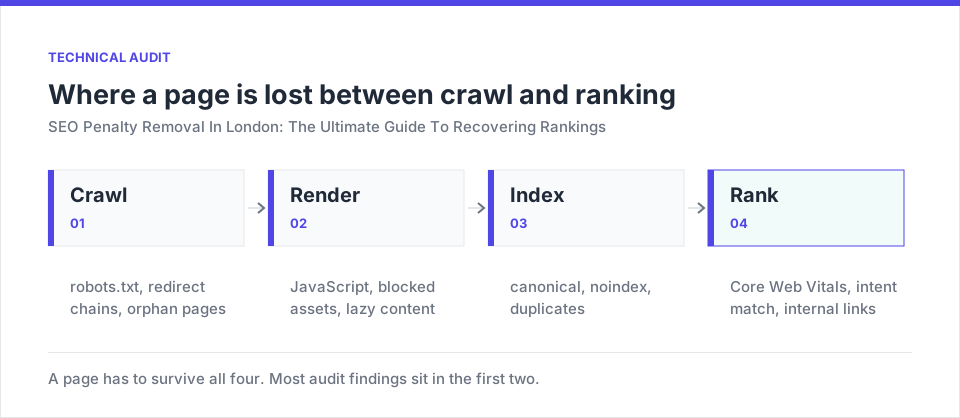
Technical robustness underpins recovery by ensuring that search engines can discover, crawl, and index a clean, well-structured site. Focus on crawl optimisation, proper canonical handling, robust robots.txt, and a clean sitemap. Address any crawl errors, broken internal links, or confusing redirects that may have surfaced during the penalty period. Paying attention to Core Web Vitals and page experience signals remains essential, particularly for mobile users in dense urban settings where local queries often originate from on-the-go devices.
Enhance structured data coverage with LocalBusiness, Organization, FAQPage, and Breadcrumb schemas where applicable. Validate schema consistency across hub and district pages to avoid conflicting signals that could undermine recovery. Ensure transparent, crawl-friendly navigation that helps users reach the most relevant district pages quickly, creating a stable baseline for post-penalty visibility improvements.
Step 8: District-Level Optimisation And Local Signals Alignment
District pages live at the frontline of local search. A disciplined approach ensures district content mirrors hub authority while addressing district-specific intent, landmarks, and user signals. Actions include maintaining consistent NAP across GBP and local listings, aligning district pages with central hub narratives, and applying schema uniformly across districts to support rich results. Regularly review Local Pack and Maps performance to identify districts showing gaps in proximity signals or outdated information, then prioritise updates to restore accuracy and relevance.
Coordinate content calendars with district managers to reflect local events, community updates, and service-area expansions. Invest in local industry partnerships and publish authoritative content that earns high-quality local references. This district-aware strategy cements surface parity and reduces the risk of disorder as ranking updates roll out.
Step 9: Governance, Documentation, And Stakeholder Communication
A regulator-friendly governance framework underpins trust with leadership and partners. Maintain a comprehensive documentation trail for all fixes, the rationale behind actions, and the evidence supporting decisions. Establish regular stakeholder updates, including milestone progress, risk registers, and upcoming reconsideration timelines. Where possible, align reporting formats with Google’s guidelines to demonstrate compliance and transparency. London-focused projects benefit from a dedicated scoping session to tailor governance templates and dashboards that reflect city-specific surfaces, such as hub authority, GBP health, Local Pack, and district signals.
To kickstart governance-ready routines and templates, explore our London Services and consider booking a scoped session via the contact page. A well-governed recovery not only accelerates reinstatement but also builds a framework for ongoing resilience against future updates.
90-Day Action Blueprint
- Phase 1 – Forensic-to-fix alignment: Finalise the backlink clean-up plan, confirm content refresh priorities, and stabilise central hub signals.
- Phase 2 – Surface remediation: Implement district-page updates, unify NAP data, and strengthen Local Business schemas across priority districts.
- Phase 3 – Governance setup: Launch regulator-friendly dashboards, establish monthly health checks, and schedule quarterly ROI reviews.
- Phase 4 – Evaluation and expansion planning: Assess ROI, prioritise additional districts, and refine content calendars to sustain momentum while ensuring continued compliance.
For ready-made governance templates and starter dashboards tailored to London, visit our London Services or book a scoping call to tailor a plan to your budget and growth goals.
SEO Penalty Removal In London: A Practical Guide From LondonSEO.ai
Backlink integrity remains a cornerstone of penalty recovery for London brands. A targeted, governance-led cleanup reduces risk, restores trust with Google, and re-establishes the local authority signals that drive hub, GBP, Local Pack and district pages. This Part 9 focuses on practical methods for link cleanup and disavow strategies that align with the city-first approach we champion at LondonSEO.ai.
Why Link Health Matters In London Penalty Recovery
Google evaluates the credibility of a site through its backlink profile. In London, where district pages, GBP health, and Local Pack signals must align with a central hub, toxic or irrelevant links can destabilise recovery efforts and slow progress. A disciplined cleanup targets links that undermine local relevance, distort anchor text distribution, or originate from low-quality domains that lack genuine local proximity signals.
Step 1: Establish A Thorough Backlink Inventory
Begin with a comprehensive crawl of all live backlinks. Catalogue domain relevance to London districts, the central hub content, GBP signals, and Local Pack context. Tag links by risk level (high, medium, low) and by potential impact on district pages versus hub authority. A precise inventory is essential for prioritising remediation actions and for regulator-ready reporting. London campaigns benefit from mapping links to district pages so remediation decisions reflect local surface dependencies.
Step 2: Risk Scoring And Prioritisation
Score risks using a transparent rubric: domain quality, topical relevance to London markets, anchor text alignment with hub and district terms, and historic participation in manipulative linking schemes. Prioritise removals for links that directly threaten District Pack credibility or GBP integrity. In many London contexts, a handful of authoritative, locally relevant links can outperform a larger set of dubious connections, so strategy should favour quality over quantity.
Step 3: Outreach For Link Removal
Where possible, request removal directly from webmasters of high-risk links. Personalised outreach that explains the relevance and harms in a constructive way often yields successful removals. Maintain a neutral, regulator-friendly tone and document all outreach activities. For links that cannot be removed, prepare a well-justified disavow approach to mitigate impact while preserving legitimate relationships with local publishers that genuinely add value to London content ecosystems.
Step 4: Create A Regulator-Friendly Disavow File
When removals aren’t feasible, construct a carefully scoped disavow file that excludes links with low relevance or spam signals. Include clear rationale for each entry and maintain a record of removal attempts. The disavow file should be underscored by a narrative that connects the backlinks to the district and hub surfaces they affect, which helps during reconsideration discussions and regulator reviews. Keep the file concise and targeted to avoid unintended damage to legitimate London-focused domains.
Step 5: Validate And Monitor The Impact
After removals or disavows are implemented, monitor search performance across hub and district pages. Track fluctuations in rankings for core London terms, GBP health metrics, and Local Pack stability. Successful cleanup typically yields gradual improvements over 4–8 weeks, with more noticeable shifts as Google re-evaluates link authority. Use a consistent reporting framework to demonstrate progress to stakeholders and, if needed, to support reconsideration requests.
Practical Governance For Ongoing Link Health
Embed a link-health cadence into your London penalty-removal programme. Schedule quarterly backlink audits, maintain a live disavow log, and integrate link health metrics into the governance dashboard alongside GBP engagement and district-page performance. By tying link integrity to surface health, leadership gains a clear view of how backlinks influence authority across hub and districts. For templates and example dashboards, explore our London SEO Services and arrange a scoping call via the contact page.
Choosing a London-based penalty removal partner: what to look for
Selecting the right penalty removal partner in London is as critical as the remediation plan itself. A trustworthy agency should combine deep technical SEO expertise with a governance-driven approach that aligns with Google’s guidelines and client aspirations. This part focuses on the criteria you should use to assess potential partners, how to validate their claims, and a practical checklist to ensure your investment translates into durable, regulator-friendly results for London surfaces, including hub authority, GBP health, Local Pack, and district pages.
Key credibility indicators for a London penalty removal partner
Experience with London markets is essential. Look for proven outcomes across GBP health, Local Pack stability, and district-page optimisations, not just generic site-wide wins. A credible partner should demonstrate a track record of ethical remediation, transparent reporting, and a clear governance cadence that keeps stakeholders informed while work progresses. They should be comfortable working within the city’s unique regulatory and consumer context, and capable of producing regulator-friendly documentation that can support reconsideration requests if needed.
Beyond a splashy case study, request a realistic, district-aware impact narrative. The partner should be able to articulate how improvements on the city hub translate into tangible gains for individual districts, and how those gains feed back into GBP engagement, Maps proximity, and organic visibility across the capital.
- Local-market track record: Demonstrated success in London with central hub, GBP, and district surfaces.
- Governance discipline: Regular progress updates, change logs, and regulator-ready reporting.
- Ethical alignment: Clear adherence to Google guidelines and white-hat remediation practices.
- Transparency of pricing: Clear scoping, timelines, deliverables, and calendarized milestones.
How to validate process quality before engagement
Ask for a sample scoping document that outlines the four essential pillars: discovery, remediation, governance, and monitoring. Review the proposed timelines and ensure they include early wins as well as long-term surface realignment. Request copies of regulator-ready templates, such as change logs, audit trails, and ROI dashboards, to assess whether the agency can deliver transparent, auditable results across multiple surfaces. A reliable partner will provide these artefacts upfront, not as an afterthought.
Insist on reference calls with London-based clients who faced penalties similar in scale to yours. Focus on how the partner managed surface interdependencies (hub, GBP, Maps, and district pages), how they reported progress, and whether the client felt informed and protected during the process.
What a robust proposal should include
A solid proposal from a London penalty removal expert should present a clearly defined scope, staged milestones, and a transparent pricing model. Look for a staged 90-day plan that prioritises hub stability, GBP health, and then district-page realignment. The proposal should also include evidence of technical audits, link-health strategies, content refresh plans, and a documented reconsideration workflow should Google require it. Finally, the best partners offer ongoing governance post-recovery to prevent regression as updates roll out.
For organisations based in London, the right partner will also offer sensible communication windows compatible with UK business hours, with clear SLAs for deliverables and response times. This operational predictability is crucial when coordinating cross-surface activities that impact visibility and revenue across the capital.
Why London SEO agencies are uniquely positioned to help
London’s competitive landscape requires a partner who understands both the local dynamics and broader search engine evolution. A capable penalty removal partner should combine forensic analytics with practical, district-aware strategies. They should help you quantify the value of remedies through dashboards that blend central hub metrics with district performance, enabling clear accountability and informed decision-making for leadership and investors. Importantly, they should emphasise ethical, sustainable practices that reduce the risk of future penalties while preserving user experience and content integrity.
A practical due-diligence checklist to use today
- Ask for a district-focused case study: Look for explicit examples showing hub-to-district surface improvements in London, including GBP and Local Pack outcomes.
- Request a sample scoping document: Expect a four-pillar plan (discovery, remediation, governance, monitoring) with timelines and owner assignments.
- Request regulator-friendly templates: Change logs, audit trails, and ROI dashboards that can support reconsideration and stakeholder reporting.
- Check client references: Speak with London-based clients about communication quality, responsiveness, and perceived value of the partnership.
- Clarify pricing and milestones: Ensure there is a transparent, scalable cost structure aligned to deliverables and measurable outcomes.
SEO Penalty Removal In London: A Practical Guide From LondonSEO.ai
Part 11 of our London-focused penalty recovery series dives into the technical fixes that underpin a resilient recovery. After the initial forensic work and governance setup, the next step is to harden the technical foundation so Google can recrawl, reindex, and re-evaluate surfaces with confidence. This part focuses on actionable, London-relevant technical SEO changes that stabilise hub authority, GBP integrity, Local Pack signals, and district-page credibility. Implementing these fixes in a coordinated, auditable way keeps the surface architecture aligned with the city-first governance model we advocate at LondonSEO.ai.
Technical Health Audit And Quick Wins
Begin with a focused technical health audit that assesses crawlability, indexation, canonical handling, and critical site speed issues. The London market demands rapid restoration of surface reliability across central hub signals and district surfaces, so identify high-impact fixes that restore baseline accessibility first. Prioritise areas where Googlebot can reliably discover and understand hub content, GBP integrations, and district pages without ambiguity. Quick wins often include fixing broken internal links, correcting misconfigured redirects, and ensuring the most important district pages are crawlable and indexable.
Document findings in a regulator-friendly format, so stakeholders see a clear lineage from issue to fix. Use the audit to anchor a 90-day technical plan that dovetails with content refresh, backlink health, and governance milestones. For ongoing support, LondonSEO.ai provides templates and dashboards to keep your team aligned with surface-level improvements and long-term stability.
Crawlability, Indexing, And Canonicalisation
Ensure that your most valuable pages—the central hub, GBP landing pages, and top district pages—are readily crawlable. Validate robots.txt directives to avoid accidental blocking of essential areas and review the sitemap.xml for completeness and accuracy. Implement robust canonical schemes to prevent duplicate content from diluting authority across hub and district pages. If you discover cross-domain canonical issues or conflicting canonical tags between hub and district pages, resolve them to restore a coherent signal flow across surfaces.
In London, a common risk is surface misalignment between hub content and district content. Use consistent breadcrumb trails and cross-linking that reflect real user journeys from hub to districts, ensuring Google understands the intended hierarchy and locality. Preserve regulator-friendly change logs that capture every canonical decision and the rationale behind it.
Redirects And URL Architecture
Audit and standardise redirects to avoid chains, loops, or 302s that dilute link equity. Ensure that canonical URLs reflect the most authoritative surface for a given district, city hub, or GBP page. Create a predictable, user-friendly URL taxonomy that mirrors London’s district geography and service areas. Clear, stable URLs help Search Console interpret changes more quickly, which is vital when you’re aiming for timely reconsideration decisions or long-term surface maintenance.
When consolidating pages or migrating content, implement 301 redirects with a mapped old-to-new path that preserves value. Maintain a cross-surface redirection plan that accounts for hub-to-district navigation, GBP-linked pages, and Local Pack landing pages to prevent ranking regressions across multiple surfaces.
Site Speed And Core Web Vitals For London Audiences
Core Web Vitals remain a core determinant of user experience signals Google uses when ranking. In dense urban markets like London, where users expect fast, device-friendly experiences on mobile when navigating to district hubs, optimising largest contentful paint (LCP), first input delay (FID), and cumulative layout shift (CLS) is critical. Focus on server response times, resource loading prioritisation, and image optimisations that deliver visible improvements in under two seconds on mobile devices in central and high-demand districts.
Beyond lab metrics, rely on field data from Google Core Web Vitals reports and Google Search Console to identify persistent issues. Combine these with speed optimisations that respect accessibility and readability guidelines, boosting both user satisfaction and crawl efficiency.
Structured Data And Local Schema Across Surfaces
Structured data provides Google with precise signals about local business details, services, and district contexts. Implement LocalBusiness, Organization, FAQPage, and Breadcrumb schemas consistently on hub and district pages. Consider district-specific events, landmarks, transport notes, and service areas to enrich schema without over-optimising. A harmonised schema strategy helps robustly qualify rich results in Local Pack and improves the likelihood of appearing in knowledge panels and other SERP features that matter for London users.
Maintain schema governance with versioned templates and clear guidance on when and how to update district-specific data. Document any schema changes in your regulator-friendly change log so stakeholders can review rationale and expected impact.
Governance, Ownership, And London-Specific Dashboards
Assign surface owners for hub, GBP, Local Pack, and district pages, with monthly signal health reviews that feed into quarterly ROI assessments. Use a central dashboard that blends GBP engagement, Maps proximity, and district-page performance to provide a city-wide view and district-level granularity. This governance cadence ensures that technical fixes translate into tangible improvements across surfaces and supports regulator-ready reporting.
For practical templates and starter dashboards tailored to London budgets, explore our London services and book a scoping call to tailor a plan that fits your needs.
Next Steps And A Look Ahead
With the technical backbone strengthened, Part 12 will shift focus to content quality and district-level alignment, including how to fuse forensics with district narratives, and how to manage content calendars that echo local events and user intent. We’ll provide practical templates for content refresh, district-page optimisations, and regulator-friendly reporting that show value across hub and districts. To get practical, consider engaging with our London SEO Services or book a scoping call to begin a city-wide technical turnaround that scales across districts.
SEO Penalty Removal In London: A Practical Guide From LondonSEO.ai
Part 12 of our London-focused penalty recovery series continues from technical hardening into ongoing vigilance. Post-recovery, the goal shifts from restoring surface health to sustaining it. This part outlines a rigorous monitoring framework, a future-proofing playbook, and governance practices that keep central hub authority synchronised with district surfaces, GBP health, and Local Pack stability. The emphasis remains on a regulator-ready, auditable approach that protects long-term visibility and revenue for London brands, empowering you to scale without reintroducing risk.
Ongoing Monitoring Framework For London Penalty Recovery
After initial recovery, implement a structured monitoring framework that continuously evaluates all surfaces: the central hub, GBP health, Local Pack, Maps proximity, and district pages. A city-wide dashboard should present live signals alongside district-level drill-downs, enabling rapid detection of drift or regression. Regular monitoring ensures early warning of algorithm shifts and content decays before they meaningfully erode rankings.
Key components include an integrated dashboard, automated alerts for surface anomalies, and a documented escalation path that feeds into governance reviews. In practice, London campaigns benefit from surface-level ownership where each surface has a dedicated owner who reports into a single governance cadence. This reduces fragmentation and supports regulator-ready reporting as updates occur.
Cadence And Governance: Monthly Health Checks And Quarterly Reviews
Establish a monthly health check that tracks Core Web Vitals, GBP engagement, Local Pack stability, and district-page visits. The quarterly review should translate these signals into actionable priorities and budget realignments. Document the rationale for any shifts, including expected surface impacts and risk mitigations, in regulator-friendly formats. This cadence creates a predictable rhythm for stakeholders and reduces the chance of reactive, ad-hoc changes that could destabilise recovery gains.
LondonSEO.ai provides governance templates and dashboards designed for city-scale surfaces, enabling clear reporting to leadership, investors, and regulatory audiences. To explore these resources, visit our London SEO Services and consider booking a scoping call via the contact page.
Maintaining GBP Health And District Alignment Over Time
A sustainable penalty recovery plan treats GBP health, district content, and hub messages as a single, connected system. Regular audits of NAP consistency, GBP categories, posting cadence, and local event-driven content help prevent drift between central hub narratives and district surfaces. Implement a lightweight translation memory system to preserve locale fidelity across districts, ensuring that updates reflect local terminology and user expectations while remaining aligned with city-wide authority.
Pair content calendars with live data feeds from GBP and Maps to anticipate seasonality and events in London’s districts. This proactive approach keeps content relevant and signals coherent, reducing the likelihood of future penalties triggered by misalignment or outdated information.
Future-Proofing: How To Scale Safely Across London'S Districts
Future-proofing hinges on scalable, regulator-friendly processes. As you expand to additional districts, ensure that surface owners, governance templates, and Trails provenance scale in a controlled manner. Maintain versioned schemas and region briefs that reflect district-specific realities while preserving hub consistency. A robust plan anticipates new surfaces, such as emerging Local Pack formats or updated knowledge panels, by pre-defining acceptance criteria and rollback procedures that protect the central spine.
Develop a district expansion playbook that includes a staged roll-out, clear success metrics, and regulator-ready documentation. By embedding governance in every surface activation, you ensure new districts contribute to the city-wide authority rather than creating disjointed signals that undermine recovery.
Regulatory Readiness: Ongoing Documentation And Compliance
Maintaining regulator-ready documentation remains essential as you extend recovery. Continuously update audit trails, change logs, and reconsideration readiness packs. Include evidence of UK-compliant data handling, accessibility considerations, and branding consistency across hub and district surfaces. Regularly refresh the regulator-facing templates to reflect the latest Google guidelines and local regulatory expectations, ensuring you can present a clear, auditable narrative should Google request additional proof during a reconsideration process.
For practical templates and starter dashboards designed for London, explore our London services and book a scoping call to tailor a plan that fits your governance requirements and growth targets.
Measuring Long-Term Impact: KPIs And ROI
Beyond immediate recovery, track long-term impact with KPIs that blend surface health with revenue signals. Core metrics include GBP engagement, Local Pack impressions, district-page visits, on-site conversions, and revenue attributed to hub and district surfaces. Use a single, regulator-friendly dashboard to demonstrate sustained improvements, with quarterly ROI reviews that translate surface health into real business outcomes. This clarity supports budget planning and stakeholder confidence as you scale London's surface architecture.
SEO Penalty Removal In London: A Practical Guide From LondonSEO.ai
Part 13 of our London-focused penalty recovery series turns to the practicalities that organisations in the capital care about most: timelines, costs, and expectations when engaging a penalty removal partner. A well-structured programme with predictable budgets helps you stabilise hub authority, GBP health, Local Pack signals, and district-page integrity without compromising governance or compliance. This section outlines typical timelines, what drives them in London, and what a fair, regulator-friendly cost model and deliverables look like from a reputable penalty removal partner such as LondonSEO.ai.
What Typically Influences Timelines And Budgets In London Penalty Removals
Timelines and costs are driven by surface complexity, penalty severity, and how quickly you can mobilise internal stakeholders. Key factors include the number of surfaces involved (central hub, GBP, Local Pack, and multiple district pages), the depth of the backlink profile, the need for content refresh, and the level of technical SEO hardening required. In London, where proximity signals, district content, and hub authority interact, remediation often unfolds across interconnected surfaces, so schedules must reflect cross-surface dependencies. Availability of access to CMS teams, content owners, and data sources also plays a critical role in speed and cost efficiency.
- Severity and type of penalty: manual actions may require reconsideration workflows, while algorithmic issues can be addressed through iterative surface fixes.
- Surface complexity: more districts and GBP updates increase coordination needs and governance overhead.
- Quality and completeness of data: reliable backlink data, NAP consistency, and schema accuracy speed decision-making.
- Stakeholder readiness: timely reviews, approvals, and access to source content impact cadence and risk management.
A Practical 90‑Day Timeline For London Penalty Removal
- Phase 1 – Discovery And Governance Setup (Days 1–14): Complete a forensic audit framework, confirm surface ownership, and establish a regulator-friendly governance charter that defines milestones and reporting cadence.
- Phase 2 – Quick Wins And Stabilisation (Days 15–28): Implement high-impact technical fixes, stabilise central hub signals, refresh GBP data where needed, and fix obvious crawl/indexing issues to re-establish baseline visibility.
- Phase 3 – Surface Remediation (Days 29–60): Roll out district-page updates, align Local Pack signals, clean up or disavow harmful backlinks, and apply consistent LocalBusiness and FAQ schema across priority districts.
- Phase 4 – Monitoring And Handover (Days 61–90): Initiate ongoing signal health checks, set up regulator-friendly dashboards, and prepare a detailed handover package with reconsideration-ready documentation if required.
Typical Cost Models You Can Expect In London
Budgets vary with the scope, surface count, and the level of governance you require. A practical way to think about costs is in three tiers, aligned with governance maturity and district coverage:
- Essential package: Targeted discovery, central hub stabilisation, GBP health checks, a basic district-page refresh, and a regulator-friendly audit trail. Expect a one-off initial investment complemented by a modest monthly governance retainer. Typical ranges in London start from a few thousand pounds for the most lightweight engagements, rising with surface complexity.
- Standard package: Combines comprehensive forensic audit, structured remediation across hub and multiple districts, robust backlink health actions, and a governance dashboard with monthly updates. This tier is common for mid-market London brands, with ongoing monthly costs designed to cover sustained surface health and reporting.
- Comprehensive package: Full-scale penalty removal programme across all surfaces (hub, GBP, Local Pack, district pages), extensive backlink rehabilitation, content refresh, technical hardening, and in-depth reconsideration support. Ideal for larger London brands with multi-district footprints and high stakes in Local Pack and Maps. Costs reflect the breadth of work and the ongoing governance framework.
In practice, initial remediation budgets typically grow with surface count and penalty complexity. A reasonable approach is to charter a 90‑day plan with defined milestones, then review ROI at the end of the period. For clarity and governance, LondonSEO.ai provides transparent scoping, with dashboards that align surface health to revenue outcomes. To explore packages and get a tailored quote, visit our London SEO Services or book a scoping call.
What A Reputable London Penalty Removal Partner Will Deliver
- A clear, regulator-friendly project plan with defined milestones, owners, and deadlines.
- Forensic audit results mapped to central hub, GBP, Local Pack, and district surfaces.
- Prioritised remediation across technical fixes, content enhancements, and link health actions.
- Governance templates, audit trails, and dashboards that enable transparent reporting to stakeholders.
- Reconsideration support where needed, including evidence documentation and submission guidance.
LondonSEO.ai champions an ethical, transparent approach, emphasising local surface coordination and measurable outcomes. For practical templates and starter dashboards aligned to London budgets, explore our London services or book a scoping call to tailor a plan to your needs.
Next Steps: How To Move From Plan To Action In London
If you’re ready to translate timelines and budgets into action, the next step is a scoped engagement. A London-focused penalty removal partner will help you align central hub authority with district-level signals, build regulator-ready documentation, and set up robust dashboards from day one. To begin, explore our London SEO Services or contact us to schedule a scoping call. A disciplined, transparent approach yields not only restored rankings but also a durable framework for future growth across London's surfaces.
Choosing A London-Based Penalty Removal Partner: What To Look For
Selecting the right penalty removal partner in London is as critical as the remediation plan itself. A city-first, governance-led approach requires a partner who understands the unique surface dynamics of London’s hub, GBP health, Local Pack, and district pages. This part provides a practical, regulator-friendly framework to evaluate agencies, ensuring you invest in a collaboration that delivers durable, district-aware results for London SEO Services and aligns with the standards we uphold at LondonSEO.ai.
Key credibility indicators for a London penalty removal partner
Experience with London markets is essential. Look for proven outcomes across GBP health, Local Pack stability, and district-page optimisations, not just generic site-wide wins. A credible partner should demonstrate ethical remediation, transparent reporting, and a clear governance cadence that keeps stakeholders informed while work progresses. They should be comfortable operating in UK time zones and familiar with regulator-friendly documentation that supports reconsideration if needed.
Beyond a catchy case study, request a realistic, district-aware narrative that ties hub improvements to district results and GBP engagement. The partner should articulate how central hub stabilisation translates into tangible gains for individual districts and how those gains feed back into Maps proximity, Local Pack presence, and organic visibility across London.
- Local-market track record: Demonstrated success in London with central hub, GBP, and district surfaces.
- Governance discipline: Regular progress updates, change logs, and regulator-ready reporting.
- Ethical alignment: Clear adherence to Google guidelines and white-hat remediation practices.
- Transparency of pricing: Clear scoping, timelines, deliverables, and calendarised milestones.
- Post-recovery support: Ongoing monitoring and governance to prevent regression.
Due-diligence checklist for London penalty removal partners
Use a compact, registrar-friendly checklist during shortlisting to avoid late-stage surprises. The aim is to confirm capabilities before you commit time and budget to a renewal cycle that could span months. A practical checklist includes governance maturity, surface ownership, and evidence of district-aware execution. Request copies of regulator-ready templates, change logs, and ROI dashboards to assess whether the agency can deliver in a transparent, auditable fashion.
- Case studies with district focus: Look for explicit examples showing hub-to-district improvements in London, including GBP and Local Pack outcomes.
- Sample scoping document: Expect a four-pillar plan (discovery, remediation, governance, monitoring) with timelines and owner assignments.
- Regulator-ready templates: Change logs, audit trails, and ROI dashboards that can support reconsideration and stakeholder reporting.
- Client references: Speak with London-based clients about communication quality, responsiveness, and perceived value of the partnership.
- Pricing transparency: Clear, scalable cost structures aligned to deliverables and measurable outcomes.
How to validate proposals before engagement
Ask for a documented scoping plan that emphasises three outcomes: surface stability (hub and GBP), district-page realignment, and regulator-friendly reporting. Require a 90-day plan with concrete milestones and owners. Request regulator-ready templates such as change logs, audit trails, and ROI dashboards. Check references who can verify that governance processes were followed and that outcomes translated into real surface improvements.
Seek a candid discussion about cross-surface dependencies. The best London partners demonstrate how improvements on the city hub propagate to district surfaces and vice versa, reducing the risk of surface drift during updates.
How to engage with LondonSEO.ai
LondonSEO.ai is positioned to deliver a city-centric penalty removal programme with governance that scales across hub, GBP, Local Pack and district pages. Start by exploring our London SEO Services to understand available packages, then book a scoping call via the contact page to tailor a plan to your budget and growth goals. Expect a collaborative onboarding that assigns surface owners, establishes governance cadences, and creates regulator-ready documentation from day one.
Next steps: turning evaluation into action
If you’re ready to move from assessment to action, initiate a scoping call with LondonSEO.ai. A London-focused penalty removal partner should deliver a clear, regulator-friendly plan, assign accountable owners for each surface, and provide dashboards that tie surface health to revenue outcomes. This upfront structure helps you forecast budgets, manage stakeholder expectations, and accelerate a durable recovery across city and district surfaces. To begin, visit our London Services or book a scoping call.
With disciplined governance, transparent reporting, and district-aware action, your penalty removal project becomes not only a recovery exercise but a foundation for sustained growth across London’s surfaces.
SEO Penalty Removal In London: A Practical Guide From LondonSEO.ai
Having walked through the core mechanics of penalties across the preceding sections, this final part concentrates on actionable readiness for London-based brands. If you’re nearing the decision to engage a dedicated penalty removal company in London, you’ll find a concise, city-focused blueprint here: a sharp readiness checklist, a pragmatic 90-day recovery timeline, budgeting guidance, and a clear picture of what to expect when partnering with LondonSEO.ai. The aim is to translate complex surface health into an auditable, regulator-friendly programme that protects value across hub, GBP, Local Pack and district surfaces.
Final Readiness Checklist For London Penalty Recovery
- Governance spine established: A central, regulator-friendly charter linking hub authority, GBP signals, Local Pack and district pages with clear ownership.
- Surface ownership mapped: Assign accountable owners for the city hub, GBP health, Local Pack, and each district page to avoid cross-surface drift.
- Forensic readiness completed: A current backup of backlink health, content quality, technical health, and index status aligned with recent algorithm updates.
- Auditable change logs in place: Versioned documentation covering fixes, rationale, and outcomes to support reconsideration if required.
- District-awareness embedded: District briefs, local landmarks, and region-specific signals prepared to accelerates realignment.
- Stakeholder alignment secured: Regular briefing cadence with leadership, marketing and product teams to sustain momentum.
A Pragmatic 90-Day Timeline For London Penalty Removal
- Phase 1 – Discovery And Governance Setup (Days 1–14): Complete a forensic framework, confirm surface owners, and lock in regulator-ready reporting templates that will be used throughout the project.
- Phase 2 – Quick Wins And Central Stabilisation (Days 15–30): Implement high-impact technical fixes, stabilise central hub signals, verify GBP health data, and address obvious crawl and index issues.
- Phase 3 – Surface Remediation (Days 31–60): Roll out district-page updates, align Local Pack signals, clean or disavow harmful links where possible, and apply consistent schema across priority districts.
- Phase 4 – Monitoring And Handover (Days 61–90): Initiate ongoing signal health checks, establish governance dashboards, and prepare a handover package with reconsideration-ready documentation if needed.
Budgeting And Return On Investment For London Penalties
Budgets vary with surface count, penalty complexity, and governance requirements. A practical model aggregates four layers: (1) initial forensic audit and central hub stabilisation, (2) surface-wide remediation across hub and districts, (3) robust backlink health actions, and (4) regulator-ready governance dashboards and reconsideration support. In London, forecasts should compare hub-centric gains with district-level improvements to capture multi-surface ROI. LondonSEO.ai can provide starter templates and dashboards that translate surface health into revenue impact, helping you justify ongoing governance and future expansions.
Typical cost structures range from essential, through standard, to comprehensive packages, each with clearly defined milestones and deliverables. Expect a staged payment plan aligned to milestones, with a transparent scope and calendarised milestones. For a tailored quote, explore our London SEO Services or book a scoping call.
What To Expect From A London Penalty Removal Partner
- Ethical, regulator-friendly practice: Adherence to Google guidelines with a clear audit trail and evidence for reconsideration where necessary.
- City-first governance: A central spine that harmonises hub, GBP, Maps and district signals across all surfaces.
- Transparent delivery: Regular updates, change logs, dashboards, and accessible reporting for leadership and regulators.
- District-aware execution: Content refresh, Local Schema consistency, and district-specific signal realignment without losing city-wide authority.
- Ongoing protection: Post-recovery monitoring and governance to prevent regression through future updates.
To discuss your needs with a London penalty removal specialist, visit our London SEO Services or book a scoping call.
Next Steps: Turning Readiness Into Action
If you’re ready to move from planning to action, initiate a scoping call with LondonSEO.ai. We specialise in a city-first penalty removal programme that aligns central hub authority with district-level signals, builds regulator-ready documentation from day one, and delivers measurable dashboards that connect surface health to business outcomes. Start by exploring our London Services and book a scoping call to customise a plan that fits your budget and growth goals.
With disciplined governance, transparent reporting, and district-aware action, your penalty removal journey becomes a durable platform for sustainable growth across London’s surfaces.
