London Ecommerce SEO: Why It Matters For London’s Online Retailers
London’s online retail landscape is highly competitive, with luxury brands, niche independents, and regional chains all vying for visibility. In a market defined by quick local decisions and large-volume queries, search engine optimisation (SEO) must be more than technical rigour; it needs a disciplined, location-aware framework that delivers durable proximity signals across maps, knowledge panels, and suburb-facing pages. At londonseo.ai, we emphasise a governance-forward approach that treats local authority as a strategic asset—something that scales with growth without losing authenticity.
In London, consumer journeys commonly begin on Google Maps, the Knowledge Graph, or district landing pages. A city-wide London ecommerce SEO strategy should prioritise Google Business Profile (GBP) hygiene, Local Pages (LPs), and Canonical Local Pages (CLPs) that accurately reflect service areas and district proofs. A governance framework—grounded in auditable localisation history and authentic terminology—ensures decisions are reproducible as you expand from central zones like the West End to outer boroughs such as Bromley or Leyton.
Core signals that influence London rankings
Local visibility in London hinges on a cohesive set of interlocking signals. The most influential include:
- GBP hygiene: precise categories, hours, service areas, and timely posts that mirror district pages.
- LPs and CLPs: district-focused pages that align with GBP content and authentic london proofs.
- NAP consistency: uniform brand name, address and phone number across London surfaces to reinforce trust.
- Proximity signals: exact addresses, landmarks, and transport references that help users locate you within their borough.
- Reviews and reputation: credible, timely responses that build trust and increase conversions.
These signals gain strength when supported by an auditable localisation history. CORA Trails records the rationale behind each district modifier, while Translation Provenance ensures consistent London terminology across updates. This provenance backbone supports expansion into more boroughs and service areas without compromising reader trust.
For practical templates and dashboards, visit the London Services hub or book a scoping discussion via the Contact Page.
In practice, a hub-and-spoke approach helps ensure GBP posts, district pages and knowledge panels reinforce a coherent London footprint. It also provides an auditable trail as you scale to additional boroughs, landmarks, and local events.
Looking ahead, Part 2 will explore London keyword research, district content spines, and the practical content plan that underpins near-me visibility across the capital. For ready-to-use templates and dashboards, explore the London Services hub and initiate a scoping discussion via the Contact Page.
Getting started: practical first steps
- Audit GBP hygiene, LP/CLP depth, and NAP consistency across target London boroughs.
- Identify 3–5 district proofs and map a district content spine that mirrors real-world London geography.
- Set governance cadences: weekly surface health checks and monthly localisation-history reviews.
- Apply CORA Trails and Translation Provenance from day one to every district modifier.
- Launch district dashboards to monitor LP/CLP health, GBP engagement, and near-me conversions.
Access ready-to-use templates and artefacts via the London Services hub, and book a scoping discussion through the Contact Page to tailor a district-aware plan for your portfolio.
London Ecommerce SEO: Setting Goals For A London Campaign
For London-based online retailers, ambition must be paired with measurable targets that reflect the city’s diverse shopper base, its district-level nuances, and the surfaces that users rely on most—from Google Maps to district landing pages. A governance-forward goal setting approach at londonseo.ai ensures your ambitions translate into auditable actions, with Translation Provenance preserving authentic London terminology and CORA Trails documenting the rationale behind every district modifier. With clear targets in place, you can prioritise the right surfaces, cadence, and investments that deliver durable near‑me visibility across London’s boroughs.
This part outlines a practical framework for defining goals, selecting primary London targets, and establishing a governance cadence that keeps you accountable as you scale from central hubs such as the West End to outer boroughs like Bromley or Lewisham. The emphasis remains on credibility, proximity signals, and sustainable revenue growth rather than quick wins that erode trust.
Translating business aims into SEO outcomes
Begin with revenue and growth objectives that SEO can influence directly. Examples include increasing qualified organic sessions to key product categories, boosting near‑me conversions from London districts, and growing GBP engagement metrics over time. Align targets to top‑line goals (revenue, orders, average order value) and mid‑term metrics (inquiries, store visits, directional requests) to create a cohesive measurement narrative across surfaces.
Anchor each objective with district proofs and authentic London terminology validated by Translation Provenance. CORA Trails should capture the rationale behind district modifiers, enabling leadership to replay decisions if market conditions shift or new boroughs are added. For quick reference, see the London Services hub for district‑level playbooks and dashboards, and use the Contact Page to arrange an initial scoping discussion to tailor a goal framework for your portfolio.
Core London KPIs: what to measure
A practical London KPI set focuses on both site health and commercial results. The following indicators provide a balanced view of proximity signals, user intent, and revenue impact:
tracked by district and area, indicating visibility in target boroughs. knowledge panel interactions, posts, and hours accuracy that reflect local intent. page depth, content richness, and proof alignment with GBP signals. accuracy of addresses, landmarks, and transport cues that help users locate you quickly in their borough.
Additionally, track efficiency metrics such as time to first meaningful interaction, bounce rate by district landing pages, and average session duration on district spokes. These help assess whether district content and GBP activity are shaping intent effectively. Translation Provenance ensures terminology stays recognisable to London readers as you expand, while CORA Trails records the rationale for expanding into new boroughs.
Governance cadence: how London campaigns stay auditable
Establish a clear cadence that supports ongoing governance, transparency, and accountability. A typical London cadence includes:
- Weekly surface health checks: GBP hygiene, LP/CLP depth, and proximity signals across target boroughs.
- Monthly localisation-history reviews: assess district modifier rationales, translations, and terminology consistency.
- Quarterly strategy revalidations: adjust district priorities based on performance and market shifts, updating CORA Trails accordingly.
- Dashboard refreshes: ensure LP health, GBP engagement, and near‑me conversions by district are visible to leadership with provenance artefacts.
To accelerate adoption, leverage templates and dashboards from the London Services hub and schedule a scoping discussion via the Contact Page. These artefacts are designed to be regulator-friendly and reusable as you grow into additional districts and events across London.
A practical 90‑day plan to get started
verify GBP hygiene, LP/CLP depth, and NAP consistency across priority boroughs. select 3–5 London districts with strong near‑me potential and map a concise district content spine. implement weekly surface health tacticals and monthly localisation-history reviews. apply CORA Trails and Translation Provenance to every district modifier and update. configure district-filtered dashboards showing LP/CLP health, GBP engagement, and near‑me conversions, with provenance artefacts visible to stakeholders.
For district‑ready templates, dashboards, and governance artefacts, visit the London Services hub and book a scoping discussion via the Contact Page to tailor a district‑aware plan for your portfolio.
With a disciplined, auditable framework, your London SEO programme becomes more than a set of tactics. It becomes a governance‑driven engine that aligns district signals, GBP activity, and organic performance with measurable business results. The combination of CORA Trails and Translation Provenance enhances trust, while a clear cadence keeps the programme nimble in the face of algorithm changes and market evolution.
London Ecommerce SEO: Localised Keyword Research For London Shoppers
With London’s vast mix of districts, cultures, and shopping appetites, keyword research must be as localised as the surface signals you prioritise. Building on the goal framework from Part 2, this section translates business aims into actionable, district-aware search terms that mirror how Londoners actually search. At londonseo.ai, we tie CORA Trails for locale rationales and Translation Provenance for authentic London terminology to every seed, long-tail, and modifier, ensuring your keyword plan stays auditable as you extend from central hubs like the West End to outer boroughs such as Croydon or Greenwich.
In London, local intent often blends district names, landmarks, transport routes, and venue cues with product queries. A London keyword strategy must therefore connect seed terms to district proofs, GBP signals, and LPs that readers recognise. The approach below provides practical steps to discover high-potential terms that map to real shopper journeys across the capital.
Why local keyword research matters in London
Shoppers in London expect results that reflect their borough, neighbourhood, and even street-level context. District-aware keywords improve relevance, click-through rates, and the likelihood of near-me interactions such as directions, calls, or store visits. By anchoring keyword discovery in Translation Provenance, you preserve authentic local language as you scale. CORA Trails then justifies why each district modifier exists, supporting audits when you expand from central zones like the West End to districts such as Notting Hill, Brixton, or Woolwich.
- District-aware seed terms align with GBP posts and district pages to reinforce proximity signals.
- Local modifiers and landmarks expand the long-tail to cover near-me intent in diverse London areas.
- Authentic terminology reduces reader friction and supports regulator-friendly localisation history.
- Content spine alignment ensures keyword-driven content is actionable and scalable across boroughs.
As you identify keywords, remember that London’s geography isn’t static. A disciplined governance approach — with CORA Trails and Translation Provenance — keeps terminology stable while you add new districts or events. This foundation makes keyword decisions auditable and transferable, even as consumer search evolves around markets like Canary Wharf, Camden Town, or Clapham.
For practical templates and dashboards, visit the London Services hub or book a scoping discussion through the Contact Page.
A practical framework for London keyword discovery
list your primary offerings and the key London districts you intend to own, including service-area radii where applicable. begin with 15–25 seed terms per service that pair with district signals (for example, "London plumber central London", "electrician Camden town"). use keyword tools to capture questions and long-tail phrases that reflect local intent (e.g., "emergency plumber london east end at night"). assign each keyword to a content asset—category pages, district pages, FAQs, or blog posts. include district variants, landmarks, and transport corridors that locals use in everyday searches. assess London-specific terms for search volume, difficulty, and click potential. focus on near-me and transactional intent with realistic ranking prospects given your current authority.
Turning keywords into a district content spine
Discovered keywords should drive a district content spine that surfaces authentic proofs—landmarks, transit routes, local events, and community anchors—within district pages and GBP posts. Translation Provenance ensures London terminology stays recognisable to readers as you grow, while CORA Trails captures the rationale behind each district modifier. This alignment makes keyword-driven content both actionable and auditable as you expand to more boroughs such as Islington, Hackney, and Southwark.
Keyword map template and governance
A practical keyword map visualises relationships between core terms, district proofs, and content assets. The template should include keyword, search intent, district, content type, page owner, target KPI, and update cadence. When used with CORA Trails and Translation Provenance, it becomes a governance artefact that scales across London’s suburbs and supports regulator-friendly documentation of localisation decisions.
From keyword research to implementation
Plan a phased rollout that prioritises high-impact districts and content types. Start with a core set of district pages and blog posts to establish authority, then expand to additional suburbs as signals mature. Align GBP activity with district pages by publishing local posts and updating knowledge panels with authentic London terminology. CORA Trails and Translation Provenance should be visible in dashboards to demonstrate governance and provenance for all keyword-based decisions.
select 3–5 core London districts to own first and outline growth paths for additional districts. build a hub page with links to district spokes featuring authentic proofs validated by Translation Provenance. ensure GBP activity mirrors district pages and reinforces district proofs. weekly tactical updates and monthly localisation-history reviews with provenance visible in dashboards. make CORA Trails and Translation Provenance visible to support audits and regulator readiness.
For district-ready templates, dashboards, and governance artefacts, visit the London Services hub and book a scoping discussion via the Contact Page to tailor a district-aware, auditable keyword program for your portfolio. This framework travels with growth across London’s suburbs, keeping proximity signals robust and locally authentic.
London Ecommerce SEO: Site Architecture, Indexing And Internal Linking For Ecommerce
In London’s crowded online marketplace, a clean, scalable site architecture acts as the backbone of every successful ecommerce programme. A purpose-built taxonomy, robust internal linking, and disciplined indexing practices ensure Google and readers move smoothly from district-anchored surfaces to product pages. At londonseo.ai, we combine a district-aware hub-and-spoke model with governance artefacts such as CORA Trails (locale rationales) and Translation Provenance (authentic London terminology) to keep your structure auditable as you grow across boroughs and product families.
A well-planned site architecture starts with a clear taxonomy that mirrors London’s geography and shopper journeys. Top-level categories should reflect major product families, while district pages and GBP posts act as spokes that reinforce proximity signals. The goal is to ensure every district surface links logically to relevant product ranges, so users find what they need with minimal friction and search engines understand the geography behind intent.
Foundational elements of a London ecommerce taxonomy
Design your taxonomy to support both navigation and SEO signals. Key components include:
- Clear parent categories and defined subcategories that map to district proofs and GBP surfaces.
- District-aligned product filters and faceted navigation that reflect real-world London districts and landmarks.
- Consistent slug structure that enables predictable crawling and easy auditing of localisation history.
- Canonical planning that prevents content duplication when multiple district angles exist for the same product.
For practical implementation, adopt a hub page for London and district spokes that point to category pages, product listings, and GBP posts. This structure helps search engines establish the geographic relevance of each surface while guiding shoppers along familiar London paths—whether they are looking for a West End fashion accessory or a Croydon electronics upgrade.
Indexing and crawlability in a London ecommerce context
Indexing health is critical when you operate across many districts and product lines. The following practices help ensure efficient crawling and durable visibility:
- Submit a well-organised sitemap that separates district pages, category pages, and product pages, with a clear priority and update cadence.
- Use robots.txt strategically to block low-value URL parameters or duplicate faceted views while keeping essential district and product surfaces crawlable.
- Implement clean, semantic URLs that include district slugs, category paths, and product identifiers without over-optimising keyword stuffing.
- Keep a tight crawl budget by pruning thin content and consolidating near-identical district variants under canonical pages.
When changes are necessary—such as migrating to a new platform or restructuring categories—rely on CORA Trails to justify why each district modifier exists and Translation Provenance to preserve authentic London terminology across redirects. This makes migrations auditable and ensures district signals survive updates.
Internal linking best practices for proximity and authority
Internal links should guide users through district proofs to categories and then to product pages, while also reinforcing GBP surfaces. A disciplined internal linking plan reduces friction, distributes authority evenly, and strengthens proximity signals in Google’s eyes.
Vary anchor text to reflect district proofs, product attributes, and user intent, avoiding over-optimization on any single phrase. Include adjacent products, accessories, and complementary services on product pages to encourage additional exploration. From district GBP posts, link back to district category pages and product lists to create a cohesive local journey.
Structured data to support ecommerce surfaces
Structured data helps search engines understand product truth, pricing, availability, and district context. Implement schema blocks for Product, Offer, Review, BreadcrumbList, and LocalBusiness to enhance rich results and local visibility. Key practices include:
- Product schema with price, currency, currencyFormat, and availability aligned to district storefronts.
- Offer schema detailing sale price, validUntil, and shipping or pickup options specific to London locations.
- Review and AggregateRating to build trust, particularly on district-focused product pages.
- BreadcrumbList to reinforce navigation paths from London hub to district spokes, then to product pages.
- LocalBusiness or Organization schema to anchor GBP, LPs, and district proofs within the London footprint.
Adopt a governance approach for schema updates, with CORA Trails documenting locale rationales behind district assignments and Translation Provenance ensuring terminology stays recognisable to London readers across updates. Regularly audit schema health as you expand into new districts and product families.
Practical next steps for London retailers
review category depth, district coverage, and the alignment between GBP posts and product pages. document how district proofs connect to categories and products, and establish a rollout plan for new districts. optimise anchor text, relate products to district pages, and ensure GBP surfaces point to the right district assets. add Product, Offer, Review, BreadcrumbList, and LocalBusiness schemas to all core pages and district variants. weekly checks on crawlability and index coverage, monthly reviews of localisation history, and quarterly audits of district signals.
For ready-to-use templates, dashboards, and governance artefacts that support a district-aware architecture, visit the London Services hub and schedule a scoping discussion via the Contact Page to tailor an architecture plan that grows with your London portfolio.
London Ecommerce SEO: Content Marketing For London Brands
London’s online shoppers expect content that mirrors the city’s districts, landmarks, and local nuances. A district-aware content strategy, anchored by governance artefacts like CORA Trails for locale rationales and Translation Provenance for authentic London terminology, creates a durable spine that supports Local Pages, Canonical Local Pages, and Google Business Profile surfaces. At londonseo.ai, this approach translates business goals into credible, repeatable content actions that reinforce proximity signals across London’s boroughs while maintaining reader trust.
Content marketing in London should be owned by a clearly defined district spine. Each district page or GBP post carries proofs that readers recognise—neighbourhood names, transport corridors, events, and local partners. By tying content decisions to Translation Provenance and documenting the rationale with CORA Trails, teams can grow coverage across the capital without losing terminological authenticity or governance control.
Defining a district-aware content spine
A robust London content spine starts with a central hub page that summarises core services and then branches into district spokes. Each spoke surfaces authentic proofs—landmarks, routes, and community anchors—that readers expect in their locality. The spine should align with GBP messaging and district-focused LPs/CLPs, ensuring consistent proximity signals as you expand from central zones such as the West End to outer boroughs like Croydon or Bromley.
To keep content durable and auditable, attach Translation Provenance to every district term and update CORA Trails whenever you adjust proofs or add new districts. This enables leadership to replay decisions during audits or regulatory reviews and supports scalable growth across London’s diverse neighbourhoods.
Content formats that resonate with London readers
London audiences respond to formats that surface authentic district proofs and practical guidance. Prioritise a mix of content assets that support product pages, answer local queries, and demonstrate authority across boroughs:
- District pages that showcase landmarks, transit references, and community anchors.
- GBP posts aligned to the district spine, reflecting seasonal happenings and local events.
- Local guides and how-to content tailored to specific London suburbs.
- Case studies and community spotlights grounded in real district proofs.
- Event calendars and seasonal roundups linked to local calendars and venues.
As you develop content, ensure each piece ties back to a district proof and uses terminology validated by Translation Provenance. CORA Trails should justify why every district modifier exists, making it easy to audit and expand into new boroughs such as Islington, Hackney, or Southwark without eroding trust.
Content calendar and governance
Establish a clear annual cadence for London content that aligns with borough-specific events, tourism seasons, and local business cycles. A practical approach includes a quarterly planning phase, monthly topic sprints, and weekly production rituals. Governance artefacts should be visible in dashboards, showing how district proofs, GBP activity, and near-me actions cohere into business outcomes.
select 3–5 core London districts to own first, with growth paths for additional areas. map hub posts, district spokes, GBP posts, FAQs, and guides with owners and due dates. apply CORA Trails to locale rationales and Translation Provenance to terminology across updates. ensure district posts and pages reflect current services, hours, and proofs, boosting proximity signals. track reader engagement, near-me actions, and conversions by district to guide iterations.
Templates and dashboards to support this cadence are available via the London Services hub. To tailor a district-focused content calendar for your portfolio, book a scoping discussion through the Contact Page.
Localization, provenance, and continuous improvement
localisation in London is more than language; it is a set of lived signals. Translation Provenance preserves authentic district terminology across updates, while CORA Trails records why each district modifier exists. Regular governance reviews feed learnings back into the spine, ensuring the content remains credible as London evolves—whether new districts emerge or existing neighbourhoods gain prominence.
Getting started in London: a practical 90-day plan
identify gaps in hub-and-spoke coverage and GBP alignment, and prioritise districts for initial expansion. establish a central London hub and 3–5 district spokes with verified proofs. document landmarks, transit references, local events, and community anchors for each district. implement weekly tactical updates and monthly localisation-history reviews, with CORA Trails and Translation Provenance visible in dashboards. align with district spokes to maintain coherent proximity signals across surfaces. make CORA Trails and Translation Provenance visible to support audits and regulator readiness.
For ready-to-use templates and artefacts, visit the London Services hub, and schedule a scoping discussion via the Contact Page to tailor a district-aware content plan that grows with London’s portfolio.
London Ecommerce SEO: Local SEO Tactics For London Stores
London retailers operate in a dense, district-rich landscape where proximity signals, accurate business data, and reader trust are the differentiators between visibility and invisibility. At londonseo.ai we implement a governance-forward Local SEO framework built around CORA Trails (locale rationales) and Translation Provenance (authentic London terminology). This part focuses on practical, district-aware tactics that help your GBP, Local Pages, and district proofs work in concert to capture near-me searches across the capital’s boroughs.
Effective local SEO in London starts with disciplined hygiene across Google Business Profile (GBP), clear and district-aligned Local Pages (LPs), and a recognisable, auditable localisation history. When GBP posts, district proofs, and city-wide signals align with authentic London terminology, readers see consistent messages whether they search from Chelsea, Hackney, or Croydon. This fosters trust and increases the likelihood of near-me interactions that translate into store visits or inquiries.
Key local signals to optimise in London
- GBP hygiene: precise categories, up-to-date hours, accurate service areas, and timely posts that reflect district realities.
- LPs and CLPs: district-focused pages that mirror GBP content and embed authentic London proofs across boroughs.
- NAP consistency: uniform brand name, address and phone number across all London surfaces to reinforce trust.
- Proximity signals: exact addresses, local landmarks, transport references, and district-specific directions that help users locate you quickly.
- Reviews and reputation: timely responses that demonstrate credibility and drive near-me conversions.
In practice, these signals gain power when governed by a localisation history that can be replayed during audits. CORA Trails records why each district modifier exists, while Translation Provenance preserves terms readers recognise in London. This framework supports safer expansion from central zones like the West End to outer districts such as Croydon, Bromley, or Lewisham without eroding reader trust.
For ready-to-use templates and dashboards, visit the London Services hub or book a scoping discussion via the Contact Page.
Adopt a hub-and-spoke model where a central London hub links to district spokes (each borough page mirrors GBP content and showcases proofs like landmarks and transport corridors). This structure keeps proximity signals coherent as you scale, ensuring that readers in Notting Hill, Brixton, or Stratford recognise the same district narratives and terminology.
Governance artefacts should be visible in dashboards, showing LP depth, GBP engagement, and near-me actions by district. Translation Provenance ensures terminology stays recognisable as you expand, while CORA Trails records the rationale behind every district modifier for auditability.
Practical steps to implement London local SEO quickly
ensure each district has a credible GBP category, hours, service areas, and recent posts. select districts with strong near-me potential and map a concise district content spine that reflects local proofs. weekly surface health checks and monthly localisation-history reviews to keep district language fresh and accurate. apply CORA Trails and Translation Provenance to every district modifier and update. configure dashboards that show LP/CLP health, GBP engagement, and near-me conversions, with provenance artefacts visible to stakeholders.
Templates and dashboards are available via the London Services hub. To tailor this plan to your portfolio, book a scoping discussion through the Contact Page.
Measuring success: local KPIs and continuous improvement
Track proximity signal strength, near-me actions, GBP engagement, and district-level conversions. A governance framework anchored in CORA Trails and Translation Provenance enables auditable decisions and regulator-ready localisation history as you expand to new boroughs such as Islington, Greenwich, or Ealing. Dashboards should reveal how district proofs translate into tangible outcomes, with provenance context visible to leadership and auditors alike.
Next, map these metrics to a London-specific 90-day plan that starts with GBP hygiene, LP/CLP depth, and a district spine, then expands to additional boroughs as signals mature. For district-ready playbooks and artefacts, revisit the London Services hub and arrange a scoping discussion via the Contact Page.
London Ecommerce SEO: Localised Keyword Research For London Shoppers
London’s shopper landscape is exceptionally district-focused. Localised keyword research must capture the way readers describe places, routes, and neighbourhoods, not just product terms. At londonseo.ai we anchor every seed and modifier in Translation Provenance to preserve authentic London terminology, and we record the reasoning behind district priorities with CORA Trails. This approach ensures your keyword strategy scales with the city while maintaining reader trust and auditability.
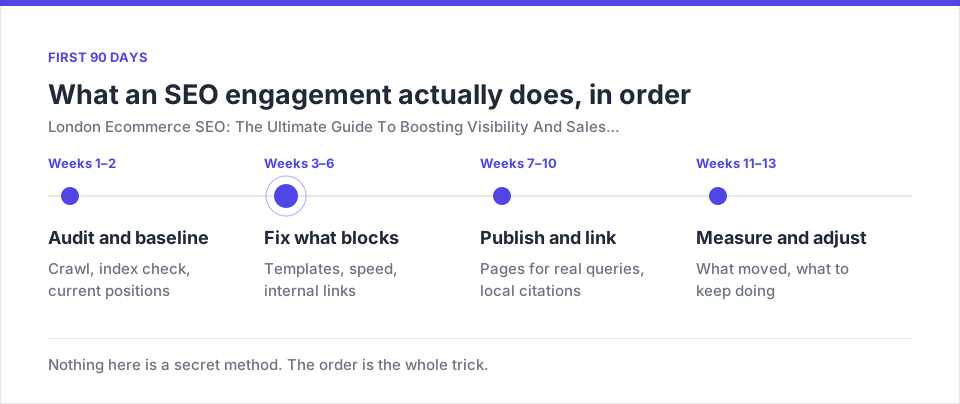
In practice, localised keyword research begins with a clear understanding of where you want to be visible. Central zones such as the West End demand a different vocabulary from outer boroughs like Bromley or Lewisham. By aligning seed terms with authentic district proofs and territorial language, you create a foundation that remains stable as you expand your London footprint.
Why local keyword research matters in London
Local intent in London is highly granular. Shoppers ask for services by district, seek directions to nearby stores, and rely on landmarks or transport corridors to orient themselves. District-aware keywords improve click-through rates, nearby interactions, and the likelihood of conversions, because readers see content that immediately resonates with their locality. Translation Provenance helps keep terminology recognisable across updates, while CORA Trails justifies every district modifier so leadership can replay decisions during audits or regulatory reviews.
- District-aware seed terms align with GBP posts and district pages to reinforce proximity signals.
- Long-tail variants rooted in landmarks, transport routes, and local events expand near-me and transactional intent.
- Authentic terminology reduces reader friction and strengthens localisation history for regulator-readiness.
- Content spine alignment ensures keyword-driven content is actionable and scalable across boroughs.
With London’s geography in constant motion—new developments, events, and transport updates—the governance layer (CORA Trails and Translation Provenance) is essential. It lets you justify why a district modifier exists and track how terminology evolves while remaining recognisable to readers across Notting Hill, Brixton, and Woolwich.
To support practical execution, explore the London Services hub for district playbooks and dashboards, and book a scoping discussion via the Contact Page to tailor a district-aware keyword programme for your portfolio.
A practical framework for London keyword discovery
Use a repeatable, auditable framework to transform raw search data into district-ready terms. The framework below helps translate business aims into district-focused keywords that mirror how real London shoppers search.
identify your primary service areas and the London districts you want to own first (for example, Chelsea, Notting Hill, and Canary Wharf). start with 15–25 seed terms per service that couple with district signals (e.g., "London plumber Notting Hill", "eco-friendly cleaning Notting Hill"). capture questions and longer phrases that reflect local intent (e.g., "emergency plumber London central night"). assign each keyword to a content asset—category pages, district pages, FAQs, or blog posts. include district variants, landmarks, and transport corridors locals use in everyday search queries. assess terms for London-specific search volume and ranking difficulty, ensuring achievable targets. focus on near-me and transactional intent where competition is manageable given current authority.
Turning keywords into a district content spine
Discovered terms should drive a district content spine that surfaces authentic proofs—landmarks, routes, local events, and community anchors—within district pages and GBP posts. Translation Provenance ensures the London terminology remains recognisable as you scale, while CORA Trails records the rationale behind each district modifier. This alignment makes keyword-driven content both auditable and scalable across boroughs such as Islington, Hackney, and Southwark.
Construct a hub-and-spoke model where a central London hub page links to district spokes. Each spoke surfaces proofs readers expect in their locality and aligns with GBP messaging to reinforce proximity signals.
Keyword map template and governance
A practical keyword map visualises the relationships between core terms, district proofs, and content assets. The template should capture keyword, search intent, district, content type, owner, target KPI, and update cadence. When paired with CORA Trails and Translation Provenance, it becomes a governance artefact that scales across London’s boroughs and supports regulator-friendly documentation of localisation decisions.
select districts you aim to own and outline growth paths for others. 15–25 seed terms per service with district modifiers. extract questions and intent-driven phrases from tools and user feedback. connect keywords to assets (category pages, district pages, FAQs, blog posts). include landmarks and transport routes readers reference. validate with local search data and competitive landscape. assign priority to near-me, transactional terms aligned to product lines.
Templates and governance artefacts are available via the London Services hub. To tailor this framework to your portfolio, book a scoping discussion through the Contact Page.
From keyword research to implementation
Turn the framework into action by building a district content spine and aligning GBP posts with the district pages. Translation Provenance ensures terminology remains recognisable, while CORA Trails documents the rationale behind each district modifier so leadership can replay decisions if market conditions shift. Maintain governance-visible dashboards that show district health, GBP engagement, and near-me conversions, with provenance artefacts accessible for audits.
For ready-to-use templates and dashboards that support a London district-focused keyword programme, explore the London Services hub and arrange a scoping discussion via the Contact Page to tailor a plan for your portfolio.
London Ecommerce SEO: International And Multi-store SEO Considerations
Expansion for London-based retailers requires a robust, governance-driven approach to multi-store SEO. The CORA Trails locale rationales and Translation Provenance authentic London terminology remain central as you extend beyond the capital—whether to other UK regions or international markets. A disciplined framework helps maintain proximity signals, accurate business data, and regulator-friendly localisation history across Local Pages (LPs), Canonical Local Pages (CLPs), and Google Business Profile (GBP) assets. This part outlines practical considerations for scaling your London presence without eroding authority or reader trust.
Architectural decisions shape how quickly search engines and shoppers understand regional offerings. The main choices include subfolders, subdomains, or country-code top-level domains (ccTLDs). For London retailers planning controlled expansion, a hybrid approach often delivers the best balance: keep a central London hub within the primary domain, then deploy regional variants in subdirectories or subfolders. This preserves shared authority while enabling precise geo-targeting and local experiments. Use hreflang to signal language and regional targeting, and canonical tags to prevent content duplication across assets sharing a common spine.
Choosing store architecture for expansion
Practical guidance for London retailers considering multi-market growth includes:
- Subdirectories consolidate link equity under a single domain, easing authority transfer between markets and districts.
- Subdomains can isolate region-specific issues but may require additional effort to accumulate cross-market authority.
- Canonical signals should reference the primary regional surface while district variations anchor to the correct locale proofs.
- Geo-targeting should be reinforced by consistent NAP data, translations, and a clear content spine for each market.
For London stores expanding to other UK regions or international markets, align architecture with GBP strategy. District posts and LPs should map back to a central London spine while regional spokes reflect local geography and currency considerations. Translation Provenance helps maintain recognisable London terminology as you adapt content for other markets, and CORA Trails records the rationale behind every regional modifier to support audits and regulator readiness.
Geo-targeting, language, and currency
International and multi-store SEO requires precise targeting. Use hreflang to indicate language and regional variants (for example, en-GB for the UK and en-GB-sc for Scotland if you opt to segment by region). If you consolidate under a single domain, ensure per-market content clusters have dedicated canonical paths and a clear default language page. Currency rules, tax configurations, and checkout experiences should reflect target markets, with locale-specific product descriptions and promotions aligned to reader expectations. Proximity signals stay grounded in London proofs for UK shoppers, while translated or regionally adapted content respects local terminology validated by Translation Provenance as you expand.
Structured data and local signals across markets
Structured data must scale across markets. Duplicate product schemas, offers, reviews, breadcrumbs, and LocalBusiness schemas for each market, while updating currency, availability, and location data accordingly. CORA Trails documents why each market variant exists, and Translation Provenance preserves local terminology across updates. Validate data with Google's structured data testing tools and maintain market-specific sitemap entries to support discovery and proximity signals across regions.
Implementation plan: 90-day international expansion
identify target markets, decide on domain structure, and set geo-targeting strategies. map the London hub under the main domain to regional spokes with locale proofs and translations. - implement hreflang tags and canonical links to prevent duplication and ensure correct surface targeting.
adapt product data, pricing, and availability for each market; configure currency rules and tax settings. configure analytics to attribute performance by market; build dashboards to track cross-market ROI, proximity signals, and GBP engagement as you expand.
For practical templates and governance artefacts that support multi-store London expansion, visit the London Services hub. To tailor a plan for your portfolio, book a scoping discussion via the Contact Page.
London Ecommerce SEO: Content Marketing For London Brands
In London, content marketing must mirror the city’s district-aware landscape. Readers expect copy that recognises districts, landmarks, transport routes, and community anchors, all while aligning with governance artefacts such as CORA Trails (locale rationales) and Translation Provenance (authentic London terminology). At londonseo.ai, we treat content as a strategic asset that sustains proximity signals across Local Pages, Canonical Local Pages, and Google Business Profile surfaces. This part translates business aims into a durable, auditable content program that scales from central hubs like the West End to outer boroughs such as Croydon or Lewisham without losing reader trust or local relevance.
A robust London content strategy starts with a district-aware content spine. The hub-and-spoke model places a central London hub page at the core, with district spokes that surface proofs readers recognise—landmarks, neighbourhood events, transit references, and trusted local partners. Each spoke ties back to GBP posts and LPs, reinforcing proximity signals while ensuring terminology remains recognisable to London readers. CORA Trails captures the rationale behind each district modifier, and Translation Provenance preserves authentic language across updates, enabling a reliable audit trail as you expand into new boroughs.
From there, the content spine should be populated with formats that deliver practical value and near-me intent. By tying content decisions to district proofs and provenance, you create evergreen material that remains credible as London evolves. The London Services hub provides district-focused playbooks and dashboards to operationalise these strategies; a scoping discussion via the Contact Page helps tailor a district-aware, auditable content program for your portfolio.
Content formats that resonate with London readers
London audiences engage best with content that reflects real places, traffic patterns, and community life. Prioritise formats that surface authentic district proofs while offering practical guidance and distinctive authority. Core formats include:
- District-focused guides that spotlight landmarks, transport routes, and local partnerships.
- GBP posts aligned to the district spine, updating hours, services, and proofs in step with local realities.
- Local guides and how-to content tailored to specific suburbs, enabling readers to solve everyday problems close to home.
- Case studies and community spotlights grounded in authentic district proofs to demonstrate credibility.
- Event calendars and seasonal roundups linked to local calendars and venues to keep content timely.
Each piece of content should reference a district proof and carry Translation Provenance validation. CORA Trails justifies why a district modifier exists, and Translation Provenance ensures terminology remains recognisable as you expand to new boroughs such as Islington, Hackney, or Southwark. This alignment supports audits, regulator-readiness, and scalable growth across London’s diverse communities.
Governance cadence for London content
A disciplined governance cadence ensures consistency and accountability as you scale. We advocate a rhythm that blends content production with localisation oversight and performance measurement. The typical cadence comprises:
surface health of LPs, CLPs, and GBP posts, plus district proof alignment. assess district modifiers, translations, and terminology consistency across updates. adjust district priorities based on performance and market shifts, updating CORA Trails accordingly. keep LP health, GBP engagement, and near-me conversions visible to leadership with provenance artefacts.
To accelerate adoption, leverage templates and dashboards from the London Services hub and book a scoping discussion via the Contact Page to tailor a district-aware content plan for your portfolio. The artefacts are designed to satisfy regulator expectations while supporting continuous growth across London’s districts.
Practical 90-day content calendar
Audit current district content, map gaps, and define 3–5 core districts with accountable owners. Build the district spine—launch the central London hub and initial district spokes with proofs validated by Translation Provenance. Publish GBP posts aligned to the spine and populate local guides for two suburbs. Release two case studies or community spotlights referencing district proofs to demonstrate real-world impact. Expand to two more suburbs, refresh related LPs/CLPs, and tighten governance cadences with provenance visible in dashboards.
Templates and governance artefacts for the 90-day plan, CORA Trails, and Translation Provenance are accessible via the London Services hub. To tailor this rollout to your portfolio, book a scoping discussion through the Contact Page and ensure your district-aware content plan travels with growth across London’s suburbs.
Measurement, optimisation, and continuous improvement
A measurement framework should translate content performance into near-me actions and revenue impact. Track metrics such as proximity signal strength, GBP engagement, and district-level conversions, all underpinned by CORA Trails and Translation Provenance so leadership can replay decisions during audits. Regular governance reviews should feed learnings back into the content spine, ensuring London’s district content remains credible as the city evolves.
With a robust provenance and governance layer, content becomes a durable asset that sustains trust, relevance, and ROI for your London portfolio. For district-ready playbooks, dashboards, and artefacts that support regulator-friendly localisation, revisit the London Services hub and arrange a scoping discussion via the Contact Page to tailor a district-aware content programme that grows with London’s footprint.
London Ecommerce SEO: Common Pitfalls And Best Practices For Technical SEO In Melbourne
As London retailers expand their understanding of technical search health, best practices from cross-market experiences prove invaluable. This part of the London SEO series, grounded in our governance framework and the CORA Trails locale rationales alongside Translation Provenance for authentic terminology, translates common Melbourne-type pitfalls into actionable guardrails. The aim is to protect proximity signals, maintain reliable index coverage, and ensure regulator-friendly localisation history while you grow across London’s boroughs and beyond.
Frequent Melbourne Technical SEO Pitfalls
- Misconfigured robots.txt and meta directives: Blocking essential district pages (LPs/CLPs) or GBP signals inadvertently prevents search engines from indexing near-me content readers rely on. This interrupts proximity signals and undermines district proofs across surfaces.
- Broken or poorly managed redirects during site changes: Inadequate redirect maps, improper 301/302 decisions, or forgotten redirects can lead to traffic loss and broken user journeys for suburbs like Islington or Hackney. Redirect chains also inflate crawl costs and dilute district authority.
- Canonicalization chaos: Inconsistent canonical tags across LPs, CLPs, and GBP-linked pages can cause duplicate content issues and misattribution of authority to the wrong district pages, weakening proximity signals.
- Sitemap mismanagement: Excluding Local Pages or canonical district pages from sitemaps, or neglecting updates, slows discovery of district-spine content and GBP posts connected to district proofs.
- Structured data pitfalls: Incorrect LocalBusiness or Organization schemas, missing district-specific properties, or conflicting JSON-LD between LPs/CLPs and GBP can confuse search engines about geography and offerings readers expect in London.
- Core Web Vitals and page speed issues: Large hero images, unmanaged mobile assets, and render-blocking resources degrade LCP/CLS/FID, harming the reader experience for near-me London searches.
- Duplicated content from district variants: If multiple district pages compete for the same product content without clear canonical or content differentiation, rankings suffer and crawl budgets waste.
- Adequate crawl budget management: Too many low-value district variants or thin pages can exhaust crawl budgets, delaying indexing of high-priority surfaces like core category pages and GBP posts.
Each pitfall is addressable with a disciplined governance approach. CORA Trails should justify every district modifier, and Translation Provenance must reflect authentic London terminology as you expand. Dashboards should expose the health of LPs, CLPs, and GBP signals by district so leadership can see the causal links between fixes and near-me outcomes.
For practical, district-aware remediation playbooks, explore the London Services hub and schedule a scoping discussion via the Contact Page to tailor a technical optimisation plan for your portfolio.
Best Practices To Fix These Pitfalls
Review robots.txt and meta robots for every LP/CLP and GBP-linked content. Ensure near-me content is crawlable and indexable, and maintain a changelog in CORA Trails for accountability. Create a comprehensive district redirect plan, test in staging, and preserve proximity signals tied to each surface. Document changes in Translation Provenance to keep district narratives intact. Use self-canonical pages for primary district assets and avoid cross-domain canonical conflicts. Tie LPs, CLPs, and GBP content to the same district proofs to prevent signal dilution. Include all LPs and CLPs in a single Melbourne-like sitemap, updating regularly with new districts and GBP-driven content. Validate with a sitemap index reflecting governance cadence. Implement LocalBusiness, Product, Offer, FAQ, and Breadcrumb schemas consistently for each district asset. Align schema with GBP content to reinforce proximity signals and authenticity across surfaces. Optimise images, defer non-critical scripts, and prioritise above-the-fold rendering for hub content and district spokes. Monitor LCP/CLS/FID by district and iterate tactically.
Practical Remediation Tactics for London Retailers
Translate Melbourne’s discipline into London practice by anchoring every district surface to real-world proofs. Translation Provenance keeps terminology recognisable across boroughs, while CORA Trails records the rationale behind every district modifier. Establish a weekly technical tacticals routine and a monthly localisation-history review to sustain momentum as the town’s geography and shopper behaviours evolve.
To accelerate adoption, use templates and dashboards from the London Services hub and book a scoping discussion via the Contact Page to tailor a resilient technical SEO remediation plan for your London portfolio. The goal is durable proximity signals, high-quality index coverage, and reader trust that withstand algorithm shifts and market changes.
London Ecommerce SEO: Common Mistakes And Myths
London retailers operate in a district-rich, highly competitive online environment. To sustain proximity signals and durable visibility, a governance-forward approach is essential. This part of the London SEO series highlights frequent missteps, debunks prevalent myths, and offers practical remedies that align with CORA Trails (locale rationales) and Translation Provenance (authentic London terminology). By reading this, London-based brands can protect near‑me opportunities while maintaining regulator-friendly localisation history across Local Pages, Canonical Local Pages, and Google Business Profile surfaces.
Common Pitfalls To Avoid In London SEO
- Misinterpreting proximity signals without district context: Simply ranking for a distance-based term without validating district proofs leads to misaligned surfaces. Solution: attach CORA Trails to explain why each district modifier exists and ensure Translation Provenance preserves authentic London terminology across updates.
- Over-optimising anchor text for district names: Cannibalisation can occur when anchor text is repetitive across district pages. Solution: diversify anchor text to reflect district proofs, product attributes, and user intent, while keeping canonical discipline intact.
- Neglecting GBP hygiene during rapid district expansion: Outdated hours, inaccurate service areas or stale posts erode trust and disrupt near‑me journeys. Solution: implement weekly GBP health checks and tie updates to district proofs via the governance cadence.
- Ignoring Core Web Vitals on district pages: Slow or unoptimised pages degrade user experience for near‑me searches. Solution: optimise images, compress assets, and prioritise above‑the‑fold content for hub and spoke surfaces.
- Duplicated content across district variants: Thin or duplicate content dilutes authority and wastes crawl budget. Solution: develop a district content spine with unique proofs per district and clear canonical strategies.
- Weak or inconsistent structured data: Inaccurate LocalBusiness, Product, or FAQ markup confuses search engines about geography and offerings. Solution: align schema across LPs/CLPs and GBP, with provenance notes visible in dashboards.
Myths That Undermine London SEO
Several beliefs persist about local optimisation in the capital. Here are the most impactful myths, paired with practical realities:
- GBP alone drives local visibility: GBP is essential, but district pages, LPs/CLPs, and authentic terminology are what anchor proximity and intent signals. Translation Provenance ensures terminology remains recognisable as you scale across boroughs.
- Proximity equals impact, everywhere equally: Proximity matters, but shard signals vary by district. A robust spine ties district proofs, landmarks, and transport cues to content assets, delivering durable near‑me outcomes.
- NAP consistency is sufficient for trust: NAP is foundational, yet consistency must be complemented by validated district proofs and governance artefacts that demonstrate auditable localisation history.
- Structured data is optional for local pages: Schema helps, but only if aligned with district proofs and Translation Provenance. Inconsistent markup can hinder rich results and local trust signals.
- All boroughs must be targeted at once: A measured, district-by-district rollout with CORA Trails and provenance ensures scalable growth while maintaining quality and regulatory readiness.
Practical Fixes And Governance To Prevent Pitfalls
Turn common sense into repeatable actions. The following steps align with londonseo.ai’s governance framework and the CORA Trails plus Translation Provenance approach:
verify GBP hygiene, LP/CLP depth, and NAP consistency across priority boroughs to ensure a coherent local presence. identify 3–5 core London districts and map a concise district content spine with authentic proofs validated by Translation Provenance. weekly surface health checks and monthly localisation-history reviews with provenance visible in dashboards. monitor LP/CLP health, GBP engagement, and near‑me conversions by district, with CORA Trails and Translation Provenance accessible to stakeholders. ensure CORA Trails and Translation Provenance are visible to support audits and regulator readiness.
Getting Started: A Quick 90‑Day London Plan
map GBP hygiene, LP/CLP depth, and NAP consistency; identify 3–5 core districts for initial expansion. create hub pages with district spokes featuring authentic proofs validated by Translation Provenance. align with the spine to reinforce proximity signals across surfaces. weekly tacticals and monthly localisation-history reviews, all with provenance artefacts. expand to new boroughs, maintaining provenance from day one to ensure regulator readiness.
templates and governance artefacts for the 90‑day plan, CORA Trails, and Translation Provenance are accessible via the London Services hub. To tailor this rollout to your portfolio, book a scoping discussion through the Contact Page and ensure your district‑aware content plan travels with growth across London’s districts.
London Ecommerce SEO: Final Framework And Next Steps For London Stores
Having traversed the core elements of a district-aware London ecommerce SEO programme, Part 12 delivers a practical, auditable end-to-end framework you can implement now. This final piece synthesises governance artefacts, the hub-and-spoke model, and district-specific signals into a repeatable operating model (ORM) that keeps proximity signals robust as your London portfolio scales. The framework leans on CORA Trails for locale rationales and Translation Provenance to preserve authentic London terminology across updates, ensuring regulator-friendly localisation history while delivering durable near-me visibility.
At its heart, the London ORM is about repeatable discipline. It ensures every district modifier has a rationale, every translation remains recognisable to readers, and every governance decision can be replayed if market conditions shift. The result is a scalable, trustworthy surface set that productively links GBP surfaces, district proofs, and product pages to near-me search intent across boroughs from Chelsea to Croydon.
The London ORM Framework: core components
Implement this framework as a living artefact set that teams update and audit over time. The essential components are:
- CORA Trails: A repository of locale rationales behind each district modifier, so leadership can replay decisions and justify changes during audits.
- Translation Provenance: A provenance layer that preserves authentic London terminology across updates, helping readers recognise the language and maintain trust.
- Hub-and-Spoke District Spine: A central London hub page feeding district spokes, with GBP posts aligned to each district surface to reinforce proximity signals.
- Governance Cadence: A defined rhythm of weekly surface health checks, monthly localisation-history reviews, and quarterly strategy revalidations.
- Auditable Dashboards: District-filtered dashboards that reveal LP/CLP health, GBP engagement, and near-me conversions with provenance artefacts visible to stakeholders.
These components work together to maintain a durable, regulator-friendly record of localisation decisions while providing a clear path for growth into additional districts and events across London.
A practical 90-day London rollout plan
verify GBP hygiene, LP/CLP depth, and NAP consistency across priority boroughs and districts. select 3–5 London districts with strong near-me potential and map a concise district content spine. implement weekly surface health tacticals and monthly localisation-history reviews. apply CORA Trails and Translation Provenance to every district modifier and update. publish a central hub and initial district spokes with authentic proofs validated by Translation Provenance. ensure GBP activity mirrors the district spine to reinforce proximity signals. surface landmarks, routes, events, and local partners on district pages and GBP posts. monitor LP health, CLP depth, GBP engagement, and near-me conversions by district. ensure provenance artefacts are visible in dashboards used by senior stakeholders. add 2–3 more districts in the following quarter, retaining provenance from day one.
For ready-to-use templates, dashboards, and governance artefacts that support a district-aware rollout, visit the London Services hub and book a scoping discussion via the Contact Page to tailor a district-aware rollout for your portfolio.
Measuring success: district health, proximity signals, and conversions
Alongside traditional KPI sets, the London framework emphasises district-centric metrics that reflect real shopper journeys. A practical KPI suite includes:
- District-led organic sessions and conversions, broken down by borough and key districts.
- Near-me actions by district: directions requests, maps clicks, calls, and form submissions tied to LPs and GBP surfaces.
- GBP engagement by district: knowledge panel interactions, posts, and hours accuracy reflected in district proofs.
- LP/CLP health and depth by district: page depth, content richness, and proof alignment with GBP signals.
- Proximity signal strength: accuracy of addresses, landmarks, and transport cues that help users locate you quickly in their borough.
- Conversion-driving metrics: online orders, store visits, and lead forms attributed to organic searches with district attribution.
A governance layer—CORA Trails and Translation Provenance—ensures every district term has a justificatory trail and recognisable London terminology across updates. Dashboards should present district health alongside business outcomes to help leaders replay decisions during audits or regulatory reviews.
Governance and continuous improvement
Keep the spine alive with ongoing governance and iterative improvement. The core practices include:
- Weekly surface health checks across GBP, LPs, and CLPs by district.
- Monthly localisation-history reviews to validate translations and terminology consistency.
- Quarterly strategy revalidations to adjust district priorities and update CORA Trails accordingly.
- Dashboard updates that make provenance artefacts visible to leadership and auditors.
With these cadences, your London SEO programme remains credible, auditable, and adaptable to algorithm shifts and market evolution. The governance layer ensures every district modifier remains justifiable and traceable, while Translation Provenance guarantees terminology remains recognisable to readers across the capital.
Practical next steps: actionable decisions for today
finalise 3–5 core London districts to own in the next 90 days and document growth paths for additional districts. publish a central London hub and 3–5 district spokes with authentic proofs validated by Translation Provenance. ensure GBP posts reflect district proofs and service areas, maintaining proximity signals. implement weekly tacticals and monthly localisation-history reviews with provenance visibility. ensure CORA Trails and Translation Provenance are accessible in dashboards and regulator-ready reports.
For ready-to-use templates and artefacts, explore the London Services hub and book a scoping discussion through the Contact Page to tailor a district-aware rollout for your portfolio. This final framework is designed to travel with growth across London’s districts, preserving credibility and reader trust while delivering durable near-me visibility.
Final invitation: start your district-aware London journey
The London ecommerce SEO framework is a living, auditable system. By embedding CORA Trails for locale rationales and Translation Provenance to preserve authentic London language, you create a scalable, regulator-friendly foundation that travels with your growth. If you’re ready to transform district signals into durable business outcomes, reach out to the London SEO team at the London Services hub for a personalised scoping discussion. Or begin by exploring our services overview at London Services hub to identify artefacts that can accelerate your path to near-me visibility across the capital.
