SEO Penalty Removal Service London: Understanding Google Penalties And Their Impact On London Businesses
Google penalties can strike without warning, and for London businesses that rely on a steady stream of local and regional customers, a sudden drop in visibility can translate into missed opportunities, lost revenue, and disrupted growth plans. A penalty removal service in London isn’t just about lifting a sanction; it’s about restoring trust with search engines, re-building authority, and implementing governance to prevent recurrence. This opening section explains what constitutes a Google penalty, how it manifests in the capital’s competitive landscape, and why a district‑focused recovery approach matters for London brands.
What a Google penalty actually is
A Google penalty is an action that can reduce a site’s visibility in search results. There are two main categories: manual actions, applied by a human reviewer after a site violates Google's quality guidelines, and algorithmic penalties, triggered by core updates or evolving ranking signals. In some cases, pages can be de-indexed, meaning they disappear from Google’s index entirely. For London businesses, the implications can be particularly acute in highly competitive districts such as the City, Canary Wharf, and Westminster, where local intent and proximity drive many conversions.
The difference between a penalty and a routine ranking fluctuation is clarity and accountability. A manual action comes with a notification in Google Search Console, detailing the reason and the pages affected. An algorithmic drop is usually framed as a broader update that changes ranking signals, but it still demands a proactive response if traffic and revenue are impacted.
How penalties show up for London businesses
London‑based websites often face intense local competition and high expectations from Google’s local ranking signals. A penalty can blunt visibility in local packs, Google Maps listings, and Knowledge Graph panels, affecting both brand credibility and footfall. In addition to core metrics like organic traffic, penalties frequently disrupt GBP (Google Business Profile) interactions, map views, and district‑level queries that underpin many local conversions. A targeted penalty removal strategy in London must consider both sitewide health and the integrity of district‑level signals that support proximity marketing and local authority.
Common penalty types London businesses encounter
London campaigns can trigger a range of penalties, from manual actions to algorithmic penalties. Understanding typical triggers helps in prioritising fixes quickly.
- Manual actions for spammy or deceptive practices, such as unnatural links or cloaking, flagged by Google’s team. These require deliberate on‑site and off‑site remediation and a formal reconsideration request.
- Algorithmic penalties resulting from core updates, thin content, keyword stuffing, or unnatural link patterns. Recovery focuses on content quality, relevancy, and link profile realignment.
- De‑indexing of pages or sections due to structural issues, malware, or policy violations. Reinstatement hinges on expedited fixes and clear evidence of compliance.
What a penalty removal project typically involves
A disciplined London‑specific recovery process starts with a thorough audit to identify root causes across technical, content, and link dimensions. Following diagnosis, a prioritised plan is created, outlining corrective actions, timelines, and responsible parties. Implementation focuses on data‑driven fixes, including technical optimisations, content enhancements, and a clean, high‑quality backlink profile. Ongoing monitoring ensures the improvements hold and helps prevent future penalties. This approach aligns with Google’s evolving guidelines and supports a resilient presence for London brands in Local Pages, GBP, Maps and KG surfaces.
What to expect from London penalty removal services
London‑based penalty removal specialists typically offer a structured lifecycle: initial forensic assessment, a customised recovery plan, execution of technical and content fixes, formal reconsideration when necessary, and continuous performance monitoring. Expect clear milestones, transparent pricing, and a governance framework that ensures accountability across Local Pages, GBP, Maps and KG. The best London partners integrate TPIDs and Licensing Context to safeguard language fidelity and licensing rights as assets move across surfaces and markets.
To learn more about how a London penalty removal service can help your business, explore our SEO Services or get in touch with our London team for a focused diagnostic and proposal tailored to your district and sector.
SEO Penalty Removal Service London: Types Of Penalties You Might Face
Following the foundation laid in Part 1, it’s essential for London-based brands to understand the spectrum of penalties that can affect visibility. Being penalty-aware helps you anticipate recovery needs, prioritise fixes, and communicate effectively with your penalty removal partner. This section delineates three core penalty categories – manual actions, algorithmic penalties from core updates, and de-indexing – with practical implications for how London businesses recover and regain trust with Google.
1) Manual actions
A manual action is a sanction handed down by Google after a human reviewer identifies violations of the quality guidelines. For London websites, common manual actions arise from manipulative link practices, cloaking, or deceptive techniques that undermine user trust. You’ll typically receive a notification in Google Search Console detailing the pages affected and the exact policy violations. The local dynamics of London’s markets mean that penalties can concentrate on district-targeted content, local packs, and GBP signals if behaviour appears manipulative or deceptive.
Why this matters in London: a manual action often translates into a visible drop in local pack performance, knowledge panel appearances, and map-driven footfall. Recovery hinges on a transparent remediation plan, a formal reconsideration request, and a demonstrable return to compliant practices across on-page elements and off-site signals.
Key remediation steps include a thorough on-site audit, removal or disavowal of harmful links, content cleanup to improve quality, and re-building trust with Google through clear evidence of compliance. A credible London penalty removal service will structure this as a staged process with milestones, minimising downtime and providing regular status updates. See how our SEO Services can help, or schedule a consultation with our London team to tailor a plan for your district and sector.
2) Algorithmic penalties from core updates
Core updates represent Google’s holistic recalibration of ranking signals. An algorithmic penalty occurs when your site suffers declines in rankings due to shifts in content quality, user intent alignment, or overall site health – rather than a specific manual action. In London’s competitive landscape, a sudden drop can follow a core update that changes how local and regional signals are weighted, including proximity, authority, and relevance to local search intent.
Recovery requires diagnosing the root causes: content relevance, thin or duplicate content, poor user experience signals, or misaligned internal linking. The remedy often involves content enrichment, structural improvements, and a strengthened backlink profile that aligns with Google’s quality expectations. A London penalty removal partner should provide a structured plan: identify impacted pages, implement targeted content and technical fixes, and verify improvements via monitoring over multiple updates. For districts like the City, Canary Wharf, and Westminster, it’s vital to re-establish local relevance while maintaining overall site quality.
Practical actions include revamping under-performing pages, boosting E-E-A-T signals with authoritative content, and ensuring a clean, compliant backlink profile. If you’re exploring a recovery strategy, consider our SEO Services or reach out to our London team via contact for a district-focused assessment.
3) De-indexing and its implications
De-indexing represents the most severe outcome, where pages or the entire domain are removed from Google’s index. Causes can include significant policy violations, malware, or structural issues that hamper crawlability. In London, de-indexing can erase visibility for key district pages, GBP-backed listings, and local knowledge panels, leading to a sharp drop in footfall and conversions.
Recovery from de-indexing relies on rapid containment of the problem, complete remediation, and a formal reconsideration or re-indexing process. The path back involves demonstrating compliance, re-submission of sitemaps, and ensuring that all signals across Local Pages, GBP, Maps and KG are aligned with Google’s expectations. A reputable penalty removal partner in London will guide you through the reinstatement process with clear milestones and evidence-driven communications to Google.
London businesses should view de-indexing as a signal to tighten governance around content quality, links, and technical health. Our team can help you navigate reinstatement, validate fixes, and monitor performance post-recovery. For a focused diagnostic and plan, connect with our SEO Services or get in touch with our London specialists.
What this means for London businesses
The practical takeaway is to treat penalties as a signal of underlying weaknesses rather than a random glitch. A district-first recovery approach often yields faster, more durable results: manual actions tied to specific local signals are often resolved through site-wide governance improvements; algorithmic penalties benefit from content strategy and technical optimisations that restore alignment with user intent across multiple languages and surfaces; de-indexing requires swift, auditable remediation and a clear path to re-indexing.
Adopt a disciplined recovery framework: document root causes, prioritise fixes by impact to district visibility, communicate progress with stakeholders, and implement ongoing monitoring that detects early signs of future risk. To discuss a London-specific penalty recovery plan, visit our SEO Services page or contact the London team for a diagnostic and proposal tailored to your district and sector.
SEO Penalty Removal Service London: Recognising Penalty Symptoms And How To Confirm
Penalties can strike London-based websites with little warning, leaving brands scrambling to understand what happened and how to recover. Part 3 of our penalty recovery series focuses on recognising the warning signs, distinguishing between manual actions, algorithmic penalties, and de-indexing, and outlining practical steps to confirm the issue. With the audience, local competition, and business impact firmly in view, this guidance helps London businesses assess the problem quickly, communicate effectively with a penalty removal partner, and lay the groundwork for a disciplined recovery that protects Local Pages, Google Business Profile (GBP), Maps and Knowledge Graph (KG) signals.
1) Penalty symptoms to watch for in London
London campaigns operate in a highly competitive environment where proximity, local intent, and GBP health drive performance. Recognising penalty symptoms early enables faster remediation and reduces the risk of long‑term revenue loss. Common indicators to monitor include:
- A sudden and sustained drop in organic traffic for core keywords, especially those tied to district queries (e.g., local services, neighbourhoods, or district-specific phrases).
- A noticeable decline in rankings across multiple pages or keyword groups, not limited to a single page or topic area.
- Degradation of local pack visibility, GBP interactions, map impressions, or inconsistent Knowledge Graph panels for district queries.
- Notifications in Google Search Console such as manual actions, security issues, or policy violations related to content or links.
- Pages that disappear from Google index (de-indexing) or a rapid shift in index coverage following an update.
2) Distinguishing penalties from routine algorithmic fluctuations
A core challenge is separating a penalty from normal fluctuations caused by Google updates. In London, where core updates may recalibrate local signals, the following distinctions help guide the response:
- Manual actionsA direct notice in Google Search Console detailing the violated guideline and the pages affected. Recovery typically requires on-site and off-site remediation and a reconsideration request.
- Algorithmic penaltiesDrops tied to core updates or evolving ranking signals. These affect rankings and traffic more broadly and require content and technical realignment rather than a policy fix alone.
- De-indexingA more severe outcome where pages or the entire site are removed from Google’s index. Remediation demands rapid containment, complete remediation, and a formal re-indexing process.
3) How to confirm the cause using standard diagnostics
Confirming the penalty type requires a structured diagnostic approach. Key steps for London-based sites include:
- Check Google Search Console for any manual actions or security issues. If a manual action exists, review the notification in detail and note the affected URLs and policy area.
- Review the Coverage report in Google Search Console to understand indexing status, crawl issues, and any pages removed or indexed with warnings.
- Compare performance trends in Google Analytics 4 or Universal Analytics (as applicable) against baseline, factoring seasonality and district activity. A broad, district-wide traffic drop across many pages often points to an algorithmic shift rather than a single-policy issue.
- Assess the backlink profile for signs of sudden toxicity or manipulative patterns that could trigger a penalty, particularly if the drop aligns with a known link-related update.
- Inspect the affected pages for on-page issues, such as thin content, duplicate content, misconfigured canonical tags, or poor mobile UX, which could contribute to algorithmic penalties.
- Evaluate GBP health and local signals: changes to reviews, NAP consistency across directories, and proximity-based ranking factors can influence local visibility during penalty periods.
4) Immediate remedial actions to stabilise and begin recovery
Once symptoms are identified and the likely penalty type is understood, initiate a disciplined remediation plan. London-based penalty removal specialists typically follow a four‑phase workflow: diagnose, remediate, appeal (if required), and monitor.
- Diagnose and document findings: compile a concise evidence pack linking observed drops to specific issues (links, content quality, technical health). Include TPID mappings and Licensing Context for assets involved where relevant.
- Remediate on-site issues: remove or disavow harmful backlinks, delete or improve low-quality content, fix technical errors, enhance UX signals, and ensure policy compliance across all surfaces.
- Submit reconsideration requests if a manual action is confirmed: present clear remediation evidence and demonstrate alignment with Google’s guidelines.
- Monitor and iterate: deploy a monitoring plan to track post‑recovery performance across Districts, Local Pages, GBP, Maps and KG, ensuring no regression and sustained improvements.
5) London-specific considerations for verification and speed
London’s district structure means that signal restoration often requires district-focused governance and fast, auditable actions. When manual actions are involved, a swift on-site remediation plan paired with a transparent reconsideration narrative is vital. For algorithmic recoveries, prioritise content quality, user experience, and a rebalanced link profile that complies with Google’s guidelines. In all cases, maintain TPIDs and Licensing Context so that language, imagery rights, and asset provenance travel consistently across Local Pages, GBP, Maps and KG as you scale in or beyond London’s districts.
SEO Penalty Removal Service London: What A London-Based Penalty Removal Service Offers
London-based penalty removal services deliver end-to-end recovery plans that go beyond a single fix. They address the root causes that triggered a drop in visibility, while rebuilding trust with Google and safeguarding the business against future penalties. This Part 4 explains the typical service scope, the sequence of activities, and how a district-focused approach in London translates into faster, more durable recoveries. It also emphasises governance fundamentals—Translation Provenance IDs (TPIDs) and Licensing Context—for assets moving across Local Pages, Google Business Profile (GBP), Maps and Knowledge Graph (KG).
1) Forensic audit and diagnosis
A comprehensive forensic audit is the foundation of a London penalty removal project. It begins with an in-depth health check of the website, including crawlability, index status, and page speed across languages and London districts. It continues with a content quality assessment to identify thin or duplicate content, and a thorough review of the backlink profile to flag toxic or manipulative links. Local signals receive particular scrutiny: GBP health, local packs, map views, and district-level Knowlege Graph entries can all be affected by penalties and need to be understood within the broader governance framework. The audit collates findings into a single evidence pack, with TPIDs tagging terminology and Licensing Context clarifying rights for all assets involved in the recovery process.
In practice, you’ll see a structured prioritisation: high-impact technical fixes, high-risk links, and content issues that most directly influence district visibility. The London team will also map detected issues to district hubs (e.g., City, Canary Wharf, Westminster) to ensure actions align with local intent and proximity signals.
2) Prioritised recovery plan
Following the audit, a customised, London-centric recovery plan is produced. This plan prioritises fixes by impact to district visibility and by ease of implementation, balancing quick wins with long-term governance. Key components include:
- Technical fixes to restore crawlability, indexing and user experience across languages.
- Content enhancements to improve relevance, depth, and E-E-A-T signals across London districts.
- Backlink profile realignment, including disavowal of harmful links and targeted acquisition of high-quality, locally relevant links.
- TPID mappings and Licensing Context attachments to ensure terminology consistency and rights management as assets move across surfaces.
- Governance plan linking district hubs to Local Pages, GBP, Maps and KG with clear ownership and milestones.
The plan is presented with a pragmatic timeline, weekly check-ins during the initial phase, and a governance framework to ensure accountability and auditable progress. For district-specific guidance, our SEO Services or contact pages provide direct access to London specialists.
3) Execution: fix, disavow, and optimise
Implementation focuses on a disciplined sequence of actions. On-site fixes are prioritised to boost page quality, fix technical issues, and improve mobile UX. Off-site remediation concentrates on removing or disavowing toxic links, while building the right kind of authority through high-quality, district-relevant backlinks. TPIDs are used to maintain terminological consistency as pages are translated or updated, and Licensing Context is attached to imagery and other assets to guarantee rights travel with content across surfaces. This collaborative phase often includes updating sitemaps, correcting hreflang signals, and aligning internal linking to strengthen district hubs and Local Pages.
Throughout, a transparent change log records every action, with TPIDs and Licensing Context clearly visible in the provenance. This transparency not only supports Google’s review process but also improves internal governance for London-based stakeholders.
4) Reconsideration and appeals
If a manual action is identified, the penalty removal service prepares a structured reconsideration packet. This includes a concise remediation narrative, evidence of on-site and off-site changes, and a timeline of implemented fixes. The packet demonstrates alignment with Google’s guidelines and the steps taken to restore compliance. The London team coordinates submission in Google Search Console and follows up on any requests from Google with additional documentation where needed. When possible, TPIDs help frame the corrected terminology across languages, while Licensing Context ensures asset rights remain intact for any media used in the appeal.
Timelines vary, but London practitioners aim to complete the initial reconsideration phase within weeks, followed by continuous monitoring to confirm reinstatement and stability across Local Pages, GBP, Maps and KG.
5) Monitoring, reporting and long-term protection
Recovery is not a one-off event; it requires ongoing monitoring and governance to prevent recurrence. The penalty removal service in London includes continuous performance tracking, district-led dashboards, and scheduled audits. KPIs cover visibility, traffic, conversions, and the health of GBP, Maps and KG signals by district TPID. Regular reporting to stakeholders ensures transparency and supports a proactive posture against future updates or policy changes. TPIDs and Licensing Context remain central to every surface, ensuring language fidelity and licensing compliance as your London portfolio scales.
For ongoing support, London businesses can access the same service throughout the lifecycle, with periodic governance reviews and transparent budgeting for sustained growth. Explore our SEO Services or contact the London team to model a long-term plan that matches your district expansion and budget priorities.
SEO Penalty Removal Service London: The Penalty Recovery Framework — Diagnose, Plan, And Implement
London-based brands face penalty scenarios with little warning, making a structured recovery framework essential. The Penalty Recovery Framework concentrates on three core phases—Diagnose, Plan, and Implement—each designed to restore visibility quickly while safeguarding long-term compliance. This Part 5 translates the framework into practical, district-aware steps for the capital’s competitive market, ensuring that Local Pages, GBP, Maps and Knowledge Graph (KG) surfaces remain coherent and compliant. Partnering with londonseo.ai means access to a disciplined diagnostic methodology, clear governance artefacts, and a plan that scales across London districts such as the City, Canary Wharf, and Westminster.
Throughout, Translation Provenance IDs (TPIDs) and Licensing Context underpin every asset, ensuring terminological consistency and licensed usage as content moves across surfaces. This approach protects you against drift in language, rights, and attribution as your penalty recovery progresses.
1) Diagnose: identifying root causes across technical, content and links
The diagnosis phase is a forensic exercise designed to pin down the origin of the penalty and how it interacts with district signals. It begins with a technical health check—crawlability, indexing status, page speed, mobile usability and site architecture across all languages and local hubs. It continues with a content quality review to identify thin or duplicate content, misaligned topical relevance, and gaps in E-E-A-T signals. The final pillar is a backlink risk assessment to detect toxic patterns that could trigger manual actions or algorithmic penalties. All observations are mapped to TPIDs for terminological consistency, with Licensing Context attached to visual assets to ensure rights travel as content expands across Local Pages, GBP, Maps and KG.
In London, district-level signals demand special attention: local packs, map views, and KG entries that underpin conversions in core districts such as the City and Canary Wharf. Early indicators to monitor include sudden declines in district keyword rankings, drops in local pack impressions, or shifts in GBP engagement coinciding with updates or content changes. A precise diagnose helps prioritise remediation actions and communicates a credible plan to stakeholders.
2) Plan: a prioritised recovery road map with district awareness
With root causes identified, the planning stage translates findings into a London-centric action plan. The plan prioritises actions by potential impact on district visibility and feasibility, balancing quick wins with longer-term governance improvements. It aligns with Google’s quality guidelines and establishes a governance cadence over Local Pages, GBP, Maps and KG, while preserving language fidelity through TPIDs and Licensing Context.
- Technical remediations to restore crawlability, indexing, site speed and mobile experience across all languages and district hubs.
- Content enhancements to raise relevance, depth and topical authority for district queries, while ensuring consistency with TPIDs.
- Backlink profile realignment, including disavowals of harmful links and targeted acquisition of high-quality, locally relevant links.
- Governance and scheduling: assign ownership, implement TPIDs and Licensing Context attachments, and establish dashboards for ongoing monitoring.
3) Implement: executing fixes across on-site, content and links
Implementation is a coordinated sequence of improvements. On-site fixes prioritise critical technical issues affecting crawlability and indexing, such as broken redirects, canonical problems, and structured data validity. Content updates focus on enriching pages with locally relevant information, improving media quality, and strengthening E-E-A-T signals with authoritative district content. Off-site work concentrates on disavowing toxic links and building quality, district-aligned backlinks. Throughout, TPIDs anchor terminology and Licensing Context ensures imagery and assets remain compliant as they move across Local Pages, GBP, Maps and KG.
Key practical actions include updating sitemaps and hreflang configurations, refining internal linking to create cohesive district hubs, and validating all assets with licensing terms before deployment. A transparent change log captures every action and ties it back to TPIDs and licensing to support Google’s review process and internal governance.
4) Reconsideration: if a manual action is detected
When a manual action is present, the penalty removal process includes assembling a precise reconsideration packet. This packet should outline the remediation actions completed, provide evidence of on-site and off-site fixes, and present a clear timeline of implementation. Submitting via Google Search Console, with TPIDs referenced where applicable, helps Google reassess the site efficiently. Licensing Context remains essential, ensuring that assets used in the reconsideration pack are properly licensed for use across all surfaces.
London teams typically expect a response window of a few weeks after submission, with further follow-ups if additional information is requested. During this stage, maintain open communication with stakeholders and provide regular status updates, particularly for district hubs and local surfaces.
5) Monitoring, governance and long-term protection
Recovery is a continuous discipline. After reinstatement, establish district-level dashboards that track visibility, traffic, and conversions across Local Pages, GBP, Maps and KG. KPIs should be segmented by language and district to reveal nuances in user behaviour and market dynamics. Regular audits help detect early signs of renewed risk, enabling proactive adjustments to content, links and technical structure. The governance framework must maintain Translation Provenance IDs (TPIDs) and Licensing Context as assets scale, ensuring language fidelity and licensing compliance every step of the way. Continuous improvement relies on disciplined change management, transparent reporting and a proactive stance against future updates or policy changes.
To discuss how this framework can be customised for your London business, visit our SEO Services page or get in touch with our London team for a diagnostic and proposal tailored to your district and sector.
SEO Penalty Removal Service London: The Penalty Recovery Audit – Technical Health, Content Quality, And Backlink Risk
Auditing forms the foundation of an effective penalty recovery in London. This Part 6 details a structured penalty recovery audit focused on three core dimensions: technical health, content quality, and backlink risk. When done through the lens of a district-first strategy, the audit not only identifies immediate fixes but also informs governance decisions, TPIDs (Translation Provenance IDs), and Licensing Context to safeguard assets as they traverse Local Pages, GBP, Maps and KG. A London-specific audit translates technical clarity into practical, district-ready remediation that restores trust with Google and stabilises visibility across key surfaces.
1) Technical health audit: crawlability, indexing and site speed
The technical audit is the first line of defence. It assesses crawlability, indexing status, and core performance metrics across all language variants and district hubs. In a London context, this means verifying that Local Pages, GBP entries, Maps and KG nodes remain crawlable and correctly indexed as local signals evolve. Key checks include: robots.txt accessibility, sitemap comprehensiveness, and the absence of accidental noindex tags on important pages. Structural issues such as broken redirects, canonical conflicts, and incorrect hreflang implementations must be identified and resolved to prevent cross-language confusion and index dilution.
Beyond accessibility, Core Web Vitals must be evaluated per district and language variant. LCP (Largest Contentful Paint), CLS (Cumulative Layout Shift) and FID (First Input Delay) should meet target thresholds on mobile and desktop, because local intent in London often translates into urgent user moments (booking, directions, opening hours). In addition, structured data and schema markup (LocalBusiness, Service, FAQ) should be audited for accuracy and completeness to bolster KG and knowledge panel performance.
Remediation typically begins with a high-impact technical backlog: fixes to redirects, canonical tags, broken links, duplicate meta data, and slow third-party scripts. A district-focused approach prioritises changes that restore local surface health first, ensuring Local Pages and GBP surfaces regain momentum in Map and Knowledge Graph results.
2) Content quality and relevance: depth, originality, and E-E-A-T
Content quality remains a cornerstone of penalty recovery. In London, where districts vary in audience and intent, content must be unique, locally relevant, and aligned with user expectations across languages. The audit evaluates content for depth, usefulness, and topical authority, with particular attention to thin or duplicated pages that dilute signal quality. Content should demonstrate clear expertise, authoritativeness, and trust (EEAT) across district hubs such as City, Westminster, and Canary Wharf, while reflecting local context and language nuances.
Important considerations include keyword alignment with intent, avoidance of keyword stuffing, and the removal or consolidation of thin pages. Content gaps are identified, and recommendations are provided to enrich pages with local case studies, author bios, district-specific data, and multilingual variants where appropriate. TPIDs and Licensing Context are critical here: tagging content variants and assets ensures terminological consistency and rights management as pages are translated or expanded across Local Pages and related surfaces.
Backed by data, content fixes prioritise pages with high traffic potential and significant drop-offs, then expand to adjacent pages to rebuild overall topical authority. London teams should also verify that multilingual content accurately mirrors UK terminology, local place names, and district-specific offerings to avoid misalignment in local search results.
3) Backlink risk assessment: toxicity, quality and intent
Backlink health is central to recovery stability. The audit performs a thorough backlink review to identify toxic, spammy or manipulative links that could trigger a penalty or undermine ranking recovery. In a London context, emphasis should be placed on links from reputable local authorities, industry associations, and high-quality regional media. The audit also checks anchor text distribution for naturalisation across languages, ensuring anchor themes remain contextually relevant to each district and surface.
Based on findings, a plan for disavowal or removal is prepared, with careful attention to avoid collateral damage to legitimate authorities. A healthy London backlink profile balances local relevance with global credibility, supporting GBP visibility, local packs, and KG signals. TPIDs guide terminology across languages, and Licensing Context ensures licensing rights are respected for any imagery or media tied to backlink sources.
4) The audit workflow: steps, data sources and deliverables
The penalty recovery audit follows a disciplined workflow designed for London agencies and clients. Step one is data collection: crawl data, server logs, GSC, GA4, and third-party backlink datasets. Step two is issue scoring: severity and potential impact are rated by district and surface. Step three is evidence packaging: compile an audit report with TPID mappings, Licensing Context attachments, and a remediation plan with timeframes. Step four is stakeholder handover: present findings with district-specific dashboards and governance artefacts to enable accountable action. Step five is post-audit validation: monitor improvements over successive updates to confirm reinstatement progress and prevent regression.
Deliverables typically include a formal audit report, an action backlog prioritised by impact to Local Pages and GBP, a TPID-backed content map, and a Licensing Context inventory for all assets. The London team will also provide a validation checklist for sign-off and a governance plan to sustain improvements across districts.
5) From audit to penalty removal plan: aligning fixes with district signals
The true value of the penalty recovery audit lies in its translation into a concrete remediation plan. By coupling technical fixes with content enrichment and backlink realignment, and by anchoring everything to TPIDs and Licensing Context, a London penalty removal plan becomes auditable and scalable. High-impact technical fixes are executed first to regain crawlability and indexing, followed by content enhancements to restore relevance and trust, and finally a backlink cleanup to restore domain authority. Ongoing monitoring ensures changes hold and that district signals on Local Pages, GBP, Maps and KG remain coherent as London surfaces evolve.
To review the audit findings, book a diagnostic with our London team or explore our SEO Services. For direct inquiries and a focused diagnostic, contact our London office via the London contact page.
SEO Penalty Removal Service London: Executing A District-Focused Recovery Plan
Building on the diagnostic groundwork covered in prior sections, this part details how a London-focused penalty removal service translates insight into action. It emphasises disciplined execution across technical, content, and governance dimensions, with explicit attention to Local Pages, GBP, Maps, and the Knowledge Graph. The aim is not merely to lift a sanction but to re-validate authority in London’s competitive districts and to embed safeguards that reduce the risk of recurrence.
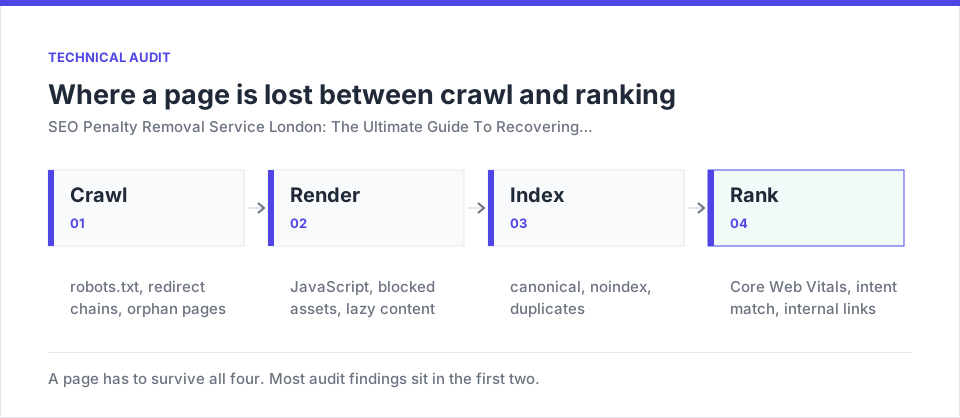
1) Forensic data capture and baseline restoration
The recovery journey starts with a granular evidence pack. A London-focused penalty removal project collates crawl data, indexing status, and page-level health across Local Pages, GBP listings, Maps, and KG entries. This baseline establishes what changed, when, and where user journeys broke. TPIDs and Licensing Context are tagged to assets moving across surfaces, ensuring language fidelity and rights ownership are traceable throughout the recovery lifecycle.
Practically, this means aligning the audit with district priorities. If Westminster pages underperform for local queries while GBP signals remain robust, the plan can privilege district-specific fixes without neglecting broader site health. Clear, district-referenced milestones help stakeholders visualise progress and maintain accountability.
2) Technical remediations that restore crawlability and indexing
Technical fixes form the backbone of a reliable recovery. The London approach prioritises changes that yield tangible enhancements across Local Pages and map surfaces, while preserving a clean global structure. Key actions include:
- Rectify crawl issues and ensure comprehensive coverage of London district pages in sitemaps.
- Resolve JavaScript rendering constraints and optimise mobile performance to support local search experiences.
- Verify and standardise canonical and hreflang implementations to avoid duplicate content across languages and districts.
- Strengthen internal linking to reinforce district relevance and ensure meaningful PageRank distribution from high-authority London pages.
3) Content enhancements that align with local intent
Google rewards content that demonstrates depth, authority, and local relevance. In London, this translates to enriching district-specific content, emphasising local case studies, service area pages, and district-focused FAQs. The objective is to elevate E-E-A-T signals without compromising alignment to broader site topics. Practical steps include:
- Expanding thin pages with substantial, outcome-focused content that addresses district needs and questions.
- Integrating authentic local data, citations, and referenced sources that bolster trust and expertise.
- Ensuring content is multilingual where applicable, with accurate translations and culturally appropriate phrasing that respects Licensing Context.
- Aligning content with user intent signals observed in district-level search patterns.
4) Link profile governance and clean-up
Link quality remains a critical determinant of trust with Google. A London-focused remediation plan scrutinises the backlink ecosystem for district relevance and toxicity, prioritising rapid disavowal of harmful links and targeted acquisition of high-authority, locally relevant references. Governance plays a central role here: every link action is mapped to the TPIDs of the assets it influences, ensuring auditability and consistent signal propagation across surfaces.
To maintain momentum, the plan includes a phased reset of the link profile, with progress updates tied to district performance indicators such as local pack visibility and GBP engagement metrics.
5) Local surface alignment: GBP, Maps, and KG governance
Recovering district visibility requires synchronised improvements across Local Pages, Google Business Profile, Maps, and Knowledge Graph. The recovery plan codifies a governance framework that tracks NAP consistency, GBP category relevance, and KG integrity, ensuring language provenance and asset licensing travel coherently across districts. Regular checks against district metrics help prevent drift in local signals and reinforce trust with Google’s local ranking layers.
In practice, this means maintaining consistent business information across directories, enforcing accurate service areas, and curating reviews that reflect authentic customer experiences in London’s diverse neighbourhoods.
6) Reconsideration and evidence-based reinstatement
If a manual action is confirmed, the London team prepares a concise, evidence-led reconsideration request. The narrative succinctly demonstrates improvements since the action, highlights policy compliance, and presents data-driven outcomes from technical fixes, content enhancements, and link governance. The process is collaborative, with clear timelines and status updates to keep stakeholders informed throughout the reinstatement window.
7) Ongoing monitoring and governance to prevent recurrence
The final phase is establishing a proactive monitoring regime designed to catch early warning signals. Dashboards track district performance across organic traffic, rankings for key local queries, GBP interactions, map views, and KG entries. Regular health checks ensure that any regressions are detected quickly and addressed with a plan of action that mirrors the district-focused approach used during recovery.
For clients in London, this means scheduled reviews aligned to district cycles, and the ability to scale governance as you expand into additional boroughs or services. The long-term objective is to sustain improved visibility while maintaining rigorous compliance with Google’s evolving guidelines.
SEO Penalty Removal Service London: Cleaning Up Toxic Backlinks And Rebuild A Healthy Profile
In the ongoing penalty recovery journey for London-based businesses, backlink health remains a foundational element. Toxic or manipulative links can undermine the strongest technical fixes and content improvements, so Part 8 of our London-focused series concentrates on a disciplined disavowal and rebuild strategy. A robust London penalty removal programme treats backlink governance as an ongoing asset-management discipline, integrating Translation Provenance IDs (TPIDs) and Licensing Context to ensure that every linking action travels with linguistic clarity and rights protection across Local Pages, GBP, Maps and Knowledge Graph surfaces.
1) Why toxic backlinks matter in a London penalty context
London’s competitive landscape means local and district signals carry substantial weight. A site may escape technical fixes or content gaps, yet still be dragged down by a stream of low-quality or irrelevant backlinks. In practice, toxic links can trigger manual actions or contribute to algorithmic penalties by misaligning with intent, quality, and topical authority. For London brands, the risk is magnified when links originate from district directories, unvetted local blogs, or international aggregators that misrepresent local relevance. Cleaning these links is not merely cleanup; it’s a governance exercise. By tying each backlink remediation to TPIDs and Licensing Context, agencies ensure terminology and asset rights stay aligned as content moves between Local Pages, GBP, Maps and KG.
A disciplined approach prevents reintroduction of poor links and protects proximity-based visibility, which is essential for London districts like the City, Westminster and Canary Wharf where local intent drives conversions. A successful cleanup supports sustained trust with Google and reduces the probability of recurrence after future updates.
2) Manual backlink audits: evidence gathering and mapping to TPIDs
Begin with a comprehensive inventory of inbound links using trusted tools such as Ahrefs, Majestic, and Moz. Assess each link for relevance, authority, anchor text quality, and potential spam signals. The London practice emphasises local relevance: links from city authorities, boroughs, regional news outlets, and industry associations tend to carry positive signal when properly contextualised. Each identified link should be mapped to a Translation Provenance ID (TPID) that anchors it to the corresponding district hub or Local Page. Licensing Context should be attached to any imagery or media connected to the linking source to maintain rights throughout remediation and future activations.
Deliverables from the audit include a toxicity score per domain, a defensible disavow list, and a remediation plan prioritising high-risk links that influence district visibility and GBP/Maps signals. A London penalty removal partner will present the evidence pack with clear justifications and a timeline for each action, ensuring stakeholders understand the link ecosystem and how it supports district-level recovery.
3) Disavowal versus removal: deciding the best course
Two primary remediation paths exist when dealing with harmful backlinks: disavowal and direct removal. Disavowal is typically used for links that cannot be removed due to the site’s structure or webmaster responsiveness, whereas removal is preferred when you can request the link be taken down. In London’s district-focused campaigns, the choice hinges on impact, accessibility, and the potential collateral effects on legitimate local references. When a link’s anchor text, topic, or domain authority misaligns with district signals, disavowal provides a safe, auditable way to negate the link’s influence without risking collateral damage to legitimate partners.
Practical considerations include ensuring you maintain a clean, minimal disavow file, avoiding over-disavowal which could erode overall link equity, and coordinating with the asset owners where feasible to secure removal. For links that can be removed, prepare a brief outreach plan outlining reach, expected responses, and fallback strategies if removal is not achieved promptly. Throughout, TPIDs help document which district hub or Local Page is affected, while Licensing Context ensures any media in the link ecosystem remains properly licensed as it moves across surfaces.
4) Rebuilding a healthy profile: from cleanup to proactive growth
Post-cleanup, the objective shifts to building high-quality, locally relevant backlinks that reinforce London authority. This means targeting district-relevant publishers, regional business directories, and reputable local media. Outreach should emphasise editorial merit and context, not sheer volume. Anchor texts should reflect district themes and local intent, with TPIDs ensuring terminological consistency across languages. A healthy link profile supports Local Pages, GBP, Maps and KG surfaces, while aligning with licensing terms for multimedia assets used in outreach and content assets.
As you recover, begin a steady link-building cadence focused on quality over quantity. Prioritise links from sources with strong London signals, such as borough portals, local chambers of commerce, and esteemed regional news outlets. Combine this with ongoing content enrichment that increases topical authority for district topics, reinforcing EEAT signals across surfaces.
5) Governance, TPIDs and Licensing Context across London surfaces
Governance is the backbone of long-term backlink health. Every link action should be linked to a TPID, and every asset used in outreach should carry Licensing Context to maintain rights as content travels across Local Pages, GBP, Maps and KG. Establish a central dashboard that monitors backlink health by district TPID, tracks licensing status for linked media, and records outreach outcomes. Regular audits ensure the link profile remains aligned with Google’s evolving quality standards and London’s district-specific signals.
To operationalise this, embed TPIDs in outreach templates, maintain a running Licensing Context ledger for all media, and integrate these artefacts into governance reviews. For district activation plans and governance artefacts, consult our SEO Services or reach out via the London team.
SEO Penalty Removal Service London: Handling Manual Actions — Evidence Gathering And Reconsideration Requests
Manual actions represent Google’s direct, human-imposed penalties. They differ from algorithmic penalties in that you receive a specific notification detailing the violated guideline and the affected pages. For London-based brands, a swift and well-documented response is essential to restore visibility across Local Pages, GBP, Maps and Knowledge Graph surfaces. This Part 9 focuses on evidence gathering, remediation, and the reconsideration process, aligning with a district-focused governance approach that underpins londonseo.ai’s penalty removal services.
1) Identify And Confirm The Manual Action
The first step is to verify that a manual action has actually been issued. In Google Search Console, look for a Security & Manual Actions report entry that specifies the policy area, the pages affected, and any guidance on remediation. London campaigns often see manual actions tied to link-related violations or content quality issues that influence local signals. Confirm the scope by cross‑checking the affected URLs against the corresponding Local Pages and GBP assets to understand how district visibility will be impacted.
As you confirm, capture nuances relevant to London markets, such as district-specific landing pages, proximity-based queries, and Maps interactions, since these surfaces can amplify the consequences of a manual action. This diagnostic clarity becomes the backbone of your evidence pack and informs prioritised remediation.
2) Build An Evidence Pack For Google
Construct a concise, evidence-led packet that demonstrates compliance improvements since the action was issued. The pack should include: a list of affected URLs and policy area; screenshots of the GSC notification; a summary of on-site fixes (content improvements, link cleanup, redirects, canonical changes); and a timeline showing remediation milestones. Tie each asset to Translation Provenance IDs (TPIDs) and Licensing Context to maintain terminology consistency and licensing accountability as assets move across Local Pages, GBP, Maps and KG surfaces throughout London.
In practice, begin with a high‑level executive summary for stakeholders, then attach detailed appendices showing technical, content, and link fixes. The London penalty removal team will use this to craft a compelling reconsideration narrative that directly references the actions taken and the results observed in district pages and local surface signals.
3) Prioritise And Plan Remediation Actions
Prioritisation should reflect district impact. In London, manual actions often affect local packs, GBP interactions, and district knowledge panels. Start with high‑impact sitewide governance improvements if the action touches core experiences used by multiple districts. Then address district-specific issues, ensuring that TPIDs connect the remediation to the appropriate Local Page hub and GBP surface. Key remediation areas include: eliminating deceptive or manipulative links, removing spammy content, correcting policy violations, and re-establishing trust with Google through transparent, verifiable changes.
Document the plan as a staged programme with milestones, owners, and clear success criteria. Always attach Licensing Context for any imagery or media used in the remediation to protect rights as assets traverse surfaces across Local Pages, GBP, Maps and KG.
4) Drafting The Reconsideration Request
The reconsideration request is a critical document. It should be concise, fact-based, and outcome-oriented. Include: a summary of the issue, a list of corrective actions completed, a clear timeline of remediation, and evidence demonstrating that Google’s guidelines have been satisfied. Use district-focused examples to illustrate how local signals have been normalized—such as reinstating Local Pages health, re‑establishing GBP accuracy, and restoring relevant Maps and KG entries. Emphasise TPIDs and Licensing Context throughout the narrative to show governance and rights management are intact across languages and surfaces.
In London, a well-structured reconsideration narrative reduces the back-and-forth with Google and accelerates reinstatement. Provide direct links to the affected URLs when possible, and offer to furnish additional documentation if Google requests it. This collaborative stance supports a faster, more predictable outcome for district activations.
5) Submitting, Monitoring, And Responding To Google
Submit the reconsideration request via Google Search Console. After submission, monitor for replies and be prepared to provide supplementary information quickly if requested. In London, the timeline for responses can vary, but a disciplined approach with TPIDs and Licensing Context attached to every asset helps maintain consistency and speed during follow-up requests. Maintain open communications with internal stakeholders, updating them on progress and any shifting priorities as districts recover visibility.
If Google requires additional evidence, supply it promptly with explicit citations to the TPID mappings and licensing attestations, ensuring that all materials remain district-aware and rights-compliant.
6) What To Expect After Reinstatement
Reinstatement marks a transition from remediation to resilience. Expect a period of monitoring across Local Pages, GBP, Maps and KG to confirm that rankings stabilise and district signals recover. Maintain TPIDs and Licensing Context throughout post-recovery activity to preserve consistency as content evolves or is translated for new districts. Establish a governance cadence that includes periodic audits, dashboards by district, and proactive risk management to prevent future penalties.
For ongoing support, London businesses can rely on our penalty removal team to maintain compliance, monitor signals, and adjust strategies as Google’s guidelines evolve. If you want a diagnostic and tailored plan for your district, visit our SEO Services or get in touch with the London team.
SEO Penalty Removal Service London: Dealing With Algorithmic Penalties And Core Updates
Algorithmic penalties following Google core updates can feel disorienting for London brands. When rankings and traffic slip after a core update, the challenge isn’t just a single page issue; it’s a systemic shift in how signals like content quality, user intent alignment, site health, and local authority are weighed. A district‑first recovery plan in londonseo.ai considers not only the global algorithm but how local signals—Local Pages, Google Business Profile (GBP), Maps and Knowledge Graph (KG)—interact with proximity and district intent. The following guidance translates the general recovery playbook into actionable steps tailored to London’s competitive landscape and its borough‑level surfaces.
1) Diagnose The Root Causes Of The Core Update Impact
Core updates reweight signals across content quality, topical authority and site health. In London, the impact often manifests as a broad drop across district pages, with local packs and GBP engagement feeling the sting sooner when signals are misinterpreted by the update. Start with a district‑aware health check that examines three pillars:
- Content quality and relevance across Local Pages and service areas within London districts, ensuring depth, originality and E‑A‑T signals are present for each hub (City, Westminster, Canary Wharf, etc.).
- Technical health, including crawlability, indexing, mobile experience, Core Web Vitals, and hreflang consistency across language variants used in London surfaces.
- Backlink risk and external signal alignment, focusing on local authoritativeness, trust signals, and the relevance of linking domains to district topics.
As you diagnose, map every finding to Translation Provenance IDs (TPIDs) and Licensing Context so terminology and asset rights stay consistent as content moves across Local Pages, GBP, Maps and KG. London‑specific symptoms to flag early include reduced local pack impressions, GBP engagement dips, and a shift in KG connections for district queries. A documented diagnosis supports credible remediation and a faster path to reinstatement.
2) Plan A District‑Focused Recovery Strategy
With root causes identified, craft a London‑centric recovery plan that aligns with Google’s quality expectations while preserving district relevance. The plan should weave together three strands:
- Content enrichment that expands in‑depth district pages, adds local case studies, service area details and authoritativeness signals tailored to London audiences. Ensure every piece aligns with TPIDs and carries Licensing Context for multimedia assets.
- Technical enhancements aimed at restoring crawlability, proper indexing, and stable user experience across languages and devices in London surfaces. Update structured data to reflect local entities, services and districts with precision.
- Backlink governance that prioritises local relevance and high‑quality, context‑appropriate links. Plan disavows or removals for toxic signals while pursuing authoritative, district‑relevant acquisitions.
Translate the plan into a pragmatic timetable with clearly defined milestones, owners, and dashboards that report by district TPID. A district‑aware plan helps you regain Local Pages, GBP, Maps, and KG visibility in a way that survives future core updates.
3) Implement Core Update Recovery Actions
Implementation should be sequenced to maximise impact and minimise disruption to traffic and conversions. Focus areas include:
- Content: enrich pages with unique, locally relevant information; reduce thin content; enhance topical authority; embed district‑level data and credible sources; apply TPIDs to maintain terminology across languages.
- Technical: fix indexability issues, canonical and hreflang accuracy, mobile UX improvements, and schema markup with LocalBusiness, Service and FAQ types relevant to London districts.
- Links: conduct a backlink health review, remove or disavow harmful links, and initiate quality link building from reputable London authorities and media outlets.
Throughout, keep a live change log that ties every action to its TPID and Licensing Context so elected stakeholders can trace governance and asset provenance as content travels across surfaces.
4) Validate And Confirm Reinstatement Readiness
Validation should demonstrate improvements across district surfaces and against core metrics. Monitor ranking stability after updates, track district query visibility, and observe GBP interactions and map views. Confirm that pages formerly affected by the core update now show restored or improved performance across Local Pages, GBP, Maps and KG. TPIDs help verify that terminology remains aligned post‑update, while Licensing Context ensures rights for any media used in district assets. This validation phase should feed back into governance dashboards for ongoing accountability.
5) Ongoing Monitoring And Governance For London Surfaces
The recovery from an algorithmic penalty is not a one‑off event. Establish district‑level dashboards that aggregate signals from Local Pages, GBP, Maps and KG, segmented by TPID and language. Regular audits guard against regressive patterns as Google evolves its algorithms. Maintain Licensing Context and TPIDs to ensure consistent rights and terminology as your London portfolio expands across districts and languages. A governance cadence, including quarterly reviews and monthly operational checks, keeps the strategy resilient to future core updates.
To align a London business with this approach, explore our SEO Services or contact the London team for a diagnostic and district‑specific proposal.
SEO Penalty Removal Service London: Timelines And Costs — What To Expect For Recovery
Following the structured penalty recovery framework laid out in prior sections, this part focuses on practical timelines and budget considerations for London-based businesses. Understanding typical durations, key milestones, and cost ranges helps district teams plan, secure approvals, and track progress with clear governance. The discussion also emphasises how Translation Provenance IDs (TPIDs) and Licensing Context underpin every phase of a district-first recovery, ensuring terminology consistency and rights management as assets move across Local Pages, GBP, Maps and KG surfaces.
What factors influence recovery timelines?
In London, the speed of recovery is driven by the complexity of issues, the scope of the penalty, and the surfaces affected. Manual actions often resolve faster when remediation is clearly delineated and eligible for reconsideration, while algorithmic penalties tied to core updates may require broader content and technical realignment. The involvement of Local Pages, GBP, Maps and KG signals can add coordination layers, particularly when district hubs such as City, Westminster or Canary Wharf are implicated.
- Severity and scope of the penalty, including the number of affected URLs and the surfaces involved.
- Quality and speed of on-site fixes, including technical corrections, content enrichment, and clean link governance.
- Speed and clarity of communication with Google during reconsideration or re-indexing requests.
- Availability and responsiveness of stakeholder teams to approve changes and sign off governance artefacts.
Typical recovery timeline in a London context
A practical, phased timeline helps London brands anticipate whole-project durations. The plan below assumes a mid-sized site with a moderate level of district-focused complexity and a mix of technical, content, and link issues.
- Week 1–2: Forensic audit and evidence pack. A comprehensive health check covers crawlability, indexing, Core Web Vitals, content depth, and backlink risk. TPIDs and Licensing Context tags are attached to all assets. Deliverables include an executive summary and an issue-by-issue backlog aligned to district hubs.
- Week 3–4: Prioritised recovery plan and quick wins. The client receives a district-focused plan with milestones, ownership, and dashboards. Immediate technical fixes and high-risk content improvements take precedence to stabilise surface health.
- Week 5–8: Implementation of fixes. On-site corrections, content enrichments, and backlink clean-up proceed in a staged fashion. Regular changelogs document actions by TPID and asset rights status.
- Week 9–10: Reconsideration and re-indexing. If a manual action exists, a structured reconsideration packet is submitted, followed by Google reviews and any requested clarifications.
- Week 11–12: Monitoring and verification. Post-recovery monitoring across Local Pages, GBP, Maps and KG confirms stability and guards against regression as updates roll out.
Cost considerations: what London clients can expect
Pricing for penalty removal services in London is typically structured around three core components: an initial audit, full recovery and reconsideration support, and ongoing monitoring with governance. Pricing reflects site size, the number of district hubs involved, and the surfaces affected (Local Pages, GBP, Maps, KG). Below are representative starting figures to help with budgeting and stakeholder discussions.
- Penalty recovery audit: from £3,500. This covers a thorough technical health assessment, content quality review, and backlink risk analysis, together with TPID and Licensing Context tagging of assets.
- Full recovery and reconsideration support: from £5,000. This includes remediation work, disavow or removal of problematic backlinks, content optimisations, and the preparation and submission of reconsideration requests where necessary.
- Ongoing monitoring and governance: from £1,000 per month (varies by district scope). Ongoing services encompass dashboards, regular audits, and proactive adjustments to maintain surface health across Local Pages, GBP, Maps and KG.
Factors that can alter cost and duration
Several variables influence the final timetable and price. The size of the site and the breadth of district activation, the number of languages or locales involved, the maturity of TPID governance, and licensing complexities for imagery all play a role. Additional factors include the degree of backlink toxicity, the need for manual reconsideration, and the pace at which your internal team can consent to changes and provide necessary documentation.
- Limited surface exposure (few Local Pages, GBP, Maps) typically shortens timelines and reduces cost.
- High backlink toxicity or multiple manual actions can extend the remediation window and increase workload.
- Multilingual content with district-specific licensing adds governance overhead but improves long‑term resilience.
- Rapid stakeholder availability accelerates approvals, reducing delays in execution and governance sign-offs.
What you’ll receive in a typical London engagement
A London penalty removal engagement is designed to deliver more than a one-off fix. Expect a structured, auditable process with clear milestones, TPID-tagged assets, and Licensing Context attached to all imagery and media. You’ll gain a governance framework that scales with district growth, a transparent change log, and dashboards that merge Local Pages, GBP, Maps and KG signals by district TPID. The aim is to produce durable visibility improvements, not temporary spikes, and to set a foundation for ongoing resilience against future updates.
Next steps: tailoring a London-specific proposal
To move from plan to action, engage with our London penalty removal specialists to obtain a district-focused diagnostic and a customised proposal. Our team can translate these timelines and costs into an actionable budget aligned with your borough strategies and growth targets. Visit our SEO Services page or get in touch with the London team to initiate a district-first recovery journey.
SEO Penalty Removal Service London: Ongoing Monitoring, Reporting And Penalty-Proofing For The Long Term
Even after a successful penalty recovery, London brands must maintain a vigilant governance and monitoring regime to protect their hard-won visibility. This final, Part 12 in our district-first series, focuses on sustained health across Local Pages, Google Business Profile (GBP), Maps and Knowledge Graph (KG). Building on TPIDs (Translation Provenance IDs) and Licensing Context, the goal is to establish a repeatable, auditable cadence that preserves language fidelity, asset rights, and district relevance as London markets evolve. The following framework translates governance into practical workflows, dashboards, and reporting that keep penalties from re-emerging while supporting durable growth in the capital’s competitive landscapes.
1) Establishing a live governance model for ongoing protection
A district-first penalty-remediation programme becomes a living system through a disciplined governance model. Use TPIDs to tag terminology and district hubs, and apply Licensing Context to all assets as they move between Local Pages, GBP, Maps and KG. Create a central governance playbook that defines ownership for each surface, the cadence of reviews, and the thresholds for action when signals drift. In London, this translates into district-specific dashboards that aggregate Local Pages health, GBP engagement, Maps impressions and KG connectivity by TPID. Regular governance rituals—weekly stand-ups, monthly KPI reviews, and quarterly strategy check-ins—drive accountability and informed decision-making across the City, Westminster, Canary Wharf and other boroughs.
- Ownership mapping: assign surface owners (Local Pages, GBP, Maps, KG) per district hub to ensure rapid response.
- Dependency documentation: log data sources, data joins, and TPID mappings in a shared repository accessible to London stakeholders.
- Change governance: implement a formal change-control process with versioned artefacts and licensing attestations for all assets affected by district activations.
2) Ongoing monitoring frameworks you can rely on
Monitoring is the antidote to regression. Establish multi-layer dashboards that track KPI groups across surfaces and languages, broken down by district TPID. Core data streams include Google Search Console, Google Analytics 4, and server logs for crawl and index activity. Overlay these with surface-specific metrics: Local Pages health, GBP interactions, Maps reach, and KG edge strength. Set threshold-based alerts for sudden drops in district queries or GBP signals, enabling proactive interventions before user experience deteriorates.
- Weekly health checks that surface crawling anomalies, index coverage changes, and page-speed variability by district.
- Monthly performance reviews presenting trend analysis for each district hub, plus cross-surface attribution by TPID.
- Quarterly governance audits to refresh TPIDs, Licensing Context, and asset provenance as London expands to new districts.
3) Reporting cadences that drive clarity and accountability
Deliver reporting that is as practical as it is rigorous. Create stakeholder-friendly summaries that align with district priorities and regulatory considerations. Weekly tactical reports flag critical issues; monthly dashboards translate performance into district-level insights; quarterly executive briefs connect surface health to business outcomes. Licensing Context should accompany dashboards whenever media assets are referenced, ensuring rights tracking is visible alongside KPIs. In London, this approach supports steady governance across Local Pages, GBP, Maps and KG while accommodating language variants and district expansions.
Recommended reporting artefacts include:
- TPID-aligned dashboards for each district hub, integrating Local Pages, GBP, Maps and KG metrics.
- Asset provenance records showing Licensing Context across all surfaces.
- Change logs that document every update by TPID and surface, enabling clear audit trails.
4) Preparing for future updates: risk management and resilience
Google’s evolving algorithms and local signals mean resilience is an ongoing discipline. Proactively refresh content to align with user intent in each district, reinforce E-E-A-T signals with authoritative London-focused sources, and maintain a pristine backlink profile that supports GBP and Maps. Use TPIDs to prevent terminology drift as pages are translated or updated for new districts, and keep Licensing Context current for all imagery and media used in campaigns. Build scenario plans for potential updates, including local events, transit changes, and regulatory shifts that could alter district search behaviour.
In practice, apply a three-tier plan: short-cycle optimisations (content and technical tweaks), mid-cycle governance updates (TPIDs and licensing cadences), and long-term capacity planning (district templates and activation playbooks ready for scale).
5) Next steps: how to action this in London
To operationalise the long-term monitoring and reporting framework, connect with our London penalty-removal specialists. A practical starting point is a district-focused diagnostic and a phased governance plan, using the TPID and Licensing Context constructs to guarantee consistency as you scale across Local Pages, GBP, Maps and KG. Explore our SEO Services for access to governance artefacts, dashboards, and activation templates, or get in touch with the London team to schedule a discovery session tailored to your boroughs and surfaces.
