Amazon SEO Consultant London: A Practical Guide For UK Amazon Sellers
Amazon remains the dominant marketplace for UK shoppers, and London-based sellers often need a partner who understands both the platform and the local market. An Amazon SEO consultant in London specialises in UK-specific optimisation—from product listing structure and ranking signals on amazon.co.uk to optimising A+ content, brand store navigation, and reviews strategy within Amazon's policies. This Part 1 outlines the foundational role, the typical scope of work, and the concrete outcomes you can expect when engaging a London-based expert through londonseo.ai.
Role And Scope Of An Amazon SEO Consultant In London
An effective London-based Amazon SEO consultant acts as a catalyst for visibility and conversion within the UK marketplace. Core responsibilities include conducting a comprehensive account audit, identifying UK-specific keyword opportunities, and aligning listings with local consumer behaviour. The consultant builds a London-focused optimisation plan that covers titles, bullet points, features, backend search terms, and image strategy, while also addressing A+ content and storefront architecture to improve shopper engagement and dwell time. Importantly, the role extends to governance: establishing auditable processes, dashboards, and reporting that keep senior leadership informed and compliant with marketplace rules.
In practice, this means translating broad category ideas into district- or product-level optimisations that address near-me search behaviour, seasonality, and regional competition. It also involves synchronising UK promotions, pricing strategies, and stock availability with listing health signals to sustain rankings during peak periods such as seasonal shopping. To frame expectations, a London-focused engagement typically delivers a phased path from audit and quick wins to scalable, sustainable growth across multiple product categories and campaigns.
Key Deliverables In A London Amazon SEO Programme
At the outset, a London consultant provides a clearly scoped deliverables pack that translates insights into action. Typical items include a discovery audit, a keyword research workbook tailored to UK shopper intent, a listing optimisation plan, content calendars for A+ assets and product storytelling, and a governance framework with auditable dashboards. The focus is on measurable outcomes such as higher organic visibility on amazon.co.uk, improved product detail page performance, and more frequent conversion from search results to product pages.
- Discovery And Baseline: technical health of listings, keyword opportunity mapping, and competitor benchmarking within the UK market.
- Listings Optimisation: optimised titles, bullets, descriptions, images, and A+ content aligned to UK consumer language and shopping behaviours.
- Content And Proofs: enhanced product storytelling with credible proofs and UK-specific edge activations to improve relevance and trust.
- Governance And Reporting: auditable dashboards, What-If forecasts, Explain Logs, Provenance Envelopes, and RegExports for regulator-readiness if required.
Why London Expertise Matters
London teams bring a practical awareness of UK consumer expectations, regional competition, and the capital’s logistics landscape. This can translate into smarter inventory planning, pricing alignment, and proximity signals that help Amazon rank London-first and country-wide listings more effectively. The consultant’s close working relationship with londonseo.ai ensures a governance-forward approach, combining technical optimisation with auditable measurement to demonstrate ROI to stakeholders and, where necessary, to regulators. For reference on general quality and user-focused guidelines, consider Google’s quality guidelines: Google's quality guidelines.
What You Will Gain From This Series
Readers can expect a practical, two-pronged outcome: first, a solid framework for evaluating and selecting an Amazon SEO consultant in London; second, a scalable roadmap for UK Amazon success that begins with audit-based quick wins and progresses to sustainable, data-driven growth across multiple product lines. The guide uses londonseo.ai as the reference point for a governance-minded diffusion approach that links listing optimisations to district proofs,edge activations, and auditable reporting. For a concrete starting point, explore our services page: Amazon SEO London services.
Why Hire A London-Based Amazon SEO Consultant
London-based Amazon sellers gain from a local, time-zone aligned partner who understands both the platform and the regional market. A London-based Amazon SEO consultant specialises in UK-focused optimisation—from product listing structure and ranking signals on amazon.co.uk to optimising A+ content, brand store navigation, and reviews strategy within Amazon's policies. This Part 2 explains why engaging a London expert through londonseo.ai matters, and what you should expect from a practical, governance-minded collaboration.
Audits: Establishing Baselines And Quick Wins
Audits form the critical starting point for any London Amazon SEO programme. They illuminate current performance, governance gaps, and opportunities to unlock near-me demand across Islington, Camden, and surrounding boroughs. A well-structured audit combines technical, content, local, and data-quality perspectives to create a practical, auditable baseline that informs every subsequent action.
- Technical health and crawlability: Identify site structure barriers, indexation issues, and performance bottlenecks that hinder district-depth pages from ranking efficiently.
- Local data integrity: Validate NAP consistency, GBP health, and district-specific proofs that strengthen proximity signals and Maps visibility.
- Content and keyword landscape: Assess city-wide themes and district-intent gaps, establishing a map that ties hub topics to district pages and edge activations.
Strategic Planning For North London: The Diffusion Map
With baselines in place, the strategy defines how hub topics diffuse into district-depth content. Start with a compact set of North London hubs—Local Leadership, Community Engagement, and Local Economic Activity—and plan 4–6 district-intent pages per chosen borough. Each district page should carry credible proofs (customer testimonials from local clients, partnerships with community groups, or event histories) and a coherent internal linking pathway back to the hubs. Edge activations (Maps prompts, local guides, and events calendars) must be tightly coupled with proofs to convert local interest into near-me demand. Governance artefacts ensure decisions are auditable, and the diffusion journey remains regulator-friendly as the spine scales across North London.
Implementation: From Plan To Practice
Implementation translates strategy into action. It requires coordinated execution across technical SEO, on-page optimisation, local signals, and governance workflows. Begin with district-aligned page production, ensuring URL structures are geo-conscious and that canonicalisation prevents content cannibalisation between hub topics and district-depth pages. Integrate proofs and edge activations directly on district pages to demonstrate locality and trust. Maintain rigorous internal linking so that every district-depth page reinforces the diffusion spine back to the hub topics, while supporting edge activations that drive near-me demand.
Practical sequencing includes publishing a pilot set of district-depth pages, followed by rapid iterations based on governance dashboards. Align content calendars with edge activations to uphold momentum and ensure that proofs, testimonials, and data sources are refreshed to reflect current local conditions in North London.
Reporting: Dashboards, Audits, And Accountability
Reporting must demonstrate how audits and strategy translate into tangible outcomes. Implement auditable dashboards that connect hub authority, district engagement, GBP readiness, and edge-activation health with lead indicators and revenue outcomes. Use governance artefacts such as What-If forecasting to anticipate diffusion shifts, Explain Logs to capture data provenance and decision rationales, and Provenance Envelopes to attach licensing and origin disclosures to proofs used on district pages. RegExports may be necessary for regulator reviews in more complex campaigns.
In practice, reporting should present a clear narrative: how hub topics inform district content, how proofs support locality signals, and how edge activations translate into inquiries, bookings, or sales within North London. Regular reviews keep leadership informed and help regulators recognise the integrity of the diffusion process.
Next Steps For North London Teams
- Step 0 – Discovery And Baseline: articulate business goals, identify target North London boroughs, and establish baseline metrics for GBP health, local citations, and proofs. Set governance artefacts early to ensure auditable trails from the outset.
- Step 1 – Geography And Governance: map hub topics to district intents, implement What-If forecasting gates, Explain Logs, and Provenance Envelopes, and establish a shared diffusion dashboard to monitor progress from city-wide authority to district pages.
To discuss onboarding or request a formal proposal, please Contact Us. For governance resources and North London-first playbooks, visit SEO Services North London on londonseo.ai and review Google's quality guidelines to ensure responsible practice.
Understanding Amazon’s Ranking Factors
Amazon's ranking system on amazon.co.uk hinges on the fundamentals of relevance, performance, and customer experience. For a London market, an amazon seo consultant london must translate these principles into district-specific actions that respect UK shopping behaviours and regulatory frameworks. This Part 3 outlines the core signals that drive visibility and conversions, and provides practical steps that a London-based expert from londonseo.ai can implement to improve ranking health with auditable, governance-friendly processes.
Key Ranking Signals On Amazon.co.uk
Understanding how Amazon ranks products helps structure optimization work that improves organic visibility and sales. The following signals capture the main levers in the UK marketplace:
- Relevance Signals: How well the listing aligns with the shopper’s query, including title, bullets, description, and backend terms.
- Performance Signals: Sales velocity, price competitiveness, stock availability, and fulfilment quality (FBM vs FBA, Prime eligibility).
- Conversion Signals: Click-through rate (CTR), add-to-cart rate, and the actual purchase rate from impressions.
- Content Signals: Visual assets, product imagery, A+ content, and brand storytelling that enhance perceived quality.
- Review And Rating Signals: Overall rating, volume of reviews, and the sentiment of feedback that affects buyer confidence.
Relevance And Listing Quality
The most immediate impact on ranking comes from how closely your listing matches the shopper's intent. In practice this means auditing title keywords for relevance to core search terms used by UK buyers, aligning bullet points with common purchase drivers, and ensuring your product description reinforces the main benefits. Use concise, customer-focused language that reflects British phrasing and terms that resonate in Islington, Camden, or Hackney markets. For a London-focused approach, incorporate district-relevant variants without compromising readability.
Tip: structure titles with the primary keyword near the front, followed by unique differentiators such as model, size, or colour, then geographic qualifiers where appropriate. This helps the listing appear in both general and district-specific searches.
Performance Signals: Velocity, Availability, And Fulfilment
Sales velocity is a leading indicator of ranking velocity. Consistent demand across the UK market improves product ranking and reduces price volatility signals. Maintain steady stock levels to prevent lost ranking from stockouts. If a product goes out of stock, rank may drop until replenishment occurs. Price competitiveness, promotional activity, and reliable delivery times (including Prime) contribute to a broader performance signal that search algorithms interpret as a signal of buyer satisfaction.
London sellers should align promotions with local events and seasonal peaks to maintain price competitiveness and stimulation of search interest across districts.
Content And Visual Signals: Images, A+ Content, And Brand Narrative
High-quality images, lifestyle photography, and informative A+ content improve shopper confidence and click-through. The UK market places value on clarity and transparency: clear product contexts, size charts, and usage scenarios should be visible in the content. A+ assets should be utilised to convey durability, build quality, and local relevance. For a London-centric strategy, include content that resonates with urban living, such as compact packaging or city-friendly features.
In parallel, deliver strong visual consistency across product images to uphold brand credibility and EEAT signals for UK buyers.
Practical Steps For A London Amazon SEO Consultant London
Translate the ranking factors into actionable optimisations tailored to the capital. Begin with UK keyword research that maps to district intents, followed by optimising titles, bullets, and descriptions with district context. Implement robust product imagery and A+ content that communicates trust and quality. Ensure stock availability, Prime eligibility, and pricing strategies align with local consumer expectations. Finally, establish auditable governance to track changes, outcomes, and ROI, and use dashboards to monitor UK-specific metrics.
For example, a London-based consultant can partner with londonseo.ai to align diffusion signals with UK listings and to provide governance-friendly reporting that demonstrates ROI to stakeholders. See our services page for more detail: SEO Services North London and contact us to discuss bespoke optimisation.
- Step 0 – UK keyword research and district mapping: identify district-specific search terms and align them to product and content strategies.
- Step 1 – On-page optimisation: optimise titles, bullets, and descriptions with district context while preserving natural readability.
- Step 2 – Visual and content enhancements: deploy high-quality imagery, lifestyle photography, and A+ content aligned to locality signals.
- Step 3 – Stock and pricing alignment: ensure consistent stock levels, Prime eligibility, and competitive pricing for UK buyers.
- Step 4 – Governance and reporting: implement auditable dashboards and What-If forecasting gates to guide expansion and ROI validation.
UK-Focused Keyword And Product Research For London Amazon SEO
Building UK-focused visibility starts with rigorous keyword and product research that translates city-wide authority into district-level relevance. This Part 4 continues the diffusion spine established by londonseo.ai, translating shopper intent in the UK into district-specific insights that inform on-page optimisation, product strategy, and governance-friendly reporting. The aim is to craft a keyword map and product research plan that underpins near-me demand across London’s boroughs while remaining auditable for leadership and regulators.
UK-Focused Keyword Research For London Listings
Keyword research for Amazon in the UK must blend national intent with hyper-local signals. Start with core UK terms that align to your product category on amazon.co.uk, then layer in district-sensitive modifiers such as a borough, neighbourhood, or notable local feature. For example, a kitchen appliance might be researched as "compact coffee machine" at a UK level, then expanded to district variants like "Islington compact coffee machine" or "Camden space-saving coffee machine". This approach captures both broad demand and near-me opportunities that UK shoppers frequently express in city contexts.
Deliverables from this stage include a UK keyword research workbook, district-specific term lists, and a diffusion-ready map showing how hub topics translate into district-depth pages. The workbook should also capture seasonal spikes (e.g., back-to-school, festive periods) that influence district demand. Integrate long-tail phrases such as questions, comparisons, and local use cases, which tend to convert more readily on Amazon UK listings. All keyword work should be aligned with the diffusion spine so district pages leverage relevant hub topics and prove authority in local contexts.
- Core UK terms: Identify high-volume, relevant terms at the UK level, ensuring they map to product and category pages on amazon.co.uk.
- District modifiers: Add borough- or neighbourhood-level qualifiers to capture near-me demand in Islington, Camden, Hackney, and surrounding areas.
- Intent differentiation: Separate terms by purchase intent (informational vs transactional) to guide content and edge activations.
- Seasonality and promotions: Incorporate seasonal terms and UK-specific promotions to anticipate demand shifts.
District-Level Diffusion: From Hub Topics To London Pages
Translate UK keywords into a diffusion model that moves from city-wide hub topics to district-depth pages. Start with two to three core hub topics for London, such as Local Leadership, Community Engagement, and Local Economic Activity, then plan 4–6 district-intent pages per district. Each district page should reflect local terminology, proofs, and edge activations that resonate with residents in Islington, Camden, Hackney, and surrounding boroughs. The objective is to embed demand signals into district content through credible proofs (local testimonials, partnerships, or event histories) and timely edge activations (Maps prompts, local guides, and events calendars) that convert search interest into action. Governance artefacts should document decisions, data provenance, and licensing to support regulator-ready reporting as the spine scales across London.
Practical planning should include a mapping table that links each district-depth page to 2–3 hub topics, with clear internal linking to hub content and forward links to edge activations. This structure helps search engines understand locality, while delivering a coherent user journey from broad authority to district-specific relevance.
Product Research In The UK Context
Product research in the UK market must capture local preferences, regulatory nuances, and retail patterns that influence Amazon listings. Begin with UK-centric demand signals, then validate district-specific relevance by cross-referencing district insights, local events, and community trends. Consider how London’s unique urban lifestyle affects product sizing, packaging, and features, and identify district-specific edge activations that strengthen proofs. For example, compact or space-saving product variants may perform better in densely populated boroughs, while durable goods might resonate with commuters and families in outer London districts. Use the diffusion framework to tie each product concept to district-depth pages and hub topics, ensuring every product page links back to local proofs and nearby activation opportunities.
Deliverables include a UK product research brief, district demand hypotheses, and a schedule for validating local proofs like customer testimonials from North London customers, partnerships with local retailers, or data-backed district usage scenarios. Align product research with pricing, stock, and delivery options that are realistic for UK buyers and London-specific logistics. Governance artefacts should capture assumptions, data sources, and decision rationales to support auditability as diffusion expands.
Integrating Keyword Research Into On-Page Optimisation For London
Turn UK keyword insights into optimised on-page elements that respect locality signals and reader experience. Write titles that place the primary UK term near the front, followed by district qualifiers and unique differentiators. Construct bullets and descriptions that address district-specific priorities, such as delivery expectations, local usage scenarios, and regional benefits. Use natural language that reflects UK phrasing and avoids forced localisation. Ensure A+ content and imagery reinforce district proofs and hub topic authority, linking back to the diffusion spine so district pages contribute to overall authority and trust.
Practical steps include creating district-aware meta data templates, standardising headers with district context, and embedding proofs (local testimonials, partnerships) within product pages. Maintain a governance trail for every change, detailing data provenance and licensing for proofs used on pages. For London-based optimisations, reference the londonseo.ai services page and Google’s quality guidelines to stay aligned with best practices: SEO Services London and Google's quality guidelines.
- Step 0 – UK keyword integration: Map UK terms to district intents and content blocks.
- Step 1 – On-page templates: Apply district-context in titles, bullets, and descriptions while preserving readability.
- Step 2 – Visual and proofs: Deploy district-relevant imagery and edged activations to support locality signals.
- Step 3 – Governance: Attach Explain Logs and Provenance Envelopes to changes for auditability.
Governance, Dashboards, And Practical Next Steps
The governance layer ensures research translates into auditable actions. Use What-If forecasting to plan activation sequencing, Explain Logs to capture data provenance for keyword and product decisions, and Provenance Envelopes to attach licensing and source disclosures to proofs used on district pages. RegExports may be necessary for regulator reviews when diffusion journeys require packaging for scrutiny. A London Keyword Diffusion Index (LKDI) can be created to monitor how UK terms translate into district traffic and conversions, providing leadership with a clear view of progress as the diffusion spine expands across London.
- What-If forecasting: Test diffusion outcomes before publishing new district pages or product launches.
- Explain Logs: Document data provenance behind every keyword and product decision.
- Provenance Envelopes: Attach licensing and origin disclosures to proofs used on pages.
- RegExports: Package diffusion journeys for regulator reviews when required.
For onboarding discussions or a formal proposal, please Contact Us. Explore SEO Services London on londonseo.ai to see how our governance-minded diffusion approach translates keyword and product research into tangible London-wide outcomes. For additional guidance, consult Google's quality guidelines.
Optimising Product Listings: Titles, Bullets, And Descriptions
In the London marketplace, product listing optimisation is a fundamental lever for visibility and conversion on amazon.co.uk. An amazon seo consultant london from londonseo.ai understands how district-level buyer intent interacts with UK packaging, regulatory expectations, and Amazon’s ranking signals. This part of the guide translates high-level optimisation principles into practical, district-aware actions for UK listings, ensuring every element from the title to the backend terms reinforces locality, trust, and purchasability.
Crafting Compelling Titles
The title is the first touchpoint for UK shoppers and a major driver of click-through. Place the most relevant UK terms near the front, followed by model, size, colour, and any district qualifiers that improve locality signals without compromising readability. For example, a kettle marketed to London households might read: "Compact Kettle, 1.7L – Studio-Size, Stainless Steel, Islington Delivery Eligible", which communicates product capability, city-friendly use-case, and nearby delivery options. Importantly, avoid keyword stuffing and maintain natural, scannable phrasing that aligns with British shopping language. A well-crafted title should reflect the diffusion spine’s hub topics while enabling district pages to benefit from cross-district search traffic achieved by the London market network through londonseo.ai.
Practical tip: test variations that foreground the primary UK search term, then iterate to add district cues only where they strengthen relevance or shopper confidence. If you’re unsure how to balance locality with readability, a dedicated London-based consultant can help tailor titles to Islington, Camden, Hackney and adjacent boroughs, ensuring consistency with the diffusion framework. For governance and best-practice guidance, consult our SEO Services London page and reference Google’s quality guidelines: Google's quality guidelines.
Bullets That Convert
Bullet points should quickly translate product features into buyer benefits, emphasising what matters to London customers. Start with the most compelling differentiator, then outline practical benefits and usage scenarios that reflect local life in Islington, Camden, or Hackney. Keep each bullet concise, human-friendly, and free of fluff. The goal is to frame the product as the obvious choice for local shoppers while preserving the integrity of the listing’s messaging. If possible, weave district-specific context into a couple of bullets to reinforce locality without overloading the reader.
When appropriate, include social proof in bullets (for example, “Loved by London households for energy efficiency”) and ensure claims can be substantiated with proofs on the district pages. This approach strengthens EEAT signals and supports the diffusion spine by linking district content to tangible outcomes. For additional guidance, explore our Dublin and London playbooks available through SEO Services London and align with Google’s quality guidelines: Quality Guidelines.
Descriptions And Enhanced Brand Content
Product descriptions provide the space to articulate value propositions, usage scenarios, and key differentiators beyond the bullet points. In the UK context, describe how the product fits into urban lifestyles and how it resolves common local pain points. Use Enhanced Brand Content (EBC) or A+ content to weave the brand narrative, showcase feature visuals, comparison charts, and lifestyle imagery that reinforce trust. Local relevance matters: frame benefits around city living, space constraints, and practical UK scenarios while maintaining a clear, readable structure that honours the diffusion spine’s hub topics and district proofs. Coordinate with londonseo.ai to ensure the content supports district-level diffusion and remains regulator-friendly. See our SEO Services London page for practical templates and governance-ready content calendars, and reference Google’s quality guidelines for broader alignment: SEO Services London and Google's quality guidelines.
Tip: incorporate district-oriented proofs within the description, such as local testimonials, partnerships with community groups, or event histories, to reinforce locality signals and trust. This strengthens district pages and helps edge activations perform more effectively in near-me demand scenarios.
Backend Keywords And Metadata
Hidden metadata and backend search terms should map to UK shopper intent and district-specific queries without re-stating product features in the visible content. Structure backend terms to reflect UK spellings, district variants, and common consumer questions. Avoid duplicating terms across listings for similar SKUs to minimise cannibalisation, and use the diffusion spine to tie backend signals to district-proof assets on hub and district pages. Keep metadata compliant with Amazon’s policies and data protection standards, and document changes in governance artefacts so leadership can audit keyword decisions and licensing for proofs used in listings. For governance-friendly guidance, see our London resources and external guidelines as referenced above.
Images, Visual Proofs, And A+ Alignment
High-quality imagery should reinforce the narrative created by the title and bullets. Use lifestyle and context-rich images that resonate with urban London life, and ensure images are optimised for mobile. A+ content should align with the district proofs and edge activations, offering a cohesive story from the hub topic through district depth to the local activation. Consistency in imagery, tone, and proof signals strengthens locality signals for UK buyers and supports the diffusion spine’s authority framework.
Remember to maintain a governance trail for creative assets, proofs, and licensing terms, so every visual element can be traced back to its source and justified within regulator-ready reporting. For ongoing guidance on governance and best practices, consult londonseo.ai’s services page and Google’s guidelines.
Local Link Building And Digital PR For North London SEO Services
Credible, locally rooted authority signals are particularly potent for North London businesses. Ethical link-building and community-focused Digital PR amplify proximity signals, reinforce district proofs, and support the diffusion spine that powers sustainable visibility for Islington, Camden, Hackney, and surrounding areas. Building on the governance-forward framework already established on londonseo.ai, this Part 6 translates local engagement into auditable, regulator-friendly link and PR activity that translates into near-me demand and measurable ROI.
Hub Topic Definition: Building The Authority Scaffold
Select a compact, North London-centric set of city-wide hub topics that anchor governance and diffuse into district content. Typical hubs might include Local Leadership, Community Engagement, and Local Economic Activity. Each hub should diffuse into 4–6 district-intent pages per district, supported by proofs such as customer testimonials from North London clients, partnerships with local organisations, or local event histories. Edge activations—Maps prompts, local guides, and events calendars—must be tightly integrated with proofs to generate near-me demand. Governance artefacts, including What-If forecasting, Explain Logs, Provenance Envelopes, and RegExports, create an auditable trail from planning to deployment, ensuring clarity for executives and regulators. For North London governance resources, reference our SEO Services North London and Google's quality guidelines.
Hub Topics To District Depth: A Practical Diffusion Plan
Translate each city-wide hub into district-focused content, creating a diffusion map that moves from North London authority to local proofs. Begin with two representative districts, such as Islington and Camden, then extend to surrounding boroughs as ROI validates diffusion. Each district page should host 4–6 district-intent pages linked to 2–3 hub topics, supported by proofs like local testimonials, district datasets, partnerships with community groups, or event histories. Edge activations (Maps prompts for local services, city guides, and events calendars) should be tightly coupled with proofs to prompt near-me demand. Governance artefacts provide an auditable trail from planning to deployment, enabling regulator reviews and leadership scrutiny.
Content Briefs, District Proofs, And Internal Linking
Each district page should begin with a concise content brief aligned to a district-intent cluster, followed by 1–2 credible proofs and a clear internal linking path back to hub topics and forward to edge activations. Proofs can include timestamped testimonials from North London clients, district datasets, or local partnerships. Internal links must reinforce the diffusion spine: hub topics link to district-depth pages, which link to edge activations like Maps prompts and local guides. This structure strengthens locality signals, EEAT, and user journeys from awareness to action while remaining auditable for governance teams.
Governance Artefacts And Auditable Diffusion
Governance artefacts are the backbone of reliable North London diffusion. What-If forecasting should test activation sequencing before publishing hub or district content. Explain Logs capture data provenance and decision rationales, creating traceability across teams and time. Provenance Envelopes attach licensing and origin disclosures to proofs used on district pages, preserving credibility. RegExports may be necessary for regulator reviews where diffusion journeys require packaging for scrutiny. A North London Diffusion Health Index (NLDHI) can be built to aggregate hub authority, district engagement, GBP readiness, and edge-activation health, providing leadership with a single, auditable view of progress across districts and hubs. Dashboards should integrate GA4, Google Search Console, GBP insights, and CRM attribution to demonstrate ROI in terms of inquiries, bookings, or revenue within North London.
Edge Activations And Local Proofs On District Pages
Edge activations anchor district content in real-world locality. Examples include Maps prompts highlighting nearby services, local city guides, and events calendars aligned with district events. Pair these with district proofs such as client testimonials from North London clients, partnerships with community groups, or archived event histories. Maintain a consistent internal linking strategy that ties district content back to hub topics and forwards to edge activations, reinforcing the diffusion spine while keeping governance transparent and auditable.
Measurement, Dashboards, And Reporting For Local Link Building
Adopt a governance-forward measurement framework that ties hub authority, district engagement, GBP readiness, and edge-activation health to link-building outcomes. Use What-If forecasting to stress-test activation sequencing before publishing hub or district content, Explain Logs to capture data provenance, and Provenance Envelopes to attach licensing and origin disclosures to proofs used on district pages. RegExports may be necessary for regulator reviews in complex campaigns. A North London Diffusion Health Index (NLDHI) can provide a single, auditable view of progress across districts and hubs, enabling leadership oversight and regulator readiness. Integrate data from GA4, Google Search Console, GBP insights, and CRM attribution to demonstrate ROI in terms of inquiries, bookings, or revenue within North London.
- What-If forecasting: Stress-test diffusion outcomes before major activations to mitigate risk.
- Explain Logs: Capture data provenance and rationale for every outreach decision.
- Provenance Envelopes: Attach licensing and origin disclosures to proofs used on district pages.
- RegExports: Package diffusion journeys for regulator reviews when required.
Next Steps For North London Teams
- Step 0 – Discovery And Baseline: articulate business goals, identify target North London districts, and establish baseline metrics for GBP health, local citations, and proofs. Set governance artefacts early to ensure auditable trails from day one.
- Step 1 – Geography And Governance: map district intents to hub topics, implement What-If forecasting gates, Explain Logs, and Provenance Envelopes, and establish a shared diffusion dashboard to monitor progress from city-wide authority to district pages.
- Step 2 – Pilot And Scale: run a two-district pilot focusing on a central district and a representative suburban district, publish hub topics and district-depth pages with proofs, and expand as diffusion health signals prove ROI.
To discuss onboarding or request a formal proposal, please Contact Us. For governance resources and North London-first playbooks, visit SEO Services North London on londonseo.ai and review Google's quality guidelines to ensure responsible practice.
Google Business Profile And Local Listings Management In North London
In North London, Google Business Profile (GBP) health and accurate local listings form the bedrock of credible local search visibility. Building on the diffusion spine framework championed by londonseo.ai, this Part 7 focuses on practical GBP optimisation, consistent local listings, and auditable governance that translates proximity signals into near‑me demand and measurable business results across Islington, Camden, Hackney, Highgate, Wood Green and neighbouring areas.
The North London GBP Health Checklist
A robust GBP is more than a listing; it is a live, local gateway. Start with a complete GBP profile that mirrors your district footprints, then synchronise it with district pages and edge activations to reinforce locality signals across Maps and organic search.
- Complete profile: Ensure all essential fields are filled, including primary category, photostream, services, and a district-focused description.
- Accurate NAP: Name, Address, and Phone should be consistent across all local directories and Maps listings in North London.
- Proximity proofs on GBP posts: Regular posts tied to Islington, Camden, or Hackney events, partnerships, or community activities that corroborate locality.
- Photos and videos: High‑quality images of premises, staff, and neighbourhood highlights to strengthen trust signals.
- Hours and seasonal updates: Reflect local opening patterns and special hours for district events or markets.
Local Listings Consistency Across North London
Consistency across North London directories and Maps platforms is crucial. Align NAP data, business names, and service descriptors across Islington, Camden, Hackney and surrounding areas. Where possible, tie district proofs to corresponding district pages to reinforce proximity signals and make it easier for users to verify credibility from the local context. Regular data audits help prevent drift, which can erode Maps visibility and user trust. For best-practice guidance on local citations, consult established resources such as Moz Local SEO guidance.
Reviews, Reputation, And User-Generated Signals
Reviews are a direct trust signal for local audiences and search algorithms. Implement a disciplined review collection and response process across North London districts. Encourage recent, district-specific feedback from customers in Islington, Camden, Hackney and nearby areas, and showcase a rotating selection of quotes on district pages and GBP posts. Respond promptly to reviews to demonstrate attentiveness and reliability, which strengthens EEAT and can influence local rankings by reinforcing proximity, responsiveness, and credibility.
Edge Activations And Local Proofs On District Pages
Edge activations such as Maps prompts for local services, curated city guides, and events calendars should be tightly coupled with proofs on district pages. Pair proofs such as client testimonials from North London clients, partnerships with community groups, or archived local events with GBP posts to accelerate engagement and near‑me demand. Maintain a consistent internal linking strategy that ties district content back to hub topics and forwards to edge activations, reinforcing the diffusion spine while keeping governance transparent and auditable.
Structured Data And Local Schema For North London
Enhance GBP and district credibility with structured data. Implement JSON-LD schemas for LocalBusiness and Organization on GBP and district pages, extending to district-specific schemas such as LocalBusiness, Event, and FAQ where relevant. Ensure consistent schema across districts to support Maps knowledge panels and rich results. Governance records should track schema changes to provide leadership and regulators with an auditable history. Attach proofs and local event data to schema-enabled pages to reinforce proximity, expertise, and trust in North London's diverse districts.
Measurement, Dashboards, And Governance For GBP
Adopt a governance-forward measurement framework that ties GBP health and local listings to district engagement and edge activations. Create a North London GBP Health Index that aggregates profile completeness, proximity signals, and user interactions. Use What-If forecasting gates to test updates before publishing changes, Explain Logs to capture data provenance and decision rationales, and Provenance Envelopes to attach licensing and origin disclosures to proofs used on district pages. RegExports may be necessary for regulator reviews in complex campaigns. Dashboards should integrate GBP insights with GA4, Google Search Console, GBP insights, and CRM attribution to demonstrate ROI in terms of inquiries, bookings, or revenue within North London.
- What-If forecasting: Test GBP updates before going live to mitigate risk.
- Explain Logs: Capture data provenance behind GBP decisions.
- Provenance Envelopes: Attach licensing and origin disclosures to proofs used on pages.
- RegExports: Package GBP diffusion journeys for regulator reviews when required.
Next Steps For North London Teams
- Step 0 – Discovery And Baseline: articulate business goals, identify target North London districts, and establish baseline GBP health metrics alongside proofs. Set governance artefacts early to ensure auditable trails from day one.
- Step 1 – Geography And Governance: map district intents to hub topics, implement What-If forecasting gates, Explain Logs, and Provenance Envelopes, and establish a shared diffusion dashboard to monitor progress from city-wide authority to district pages.
- Step 2 – Pilot And Scale: run a two-district GBP pilot with linked district pages, proofs, and edge activations; evaluate diffusion health and ROI before broader rollout across North London.
To discuss onboarding or request a formal proposal, please Contact Us. For governance resources and North London-first playbooks, explore SEO Services North London on londonseo.ai and review Google's quality guidelines to ensure responsible practice.
Pricing, Promotions And Inventory Strategy For London Amazon Listings
Continuing the diffusion-driven framework established by londonseo.ai, this Part 8 translates pricing, promotions and stock management into practical, governance-friendly actions for London-based Amazon listings. The aim is to convert revenue opportunities into measurable improvements in visibility and conversion across Islington, Camden, Hackney, and surrounding boroughs while preserving district relevance and regulatory readiness.
Hub Topics And Pricing Diffusion: A Practical Model
Define a compact set of city-wide hub topics that anchor pricing decisions and diffusion into district content. Typical hubs include Local Leadership, Community Engagement, and Local Economic Activity. Each hub should diffuse into 4–6 district-intent pages per district, supported by proofs such as local testimonials or banners tied to district events. Edge activations like Maps prompts and city guides must align with proofs to convert interest into near-me demand. Governance artefacts—What-If forecasting, Explain Logs, Provenance Envelopes, and RegExports—create an auditable trail from planning to deployment and regulator-ready reporting.
Pricing and promotions should be deliberated within this spine so that district pages reference local pricing context and edge activations seamlessly reinforce local proofs. For example, a district page could highlight a time-limited North London offer tied to a local event, with proofs that validate the promotion’s local relevance.
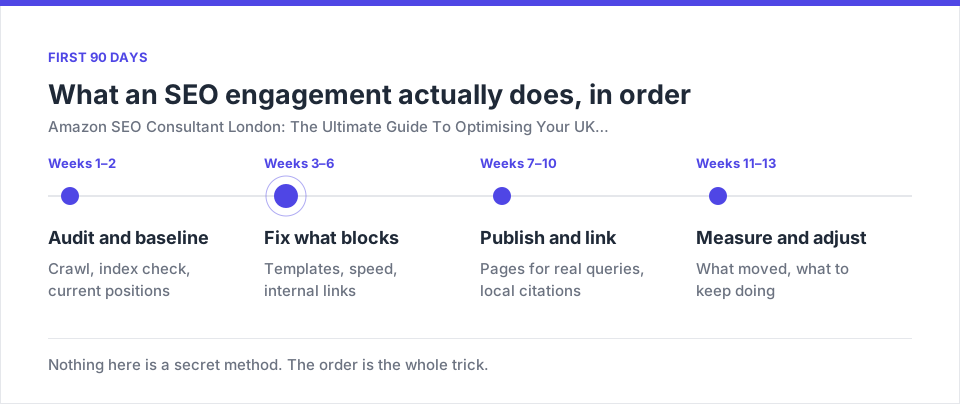
Pricing Signals In The UK Market
Pricing signals in the UK hinge on clarity, competitive benchmarking, and stock availability. Establish a UK-centric price ladder that mirrors seasonality, competitor moves, and store-specific constraints. Emphasise price readability, avoiding abrupt discounts that erode perceived value. Use district context where appropriate, for instance Islington or Hackney, to justify promotions that align with local demand without cannibalising broader listings.
Best practice includes synchronising promotions with stock levels and delivery expectations. If a SKU is volatile in price or demand, coordinate with the londonseo.ai governance framework to log changes, forecast outcomes, and monitor impact on ranking signals such as CTR and conversion rate from searches within amazon.co.uk.
Promotions And Edge Activations
Promotions should be planned within a district-aware cadence. Leverage Prime-enabled deals, Lightning Deals, coupons and store-wide discounts that align with the diffusion spine. Each promotion should be anchored to credible proofs on district pages—local testimonials, partnerships, or community events—to strengthen locality signals and increase trust. Ensure edge activations such as local guides, Maps prompts, and events calendars accompany promotions to drive near-me demand and reinforce the district content ecosystem.
Governance is essential here. Use What-If forecasting to anticipate the effects of promotions on ranking, Explain Logs to document the data sources behind price decisions, and Provenance Envelopes to attach licensing and origin disclosures to proofs used in promotional content. RegExports may be necessary for more complex campaigns with regulatory considerations in certain boroughs.
Inventory Strategy For London Listings
Inventory health is a critical ranking signal. Maintain robust stock levels to avoid stockouts that can depress rankings and disrupt buy box eligibility. Use district-informed forecasting to align replenishment with local demand patterns, seasonal peaks, and event calendars. Consider a mix of FBA and FBM arrangements to optimise delivery speed and reliability for Prime-eligible orders in central districts while supporting outer boroughs with flexible fulfilment options.
Practical steps include creating district-level stock buffers, synchronising replenishment windows with promotions, and coordinating with courier partners to meet city-wide delivery promises. Link stock health to district proofs and edge activations so that a strong inventory story on district pages translates into higher engagement and conversions.
Measurement, Dashboards, And Accountability
Performance dashboards should connect pricing, promotions and inventory health with lead indicators and revenue outcomes. Combine What-If forecasting with Explain Logs to capture why price and stock decisions were made, and use Provenance Envelopes to attach source disclosures to proofs used on district pages. A London Pricing Diffusion Index can help leadership visualise how UK terms, district intents, and edge activations translate into real-world results across the capital. Integrate data from GA4, GBP, and CRM attribution to demonstrate ROI in terms of inquiries, orders, and average order value within London.
For onboarding or formal proposals, contact us through the London SEO Services page and explore governance-ready playbooks that align pricing, promotions, and inventory with the diffusion spine across London. See also Google's quality guidelines for responsible practice.
Pricing, Promotions And Inventory Strategy For London Amazon Listings
Continuing the diffusion-driven framework established by londonseo.ai, this Part 9 translates pricing, promotions and stock management into practical, governance-friendly actions for London-based Amazon listings. The aim is to convert revenue opportunities into measurable improvements in visibility and conversion across Islington, Camden, Hackney, and surrounding boroughs while preserving district relevance and regulatory readiness.
Hub Topics And Pricing Diffusion: A Practical Model
Define a compact set of city-wide hub topics that anchor pricing decisions and diffusion into district content. Typical hubs include Local Leadership, Community Engagement, and Local Economic Activity. Each hub should diffuse into 4–6 district-intent pages per district, supported by proofs such as local testimonials or banners tied to district events. Edge activations like Maps prompts and city guides must align with proofs to convert interest into near-me demand. Governance artefacts—What-If forecasting, Explain Logs, Provenance Envelopes, and RegExports—create an auditable trail from planning to deployment and regulator-ready reporting.
Pricing Signals In The UK Market
Pricing signals in the UK hinge on clarity, competitive benchmarking, and stock availability. Establish a UK-centric price ladder that mirrors seasonality, competitor moves, and store-specific constraints. Emphasise price readability, avoiding abrupt discounts that erode perceived value. Use district context where appropriate, for instance Islington or Hackney, to justify promotions that align with local demand without cannibalising broader listings.
Best practice includes synchronising promotions with stock levels and delivery expectations. If a SKU is volatile in price or demand, coordinate with the londonseo.ai governance framework to log changes, forecast outcomes, and monitor impact on ranking signals such as CTR and conversion rate from searches within amazon.co.uk.
Promotions And Edge Activations
Promotions should be planned within a district-aware cadence. Leverage Prime-enabled deals, Lightning Deals, coupons and store-wide discounts that align with the diffusion spine. Each promotion should be anchored to credible proofs on district pages—local testimonials, partnerships, or community events—to strengthen locality signals and increase trust. Ensure edge activations such as local guides, Maps prompts, and events calendars accompany promotions to drive near-me demand and reinforce the district content ecosystem.
Governance is essential here. Use What-If forecasting to anticipate the effects of promotions on ranking, Explain Logs to document the data sources behind price decisions, and Provenance Envelopes to attach licensing and origin disclosures to proofs used in promotional content. RegExports may be necessary for more complex campaigns with regulatory considerations in certain boroughs.
Inventory Strategy For London Listings
Inventory health is a critical ranking signal. Maintain robust stock levels to avoid stockouts that can depress rankings and disrupt buy box eligibility. Use district-informed forecasting to align replenishment with local demand patterns, seasonal peaks, and event calendars. Consider a mix of FBA and FBM arrangements to optimise delivery speed and reliability for Prime-eligible orders in central districts while supporting outer boroughs with flexible fulfilment options.
Practical steps include creating district-level stock buffers, synchronising replenishment windows with promotions, and coordinating with courier partners to meet city-wide delivery promises. Link stock health to district proofs and edge activations so that a strong inventory story on district pages translates into higher engagement and conversions.
Measurement, Dashboards, And Accountability
Performance dashboards should connect pricing, promotions and inventory health with lead indicators and revenue outcomes. Combine What-If forecasting with Explain Logs to capture why price and stock decisions were made, and use Provenance Envelopes to attach licensing and origin disclosures to proofs used on district pages. A London Pricing Diffusion Index can help leadership visualise how UK terms, district intents, and edge activations translate into real-world results across the capital. Integrate data from GA4, GBP, and CRM attribution to demonstrate ROI in terms of inquiries, orders, and revenue generated from London’s off-page activities.
Implementation Checklist And Next Steps
- Step 0 – Discovery And Baseline: define target London districts, identify essential products and categories for diffusion, and establish baseline ecommerce metrics. Set governance artefacts early to ensure auditable trails.
- Step 1 – Geography And Content Mapping: map product and category pages to district intents, align hub topics with district proofs, and plan edge activations like local guides and events calendars.
- Step 2 – Pilot And Scale: launch a two-district pilot with district-depth content, proofs, and edge activations; evaluate diffusion health and ROI before broader rollout across London.
To discuss onboarding or request a formal proposal, please Contact Us. For governance resources and London-first playbooks, visit SEO Services London on londonseo.ai and review Google's quality guidelines to ensure responsible practice.
Measurement, Testing And Continuous Optimisation For London Amazon SEO
Maintaining visibility on amazon.co.uk requires a disciplined approach to measurement, experimentation, and ongoing optimisation. Building on the diffusion spine and governance framework championed by londonseo.ai, this Part 10 explains how a London-focused Amazon SEO consultant translates data into iterative improvements. By integrating district-proof signals, edge activations, and auditable dashboards, UK sellers can move from static optimisations to a cycle of validated growth across Islington, Camden, Hackney, and neighbouring boroughs.
Measurement Framework: What To Track
A robust measurement framework connects hub authority to district performance, while remaining auditable for leadership and regulators. The framework should capture both macro outcomes (visibility, traffic, revenue) and micro signals (district-level proofs, edge activations, and GBP health). The London Diffusion Health Index (LDHI) can serve as a composite KPI that aggregates hub authority, district engagement, and conversion health, updated weekly to guide prioritisation and governance decisions.
- Organic visibility on amazon.co.uk: average position, search impression share, and district-level ranking movements.
- Product detail page engagement: page views per impression, dwell time, and bounce rate on district-depth pages.
- Conversion health: add-to-cart rate, purchase rate from impressions, and Prime-eligibility impact in each district.
- Edge-activation performance: Maps prompts, local guides, and events calendars engagement tied to district proofs.
- Governance health: What-If forecasts, Explain Logs, Provenance Envelopes, and RegExports status for major changes.
Structured Experiments: Designing London-Led Tests
Experiments should blend district context with hub topics, ensuring changes are attributable and scalable. Start with two to three district cohorts (for example Islington, Camden, and Hackney) and apply a controlled variation to on-page elements, content proofs, or edge activations. Each experiment should have a clear hypothesis, a control group, a treatment variation, and a defined duration that aligns with shopping cycles in the UK market.
- Hypothesis framing: state how a change will affect metrics such as CTR, add-to-cart rate, or GBP interactions in a specific district.
- District selection: choose boroughs with similar baseline metrics to reduce variance.
- Variation scope: limit changes to one variable at a time (e.g., title wording, a district-proof on PDP, or an edge activation).
- Duration and sample size: run for at least 14–21 days of UK shopping activity, ensuring enough traffic to reach statistical significance.
- Analysis plan: compare control vs treatment using pre- and post-intervention windows, accounting for seasonality.
Data Architecture For London Optimisation
Effective measurement relies on clean data pipelines and auditable provenance. Aggregate data from Amazon Seller Central (ranking, impressions, clicks, conversions), Brand Analytics (where available), and activation metrics from edge components (Maps prompts, local guides). Supplement with GBP insights, GA4 or your preferred analytics, and CRM attribution to tie online activity to offline outcomes with a London-specific lens. All data inputs should feed into the LDHI dashboard, which provides a single source of truth for leadership reviews and regulator-ready reporting.
Weekly Cadence: What To Review And Why
A disciplined weekly rhythm keeps the diffusion spine healthy and responsive to market changes. Review dashboard movements, district-level proofs, and edge activation health. Monitor the impact of promotions and price changes on district engagement and GBP signals. Hold monthly governance reviews to sign off on what worked, what needs iteration, and how ROI is attributed to diffusion activities across London.
- Ranking health: track changes in district positions, impression share, and click-through rate.
- Proof effectiveness: evaluate the performance of proofs on district pages and edge activations on nearby searches.
- ROI attribution: map uplift in inquiries or sales to specific hub topics and district pages.
Case Study Illustration: Islington District Test
Imagine a two-week Islington test where a district-proof paragraph is added to the product description, paired with an enhanced image set and a targeted edge activation for Maps. The hypothesis is that the district-specific proof will lift CTR by 6–9% and improve the add-to-cart rate by 3–5%, compared to a control listing. The LDHI dashboard tracks ranking movements, page engagement, and conversion outcomes. If results meet the pre-defined significance threshold, the change is deployed across adjacent boroughs with similar profiles, subject to governance approvals. This approach demonstrates how district-level proofs, when properly governed, can cascade into broader UK impact without sacrificing locality relevance.
Next Steps And Where To Start
To embed measurement, testing, and continuous optimisation into your London Amazon strategy, participants should begin with a discovery session to align on the LDHI framework, dashboard setup, and governance artefacts. Coordinate with londonseo.ai to tailor What-If forecasting gates, Explain Logs, and Provenance Envelopes to your product portfolio and district footprint. For a concrete starting point, explore our SEO Services London offerings and discuss how governance-forward testing can responsibly scale across Islington, Camden, Hackney, and beyond: SEO Services London. You can also reach out via Contact Us for a formal proposal and bespoke measurement plan. For broader best practices, consult Google’s quality guidelines: Quality Guidelines.
Analytics, KPIs And Reporting
Analytics and reporting form the backbone of a governance-forward Amazon SEO programme in London. For readers engaging with a London-based amazon seo consultant london through londonseo.ai, measurement is not an afterthought but a central operating rhythm. This Part 11 builds on the diffusion spine established earlier, translating hub-topic authority into district-level visibility, proofs, edge activations, and auditable dashboards that demonstrate tangible ROI across Islington, Camden, Hackney and surrounding boroughs.
A Practical Measurement Framework: What To Track
The London Diffusion Health Index (LDHI) serves as a composite KPI, aggregating hub authority, district engagement, GBP readiness, and edge-activation health. Weekly dashboards pull data from Amazon Seller Central (ranking, impressions, clicks, conversions), Brand Analytics (where available), GA4, Google Search Console, GBP insights, and CRM attribution. The goal is to connect city-wide hub topics to district-depth pages, proving locality signals translate into near-me demand and revenue growth.
- Organic visibility on amazon.co.uk: tracking average position, impression share, and district-specific ranking movements.
- District engagement: page views per impression on district-depth pages, dwell time, and exit rates to assess user experience in Islington, Camden, and beyond.
- GBP readiness and local signals: proximity signals and Maps interactions that reinforce district credibility.
- Edge-activation health: engagement with Maps prompts, local guides, events calendars, and other locality activations.
- ROI and attribution: lead value, inquiries, bookings, and revenue attributed to diffusion activities.
Dashboards: Architecture And Data Flows
Dashboards must unify on-page performance with off-page signals and district proofs. Data sources should include Amazon Seller Central, Brand Analytics, GA4, Google Search Console, GBP, and CRM attribution. A well-structured dashboard shows gateway metrics (hub authority to district engagement) and outcome metrics (inquiries, bookings, revenue). Governance artefacts must describe data provenance, licensing for proofs, and decision rationales behind each optimisation move.
Internal linking within dashboards should reflect the diffusion spine: district pages reinforce hub topics, while edge activations convert search interest into action, closing the loop back to hub authority. For London-based engagements, londonseo.ai practitioners often reference Google’s quality guidelines to ensure compliant, user-focused measurement: Quality Guidelines.
Weekly Cadence: What To Review And Why
A disciplined weekly rhythm keeps diffusion healthy. Tasks include reviewing LDHI movements, GBP health signals, district-depth page engagement, and edge-activation health. Rapid iterations based on data ensure momentum while preserving locality relevance. Monthly governance reviews should validate What-If forecasts, Explain Logs, and Provenance Envelopes, feeding into quarterly ROI narratives that senior leadership can trust and regulators can understand.
Case Study: Islington District Test
Imagine a two-week Islington test where a district-proof paragraph is added to the product description, paired with an enhanced image set and a targeted edge activation for Maps. The hypothesis is a 5–8% lift in CTR and a 2–4% uptick in add-to-cart rate. The LDHI dashboard tracks ranking movements, page engagement, and conversion outcomes. If results meet the significance threshold, the change is deployed across adjacent boroughs with similar profiles, subject to governance approvals. This demonstrates how district-level proofs, when properly governed, cascade into broader UK impact without sacrificing locality relevance.
Data Architecture: Integrating Sources For London Optimisation
Effective measurement relies on clean data pipelines. Aggregate data from Amazon Seller Central, Brand Analytics (where available), GA4, GBP insights, and CRM attribution, then harmonise with activation metrics from edge components. All inputs feed the LDHI dashboard to offer a unified view of hub authority, district engagement, GBP readiness, and edge activation health. Governance artefacts should capture data provenance and licensing terms for proofs used on district pages, enabling regulator-friendly reporting and leadership accountability.
Onboarding, Tools, And Governance Cadence
For organisations engaging a London-based SEO partner, insist on a governance-focused onboarding that establishes the LDHI, dashboard templates, and What-If forecasting gates before any district content is published. Ensure Explain Logs are in place to document decision rationales, and Provenance Envelopes to attach licensing for proofs used on pages. RegExports may be necessary for regulator reviews in more complex campaigns. To explore our governance-forward approach and get a bespoke measurement plan, visit SEO Services London on londonseo.ai and review Google's quality guidelines.
For immediate discussions or a formal proposal, please Contact Us.
Off-Page Signals And Local Authority Outreach In Dublin
In Dublin, off-page signals hold substantial leverage in securing credible, locally resonant visibility. While on-page optimisations lay the foundation, the real lift often comes from earned credibility through links, partnerships, and authority-building activities that reflect the citys distinctive business fabric. This Part 12 continues the governance-minded diffusion narrative established in LondonSEO.ai, translating the philosophy of hub-topic diffusion into practical, auditable strategies for external engagement, reputation, and proximity signals that amplify best seo Dublin outcomes across Districts such as Dublin City Centre, Ballsbridge, Rathmines, and Clontarf.
Off-Page Signals In The Dublin Context
Googles evaluation of local authority often hinges on the credibility of the surrounding ecosystem. In Dublin, off-page signals translate into high-quality local links earned from reputable Dublin institutions, meaningful partnerships with district stakeholders, and earned coverage from trusted Dublin media. The governance framework used on seodublin.org requires every outreach action to be auditable, with clearly defined proofs, licensing disclosures, and a transparent rationale for why a particular outreach activity contributes to diffusion across the city. The emphasis remains on relevance, proximity signals, and sustained value rather than volume alone.
Local Authority Outreach: A Dublin-Specific Playbook
Engaging local authorities requires a disciplined, ethical approach aligned with Dublin’s regulatory and community expectations. Start with a map of relevant authorities and institutions, including city councils, regional development bodies, business associations, and cultural organisations. For each entity, define a clear value proposition: how your content, services, or data initiatives can support city objectives, while earning a credible link or citation in return. Maintain a repository of outreach artefacts that document approvals, proofs, licensing considerations, and the intended audience impact. This ensures every outreach decision is traceable in line with the governance model championed by seodublin.org and ready for regulator scrutiny if required. For reference on professional standards, consult Google’s quality guidelines: Google's quality guidelines.
Strategies For Earning Local Authority Links
- Data-driven contributions: publish local datasets, city guides, and event calendars that councils and community sites can reference, increasing the likelihood of a citation or link.
- Thought leadership: offer Dublin-focused white papers or opinion pieces that address urban topics such as transport, business growth, or housing affordability, with institutional author credits.
- Partnership content: co-create content with Dublin organisations, ensuring proofs accompany any linkable assets.
- Civic initiatives alignment: align with city-wide initiatives and provide content or data assets that directly support those aims.
- Event-backed permanency: sponsor or host local events and publish dedicated event pages with archived, date-stamped proofs for future reference.
Content-Led Outreach And Local PR
Content led outreach in Dublin blends public relations with SEO, creating assets journalists and local outlets find valuable. Think case studies of Dublin client successes, district focused market analyses, or interactive maps showing local services. When a journalist references these assets, it often results in earned links and mentions from credible Dublin domains. Maintain an editorial calendar that coordinates with local events and culture calendars to ensure content remains timely and relevant. This approach supports the diffusion spine by providing credible proofs that district pages can reference when establishing proximity and trust with local audiences.
Measurement, Risk Management, And Governance For Off-Page Signals
Track off-page progress within the same governance framework used for on-page and hub diffusion. Implement a Local Authority Link Health Index that combines the quality of links, the authority of linking domains, relevance to Dublin districts, and the recency of interactions. Use What-If forecasting to anticipate the impact of major outreach campaigns on overall diffusion health, and maintain Explain Logs to capture decision rationales behind outreach tactics. Provenance Envelopes should document licensing, usage rights, and attribution for every external asset used on district pages. In more complex campaigns, RegExports can package outreach journeys for regulator reviews, ensuring transparency of external relationships. Integrate data from GA4, Google Search Console, GBP insights, and CRM attribution to demonstrate ROI in terms of inquiries, bookings, or revenue generated from Dublin's off-page activities.
Next Steps For Dublin Teams
- Step 0 — Audit And Map: Catalogue potential local authorities, identify current reference links, and map to hub topics and district intents. Establish baseline measurements for off-page signals and proofs.
- Step 1 — Outreach Governance: Create a Dublin wide outreach playbook, define approval gates, and implement Explain Logs to capture rationale for each outreach action.
- Step 2 — Pilot And Scale: Run a two district outreach pilot with clearly defined proofs and edge activations, track results, and scale to additional districts as diffusion health signals improve ROI.
For governance resources and Dublin focused playbooks, visit the Dublin Local SEO Services page on londonseo.ai and review Google’s quality guidelines. To discuss onboarding, Contact Us.
Two-District Pilot: A Practical Starting Point
For London-focused Amazon strategies, trials that are tightly governed and measurable offer the cleanest path to scalable growth. This Part 13 translates the hub-topic diffusion model into a Dublin-led two-district pilot, designed to validate the diffusion spine before broader UK rollouts. The approach remains closely aligned with the governance-forward principles championed by londonseo.ai, ensuring that district proofs, edge activations, and dashboards translate into near-me demand and predictable ROI. While the pilot centres on Dublin, its architecture is purpose-built to scale across London and other UK markets, including the kind of operational rigor that an amazon seo consultant london would expect from a governance-enabled partner.
Two-District Pilot: Objective And Choices
The pilot selects a central urban district and a representative suburban district to test proximity signals against district proofs. For example, Dublin City Centre paired with Ballsbridge offers a contrast between high-density footfall and secondary residential demand. The objective is to publish 4–6 district-intent pages per district, each anchored to 2–3 hub topics, accompanied by credible proofs such as local testimonials, partnerships with community groups, or event histories. Edge activations—Maps prompts, local guides, and events calendars—must be tightly integrated with proofs to catalyse near-me demand. Governance artefacts—What-If forecasting, Explain Logs, Provenance Envelopes, and RegExports—create an auditable diffusion trail from planning to deployment. This structure mirrors the London approach while acknowledging Dublin’s unique local dynamics and regulatory considerations.
Phase 0 – Discovery And Baseline
Stage one focuses on clarity. Define business goals for the two districts, map hub topics to district intents, and establish baseline metrics for GBP health, local citations, and proofs that anchor locality signals. The governance framework should capture data provenance and licensing for proofs, ensuring all decisions are auditable from Day 1. Establish a diffusion dashboard that aggregates hub authority, district engagement, and edge-activation health so leadership can monitor progress with confidence.
- Technical audit: assess district-page health, crawlability, and canonical structure to prevent cross-district cannibalisation.
- Local signals: verify NAP consistency, Map presence, and district-specific proofs that strengthen proximity signals.
- Baseline analytics: capture current impressions, clicks, and conversion metrics at district depth.
Phase 1 – Geography And Governance Setup
Phase 1 translates insights into a practical diffusion spine. Define explicit geography rules, assign district custodians, and implement What-If forecasting gates to test activation sequencing before publishing content. Establish Provenance Envelopes for proofs and licensing disclosures, ensuring all district assets can withstand regulatory scrutiny. Create a shared diffusion dashboard that links hub topics to district pages, proofs, and edge activations, enabling rapid feedback and governance-ready reporting for londonseo.ai clients who may scale into London’s boroughs.
- Topic-district mapping: align 2–3 hub topics to 4–6 district-intent pages per district.
- Edge activation plan: identify Maps prompts, local guides, and events calendars that pair with proofs.
- Governance gates: define approval steps for district-content publication and for new proofs used on pages.
Phase 2 – Pilot Activation
With the spine defined, publish the pilot content in both districts. Attach district proofs to pages, publish edge activations, and monitor diffusion health weekly. The aim is to generate early signals of near-me demand, measure uplift in district-page engagement, and validate that proofs genuinely support locality signals. Maintain governance records for every publication, including data provenance for proofs and licensing for assets used in district-depth content.
Phase 3 – Pilot Evaluation And Scaling
Evaluate KPI progress against the pre-defined targets. If ROI thresholds and diffusion health metrics meet the forecast, extend district pages and proofs to additional districts in a controlled, phased manner. Update the governance artefacts to reflect new districts, revised proofs, and revised edge activations. Prepare a scaling plan that is aligned with London-based practices, ready to translate to amazon seo consultant london requirements as the network expands across the UK.
Phase 4 – City-Wide Diffusion
Once the two-district pilot proves ROI and diffusion stability, scale to additional districts with a city-wide diffusion plan. Maintain a strong emphasis on proofs and edge activations to sustain locality relevance. The diffusion dashboard should provide a consolidated view of hub authority, district engagement, GBP readiness, and edge-activation health, enabling leadership to prioritise expansions and allocate resources efficiently. Regulatory readiness remains a focus, with RegExports prepared for any formal scrutiny if required.
ROI Modelling For Dublin
ROI modelling anchors the two-district pilot to real business value. Start with lead value and conversion rate estimates for district-depth interactions, then layer in incremental traffic, engagement, and costs of diffusion activities. Use a multi-touch attribution approach that ties hub-topic authority and district engagement to final conversions tracked in CRM. A practical example might project incremental inquiries, a defined close rate, and a clear monthly revenue uplift after implementing proofs and edge activations. The governance framework ensures these projections are auditable and repeatable, so ROI narratives stand up to scrutiny from stakeholders and regulators.
- Lead value and conversion rate: estimate the average value per lead and the likelihood of conversion from district-depth interactions.
- Incremental traffic and engagement: monitor increases in organic impressions, clicks, and Maps interactions attributable to the diffusion spine.
- Costs of diffusion activities: include governance artefacts, content production, GBP maintenance, and dashboarding as ongoing operating costs.
- Attribution model: apply multi-touch attribution tying hub authority growth to final conversions tracked in CRM.
Dashboards And Governance For ROI Tracking
Link ROI measurements to governance through a Dublin Diffusion Health Dashboard. Integrate data from Amazon Seller Central, Brand Analytics, GA4, Google Search Console, GBP insights, and CRM attribution. What-If forecasting, Explain Logs, and Provenance Envelopes provide the controls needed to maintain auditable diffusion journeys as the two-district model scales. RegExports may be necessary for regulator reviews in complex campaigns. The dashboard should demonstrate how hub authority and district engagement translate into inquiries, bookings, or revenue, while keeping district proofs current and credible.
Next Steps And Call To Action
For organisations ready to explore a two-district Dublin pilot that can scale into London and beyond, initiate contact with londonseo.ai. Request a bespoke diffusion plan that ties hub topics to district-depth content, proofs to edge activations, and governance artefacts to auditable dashboards. If you are seeking a London-based amazon seo consultant london, our team can adapt the Dublin pilot to London’s boroughs, maintaining governance discipline while accelerating time-to-value. Explore our SEO Services London page for practical templates and governance-ready playbooks, then arrange a formal proposal via the contact page.
For reference and best-practice alignment, review Google’s quality guidelines and consider how these governance practices support EEAT in both Amazon dashboards and Maps-enabled local search contexts.
Images, Media And Enhanced Content For London Amazon SEO
Building on the governance-forward diffusion spine established by londonseo.ai, this Part 14 focuses on how images, media, and Enhanced Content elevate proximity signals, enrich the UK shopper experience, and strengthen Google Business Profile (GBP) and local listings in North London. Visual assets are not decorative; they are actionable proofs that underpin locality, trust, and repeatable ROI across Islington, Camden, Hackney, and surrounding boroughs. This section continues the collaborative journey from the two-district pilot outlined in Part 13, translating media strategy into measurable, auditable outcomes for the London market.
Visual Assets That Support Local Authority Signals
Images and media should be deliberately aligned with hub topics and district proofs. In practice, curate a master image library with city-specific contexts such as urban kitchen setups for compact living in central boroughs or family living rooms for outer London districts. Ensure every visual has alt text that reflects UK phrasing and district relevance, for example: "Islington compact kettle in modern kitchen" or "Hackney family kitchen scene with smart appliance". High-resolution product photography, lifestyle imagery, and contextual infographics reinforce credibility and reduce cognitive friction for buyers down the path from search to purchase.
Guidelines for imagery include: consistent colour grading, brand-safe compositions, and mobile-first optimisation to protect load times. Integrate visual storytelling with hub topics so district pages benefit from cross-district visibility and reinforced locality signals. When possible, embed proofs within visuals—captioned testimonials, partner logos, or event snapshots—that validate local relevance. This practice strengthens EEAT and supports the diffusion spine as content scales across London through londonseo.ai.
GBP Health, Local Listings, And Visual Consistency
A complete GBP profile paired with visually consistent district assets creates a robust local presence. Publish GBP posts that showcase district-focused events, partnerships, or community activities and back them with image assets that reflect those activities. Proximity signals strengthen Maps knowledge panels and organic proximity in search results, particularly in busy London corridors where shoppers compare nearby options quickly.
Governance plays a crucial role here. Maintain provenance for all media used on GBP and district pages, with licensing and usage rights clearly documented. Align GBP updates with district content calendars to ensure visuals and posts remain timely and coherent across Islington, Camden, and Hackney. For reference on quality and user-first guidance, see Google’s quality guidelines: Google's quality guidelines.
A+ Content, Enhanced Brand Content, And Local Proofs
Enhanced Brand Content (EBC) or A+ content should be used to translate hub-topic authority into district-specific storytelling. Design modules that combine feature comparisons, usage scenarios in London living contexts, and local proofs such as customer testimonials from Islington or partnerships with community groups. Each module should explicitly reinforce locality signals and tie back to hub topics to maintain a cohesive diffusion spine. For governance, attach licensing and sources to proofs used within A+ content so leadership can audit usage and compliance. Refer to our SEO Services London resources for templates and governance-ready content calendars, and align with Google’s quality guidelines for broader alignment: SEO Services London and Google's quality guidelines.
Tip: combine district-specific proofs with the hub topic authority to create a compelling narrative. A well-structured A+ module that blends visuals, district testimonials, and edge activations can significantly improve dwell time and perceived trust, contributing to higher conversions across London’s boroughs.
Edge Activations, Local Proofs, And District Pages
Edge activations such as Maps prompts, local guides, and events calendars should be visually reinforced with district proofs. Pair a Maps-driven CTA with a carousel of district testimonials, or embed a small infographic showing a local event timeline on the district page. The diffusion spine relies on concrete proofs that can be referenced across hub topics, enabling a clear user journey from a city-wide authority to district-specific relevance. Governance artefacts should document the sources of proofs, licensing terms, and attribution requirements to support regulator-friendly reporting.
Practical Steps For London Amazon SEO Consultant London
Translate media strategy into actionable steps that fit the diffusion spine and London’s district realities:
- Step 0 – Media inventory and district relevance: catalogue image assets, videos, and infographics with district-relevant captions and alt text.
- Step 1 – GBP integration: align GBP posts with visual assets that reflect local proofs and hub topics to reinforce proximity signals.
- Step 2 – A+ content alignment: ensure district proofs are woven into A+ modules with clear linkages to hub topics and diffusion spine.
- Step 3 – Governance and licensing: attach Explain Logs and Provenance Envelopes to all media decisions; prepare RegExports for regulator reviews if required.
- Step 4 – Measurement: feed media performance into the LDHI-style dashboards, tracking impact on district engagement and conversions.
A London-based amazon seo consultant london from londonseo.ai will synchronise media productions with district calendars, ensuring media assets stay fresh, localised, and compliant. For practical templates and governance-ready playbooks, visit SEO Services London and consult Google’s guidelines: Quality Guidelines.
