Introduction To Ecommerce SEO In London
In London’s fast-paced, highly connected retail landscape, ecommerce success hinges on more than generic SEO. Brands must tailor optimisation to the capital’s diverse boroughs, language preferences, and consumer behaviours. A London-focused ecommerce SEO agency combines UK search expertise with district-level insight, ensuring product content, technical foundations, and local signals are harmonised across Local Pages, Google Business Profile (GBP), Maps, and Knowledge Graph surfaces. At londonseo.ai, we emphasise governance-led localisation — using Translation Provenance IDs (TPIDs) and Licensing Context to protect language fidelity and imagery rights as campaigns scale citywide. This Part 1 sets out why a London-first approach matters and how it lays the groundwork for durable, localised visibility.
Why a London-focused ecommerce SEO agency matters
London is more than a market; it’s a network of districts with distinct consumer moods, transport corridors, and local events. Shoppers in Canary Wharf may search differently from those in Brixton or Croydon, and each audience responds to proximity cues such as nearby stores, delivery speed, and language preferences. A London agency brings district-aware keyword strategies, Local Page templates, and governance artefacts that ensure authentic localisation at scale. This isn’t about translating content; it’s about translating intent into locally credible experiences that perform across surfaces, from GBP updates to KG knowledge panels. The aim is to tie district signals to measurable outcomes, not merely to chase rankings.
What a London ecommerce SEO partner typically delivers
Expect a London-focused set of capabilities designed to accelerate local advantage while maintaining global consistency where relevant. A credible partner will provide a district-ready keyword framework, Local Page templates optimised for borough attributes, GBP health playbooks, and auditable asset provenance through TPIDs and Licensing Context. The purpose is to establish a scalable, governable framework that stays faithful to language and licensing as assets move across Local Pages, GBP, Maps and KG surfaces.
- District fluency: deep understanding of borough priorities, shopper journeys, and event calendars to prioritise the right content and pages.
- Governance discipline: Translation Provenance IDs and Licensing Context to guarantee language fidelity and rights tracking across surfaces.
- Speed to value: practical activations in London districts that deliver tangible improvements in local visibility and conversions.
- Cross-surface integration: coherent signals flowing from Local Pages to GBP, Maps and KG with auditable provenance.
- Transparent outcomes: dashboards that reveal district ROI and near-term impact, not vanity metrics.
Getting started: two practical actions for London brands
To begin building a district-first foundation, focus on two concrete steps. First, establish a short list of two to three target boroughs where you want to prioritise growth in the next 90 days, taking into account proximity to your physical locations and supply chains. Second, audit and align GBP health with Local Page templates that reflect district attributes, plus licensing assets to travel with content across GBP posts and local surface updates. A London-based ecommerce SEO partner can supply district-ready templates, TPID glossaries, and Licensing Context artefacts to speed onboarding and governance across all surfaces. For practical guidance, explore our SEO Services hub or contact the London team to tailor a district-ready plan for your portfolio.
Local signals to prioritise in London
Key local signals include GBP health, NAP consistency, Local Page optimisations, and district-specific content that reflects transport links, landmarks, and local events. Begin with a local GBP health check, define service areas, and ensure promotions are current. Align Local Page templates with district attributes to reinforce proximity signals and test the impact of licensing and translation provenance as content expands across GBP, Maps and KG.
Why London is the right starting point for localisation
London acts as a natural proving ground for district-first optimisation. Its concentration of districts, commuter dynamics, and international activity creates a robust environment for testing governance workflows, TPID-based terminology, and licensing provenance. By developing district-ready processes in London, you establish a scalable blueprint that can be extended to other UK cities and international markets while maintaining language fidelity and asset licensing integrity.
Commitment to quality and compliance
Quality ecommerce localisation demands accurate data, compliant content, and strict governance. A district-first approach with TPIDs and Licensing Context ensures localisation fidelity travels with content across Local Pages, GBP, Maps and KG as you scale in London. Our focus remains language-appropriate terminology, licensing rights, and auditable provenance so assets stay compliant across surfaces and campaigns.
Next steps: practical guidance for London brands
With the foundations set, you can begin by formalising a two-district activation plan and integrating TPIDs into your product and content workflows. Use district-ready templates, governance artefacts, and licensing catalogs to accelerate onboarding and cross-surface governance. For district-ready templates and TPID guidance, visit the SEO Services hub or contact the London team to tailor a district-ready activation plan for your portfolio.
Part 2: District Discovery And Baseline Audit For London SEO Experts
1) Discovery And Stakeholder Alignment
London’s district mosaic shapes how shoppers search, interact with Maps, and decide which local services to choose. Building on the district‑first foundation from Part 1, this Part 2 concentrates on district discovery and baseline auditing for London SEO experts. A London‑based approach blends district‑aware stakeholder alignment with rigorous technical and content hygiene to create a practical blueprint for scale across Local Pages, Google Business Profile (GBP), Maps, and Knowledge Graph surfaces. At londonseo.ai, Translation Provenance IDs (TPIDs) and Licensing Context anchor localisation as you expand across London’s diverse districts. For West London brands seeking SEO services in west london, adopting a district‑first discovery and baseline audit helps ensure proximity signals, language nuances, and asset rights stay aligned from day one.
2) Discovery And Stakeholder Alignment
Initiate a district‑focused discovery with key stakeholders from marketing, product, and operations. Translate overarching business goals into district‑specific signals that can be tracked across Local Pages, GBP, Maps and KG. Establish a governance framework early, including TPID assignments and a Licensing Context plan for imagery assets to travel with content as activation expands. Key activities include:
- Document district‑level objectives and map them to Local Pages and GBP opportunities.
- Define the surface map (GBP, Maps, Local Pages, KG) and assign owners for TPIDs and licensing assets.
- Agree a two-anchor London pilot to validate governance workflows and signal quality before broader rollout.
- Set practical success metrics that reflect district visibility, proximity signals, and local conversions.
Templates and governance artefacts to support TPIDs and licensing frameworks are available in our SEO Services hub, or you can contact the London team to tailor a district‑ready discovery plan.
3) London Borough Mapping And Audience Journeys
London’s districts differ in shopper intent, competition, and regulatory considerations. Map borough‑level behaviours to content and signals: CBD districts attract professional and financial audiences, outer boroughs prize local services and commuter patterns, while events drive seasonal surges. Create a district taxonomy that links Local Pages to hub content and product pages, ensuring TPIDs stabilise terminology across languages and regions. Licensing Context tracks imagery rights as assets circulate across GBP posts, Maps entries, and KG edges.
Deliverables include a borough atlas, audience journey maps, and a district activation plan that aligns with UK spelling, style, and regulatory expectations.
4) Technical Baseline Health For London Portfolios
Establish a district‑aware technical baseline to ensure scalable discovery across Local Pages, GBP, Maps and KG. The audit prioritises translation provenance, licensing accountability, and efficient crawl/indexing, tuned for London’s diverse audience. Focus areas include crawl budget management across borough footprints, indexation health for Local Pages and hub pages, Core Web Vitals with mobile‑first considerations, and structured data readiness for LocalBusiness, Event, and FAQ schemas aligned to travel‑related attributes.
Tools such as site crawlers, Google Search Console indexing signals, log‑file analysis, and performance testing will support measurement. TPIDs and Licensing Context should underpin every technical decision to preserve localisation fidelity as assets scale across surfaces.
- Crawl mapping across London domains to prioritise district hubs and Local Pages.
- Indexation health checks to reduce duplicates and align canonical signals to the correct assets.
- Core Web Vitals and mobile performance optimisation for busy London districts.
- Structured data readiness for LocalBusiness, Product, and FAQ schemas with district attributes.
- Security and data governance aligned with UK regulatory expectations.
5) Content And On-Page Signals Audit
Audit metadata, header structure, content depth, and topical authority with a district lens. TPIDs anchor terminology across languages and districts, while Licensing Context accompanies imagery used on Local Pages and GBP posts to ensure rights travel with content as activations scale. Develop district‑specific keyword clusters, locality metadata templates, and a district‑aware taxonomy that ties Local Pages to hub content and product listings. Implement schema for LocalBusiness, Product and FAQ pages to strengthen Knowledge Graph connections.
- Assess district hub content and its connections to Local Pages and product listings.
- Create TPID‑backed metadata blocks and district‑aligned taxonomy.
- Apply structured data schemas with district attributes to reinforce local signals.
- Develop a district‑focused content calendar integrating events and regulatory considerations.
6) Local SEO Governance And GBP Readiness
Local presence is central to London visibility. Validate GBP health at district levels, standardise NAP data, and align Local Page configurations with proximity cues. TPIDs stabilise terminology across languages while Licensing Context tracks imagery rights as assets move across GBP posts, Maps and KG edges. The audit delivers district briefs for GBP updates, hub‑to‑Local Page interlinking patterns, and governance appendices detailing localisation provenance across surfaces.
7) Cross‑Surface Measurement And KPIs
Design a district‑aware measurement framework that merges Local Page health, GBP interactions, Local Pack impressions, and KG connections, all anchored to district TPIDs. Dashboards should offer a clear view of activation progress by district, alongside cross‑surface attribution that demonstrates how local activities contribute to revenue. Licensing Context dashboards track imagery rights usage as assets move across campaigns.
- Define KPI domains and look‑back windows aligned to district journeys and events.
- Map KPIs to TPIDs and licensing status so signals stay coherent across languages and districts.
- Set up cross‑surface dashboards that aggregate Local Pages, GBP, Maps and KG by district TPIDs.
- Regularly review licensing status alongside SEO health metrics to maintain auditable provenance.
8) Next Steps: Deliverables And How To Proceed
With the foundation in place, you can move from discovery to delivery by requesting district activation kits and TPID‑backed templates from the SEO Services hub. Coordinate with the London team to tailor a district‑ready baseline for your portfolio, including two anchor pilots, governance cadences, and cross‑surface dashboards. Embedding governance from day one creates a transparent path to scalable localisation visibility across Local Pages, GBP, Maps and KG, with TPIDs and Licensing Context providing auditable provenance at every stage. If you’d like district‑ready templates and governance artefacts, contact the London team for bespoke guidance.
- Publish a two‑district activation plan and extend to additional districts in phased cadences.
- Freeze the TPID glossary and Licensing Context ledger as governance artefacts that travel with assets.
- Release district activation templates and schedules to marketing, product, and operations teams.
- Set up cross‑surface dashboards that reflect district health, signal integrity, and ROI progression.
Part 3: District Activation Playbook For London Amazon Sellers
With Parts 1 and 2 establishing the district discovery and baseline governance, this Part 3 translates those insights into a practical activation playbook tailored for London-based Amazon sellers. The district-first framework ensures that Local Pages, Google Business Profile (GBP), Maps and Knowledge Graph (KG) surfaces operate in harmony with Amazon-focused optimisations. Translation Provenance IDs (TPIDs) and Licensing Context remain your governance anchors to safeguard localisation fidelity and imagery rights as activation scales across London’s boroughs.
1) District Activation Framework
Create a district-first activation framework that mirrors London’s geography, business clusters, and transport corridors. Start with two anchor districts to validate governance workflows, TPID consistency, and Licensing Context across all surfaces. Define district hubs as gateways to Local Pages, product or service listings, and event-driven content, then map signal flow from hub to Local Pages and GBP to ensure proximity and intent signals migrate cleanly across surfaces.
Key actions include:
- Assign a dedicated TPID to each district hub and its Local Pages to stabilise terminology across languages and surfaces.
- Publish district activation templates that detail hub-to-Local Page navigation, event calendar integrations, and GBP health checks.
- Integrate a two-anchor pilot plan (for example, CBD and a peri-urban cluster) to validate signal quality before broader rollout.
- Set practical success metrics that reflect district visibility, proximity signals, and local conversions.
Templates and governance artefacts to support TPIDs and licensing frameworks are available in our SEO Services hub, or you can contact the London team to tailor a district-ready activation plan.
2) District Templates And Governance For London Portfolios
District templates are the backbone of scalable localisation. Each district hub should come with TPID-backed metadata blocks, district-specific Local Page templates, and interlinking patterns that reflect proximity and local events. Licensing Context accompanies all imagery to ensure rights travel with assets as GBP posts, Maps entries, Local Pages and KG surfaces. Governance cadences—weekly operational checks and quarterly strategy reviews—keep localisation fidelity intact as you grow.
Practical governance steps include:
- Document district-specific TPID glossaries and a Licensing Context plan for imagery assets to travel with content across surfaces.
- Define owner roles for district hubs, Local Pages, and GBP profiles to maintain accountability.
- Set activation milestones tied to district KPIs and governance reviews to enable scalable expansion.
- Ensure content calendars account for London events, seasonal shifts, and regulatory considerations in the UK context.
Access templates and artefacts via the SEO Services hub, or you can the London team for guidance.
3) Event-Driven Activation And Content Calendars
London’s calendar is rich with borough events, fairs, and seasonal campaigns. Tie activation to these events by building a district-focused content calendar that links Local Pages to hub content, GBP updates, and event-driven product or service content. Implement structured data and TPID-backed terminology to ensure search engines recognise the local relevance of event pages, while Licensing Context ensures imagery rights remain attached as assets circulate across surfaces.
Practical steps include:
- Synchronise content calendars with major London events in each district to capture timely search interest.
- Draft district-centric metadata blocks and event-specific schema for LocalBusiness, Product and FAQ pages.
- Coordinate GBP prompts, local pack tests, and Maps updates to reflect event-driven demand.
- Maintain Licensing Context for imagery used in event pages and related cross-surface assets.
Templates for event calendars and district-ready schema are available in the SEO Services hub; liaise with the London team for customised calendars.
4) Measurement And ROI For Activation
Activation success hinges on district-level ROI. Design a measurement framework that merges Local Page health, GBP interactions, Local Pack impressions, and KG connections, all anchored to district TPIDs. Dashboards should offer a clear view of activation progress by district, alongside cross-surface attribution that demonstrates how local activities contribute to revenue. Licensing Context dashboards track imagery rights usage as assets move across campaigns.
Deliverables include district ROI dashboards, cross-surface attribution reports, and governance artefacts updated to reflect district growth. Use the SEO Services hub for ready-to-use templates or speak with the London team to tailor ROI reporting to your portfolio.
5) Multilingual And International SEO For A London Audience
London serves as a gateway for domestic and international travellers. An international component ensures district hubs are optimised for UK travellers while enabling scalable localisation for multilingual markets. This includes hreflang mapping, district-specific content strategies, and translation provenance that preserves terminology across languages. Licensing Context accompanies imagery and media as assets scale into international campaigns and cross-border outputs.
Practical steps include:
- Implement hreflang and locale-specific canonical strategies reflecting district nuance and language variants.
- Develop district-focused content calendars addressing international travel trends and London-specific opportunities.
- Coordinate GBP and Maps signals with multilingual Local Pages to sustain proximity signals across languages.
- Maintain Licensing Context for imagery to ensure licensing across international campaigns.
6) Next Steps: Deliverables And How To Proceed
The London district activation now moves from strategy to delivery. Request ready-to-use templates from the SEO Services hub to codify district activation kits, TPID-backed metadata, and Licensing Context artefacts. Engage the London team to tailor a district-ready baseline for your portfolio, including two anchor pilots, governance cadences, and cross-surface dashboards. Embedding governance from day one creates a transparent path to scalable localisation visibility across Local Pages, GBP, Maps and KG, with TPIDs and Licensing Context providing auditable provenance at every stage.
- Publish a two-district activation plan and extend to additional districts in phased cadences.
- Freeze the TPID glossary and Licensing Context ledger as governance artefacts that travel with assets.
- Release district activation templates and schedules to marketing, product, and operations teams.
- Set up cross-surface dashboards that reflect district health, signal integrity, and ROI progression.
For ready-to-use governance artefacts and district-ready activation playbooks, visit the SEO Services hub or contact the London team to tailor a district-ready activation plan for your portfolio.
Part 4: Core Amazon SEO Services For London Sellers
Following the district-first framework established in Parts 1–3, this Part 4 translates governance-led principles into practical Amazon-specific services for London-based sellers. The goal is durable visibility and conversion on the UK Amazon marketplace, while maintaining Translation Provenance IDs (TPIDs) and Licensing Context to safeguard localisation fidelity and imagery rights as campaigns scale across London districts and across related surfaces. For West London brands seeking amazon seo services in west london, this service blueprint turns district activation into a scalable Amazon optimisation program. This work also aligns with a broader ecommerce seo london agency approach, extending governance-led localisation to Amazon presence as part of a unified London-based SEO strategy.
1) Technical Foundations For Amazon UK Portfolios Across London
Amazon SEO starts with a solid technical baseline that ensures listings are indexable, compliant with UK marketplace standards, and optimised for travel- and retail-specific shopping journeys. Our London-based approach embeds TPIDs and Licensing Context at decision points so localisation fidelity travels with product assets as they move between UK marketplaces and regional campaigns. Core focuses include product attribute consistency, variant management for UK spelling, and image readiness that supports UK consumer expectations and regulatory guidelines.
- Product structure discipline: clean parent–child relationships for variations, ensuring correct parentage signals for the UK catalog.
- UK spelling and terminology: maintain consistent spelling across titles, bullets, and descriptions to match local user expectations.
- Image and video readiness: high-quality images, compliant aspect ratios, and optional product videos that boost engagement in UK search results.
- Licensing Context: attach imagery rights metadata to all assets so rights travel with content across campaigns and surfaces.
2) Listing Quality And Content Optimisation For London Shoppers
The foundation of Amazon success is listing quality. Titles, bullet points, and descriptions should prioritise relevance to London-specific search terms and shopper intent, while remaining within character limits and readability best practices. London TPIDs anchor district-specific terminology, ensuring language remains consistent when translating listings for UK audiences or potential expansion into European markets. Licensing Context supports imagery across all listing assets and enhanced content modules.
- Craft UK-centric titles that include district or region cues (for example, "London Borough Pack: Essential Travel Guide 2025").
- Develop bullet sets that address core features, benefits, and local use cases relevant to London buyers.
- Write rich product descriptions that balance SEO relevance with persuasive, concise copy optimized for mobile shopping.
- Incorporate Enhanced Brand Content (EBC) or A+ Content where available to elevate trust and reduce perceived risk.
3) A+ Content, Enhanced Brand Content And Localisation
A+ Content is a powerful differentiator on Amazon UK. In London, we tailor A+ modules to district-level interests, pairing local imagery with TPID-labelled copy that remains legible across languages and scripts where applicable. Licensing Context tracks media usage rights for A+ modules so assets remain compliant in cross-campaign activations and regional storefronts. For international expansion, ensure TPIDs extend to translation workflows and glossaries to maintain consistency.
- Map A+ modules to district TPIDs so terminology remains stable across translations.
- Use district-focused imagery with Licensing Context notes to preserve licensing trails.
- Integrate lifestyle and local experience visuals that resonate with London shoppers.
4) Product Availability, Fulfilment, And Buy Box Readiness
Availability and fulfilment choices influence Buy Box winners on Amazon UK. We optimise stock planning (FBA vs FBM), delivery promises, and seller metrics to improve the likelihood of securing the Buy Box in competitive London categories. Proactive inventory alerts, accurate shipping estimates, and performance monitoring minimise stockouts, which in turn stabilise rankings and customer trust. TPIDs inform language-specific product terminology, while Licensing Context governs imagery usage in listings and related assets across campaigns.
- Assess cost, speed, and reliability of fulfilment options in relation to London customer expectations.
- Synchronise pricing and promotions with district activation plans to sustain Buy Box competitiveness.
- Monitor stock levels and delivery times, prioritising districts with high demand density.
5) Advertising Synergy: PPC And Organic Optimisation In London
Paid and organic Amazon strategies should reinforce one another. We align Sponsored Products and Sponsored Brands with organic listing optimisations by leveraging district TPIDs to standardise terminology and track performance across Local Pages, GBP, Maps and KG surfaces where relevant. Budget allocation follows a disciplined, district-aware framework that prioritises high-intent London terms and event-driven demand. Licensing Context ensures imagery used in ads remains licensed across campaigns.
- Sync keyword targets across organic and paid campaigns, using district TPIDs for consistent terminology.
- Allocate budgets by district performance, prioritising areas with strong conversion signals and high proximity value.
- Test creative variants that reflect London-specific themes and consumer language while maintaining brand consistency.
6) Measurement, dashboards, And Continuous Optimisation
Effective Amazon SEO in London requires dashboards that merge listing health, ranking velocity, conversion rate, and revenue by district. TPIDs provide a stable language basis for cross-district comparisons, while Licensing Context tracks imagery used in assets across campaigns. Look-back windows should reflect London shopping cycles and event calendars, with regular governance reviews to adjust TPIDs, templates, and asset rights as you scale.
- Define district-level KPIs: ranking position by district, impression share, conversion rate, and revenue per district.
- Set up cross-surface attribution that ties Amazon performance to district TPIDs and local events.
- Maintain Licensing Context dashboards that monitor asset usage across campaigns and surfaces.
- Implement a quarterly governance cadence to refresh TPIDs, templates, and content strategies to support continued district growth.
Part 5: On-Page Local Optimisation For London Pages
Following the district-aware foundations established in Part 4, this section translates those insights into precise on-page optimisation tailored for London’s boroughs. The objective is for Local Pages and service pages to rank for district-specific queries while delivering locally credible, frictionless experiences. Translation Provenance IDs (TPIDs) and Licensing Context remain central to terminology and imagery rights as content scales across Local Pages, Google Business Profile (GBP), Maps, and Knowledge Graph surfaces.
1) Local Keyword Mapping For London Pages
Begin with a districted keyword map that pairs borough-level queries with core service phrases. Include near me and district modifiers (for example, "Islington SEO services" or "West London Google Maps optimisation"). Assign a TPID to each district group to stabilise terminology as pages move through translations and updates. Build clusters around proximity signals, commuter corridors, and notable local landmarks to capture district-specific intent. Align these clusters with the existing Local Page architecture so every district page has a clearly defined set of target terms.
- Map each London district to a primary keyword and 3–5 supporting terms reflecting local intent.
- Document TPID associations for district terms to prevent drift during updates or translations.
- Validate keyword feasibility against local competition and search volume within the London market.
- Embed district modifiers in internal linking strategies to reinforce proximity signals.
- Align district keyword targets with borough content calendars and GBP activity to ensure cohesion across surfaces.
2) Page Architecture And Local Page Hierarchy
Craft a London-centric hierarchy that clarifies proximity and relevance for search engines. Each Local Page should anchor to a district hub, then cascade to service or product pages that reflect district attributes. The hub carries district-friendly metadata, geo-anchored schema, and event feeds; TPIDs stabilise terminology across languages and surfaces, while Licensing Context ensures imagery rights travel with assets as campaigns scale.
Recommended structure:
- District hub page with TPID-backed localisation blocks and a district events feed.
- Localized service pages with metadata tailored to district attributes and internal links to the hub.
- Geo-specific FAQ and LocalBusiness markup reflecting district characteristics.
- Interlinked Local Page templates to accelerate onboarding of new districts while preserving provenance.
3) Meta Data, Headers And Local Signals
optimise title tags, meta descriptions, headers and image alts with district language and TPID terminology. Local pages should begin with a benefits-led H1 that includes the district, followed by H2s that separate broad context from district-specific content. Meta descriptions should emphasise proximity, relevance and a clear call to action, incorporating district modifiers where appropriate. Ensure image alt attributes reference the correct TPID context to preserve localisation provenance across assets.
Key on-page checks:
- H1 includes the district name and primary service, with TPID-consistent language.
- Meta descriptions reflect local intent including district modifiers and a compelling CTA.
- Internal links prioritise hub-to-Local Page pathways and district-specific product or service pages.
- Images use TPID-aligned alt text and Licensing Context attached to imagery assets used across pages.
4) Localised Schema And Knowledge Graph Signals
Structured data remains a powerful lever for London local visibility. Implement LocalBusiness, FAQ, Product and Event schemas with district attributes to reinforce KG edges and local knowledge panels. TPIDs ensure consistent local terminology across languages, while Licensing Context accompanies imagery used in schema-marked content to preserve licensing rights across GBP, Maps and KG surfaces.
Practical implementations:
- District-specific LocalBusiness schema that captures service areas and proximity cues.
- Event schemas aligned to district calendars to surface in local packs and KG panels.
- FAQ schemas tied to common district questions, with TPID-backed terminology and locale-aware canonical signals.
- Product schemas that reflect district availability or service area constraints.
5) Content Activation: Local Content Calendars And Quick Wins
Turn the architecture into action with a district-focused content calendar. Schedule Local Page updates around key London events, transport shifts and seasonal demand. Pair each activation with a TPID-backed metadata block and Licensing Context entry for imagery used in the content. Start with two anchor districts to validate governance, then expand to additional districts using the same templates and cadence. Track local conversions, GBP interactions and KG signals to demonstrate early impact while ensuring localisation provenance travels with assets across surfaces.
- Adopt district-focused content blocks that map to TPID terminology and local events.
- Synchronise event calendars with district hubs and Local Pages to capture timely intent.
- Publish TPID-backed metadata for district pages and attach Licensing Context to imagery used in activation content.
- Schedule governance reviews to ensure TPIDs and licensing remain coherent as districts scale.
6) Multilingual And International SEO For A London Audience
London serves as a gateway for domestic and international travellers. An international component ensures district hubs are optimised for UK travellers while enabling scalable localisation for multilingual markets. This includes hreflang mapping, district-specific content strategies, and translation provenance that preserves terminology across languages. Licensing Context accompanies imagery and media as assets scale into international campaigns and cross-border outputs.
- Implement hreflang and locale-specific canonical strategies reflecting district nuance and language variants.
- Develop district-focused content calendars addressing international travel trends and London-specific opportunities.
- Coordinate GBP and Maps signals with multilingual Local Pages to sustain proximity signals across languages.
- Maintain Licensing Context for imagery to ensure licensing across international campaigns.
7) Next Steps: Deliverables And How To Proceed
To move from activation to ongoing delivery, request district activation kits and TPID-backed templates from the SEO Services hub. Coordinate with the London team to tailor a district-ready baseline for your portfolio, including two anchor pilots, governance cadences, and cross-surface dashboards. Embedding governance from day one creates a transparent path to scalable localisation visibility across Local Pages, GBP, Maps and KG, with TPIDs and Licensing Context providing auditable provenance at every stage.
- Publish a two-district activation plan and extend to additional districts in phased cadences.
- Freeze the TPID glossary and Licensing Context ledger as governance artefacts that travel with assets.
- Release district activation templates and schedules to marketing, product, and operations teams.
- Set up cross-surface dashboards that reflect district health, signal integrity, and ROI progression.
For district-ready on-page templates, TPID guidance, and Licensing Context artefacts, visit the SEO Services hub or contact the London team to tailor a district-ready activation plan for your portfolio.
Part 6: The Recruitment Process In Practice
The recruitment journey sits at the heart of sustaining a district-first SEO programme in London. Building on the district-first framework laid out in Parts 1–5, this Part 6 translates city-specific hiring ambitions into a practical end-to-end recruitment process. Every step—from briefing and sourcing to screening, interviews, offers, and onboarding—is designed to preserve Translation Provenance IDs (TPIDs) and Licensing Context. In a market where Local Pages, Google Business Profile (GBP), Maps and Knowledge Graph (KG) surfaces intersect with local culture and regulatory nuance, a disciplined recruitment workflow ensures your hiring outcomes are reliable, scalable, and compliant across all districts.
1) Briefing And Role Definition
The recruitment journey begins with a district-specific briefing that converts strategic goals into concrete role definitions. For a London portfolio, this means specifying which Local Page, GBP, Maps, and KG surfaces the role will influence, the seniority level required, and the governance constraints that will govern candidate interaction. A robust briefing should include district targets, surface breadth (which surfaces are in scope), required technical competencies, and language or localisation considerations tied to TPIDs and Licensing Context.
- Document district objectives and map them to surface-level responsibilities (Local Pages, GBP, Maps, KG).
- Define seniority and leadership expectations to align with district growth plans.
- Record TPID references for role terminology to prevent drift during updates or translations.
- Attach Licensing Context notes to imagery or assets that may be used in assessment tasks or portfolios.
Use a standard district briefing template available in our SEO Services hub to accelerate alignment. If you’d like bespoke district briefs, contact the London team for a tailored briefing package.
2) Sourcing And Outreach
London’s talent pool rewards proactive sourcing that blends district knowledge with a demand-driven search strategy. A specialist London recruitment approach targets both active and passive candidates, leveraging university pipelines, local marketing tech communities, and district-specific networks. Outreach messages should reflect TPID terminology and district context so candidates immediately recognise the local relevance of the opportunity.
Key sourcing methods include:
- District-focused talent mapping across core boroughs to surface surface-critical capabilities.
- Leveraging university partnerships in central London for graduate and early-stage talent with strong local knowledge.
- Targeted outreach to professionals with Local Pages, GBP governance, or KG experience in London markets.
- Confidential searches for senior roles where privacy and stakeholder alignment matter.
Outreach templates should incorporate TPID language and Licensing Context notes to set expectations about asset usage and localisation standards. Learn more about district-first recruitment in our SEO Services hub or connect with the London team for a precision sourcing plan.
3) Screening And Competency Assessment
Screening in a London context combines traditional competency checks with district alignment. The screening phase filters for core capabilities—technical SEO, data literacy, and local activation—while validating leadership potential and collaboration skills across in-house and external teams. A district-first screening framework ensures consistency of evaluation across Local Pages, GBP, Maps and KG surfaces, and TPIDs anchors terminology for every candidate interaction.
- Structured CV/portfolio review focusing on district-relevant outcomes (local traffic growth, GBP optimisations, KG improvements).
- Practical tasks: a light technical audit, a Local Page optimisation exercise, and a data-driven hypothesis test tailored to a London portfolio.
- Behavioural and leadership assessments to gauge cross-functional collaboration with marketing, product, and operations.
- References checks aligned to district performance expectations and TPID governance standards.
Shortlisted candidates should be delivered with a concise rationale tying their strengths to district KPIs and TPID-based terminology. The London team can provide a screening playbook to ensure a uniform approach across districts.
4) Interviews And Leadership Assessment
Interviews in a London setting should be structured, evidence-driven, and district-centric. Use a multi-stage interview process that includes technical problem-solving demonstrations, scenario planning for Local Pages and GBP governance, and a culture-fit assessment that confirms collaboration with in-house teams and external partners. Each interview panel member should reference the candidate’s TPID-aligned language usage and how they would steward licensing and localisation across surfaces.
- Technical problem solving in a district context, such as a mock Local Page launch or GBP update sprint.
- Scenario questions about coordinating cross-surface campaigns (Local Pages, GBP, Maps, KG) with governance considerations.
- Leadership and stakeholder management stories demonstrating cross-functional influence in London clusters.
Post-interview, provide candidates with honest timelines, clear next steps, and transparent feedback. For a district-ready approach, consult the London engagement templates in the SEO Services hub.
5) Offers, Onboarding, And Governance
Offer discussions should reflect the London district context, including expectations for Local Pages, GBP governance, and licensing compliance. Once an offer is accepted, orchestrate a comprehensive onboarding that includes district hub introductions, TPID adoption, and Licensing Context onboarding. Early governance touchpoints should cover district templates, Local Page schemas, and KPI dashboards so new hires can contribute quickly to measurable outcomes.
- Formal offer and acceptance, with district-level negotiation notes captured for TPID consistency.
- TPID and licensing orientation, ensuring licensing terms travel with assets from first day.
- Access to district activation kits, Local Page templates, and governance dashboards.
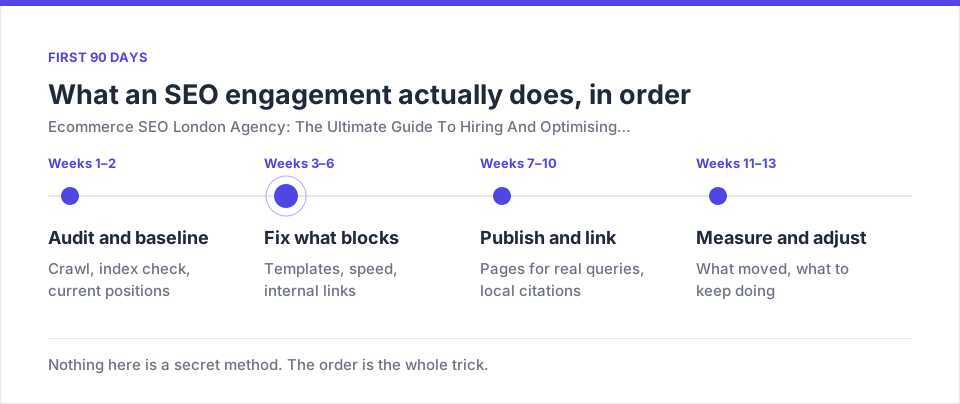
- Structured onboarding plan with a 90-day ramp, milestones, and feedback loops with leadership teams.
Schedule weekly check-ins and maintain a transparent feedback loop to support the candidate’s integration. The London team can provide onboarding playbooks and TPID glossaries to standardise the experience across districts.
Part 7: On-page And Content SEO For UK Audiences
Following the governance and technical foundations outlined in prior parts, this section translates district-aware decisions into practical on-page and content strategies for UK audiences. The objective is to turn London’s diverse districts into measurable gains by aligning Local Pages, GBP, Maps and Knowledge Graph (KG) surfaces with Translation Provenance IDs (TPIDs) and Licensing Context. This approach ensures localisation fidelity travels with content as campaigns scale across the UK market while remaining contextually credible for local searchers in and around London. For West London brands seeking SEO services in west london, the framework offers district-accurate guidelines that maintain brand integrity across surfaces.
1) Keyword Research For UK Audiences
Strategic keyword research for UK audiences uses a district-aware lens that blends national intent with local flavour, spelling, and terminology. Start from city-wide priorities, then segment by London boroughs, major transport hubs, and notable neighbourhoods to surface district-relevant variations. Embed UK spelling conventions (colour, centre, organise) to match user expectations and search engine understanding.
- Develop UK keyword clusters that align Local Pages, GBP updates, and district events. Prioritise long-tail terms that indicate near-term intent for UK consumers.
- Incorporate district modifiers (for example, "West London SEO services" or "London SEO agency in Westminster") to capture proximity signals and market specificity.
- Analyse search intent across devices to balance informational content with transactional landing pages for UK audiences.
- Validate keywords against competitors operating in London and adjacent UK markets to benchmark difficulty and opportunity.
- Document TPIDs for maintainable taxonomy and language consistency across assets and surfaces.
Outcome: a robust, UK-wide keyword map with district granularity that guides on-page elements and content priorities. For practical templates, explore the SEO Services hub or contact the London team to tailor district-ready keyword playbooks.
2) On-Page Optimisation For UK Pages
On-page optimisation turns keyword intent into tangible signals. Each page should feature a clear hierarchy, with primary terms in the title and H1, while secondary terms appear in headers, meta descriptions, and image alt attributes. Localised Local Pages must align with TPID terminology to preserve linguistic consistency, while Licensing Context accompanies imagery to maintain rights as content travels across GBP, Maps and KG.
- Craft concise, benefit-led title tags that include district and surface references (for example, "London SEO Services | Local Page Optimisation").
- Write meta descriptions that emphasise proximity, authority and action, incorporating district modifiers.
- Structure content with a logical H1–H6 hierarchy, prioritising hub content and Local Pages in internal links.
- Embed robust internal linking from hub articles to Local Pages and GBP-related content to reinforce proximity signals.
- Optimise images with TPID-aligned alt text and Licensing Context attached to imagery assets used across pages.
Remember to comply with UK accessibility guidelines and data protection requirements while maintaining taxonomy coherence across surfaces. For templates, visit the SEO Services hub or contact the London team to tailor district-ready on-page playbooks.
3) Content Strategy And Localised Topic Clusters
Content strategy in the UK market emphasises depth, relevance and district-specific authority. Build topic clusters around London districts, transport corridors, and common local concerns. Link Local Pages to hub content and product pages, reinforcing KG connections with district attributes. TPIDs anchor terminology, while Licensing Context travels with imagery to ensure rights compatibility across surfaces.
- Define district-focused pillar content that anchors local intent and feeds subordinate pages.
- Develop metadata templates for each district that capture locality signals, language variants, and event calendars.
- Schedule a district content calendar aligned with major UK and London events.
- Integrate structured data for LocalBusiness, Product and FAQ pages to strengthen KG connections.
Maintain governance around TPID dictionaries and licensing checklists to ensure terminological consistency as assets scale. For templates, consult the SEO Services hub or contact the London team for district-ready content playbooks.
4) Local Schema, Knowledge Graph And Structured Data
Structured data remains a primary lever for UK local visibility. Implement LocalBusiness, Product and FAQ schemas with district attributes to reinforce KG edges. Event schemas surface around district calendars, while Organisation schema enhances authority for London-wide searches. TPIDs ensure consistent local terminology, and Licensing Context accompanies imagery used in schema-marked content to preserve licensing rights across GBP, Maps and KG surfaces.
- District-aware LocalBusiness schemas capturing service areas and proximity cues.
- Event and FAQ schemas tied to district calendars to capture timely intent signals.
- Product schemas linked to local availability and service areas for relevant local search results.
- KG-rich content updates strengthening district attribute connections.
Keep TPID glossaries and Licensing Context ledgers up to date to ensure consistency as assets circulate across surfaces. The SEO Services hub provides standard templates, or contact the London team for district-specific adaptations.
5) Localised Content Activation: Calendars And Quick Wins
Turn architecture into action with a district-focused content calendar. Schedule Local Page updates around key London events, transport shifts, and seasonal demand. Pair each activation with a TPID-backed metadata block and Licensing Context entry for imagery used in the content. Start with two anchor districts to validate governance, then expand to additional districts using the same templates and cadence. Track local conversions, GBP interactions and KG signals to demonstrate early impact while ensuring localisation provenance travels with assets across surfaces.
- Adopt district-focused content blocks that map to TPID terminology and local events.
- Synchronise event calendars with district hubs and Local Pages to capture timely intent.
- Publish TPID-backed metadata for district pages and attach Licensing Context to imagery used in activation content.
- Schedule governance reviews to ensure TPIDs and licensing remain coherent as districts scale.
6) Multilingual And International SEO For A London Audience
London serves as a gateway for domestic and international travellers. An international component ensures district hubs are optimised for UK travellers while enabling scalable localisation for multilingual markets. This includes hreflang mapping, district-specific content strategies, and translation provenance that preserves terminology across languages. Licensing Context accompanies imagery and media as assets scale into international campaigns and cross-border outputs.
- Implement hreflang and locale-specific canonical strategies reflecting district nuance and language variants.
- Develop district-focused content calendars addressing international travel trends and London-specific opportunities.
- Coordinate GBP and Maps signals with multilingual Local Pages to sustain proximity signals across languages.
- Maintain Licensing Context for imagery to ensure licensing across international campaigns.
7) Next Steps: Deliverables And How To Proceed
To move from activation to ongoing delivery, request district activation kits and TPID-backed templates from the SEO Services hub. Coordinate with the London team to tailor a district-ready baseline for your portfolio, including two anchor pilots, governance cadences, and cross-surface dashboards. Embedding governance from day one creates a transparent path to scalable localisation visibility across Local Pages, GBP, Maps and KG, with TPIDs and Licensing Context providing auditable provenance at every stage.
- Publish a two-district activation plan and extend to additional districts in phased cadences.
- Freeze the TPID glossary and Licensing Context ledger as governance artefacts that travel with assets.
- Release district activation templates and schedules to marketing, product, and operations teams.
- Set up cross-surface dashboards that reflect district health, signal integrity, and ROI progression.
For ready-to-use templates and governance artefacts, visit the SEO Services hub or contact the London team to tailor a district-ready on-page plan for your portfolio.
Part 8: User Experience And Core Web Vitals In London Enterprise SEO Audits
London's district-rich search landscape requires that UX and Core Web Vitals (CWV) are treated as governance-driven capabilities that travel with Translation Provenance IDs (TPIDs) and Licensing Context. As Local Pages, Google Business Profile (GBP), Maps and Knowledge Graph (KG) surfaces scale across the capital's diverse boroughs, the on-site experience must be fast, accessible, and trustworthy to sustain visibility and conversions across devices and contexts. This part outlines a practical framework for auditing UX and CWV within a district-first London strategy, integrating TPID terminology and licensing governance into every decision. For district-ready governance artefacts and templates, refer to the SEO Services hub on londonseo.ai.
The UX signal set in London enterprise audits
Key UX signals for London campaigns span accessibility, visual stability, perceived performance, mobile readiness, and navigational clarity. A district-aware audit treats UX as both a design discipline and a technical governance issue, ensuring every asset inherits TPID-driven terminology and Licensing Context so localisation fidelity travels with content as activation expands across Local Pages, GBP, Maps and KG edges. To succeed in West London and across the capital, audits must merge UX excellence with robust governance that tracks assets and terminology as districts scale.
- Accessibility: inclusive design, semantic markup, and keyboard navigability to serve diverse user groups.
- Visual stability: stabilised layouts to minimise unexpected shifts during content updates across languages.
- Perceived performance: fast first meaningful paint and smooth interactions on mobile networks common in London.
- Mobile readiness: responsive design and optimised rendering for on-the-go London users.
- Navigational clarity: intuitive pathways from district hubs to Local Pages, GBP prompts, and KG entries.
1) Baseline UX And CWV Assessment
Establish a district-aware CWV baseline across Local Pages, GBP, Maps and KG. Use data sources such as Chrome UX Report and Lighthouse, complemented by bespoke CWV dashboards that segment by district and device. Run a two-anchor London pilot to validate data collection, anomaly detection, and TPID-consistent terminology before wider deployment. Ensure Licensing Context accompanies all imagery as assets scale across surfaces.
- Baseline metrics by district and surface, with look-back windows aligned to London’s event calendar.
- Remediation backlog prioritised by impact on Local Page health and GBP proximity signals.
- TPID-linked dashboards that visualise CWV health by district across Local Pages, GBP, Maps and KG.
- Licensing Context Appendix for imagery used in CWV experiments and UX tests.
2) District-Level CWV Thresholds And Remediation
Set district-specific CWV targets that reflect device usage and network conditions common in London’s districts. A practical configuration includes: LCP under 2.5 seconds on mobile, CLS under 0.1, INP improvements, and TBT reductions. Prioritise assets and pages that contribute most to user-perceived speed, such as critical CSS, font-loading strategies, and image optimisation. Use TPIDs to ensure terminology stays stable across languages while Licensing Context tracks imagery rights during fixes and deployments.
- Prioritise front-end optimisations that yield the highest CWV impact for each district.
- Track remediation using TPID-based dashboards to compare before/after across Local Pages, GBP, Maps and KG.
- Establish a weekly remediation sprint for each district hub, with governance sign-off on changes to licensing assets.
3) Content And Asset Optimisation For London UX
Optimising content and assets drives speed and readability. Use modern image formats (AVIF/WebP where supported), descriptive alt text aligned to TPID terminology, and font-loading strategies that minimise render-blocking. Ensure Licensing Context accompanies imagery used in Local Pages and GBP so rights travel with content across surfaces. District-focused blocks should prioritise proximity signals and local event relevance to improve engagement.
- Audit media libraries for size, format, and TPID-consistent alt text; remove stale assets.
- Preload critical CSS and fonts; implement lazy loading for non-critical assets.
- Create district-specific content blocks and metadata reflecting proximity signals and events.
- Attach Licensing Context to imagery to maintain licensing trails across GBP, Maps and KG.
4) Governance Dashboards And Reporting
Integrated dashboards should present CWV health, accessibility conformance, and visual stability by district, with TPIDs and Licensing Context clearly visible. Regular governance cadences ensure ongoing alignment across Local Pages, GBP, Maps and KG, featuring weekly health checks, monthly district summaries, and quarterly ROI reviews. Role-based access keeps stakeholders across marketing, product, and regional leadership informed while safeguarding licensing data and TPID terminology across surfaces.
- Produce district health dashboards that surface CWV metrics per TPID and district hub.
- Include licensing status overlays for imagery used in UX experiments and content updates.
- Publish monthly district summaries and quarterly ROI reviews for governance oversight.
- Ensure cross-surface data integrity with TPID mappings and licensing provenance visible in every report.
5) Activation Experiments, Incrementality, And ROI Validation
To prove the real-world impact of governance and signal quality, run controlled experiments at district level. Use A/B or multivariate tests on Local Pages and hub content within two anchor districts to validate governance workflows and cross-surface signal integrity before broader rollout. Define hypotheses tied to district objectives, and employ look-back windows that mirror district journeys and events. Incrementality measurements should quantify uplift beyond baselines across Local Pages, GBP, Maps and KG surfaces, while respecting privacy constraints.
- Two-anchor district pilots to test governance, TPID fidelity, and signal quality.
- Predefined KPIs for signal quality, district health, and local conversions.
- Cross-surface attribution testing with TPID-backed data models and licensing provenance.
- Remediation and scaling plans based on pilot results, with governance artefacts updated accordingly.
- Documentation of results to inform broader rollout and investment decisions.
Part 9: Amazon Advertising: Linking SEO And PPC In The UK
West London’s district mosaic provides practical opportunities to align organic Amazon listing optimisation with paid campaigns. For London-based brands, the goal is to harmonise on-page content with Sponsored Products, Sponsored Brands and other PPC activations so visibility and conversions rise together. Translation Provenance IDs (TPIDs) and Licensing Context remain essential governance anchors, ensuring localisation fidelity travels with product content as campaigns scale across the UK. For organisations seeking amazon seo services in london, this playbook translates district activation into a scalable Amazon optimisation program that respects local language, imagery rights, and regulatory nuances.
1) Amazon SEO And PPC Synergy On UK Listings
Organic ranking on Amazon (the A9 algorithm) hinges on relevance, performance, and stock availability. SEO for Amazon London-focused listings should prioritise keyword relevance in titles, bullets and backend search terms while keeping the copy natural and compliant with UK consumer expectations. PPC, meanwhile, amplifies visibility for high-potential terms and accelerates initial traction. A harmonised approach ensures paid campaigns reinforce organic signals rather than compete with them. TPIDs help maintain terminology consistency across districts when launching translated or district-specific assets, and Licensing Context tracks imagery usage to protect brand rights as campaigns scale.
Key actions include:
- Develop district-aligned keyword clusters for UK terms that feed both product content and PPC targets.
- Synchronise headline and bullet language across organic listings with Sponsored Product and Brand messaging for cohesion.
- Align stock and fulfilment signals with London buyer expectations to minimise Buy Box risk and maximise conversion velocity.
- Attach TPIDs to district terms and product content so translations stay aligned and licensing remains auditable across campaigns.
2) Two Anchor District Activation For London Campaigns
Begin with two anchor districts that reflect distinct shopper profiles and transport dynamics. For example, a central London CBD corridor and a south-west suburban cluster can serve as practical test beds for governance, TPID fidelity, and cross-surface signal quality. Implement paired activation kits that map from district hub pages and product content to UK-facing listings, then roll out to additional districts using the same playbooks. This guarded rollout reduces risk while establishing a scalable framework for London-wide growth.
Core activities include:
- Assign TPIDs to each anchor district and its product sets to stabilise terminology across languages and surfaces.
- Publish district activation templates detailing hub-to-Listing navigation, event-driven promotions, and inventory checks.
- Run a controlled PPC test alongside organic optimisations to measure incremental impact by district.
- Define success metrics that reflect district visibility, proximity signals, and local conversions.
3) TPIDs, Licensing Context And Amazon Assets
Translation Provenance IDs should underpin product content, titles, bullets, and A+ content variants across London districts. Licensing Context tracks imagery and media used in product listings, A+ modules, storefronts and sponsored creatives so rights travel with content as campaigns scale. For UK-wide expansion, ensure TPIDs extend to translation workflows and glossaries to maintain consistency in terms and branding across districts.
Practical steps include:
- Tag district-specific product content with TPIDs to stabilise terminology across translations.
- Attach Licensing Context notes to all imaging used in product pages and A+ Content.
- Document licensing rights for hero images and lifestyle visuals used in Sponsored Brand creatives.
- Coordinate with UK-area teams to ensure licence usage is auditable during cross-surface campaigns.
4) Measuring Cross-Surface Impact
Cross-surface measurement should connect Amazon performance with London district signals from Local Pages and GBP where relevant. Build dashboards that map organic listing health, keyword ranking velocity, conversion rate, and ACoS by district TPID. Look for correlations between district-driven content updates and spikes in Sponsored Brand performance. Licensing Context dashboards should accompany imagery used in ads to ensure compliance and auditable provenance.
Recommended metrics include:
- Organic placement by district TPID and product category.
- Sponsored metrics by district, including impression share, click-through rate, and ACoS.
- Inventory velocity and Buy Box win rate in target districts.
- Post-click engagement such as add-to-cart and checkout completion by district.
5) Next Steps: Getting Started In London
To begin, assemble two anchor districts and create TPID-backed asset kits, including district-specific product content and A+ modules. Align Sponsored Campaigns with organic listing optimisations using district-targeted keyword clusters and TPID terminology. Coordinate weekly governance cadences to review licensing status, TPID glossary updates, and cross-surface attribution results. For ready-to-use templates and governance artefacts, visit the SEO Services hub or contact the London team to tailor an Amazon-focused activation plan for your portfolio.
- Launch a two-anchor district activation and extend to additional districts in phased cadences.
- Freeze the TPID glossary and Licensing Context ledger as governance artefacts that travel with assets.
- Release district activation templates and schedules to marketing, product, and operations teams.
- Set up cross-surface dashboards that reflect district health, signal integrity, and ROI progression.
Part 10: Advanced Metrics, Attribution And Scaling For London Amazon SEO
1) Advanced Metrics And Attribution For London Campaigns
In a district-first London strategy, the ability to measure, segment, and explain performance becomes the bridge between governance and growth. This section introduces a unified metrics framework that ties Local Pages, GBP, Maps, KG, and Amazon listings into a single narrative. Rather than chasing vanity metrics, the emphasis is on district-level revenue signals, proximity-driven conversions, and cross-surface influence. Translation Provenance IDs (TPIDs) maintain consistent terminology across languages and surfaces, while Licensing Context ensures imagery rights stay auditable as assets circulate across campaigns. The practical objective is a transparent, district-aware view of ROI, with dashboards that reveal near-term wins and longer-term trajectories for London portfolios.
- District ROI focus: track revenue, orders, and contribution margin by borough, not just site-wide totals.
- Cross-surface attribution: attribute touchpoints from Local Pages, GBP interactions, and Amazon activations to a common district TPID.
- Event-driven uplift: align metrics with London events, transport patterns, and seasonal shifts for accurate forecasting.
Implementation embraces a two-tier dashboard structure: a district-level governance view and a portfolio-wide optimisation view. This separation keeps governance clear while giving leadership the ability to spot cross-district patterns and allocate resources efficiently. For practical templates, refer to the SEO Services hub on londonseo.ai or contact the London team to tailor a district-ready metric model for your portfolio.
2) Data Layer And Tagging Strategy For District Portfolios
A robust data layer is the backbone of accurate attribution. In a London context, standardise data attributes across Local Pages, GBP, Maps, KG and Amazon campaigns. Core fields should include district_id, TPID, language, surface, asset_id, licensing_status, and event_context. This structure enables clean, auditable handoffs between teams and systems, while TPIDs guarantee consistency of terminology across translations and boroughs. Use GA4 or your preferred analytics stack to map these fields to custom dimensions and events, ensuring every surface activity feeds into district dashboards.
Practical steps include:
- Define a district-level data dictionary with TPID mappings and licensing tags for imagery assets.
- Annotate Local Page and GBP events with district and TPID context to preserve provenance through updates.
- Deploy a shared data layer checklist for new districts before going live across any surface.
- Integrate cross-surface data streams into a single data warehouse for scalable reporting.
Templates and governance aids are available in our SEO Services hub, or you can contact the London team to tailor district-ready data layer patterns. Internal alignment ensures everyone speaks the same TPID language during translations and asset activations.
3) Cross‑Surface Attribution Framework And Modelling
London campaigns require a pragmatic attribution framework that translates district activity into intelligible insights. A multi-touch model works best: Local Page discovery and GBP exploration generate proximity signals; Amazon activity and KG entries reinforce authority and product relevance within the district context. By aligning all signals to district TPIDs, you can compare apples to apples across Local Pages, GBP, Maps, KG and external campaigns. Lookback windows should reflect London’s shopping cadence, including event-driven demand, commuter patterns, and weekday vs weekend behaviours.
Key components include:
- A district-focused attribution model that assigns incremental value to each surface based on proximity and intent.
- Cross-surface dashboards that aggregate metrics by TPID, enabling district-wide comparisons and roll-ups to portfolio goals.
- Licensing Context dashboards to monitor imagery rights as assets move across campaigns and surfaces.
When implementing, tie each signal to a TPID-backed terminology set so language drift does not undermine interpretation. For ready-made templates and guidance, the SEO Services hub offers district-ready attribution playbooks, or you can reach the London team for bespoke configurations.
4) Scaling Cadence, Governance, And Templates
Scaling a district-aware programme requires disciplined governance and repeatable templates. Establish a cadence that aligns governance reviews with quarterly strategy cycles and weekly operational stand-ups. Deliverables include TPID glossaries, Licensing Context logs, district activation kits, and cross-surface dashboards. These artefacts enable rapid onboarding of new districts and efficient governance as you scale across London’s diverse boroughs. Use the SEO Services hub for ready-to-use templates or contact the London team to tailor a district-ready scaling plan for your portfolio.
- Publish a district activation calendar with milestones and owners for Local Pages, GBP, Maps and KG.
- Lock TPID terminologies through a living glossary that travels with translations and asset updates.
- Maintain Licensing Context logs that track imagery rights across all surfaces.
- Provide district dashboards that aggregate surface performance and ROI by TPID.
5) Practical London Case Study: District A And District B
Consider a London portfolio containing District A (CBD cluster) and District B (outer boroughs). By applying the advanced metrics and attribution framework, you might observe an initial uplift in District A of double-digit gains in Local Pack impressions and GBP interactions within 8 weeks, while District B experiences steadier uplift as TPIDs stabilise terminology and licensing across assets. The cross-surface attribution model reveals that Local Page optimisations drive a substantial portion of district traffic from local packs, GBP contributes meaningfully, and Amazon-related content accounts for a substantial share of incremental conversions tied to district promotions. These insights justify continued investment, further template deployment, and expanded TPID-backed districts. All assets maintain auditable provenance through Licensing Context, ensuring compliance across surfaces as you scale. For district-ready templates and governance artefacts, visit the SEO Services hub or contact the London team to tailor a district-ready activation plan.
6) Next Steps: Getting Started In Your London Portfolio
To translate these principles into action, begin with a two-district pilot to validate governance workflows, TPID integrity, and licensing compliance. Scale through district-ready templates, activation calendars, and cross-surface dashboards that provide clear district-level ROI signals. Engage the London team to tailor a district-ready activation plan that fits your portfolio, and leverage the SEO Services hub on londonseo.ai for templates, TPID glossaries, and Licensing Context artefacts.
- Launch a two-district activation and extend to additional districts in phased cadences.
- Publish TPID glossaries and Licensing Context ledgers to ensure asset provenance travels with content.
- Release district activation templates and schedules to marketing, product, and operations teams.
- Set up cross-surface dashboards that reflect district health, signal integrity, and ROI progression.
Part 11: Choosing The Right London Ecommerce SEO Agency And Engagement
With the district-first framework already established, selecting the right London ecommerce SEO agency becomes a strategic decision that determines governance quality, localisation fidelity, and ROI. A credible partner helps you extend Translation Provenance IDs (TPIDs) and Licensing Context across Local Pages, Google Business Profile (GBP), Maps and Knowledge Graph surfaces, while preserving brand tone and regulatory compliance. This Part outlines practical criteria, engagement models, and a step-by-step approach to ensure you partner with an agency that can scale responsibly in London's diverse districts and beyond into the UK and Europe. A thoughtful engagement starts with clear expectations around governance, transparency, and measured value, ensuring you retain control of localisation assets as you grow.
1) What A Strong London Partner Delivers
A robust London ecommerce SEO agency should translate governance-lens into practical outcomes. Look for capabilities that align with the parts previously discussed: district-first activation, TPIDs, Licensing Context, cross-surface signal coherence, and auditable dashboards that reveal district ROI. They should provide a scalable framework that can be extended to GBP, Maps and KG while remaining relevant to Local Pages and, where applicable, Amazon storefronts within the UK and Europe. A mature partner will also demonstrate a governance discipline that reduces risk, enhances language fidelity, and ensures licensing rights travel with content across campaigns and surfaces.
- District governance and TPIDs: a scalable system that anchors terminology across languages and surfaces, enabling consistent translation and translation provenance tracking.
- Licensing Context for imagery: rights management travelling with content as assets move across campaigns and surfaces, with auditable asset provenance.
- Two-anchor pilot readiness: a proven approach for safe expansion into new districts or markets, with measurable success criteria.
- Cross-surface integration: coherent signals flowing from Local Pages to GBP, Maps and KG, with end-to-end traceability.
- Transparent ROI reporting: dashboards that reveal district ROI and near-term impact, not vanity metrics, with language and licensing provenance clearly visible.
2) Essential Evaluation Criteria
When assessing agencies, look for evidence of London-specific experience and a track record in ecommerce SEO. Prioritise firms that can demonstrate how TPIDs and Licensing Context are embedded into content creation, asset management and reporting. Ask for client references, sample dashboards, and case studies that show district-level improvements in Local Pages, GBP health, and KG signals. A compelling proposal will also articulate how the agency would migrate from pilot districts to citywide or cross-border activations while maintaining licensing integrity and localisation fidelity across languages and surfaces.
- London experience: knowledge of borough-level signals, events, transport corridors, and local regulation that affect shopper behaviour.
- Ecommerce SEO results: demonstrable improvements in product visibility, category rankings, and revenue across Local Pages and cross-surface surfaces.
- TPID and Licensing Context governance: ability to manage language fidelity and imagery rights across assets and campaigns.
- Cross-surface capability: Local Pages, GBP, Maps, KG, and, where relevant, Amazon UK assets, with coherent signal flow.
- Transparent pricing and reporting: clear SLAs, cadence, and accessible dashboards with district granularity.
3) Engagement Models And Governance Cadence
Engagement structures should reflect London-market realities. Typical models include quarterly discovery sprints, ongoing retainer work, and milestone-based projects. A disciplined governance cadence aligns TPID updates, licensing logs, and cross-surface dashboards with activation calendars. Deliverables should include district activation playbooks, TPID-backed templates, and regular governance reviews that demonstrate traceability from hub content to Local Page and GBP activity.
- Discovery sprint to validate scope and TPID readiness, including stakeholder alignment across marketing, product, and operations.
- Two-anchor pilot to test governance and signal quality before broader rollout, with clearly defined success metrics.
- Ongoing optimisation with monthly reporting and quarterly strategy reviews for course correction.
- Clear ownership, service levels, and licensing accountability across surfaces to protect asset provenance.
4) RFP Checklist And Negotiation Tips
Use a practical RFP framework to compare agencies. Request district-focused playbooks, TPID glossaries, licensing catalogs, and cross-surface dashboards. Insist on references that can speak to London-specific outcomes, and ask for a two-anchor pilot plan. Ensure the contract includes TPID implementation, Licensing Context handling, data ownership, and a clear path for expansion. A well-structured RFP also asks for scalability plans, risk mitigation strategies, and governance templates that travel with content as you scale across Local Pages, GBP, Maps and KG surfaces.
- RFP should specify district hubs, surfaces in scope, and governance requirements with measurable KPIs.
- Ask for TPID and Licensing Context artifacts to travel with every asset and across all campaigns.
- Require a two-anchor pilot with defined success metrics, look-back windows, and a clear expansion pathway.
- Clarify data ownership, privacy compliance, and cross-border considerations early in the contract.
5) Red Flags And Pitfalls To Avoid
Beware promises of instant rankings, flat-rate packages, or generic playbooks. A London-focused partner should tailor strategies to boroughs, events, and transport patterns. Red flags include vague methodologies, lack of TPID or licensing governance, poor cross-surface visibility, and opaque pricing. Request tangible evidence and testable plans before committing. In addition, beware proposals that underplay data ownership, governance cadences, or licensing protections, which are essential for long-term sustainability in London and across UK markets.
- Generic, one-size-fits-all proposals without district nuance.
- Failure to address TPIDs, Licensing Context, or local licensing issues.
- Poor cross-surface visibility or missing dashboards with district breakdowns.
- Unclear data ownership, privacy policies, or cross-border data handling practices.
6) Practical Next Steps To Kick Off
To move forward, initiate a two-anchor pilot with a London ecommerce SEO agency that demonstrates TPID governance and licensing capabilities. Use the agency-provided Activation Kits, TPID-backed templates, and a governance cadence to accelerate onboarding. For agency selection guidance and district-ready templates, visit the SEO Services hub or contact the London team to start a discovery call and align on a two-quarter activation plan. Seek demonstrable examples of district hub navigation, TPID implementation, and licensing artefacts that travel across surfaces, ensuring continuity of localisation as you scale.
Internal links to explore: learn more about our SEO Services at SEO Services and reach out to the London team at London contact to discuss district-focused activation.
Part 12: Future-Proofing Amazon SEO Services In London
Having established a district‑first, governance‑led approach across Local Pages, GBP, Maps and KG throughout Parts 1–11, this final instalment translates those principles into a forward‑looking playbook for Amazon in London. The objective remains clear: durable visibility, compliant localisation, and scalable activation that travels with Translation Provenance IDs (TPIDs) and Licensing Context as Amazon evolves and market signals shift. For London brands and agencies, these practices enable resilient growth while protecting language fidelity and asset rights across district campaigns.
1) Building a Living Taxonomy For London Districts
A living taxonomy anchors district terminology, event language, and asset rights as London campaigns scale. The taxonomy must accommodate TPIDs, translation provenance and licensing metadata so every asset retains its locale identity across Local Pages, GBP, Maps and KG surfaces.
Actionable steps include:
- Establish a district glossary that maps TPIDs to district hubs, local terms, and event vocabularies.
- Create a Licensing Context catalogue for imagery and media that travels with every asset across surfaces.
- Version control district terms so translations stay aligned when assets are updated or extended to new boroughs.
- Integrate TPID references into metadata blocks (titles, descriptions, alt text) to stabilise terminology across languages.
- Embed taxonomy within Local Page templates and product content so new districts publish with governance ready signals.
- Pilot the taxonomy in two anchor districts before citywide rollout to validate workflow and signal integrity.
2) Responsible Automation And Governance
Automation accelerates content and asset updates but must operate within strict governance. In London, automate repetitive formatting and metadata assembly while requiring human review for language-sensitive edits, licensing decisions, and TPID reassignments to prevent drift across translations.
Core governance practices:
- Require TPID‑backed validation for all district updates before live deployment.
- Attach Licensing Context to imagery and media used across Local Pages, GBP posts, Maps entries and KG edges.
- Maintain an auditable changelog that records all automated and human edits against TPIDs.
- Establish change‑management cadences that align with London activation calendars.
- Monitor cross‑surface signal coherence to ensure district terminology remains stable as assets scale.
3) Compliance And Data Privacy In A UK Context
UK data protection and licensing realities shape how district activations evolve. Treat TPIDs as language governance anchors, while Licensing Context protects imagery rights across GBP, Maps, KG and product listings. Regular audits of data collection, consent language, and asset licensing are essential as districts expand.
Key steps include:
- Map data handling to UK GDPR requirements and district‑level consent flows.
- Maintain a central Licensing Context ledger that records imagery rights for all assets used in London campaigns.
- Review cross‑border data transfers and ensure any partner data sharing complies with current regulations.
- Document TPID terminology and licensing terms in governance dashboards accessible to marketing, product and legal teams.
4) Adapting To Evolving Amazon Signals In The UK
Amazon’s UK marketplace continues to reward relevance, performance and stock availability. In London, refine district‑level relevance through TPIDs, while proactively updating product content, A+ modules and backend terms to reflect local intent. Maintain proximity signals with stock planning, delivery expectations and UK‑specific promotions, and ensure imagery rights stay attached as campaigns scale across districts.
Practical actions include:
- Refresh district keyword taxonomies to align with transport corridors, events and shopper priorities in London.
- Develop district‑focused A+ Content that pairs TPID terminology with local imagery and context.
- Coordinate inventory and fulfilment signals to sustain Buy Box performance in target London districts.
- Attach TPIDs to district content and ensure Licensing Context travels with all listing assets during cross‑surface campaigns.
5) Cross‑Surface Signaling: Maintaining Translation Provenance And Licensing Context
To sustain district‑level success, ensure signals migrate coherently from Local Pages to GBP, Maps and KG, with language fidelity preserved by TPIDs and imagery rights maintained by Licensing Context. Governance dashboards should reveal TPID mappings, licensing status, and cross‑surface signal integrity so leadership can interpret district performance without ambiguity.
Implementation tips:
- Embed TPIDs in all new asset metadata as a single source of truth for district terminology.
- Attach Licensing Context to every imagery asset used in Local Pages, GBP posts, Maps entries and KG content.
- Regularly audit cross‑surface linkages to ensure hub to Local Page, GBP and KG navigations stay correct.
- Present cross‑surface dashboards that show district ROI, signal quality, and asset provenance together.
6) Practical Implementation: A Step‑By‑Step Conversion Plan
Move from strategy to execution with a disciplined plan. Start with two anchor districts to validate governance, TPID fidelity, and licensing workflows. Build activation kits and TPID‑backed templates, then scale to additional districts using a standard cadence and governance rituals. Ensure cross‑surface dashboards remain in sync with district growth and licensing status as assets circulate across Local Pages, GBP, Maps and KG.
- Launch two anchor districts with TPIDs and Licensing Context to stabilise terminology and rights across surfaces.
- Publish activation kits and district templates that map hub content to Local Pages and GBP updates.
- Establish weekly governance cadences to review TPIDs, licensing logs and cross‑surface signal integrity.
- Extend to additional districts in phased cadences, updating dashboards and asset inventories accordingly.
- Regularly refresh TPID glossaries and licensing catalogs to reflect district evolution and new assets.
7) Governance, Documentation, And District Readiness
District readiness requires formal governance and accessible documentation. Maintain a living TPID glossary, Licensing Context ledger, and cross‑surface dashboards so every asset carries provenance from inception through expansion. Schedule quarterly reviews to refresh district targets, TPIDs, and licensing status, ensuring alignment with London market dynamics and regulatory expectations.
- Publish a district activation calendar with milestones and owners for Local Pages, GBP, Maps and KG.
- Keep a TPID glossary updated and a Licensing Context ledger current for all new assets.
- Provide clear, district‑level KPIs and governance reports for executive visibility.
8) Case‑Driven Readiness For 2026 And Beyond
London’s landscape will continue to evolve with AI‑assisted search, richer knowledge panels and more nuanced local signals. Prepare by embedding TPIDs and Licensing Context into AI‑generated workflows, validating signal quality in anchor districts, and maintaining governance that accommodates new surfaces and languages. A two‑district pilot remains a prudent starting point for scaling responsibly while preserving localisation fidelity across Local Pages, GBP, Maps, KG, and Amazon assets.
9) Final Encouragement: Start Today
To operationalise these forward‑looking practices, initiate a two‑district pilot with a London ecommerce SEO partner that demonstrates TPID governance and licensing capabilities. Use activation kits and governance cadences to accelerate onboarding, then iterate to broader district activation. For ready‑to‑use governance artefacts and district‑ready templates, visit the SEO Services hub or contact the London team to tailor a district‑ready activation plan for your portfolio.
