SEO Training in London: A Practical Starter Guide
London is a global hub for digital marketing, with a thriving ecosystem of agencies, fintechs, media groups and innovative startups. For professionals and business owners alike, structured SEO training in London opens access to real-world techniques, latest search signals, and practical frameworks that translate into measurable results. This Part 1 sets the scene, outlining what comprehensive SEO training in London covers, why the city is uniquely suited for learning, and how londonseo.ai can guide you from fundamentals to applied campaigns in the capital and beyond.
Why London is an ideal environment for SEO training
London hosts a dense, diverse business landscape, from financial services corridors to media hubs and tech start‑ups. That mix creates frequent, observable examples of how search visibility affects footfall, conversions, and brand credibility in real time. A London-focused curriculum emphasises local search dynamics, Maps proximity, and GBP health in a practical way, while still teaching universal SEO fundamentals that apply to any market. Students enjoy exposure to London-specific case studies, tools, and data sources, helping them build a portfolio that mirrors current industry practice.
In addition to course content, London offers abundant networking opportunities, guest speakers, and accessible venues, which enhances learning transfer from classroom concepts to client work. Our training approach at londonseo.ai reflects these realities, combining structured pedagogy with practical projects that mirror the demands of London businesses and their audiences.
What you can expect to learn in London SEO training
A robust programme covers both the theory behind search engines and the practical steps to implement improvements across content, technical health, and local signals. Expect a structured progression from foundational concepts to advanced, hands‑on projects that result in actionable outputs for your business or clients. Core topics typically include:
- Technical foundations: crawling, indexing, site architecture, and Core Web Vitals.
- On-page optimisation: title tags, meta descriptions, internal linking, and semantic HTML.
- Content strategy and topic modeling: aligning content with user intent and business goals.
- Keyword research and intent analysis: prioritising high-value terms for London audiences.
- Local and map-based SEO: GBP health, local listings, reviews, and proximity signals.
- Analytics, measurement, and reporting: defining KPIs and communicating impact to stakeholders.
London-focused training also emphasises governance, risk management, and practical artefacts that help you demonstrate progress in regulated or client‑facing environments. Our approach integrates live data exercises, real London campaigns, and templates you can adapt for your own work. For additional context and best practices, you can reference Google's SEO Starter Guide and Moz's Beginner's Guide to SEO.
Formats and pathways available in London
London SEO training is offered in multiple formats to fit busy schedules and different learning preferences. Typical formats include:
- In-person workshops: Intensive, facilitator-led sessions in central venues with collaborative exercises and live feedback.
- Live online cohorts: Real-time virtual classes with breakout rooms, Q&A, and instructor demonstrations.
- Private on-site training: Bespoke programmes tailored to your team, objectives, and project timelines.
- Self-paced modules: Flexible, on-demand content that allows learners to progress at their own speed while completing practical assignments.
Each pathway culminates in a practical project, such as an SEO audit, a local landing page optimisation plan, or a staged content activation, tied to concrete outcomes for your business. If you are seeking a custom option or corporate package, see the London Training Services page for bespoke arrangements and pricing details.
Why choose londonseo.ai for your training
londonseo.ai brings together practical London-focused strategies with a rigorous, standards-led approach. Instructors combine hands-on agency experience with academic understanding of search algorithms, ensuring you learn both the art and the science of SEO. The programme emphasises real-world impact: audits, dashboards, and WhatIf scenarios that mirror the decision-making processes used by London brands to optimise visibility and engagement.
Learning materials, templates, and Artefact packs are designed to be reusable across projects and teams, so the value extends beyond a single course. You’ll also access post-course support, enabling you to implement your new knowledge while receiving feedback on early campaigns. For more information on specific modules or to sample our resources, visit the Services and Resources sections on londonseo.ai and consider booking a consultation to tailor the programme to your organisation’s needs.
Getting started with SEO training in London
To begin your journey, explore londonseo.ai's training catalogue and select a programme aligned to your goals. You can start with our standard SEO Training Services page, review upcoming cohorts, and register your interest. If you represent a team or organisation seeking a customised plan, contact us to discuss private on-site workshops or a tailored, phased onboarding schedule for your London footprint.
Practical next steps include reviewing the course syllabus, checking availability for your preferred dates, and arranging a discovery call to align expectations. Internal references and added value will include access to templates, checklists, and dashboards that you can reuse across future projects and campaigns. For broader guidance, Google's SEO Starter Guide and Moz's Beginner's Guide to SEO remain useful external references to complement the London-specific material.
Ready to proceed? Visit London SEO Training Services to view programmes, or contact us to arrange a customised onboarding plan. You can also explore London SEO Training Courses for cohort schedules and pricing.
Why London Is A Strategic Hub For SEO Training
London stands at the intersection of global commerce, technology, and media, making it an unrivalled environment for focused SEO training. The city hosts a dense ecosystem of agencies, fintechs, publishers, and consumer brands, which translates into frequent, observable real‑world campaigns that learners can study and reapply. A London-centric programme from londonseo.ai translates theory into practice with access to live briefs, local data sources, and industry conversations that shape today’s search landscape in the capital and beyond.
London’s diverse course landscape
London attracts a broad spectrum of providers, from accredited academic offerings to practical, agency‑led workshops. This creates a rich learning environment where learners can compare formats, depth, and outcomes. The city’s mix also supports a pragmatic, market‑driven curriculum that covers technical foundations, content strategy, local SEO, and measurement frameworks that mirror the needs of London businesses. londonseo.ai emphasises curriculum designed for the capital while remaining universally applicable to any market with similar search ecosystems.
Formats typically available in London include in‑person workshops in central venues, live online cohorts that replicate classroom dynamics, private on‑site training for teams, and self‑paced modules for flexible learning. Each pathway is designed to culminate in a practical artefact—whether an SEO audit, a local landing plan, or a structured activation playbook—that immediately supports client work or internal projects.
Networking opportunities and industry practice
London’s SEO training ecosystem not only teaches methods, it also connects learners with the people and firms shaping the market. Courses frequently feature guest speakers from leading London agencies, fintechs, and media groups, exposing students to current search issues, practical challenges, and decision‑making in fast‑moving contexts. These interactions help learners build valuable networks, gain insider perspectives on strategy, and secure pathways to client work or employment within the city’s vibrant digital economy.
London‑focused training also integrates live, local campaigns and capstone projects that reflect the capital’s audience realities. Learners work on briefs tied to GBP health, Maps proximity, and local content activation, ensuring that what they produce is immediately transferable to London businesses and campaigns beyond the course window.
- Guest lectures from London‑based practitioners and industry leaders.
- Live briefs drawn from current London campaigns and datasets.
- Shadowing and networking opportunities with local agencies and brands.
- Alumni groups and ongoing accountability in mentor networks.
Access to London‑centric data and case studies
A London‑centred programme leverages case studies drawn from the capital’s diverse districts, sectors, and user behaviours. Learners examine how GBP health, local citations, and Maps proximity interact within the city’s multi‑lingual and multi‑cultural context. The curriculum stitches together insights from local search signals, public data sources, and London‑specific campaign outcomes, enabling students to construct strategies that feel authentic to London audiences and compliant with UK best practices.
Discussions frequently reference canonical sources such as Google’s SEO Starter Guide and Moz’s Beginner’s Guide to SEO to anchor foundational knowledge while translating it to the city’s distinctive dynamics.
Choosing the right London training provider
Selecting a London SEO training partner should balance credibility, relevance, and practical outputs. Look for a provider that demonstrates: tangible London‑specific case studies, a governance framework that mirrors regulator expectations, and artefact packs you can adapt for client work. A strong programme will couple hands‑on projects with post‑course support so you can implement learnings immediately and iteratively improve results.
- Accreditation and real‑world applicability of the curriculum.
- Clear pathways to practical outputs: audits, activation plans, dashboards, and WhatIf playbooks.
- Post‑course support, templates, and access to a network of London practitioners for mentorship and collaboration.
Getting started with SEO training in London
If you’re seeking a London‑focused, regulator‑aware learning journey, explore londonseo.ai’s training catalogue and align your selection with your goals and delivery preferences. Start with our London SEO Training Services page to view programmes, cohorts, and delivery formats, or contact us to discuss a bespoke learning plan for your organisation and team. You can also browse London‑specific courses for cohort schedules and pricing, then book a discovery call to tailor the programme to your business priorities.
External references remain useful for grounding best practices; we recommend reviewing Google’s SEO Starter Guide and Moz’s Beginner’s Guide to SEO to reinforce universal standards alongside London‑driven context.
Ready to proceed? Visit London SEO Training Services to view programmes, or contact us to arrange a customised onboarding plan. You can also explore London SEO Training Courses for cohort schedules and pricing.
Who Should Consider SEO Training in London
London’s competitive, data‑driven business landscape makes targeted SEO training particularly valuable for a wide range of professionals. Building on the foundations outlined in Part 1 and the London‑focused perspectives in Part 2, this Part 3 identifies the key audiences most likely to benefit from formal SEO instruction in the capital. The aim is to help organisations and individuals recognise where training can unlock measurable gains in visibility, traffic, and local engagement, with practical guidance anchored in the London context and the londonseo.ai offerings.
Core audiences in London
London’s diverse economy creates a spectrum of SEO training needs. The following groups typically derive the greatest value from a London‑centred programme, especially when learning is connected to real local data, case studies, and live briefs.
- In‑house marketing teams at small, medium, and large London organisations who want to lift organic visibility, conversions, and customer lifetime value.
- SEO specialists, digital marketers, content strategists, and agency practitioners who require a structured, London‑specific framework to deliver client campaigns more consistently.
- Business owners, founders, and founders‑turned‑CEOs seeking practical understanding of how SEO influences revenue, lead generation, and offline footfall in London’s districts.
- Career changers and graduates aiming to enter digital marketing with proven, London‑relevant skills that translate quickly to client work or in‑house roles.
- Public sector bodies, charities, and non‑profits operating in London that need regulator‑friendly governance, auditable signal journeys, and local audience understanding.
- Retailers, hospitality brands, and property managers with a multi‑district footprint who rely on GBP health, Maps proximity, and local search signals to drive footfall and inquiries.
- Freelancers and contractors who want flexible, validated training to sharpen their capabilities and attract London‑based clients.
Why these audiences benefit from London‑centric training
London’s audiences speak a wide range of languages, cultural contexts, and local search behaviours. A course that embeds London case studies, GBP health considerations, and Maps proximity dynamics helps learners apply concepts to real campaigns in the capital from day one. Participants gain not only technical know‑how but also the governance discipline needed to justify decisions to stakeholders and regulators. The londonseo.ai approach blends universal SEO fundamentals with city‑specific data sources, ensuring learners graduate with tangible outputs such as district audits, activation plans, and ready‑to‑present dashboards.
How to tailor training for different London roles
Different audiences require different entry points and practical outputs. Consider these tailored pathways when planning or selecting programmes.
- In‑house marketing teams: multi‑day, hands‑on workshops that culminate in a district‑level activation plan and a live dashboard you can reuse internally.
- Agency professionals: private or on‑site training with bespoke client briefs, artefact packs, and WhatIf playbooks for regulator‑style reviews.
- Business owners and founders: pragmatic modules focused on ROI, local customer acquisition, and the link between SEO actions and bottom‑line outcomes.
- Career changers and graduates: structured online cohorts with capstone projects based on London case studies to build a portfolio for immediate job opportunities.
- Public sector and non‑profits: regulator‑friendly content governance, auditable signal journeys, and data‑driven decision making tailored to public interest objectives.
Modules and topics to prioritise for London learners
While a complete curriculum covers a broad spectrum, the following areas are especially impactful for London audiences and campaigns:
- Technical SEO fundamentals with a focus on London site architectures, crawlability, and performance in GBP‑driven contexts.
- Local SEO essentials, including GBP health, local packs, maps proximity, and district‑level optimisations.
- Content strategy tailored to London user intents, landmarks, and service area terminology.
- Keyword research and intent analysis aligned to London’s markets and districts.
- Analytics, dashboards, and reporting designed to communicate impact to stakeholders and regulators.
To explore suitable programmes, see the London SEO Training Courses page and related services on londonseo.ai.
Getting started: practical next steps for London learners
If you’re considering SEO training in London, start by identifying your role, your immediate goals, and the format that fits your schedule. Review londonseo.ai’s training catalogue, Cohort schedules, and the Services page to understand what outputs you will take into your organisation after completing a programme. A quick discovery call can help you map your London district footprint to a tailored learning path and practical artefacts you can deploy straight away.
Internal links for immediate action include the London SEO Training Services page and the London SEO Training Courses page. You can also book a consultation to tailor a programme to your team or personal development plan.
External references from Google and Moz remain useful for grounding best practices as you apply them in London. See the SEO Starter Guide and the Beginner’s Guide to SEO for universal standards alongside city‑specific context.
Ready to begin? Visit London SEO Training Services to view programmes, or London SEO Training Courses for cohort details and pricing, and contact us to arrange a customised onboarding plan.
Formats and Delivery Styles Available in London
London’s SEO training market blends tradition with digital‑first delivery, mirroring the city’s fast pace and diverse business landscapes. For learners juggling client work, project deadlines, and study, choosing the right delivery format is crucial to realising tangible outcomes. This Part 4 outlines the formats londonseo.ai offers in the capital, how each format aligns with London’s professional rhythms, and how to select the most effective path for your goals.
In-person workshops
In-person workshops in central London provide immersive, facilitator‑led learning with immediate interaction, feedback, and peer collaboration. These sessions typically run 1–2 days and are designed to mimic real‑world agency campaigns, with live audits, hands‑on exercises, and rapid iteration cycles. The London focus means you’ll encounter district‑level case studies, GBP health checks, and Maps proximity scenarios drawn from the capital’s diverse geography.
Who benefits most: marketing teams and agency practitioners who value structured, face‑to‑face collaboration, real‑time critique, and a high‑touch learning environment that accelerates practical outputs such as audits, activation playbooks, and stakeholder-ready reports.
- Small group sizes to maximise instructor access and personalised feedback.
- Central venues with easy transit access and evening networking opportunities.
Live online cohorts
Live online cohorts replicate the collaborative feel of in‑person sessions while offering the flexibility to join from anywhere. Real‑time instruction, multiple breakout rooms, and instructor demonstrations support practical skill development without geographic constraints. London learners benefit from exposure to live London campaigns, datasets, and local data sources, all accessible through a familiar online learning platform.
Key benefits include predictable scheduling, recordings for review, and the ability to coordinate across teams in different locations. This format is well suited to professionals who travel frequently or operate across multiple London boroughs but still want cohesion in method and outputs.
- Real‑time Q&A, demonstrations, and collaborative labs with peers.
- Access to recordings and on‑demand materials to reinforce learning between sessions.
Private on-site training
Private on-site training is a bespoke option for teams with specific objectives, schedules, or regulatory considerations. Delivered on your premises or at a nearby London venue, this format allows custom briefs, district‑level activation plans, and artefact packs tailored to your organisation’s portfolio. The programme can be aligned to your governance requirements, including TP locale notes, MTN pillar mappings, CPT asset inventories, and AMI trails, ensuring regulator‑ready outputs from Day One.
Ideal for teams needing rapid alignment, consistent terminology, and a fully custom cadence that supports internal governance cycles and client‑facing deliverables.
Self-paced modules
For learners seeking maximum flexibility, self-paced modular content offers a structured sequence of lessons with practical assignments. Modules are designed to build from fundamentals to more advanced topics, with milestones tied to tangible outputs such as an SEO audit or district activation plan. While asynchronous, these courses maintain a strong emphasis on London relevance through local data, district scenarios, and standard governance artefacts that support regulator replay.
Self‑paced learning works well for independent professionals, career changers, or teams aiming to level‑set skills before integrating with live cohorts or on‑site sessions.
- Flexible progression with clear milestones and assessment criteria.
- Accessible 24/7 content and practical artefacts that mirror industry practice in London.
Hybrid formats and delivery planning
Many organisations benefit from a hybrid approach that blends in‑person sessions with online cohorts and self‑paced modules. A typical hybrid plan might begin with two days of in‑person workshops to establish momentum, followed by a series of online cohorts and self-paced modules to consolidate learning and enable practical outputs. Hybrid delivery is particularly effective in London, where staff may travel between offices or work across multiple boroughs, yet still require consistent governance and artefact standards.
London learners should look for a partner that can design a cohesive mix of formats, ensuring that TP, MTN, CPT, and AMI are carried through every learning activity and artefact, so regulator replay remains straightforward across all delivery styles.
How to choose the right format for your needs
- Assess your schedule and location: If you’re based in or near central London and want hands‑on practice, in‑person workshops offer the strongest transfer. If you’re often on the move, live online cohorts can deliver consistency without travel. For flexibility, consider self‑paced modules, possibly in combination with live sessions.
- Consider learning goals: For foundational knowledge and practical artefacts, a blend of in‑person or live online with self‑paced components works well. For teams requiring bespoke governance artefacts, private on‑site training may be most efficient.
- Account for governance needs: Ensure any format includes regulator‑ready artefact packs, TP/MTN/CPT alignment, and AMI trails so you can replay signal journeys during audits.
Levels of SEO Training: From Beginner to Advanced
London’s competitive digital landscape rewards structured, progressive learning. By presenting a clear ladder from foundational concepts to enterprise-grade practices, londonseo.ai helps professionals and teams move methodically through SEO competencies while remaining tightly aligned with the city’s unique buyer journeys, local signals, and regulatory expectations. This Part 5 expands on how a London-focused programme scales with your role, responsibilities, and career ambitions, translating theory into repeatable, auditable outcomes across near-me visibility, GBP health, and Maps proximity.
1) Beginner: foundations you can apply in London campaigns
The beginner level establishes the essential vocabulary and routines required for effective SEO. Learners gain a solid grounding in how search engines operate, how users express intent, and how to translate that into actionable optimisations for a London audience. Core topics include basic search engine mechanics, on-page elements, and introductory keyword research that emphasises local relevance.
Learning outcomes typically cover: a working understanding of how to structure a London page for relevance, a starter keyword map aligned to district needs, and a simple content plan that demonstrates user intent. You’ll also begin basic analytics literacy, learning to interpret Google Analytics and Search Console signals with a London lens. A practical capstone could be a mini audit of a local landing page, identifying quick wins that improve visibility in London searches.
- Foundations of how search engines rank content and the role of user intent.
- Basic on-page optimisation: title tags, meta descriptions, headings, and clean HTML semantics.
- Introductory keyword research focused on London districts, services, and landmarks.
- Intro to analytics and reporting: setting up dashboards that track GBP health and local signals.
2) Intermediate: content strategy, local signals, and measurement
The intermediate level builds on fundamentals with deeper content design, technical awareness, and local SEO sophistication. London-focused coursework emphasises practical data from boroughs, proximity signals, and GBP health patterns to help learners deliver campaigns that feel authentic to the capital’s audience.
Key competencies include advanced keyword research, topic modelling, content calendars, internal linking strategies, and the creation of disciplined measurement frameworks. Learners typically complete an intermediate audit project that maps existing content against user intent in London districts, identifies gaps, and produces a prioritized action plan for content activation and local signal improvement.
- Content strategy aligned to London user intents and service-area terminology.
- Structured data basics and local signals to boost rich results in London queries.
- Intermediate technical SEO: crawlability, indexability, and URL hygiene with district-level considerations.
- Measurement design: KPIs, dashboards, and stakeholder communications tailored to London campaigns.
3) Advanced: technical depth, governance, and WhatIf planning
The advanced level dives deeply into technical architecture, governance, and scenario planning. Learners explore how to scale SEO across multiple London districts while maintaining a coherent hub-and-spoke structure. Emphasis is placed on technical health, crawl budgets, canonical strategies, JavaScript rendering considerations, and robust governance artefacts that support regulator replay.
Outcomes include an enterprise-grade SEO audit framework, an architecture blueprint for large sites, and a set of governance artefacts—TP notes, MTN mappings, CPT inventories, and AMI trails—that enable rapid, auditable decision-making under regulatory scrutiny.
- Advanced technical SEO: crawl budgets, indexation controls, and JS rendering strategies.
- Enterprise content governance: scalable hub-and-spoke content plans with district activations.
- WhatIf planning: simulating algorithm updates and policy changes to plan proactive responses.
- Data storytelling: turning dashboards into insights that stakeholders understand and trust.
4) Specialist and Enterprise: cross-functional mastery
The specialist and enterprise level equips learners to operate at scale across cross-functional teams, agencies, and multiple London districts. This level integrates automation, data pipelines, and cross-channel alignment (SEO, local listings, content, PPC, and social) with regulatory compliance and audit readiness. Learners build an end-to-end programme capable of supporting city-wide campaigns while preserving individual district identity and language.
Deliverables typically include an enterprise SEO playbook, automation scripts for recurring tasks, analytics pipelines, and executive dashboards that communicate ROI, risk, and governance status to stakeholders and regulators.
- Scalable governance and artefact management to support district expansion.
- Automation and data integration for efficiency and consistency across campaigns.
- Cross-channel alignment ensuring SEO signals support broader marketing objectives in London.
- Regulatory compliance and regulator-ready reporting across all districts.
Putting the levels into practice on londonseo.ai
londonseo.ai structures its programmes to let learners progress through the levels in a logical, audited sequence. Each phase concludes with artefacts you can reuse in client work or internal campaigns, including district briefs, activation playbooks, and governance dashboards. The platform emphasises TP, MTN, CPT, and AMI to ensure every action and outcome is traceable, reproducible, and regulator-ready from Day One.
When you’re ready to move from one level to the next, you’ll find explicit prerequisites, recommended cohorts, and practical assignments designed for London contexts. For sample syllabi, cohort schedules, and pricing, explore London SEO Training Services and London SEO Training Courses on londonseo.ai, or book a consultation to tailor a pathway to your team.
Choosing your starting point and progression path
Most professionals begin at the Beginner level to establish confidence with core concepts before advancing. From there, Intermediate deepens practical skills and measurement discipline. Advanced introduces robust governance and technical mastery, while the Specialist/Enterprise track equips teams to scale across districts and channels. The right progression depends on your current role, available time, and strategic objectives for London campaigns.
- Assess your current capability: identify gaps in foundations before committing to more complex topics.
- Select a logical ladder: start with Beginner, move to Intermediate, then to Advanced as you accumulate practical outputs.
- Plan for governance artefacts: ensure each level includes TP, MTN, CPT, and AMI components that enable regulator replay.
External references for broader context remain helpful: Google’s SEO Starter Guide and Moz’s Beginner’s Guide to SEO provide universal standards that complement London-specific practice.
Core Topics Covered in London SEO Courses
London’s SEO training ecosystem equips professionals with a practical, city‑specific toolkit that translates theory into campaigns aligned with the TP (Translation Provenance), MTN (Master Topic Nodes), CPT (Canon Seeds), and AMI (Attestation Maps) governance spine. The core topics taught across London courses reflect the needs of local brands and the latest search signals, while preserving universal SEO principles that apply globally. This Part 6 outlines the essential topics you will encounter in London SEO courses and how they translate into measurable, real‑world outcomes for businesses across the capital.
Technical SEO foundations
Effective London campaigns begin with robust technical health. Courses cover site architecture, crawlability, indexing, and Core Web Vitals, with emphasis on how these factors interact with UK‑specific search signals and localised content. Learners practise conducting technical audits on London‑facing sites, identify bottlenecks in mobile performance, and apply fixes that reduce render‑blocking resources and improve LCP (Largest Contentful Paint) and CLS (Cumulative Layout Shift).
- Site architecture and crawlability: design a logical hierarchy that enables efficient crawling and clear indexing priorities for district pages.
- Indexing controls and Core Web Vitals: optimise for speed, stability, and mobile usability across local surfaces.
- Schema and structured data basics: implement LocalBusiness, Product, Event, and Service schemas that align with MTN pillars and CPT assets.
- Canonicalisation and duplicate content management: maintain semantic clarity across hub pages and district spokes.
On‑page optimisation and semantic HTML
On‑page optimisation teaches how to craft pages that satisfy user intent while signalling relevance to search engines. Topics include title tags, meta descriptions, headings, and semantic HTML that improves accessibility and comprehension. London‑specific content focuses on district language, landmarks, and local services, ensuring that pages resonate with residents and listeners across borough boundaries.
- Title tags and meta descriptions tuned for local intent and district terminology.
- Headings, semantic HTML, and accessible markup to improve readability for users and search engines.
- Internal linking strategies that reinforce hub–spoke relationships and PAS (Problem–Agitation–Solution) style clarity for locals.
- Structured data implementations that surface in rich results and Maps panels.
Content strategy and topic modelling
Content strategy is central to sustainable SEO, particularly in a city as diverse as London. Courses teach how to identify pillar topics, cluster content around user intents, and maintain a living content calendar aligned to local events and seasonal campaigns. Learners practise creating briefs that translate business goals into district‑specific activations, ensuring each piece supports the central hub while reflecting local language and needs.
- Pillar pages and topic clusters that mirror London’s districts, services, and landmarks.
- Content calendars anchored to local events, seasons, and consumer cycles in the capital.
- Content briefs with clear goals, KPIs, and approved CPT assets to ensure consistency across districts.
- Content activation playbooks that guide publishing, internal linking, and promotion.
Keyword research and intent analysis in London
Understanding search intent is crucial for city‑level campaigns. Courses emphasise keyword research tailored to London audiences—district‑level queries, service areas, and local events. Students learn to prioritise terms by likelihood of conversion and relevance to GBP health and Maps proximity, while maintaining a portfolio of terms that support long‑term growth rather than chasing short‑term spikes.
- Local and district keyword mapping that reflects London’s geography and services.
- Intent classification and prioritisation for content planning and activation.
- Competitor benchmarking and gap analysis for UK markets with a London focus.
- Measurement of term visibility and traffic shifts across boroughs.
Local SEO, GBP health and Maps signals
London courses devote substantial attention to local SEO, including GBP health, local packs, and Maps proximity. Learners build district‑level optimisations, ensure accurate and consistent NAP across directories, and create open, verifiable signal journeys that uphold authority city‑wide. The integration with MTN pillars and CPT assets ensures that local signals reinforce central topics rather than creating silos.
- GBP health checks and district cadence for updating business profiles.
- Local packs optimisation and maps proximity strategies across boroughs.
- District landing pages aligned with hub content and MTN pillars.
- Reviews, citations, and authority signals anchored to CPT assets.
Analytics, measurement and reporting
Data literacy is embedded across all levels. London courses teach how to design dashboards that track GBP health, Maps proximity, and organic performance by district and pillar. Learners create reporting packs that communicate impact to stakeholders, with clear data provenance so regulator replay is straightforward. The standard toolkit includes Google Analytics 4, Google Search Console, and bespoke dashboards aligned to the TP/MTN/CPT/AMI framework.
- Defining KPIs that reflect near‑me visibility, local engagement, and conversion outcomes.
- Dashboards that demonstrate signal flows from district pages to hub content.
- WhatIf planning to simulate algorithm updates and policy changes and plan mitigations.
- Clear governance artefacts, including TP locale notes, MTN mappings, CPT assets, and AMI trails.
For further grounding, Google’s SEO Starter Guide and Moz’s Beginner’s Guide to SEO offer universal principles that complement London‑specific learning: SEO Starter Guide • Beginner’s Guide to SEO.
Practical, Hands-On Learning and Projects In London SEO Training
Building on the London-focused foundation established in earlier parts, this segment spotlights the practical, hands-on learning that turns theory into repeatable campaign results. London learners engage in live labs, real-world briefs, and project-based outputs that mirror the day-to-day demands of UK brands operating in the capital. The approach binds every activity to the TP (Translation Provenance), MTN (Master Topic Nodes), CPT (Canon Seeds), and AMI (Attestation Maps) governance spine, ensuring what you create is auditable, scalable, and regulator-ready from the outset.
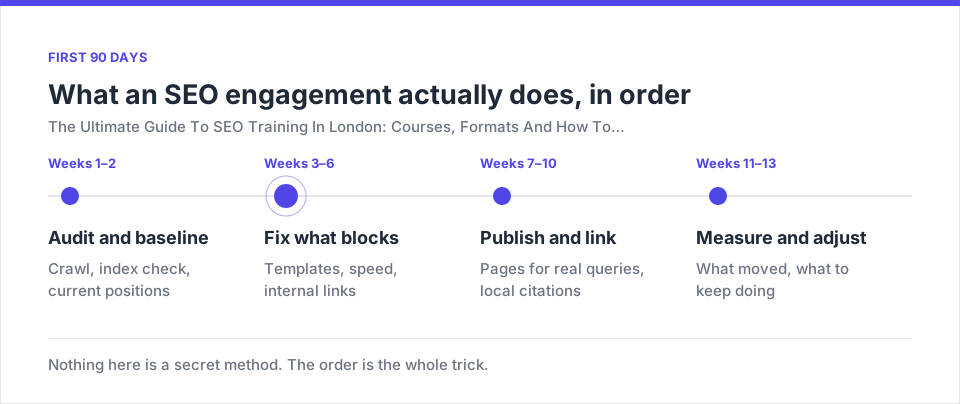
Live London Campaign Briefs and Lab Work
Participants work on authentic London briefs drawn from diverse districts, sectors, and local signals. Each lab session mimics agency environments where teams audit, plan, and activate across hub-and-spoke structures that prioritise GBP health, Maps proximity, and local engagement. The objective is not only to learn techniques but to produce artefacts that client teams can use immediately—district briefs, activation playbooks, and regulator-ready dashboards built with TP, MTN, CPT, and AMI in mind.
Labs typically unfold in four phases: discovery of a district’s signals, development of a district activation plan, execution of a content and technical activation, and a governance review that proves auditable signal journeys exist for regulator replay. External references such as Google's SEO Starter Guide and Moz's Beginner's Guide to SEO remain useful anchors, guiding beginners while the London context adds practical nuance.
Audit Methodologies And Tools In London Training
Across labs, learners employ a structured diagnostic toolkit to assess technical health, local signals, and content relevance in the capital. Practical audits cover site architecture, Core Web Vitals, local business data integrity, and district-specific content alignment. Learners document findings in regulator-friendly artefacts that trace signal journeys from TP locale notes through MTN pillar mappings and into CPT assets, with AMI trails capturing every decision and outcome.
Popular tools include Google Analytics 4, Google Search Console, and local data sources that illuminate district performance. The emphasis remains on actionable insights and demonstrable progress, not theory alone. To reinforce best practices, refer to Google's SEO Starter Guide and Moz's Beginner's Guide to SEO as external references that complement the London-centred material.
Hands-on Projects You Will Complete
Participants culminate in a portfolio of outputs that can be presented to clients or internal governance boards. The typical slate includes:
- London district SEO audit: a comprehensive review of GBP health, local listings, maps signals, and page-level optimisations for a chosen district.
- District activation playbook: a step-by-step plan outlining content, technical fixes, and local signals to boost visibility in a specific area.
- Hub-and-spoke content map: pillar topics paired with district spokes, including internal linking and schema considerations.
- WhatIf scenarios: pre-emptive governance simulations that model potential algorithm updates or regulatory changes and propose proactive responses.
Each artefact is designed to be reusable across client engagements, delivering immediate value and a proven framework for scale across London districts.
Governance Artefacts You’ll Develop
As you progress, you’ll build a coherent suite of artefacts that support regulator replay and governance across campaigns in London. Expect artefact packs that bind TP locale notes to district language, MTN pillar mappings to CPT assets, and AMI trails that document actions, approvals, and outcomes. Dashboards fuse GBP health, Maps proximity, and organic signals with a clear audit trail, ensuring that every decision is reproducible and auditable from day one.
Templates and exemplars cover district briefs, activation playbooks, and schema deployments, all aligned to London-specific contexts such as district terminology, landmarks, and local services. For consistency, these materials reference external best practices from Google and Moz to reinforce universal standards alongside city-specific execution.
Case Studies From London Or Datasets
Real-world London case studies anchor the learning journey. Learners dissect campaigns across districts like City Centre, Canary Wharf, Greenwich, and beyond, examining how GBP health, local packs, and Maps proximity interact with hub content. These case studies are not merely demonstrations; they become templates for replication, showing how a disciplined artefact spine can scale authority and relevance city-wide while preserving local voice and language nuance.
In addition to district-specific analyses, learners compile a library of district briefs and activation templates, enabling rapid initiation of local campaigns for future clients within the capital. External references remain useful for grounding, while the London-centric datasets ensure practical applicability and transferability to real-world client work.
Getting Started With The Practical Section
To begin applying what you’ve learned in this hands-on segment, visit the London SEO Training Services page to review available practical labs and cohort schedules. You can also explore the London Training Courses to identify modules that most closely align with your current role and desired outputs. If you represent a team, consider private on-site sessions to tailor district briefs, activation playbooks, and governance artefacts to your organisation’s portfolio.
For immediate action, download starter artefact templates, and use the WhatIf playbooks to model regulator-ready responses to hypothetical changes. External references such as Google’s SEO Starter Guide and Moz's Beginner's Guide to SEO provide universal benchmarks to complement the London-specific learning materials.
Ready to start? Visit London SEO Training Services to view practical programmes, or contact us to arrange a customised onboarding plan. You can also browse London SEO Training Courses for cohort dates and pricing.
Measuring ROI and Applying Learning to Your London Campaigns
Building on the regulator‑ready governance spine anchored by Translation Provenance (TP), Master Topic Nodes (MTN), Canon Seeds (CPT), and Attestation Maps (AMI), Part 8 focuses on turning learning into measurable business value for London campaigns. This section translates classroom knowledge into auditable, repeatable outcomes that justify investment, guide prioritisation, and demonstrate a clear path from training to improved near‑me visibility, GBP health, and Maps proximity across London districts.
Define ROI in a London context
ROI in SEO training is not only about ranking positions. In London, value is realised when improved local visibility translates into district footfall, inquiries, and conversions across diverse boroughs. Training outputs—such as district audits, activation playbooks, and governance dashboards—must be capable of driving measurable shifts in GBP health, Maps proximity, and organic engagement. A practical framework ties improvements to business outcomes: revenue or lead generation from targeted London districts, cost per acquisition changes, and long‑term brand equity in a competitive market.
Key performance indicators for London campaigns
Adopt a four‑layer KPI model that maps learning outputs to business impact, while ensuring data provenance for regulator replay. Layer 1 covers visibility and near‑me presence (GBP health, local packs, and district landing page visibility). Layer 2 tracks engagement and intent signals (time on page, scroll depth, interaction with district content). Layer 3 captures conversions and outcomes (inquiries, bookings, call conversions) attributed to district surfaces. Layer 4 assesses governance and regulator readiness (AMI trails, TP notes, MTN mappings) to demonstrate auditable decision‑making.
- GBP health by district, including NAP accuracy and listing completeness.
- Local packs impressions and Maps proximity indicators for key districts.
- Engagement metrics by MTN pillar (Local Services, Tourism, Community) for district pages.
- Conversion rates and assisted conversions attributed to hub‑and‑spoke content.
Dashboards and data provenance
Dashboards should present GBP health, Maps proximity, and organic performance by district and pillar with a clear data lineage. AMI trails document every action, approval, and outcome, enabling regulators to replay signals exactly as they evolved. A London‑specific dashboard set should also accommodate district voice, language nuances, and landmarks to maintain trust and contextual relevance across the capital.
Templates should be modular, allowing teams to add districts, update CPT assets, or adjust MTN pillar emphasis without breaking the overall semantic spine. Refer to external references such as Google’s SEO Starter Guide and Moz’s Beginner’s Guide to SEO for universal standards that complement city‑specific reporting.
WhatIf planning and regulator replay
WhatIf rehearsals simulate algorithm changes, policy shifts, or market events to forecast potential effects on GBP health, Maps proximity, and district engagement. Integrate these scenarios into AMI trails to produce regulator‑ready previews that guide governance decisions, budget reallocations, and activation priorities. Quarterly WhatIf sessions should cover district expansions and cross‑district implications while preserving hub integrity.
Document the assumptions, inputs, and projected outcomes within AMI so regulators can replay the narrative from baseline to final results, ensuring transparency and accountability across London campaigns.
Deliverables that demonstrate value
Expect a suite of deliverables that individuals and teams can reuse across campaigns. These include district audit reports, activation playbooks, hub & spoke content maps, and regulator‑ready dashboards with per‑district signal provenance. Artefact packs should bind TP locale notes to language and terminology, MTN pillar mappings to CPT assets, and AMI trails that capture the rationale, actions, approvals, and outcomes. The goal is to produce outputs that are immediately actionable in client meetings, governance reviews, and regulatory audits.
- District audit templates and activation playbooks.
- Hub‑and‑spoke content maps with internal linking schemas and schema deployments.
- Per‑district dashboards with data provenance and ownership details.
- WhatIf plan matrices and regulator‑ready narrative documents.
Post‑course support and community access
London learners benefit from ongoing access to templates, dashboards, and Q&A with experts after course completion. Participation in alumni networks and practitioner communities helps sustain momentum, share district learnings, and keep governance artefacts current. Londonseo.ai supports continued learning through refresher modules, cohort meetups, and regular updates to TP/MTN/CPT/AMI artefacts to reflect evolving local signals and UK regulatory expectations.
External references and practical grounding
For universal standards, refer to Google’s SEO Starter Guide: SEO Starter Guide and Moz’s Beginner’s Guide to SEO: Beginner’s Guide to SEO. These references provide foundational context that complements the London‑specific governance framework described here.
Measurement, Analytics, and Reporting For London Campaigns
Building on the regulator-ready governance spine anchored by Translation Provenance (TP), Master Topic Nodes (MTN), Canon Seeds (CPT), and Attestation Maps (AMI), this Part 9 translates strategy into auditable measurement for London campaigns. The focus is turning learning into tangible business value: improved near-me visibility, GBP health, and Maps proximity across London districts, with clear data provenance so regulators can replay signal journeys from Day One.
Measurement Lenses For London Campaigns
Adopt a four‑lens framework that mirrors how Londoners search, browse, and convert. Each lens ties directly into the TP/MTN/CPT/AMI spine so signals remain replayable and auditable across campaigns and districts.
- Visibility and near‑me accuracy: GBP health by district, local pack impressions, district landing page visibility, and Maps proximity signals. Track data provenance from TP locale notes through MTN mappings to AMI trails to ensure full replay capability.
- Engagement quality: time on page, scroll depth, social interactions, video views, and referral quality by district, aligned with MTN pillars such as Local Services or Tourism.
- Conversions and outcomes: inquiries, form submissions, bookings, and calls attributed to district surfaces, with attribution models anchored by AMI trails.
- Governance readiness: completeness and currency of AMI trails, currency of TP notes, and MTN‑CPT alignment across new districts or campaigns.
Dashboards And Data Provenance By District
London dashboards must present GBP health, Maps proximity, and organic performance at district and city levels, with data provenance attached to every render. The hub‑and‑spoke architecture remains the semantic spine: central pillar content anchors the city, while district pages contribute local voice, language nuances, and landmarks that residents recognise. AMI trails document every change to support regulator replay from baseline to final outcomes.
Key dashboard components include: GBP health by district, Maps proximity indices and click paths, organic performance by MTN pillar, and content activation status. Regular governance reviews should surface any drift in signals or gaps where district pages require updates to maintain city‑wide coherence.
WhatIf Planning And Regulator Replay
WhatIf rehearsals simulate algorithm updates, policy shifts, or market events to forecast impacts on GBP health, Maps proximity, and district engagement. Integrate these scenarios into AMI trails to create regulator‑ready previews that guide governance decisions, budget reallocation, and activation priorities. Quarterly WhatIf sessions should cover district expansions and cross‑district implications, preserving hub integrity while testing resilience.
Typical questions include: how would a Maps ranking update affect district pages, what if GBP categories shift, or how would a local event alter signal journeys? Document assumptions, inputs, and projected outcomes within AMI to enable regulator replay during audits.
KPIs And Output Artefacts
Define a four‑layer KPI model that links learning outputs to business impact, while enforcing data provenance for regulator replay. Layers include: (1) visibility and near‑me presence; (2) engagement signals; (3) conversions and outcomes; (4) governance readiness. This structure ensures every improvement is measurable and auditable across London districts.
- GBP health by district: NAP completeness, listing accuracy, photo freshness, and store hours.
- Maps proximity by district: proximity rankings, listing quality, and click paths to district pages.
- Organic performance by MTN pillar: rankings and traffic for pillar topics across district pages.
- Conversions and engagement by district: inquiries, bookings, calls, and on‑page interactions.
- Governance and regulator readiness: AMI trails, TP locale notes, MTN mappings, and CPT assets updated on a regular cadence.
Deliverables include regulator‑ready dashboards, artefact packs binding TP, MTN, CPT, and AMI to district signals, district briefs, activation playbooks, and hub‑and‑spoke content maps that can be repurposed for future campaigns.
Post‑Course Support, Community Access And Ongoing Guidance
London learners benefit from ongoing access to artefact templates, dashboards, and expert Q&A after course completion. Alumni networks and practitioner communities help sustain momentum, share district learnings, and keep governance artefacts current. WhatIf playbooks, WhatIf rehearsals, and regulator‑ready dashboards are refreshed periodically to reflect evolving local signals and UK guidance.
External grounding remains valuable: Google's SEO Starter Guide and Moz's Beginner's Guide to SEO provide universal benchmarks that complement the London‑specific governance framework described here.
External References And Practical Grounding
For universal standards, refer to Google's SEO Starter Guide: SEO Starter Guide and Moz's Beginner's Guide to SEO: Beginner's Guide to SEO. These sources anchor the London material in widely accepted best practices while allowing city‑specific adaptation.
How To Choose The Right SEO Training In London
Selecting an SEO training programme in London demands a careful balance between actionable, city-specific learning and scalable, regulator-ready governance. London offers a rich mix of providers, formats, and practical outcomes, but the best choice consistently demonstrates tangible value for near‑me visibility, GBP health, and Maps proximity across multiple districts. This Part 10 translates earlier groundwork into a concise, evidence‑based decision framework tailored to the London market and the londonseo.ai offering.
The aim is to help organisations and individuals assess programmes not just by price or prestige, but by the ability to generate artefacts that can be replayed by regulators, deployed across districts, and reused in future campaigns. A well‑structured programme from londonseo.ai aligns with the TP (Translation Provenance), MTN (Master Topic Nodes), CPT (Canon Seeds), and AMI (Attestation Maps) governance spine, ensuring consistency, traceability, and practical outcomes from day one.
Key criteria for choosing a London SEO training partner
When evaluating options, prioritise attributes that directly influence the quality and transferability of learning to London campaigns. The following criteria have proven most predictive of long‑term value in the capital’s competitive environment:
- London‑centric curriculum and real‑world relevance: Courses should integrate district case studies, GBP health checks, and Maps proximity signals drawn from current London campaigns, not just generic SEO theory.
- Regulator‑ready governance artefacts: The programme must deliver TP locale notes, MTN pillar mappings, CPT asset inventories, and AMI trails that enable regulator replay of signal journeys from inception to outcome.
- Delivery formats and scheduling flexibility: A mix of in‑person, live online, and self‑paced options helps teams stay on track without compromising delivery quality. Look for cohorts that accommodate London travel patterns and office footprints.
- Post‑course support and community access: Ongoing templates, dashboards, alumni networks, and periodic updates to artefacts ensure learning continues to compound after the course ends.
- Evidence of outcomes and external validation: Seek case studies, client references, and external references (for example Google or Moz guidance) that corroborate the programme’s claimed ROI and learning transfer.
London‑specific evidence matters. The londonseo.ai framework explicitly binds outputs to district realities, making it easier to demonstrate value to stakeholders and regulators alike. For reference, you can corroborate universal standards with external guides such as Google’s SEO Starter Guide and Moz’s Beginner’s Guide to SEO.
Practical diligence for discovery calls
During initial conversations, use focused questions to surface how each provider translates London context into deliverables. A structured line of inquiry helps ensure alignment with TP, MTN, CPT, and AMI across all engagements:
- How will TP locale notes be maintained to preserve local language and terminology across London districts?
- Can you map MTN pillars to district CPT assets, and how will AMI trails document actions for regulator replay?
- What WhatIf capabilities are included, and how do they translate into regulator‑ready artefacts?
- What is the proposed governance cadence (monthly reviews, quarterly rehearsals) and which dashboards are delivered on day one?
- How do you ensure NAP consistency, GBP health, and Maps proximity across multiple districts?
Ask for anonymised case studies or regulator‑friendly templates from London campaigns to evaluate practical applicability. A credible partner will provide transparent pricing models, clear scoping, and a staged onboarding plan that mirrors the four‑pillar governance spine.
What deliverables should you expect and how to validate them
Prioritise artefacts that are immediately reusable, auditable, and scalable across districts. The right programme will supply a coherent set of outputs, including district briefs, hub‑and‑spoke content maps, schema plans, and regulator‑ready dashboards with a clear data lineage. Validation comes from concrete examples, live demonstrations of artefacts, and a transparent review of how signal journeys were built and tested. londonseo.ai emphasises the integration of TP, MTN, CPT, and AMI across all artefacts to ensure regulator replay is straightforward and the governance is durable as campaigns expand.
Pricing, scope and time‑to‑value
Pricing should reflect deliverables and governance maturity rather than a purely hourly rate. Look for a clearly defined scope per phase (Discovery, Pillar Spine, Content Activation, Governance Cadence) with artefact refresh schedules and a transparent WhatIf planning component. The most valuable arrangements provide regulator‑ready dashboards, artefact packs bound to TP MTN CPT AMI, and a predictable onboarding rhythm that scales with district expansion. When evaluating proposals, compare not just price but the cadence of artefact production, the robustness of governance, and the clarity of ROI expectations across London districts.
Next steps: turning selection into action
Have a shortlist of London providers and invite a regulator‑readiness demonstration as part of the decision process. If you choose londonseo.ai, you can expect alignment with the Services and Courses pages, plus a clear pathway to booking a discovery call via the contact page. External references such as Google's SEO Starter Guide and Moz’s Beginner’s Guide to SEO provide universal benchmarks to complement city‑specific practice, ensuring that your chosen programme remains grounded in industry standards while tailored to London’s dynamic market.
Ready to explore options? Visit London SEO Training Services to view programmes and onboarding options, or London SEO Training Courses to browse cohort schedules and pricing. You can also book a consultation to tailor a plan to your organisation’s London footprint.
SEO Training in London: Part 11 — Outcomes, Certification, and Career Impact
Building on the London-focused foundations from earlier parts, Part 11 focuses on the tangible outcomes of SEO training in the capital. Learners and organisations assess certification value, return on investment, and how enhanced capabilities translate into career progression, client impact, and long-term capability building within the TP (Translation Provenance), MTN (Master Topic Nodes), CPT (Canon Seeds), and AMI (Attestation Maps) governance spine.
Certification, credentials and recognition
Successful completion of London SEO training typically yields a formal certificate or digital badge that confirms mastery of both core principles and London-specific practice. Beyond a credential, participants receive artefact packs and governance templates that are immediately reusable in client work or internal projects. They gain a validated signal of competency that helps justify decisions to stakeholders, auditors, and potential employers.
What you gain from certification includes:
- A verifiable record of completed modules and applied outputs.
- Demonstrable ability to conduct district audits, activation plans, and hub-spoke content maps.
- Proficiency with TP, MTN, CPT, and AMI artefacts that support regulator replay.
- A portfolio of district briefs and dashboards ready for client presentations.
ROI modelling and business case frameworks
A central value proposition of London training is the ability to translate learning into measurable business outcomes. Learners become proficient at framing SEO initiatives as drivers of local revenue, inquiries, and footfall, with dashboards that show how improvements in GBP health, Maps proximity, and content relevance lift key metrics. In practice, this means quantifying lift in organic visibility, engagement, and conversions attributed to district strategies.
Effective ROI considerations include:
- Setting baseline metrics for district campaigns and tracking progress over time.
- Linking SEO actions to business KPIs such as lead generation and revenue in London markets.
- Using WhatIf scenarios to forecast outcomes under algorithm changes or regulatory updates.
- Documenting signal journeys with regulator-ready artefacts to support audits and governance reviews.
Career pathways and opportunities in the London market
London offers a dynamic landscape for SEO professionals. With formal training and a robust portfolio of local cases, graduates are well placed to advance to senior SEO roles, lead multi-district campaigns, or secure consultancy positions with agencies serving the capital. The combination of practical artefacts, governance discipline, and district-focused insights helps professionals articulate value in performance reviews, proposals, and client pitches.
Benefits include clearer promotion pathways, enhanced salary prospects, and the confidence to take on larger, cross-functional projects that span content, technical, and local signals in London.
Sustained learning: alumni communities and ongoing support
Part of the London experience is access to an active alumni network and ongoing learning opportunities. Post-course webinars, review sessions, and mentorship groups help individuals maintain momentum, share wins, and benchmark progress against peers in the capital. The londonseo.ai ecosystem is designed to keep you engaged with new data sources, evolving search signals, and cohort-based accountability that extends beyond the initial training window.
Structured follow-ups include quarterly roadmaps, access to updated artefact packs, and an opportunity to participate in advanced labs that tackle emerging local SEO challenges.
- Mentor programs and peer-to-peer reviews within the London practitioner community.
- Access to updates for TP locale notes, MTN pillar mappings, CPT assets, and AMI trails.
- Regular hands-on labs that incorporate the latest Google guidance and UK market dynamics.
Next steps with londonseo.ai
If you want to capitalise on Part 11 and start measuring the real impact of your London SEO training, explore the London SEO Training Services and London SEO Training Courses pages on londonseo.ai to review certification tracks, cohort timings, and post-course support. A brief discovery call can help you map your current capabilities to a tailored career pathway in the capital. For immediate actions, visit London SEO Training Services or London SEO Training Courses, and to discuss a customised onboarding plan, contact us.
External grounding remains useful to reinforce universal principles alongside London specifics: SEO Starter Guide and Beginner’s Guide to SEO.
Post-Course Support, Resources and Community Access for London SEO Training
Completing a London-focused SEO training programme is just the start. The real value comes from sustained support, ongoing access to practical artefacts, and an active practitioner community that helps you translate learning into repeatable, regulator-ready campaigns across the capital. This final part outlines how londonseo.ai structures post‑course resources, how to leverage the artefact spine (TP, MTN, CPT, AMI), and how to stay at the forefront of local search practice through ongoing collaboration and updated guidance.
Ongoing support and access to updated artefacts
londonseo.ai provides continued access to updated artefacts, dashboards, and playbooks long after a course ends. As Google and UK search ecosystems evolve, governance templates and signal provenance artefacts (TP, MTN, CPT, AMI) are refreshed to reflect new local signals, policy changes, and best practices. Clients can request updated district briefs, activation playbooks, and schema templates via the Services hub, ensuring your campaigns remain regulator-ready and auditable over time.
Regular updates cover Core Web Vitals guidance, GBP health checks, and Maps proximity strategies tailored to London’s boroughs. All updates preserve the semantic spine so your prior outputs stay compatible with new guidance, reducing rework and maintaining governance continuity.
Artefact packs that travel with your team
Artefact packs are designed for reuse across campaigns and teams. Each pack binds TP locale notes to district language, MTN pillar mappings to CPT assets, and AMI trails to all actions. This structure ensures that a single district activation project can be scaled to multiple areas without losing governance clarity. Whether you are onboarding new staff, transferring campaigns between teams, or presenting to regulators, the artefact spine provides a clear, auditable narrative from discovery through execution.
For quick adoption, Teams can download starter templates from londonseo.ai and adapt them for their own districts, services, and events. The approach supports both in‑person and hybrid workflows, maintaining consistency regardless of delivery mode.
WhatIf planning and regulator replay as a standard practice
WhatIf planning is not a one-off exercise. It becomes a standing governance rhythm that teams use to anticipate algorithm updates, policy changes, or market events affecting London districts. By incorporating WhatIf scenarios into AMI trails, you can produce regulator-ready previews that inform budget reallocations and activation priorities. Regular WhatIf rehearsals help ensure that signal journeys remain coherent city‑wide, even as districts expand or signals shift due to external pressures.
Documenting the inputs, assumptions and expected outcomes within AMI trails guarantees that regulators can replay the entire narrative from baseline to final results. This transparency reinforces trust and reduces friction in audits or oversight processes.
Community access: alumni networks and practitioner peers
Joining the londonseo.ai community means ongoing connection with London practitioners who share district‑level insights, problem-solving approaches, and governance discipline. Alumni networks host regular meetups, workshop refreshers, and mentorship circles that help you benchmark progress, obtain feedback on ongoing campaigns, and stay updated with evolving London signals. Participation reinforces accountability and accelerates career progression by exposing you to a broader range of local campaigns and real-world challenges.
Active participation also creates opportunities to collaborate on cross‑district projects, share activation templates, and contribute to future cohorts as guest speakers or mentors. This ecosystem supports continuous learning, even after the formal training window closes.
Turning learning into client value: practical next steps
The aim is to convert post-course learning into immediate, tangible outcomes. Start by reviewing the refreshed artefact packs and the WhatIf planning playbooks to stabilise your governance. Apply district briefs and hub‑and‑spoke content maps to current campaigns, ensuring local voice and language fidelity stay aligned with TP notes and MTN CPT mappings. Use the WhatIf rehearsals to stress-test new strategies before committing budgets, and document everything in AMI trails for regulator replay.
In London, recurring governance cadences should be set at monthly signal health checks and quarterly WhatIf sessions. Align dashboards to GBP health, Maps proximity, and organic performance by district, and ensure ownership is clearly assigned to maintain momentum. For ongoing onboarding and expansion, revisit the Services page to plan new cohorts or private on-site sessions that extend the governance and artefact spine to additional districts.
External references remain valuable anchors for universal best practices. Google’s SEO Starter Guide and Moz’s Beginner’s Guide to SEO provide foundational standards that complement the London-specific governance framework described here. SEO Starter Guide • Beginner’s Guide to SEO.
